Download Templates for Project Management | FREE Upgrades & Additions
Author: Mark Whitfield
Welcome to my site!
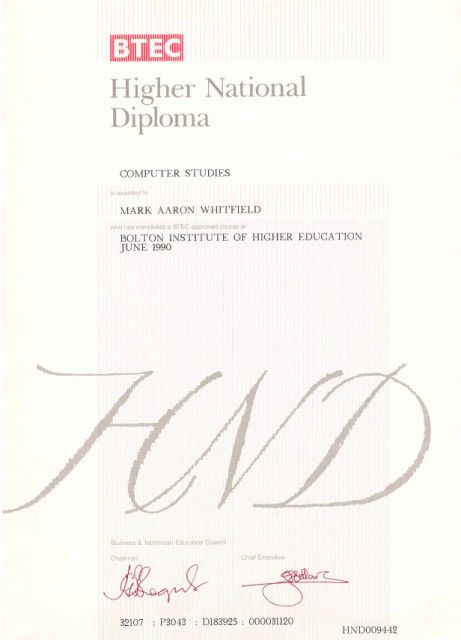
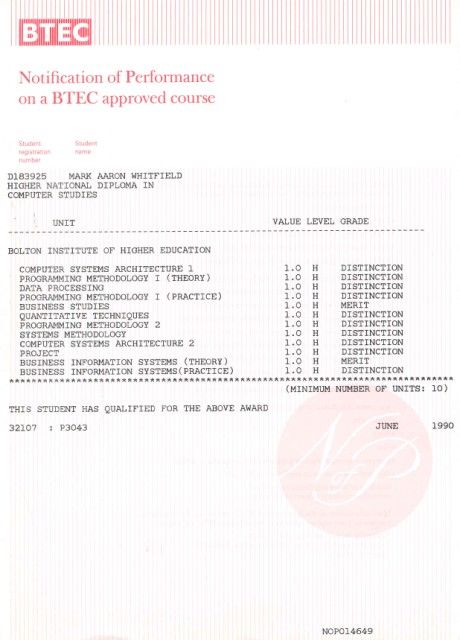
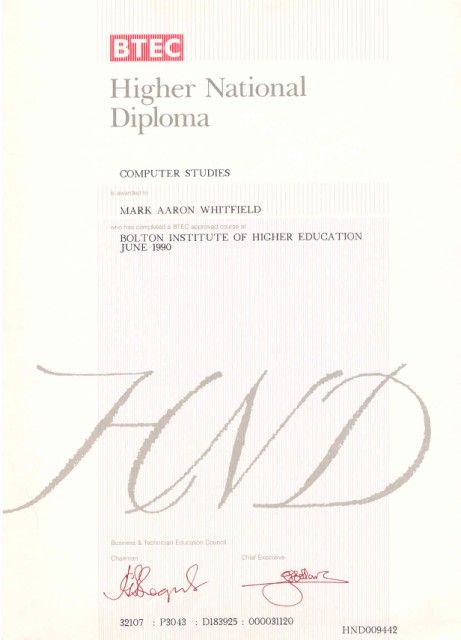
After graduating in Computing in 1990, I accepted a position as a programmer at a Runcorn based software house specialising in electronic banking software, namely sp/ARCHITECT-BANK on Tandem Computers (now HPE NonStop). This was before the internet became more prevalent and so the notion of enabling desktop access to company accounts for inter-account transfers and book keeping was still quite a cutting edge idea (and smartphones only ever hinted at in Space 1999). The company was called The Software Partnership (which was taken over by Deluxe Data in 1994).
I spent 5 years in Runcorn developing code for SP/ARCHITECT for various banks like TSB, Bank of Scotland, Rabobank and Girofon (Denmark) to name but a few. I then moved onto a software house in Salford Quays for further bank facing projects. After a further 23 years in the IT industry and now a Senior IT Project Manager (both Agile and Waterfall delivery), I thought I would echo out my Career Profile in this corner of the internet for quick and easy access.
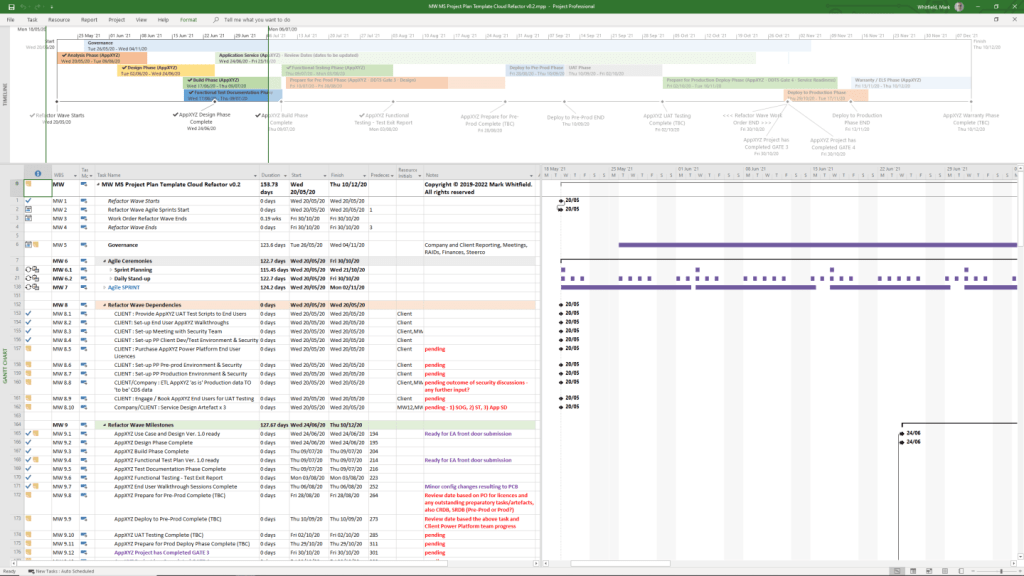
Microsoft Project has evolved from a DOS-based tool in the 1980s into a cloud-integrated platform. Its “Timeline” feature specifically has transitioned from a simple static view to a multi-layered, interactive reporting tool.
Template included in package – see website banner
Timeline Feature Development History
Early Era (1984–2007): For decades, the “timeline” was synonymous with the Gantt Chart. Users had to rely on complex print-outs or third-party tools to create high-level summaries for executives.
The dedicated Timeline View (2010): Microsoft introduced a native Timeline view in Project 2010, allowing users to cherry-pick specific tasks and milestones to display on a single horizontal bar.
Multi-Timeline Support (2016): Project 2016 expanded this by allowing multiple timeline bars in a single view. This enabled managers to represent different project phases or workstreams with independent start and end dates.
Cloud & Web Integration (2019–Present): With the launch of Project for the web, timelines became more interactive, supporting drag-and-drop adjustments and real-time co-authoring.
Task History Tracking (2023): Microsoft added a Task History pane to the web version, allowing users to see a chronological log of changes to specific timeline items.
Key Components of a Modern MS Project Timeline
Templates included in download bundle – see website banner
Gantt-Style Visualization: Displays tasks as horizontal bars against a calendar timescale.
Milestones & Callouts: Important dates appear as diamonds or labels that can be dragged above or below the main bar to avoid clutter.
Dependencies: Visual links between tasks that illustrate the sequence of work and the Critical Path.
Copy for Presentation: A dedicated formatting tool that allows users to export the timeline directly to Microsoft PowerPoint or email at various sizes (Small, Medium, Full Size).
Future Outlook
Template included in download bundle – see website banner
Microsoft has announced that Project Online will be officially retired on 30 September 2026, with development focus shifting entirely to the new Microsoft Planner and Project for the web ecosystem.
Microsoft Project Timeline, Development History Overview
Manchester’s technical history is defined by its evolution from the world’s first industrial city to a global hub for computing and material science.
18th Century: The Birth of Industry
1733:John Kay invented the Fly Shuttle, a key advancement in weaving.
1761: The Bridgewater Canal opened as Britain’s first man-made waterway independent of rivers, drastically reducing coal costs.
1764–1779:James Hargreaves invented the Spinning Jenny (1764), and Samuel Crompton created the Spinning Mule (1779), allowing for mass textile production.
1783:Richard Arkwright established Manchester’s first steam-powered mill.
1790:Piccadilly Mill became the first in the city to be powered directly by a steam engine.
19th Century: Engineering & Precision
1803:John Dalton published his Atomic Theory at the Manchester Literary & Philosophical Society.
Bill Bryson’s A Short History of Nearly Everything
Bill Bryson’s A Short History of Nearly Everything is a journey from the Big Bang to the rise of humanity, focusing not just on what happened, but how we figured it all out.
Here is a condensed timeline of the major milestones covered in the book, divided by the “Big Ideas” that shaped our understanding of the universe.
1. The Deep Past (The Universe and Earth)
This era covers the transition from “nothing” to a habitable rock.
13.8 Billion Years Ago: The Big Bang. In a fraction of a second, the universe expands from a singularity to a vast expanse.
4.5 Billion Years Ago: The Earth forms from a spinning cloud of gas and dust. Shortly after, a Mars-sized object strikes Earth, creating the Moon.
3.8 Billion Years Ago: The first signs of microbial life appear in the oceans.
700 Million Years Ago: “Snowball Earth”—a period where the planet may have been entirely encased in ice.
2. The Great Discoveries (17th – 19th Century)
3. The Atomic and Relativistic Age (20th Century)
In this era, science moved from the “visible” world to the subatomic and the cosmic.
1905: Albert Einstein publishes his papers on Special Relativity, proving that E = mc squared.
1911: Ernest Rutherford discovers the nucleus of the atom, realising that atoms are mostly empty space.
1930s: The discovery of Neutrons and the start of the “Particle Zoo.”
1953: Watson, Crick, and Franklin decipher the structure of DNA, the blueprint of life.
1960s: The theory of Plate Tectonics is finally accepted, explaining how continents move.
4. The Rise of Us (The Biological Timeline)
Bryson highlights how incredibly lucky we are to exist at all, given the history of extinctions.
540 Million Years Ago: The Cambrian Explosion. A massive burst of complex life forms.
250 Million Years Ago: The Permian Extinction. The “Great Dying” where 95% of all species vanished.
65 Million Years Ago: The KT Event. An asteroid hits the Yucatan Peninsula, ending the reign of the dinosaurs.
100,000 Years Ago:Homo sapiens begin to emerge as the dominant homid species.
Present Day: Humans have become a “geological force,” capable of altering the planet’s climate and future.
Key Themes to Remember
Human Fallibility: Much of the “history” is about scientists being wrong, arguing, or losing their notes.
The Size of the Void: We live on a tiny, fragile speck in a universe that is mostly “nothing.”
The Miracle of Existence: If any one of a billion variables had been slightly different, life as we know it wouldn’t exist.
“We are an impossibly lucky accident.” — Summary of Bryson’s core philosophy.
A Short History of Nearly Everything by Bill Bryson
Bolton’s evolution from a small moorland settlement to a world-leading industrial powerhouse and modern metropolitan borough is marked by these key milestones:
Bolton’s technical and industrial evolution shifted it from a medieval market town to a global leader in cotton spinning and engineering, before transitioning into a modern educational and service hub.
Bolton’s transformation was driven by local inventors whose technical breakthroughs redefined the textile industry.
1779:Samuel Crompton invented the Spinning Mule at Hall i’ th’ Wood, combining earlier technologies to produce high-quality yarn.
1780: The town’s first spinning mill opened, marking the start of large-scale mechanised production.
1820:Thomas Bonsor Crompton patented a method for continuously drying paper, a major technical breakthrough for the local paper industry.
1828: One of the world’s first railways, the Bolton and Leigh Railway, opened using George Stephenson’s locomotive “The Witch”.
1873: The Bolton Town Hall opened, a massive Victorian architectural project reflecting the town’s industrial wealth.
Modern Infrastructure & Power (1880 – 1950)
Technical focus shifted toward municipal services, electricity, and the zenith of the cotton industry.
1880: Horse-drawn municipal transport began, followed by a telephone connection between Bolton and Manchester.
1894: The first electric power station opened at Spa Road on October 31st.
1899: The town launched its first electric tram service.
1914: The Back o’ th’ Bank electricity generating station began supplying the town.
1929: Bolton reached its industrial peak with 216 cotton mills in operation.
Education & Re-development (1960s – Present)
As the cotton industry declined, Bolton pivoted toward technical education and retail-led regeneration.
1963: The Bolton Technical College split into Bolton Technical College and the Bolton Institute of Technology (the precursor to the University of Bolton).
Leigh, a historic market town in South Lancashire, evolved from a collection of medieval agricultural townships into a powerhouse of the Industrial Revolution. Below is a timeline of its development.
Early History & Foundations
Ancient Origins: Neolithic stone axes and Bronze Age spearheads suggest activity as early as 1500–1000 BC.
Medieval Growth: The name “Leigh” (Saxon for “meadow” or “pasture”) was recorded as Leech in 1264. The town was the centre of an ecclesiastical parish including the townships of Bedford, Pennington, and Westleigh.
1642: During the English Civil War, local “Chowbenters” (men from nearby Atherton) defeated Royalist troops in a battle at Leigh on 2nd December.
1651: The Earl of Derby spent his final night at the King’s Arms in Leigh before his execution in Bolton.
Industrial Revolution & Expansion
1795: The Bridgewater Canal was extended to Leigh, linking the town to Manchester’s industrial network.
1820: The Leigh Branch Canal opened, connecting the town to the Leeds and Liverpool Canal.
1828: The Bolton and Leigh Railway opened—the first public railway in Lancashire.
1839: The “Leigh Feight” occurred on 14th August, a major Chartist protest and riot involving over 2,000 people.
1850s: The Leigh Union Workhouse was established at Atherleigh.
Late 19th Century: Large multi-storey cotton mills like Leigh Spinners (Grade II*) and Mather Lane Mill (Grade II) transformed the skyline.
Civic Development
1875: The townships of Bedford, Pennington, and Westleigh merged to form the Leigh Local Board.
1894: Leigh became an Urban District.
1899: Leigh was granted a Royal Charter, becoming a Municipal Borough.
1907: The current Leigh Town Hall was completed on Market Street.
1920:Pennington Hall and its grounds were gifted to the people of Leigh, eventually becoming Pennington Park.
Modern Era
1974: Under the Local Government Act 1972, the Municipal Borough was abolished and Leigh became part of the Metropolitan Borough of Wigan in Greater Manchester.
1992: The last coal mines in the area, Bickershaw and Parsonage Collieries, closed on 13th March.
2016: The Leigh-Salford-Manchester Guided Busway opened to provide rapid transit to Manchester city centre.
2023: The Leigh Leopards rugby league team won the Challenge Cup for the first time in 52 years.
Leigh’s history is a classic Lancashire tale of transition from a rural collection of townships to an industrial powerhouse. Here is a timeline of its most significant milestones:
Early Origins & Medieval Period
Stone Age & Roman Era: Archaeological finds in the area include a Stone Age axe in Pennington and a Roman coin in Bedford.
12th Century: The name “Leigh” (from the Old English leah, meaning a woodland clearing) appears in records. The ancient parish originally consisted of six townships: Astley, Atherton, Bedford, Pennington, Tyldesley cum Shakerley, and Westleigh.
1189–1199: Higher Hall, the manor house of Westleigh, dates back to the reign of Richard I.
Conflict & Industrial Revolution
1642: During the English Civil War, local Parliamentarians (the “Chowbenters”) defeated Royalist troops in the Battle of Leigh.
1760s: Local legend attributes the invention of the spinning jenny and the water frame to Thomas Highs of Leigh, marking the start of its textile dominance.
1795–1820: The Bridgewater Canal was extended to Leigh (1795), followed by the Leigh branch of the Leeds and Liverpool Canal (1820), making the town a critical hub for coal and textiles.
1828: The Bolton and Leigh Railway opened for freight, becoming the first public railway in Lancashire.
1839: The “Leigth Feight” occurred on 14 August, when a mob of 2,000 Chartist strikers clashed with troops over high unemployment and living costs.
Civic Development & Modern Era
1875: The townships of Bedford, Pennington, and Westleigh merged to form the Leigh Local Board, officially adopting “Leigh” as the town’s name.
1899:Leigh was granted a Royal Charter to become a Municipal Borough.
1907: The current Leigh Town Hall, designed by J.C. Prestwich, was completed.
1911: The textile industry peaked, with over 6,000 people employed in the town’s mills.
1974: Under local government reorganisation, Leigh ceased to be an independent borough and became part of the Metropolitan Borough of Wigan in Greater Manchester.
2008: The Leigh Sports Village opened, providing a modern home for the Leigh Leopards rugby league team.
2016: The Leigh-Salford-Manchester guided busway opened, re-establishing a rapid transport link to Manchester.
Leigh College, Marshall Street, Leigh, Lancs
Building below demolished 2007 and now rebuilt at the Leigh Sports Village – 1, 2, 3, 4 article by Julie McKiernan courtesy of PastForward, produced by Wigan Archives & Museums, Issue No. 97, August – November 2024, Marking 50 years of the borough, Wigan and Leigh’s local history magazine – Address: Past Forward, Archives, Wigan & Leigh, Leigh Town Hall, Mark Street, Leigh, WN7 1DY
The software known as sp/ARCHITECT (specifically the sp/ARCHITECT-BANK module) has a timeline tied to its development in Runcorn, Cheshire, by a firm originally called The Software Partnership.
Company & Product Timeline
Mid-1980s:The Software Partnership is co-founded by Nigel Walsh.
1989: The company begins significant operations in Runcorn, initially at Wingate Drive (Timperley) and later moving to Norton House in Crowngate.
1990–1994: Development period for sp/ARCHITECT in Runcorn. The software was a banking system used by major institutions including TSB, Bank of Scotland, and Rabobank.
1992: The firm relocates its Runcorn base to Wingate House on Northway.
1994: The Software Partnership is acquired by the American company Deluxe Electronic Payment Systems (a division of Deluxe Corporation).
Post-1994: Following the acquisition, the entity operated as Deluxe Data International Operations.
Later Transitions: The lineage of the Runcorn operations eventually merged into larger fintech entities, including eFunds, EFD, and ultimately FIS.
Deluxe Data, Wingate HouseThe Software Partnership, Norton House
sp/ARCHITECT-BANK module – development in Runcorn, Cheshire by The Software Partnership
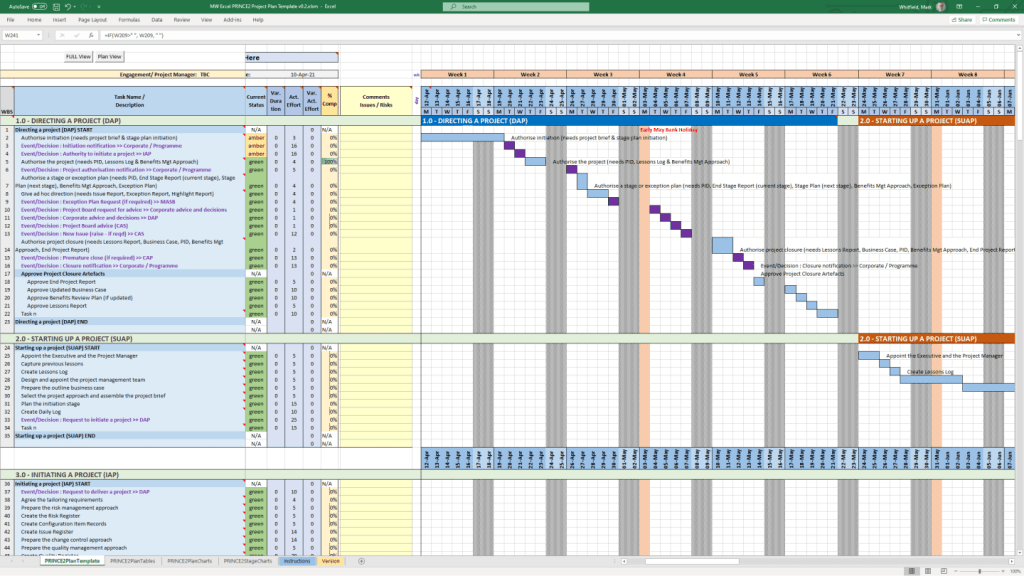
Mark Whitfield’s project management templates offer a range of timeline and planning views designed for Agile, Waterfall, and PRINCE2 delivery. These templates typically include a high-level Plan on a Page (POaP) and detailed Microsoft Project (MPP) or Excel schedules.
Example Plan on a Page POaP
Timeline & Planning Views
Plan on a Page (POaP): A high-level summary view (often in PowerPoint or Excel) used to communicate key phases and milestones to stakeholders without the clutter of a full Gantt chart.
Detailed Gantt Charts: Provided in both Microsoft Project (MPP) and Excel, these timelines include task dependencies, resource allocations, and critical path tracking.
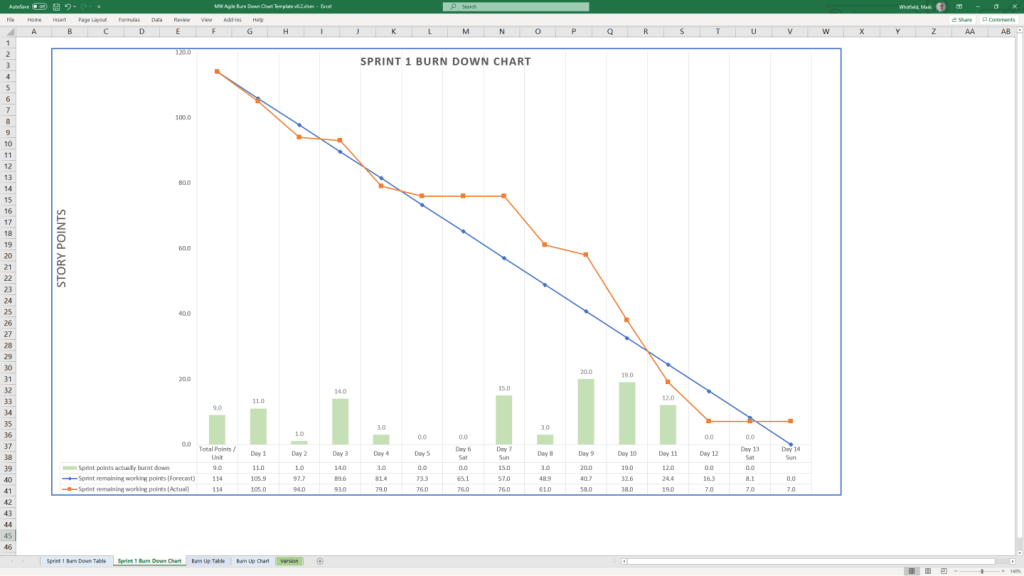
Agile Sprint Timelines: Specialized views for tracking 2–4 week sprints, daily stand-ups, and sprint retrospectives within a broader project framework.
SDLC Progression: The templates are often structured around a typical Software Development Life-cycle (SDLC), moving from Inception to Transition and Early Live Support (ELS).
Key Timeline Components
The templates are pre-configured with several essential timeline elements:
Project Start & End Dates: Easily adjustable fields that automatically update durations and downstream tasks.
Milestones & Gateways: Visual markers for critical sign-off points and delivery stages.
Task Dependencies: Pre-built links that show how delays in one area (e.g., hardware delivery) impact the overall project finish date.
Resource View: Timelines integrated with resource calendars to account for holidays and leave.
HPE NonStop (originally Tandem) has a nearly 50-year history as the gold standard for fault-tolerant, “always-on” computing. Originally developed by Tandem Computers to eliminate single points of failure, the platform has survived through several major corporate acquisitions while evolving its underlying processor architecture.
Founding and The Tandem Era (1974–1997)
The “NonStop” architecture was born from the idea that a single hardware failure should never crash a system.
1974:Tandem Computers is founded by Jimmy Treybig and three former HP engineers.
1976: The first Tandem/16 (later NonStop I) is shipped to Citibank. It featured a “shared-nothing” architecture where each CPU had its own memory and copy of the Guardian OS.
1981:NonStop II is released, introducing 32-bit addressing to support larger applications.
1983: The NonStop TXP and Pathway software are introduced. Pathway revolutionized the platform by allowing programmers to write fault-tolerant apps without manually coding “checkpoints”.
1986:NonStop SQL is launched, the first fault-tolerant relational database.
1989:NonStop Cyclone arrives, a high-end mainframe-class system.
1991–1993: Transition to MIPS RISC processors begins with the Cyclone/R and the Himalaya K-series.
Corporate Acquisitions and Transition (1997–2014)
The platform changed hands twice in five years, but the mission-critical nature of the technology kept it alive.
Salford Quays has evolved from a largely empty landscape of racecourses and medieval halls into one of the UK’s most significant urban regeneration projects.
1986–1990: Massive infrastructure programme: polluted dock water is separated by bunds, and a compressed air mixing system (Helixor) is installed to improve water quality.
1987: Introduction of 12,000 coarse fish to the now-cleaned waterways.
1989: Opening of the Mariners Canal to link the Ontario and Erie Basins.
1999: Completion of major bridge works and the Metrolink extension, connecting the Quays to Manchester city centre.
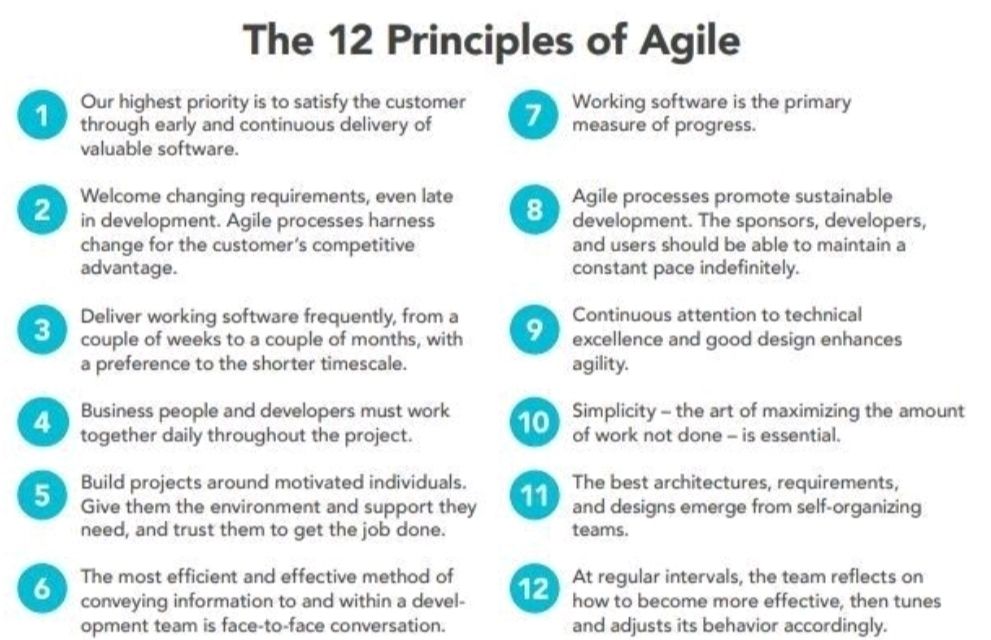
In Scrum, the “timeline” is typically structured as a repeatable, time-boxed cycle known as a Sprint, which usually lasts between one and four weeks. Each sprint follows a strict sequence of “ceremonies” designed to ensure constant delivery and feedback.
The Standard Sprint Timeline (2-Week Example)
The following is a common chronological breakdown of a typical 10-day (two-week) sprint:
Day 1: Sprint Planning
Goal: Define what will be delivered and how.
Activity: The Product Owner presents prioritized items from the Product Backlog. The team selects items to move into the Sprint Backlog.
Days 2–9: Development & Daily Scrum
Development: The team works in parallel on design, coding, and testing.
Daily Scrum: A 15-minute “stand-up” held every morning. Team members sync on progress and identify blockers.
Ongoing: Backlog Refinement
Goal: Prepare for future sprints.
Activity: The team reviews upcoming backlog items to ensure they are “ready” for the next planning session.
Day 10: Sprint Review & Retrospective
Sprint Review: A demo for stakeholders to show the Product Increment (completed work) and gather feedback.
Sprint Retrospective: An internal meeting where the team reflects on their process to improve for the next cycle.
Strategic Project Phases
While the sprint is the heart of execution, a broader Agile project often follows these foundational stages:
Concept/Ideation: Defining project vision, high-level requirements, and initial scope.
Inception: Building the team, setting up architecture, and creating a mock-up.
Construction (Iterative Sprints): The primary execution phase consisting of multiple back-to-back sprints.
Release/Deployment: Final testing, security checks, and launching the product increment to production.
Maintenance & Operations: Ongoing support, bug fixes, and incorporating user feedback into new sprints.
Time Allocation (The 15/10/5 Rule)
For a standard sprint, many teams use a percentage-based guide to manage ceremony time:
15% for Sprint Planning.
10% for Sprint Review.
5% for Sprint Retrospective.
For more hands-on planning, tools like the Wrike Sprint Template or Jira Timelines can help visualize these cycles across a long-term roadmap.
PRINCE2 (PRojects IN Controlled Environments) has evolved from a rigid, IT-specific framework into a globally recognised, flexible project management standard.
Historical Evolution Timeline
1975: PROMPT Origins – Simpact Systems Ltd developed PROMPT (Project Resource Organisation Management and Planning Techniques) to address IT project overruns.
1996: PRINCE2 Launch – Developed with input from 150 European organisations, PRINCE2 was released as a generic, scalable framework suitable for any industry.
2009: Major “Refresh” – Introduced the seven core principles and made the method more customisable.
2017: 6th Edition Update – Formerly known as the “2017 Update,” this version focused heavily on scalability and tailoring to specific project needs.
2021–Present: PeopleCert Era – PeopleCert acquired AXELOS in 2021. In 2023, PRINCE2 7 was launched, introducing a greater emphasis on people management and sustainability.
Comprehensive Project Timeline Breakdown
A standard PRINCE2 project follows a lifecycle defined by seven processes:
The technical timeline for BASE24 and its core networking component, XPNET, reflects the evolution of high-availability payment switching on HP NonStop (Tandem) systems.
Technical Evolution Timeline
1980s: The Foundation
BASE24 Release: Originally developed by Applied Communications Inc. (now ACI Worldwide), BASE24 was built for the Tandem Guardian operating system.
XPNET Introduction: Developed as the Message-Oriented Middleware (MOM) to handle all transaction routing and communications. It introduced a multi-node architecture allowing different “satellite” processes (ATM, POS, Host) to communicate.
1990s: Scale and Maturity
Classic Era: BASE24 “Classic” became the industry standard for ATM and POS switching.
XPNET 3.x: Enhanced to support larger networks and more complex auditing through NCPCOM.
Language & DB: The system relied on TAL (Tandem Application Language), COBOL, and the Enscribe database.
2000s: The Shift to BASE24-eps
2003–2005: ACI introduced BASE24-eps (Electronic Payment Systems). This was a re-architecture using C++ and Java to provide platform independence.
XPNET 4.1: Released to support the transition, adding features like Common Transport Subsystem (CTS) for better Pathway integration and support for external processes.
z/OS Support: By 2009, BASE24-eps was fully ported to IBM z/OS using CICS and VSAM.
2010s – Present: Modernisation & Cloud
2014–2017: Continued updates to BASE24 Classic R6.0, maintaining its relevance for legacy users.
Cloud Enablement: Recent versions of BASE24-eps focus on REST API integration via tools like LightWave, allowing legacy XPNET paths to be exposed as web services.
Active/Active Environments: Modern implementations focus on “continuous availability” using GoldenGate for data replication between sites.
Key Technical Components
NMM (Network Management Module): The core process of XPNET that manages the configuration of lines, stations, and links.
LCONF: The Logical Network Configuration File used by XPNET to define how messages route between processes.
Auditing: XPNET provides the primary transaction auditing mechanism, which is still utilized by both Classic and eps versions.
The timeline of HPE NonStop ViewPoint (and its modern successor, Web ViewPoint) reflects the evolution of NonStop systems from Tandem’s fault-tolerant beginnings to Hewlett Packard Enterprise’s modern cloud-integrated management.
Detailed History Timeline
Pre-2000: Legacy ViewPoint
Originally developed for the Tandem NonStop platform to provide a graphical operations interface for monitoring system status and events.
Featured early support for DSM/PM (Distributed Systems Management/Performance Monitor) and event management through primary and alternate event logs.
2003–2005: Transition to Web ViewPoint
September 2003: Version 4 AAD released as an early iteration of the web-based management tool.
May–October 2004: Progressive upgrades (Versions 5.0 and 5 AAF) introduced refined management capabilities for S-Series servers.
March 2005: Version 5 AAG released, consolidating features for the S-Series.
November 2005:Web ViewPoint for Itanium (Version H01AAI) launched, marking the shift to the Intel Itanium-based Integrity NonStop architecture.
2013–2015: The x86 Revolution & Virtualization
2014: Support for Intel x86 architecture was officially announced, leading to the launch of NonStop X.
Evolution to Web ViewPoint Enterprise (WVP E): The platform evolved into an automated management product, eventually adding integration with cloud-based analytics like HPE Remote Analyst.
2018–Present: Modern Hybrid Cloud Era
L-Series Support: Continued updates provided support for L-Series operating environments and enhanced security monitoring.
2023–2024: Recent developments focus on Web ViewPoint Enterprise, featuring a global configuration platform and enhanced historical data capture through integrations like Sentinel for HPE NonStop.
For more specific documentation, you can browse the HPE NonStop Manuals on the HPE Support Center.
MultiBatch is a high-performance, mainframe-class workload automation and batch scheduling solution specifically designed for the HPE NonStop parallel architecture (formerly Tandem). It is developed by ETI-NET (formerly by Insider Technologies) to manage complex batch schedules across both NonStop Guardian and OSS environments.
Key Milestones and Timeline
1976 – Tandem NonStop Origins: The foundation for these systems was established with the introduction of the first NonStop servers by Tandem Computers.
2017 – MultiBatch Release: Insider Technologies announced an updated release of MultiBatch to enhance off-line processing flows for the HPE NonStop arena.
2019 – GUI and Monitoring Enhancements: Real-time status monitoring through a GUI interface was highlighted as a major differentiator, allowing users to visually track complex batch schedules like RTGS and securities settlements.
2020 – Business Benefits Proven: Case studies demonstrated that MultiBatch could reduce online-dealing batch times by up to 6 hours per day.
2022 – MultiBatch 10 for TBC:MultiBatch 10 was presented at the NonStop Technical Boot Camp (TBC), positioning it as the only workload manager for NonStop built on continuous innovation principles.
2024 – Modernization and Security: Recent updates focused on securing and modernizing the platform for high-performance multitasking.
Core Functionality
Parallel Execution: Supports batch schedules that run concurrently across multiple nodes, leveraging the NonStop architecture for high availability.
Hybrid Support: Seamlessly integrates both Guardian and OSS jobs within a single schedule.
Batch Prediction: Uses historical metrics in a status database to predict schedule completion times based on average and maximum elapsed run times.
Simplified Migration: Unlike NetBatch, it allows for extracting and inserting schedules between environments (e.g., test to production) without TACL changes.
MultiBatch is a high-performance, mainframe-class workload automation and batch scheduling solution
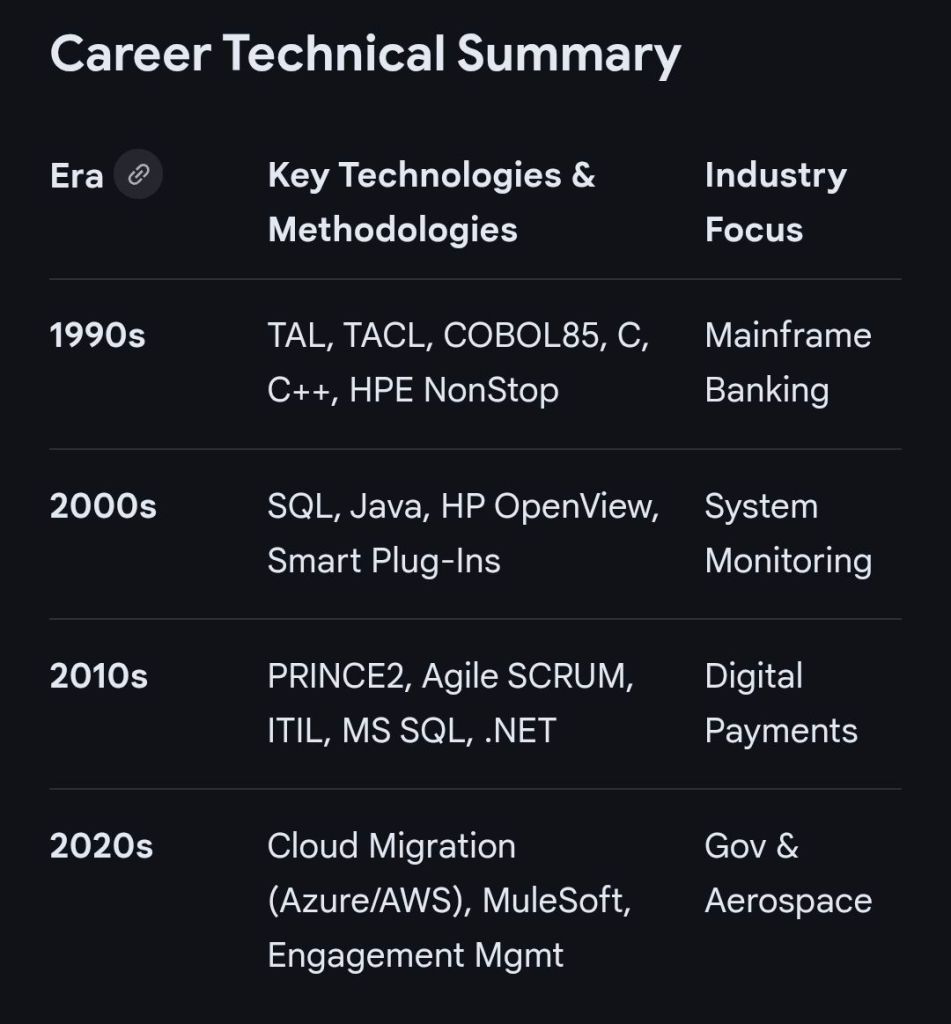
Mark Whitfield, an SC cleared, Senior IT Project Manager and Engagement Manager, spans over 30 years and transitions from specialized banking software development to high-level project leadership and cloud migrations.
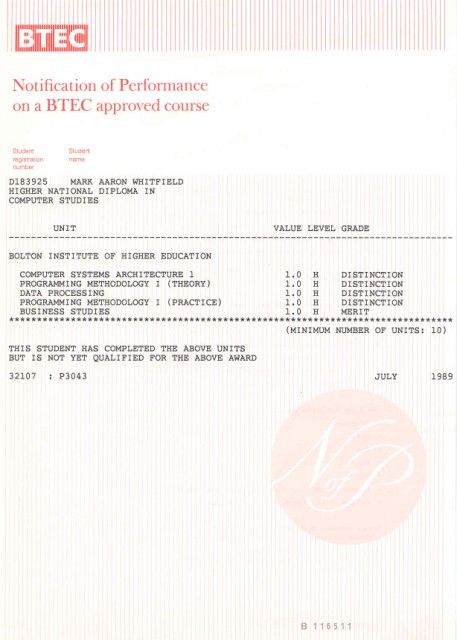
Professional Career Timeline
1990 – 1994:Programmer at The Software Partnership (later Deluxe Data). Developed electronic banking software (sp/ARCHITECT-BANK) on Tandem Computers (now HPE NonStop) for major banks like TSB and Bank of Scotland.
1994 – 1995:Lead Analyst at Deluxe Data International, continuing support and development for banking customer systems.
1995 – 2013: Project Manager of Strategic Technical Initiatives at Insider Technologies Limited. Oversaw projects involving Reflex 80:20, Sentra development, and corporate website authoring.
2013 – 2014: Project Manager (Banking Division) at Wincor Nixdorf Limited, focusing on professional services for the banking sector.
2014 – 2016: Senior Digital Project Manager at Betfred Limited, managing the Online and Mobile Division.