Visiting Salford Quays, 14th July

Visiting Salford Quays, 14th July
Visiting Salford Quays,
14th July 2026

Salford Quays is a thriving waterfront district that blends a rich industrial heritage with modern media, residential, and cultural spaces. It functions as a bustling extension of Greater Manchester, driven by major media institutions, continuous urban development, and community-centric environmental upgrades.

🏗️ Infrastructure & Regeneration

  • Master Framework Progress: The area is actively executing its long-term MediaCity/Quayside Regeneration Framework, pushing forward with plans to add 3,200 new homes, additional hotel rooms, and 800,000 sq ft of commercial space.
  • Waterfront Greenery: To address concerns over becoming a “concrete jungle”, the council kicked off the Mariner’s Canal transformation project to establish large planting beds, boost local biodiversity, and expand public green spaces along pedestrian paths.
  • Residential Shift: Major housing projects, such as the newly approved hundreds of apartments between MediaCity and the city centre, continue to alter the skyline, shifting old 1980s office blocks toward waterside residential living.

📺 Media & Innovation Hub

  • Broadcasting Powerhouse: MediaCityUK remains the beating heart of the Quays, acting as a major digital and tech employer hosting the BBC, ITV, and massive production spaces.
  • The Coronation Street Experience: Located right on the docks, this remains a highly popular tourist asset drawing soap opera fans into the area.

🎭 Culture, Leisure & Events

  • Salford Centenary: The city is celebrating 100 years of city status, bringing historical exhibitions and community celebrations to local venues.
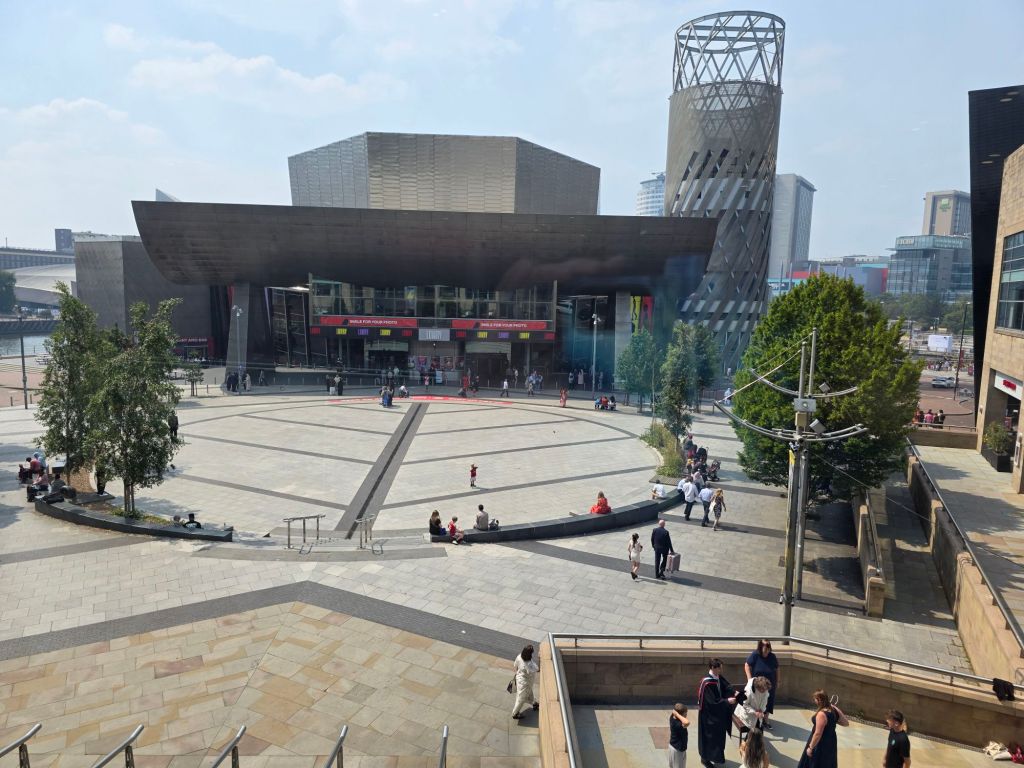
  • Major Landmarks: Cultural mainstays like The Lowry theatre/gallery and the Imperial War Museum North (IWM North) continue to anchor the tourist economy.
  • Signature Festivals: Key annual highlights include the return of the massive We Invented the Weekend Festival at the Piazza, alongside regular Salford Quays Makers Markets.
  • Dining & Retail: Central points like the Quayside MediaCity mall and the vibrant Kargo MKT food hall offer highly popular street food concepts and family entertainment.

MediaCityUK Photographic Build Timeline Journal by Mark Whitfield

The MediaCityUK Photographic Build Timeline Journal is an extensive, long-term documentary project created by Mark Whitfield. It captures the transformation of Salford Quays from an empty dockland into a major UK media hub.

Working nearby as an IT Project Manager, Whitfield utilized his close proximity to the site to methodically photograph the construction lifecycle literally from the ground up.

1. MediaCityUK Photographic Build Timeline Journal is an extensive, long-term documentary project created by Mark Whitfield
2. MediaCityUK Photographic Build Timeline Journal is an extensive, long-term documentary project created by Mark Whitfield
3. MediaCityUK Photographic Build Timeline Journal is an extensive, long-term documentary project created by Mark Whitfield
MediaCityUK Photographic Build Timeline Journal is an extensive, long-term documentary project created by Mark Whitfield

Project Overview and Scope

  • Timeframe: The photographic project formally spans from May 2007 through 2010 for its core construction phase, with continuous updates extending into later developments.
  • Volume: The total project comprises a massive archive of over 15,000 to 16,000 photographs.
  • Curated Journal: An abridged timeline consisting of roughly 200 high-resolution selections was published to highlight key structural milestones chronologically.
  • Perspectives: Photos were captured weekly from multiple high-vantage reference points, including the Imperial War Museum North, the local Designer Outlet, and Broadway.
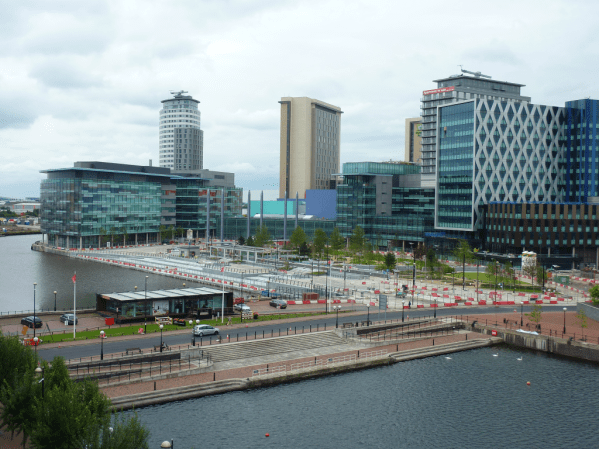
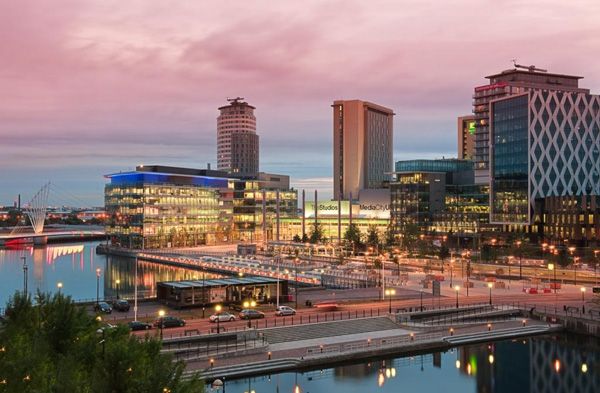
MediaCityUK BBC North, Salford Quays

Core Phases Documented

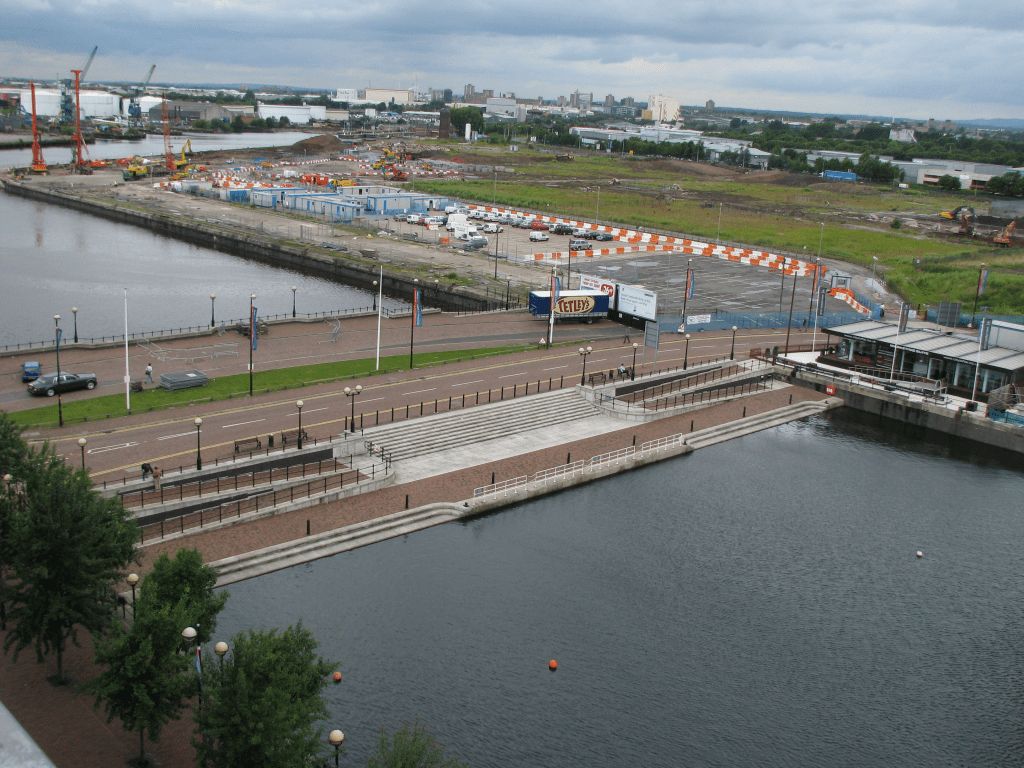
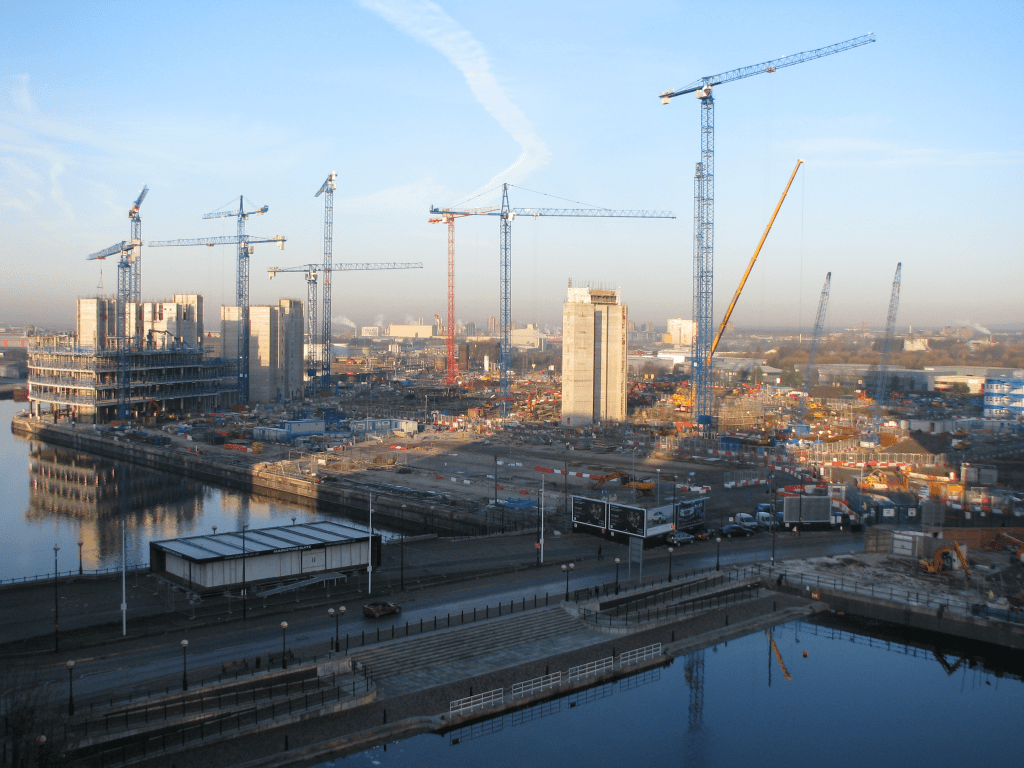
  1. The Blank Canvas (Mid-2007): Captures the initial flat, unused grassland and docklands just before the first diggers arrived on site in June 2007.
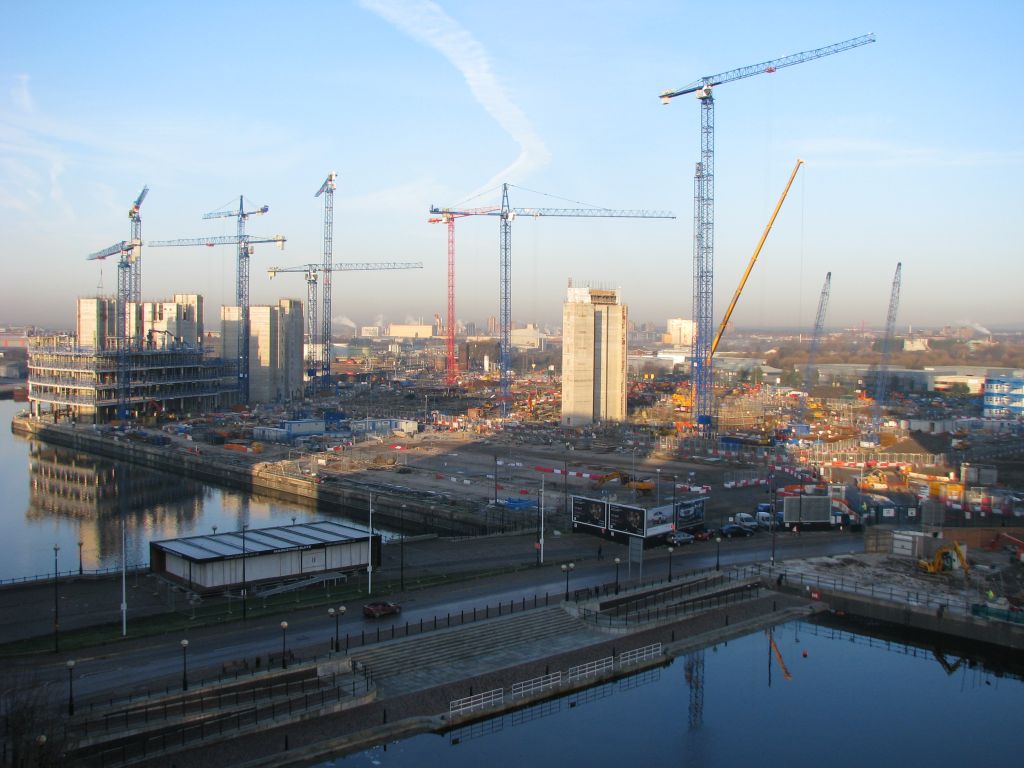
  2. The Structural Rise (2008–2009): Documents the erection of massive tower cranes and the core framework of the studio blocks rising over Salford Quays.
  3. The Final Fit and Branding (2010–2011): Details the external completion of the main blocks, the installation of the iconic BBC North logos, the construction of the public piazza, and the implementation of the media tram stop.

Community and Media Discussions

Whitfield’s timeline served as a primary public and professional visual archive during the build. He actively managed a linked professional LinkedIn Group that grew to thousands of members. This space was widely used by industry professionals, media researchers, and regional planners to discuss ongoing jobs, architectural layouts, and local infrastructure impacts.

His updates were also featured directly on BBC corporate blogs to give incoming staff an authentic glimpse of their new northern headquarters.

The full abridged photo archive and associated operational histories can be explored directly on the Mark Whitfield MediaCityUK Journal Gallery.

Salford Quays Overview and Comprehensive Timeline by Era

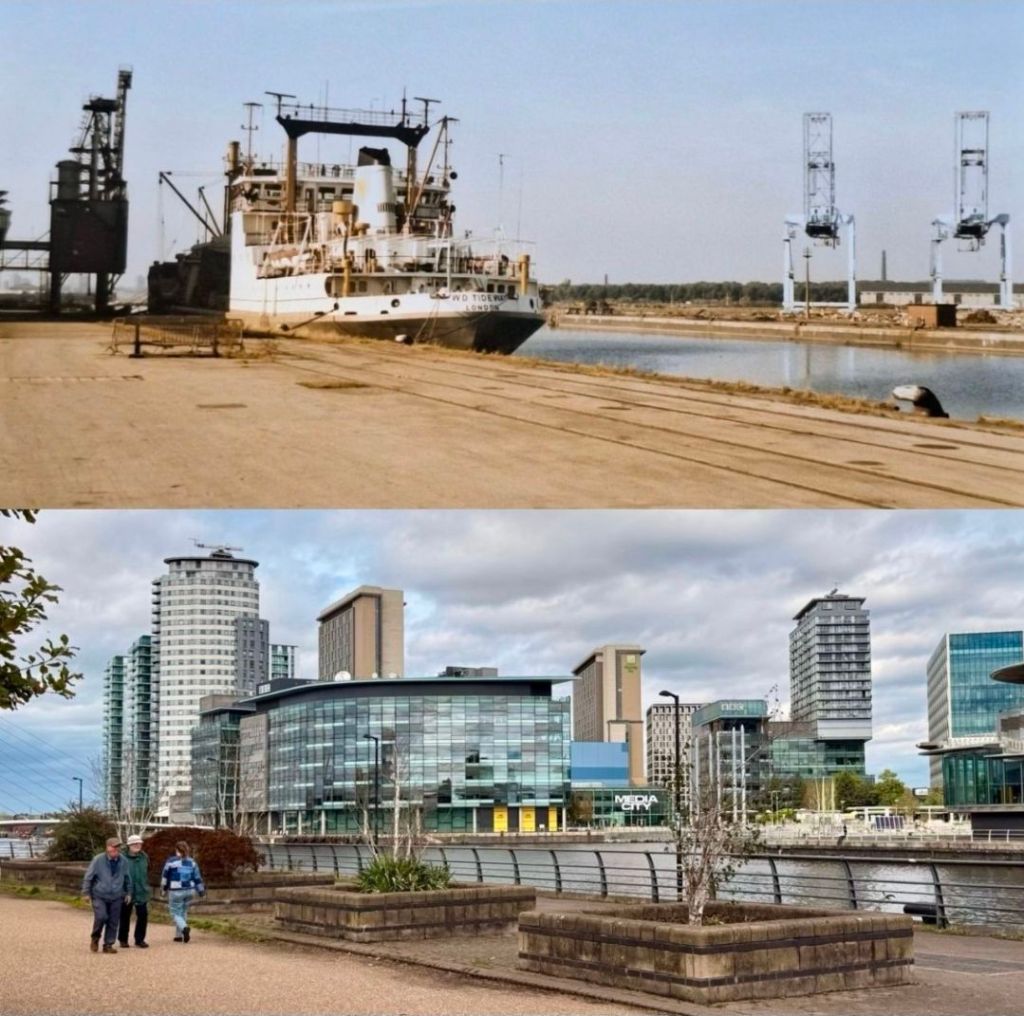
Salford Quays is a major waterfront destination in Greater Manchester, originally the site of the Manchester Docks. After the docks closed in 1982, the area underwent one of the UK’s most ambitious urban regeneration projects, transforming from a derelict industrial zone into a vibrant cultural, commercial, and residential hub. It is now home to landmarks such as The LowryImperial War Museum North, and the MediaCityUK media cluster. 

Comprehensive Historical Timeline

The history of Salford Quays is defined by three distinct eras: the rise of the Manchester Docks, a period of industrial decline, and its modern rebirth through regeneration. 

I. The Industrial Era (1887–1960s)

This era saw the construction and peak of the Manchester Docks, which turned Manchester into an inland port despite being 40 miles from the sea. 

  • 1887: Construction of the Manchester Ship Canal begins to bypass high charges from Liverpool’s docks.
  • 1893: The canal is flooded in November, preparing for its opening.
  • 1894: Queen Victoria officially opens the Manchester Ship Canal and Salford Docks on 21 May.
  • 1905: King Edward VII opens No. 9 Dock, the largest in Salford, on the former site of the Manchester racecourse.
  • 1920: Employment peaks with approximately 16,000 labourers working at the docks.
  • 1927: Official Dock offices open on Trafford Road.
  • 1950s: The docks reach their peak traffic, annually seeing over 16 million tons of cargo and 5,000 ships.

II. The Era of Decline (1960s–1982) 

Technological shifts in shipping and industrial unrest led to the eventual closure of the port. 

  • 1966: A 47-day strike by the National Union of Seamen leads to a significant loss of customer confidence.
  • 1969: The vessel Manchester Courage hits the Irlam lock gates, trapping ships in the docks for five weeks.
  • 1970s: The rise of containerisation makes the Ship Canal too narrow for modern, larger ships, causing a rapid decline in trade.
  • 1982: The docks officially close, resulting in the loss of 3,000 jobs and leaving the area derelict and polluted. 

III. The Regeneration Era (1983–Present) 

Salford City Council and private partners began transforming the abandoned docks into a modern “urban living” quarter. 

  • 1983: Salford City Council acquires the derelict docks from the Manchester Ship Canal Company.
  • 1984: The area is officially rebranded as Salford Quays.
  • 1985: The Salford Quays Development Plan is published, outlining a mix of housing, offices, and leisure.
  • 1986: Regeneration work officially begins; the MGM Canon Cinema (the first new building) opens in December.
  • 1987: The Copthorne Hotel opens. A compressed air mixing system is introduced to oxygenate the water, allowing 12,000 fish to be introduced.
  • 1989: Mariner’s Canal is opened by the Duke of York.
  • 1991: The Anchorage office complex is completed, becoming a major commercial landmark.
  • 1994: The Centenary Walkway is opened by Princess Anne to commemorate the canal’s 100th anniversary.
  • 1999: The Metrolink tram extension to the Quays opens.
  • 2000: The Lowry arts centre is officially opened by Queen Elizabeth II on 28 April.
  • 2001: The Lowry Outlet Mall (now Quayside) and the Salford Watersports Centre open.
  • 2002: Imperial War Museum North, designed by Daniel Libeskind, opens its doors.
  • 2007: Construction begins on MediaCityUK after the BBC proposes moving several departments from London.
  • 2011: The BBC completes its move to MediaCityUK; the University of Salford opens its satellite campus there.
  • 2013: Coronation Street moves its production and iconic cobbles to a new site at MediaCity.
  • 2021: MediaCityUK buildings become the first in the UK to achieve net zero carbon status.
  • 2023: High-rise developments continue with the completion of the 29-storey Eda (Erie Dock Apartments).

Salford Quays Overview and Comprehensive Timeline by Era

Salford Quays, Salford, Greater Manchester, UK

Salford Quays has evolved from a largely empty landscape of racecourses and medieval halls into one of the UK’s most significant urban regeneration projects.

1. The Industrial Era (1887–1981)

2. Decline and Early Redevelopment (1982–1999) 

3. Cultural and Digital Expansion (2000–Present)

  • 2000: The Lowry arts centre is opened by Queen Elizabeth II.
  • 2001: The Lowry Outlet Mall (now Quayside MediaCity) opens to the public.
  • 2002: The Imperial War Museum North opens its doors across the water from The Lowry.
  • 2007–10: Construction of MediaCityUK takes place; the BBC confirms the relocation of five departments to the site.
  • 2011–12: BBC and University of Salford staff move into MediaCityUK; ITV later moves its Manchester base (including Coronation Street) here in 2013.
  • 2021: Buildings at MediaCityUK achieve net zero carbon status.
  • 2022: The Salford Quays 2030 vision is launched to further enhance the area as a vibrant community hub. 

Salford Quays, Salford, Greater Manchester, UK

My MediaCityUK Salford Quays photo timeline

Salford Quays Technical Timeline

From its engineering origins as the Manchester Docks to its current status as a digital hub, 

Salford Quays has undergone a massive technical and structural transformation. 

Industrial Foundation & Engineering (1887–1982)

  • 1887–1893: Construction of the Manchester Ship Canal, an engineering feat measuring 35.5 miles from Eastham to Manchester.
  • 1894: Official opening of the Manchester Docks by Queen Victoria, establishing Manchester as Britain’s third-largest port.
  • 1905: Opening of No. 9 Dock, the largest in Salford, by King Edward VII.
  • 1970s: Deindustrialisation begins as the rise of containerisation makes the narrow canal obsolete for modern, larger ships.
  • 1982: Final closure of the docks, resulting in 3,000 job losses and leaving the area as a polluted wasteland.

Regeneration & Environmental Recovery (1983–2000) 

  • 1983–1984: Salford City Council acquires the derelict docks.
  • 1985: Launch of the Salford Quays Development Plan, envisioning a new residential and commercial district.
  • 1986–1990: Massive infrastructure programme: polluted dock water is separated by bunds, and a compressed air mixing system (Helixor) is installed to improve water quality.
  • 1987: Introduction of 12,000 coarse fish to the now-cleaned waterways.
  • 1989: Opening of the Mariners Canal to link the Ontario and Erie Basins.
  • 1999: Completion of major bridge works and the Metrolink extension, connecting the Quays to Manchester city centre.

Cultural & Digital Expansion (2000–Present)

  • 2000: The Lowry arts centre officially opens.
  • 2002: Completion of the Imperial War Museum North, designed by architect Daniel Libeskind.
  • 2007: Construction begins on MediaCityUK.
  • 2011: The BBC completes its move to three buildings (Bridge, Dock, and Quay House).
  • 2014: Coronation Street begins filming at its new dedicated production centre in MediaCity.
  • 2021: MediaCityUK buildings become the first in the UK to achieve net zero carbon status.
  • 2025–2030 Vision: Ongoing regeneration frameworks aim to deliver over 3,000 new homes and 75,000 sq metres of commercial space. 

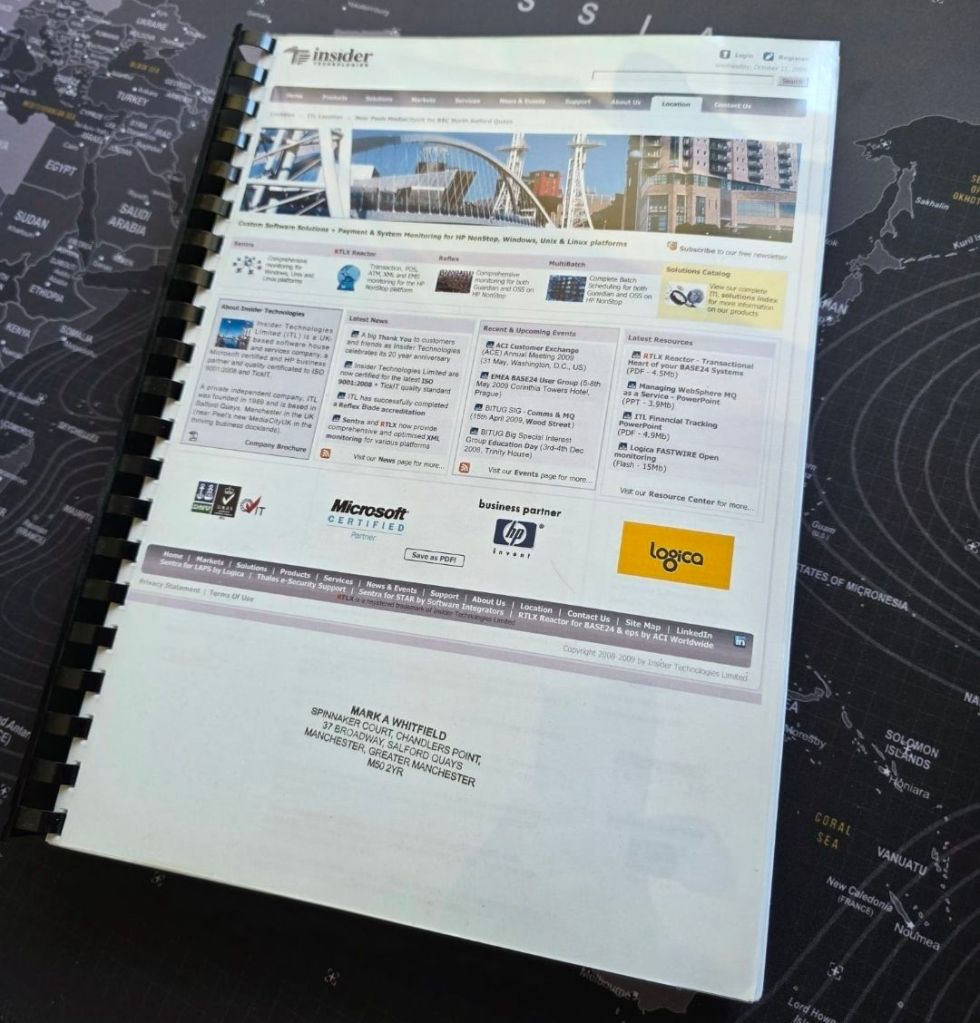
Insider Technologies Limited, Spinnaker Court, Chandlers Point, 37 Broadway, Salford Quays, M50 2YR

Insider Technologies Limited, Spinnaker Court, Chandlers Point, 37 Broadway, Salford Quays, M50 2YR

Company Website – Open Content Management Framework, DotNetNuke

In the early part of the millenium, ITL requested that I design and author a new company website using the Open Content
Management framework, DotNetNuke. This is a Visual Basic .NET Microsoft SQL database driven technology that enables website updates from any location with internet browser access.

As part of this exercise, website prominence was a key driver along with a more professional, corporate look-and-feel. The website is an ongoing programme of work that takes up a few hours a week of my time in taking it forward. I have attended 2 gbdirect (iTrain) website courses in this regard; ‘Writing for the Web’ and ‘Website Prominence and Visibility’. More information.

MediaCityUK BBC North Photographic Build Timeline Journal, Salford Quays

https://mark-whitfield.com/gallery/mediacityuk/

MediaCityUK BBC North Photographic Build Timeline Journal, Salford Quays

https://www.manchestereveningnews.co.uk/incoming/gallery/photographer-documents-rise-mediacityuk-15000-782727

https://www.manchestereveningnews.co.uk/news/greater-manchester-news/photographer-documents-the-rise-of-mediacityuk-with-15000-899834

MediaCityUK Photographic Time-lapse Movie – 2007 thru 2010

MediaCity UK Photographic Time-lapse Video – 2007 thru 2010

During my time working in Salford Quays as an IT Project Manager, I took a good number of photos and movies of the MediaCity build (literally from the ground up). The pictures were taken from 2007 when the dockland was flat and unused, through to 2010. MediaCity UK is now home to the BBC (BBC North), ITV in the North West and the University of Salford.

The 200 or so pictures in this movie represent an abridged timeline of the build selected from a few thousand photos starting from 2007.

Music soundtrack accompanying movie timeline is by John Barry and from the film –

Somewhere in Time (1980 – https://www.imdb.com/title/tt0081534/) –

Soundtrack link : https://www.youtube.com/watch?v=paU0yFZ-l3E

My MediaCityUK photo gallery and website : https://mark-whitfield.com/gallery/mediacityuk/