BASE24 Electronic Funds Transfer (EFT) software application developed by ACI Worldwide, Overview

BASE24 is a market-leading, fault-tolerant Electronic Funds Transfer (EFT) software application developed by ACI Worldwide. For decades, it has served as the backbone for global banking, processing billions of ATM, Point of Sale (POS), and smart card transactions.

BASE24 Electronic Funds Transfer (EFT) software application developed by ACI Worldwide, Overview

The product achieves its landmark 24/7/365 uptime by running natively on the HPE NonStop architecture—originally engineered by Tandem Computers.


1. Underlying Technology Stack

BASE24 Classic was built from the ground up to utilize the unique properties of the Tandem/HPE NonStop platform:

  • Operating System: HPE NonStop Kernel (NSK) / Guardian.
  • Database: Enscribe, a native hierarchical/flat file database optimized for ultra-fast, unstructured file access. Newer iterations use NonStop SQL/MX.
  • Programming Languages: Primarily TAL (Tandem Application Language), pTAL, and COBOL/SCOBOL.
  • Middleware: PATHWAY (PATHCOM), which acts as the transaction processing monitor to dynamically manage and load-balance server processes.

2. High-Level Component Architecture

BASE24 relies on an interconnected network of specialized processes that route and manage messages.

A. XPNET (The Networking Engine)

XPNET is a critical, proprietary communication subsystem. It provides the messaging infrastructure where applications interface with network communication lines. XPNET acts as the buffer layer, monitoring physical lines, enforcing transaction timing checks, and distributing data loads uniformly across CPUs.

B. Device Handlers (DH)

Device Handlers act as the translators for peripheral devices.

  • Function: They intercept hardware-specific protocol messages (e.g., Diebold or NCR formats from ATMs) and normalize them into BASE24’s internal standard message format.
  • Security: DH processes handle terminal-level PIN encryption, coordinate MAC (Message Authentication Code) keys, and initiate terminal downline loads.

C. Authorization Process (AUTH)

AUTH is the core decision engine of the application.

  • Function: It validates card restrictions, tracks card usage accumulations, and performs transaction risk checks.
  • Fallback Management: If a bank’s core system goes offline, AUTH drops into “Stand-Alone” or “Negative/Parametric Authorization” mode, approving transactions locally up to safe, pre-defined limits.

D. Host Interfaces (HI)

The Host Interface connects BASE24 to the financial institution’s primary backend core banking systems. It handles “On-Us” transactions—meaning the card used belongs to the bank owning the terminal.

E. Interchange Interfaces (II)

The Interchange Interface formats, translates, and routes transactions to global credit/debit networks (such as Visa, Mastercard, AMEX) or regional switches. It transforms internal BASE24 data formats into compliance standard formatting, such as ISO 8583. It handles “Not-On-Us” transactions.


3. Core Database & File Structure

BASE24 captures system activities across specialized transactional and tracking files, mostly utilizing Enscribe:

  • TLF (Transaction Log File): The primary log capturing every ATM event, amount, response code, and terminal ID in real-time.
  • PTLF (POS Transaction Log File): Mirrors the utility of the TLF, but optimizes records strictly for merchant POS transactions.
  • LCONF (Logical Network Configuration File): Dictates how network configurations, devices, institutions, and communication paths map into XPNET.
  • CAF (Cardholder Authorization File): Stores specific card numbers, limits, and statuses used for stand-alone authorization if host links break down.

4. Daily Operational Processes

Beyond live message switching, BASE24 executes several critical back-office operations:

  • Extract: Periodically filters transaction data from live TLF/PTLF logs to move to external billing arrays.
  • Refresh: Downloads updated data dumps (such as blacklisted cards or updated balances) from core hosts into local BASE24 database files.
  • Settlement Initiator: Aggregates transaction volumes at specified cutoff times to reconcile balanced records between ATMs, POS terminals, and clearing networks.

5. Why Tandem/HPE NonStop is Essential to BASE24

BASE24 relies on the hardware/software synergy provided by HPE NonStop to achieve near-zero downtime:

  • Shared-Nothing Architecture: Processors operate independently with their own memory stacks. If a physical CPU suffers hardware failure, it cannot corrupt the rest of the application.
  • Process Pairs: BASE24 components operate via a primary process in one CPU and a backup process in an alternate CPU. The primary constantly syncs checkpoint data with its backup. If the primary drops, the backup assumes processing instantly without interrupting transaction flights.
  • Active/Active Configuration: Utilizing replication software like HPE Shadowbase or DRNet, financial firms link distinct geographic NonStop locations. Both processing sites operate concurrently, managing localized transactions and replicating states reciprocally.

6. Product Evolution: BASE24 Classic vs. BASE24-eps

ACI Worldwide evolved the platform from BASE24 Classic into BASE24-eps (Enterprise Payment System):

Product Evolution: BASE24 Classic vs. BASE24-eps

BASE24 Electronic Funds Transfer (EFT) software application developed by ACI Worldwide, Overview

2. BASE24 Electronic Funds Transfer (EFT) software application developed by ACI Worldwide, Overview
BASE24 Electronic Funds Transfer (EFT) software application developed by ACI Worldwide, Overview

HPE NonStop Tandem Architecture Walkthrough

The HPE NonStop architecture (originally engineered by Tandem Computers in 1976) is a specialized, 100% fault-tolerant computing platform designed to achieve continuous application availability and absolute data integrity. Unlike traditional mainframes or high-availability clusters that rely on rapid rebooting or switching resources upon a crash, NonStop prevents downtime entirely by masking failures through a hardware-software co-designed shared-nothing architecture.


1. Hardware Architecture: Massively Parallel & Shared-Nothing

At the physical tier, a NonStop system is built as a Loosely Coupled Multiprocessing (LCM) environment.

  • Independent Processor Modules: A single system consists of 2 to 16 independent CPUs (expandable via clustering up to 4,000+ CPUs). Each processor module contains its own dedicated Intel Xeon cores, memory, and I/O logic. Processors share no main memory, buses, or execution states. This isolation guarantees that a memory corruption or hardware crash in one CPU cannot physically propagate to another.
  • The Interconnect Fabric (ServerNet / RoCE): Because CPUs share nothing, they cooperate entirely by passing high-speed messages. Historically, this handled via a proprietary dual-bus named Dynabus, which evolved into ServerNet (the foundational grandfather of InfiniBand). Modern HPE NonStop X systems leverage RDMA over Converged Ethernet (RoCE) as the multi-gigabit interconnect fabric, providing dual-path, point-to-point messaging with sub-microsecond latency.
  • Dual-Ported, Redundant I/O Controllers: Every storage device, network interface, and controller card is physically dual-ported and cross-connected to two separate processor modules. If Processor A fails, Processor B seamlessly accesses the disk or network line using the alternate hardware path.
  • No-Spare, Active-Active Components: Every active element operates under a “no-spare” philosophy. Power supplies, cooling fans, and storage arrays are fully redundant and hot-swappable, ensuring the system can be repaired or upgraded while fully operational.

2. Operating System Architecture: NonStop OS (Guardian)

The foundational operating system is NonStop OS, which embeds the Guardian Kernel.

  • Distributed Copy Model: Every individual processor module loads and runs its own separate copy of the Guardian kernel. Rather than a monolithic OS orchestrating all chips, the system runs as a highly cooperative, message-driven distributed microkernel OS.
  • The Message System: The core of Guardian is its message router. Every operational request—whether writing a line to a database, opening a network socket, or checking a disk—is written as an inter-process message sent across the RoCE fabric. If a local resource is occupied, the message router redirects the request transparently across the fabric, making the entire cluster appear to applications as a single system image (SSI).
  • Continuous Heartbeats: All components and processors continually broadcast periodic “alive” heartbeat messages to one another. If a processor fails to respond to a heartbeat within a few milliseconds, the remaining CPUs immediately sever ties with it, declare it dead, and safely re-route pending workloads.

3. Software Fault Tolerance: Process Pairing

Hardware isolation is only half the battle. To tolerate software failures without dropping transactions, NonStop utilizes Process Pairs.

  • Primary and Backup Processes: When a critical application or system service starts, it creates two instances: a Primary Process executing on Processor 1, and a Hot-Standby Backup Process residing on Processor 2.
  • Real-Time Checkpointing: As the primary process performs work (e.g., executing a financial transaction step), it sends regular checkpoint messages to the backup process. These checkpoints copy vital state changes, register values, and memory updates.
  • Instant Takeover: If Processor 1 crashes, the Guardian OS instantly promotes the backup process to Primary. Because the backup contains the mirror state of the last transaction checkpoint, it picks up execution precisely where the failed process stopped. No state is lost, no connections drop, and the end-user experiences zero interruption.

4. Database & Storage Architecture: Enscribe, NonStop SQL, and TMF

Data integrity is paramount in NonStop’s design. It enforces strict ACID compliance at massive scale through layered data management software.

  • Enscribe & NonStop SQL/MX: NonStop supports Enscribe (a highly resilient structured file system) and NonStop SQL/MX (an ANSI-compliant relational database management system). Both are entirely decentralized, natively distributing table partitions across different physical disk drives managed by separate CPUs.
  • Mirrored Disks: Storage volumes are configured via volume-level mirroring (Disk 1 and Disk 2 track identical data blocks). Disk writes are executed in parallel across distinct I/O paths. If a drive fails or a sector corrupts, reads are immediately diverted to the mirror disc.
  • Transaction Monitoring Facility (TMF): TMF is the protected transaction manager. It acts as a distributed two-phase commit coordinator. If an application crashes mid-transaction, or an entire processing module loses power, TMF uses audit logs to back out incomplete transactions cleanly, guaranteeing that the database is never left in an inconsistent or corrupt state.

HPE NonStop Tandem Programming Languages and Development Timeline

The development of programming languages on the HPE NonStop platform (originally founded as Tandem Computers) is tightly bound to its architectural hardware transitions: from custom CISC stack machines to MIPS RISC, Intel Itanium, and eventually standard Intel x86-64 infrastructures.


Detailed List of NonStop Programming Languages

1. Core Proprietary & System Languages

  • TAL (Transaction Application Language): The foundational system programming language for Tandem. It is a block-structured, machine-dependent procedural language designed to compile directly into highly efficient machine instructions. It features ALGOL/Pascal-like syntax but implements C-like semantics, structural pointers, and weak data typing.
  • pTAL & epTAL: Specialized evolutions of TAL. Rather than rewriting legacy codebases from scratch during architecture shifts, pTAL was introduced to compile existing TAL code natively into MIPS RISC architectures. Later, epTAL was developed to target Intel Itanium microprocessors.
  • TACL (Tandem Advanced Command Language): A built-in command interpreter and interpreted scripting language. It functions like a Unix Bash shell but features highly complex macro capacities used to orchestrate system configurations, monitor processes, and automate failover procedures.

2. Enterprise & Enterprise Legacy Languages

  • COBOL85 (and older COBOL74): The undisputed workhorse of NonStop commercial workloads. HPE’s tailored implementation of the COBOL85 standard natively interfaces with the Guardian OS. It allows programmers to embed SQL/MP statements and program fault-tolerant Process Pairs through HPE NonStop Pathway (TS/MP).
  • SCOBOL (Screen COBOL): A specialized, high-level structural derivative of COBOL utilized exclusively to build blocks for character-cell terminal interfaces (such as the 6530 terminal environments) running within Pathway architectures.
  • NonStop SQL (SQL/MP and SQL/MX): While technically a database system, its embedded syntax acts as a declarative language integrated into C and COBOL. SQL/MP works with the legacy Guardian file system, while SQL/MX brings ANSI-compliant SQL closely bound with the Open System Services (OSS) environment.

3. Standard Mainstream Languages

  • C & C++: Heavily introduced during the RISC transition to allow software portability. Mainstream development on modern NonStop systems uses standard C/C++ cross-compilers. They run in either the native fault-tolerant Guardian personality or the standard POSIX-compliant Open System Services (OSS) environment.
  • Java: A first-class language layer deployed natively on NonStop. HPE optimizes the Java Virtual Machine (JVM) to scale across multi-CPU shared-nothing frameworks, allowing modern enterprise web apps to run with out-of-the-box system availability.

4. Modern Open-Source Options

  • Python, Go, & JavaScript (Node.js): Modern procedural and script utilities provided by HPE. These environments leverage the OSS POSIX platform layer, running modern DevOps orchestration, microservices, and hybrid-cloud pipelines alongside the native database engines.

Detailed Timeline Breakdown by Era and Year

The evolution of NonStop languages maps directly across distinct engineering ownership eras.

The Proprietary Foundation Era (Tandem Computers: 1974–1989)

  • 1976: Tandem ships the original Tandem/16 (NonStop I). TAL is the only available language on the platform. The entire Guardian Operating System is written completely in TAL.
  • 1981: The NonStop II hardware is introduced. Tandem expands language support to include COBOL74, FORTRAN, and BASIC to attract mainstream banking clients.
  • 1983: Tandem releases the Transaction Monitoring Facility (TMF) and Pathway application management software. SCOBOL is introduced alongside them to program secure terminal entry interfaces.
  • 1985: TACL is deployed, completely modernizing the command line shell ecosystem with scalable macros and structured operational control.
  • 1986: Tandem launches NonStop SQL, the first linearly scalable, fault-tolerant relational database engine. Embedded SQL syntax is integrated directly into TAL and COBOL compilers.
  • 1988: Compilers undergo a major update to natively support the newly established COBOL85 standard, which quickly replaces COBOL74 for all mission-critical banking transactions.

The Open Systems & Hardware Transition Era (Compaq: 1990–2001)

  • 1991: Hardware migrates from CISC stacks to MIPS RISC architectures with systems like the Cyclone/R. To protect client software assets, Tandem delivers the pTAL compiler to translate TAL source code into native RISC binaries.
  • 1995: Tandem introduces Open System Services (OSS), a POSIX-compliant UNIX subsystem running over the Guardian kernel. This brings full-scale, native native compliance for standard ANSI C and C++ programming.
  • 1997: Compaq acquires Tandem Computers. Engineering shifts heavily toward implementing Java on NonStop, targeting cross-platform, enterprise internet-banking codebases.
  • 2000: NonStop SQL/MX is released. It allows developers to use embedded SQL statements within standard C, C++, and emerging Java applications inside the OSS runtime environment.

The Corporate Alignment & Itanium Era (Hewlett-Packard: 2002–2014)

  • 2002: HP merges with Compaq. Java is designated as a first-class citizen on the platform, receiving deeper optimization to tie into native clusters seamlessly.
  • 2005: HP releases the Integrity “NonStop i” servers, moving processors away from MIPS onto Intel Itanium architectures. The epTAL compiler is rolled out alongside standard C/C++ updates to seamlessly compile older environments onto Itanium.
  • 2011: Open-source scripting engines, including early ports of modern Python, are introduced to the OSS environment, easing the system-management burden for engineers unfamiliar with legacy TACL.

The Modern Enterprise Era (Hewlett Packard Enterprise: 2015–2026)

  • 2015: HP splits, and the platform transitions to HPE. Standard Intel x86-64 hardware dominates with the NonStop X architecture. Compilers utilize an standard GCC/LLVM-based back end, allowing normal Linux/Unix C++ programs to build on NonStop with minimal alteration.
  • 2020: Sales of Itanium systems officially terminate. Legacy languages like TAL are deprecated for new software creation but are preserved to support older, foundational logic.
  • 2023–2024: HPE rolls out modern cloud-ready DevOps Starter Kits. Full, native support is added for modern languages such as Go, modern Python 3.x, and Node.js, allowing them to integrate into modern automated CI/CD build environments.

HPE NonStop Tandem Programming Languages and Development Timeline

HPE NonStop Pathway is a transaction processing & application server environment (TS/MP)

HPE NonStop Pathway is a premier transaction processing and application server environment (TS/MP) that powers mission-critical Online Transaction Processing (OLTP). It handles critical application services—such as fault tolerance, load balancing, memory management, and process scheduling—automatically, allowing developers to focus strictly on business logic.

HPE NonStop Pathway is a premier transaction processing and application server environment (TS/MP) that powers mission-critical Online Transaction Processing (OLTP)
HPE NonStop Pathway is a transaction processing & application server environment (TS/MP)

Detailed Timeline Breakdown

The history and evolution of the Tandem NonStop platform and its Pathway environment span decades of architectural transformations and corporate ownership, categorized by distinct hardware and software eras:

1. The Tandem Era (1974–1997)

  • 1974: Tandem Computers Inc. is founded by Jimmy Treybig to build the first fault-tolerant commercial hardware.
  • 1976: The first Tandem NonStop system (NSI) is launched. Early apps had to be manually coded for fault tolerance.
  • 1981: NonStop II is released, bringing 32-bit addressing.
  • 1983: The Transaction Monitoring Facility (TMF) is introduced. Together with the launch of the Pathway transaction management software, the need for programmers to write manual fault-tolerance logic into their code is officially eliminated.
  • 1986: Tandem releases the EXT as an entry-level system, followed by the VLX.
  • 1991: Tandem introduces the Cyclone/R and initiates a massive architectural shift away from proprietary stack machines towards MIPS RISC processors.
  • 1997: Compaq acquires Tandem Computers, placing the NonStop product line under its umbrella.

2. The Compaq & Early HP Era (1997–2014)

  • 2001–2002: Hewlett-Packard (HP) merges with Compaq. The platform is rebranded as HP NonStop.
  • 2005: The HP Integrity NonStop (TNS/E) series is introduced, migrating the fault-tolerant platform to Intel Itanium microprocessors. Pathway continues to be the main driver for high-volume banking and telecom applications.
  • 2011: Further hardware advancements lead to the release of HP Integrity NonStop BladeSystems.

3. The Modern HPE Era (2015–Present)

  • 2015: Hewlett-Packard splits, and the NonStop environment transitions to Hewlett Packard Enterprise (HPE).
  • 2015/2016: Introduction of NonStop X (TNS/X) systems, marking the platform’s migration to standard Intel x86-64 processors and adopting InfiniBand interconnects. Pathway capabilities are updated to span dynamic server classes across multiple systems (Pathway Domains).
  • Present: HPE continues to modernize the NonStop architecture, integrating the platform with HPE GreenLake for consumption-based models and providing native support for modern DevOps tools and hybrid cloud deployments.

HPE NonStop Tandem EMS Subsystem Overview and Chronological Timeline

In the HPE NonStop ecosystem, EMS (Event Management Service) is the core software subsystem responsible for collecting, formatting, filtering, logging, and routing system and application event messages. It provides fault-tolerant monitoring by gathering data from EMS collectors and selectively delivering alerts to consoles, log files, or automated management applications.

EMS events as viewed in Console, Reflex 80:20 event viewer (ITL)
EMS event detail as viewed in Console, Reflex 80:20 event viewer (ITL)
EMS event view configuration window in Console

The evolution and detailed historical timeline of NonStop EMS events and architecture is broken down by era below:

1. The Tandem Guardian Era (Late 1970s – 1980s)

Focus: Foundation of Fault-Tolerant Event Logging

  • 1976: Tandem releases the original Tandem/16 (NonStop I) system. Early event handling was primarily a rudimentary terminal console logging process.
  • 1978: System administrators struggled with message scaling as clusters and terminal networks expanded. Tandem began developing structured event tracking, paving the way for standardized subsystem messages.
  • 1980s: Introduction of early message formatting. Event messages 1 through 511 were reserved for unformatted, raw console events. The Event Management Service (EMS) was gradually formalized to centralize scattered terminal messages.

2. The D-Series & TMF Era (1990s)

Focus: Distributed Management & The Birth of Modern EMS

  • 1991: Tandem releases the Cyclone/R (CLX/R) and later the Himalaya K-series using MIPS processors.
  • 1993: The publication of the seminal EMS Reference Summaries standardized EMS APIs and SPI (System Programming Interface). Event IDs were structured into standardized subsystems (e.g., negative-numbered kernel messages).
  • 1995: The NonStop Kernel introduced Open System Services (OSS), natively integrating Unix-like event logs into the Guardian architecture.
  • 1997: Compaq acquires Tandem Computers. EMS underwent significant rewrites to interface with remote servers and client networks. The S-Series was launched utilizing ServerNet fabric, introducing advanced, distributed event collectors and distributors.

3. The Compaq Transition & HP Integration (2000s)

Focus: Web-Based Management and Automation

  • 2000 – 2003: Legacy ViewPoint tools were expanded. The emergence of GUI interfaces and DSM/PM (Distributed Systems Management/Performance Monitor) allowed operators to browse and filter EMS logs on alternate/primary event files.
  • 2003 – 2005: The transition to Web ViewPoint commenced, turning text-based EMS event logs into interactive, web-based graphical operations interfaces.
  • 2006 – 2009: With HP fully in charge after merging with Compaq, EMS event viewing was modernized through TSM (Tandem/HP Systems Management) and the Open System Management (OSM) Event Viewer.

4. The Modern HPE Era (2010s – 2026)

Focus: Cloud Integration, Virtualization, & Real-Time Analytics

  • 2015 – 2017: The platform is rebranded as HPE NonStop as the architecture migrates to x86 processors. EMS systems are upgraded to handle large datasets, feeding complex event processing (CEP) and SNMP trap frameworks for modern data centers.
  • 2018 – 2023: HPE integrates NonStop systems with HPE GreenLake. EMS event logging is modernized with API-driven integrations, allowing system events to be consumed by off-platform enterprise loggers, Splunk, and cloud-management consoles.
  • 2024 – 2026: EMS events operate in highly virtualized and hybrid cloud (x86 and Virtual NonStop) environments. Event management heavily relies on modern distributed systems where EMS distributors push logs seamlessly into centralized IT monitoring suites and continuous availability dashboards.

To look up specific system-generated event codes or statuses from any era, consult the legacy ⁠HP NonStop Operator Messages Manual or the broader ⁠HPE Nonstop Compute documentation portal.

eBUG (European BASE24 User Group) Conference Overview and Chronological  Timeline

The eBUG (European BASE24 User Group) Conference is the premier annual gathering for financial institutions, retail banking professionals, and technical architects utilizing ⁠ACI Worldwide’s foundational retail payment engine, BASE24 and BASE24-eps.

Operating alongside global HPE NonStop hardware environments, the conference traditionally functions as a collaborative technical focus group (TFG) and customer roundtable. It brings together industry experts to address mission-critical transaction switching, regulatory compliance mandates, payment security architectures, and core software migrations.


Detailed Era Breakdown & Timeline

Era 1: The Classic BASE24 & ITUG Tandem Era (1980s – Late 1990s)

Focus: Evolution of core ATM/POS switching on Tandem (HPE NonStop) platforms, localized compliance, and basic card processing networks.

  • 1982–1985: The birth of the early European user networks following the launch of BASE24 software by Applied Communications Inc. (now ACI Worldwide). Early meetings are heavily dependent on regional vendor user group support.
  • 1992: Initial formations of explicit regional sub-committees under the International Tandem User Group (ITUG). The European base of users establishes formal communication pipelines.
  • 1996: Increased focus on the early adoption of regional card mandates, standardising early transaction switching over X.25 networks, and prepping mainframe systems for high-availability roundups.
  • 1999: A definitive milestone focused on Y2K compliance readiness. Conferences during this era are heavily centered on stress-testing legacy BASE24 code blocks, ensuring clock dates rollover flawlessly across financial networks without disrupting global merchant processing.

Era 2: The EMV Mandate & “Classic-to-EPS” Transition Era (2000 – 2010)

Focus: Overhauling core code for Chip & PIN (EMV) regulations, migrating toward open system frameworks, and introducing the next-generation BASE24-eps payment platform.

  • 2003: The EMV Blueprint Era. The conference takes a primary steering role for European banks facing strict Eurocard, Mastercard, and Visa (EMV) liabilities. User sessions heavily focus on updating terminal messaging scripts.
  • 2005: Introduction of BASE24-eps to the wider user group community. Discussions shift away from the classic architecture toward modern open-systems deployments, leveraging UNIX, Linux, and IBM z/OS alongside traditional NonStop environments.
  • 2007 (Istanbul, Turkey): The group expands geographic footprints into the borders of Europe and Asia. Themes heavily stress global interoperability, cross-border transactional routing, and real-time fraud monitoring.
  • 2008 (Vienna, Austria): High-water mark for attendance during the mid-2000s. Presentations focus on deep-dive technical configurations of BASE24-eps Release 08.2, service-oriented architecture (SOA) wrappers, and high-availability testing matrices.
  • 2009 (Prague, Czech Republic): Real-time monitoring tools become a central talking point. Despite global financial pressures, the user community explicitly defends the strength of ⁠HPE NonStop infrastructure for running foundational retail networks.

Era 3: Security Hardening & The Independent Pivot Era (2011 – 2018)

Focus: Adapting payment loops to rigid PCI-DSS requirements, cloud capability tracking, and shifting the conference structure to independent consulting sponsorships.

  • 2011: Focus turns squarely onto PCI-DSS Compliance and tokenisation. Roundtables detail architectural techniques to secure transaction journals, encrypt key lines, and prevent man-in-the-middle exploits at the ATM level.
  • 2012 (London, UK): Held at the historic ⁠Trinity House near Tower Bridge, this event marks a structural pivot. Moving away from a pure ACI-hosted workspace, independent payment consultancies (such as PayX) drive user discussions. This Technical Focus Group explicitly evaluates the limits of legacy systems against “intelligent” multi-vendor ATM software.
  • 2015: Immediate focus addresses the challenges of Real-Time / Instant Payments mandates across the Eurozone. Systems engineers share optimization scripting paradigms to support sub-second processing SLA ceilings.
  • 2018: The rise of Open Banking / PSD2 Regulations. Technical breakout sessions outline how to safely open classic BASE24 architectures to third-party APIs through microservices wrappers and middleware adapters without breaking strict system uptime criteria.

Era 4: Modernisation & Cloud-Native Coexistence Era (2019 – Present)

Focus: ISO 20022 message standard migrations, cloud-native deployments, and containerization strategies.

  • 2020–2022: Transition to hybrid tracking methodologies due to travel constraints. The baseline focus targets data integration, remote system management, and virtualized system-hardening techniques.
  • 2023–2024: The ISO 20022 Mandate. Sessions are dominated by the industry-wide migration from legacy ISO 8583 message lines to the XML-based ISO 20022 financial standard. Systems architects present automated script parsers to translate real-time payment formats across legacy logic systems.
  • 2025–2026: Integration of ⁠Cloud-Native BASE24-eps architectures. Contemporary meetups explore containerized execution patterns, utilizing AI models within the authorization loop to spot edge-case fraud patterns in real-time, and evaluating long-term roadmaps for hardware-security modules (HSMs).

eBUG (European BASE24 User Group) Conference Overview and Chronological  Timeline

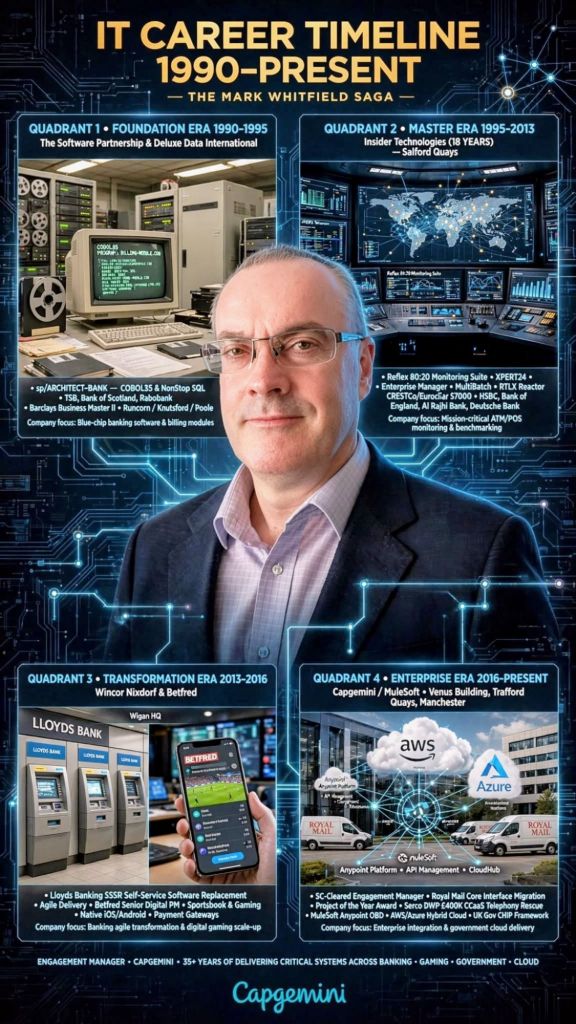
Mark Whitfield – Senior Project Manager – Projects Chronologically

Mark Whitfield is an SC-cleared Senior IT Project and Engagement Manager with over 30 years of experience. His career spans from early mainframe programming to leading multi-million-pound cloud migrations and digital transformations for major financial, utility, and government clients.

The chronological breakdown of his professional project portfolio, structured by his definitive career eras, is detailed below:

1. The Technical Era (1990–1995)

During this foundational era, Mark worked as a Programmer and Lead Analyst for The Software Partnership (acquired by Deluxe Data in 1994). He focused strictly on the development, optimization, and deployment of the sp/ARCHITECT-BANK electronic banking solution on Tandem Mainframe Computers.

  • Project: Barclays Business Master II (BBM II)
    • Year: 1990–1992
    • Client: Barclays (On-site at Knutsford, Cheshire)
    • Budget: Internal banking operational budget
    • Details: Handled the custom design and backend coding for a high-profile desktop electronic business banking application.
  • Project: Automated Touch-Tone Phone Banking Suite
    • Year: 1992–1993
    • Client: Girofon (Denmark)
    • Budget: Client-retained vendor contract
    • Details: Coded automated, menu-driven voice solutions operating on a Periphonics VRAM device to fetch live customer balances directly from mainframes.
  • Project: Early Digital Inter-Account Transfers
    • Year: 1993–1994
    • Client: TSB & Bank of Scotland
    • Budget: Internal product development
    • Details: Directed logic design and mainframe coding to support pioneering inter-account electronic funds transfers.
  • Project: International Banking Optimization
    • Year: 1994–1995
    • Client: Rabobank
    • Budget: Vendor-driven custom development framework
    • Details: Managed localized software optimization, custom patches, and deployment testing for global banking operations.

2. The Infrastructure & Monitoring Era (1995–2014)

Mark transitioned into a Product and Project Manager role at Insider Technologies Limited (and later a brief stint at Wincor Nixdorf). His focus shifted heavily toward platform diagnostics, high-availability transaction monitoring, and financial hardware software integrations.

  • Project: Reflex (Reflex 80:20) System Co-Development
    • Year: 1995–2004
    • Client: Multiple Tier-1 Investment Banks (including Euroclear/Crestco, Bank of England, and Deutsche Bank)
    • Budget: Part of a broader £3M Management Buyout (MBO) product portfolio
    • Details: Acted as Senior Programmer and Technical Lead to co-develop diagnostic monitoring modules for high-availability mainframes.
  • Project: ATM & Point-of-Sale (POS) Transaction Monitoring
    • Year: 2005–2013
    • Client: Barclays, HSBC, and Alliance & Leicester (now Santander)
    • Budget: Multi-year strategic technical vendor account
    • Details: Managed the integration of transaction tracking across ATM networks using ACI’s XPNET and HP NonStop architecture.
  • Project: Legacy ATM Software Modernisation
    • Year: 2013–2014
    • Client: Major UK Retail Bank (via Wincor Nixdorf Professional Services)
    • Budget: Corporate financial service transformation
    • Details: Served as Project Manager executing the swap-out of outdated, legacy ATM client systems for modernized software stacks.

3. The Digital and Cloud Era (2014–Present)

This era highlights Mark’s leadership of large-scale Agile and Waterfall digital delivery frameworks, moving from corporate gambling technology to complex, high-budget UK public sector programs.

  • Project: Mobile & Online Gaming Sportsbook Platforms
    • Year: 2014–2016
    • Client: Betfred Limited (Online & Mobile Division)
    • Budget: Multi-million phased agile commercial releases
    • Details: Led Agile Scrum development teams to upgrade payment gateways, implement fraud detection, and roll out football/horse racing mobile interfaces.
  • Project: National Air Space Real-Time Mobile Applications
    • Year: 2016
    • Client: NATS (UK-wide Air Traffic Organisation)
    • Budget: Corporate custom applications initiative
    • Details: Managed the secure Agile delivery of Apple iOS applications displaying live military and public airspace information.
  • Project: Core Systems Interface Data Centre Migration
    • Year: 2016 (May–October)
    • Client: Royal Mail Group (RMG) / Postal Services
    • Budget: £4.3 Million
    • Details: Led a massive cross-functional team of 90 Capgemini engineers to migrate over 1,100 platform data interfaces ahead of peak annual trading.
  • Project: Automated Call Centre CCaaS Telephony Implementation
    • Year: 2017 (May onwards)
    • Client: Local Regional Government
    • Budget: £400,000
    • Details: Deployed a programmatic dialler system linked with Microsoft Azure CRM to facilitate the “Support for Mortgage Interest” campaign.
  • Project: Automotive Online Car Sales and Digital Readiness
    • Year: 2017 (October)
    • Client: Jaguar Land Rover (JLR) / Aston Agile Delivery Centre
    • Budget: £1.1 Million (Split into a £670k Customer Sales Portal and a £430k Readiness project)
    • Details: Engagement Manager implementing a new-car ecommerce vehicle pipeline.

Project: Middleware & MuleSoft Anypoint Integrations

  • Year: 2018–2019
  • Client: UK Utility, Accounting, and Recruitment Industries (via MuleSoft augmentation)
  • Budget: Enterprise-wide technology vendor accounts
  • Details: Delivery Manager structuring API integration architectures across multi-million-pound client portfolios.

Project: Multi-App Cloud Migration Proof-of-Concept

  • Year: 2020 (Feb–May)
  • Client: UK Government
  • Budget: £375,000
  • Details: Directed a 3-month proof of concept migrating legacy Access, Oracle, and SQL databases to Microsoft Azure and Dynamics 365.

Project: Document Management Cloud Transformation

  • Year: 2021–2022
  • Client: UK Utility Industry (e.g., Welsh/Scottish Water)
  • Budget: £500,000+
  • Details: Managed the platform decommissioning and cloud modernization from legacy EQS document storage over to Azure Enablon.

Project: Enterprise Dynamics 365 Online Cloud Migration

  • Year: 2022 (November onwards)
  • Client: UK Government
  • Budget: £1 Million+ (Part of a larger £13.5M cloud program moving 130 apps)
  • Details: Orchestrated the launch and configuration of Azure Cloud frameworks migrating 12 historical Dynamics 2016 platforms to Dynamics 365 Online.

Project: Fish Export Service (FES) to CHIP Inspection Portal

  • Year: 2023–2024 (Nov–Feb)
  • Client: UK Government / Northern Ireland Trading Framework
  • Budget: £1 Million+
  • Details: Served as Technical Delivery Manager directing Agile Scrum teams to build cloud-hosted APIs supporting catch verification under the Windsor Framework.

Connect – HPE NonStop Technology & Business Conference, Nonstop TBC, 2026

The HPE NonStop Technology & Business Conference (Nonstop TBC 2026)—hosted by Connect Worldwide—will take place from September 14 to September 17, 2026, at The Rosen Plaza in Orlando, Florida.

The HPE NonStop Technology & Business Conference (Nonstop TBC 2026)—hosted by Connect Worldwide—will take place from September 14 to September 17, 2026, at The Rosen Plaza in Orlando, Florida
Connect – HPE NonStop Technology &
Business Conference (Nonstop TBC 2026)

This signature annual event brings together enterprise IT leaders, software engineers, and solution architects to explore innovations shaping mission-critical environments.

Core Event Schedule

The four-day conference partitions its educational and collaborative tracks as follows:

  • September 14: Dedicated exclusively to HPE Education Day, featuring expanded deep-dive technical pre-conference courses.
  • September 15–17: The primary conference technical program and breakout sessions.

Key Focus Areas & Tracks

The 2026 event focuses heavily on bridging mission-critical legacy stability with modern software frameworks:

  • AI-Driven Transformation: Adapting continuous availability to the demands of modern artificial intelligence and machine learning workloads.
  • Digital Resilience & Security: Mitigating modern risks, modernising backup systems, and maintaining absolute runtime security.
  • FinTech & Payments: Real-world operational strategies from global peers managing transaction-heavy workloads.
  • Expanded Business Track: New for 2026, this track aligns executive business drivers with technical architectures for practical IT roadmap building.

Logistics and Pricing

  • Venue: The Rosen Plaza Hotel, situated at 9700 International Drive, Orlando, Florida.
  • Pricing: A newly reduced Early Bird Registration ticket is available for $895.
  • Accommodations: Registered attendees gain access to a dedicated Connect block rate of $181 per night (including tax).
  • Sponsorships: Major industry partners, such as comforte, sponsor the event, granting enterprise buyers direct visibility into third-party NonStop infrastructure add-ons.

Connect Worldwide – HPE NonStop Technology & Business Conference, Nonstop TBC, 2026

ACI Worldwide XPNET Message-Oriented Middleware, MOM

XPNET (often distributed as part of the NET24 suite) is a proprietary, mission-critical Message-Oriented Middleware (MOM) and network management infrastructure developed by ACI Worldwide.

It is designed to run primarily on fault-tolerant HPE NonStop (Tandem) systems. XPNET acts as the foundational layer for ACI’s globally dominant payment engines, BASE24 and BASE24-eps.

It provides the multi-node network architecture, data routing, inter-process communication, and transaction logging required to safely process hundreds of millions of ATM, Point of Sale (POS), and mobile payments daily.

Key Architectural Technical Description

  • Core Function: XPNET acts as the vital gateway between terminal devices (ATMs, POS terminals), regional interchanges (Visa, MasterCard), and a bank’s back-end host system.
  • Network Environment File (NEF): All physical and logical configurations of an XPNET deployment—including nodes, links, processes, stations, and communications lines—are centrally defined inside the NEF.
  • Fault Isolation: XPNET monitors processes using a distributed architecture. If an interface process or line drops, XPNET safely queues or reroutes transactions to achieve “five-nines” (99.999%) financial system uptime.
  • Audit and Tracing: XPNET intercepts all systemic message traffic, managing the core Transaction Log File (TLF) and generating event messaging for fraud monitoring and performance profiling.

Detailed XPNET Historical Timeline Breakdown

The evolution of XPNET is deeply intertwined with ACI’s flagship software, scaling alongside the transformation of global electronic funds transfers (EFT).

1982 – 1989: The Genesis Era

  • 1982: ACI launches BASE24 to manage early ATM networks. To handle low-level Tandem interprocess communication, ACI designs precursor communication layers.
  • 1986: ACI scales internationally to 131 major clients across 14 countries, increasing the demand for a standard, highly secure, policy-driven message-switching architecture to accommodate disparate global telecommunication protocols.

1990 – 1999: NET24 and XPNET Standardisation

  • 1993: ACI is reorganised under Transaction Systems Architects (TSA). The communications infrastructure is formalised as NET24-XPNET, decoupled cleanly from application logic.
  • 1995: ACI goes public on NASDAQ. XPNET becomes the mandatory structural platform for any financial institution deploying BASE24 “Classic”.
  • 1998: ACI acquires IntraNet. XPNET is updated to handle wholesale wire transfers and high-value Automated Clearing House (ACH) data alongside retail consumer swipes.

2000 – 2009: The Next-Gen Transition (BASE24-eps)

  • 2002: ACI launches BASE24-eps (Enterprise Payments System). XPNET is radically re-engineered to support both classic structural architecture and next-generation message formats, utilizing its Common Transport Subsystem (CTS) to act as a Tandem Pathway client/server.
  • 2008: ACI optimises BASE24-eps for IBM System z architectures, but updates the NonStop-native XPNET to Version 08.2 to handle expansive regional payment networks across Europe and Asia.

2010 – 2019: Litigation and Global Footprint Consolidation

  • 2011 – 2014: Third-party performance suites, such as IR Prognosis XPNET Manager, Insider Technologies XPERT24 and Reflex ONE24 explode in popularity, allowing banks to map live visual diagnostics of their XPNET lines and queues.
  • 2017: ACI and MasterCard reach an agreement to resolve a massive legal dispute. As part of the settlement, MasterCard purchases a perpetual components license for NET24-XPNET middleware to legally fuel its core debit-switching network infrastructure.

2020 – 2026: Legacy Modernisation & The API Era

  • 2021: With financial institutions pivoting toward digital microservices, ACI introduces hybrid compatibility layers. Companies like NuWave introduce direct API bindings to XPNET, allowing legacy HP NonStop payment architectures to map to modern REST web services without rewriting base COBOL/C code.
  • 2025 – 2026: ACI celebrates 50 years of enterprise infrastructure engineering. While cloud-native solutions like ACI Connetic roll out for real-time rails, NET24-XPNET Version 4.x remains a heavily maintained, actively running baseline layer across tier-1 legacy banking systems worldwide.

ACI Worldwide XPNET Message-Oriented Middleware, MOM

XPERT24 Product Overview

XPERT24 (XPNET Performance Monitoring and Tracking) is a specialised financial middleware software product developed by Insider Technologies Limited. It provides real-time transaction tracking and operational counter monitoring for the BASE24™ transaction processing infrastructure.

Product Description

XPERT24 functions as a critical diagnostics layer for companies running BASE24 bank card payment systems. Built to sit on HP NonStop systems, the software uses PATHWAY servers to automatically detect, capture, and analyse data points from the underlying network. Its core features include:

  • XPNET Counter Monitoring: Tracks infrastructure health via rate, state, and data queue counters.
  • Interchange Performance: Monitors live transaction metrics, including approval and denial rates for ATM and POS transactions.
  • Throughput Optimization: Provides clear system visibility to avoid high-volume traffic jams or transaction delays.

Detailed Timeline Breakdown

The lifecycle of the XPERT24 software package moved from initial technical specification into corporate ecosystem expansions:

2001 — Initial System Baseline & Prep

  • Training and Scoping: Insider Technologies Limited launched internal Sales & Marketing campaigns to map mid-market banking software demands.
  • System Language Adaptation: Engineering teams refined core HP NonStop transaction tracking metrics.

2006 — Structural Architecture Layout

  • Design Initiatives: Product groups commenced documentation guidelines to build customer-facing technical literature.
  • Database Modeling: Initial designs mapped how transaction records could safely pass without lagging the live bank engine.

2007 — Server Logic Creation

  • Server Infrastructure Setup: Developers initiated building structural frameworks inside development kits.
  • Pathway Server Logic: Logic was written to make sure the software query scripts safely gathered data without interrupting processing.

2008 — Production Release & Launch Era

  • Official Software Launch: Insider Technologies launched the operational XPERT24 system to production status.
  • Hypervisor UI Integration: The company produced dedicated BASE24-eps™ and XPNET layer Hypervisor graphical displays.
  • Industry Showcase: Technical user interfaces were presented directly to the Electronic Banking User Group (EBUG) and the Satellite Transaction User Group (SATUG).

2009 — Data Query Expansion

  • SQL Interoperability: Product upgrades integrated better SQL handling to build structured transaction logs.
  • Web Monitoring Foundations: Teams rolled out technical requirements to present live transaction counters into standard web browsers.

2011 — Project Management & Standardization

  • Agile Shift: Development pipelines migrated entirely onto the Scrum framework.
  • Process Alignment: The product management structure was retrofitted to follow strict PRINCE2 guidelines to help service major government and banking institutions.

Sentra Overview and Detailed Timeline by Year

Sentra is a premier tracking and service management software platform developed by Insider Technologies Limited. Designed specifically for high-volume, mission-critical operations, Sentra is deployed across major financial, government, and defense institutions. It specializes in real-time tracking, information mediation, and multi-platform service level agreement (SLA) monitoring.

Insider Technologies, Business, Process and Systems Management for the Financial and Messaging Markets
Insider Technologies in 2003 (San Jose), Business, Process and Systems Management for the Financial and Messaging Markets

The system operates across Windows, HP NonStop, Linux, and Unix environments to guarantee maximum uptime for transaction processing and data transmission.


Product Description & Capabilities

Sentra acts as a powerful tracking diagnostics framework. It evaluates the flow of files, payments, and system events to prevent costly service outages.

  • Real-Time Transaction Extraction: Utilizes extraction agents to pull live transaction data—such as ATM and Point-of-Sale (POS) logs—from core banking applications.
  • High-Speed Middleware Ingestion: Relays transaction lifecycle files (TLF) directly to a Windows server and Microsoft SQL database. This uses the company’s proprietary, high-speed TCP/IP sockets protocol known as FastPipe.
  • Rigorous SLA Enforcement: Provides end-to-end monitoring metrics optimized to help financial firms achieve extremely demanding targets, including 99.999% system availability.

Detailed Timeline Breakdown by Year

Because Insider Technologies is a private, specialized enterprise software house, its continuous internal product updates are primarily mapped through corporate evolution and key platform milestones:

1989 — Corporate Foundation

  • Insider Technologies Limited is incorporated in Manchester, UK. It targets 24×7 mission-critical systems like Tandem Computers (which later evolved into HP NonStop computing architecture).

1990s to Early 2000s — The Monitoring Evolution

  • The company relies heavily on its early flagship monitoring software suites, Reflex and MultiBatch.
  • Recognizing a shift toward heterogeneous environments, engineering teams begin conceptualizing Sentra to bridge real-time tracking between Windows and legacy systems.

2004 — Core Sentra Framework Launch

  • Official design, infrastructure layout, and core coding begin for the specialized Sentra platform architecture.
  • Sentra is formalized to extend tracking metrics outside of traditional mainframe environments into multi-platform Linux, Unix, and Windows installations.

2006 — Banking Application Integration

  • Development accelerates on custom add-ons to integrate Sentra directly with core banking infrastructure.
  • Teams design specialized mechanisms to track high-volume transactions routed via ACI Worldwide’s popular BASE24™ transaction-processing software.

2008 to 2011 — The RTLX Reactor Expansion

  • Insider Technologies releases RTLX Reactor, a major add-on module built entirely on top of the Sentra framework.
  • This expands Sentra’s market footprint by offering retail banks direct, real-time diagnostic visibility into live ATM and POS cash terminal traffic.

2013 — Framework Optimization & Digital Web Presence

  • A multi-year architectural overhaul wraps up, introducing enhanced information mediation and updated corporate digital resources mapping the platform’s core tracking methodologies.

2015 — ETI-NET Acquisition

  • Backup, storage, and mainframe architecture firm ETI-NET officially acquires Insider Technologies.
  • Sentra benefit from combined global sales networks and tighter operational integrations with deep corporate data storage infrastructure.

2019 — 30th Anniversary & Enterprise Modernisation

  • Celebrating 30 years in operation, Insider Technologies rolls out modernised visual dashboards and broader diagnostic tracking capabilities across the Sentra portfolio. This addresses the escalating scale of electronic payments.

2024 to 2026 — PartnerOne Era & Cyber-Resilience

  • Insider Technologies transitions into operating as part of the global PartnerOne group.
  • Sentra continues to serve as an indispensable middleware tracking and monitoring asset. It runs alongside updated proactive cybersecurity, XDR, and IT operations infrastructure tailored for the UK government, defense sector, and multinational banking institutions.
  • The Insider RTLX product at ETI-NET is now called C-Deep for Transaction Monitoring;
    C-Deep (Transaction Monitoring)

    The Insider Reflex product at ETI-NET is now called Sentinel for NonStop Monitoring;
    Sentinel (Nonstop Monitoring)

ActionView.400 Monitoring Tool for OSI/MHS X.400 Subsystem on HPE NonStop

ActionView.400 is an enterprise tracking and diagnostics software solution developed by Insider Technologies Limited. It was purpose-built as a dedicated monitoring tool for the Open System Interconnection / Message Handling System (OSI/MHS) X.400 subsystem deployed on Tandem, Compaq, HP, and HPE NonStop server platforms.

ActionView 400 Monitoring Tool for OSI/MHS X.400 Subsystem on HPE NonStop
Insider Technologies Limited, Salford Quays, Manchester. M50 2YR

The software acts as a critical infrastructure layer used heavily by banking institutions, telecommunications providers, and government/military defense sectors.

It ensures that high-volume, secure electronic mail infrastructure meets strict Service Level Agreements (SLAs) by allowing engineers to account for every message, calculate end-to-end processing times, and issue real-time tracking metrics.


Detailed Timeline Breakdown by Year

  • 1989: Insider Technologies Limited is incorporated in Manchester, England, by a collective of IT industry veterans. The firm initially focuses on building service management and custom tracking middleware for the rapidly expanding Tandem NonStop server ecosystem.
  • 1990s (Early to Mid): As X.400 protocols become the global standard for secure EDI (Electronic Data Interchange) and military messaging, Insider Technologies develops ActionView 400. The product is integrated directly into Tandem’s core software stack and begins shipping natively with Tandem NonStop platforms.
  • 1997: Tandem Computers is acquired by Compaq. ActionView 400 is sustained through this transition to maintain critical operations for tier-one banks and national military infrastructures relying on NonStop systems.
  • 2002: Compaq merges with Hewlett-Packard (HP). ActionView 400 is bundled under the HP NonStop software catalog (product designation T8443), managing and diagnosing log audits like the AUDLOG framework.
  • 2000s (Mid to Late): Insider Technologies starts shifting forward-looking tracking requirements toward its newer central architecture platform, Sentra. While ActionView 400 continues handling legacy X.400 pipelines, Sentra begins acting as a unified web console to consolidate both X.400 and modern SMTP/MIME email flows across multi-vendor systems.
  • 2015: HP splits its corporate structures. The NonStop computing line and the management of ActionView 400 shift over to Hewlett Packard Enterprise (HPE).
  • 2018: In December 2018, HPE officially moves ActionView 400 to Obsolete status, marking the formal end of its product life cycle and standard vendor service life.
  • 2019 – Present: Despite official obsolescence on the HPE hardware list, Insider Technologies continues to directly support and maintain the solution for deep-legacy military, defense, and governmental bodies. Because these sectors still mandate uncompromised, zero-loss X.400 message accounting, the software remains active, feeding tracking telemetry directly into Insider’s modern Middleware Monitoring and Sentra platform interfaces.
Sentra - unified web console to consolidate both X.400 and modern SMTP / MIME email flows across multi-vendor systems
Sentra – unified web console to consolidate both X.400 and modern SMTP / MIME email flows across multi-vendor systems

Mark Whitfield – projects timeline history from 1990

Mark Whitfield is an SC-cleared Senior IT Project Manager with over 30 years of experience delivering high-availability financial, cloud, and digital transformation projects. Over his career, he has transitioned from deep technical engineering on HPE NonStop (Tandem) mainframe systems to leading major corporate and public sector Agile and Waterfall software rollouts.

A comprehensive, year-by-year timeline breakdown of his project history and clients since 1990 is outlined below.

💻 The Technical Era (1990–1995)

During this period, Whitfield worked as a Programmer and Lead Analyst for The Software Partnership (acquired by Deluxe Data in 1994). He focused on electronic banking software (sp/ARCHITECT-BANK) on Tandem Mainframe Computers.

  • 1990–1992: Barclays Bank – Placed on-site at Knutsford, Cheshire to design and code software for the high-profile Barclays Business Master II (BBM II) electronic desktop banking project.
  • 1992–1993: Girofon (Denmark) – Developed a touch-tone phone banking suite. This allowed clients to use automated voice/menu-driven systems via a Periphonics VRAM device to fetch live balances from back-end mainframes.
  • 1993–1994: TSB & Bank of Scotland – Conducted early-era digital investigations, logic design, and mainframe coding for inter-account desktop money transfers.
  • 1994–1995: Rabobank – Headed software optimization, custom electronic coding patches, and on-site deployment validation for international operations.

🛡️ Monitoring & Infrastructure Era (1995–2013)

Whitfield joined Insider Technologies Limited (ITL) in Salford Quays, specializing in platform diagnostics, transaction monitoring, and financial logging systems for mission-critical infrastructure.

  • 1995–1996: Internal ITL Product R&D – Core developer on the Reflex monitoring suite (Reflex 80:20), creating platform health and diagnostic plug-in modules.
  • 1997–1998: CRESTCo (now Euroclear) – Brought in as a technical infrastructure consultant to run benchmark tests on newly released Tandem S7000 processing hardware nodes.
  • 1999–2001: Bank of England / Deutsche Bank – Deployed real-time tracking protocols utilizing ITL’s MultiBatch scheduling architectures and file monitors.
  • 2002–2003: Hewlett-Packard (HP) – Successfully managed the rigorous certification process for the first HP OpenView Operations (OVO) Smart Plug-In built for the NonStop mainframe environment.
  • 2004–2007: Alliance & Leicester (now Santander) / HSBC – Implemented transaction log extraction protocols (RTLX and Sentra) to audit automated teller machine (ATM) logs.
  • 2008–2010: Saudi Arabian Retail Bank – Acted as Project Manager overseeing the cross-border rollout of a high-volume ATM and Point-of-Sale (POS) monitoring system.
  • 2011–2013: Global Payments / Standard Chartered – Integrated transaction monitoring capabilities with external corporate frameworks such as TIVOLI and XPERT24 using ACI’s XPNET architecture.

🏦 Senior Project Management & Retail Banking (2013–2016)

This timeframe marked a total transition into senior contract project management, dealing directly with multi-million-pound programs.

  • 2013–2014: Lloyds Banking Group (LBG) – Augmented into Wincor Nixdorf as the IT Project Manager leading a £5+ million workstream. This was part of LBG’s comprehensive Self-Service Software Replacement (SSSR) initiative to modernise legacy ATM software.
  • 2014–2016: Betfred – Senior IT Project Manager inside an Agile Scrum structure. Directed cross-functional software vendors to deliver updates for mobile apps (iOS/Android), fraud detection systems, and payment gateways for their digital sportsbook platforms.

🌐 Enterprise Consulting & Cloud Transformations (2016–Present)

In January 2016, Whitfield joined global consultancy firm Capgemini as a Senior client-facing Engagement/Delivery Manager.

  • 2016–2017: Aerospace & Defence Client – Managed an enterprise-level integration project to deploy a Salesforce-driven Single Customer View (SCV) portal platform.
  • 2017–2018: Jaguar Land Rover (JLR) – Served as Project Manager for the iFAB Middleware Project, a complex 12-month architecture development program linking global manufacturing supply components.
  • 2018–2019: MuleSoft (A Salesforce Company) – Augmented directly into MuleSoft’s London headquarters as a Delivery Manager, spearheading API-led connectivity deployments via the Anypoint Platform.
  • 2019–2021: UK Government Agency (UK Gov) – Commanded a major Hybrid Cloud Migration initiative to refactor, re-host, and re-platform 130 legacy agency software applications directly to cloud servers.
  • 2022: UK Utility Sector (Welsh Water / Scottish Water) – Dual-management lead executing a £0.5 million contract to migrate an aging, on-premise document management program (EQS) onto the Microsoft Azure cloud via Enablon.
  • 2023–2026: Public Sector & Core Tooling (Current) – Managing high-value middleware and API integrations for entities like the Royal Mail Group (RMG), NATS, and regional government bodies. Concurrently authors a widely used portfolio of commercial project management templates (RAID logs, RACI matrixes, and MS Project MPP layouts) published via PROject Templates.

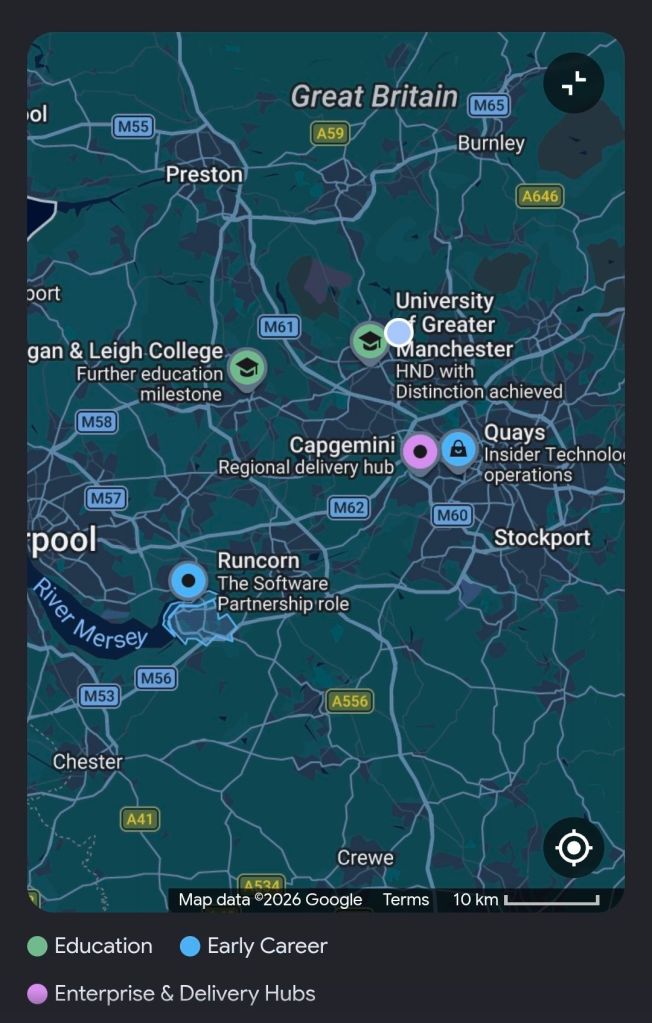
The Software Partnership was a highly specialized software house in Runcorn

The Software Partnership (TSP) was a highly specialized British software house based in Runcorn, Cheshire, that played a key role in early cutting-edge electronic banking software. The firm famously developed sp/ARCHITECT-BANK, an innovative enterprise banking system built explicitly for Tandem Computers (now HPE NonStop) fault-tolerant server systems. I was based there between 1990 and 1995.

The Software Partnership Logo, Runcorn Software House, Deluxe Data
The Software Partnership Logo

Below is a detailed overview of the company’s operational history, alongside the corresponding hardware/software architectural eras of the HPE NonStop platform it relied upon.


Detailed Overview

  • Core Focus: The Software Partnership specialized in online transaction processing (OLTP) and electronic automated banking software. Long before the internet became mainstream, TSP engineered early desktop access environments for corporate bookkeeping and inter-account bank transfers.
  • Key Product: Its flagship software suite, sp/ARCHITECT, ran on Tandem’s highly unique, redundant architecture. The software handled complex high-volume retail transactions, ATM networking, and ledger balances.
  • Major Clients: High-profile financial institutions deployed TSP’s systems, including TSB (Trustee Savings Bank), Bank of Scotland, Rabobank, and Denmark’s Girofon.
  • Legacy: TSP initiated a massive lineage of financial tech operations in the Runcorn/Warrington area. After subsequent buyouts and transitions, its corporate DNA integrated into modern banking giants, eventually operating under Fidelity National Information Services (FIS).

Detailed Timeline by Era and Year

The history of TSP mirrors the evolution of the underlying fault-tolerant architecture originally built by Tandem, later managed by Compaq, HP, and currently Hewlett Packard Enterprise (HPE).

Era 1: The Tandem Founding & TSP Inception (Mid-1970s – 1989)

This era is marked by Tandem’s creation of the fault-tolerant server market, which birthed the niche that TSP filled.

  • 1974–1976: Tandem Computers is founded and ships its first 16-bit NonStop I (T/16) system, utilizing complete component redundancy to guarantee close to zero downtime for the financial industry.
  • 1981: Tandem introduces the NonStop II, transitioning to battery-backed DRAM memory and enabling early 32-bit addressing.
  • Mid-1980s: The Software Partnership (TSP) is co-founded by Nigel Walsh. It establishes offices first in Timperley (Wingate Drive), then moves to Crowngate (Norton House) in Runcorn. The team begins developing online banking architectures explicitly for Tandem OS (Guardian) and early UNIX nodes.
  • 1989: Tandem launches the NonStop Cyclone, a high-end mainframe system featuring superscalar CPUs and fiber-optic interconnects.

Era 2: The MIPS RISC Transition & Corporate Buyouts (1990 – 1999)

TSP reaches peak software deployment exactly as Tandem shifts its internal processor technology.

  • 1990: TSP establishes itself as a major regional employment hub for software engineers following a massive boom in terminal banking technology. Software programmers deploy sp/ARCHITECT-BANK code for massive retail banks internationally.
  • 1991: Tandem shifts its structural hardware away from proprietary chips, introducing its first MIPS RISC-based NonStop systems.
  • 1992: TSP expands its Runcorn footprint, moving to custom facilities at Wingate House on Northway, Runcorn.
  • 1994: TSP is acquired by American firm Deluxe Electronic Payment Systems (a division of Deluxe Corporation, one of the largest check printers and transaction processors in the US). The corporate name transitions to Deluxe Data.
  • 1997: Due to shifts in the enterprise hardware landscape, Compaq Computer Corporation acquires Tandem Computers for $3 billion, taking over the NonStop lineage.

Era 3: The Itanium Migration & eFunds Realignment (2000 – 2013)

The architecture sheds its proprietary processors for industry standards, and TSP’s corporate legacy transforms.

  • 2000: Deluxe Data’s electronic payment wing splits off and rebrands as EFD eFunds.
  • 2001–2002: HP (Hewlett-Packard) merges with Compaq, absorbing the NonStop portfolio. Simultaneously, HP begins shifting NonStop servers from MIPS architectures to Intel Itanium processors.
  • 2007: Following industry consolidation, the corporate remnants of the original TSP Runcorn operations are absorbed into Fidelity National Information Services (FIS) and relocated to Aegon House in Daresbury, Warrington.

Era 4: The Modern HPE NonStop X & Virtualization Era (2014 – Present)

The legacy of the high-availability software pioneered in Runcorn culminates in cloud and x86 integration.

  • 2014: HP introduces NonStop X, completely migrating the underlying architecture to Intel x86-64 processors and implementing InfiniBand connectivity fabrics.
  • 2015: Hewlett-Packard officially splits into two entities; the core mission-critical banking platform continues its five-decade lineage under Hewlett Packard Enterprise (HPE).
  • 2020s–Present: HPE modernizes the software architecture to support Virtualized NonStop Software (vNS). Modern variants allow banking systems to run mission-critical apps seamlessly inside enterprise private clouds and scalable HPE GreenLake consumption models with 100% fault tolerance.
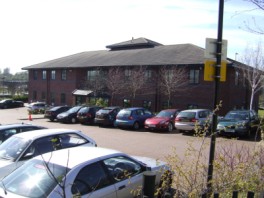
Deluxe Data International Operations, Wingate House, Northway, Runcorn, Cheshire
The Software Partnership, Norton House, Crowngate, Runcorn, Cheshire

⚙️ sp/ARCHITECT

sp/ARCHITECT (specifically sp/ARCHITECT-BANK) was a foundational electronic banking and transaction framework engineered in the 1990s by The Software Partnership (a UK-based fintech house later acquired by Deluxe Data). It primarily powered corporate banking portals and telephone-driven banking services.

The platform acted as highly reliable middleware, serving as a bridge between the customer and back-end banking mainframes. The breakdown of its architecture, infrastructure, and core functions includes:

⚙️ Architectural Breakdown

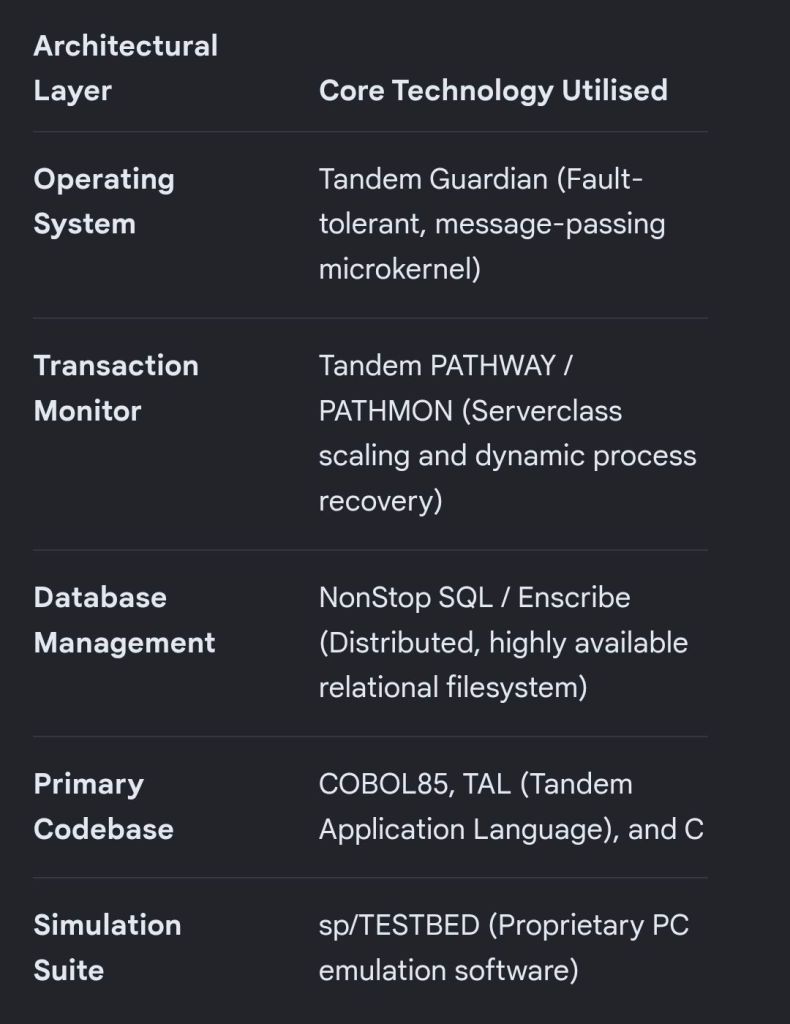
  • Hardware & OS: Built to run natively on fault-tolerant Tandem NonStop computers (now HPE NonStop). This “shared-nothing” architecture was designed for absolute transactional uptime and zero data loss.
  • Programming Languages: Built using legacy enterprise standards. Code was primarily written in COBOL85 and TAL (Transaction Application Language) native to the Tandem ecosystem.
  • Middleware Integration: Utilized Tandem-specific middleware like Pathway and Remote Server Call (RSC) to handle client-to-host communications.

💻 Core Capabilities & Modules

  • Electronic Delivery Framework: Served as a multi-channel framework, accommodating a wide variety of early access devices like desktop clients, UNIX workstations, and smart phones.
  • Transaction Handlers: Deployed custom scripts/handlers that enabled end-users to securely access real-time account data and perform early inter-account transfers without visiting a physical branch.
  • Testing Utilities: Included proprietary simulation tools like sp/TESTBED, acting as a PC-to-host test harness so developers could emulate user queries and transaction flows.

🏦 Industry Footprint

  • European Rollout: Heavily adopted by large European financial institutions, including TSB, Rabobank, Bank of Scotland, and Girofon.
  • BBM II Integration: Powered landmark corporate desktop banking solutions like Barclays Business Master II (BBM II), long before modern web browser banking existed.
  • Evolution: Following its acquisition, its design philosophies eventually evolved into Deluxe Data’s broader CONNEX suite of payment solutions.

Mark Whitfield – Senior Project Manager – training received

Mark Whitfield, an SC cleared Senior Project Manager based in the Manchester area, has over 30 years of experience transitioning from a software engineer to an IT program leader.

His extensive technical and project management training spans methodologies, cloud infrastructure, and software applications.

A detailed breakdown of his training, certifications, and academic background includes:

Project Management Methodologies

  • PRINCE2 Practitioner: Certified via the ILX Group.
  • Agile SCRUM: Trained in-house with RADTAC.
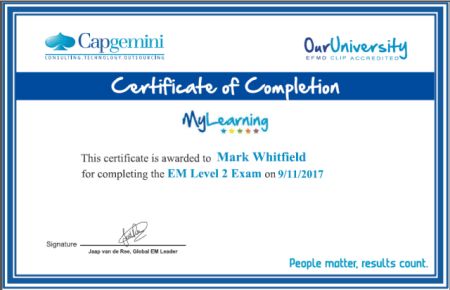
  • Advanced Engagement Management: Level 2 certification completed via Capgemini.
  • Project Fundamentals: Completed “Fundamentals of Successful Project Management” and “Managing Multiple Projects” via Skillpath.
  • Microsoft Project: Microsoft Project ’98 certified.

Technical & Cloud Training

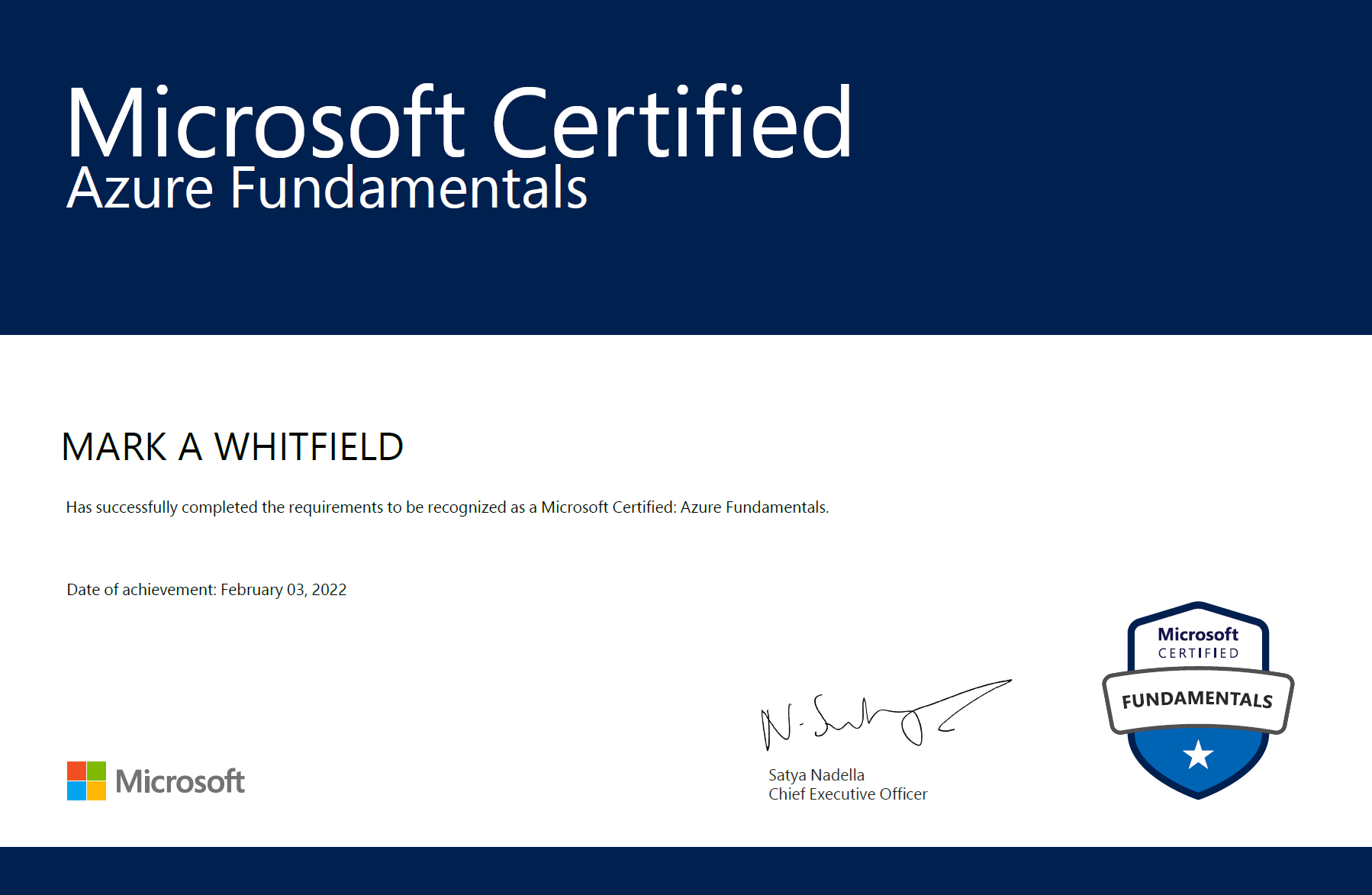
  • Microsoft Azure: AZ-900 Microsoft Certified Azure Fundamentals.
  • MuleSoft: Completed outcome-based delivery training and is a specialized Delivery Manager.
  • Technical Programming: Includes foundational database and software language training, such as C++ and MS SQL 2000 query training, as well as VPS and Tandem (HPE NonStop) technical/development courses.
  • Productivity: Completed Microsoft Excel Refresher and Expert skills training (Udemy and Microsoft).

Formal Education

  • Higher National Diploma (HND): Graduated with a Distinction (top) in Computing (1990).

You can review his detailed credential breakdown on the PROject Templates Professional Training Page.

HPE NonStop architecture (Tandem Computers) by Era and Year

Mark Whitfield invested many years in the HPE NonStop field from 1990. The HPE NonStop architecture (originally Tandem Computers) is a legendary fault-tolerant system known for 100% continuous availability. The platform’s hardware and software execution evolved across six distinct eras and processor transitions:

1. The Tandem Founding Era (1976–1981)

  • Years: 1976–1981
  • Processors: Proprietary 16-bit stack processors (e.g., Tandem/16, NonStop II)
  • Architecture: The foundational “shared-nothing” parallel architecture. Featured redundant components (processors, disks, power supplies) connected by a proprietary dual-bus (Dynabus). The operating system provided instant automated failover.

2. The Cyclone & Early RISC Era (1981–1996)

  • Years: 1981–1996
  • Processors: Proprietary non-RISC (NonStop Cyclone) & MIPS R-series RISC
  • Architecture: Expanded into 32-bit computing. To keep pace with industry performance, Tandem transitioned from proprietary processors to off-the-shelf MIPS RISC processors while heavily emulating the original instruction set for compatibility.

3. The Himalaya/ServerNet Era (1997–2004)

  • Years: 1997–2004
  • Processors: MIPS R-series
  • Architecture: Replaced the legacy Dynabus with ServerNet, a high-speed system interconnect that served as an early precursor to modern networking fabrics. (Compaq acquired Tandem in 1997, which subsequently merged with HP in 2002).

4. The Integrity Itanium Era (2005–2013)

  • Years: 2005–2013
  • Processors: Intel Itanium (TNS/E)
  • Architecture: Branded as HP Integrity NonStop (NonStop i). The platform moved off proprietary silicon to standard Intel Itanium processors. This was driven by the “NonStop Advanced Architecture” (NSAA), lowering hardware costs while maintaining Availability Level 4 (AL4) standards.

5. The NonStop X (x86-64) Era (2014–Present)

  • Years: 2014–2026
  • Processors: Intel Xeon x86-64 (TNS/X)
  • Architecture: Fully decoupled the OS from proprietary hardware by shifting to standard Intel x86-64 processors and InfiniBand fabric. The latest compute nodes (such as the NS5 X5 and NS9 X5) utilize modern Intel Xeon Scalable processors to maintain maximum Availability Level 4 (AL4) workloads.

6. The Virtualized NonStop Era (Present)

  • Years: 2015–Present
  • Processors: Virtual Machines / Cloud / x86
  • Architecture: HPE extended the platform to support Virtualized NonStop Software, allowing fault-tolerant enterprise workloads to run entirely in private clouds via standard VMware or hybrid architectures, independent of specific physical servers.
HPE NonStop article by Mark Whitfield in 2013, working for Insider Technologies Limited in Salford Quays

Barclays Business Master II (BBM II), Tandem Computers (HPE NonStop) & sp/ARCHITECT

These terms map directly to the foundational 1990s technology stack behind Barclays Business Master II (BBM II), one of the UK’s earliest enterprise electronic desktop banking platforms.

Before the mainstream internet, this corporate banking infrastructure relied on specialized high-availability mainframe software to process secure corporate transactions.

🧱 Architectural Component Breakdown

  • Barclays Business Master (BBM / BBM II): A landmark corporate desktop electronic banking solution developed by Barclays Bank. It allowed businesses to dial directly into the bank to perform inter-account transfers, check balances, and automate book-keeping long before web browser banking became standard.
  • sp/ARCHITECT (or sp/ARCHITECT-BANK): The core electronic banking software package that powered BBM. It was originally engineered in the late 1980s and early 1990s by The Software Partnership (a UK-based fintech software house based in Runcorn that was later acquired by Deluxe Data). It eventually evolved into the widely known CONNEX advantage payment solution.
  • NonStop (Tandem Computers): The underlying hardware and operating system environment. Because banking infrastructure requires absolute uptime, sp/ARCHITECT was built to run on Tandem NonStop fault-tolerant computers (now HPE NonStop). These systems utilize a unique “shared-nothing” architecture to ensure zero transactional data loss.

💻 Legacy Technical Environment

During the era when BBM was deployed across Barclays’ tech hubs (such as Knutsford), developers working on this specific stack utilized highly specialized mainframe tools:

  • Languages: Code for sp/ARCHITECT was primarily written in TAL (Transaction Application Language) or COBOL85, which were native to the Tandem platform.
  • Interfaces: Early implementations integrated desktop client interactions with the Tandem host via middleware components like Tandem Pathway and Remote Server Call (RSC) facilities.

Barclays Business Master II (BBM II), Tandem Computers (HPE NonStop) & sp/ARCHITECT

I was assigned by Deluxe Data (International Operations), to the BBM II project between 1992 – 93.

mark whitfield thesoftwarepartnershipwingatehousenorthwaysmall

Deluxe Data, Wingate House, Northway, Runcorn

BITUG BIG SIG

The BITUG BIG SIG 2026 event is scheduled for Thursday, 4 June 2026.

Organized by the British Isles NonStop User Group (BITUG), this annual conference gathers HPE NonStop professionals, partners, and vendors across the region.

Event Details

  • Date: Thursday, 4 June 2026.
  • Location: Trinity House, London.
  • Key Focus Areas: HPE NonStop architecture roadmaps, technical breakout tracks, data security, and specialized data resiliency updates.
  • Attendees: The conference hosts end-users, system administrators, and developers, alongside community sponsors such as comforte, XYPRO, and ETI-NET.

Program Highlights

  • Breakout Tracks: Strategic vendor sessions outlining software developments and architectural security.
  • Networking: Collaborative environments allowing users to connect directly with senior HPE executives and product experts.
  • Admission: Complimentary registration is available for active end-user members. Official ticket registration and full session listings are hosted on the BITUG Big SIG Event Page.
The BITUG BIG SIG 2026 event is scheduled for Thursday, 4 June 2026.
The BITUG BIG SIG 2026 event is scheduled for Thursday, 4 June 2026

The BITUG BigSIG 2026 conference, hosted by the British Isles Tandem User Group at Trinity House, London, brings together the premier vendors within the HPE NonStop ecosystem. Key participating vendors and sponsors focus on data integration, compliance, zero-trust security, storage, and infrastructure management tailored for mission-critical enterprise systems.

The primary vendors participating in the 2026 HPE NonStop ecosystem event are organized by their specialization below.

🛡️ Data Security & Cyber Resilience

  • comforte AG: Serving as a key event sponsor, comforte AG hosts dedicated breakout sessions demonstrating tokenization strategies designed to secure sensitive data elements and enhance corporate data usability without breaking downstream application logic.
  • XYPRO Technology Corporation: A long-standing HPE NonStop security partner delivering compliance management, real-time threat detection, and risk mitigation tools. They focus heavily on enabling Zero-Trust architectures and automating compliance reporting for frameworks like PCI-DSS.
  • CSP (Compliance Systems Platforms): Specializes in vulnerability management, security hardening, and automated security compliance checking. They provide the administrative tools required to monitor audit logs and secure environments against internal and external threats.

🔄 Data Replication & Continuity

  • NTI (Network Technologies International): Presenting active strategies for multi-platform data distribution. NTI highlights methods for data movement away from legacy Oracle GoldenGate setups while integrating real-time HPE NonStop compute platforms with enterprise IT and agentic AI pipelines.
  • Gravic, Inc.: Promotes its HPE Shadowbase software line. Gravic focuses on high-availability business continuity, active-active data replication, data validation, and real-time streaming analytics for global telecommunications and financial exchanges.

💾 Backup, Storage & Infrastructure Management

  • ETI-NET: Showcases technical advancements inside its Sentinel and BackBox VTC software suites. ETI-NET’s 2026 showcase highlights immutable data tiering, object-locking architectures designed to resist ransomware, and AI/ML-driven anomaly detection within data backups.
  • TCM Solutions: Focuses on physical and virtual NonStop optimization. TCM specializes in hardware management, KVM hypervisor integrations for Virtualized NonStop environments, and transitioning infrastructure architecture over high-performance fabrics like InfiniBand.

💳 Application Modernization & Payments

  • OmniPayments: Showcases cloud-adjacent, high-volume payment processing switch architecture. They highlight transaction survivability, fraud prevention integrations, and end-to-end tokenization for multi-channel banking networks.
  • NuWave Technologies: Specializes in middleware solutions that connect HPE NonStop heritage code with modern RESTful web services. They focus heavily on API management as enterprise building blocks to quickly web-enable NonStop applications without rewriting backend logic.
  • 4tech Software: Delivers tactical operational monitoring, system auditing, and database performance management tools designed to keep NonStop SQL applications running with minimal administrative overhead.

European BASE24 User Group (EBUG) was a prominent, community-led organization

The European BASE24 User Group (EBUG) was a prominent, community-led organization dedicated to the ACI BASE24 payment processing system. It provided a vendor-neutral forum for IT professionals, banks, and processors to collaborate, share knowledge, and discuss technical tracks like HPE NonStop monitoring and payment security.

Conference Timeline

  • 1980s — Establishment: EBUG is formed as a regional community for European financial institutions utilizing the growing BASE24 platform.
  • Early 2000s — Technical Growth: EBUG annual conferences become prominent technical forums featuring specialized tracks focused on Tandem/HP NonStop hardware and payment system security.
  • 2007 — Istanbul Conference: Features heavily attended technical sessions and workshops addressing growing transaction volumes and early EMV (chip card) migrations.
European BASE24 User Group (EBUG) was a prominent, community-led organization
Insider Technologies regularly attended EBUG, booth in 2007
  • 2008 — Vienna Conference: Notable for introducing ACI’s strategic shift to support IBM platforms alongside traditional HPE NonStop environments.
European BASE24 User Group (EBUG) was a prominent, community-led organization
HP booth at Vienna EBUG, 2008
  • 2009 — Prague Conference: Continues strong advocacy and technical troubleshooting for BASE24 on NonStop despite broader industry platform shifts.
European BASE24 User Group (EBUG) was a prominent, community-led organization
HP Booth at Prague conference, 2009
  • 2012 — London TFG: A technical focus group is held in London at Trinity House, bringing together engineers and ACI product managers to debug and refine system architecture.
  • Late 2010s to Present — The “Everybody Belongs” Era: As ACI broadened its product portfolio, the user group expands its scope to include other payment technologies like Postilion. The conference formally rebrands as an independent entity, later transitioning into The Payments Knowledge Forum, to serve all payment systems users inclusively.

European BASE24 User Group (EBUG) was a prominent, community-led organization

HPE NonStop System Monitoring Reflex Product

HPE NonStop Reflex (often referred to as Reflex 80:20) is a graphical, integrated IT management suite developed by Insider Technologies. It provides continuous health monitoring, automated workflow management, and diagnostic logging for mission-critical HPE NonStop environments, serving as a single, consolidated “pane of glass” for fault-tolerant network operations.

Detailed Timeline Breakdown by Era & Year

The history of the NonStop Reflex suite closely mirrors the architectural evolution of the underlying HPE NonStop (originally Tandem) fault-tolerant hardware platforms.

1. The Tandem / ITUG Era (1989 – 1996)

  • 1989: Insider Technologies was founded in Salford Quays, Manchester, UK, establishing an early specialization in Tandem (NonStop) messaging software and message tracking utilities.
  • 1990s: As massive online transaction processing (OLTP) workloads grew, native Tandem utilities proved increasingly cumbersome. This spurred the initial development of platform diagnostic and event-filtering tools that would soon become the Reflex suite.
  • 1995: Insider Technologies actively codes and launches the initial iterations of Reflex 80:20, providing operators with an aggregated view of Tandem platform events.

2. The Compaq & Early HP Transition Era (1997 – 2014)

  • 1997: Compaq acquires Tandem Computers. Reflex 80:20 begins updating its backend architecture to handle ServerNet clustering and the newly combined enterprise platforms.
  • 2002: Hewlett-Packard (HP) acquires Compaq. HP begins the hardware migration from proprietary processors to Intel Itanium (HP Integrity NonStop).
  • 2004: Insider Technologies formalizes its ongoing product development, heavily pushing both Reflex 80:20 and releasing new variants like Reflex ONE24 to support extended tracking for ATM and POS networks.
  • 2007: Reflex and other Insider monitoring software platforms are highly integrated into FIS solutions, serving tier-one global banks and stock exchanges.
  • 2013: Insider Technologies solidifies the Reflex 80:20 status as the ultimate consolidated replacement for legacy HP components, publishing technical insights in dedicated NonStop journals.

3. The Modern HPE & x86 Era (2014 – 2019)

  • 2014: Hewlett Packard Enterprise (HPE) is formed and officially launches NonStop X, moving the architecture onto standard Intel x86-64 processors. Reflex 80:20 interfaces are updated to support InfiniBand fabrics and the newer Open System Services (OSS) environments.
  • 2017 – 2019: HPE launches Virtualized NonStop (vNS), bringing continuous application fault tolerance directly to private and hybrid clouds. Reflex adapts its system management capabilities to securely monitor both physical x86 non-stop servers and virtual hypervisor instances.

4. The AI & Hybrid Cloud Era (2020 – 2026)

  • 2020: HPE ends the sale of older Itanium-based platforms. Reflex fully commits its diagnostic support to modern HPE NonStop X and vNS environments.
  • 2023 – 2024: The NonStop platform embraces AI integrations, expanded SQL/cloud workloads, and integrations with modern DevOps tools. Reflex tools receive updates to accommodate enhanced cyber resilience tracking and modern API-driven services.
  • 2025: HPE celebrates 50 years of the fault-tolerant NonStop computing ecosystem. The Reflex suite provides compatibility for the upgraded, high-capacity hardware iterations running the L25 series OS.
  • 2026: Reflex remains a staple ecosystem management suite for complex enterprise networks, processing and escalating exception conditions, EMS events, and subsystem alerts within the highly available HPE GreenLake consumption models.

The Insider RTLX product at ETI-NET is now called C-Deep for Transaction Monitoring;

C-Deep (Transaction Monitoring)

The Insider Reflex product at ETI-NET is now called Sentinel for NonStop Monitoring;

Sentinel (Nonstop Monitoring)

C-Deep for Transaction Monitoring & Sentinel for HPE NonStop Monitoring

BASE24 and BASE24-eps architecture overview

The BASE24 electronic payment system developed by ACI Worldwide exists in two primary architectural generations:

BASE24 Classic (historically deployed on HPE NonStop / Tandem fault-tolerant hardware) and

BASE24-eps (Enterprise Payments System, built using an object-oriented C++ framework deployable across open systems, z/OS, and cloud infrastructure).

Despite structural differences, both share a highly optimized, component-based transaction routing engine.

BASE24 and BASE24-eps architecture overview
BASE24 architecture overview

Core Structural Component Layers

The component architecture maps the complete end-to-end lifecycle of a financial message (such as ISO 8583) through five distinct functional sub-systems:

1. Network & Message Routing Component (XPNET)

  • Purpose: Coordinates all message traffic across internal processes and physical network nodes.
  • Function: Operates as a specialized middleware network manager that decouples low-level communication links from upper transaction routing layers.
  • Configuration: Relies on a Logical Network Configuration File (LCONF) to define active execution nodes, hardware lines, and physical stations.

2. Perimeter Access Layer (Device Handlers)

  • Purpose: Translates device-specific message protocol formats into the system’s unified internal format.
  • ATM Device Handlers (ATMDH): Manage direct connectivity to automated teller machines, unpack specific vendor dialects (such as Diebold or NCR states), and track terminal hardware statuses.
  • POS Device Handlers (POSDH): Interface with point-of-sale acquirer terminals and merchants.
  • Security Operations: Triggers immediate payload encryption/decryption and Hardware Security Module (HSM) PIN-block translation directly within this ingestion ring.

3. Core Transaction Logic (Authorization System)

  • Purpose: Determines whether a payment request should be accepted, rejected, or modified.
  • Full On-Us Authorization: Inspects internal databases for matching account records, positive balances, and velocity thresholds to issue real-time decisions.
  • Parametric/Negative Checks: Validates card status against offline negative files, usage restrictions, or custom risk parameters.
  • Scripting Engine: Modern BASE24-eps variants execute localized transaction routing scripts via customized operators without forcing a compile rewrite of the core engine core.

4. Boundary Channels (Interchange & Host Interfaces)

  • Interchange Interfaces (ICH): Package and transform the transaction payload into international network profiles (e.g., Visa, Mastercard, regional switches). It handles strict message mapping and regional network check requirements.
  • Host Interfaces (HIF): Create synchronous links back to an institution’s underlying Core Banking system to apply ledger adjustments, check balances, or execute real-time holds.

5. Offline & Administrative Subsystems

  • Extract Component: Gathers active transaction logs and streams filtered payloads out to analytical reporting databases.
  • Refresh Component: Updates terminal operational data, key packages, and card exclusion lists from parent systems down to active execution nodes.
  • Settlement Initiator: Groups, cleanses, and batches net-clearing totals to finalize payment entries into regional clearinghouses.

Architectural Divergence: Classic vs. EPS

The structural design varies significantly depending on the generation of the software deployment:

BASE24 and BASE24-eps architecture overview

End-to-End Component Transaction Flow

  1. An ATM transaction arrives at the network interface layer managed by XPNET.
  2. The message is routed to the Device Handler, which strips hardware packaging and requests translation from the HSM.
  3. The clean internal message passes to the Authorization Engine.
  4. If it is a “Not-On-Us” card, the engine identifies the destination BIN and transfers routing control to the Interchange Interface.
  5. The Interchange Interface maps the payload to the external scheme standard (such as Visa) and transmits it to the external network.
  6. The outbound network response is unwrapped by the Interchange component and tracked through the core engine to log final response codes.
  7. The transaction safely records inside the active log file, allowing the Extract / Settlement components to pick it up later during batch processing.

BASE24 and BASE24-eps architecture overview

BASE24 and BASE24-eps architecture overview

HPE NonStop MultiBatch Batch Job Scheduling Overview and Timeline

Overview

MultiBatch is a robust enterprise workload automation and job scheduling tool designed specifically for the HPE NonStop parallel architecture. Developed originally by Insider Technologies and subsequently managed/distributed alongside partners like ETI-NET, it enables organization-wide task automation.

MultiBatch provides high-performance, concurrent execution of batch schedules across multiple nodes. It natively supports both Guardian and OSS environments. By utilizing modern graphical user interfaces (GUIs) alongside traditional Pathway components, it eliminates the need for complex, manual, and high-maintenance TACL or JCL scripts.

Core Technical Capabilities

  • Parallel Execution: Uses NonStop architecture to execute batch workloads concurrently across one or multiple nodes.
  • Advanced Scheduling: Drives automated tasks based on time parameters, complex intervals, custom calendars, and direct cross-job dependencies.
  • Reusable Infrastructure: Environment classes—including PARAM, ASSIGN, DEFINE, FD, and environmental variables—can be configured once and safely shared across various jobs.
  • Inbuilt Disaster Recovery: Features automated, built-in monitor recovery mechanisms to preserve execution integrity during hardware or connection failures.
  • Seamless Migration: Simplifies moving production workloads between environments via a deep migration utility that automatically handles environmental translation without manual intervention.

Timeline Breakdown by Year and Version

The evolution of MultiBatch highlights its transition toward broader configuration capacities, simplified environment integrations, and eventual product lifecycle milestones.

2020: Operational and Security Consolidation

  • Version Focus: Pre-v10 Infrastructure (Enterprise Deployments)
  • Key Enhancements:
    • Formalized rigid separation of internal user roles, establishing MBAT.OPS for view-only status monitoring and MBAT.CONFIG for structural schedule maintenance.
    • Refined the “Migrator” module, eliminating manual TACL operations when extracting and inserting batch definitions across network test and production nodes.
    • Added capabilities allowing all MultiBatch jobs to execute securely under the system Batch Monitor Process (BMON) owner or explicitly assigned application user IDs.

2022 (November): MultiBatch Version 10.0 Launch

  • Version Focus: Architecture Restructuring
  • Key Enhancements:
    • Define Classes: Introduced reusable Define Classes to group environments cleanly.
    • Scale Upgrades: Upgraded the main Batch Monitor (BMON) subsystem to actively scale up to 2,500 jobs concurrently.
    • Parameterization: Modified the core configuration boundaries and decoupled utility processes (MBPARHK) to seamlessly process non-step related records across database structures.
    • Clean Up: Formally deprecated legacy components including UTCSV to reduce technical debt.

2023 (February): MultiBatch Version 10.1 Refinement

  • Version Focus: OSS Overhaul & Operational Control
  • Key Enhancements:
    • OSS Reworking: Re-engineered and optimized support for Open System Services (OSS) processes, granting them equal parity with traditional Guardian tasks.
    • On-Demand Execution: Enabled ad-hoc “On Demand Job” invocation directly through user channels without altering master schedules.
    • Conditional Variables: Extended character limits for Conditional Parameter values up to 100 characters.
    • Subsystem Unification: Consolidated Event Timer processing and Conditional Parameters fully into standard MultiBatch menus, auditing frameworks, and security tracking.
    • Control Commands: Integrated the SWITCH BMON command line directive to easily pass control between operational monitors.
    • Interface Upgrade: Rolled out an entirely new Ops GUI Server to modernize scheduling visibility.

Current Era: Version 10.2 Maintenance & Commercial Sunset

  • Version Focus: Version 10.2 / Product Lifecycle Transition
  • Key Milestones:
    • MultiBatch 10.2: Operates as the current, stable production tier delivered via ETI-NET, featuring deep parameterization and centralized network deployment protocols.
    • Commercial End of Life: As of March 1, 2026, new software licenses for Multi-Batch are no longer available for purchase. The software has officially reached the end of its commercial sales life.
    • Ongoing Support: Existing license holders retain full permission to execute, maintain, and run the product inside their environments according to their long-term licensing agreements.

HPE NonStop MultiBatch Batch Job Scheduling Overview and Timeline

sp/ARCHITECT was a pioneering electronic banking & funds-transfer software suite

sp/ARCHITECT was a pioneering electronic banking and funds-transfer software suite. Originally built by the UK-based Software Partnership (TSP), it ran natively on fault-tolerant Tandem (now HPE NonStop) systems. It provided highly available transaction routing and real-time electronic book-keeping for major international financial institutions.

Detailed Timeline by Era and Year

1. The Genesis & Independent Era (Mid-1980s – 1989)

  • Mid-1980s: The Software Partnership (TSP) is co-founded in Timperley, UK. Development begins on sp/ARCHITECT, designed with a client-server architecture.
  • 1986: Tandem launches NonStop SQL, providing the underlying high-availability relational database foundation that sp/ARCHITECT relied upon to ensure absolute data integrity for banks.

2. Mainstream Banking Adoption Era (1990 – 1994)

  • 1990: TSP relocates to Norton House in Runcorn, UK. sp/ARCHITECT achieves production deployment and is widely utilized for inter-account transfers and book-keeping by major banks like TSB and Bank of Scotland.
  • 1992: Due to rapid expansion, the Runcorn operations relocate to Wingate House.
  • 1994: Deluxe Electronic Payment Systems (a subsidiary of Deluxe Corporation) acquires TSP to expand its global electronic funds transfer (EFT) footprint. The platform is globally marketed and supported, expanding to clients like Rabobank.
1990: TSP relocates to Norton House in Runcorn
1992: Due to rapid expansion, the Runcorn operations relocate to Wingate House.

3. Global Expansion & Compaq Transition Era (1995 – 2005)

  • 1995 – 1997: The Runcorn-based team (operating as Deluxe Data) codes additional regional adaptations of sp/ARCHITECT for banks worldwide (e.g., Girofon in Denmark).
  • 1997: Compaq acquires Tandem Computers, placing sp/ARCHITECT on Compaq’s enterprise roadmap.
  • 2002: Hewlett-Packard (HP) acquires Compaq, absorbing the Tandem platform into the HP Integrity server line. The application undergoes adaptation to integrate modern Windows-based management systems (like DSM/NOW).

4. The HPE Modernization & Hybrid Era (2014 – 2026)

  • 2014: HPE (Hewlett Packard Enterprise) is formed, spinning off from HP. NonStop shifts to Intel x86-64 architecture (NonStop X), requiring sp/ARCHITECT and related Tandem subsystems (like Pathway, COBOL, and TAL) to modernize for TNS/X processing.
  • 2020: Legacy Itanium-based environments are phased out. sp/ARCHITECT systems, if still active, are migrated to virtualized NonStop (vNS) and operated within private cloud infrastructures.
  • 2025/2026: HPE NonStop celebrates its 50th Anniversary. Applications originally designed on the sp/ARCHITECT schema are heavily evaluated for AI integration, continuous cyber resilience, and consumption-based models like HPE GreenLake.

HPE Nonstop Technology Architecture – specialized, 100% fault-tolerant infrastructure

The official HPE Nonstop Technology Architecture is a specialized, 100% fault-tolerant infrastructure built with a tightly integrated hardware and software stack designed to eliminate any single point of failure. Formal instruction and architectural frameworks have been modernized under the newly relaunched HPE Nonstop Compute Training Portfolio curriculum.

Originally developed by Tandem Computers in 1976, the platform eventually became part of Hewlett Packard Enterprise (HPE). Unlike standard servers that can crash due to a single component failure, NonStop uses a tightly integrated, “shared-nothing” architecture to ensure that if a hardware or software component fails, another instantly takes over with zero downtime or data loss.

Core Architectural Features

To understand how HPE NonStop works, you need to understand its unique design principles:

  • Shared-Nothing Architecture: Every processor has its own dedicated memory, I/O channels, and copy of the operating system. No single component is shared, eliminating any single point of failure.
  • Process Pairs: Applications run using a primary process and a backup process on a different processor. The primary process constantly copies its state to the backup. If the primary fails, the backup immediately takes over.
  • Massive Scalability: Systems can scale up seamlessly from small distributed environments to massive clusters containing up to 24,000 processor cores without interrupting running operations.
  • Hardware Platform: The modern software environment runs on industry-standard x86 architectures, available as physical server racks (like the HPE NonStop NS9 X5) or as virtualized instances in hybrid cloud environments.

Dual Operating Environments

HPE NonStop runs a specialized operating system called NonStop OS. Inside this OS, developers and administrators interact with two distinct environments:

  • Guardian Environment: The native, proprietary environment optimized for high-volume Online Transaction Processing (OLTP). It handles tasks sequentially through process-oriented manually-started jobs rather than traditional automated queues.
  • Open System Services (OSS): A UNIX-like, POSIX-compliant environment built on top of the NonStop kernel. This allows organizations to run standard open-source applications, tools, and scripts natively alongside Guardian.

Ecosystem and Use Cases

HPE NonStop is rarely used for standard office automation or basic web hosting. Instead, it serves as the backbone for global industries where an hour of downtime could cost millions of dollars:

  • Financial Transactions: Powers global stock exchanges, automated teller machines (ATMs), and retail point-of-sale credit card processing, eg. BASE24.
  • Travel and Logistics: Runs critical airline reservation systems and real-time cargo routing infrastructure.
  • Database Management: Features its own highly secure, distributed database engine called NonStop SQL, which guarantees absolute data integrity across all transactions.
  • Modern Development: Supports traditional languages like COBOL85 and ANSI C, alongside modern DevOps integrations like Git, Ansible, and Eclipse-based IDE environments.

If you plan to work directly with these systems, you can explore formal pathways like the Concepts and Facilities for HPE NonStop Systems course provided by HPE Education Services.


Core Architectural Layers (Diagram Blueprint)

An architectural blueprint of an HPE NonStop environment typically separates the layout into three core interdependent layers:

  • Hardware & Fabric Layer: Consists of independent, loosely-coupled Processor Nodes (handling up to 24,000 cores globally) connected via an ultra-fast InfiniBand or ServerNet system fabric backbone.
  • I/O & Subsystem Layer: Utilizes Cluster I/O Protocols (CLIMs), splitting tasks between Storage CLIMs (SCLIMs) and Network CLIMs (NCLIMs) to isolate external communication from main processing.
  • Operating System & DB Layer: Runs the NonStop OS, which simultaneously manages the traditional Guardian environment, Open System Services (OSS) for UNIX/Linux paradigms, and the NonStop SQL distributed database engine.

Recommended Architecture Training Curriculum

HPE organizes its technical blueprints into structured educational paths for engineers.

1. Foundational Blueprint Concepts

  • Course Code: U4147S (HPE Nonstop Compute System Fundamentals).
  • Focus: Delivers a top-down view of system goals, transaction processing, and fundamental architecture.
  • Key Modules: Explores Guardian vs OSS, Pathway application management, and basic database interaction.

2. System Operations & Administration

  • Course Code: H1SC3S (HPE Nonstop Compute System Administration I).
  • Focus: Maps physical and virtual components to real-world deployment.
  • Key Modules: Covers Processor Nodes, configuring SCLIMs/NCLIMs, and hands-on fault-scenario testing.

3. Low-Level OS Internals

  • Course Code: U8609S (HPE Integrity Nonstop Operating System Architecture).
  • Focus: Deep dive into runtime architecture, process control, and memory allocation.
  • Key Modules: Focuses on Inter-process Message Systems, synchronization mechanisms, and system debugging.

Training Delivery Options

Enrolling via HPE Education Services grants access to various professional development features:

  • HPE vLabs: Direct sandbox access to practice configuration and live fault injection inside virtual environments.
  • Digital Learner Credits: Flexible licensing options to assign corporate learning units across teams.
  • Modernized Tracks: Courses have been fully overhauled to support contemporary cloud paradigms and hybrid integration via HPE GreenLake frameworks.

My HPE NonStop (Tandem Computers) Certificates :

HPE NonStop (Tandem) Career Experience at Insider Technologies Limited, ITL
BASE24 eps monitoring

Mark Whitfield is a Senior IT Project Manager based in Manchester

Mark Whitfield is a highly experienced Senior IT Project Manager based in Manchester, UK, with over 31 years of experience in the IT industry specializing in both Agile and Waterfall methodologies. He holds SC clearance (valid until 2031) and has a strong technical background in banking and digital project delivery, including experience as a developer in software development lifecycles (SDLC).

Mark Whitfield is a highly experienced Senior IT Project Manager based in Manchester

Professional Biography

After graduating in Computing in 1990, Mark began his career as a programmer specializing in Electronic Banking software on Tandem Mainframe Computers (HPE NonStop). He spent five years coding in COBOL85 and NonStop SQL for banking clients before transitioning into project management.

Mark has operated as a Senior IT Project Manager for over two decades, delivering complex projects for major blue-chip clients, including Jaguar Landrover, Heathrow, Royal Mail Group, and various financial institutions. He currently provides project management templates based on his extensive experience via his website, PROject Templates.

Example POaP Plan On a Page templates by Mark Whitfield

Key Skills & Expertise

  • Methodologies: Agile SCRUM, Waterfall, PRINCE2 Practitioner.
  • Technologies: HP NonStop (BASE24, TAL, C, C++, SQL), Java, .NET, Mobile (iOS, Android, Windows).
  • Areas: ATM software delivery, Gambling/Casinos, Public Sector/LRG, Payment Systems, Digital Transformation.
  • Clearance: SC Cleared until 2031.
Capgemini Engagement Manager, 2016 thru 2025

Professional Career & Projects

Capgemini UK (Jan 2016 – Present)

  • Role: Client-facing SC Cleared Engagement Manager.
  • Projects: Delivered Waterfall and Agile digital projects for automotive, local regional government (LRG), postal services, and aerospace & defence sectors.
C&CA UK’s Communications & Engagement Award Winner 2022

Betfred (Late 2014 – Jan 2016)

  • Role: Senior IT Project Manager.
  • Projects: Managed mobile and online gambling/casino projects, including payment gateways, sportsbook, and virtual gaming using Agile SCRUM.

Wincor Nixdorf (Sept 2013 – Late 2014)

  • Role: Agile IT PM, Professional Services – Banking Division.
  • Projects: Managed ATM software delivery (Wincor Nixdorf work stream >£5M) for Lloyds Banking Group/Halifax.

Insider Technologies Limited (Aug 1995 – Sept 2013)

  • Role: Project Manager – Strategic Technical Initiatives.
  • Projects: Technical pre-sales, product management, and installation for HPE NonStop banking products (Reflex 80:20, RTLX).
HP NonStop TAL Programming Course
1995, HP NonStop TAL Programming Course

The Software Partnership / Deluxe Data (1990 – 1995)

  • Role: Programmer.
  • Projects: Developed code for sp/ARCHITECT-BANK on Tandem Computers for banks like TSB, Bank of Scotland, and Rabobank.

Professional Training & Certification

Registered PRINCE2 Practitioner (May 2011, ILX)
1990, BTEC HND in Computer Studies from Bolton Institute of Higher Education, BIHE

Mark Whitfield IT Project Manager, Brief Summary

Mark Whitfield is a highly experienced, SC-cleared Senior Project Manager and IT professional with over 31 years of experience in both public and private sectors, specializing in software development, cloud migration, and IT systems delivery.

He is currently associated with Capgemini (since 2016) and runs a project management resource website, PROject Templates.

Joined Capgemini in 2016 having worked at ascending points in software development lifecycle projects for over 31 years

Key Qualifications & Experience:

  • Roles: Senior Project Manager, Engagement Project Manager, Delivery Manager, and former programmer.
  • Methodologies: PRINCE2 Practitioner, skilled in both Waterfall and Agile (SCRUM) approaches.
  • Sector Experience: Extensive experience in finance and banking, including ATM software swap-outs, cloud migration (Azure, AWS, Power Platform), and POS monitoring systems.
  • Background: Graduated in Computing in 1990; worked as a developer (COBOL, SQL, Tandem / HPE NonStop) before transitioning to project management.
PRINCE2 Practitioner, skilled in both Waterfall and Agile (SCRUM) approaches

Professional Highlights:

  • Delivered major projects for clients such as Barclays, Bank of England, HSBC, Royal Mail Group, UK & Welsh Government, Heathrow, and Jaguar Land Rover.
  • Led complex IT infrastructure projects and business transformations.
  • Maintains mark-whitfield.com, offering over 200 project management templates, trackers (RAID, budget, benefit, cost etc.), and many plans for Agile / Waterfall projects including 30+ Plan On a Page (POaP) and MS Project MPP examples (click on Blog above for a summary).
  • Provides specialized templates for PRINCE2 7th edition and MS Project (MPP).
December 2022 – C&CA UK’s Communications & Engagement Award Winner – Cloud & Custom Applications – Capgemini UK
November 2017 – Advanced Engagement Management Course – Level 2 Exam
June 1990 – Higher National Diploma in Computer Studies (DISTINCTION – overall top) – BIHE
June 1990 – Higher National Diploma in Computer Studies, Distinction

Read more…