Mark Whitfield’s PROject Templates consist of a comprehensive bundle of over 200 fully editable delivery templates. Designed specifically to bridge the gap between structured Waterfall frameworks (like PRINCE2) and iterative Agile Scrum execution, the inventory covers real-world artifacts across Microsoft Project (.mpp), Excel, PowerPoint, and Word formats.
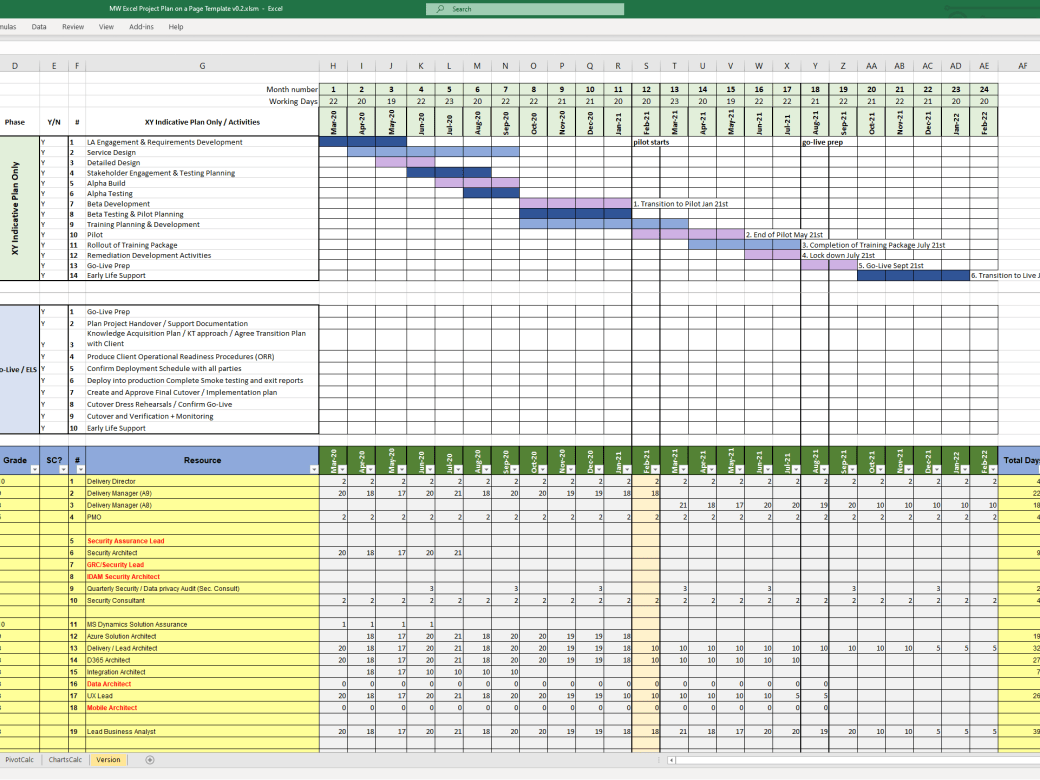
Plan on a Page example, 30+ in Zip pack
The detailed breakdown of Mark Whitfield’s template inventory by core management category includes:
1. Project Planning & Timelines
These templates provide multi-layered scheduling depending on whether you require micro-level tracking or high-level stakeholder summaries.
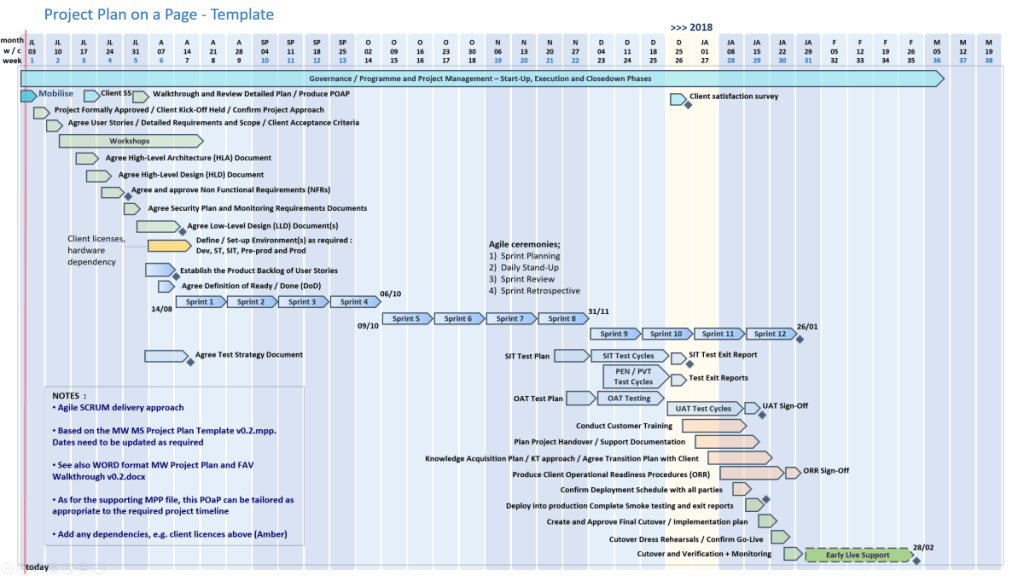
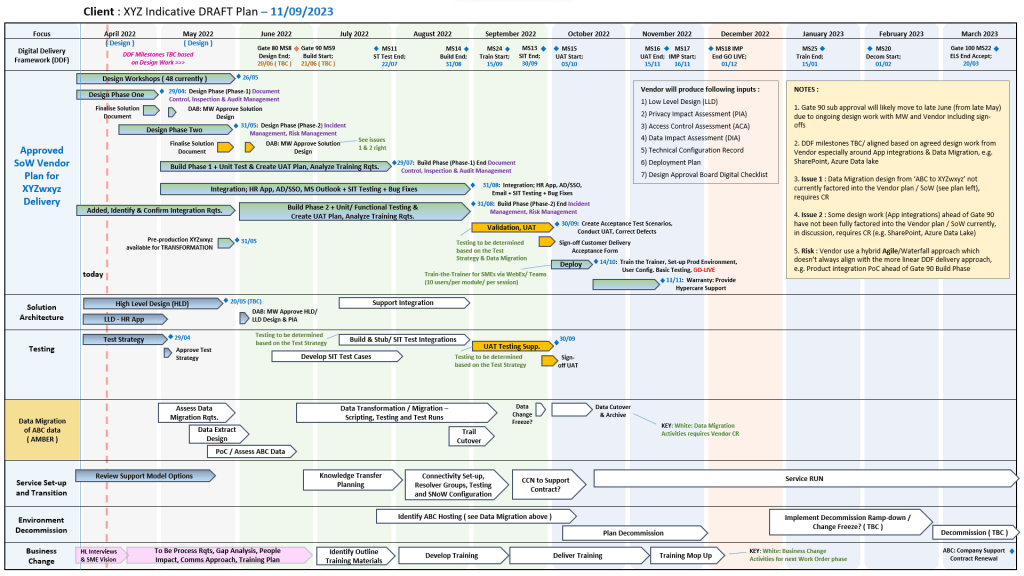
Another POaP example in MS PowerPoint
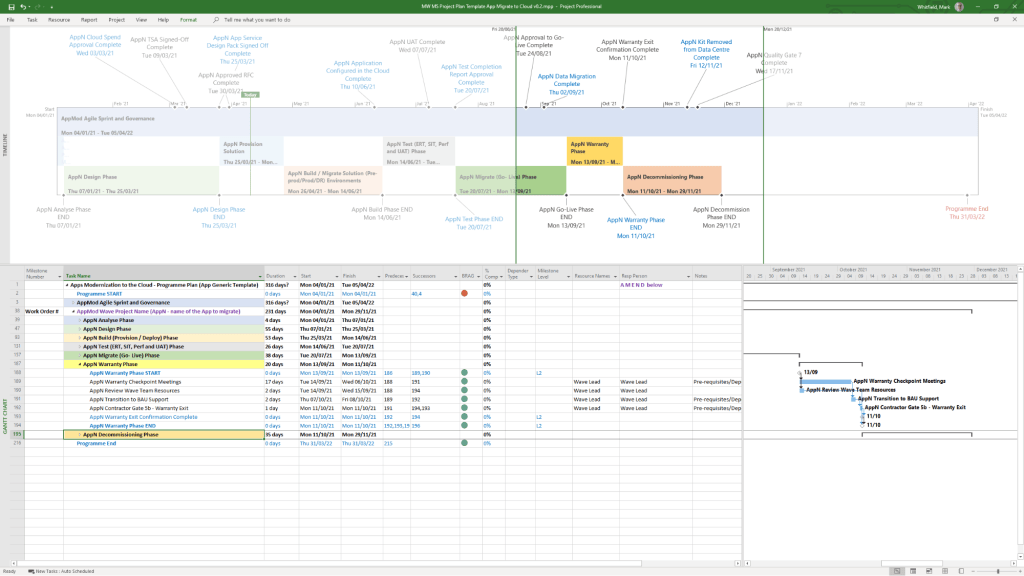
Detailed Project Plans: Comprehensive Systems Development Life Cycle (SDLC) templates available in Microsoft Project (MSP .mpp) format as well as standalone MS Excel detailed plans for environments without dedicated project software.
Microsoft MPP Project Plan example
Plan on a Page (POaP): High-level, visual Gantt chart timeline templates in Excel and PowerPoint used to present milestones and core roadmaps to executives.
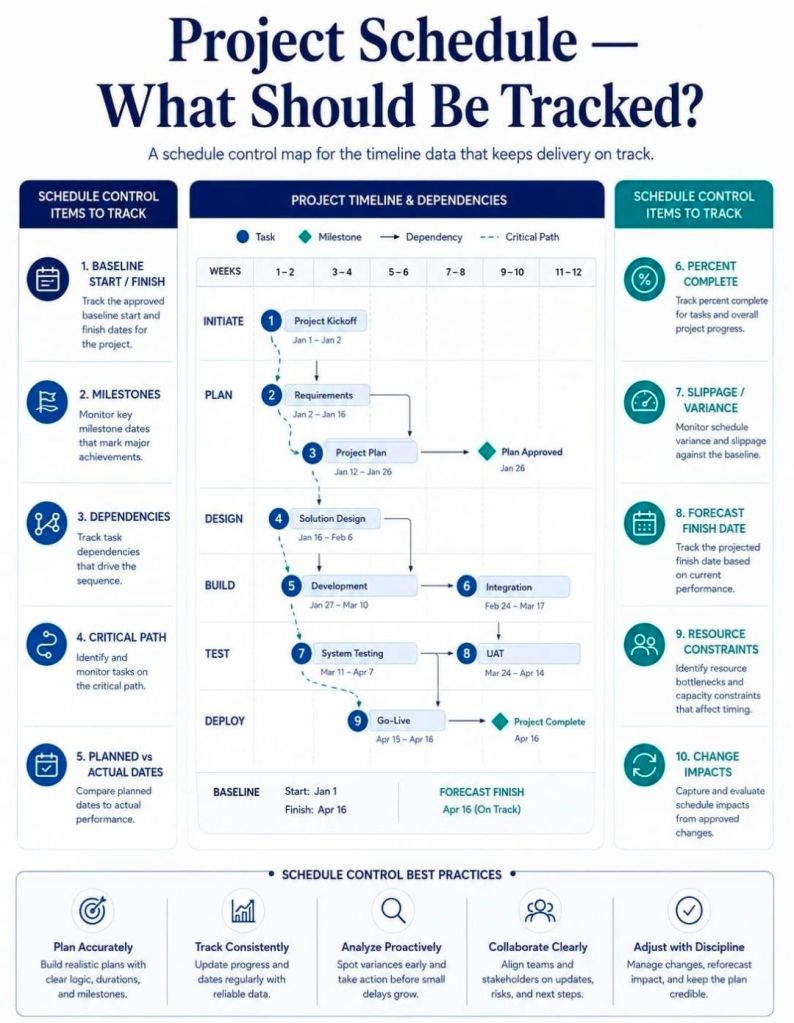
Critical Path Analysis (CPA): Structural templates mapping out sequential, dependent tasks to isolate the project’s critical path.
2. Risk, Governance & Issue Tracking
Built to operationalise PMO toolkits, these documents streamline governance and day-to-day item control.
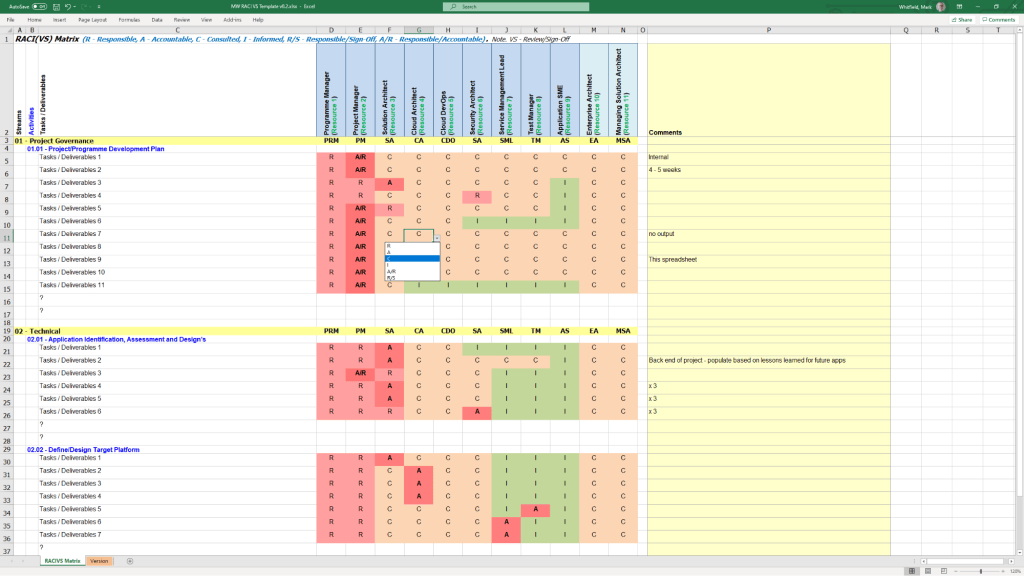
RACI template example in MS Excel
Comprehensive RAIDs Logs: Extensive MS Excel workbooks equipped with built-in charts featuring dedicated tracking tabs for Risks, Actions, Issues, Opportunities, Lessons Learned, and Dependencies.
Change Requests & Variations: Specific registers within the RAIDs ecosystem to log scope creep, contract management deviations, and formal modifications.
RACI Matrices: Role assignment trackers specifying who is Responsible, Accountable, Consulted, and Informed across project milestones.
3. Financial & Resource Management
These templates bypass complex corporate accounting tools to provide lightweight, transparent budgeting directly inside spreadsheet architectures.
Project Budget tracker in Microsoft Excel
Project Financial Trackers: Multi-currency ledgers charting forecasts vs. actual costs, profit margins, variation overheads, and project revenues.
Client Cost Summaries: Simplified external expense templates meant to be packaged and securely shared directly with clients.
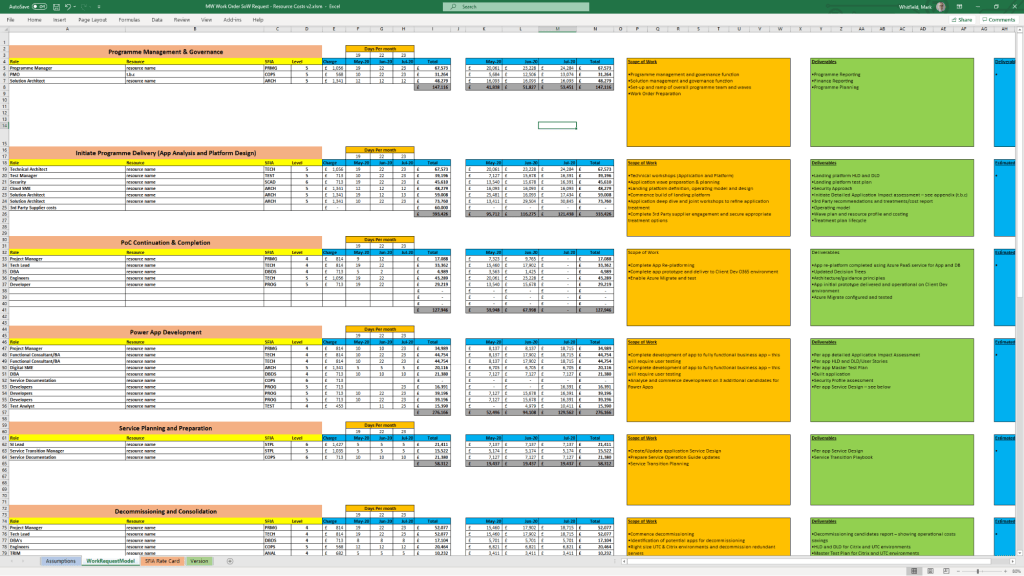
Resource and Leave Trackers: Resource allocation grids accounting for internal/external team capacity, annual leave, and resource hierarchy organization charts.
4. Agile & Iterative Delivery Worksheets
For hybrid or purely iterative structures, the package includes functional Excel equivalents to modern project tracking tools.
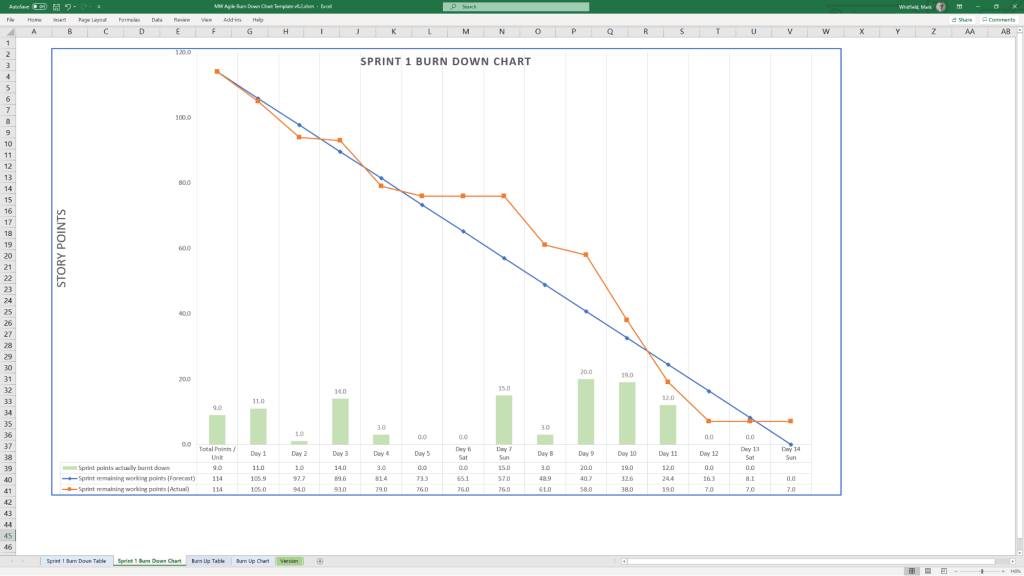
MS Excel template for an Agile Scrum Burndown chart
Velocity Tracking: Standalone, manually updatable Agile Burn Down and Burn Up charts.
Sprint Dynamics: Templates designed for managing Scrum backlogs and release cycles.
Team Performance: Includes functional icebreakers like the Project Team Quiz template to introduce light relief into daily stand-ups.
5. Communications, Onboarding & Reporting
Designed to cover critical communication pathways, from inception contracts to routine progress updates.
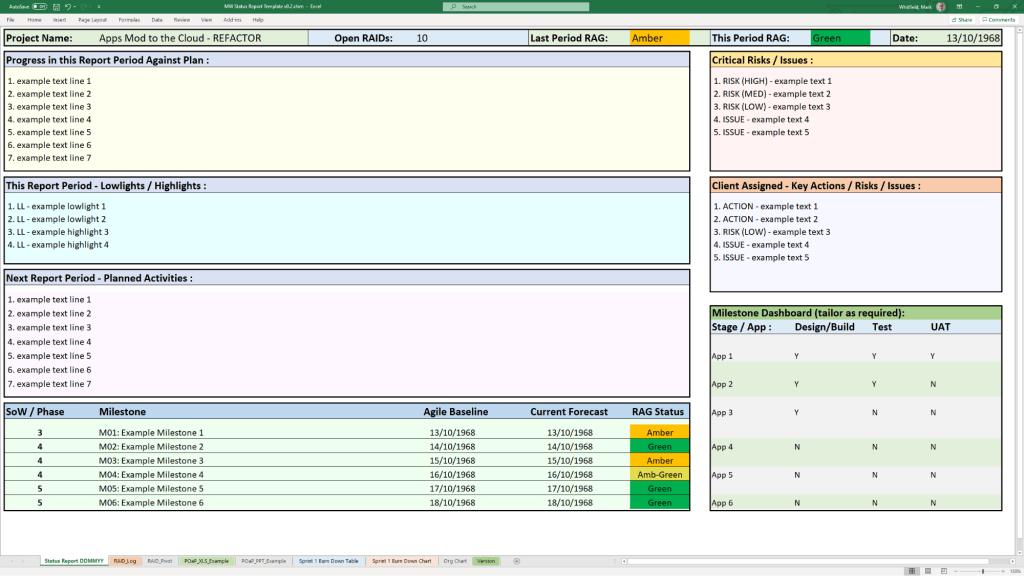
Microsoft Excel Template project status report
Status Reports: Standardized weekly and monthly reporting templates distributed across one Word variation and two tailored PowerPoint styles.
Mobilisation Kits: Comprehensive PowerPoint decks built as a unified Programme Mobilise / Team On-boarding Kit.
Stakeholder Analysis Plans: Impact mapping grids that chart Stakeholder Influence vs. Impact to categorize communication strategies into Involve, Inform, Consult, or Monitor.
Core Governance Files: Standard administrative files including formal Meeting Minutes, Statement of Work (SOW) guidelines, and Benefits Realisation plans.
The complete toolkit is available directly via the official PROject Templates platform or via his authorized marketplace storefront, ProjectTemplatesSoft on Etsy. Both options include a lifetime guarantee of free additions and package upgrades.
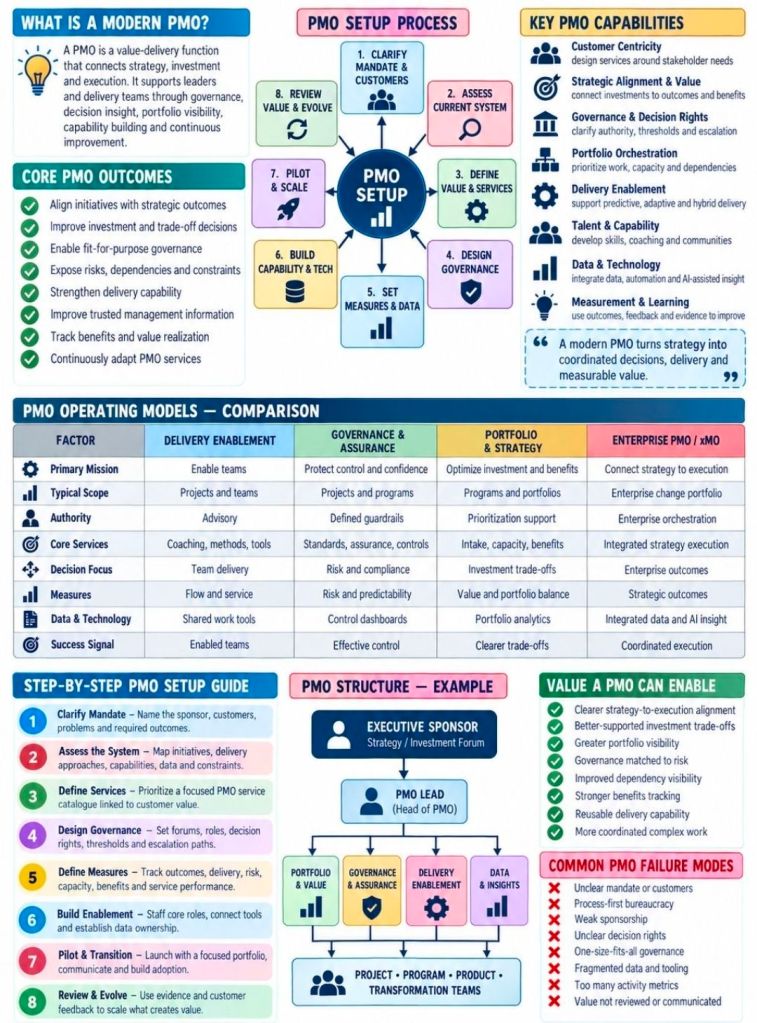
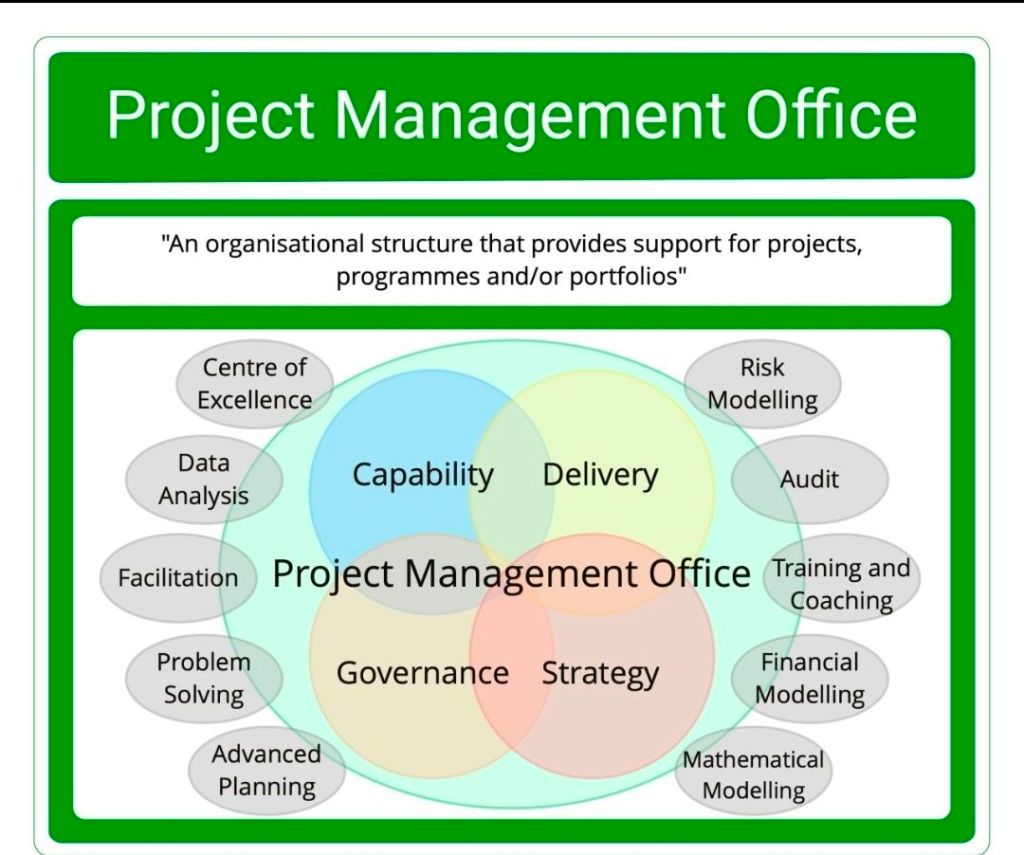
A Project Management Office (PMO) is a dedicated department or team within an organisation that defines, maintains, and standardises project management practices across the business. It serves as the central authority that ensures projects are executed efficiently, remain aligned with strategic business goals, and deliver maximum value.
Think of it as the regulatory and support hub for an organisation’s initiatives; while a project manager runs an individual project, the PMO creates the overall ecosystem in which all projects operate.
🔎 The 3 Main Types of PMOs (By Degree of Control)
Depending on the organization’s needs, a PMO typically falls into one of three structural categories:
Supportive PMO: Acts as a consultative hub. It provides templates, best practices, and training but exercises very low control over the actual project execution.
Controlling PMO: Enforces compliance and governance. It mandates that project teams adopt specific methodologies, templates, and frameworks, exercising a moderate level of control.
Directive PMO: Takes direct ownership of the projects. The PMO provides the project managers themselves and maintains high control, ensuring strict execution according to organizational standards.
📊 Key Responsibilities of a PMO
A high-performing PMO bridges the gap between executive strategy and day-to-day project execution through several core functions:
Governance and Compliance: Establishes approval workflows, audits project health, and ensures all teams comply with internal and external policies.
Standardisation: Creates standardized rules, templates, and methodologies (such as Agile or Prince2) so that everyone speaks the same project language.
Resource Management: Acts as a “traffic cop” to balance shared resources—like budget, tech tools, and personnel—across conflicting project schedules.
Strategic Portfolio Management: Reviews and prioritizes proposed projects against company priorities to ensure the business is spending its money on the right initiatives.
Performance Reporting: Tracks Key Performance Indicators (KPIs) and provides clean, objective data dashboards to stakeholders and C-suite executives.
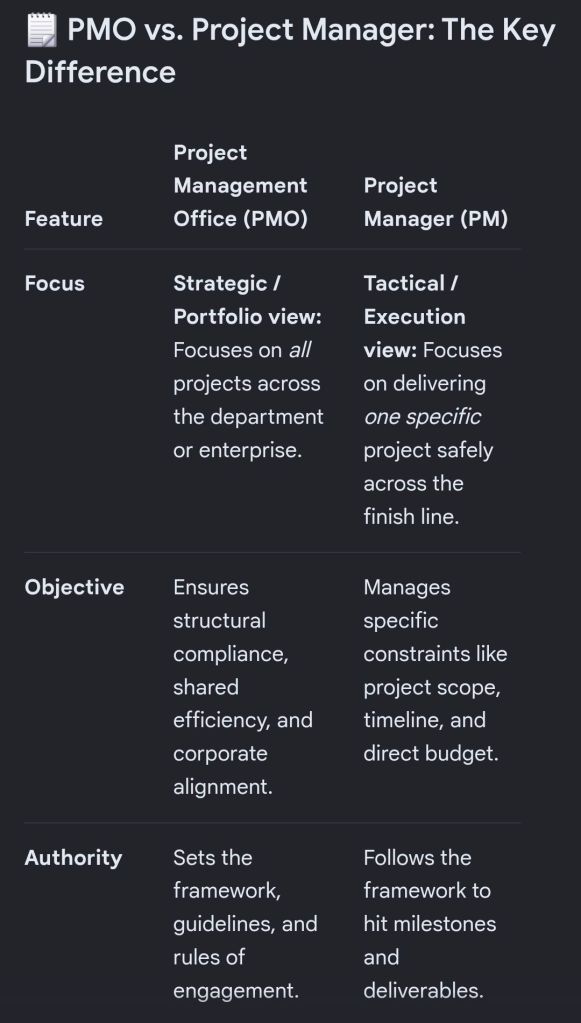
PMO vs. Project Manager, the key difference
💡 Core Benefits of a PMO
Organisations with a mature PMO report significantly better project success rates. A PMO delivers value by reducing project financial waste via standard budgeting, speeding up execution timelines through repeatable templates, and preventing team burnout with proactive resource allocation. It also establishes a central “lessons learned” database so that the company does not repeat past mistakes on new ventures.