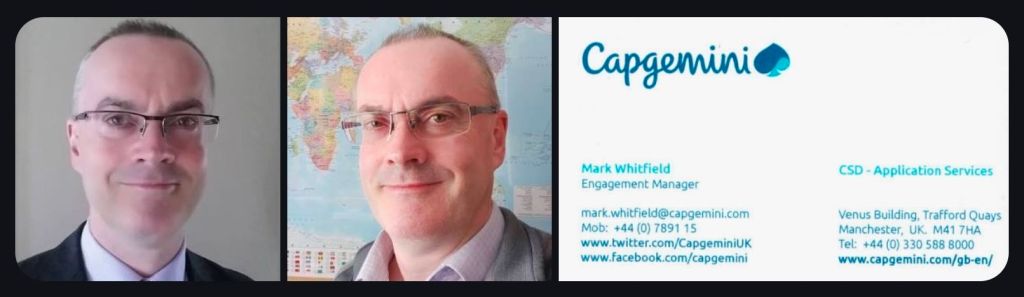
Mark Whitfield is a highly experienced, SC-cleared Senior Engagement Project Manager at Capgemini UK (2016–present), specialising in complex Agile and Waterfall digital transformations, cloud migrations (Azure/AWS), and application modernisation.
Based in Manchester, he has delivered high-value projects for government, automotive, and aerospace sectors, often acting as a key client-side technical lead.
Key Capgemini Projects and Account Experience (2016–Present)
UK Government – Fish Export Service (£1m+): Served as Technical Delivery Manager (Nov 2023–Feb 2024), leading two Agile Scrum teams to build a CHIP inspection portal, extending APIs in MS Azure cloud.
UK Government – MS Dynamics Cloud Migration (£1m+): Managed start-up and delivery of Azure Cloud projects (Nov 2022), including migrating 12 Dynamics 2016 apps to Dynamics 365 Online.
UK Utility Industry – Cloud Migration (£0.5m+): Led the transition from a legacy document management system (EQS) to Microsoft Azure product Enablon.
Automotive – Digital Transformation (£1m+): As Engagement Manager (Oct 2017), managed a £670K Customer Portal/New Car Online Sales project and a £430K Digital Readiness project at the Aston Agile Delivery Centre.
Postal Services – Migration Project (£4.3m): Acted as PM for a major migration of 1100+ interfaces between data centres in 2016.
Aerospace & Defence – iOS App Delivery: Led Agile delivery of new Apple iOS apps for a UK-wide air traffic organisation, handling sensitive military and public-facing data.
MuleSoft (Oct 2018–June 2019): Augmented as a Delivery Manager, managing up to 5 UK accounts using Outcome Based Delivery (OBD) for API-led projects.
Betfred (2014–2016): Senior Digital Project Manager for online/mobile gambling platforms.
Wincor Nixdorf / Insider Technologies (1995–2013, see below also): Focused on HPE NonStop/BASE24 banking software and legacy ATM software replacement, including projects for Lloyds Banking Group and in Saudi Arabia.
Mark is recognized for being a “no-ego” leader, proactive with detail, and highly effective at managing complex stakeholder environments, often providing a “barrier” for developers against challenging clients, according to colleague feedback.
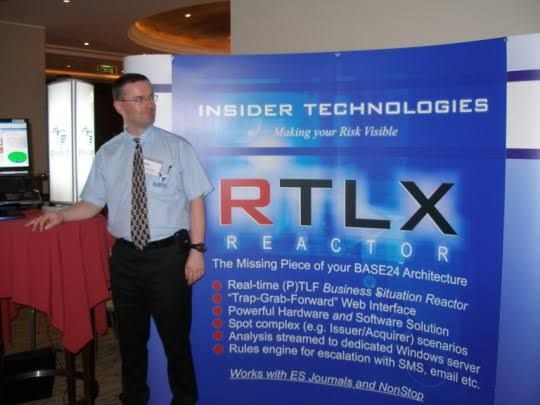
Mark Whitfield worked at Insider Technologies Limited (ITL) for 18 years, from 1995 to 2013. During his tenure, he progressed from technical roles to Manager of Strategic Technical Initiatives, serving as a Project Manager, Pre-sales Technical Consultant, and Team Lead.
Below is his work focus broken down by era and project type for Insider Technologies Limited, Salford Quays:
Early Era: Technical Foundations & Product Support (1995 – Early 2000s)
Whitfield’s initial focus was heavily technical, providing hands-on support and development specifications for the company’s core HP NonStop (Tandem) banking products.
Core Technical Support: Provided 24×7 technical support for major financial institutions including the Bank of England, Royal Bank of Scotland, and Euroclear (formerly CRESTCo).
Security & Cryptography: Supported Thales e-SECURITY products (Security Resource Manager and SafeSign) running on NSK, Windows, and Unix platforms, focusing on cryptographic functions like MACcing and PKI verification for banking applications.
Developer Management: Acted as a manager for developers, providing technical details and specifications for implementation on NonStop development projects.
Middle Era: Product Development & Design (Mid-2000s – 2008)
During this period, his role expanded into technical design and product management for new software solutions.
XPERT24 Product Launch: Produced the technical design documents and program specifications for XPERT24 (XPNET Performance Monitoring and Tracking).
Designed it to monitor the XPNET layer of BASE24, specifically tracking ATM/POS transaction interchange counters.
Authored the supporting marketing literature and technical user manuals.
R&D Initiatives: Led research and development for BASE24 (P)TLF log file analysis, integrating the Windows-based product Sentra to provide graphical front-end interfaces.
HSBC Implementation (2008): Headed the team that successfully delivered mainframe ATM and POS monitoring software to HSBC bank.
Late Era: Strategic Initiatives & Major Bids (2008 – 2013)
In his final years at ITL, he focused on large-scale business transformation and high-value project management.
Strategic Technical Initiatives: Served as the Manager of Strategic Technical Initiatives, bridging the gap between sales and technical delivery.
LloydsTSB ‘OISS’ Replacement: Managed a major bid to replace the legacy “OISS” operations tool at LloydsTSB (which monitored 5,000 ATMs) with ITL’s Reflex ONE24 product.
Responsible for gap analysis, technical assessment, and project costing.
Architecture & Design Partnerships: Worked closely with joint architects at Alliance & Leicester (now Santander) on the design and development of what would become a primary product set.
Product Portfolio Oversight: Managed the lifecycle of primary products including Reflex 80:20, Reflex ONE24, and the more recently introduced MultiBatch.
The Project Management Institute (PMI), founded in 1969, is the world’s leading professional association for the project management profession. Headquartered in the United States, it serves millions of professionals across 208 locations through over 300 local chapters, developing industry standards and globally recognised certifications.
Complete Overview
Mission: To maximize project success to elevate the world by creating products, services, and experiences that power the profession.
Vision: A world where every project lives up to its full potential for positive impact.
Core Functions:
Standards: Publishing the PMBOK Guide, a globally recognised standard for project management.
Certifications: Offering credentials such as the PMP (Project Management Professional) and CAPM.
Community: Managing a network of over 600,000 members and 10,000 volunteers globally.
Detailed Historical Timeline
Era 1: Foundations & The Scheduling Era (1960s – 1979)
During this period, project management emerged as a distinct discipline in the aerospace, construction, and defence industries.
1968: E.A. “Ned” Engman sends a letter of invitation to form an organization dedicated to project management.
1969: PMI is founded in Atlanta, Georgia, by James Snyder, Eric Jenett, Gordon Davis, E.A. Engman, and Susan Gallagher.
1969: First Seminars & Symposium, “Advanced Project Management Concepts,” held in Atlanta with 83 attendees.
1971: First PMI chapter established in Houston, Texas.
1975: PMI releases its first set of official organizational goals.
1977: Concept for PMI Seminars and Symposiums further developed by Susan Gallagher.
Era 2: Standardization & Professionalization (1980 – 1999)
This era focused on uncertainty reduction and the formalization of global standards.
1984: PMP Certification launched; co-founder Eric Jenett is the first to be certified.
1987: First publication of A Guide to the Project Management Body of Knowledge (PMBOK Guide) as a white paper.
1996: First formal edition of the PMBOK Guide published.
1998: PMBOK recognized as an ANSI Standard.
Era 3: Global Outreach & Diversification (2000 – 2018)
PMI expanded its global footprint and adapted to new methodologies.
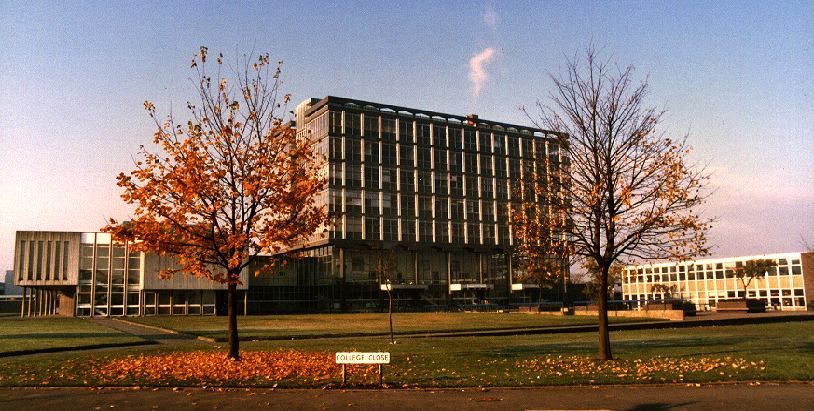
The Bolton Institute of Higher Education (BIHE), which officially existed between 1982 and 2004, is the direct predecessor to the current University of Bolton (now rebranded as the University of Greater Manchester). Its roots extend back to the early 19th century, evolving from a Technical School into a major centre for higher education.
Bolton Institute of Higher Education (BIHE) before the rebuild to the university.
Formation: Established in 1982 through the merger of Bolton Institute of Technology and Bolton College of Education (Technical).
Status: A “post-92” institution that developed from a vocational technical college to a degree-awarding Higher Education body.
Key Powers: Gained taught-degree awarding powers in 1992 and research degree awarding powers in 1995/1996.
Key Locations: Based at the Deane Campus (Deane Tower completed 1970) and Chadwick Campus.
Final Evolution: Achieved university status in 2004/2005.
Detailed Historic Timeline (1824–2024)
Era 1: Foundations (Mechanics’ Institute to Technical College)
1824-1825: Bolton Mechanics’ Institute is established, marking the educational origins of the institution.
1887: A new Technical School is created with student numbers rising above 1,500.
1926: Bolton Technical School is renamed Bolton Technical College.
1941: A new building is opened for technical and engineering education.
1946: Bolton Training College is approved by the Ministry of Education.
1959: Bolton Training College settles at Chadwick Street.
Era 2: The Technical and Institute Era (1960s–1981)
1960s: Development of Bolton College of Education at Chadwick Street.
1964: Bolton Technical College and Bolton Institute of Technology (BIT) are divided into separate organisations. A.J. Jenkinson serves as principal for both in succession.
1970: Deane Tower (Deane Campus) is completed.
1971: A technology block and sports hall (later the Excel Centre) are added.
Era 3: Formation of BIHE (1982–2004)
1982:Bolton Institute of Technology and Bolton College of Education merge to form Bolton Institute of Higher Education (BIHE). John McKenzie is the first principal.
1990: The Institute gains its own taught-degree awarding powers.
1991: An £8.3 million extension project begins, including the purchase of the former Eagle Factory.
1992: Reorganisation following the Further and Higher Education Act 1992.
1995/1996: Awarded research degree awarding powers.
1998: Mollie Temple becomes the third principal, leading the drive for university status.
2004:BIHE is granted university status.
2005: The institution is officially named the University of Bolton.
Era 4: Modern Era (University of Bolton to University of Greater Manchester)
2009-2010: Rebranding and opening of the new Deane Road campus building.
2018: Bolton College merges with the University of Bolton.
2023: Application made to change the name to the University of Greater Manchester.
2024: The university begins operating as the University of Greater Manchester.
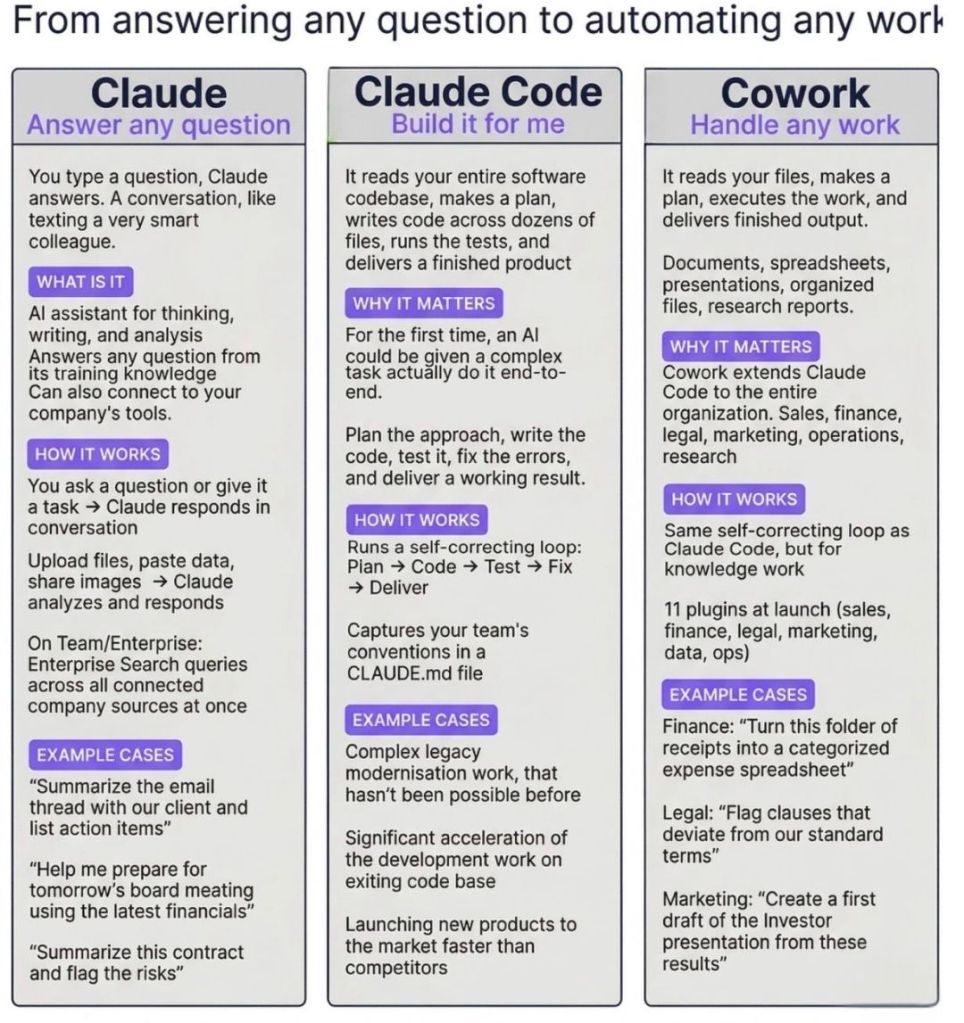
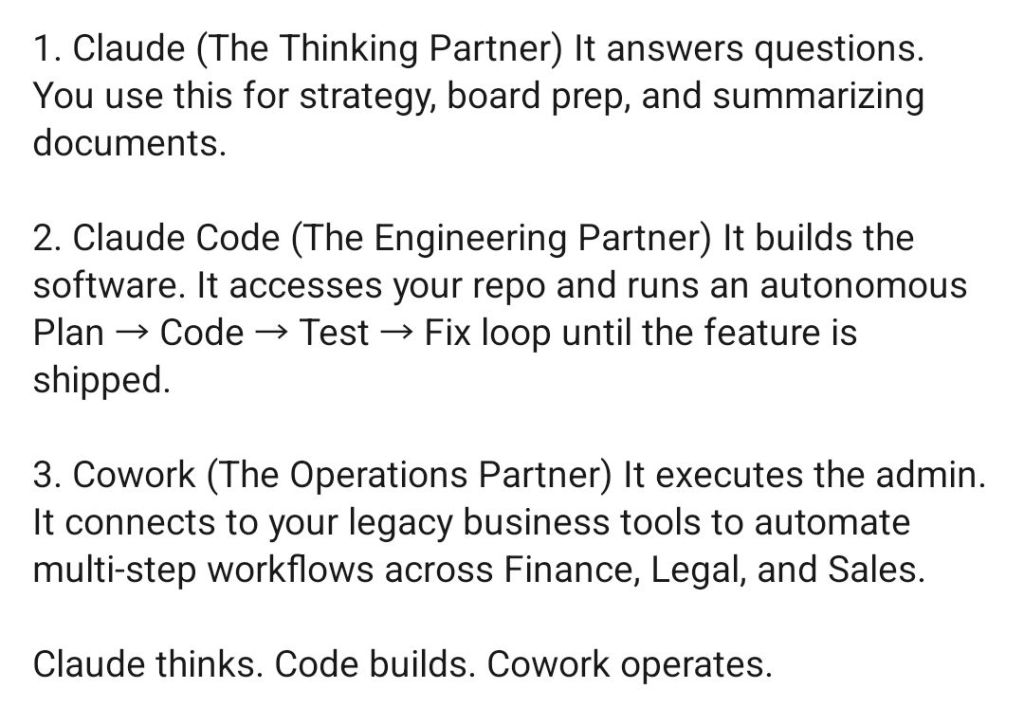
Claude is a family of large language models (LLMs) developed by Anthropic, a company founded in 2021 by former OpenAI executives Daniela and Dario Amodei with a core focus on AI safety and “Constitutional AI”. Known for its high-quality writing, advanced reasoning, massive context windows, and “Artifacts” interface, Claude has rapidly evolved from a safe conversational chatbot into an agentic tool capable of coding, computer use, and complex data analysis.
Overview of Claude AI
Constitutional AI (CAI): Anthropic trains Claude using a set of principles (“constitution”) rather than relying only on human feedback. This makes Claude generally more cautious, more likely to refuse harmful requests, and transparent in its reasoning.
Model Family (Haiku, Sonnet, Opus): Claude models are released in three tiers:
Haiku: Fastest and most cost-effective.
Sonnet: Balanced for speed and intelligence (general-purpose).
Opus: Most intelligent, designed for complex tasks.
Key Features:
Context Window: Early adoption of long-context, moving from 100k to 200k tokens (roughly 500 pages of text).
Artifacts: A dedicated UI window that displays rendered code, websites, and documents in real-time.
Computer Use: A specialized capability allowing Claude 3.5 Sonnet to control a computer’s desktop environment—moving the cursor, clicking, and typing.
Claude Code: Agentic coding tool introduced in 2025/2026 for automated software engineering.
Historic Timeline by Era and Year
Era 1: Foundation and Early Models (2021–2022)
2021: Anthropic is founded by Dario and Daniela Amodei, focusing on AI safety and “Constitutional AI”.
Late 2022: Initial versions of Claude are released to select research partners for safety testing.
Era 2: Public Launch and Rapid Scaling (2023)
March 2023:Claude 1 and Claude Instant are released for testing.
July 2023:Claude 2 is released to the general public, featuring improvements in reasoning and coding.
November 2023:Claude 2.1 is launched, doubling the context window to 200,000 tokens.
Era 3: The Claude 3 Family and Agentic AI (2024)
March 2024:Claude 3 Family (Haiku, Sonnet, Opus) is launched, showcasing near-human intelligence, advanced vision capabilities, and high-speed processing.
June 2024:Claude 3.5 Sonnet is released, outperforming the larger 3 Opus model and introducing the Artifacts feature for UI rendering.
October 2024:Claude 3.5 Haiku and an upgraded 3.5 Sonnet are released. Anthropic launches the “computer use” public beta, allowing the AI to interact with software and browsers.
Era 4: Claude 4 and Agentic Workflows (2025–2026)
February 2025:Claude Code is introduced as an agentic tool for developers.
May 2025:Claude 4 Family (Opus 4 & Sonnet 4) is launched, featuring improved multi-modal reasoning and deep context processing.
August 2025:Opus 4.1 is released with tighter safety controls for abusive conversations.
November 2025:Opus 4.5 is released, focusing on enhanced coding and workplace tasks, alongside “Infinite Chats”.
February 2026:Claude Opus 4.6 and Sonnet 4.6 are released, adding native “Agent Team” collaboration and 1M-token context.
April 2026:Claude Mythos Preview is announced, designed for high-level cybersecurity vulnerability detection.
Key Differentiators
As of early 2026, Claude is considered a market leader in agentic AI development, particularly through its “Computer Use” feature, which allows it to act as an Autonomous agent rather than just a chatbot. While competitors like OpenAI focus on multimodal LLMs, Anthropic’s Claude continues to differentiate by prioritizing safety, long-context understanding, and specialized agentic coding tools.
Claude AI Overview and Detailed Historic Timeline by Era and Year
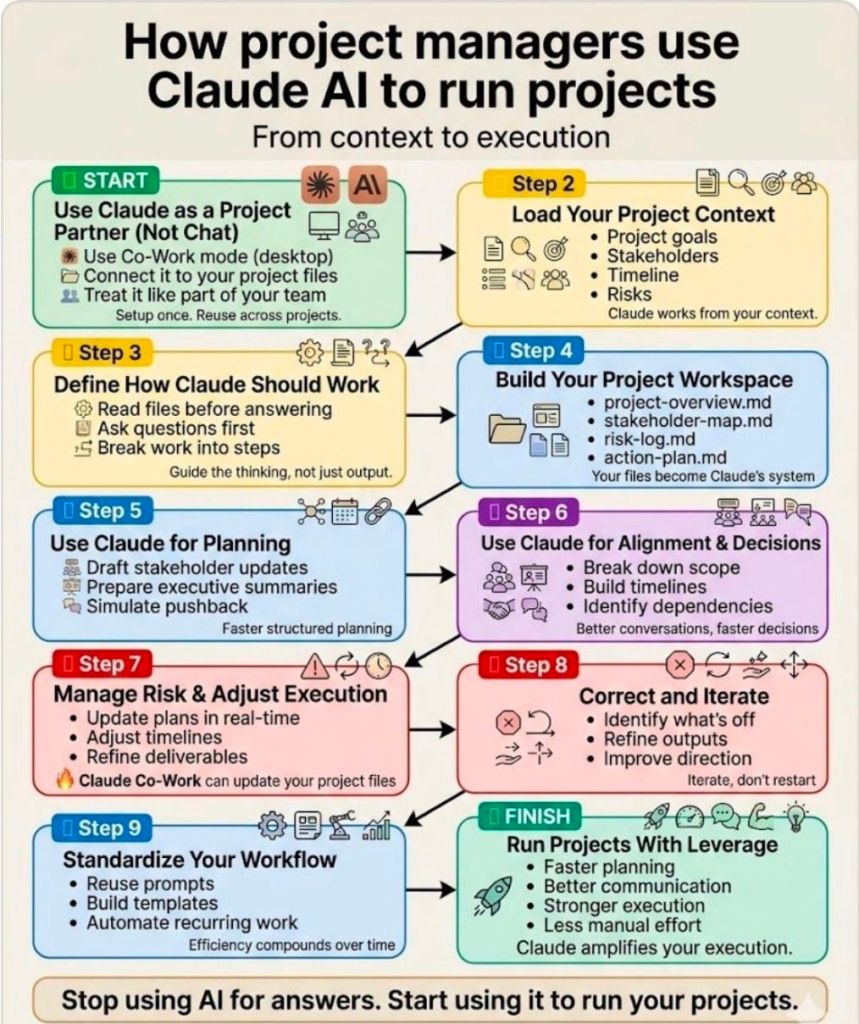
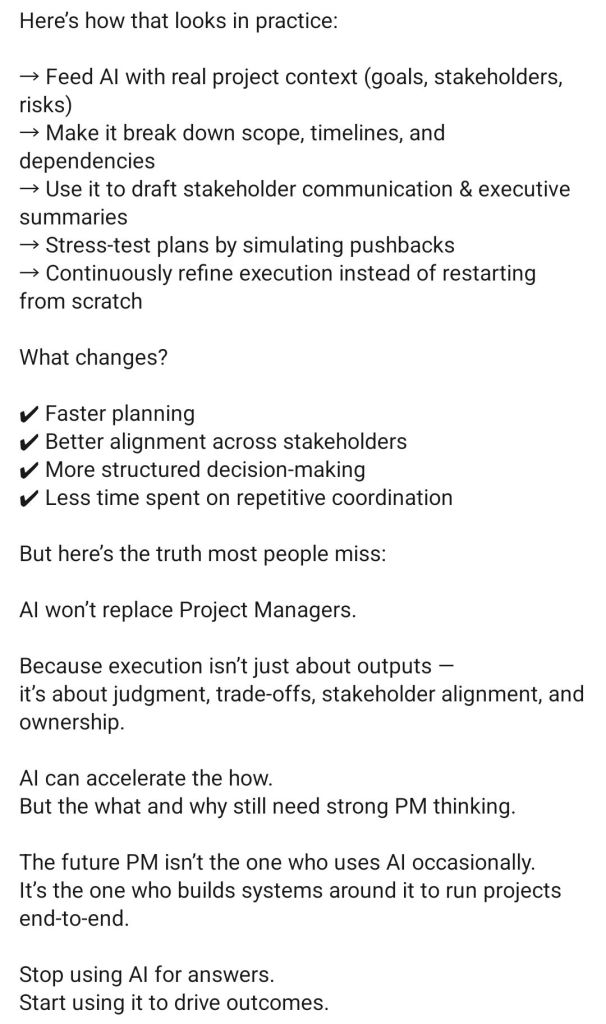
How Project Managers use Claude AI to run projectsHow PMs use Claude AI to run projects
Claude Artificial Intelligence AI technologyinsight
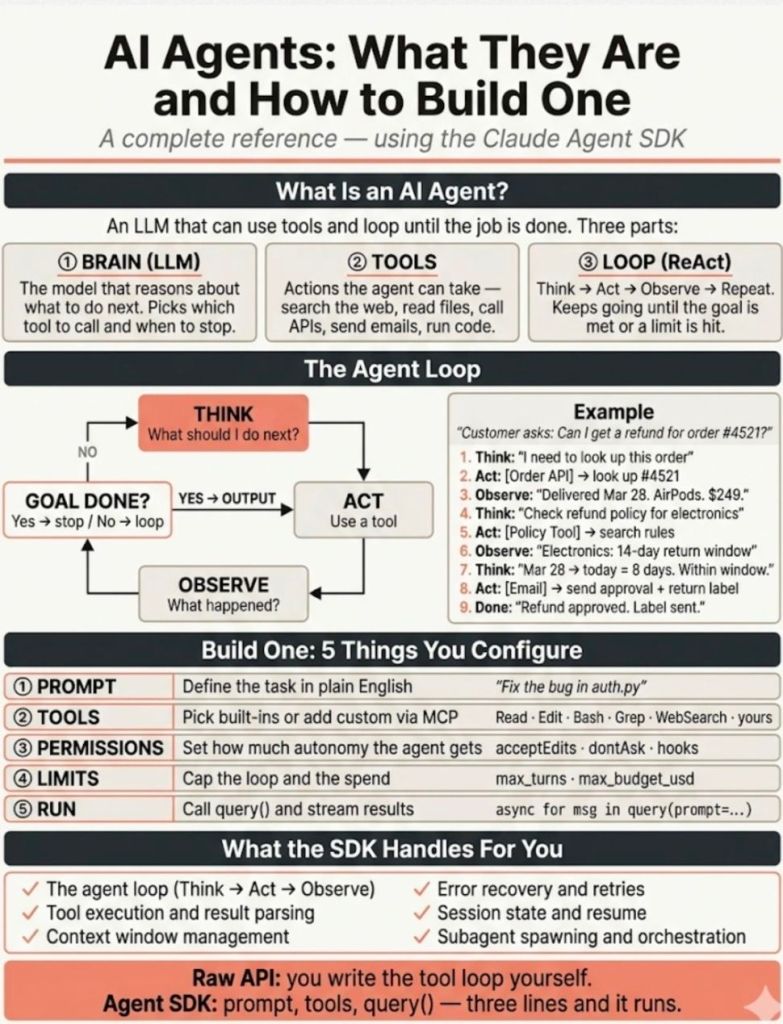
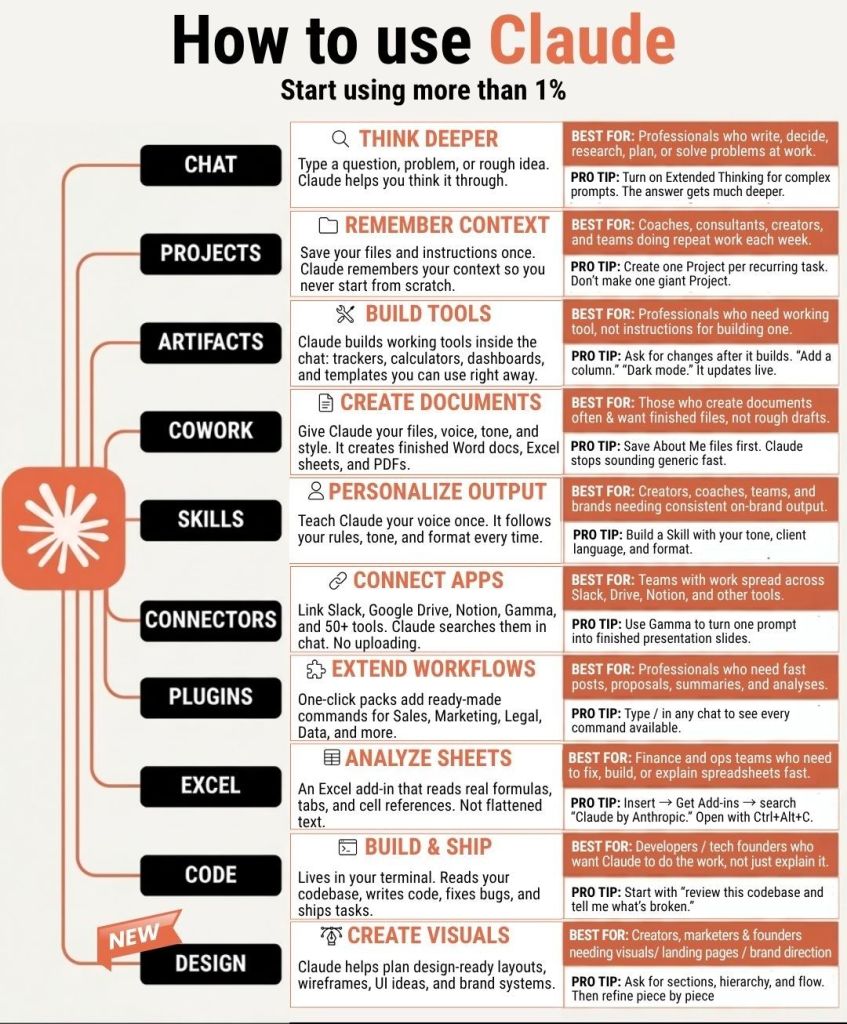
Claude is a family of large language models (LLMs) developed by Anthropic, an AI safety and research company. As of early 2026, the technology has evolved from a conversational chatbot into a suite of “agentic” tools capable of performing complex software engineering, cybersecurity, and workplace automation tasks.
Core Technology & Architecture
Constitutional AI: Claude’s unique training method, which uses a set of principles (a “constitution”) to guide the model’s self-critique and alignment. This is intended to make Claude more ethical, harmless, and less prone to bias.
Model Tiers: Claude is typically released in three sizes—Haiku (fastest/cheapest), Sonnet (balanced), and Opus (most powerful for deep reasoning).
Context Window: Recent models like Claude 4.6 and Sonnet 4.5 support massive context windows of up to 1 million tokens, allowing them to process entire codebases or long legal documents in a single prompt.
Extended Thinking: A feature that allows the model to “think” longer on complex problems before responding, using advanced step-by-step reasoning.
Key Features & Innovations
Artifacts: A dedicated UI feature that lets users view and interact with generated code, websites, and diagrams in real-time.
Claude Code: A command-line interface (CLI) that functions as an agentic software engineer, capable of searching your system, editing files, running tests, and fixing bugs autonomously.
Claude Code Security: A specialized tool released in early 2026 for scanning codebases to identify and fix high-severity vulnerabilities.
Computer Use: A beta capability allowing Claude to interpret screen content and simulate mouse and keyboard actions to perform tasks across multiple apps.
Integrations: Claude now connects directly to enterprise tools like Microsoft Word, Excel, PowerPoint, and Zoom to automate report generation and meeting follow-ups.
Impact & Performance
Coding Excellence: Claude is widely regarded as one of the best models for programming, often used to build entire applications through “vibe coding” (conversational development).
Productivity Gains: Internal and external studies suggest Claude can reduce task completion time by up to 80% for complex tasks like legal research and software engineering.
Cybersecurity Breakthroughs: The Claude Mythos model (currently in limited release) has reportedly discovered thousands of zero-day vulnerabilities in major operating systems like Linux and OpenBSD.
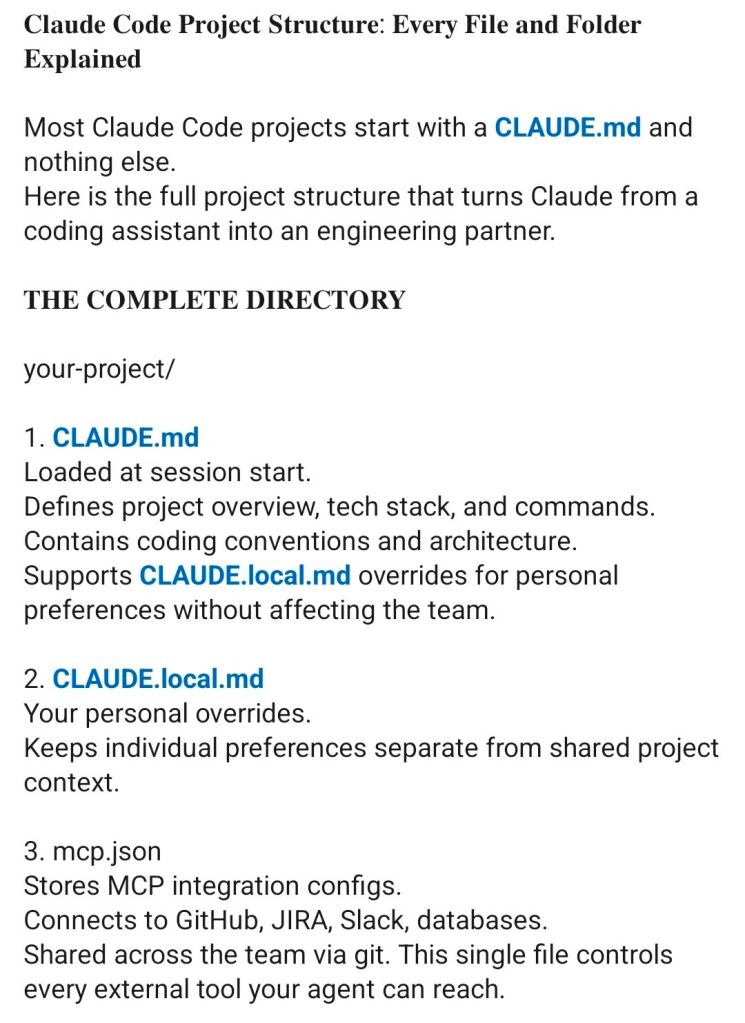
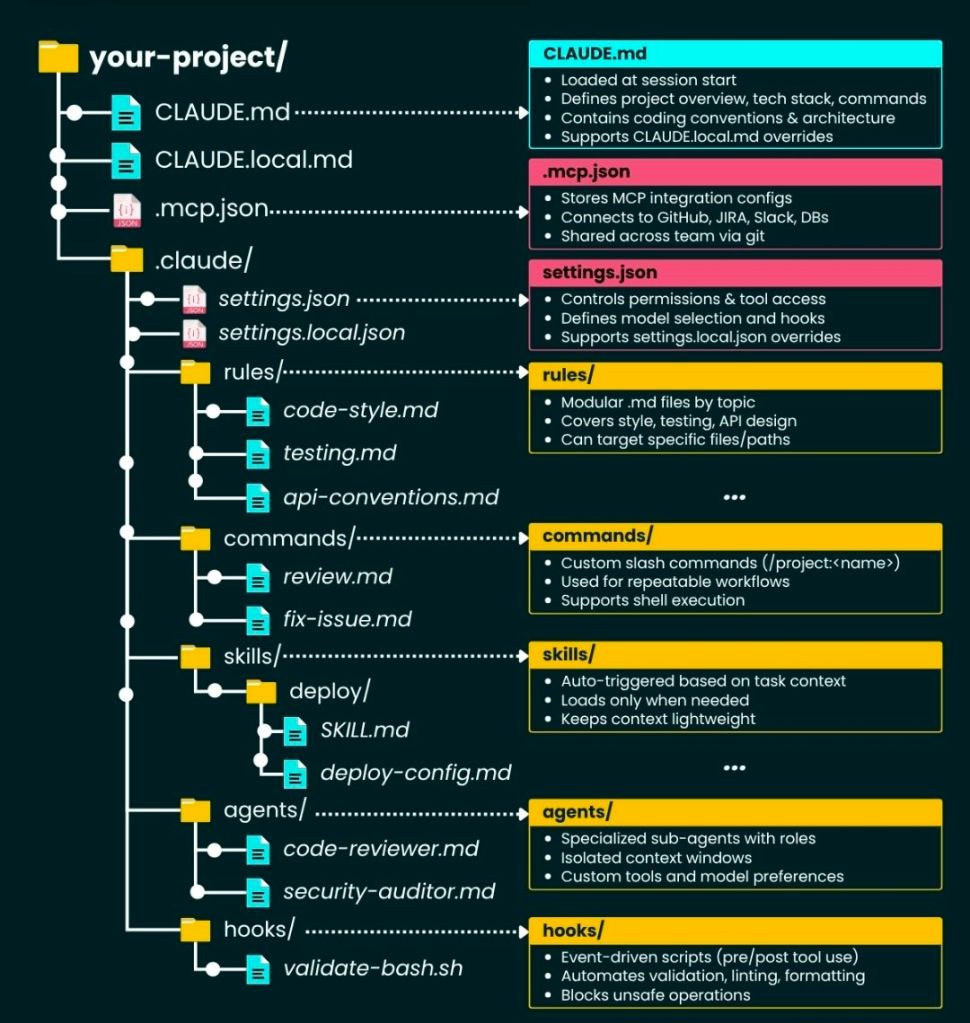
Claude Code Project structure :
Claude Code Project structure
The .claude folder is a hidden directory used by Claude Code (an AI-powered terminal assistant) to store local state, configuration, and memory, allowing it to remember project details across sessions. It functions as a local workspace for Claude to manage instructions, custom commands, permission rules, and auto-memory.
Key Components of the .claude Folder:
CLAUDE.md (Crucial): A markdown file that acts as the primary instruction manual, containing rules, project context, and coding standards.
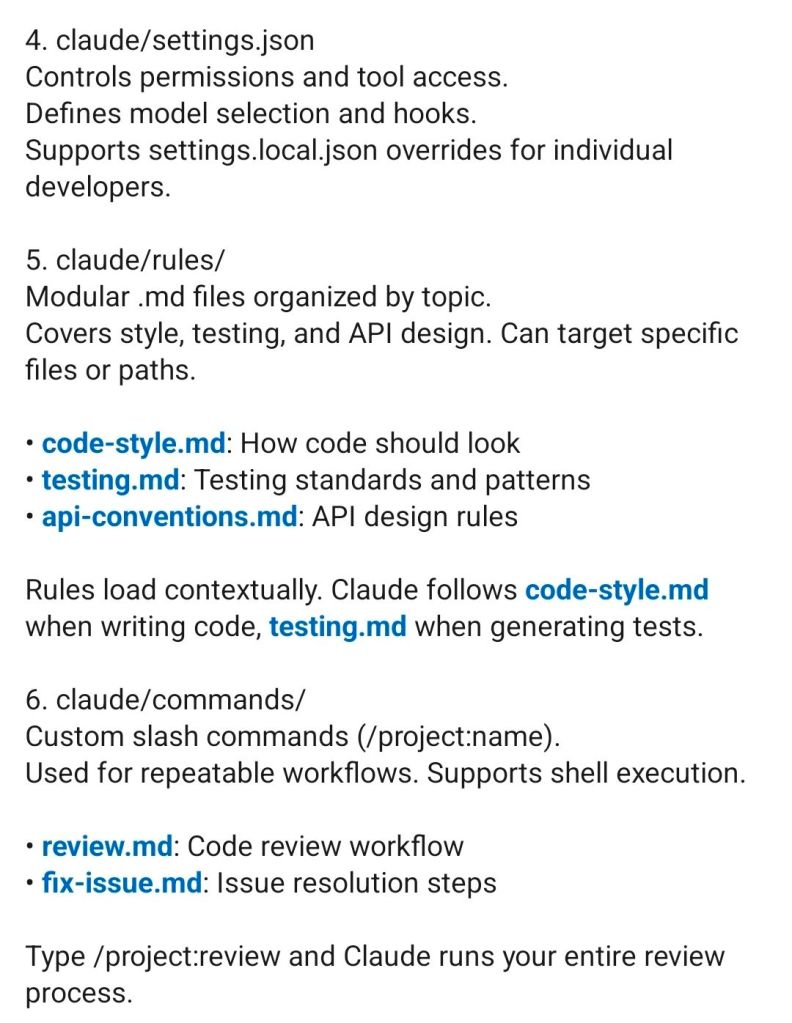
settings.json (Configuration): Controls permissions, defining which tools Claude can use and what files it can read.
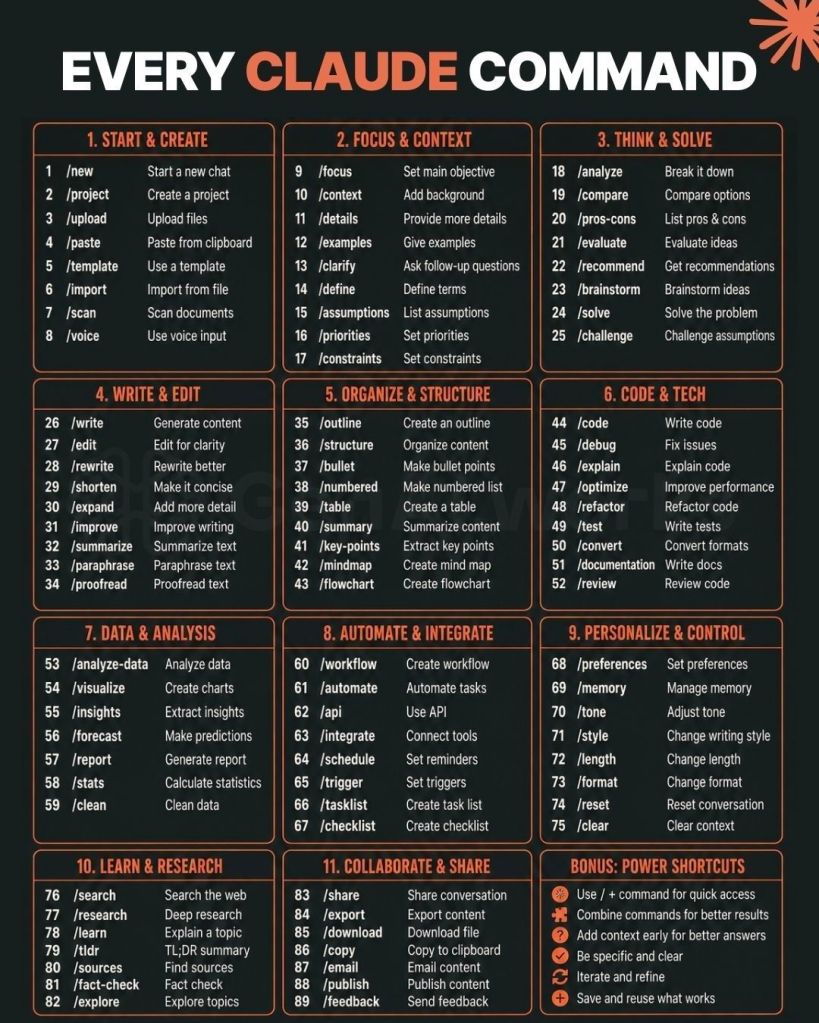
commands/ (Custom Tools): A folder for storing markdown files that create custom shell commands (e.g., /project:review).
rules/ (Specialized Guidance): Contains specific coding conventions or guidelines that supplement CLAUDE.md.
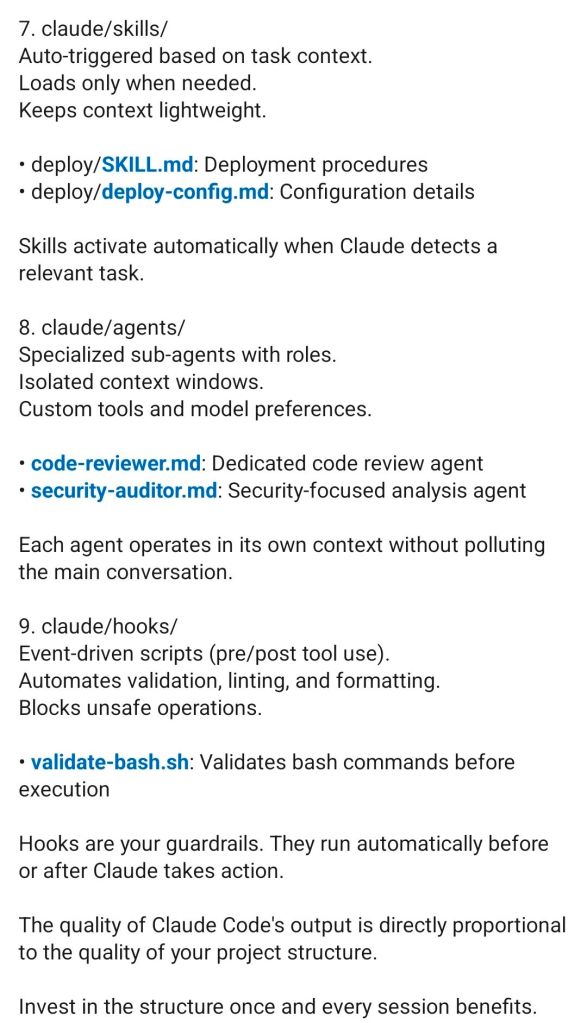
skills/ (Actionable Workflows): Used to store multi-step workflows that Claude can execute, such as code analysis or formatting.
agents/ (Subagents): Defines specialized AI subagents with specific system prompts and tool access.
memory/ (Persistent State): Stores auto-generated notes and context about the project’s codebase, architecture, and previous tasks.
Two Types of .claude Directories:
Project-Level (.claude/): Created at the root of a project, shared with the team via git.
Global-Level (~/.claude/): Located in the user’s home directory, storing personal configurations and memory that apply across all projects.
Important Notes:
Safety: It is safe to delete, but doing so resets the model’s memory of the project.
Gitignore: It is highly recommended to add the .claude folder to .gitignore to avoid committing local environment state.
Structure: It is recommended to keep CLAUDE.md under 200–300 lines to maintain high adherence.
The HPE NonStop Spoolcom (Spooler Command Language) program is the administrative interface for managing the Spooler subsystem on HPE NonStop systems. It allows operators to configure, monitor, and control print jobs, collectors, and print processes.
Program Summary
Purpose: Used to define and manage spooler objects such as collectors, devices, and jobs.
Key Functions: Starting/stopping the spooler, modifying device attributes, and controlling job states (e.g., hold, release, delete).
Architecture: Operates within the Guardian environment, communicating with the Spooler supervisor process to maintain 24/7 fault-tolerant printing operations.
Historical Timeline by Era
1. The Tandem Era (1974–1997)
1976: Introduction of the Tandem NonStop system; basic spooling capabilities were essential for early OLTP (Online Transaction Processing).
1980s: The Spooler evolved to handle complex routing and multiple collectors to support growing enterprise needs.
1997: Spooler D41 released, providing stable management for the MIPS-based architecture.
2. The Compaq & Early HP Era (1997–2014)
1999–2000: Release of Spooler D46, enhancing device ownership and virtual device support.
2001–2002: Spooler D48 released during the transition to the HP Integrity NonStop (Itanium) platform.
2012: Major updates to Spooler D48 to support H01 and H02 RVUs, improving scalability for high-end systems.
3. The Modern HPE Era (2014–Present)
2014: NonStop X (x86-64) introduced. Spoolcom adapted to support the new architecture and virtualised environments.
2018–2020: Focus shifted toward modernised interfaces. While Spoolcom remains the CLI standard, graphical alternatives like MultiBatch began gaining traction for batch management.
2023–2024: Continued integration with HPE GreenLake and hybrid cloud models, ensuring spooling services are available in private cloud deployments.
Futures and Roadmap
Modernisation: HPE is pushing toward “modernisation through tradition,” which includes better integration of legacy tools like Spoolcom with modern DevSecOps and cloud-native frameworks.
Kernel-Level Threading (KLT): Future updates aim to leverage KLT to improve the performance and scale-up capabilities of management processes.
Data-Centric Security: Integration with security platforms like TAMUNIO for field-level tokenization ensures that printed data remains compliant with PCI DSS 4.0 and GDPR.
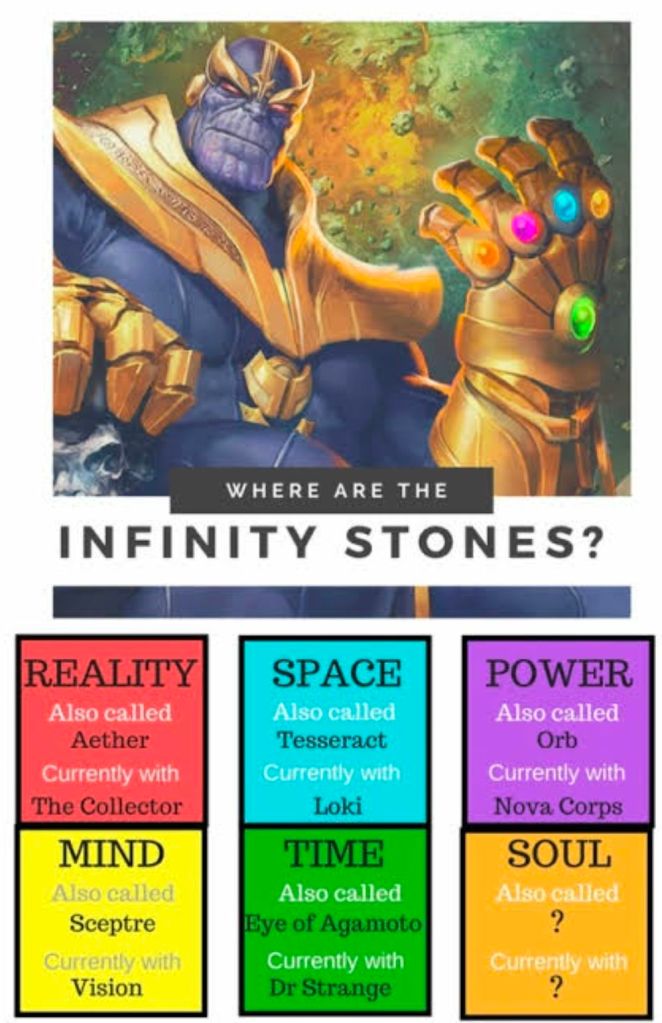
The Infinity Stones in the Marvel Cinematic Universe (MCU) are six ancient singularities that existed before the dawn of creation. Following the Big Bang, these singularities were forged into concentrated crystals—the Stones—each embodying and controlling an essential aspect of existence: Space, Mind, Reality, Power, Time, and Soul. Thanos sought to collect all six to balance the universe by eradicating half of all life, a goal he achieved in 2018 before destroying the Stones.
The Infinity Stones are six primeval artifacts representing different aspects of the universe
Overview of the Stones
Space Stone (Blue): Allows for instantaneous travel anywhere in the universe. Housed within the Tesseract.
Mind Stone (Yellow): Grants control over the minds of others and enhances mental abilities. Initially housed in Loki’s scepter, later placed in Vision’s forehead.
Reality Stone (Red): Enables the wielder to alter physics and reality itself. Known as the Aether.
Power Stone (Purple): Grants unlimited access to all forms of energy and can destroy entire planets. Housed in an orb.
Time Stone (Green): Gives total control over time, including speeding it up, reversing it, or creating time loops. Housed in the Eye of Agamotto.
Soul Stone (Orange): Controls life and death, allowing the user to manipulate souls and access the “Soul World”. Located on Vormir.
Historical Textual Timeline
This timeline follows the stones from their creation to their destruction, based on MCU events.
Era: Pre-Universe (Before Time)
Creation: Six singularities exist representing different aspects of existence.
The Big Bang: The universe is formed, and the singularities are forged into the six Infinity Stones and scattered across the cosmos.
Era: Ancient History
Circa 965 A.D.: Odin, King of Asgard, brings the Space Stone (Tesseract) to Earth for safekeeping, hiding it in Tønsberg, Norway.
Undated: The Dark Elves, led by Malekith, attempt to use the Reality Stone (Aether) to return the universe to darkness during a convergence. Odin’s father, Bor, defeats them and hides the Aether.
Undated: The Power Stone is used by the Celestials to judge and destroy civilizations. It is eventually hidden away on the planet Morag.
Era: World War II (1940s)
1942: Johann Schmidt (Red Skull) locates and steals the Tesseract from Norway to weaponize it for Hydra.
1943: During a confrontation with Captain America, the Tesseract is damaged, activating a portal that transports Red Skull to Vormir, where he becomes the guardian of the Soul Stone.
1945: The Tesseract falls into the Arctic Ocean. Howard Stark recovers it shortly after.
Era: Late 20th Century
1989: Dr. Wendy Lawson (Mar-Vell) experiments on the Tesseract for S.H.I.E.L.D., accidentally granting Carol Danvers (Captain Marvel) her powers.
1995: The Tesseract is briefly swallowed by the Flerken Goose, who later vomits it onto Nick Fury’s desk.
Era: Modern Age (MCU Phase 1 & 2)
2010/2011: Nick Fury shows the Tesseract to Dr. Erik Selvig for research.
2012 (The Avengers): Loki uses the Space Stone (in the Tesseract) to open a portal for the Chitauri invasion of New York. The Avengers defeat him, and Thor returns the Tesseract to Asgard.
2013 (Thor: The Dark World): The Aether (Reality Stone) is found by Jane Foster. It is secured by the Collector after the Dark Elves are defeated.
2014 (Guardians of the Galaxy): Star-Lord retrieves the Power Stone from Morag. After a conflict with Ronan the Accuser, the Guardians entrust the stone to the Nova Corps on Xandar for safekeeping.
2015 (Avengers: Age of Ultron): The Avengers recover the Mind Stone from a Hydra base. Tony Stark and Bruce Banner use it to create Vision, who acts as its protector.
Era: The Infinity War (2018)
2018: Thanos decimates Xandar and takes the Power Stone.
2018: Thanos attacks the Asgardian refugee ship and takes the Space Stone from Loki.
2018: Thanos visits the Collector and takes the Reality Stone.
2018: Thanos takes the Soul Stone from Vormir after sacrificing his daughter, Gamora.
2018: Thanos takes the Time Stone from Doctor Strange on Titan.
2018: Thanos kills Vision to take the Mind Stone in Wakanda.
2018 (The Snap): Thanos activates the Gauntlet, erasing half of all life in the universe. He later uses the stones a second time to destroy them, reducing them to atoms.
Era: Post-Snap (2023)
2023 (Avengers: Endgame): The Avengers travel back in time to 2012, 2013, and 2014 to borrow the stones from alternate timelines.
2023: The Avengers use the borrowed stones to reverse Thanos’ snap.
2023: Captain America returns the borrowed stones to their original timelines to prevent the creation of dark alternate realities.
The Infinity Stones are six primeval artifacts representing different aspects of the universe
This is a detailed, comprehensive historical timeline of project management methodologies, tracing the evolution from ancient practices to modern adaptive frameworks.
I. Pre-Modern Era (Before 1900): Foundation of Task Coordination
2570 BC (Great Pyramid of Giza): Completion of the pyramids, demonstrating early project organization with managers for each of the four faces, planning, and logistics.
208 BC (Great Wall of China): Construction of the Great Wall, involving massive workforce organization divided into soldiers, citizens, and criminals.
1850s (Transcontinental Railroad): US railroad projects requiring large-scale resource and schedule management.
1896 (Harmonogram): Karol Adamiecki developed the harmonogram, a predecessor to the Gantt chart (published in 1931).
II. Early Modern Era (1910s–1950s): The Scientific Management Era
This era brought “scientific management” to project control, focusing on efficiency and visualization.
1910s (Gantt Chart): Henry Gantt developed the Gantt chart, a visual tool for scheduling tasks over time.
1911 (Scientific Management): Frederick Taylor published The Principles of Scientific Management, focusing on efficiency and time-saving.
1931–1936 (Hoover Dam): One of the first large-scale applications of Gantt charts for complex scheduling.
1942–1945 (Manhattan Project): Development of the atomic bomb, creating a need for rapid, complex planning and large-scale team coordination.
III. The “Golden Age” of Project Management (1950s–1960s): Formal Methodologies
This era introduced mathematical models for managing complex, interdependent tasks.
1956 (AACE Formed): The American Association of Cost Engineers (now AACE International) was formed, specializing in cost control and scheduling.
1957 (Critical Path Method – CPM): Developed by Dupont Corporation to manage chemical plant maintenance shutdowns.
1958 (Program Evaluation and Review Technique – PERT): Created by the US Navy Special Projects Office for the Polaris missile submarine project to manage task time and risk.
1962 (Work Breakdown Structure – WBS): The US Department of Defense mandated the use of WBS for large, complex projects.
1965 (IPMA Founded): The International Project Management Association (IPMA) was launched, the world’s first project management association.
1969 (PMI Founded): The Project Management Institute (PMI) was launched to promote the profession, later developing the PMP certification.
IV. The “Silver Age” (1970s–1980s): Systems and Controls
1970s (Waterfall Introduction): While used informally earlier, the Waterfall methodology was formalized for software development in the 1970s, emphasizing sequential phases.
1975 (PROMPTII): Simpact Systems Ltd created PROMPTII, a methodology to handle cost overruns in computer projects, which later formed the basis of PRINCE.
1975 (Mythical Man-Month): Fred Brooks published his seminal work on software engineering project management.
1978 (Toyota Production System): Lean production and Kanban techniques, used in manufacturing, began to influence project workflow.
1984 (Theory of Constraints – TOC): Dr. Eliyahu Goldratt published The Goal, introducing the Theory of Constraints for managing constraints (bottlenecks).
1986 (Scrum): Takeuchi and Nonaka defined Scrum as a project management style for fast-paced development.
1987 (PMBOK Guide): The Project Management Institute published the first Project Management Body of Knowledge (PMBOK) white paper.
1989 (PRINCE): The UK government launched PRojects IN Controlled Environments (PRINCE), the standard for information systems projects.
V. Rebirth and Modern Era (1990s–2000s): Agile and Adaptive Methods
1994 (CHAOS Report): The Standish Group published the first report documenting high IT project failure rates.
1995 (Scrum Formalization): Jeff Sutherland and Ken Schwaber formally defined the Scrum framework.
1996 (PRINCE2): PRINCE was updated to PRINCE2 to become a generic, more flexible methodology applicable to all project types.
1997 (Critical Chain Project Management – CCPM): Eliyahu Goldratt invented CCPM, based on the Theory of Constraints.
1998 (PMBOK Standard): The American National Standards Institute (ANSI) recognized PMBOK as a standard.
2001 (Agile Manifesto): 17 software developers met to publish the Manifesto for Agile Software Development, prioritizing collaboration and adaptability over rigid plans.
2007 (Kanban for Software): David Anderson adopted Kanban for software development, focusing on visualizing work and limiting work-in-progress.
VI. The Contemporary Era (2010s–Present): Hybrid, AI, and Speed
2012 (ISO 21500): The International Organization for Standardization published ISO 21500:2012, “Guidance on Project Management”.
2017 (PMBOK 6th Ed & PRINCE2 Update): PMI introduced Agile/adaptive practices into PMBOK, while AXELOS released a more flexible PRINCE2.
2018 (PRINCE2 Agile): PRINCE2 Agile was launched to combine the governance of PRINCE2 with the flexibility of Agile.
2021 (PMBOK 7th Ed): A major shift in PMI standards, moving from process-based to principle-based, focusing on project outcomes.
2020s–Present (AI/Hybrid): Rise of AI-driven project management, automated reporting, and hybrid methodologies combining Waterfall stability with Agile speed.
Project Management Methodologies, historical timeline by era and year