Gap Analysis in Agile Projects, Detailed Breakdown

In Agile projects, gap analysis shifts from a heavy upfront documentation exercise to a dynamic, continuous evaluation of the difference between your product’s current capabilities and your user’s actual needs.

Instead of building massive compliance checklists, Agile teams break gaps down into functional, team-level increments embedded directly into product development loops.

🛠️ How Gap Analysis Maps to Agile Artifacts

Agile doesn’t use a standalone “Gap Analysis Report”. Instead, gaps are converted directly into standard Agile artifacts to keep the delivery team moving:

  • The Epic Level (Strategic Gaps): Large operational or technical gaps (e.g., “System lacks multi-factor authentication”) are captured as Epics.
  • The User Story Level (Functional Gaps): Epics are sliced down into smaller, testable User Stories that represent a single increment of closing that gap (e.g., “As a user, I want to receive an SMS verification code to secure my login”).
  • The Backlog (Prioritisation): Identified gaps are estimated, given a business value, and ranked directly alongside feature requests in the Product Backlog.

📋 The 4-Step Agile Gap Process Breakdown

Agile teams continuously execute gap analysis iteratively through four distinct stages:

1. Define the Current State (Where We Are Now)

  • Action: Evaluate the existing performance or architecture using live metrics, user research, and current automated test results.
  • Agile Tool: Review system metrics, customer churn data, or velocity charts during Retrospectives. Avoid vague complaints; stick strictly to measurable facts.

2. Envision the Desired Future State (Where We Want to Be)

  • Action: Define target benchmarks or expected system behavior.
  • Agile Tool: Leverage the Product Vision, user personas, acceptance criteria, or your team’s Definition of Done (DoD) to serve as the baseline future state.

3. Identify and Analyze the Gap (The “Why”)

  • Action: Highlight the specific differences between performance and goals, then uncover the underlying reasons.
  • Agile Tool: Run a Five Whys session or build a Fishbone Diagram during sprint planning to see if the gap is caused by legacy code (Technology), missing skillsets (People), or inefficient workflows (Process).

4. Build the Action Plan (The Bridge)

  • Action: Convert the necessary fixes into work items.
  • Agile Tool: Map the required changes directly into the Sprint Backlog as User Stories, technical spikes (research tasks), or non-functional requirements to be delivered in upcoming iterations.

⏱️ When Gap Analysis Happens in the Agile Lifecycle

Rather than an administrative phase at the very beginning of a project, gap analysis is integrated throughout standard Agile ceremonies:

  • Product Discovery: High-level gap analysis ensures the initial product backlog addresses actual target user needs instead of internal assumptions.
  • Sprint Planning: The team evaluates the gap between the sprint goal and the current codebase to pick the right stories.
  • Sprint Review / Demo: Stakeholders compare the working increment against their expectations. This immediately exposes any emerging functional or alignment gaps.
  • Retrospectives: The team conducts an internal process gap analysis to evaluate how they collaborate, uncovering process bottlenecks or technical debt.

Gap Analysis in Agile Projects, Detailed Breakdown

Best approach to writing a project plan with breakdown

The best approach to writing a project plan breakdown is to use a top-down decomposition strategy centered on a Work Breakdown Structure (WBS). This technique methodically slices a complex, high-level project into smaller, manageable chunks called work packages, ensuring that nothing is missed.

To build a flawless, actionable project breakdown, you must establish the project’s foundation before dissecting it into individual tasks.

1. Define the Scope and Deliverables

Before diving into a micro-level breakdown, you must know what you are building—and what you are not building.

  • Write a scope statement: Document the final outcomes, project boundaries, and explicit exclusions to prevent scope creep.
  • Identify major deliverables: Determine the high-level milestones or chunks of tangible value that must be completed.
  • Apply the 100% rule: The Project Management Institute (⁠PMI) notes that your WBS must include 100% of the internal, external, and interim project management work.

2. Structure the Levels of Decomposition

A good project plan breakdown uses hierarchical tiers. Do not mix daily tasks with macro phases. Instead, follow a logical breakdown hierarchy:

  • Level 1 (The Project): The overall project objective or final product.
  • Level 2 (Phases or Major Deliverables): Broad operational segments (e.g., Initiation, Design, Development, Testing).
  • Level 3 (Sub-deliverables): Specific components within a phase (e.g., under Development, you might have Frontend Architecture).
  • Level 4 (Work Packages): The lowest level of the WBS. These are discrete items that can be assigned to a specific team or individual and estimated for time and budget.

3. Apply the 80-Hour Rule

When decomposing down to the task level, determine how granular you need to be by tracking effort, not just calendar time:

  • The 80-hour threshold: A single work package should take no more than 80 hours (two weeks of full-time work) and no less than 8 hours to complete.
  • Avoid micro-management: If a task takes less than 8 hours, group it with others. If it exceeds 80 hours, it is too complex and needs to be broken down further.

4. Build a WBS Dictionary

A visual chart or list is helpful, but context prevents mistakes. For each work package at the bottom of your hierarchy, document:

  • Task description: Clear language outlining what “done” actually looks like.
  • Assigned owner: One single person or team responsible for the execution.
  • Pre-requisites and dependencies: Clarify which tasks must finish before the next can begin.

5. Sequence, Estimate, and Schedule

Once the work is broken down, pull it into a working chronological timeline using software like Microsoft Project (see MS .mpp templates in website banner), ⁠Asana or ⁠Monday.com.

  • Sequence activities: Map the chronological order and identify the critical path—the longest string of dependent tasks.
  • Estimate duration & resources: Gather the actual people doing the work to estimate time, capacity, and material needs realistically.
  • Add contingency: Factor in safety buffers to protect the project baseline from unexpected delays.

Catherine Schell Biography & Chronological Timeline Breakdown

Catherine Schell is an internationally acclaimed Hungarian-born British actress celebrated for her commanding presence and versatility across mainstream cinema, comedy, and British cult television.

Catherine Schell is an internationally acclaimed Hungarian-born British actress celebrated for her commanding presence and versatility across mainstream cinema, comedy, and British cult television
Catherine Schell

Best known for her iconic roles as the shape-shifting alien Maya in Space: 1999, the glamorous Lady Claudine Litton in The Return of the Pink Panther, and a Bond girl in On Her Majesty’s Secret Service, she seamlessly navigated international franchises, sci-fi cult classics, and intense television dramas.


Professional Resume

Contact & Representation

Personal Data

  • Full Name: Katherina Freiin Schell von Bauschlott
  • Date of Birth: 17 July 1944
  • Place of Birth: Budapest, Hungary
  • Nationality: Hungarian / British
  • Height: 5′ 7½” (1.71 m)
  • Attributes: Blue eyes, Auburn/Red hair

Core Qualifications & Skillset

  • Multilingual Fluency: English, German, Hungarian, French
  • Dramatic & Comedic Range: Specialized in high-society characters, physical/slapstick comedy, and genre science fiction.
  • Formal Training: Otto Falckenberg School of the Performing Arts (Munich), complemented by intensive private dramatic coaching.

Key Achievements

  • Cult Sci-Fi Status: Immortalized the premier character “Maya” in Season 2 of Space: 1999, requiring extensive prosthetic makeup and creating a global fanbase.
  • Box Office Success: Featured as the primary female lead opposite Peter Sellers in the smash-hit comedy The Return of the Pink Panther (1975).
  • Literary Author: Documented her life in two critically praised autobiographies: A Constant Alien (2016) and When God Was Out For Lunch (2018).
Catherine Schell best known for her iconic roles as the shape-shifting alien Maya in Space: 1999
Catherine Schell as the shape-shifting alien Maya in Space: 1999

Comprehensive Chronological Timeline

1944–1957: Early Life and Displacement

  • 1944: Born in Budapest during an allied bombing raid to Baron Paul Schell von Bauschlott (a diplomat) and Countess Katharina Maria Etelka Georgina Elisabeth Teleki de Szék.
  • 1945–1948: Experienced post-war Russian occupation and absolute poverty after the Nazi and Communist regimes confiscated her family’s ancestral estates.
  • 1948: Escaped Hungary with her family, living as refugees in Vienna and Salzburg, Austria.
  • 1950: Emigrated to the United States. Her father renounced his noble title to secure American citizenship. Catherine entered a strict Catholic convent school on Staten Island, New York.
  • 1956: Her mother became a cause célèbre and was imprisoned for actively protesting the Soviet invasion of Hungary.

1957–1967: Training and European Screen Debut

  • 1957: Relocated to Munich, Germany, where her father joined Radio Free Europe. She attended the American School and fell in love with acting.
  • 1961–1963: Entered Munich’s prestigious Otto Falckenberg School but pivoted to private lessons to rapidly master theatrical German.
  • 1964: Made her professional feature film debut under the name “Catherine von Schell” in the German adventure film Lana, Queen of the Amazons, followed by the crime mystery Traitor’s Gate (Das Verrätertor).
  • 1967: Starred in the Euro-drama film Hell Is Empty.

1968–1974: Rise in British Cinema & Franchise Success

  • 1968: Co-starred in The Amsterdam Affair, where she met her first husband, British actor William Marlowe. She permanently relocated to London.
  • 1969: Achieved massive international visibility through two high-profile Hammer/Eon productions:
    • Cast as Nancy, one of Blofeld’s “Angels of Death,” in the James Bond classic On Her Majesty’s Secret Service.
    • Starred as Clementine in Hammer Film’s sci-fi adventure Moon Zero Two.
  • 1971: Guest-starred in the landmark British action-comedy series The Persuaders! (episode: “The Gold Napoleon”).
  • 1972: Appeared alongside Bette Davis in the film Madame Sin and took a regular television role as Diane Marsh in The Adventurer.
  • 1974: Co-starred with Michael Caine in the political thriller The Black Windmill and took the role of Jenny in the cinematic adaptation of Callan.

1975–1979: The “Golden Era” (Pink Panther & Space: 1999)

  • 1975: Reached peak mainstream cinematic fame as Lady Claudine Litton in The Return of the Pink Panther. Her genuine struggle to suppress laughter at Peter Sellers’ improvisations was deliberately left in the final cut by director Blake Edwards.
  • 1975: Portrayed the “Servant of the Guardian” in the Season 1 episode of Space: 1999 titled “Guardian of Piri”.
  • 1976–1977: Hired by producer Fred Freiberger to inject new energy into Season 2 of Space: 1999. She played Maya, a brilliant, shape-shifting alien from the planet Psychon. The role required hours of daily cosmetic transformations and solidified her legacy as a sci-fi icon.
  • 1977: Divorced William Marlowe. Met TV director Bill Hays while filming the series Looking for Clancy. She also starred in the fantasy film Gulliver’s Travels.
  • 1979: Delivered two more definitive genre performances:
    • Played Countess Heidi Scarlioni opposite Tom Baker’s Fourth Doctor in the legendary Doctor Who serial “City of Death”.
    • Re-teamed with Peter Sellers in the comedy feature The Prisoner of Zenda.

1980–1996: Mature Dramatic Roles and Later Career

  • 1980–1981: Appeared in episodic television such as The Gentle Touch, The Spoils of War, and The Island of Adventure.
  • 1982: Married director Bill Hays.
  • 1983–1985: Balanced prominent theatre and television work, including guest roles on Bergerac and a prestigious TV production of A Month in the Country (1985).
  • 1988: Played Lotte Zons in the critically acclaimed cinematic period drama On the Black Hill.
  • 1989: Guest-starred in highly rated British soaps and procedurals, including The Bill and Howards’ Way.
  • 1990: Starred as Virginia Mitchell (aka Dominique) in the popular WWII French Resistance TV drama Wish Me Luck.
  • 1991–1994: Appeared in Lovejoy (1991), Piccolo grande amore (1993), and the TV mini-series The Wimbledon Poisoner (1994).
  • 1996: Officially stepped back from full-time acting after appearing as Inspector Helene Masson in the crime drama series The Knock.

1997–2019: Retirement and Hospitality in France

  • 1997–2005: Relocated to the historic village of Bonneval in France. She successfully owned and operated a small, highly regarded boutique guest hotel/Chambre d’Hôtes.
  • 2006: Suffered the tragic loss of her husband, Bill Hays, who passed away in March. Subsequently retired from running the guest house.
  • 2016: Published her first critically well-received autobiography, A Constant Alien (Fantom Publishing).
  • 2018: Released her second volume of memoirs, When God Was Out For Lunch.

2020–Present: Selective Return to the Screen

  • 2020: Made a grand return to television under the direction of Damon Thomas, portraying Duchess Valeria in the critically praised BBC/Netflix horror mini-series Dracula.
  • 2022: Cast by director Rob Zombie as Zoya Krupp in the feature film adaptation of The Munsters.

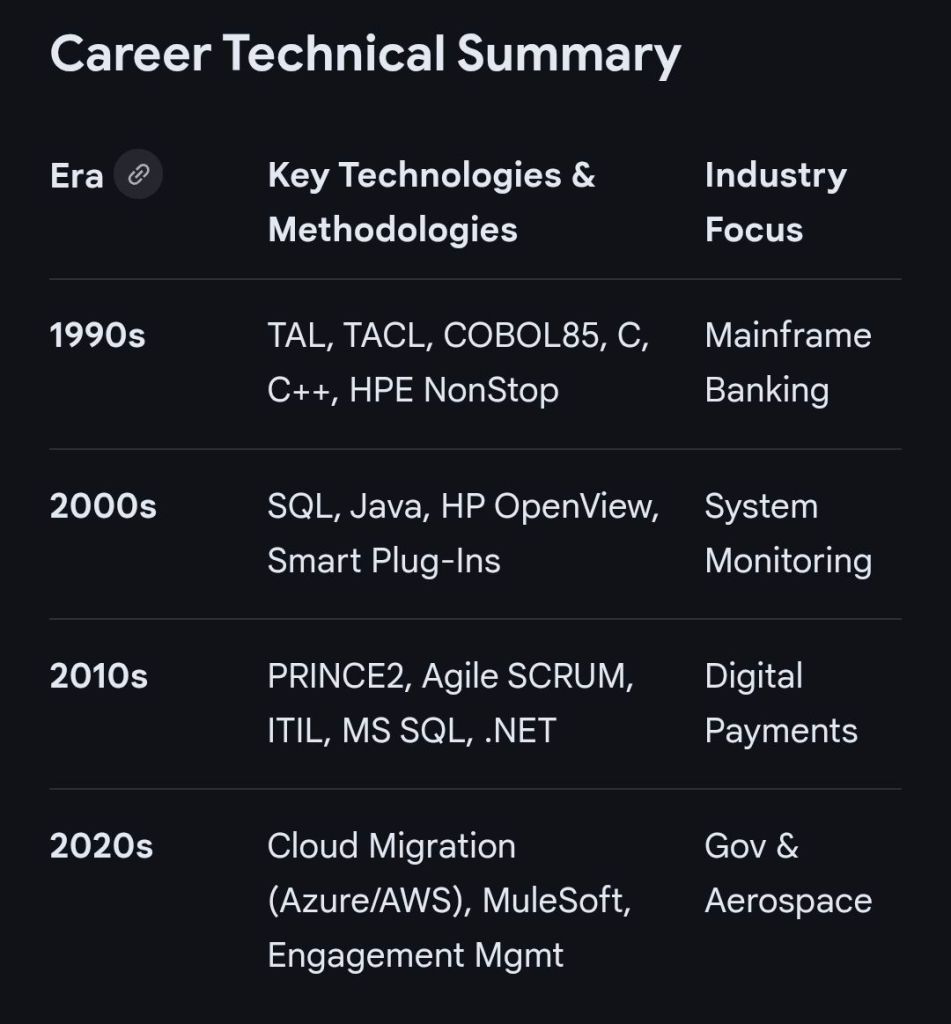
Website Author IT Career Timeline Breakdown

Mark Whitfield is a highly experienced IT professional with a career spanning over 30 years, transitioning from a technical programmer to a senior digital engagement and project manager. His expertise is rooted in HPE NonStop (Tandem) systems and has evolved to encompass complex Agile and Cloud delivery across diverse industries. 

Early Technical Era (1990–1995)

Following his graduation in Computing in 1990, Whitfield began his career as a Programmer at The Software Partnership (later Deluxe Data). 

  • Focus: Electronic banking software, specifically sp/ARCHITECT-BANK on Tandem Mainframe Computers.
  • Key Work: Developed code for major banks including TSB, Barclays, and Rabobank. This included early digital innovations like voice-driven phone banking and inter-account transfers before the internet was widespread. 

Growth and Product Management Era (1995–2004) 

Whitfield joined Insider Technologies Limited (ITL) in 1995 as a Senior Programmer

  • Focus: Platform health and diagnostic software for HPE NonStop systems.
  • Key Projects:
    • Co-developed diagnostic plug-ins for the Reflex monitoring suite.
    • Managed the first HP OpenView Operations (OVO) Smart Plug-In certification for the NonStop platform in 2002.
    • Consulted for CRESTCo (Euroclear) in 1997, conducting benchmark testing on new S7000 nodes. 

Strategic Leadership and Project Management Era (2005–2014) 

During this decade, he transitioned into IT Project Management, focusing on high-value financial transaction tracking. 

  • Focus: Waterfall and Agile project delivery for payment systems and banking infrastructure.
  • Key Milestones:
    • 2011: Led a massive transaction tracking project at Al Rajhi Bank (Saudi Arabia), parsing terabytes of tape-archived data into a normalised SQL database.
    • 2013–2014: At Wincor Nixdorf, managed a £5+ million project for Lloyds Banking Group to migrate ATM driving responsibilities from legacy systems to AIX-based Oracle technologies. 

Senior Digital Engagement Era (2014–Present)

Since 2014, Whitfield has focused on senior-level digital transformation and engagement management. 

  • Betfred (2014–2016): Served as Senior Digital Project Manager for online and mobile platforms (iOS/Android), managing fraud detection and payment gateway integrations.
  • Capgemini (2016–Present): Joined as an Engagement Manager (SC cleared).
    • Focus: Managing large-scale Agile and Waterfall digital projects across aerospace, defence, and government sectors.
    • Notable Projects: Leading a £13.5m programme to migrate 130 UK government applications to the cloud (AWS/Azure) and delivering real-time airspace monitoring apps for air traffic organisations. 
Mark Whitfield IT Career Timeline Breakdown

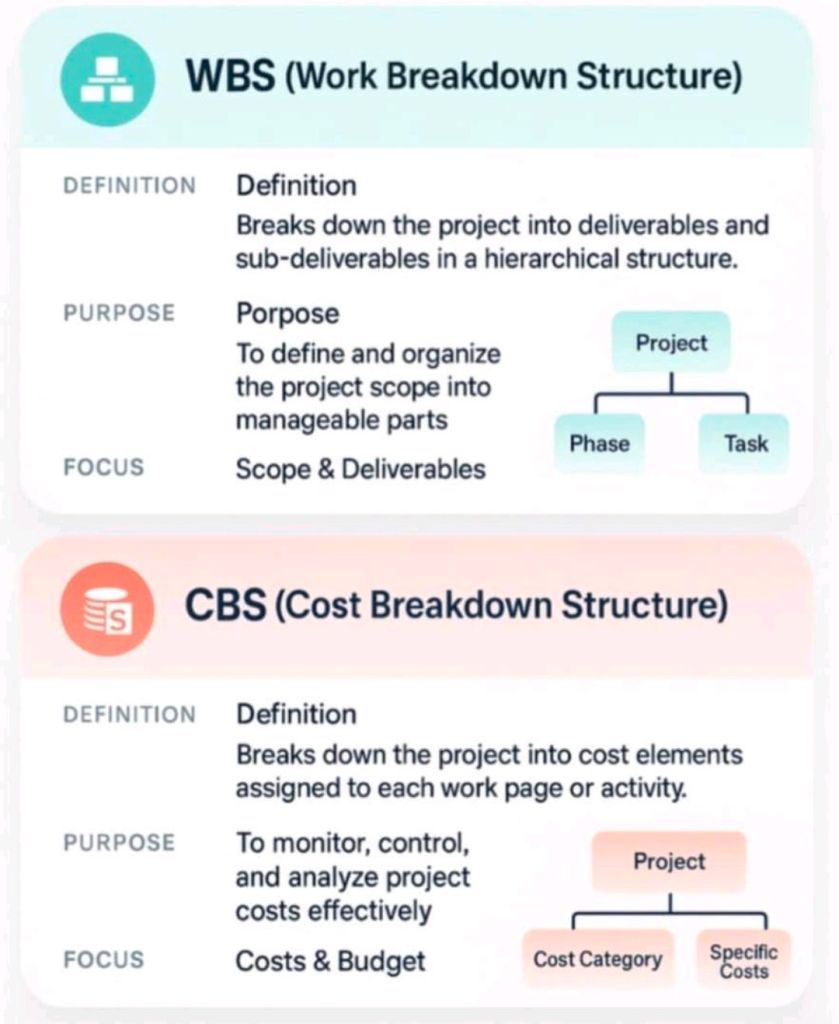
WBS Work Breakdown Structure vs CBS Cost Breakdown Structure

WBS Work Breakdown Structure vs CBS Cost Breakdown Structure