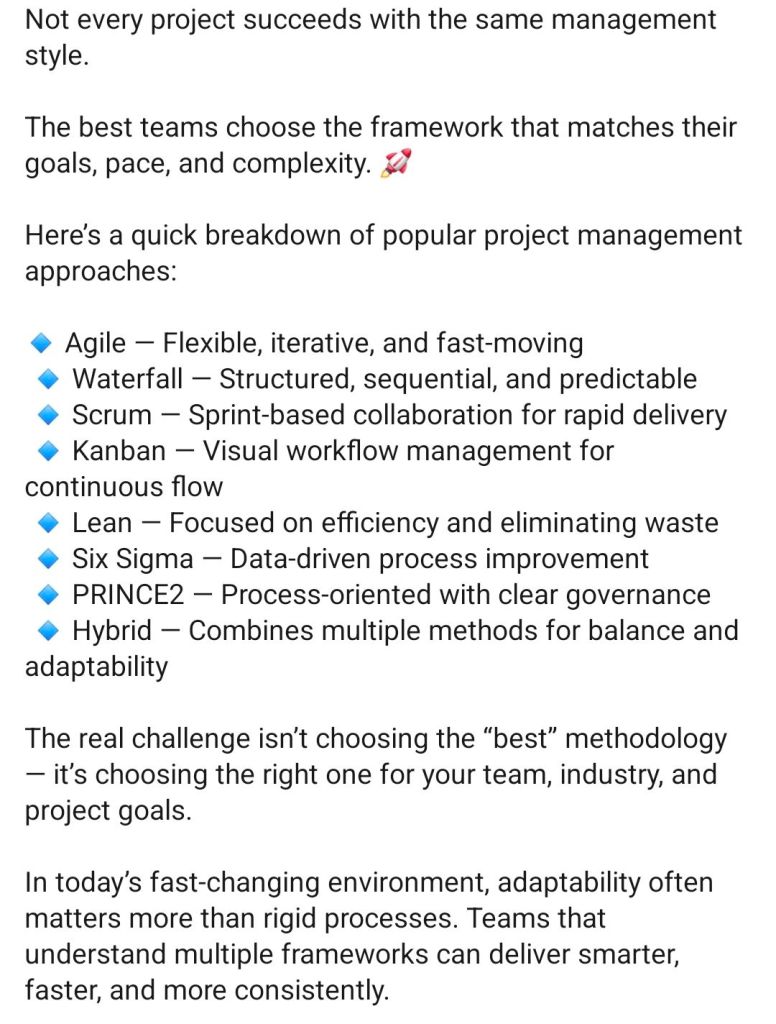
Types of Project Management for Successful Project Delivery

Types of Project Management for Successful Project Delivery

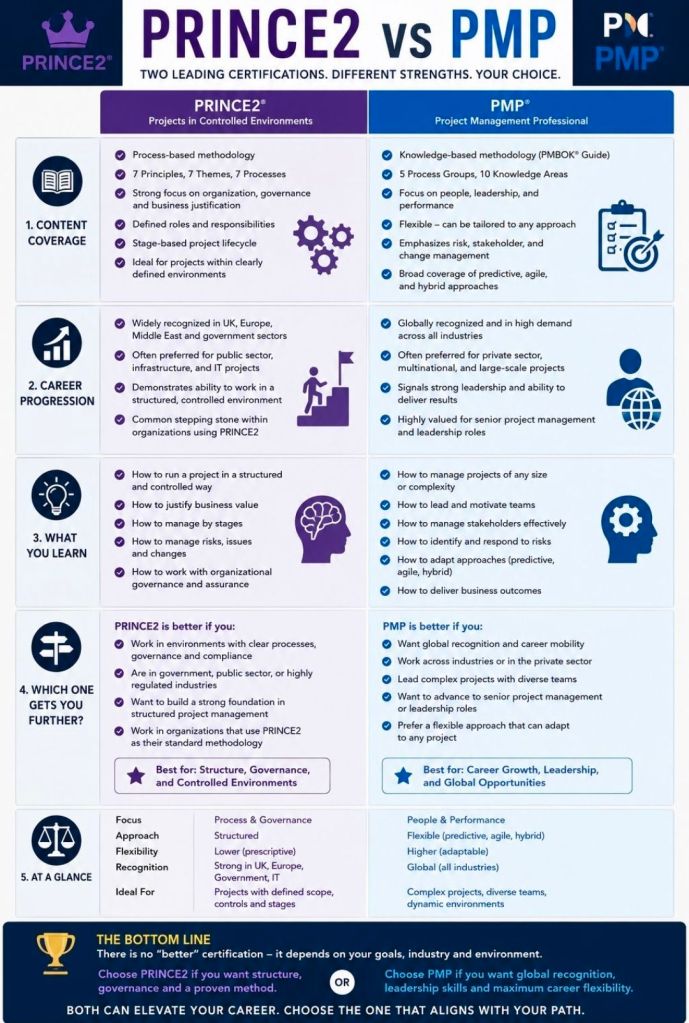
Prince2 or PMP Overview

Prince2 or PMP Overview

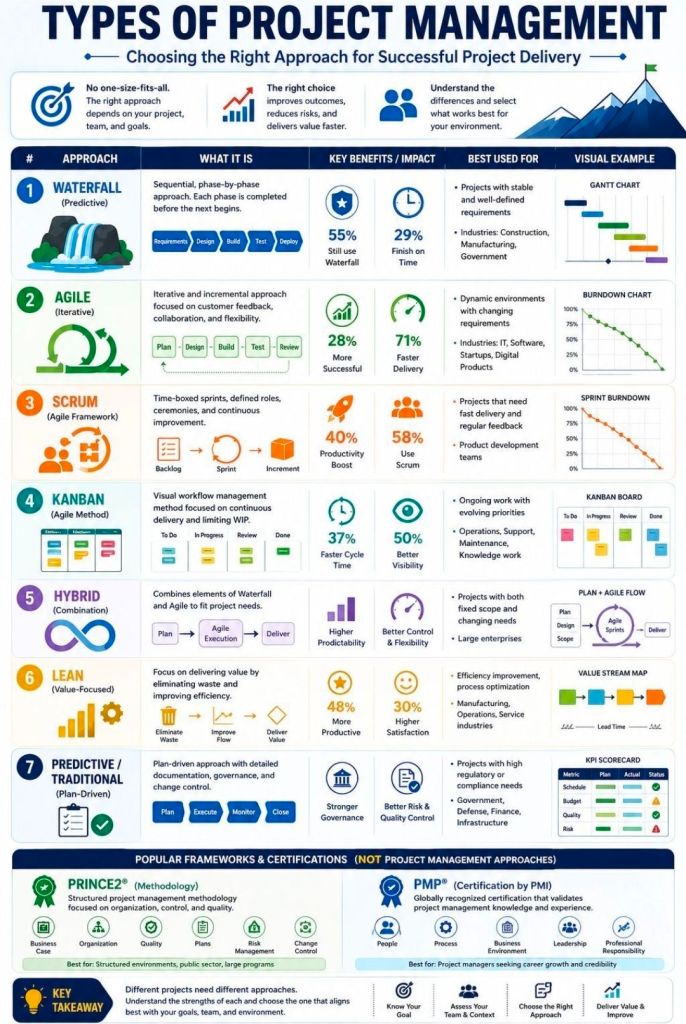
Choosing between PRINCE2 and PMP depends on your career goals and location. PMP is a global, experience-based standard highly valued in the US and multinational corporations. PRINCE2 is a process-based methodology heavily favored in the UK, Europe, and government/public sectors.

A high-level text overview highlights the following core differences:

Project Management Professional (PMP)

  • What it is: A globally recognized framework and body of knowledge (PMBOK) that certifies a manager’s broad project leadership skills.
  • Focus: People, processes, and business domains. It is highly flexible and covers predictive (waterfall), agile, and hybrid methodologies.
  • Requirements: Strict prerequisites. Requires 36–60 months of project management experience and 35 hours of project management education before you can take the 180-question exam.
  • Best for: Experienced project managers seeking global mobility and opportunities in corporate and private sectors.
  • Official Hub: Learn more and apply via the Project Management Institute.

PRINCE2 (PRojects IN Controlled Environments)

  • What it is: A structured, prescriptive methodology that gives you a step-by-step guide on how to run a project from start to finish.
  • Focus: Governance, defined roles, continuous business justification, and documentation. It uses a scaleable “Tailoring Approach” so it can be adapted to projects of varying sizes.
  • Requirements: No mandatory experience needed for the Foundation level, making it accessible to beginners. The Practitioner level tests your ability to apply the framework.
  • Best for: Early-to-mid career professionals and those targeting government, NHS, or public sector roles within the UK and Europe.
  • Official Hub: Browse certification pathways via Axelos.

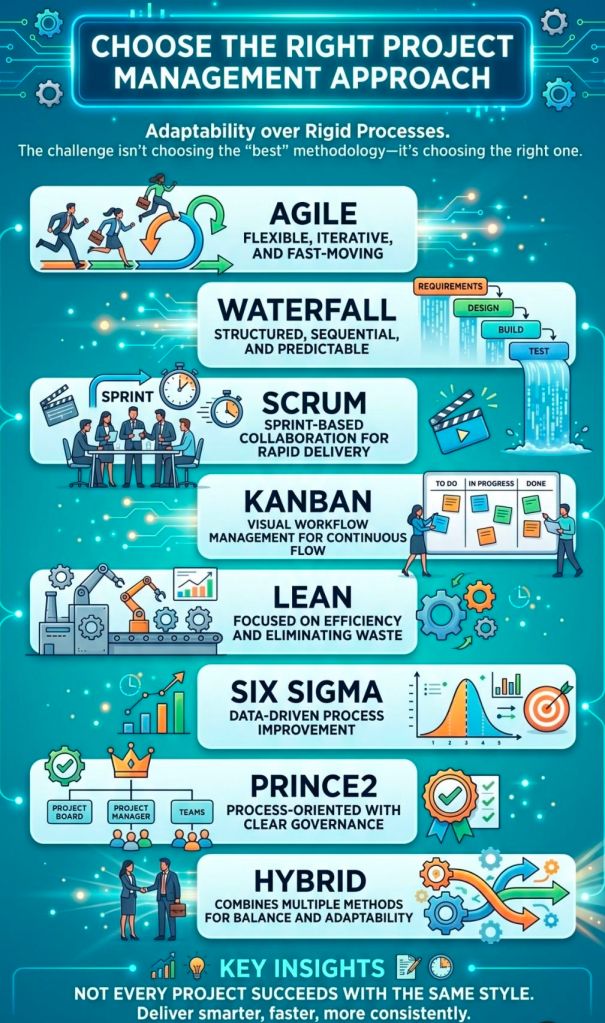
Right Project Management Approach, Adaptability over Rigid Approach

Right Project Management Approach, Adaptability over Rigid Approach

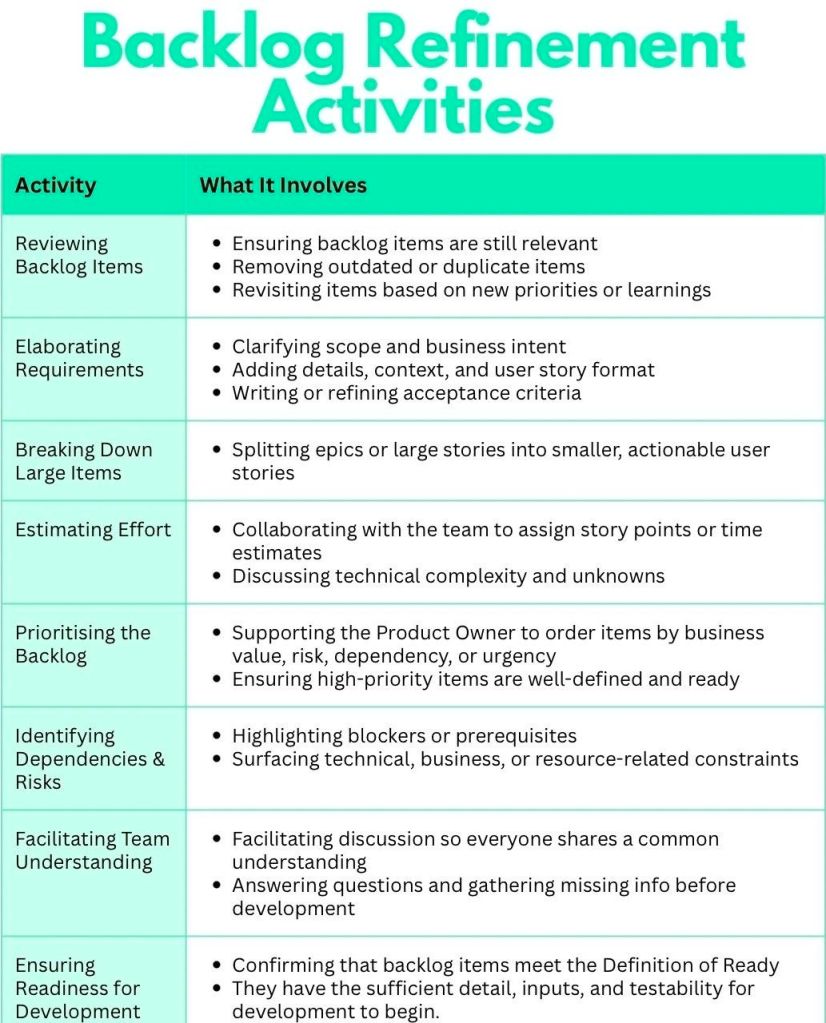
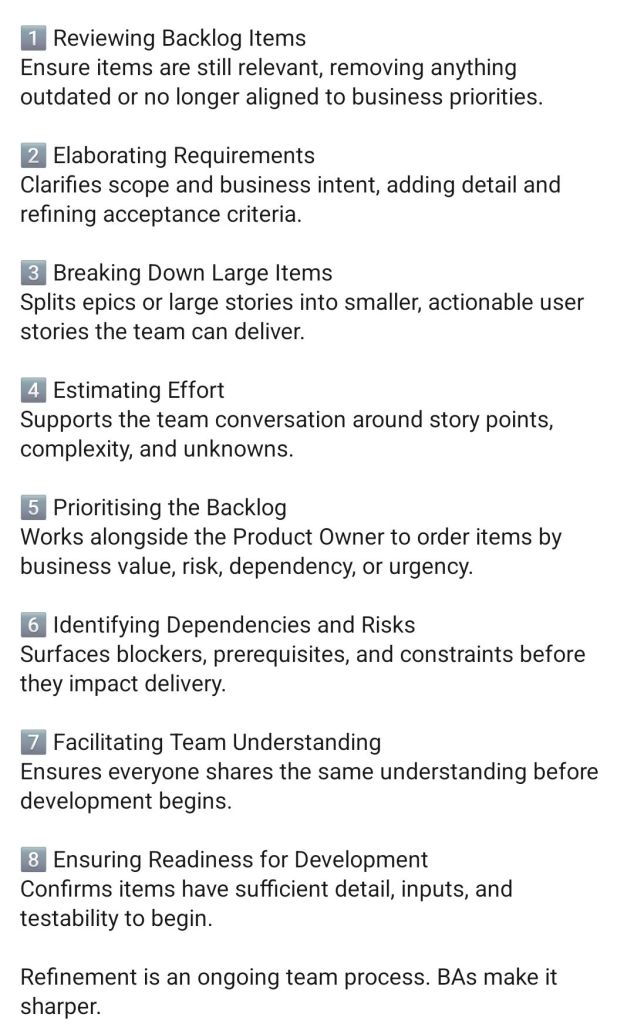
Agile Backlog Refinement Activities and Business Analyst BA

Agile Backlog Refinement Activities & Business Analyst

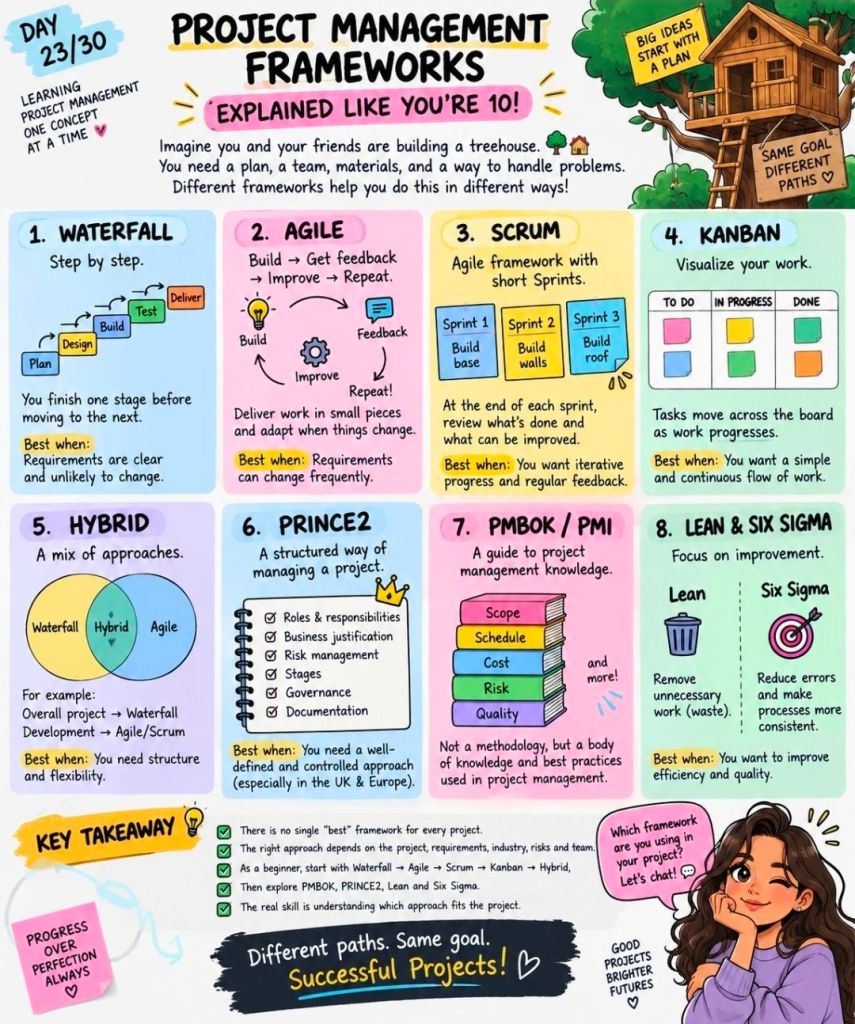
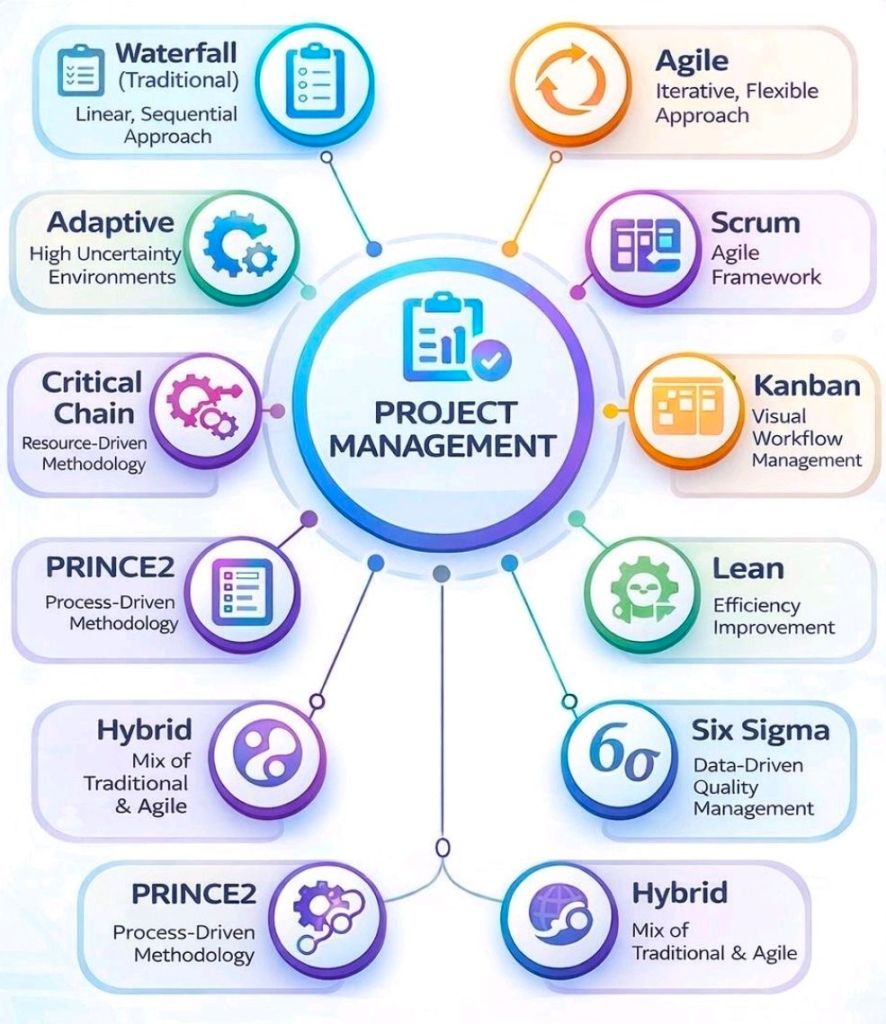
Project Management Methodologies Summarised

Project Management Methodologies Summarised

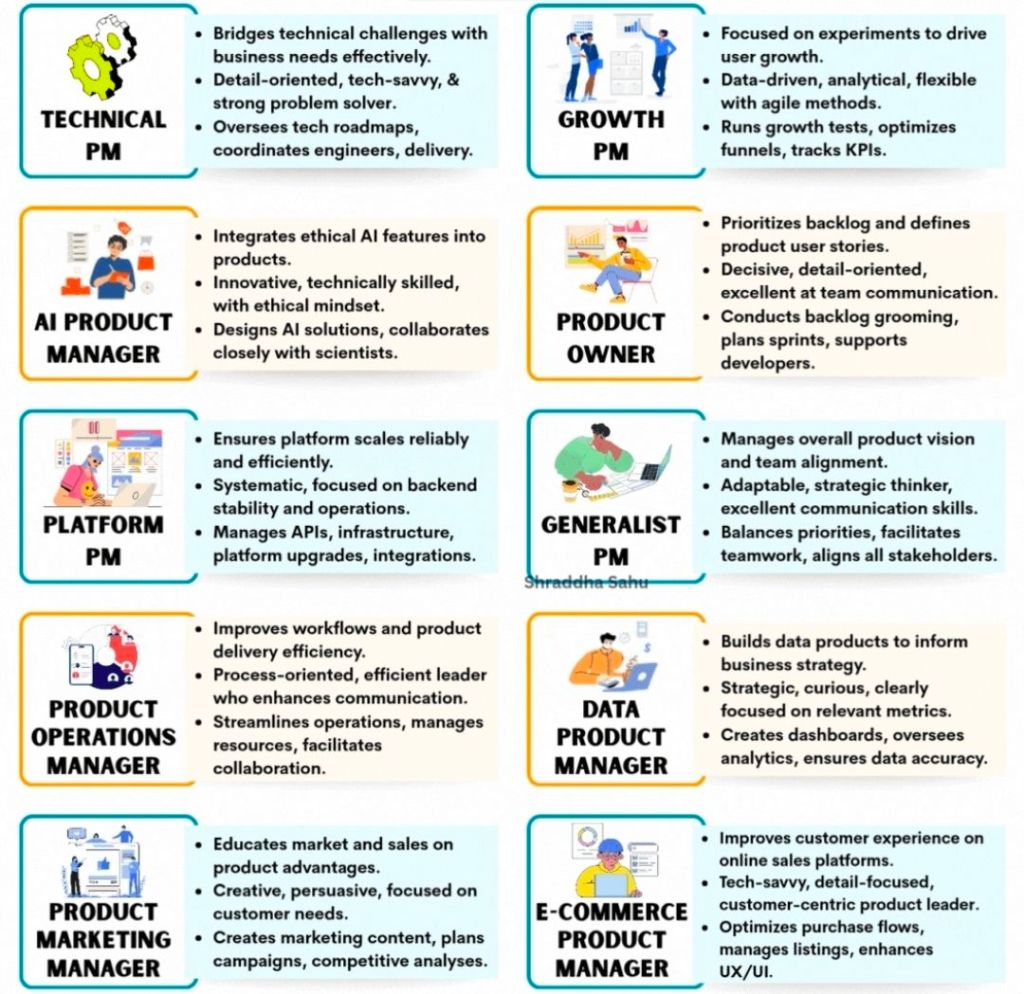
Types of Product Managers Overview

Types of Product Managers Overview

Project Management Methodologies, historical timeline by era and year

This is a detailed, comprehensive historical timeline of project management methodologies, tracing the evolution from ancient practices to modern adaptive frameworks.

I. Pre-Modern Era (Before 1900): Foundation of Task Coordination

  • 2570 BC (Great Pyramid of Giza): Completion of the pyramids, demonstrating early project organization with managers for each of the four faces, planning, and logistics.
  • 208 BC (Great Wall of China): Construction of the Great Wall, involving massive workforce organization divided into soldiers, citizens, and criminals.
  • 1850s (Transcontinental Railroad): US railroad projects requiring large-scale resource and schedule management.
  • 1896 (Harmonogram): Karol Adamiecki developed the harmonogram, a predecessor to the Gantt chart (published in 1931). 

II. Early Modern Era (1910s–1950s): The Scientific Management Era 

This era brought “scientific management” to project control, focusing on efficiency and visualization. 

  • 1910s (Gantt Chart): Henry Gantt developed the Gantt chart, a visual tool for scheduling tasks over time.
  • 1911 (Scientific Management): Frederick Taylor published The Principles of Scientific Management, focusing on efficiency and time-saving.
  • 1931–1936 (Hoover Dam): One of the first large-scale applications of Gantt charts for complex scheduling.
  • 1942–1945 (Manhattan Project): Development of the atomic bomb, creating a need for rapid, complex planning and large-scale team coordination. 

III. The “Golden Age” of Project Management (1950s–1960s): Formal Methodologies 

This era introduced mathematical models for managing complex, interdependent tasks. 

  • 1956 (AACE Formed): The American Association of Cost Engineers (now AACE International) was formed, specializing in cost control and scheduling.
  • 1957 (Critical Path Method – CPM): Developed by Dupont Corporation to manage chemical plant maintenance shutdowns.
  • 1958 (Program Evaluation and Review Technique – PERT): Created by the US Navy Special Projects Office for the Polaris missile submarine project to manage task time and risk.
  • 1962 (Work Breakdown Structure – WBS): The US Department of Defense mandated the use of WBS for large, complex projects.
  • 1965 (IPMA Founded): The International Project Management Association (IPMA) was launched, the world’s first project management association.
  • 1969 (PMI Founded): The Project Management Institute (PMI) was launched to promote the profession, later developing the PMP certification. 

IV. The “Silver Age” (1970s–1980s): Systems and Controls 

  • 1970s (Waterfall Introduction): While used informally earlier, the Waterfall methodology was formalized for software development in the 1970s, emphasizing sequential phases.
  • 1975 (PROMPTII): Simpact Systems Ltd created PROMPTII, a methodology to handle cost overruns in computer projects, which later formed the basis of PRINCE.
  • 1975 (Mythical Man-Month): Fred Brooks published his seminal work on software engineering project management.
  • 1978 (Toyota Production System): Lean production and Kanban techniques, used in manufacturing, began to influence project workflow.
  • 1984 (Theory of Constraints – TOC): Dr. Eliyahu Goldratt published The Goal, introducing the Theory of Constraints for managing constraints (bottlenecks).
  • 1986 (Scrum): Takeuchi and Nonaka defined Scrum as a project management style for fast-paced development.
  • 1987 (PMBOK Guide): The Project Management Institute published the first Project Management Body of Knowledge (PMBOK) white paper.
  • 1989 (PRINCE): The UK government launched PRojects IN Controlled Environments (PRINCE), the standard for information systems projects. 

V. Rebirth and Modern Era (1990s–2000s): Agile and Adaptive Methods 

  • 1994 (CHAOS Report): The Standish Group published the first report documenting high IT project failure rates.
  • 1995 (Scrum Formalization): Jeff Sutherland and Ken Schwaber formally defined the Scrum framework.
  • 1996 (PRINCE2): PRINCE was updated to PRINCE2 to become a generic, more flexible methodology applicable to all project types.
  • 1997 (Critical Chain Project Management – CCPM): Eliyahu Goldratt invented CCPM, based on the Theory of Constraints.
  • 1998 (PMBOK Standard): The American National Standards Institute (ANSI) recognized PMBOK as a standard.
  • 2001 (Agile Manifesto): 17 software developers met to publish the Manifesto for Agile Software Development, prioritizing collaboration and adaptability over rigid plans.
  • 2007 (Kanban for Software): David Anderson adopted Kanban for software development, focusing on visualizing work and limiting work-in-progress. 

VI. The Contemporary Era (2010s–Present): Hybrid, AI, and Speed 

  • 2012 (ISO 21500): The International Organization for Standardization published ISO 21500:2012, “Guidance on Project Management”.
  • 2017 (PMBOK 6th Ed & PRINCE2 Update): PMI introduced Agile/adaptive practices into PMBOK, while AXELOS released a more flexible PRINCE2.
  • 2018 (PRINCE2 Agile): PRINCE2 Agile was launched to combine the governance of PRINCE2 with the flexibility of Agile.
  • 2021 (PMBOK 7th Ed): A major shift in PMI standards, moving from process-based to principle-based, focusing on project outcomes.
  • 2020s–Present (AI/Hybrid): Rise of AI-driven project management, automated reporting, and hybrid methodologies combining Waterfall stability with Agile speed. 

Project Management Methodologies, historical timeline by era and year

PMP Project Management Professional summary and detailed historical timeline by era and year
Project Management Professional (PMP) history, as guided by the Project Management Institute (PMI), tracks the evolution from ancient craft systems to a modern, standardized profession combining predictive, agile, and hybrid approaches. Modern project management as a formal discipline emerged in the 1950s, with PMP certification officially launching in 1984. 

Summary of Project Management Eras

  • Pre-1950s (Craft Era): Large-scale construction (Pyramids, Great Wall) relied on master builders, intuitive planning, and heavy labor.
  • 1950s-1960s (Birth of Modern PM): Scheduling tools (CPM, PERT) and the Work Breakdown Structure (WBS) were developed for defense and construction.
  • 1969-1980s (Standardization Era): PMI was founded, and the PMP certification was introduced to create a shared professional language.
  • 1990s-2000s (Digital & Agile Era): Project software matured, the PMBOK Guide was published, and Agile techniques began reshaping software development.
  • 2010s-Present (Hybrid & AI Era): Focus on flexibility, stakeholder management, hybrid approaches, and AI integration. 

Detailed Historical Timeline

Ancient to Early 20th Century: Foundations

  • 2570 BC: Completion of the Great Pyramid of Giza, showing advanced resource planning.
  • 208 BC: Construction of the Great Wall of China, demonstrating large-scale logistical management.
  • 1917: Henry Gantt develops the Gantt Chart, a cornerstone of project scheduling. 

1950s-1960s: Birth of Modern Project Management 

  • 1957-1958: Development of key scheduling tools, Critical Path Method (CPM) and Program Evaluation Review Technique (PERT).
  • 1962: WBS approach mandated by the U.S. Department of Defense.
  • 1969: Project Management Institute (PMI) founded in Pennsylvania to standardize the profession. 

1970s-1980s: Professionalization and Certification 

  • 1975: Publication of The Mythical Man-Month by Fred Brooks, identifying software project risks.
  • 1984: First PMP certification exam administered by PMI.
  • 1986: Takeuchi and Nonaka introduce “Scrum” as a project management style.
  • 1987: First PMBOK Guide published as a white paper. 

1990s: PMBOK and Formalization 

2000s-2010s: Agile and Global Expansion 

  • 2001: Agile Manifesto written, emphasizing flexibility.
  • 2003: PMP exam revised to incorporate Agile techniques.
  • 2017: PMBOK 6th Edition released, integrating Agile and adaptive environments. 

2020s-Present: Modernization and AI

  • 2021: PMBOK 7th Edition released, shifting from process-based to principle-based standards.
  • 2024: PMI launches initiatives to incorporate Generative AI (PMIxAI) into project management. 

Key Evolution Trends

  1. From Craft to Science: Moving from intuitive, “master builder” approaches to structured, data-driven methodologies (PERT/CPM).
  2. From Fixed to Adaptive: Transitioning from rigid “waterfall” plans to iterative Agile and Hybrid approaches.
  3. Standardization: The PMP credential has shifted from solely construction/engineering focus to a global, cross-industry benchmark.
  4. Technology Integration: The rise of Artificial Intelligence (AI) and automated tools for risk management and scheduling.

PMP Project Management Professional summary and detailed historical timeline by era and year