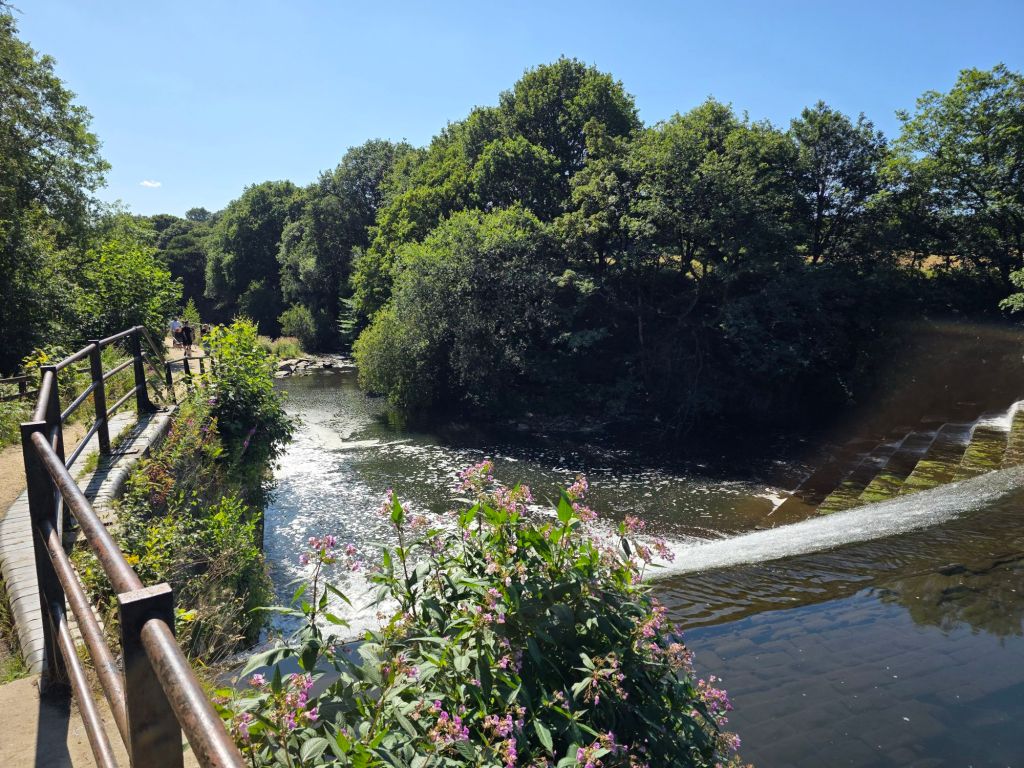
Burrs Country Park is a 36-hectare scenic countryside destination located along the River Irwell, just one mile northwest of Bury town centre. Managed by Bury Council alongside the dedicated community volunteer group, the park has proudly held a Green Flag Award since 2005 for being clean, safe, and environmentally sustainable.
Key Highlights
Industrial Heritage: Once a busy industrial hub, the site features archaeological remains of two major 18th-century cotton mills—Higher Woodhill Mill and Burrs Mill.
Steam Railway: The heritage East Lancashire Railway runs directly alongside the grounds, allowing visitors to stop at the dedicated Burrs Country Park Halt.
Art Installations: The park serves as a featured stop on the Irwell Sculpture Trail, hosting interactive outdoor artworks like Waterwheel and Stone Cycle.
Wildlife & Nature: The grounds feature diverse habitats including wetlands, ponds, and woodlands that make it an ideal hub for birdwatching, fishing, and nature walks.
Amenities & Dining: Visitors can enjoy food and drink at the dog-friendly The Lamppost Café or grab a meal at the historic The Brown Cow pub, which dates back to 1752.
The main park entrance is located on Woodhill Road (Postcode: BL8 1DA). If you are travelling by public transit, you can catch the 472 or 474 bus routes from the nearby Bury Interchange. For additional maps, safety guidelines, and event calendars, you can visit the official Bury Council Park Portal.
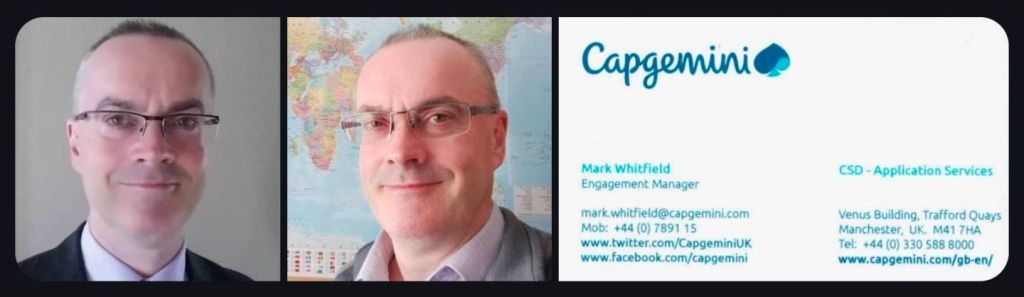
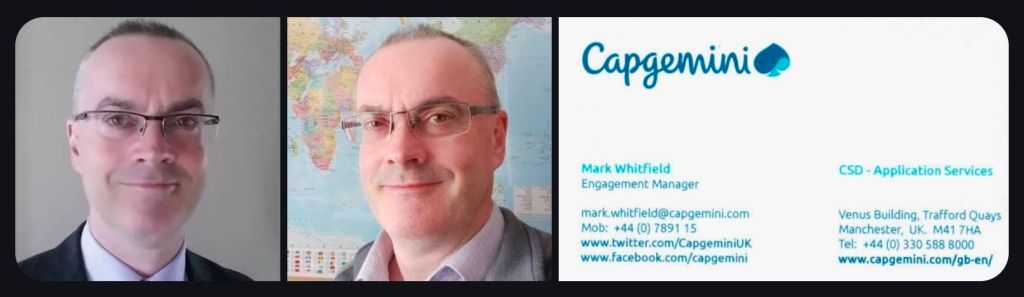
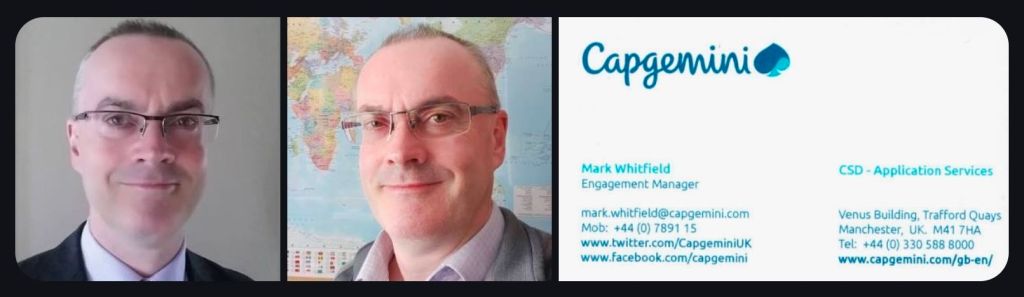
Mark Whitfield is a UK-based, SC-cleared Senior IT Project Manager, Engagement Manager (Capgemini), and technology executive with over 35 years of hands-on and leadership experience across the Software Development Lifecycle (SDLC).
Mark Whitfield, High-Level Career Summary from 1990 thru 2026
Specialising in complex digital transformation, hybrid cloud migrations, and API-led system integrations, Mark graduated with an HND (Distinction) in Computing in 1990 and has delivered major enterprise solutions for clients such as Barclays Bank, Jaguar Land Rover (JLR), Royal Mail Group (RMG), Lloyds Banking Group, and the Bank of England. He is also the author of the PROject Templates resource platform, which provides project management toolkits.
The following comprehensive biography and career timeline breakdown details his professional trajectory by era.
Phase 1: Early Programming & Lead Analysis Era
Era Focus: Electronic banking software development, establishing foundational desktop access to company accounts.
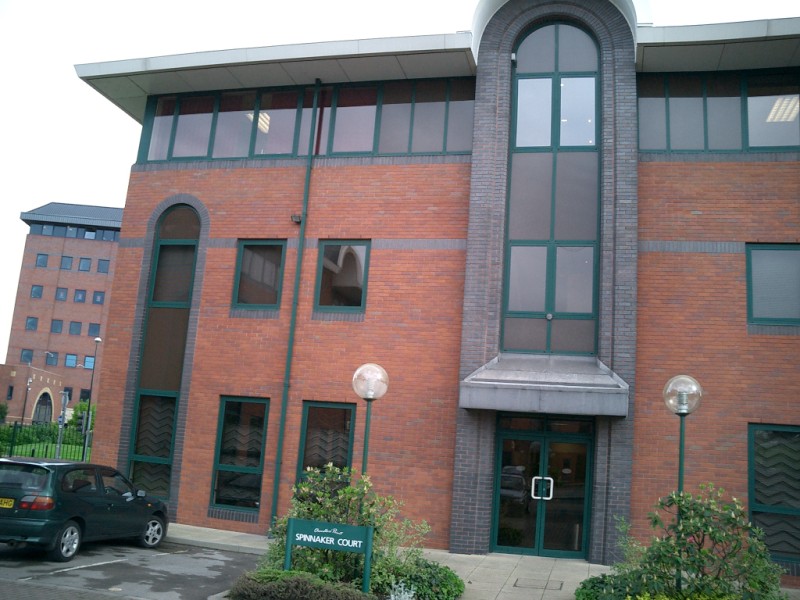
Deluxe Data International, Wingate House, Northway, Runcorn
Main Focus Items: Core software design, coding, and back-end integration for electronic desktop banking.
Project Outputs: Software design, coding, and back-end integration for electronic desktop banking. Developed batch billing suite modules (NonStop SQL embedded COBOL85) to attach to the BBM II application, in Poole, Dorset (1993).
Milestones: Transitioned banking from purely paper-based to electronic systems. Made early remote banking a reality.
Methodology: Early iterative development & structured Waterfall lifecycles.
Highlights: Helped in the design and development of the Barclays Business Master II application while on-site in Knutsford, and later successfully developed and deployed a batch-billing suite for the bank in Poole, Dorset (1993).
Political Landscape: Early post-deregulation European banking markets. The Single European Act drove a need for cross-border electronic financial transparency and transaction systems.
Technology Landscape: Desktop PCs were novel; banking was driven by mainframe computing, specifically Tandem NonStop systems (now HPE NonStop).
Phase 2: Technical Consultancy & Product Management Era
Era Focus: Transitioning to product management, system and transaction monitoring, and SLA monitoring for critical-path financial hardware/ software.
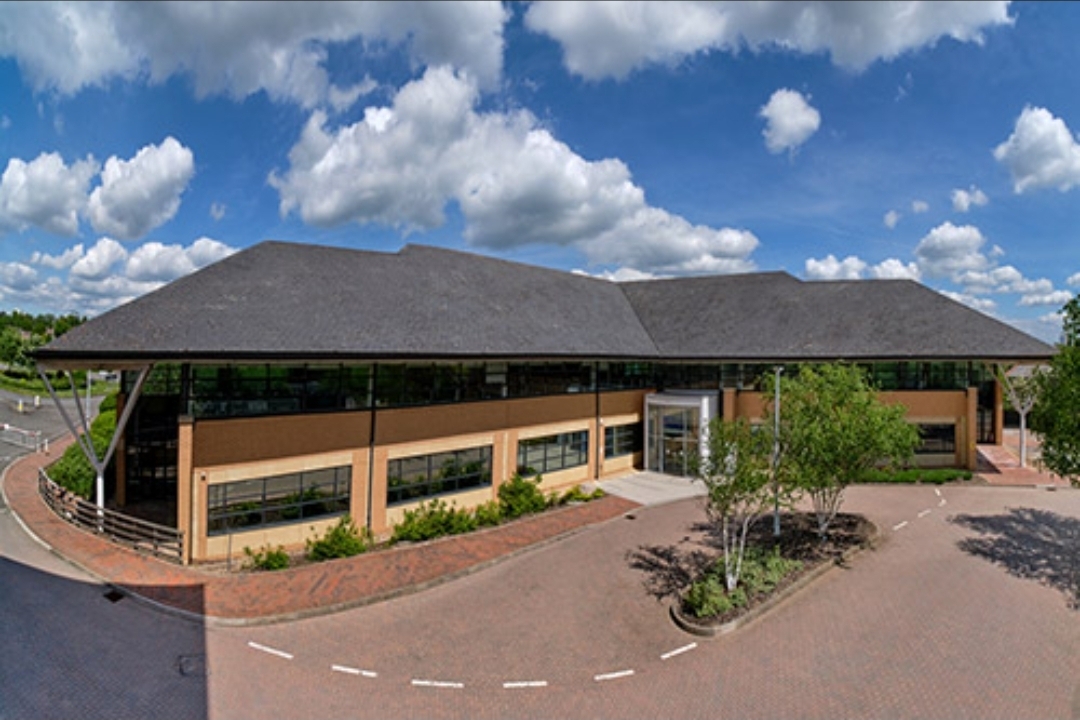
Insider Technologies Limited, Salford Quays, Greater Manchester (UK)
Locations: Salford Quays, UK (head office); London, UK; International client sites
Clients included: Global Payments, Standard Chartered, Girofon, Rabobank, CRESTCo (Euroclear), Alrajhi Bank, LloydsTSB, HSBC, Santander, Bank of Ireland, Bank of Valletta (Malta) and both Commercial and Piraeus Bank (Greece)
Budget: Internal operational budgets and R&D capital expenditure
Main Focus Items: Infrastructure consulting, volume testing, system management & monitoring, and Service Level Agreement (SLA) monitoring for critical path payment applications. Attending related conferences, EBUG, ITUG, BITUG, SATUG
Project Outputs: Developed platform health and diagnostic modules for the Reflex monitoring product. Successfully delivered BASE24 ATM/ POS/ transaction Cross-border monitoring.
Milestones: Achieved the first HP OpenView Operations Enterprise Manager 2-way Smart Plug-In (SPI) certification for HPE NonStop in 2002.
Highlights:Consultant for CRESTCo in 1997, producing volume testing/benchmark software to test Stock Settlement applications on the newly introduced S7000 HPE NonStop systems.
Political Landscape: The late 1990s and 2000s saw the creation of the Eurozone, demanding high-capacity regional clearing and settlement networks that required robust transaction monitoring.
Technology Landscape: Market expansion of ATM and Point-of-Sale (POS) devices; ACI BASE24 Classic payments; move toward centralized, multi-platform GUI monitoring.
Also: Designer and author of a new company website using an Open Content Management framework identified as part of a Research phase. Authored a major technical summary published globally in the recognized HPE NonStop industry journal, The Connection, defining payment software lifecycles.
Phase 3: Professional Services Banking Delivery
Era Focus: IT Project Management and delivery of legacy migrations to primary UK high-street banks.
Project Outputs: Managed the Wincor Nixdorf workstream for Lloyds Banking Group’s Self-Service Software Replacement (SSSR) programme. Modernising legacy ATM software and directing hardware/ software transitions. Implementing ProClassic/Enterprise and PC/E SmartClient (Win 7) to replace the existing ProCash/NDC (Win XP) Stacks on a variety of multivendor devices.
Milestones: Transferred ATM driving responsibility away from BASE24 Classic on HPE NonStop to Wincor’s PC/E product on the AIX platform. Managed international rollout and off-shore resources.
IT Training: Agile, ITIL methodologies.
Methodology: Wincor project management methodology, with regard to planning, control, status reporting, documentation, quality, change control, risk analysis and management.
Highlights: Successfully upgraded LBG ATM hardware estate from Windows XP to Windows 7.
Political Landscape: Post-2008 financial crisis regulations brought stricter compliance and operational risk rules, accelerating the modernisation of core legacy banking systems to prevent service outages.
Technology Landscape: Transition from proprietary mainframe terminal driving to AIX, Oracle, and Windows-based banking environments.
Technology Areas: Multi-vendor hardware & software integration for ATMs.
Supplier Management: for external software suppliers like Degree53, Playtech, Onionsack, Intelligent Payments (Myriad), Inspired, iovation, StreamUK, Finsoft, Ineda, OtherLevels, Appsflyer, Income Access, Activewin, Virgo, Virtue Fusion, In Game Media, Satellite Information Services (SIS) and IGT
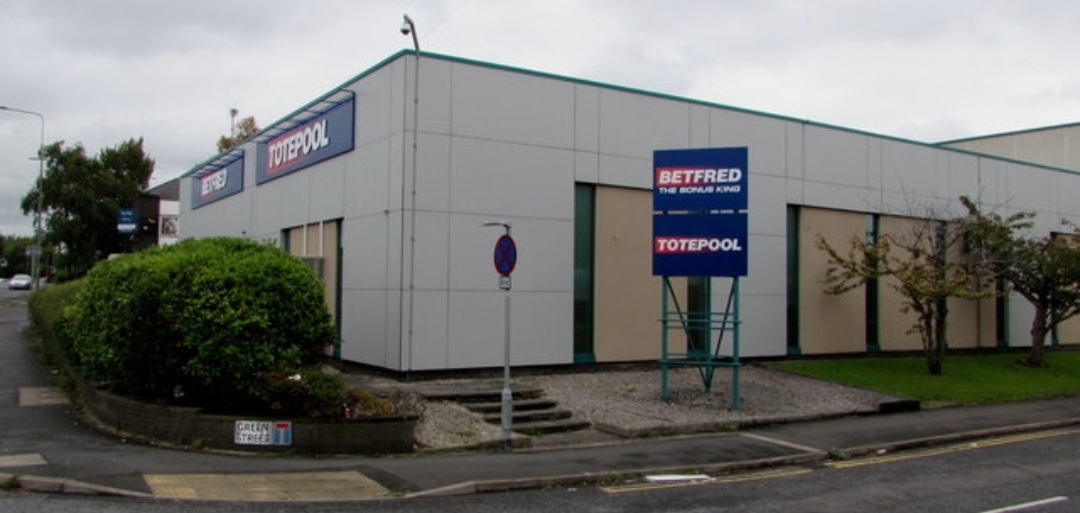
Budget: Managed multiple project budgets for Betfred apps, tracking via weekly effort burn rates
Programming Methodologies: Agile SCRUM in conjunction with Degree53
IT Products: iOS, Android, and Windows native apps, Football/ Horse Racing Sportsbook platforms
Main Focus Items: Taking new sports and virtual gaming components live, integrating payment gateways, managing app release cycles, and handling regulatory compliance.
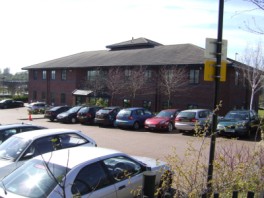
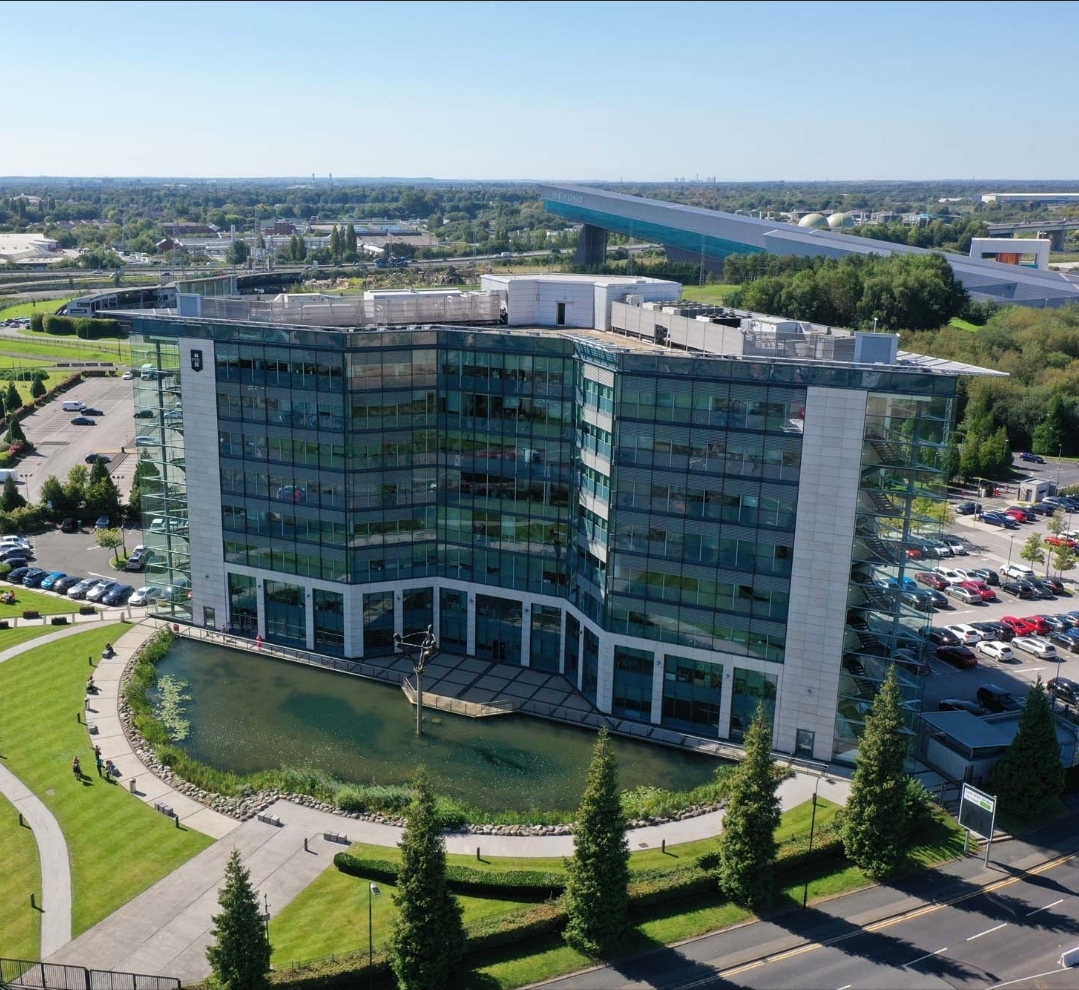
Locations: Manchester (local office above), London, Birmingham, UK
Clients included: Jaguar Land Rover (JLR), Heathrow Airport, Royal Mail Group (RMG), National Air Traffic Services (NATS), UK Export Finance (UKEF), Welsh Water
Budget: Managed multi-million pound digital transformation and cloud refactoring contracts
Highlights: Maintained full SC Clearance. Authored and managed comprehensive Project Governance Plans (PGPs) to realize project targets, streamline margins, and successfully navigate complex off-shore delivery models.
Political Landscape: The government focus on “Digital by Default” for public services, coupled with significant public and corporate drives for green IT and cloud adoption to optimize operating costs.
Mark Whitfield is a UK-based, SC-cleared Senior IT Project Manager and Engagement Manager whose career spans over three decades of evolution within the software development lifecycle (SDLC) and project delivery areas.
Graduating with a Distinction level Higher National Diploma (HND) in Computing from the University of Bolton (formerly the Bolton Institute of Higher Education, BIHE), his professional journey documents a foundational shift from hands-on mainframe engineering to managing enterprise-scale cloud migrations and API-led integration ecosystems.
His professional transformation reflects broader shifts across four technological eras and political-economic landscapes:
1. Mainframe & Early Electronic Banking (1990–1995)
Technology Era: Dominated by localized infrastructure, Tandem Mainframe Computers (now HPE NonStop), COBOL, C, C++, TAL, PATHWAY, and Jackson Structured Programming (JSP).
Political & Economic Landscape: The aftermath of Thatcherite deregulation (the 1986 “Big Bang”) triggered intense competition in retail banking. Financial institutions aggressively adopted bespoke desktop and telephone banking applications to acquire market share.
Role & Projects: Working as a Programmer and Lead Analyst for The Software Partnership (acquired by Deluxe Data International in 1994), Whitfield engineered core software architectures like sp/ARCHITECT-BANK. He spent significant time on-site at Knutsford and Poole (Dorset) delivering the Barclays Business Master II (BBM II) platform, pushing desktop corporate banking into reality before the commercial internet matured.
2. Infrastructure Middleware & System Monitoring (1995–2013)
Technology Era: Shift toward web-enabled browser monitoring, middleware solutions, client-server architectures, and automated system diagnostics.
Political & Economic Landscape: The rise of New Labour, globalisation, and cross-border European integration. Financial sectors faced stricter service levels and skyrocketing volumes due to the growing ubiquity of ATMs, Point-of-Sale (POS) systems, and cross-border settlement demands.
Role & Projects: Joining Insider Technologies Limited (ITL) at Salford Quays (Manchester), Whitfield ascended from a Senior Programmer to an IT Project Manager overseeing strategic technical initiatives.
He co-developed system diagnostic modules for the Reflex platform.
He famously secured the first HP OpenView Operations Enterprise Manager 2-way Smart Plug-In (SPI) certification for HPE NonStop platforms.
Managing structured Waterfall frameworks, he led high-volume automated transaction deployments (notably BASE24 Classic and EPS) via the browser-enabled RTLX (Real-Time Log eXtraction) Reactor for heavyweights like HSBC, Alliance & Leicester, and Standard Chartered.
Technology Era: The definitive mass pivot from rigid Waterfall, PRINCE2 models toward Agile Scrum frameworks, mobile applications (iOS, Android), and multi-vendor hybrid software integration.
Political & Economic Landscape: Post-2008 financial crash regulatory overhauls paired with UK coalition government-driven austerity. High-street legacy architectures required rapid rationalization, while private entertainment industries (like consumer gambling) exploded due to mobile deregulation.
Role & Projects:
Wincor Nixdorf (2013–2014): Served as an award winning Agile IT PM modernizing legacy ATM networks and deploying multi-vendor software integrations (PC/E Enterprise, Oracle, Windows 7) for Lloyds Banking Group.
Betfred (2014–2016): Pivoted to the gambling sector as a Senior IT Project Manager. He spearheaded multiple complex Agile release cycles to take mobile sportsbook components, virtual gaming, and secure fraud-detection payment gateways live.
4. Enterprise Cloud, Security, & API Integration (2016–Present)
Technology Era: Modern hybrid cloud platforms (Azure, AWS), SaaS, MuleSoft Anypoint Platform, API-led connectivity, and microservices.
Political & Economic Landscape: The post-Brexit geopolitical landscape coupled with heightened national security frameworks. Public and private sectors faced mounting mandates for secure, interoperable architectures, requiring professionals to carry strict government Security Clearance (SC) credentials to manage critical infrastructure.
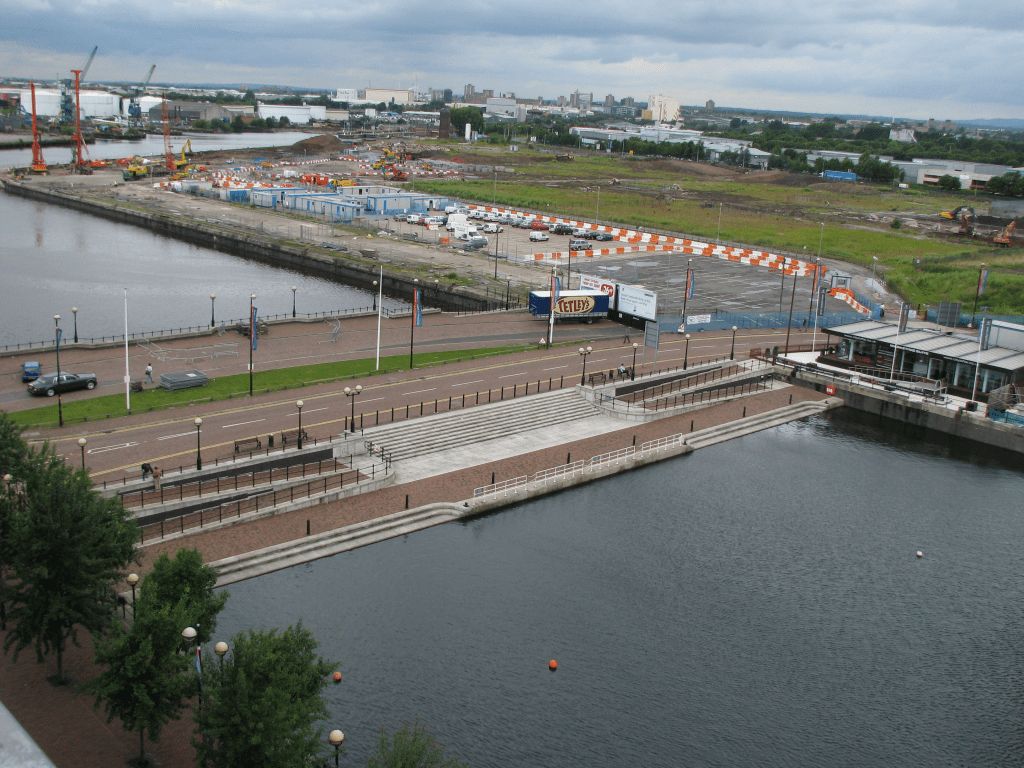
The MediaCityUK Photographic Build Timeline Journal is an extensive, long-term documentary project created by Mark Whitfield. It captures the transformation of Salford Quays from an empty dockland into a major UK media hub.
Working nearby as an IT Project Manager, Whitfield utilized his close proximity to the site to methodically photograph the construction lifecycle literally from the ground up.
MediaCityUK Photographic Build Timeline Journal is an extensive, long-term documentary project created by Mark Whitfield
Project Overview and Scope
Timeframe: The photographic project formally spans from May 2007 through 2010 for its core construction phase, with continuous updates extending into later developments.
Volume: The total project comprises a massive archive of over 15,000 to 16,000 photographs.
Curated Journal: An abridged timeline consisting of roughly 200 high-resolution selections was published to highlight key structural milestones chronologically.
Perspectives: Photos were captured weekly from multiple high-vantage reference points, including the Imperial War Museum North, the local Designer Outlet, and Broadway.
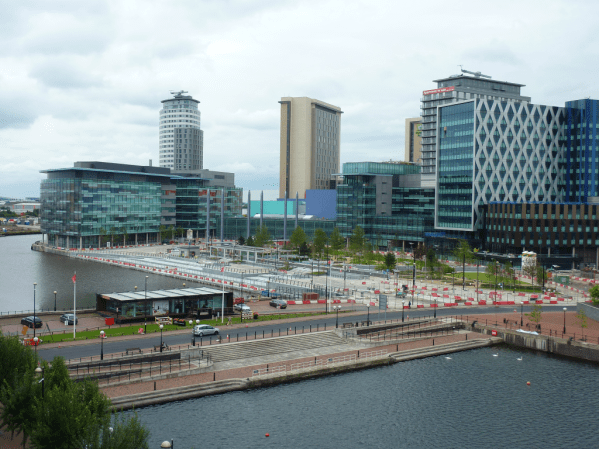
MediaCityUK BBC North, Salford Quays
Core Phases Documented
The Blank Canvas (Mid-2007): Captures the initial flat, unused grassland and docklands just before the first diggers arrived on site in June 2007.
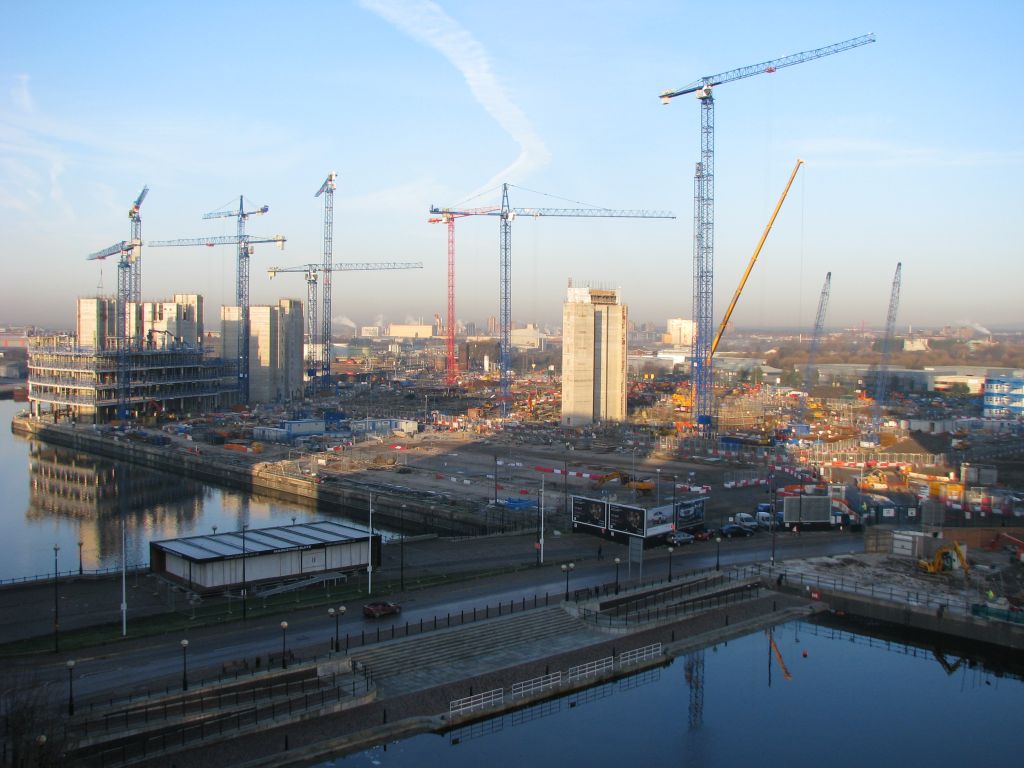
The Structural Rise (2008–2009): Documents the erection of massive tower cranes and the core framework of the studio blocks rising over Salford Quays.
The Final Fit and Branding (2010–2011): Details the external completion of the main blocks, the installation of the iconic BBC North logos, the construction of the public piazza, and the implementation of the media tram stop.
Community and Media Discussions
Whitfield’s timeline served as a primary public and professional visual archive during the build. He actively managed a linked professional LinkedIn Group that grew to thousands of members. This space was widely used by industry professionals, media researchers, and regional planners to discuss ongoing jobs, architectural layouts, and local infrastructure impacts.
His updates were also featured directly on BBC corporate blogs to give incoming staff an authentic glimpse of their new northern headquarters.
Between 1988 and 1990, IT Project Manager Mark Whitfield completed a BTEC Higher National Diploma (HND) in Computer Studies at the Bolton Institute of Higher Education (BIHE). He graduated with a Distinction and achieved the overall first place across the entire two years of the course.
Bolton Institute of Higher Education now University of Greater Manchester
The institution has since evolved, later becoming the University of Bolton and subsequently rebranding as the University of Greater Manchester.
Joining in January 2016, he has orchestrated enterprise-scale cloud migrations, middleware application refactoring, and API-led integration architectures across public sector and tier-one corporate clients.
Methodologies: Agile Scrum ceremonies, Waterfall frameworks, and hybrid delivery patterns
Core Competencies: Hybrid cloud migrations, API lifecycle architectures, cross-data centre integration, multi-supplier governance, and financial forecasting
Key Clients Served: UK Government, MuleSoft / Salesforce, Jaguar Land Rover, Royal Mail Group, NATS, and Welsh Water
Detailed Capgemini Projects Timeline Breakdown by Year:
2016 – 2017: Aerospace & Defence Integration & Postal Infrastructure
Aerospace & Defence Mobile Apps: Managed an Agile Scrum delivery stream for a UK-wide Air Traffic organisation (NATS). He supervised the development of dual-layered Apple iOS applications rendering real-time airspace positioning data, separating sensitive internal military maps from public views.
Salesforce Portal Deployment: Led the enterprise integration and deployment of a Salesforce-driven Single Customer View (SCV) portal platform for defence stakeholders.
Postal Services Migration (May 2016 – Oct 2016): Appointed as PM for an award-winning £4.3 million Data Centre Migration project for a major postal client (Royal Mail Group). He directed 90 Capgemini engineers to shift 1,100+ critical interfaces—migrating file transmissions written in UNIX shell scripts and upgrading 150 interfaces processing through IBM ESB to safe software versions right before peak seasonal trading lockouts.
2017 – 2018: Automotive Supply Chain Middleware
Jaguar Land Rover iFAB Project: Directed the complex 12-month iFAB Middleware Project architecture development scheme. This cross-functional framework connected globally dispersed manufacturing supply components.
Supplier Governance: Coordinated on-site daily standups alongside integration engineering leads to accurately synchronize multiple software suppliers handling distinct tiers of middleware, messaging queues, and front-end architectures.
2018 – 2019: Enterprise API Platform Delivery (MuleSoft)
MuleSoft HQ Augmentation (October 2018 – June 2019): Embedded directly into MuleSoft’s London headquarters (Salesforce Tower) as a Senior Delivery Manager.
MuleSoft’s London office is located within the Salesforce Tower at 110 Bishopsgate.
Anypoint Platform Deployments: Guided multinational corporate clients through API-led connectivity lifecycles. This encompassed configuring Anypoint Code Builder structures, validating hyper-automation runtime layers, and ensuring architectural compliance against regulatory framework rules.
Anypoint Platform is the leading enterprise platform for building APIs, integrations & application networks
2019 – 2021: Large-Scale Public Sector Cloud Migration
UK Government Hybrid Cloud Transformation: Commanded a massive modernization program migrating a highly complex estate of legacy code.
130 Applications Transformed: Acted as the primary client escalation point to refactor, re-host, and re-platform 130 public-sector software applications into hybrid cloud environments. His responsibilities included aligning the massive multi-stack migration with strict GDPR protection directives and managing offshore project delivery targets.
2022: Utility Infrastructure & Cloud Upgrades
Water Utility EQS Cloud Shift: Dual-managed a £0.5 million technical contract moving an legacy document management environment (EQS) onto Microsoft Azure cloud structures via Enablon for Welsh Water and Scottish Water.
MS Dynamics 365 Evolution: Supervised a £0.4 million discovery and blueprint phase to move 12 legacy Microsoft Dynamics 2016 instances operating on outdated shared 8.2 infrastructure onto the unified Microsoft Dynamics 365 Online ecosystem. This involved authoring precise Statements of Work (SoW), custom exit strategies, and foundational Microsoft Project (MPP) tracking models.
Accolades: Won the prestigious Capgemini C&CA UK Communications & Engagement Award in December 2022 for outstanding delivery inside the Cloud & Custom Applications business unit.
C&CA UK’s Communications & Engagement Award Winner 2022 – Cloud & Custom Applications – Capgemini UK
Focus: Electronic banking programming and development on Tandem Mainframe Computers.
Projects: Wrote, developed, and maintained software like sp/ARCHITECT-BANK and associated billing software (in Poole, 1993). This involved building early electronic banking systems for desktops long before internet banking was prevalent.
Location: Insider Technologies, Salford Quays, Manchester, UK
Focus: NonStop product management, software design, and real-time event monitoring.
Projects: Product managed software lifecycles for four monitoring products (two NonStop based). This included creating health and diagnostic tools (RTLX, Reflex 80:20, Reflex ONE24,XPERT24) for mission-critical NonStop environments. He also deployed volume testing on early HP NonStop S7000 nodes for CRESTCo in London in 1997.
Insider Technologies, Salford Quays, Manchester, UK
Location: Wincor Nixdorf & ATM/POS Financial Services, UK
Focus: Modernization and migration of legacy systems.
Projects: Managed a £5M+ replacement of legacy HP NonStop software systems at a large UK retail bank, migrating functionalities to AIX-based J2EE and Oracle architectures.
Focus: Delivery of enterprise-scale middleware, digital transformation, and cloud.
Projects: Acts as an Engagement Manager and SC-Cleared Project Manager. Focus includes Agile software delivery for Air Traffic organisations (e.g., iOS applications for military and public-facing airspace tracking) and rolling out middleware solutions.
Mark Whitfield’s IT project management and software engineering career spans over three decades, progressing from early electronic banking programming on Tandem Mainframes (now known as HPE NonStop) to senior delivery of enterprise-scale middleware, cloud, and digital transformation initiatives.
The high-level chronological timeline (with links) of his professional eras and key project history is broken down below.
💻 1990–1995: Early Programming & Lead Analysis Era
During this foundational era, Whitfield operated as a Programmer and Lead Analyst specializing in core electronic banking software frameworks.
The Software Partnership / Deluxe Data (1990–1995): Developed and enhanced the sp/ARCHITECT-BANK platform. His technical responsibilities focused heavily on coding within Tandem Mainframe environments (now HPE NonStop) using C, C++, TAL, COBOL, and PATHWAY architectures.
Deluxe Data International Operations, Wingate House, Northway, Runcorn
Barclays On-Site Delivery (Early 1990s): Deployed on-site at the Barclays facility in Knutsford, Cheshire. He was responsible for core code development and system architecture design on the Barclays Business Master II (BBM II) electronic banking initiative and subsequent billing modules developed in Poole, Dorset.
Barclays, Wimborne Road, Poole, Dorset
🛠️ 1995–2013: Senior Development & Strategic Project Management Era
Transitioning to Insider Technologies Limited at Salford Quays, Manchester, Whitfield progressed into high-level technical project delivery and strategic product management.
Insider Technologies Limited (ITL) in 2001, Salford Quays, Chandlers Point
Reflex Monitoring Suite R&D (1995–1996): Appointed as a core developer to design platform health and diagnostic plug-in modules for the flagship Reflex 80:20 tracking console.
CRESTCo Infrastructure Integration (1997–1998): Acted as a technical infrastructure consultant for CRESTCo (now Euroclear). Managed hardware benchmark coding and testing for newly deployed Tandem S7000 processing nodes.
CRESTCo in 1997 on St. Katherine’s Dock near Tower Hill tube station
Real-Time Tracking Protocols (1999–2001): Oversaw multi-organizational telemetry deployments for the Bank of England and Deutsche Bank, leveraging specialized MultiBatch scheduling utilities and automated file monitors.
Hewlett-Packard (HP) Certification Initiative (2002–2003): Successfully drove the rigid compliance and verification process to secure official certification for the first HP OpenView Operations (OVO) Smart Plug-In built for NonStop mainframe environments.
First HP OpenView Operations Smart Plug-In for HPE NonStop environments
ATM Log Extraction Deployments (2004–2007): Led technical delivery teams implementing automated transaction log extraction layers (RTLX and Sentra) to audit ATM networks for major retail financial brands like Alliance & Leicester (now Santander) and HSBC.
Cross-Border Retail Banking Rollout (2008–2010): Served as Project Manager overseeing a high-volume, cross-border ATM and Point-of-Sale (POS) environment monitoring expansion for a prominent Saudi Arabian Retail Bank.
Cross-border ATM and Point-of-Sale (POS) environment monitoring expansion
Enterprise Transaction Monitoring (2011–2013): Functioned as Project Lead to bridge retail banking transaction networks with corporate governance architectures. Integrated critical pathways for Standard Chartered and Global Payments into TIVOLI and XPERT24 using ACI’s XPNET infrastructure.
Wincor Nixdorf Banking Division (2013–2014): Retained as Project Manager for Professional Services. He directed a massive hardware and software transition stream for Lloyds Banking Group’s Self-Service Software Replacement (SSSR) programme whilst also providing a qualified management link with Wincor Nixdorf, Paderborn (Germany) for subject matter expertise, as part of the transition.
🎮 2014–2016: Digital Infrastructure & Enterprise Betting Era
Whitfield shifted his delivery domain focus from banking mainframes into real-time high-transaction digital platforms.
Betfred Project Delivery (2014–2016): Managed IT infrastructure and digital systems alignment projects, supporting high-throughput retail and digital consumer gaming workflows.
☁️ 2016–Present: Cloud Integration, Middleware, & Public Sector Era
In this current era, Whitfield acts as a senior, SC-cleared Senior IT Project Manager specializing in hybrid cloud migrations and API-led integration.
Capgemini UK Consultancy (2016–Present): Leading massive corporate and public sector agile/waterfall delivery initiatives. His technical program management footprint expands across a vast roster of tier-one enterprise environments:
MuleSoft Ecosystem Deployments: Directing system integration projects utilising the Salesforce MuleSoft suite, spanning API lifecycle design, Anypoint Code Builder configurations, and hyper-automation flows.
Multi-Sector Enterprise Clients: Orchestrating cloud migrations, middleware application refactoring, and data pipelines for Jaguar Land Rover (JLR), Heathrow Airport, Royal Mail Group (RMG), NATS (National Air Traffic Services), Welsh Water, Rabobank, Barclays, and UK Export Finance (UKEF).
C&CA UK’s Communications & Engagement Award Winner 2022 – Cloud & Custom Applications – Capgemini UK
Insider Technologies Limited is a specialized UK-based software house and service provider that engineers high-availability monitoring, tracking, and cybersecurity solutions for business-critical, 24/7 mission-critical architectures. I worked at ITL in Salford Quays from 1995 through to 2013.
Attending an EBUG conference (European BASE24 User Group)
Foreground, attending a British Isles TANDEM User Group (BITUG)
Insider Technologies Limited (website author in 2009)
CompanyOverview
🏢 Corporate Identity & Status
Legal Name: Insider Technologies Limited
Founded:27 February 1989
Headquarters: Manchester, UK (Albert Street, Eccles)
Ownership: Operating as a private independent software company, recently integrated as part of PartnerOne.
Strategic Partnerships: Certified Microsoft Gold Partner for Application Development and long-standing Hewlett Packard Enterprise (HPE) partner.
Insider Technologies Limited (ITL) in 2001, Salford Quays, Chandlers Point
🌐 Core Domain & Industries Served
The company delivers real-time, event-driven diagnostic, tracking, and compliance middleware solutions across three main highly-regulated global verticals:
Government & Defence: Secure enterprise military messaging tracking and digital evidence handling.
Telecommunications: Tracking data traffic and critical infrastructure middleware.
🛠️ Core Technology Stack & Competencies
Insider Technologies specializes in niche high-availability operating environments—specifically HPE NonStop (historically Tandem Computers and HP NonStop) running Guardian and Open System Services (OSS) environments—alongside enterprise Windows, Linux, and Unix systems. Their expertise spans database transaction management, BASE24 XPNET monitoring, IBM WebSphere MQ tracking, and low-level development (SQL, TAL, TACL, COBOL85, C++, Pathway).
Insider Technologies – Core products in 2003
In-Depth Product & Political-Technical Timeline
This timeline breaks down how Insider Technologies evolved its software suite. It demonstrates how their technical development directly responded to shifting geopolitical landscapes—ranging from late-Cold War military messaging security to post-9/11 financial regulations and modern European cloud autonomy initiatives.
🔹 The Foundation & Legacy Tandem Era (1989–1999)
Political Context: The final years of the Cold War and the 1990s globalization boom demanded high-security, fault-tolerant mainframes for NATO-aligned military communications and early global banking clearing networks.
Technical Context: Tandem Computers dominated the un-interruptible 24/7 market. Software was required to monitor these platforms without causing processing overhead.
1989
Company Incorporation: Insider Technologies is incorporated in the UK to engineer bespoke software for highly robust technical ecosystems.
1990–1995
Reflex (Core Release): Release of Reflex, a foundational service management and real-time transaction diagnostic tool built specifically for the Tandem Guardian operating system.
1996–1999
MultiBatch Software: Further Develop and Extend MultiBatch to orchestrate and safely automate complex batch processing on Tandem machines alongside the evolution into HP NonStop computing frameworks.
Y2K Compliance Focus: Technical adjustments were deployed across Reflex and MultiBatch to assure financial institutions that automated transaction logging would not fail during the millennium rollover.
🔸 The Multi-Platform & Financial Compliance Era (2000–2015)
Political Context: Following the September 11 attacks, global anti-money laundering (AML) and counter-terrorism financing (CTF) frameworks heavily expanded. Financial regulators demanded exact, audible end-to-end payment tracking.
Technical Context: Enterprises began migrating away from single-architecture mainframes toward heterogeneous IT environments, requiring tools that could jump across Windows, Unix, and Linux simultaneously.
2002–2004
Sentra Development: Launch of Sentra, expanding the firm’s portfolio beyond HPE NonStop into cross-platform environment monitoring for Windows, Linux, and Unix systems.
Reflex 80:20 & Reflex ONE24: Advanced variations of the Reflex tracking system were built to cater to specialized real-time electronic payment flows like BASE24 with XPNET.
2005–2010
RTLX Reactor (page 12) and Middleware Monitoring: The release of RTLX Reactor provided message tracking capabilities tailored for IBM WebSphere MQ, allowing institutions to trace various payment and other data through complex middleware chains.
Corporate Structuring: The creation of Insider Technologies (Holdings) Limited reinforced corporate expansion as the company deepened its footprint in secure military messaging for government defense bodies.
🔹 The Cyber Autonomy & Sovereignty Era (2016–Present)
Political Context: Escalating nation-state cyber warfare, strict GDPR regulations, and the UK/EU push for technological sovereignty and domestic digital ecosystem resilience heightened the reliance on trusted, onshore technology suppliers.
Technical Context: High-threat environments demand zero-trust visualization, time-accurate logging across digital evidence files, and advanced protection against internal exfiltration vectors.
2019
30-Year Milestone & Modernization: The company celebrates its 30th year, accelerating development on modern mobile application extensions to permit real-time, remote secure alerts for operations teams.
2022–2025
PartnerOne Integration: Insider Technologies aligns its operations under the PartnerOne portfolio, preserving its UK identity while supercharging its enterprise-scale data infrastructure solutions.
Corporate Integration combines Insider’s expertise with PartnerOne’s portfolio to deliver advanced analytics and secure messaging systems to banking, defence, and telecommunications markets.
Defense and Public Safety Porting: Technical deployment of specialized capabilities covering digital evidence security, timekeeping tracking, and legacy virtualization modules aimed explicitly at helping the UK Government maintain its historical tech stacks safely.
RTLX Reactor (in 2012) for tracking BASE24-eps & BASE24 XPNET transactions
Insider Technologies Limited (ITL), Company Overview and Timeline by Year
The Insider RTLX product at ETI-NET is now called C-Deep for Transaction Monitoring;
Mark Whitfield is a Greater Manchester-based Senior IT Project and Engagement Manager.
With over 30 years in the IT and software development industry, he has continuously upskilled in project delivery, Agile methodologies, cloud platforms, and cyber security.
Phase 1: Foundational Education
1985 – 1988: Leigh College, UK
Focus: Computer Science and Biology (‘A’ Levels)
1988 – 1990: University of Greater Manchester (formerly Bolton Institute of Higher Education, BIHE)
Focus: Higher National Diploma (HND) in Computer Studies (Graduated with Distinction; First overall in the year)
Key Modules: System Analysis, Programming Methodology, Database Architecture, and Business Information Systems
Phase 2: Project Management & Professional Training
2000 – 2006: Industry Integration & Early Methodologies
Focus: Service-Oriented Architecture (SOA), Agile, Sales, and early project management
Courses/Certifications: Sales and Marketing (In-house Outsource, 2001), Web Services and SOA (Insider Technologies, 2005), PRINCE2 Foundation (2006), Designing Good Marketing Literature (SkillPath Seminars, 2006)
2009: Digital & Communications
Focus: Digital marketing and content
Courses: Writing for the Web, and Website Promotion and Visibility by Design (iTrain Education)
2011: Structured Frameworks
Focus: Formal project frameworks and delivery methodologies
Courses/Certifications: PRINCE2 Foundation & Practitioner (ILX Group), Agile Scrum (RADTAC)
2012: Operational Management
Focus: Service management best practices
Courses/Certifications: ITIL Foundation
Phase 3: Advanced Engagement & Enterprise Training
2017 – 2019: Capgemini Engagement & Compliance
Focus: High-level engagement management and corporate governance
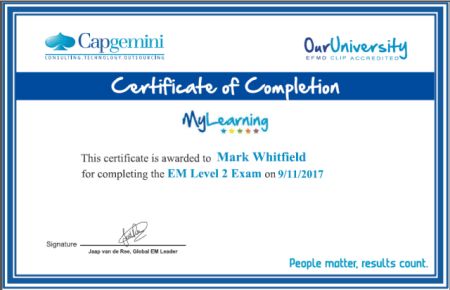
Courses/Certifications: Advanced Engagement Management Certification (Level 2), Group Anti-Corruption, and Intellectual Property Rights (IPR) Training
2022: Cloud Modernization
Focus: Enterprise cloud computing fundamentals
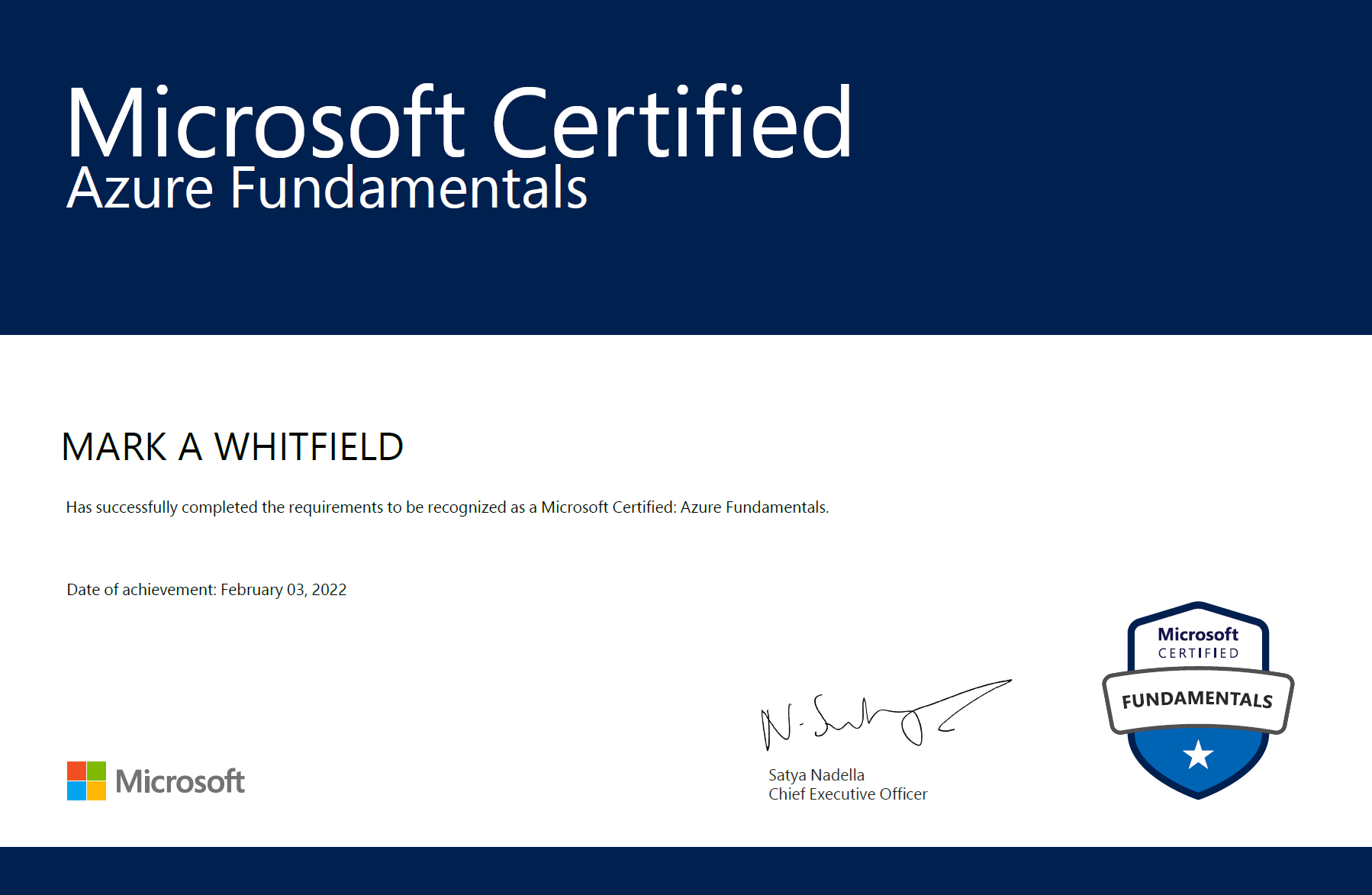
Courses/Certifications: AZ-900 Microsoft Certified Azure Fundamentals
Mark Whitfield, an SC cleared Senior Project Manager based in the Manchester area, has over 30 years of experience transitioning from a software engineer to an IT program leader.
His extensive technical and project management training spans methodologies, cloud infrastructure, and software applications.
A detailed breakdown of his training, certifications, and academic background includes:
Project Management Methodologies
PRINCE2 Practitioner: Certified via the ILX Group.
Agile SCRUM: Trained in-house with RADTAC.
Advanced Engagement Management: Level 2 certification completed via Capgemini.
Project Fundamentals: Completed “Fundamentals of Successful Project Management” and “Managing Multiple Projects” via Skillpath.
Microsoft Project: Microsoft Project ’98 certified.
Technical & Cloud Training
Microsoft Azure: AZ-900 Microsoft Certified Azure Fundamentals.
MuleSoft: Completed outcome-based delivery training and is a specialized Delivery Manager.
Technical Programming: Includes foundational database and software language training, such as C++ and MS SQL 2000 query training, as well as VPS and Tandem (HPE NonStop) technical/development courses.
Productivity: Completed Microsoft Excel Refresher and Expert skills training (Udemy and Microsoft).
Formal Education
Higher National Diploma (HND): Graduated with a Distinction (top) in Computing (1990).
You can review or download the targeted, one-page CV for Mark Whitfield (Senior Project Manager specializing in HPE NonStop systems) via the Mark Whitfield CV PDF link.
Mark Whitfield, High-Level Project Management Summary
The high-level, scannable overview of his professional profile is outlined below:
Executive Profile
Role: IT Senior Project Manager / Delivery Lead
Background:30+ years of experience delivering highly complex technology, business transformation, and infrastructure projects.
Core Skills: Cloud migration (hybrid), legacy ATM software modernisation, Point of Sale (POS) implementations, and software development lifecycles (SDLC).
Methodologies: Agile, Waterfall, PRINCE2 Practitioner, and ITIL certified.
Core Expertise & Competencies
HP NonStop & Legacy Integration: Deep technical roots in Tandem Computers/ HPE NonStop development, TAL programming, and high-volume transaction environments.
Global Delivery: Managed large-scale IT and system monitoring rollouts across the UK and international markets (e.g., Saudi Arabia).
Stakeholder Management: Experienced in bridging the gap between highly technical development teams and high-level business stakeholders.
For direct access to his official templates, articles, and full professional journey, you can visit the PROject Templates Website.
Mark Whitfield is a highly experienced Senior IT Project Manager based in Manchester, UK, with over 31 years of experience in the IT industry specializing in both Agile and Waterfall methodologies. He holds SC clearance (valid until 2031) and has a strong technical background in banking and digital project delivery, including experience as a developer in software development lifecycles (SDLC).
Mark Whitfield is a highly experienced Senior IT Project Manager based in Manchester
Professional Biography
After graduating in Computing in 1990, Mark began his career as a programmer specializing in Electronic Banking software on Tandem Mainframe Computers (HPE NonStop). He spent five years coding in COBOL85 and NonStop SQL for banking clients before transitioning into project management.
Mark has operated as a Senior IT Project Manager for over two decades, delivering complex projects for major blue-chip clients, including Jaguar Landrover, Heathrow, Royal Mail Group, and various financial institutions. He currently provides project management templates based on his extensive experience via his website, PROject Templates.
Example POaP Plan On a Page templates by Mark Whitfield
Projects: Delivered Waterfall and Agile digital projects for automotive, local regional government (LRG), postal services, and aerospace & defence sectors.
C&CA UK’s Communications & Engagement Award Winner 2022
Betfred (Late 2014 – Jan 2016)
Role: Senior IT Project Manager.
Projects: Managed mobile and online gambling/casino projects, including payment gateways, sportsbook, and virtual gaming using Agile SCRUM.
Wincor Nixdorf (Sept 2013 – Late 2014)
Role: Agile IT PM, Professional Services – Banking Division.
Projects: Managed ATM software delivery (Wincor Nixdorf work stream >£5M) for Lloyds Banking Group/Halifax.
Mark Whitfield is a highly experienced, SC-cleared Senior Project Manager and Engagement Manager specializing in complex IT software development lifecycle (SDLC) projects, digital transformation, and cloud migrations.
Currently based in Greater Manchester, UK, he has over 31 years of experience in the IT industry, working with major blue-chip companies across various sectors, including UK Government, retail banking, aerospace, and utilities.
He is a certified PRINCE2 Practitioner, skilled in both Agile SCRUM and Waterfall methodologies.
Mark specializes in bridging technical teams and business stakeholders, delivering complex IT systems under challenging conditions.
His career spans from early roles as a developer on Tandem Mainframe Computers (HPE NonStop) to senior management positions focusing on cloud resources, API integrations, and CRM platform implementations.
Key Strengths: Cloud Migration (Azure/Dynamics 365), Payment Systems (ATM/POS), and API-led connectivity.
Detailed Career Timeline:
Nov 2023 – Feb 2024 (UK Government – Capgemini): Acted as Client-Side Technical Delivery Manager for a £1m+ Fish Export Service (FES) to CHIP project, facilitating Azure-based API updates for UK-Northern Ireland trade.
Nov 2022 (UK Government – Capgemini): Managed two Microsoft Dynamics 365 Azure Cloud projects, including a £0.4m Dynamics 2016 migration and a £0.54m CRM platform discovery/build.
Feb 2022 (UK Utility Industry – Capgemini): Managed a £0.5M project migrating legacy document management systems to an Azure-based Enablon product.
2020 (UK Gov – Capgemini): Senior PM for a £375k Agile proof-of-concept (POC) project migrating legacy applications (MS Access/Oracle) to Microsoft Azure and Dynamics 365.
Oct 2018 – June 2019 (MuleSoft): Served as Delivery Manager overseeing 5+ UK accounts for MuleSoft Anypoint Platform (API-led connectivity) implementations.
Oct 2017 (Automotive Industry – Capgemini): Managed a £430k Digital Readiness project and a £670k Customer Portal/Online Sales project (Agile).
May 2017 (Local Govt – Capgemini): Led a £400k telecommunications project (CCaaS) for the Support for Mortgage Interest (SMI) program.
Jan 2017 (Aerospace/Def – Capgemini): Senior Project Lead for two £1.3M projects with high-governance and gated deliverables.
Jan 2016 – Present (Capgemini UK): Joined as an Engagement Manager (A8), working on projects including Apple iOS app development for UK Air Traffic (NATS) and a £4.3M data center migration for Postal Services.
Dec 2014 – Jan 2016 (Betfred Limited): IT Senior Digital Project Manager for online/mobile payment gateways and sports book platforms.
Sep 2013 – Dec 2014 (Wincor Nixdorf): Senior Project Manager for a £5+ million ATM/POS software swap-out at a UK retail bank.
2013 (Retail Banking – Riyadh): Delivered an RTLX transaction tracking project (BASE24 Classic) at a Saudi Arabian bank.
1995 – 2013 (Insider Technologies): Worked on Strategic Technical Initiatives and bank-facing projects on the HPE NonStop platform (Tandem) for products Reflex 80:20, Reflex ONE24, RTLX and XPERT24.
1990 – 1995 (The Software Partnership/Deluxe Data): Commenced career as a programmer specializing in electronic banking software on Tandem Computers (HPE NonStop), sp/ARCHITECT-BANK
Education:
1988 – 1990: Higher National Diploma (HND) in Computing, Distinction/Overall First, Bolton Institute of Higher Education (now University of Greater Manchester from 2024).
Mark Whitfield, SC Cleared Senior Project Manager, Manchester
Mark Whitfield is a highly experienced, SC-cleared Senior Engagement Project Manager at Capgemini UK (2016–present), specialising in complex Agile and Waterfall digital transformations, cloud migrations (Azure/AWS), and application modernisation.
Based in Manchester, he has delivered high-value projects for government, automotive, and aerospace sectors, often acting as a key client-side technical lead.
Key Capgemini Projects and Account Experience (2016–Present)
UK Government – Fish Export Service (£1m+): Served as Technical Delivery Manager (Nov 2023–Feb 2024), leading two Agile Scrum teams to build a CHIP inspection portal, extending APIs in MS Azure cloud.
UK Government – MS Dynamics Cloud Migration (£1m+): Managed start-up and delivery of Azure Cloud projects (Nov 2022), including migrating 12 Dynamics 2016 apps to Dynamics 365 Online.
UK Utility Industry – Cloud Migration (£0.5m+): Led the transition from a legacy document management system (EQS) to Microsoft Azure product Enablon.
Automotive – Digital Transformation (£1m+): As Engagement Manager (Oct 2017), managed a £670K Customer Portal/New Car Online Sales project and a £430K Digital Readiness project at the Aston Agile Delivery Centre.
Postal Services – Migration Project (£4.3m): Acted as PM for a major migration of 1100+ interfaces between data centres in 2016.
Aerospace & Defence – iOS App Delivery: Led Agile delivery of new Apple iOS apps for a UK-wide air traffic organisation, handling sensitive military and public-facing data.
MuleSoft (Oct 2018–June 2019): Augmented as a Delivery Manager, managing up to 5 UK accounts using Outcome Based Delivery (OBD) for API-led projects.
Betfred (2014–2016): Senior Digital Project Manager for online/mobile gambling platforms.
Wincor Nixdorf / Insider Technologies (1995–2013, see below also): Focused on HPE NonStop/BASE24 banking software and legacy ATM software replacement, including projects for Lloyds Banking Group and in Saudi Arabia.
Mark is recognized for being a “no-ego” leader, proactive with detail, and highly effective at managing complex stakeholder environments, often providing a “barrier” for developers against challenging clients, according to colleague feedback.
Mark Whitfield worked at Insider Technologies Limited (ITL) for 18 years, from 1995 to 2013. During his tenure, he progressed from technical roles to Manager of Strategic Technical Initiatives, serving as a Project Manager, Pre-sales Technical Consultant, and Team Lead.
Below is his work focus broken down by era and project type for Insider Technologies Limited, Salford Quays:
Early Era: Technical Foundations & Product Support (1995 – Early 2000s)
Whitfield’s initial focus was heavily technical, providing hands-on support and development specifications for the company’s core HP NonStop (Tandem) banking products.
Core Technical Support: Provided 24×7 technical support for major financial institutions including the Bank of England, Royal Bank of Scotland, and Euroclear (formerly CRESTCo).
Security & Cryptography: Supported Thales e-SECURITY products (Security Resource Manager and SafeSign) running on NSK, Windows, and Unix platforms, focusing on cryptographic functions like MACcing and PKI verification for banking applications.
Developer Management: Acted as a manager for developers, providing technical details and specifications for implementation on NonStop development projects.
Middle Era: Product Development & Design (Mid-2000s – 2008)
During this period, his role expanded into technical design and product management for new software solutions.
XPERT24 Product Launch: Produced the technical design documents and program specifications for XPERT24 (XPNET Performance Monitoring and Tracking).
Designed it to monitor the XPNET layer of BASE24, specifically tracking ATM/POS transaction interchange counters.
Authored the supporting marketing literature and technical user manuals.
R&D Initiatives: Led research and development for BASE24 (P)TLF log file analysis, integrating the Windows-based product Sentra to provide graphical front-end interfaces.
HSBC Implementation (2008): Headed the team that successfully delivered mainframe ATM and POS monitoring software to HSBC bank.
Late Era: Strategic Initiatives & Major Bids (2008 – 2013)
In his final years at ITL, he focused on large-scale business transformation and high-value project management.
Strategic Technical Initiatives: Served as the Manager of Strategic Technical Initiatives, bridging the gap between sales and technical delivery.
LloydsTSB ‘OISS’ Replacement: Managed a major bid to replace the legacy “OISS” operations tool at LloydsTSB (which monitored 5,000 ATMs) with ITL’s Reflex ONE24 product.
Responsible for gap analysis, technical assessment, and project costing.
Architecture & Design Partnerships: Worked closely with joint architects at Alliance & Leicester (now Santander) on the design and development of what would become a primary product set.
Product Portfolio Oversight: Managed the lifecycle of primary products including Reflex 80:20, Reflex ONE24, and the more recently introduced MultiBatch.
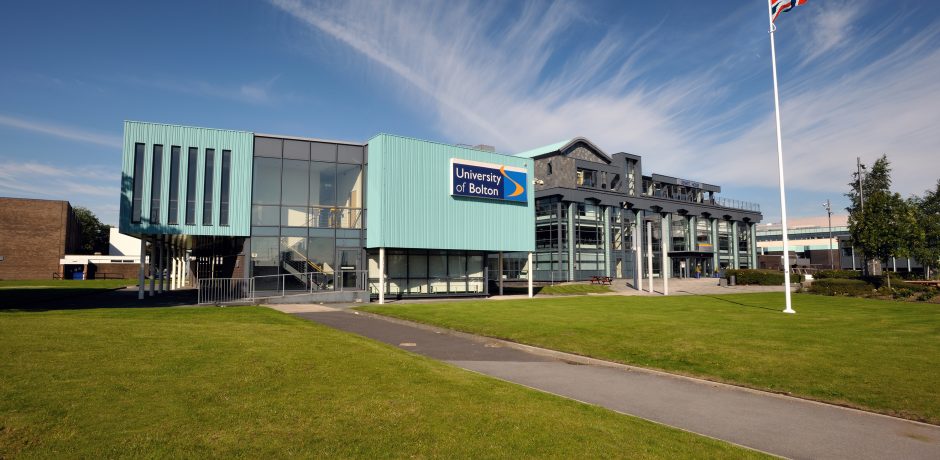
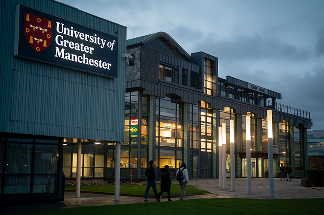
The University of Greater Manchester (formerly known as the University of Bolton from 2005 to 2024) is a public university based in Bolton, Greater Manchester, England.
University of Greater Manchester, from 2024
It is a “post-92” institution that officially rebranded in late 2024 to reflect its regional focus and, according to its vice-chancellor, to overcome employer prejudice against the smaller town name of Bolton. I studied Computing at Bolton Institute of Higher Education (BIHE) between 1988 to 1990 before it was elevated to University status.
The university dates its roots back to 1824 and focuses on applied research, practical skills, and teaching, with a strong regional reputation for student satisfaction.
🏛️ Comprehensive Insight: University of Greater Manchester
Location: Main campus on Deane Road and Derby Street in Bolton town centre, with a new city-centre partner campus (“UoB Manchester”) opened in 2023.
Origins: Founded as Bolton Mechanics’ Institute in 1824–1825.
Status: Granted taught degree-awarding powers in 1990/1992 and full university status in 2004/2005.
Key Focus: Teaching-intensive with a focus on employability, particularly in Nursing, Engineering, Business, and Creative Arts.
Size: Approximately 11,000–12,500 students, including international partnerships (e.g., Ras Al Khaimah, Colombo).
Rebrand: The University of Bolton rebranded to the University of Greater Manchester on December 20, 2024.
📜 Detailed Historic Timeline (1824–2025)
Era 1: Foundations (1824–1900)
1824/1825: Establishment of the Bolton Mechanics’ Institute to provide technical education to the working population.
Late 19th Century: The Institute becomes a vital hub for adult education in industrial Bolton.
Era 2: The Technical Institution (1900–1980)
Early 20th Century: The institution becomes known as Bolton Technical College, expanding technical and scientific skills.
1950s–1960s: Expansion of teacher training and higher-level technical qualifications.
1964: A 50-ton steam hammer is used at Thomas Walmsley’s Atlas Forge, which later becomes a heritage exhibit on the university’s Deane Campus.
Era 3: Formation of Higher Education (1980–2003)
1982: Bolton Institute of Higher Education (BIHE) is formed by merging the technical and education colleges.
BIHE – Bolton Institute of Higher Education
1990s: Gained taught degree-awarding powers (1990/1992) and research degree powers (1996).
1998: Mollie Temple becomes principal, leading a successful drive for full university status.
BIHE, view from front left side
Era 4: The University of Bolton (2004–2024)
2004–2005: Formally inaugurated as the University of Bolton following Privy Council approval.
University of Bolton, 2004 – 2024 – UoB
2012: Opened the £31 million “Bolton One” health and research facility in partnership with local NHS and council.
2019/2020: Responded to “The Cube” fire incident and launched initiatives during the COVID-19 pandemic.
2023: Opened a new partner campus in Manchester city centre (“UoB Manchester”) and initiated the name change process.
Era 5: The University of Greater Manchester (2024–Present)
Dec 20, 2024: Officially rebranded to the University of Greater Manchester.
University of Greater Manchester (front) from Dec 20, 2024
2025: Facing internal investigations regarding governance and financial management, while focusing on expanding health and engineering sectors.
The University of Greater Manchester based in Bolton
Mark Whitfield is a Senior IT Project Manager and Engagement Manager with over 30 years of experience in the software development lifecycle (SDLC), specializing in digital transformation, payment systems, and HPE NonStop (Tandem) technology.
He is SC cleared (valid until 2031) and currently works at Capgemini UK, having transitioned from a technical programming background to senior project leadership roles.
He is also the creator of PROject Templates, providing a comprehensive, editable suite of over 200 project management tools built over 24+ years of experience.
Comprehensive Career Timeline by Era
1. Technical Foundations & Mainframe Development (1990–1995)
1990: Graduated in Computing at University of Bolton; started as a programmer at The Software Partnership (later Deluxe Data), Runcorn.
1990–1994: Specialised in electronic banking software (sp/ARCHITECT-BANK) on Tandem Mainframe Computers (HPE NonStop), developing in COBOL85 and NonStop SQL for major banks.
1994: Developed batch billing modules for Barclays Business Master II (BBM II) on-site in Knutsford and Poole.
1995–2013: Worked at Insider Technologies Limited as Senior Development Engineer/ Project Manager.
1997: Conducted volume testing/benchmark software for CRESTCo (now Euroclear) on new S7000 hp NonStop nodes.
2002: Managed and attained the first HP OpenView Operations 2-way Smart Plug-In (SPI) certification for the HPE NonStop platform.
2000s (Early): Developed RTLX (Real-Time Log Extraction) for BASE24 POS and ATM transaction monitoring, collaborating with banking clients like HSBC and Global Payments.
2013: Delivered a large BASE24 transaction tracking project at Al Rajhi Bank in Riyadh, Saudi Arabia.
Mark Whitfield is a highly experienced IT Senior Project Manager and Engagement Manager based in Manchester, UK, specializing in Agile Scrum, PRINCE2, and Waterfall methodologies. He holds a degree in Computing (1990) and has extensive experience in IT hardware solutions, financial services, and Aerospace & Defence.
Here is a comprehensive summary of his profile, with links based on the provided search data:
Professional Profile
Name: Mark Whitfield
Role: IT Senior Project Manager / Engagement Manager (SC Cleared)
Mark Whitfield is a highly experienced IT Project Manager, Senior Developer, and SC-cleared consultant with over 30 years of experience, specializing in HP NonStop (Tandem) systems, banking software, and digital transformation projects. He is currently an Engagement Project Manager at Capgemini.
Career Overview
Specialism: HP NonStop (Tandem) mainframes, BASE24, transaction monitoring, Agile/Waterfall methodologies.
1990: Graduated in Computing and started as a Programmer for The Software Partnership in Runcorn, specializing in sp/ARCHITECT-BANK on Tandem Computers.
1990-1994: Developed banking code for TSB, Bank of Scotland, Rabobank, and Girofon (Denmark).
1992: Worked on the Barclays Business Master II (BBM II) project in Knutsford.
1994: Company taken over by Deluxe Data (later FIS).
2. Insider Technologies & Monitoring Era (1995–2013)
1995–2013: Joined Insider Technologies Ltd as a Senior Development Engineer and Project Manager.
1995-2004: Developed monitoring/diagnostic software (Reflex 80:20, Reflex ONE24) for HP NonStop payment systems.
1997: Worked on projects for CRESTCo.
Early 2000s: Focused on HP NonStop transaction/payment monitoring for ATM/POS devices using ACI’s XPNET.
2005-2013: Managed first HP OpenView Operations Smart Plug-In certification for NonStop; designed XPERT24.
2011: Certified as a PRINCE2 Practitioner.
3. Banking Transformation & Consultancy Era (2013–2016)
2013–2014: Wincor Nixdorf UK – Worked as a Project Manager in Professional Services for the Banking Division.
2013-2014: Assigned to Lloyds Banking Group (LBG) for the Self-Service Software Replacement (SSSR) program (ATM estate upgrade).
2014–2016: Joined Betfred as an IT Project Manager in the gambling/casinos industry, delivering mobile/online payment gateways (iOS, Android).
4. Digital Transformation & Capgemini Era (2016–Present)
2016: Joined Capgemini UK as a client-facing Engagement Manager.
2016-2017: Led digital projects for automotive, local government, and aerospace sectors.
2017: Obtained Microsoft Excel Expert skills and Advanced Engagement Management certifications.
2018–2019: Augmented into MuleSoft as a Delivery Manager for the Anypoint Platform.
2022: Completed Microsoft Azure Fundamentals (AZ-900) certification.
2023–2024: Assigned to a UK Government account for a cloud migration of 130+ applications and the Fish Export Service (FES) project.
Key Qualifications
PRINCE2 Practitioner & Agile Scrum
ITIL Certified
SC Cleared (UK Government)
Technical Skills: C, C++, MS SQL, COBOL, TAL, Java, ASP.NET, HP NonStop
Mark Whitfield is a Senior IT Project Manager and Engagement Manager with over 30 years of experience in the software development lifecycle (SDLC). He is currently a SC-cleared Engagement Manager at Capgemini UK.
Professional Background by Era
1990–1995: Early Programming (The Software Partnership/Deluxe Data)
Role: Programmer/Lead Analyst.
Focus: Developed electronic banking software (sp/ARCHITECT-BANK) on Tandem Mainframe Computers (now HPE NonStop).
1995–2013: Senior Development & Product Management (Insider Technologies)
Role: Progressed from Senior Programmer to Project Manager for Strategic Technical Initiatives.
Focus: Developed platform health and diagnostic modules for the “Reflex” monitoring product.
2013–2014: Project Management (Wincor Nixdorf)
Role: Project Manager, Professional Services – Banking Division.
Focus: Managed the Wincor Nixdorf workstream for Lloyds Banking Group’s Self-Service Software Replacement (SSSR) programme.
2014–2016: Digital Project Management (Betfred)
Role: Senior Digital Project Manager, Online and Mobile Division.
Focus: Delivered payment gateways, sportsbooks, and virtual gaming components for iOS, Android, and Windows.
Focus: Leading digital transformation and cloud migration projects for public and private sector clients.
Technologies & Frameworks
Project Methodologies: Agile SCRUM, PRINCE2 (Practitioner), Waterfall, ITIL, and ISO QA.
Mainframe & Infrastructure: HPE NonStop (Tandem), IBM ESB, UNIX shell scripting, and Cloud (MS Azure/AWS).
Programming & Databases: C/C++, MS SQL, Java, COBOL85, TAL, TACL, and SCOBOL.
Tools: MS Project, MS Excel/Office, MuleSoft Anypoint Platform, and Jira.
Major Projects & Customers
UK Government: Managed a £13.5m cloud migration of 130 applications and the £1m+ Fish Export Service (FES) to CHIP portal.
Royal Mail Group (RMG): Managed a £4.3m data centre migration project involving over 1,100 interfaces.
Lloyds Banking Group (LBG): Led a £5m+ self-service software replacement project.
Other Notable Clients: Jaguar Land Rover (JLR), Heathrow, NATS (Air Traffic Control), Barclays, HSBC, Deutsche Bank, and Euroclear.
Awards & Education
Awards:
C&CA UK’s Communications & Engagement Award (2022) at Capgemini UK.
Project Recognition Award from Wincor Nixdorf for achievements on the LBG SSSR project.
Education:
HND in Computer Studies (Distinction) from the University of Greater Manchester (formerly BIHE), 1988–1990.
A-Levels in Computer Science and Biology from Leigh College.
Project Management Templates
Whitfield provides a library of over 200 editable resources through his site, PROject Templates, designed for Agile, Waterfall, and PRINCE2 7th Edition delivery. Key items include:
Plan on a Page (POaP): Over 35+ executive-level summary slides.
Detailed Project Plans: Templates in MS Project (MPP) and Excel for SDLC tracking.
RAID Logs: Comprehensive registers for risks, actions, issues, and dependencies.
Mark Whitfield is a photographer who has documented the development of MediaCityUK in Salford Quays through an extensive “Photographic Build Timeline Journal”. His collection includes over 15,000 images that capture the site’s transformation from a derelict dockland into a global media hub.
MediaCityUK Photo Timeline
Mark Whitfield: Photography Overview
Project Focus: Whitfield began documenting the rise of MediaCityUK in May 2007, specifically focusing on the construction of the BBC’s new northern home.
Visual Documentation: His work is described as a unique photo timeline that charts the incredible structural changes at the site over several years.
Background: Beyond his photography, Whitfield has a background in IT project management and has worked in Salford Quays for over 15 years.
Galleries: Much of his work is hosted on his personal website, mark-whitfield.com, and he has shared specific milestones on platforms like Flickr and Instagram.
MediaCityUK site in 2007
Historical Timeline of MediaCityUK
The following timeline integrates key development milestones with Whitfield’s photographic journey:
2004–2006: Pre-Construction Phase
The BBC signals its intention to move jobs to Manchester (2004).
Salford Quays is officially chosen as the site for the new development (June 2006).
2007: Construction Begins
May 18, 2007: Mark Whitfield captures his first timeline photo, marking the start of the build.
The first “spade in the ground” occurs as Peel Group and Bovis Lend Lease begin work.
The Pie Factory, a refurbished bakery, opens as the first working studio complex.
2008–2009: Structural Growth
Whitfield continues extensive documentation; photos from April 2008 and February 2009 capture the rising concrete frames of the main buildings.
The high-rise 2,116-space multi-storey car park is completed (August 2009).
2010: Infrastructure Milestones
The MediaCityUK Metrolink station opens (September 20), connecting the site to the wider Manchester tram network.
First trial show is recorded in Studio HQ2 (November), featuring a simulated power failure and evacuation.
Initial infrastructure is completed by December.
2011: Operational Launch
January 2011: Dock10 studios become operational.
February 2011: The first program, Don’t Scare the Hare, is filmed at MediaCityUK.
May 2011: BBC staff begin moving into three dedicated buildings: Bridge House, Dock House, and Quay House.
October 2011: The University of Salford opens its new media academy at the site.
2012–2014: Full Integration
April 2012: The Queen and Duke of Edinburgh officially open MediaCityUK.
March 2013: ITV completes its move to the site.
January 2014:Coronation Street records its first episode at the new production facility on Trafford Wharf.
2015–2021: Expansion & Sustainability
2016: Completion of “Tomorrow,” the final building in Phase One.
2020: The Pie Factory closes and is demolished to make way for Phase Two.
2021: MediaCityUK buildings become the first in the UK to achieve net-zero carbon status.
MediaCityUK building beginning to take shape in late 2008
Mark Whitfield is a Senior, SC cleared IT Project and Engagement Manager with over 30 years of experience, specializing in the software development lifecycle (SDLC) for large-scale digital and financial payment systems.
Mark Whitfield is a Senior, SC cleared IT Project and Engagement Manager
Key Projects: Leading high-value digital transformations and cloud migrations for UK Government applications, automotive (Jaguar Land Rover), and aerospace (Air Traffic Management iOS apps).
2014–2016: Betfred Limited (UK)
Role: IT Senior Digital Project Manager, Online and Mobile Division.
Key Projects: Managed multiple Agile SCRUM projects for payment gateways, sportsbooks, and virtual gaming components across iOS, Android, and Windows platforms.
2013–2014: Wincor Nixdorf Limited (UK)
Role: Project Manager, Professional Services – Banking Division.
Key Projects: Managed a £5M+ workstream for Lloyds Banking Group’s Self-Service Software Replacement (SSSR) program, migrating legacy HP NonStop systems to AIX-based Oracle technologies.
The Higher National Diploma (HND) in Computer Studies at the Bolton Institute of Higher Education (BIHE)—now the University of Greater Manchester—is a two-year, Level 5 vocational qualification designed to provide practical, industry-specific skills.
The institution has undergone several name changes and status upgrades that affected the delivery of the HND:
1982: BIHE was formed through the merger of Bolton Institute of Technology and Bolton College of Education (Technical).
1992: The Institute was granted the power to award taught degrees.
2004/2005: BIHE achieved full university status, becoming the University of Bolton.
2024: The university rebranded as the University of Greater Manchester.
HND Computer Studies: Detailed Timeline
The course traditionally follows a two-year full-time or three-year part-time structure.
Year 1: Foundations (HE4 Level)
The first year focuses on establishing core technical and business knowledge. In many versions of the Bolton curriculum, Year 1 is common across several computing programmes to allow for flexible progression.
Core Modules:
Introduction to Programming: Developing fundamental coding logic.
Computer Platforms & Systems Architecture: Understanding the hardware and software environments.
Information Systems & Databases: The basics of data management.
Website Production & Networking Fundamentals: Introduction to web technologies and connectivity.
Quantitative Techniques & Business Studies: Integrating mathematical and commercial contexts.
Year 2: Specialisation (HE5 Level)
The second year shifts toward advanced application, systems analysis, and professional practice.
Advanced Modules:
Systems Analysis & Design: Producing system requirements and user interface specifications.
Programming Methodology: Moving into more complex application development.
Business Information Systems: Exploring how IT supports organizational requirements.
Final Year Project: A major 20-credit core project where students investigate a specific field and apply their cumulative skills to a real-world scenario.
Progression and Modern Standards
Academic Standing: Completion of the HND is equivalent to the first two years of a Bachelor’s degree (Level 5).
Modern HTQs: Current versions of the course, such as the HND Computing for England (HTQ), now integrate modern fields like Artificial Intelligence, Cloud Computing, and VR technologies.
1988 to 1990 : University of Greater Manchester (previously Bolton Institute of Higher Education – BIHE)Higher National Diploma (HND) in Computer Studies, Bolton Institute of Higher Education (BIHE)—now the University of Greater Manchester
Mark Whitfield is a highly experienced Senior IT Project Manager and former developer with over 30 years of expertise in HP NonStop (formerly Tandem) systems, primarily within the electronic banking and payments sectors. He is currently a Senior Project Manager at Capgemini (SC cleared until 2031) and maintains a professional portfolio at mark-whitfield.com.
Historical Timeline & Customer Breakdown
1990 – 1995: The Software Partnership / Deluxe Data (now FIS)
Customer/Projects: Developed electronic banking software, specifically sp/ARCHITECT-BANK, for major financial institutions including TSB, Bank of Scotland, Rabobank, and Girofon (Denmark).
Technical Breakdown: Focused on low-level programming using COBOL85, NonStop SQL, and TAL (Transaction Application Language).
Role: Programmer.
1995 – 2013: Insider Technologies Ltd (ITL)
Customer/Projects: Focused on HP NonStop monitoring, diagnostic, and payment software for high-value banking clients. Key products included Enterprise Manager, XPNET, BASE24, and EPS.
Technical Breakdown:
XPERT24: Produced technical designs for this performance monitoring tool to track XPNET layers and transaction interchange counters (ATM/POS approval rates).
RTLX Payments: Served as IT Project Manager for RTLX (Real-Time Long-term eXchange) payment software.
Infrastructure: Extensive use of Guardian utilities (PATHWAY, SCF, FUP, INSPECT), TACL, and SCOBOL.
Role: Software Design, Team Leading, and Product Management.
2013 – 2016: Freelance / Contract Projects
Customer/Projects: Managed software development lifecycle (SDLC) projects for various blue-chip companies.
Role: IT Project Manager.
2016 – Present: Capgemini
Customer/Projects: Managing large-scale digital and public sector transformations. Notable clients include UK Government (MS Azure Cloud migration), Jaguar Land Rover (JLR), Heathrow, Royal Mail Group, Bank of England, HSBC, Barclays, and Deutsche Bank.
Technical Breakdown: Transitioned from legacy Tandem environments to modern Agile Scrum delivery and Microsoft Azure Cloud hosting.
Salford Quays is a major waterfront destination in Greater Manchester, originally the site of the Manchester Docks. After the docks closed in 1982, the area underwent one of the UK’s most ambitious urban regeneration projects, transforming from a derelict industrial zone into a vibrant cultural, commercial, and residential hub. It is now home to landmarks such as The Lowry, Imperial War Museum North, and the MediaCityUK media cluster.
Comprehensive Historical Timeline
The history of Salford Quays is defined by three distinct eras: the rise of the Manchester Docks, a period of industrial decline, and its modern rebirth through regeneration.
I. The Industrial Era (1887–1960s)
This era saw the construction and peak of the Manchester Docks, which turned Manchester into an inland port despite being 40 miles from the sea.
1887: Construction of the Manchester Ship Canal begins to bypass high charges from Liverpool’s docks.
1893: The canal is flooded in November, preparing for its opening.
1894:Queen Victoria officially opens the Manchester Ship Canal and Salford Docks on 21 May.
1905:King Edward VII opens No. 9 Dock, the largest in Salford, on the former site of the Manchester racecourse.
1920: Employment peaks with approximately 16,000 labourers working at the docks.
1927: Official Dock offices open on Trafford Road.
1950s: The docks reach their peak traffic, annually seeing over 16 million tons of cargo and 5,000 ships.
II. The Era of Decline (1960s–1982)
Technological shifts in shipping and industrial unrest led to the eventual closure of the port.
1966: A 47-day strike by the National Union of Seamen leads to a significant loss of customer confidence.
1969: The vessel Manchester Courage hits the Irlam lock gates, trapping ships in the docks for five weeks.
1970s: The rise of containerisation makes the Ship Canal too narrow for modern, larger ships, causing a rapid decline in trade.
1982: The docks officially close, resulting in the loss of 3,000 jobs and leaving the area derelict and polluted.
III. The Regeneration Era (1983–Present)
Salford City Council and private partners began transforming the abandoned docks into a modern “urban living” quarter.
1983:Salford City Council acquires the derelict docks from the Manchester Ship Canal Company.
1984: The area is officially rebranded as Salford Quays.
1985: The Salford Quays Development Plan is published, outlining a mix of housing, offices, and leisure.
1986: Regeneration work officially begins; the MGM Canon Cinema (the first new building) opens in December.
1987: The Copthorne Hotel opens. A compressed air mixing system is introduced to oxygenate the water, allowing 12,000 fish to be introduced.
1989:Mariner’s Canal is opened by the Duke of York.
1991: The Anchorage office complex is completed, becoming a major commercial landmark.
1994: The Centenary Walkway is opened by Princess Anne to commemorate the canal’s 100th anniversary.
1999: The Metrolink tram extension to the Quays opens.
2000:The Lowry arts centre is officially opened by Queen Elizabeth II on 28 April.
2001: The Lowry Outlet Mall (now Quayside) and the Salford Watersports Centre open.
2002:Imperial War Museum North, designed by Daniel Libeskind, opens its doors.
2007: Construction begins on MediaCityUK after the BBC proposes moving several departments from London.
2011: The BBC completes its move to MediaCityUK; the University of Salford opens its satellite campus there.
2013:Coronation Street moves its production and iconic cobbles to a new site at MediaCity.
2021: MediaCityUK buildings become the first in the UK to achieve net zero carbon status.
The Trafford Centre, located in Greater Manchester, has evolved from a controversial planning proposal in the 1980s into one of the UK’s largest shopping and leisure destinations.
Pre-Opening & Construction (1984–1997)
1984: The concept for the Trafford Centre is first conceived by the Manchester Ship Canal Company (later Peel Holdings).
1986: Initial planning permission is sought for the Dumplington site.
1987–1992: A series of public inquiries are held due to significant opposition from local councils and competing shopping centres.
1993: Outline planning permission is granted, though it is immediately challenged in the High Court.
1995: After years of legal battles, the House of Lords officially upholds the planning permission, giving the final go-ahead.
1996: Construction begins on-site in May; by August, the assembly of the massive steel frame starts.
1997: The steel frame is completed, and significant progress is made on the ornate facade and interior.
The Early Years (1998–2005)
1998: The Trafford Centre officially opens on 10 September with 140,000 visitors on opening day. Key anchors include the first Selfridges store outside London.
1999: The centre gains international attention when Monica Lewinsky visits for a book signing tour.
2001: A major Marks & Spencer store opens.
2005: The four-storey John Lewis & Partners opens in May, replacing the original “Festival Village” area.
Expansion & Ownership Changes (2006–2019)
2007:The Great Hall dining area opens in March, featuring a 1930s steamship theme and one of the world’s largest chandeliers.
2008:Barton Square (now Trafford Palazzo) opens in March as a dedicated homewares and furniture wing.
2010: LEGOLAND Discovery Centre opens within Barton Square.
2011: Peel Group sells the centre to Capital Shopping Centres (CSC) for £1.6 billion, the largest single property transaction in British history at the time.
2013: Following a corporate rebrand of CSC, the mall is renamed intu Trafford Centre in February; SEA LIFE Manchester also opens this year.
2018: The centre celebrates its 20th anniversary with record footfall.
Modern Era & Redevelopment (2020–Present)
2020: Developer Intu Properties enters administration in June. Ownership is transferred to the Canada Pension Plan Investment Board (CPPIB) in December.
2021: Barton Square is legally separated and re-acquired by the original developer, Peel L&P, who rebrands it as Trafford Palazzo.
2022: As part of an overhaul by new asset managers Pradera Lateral, the decorative pool in the Orient is removed.
2023: The centre celebrates its 25th anniversary with a special show headlined by 90s pop group B*Witched.
2024: Major new tenants are announced, including a massive Inditex flagship (Zara, Bershka, and Pull&Bear) taking over the former M&S site.
2025: Significant retail reshuffling continues with the opening of a massive new Zara and the first Sephora in the North of England.
The Trafford Centre is a major shopping and leisure destination in Manchester, famous for its grand Baroque architecture.
Sunday Hours (Sunday 8 March 2026)
Shops: 12:00 PM – 6:00 PM
Dining & Leisure: 12:00 PM – 6:00 PM (times for individual venues like the cinema or restaurants may vary)
Events & Attractions
Science Fair: A free family event featuring experiments and robots is currently running until 6:00 PM today.
Holi Festival of Colours: A celebration of music and well-being scheduled for Saturday 14 March at Orient Car Park 12.
Leisure Hub: Home to an ODEON cinema, SEA LIFE Manchester, Paradise Island Adventure Golf, and Namco Funscape.
Shopping & Dining
Popular Brands: Key stores include Selfridges, John Lewis, Zara, Apple, and Next.
Dining Hubs:The Orient and The Great Hall host over 60 eateries, including Hello Oriental, Archie’s, Five Guys, and Wingstop.
New for 2026: Standalone stores for The White Company, Shake Shack, and expanded locations for Stradivarius and Foot Asylum are opening this spring.
Centiun Microsoft Business Applications and AI Specialists
CentiunOverview
Centiun is a British IT services consulting company and Microsoft Partner, helping enterprise public and private sector organisations achieve digital transformation excellence through the Microsoft cloud.
We specialise in Microsft Dynamics 365, Power Platform, and Micrisoft 365, delivering expert consultancy, solution architecture, implementation, and managed services that enable organisations to modernise operations, improve service delivery, and unlock greater value from their technology investment.
From CRM transformation and business process automation to secure collaboration, data-driven decision making, and AI enabled innovation, Centiun supports customers to build smarter, faster and more resilient ways of working.
Our approach combines deep Microsoft expertise with a practical focus on outcomes – designing and delivering solutions that are scalable, compliant, and tailored to the needs of complex organisations.
Whether you’re starting your digital journey or optimising an existing platform, Centiun is your trusted Microsoft for long-term transformation and support.
Manchester’s technical history is defined by its evolution from the world’s first industrial city to a global hub for computing and material science.
18th Century: The Birth of Industry
1733:John Kay invented the Fly Shuttle, a key advancement in weaving.
1761: The Bridgewater Canal opened as Britain’s first man-made waterway independent of rivers, drastically reducing coal costs.
1764–1779:James Hargreaves invented the Spinning Jenny (1764), and Samuel Crompton created the Spinning Mule (1779), allowing for mass textile production.
1783:Richard Arkwright established Manchester’s first steam-powered mill.
1790:Piccadilly Mill became the first in the city to be powered directly by a steam engine.
19th Century: Engineering & Precision
1803:John Dalton published his Atomic Theory at the Manchester Literary & Philosophical Society.