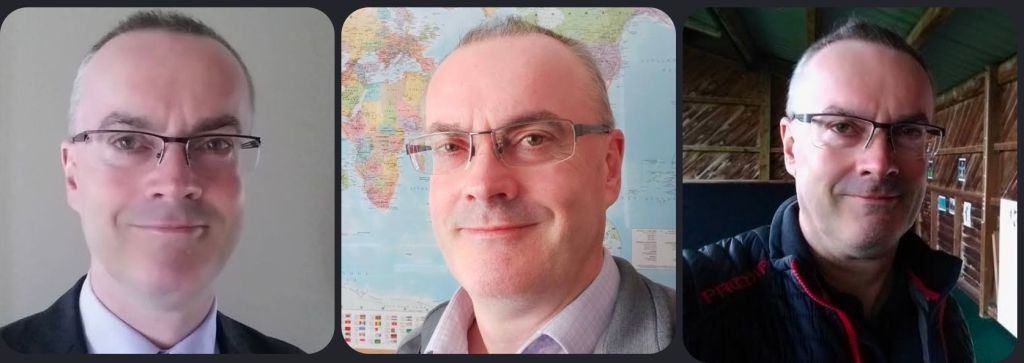
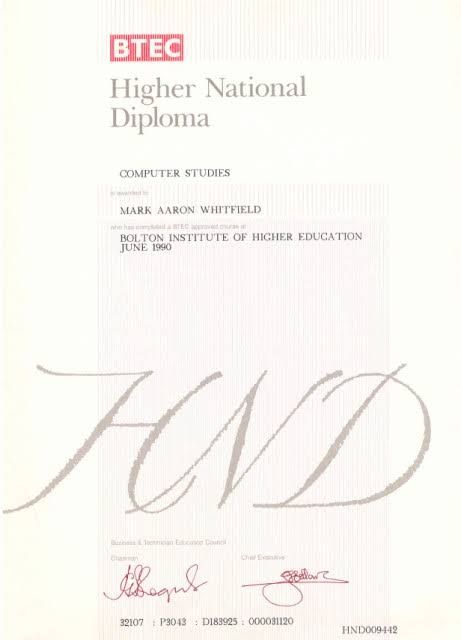
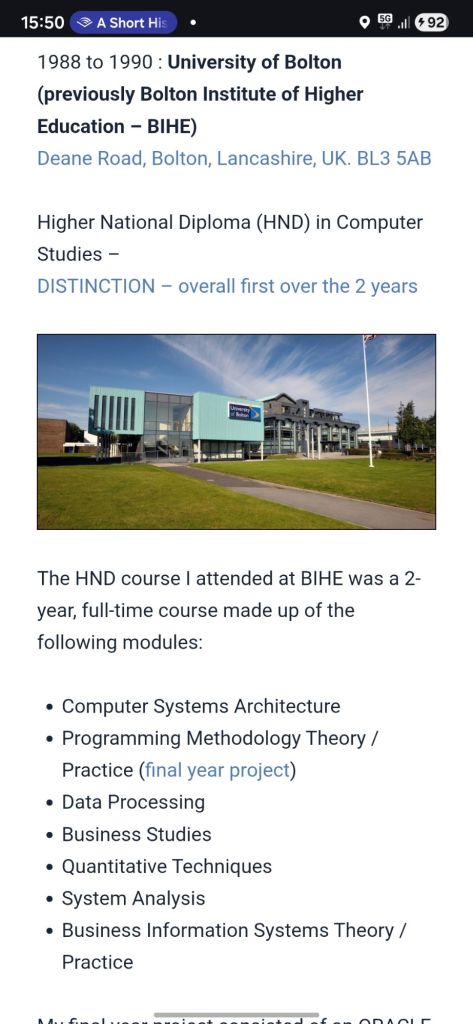
Mark Whitfield completed his BTEC HND in Computer Studies at the Bolton Institute of Higher Education (BIHE), which has since evolved into the University of Bolton and rebranded as the University of Greater Manchester in 2025.
He attended the institution from 1988 to 1990, graduating with a Distinction and achieving overall first place across his entire cohort for the duration of the two-year, full-time course.
Mark Whitfield attended BIHE, 1988 – 1990
The academic breakdown of his specific computing curriculum and achievements is detailed below.
📋 HND Module Breakdown
The two-year executive-level HND program consisted of seven core modules blending technical computer science with business information systems:
Computer Systems Architecture: Focus on hardware design, CPU structures, and system configurations.
Programming Methodology (Theory / Practice): Foundations of logic, software development lifecycles, and code optimization.
System Analysis: Methodologies for assessing business requirements and mapping technical system designs.
Data Processing: Data management workflows, storage systems, and batch/transaction structures.
Business Information Systems (Theory / Practice): The application of computer networks and platforms within corporate infrastructures.
Business Studies: Fundamentals of corporate structure, commerce, and finance to bridge technical and commercial alignments.
Quantitative Techniques: Mathematical and statistical methods applied to computing and resource management.
💻 Final Year Project
For his definitive practical project, Mark Whitfield developed a database interface that aligned with his specialized programming modules.
Tech Stack: Built using an ORACLE SQL-forms graphical user interface (GUI) operating within an MS-DOS environment.
Functionality: Created an administrative system to record student enrollments, module assignments, and course grades.
This academic performance served as the launchpad for his 30+ year career as an IT Senior Project Manager and Delivery Lead.
His deep technical foundation from BIHE transitioned into complex enterprise solution deliveries—such as legacy ATM modernization, hybrid cloud migrations, and API integrations—for financial and corporate entities including the Bank of England, Barclays, Lloyds Banking Group, and Jaguar Land Rover.
He is also the author of the industry resource platform, PROject Templates.
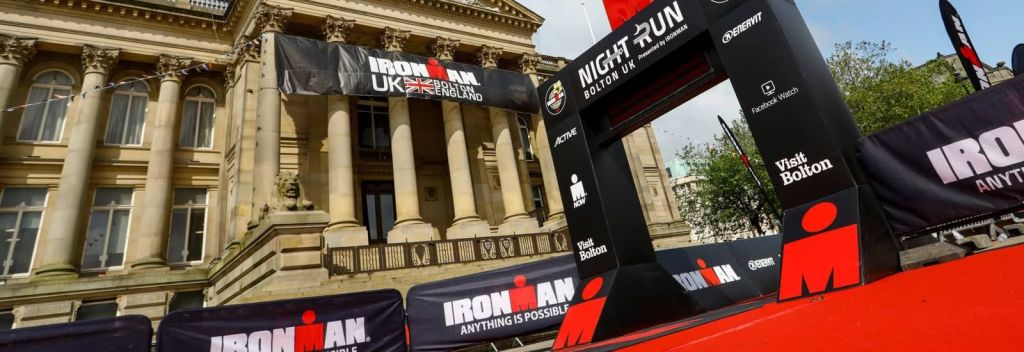
The IRONMAN 70.3 Bolton is the UK’s standout early-summer middle-distance triathlon, featuring a 1.2-mile lake swim, a 56-mile hilly bike ride, and a 13.1-mile town center run. The event has a legendary electric finish in the heart of Bolton on Victoria Square.
2026 IRONMAN 70.3 Bolton
Event Profile
Date: Sunday, June 7
Format: Age-group and professional categories, featuring a self-seeded rolling swim start.
Energy Partner:Maurten Gels are available on-course for athlete fueling.
Bike (56 Miles / 90 km): A two-loop circuit around the surrounding regions before heading north into the Lancashire Moors. It is known to be a challenging, undulating ride with some technical sections.
Run (13.1 Miles / 21.1 km): A mostly flat, two-loop half marathon through Queens Park and the historic streets of Bolton.
Spectator Information & Logistics
Finish Line: The final stretch leads competitors down the Red Carpet toward the steps of the Bolton Town Hall.
Road Closures: Extensive road closures and bus diversions affect the area, with major impacts on roads and surrounding routes.
Local Amenities: Spectators and athletes have access to local hubs like the Albert Halls Bolton and the Bolton Museum, both located right near Victoria Square.
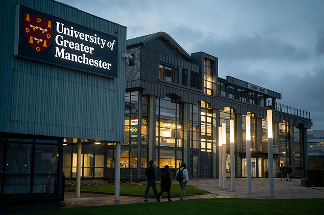
The University of Greater Manchester (formerly known as the University of Bolton from 2005 to 2024) is a public university based in Bolton, Greater Manchester, England.
University of Greater Manchester, from 2024
It is a “post-92” institution that officially rebranded in late 2024 to reflect its regional focus and, according to its vice-chancellor, to overcome employer prejudice against the smaller town name of Bolton. I studied Computing at Bolton Institute of Higher Education (BIHE) between 1988 to 1990 before it was elevated to University status.
The university dates its roots back to 1824 and focuses on applied research, practical skills, and teaching, with a strong regional reputation for student satisfaction.
🏛️ Comprehensive Insight: University of Greater Manchester
Location: Main campus on Deane Road and Derby Street in Bolton town centre, with a new city-centre partner campus (“UoB Manchester”) opened in 2023.
Origins: Founded as Bolton Mechanics’ Institute in 1824–1825.
Status: Granted taught degree-awarding powers in 1990/1992 and full university status in 2004/2005.
Key Focus: Teaching-intensive with a focus on employability, particularly in Nursing, Engineering, Business, and Creative Arts.
Size: Approximately 11,000–12,500 students, including international partnerships (e.g., Ras Al Khaimah, Colombo).
Rebrand: The University of Bolton rebranded to the University of Greater Manchester on December 20, 2024.
📜 Detailed Historic Timeline (1824–2025)
Era 1: Foundations (1824–1900)
1824/1825: Establishment of the Bolton Mechanics’ Institute to provide technical education to the working population.
Late 19th Century: The Institute becomes a vital hub for adult education in industrial Bolton.
Era 2: The Technical Institution (1900–1980)
Early 20th Century: The institution becomes known as Bolton Technical College, expanding technical and scientific skills.
1950s–1960s: Expansion of teacher training and higher-level technical qualifications.
1964: A 50-ton steam hammer is used at Thomas Walmsley’s Atlas Forge, which later becomes a heritage exhibit on the university’s Deane Campus.
Era 3: Formation of Higher Education (1980–2003)
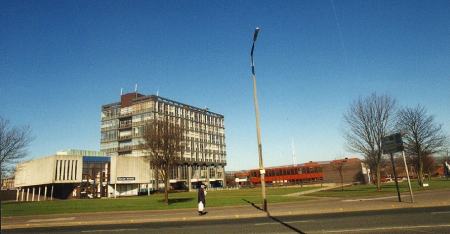
1982: Bolton Institute of Higher Education (BIHE) is formed by merging the technical and education colleges.
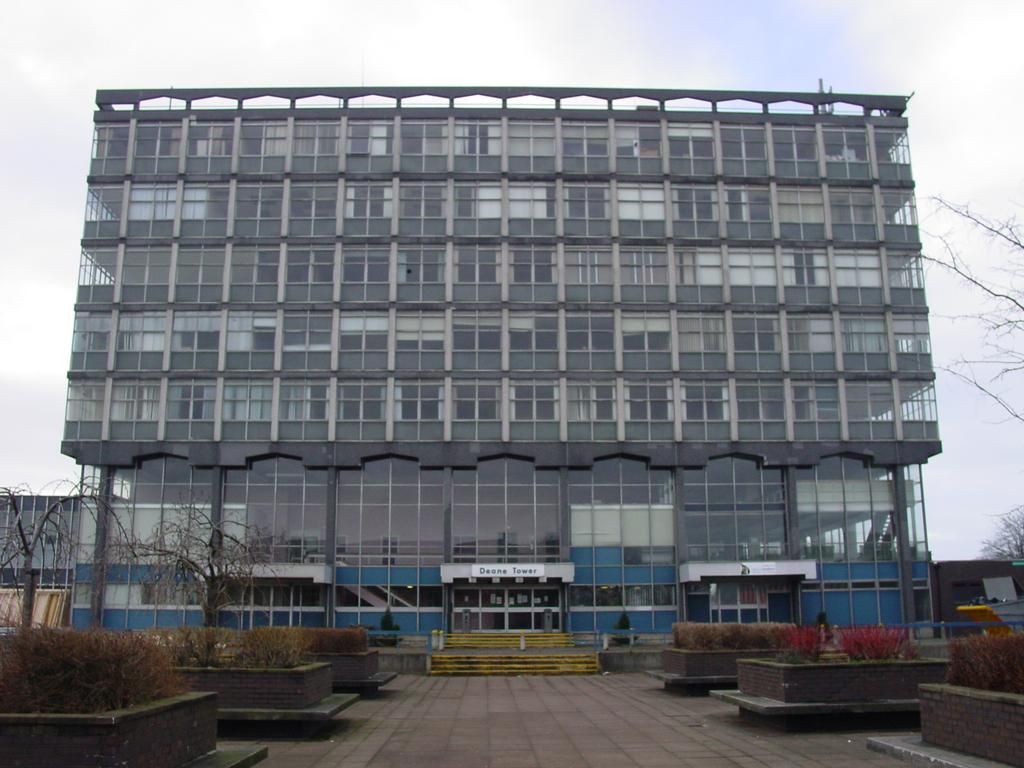
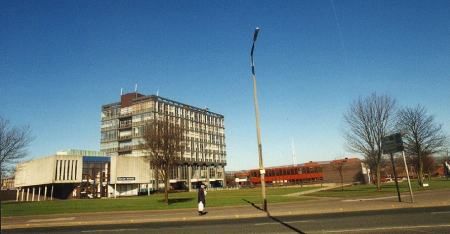
BIHE – Bolton Institute of Higher Education
1990s: Gained taught degree-awarding powers (1990/1992) and research degree powers (1996).
1998: Mollie Temple becomes principal, leading a successful drive for full university status.
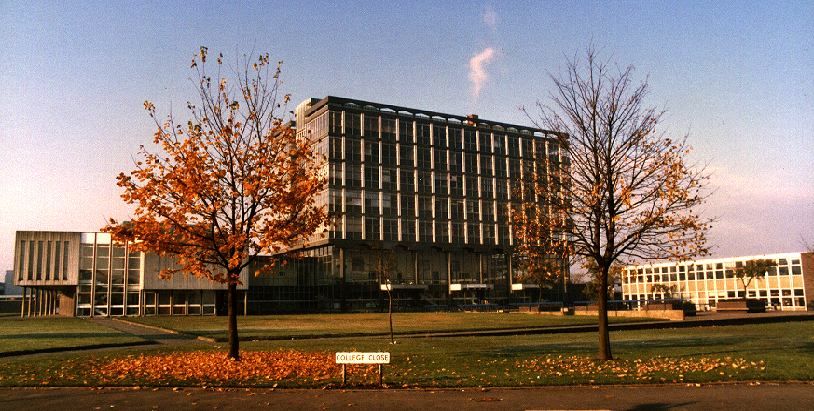
BIHE, view from front left side
Era 4: The University of Bolton (2004–2024)
2004–2005: Formally inaugurated as the University of Bolton following Privy Council approval.
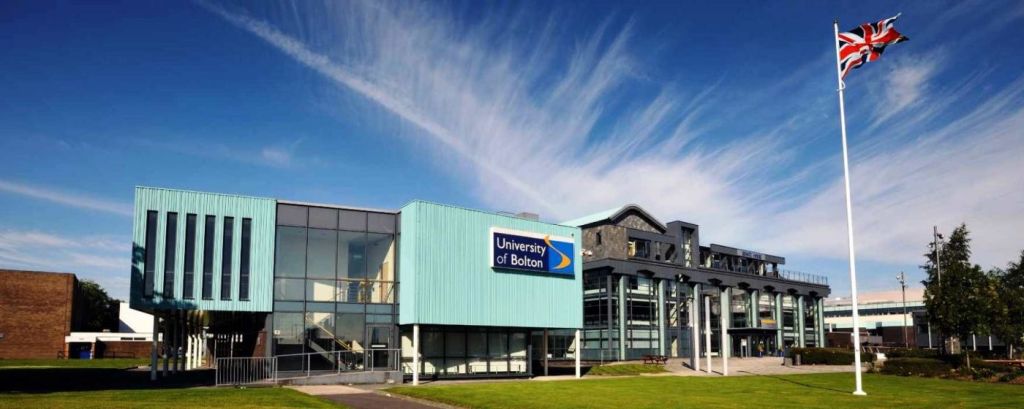
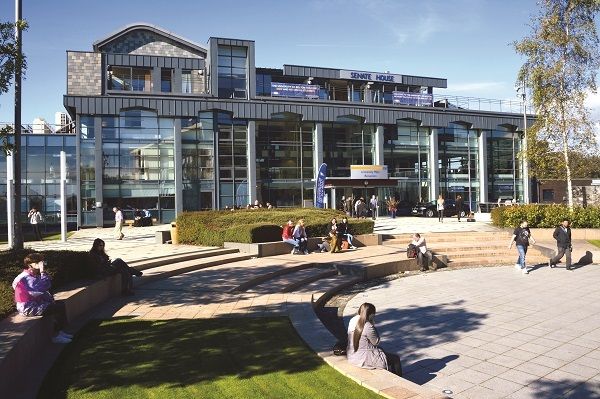
University of Bolton, 2004 – 2024 – UoB
2012: Opened the £31 million “Bolton One” health and research facility in partnership with local NHS and council.
2019/2020: Responded to “The Cube” fire incident and launched initiatives during the COVID-19 pandemic.
2023: Opened a new partner campus in Manchester city centre (“UoB Manchester”) and initiated the name change process.
Era 5: The University of Greater Manchester (2024–Present)
Dec 20, 2024: Officially rebranded to the University of Greater Manchester.
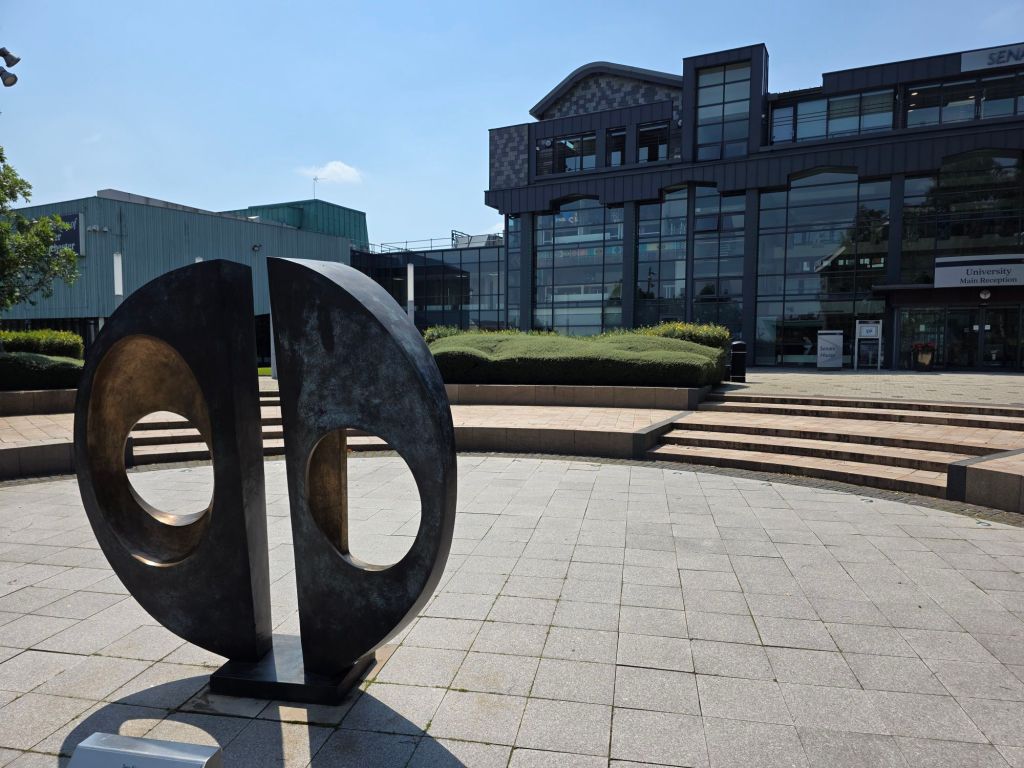
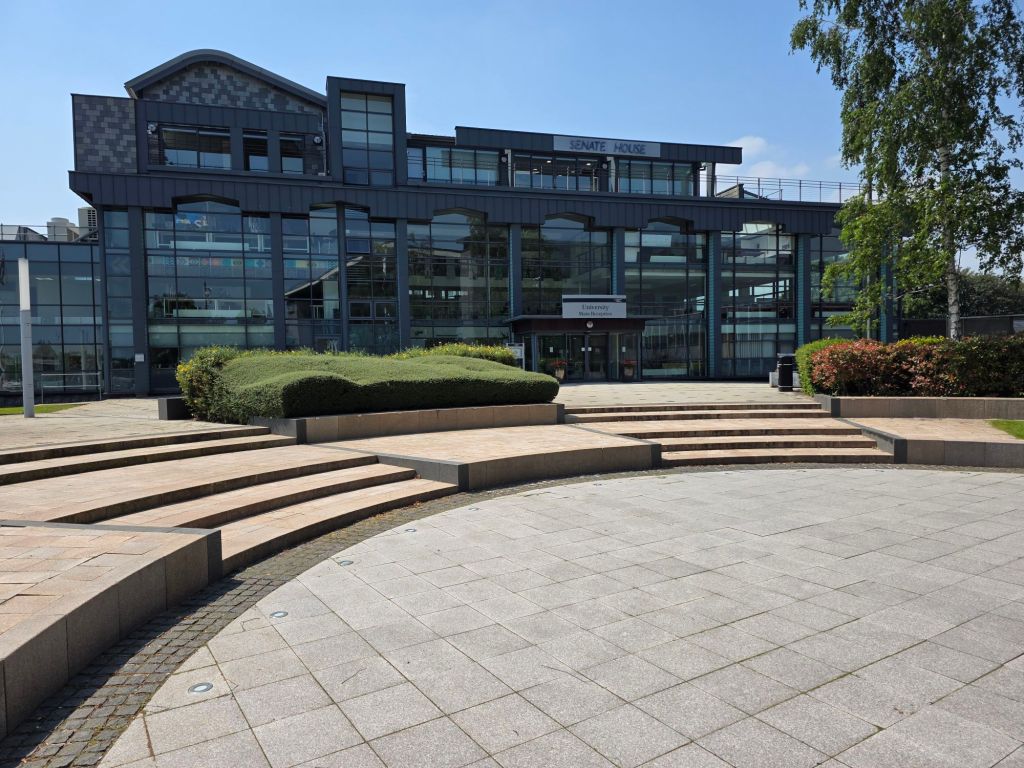
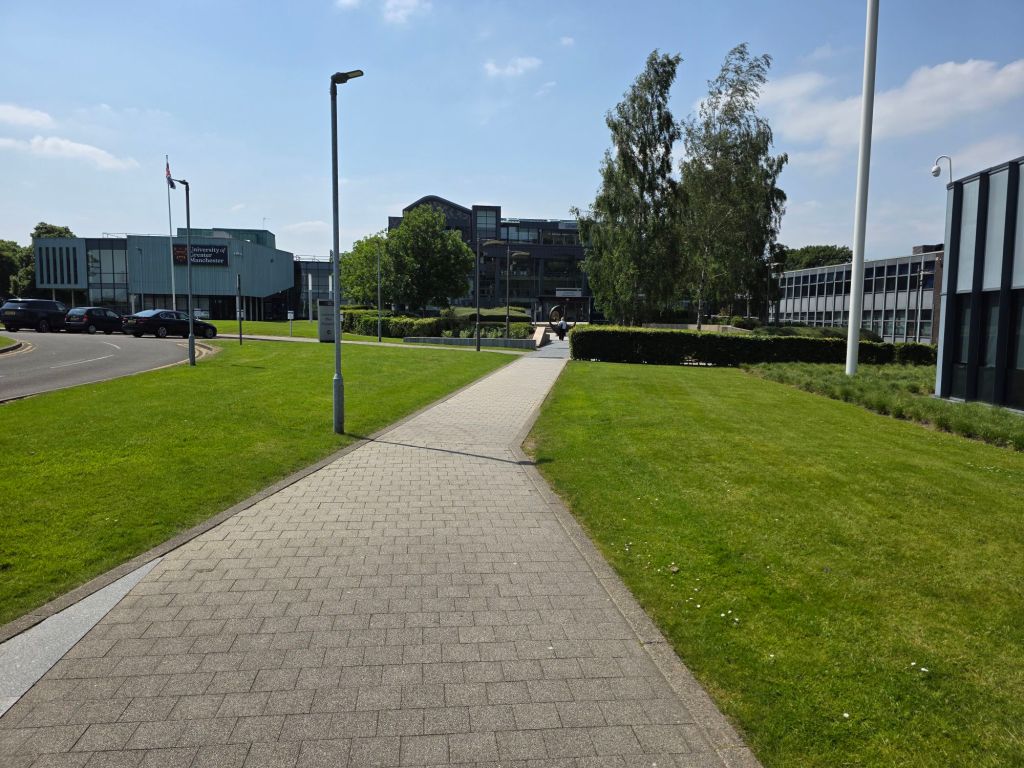
University of Greater Manchester (front) from Dec 20, 2024
2025: Facing internal investigations regarding governance and financial management, while focusing on expanding health and engineering sectors.
The University of Greater Manchester based in Bolton
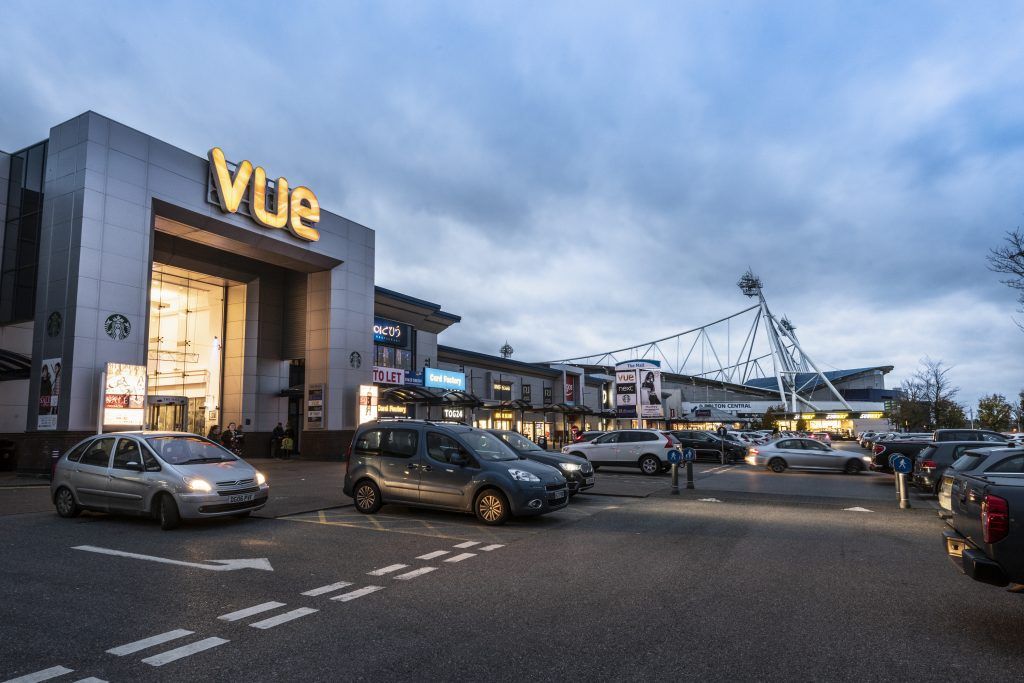
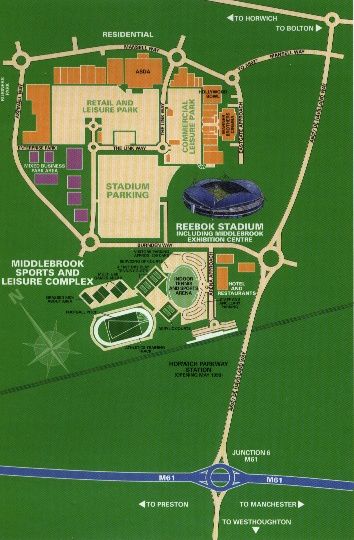
Middlebrook Retail Park, located in Horwich, Bolton, is one of the largest integrated retail and leisure destinations in the UK. Covering approximately 200 acres at Junction 6 of the M61, it serves as a mixed-use complex combining over 60 high-street stores with major leisure facilities, two hotels, and the home of Bolton Wanderers F.C..
Middlebrook Retail Park, Horwich, Bolton Detailed Timeline by Era
Historical Timeline of Middlebrook
Pre-Development Era (16th Century – 1994)
16th Century: The site was originally home to Sefton Fold Farm, a three-bay timber-framed farmhouse.
Late Medieval: Archaeological digs later revealed a moated site and pottery from this era.
Pre-1994: Much of the land consisted of open fields and the former Red Moss tip.
Inception & Construction Era (1994 – 1997)
1994: Plans for the ambitious scheme were first announced, including a 25,000-seater stadium and 6,000-seater indoor arena.
1995: Outline planning applications for the football stadium were approved in July.
1996:Orbit Developments (part of The Emerson Group) began physical construction. By Christmas, many key buildings were already constructed.
1997: The Reebok Stadium (now Toughsheet Community Stadium) was inaugurated on 1 September with a match between Bolton and Everton.
1997 (Summer): Initial food outlets like McDonald’s, Pizza Hut, and KFC opened for business.
Establishment & Expansion Era (1998 – 2005)
1998: The first retail businesses officially began operating.
2001:Bolton Arena (USN Bolton Arena) opened in the spring after winning a development grant.
2001: Annual visitor numbers reached 12.5 million for the first time.
2002: The site hosted events for the Manchester Commonwealth Games at the sports arena.
2005:Marks & Spencer (M&S) secured planning permission to occupy a vacant store, marking a significant shift toward major non-food retail.
Modern Maturity Era (2006 – Present)
2006: A time capsule was buried by schoolchildren to celebrate a decade of development.
2006 (October): Several high-profile stores opened, including HMV and Clarks.
2020s: The park continues to house over 62 high-street brands including ASDA Supercentre, Vue Cinema, and Hollywood Bowl.
Present: It remains a top-ranked UK retail park, attracting over 910,000 shoppers per month.
Middlebrook Retail Park, Horwich, Bolton Detailed Timeline by Era
Middlebrook Retail Park, Horwich, Bolton Detailed Timeline by Era