Care home resident’s personal money runs out in the UK

When a care home resident’s personal money runs out in the UK, the local authority (council) has a legal duty of care to step in and help fund the placement. No one is abruptly evicted or left without care, but the funding structure changes completely.

1. The Capital Thresholds Trigger State Support

When a resident’s total savings and assets dwindle near or below the national thresholds, they qualify for council-assisted funding. The 2026 capital thresholds across the UK are:

Care home resident’s personal money runs out in the UK
2026 Capital thresholds across the UK

2. Action Steps as Money Depletes

Families must contact the local authority’s adult social services department when savings drop to around £40,000. This avoids a funding gap because the bureaucratic transition can take several months. The council will initiate two steps:

  • Care Needs Assessment: A social worker evaluates the resident to officially confirm that they still require a residential or nursing dementia care bed.
  • Financial Assessment (Means Test): The council reviews the resident’s bank statements, property status, and pensions to calculate their exact state funding contribution.

3. Can the Resident Stay in the Same Care Home?

Whether the resident can remain in their current dementia home depends on fee alignment:

  • If the home accepts local authority rates: The resident stays in their room seamlessly. The council pays the home directly and invoices the resident for their pension contribution portion.
  • If the home is more expensive than the council budget: The family must find a third party (a relative, friend, or charity) to pay a “top-up fee” to cover the difference.
  • If no top-up can be paid: The council may look to relocate the resident to a more affordable care home that operates within the standard local authority budget.

4. Legal Protections Against Moving Vulnerable Residents

For residents with advanced dementia, continuity of care is a heavily weighted legal factor. Under guidelines like the English Care Act 2014, councils must consider if a move will cause severe psychological or physical distress. If a social worker determines that relocating the resident is too dangerous or disruptive to their wellbeing, the council may be forced to fund the higher fee rate at the current home without demanding a top-up.

5. Next of Kin Liability

A major worry for families is whether they automatically inherit the care bill. Next of kin are never legally responsible for a relative’s standard care home fees. You only owe money if you choose to sign a voluntary third-party top-up contract.

Additionally, if a spouse or a relative aged over 60 still lives in the resident’s former home, that property is legally protected under property disregard rules and cannot be forcefully sold by the council.

6. Alternative Healthcare Funding

If your loved one’s dementia has progressed significantly and they require complex medical monitoring rather than just social supervision, ask for an assessment for NHS Continuing Healthcare (CHC). If they qualify for a “primary health need”, the NHS covers 100% of the care home fees, completely bypassing the council’s means test and capital limits.


Care home resident’s personal money runs out in the UK

Agile SCRUM + KANBAN = SCRUMBAN

Agile SCRUM + KANBAN = SCRUMBAN
SCRUM + KANBAN = SCRUMBAN

UK, Paying back your university student loan after course completion

In the UK, you do not need to take manual steps to start paying back your university student loan, as repayments are deducted automatically through the tax system once you graduate and earn above a specific salary threshold.

Here is a summary of the exact steps, thresholds, and your repayment options.

4 Simple Steps to Post-Course Repayments

  1. Wait for eligibility: You become eligible to start repaying in the first April after you finish or leave your course.
  2. Deduction via employment: If you are traditionally employed, HM Revenue and Customs (HMRC) will automatically inform your employer to deduct 9% of everything you earn above your plan’s threshold from your payslip.
  3. Deduction via self-employment: If you are self-employed, you must calculate and pay your student loan repayment manually through your annual Self Assessment tax return.
  4. Notify when leaving the UK: If you move abroad for more than three months, you must update your employment details directly with the Student Loans Company (SLC) to set up direct repayments, otherwise you will incur financial arrears.

Repayment Plan Thresholds Summary (Undergraduate)

You only pay 9% of your income that goes over the threshold. If your income drops below this number, your repayments stop automatically.

  • Plan 1 (Started course before Sept 2012, or Northern Ireland): Repayments trigger when earning over £26,900 a year (£2,241 a month).
  • Plan 2 (Started course between Sept 2012 and July 2023 in England, or all Wales): Repayments trigger when earning over £27,295 a year (£2,274 a month).
  • Plan 4 (Scotland): Repayments trigger when earning over £31,395 a year (£2,616 a month).
  • Plan 5 (Started course from Sept 2023 onwards in England): Repayments trigger when earning over £25,000 a year (£2,083 a month).
  • Postgraduate Loan (England & Wales): Repayments are 6% on earnings over £21,000 a year (£1,750 a month).

Extra Payment Options

  • Voluntary Overpayments: You can log into your online SLC account to make manual, extra payments via card or bank transfer at any time to clear the balance faster.
  • Note: Financial experts like MoneySavingExpert generally advise against voluntary extra payments unless you are a very high earner, because any remaining loan balance is completely written off after 30 to 40 years anyway (depending on your plan).

UK, Paying back your university student loan after course completion

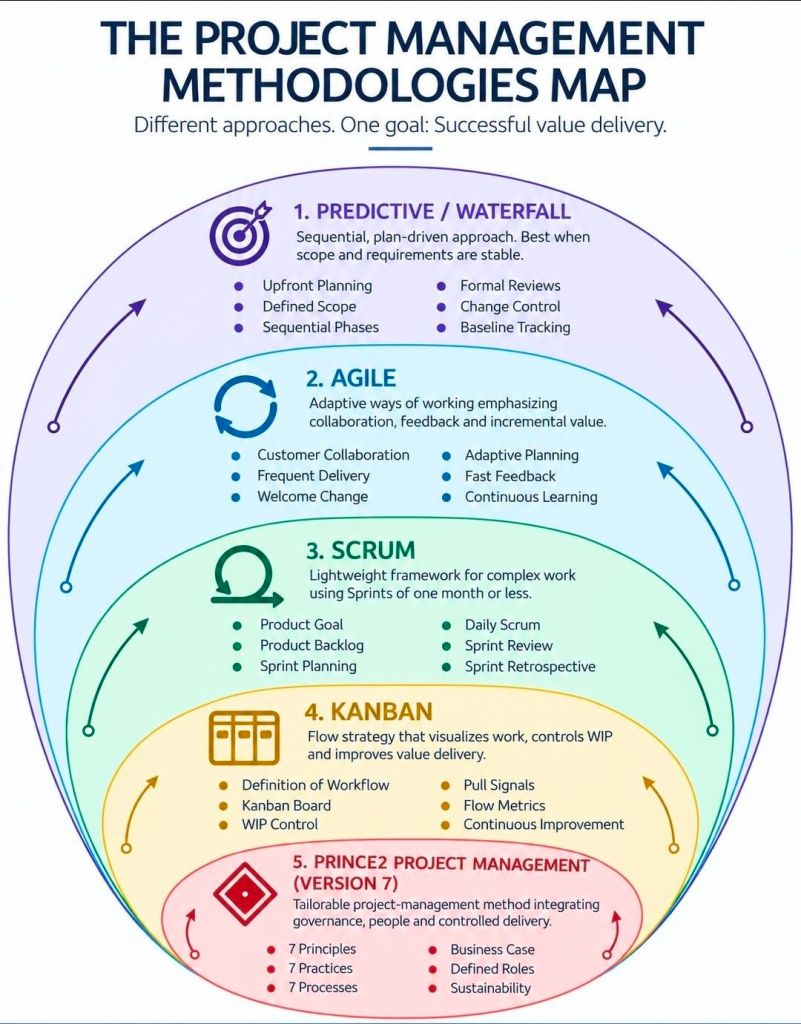
Types of Project Management

Types of Project Management
Project Management Types

Runtime Fabric in MuleSoft

1. Runtime Fabric in MuleSoft
2. Runtime Fabric in MuleSoft
Run-time Fabric in MuleSoft

Sherilyn Fenn and DKL

Sherilyn Fenn and DKL
Sherilyn Fenn & DKL

The Project Management Periodic Table

The Periodic Table of Project Management
Project Management Periodic Table

Running UAT as a Business Analyst BA

1. Running UAT as a Business Analyst
2. Running UAT as a Business Analyst
Running UAT as a BA Business Analyst