Claude AI Overview and Detailed Historic Timeline by Era and Year

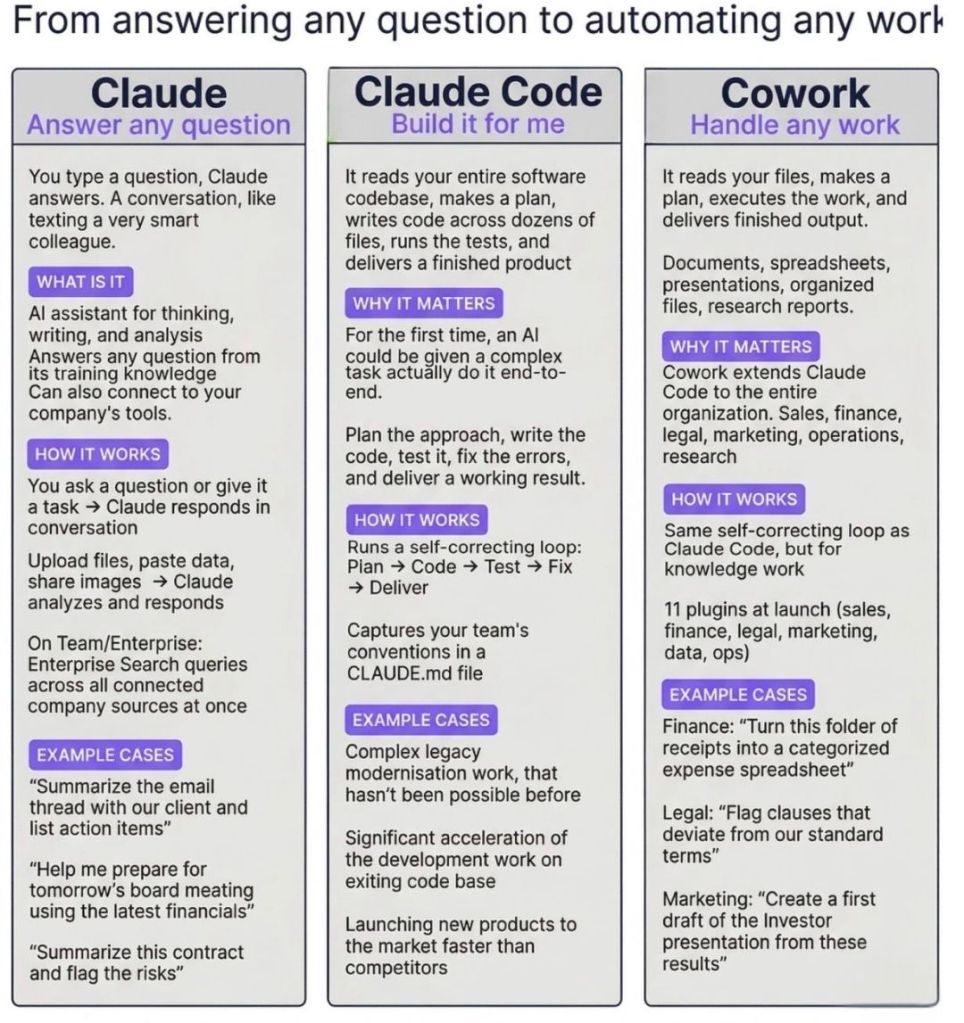
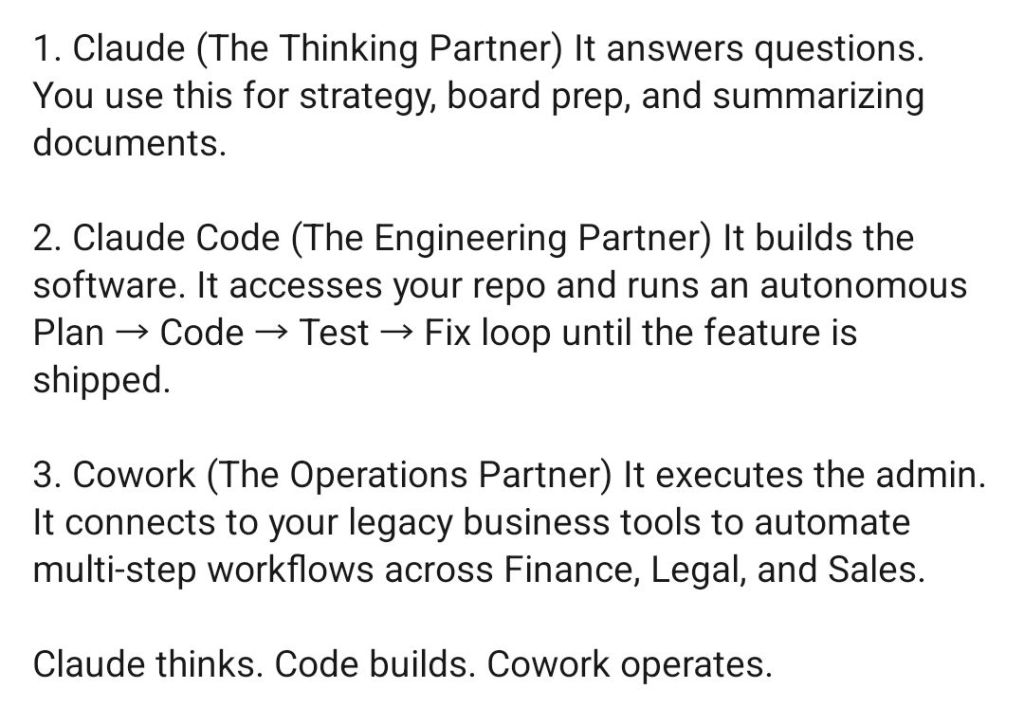
Claude is a family of large language models (LLMs) developed by Anthropic, a company founded in 2021 by former OpenAI executives Daniela and Dario Amodei with a core focus on AI safety and “Constitutional AI”. Known for its high-quality writing, advanced reasoning, massive context windows, and “Artifacts” interface, Claude has rapidly evolved from a safe conversational chatbot into an agentic tool capable of coding, computer use, and complex data analysis. 

Overview of Claude AI

  • Constitutional AI (CAI): Anthropic trains Claude using a set of principles (“constitution”) rather than relying only on human feedback. This makes Claude generally more cautious, more likely to refuse harmful requests, and transparent in its reasoning.
  • Model Family (Haiku, Sonnet, Opus): Claude models are released in three tiers:
    • Haiku: Fastest and most cost-effective.
    • Sonnet: Balanced for speed and intelligence (general-purpose).
    • Opus: Most intelligent, designed for complex tasks.
  • Key Features:
    • Context Window: Early adoption of long-context, moving from 100k to 200k tokens (roughly 500 pages of text).
    • Artifacts: A dedicated UI window that displays rendered code, websites, and documents in real-time.
    • Computer Use: A specialized capability allowing Claude 3.5 Sonnet to control a computer’s desktop environment—moving the cursor, clicking, and typing.
    • Claude Code: Agentic coding tool introduced in 2025/2026 for automated software engineering. 

Historic Timeline by Era and Year

Era 1: Foundation and Early Models (2021–2022)

  • 2021: Anthropic is founded by Dario and Daniela Amodei, focusing on AI safety and “Constitutional AI”.
  • Late 2022: Initial versions of Claude are released to select research partners for safety testing. 

Era 2: Public Launch and Rapid Scaling (2023) 

  • March 2023: Claude 1 and Claude Instant are released for testing.
  • July 2023: Claude 2 is released to the general public, featuring improvements in reasoning and coding.
  • November 2023: Claude 2.1 is launched, doubling the context window to 200,000 tokens.

Era 3: The Claude 3 Family and Agentic AI (2024) 

  • March 2024: Claude 3 Family (Haiku, Sonnet, Opus) is launched, showcasing near-human intelligence, advanced vision capabilities, and high-speed processing.
  • June 2024: Claude 3.5 Sonnet is released, outperforming the larger 3 Opus model and introducing the Artifacts feature for UI rendering.
  • October 2024: Claude 3.5 Haiku and an upgraded 3.5 Sonnet are released. Anthropic launches the “computer use” public beta, allowing the AI to interact with software and browsers. 

Era 4: Claude 4 and Agentic Workflows (2025–2026) 

  • February 2025: Claude Code is introduced as an agentic tool for developers.
  • May 2025: Claude 4 Family (Opus 4 & Sonnet 4) is launched, featuring improved multi-modal reasoning and deep context processing.
  • August 2025: Opus 4.1 is released with tighter safety controls for abusive conversations.
  • November 2025: Opus 4.5 is released, focusing on enhanced coding and workplace tasks, alongside “Infinite Chats”.
  • February 2026: Claude Opus 4.6 and Sonnet 4.6 are released, adding native “Agent Team” collaboration and 1M-token context.
  • April 2026: Claude Mythos Preview is announced, designed for high-level cybersecurity vulnerability detection. 

Key Differentiators

As of early 2026, Claude is considered a market leader in agentic AI development, particularly through its “Computer Use” feature, which allows it to act as an Autonomous agent rather than just a chatbot. While competitors like OpenAI focus on multimodal LLMs, Anthropic’s Claude continues to differentiate by prioritizing safety, long-context understanding, and specialized agentic coding tools. 

Claude AI Overview and Detailed Historic Timeline by Era and Year

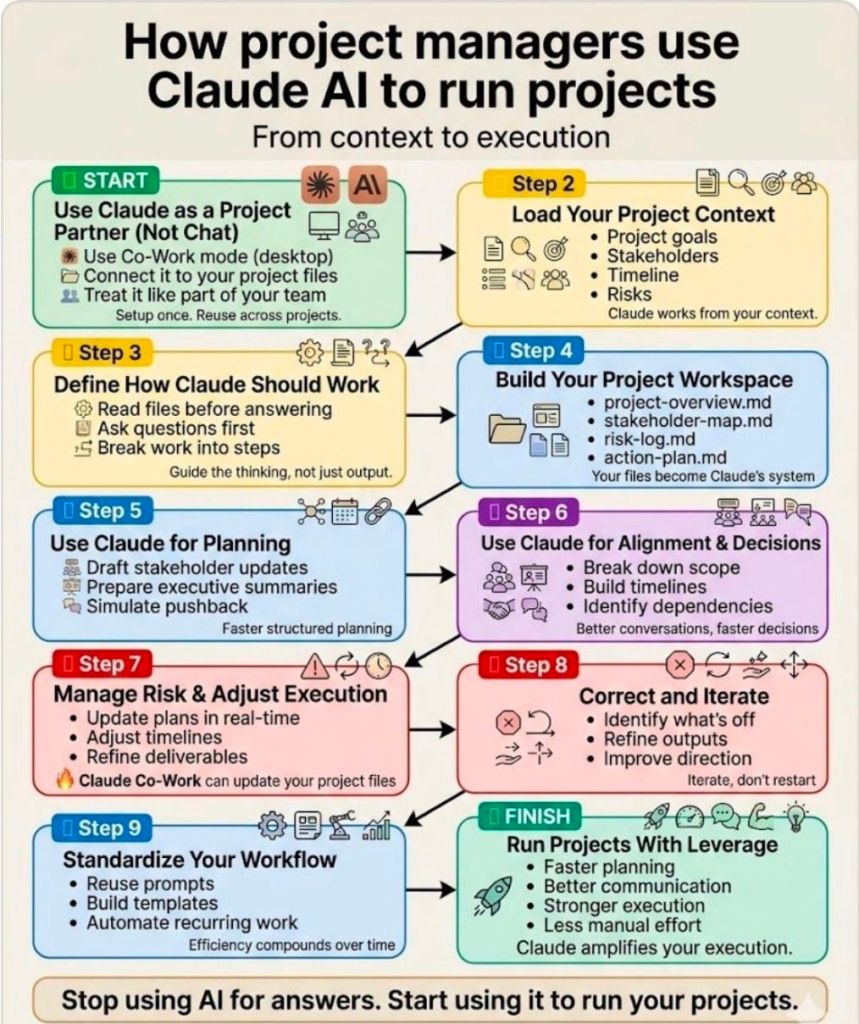
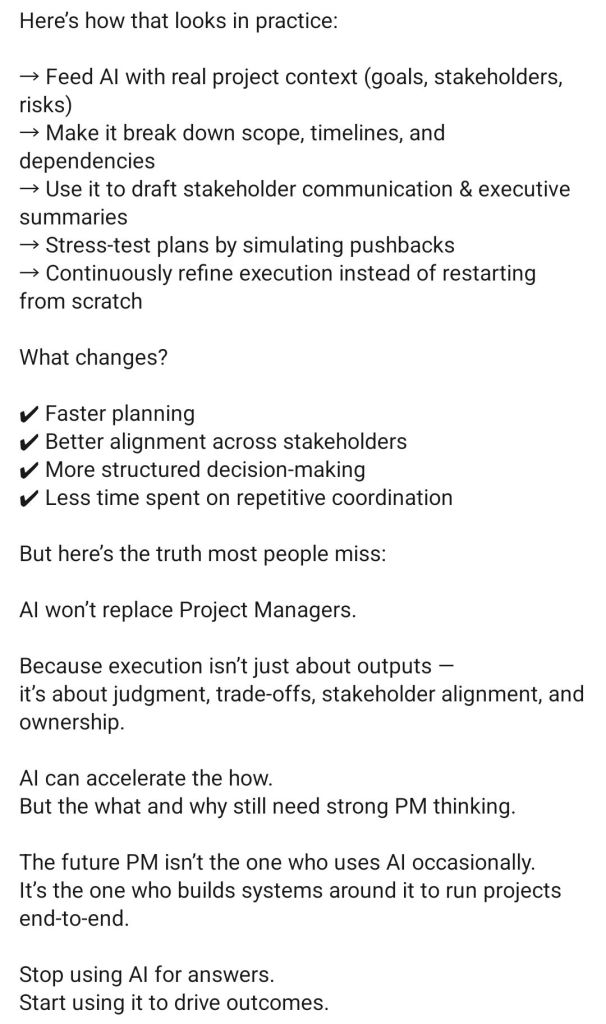
How Project Managers use Claude AI to run projects
How PMs use Claude AI to run projects

Claude Artificial Intelligence AI technology insight

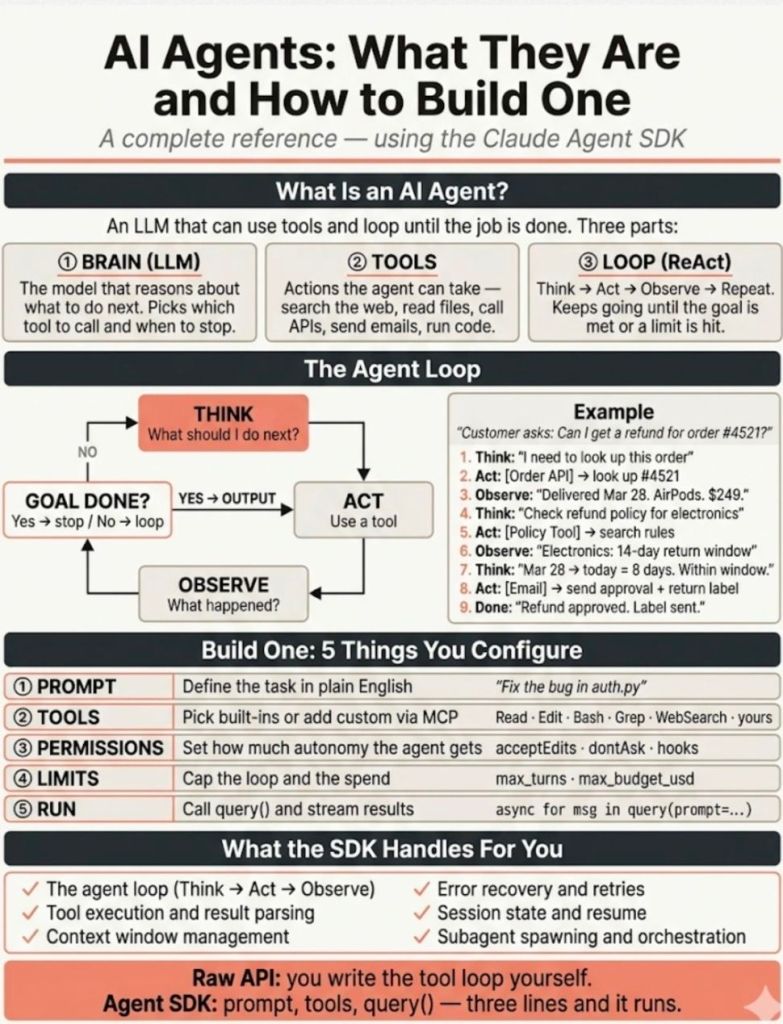
Claude is a family of large language models (LLMs) developed by Anthropic, an AI safety and research company. As of early 2026, the technology has evolved from a conversational chatbot into a suite of “agentic” tools capable of performing complex software engineering, cybersecurity, and workplace automation tasks. 

Core Technology & Architecture

  • Constitutional AI: Claude’s unique training method, which uses a set of principles (a “constitution”) to guide the model’s self-critique and alignment. This is intended to make Claude more ethical, harmless, and less prone to bias.
  • Model Tiers: Claude is typically released in three sizes—Haiku (fastest/cheapest), Sonnet (balanced), and Opus (most powerful for deep reasoning).
  • Context Window: Recent models like Claude 4.6 and Sonnet 4.5 support massive context windows of up to 1 million tokens, allowing them to process entire codebases or long legal documents in a single prompt.
  • Extended Thinking: A feature that allows the model to “think” longer on complex problems before responding, using advanced step-by-step reasoning. 

Key Features & Innovations

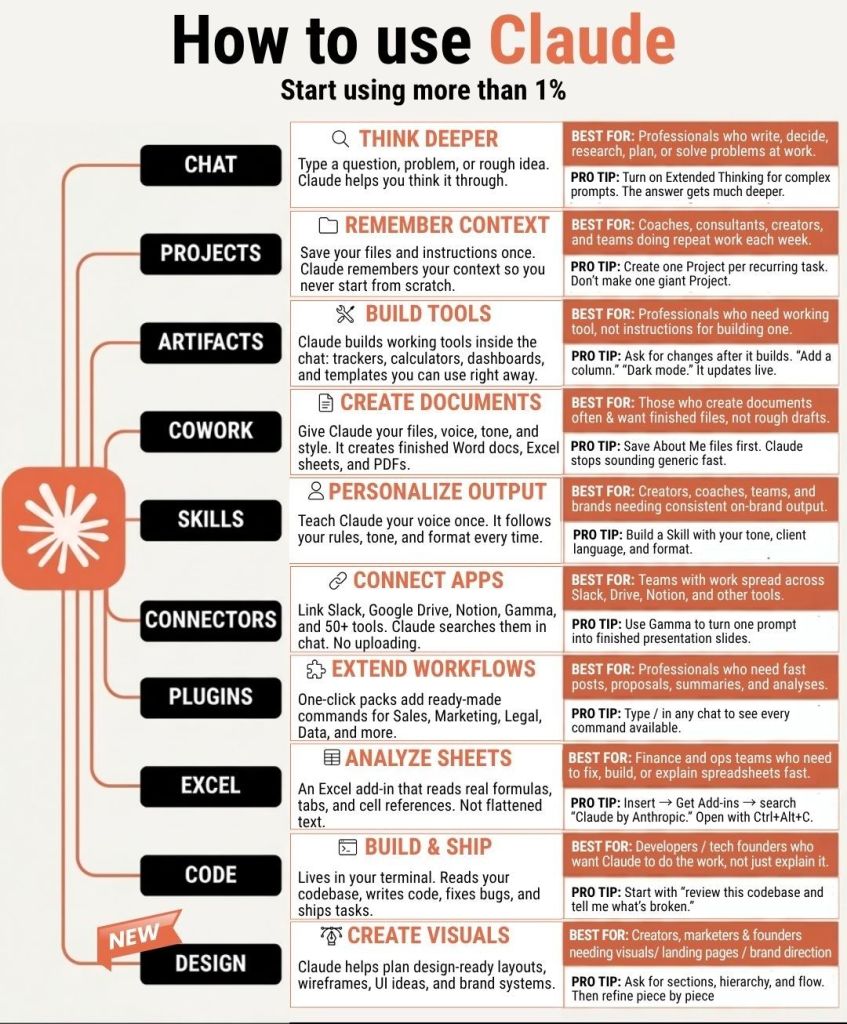
  • Artifacts: A dedicated UI feature that lets users view and interact with generated code, websites, and diagrams in real-time.
  • Claude Code: A command-line interface (CLI) that functions as an agentic software engineer, capable of searching your system, editing files, running tests, and fixing bugs autonomously.
  • Claude Code Security: A specialized tool released in early 2026 for scanning codebases to identify and fix high-severity vulnerabilities.
  • Computer Use: A beta capability allowing Claude to interpret screen content and simulate mouse and keyboard actions to perform tasks across multiple apps.
  • Integrations: Claude now connects directly to enterprise tools like Microsoft Word, Excel, PowerPoint, and Zoom to automate report generation and meeting follow-ups. 

Impact & Performance

  • Coding Excellence: Claude is widely regarded as one of the best models for programming, often used to build entire applications through “vibe coding” (conversational development).
  • Productivity Gains: Internal and external studies suggest Claude can reduce task completion time by up to 80% for complex tasks like legal research and software engineering.
  • Cybersecurity Breakthroughs: The Claude Mythos model (currently in limited release) has reportedly discovered thousands of zero-day vulnerabilities in major operating systems like Linux and OpenBSD.

Claude Code Project structure :

Claude Code Project structure

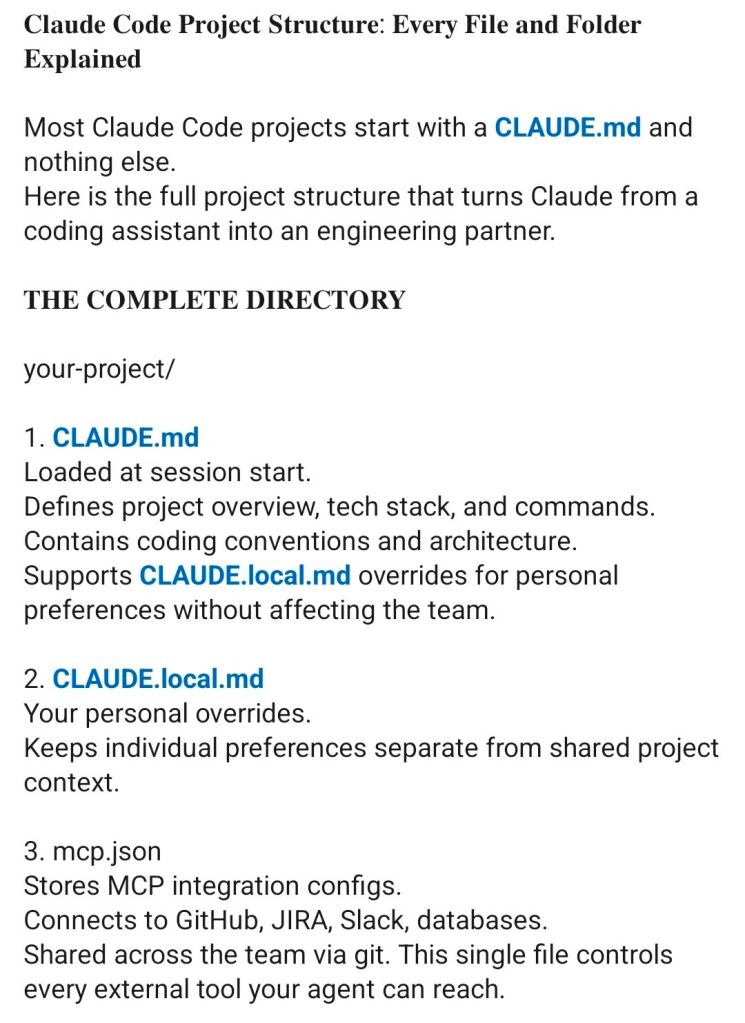
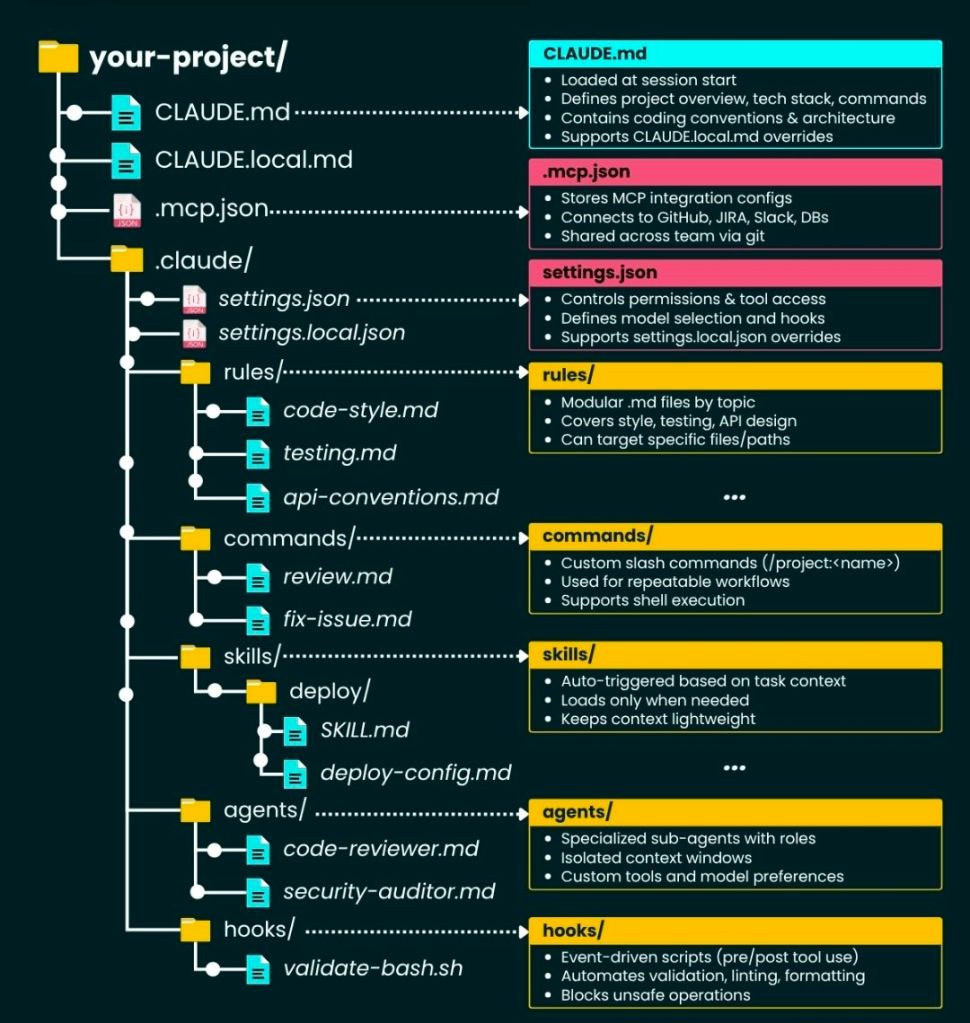
The .claude folder is a hidden directory used by Claude Code (an AI-powered terminal assistant) to store local state, configuration, and memory, allowing it to remember project details across sessions. It functions as a local workspace for Claude to manage instructions, custom commands, permission rules, and auto-memory. 

Key Components of the .claude Folder:

  • CLAUDE.md (Crucial): A markdown file that acts as the primary instruction manual, containing rules, project context, and coding standards.
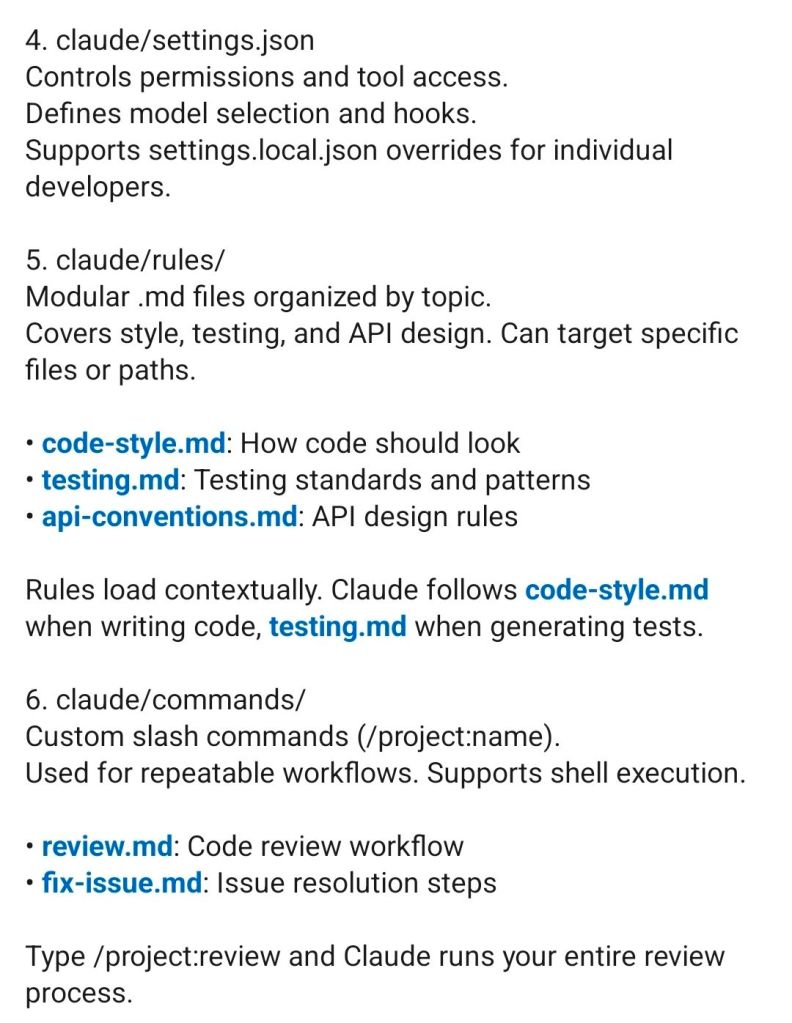
  • settings.json (Configuration): Controls permissions, defining which tools Claude can use and what files it can read.
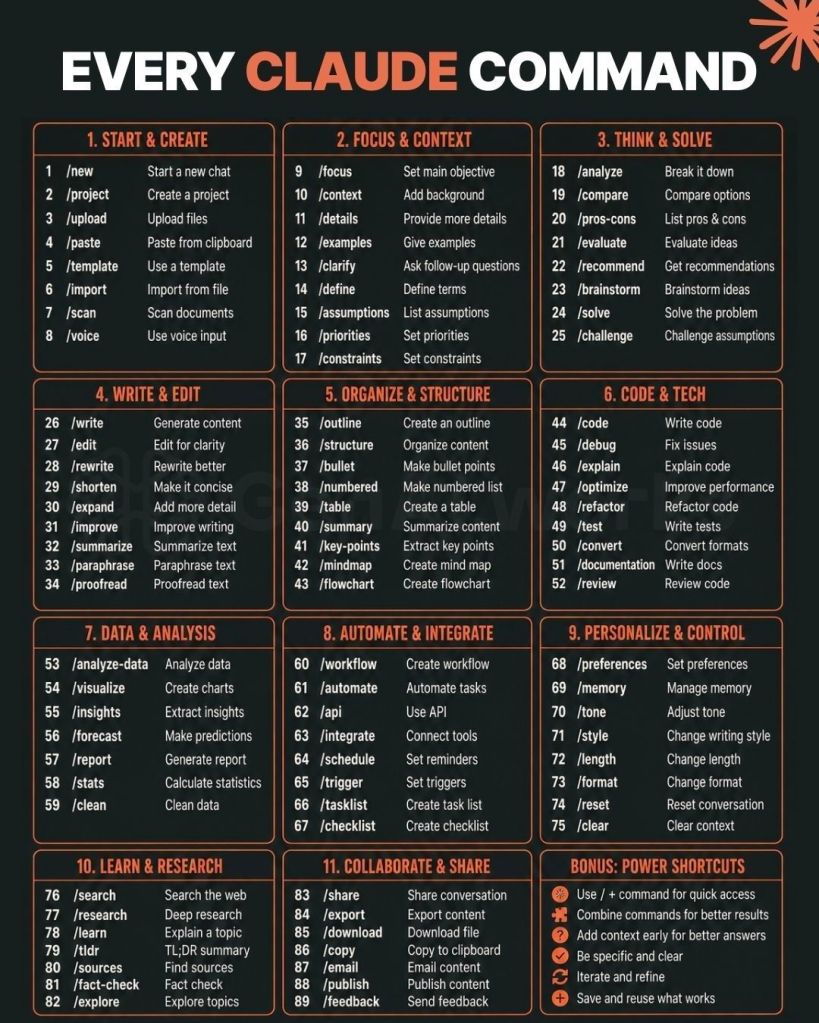
  • commands/ (Custom Tools): A folder for storing markdown files that create custom shell commands (e.g., /project:review).
  • rules/ (Specialized Guidance): Contains specific coding conventions or guidelines that supplement CLAUDE.md.
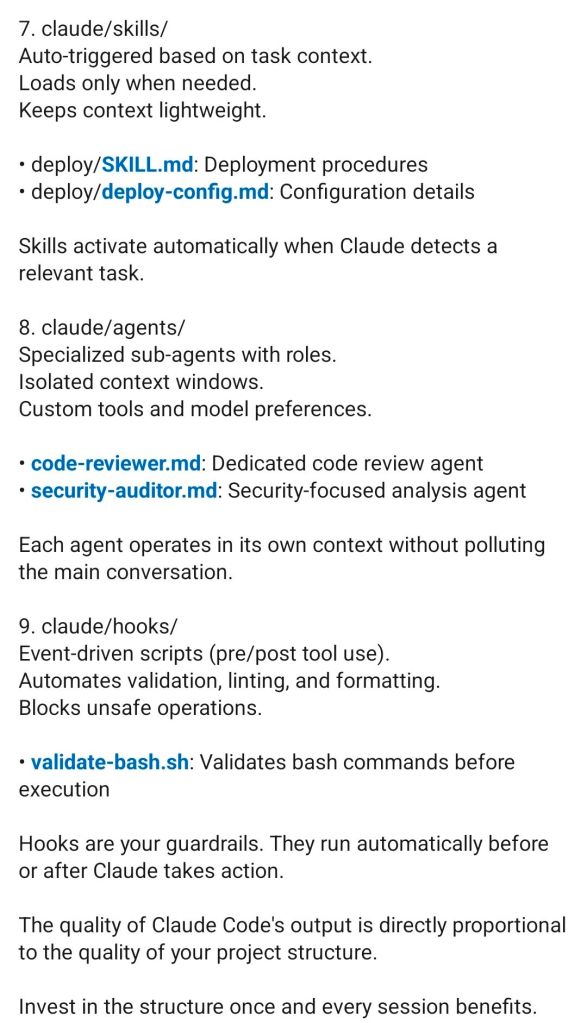
  • skills/ (Actionable Workflows): Used to store multi-step workflows that Claude can execute, such as code analysis or formatting.
  • agents/ (Subagents): Defines specialized AI subagents with specific system prompts and tool access.
  • memory/ (Persistent State): Stores auto-generated notes and context about the project’s codebase, architecture, and previous tasks. 

Two Types of .claude Directories:

  1. Project-Level (.claude/): Created at the root of a project, shared with the team via git.
  2. Global-Level (~/.claude/): Located in the user’s home directory, storing personal configurations and memory that apply across all projects. 

Important Notes:

  • Safety: It is safe to delete, but doing so resets the model’s memory of the project.
  • Gitignore: It is highly recommended to add the .claude folder to .gitignore to avoid committing local environment state.
  • Structure: It is recommended to keep CLAUDE.md under 200–300 lines to maintain high adherence.

Tennis overview and detailed historic timeline by era and year

Tennis is a global racquet sport played individually (singles) or in pairs (doubles) on a rectangular court with a net, with roots tracing back to 12th-century France and its modern form emerging in 19th-century England. 

Overview of Tennis

  • Core Objective: Hit a ball with a racquet over a net into the opponent’s court, ensuring they cannot return it validly.
  • The “Grand Slams”: The four most prestigious annual tournaments are Wimbledon (1877), US Open (1881), French Open (1891), and Australian Open (1905).
  • Evolution: Began as “Real Tennis” (indoor/aristocratic), evolved into “Lawn Tennis” in the 1870s, and transitioned from “Amateur” to “Open” (professional) in 1968.
  • Surfaces: Grass (Wimbledon), Clay (French Open), and Hard courts (US/Australian Open). 

Detailed Historic Timeline by Era

1. Origins & “Real Tennis” (Before 1870)

  • 12th Century: Jeu de paume (“game of the palm”) originates in French monasteries, played with bare hands.
  • 16th Century: Strung rackets appear; “Real Tennis” becomes popular among European royalty.
  • 1858-1865: Major Harry Gem and Augurio Perera develop an outdoor version, combining rackets and Pelota in England. 

2. The Birth of Lawn Tennis (1870–1913)

  • 1873: Major Walter Clopton Wingfield patents Sphairistiké (later “lawn tennis”) and publishes rules.
  • 1877: First Wimbledon Championships held at the All England Croquet Club; Spencer Gore wins.
  • 1881: First U.S. National Lawn Tennis Association championship (US Open) held.
  • 1884: Women’s singles introduced at Wimbledon; Maud Watson wins.
  • 1900: The Davis Cup is established for international men’s team competition. 

3. The Amateur Era & Rise of “Shamateurism” (1914–1967) 

  • 1913: International Lawn Tennis Federation (ILTF) founded to standardize global rules.
  • 1920s: Suzanne Lenglen (France) and Bill Tilden (USA) dominate, increasing global popularity.
  • 1937: First tennis match broadcast on radio.
  • 1938: Don Budge wins the first true “Calendar Grand Slam”.
  • 1940-1945: World War II halts major tennis tournaments.
  • 1957: First metal tennis racket invented (Wilson T2000). 

4. The Open Era & Modernization (1968–1989) 

  • 1968: The “Open Era” begins: Grand Slams allow professionals to compete with amateurs.
  • 1970: Tiebreak introduced to replace never-ending final sets (first at US Open).
  • 1972: ATP (Association of Tennis Professionals) formed.
  • 1973: WTA (Women’s Tennis Association) founded; Billie Jean King wins the “Battle of the Sexes”.
  • 1975: Players allowed to sit on court during change of ends.
  • 1980s: Rackets transition from wood to graphite, increasing speed and power.
  • 1988: Tennis returns to the Olympics (since 1924). 

5. The Power and Data Era (1990–Present)

  • 1990s: Dominated by Pete Sampras and Steffi Graf; high-speed serve-and-volley tennis flourishes.
  • 2000s: Rise of the Federer-Nadal-Djokovic era; power baseline tennis becomes dominant.
  • 2005: Hawk-Eye technology for electronic line calling is introduced.
  • 2007: WTA and Grand Slams introduce equal prize money for women.
  • 2020s: Continued dominance of Novak Djokovic; introduction of technological tools, including on-court coaching and digital line calling. 

Equipment Evolution Timeline

  • 16th-19th Century: Wooden frames with natural gut strings.
  • 1957: First steel metal racket patented.
  • 1970s: First yellow tennis balls introduced (for better TV visibility).
  • Late 1970s-1980s: Graphite rackets become standard, replacing wood and metal.
  • 1990s-Present: Composite materials (kevlar, carbon fiber) and “widebody” frames.

Tennis overview and detailed historic timeline by era and year

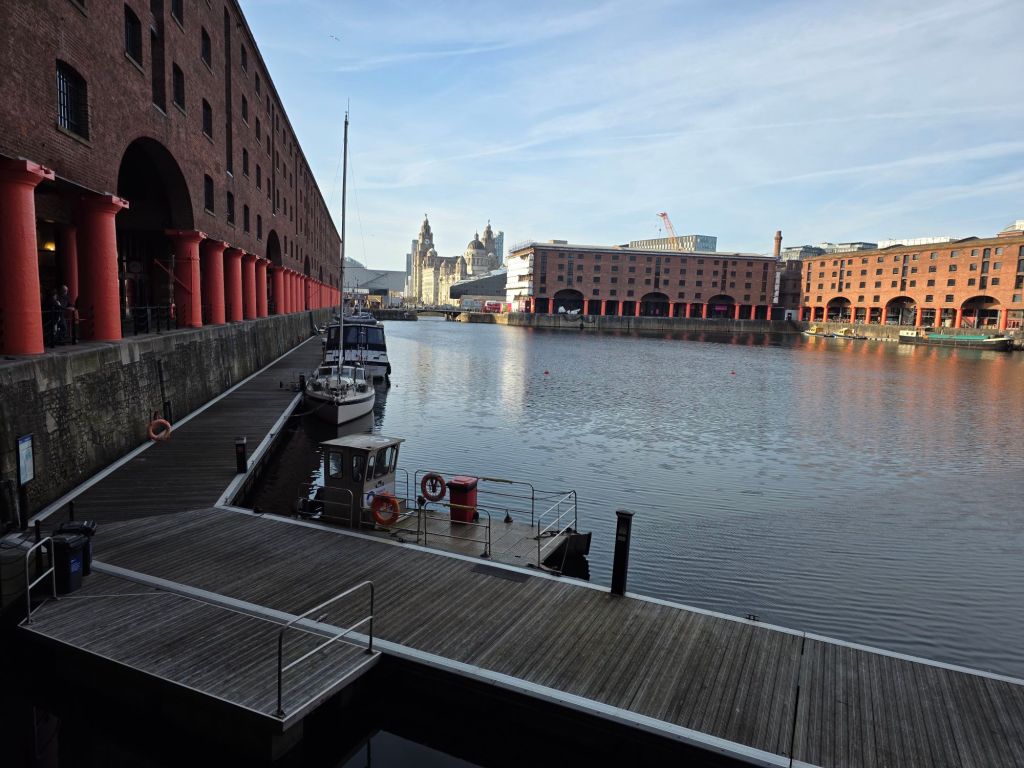
Liverpool Docks Overview and Historic Timeline by Era and Year

The Liverpool docks system represents one of the world’s most significant maritime developments, evolving from a small tidal inlet into a 7.5-mile interconnected network that handled 40% of global trade by the late 19th century. Starting with the world’s first enclosed commercial wet dock in 1715, Liverpool pioneered dock technology and fireproof warehouse construction, eventually becoming the “New York of Europe”. 

Timeline of Development by Era

1715–1815: The Rising Port & Global Trade 

This era saw Liverpool’s rapid ascent driven by trade with the Americas and the city’s heavy involvement in the Atlantic Slave Trade. 

  • 1715: The Old Dock opens as the world’s first commercial wet dock, allowing ships to unload regardless of the Mersey’s high tidal range.
  • 1753Salthouse Dock (originally South Dock) opens to service the nearby saltworks.
  • 1765: Three Canning Graving Docks are built for ship maintenance.
  • 1771George’s Dock opens (later the site of the Three Graces).
  • 1788King’s Dock opens.
  • 1796Queen’s Dock opens.
Liverpool Docks Overview and Historic Timeline by Era and Year
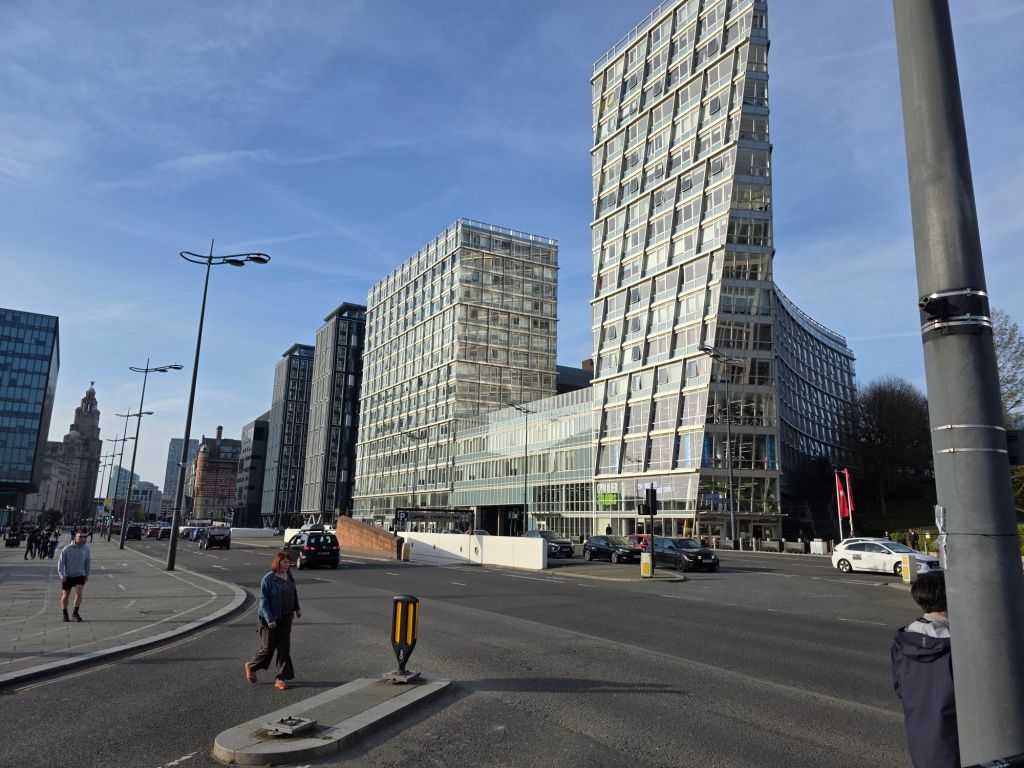
Images taken 8th April 2026. by website author (Mark Whitfield)

1815–1914: The “Western Gateway” & Technological Pioneer 

Liverpool became the second port of the British Empire, serving as the main hub for the Industrial Revolution and mass emigration. 

  • 1821Prince’s Dock opens.
  • 1826: The Old Dock is filled in as it becomes too shallow; the Custom House is later built on the site.
  • 1830Clarence Dock opens specifically for steamships.
  • 1832Brunswick Dock opens.
  • 1846: The Royal Albert Dock is officially opened by Prince Albert, featuring the world’s first fireproof, non-combustible warehouse system.
  • 1848StanleyCollingwoodNelson, and Bramley-Moore docks open under engineer Jesse Hartley.
  • 1852Huskisson Dock opens.
  • 1858Canada Dock opens to handle the massive timber trade.
  • 1879Langton Dock opens.
  • 1880Alexandra Dock opens.
  • 1893: The Liverpool Overhead Railway opens, the world’s first electric elevated railway, to transport workers along the 7-mile dock line.
  • 1913: The Gladstone Graving Dock opens, then one of the largest in the world. 

1914–1980s: Decline & Containerisation

Post-war economic shifts and the advent of large container ships made the central, narrow docks obsolete. 

  • 1927Gladstone Dock complex is completed.
  • 1941: Heavy bombing during the Liverpool Blitz damages the Custom House and many dock structures.
  • 1971: The Albert Dock and most south docks close to commercial traffic.
  • 1972Seaforth Dock opens as a modern deep-water container and grain terminal at the mouth of the Mersey. 

1981–Present: Regeneration & Modern Port

The derelict docks were transformed into cultural and residential hubs while the working port moved north. 

  • 1981: The Merseyside Development Corporation is formed to regenerate the abandoned waterfront.
  • 1984: The first phase of the redeveloped Royal Albert Dock opens, coinciding with the Tall Ships Race.
  • 1988Tate Liverpool opens in the Albert Dock warehouses.
  • 2004: Liverpool’s waterfront is designated a UNESCO World Heritage Site (status revoked in 2021).
  • 2009: The Liverpool ONE shopping complex is completed on the site of the Old Dock, with parts of the original dock walls preserved for tours.
  • 2016Liverpool2, a new deep-water container terminal, opens at Seaforth to handle the world’s largest ships. 

For further reading on the structural and strategic history, you can find Liverpool Docks: A Short History by David Paul at Hive.co.uk or used copies at AbeBooks.co.uk. 

Liverpool Docks Overview and Historic Timeline by Era and Year

Golf Overview and Historical Timeline by Era and Year

Modern golf originated in 15th-century Scotland, where it was played on coastal linksland with wooden clubs and leather balls. While earlier stick-and-ball games like the Roman paganica and Dutch colf likely influenced its development, Scotland is credited with formalising the game into the sport known today. 

Comprehensive Overview of Golf Eras

  • Ancient Origins (Pre-1400s): Various cultures played stick-and-ball games, including the Roman paganica (1st century) and the Chinese chuiwan (960–1279 AD).
  • Early Scottish Era (1400–1743): Golf took shape in Scotland. It was famously banned by King James II in 1457 to prioritise archery practice. The ban was later lifted by King James IV in 1502, who became an avid player himself.
  • The Enlightenment & Formalisation (1744–1850): The first official golf clubs were formed, and the first “13 Rules of Golf” were written by the Honourable Company of Edinburgh Golfers in 1744.
  • The Victorian Boom & Expansion (1851–1900): The Industrial Revolution and the birth of railways allowed golf to spread globally. The first Open Championship was held in 1860, and the United States Golf Association (USGA) was founded in 1894.
  • The Modern Professional Era (1901–Present): Professional organisations like the PGA of America (founded 1916) and the PGA Tour (spun off in 1968) formalised the competitive circuit. The late 20th century saw the rise of global icons like Jack Nicklaus and Tiger Woods. 

Detailed Historical Timeline

Origins & Royal Influence

  • 1457: King James II of Scotland bans golf (“ye golf”) via a parliamentary decree because it distracted soldiers from archery.
  • 1502: King James IV lifts the ban after signing the Treaty of Perpetual Peace with England; he commissions the first custom set of clubs.
  • 1552: First recorded evidence of golf played at St Andrews.
  • 1567: Mary, Queen of Scots, is recorded playing golf; she is credited with coining the term “caddy” (from the French cadets).
  • 1618: The “feathery” ball (leather stuffed with boiled goose feathers) is invented, replacing primitive wooden balls.
  • 1659: First reference to golf in America—a ban on playing in the streets of Albany, New York. 

Era of Clubs & Rules

  • 1744: The Gentlemen Golfers of Leith (later the Honourable Company of Edinburgh Golfers) form the first official club and establish the first 13 rules.
  • 1754: The Society of St Andrews Golfers is founded; it later becomes the Royal and Ancient Golf Club (R&A).
  • 1764: St Andrews reduces its course from 22 holes to 18 holes, establishing the global standard.
  • 1766: Royal Blackheath is formed near London, the first golf club outside Scotland.
  • 1810: First recorded women’s golf competition is held at Musselburgh Links, Scotland.
  • 1848: Invention of the “guttie” ball (made from gutta-percha), which was cheaper and more durable than the feathery. 

The Championship Era

  • 1860: The inaugural Open Championship is held at Prestwick Golf ClubWillie Park Sr. is the first champion.
  • 1888: The St Andrew’s Golf Club of Yonkers is formed, marking the permanent arrival of golf in the U.S..
  • 1894: The USGA is founded to standardise rules in the United States.
  • 1895: The first U.S. Open and U.S. Amateur championships are held.
  • 1900: The Haskell ball (rubber core) is introduced, significantly increasing driving distances. 

Modern Professional Era

  • 1916: The Professional Golfers’ Association (PGA) of America is established.
  • 1927: The first Ryder Cup takes place in Worcester, Massachusetts.
  • 1930: Bobby Jones wins the first and only Original Grand Slam.
  • 1934: The first Masters Tournament (then the Augusta National Invitation Tournament) is held.
  • 1947: The U.S. Open becomes the first golf tournament televised live.
  • 1968: The PGA Tour officially forms as a separate entity from the PGA of America.
  • 1971: Astronaut Alan Shepard hits a golf ball on the Moon during the Apollo 14 mission.
  • 1996: Tiger Woods turns professional, sparking a global boom in the sport’s popularity.
  • 2023: The PGA Tour and Saudi-backed LIV Golf announce a framework agreement to merge and reunite professional golf. 

Golf Overview and Historical Timeline by Era and Year

Jackson Structured Programming (JSP) Timeline  by year

Jackson Structured Programming (JSP) was developed by British software consultant Michael A. Jackson to provide a rigorous, data-driven alternative to the intuitive “top-down” methods prevalent in the 1970s. Its evolution is characterized by a transition from micro-level program design to macro-level system architecture. 

The Early 1970s: Foundation and Invention

  • 1970: Michael Jackson founded his firm, Michael Jackson Systems Limited, to fully develop a new program design methodology.
  • 1974: The name Jackson Structured Programming (JSP) was coined by the company’s Swedish licensee.
  • 1975: Jackson published the seminal book Principles of Program Design, which formally documented the JSP method and is now considered a classic. 

The Late 1970s: Standardisation and Expansion

  • 1977: JSP reached global recognition, being taught in universities and used across Europe, the US, and Asia.
  • Government Adoption: The UK government adopted JSP as its standard program design method under the name SDM (System Development Methodology).
  • Industry Use: Large organisations like the World Health Organization (WHO) began using JSP as a standard for specifying programs. 

The 1980s: Evolution into System Development (JSD)

  • 1980: Jackson published JSP, A Practical Method of Program Design, further refining the technique for practical industry use.
  • 1982–1983: Jackson, along with John Cameron, introduced Jackson System Development (JSD). While JSP focused on individual programs, JSD expanded these principles to entire systems.
  • Integration: JSD was widely incorporated into the UK’s SSADM (Structured Systems Analysis and Design Method), specifically for entity and event modelling. 

The 1990s to Present: Legacy and Modern Relevance

  • 1990s: Jackson introduced his third major method, Problem Analysis (or the Problem Frames Approach), focusing on requirements and software specifications.
  • Legacy: While JSP has faded from mainstream daily practice due to the rise of Object-Oriented Programming, its core concepts—like deriving program structure from data structures—influenced modern practices like Event Storming in Domain-Driven Design (DDD). 

Jackson Structured Programming (JSP) Timeline  by year

History of Cloud Computing timeline by year

The history of cloud computing evolved from 1950s time-sharing concepts to today’s AI-integrated hyperscale ecosystems. While John McCarthy and J.C.R. Licklider envisioned computing as a global utility in the 1960s, the modern era truly began with the 1999 launch of Salesforce and the 2006 debut of Amazon Web Services (AWS)

Foundational Era (1950s – 1980s)

  • 1955John McCarthy introduces the theory of sharing computing time among a group of users.
  • 1961: McCarthy proposes that computing will one day be sold as a public utility, similar to water or electricity.
  • 1967: IBM develops the first operating system that allows multiple users to timeshare a single resource.
  • 1969: ARPANET (Advanced Research Projects Agency Network) is launched, serving as the precursor to the modern internet.
  • 1972: IBM releases the first version of its Virtual Machine (VM) operating system.
  • 1977: The cloud symbol is first used in original ARPANET diagrams to represent networks of computing equipment.

The Rise of the Modern Cloud (1990s – 2009)

  • 1996: The term “cloud computing” appears in an internal Compaq business plan.
  • 1997: Professor Ramnath Chellappa defines cloud computing as a “computing paradigm where the boundaries of computing will be determined by economic rationale”.
  • 1999: Salesforce.com launches, becoming the first company to offer business applications over the internet, pioneering SaaS.
  • 2002: Amazon Web Services (AWS) launches as a suite of web-accessible tools for developers.
  • 2006: AWS releases Elastic Compute Cloud (EC2) and Simple Storage Service (S3), marking the birth of modern IaaS.
  • 2007Netflix begins its transition to a video-streaming service using cloud infrastructure.
  • 2008Google releases Google App Engine, a platform for developing and hosting web applications in its data centres.
  • 2009Google Apps (now G Suite) launches, bringing browser-based enterprise applications to the mainstream. 

Expansion & Specialisation (2010 – 2019)

  • 2010: Microsoft officially releases Azure.
  • 2010: NASA and Rackspace initiate OpenStack, an open-source project for cloud software.
  • 2011: Apple launches iCloud, popularising consumer cloud storage.
  • 2012: Oracle enters the market with Oracle Cloud.
  • 2013: Docker introduces open-source container software, revolutionising application portability.
  • 2014: Google launches Kubernetes for container orchestration, and AWS introduces Lambda, pioneering serverless computing.
  • 2019: Microsoft Azure introduces Azure Arc, enabling services to run across various on-premises and cloud environments. 

The AI & Edge Era (2020 – Present)

  • 2020: The COVID-19 pandemic accelerates cloud adoption for remote work and education.
  • 2022-2024: Cloud providers integrate GenAI and Machine Learning into core services, such as Microsoft’s alliance with OpenAI.
  • 2025Quantum-as-a-Service gains traction, with IBM providing cloud access to systems with over 1,000 qubits.
  • 2026: Global spending on cloud services (SaaS, PaaS, and IaaS) is forecast to reach approximately $738 billion.

History of Cloud Computing timeline by year

Jaws 50 Year Anniversary… Fuggler great stuff…

Jaws 50 Year Anniversary… Fuggler great stuff…