The corporate history of The Software Partnership (TSP), its acquisition by Deluxe Data International, and its subsequent integrations form a foundational timeline in early UK fintech and mission-critical corporate remote banking.
The detailed historical timeline by era and year for the Runcorn-based software house is structured below:
🌅 Era 1: The Foundation and Rise of TSP (1985–1993)
This era covers the establishment of the independent software house, moving from early terminal solutions into specialized development on Tandem Computers fault-tolerant architectures (now HPE NonStop).
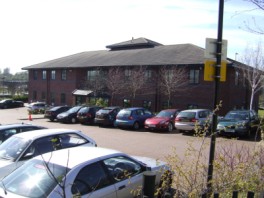
1985: The Software Partnership (TSP) is co-founded by Nigel Walsh. The office begins its lifespan at Wingate Drive in Timperley before eventually establishing its core headquarters at Norton House, Crowngate, and subsequently Wingate House in Runcorn, Cheshire.
1986–1989: Development focuses heavily on terminal-to-mainframe corporate banking solutions. Initial conceptual designs emerge for standard financial messaging and ledger interfaces.
1990: Development scales heavily around sp/ARCHITECT-BANK, a highly specialized desktop banking integration platform. It bridges corporate accountants securely to back-end ledger platforms.
1991–1993: Major client deployments expand across tier-1 UK and international institutions, including Barclays Bank (BBM II – Barclays Business Master II), Bank of Scotland, and TSB. Technical stacks rely on monolithic Transaction Application Language (TAL), COBOL85, and SCOBOL green screens running over Tandem Guardian OS pathways.
🤝 Era 2: Deluxe Data Acquisition and Global Remote Banking (1994–1999)
This period marks the transition to a global subsidiary model, driving early remote electronic corporate banking solutions.
1994: Deluxe Data International acquires The Software Partnership. The Runcorn office rebrands operations under Deluxe Data, coupling local development with global financial networks.
1994 (Technical): Architectures begin moving away from monolithic TAL foundations toward distributed client-server frameworks and pTAL migrations to support evolving RISC architectures (like Tandem Cyclone/R systems).
1995: Major expansion into European markets. The Runcorn office delivers software design, coding, and 24-hour mission-critical support for key global accounts like Rabobank (Netherlands) and interactive voice menu (IVR) gateways for Girofon (Denmark).
1996–1999: High-volume transaction frameworks mature. Client installations shift configurations toward early open-system compliance as Tandem introduces Open System Services (OSS) frameworks.
🚀 Era 3: The eFunds & Corporate Consolidation Era (2000–2006)
A period of intense corporate consolidation as internet banking begins replacing classical dedicated corporate dial-up desk terminals.
2000: Deluxe Data’s broader software arms are synthesized into eFunds Corporation. Runcorn’s legacy code assets scale to modern middleware, integrating NonStop SQL/MX databases.
2001–2006: Migration programs transition legacy platforms toward Java and web-adjacent internet banking infrastructures. The core banking engines originally written at TSP remain operational beneath corporate frameworks due to their structural fault tolerance.
🏢 Era 4: The FIS Integration and Legacy Modernisation Era (2007–Present)
The final stage of integration into global fintech conglomeration and cloud architectures.
2007: Fidelity National Information Services (FIS) acquires eFunds for $1.8 billion, fully absorbing the intellectual property, client contracts, and product lines evolved from the original sp/ARCHITECT platform.
2010s–2020s: The core application logic moves into virtualized, cloud-adjacent, and hybrid cloud infrastructures (such as Virtualized NonStop / vNS architectures), decoupling the legacy fintech capabilities from physical mainframe stacks.
The product lifecycle of the sp/ARCHITECT banking platform (specifically sp/ARCHITECT-BANK) is a landmark case study in early electronic home and corporate desktop banking.
Originally engineered by The Software Partnership (TSP) in Runcorn, Cheshire, the platform was custom-built to exploit the native fault-tolerant infrastructure of Tandem NonStop mainframes.
The detailed timeline of the sp/ARCHITECT platform is broken down below by operational era and year:
1. The Foundational & Conceptual Era (1985–1989)
This era focused on the structural architecture design of custom online financial engines, transitioning banking services from terminal-to-mainframe environments into standardized software modules.
1985: The Software Partnership (TSP) is co-founded by Nigel Walsh. The engineering team begins design blueprints for a standard, high-availability product architecture built explicitly to run within the Tandem Computers Guardian OS and PATHWAY transaction processing monitor environments.
1986–1987: Heavy development maps terminal-to-mainframe pathways. Initial conceptual frameworks for standard electronic financial message routing and parsing modules are drafted.
1988–1989: The product line is formally established under the sp/ARCHITECT brand banner. Its landmark module, sp/ARCHITECT-BANK, is positioned as a premier, high-volume client-server base package for remote corporate and home-office electronic desktop banking.
2. The Systematic Framework & Production Scaling Era (1990–1993)
During this period, the product was fully engineered into a rigorous, production-grade standard release, utilizing fault-tolerant databases and specialized back-end simulation tools.
1990: The engineering division scales up significantly. Structured, systematic framework engineering begins on sp/ARCHITECT-BANK to process high-volume, real-time banking requests natively on Tandem NonStop computers. The engineering team develops sp/TESTBED, a proprietary testing utility used to simulate physical PC-to-mainframe interfaces.
1991: Code optimization migrates heavily toward COBOL85 and NonStop SQL relational databases to execute high-performance transactional back-ends. Major commercial deployments begin, notably building the complex, functional back-end modules for the Barclays Business Master II (BBM II) desktop corporate application.
1992: TSP expands out of its original Norton House office into massive new headquarters at Wingate House in Runcorn to house the expanding product engineering teams.
1993: Dedicated batch host interfaces, automated file balancing, and system logic designs are integrated into the primary sp/ARCHITECT standard product release. Concurrently, developers write an integrated sp/ARCHITECT-BANK Billing System module used to handle automated batch-billing pipelines for commercial customer accounts.
3. The Acquisition & Enterprise Integration Era (1994–1995)
The platform matures into an internationally recognized corporate banking suite, attracting cross-border mergers and acquisitions.
1994: Due to the global success of the sp/ARCHITECT system architecture, Deluxe Data International acquires The Software Partnership. The codebase is integrated into Deluxe Data’s international software catalogue.
1994–1995: The product’s deployment reach scales across several top-tier global financial institutions. Modified, multi-language variants of the sp/ARCHITECT platform are successfully delivered to international clients, including TSB, Bank of Scotland, Rabobank (Netherlands), and Girofon (Denmark).
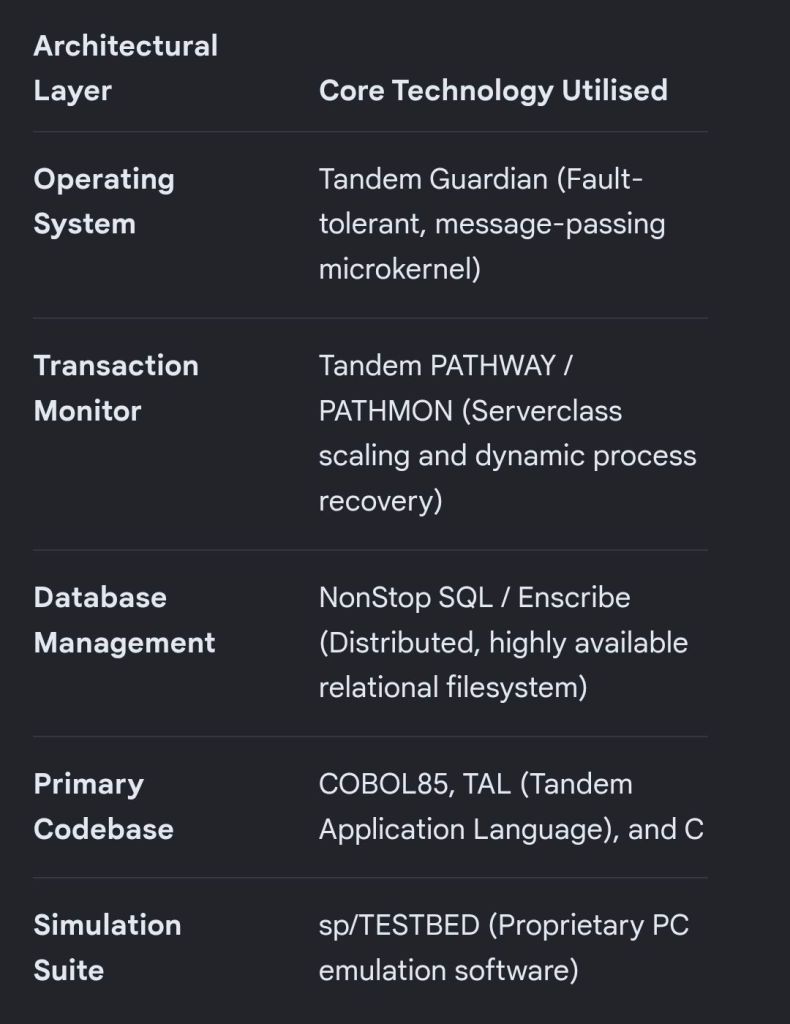
Technical Architecture Overview
The reason sp/ARCHITECT remained resilient throughout its timeline was its direct dependency on the Tandem/HPE NonStop architecture:
sp/ARCHITECT-BANK is a landmark case study in early electronic home & corporate desktop banking
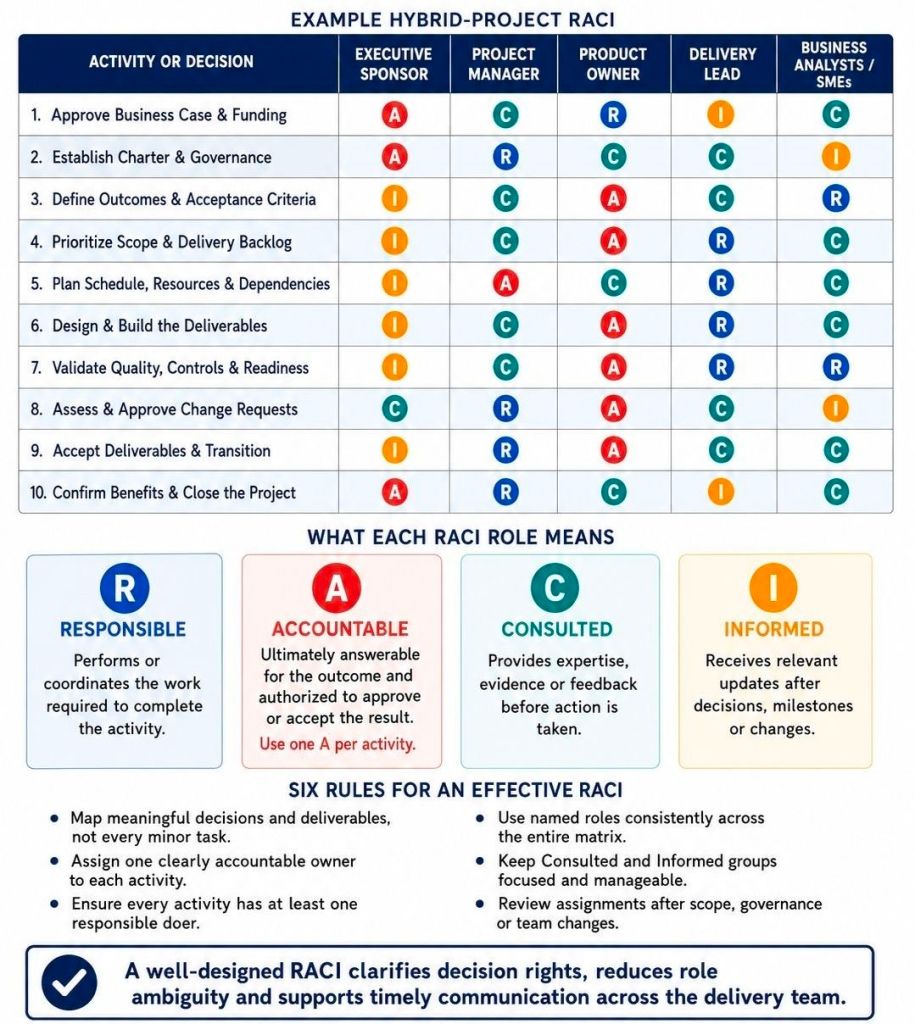
A RACI matrix for a hybrid project bridges the gap between structured predictive governance (Waterfall) and flexible iterative delivery (Agile). Because hybrid projects mix distinct management styles, a RACI matrix is essential to clarify who owns high-level deliverables versus who manages sprint-level execution.
The Hybrid RACI Challenge
In pure Agile/Scrum, a RACI is often redundant because roles like Product Owner and Scrum Master have built-in accountability. However, in a hybrid environment, conflicts arise at the intersection points—such as when a traditional Project Manager interacts with a self-organizing Scrum Team, or when a cross-functional sprint output requires steering committee or regulatory sign-off.
The golden rule remains: Every task must have exactly one Accountable (A) owner to prevent costly decision delays.
R = Responsible (Does the work)
A = Accountable (Final decision maker/approver; only one per row)
C = Consulted (Two-way communication before the task)
I = Informed (One-way notification after completion)
Best Practices for Hybrid RACIs
Focus on Deliverables, Not Micro-tasks: Map out macro phases, key milestones, and critical cross-framework decision points rather than granular daily duties.
Delineate the PM and PO Roles: The Project Manager is typically Accountable for overall project timelines, budgets, and predictive governance. The Product Owner holds Accountability for product requirements, value delivery, and sprint goals.
Avoid Dual-Accountability Pitfalls: Never assign “A” to both the PM and the PO for the same item. If a task feels like it belongs to both, split it into separate lines (e.g., split “Product Deployment” into “Feature Validation” and “Release Governance”).
Keep the Sprints Agile: Do not write a RACI for inside a sprint. Trust the Scrum Guide for development cycles, and use the RACI strictly to manage how those cycles plug back into the larger corporate structure.
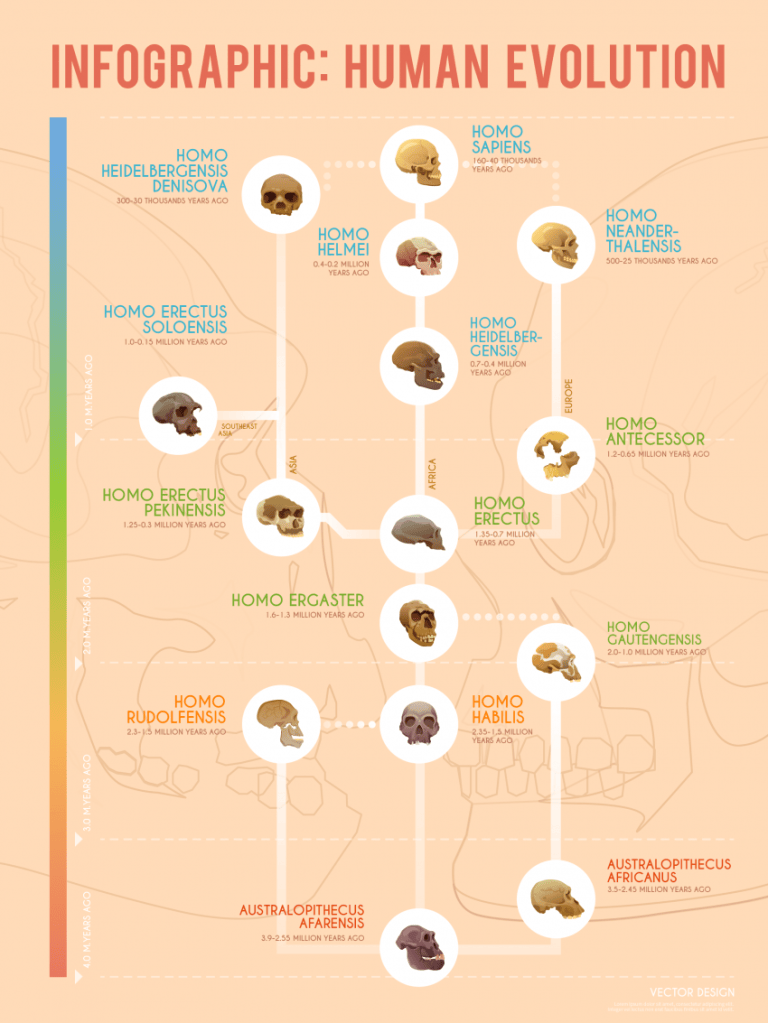
Modern humans (Homo sapiens) emerged in Africa approximately 300,000 years ago after millions of years of gradual primate and hominin evolution.
Infographic, Human Evolution to Homo Sapiens
Early Beginnings and Primate Roots
85 million years ago (mya): Primates diverge from other mammalian groups during the Late Cretaceous period.
55 mya: Earliest true primate fossils appear in the Paleocene epoch.
15–20 mya: The ape superfamily diverges from gibbons and other primate lines, leading to early apes like Dryopithecus.
6–7 million years ago (mya): The human lineage (hominins) splits from the ancestors of modern chimpanzees and bonobos in Africa. Sahelanthropus represents one of the earliest known species to begin walking upright (bipedalism).
The Rise of Australopithecines
4–3 mya:Australopithecus species (such as Australopithecus afarensis) thrive in the grasslands of eastern and southern Africa. They walk fully on two legs but retain small, ape-like brain sizes.
3.3 mya: Earliest known stone tool manufacturing begins in Kenya, predating the appearance of the modern human genus (Homo).
The Emergence of the Genus Homo
2.8–2.5 mya:Homo habilis (the “handyman”) appears in Africa. They feature larger brains and systematically manufacture sharp stone flakes and core tools (Oldowan technology).
1.9–1.8 mya:Homo erectus emerges with taller, modern-like body proportions (longer legs, shorter arms). They are the first hominins to migrate out of Africa into Eurasia, master controlled fire, and build basic shelters.
Transition to Modern Humans
700,000–350,000 years ago (kya):Homo heidelbergensis spreads across Africa and Europe. They act as the common ancestral root that branches into Neanderthals in Eurasia and Homo sapiens in Africa.
315,000 years ago: The oldest known anatomical remains of Homo sapiens (including skull fragments and a jawbone) are fossilized in Jebel Irhoud, Morocco. These early modern humans possess near-modern facial features alongside robust skeletal builds.
50,000–40,000 years ago: The Upper Paleolithic revolution sees Homo sapiens develop advanced symbolic behavior, complex art, sophisticated blade toolkits, and widespread global expansion.
The transformation of Salford Quays from a major industrial inland port into a vibrant cultural, residential, and digital hub is one of the most successful urban regeneration stories in the UK.
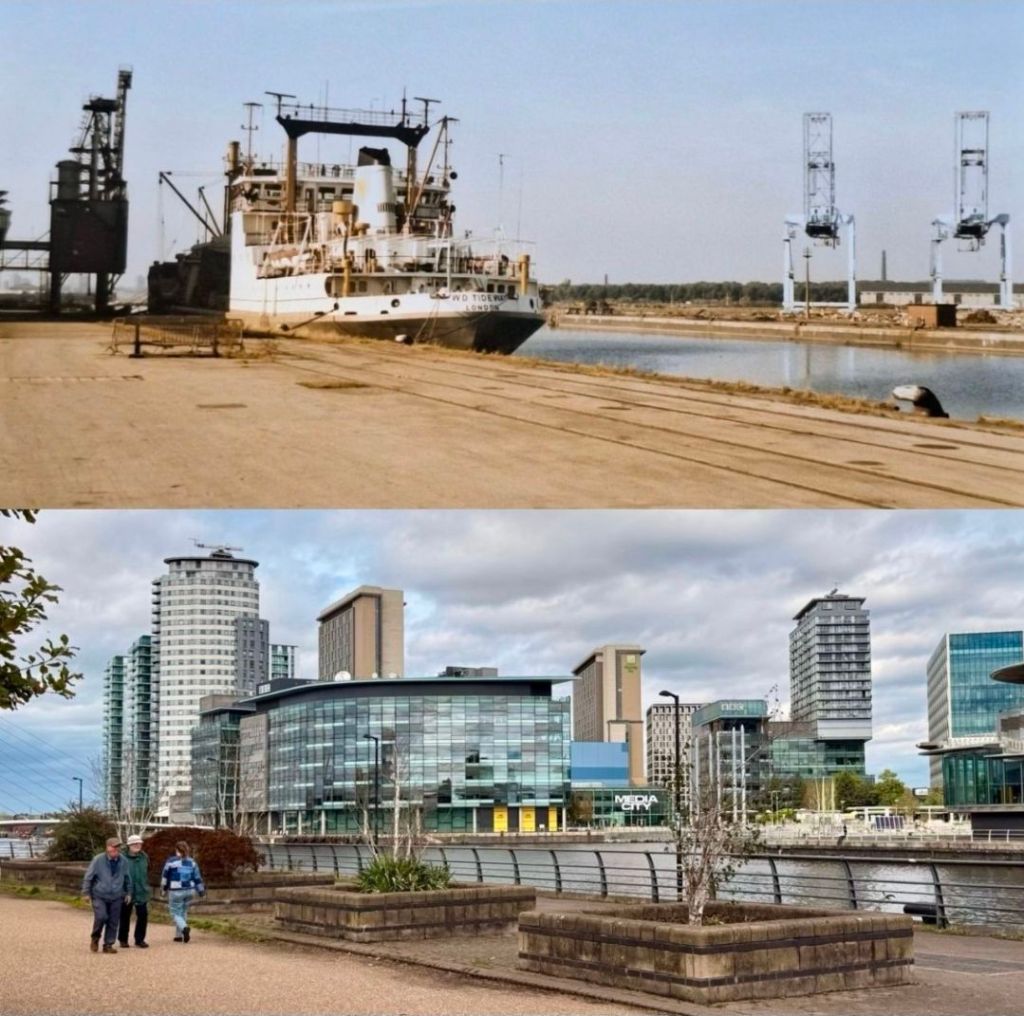
Salford Quays in 1983 and 2026
Here is the detailed timeline of Salford Quays, broken down by era, year, and key milestones.
⚓ The Industrial & Docks Era (1894–1982)
Before the late 19th century, the area was largely empty space, occupied only by a medieval hall and a racecourse. The construction of the Manchester Ship Canal fundamentally altered the landscape, making the inland region accessible to ocean-going ships.
1894: Queen Victoria officially opens the Manchester Ship Canal and the Manchester Docks. Four of the largest docks (Docks 6, 7, 8, and 9) are built on the Salford side of the canal.
1905: King Edward VII opens Dock No. 9, which becomes the largest and most crucial dock in the Salford cluster.
1947–1948: Owing to heavy damage suffered by rival ports like Hull during the World War II Blitz, Salford and Manchester Docks temporarily peak to become Britain’s third busiest port.
1952–1974: The golden era of operations. Over 16 million tonnes of cargo and 5,000 ships pass through the canal annually.
1970s: The rapid rise of standardized maritime containerization triggers a sharp decline. Newly built global freight vessels grow too large to navigate the tight locks of the Ship Canal.
1982: Traffic dries up completely. The historic docks officially close down, resulting in 3,000 immediate job losses and leaving behind 120 acres of heavily contaminated, derelict land.
🏗️ The Reclamation & Infrastructure Era (1983–1999)
With the area decaying into an unsafe, heavily polluted “no-go zone,” local government took a bold, unprecedented approach to urban reclamation.
1983: Salford City Council buys the derelict docks from the Manchester Ship Canal Company. See photo above.
1984: The council secures a Derelict Land Grant to finance total land reclamation. The territory is officially rebranded as Salford Quays.
1985: The Salford Quays Development Plan is formally adopted, laying out a master plan for commercial, residential, and leisure zoning. Dams are constructed to isolate the stagnant dock basins from the heavily polluted main canal.
1987: To fix severe water pollution, an innovative compressed air mixing aeration system is installed. Oxygen levels bounce back, allowing scientists to successfully introduce 12,000 coarse fish into the re-engineered ecosystem.
1988: The council publishes a development review expanding the vision to highlight massive tourism, leisure, and cultural landmarks. The early concept for a performing arts center (later known as The Lowry) is drafted.
1990: By this year, the initial infrastructure push transforms the landscape. Roads, promenades, bridges, and the first wave of offices, hotels, and houses are constructed across Piers 5, 6, and 7.
1999: Major pedestrian and structural bridge works conclude. Crucially, the Metrolink tram system extension opens, instantly linking Salford Quays directly to Manchester City Centre.
🎭 The Cultural Landmark Era (2000–2005)
With the environmental clean-up and transit links secured, the focus shifted to turning the Quays into a premier leisure destination.
2000: The Lowry arts centre officially opens to the public, housing a major theatre and art gallery dedicated to local artist L.S. Lowry.
2001: The retail landscape arrives with the opening of the Lowry Outlet Mall (now known as Quayside MediaCityUK). The Salford Community Water Sports Centre opens to take advantage of the clean waters.
2002: The striking architectural landmark Imperial War Museum North (IWM North) opens directly across the water. The dock lock gates reopen, linking the Quays back into the national canal network.
2004: The BBC begins looking at Salford Quays as a prime option for decentralized office relocation outside of London.
📺 The MediaCityUK & Residential Boom Era (2006–Present)
The modern era established Salford Quays as a powerhouse for the UK’s creative, digital, and high-rise residential sectors.
2006: Salford Quays is officially selected over competing sites to host the massive MediaCityUK development project.
2011: Phase One of MediaCityUK completes. Broadcasters like the BBC and ITV relocate massive operations, studios, and staff here alongside the University of Salford’s media campus.
2012–2020: The region experiences a massive economic boom. The wider borough sees average property values double over eight years as young professionals flood the high-rise apartments flanking the waterfront.
2023: Vertical expansion continues as Eda (Erie Dock Apartments), a prominent 29-storey residential skyscraper, is completed.
2026 (Present): Salford Quays is currently undergoing a massive ongoing £1 billion expansion approved by the local council to double its development footprint, headlined by high-density projects like the four-tower X1 Michigan Towers reaching up to 46 storeys.
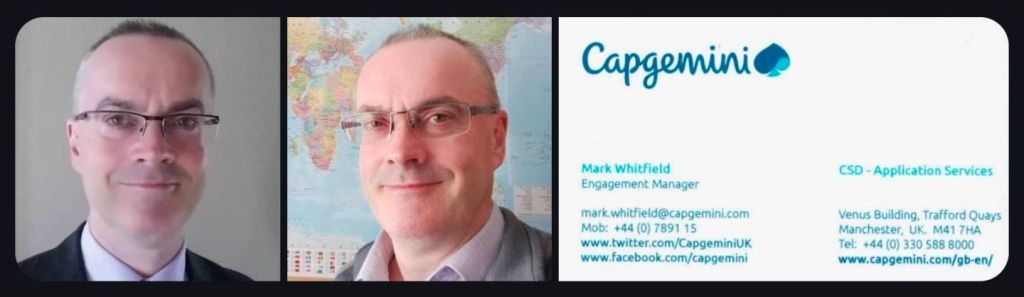
The professional and academic career timeline for Mark Whitfield, a Senior IT Project Manager from Hindley Green, Wigan, UK, is outlined below.
Synthesised directly from his official records and technical portfolio on PROject Templates, this low-level breakdown is structured by chronological era, specific years, and core focus areas.
🎓 Foundational Era: Academic Roots & Early Computing (1975–1990)
1975–1980
Institution: Hindley Green County Primary School (Thomas Street, Hindley Green).
Focus Area: Primary education and initial interest in logic systems.
1980–1985
Institution: Park High Secondary School (Park Road, Hindley).
Focus Area: Completed 8 GCE ‘O’ Levels with top marks, explicitly choosing Computer Studies alongside Mathematics and English.
1985–1988
Institution: Leigh College (Marshall Street, Leigh).
Focus Area:‘A’ Level Computer Science & Biology. In 1986, engineered a custom software solution using Turbo Pascal on an Amstrad PC 1512 to track and calculate advertising revenue files for a local regional newspaper.
1988–1990
Institution: Bolton Institute of Higher Education (BIHE).
Focus Area: Graduated with a BTEC Higher National Diploma (HND) in Computer Studies with a Distinction classification, finishing first in his cohort. Studies focused heavily on structural systems analysis, programming methodology, and corporate data processing.
💻 Era 1: Early Engineering & Technical Analysis (1990–1995)
Focus Area: Electronic desktop banking software development, establishing foundational secure remote access to business accounts.
1990
Organization: The Software Partnership (TSP) / Deluxe Data International (Runcorn).
Details: Joined the core engineering team as a Programmer/Lead Analyst to develop standard client-server banking release cycles.
1991–1993
Details: Deployed on-site at Barclays Bank (Knutsford/Poole) for the high-profile Barclays Business Master II (BBM II) application.
1994–1995
Details: Focused on back-end integration, writing complex transaction code for clients like RaboBank and the Bank of Scotland.
Core Technology: Tandem Mainframe Computers (now HPE NonStop), utilizing TAL, C, C++, COBOL85, NonStop SQL, and PATHWAY architectures.
🏦 Era 2: Senior Development & Product Management (1995–2013)
Focus Area: High-volume transaction middleware, system monitoring, and strict Service Level Agreement (SLA) diagnostics for global financial institutions.
Details: Operated as Senior Programmer co-developing the core platform health and transaction logging extraction modules for the “Reflex” (Reflex 80:20) Monitoring Suite.
1997
Details: Contracted on-site to CRESTCo (now Euroclear), authoring custom benchmarking and stress-testing applications to track software liquidity on newly introduced S7000 HPE NonStop architecture.
2000–2007
Details: Designed complex Automated Teller Machine (ATM) and Point-of-Sale (POS) environment monitoring expansion tools. Managed transaction security projects deployed across primary banks like HSBC and Al Rajhi Bank.
2008–2013
Details: Escalated from technical consultancy into a strategic IT Project Manager role. Directed large data extraction architectures and modern transaction engine tracking suites like the RTLX Reactor.
🏧 Era 3: Professional Services Banking Delivery (2013–2014)
Focus Area: Legacy migrations, hardware/software replacement programmes, and traditional retail banking software delivery.
2013–2014
Organization: Wincor Nixdorf (Banking Division).
Details: Served as Project Manager for Professional Services. Spearheaded the critical Wincor workstream for Lloyds Banking Group’s massive Self-Service Software Replacement (SSSR) programme. Tracked Agile ATM deployment pipelines to ensure immediate time-to-market performance changes.
🎲 Era 4: Digital Sportsbook Transformation (2014–2016)
Focus Area: Consumer digital gaming systems, high-throughput web architecture, and instant online billing gateways.
Details: Hired as IT Senior Digital Project Manager. Managed multi-disciplinary software engineers across the UK to deploy complex mobile sportsbook modules and online payment platforms. Successfully aligned quick-turnaround web logic pipelines with stringent security parameters.
☁️ Era 5: Enterprise Cloud, Integration & Public Sector Leadership (2016–Present)
Details: Formally stepped into client-facing enterprise leadership as an SC-cleared Engagement Manager. Directed large hybrid offshore/onshore development pipelines for the automotive, defence, and aerospace sectors.
2018–2022
Organization: Capgemini / Augmented into MuleSoft (A Salesforce Company).
Details: Operated as a Delivery Manager governing multi-million-pound portfolios utilizing the MuleSoft Anypoint Platform. Directed hybrid cloud migration blueprints (Azure, AWS, and Power Platform) leveraging MuleSoft Outcome Based Delivery (OBD) frameworks.
2023–Present
Details: Continues to operate as a highly senior technical project strategist, publishing refined, reusable governance frameworks, visual dashboards, and Plan on a Page (POaP) Templates to unify Agile engineering speed with strict PRINCE2 methodologies.
Mark Whitfield’s training transitions from deep-dive mainframe engineering courses in the 1990s to corporate project management, Agile delivery, and cloud infrastructure methodologies.
The detailed chronological breakdown of his professional training from 1990 onwards, categorized by course, focus area, and year, is outlined below:
🛠️ Project Management, Governance & Frameworks
Fundamentals of Successful Project Management (2000) – Project initiation, core project management mechanics, and planning frameworks.
Managing Multiple Projects, Objectives and Deadlines (1999) – Multi-project tracking, prioritization techniques, and timeline optimization.
Microsoft Project ’98 Certification Series (1998) – Advanced Critical Path method modeling, tracking metrics, and timeline layouts using MS Project.
PRINCE2 Registered Practitioner (2011) – Structured waterfall project governance, stage-gate management, and risk frameworks via ILX.
Agile SCRUM Training Course (2011) – Sprint ceremonies, user story mapping, agile delivery mechanics, and backlog prioritization.
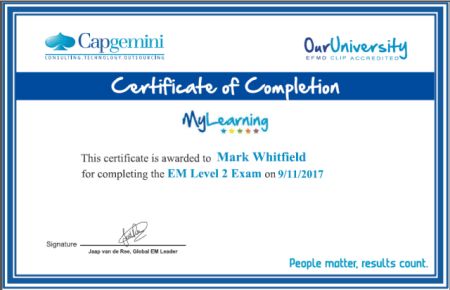
Advanced Engagement Management Course (Level 2 Exam) (2017) – Enterprise stakeholder management, delivery financials, and large-scale delivery mechanics at the Capgemini Campus in Chantilly, France.
Engagement Manager eLearning & Group Training (2019) – Capgemini operational workflows, anti-corruption policies, and corporate IPR (Intellectual Property Rights) risk mitigation protocols.
ITIL Framework (Ongoing/Capgemini era) – IT Service Management (ITSM) and aligning enterprise IT operations with business outcomes.
💻 Software Engineering, Databases & Technology
AZ-900 Microsoft Certified Azure Fundamentals (2022) – Cloud architecture concepts, cloud security protocols, and core Azure deployment ecosystems.
Querying Microsoft SQL 2000 with Transact SQL (M2071) (2009) – Database querying architectures, T-SQL scripting, and data manipulation.
Developing MS ASP.NET Web Applications using MS Visual Studio .NET (Course 2310B) (2007) – Building scalable 5-day web components, data binding using ADO.NET, web controls, and XML Web Service integration.
C++ for Non-C Programmers (1997) – Object-oriented application design, structural code transitions, and memory management.
TANDEM TAL (Transaction Application Language) Programming (1995) – High-performance low-level systems programming optimized for secure mainframe transaction monitors.
TANDEM Performance Analysis and Tuning (1995) – Code profiling, infrastructure bottleneck diagnostics, and mainframe system optimization.
VPS 7000/9000 Series Application Development (VOS 4.3) (1994) – Legacy platform application configuration and system engineering.
TANDEM Guardian Principles Course (1993) – Core Tandem fault-tolerant operating system architectures and file security configurations.
📊 Business Operations, Design & Digital Productivity
Microsoft Excel Refresher Course (2024) – Data analysis formulas, validation tracking, and programmatic report structures via Udemy.
Microsoft Excel 2010 (Expert Skills) (2017) – Complex variance mapping, financial track design, and cross-functional project tracking sheets.
Website Visibility and Promotion by Design (2009) – Search engine discoverability metrics and web application positioning mechanics.
Writing for the Web (2009) – Content architecture and copy optimization for digital platforms.
How to Design Attention-Grabbing Brochures, Catalogues, Ads, Newsletters and Reports (2006) – Desktop publishing formatting, layout typography, and corporate design principles.
Selling Insider Technologies Successfully (Insider Tech era) – Strategic relationship building, value proposition mapping, and enterprise software sales processes.
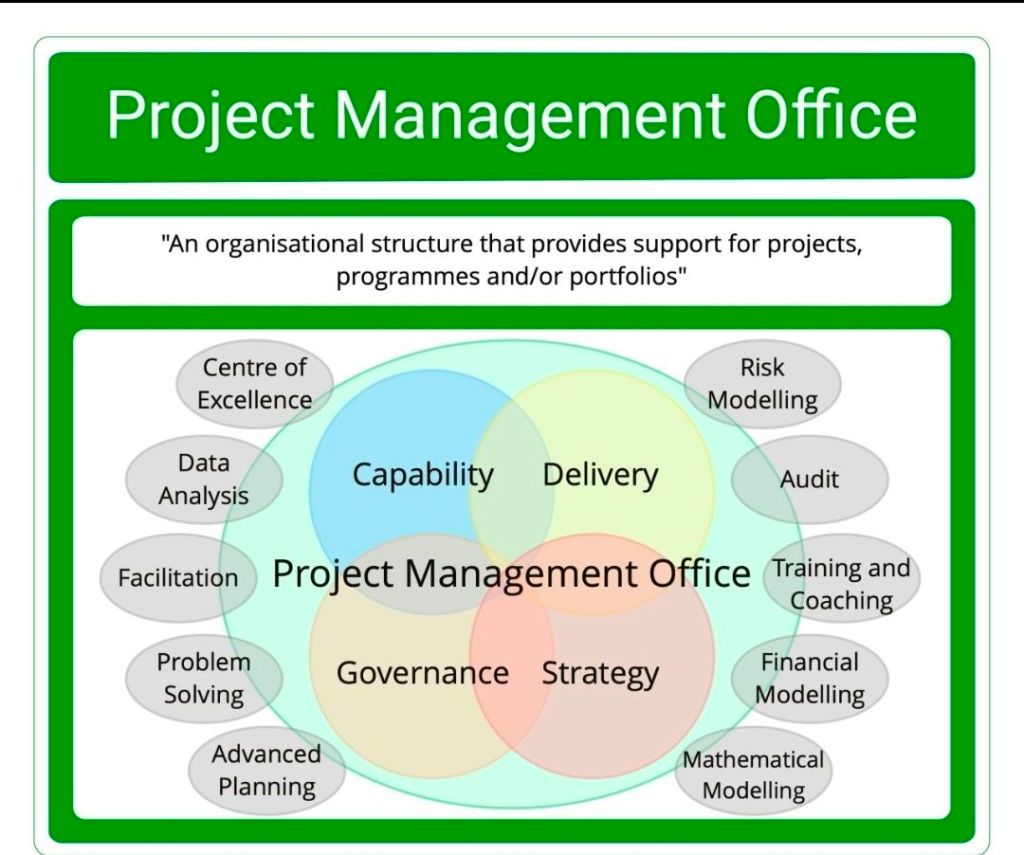
A Project Management Office (PMO) is a dedicated department or team within an organisation that defines, maintains, and standardises project management practices across the business. It serves as the central authority that ensures projects are executed efficiently, remain aligned with strategic business goals, and deliver maximum value.
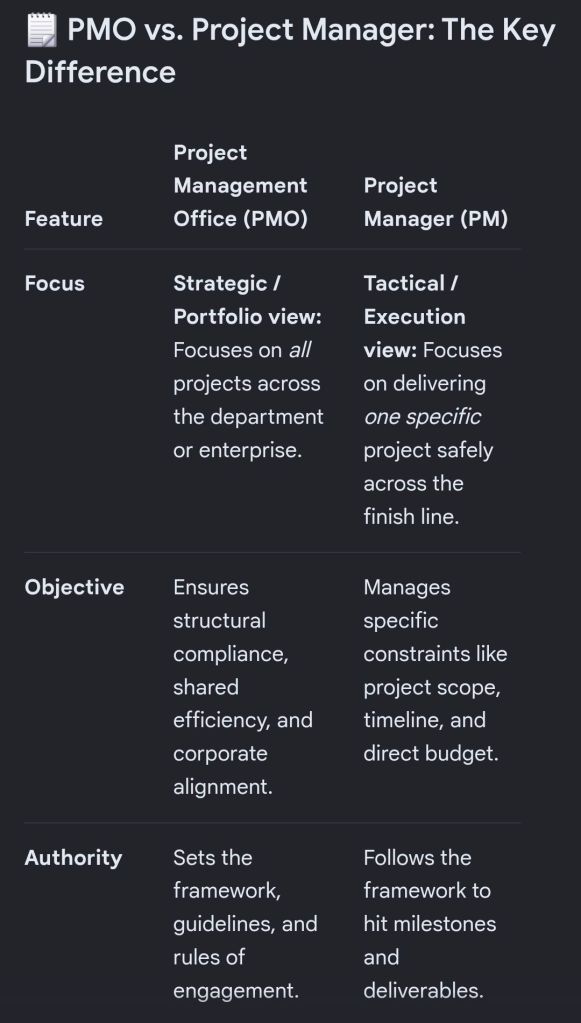
Think of it as the regulatory and support hub for an organisation’s initiatives; while a project manager runs an individual project, the PMO creates the overall ecosystem in which all projects operate.
🔎 The 3 Main Types of PMOs (By Degree of Control)
Depending on the organization’s needs, a PMO typically falls into one of three structural categories:
Supportive PMO: Acts as a consultative hub. It provides templates, best practices, and training but exercises very low control over the actual project execution.
Controlling PMO: Enforces compliance and governance. It mandates that project teams adopt specific methodologies, templates, and frameworks, exercising a moderate level of control.
Directive PMO: Takes direct ownership of the projects. The PMO provides the project managers themselves and maintains high control, ensuring strict execution according to organizational standards.
📊 Key Responsibilities of a PMO
A high-performing PMO bridges the gap between executive strategy and day-to-day project execution through several core functions:
Governance and Compliance: Establishes approval workflows, audits project health, and ensures all teams comply with internal and external policies.
Standardisation: Creates standardized rules, templates, and methodologies (such as Agile or Prince2) so that everyone speaks the same project language.
Resource Management: Acts as a “traffic cop” to balance shared resources—like budget, tech tools, and personnel—across conflicting project schedules.
Strategic Portfolio Management: Reviews and prioritizes proposed projects against company priorities to ensure the business is spending its money on the right initiatives.
Performance Reporting: Tracks Key Performance Indicators (KPIs) and provides clean, objective data dashboards to stakeholders and C-suite executives.
PMO vs. Project Manager, the key difference
💡 Core Benefits of a PMO
Organisations with a mature PMO report significantly better project success rates. A PMO delivers value by reducing project financial waste via standard budgeting, speeding up execution timelines through repeatable templates, and preventing team burnout with proactive resource allocation. It also establishes a central “lessons learned” database so that the company does not repeat past mistakes on new ventures.
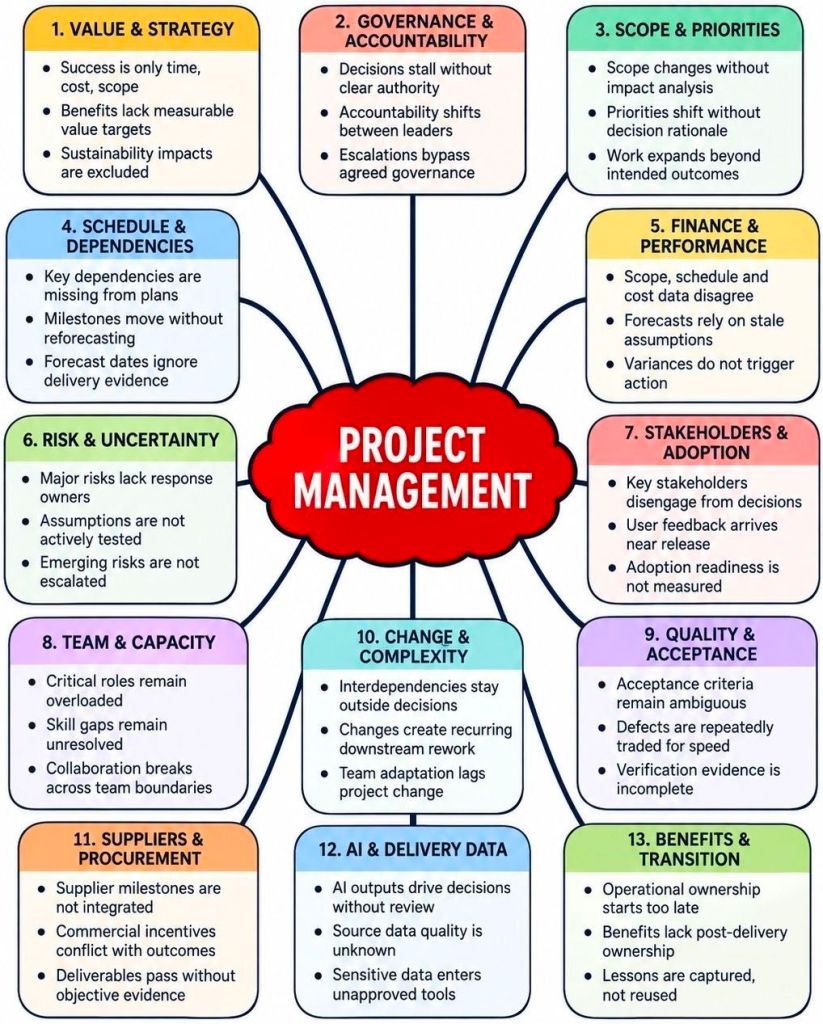
Key red flags in project management serve as early warning signs that a project is veering off course, helping teams intervene before minor issues escalate into total project failure.
Experienced project managers look past superficial status updates to spot subtle breakdowns in communication, planning, and execution.
The most common project management red flags are grouped by their operational area below:
📋 Scope and Strategy
Continuous Scope Creep: Requirements keep expanding without corresponding adjustments to the project budget, timeline, or resource allocation.
Misalignment with Strategy: The project outputs focus entirely on immediate tactical tasks but no longer deliver the overarching strategic value or outcomes the business actually needs.
Superficial Project Plan: Key details, task dependencies, or success metrics are absent, making it difficult for team members to know what steps to take next.
⏱️ Timeline and Tracking
Slipping Timelines with Vague Excuses: Milestones are consistently missed or delayed, accompanied by repetitive, hollow reassurances that the team will “catch up later”.
Always-Green Status Reports: The project status dashboard shows a perfect “Green” light week after week, yet actual deliverables are lagging or shifting behind the scenes.
Lack of a Baseline Schedule: Work is actively progressing in the field or in development, but the team still hasn’t officially approved or aligned on a baseline schedule to measure progress against.
👥 Team and Resources
Key Person Risk: Critical technical or institutional knowledge is held entirely by one individual, making the entire project fragile if they leave or step away.
Resource Misallocation: Shared resources or team members are over-allocated across multiple projects, leading to immediate bottlenecks and unmanaged dependencies.
PM-as-Glue Syndrome: The project is only moving forward because the project manager is manually holding everything together through sheer willpower, rather than relying on an established system.
💬 Communication and Culture
Sudden Drop in Engagement: Stakeholders stop replying to messages promptly, meeting attendance drops off significantly, or team collaboration noticeably slows down.
Decision Paralysis: Leadership or key decision-makers repeatedly delay approvals or shift their minds, leaving the execution team completely stalled.
False Alignment: Team members nod their heads and agree in meetings but silently push back or reverse decisions once the session is over.