IT & Project Management training spans over three decades

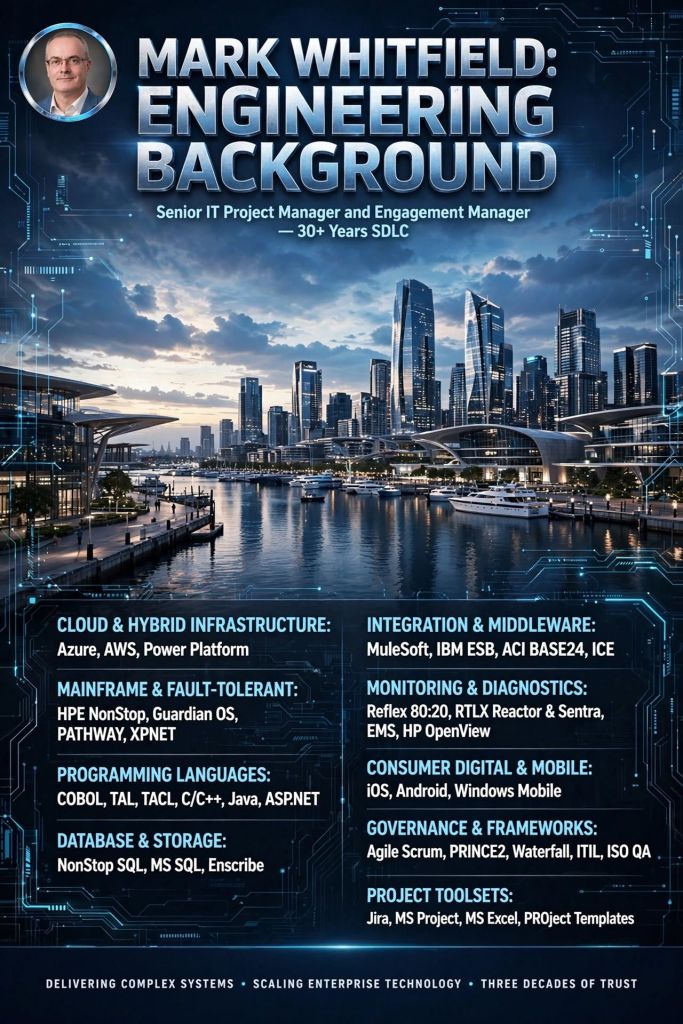
Mark Whitfield’s IT and Project Management training spans over three decades, tracking his progression from a senior technical developer into an enterprise-level, SC-cleared Senior IT Project Manager.
His official training records and professional certificates listed on PROject Templates are grouped below by specific skill areas.

Project Management Methodologies & Frameworks

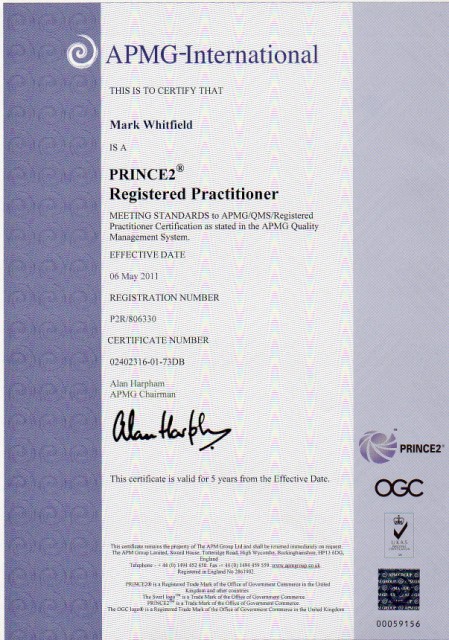
  • PRINCE2 Practitioner: Registered Practitioner certification achieved via ILX (May 2011).
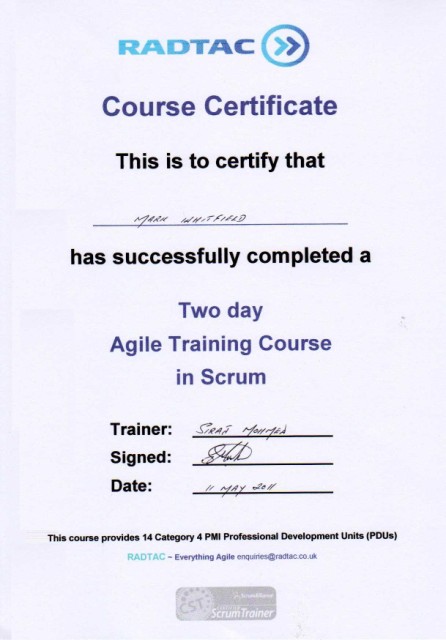
  • Agile SCRUM Framework: Dedicated training completed for Agile SCRUM delivery mechanics (May 2011).
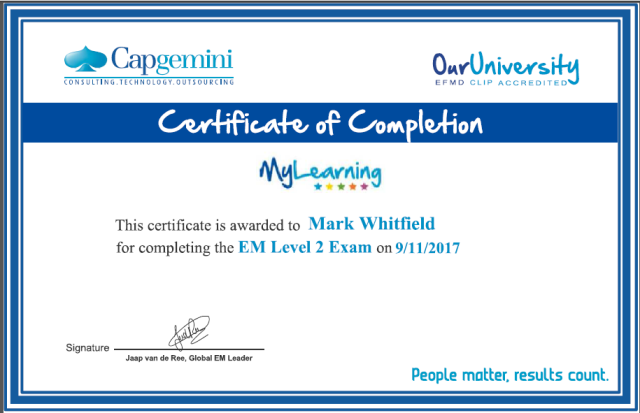
  • Advanced Engagement Management: Level 2 Exam certification completed during his tenure at Capgemini (November 2017).
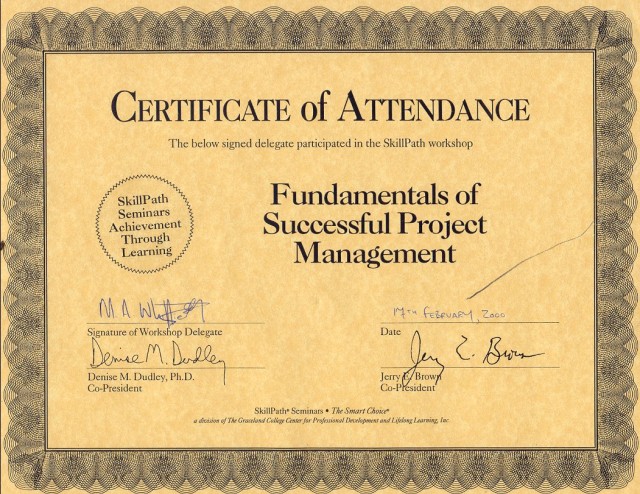
  • Project Management Fundamentals: Core foundational training in Successful Project Management (February 2000).
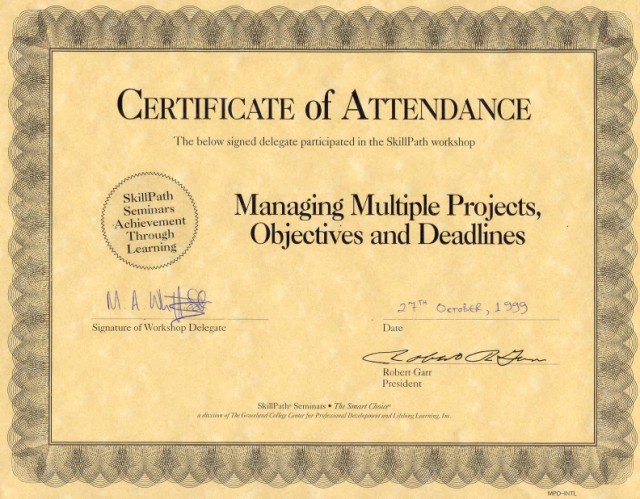
  • Multi-Project Administration: Training in Managing Multiple Projects, Objectives, and Deadlines (October 1999).
  • Capgemini, Engagement Manager – eLearning and Group Training, 100+ Training Modules, see link 1) at bottom of this post.

Cloud & Database Infrastructure

  • Microsoft Azure Fundamentals: Certified under the official AZ-900 cloud training track (February 2022).
  • Transact-SQL Database Administration: Course M2071 covering Querying Microsoft SQL Server 2000 (March 2009).

Software Engineering & Legacy Systems (HPE NonStop)

  • Web Application Engineering: Developing Microsoft ASP Web Applications utilizing the MS Visual Studio .NET ecosystem (January 2007).
  • C++ OOP Programming: Accelerated Object-Oriented development training via “C++ for Non-C Programmers” (March 1997).
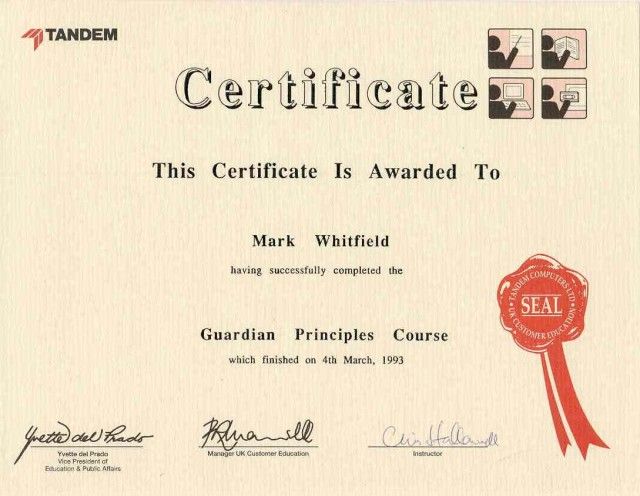
  • Tandem/HPE NonStop Systems Architecture: High-level platform training covering the TANDEM Guardian Principles (May 1993).
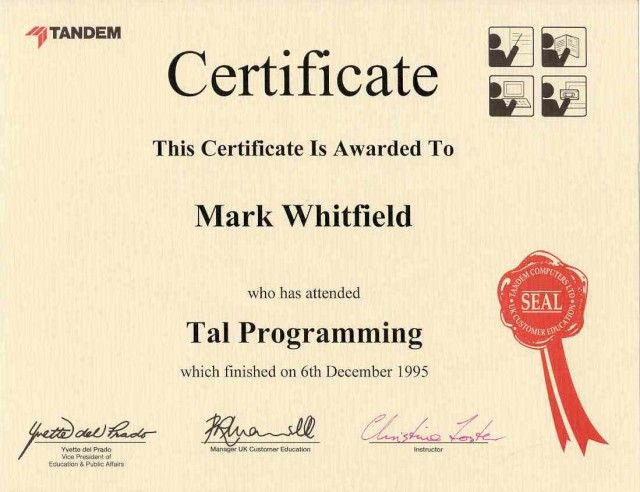
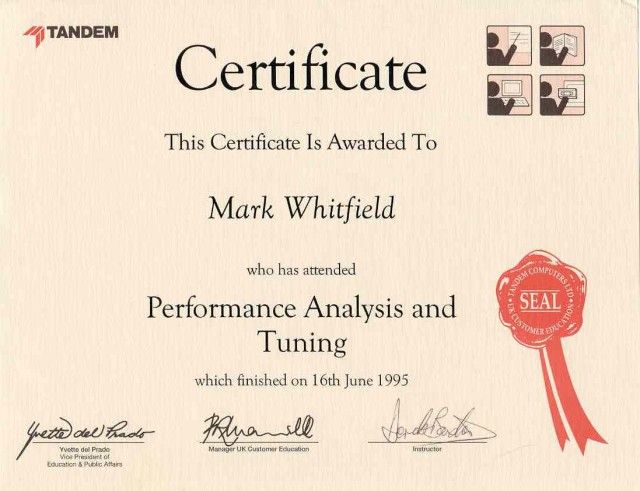
  • Tandem Performance & TAL Programming: Advanced courses in TANDEM Performance Analysis & Tuning (June 1995) and TANDEM TAL Programming (December 1995).
  • VPS Architecture: Mainframe application architecture training under VPS 7000/9000 Series Application Development VOS 4.3 (September 1994).

Productivity & Project Control Tools

  • Microsoft Project Enterprise: Orange Belt certification in Managing a Single Project via Microsoft Office Project (May 2000).
  • Advanced Data Management: Microsoft Excel Expert Skills training (April 2017) followed by an Excel Refresher Certification via Udemy (July 2024).

Digital Content & Professional Design

  • Web Design Analytics: Training in Website Visibility and Promotion by Design (May 2009).
  • Digital Copywriting: Professional framework training in Writing for the Web (May 2009).
  • Desktop Publishing: Strategic training on designing attention-grabbing brochures, catalogues, ads, newsletters, and corporate reports (April 2006).
More training detail and certificates 1) and 2)

Mark Whitfield Project Management Professional Training Certificates

Mark Whitfield, Project Management Professional Training Certificates
Project Management Professional Training

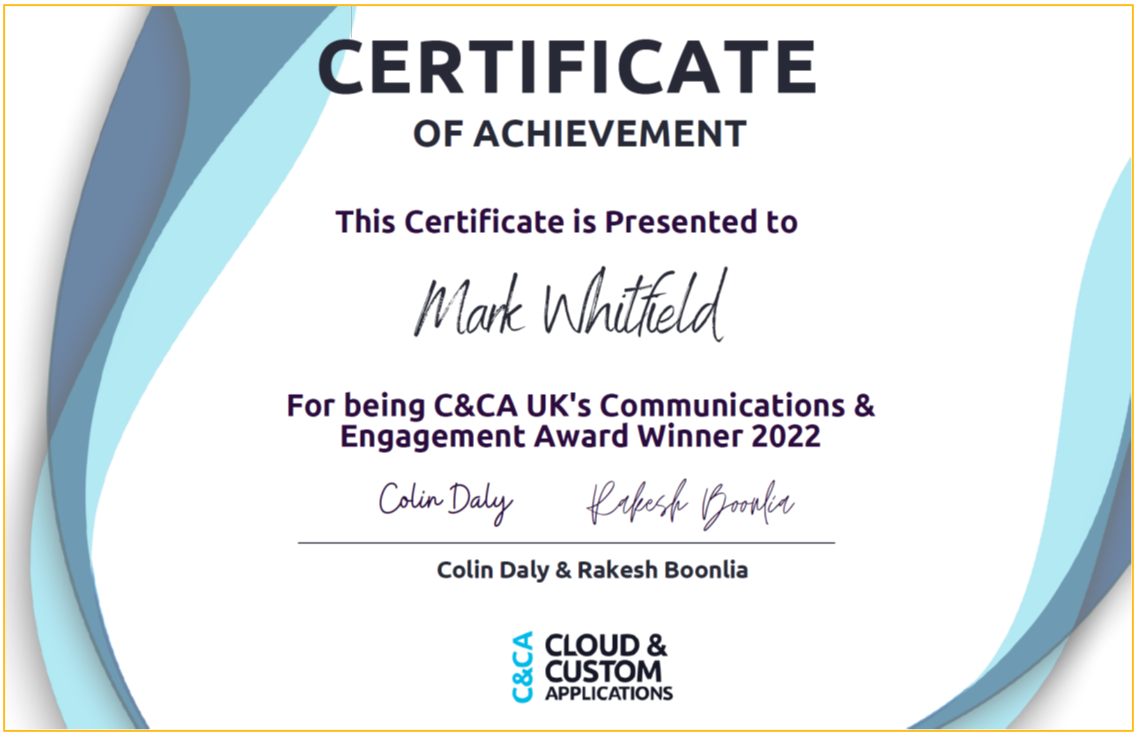
December 2022 – C&CA UK’s Communications & Engagement Award Winner – Cloud & Custom Applications – Capgemini UK

Capgemini C&CA UK's Communications & Engagement Award Winner 2022 - Cloud & Custom Applications - Capgemini UK
December 2022 – Capgemini C&CA UK’s Communications & Engagement Award Winner

November 2017 – Advanced Engagement Management Course – Level 2 Exam

November 2017 – Capgemini Advanced Engagement Management Course – Level 2 Exam
November 2017 – Capgemini Advanced Engagement Management Course

May 2011 – Agile SCRUM Training Course

May 2011 – Agile SCRUM Training Course mark whitfield
May 2011 – Agile SCRUM Training Course

May 2011 – Registered PRINCE2 Practitioner with ILX

May 2011 – Registered PRINCE2 Practitioner with ILX

May 2000 – Microsoft Project: Orange Belt –
Managing a Single Project with Microsoft Office Project 98

May 2000 – Microsoft Project: Orange Belt –
Managing a Single Project with Microsoft Office Project 98
May 2000 – Microsoft Project: Orange Belt

February 2000 – Fundamentals of Successful Project Management

February 2000 – Fundamentals of Successful Project Management

October 1999 – Managing Multiple Projects, Objectives and Deadlines

October 1999 – Managing Multiple Projects, Objectives and Deadlines

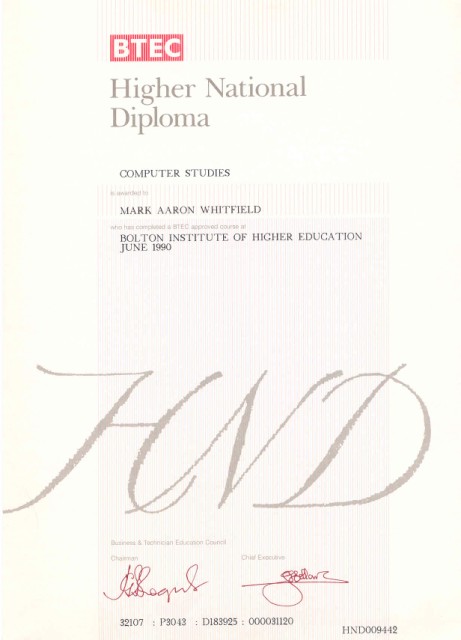
June 1990 – Higher National Diploma in Computer Studies
(DISTINCTION – overall top) – BIHE

June 1990 – Higher National Diploma in Computer Studies (DISTINCTION – overall top) – BIHE
June 1990 – Higher National Diploma in Computer Studies, Distinction

Mark Whitfield Project Management Professional Training Certificates

Mark Whitfield IT, Technical & Project Management Training Overview

Mark Whitfield, a Manchester-based Senior IT Project Manager, has completed extensive professional training throughout his career, focusing on project management methodologies, delivery software, and technical tools.

Core Project Management Methodologies :

  • PRINCE2 Practitioner: Certified as a registered PRINCE2 Practitioner in May 2011 via the ILX Group (Gold e-Learning).
  • Agile SCRUM Training: Attended in-house training with RADTAC in May 2011.
  • Advanced Engagement Management (Level 2): Completed at Capgemini in November 2017.
  • Project Management Fundamentals: Completed “Fundamentals of Successful Project Management” in February 2000 through Skillpath in Manchester.
  • Managing Multiple Projects: Attended “Managing Multiple Projects, Objectives and Deadlines” in October 1999/1998 via Skillpath.

Software & Cloud Platforms :

  • AZ-900 Microsoft Azure Fundamentals: Certified in February 2022.
  • Microsoft Project: Completed the Microsoft Project ’98 Certification Series in May 2000 through the IIL UK Education Centre in Reading.
  • Microsoft Excel Expert Skills: Upgraded skills via a 2017 Expert course and a July 2024 Udemy refresher.

Technical & Programming Courses :

  • Tandem / HP NonStop: Completed Tandem Guardian Principles (1993), Tandem Performance Analysis (1995), and Tandem TAL Programming (1995).
  • C / C++ Programming: Attended “C++ for Non-C Programmers” with Comtec Computer Training in March 1997.
  • Database Querying: Completed “Querying Microsoft SQL 2000 with Transact SQL” via QA Training in March 2009.
  • Web Applications: Attended “Developing MS ASP Web Applications using MS Visual Studio .NET” in January 2007.

Marketing & Communication Training :

  • Writing for the Web: Completed in May 2009 with gbdirect (iTrain Education in London).
  • Brochure & Document Design: Attended a SkillPath Seminar on designing marketing brochures and reports in April 2006.

HP NonStop Tandem Training provided by HPE Education Services

HP NonStop (originally Tandem) training focuses on the platform’s unique fault-tolerant architecture, designed to ensure 24×7 availability and data integrity for mission-critical industries like finance and telecommunications. Current training is provided by HPE Education Services, which offers expert-led courses ranging from basic concepts to advanced system management and database administration. 

Training Overview

HPE’s curriculum is structured to support IT teams at all levels—from beginners to experienced operators—and can be customised for specific business needs. Key training areas include: 

  • System Operations: Managing NonStop environments, including S-Series or newer x86-based systems.
  • Architecture & Concepts: Understanding fault tolerance, “fail fast” mechanisms, and message-based operating systems.
  • Database Management: Specialized courses for NonStop SQL/MXSQL/MP, and Enscribe.
  • Application Development: Training in languages like C/C++COBOL, and TAL (Transaction Application Language).
  • Modern Environments: Transitioning to virtualised instances and hybrid cloud infrastructures. 

Detailed course information, including outlines and lab access, is available through the HPE NonStop Compute training portfolio


Detailed Textual Timeline: Era & Year

The NonStop platform has undergone three major architectural shifts since its founding.

1. The Tandem Era (1974–1997)

  • 1974: Tandem Computers Inc. is founded by James (Jimmy) Treybig.
  • 1975: Design of the Tandem/16 (later NonStop I) is completed.
  • 1976: The first system is shipped to Citibank, marking the birth of commercial fault-tolerant computing.
  • 1981: NonStop II is introduced, adding 32-bit addressing support.
  • 1983: NonStop TXP launches as the first new implementation of the instruction set, featuring cache memory.
  • 1983: Transaction Monitoring Facility (TMF) and Pathway are introduced, removing the need for applications to be manually coded for fault tolerance.
  • 1986: NonStop VLX is released with 32-bit datapaths and NonStop SQL, the first fault-tolerant SQL database.
  • 1987: NonStop CLX is introduced for the low-end/distributed market.
  • 1989: NonStop Cyclone debuts for high-end mainframe-level performance.
  • 1991: Migration to MIPS architecture begins with the Cyclone/R.
  • 1993: NonStop Himalaya K-series is released, using native MIPS R4400 processors.
  • 1994: Open System Services (OSS) adds a POSIX-compliant environment to the NonStop Kernel.
  • 1997: NonStop Himalaya S-Series introduces ServerNet, replacing older bus architectures. WikipediaWikipedia +7

2. The Compaq Era (1997–2002)

  • 1997: Compaq acquires Tandem Computers.
  • 1999: Zero Latency Enterprise (ZLE) solutions are introduced for real-time information access.
  • 2001: Compaq announces the migration of the entire NonStop line to Intel Itanium processors. 

3. The HP / HPE Era (2002–Present)

  • 2002: HP merges with Compaq, bringing the NonStop division under HP.
  • 2005: HP Integrity NonStop (“NonStop i” or TNS/E) is launched, completing the migration to Itanium.
  • 2014: NonStop X (TNS/X) is introduced, transitioning the platform to Intel x86-64 architecture.
  • 2015: Hewlett-Packard splits; NonStop becomes part of Hewlett Packard Enterprise (HPE).
  • 2020: Sales of Itanium-based systems officially end.
  • 2023–2024: NonStop evolves to support virtualised instances and deployment on hybrid infrastructures. 

HP NonStop Tandem Training provided by HPE Education Services

Mark Whitfield IT Training Career Timeline Overview

Mark Whitfield, an experienced IT Project Manager, has a career and certification history spanning over 30 years. His professional development includes a range of technical, project management, and cloud-based qualifications. 

2020s: Cloud & Modern Platforms

  • 2024 (July): Microsoft Excel Refresher Course – Udemy.
  • 2022 (December/February): C&CA UK’s Communications & Engagement Award and AZ-900 Microsoft Certified Azure Fundamentals. 

2010s: Advanced Management & Development 

  • 2017 (November/April): Advanced Engagement Management (Level 2) and Microsoft Excel 2010 Expert Skills.
  • 2014 (July): Advanced Microsoft Excel 2013.
  • 2011 (May–July): PRINCE2 Practitioner, Agile SCRUM, Java, and Android programming. 

2000s: Web Applications & Database Systems 

  • 2009 (March–November): Thales e-Security, BIRT, Web Design, and SQL Server training.
  • 2006 (Feb–Dec): NetObjects Fusion, Cryptography, and Thales e-SECURITY SafeSign.
  • 2004 (March): MultiBatch NSK Job Scheduling.
  • 2000 (February): Fundamentals of Successful Project Management. 

1990s: Core Programming & System Fundamentals

  • 1990s (1993–1999): TANDEM/HP NonStop systems, C/C++ programming, project management, and HND in Computer Studies (1990).

Mark Whitfield Training IT Career Timeline Overview

Mark Whitfield, a Senior IT Project Manager who has spent over 30 years specialising in HP NonStop (formerly Tandem) computing systems

Professional Background

  • Specialisation: Mark Whitfield is a highly experienced technician and project manager for the HP NonStop platform, which is a high-availability, fault-tolerant mainframe environment used primarily for mission-critical financial transactions.
  • Career Timeline:
    • The Software Partnership / Deluxe Data (1990–1995): Began as a programmer working on the sp/ARCHITECT-BANK solution for Tandem computers.
    • Insider Technologies (1995–2013): Spent 18 years focusing on monitoring and diagnostic software for HP NonStop, including products like Reflex 80:20XPERT24, and Enterprise Manager.
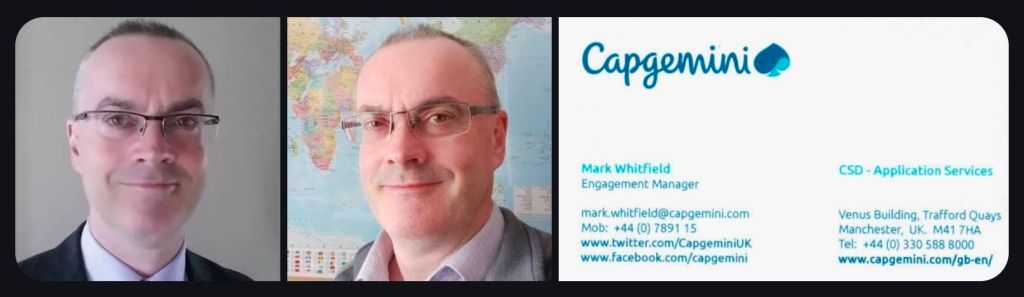
    • Capgemini (2016–Present): Currently serves as an SC-cleared Senior Project Manager, delivering complex IT projects for major banks and government agencies. 

Key Technical Contributions to NonStop

  • Product Development: He co-developed Reflex (a platform health/diagnostic tool) and designed XPERT24 to monitor performance in the XPNET layer of BASE24.
  • Financial Systems: He has managed major projects for global financial entities, including BarclaysHSBCBank of England, and Royal Mail Group, often involving ATM and POS monitoring systems.
  • Programming Expertise: His technical skill set includes NonStop-specific languages and tools such as TAL (Tandem Application Language)PATHWAYXPNETCOBOL85, and C++

About HP NonStop Systems

In the context of Mark Whitfield’s work, NonStop refers to a “shared-nothing” architecture designed by Tandem Computers. These systems are uniquely capable of: 

  • Fault Tolerance: Handling hardware or software failures without system downtime.
  • Scalability: Doubling throughput by adding processors (up to 4,000) without hitches in performance.
  • Core Banking: Processing massive commercial workloads for retail banks and stock exchanges globally.