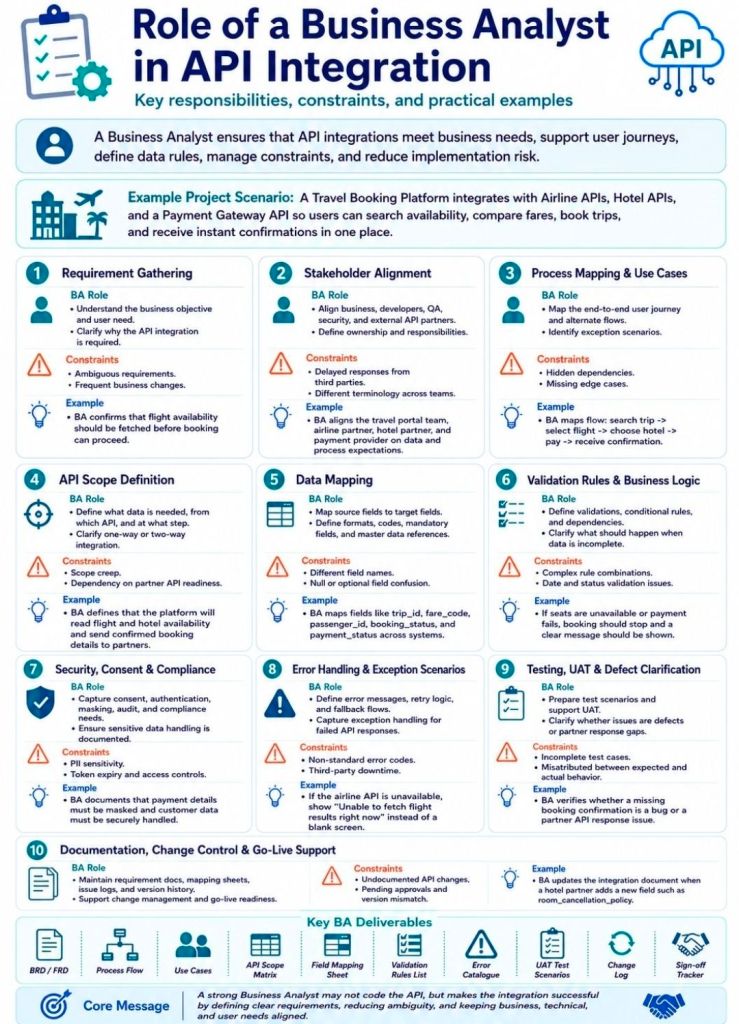
A Business Analyst (BA) acts as the critical bridge between business stakeholders and technical teams. In API integration, the BA translates strategic business goals into clear technical requirements. They ensure systems communicate seamlessly, align with business rules, and support the overall customer journey.
Core responsibilities for a BA in API integration include:
Requirement Gathering: Translating business needs into precise functional and non-functional requirements, such as payload data requirements, expected response times, and security protocols.
Data Mapping: Defining exactly how data fields correspond across different systems (e.g., matching a CRM’s “Client Name” to a billing system’s “Customer”) and determining data transformation rules.
Defining Scenarios: Detailing the API’s behavior for both standard workflows and edge cases, such as handling invalid login attempts, rate limiting, and system timeouts.
Documentation & Modeling: Using sequence diagrams and flowcharts to visually map out how systems interact, and producing clear Interface Control Documents (ICD).
User Stories & Acceptance Criteria: Writing integration-focused user stories for Agile backlogs, including specific HTTP methods, request/response formats, and error codes.
Facilitating Collaboration: Bridging the communication gap by translating technical constraints to non-technical stakeholders and business objectives to developers.
Testing & UAT Support: Assisting the QA team in validating API endpoints using tools like Postman, and ensuring requirements are met during User Acceptance Testing (UAT).
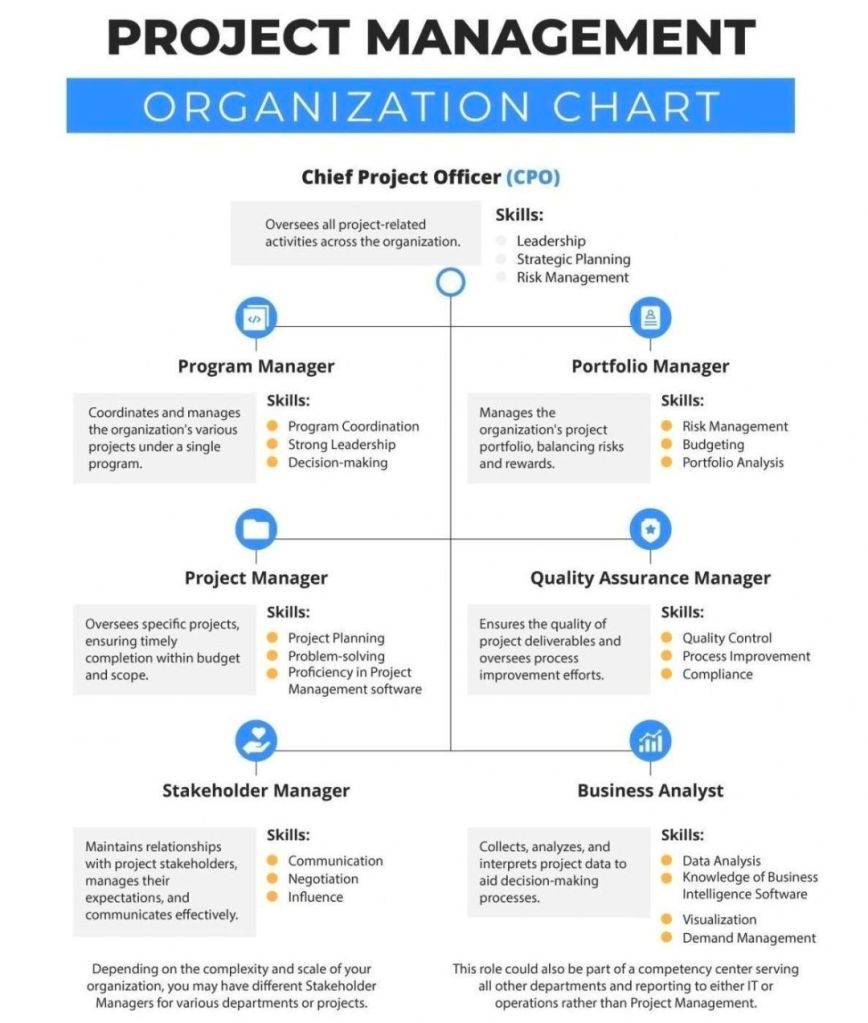
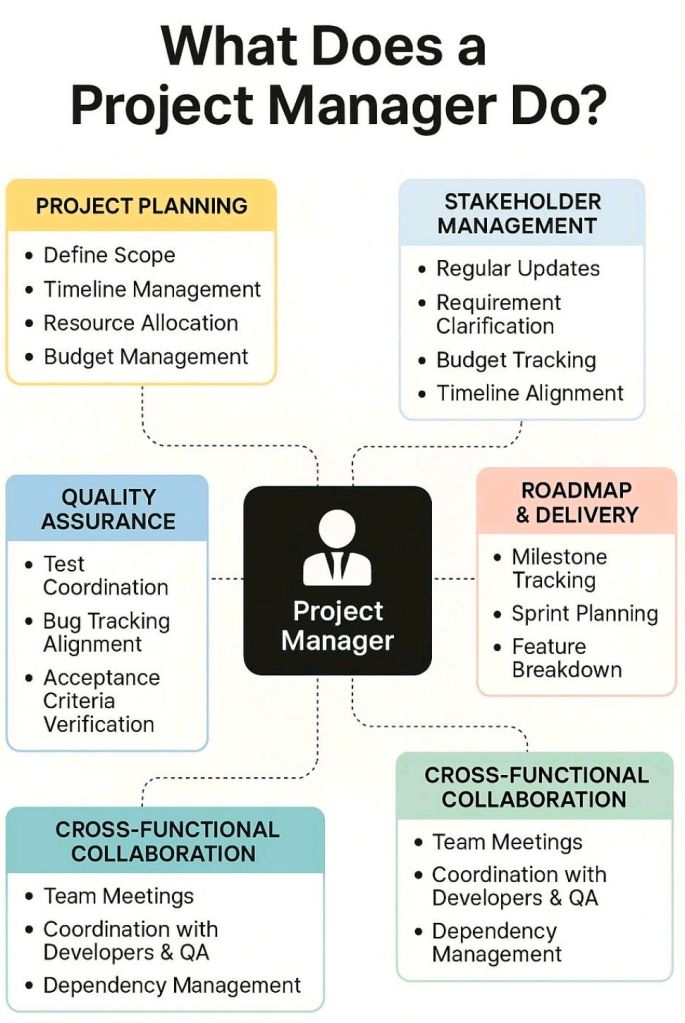
A Capgemini Engagement Manager is a senior-level, client-facing role responsible for end-to-end delivery of complex business and technology transformation programs. They bridge strategy and execution, acting as a trusted advisor to clients while maintaining operational and financial control over projects.
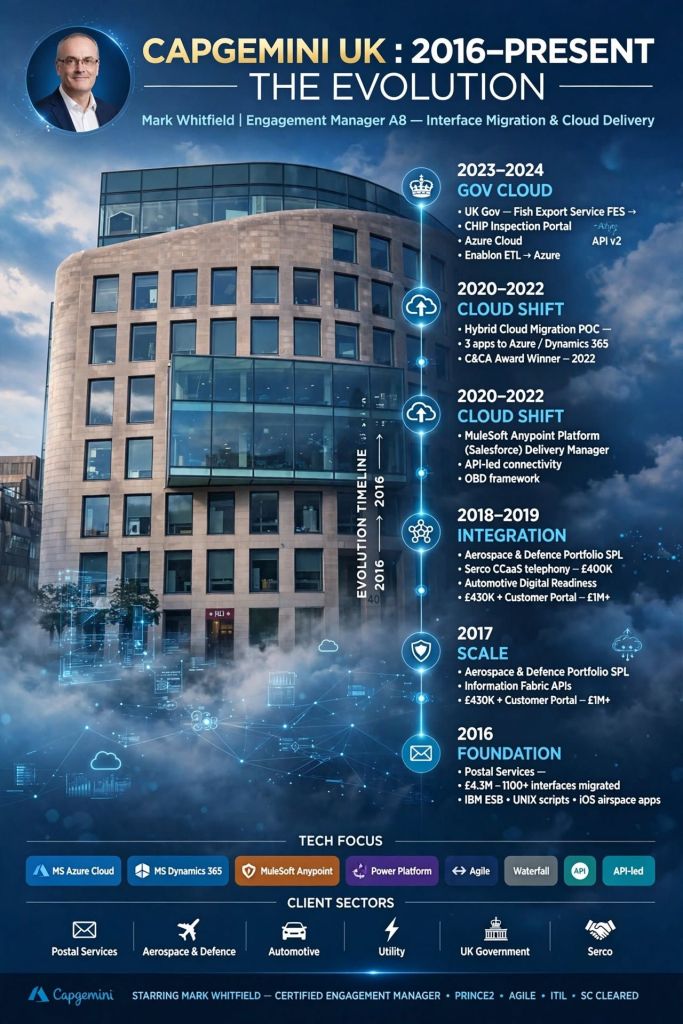
Mark Whitfield | Capgemini projects timeline – 2016 thru to present
Engagement Manager, from 2016
Key Responsibilities
End-to-End Delivery: Overseeing projects from start to finish, ensuring milestones, SLAs, and contractual obligations are met on time and within budget.
Stakeholder Management: Acting as the primary client point of contact while aligning cross-functional and globally distributed delivery teams.
Risk & Governance: Identifying potential roadblocks, proactively managing risks, and ensuring strict adherence to project governance standards.
Business Growth: Spotting opportunities for additional business and supporting bid activities for account expansion.
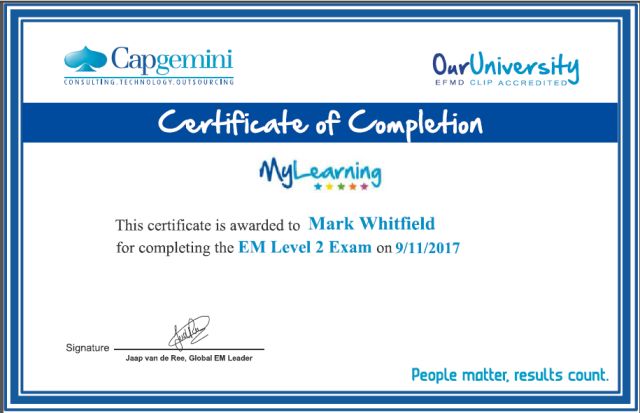
Mark Whitfield, Engagement Management EM Level 2 Exam Passed 2017
Ideal Candidate Profile
Experience: Typically requires a degree in Business, Engineering, or IT, combined with at least 5+ years of experience in project management or service delivery within a B2B environment.
Skills: Strong commercial acumen, proficiency in formal methodologies (e.g., Agile, ITIL), and the ability to lead diverse, multinational teams.
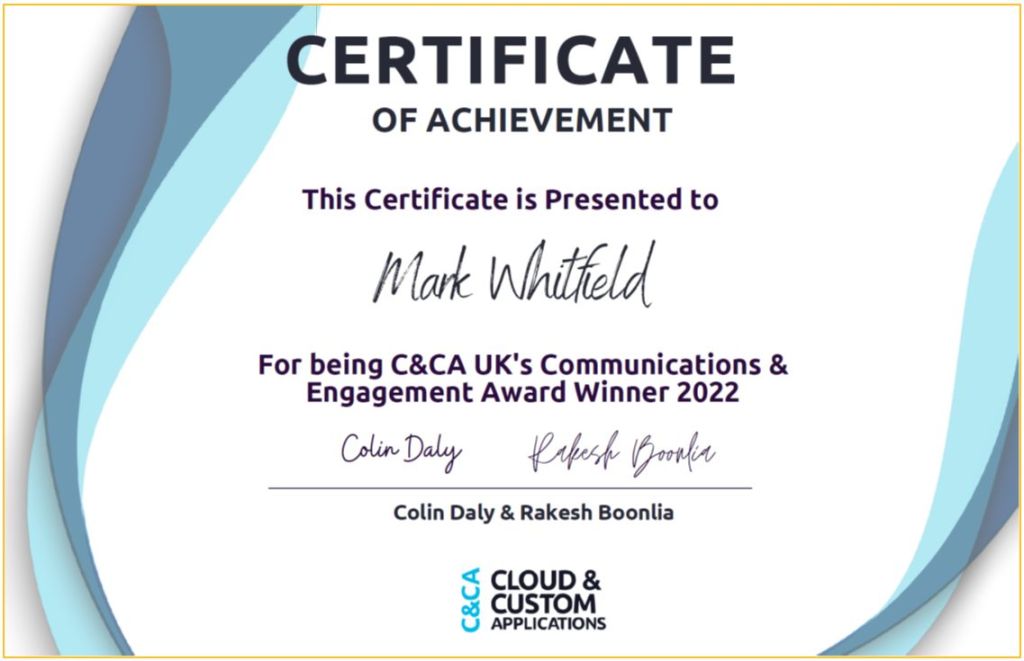
C&CA UK’s Communications & Engagement Award Winner 2022, Cloud & Custom Applications, Mark Whitfield
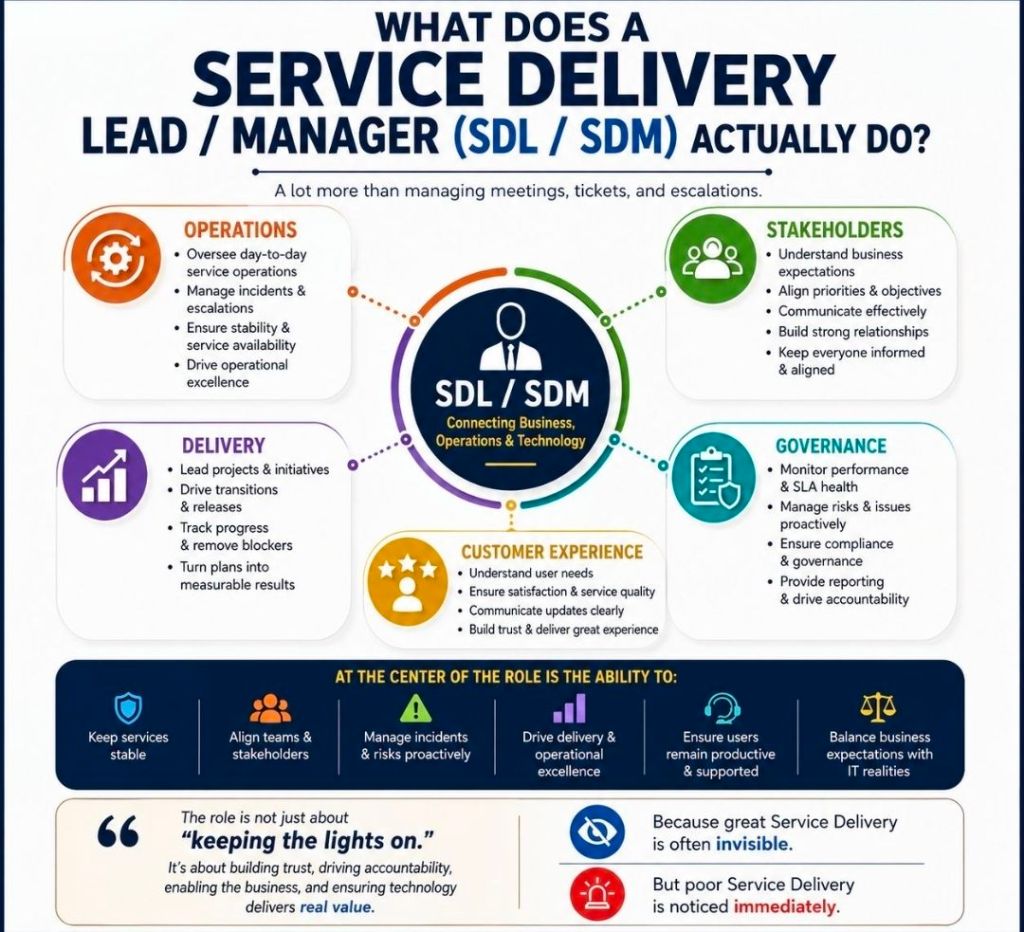
A Service Delivery Manager (SDM) acts as the primary liaison between an organization and its clients, ensuring services are delivered efficiently, meeting contractual obligations (SLAs), and maintaining high client satisfaction. They oversee daily operations, manage client relationships, and drive continuous service improvements.
Key Responsibilities and Duties:
Client Relationship Management: Acting as the central point of contact for service-related issues, leading service review meetings, and ensuring client satisfaction.
SLA & Performance Monitoring: Monitoring key performance indicators (KPIs) and Service Level Agreements (SLAs) to ensure compliance with contractual obligations.
Operational Excellence: Implementing best practices, identifying areas for improvement, and managing continuous service improvement plans.
Incident Management: Managing escalated service issues, leading root cause analysis (RCA), and ensuring swift resolution to restore service.
Team Leadership: Providing guidance, mentoring, and support to technical or support teams to meet performance goals.
Financial Management: Overseeing budgets, managing service credits, and identifying opportunities for cost savings or added value.
Required Skills and Qualifications:
Experience: Proven track record in service delivery, customer success, or project management.
Framework Knowledge: Strong understanding of ITIL frameworks is often required.
Communication: Excellent verbal and written communication skills for building rapport with clients and stakeholders.
Analytical Thinking: Ability to analyze service performance data and make data-driven decisions.
Leadership: Strong leadership skills to drive improvements and resolve conflict.
Common Industries:
Information Technology (IT) & Managed Service Providers (MSPs)