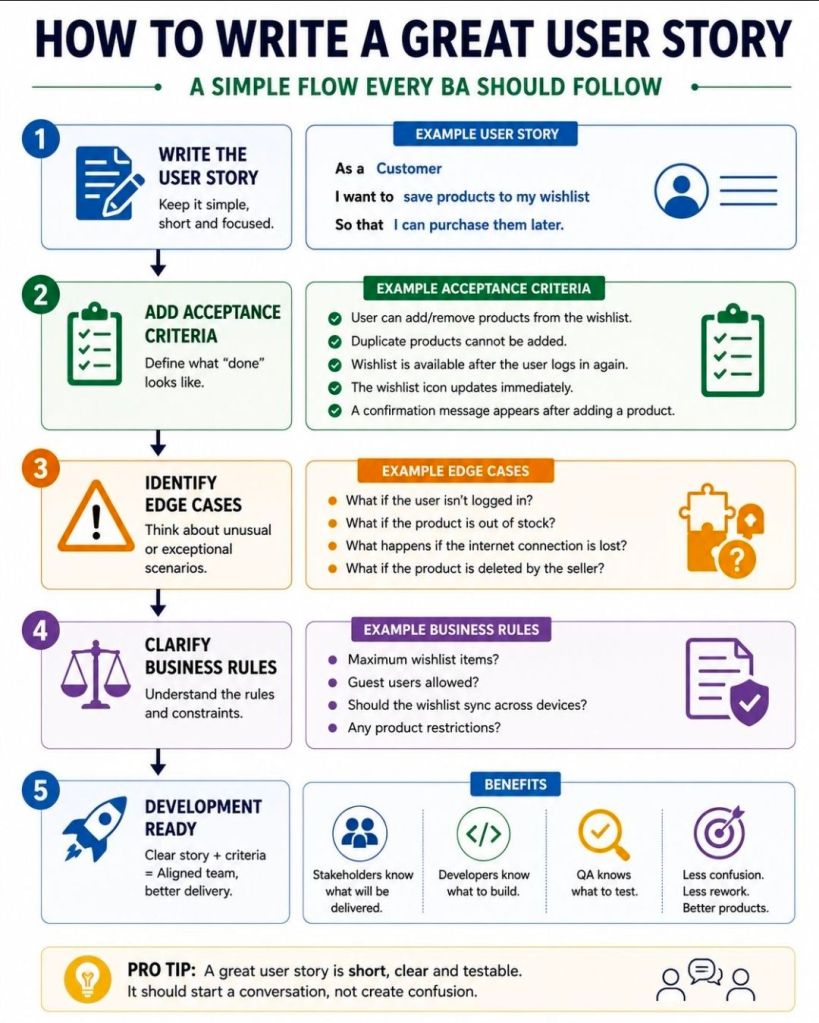
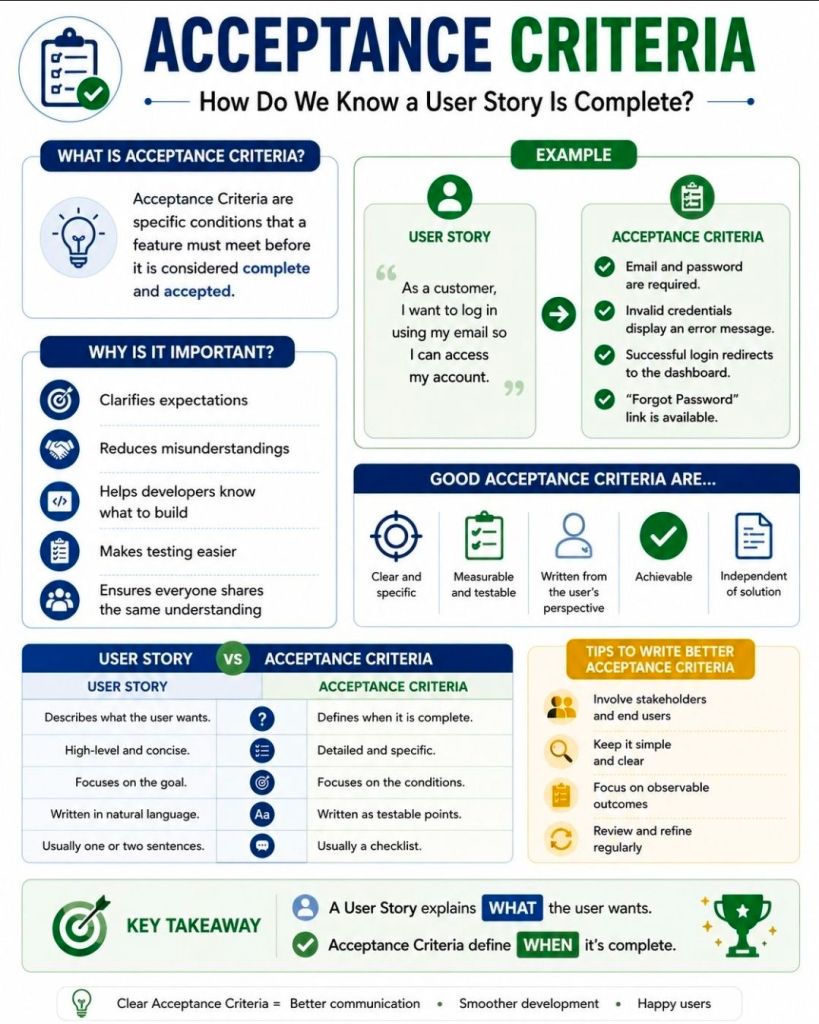
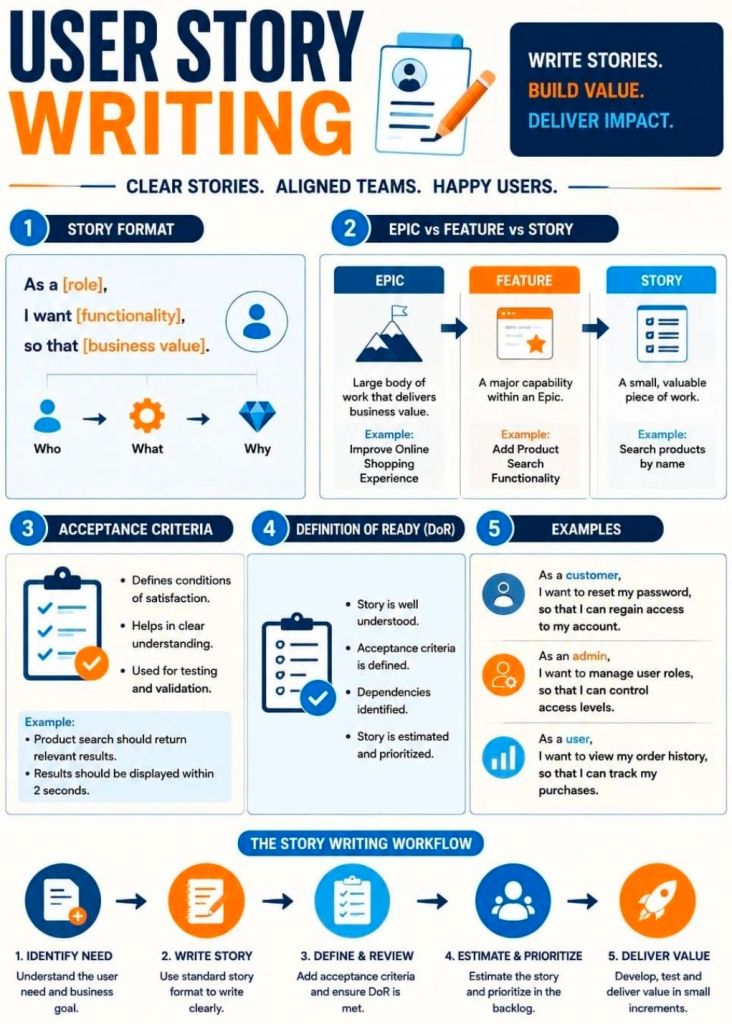
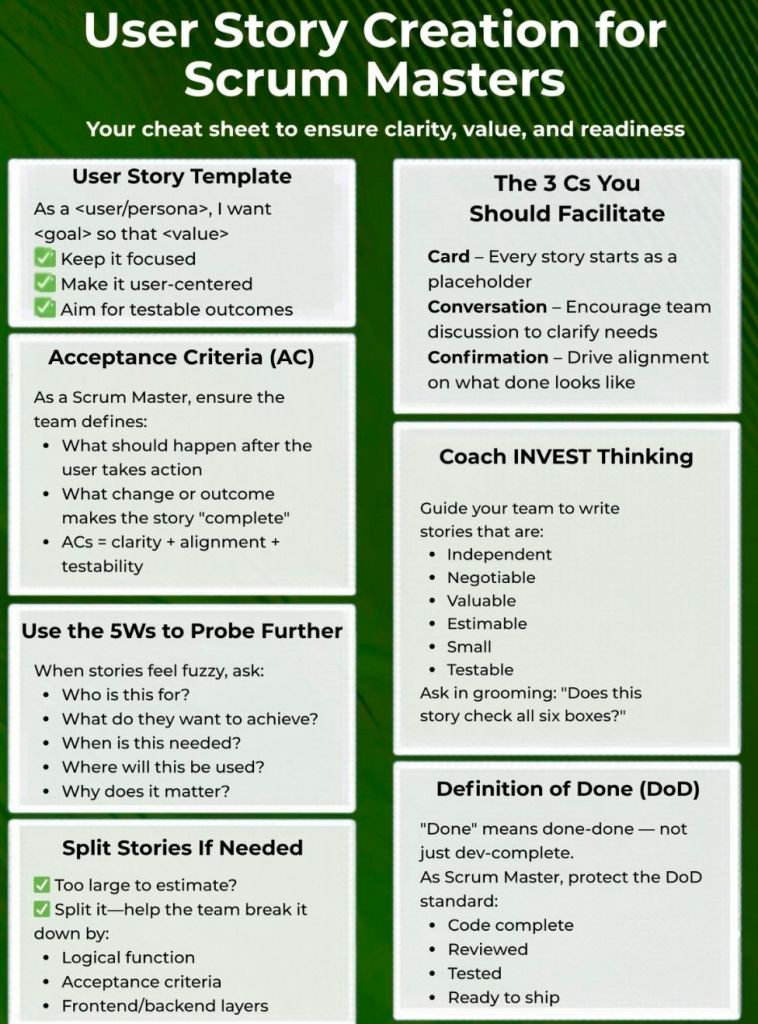
Acceptance criteria are a set of predefined conditions that define the exact boundaries of a user story. They dictate what must be built for the story to be considered complete and ready for release.
Effective acceptance criteria serve to align the vision of the client and the development team, ensuring everyone knows exactly what behavior the feature must demonstrate. A good set of criteria must be:
Verifiable & Testable: Each criterion should yield a binary (pass/fail) result, often allowing for automated or manual testing.
Concise & Unambiguous: Written in plain language that avoids subjective terms like “fast” or “user-friendly” in favor of quantifiable metrics.
User-Centric: Focus on the outcome delivered to the user rather than the internal technical process to get there.
Common Formats
Criteria are typically documented using standard Agile formats:
Given-When-Then (BDD Format): A structured approach often used for functional scenarios.
Given some precondition.
When an action occurs.
Then the expected outcome happens.
Rule-Oriented List: A simple checklist of constraints, rules, or system reactions.
“It’s done when…”: A declarative list of the specific conditions met once functionality is delivered.
Best Practices
Keep it to 3–5 items: If a user story requires more than 8 criteria, it is often too complex and should be split into smaller, more manageable stories.
Define positive and negative paths: Ensure criteria cover both successful scenarios and edge cases (e.g., what happens when a user enters invalid data).
Include Non-Functional Requirements: Account for aspects like security, accessibility, and performance.
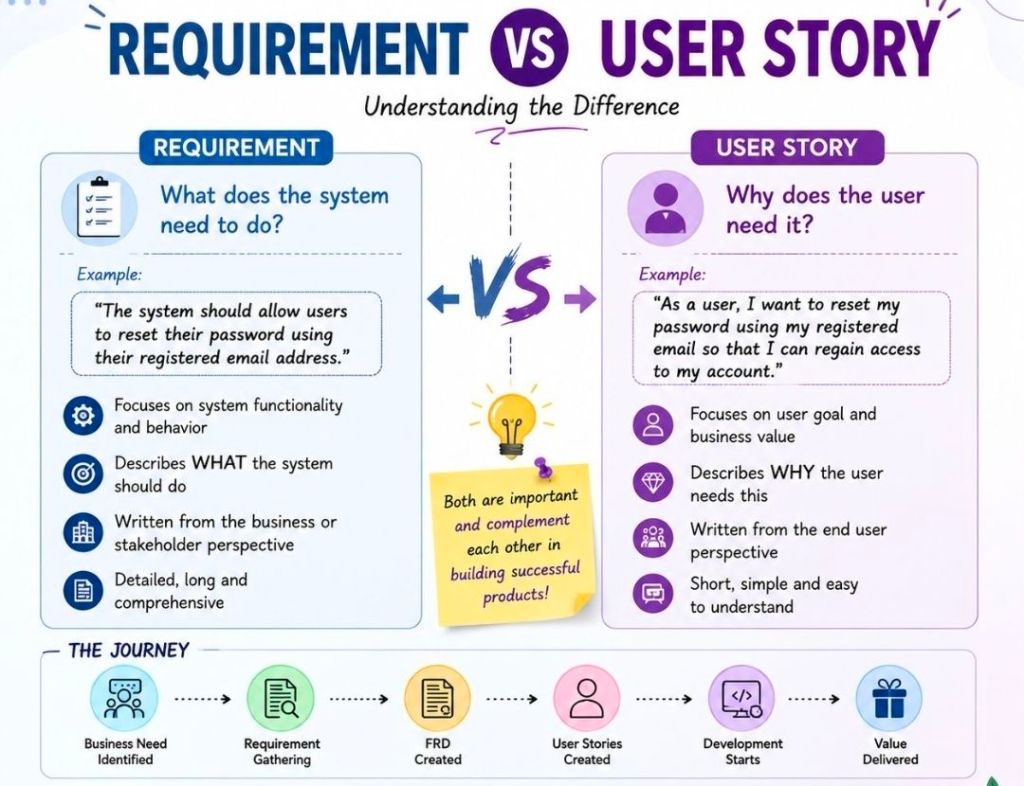
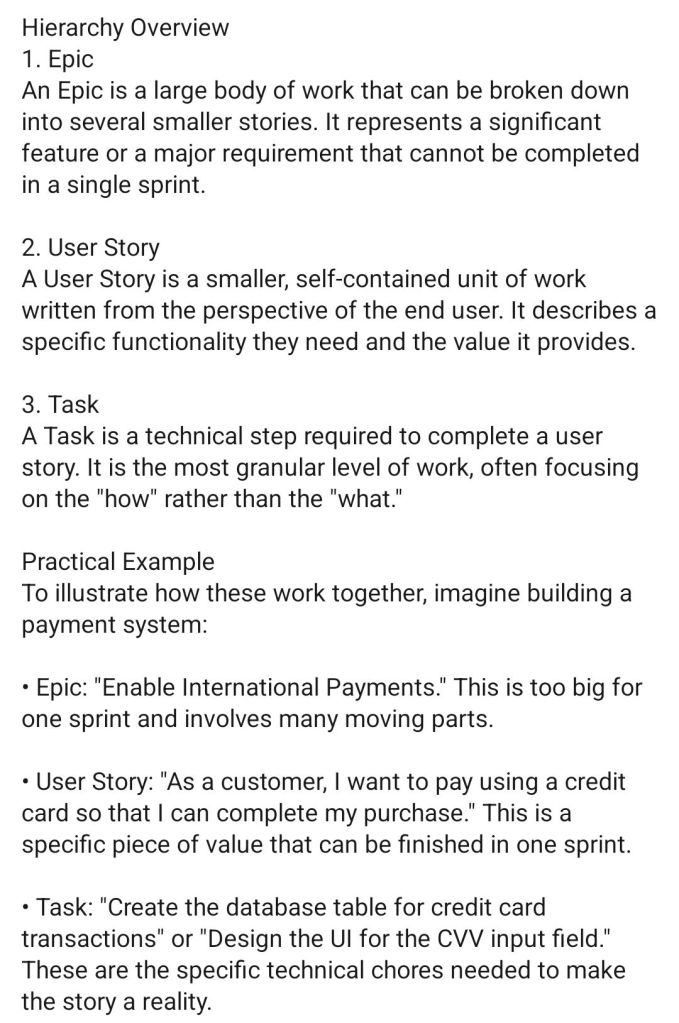
Project requirements are comprehensive, formal specifications describing what a system must do, usually written from the system’s perspective. User stories are short, lightweight descriptions of functionality written from the end-user’s perspective to drive team collaboration and conversation.
The distinction between these two approaches shapes how modern development teams capture scope and value.
Requirement versus User Story
Understanding Project Requirements
Focus: System functionality, technical constraints, and business rules.
Perspective: Written from the viewpoint of the system or product (e.g., “The system shall generate daily PDF reports.”).
Format: Heavy documentation, PRDs (Product Requirements Documents), spreadsheets, or flowcharts.
Methodology: Traditionally used in waterfall methodologies to define the scope comprehensively before any design or development begins.
Understanding User Stories
Focus: The user’s goal, business value, and the “why” behind a feature.
Perspective: Written from the viewpoint of the persona using the system (e.g., “As a Sales Manager, I want to review daily signups so that I can prioritize my sales calls.”).
Format: Short, often using the template: As a [User], I want to [Action], so that [Benefit]. Accompanied by Acceptance Criteria.
Methodology: An Agile-first tool. They are designed to act as an “invitation to a conversation” rather than a finalized contract.
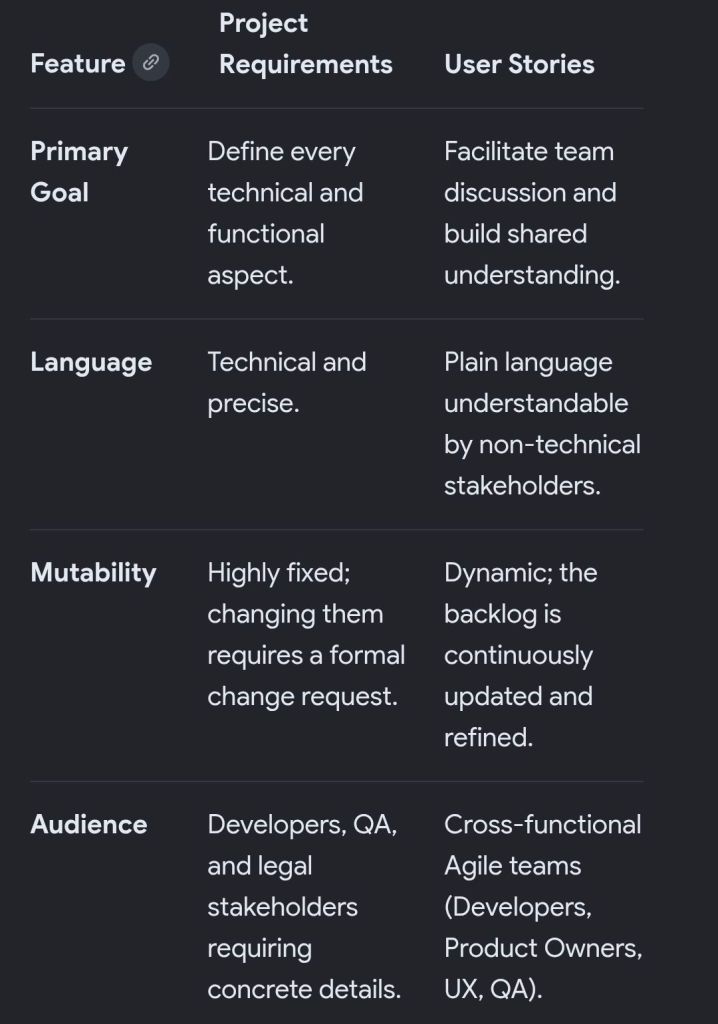
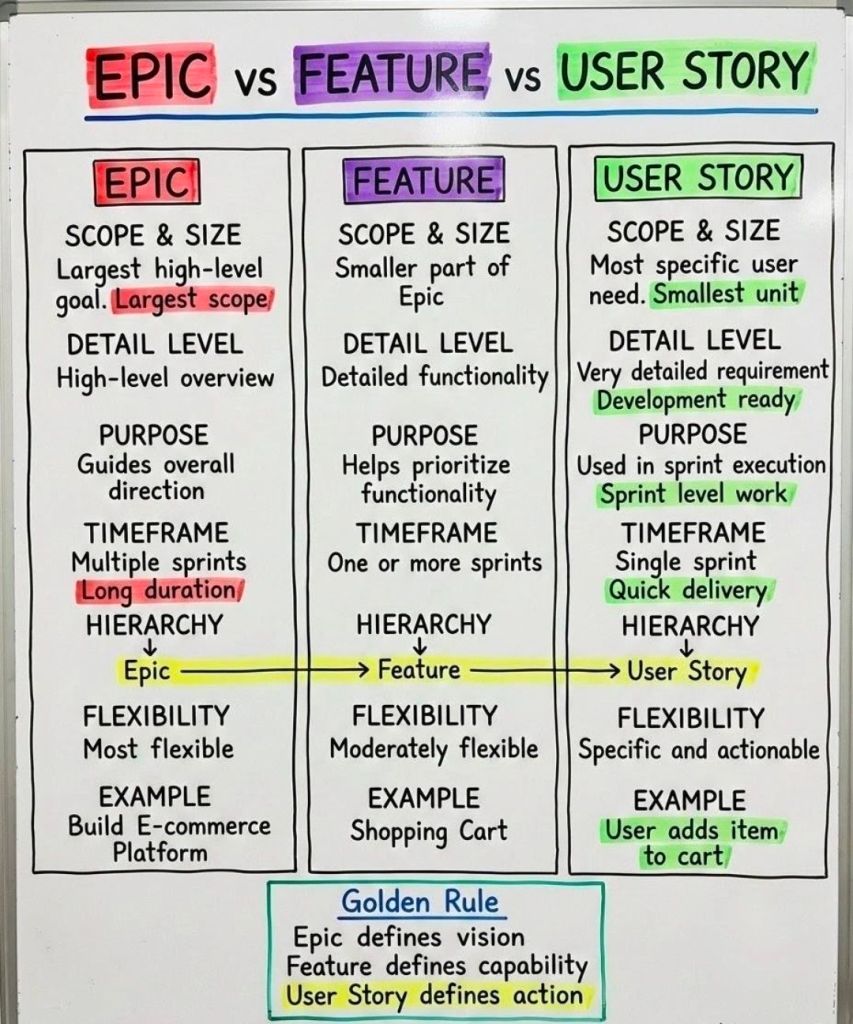
Key Differences at a Glance
How They Work Together (The Hybrid Approach)
Most modern software development teams don’t abandon requirements entirely, but they shift the format. They use lightweight User Stories to represent the core value, and then pair them with technical Acceptance Criteria or supplementary design specifications to clarify the exact requirements the system must satisfy.