Why an Organisation Needs a PMO, Project Management Office

Why an Organisation Needs a PMO, Project Management Office
Why an Organisation Needs a PMO,
Project Management Office

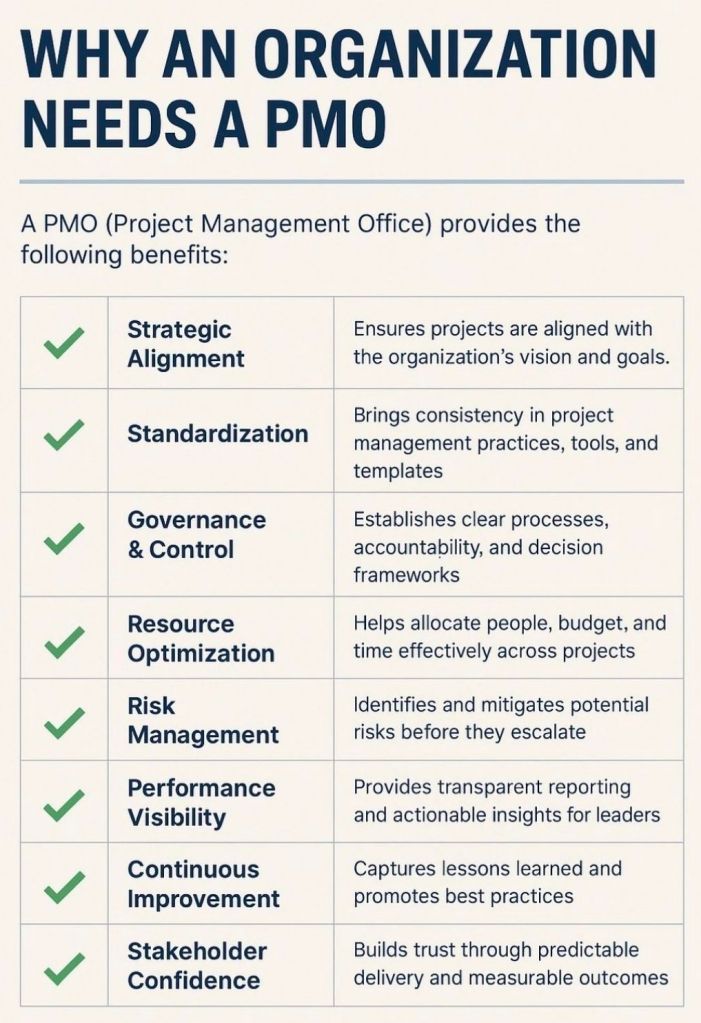
An organisation needs a Project Management Office (PMO) to act as the strategic backbone that standardises processes, minimises operational risks, and directly aligns day-to-day project execution with long-term business goals.

Research by the Project Management Institute (PMI) highlights that 80% of high-performing organisations have established PMOs. Furthermore, companies utilizing a PMO deliver initiatives up to 2.5 times faster and waste 38% less budget compared to those operating without one.

1. Strategic Alignment & Portfolio Prioritisation

  • Goal connection: PMOs act as a filter, continuously checking that all active projects serve the corporate strategy.
  • Value redirection: The office can proactively recommend pausing or canceling redundant projects, redirecting resources to high-value initiatives.
  • Intake governance: They design a structured framework for project intake to stop random, impulsive investments.

2. Standardisation & Quality Assurance

  • Unified framework: PMOs replace chaotic “every-team-for-itself” habits with shared templates, common metrics, and standard delivery methodologies.
  • Repetitive economy: Creating consistent guidelines allows multi-project execution to become a predictable machine, reducing human error.
  • Performance baselines: Standardised metrics give leadership an objective rubric to compare project health across entirely different business units.

3. Resource Optimisation

  • Bottleneck reduction: Centralised control prevents staff from being unsustainably double-booked across competing silo projects.
  • Capacity visibility: Real-time capacity mapping lets the executive suite understand exactly who is available before approving future workloads.
  • Skills leverage: PMOs actively track internal talents, allowing organisations to pivot specialized professionals to high-priority issues quickly.

4. Data-Driven Governance & Risk Management

  • Executive transparency: PMOs deliver aggregated status dashboards (like “Stop Light” reporting) to keep stakeholders clearly informed without digging through minor details.
  • Early risk mitigation: Using institutional tools like RAID logs, they catch budget variances and deadline slips before they cascade out of control.
  • Compliance protection: They ensure strict adherence to industry regulations, corporate ethics, and legal benchmarks to safeguard the firm from penalties.

5. Knowledge Management & Continuity

  • Lessons learned: The PMO retains historical metrics, helping project teams build realistic, accurate cost and timeframe estimates on subsequent iterations.
  • Mentorship hubs: They provide ongoing skills coaching and workshops to organically raise the project management maturity level across the company.
Capgemini Projects Managed from 2016 thru 2025, Summary

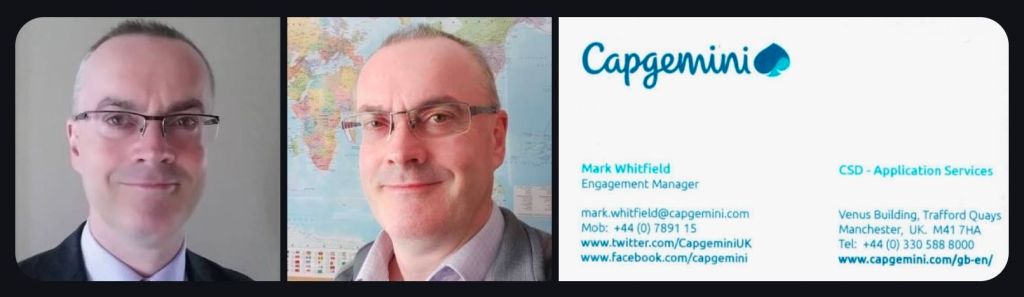
Mark Whitfield is an SC-cleared Senior IT Project Manager and Engagement Manager at Capgemini UK (Custom Bespoke Solutions).

Joining in January 2016, he has orchestrated enterprise-scale cloud migrations, middleware application refactoring, and API-led integration architectures across public sector and tier-one corporate clients.

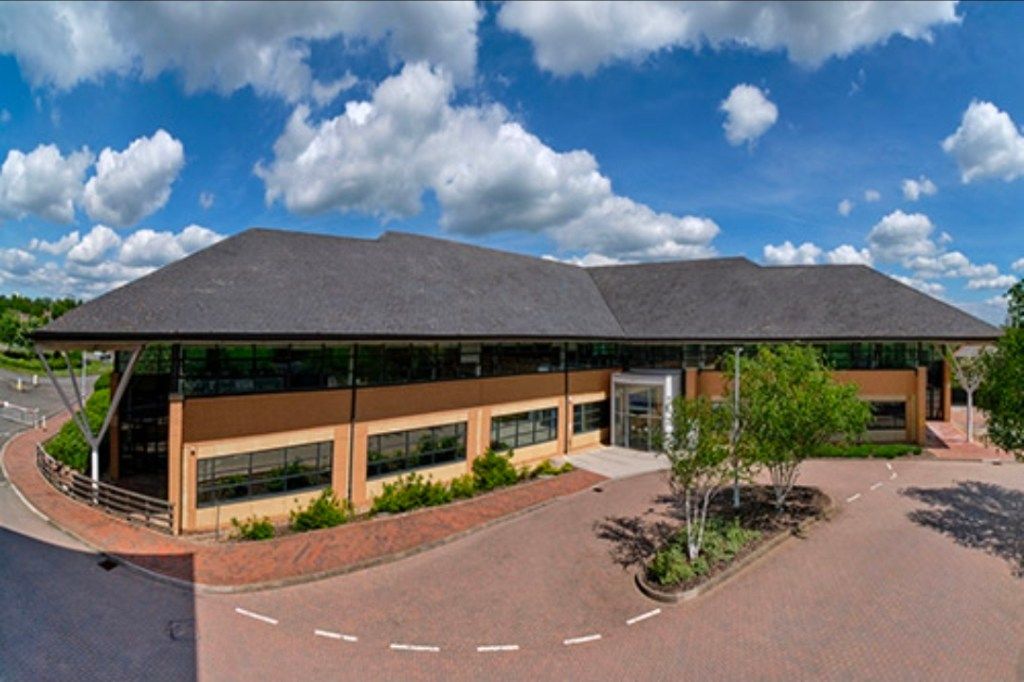
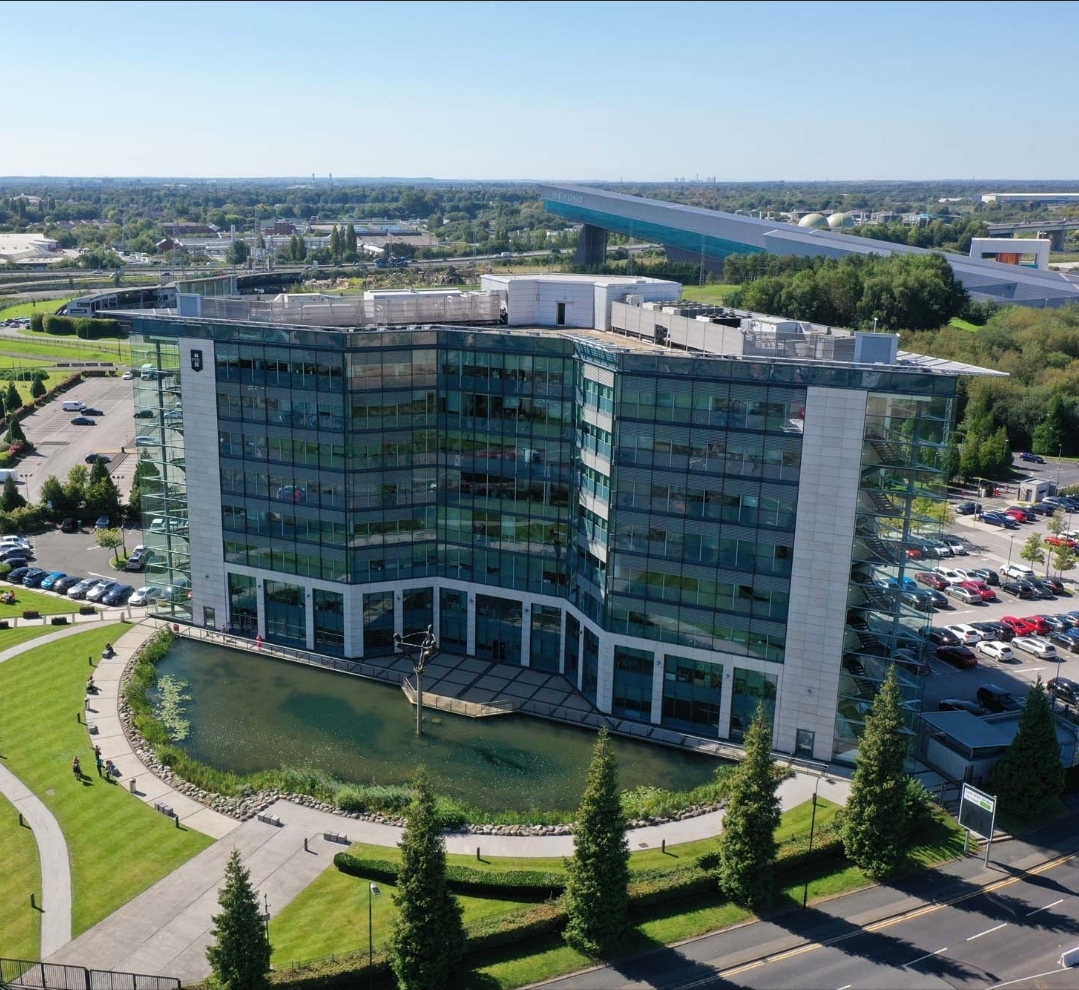
Capgemini UK, Floor 7, Venus Building, Trafford Quays, Manchester. M41 7HA
Capgemini UK, Floor 7, Venus Building,
Trafford Quays

Below is the complete portfolio overview and highly detailed chronological breakdown by year of his project delivery history at Capgemini.


Project Portfolio Overview

  • Role Title: Certified Engagement Manager / Delivery Manager (A8 Core Level)
  • Methodologies: Agile Scrum ceremonies, Waterfall frameworks, and hybrid delivery patterns
  • Core Competencies: Hybrid cloud migrations, API lifecycle architectures, cross-data centre integration, multi-supplier governance, and financial forecasting
  • Key Clients Served: UK Government, MuleSoft / Salesforce, Jaguar Land Rover, Royal Mail Group, NATS, and Welsh Water

Detailed Capgemini Projects Timeline Breakdown by Year:

2016 – 2017: Aerospace & Defence Integration & Postal Infrastructure

  • Aerospace & Defence Mobile Apps: Managed an Agile Scrum delivery stream for a UK-wide Air Traffic organisation (NATS). He supervised the development of dual-layered Apple iOS applications rendering real-time airspace positioning data, separating sensitive internal military maps from public views.
  • Salesforce Portal Deployment: Led the enterprise integration and deployment of a Salesforce-driven Single Customer View (SCV) portal platform for defence stakeholders.
  • Postal Services Migration (May 2016 – Oct 2016): Appointed as PM for an award-winning £4.3 million Data Centre Migration project for a major postal client (Royal Mail Group). He directed 90 Capgemini engineers to shift 1,100+ critical interfaces—migrating file transmissions written in UNIX shell scripts and upgrading 150 interfaces processing through IBM ESB to safe software versions right before peak seasonal trading lockouts.

2017 – 2018: Automotive Supply Chain Middleware

  • Jaguar Land Rover iFAB Project: Directed the complex 12-month iFAB Middleware Project architecture development scheme. This cross-functional framework connected globally dispersed manufacturing supply components.
  • Supplier Governance: Coordinated on-site daily standups alongside integration engineering leads to accurately synchronize multiple software suppliers handling distinct tiers of middleware, messaging queues, and front-end architectures.

2018 – 2019: Enterprise API Platform Delivery (MuleSoft)

  • MuleSoft HQ Augmentation (October 2018 – June 2019): Embedded directly into MuleSoft’s London headquarters (Salesforce Tower) as a Senior Delivery Manager.
MuleSoft's London office is located within the Salesforce Tower (formerly known as Heron Tower) at 110 Bishopsgate.
MuleSoft’s London office is located within the Salesforce Tower at 110 Bishopsgate.
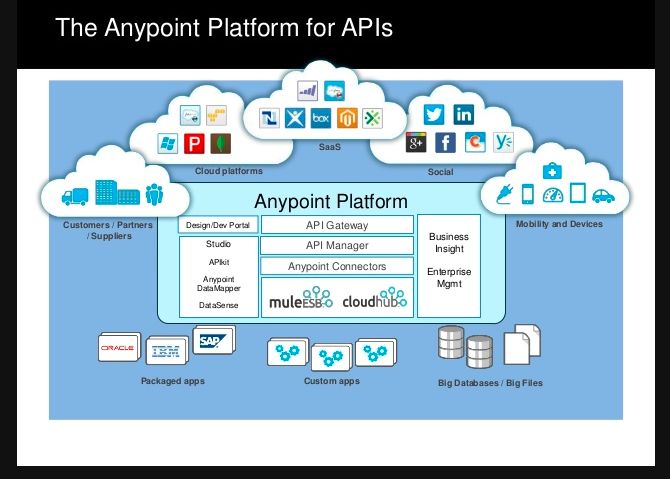
  • Anypoint Platform Deployments: Guided multinational corporate clients through API-led connectivity lifecycles. This encompassed configuring Anypoint Code Builder structures, validating hyper-automation runtime layers, and ensuring architectural compliance against regulatory framework rules.
Anypoint Platform Deployments: Guided multinational corporate clients through API-led connectivity lifecycles.
Anypoint Platform is the leading enterprise platform for building APIs, integrations & application networks

2019 – 2021: Large-Scale Public Sector Cloud Migration

  • UK Government Hybrid Cloud Transformation: Commanded a massive modernization program migrating a highly complex estate of legacy code.
  • 130 Applications Transformed: Acted as the primary client escalation point to refactor, re-host, and re-platform 130 public-sector software applications into hybrid cloud environments. His responsibilities included aligning the massive multi-stack migration with strict GDPR protection directives and managing offshore project delivery targets.

2022: Utility Infrastructure & Cloud Upgrades

  • Water Utility EQS Cloud Shift: Dual-managed a £0.5 million technical contract moving an legacy document management environment (EQS) onto Microsoft Azure cloud structures via Enablon for Welsh Water and Scottish Water.
  • MS Dynamics 365 Evolution: Supervised a £0.4 million discovery and blueprint phase to move 12 legacy Microsoft Dynamics 2016 instances operating on outdated shared 8.2 infrastructure onto the unified Microsoft Dynamics 365 Online ecosystem. This involved authoring precise Statements of Work (SoW), custom exit strategies, and foundational Microsoft Project (MPP) tracking models.
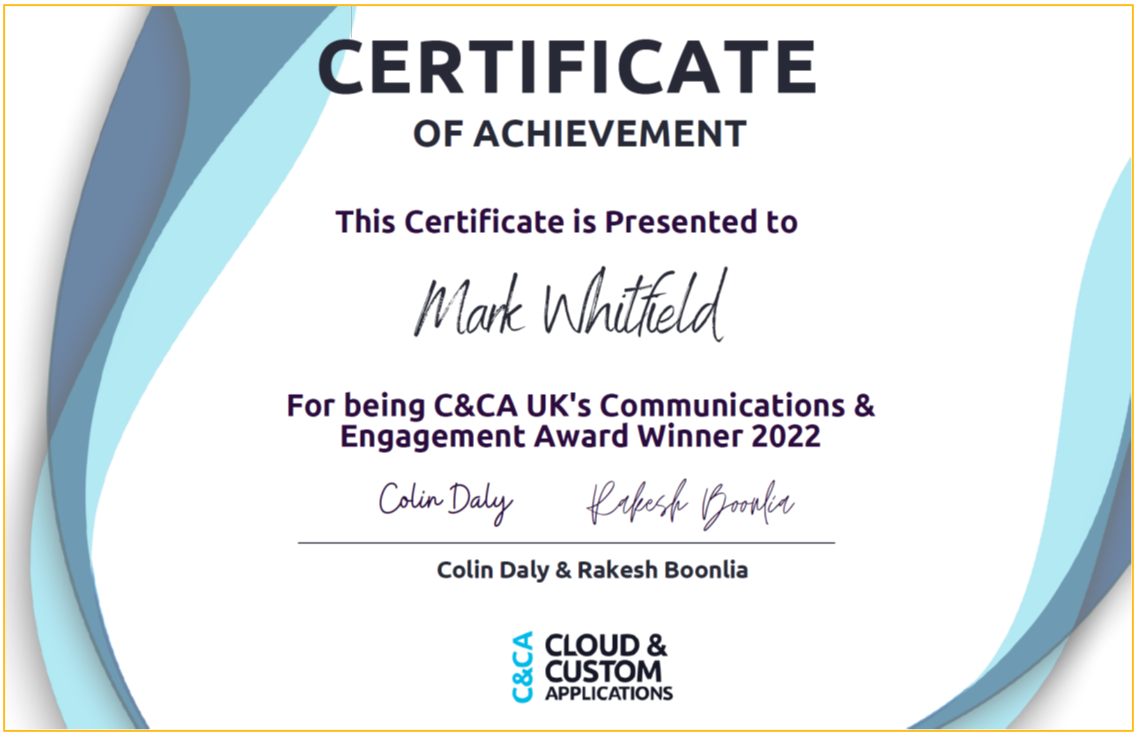
  • Accolades: Won the prestigious Capgemini C&CA UK Communications & Engagement Award in December 2022 for outstanding delivery inside the Cloud & Custom Applications business unit.
C&CA UK's Communications & Engagement Award Winner 2022 - Cloud & Custom Applications - Capgemini UK
C&CA UK’s Communications & Engagement Award Winner 2022 – Cloud & Custom Applications – Capgemini UK

Verified Sourcing & Portfolio Links

Capgemini Projects Managed from 2016 thru 2025, Summary

Mark Whitfield HPE NonStop Tandem Experience over three decades

Mark Whitfield is a Senior IT Project Manager with over three decades of experience, heavily rooted in HPE NonStop (formerly Tandem).

His career has transitioned from hands-on NonStop development and product management into large enterprise cloud and digital transformation projects.

His NonStop specific projects and career trajectory can be broken down (at a high-level) by era, location, and focus as follows:

1990–1995: Early Programming

  • Location: Barclays, Poole, Dorset, UK
  • Focus: Electronic banking programming and development on Tandem Mainframe Computers.
  • Projects: Wrote, developed, and maintained software like sp/ARCHITECT-BANK and associated billing software (in Poole, 1993). This involved building early electronic banking systems for desktops long before internet banking was prevalent.
1993, Barclays, Poole, Dorset, UK

1995–2013: Senior Development & Product Management

  • Location: Insider Technologies, Salford Quays, Manchester, UK
  • Focus: NonStop product management, software design, and real-time event monitoring.
  • Projects: Product managed software lifecycles for four monitoring products (two NonStop based). This included creating health and diagnostic tools (RTLX, Reflex 80:20, Reflex ONE24, XPERT24) for mission-critical NonStop environments. He also deployed volume testing on early HP NonStop S7000 nodes for CRESTCo in London in 1997.
Spinnaker Court, Chandlers Point, Insider Technologies, Salford Quays, Manchester, UK
Insider Technologies, Salford Quays, Manchester, UK

2013–2014: Legacy Migration & Consulting

  • Location: Wincor Nixdorf & ATM/POS Financial Services, UK
  • Focus: Modernization and migration of legacy systems.
  • Projects: Managed a £5M+ replacement of legacy HP NonStop software systems at a large UK retail bank, migrating functionalities to AIX-based J2EE and Oracle architectures.
Diebold Nixdorf Ltd, Cain Rd, Binfield, Bracknell, RG12 1WP
Diebold Nixdorf Ltd, Cain Rd,
Binfield, Bracknell, RG12 1WP

2016–Present: Cloud Transformation & Digital Delivery

  • Location: Capgemini UK, Trafford Quays / UK-Wide
  • Focus: Delivery of enterprise-scale middleware, digital transformation, and cloud.
  • Projects: Acts as an Engagement Manager and SC-Cleared Project Manager. Focus includes Agile software delivery for Air Traffic organisations (e.g., iOS applications for military and public-facing airspace tracking) and rolling out middleware solutions.
Capgemini UK, Floor 7, Venus Building, Trafford Quays, Manchester. M41 7HA
Capgemini UK, Floor 7,
Venus Building, Trafford Quays
C&CA UK's Communications & Engagement Award Winner 2022 - Cloud & Custom Applications - Capgemini UK
C&CA UK’s Communications & Engagement Award Winner 2022 – Cloud & Custom Applications – Capgemini UK

For more career detail, click here.

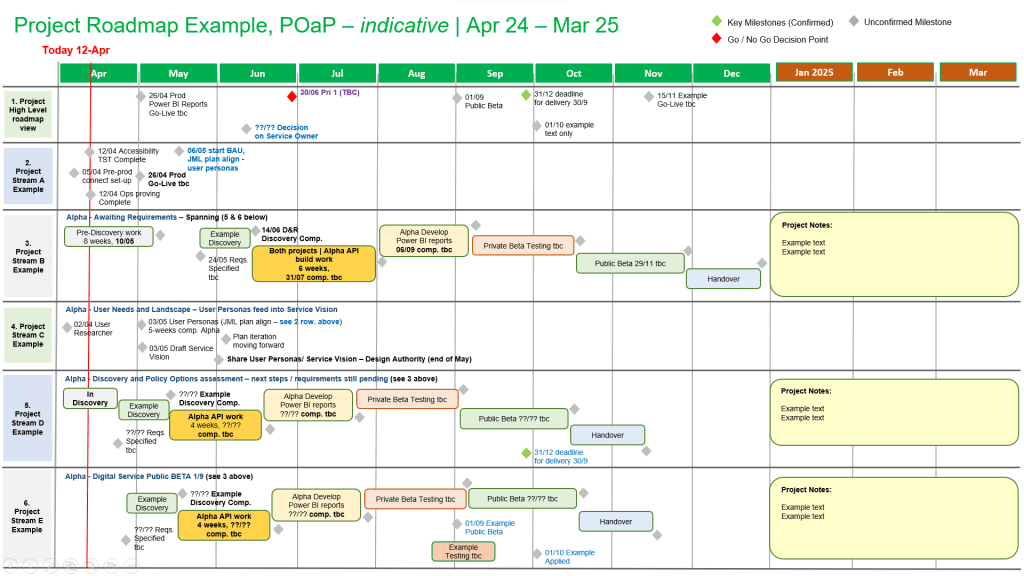
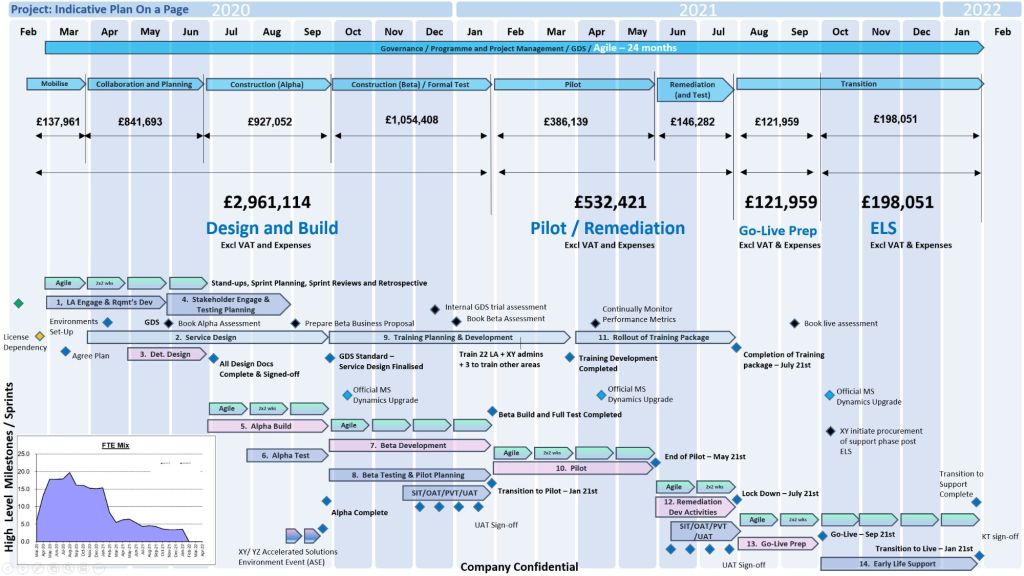
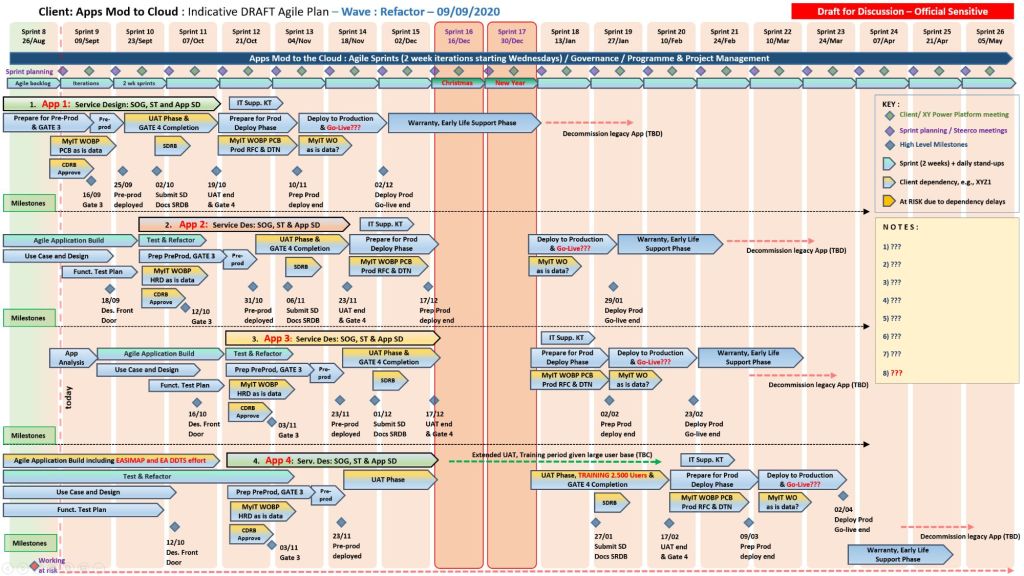
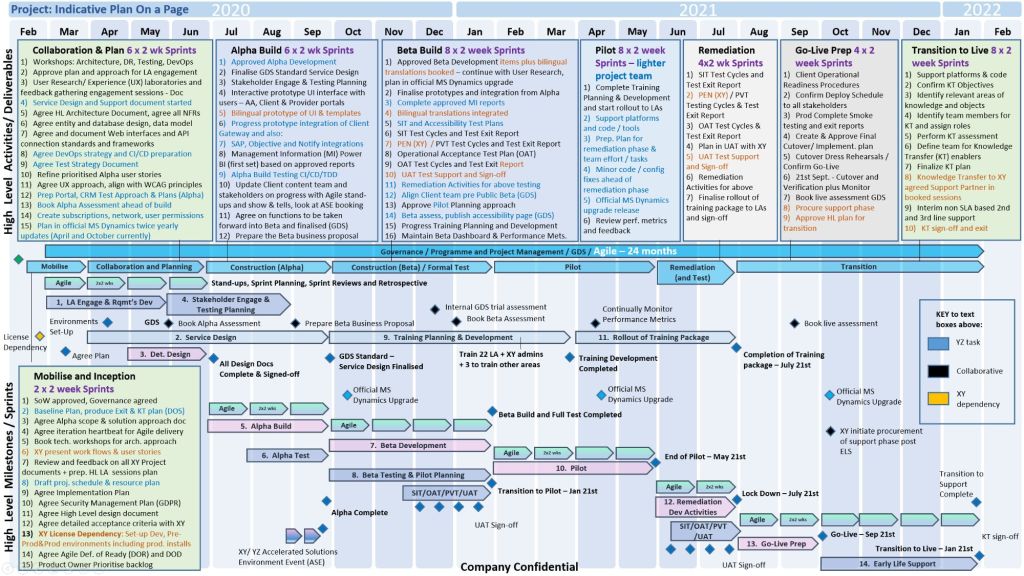
POAP Plan On a Page Example Templates for Download

Available for download here.

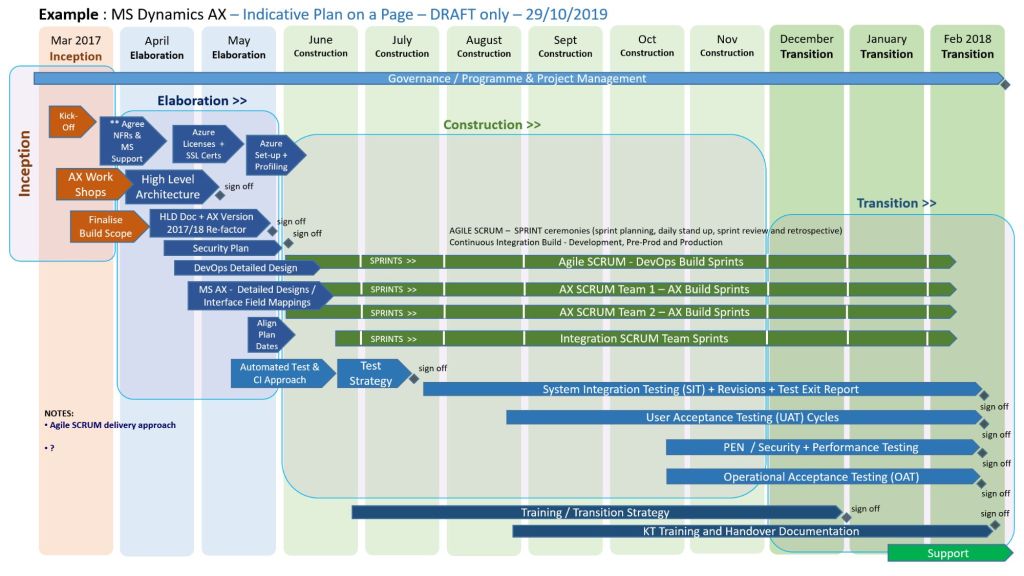
Plan on a page POaP example 1
POaP example 1
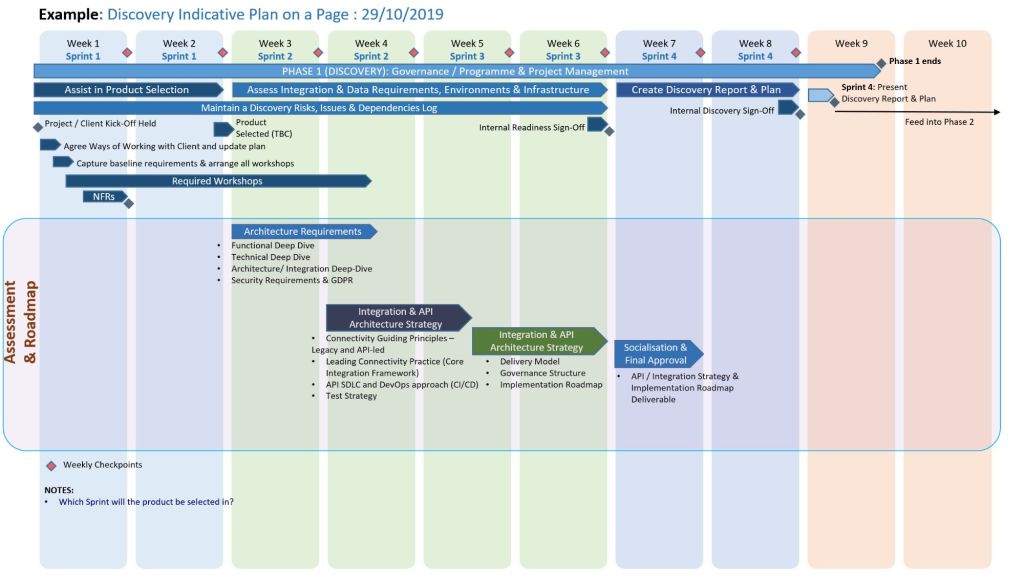
Plan on a page POaP example 2
POaP example 2
Plan on a page POaP example 3
POaP example 3
Plan on a page POaP example 4
POaP example 4
Plan on a page POaP example 5
POaP example 5
Plan on a page POaP example 6
POaP example 6
Plan on a page POaP example 7
POaP example 7

Many more examples available in download pack.

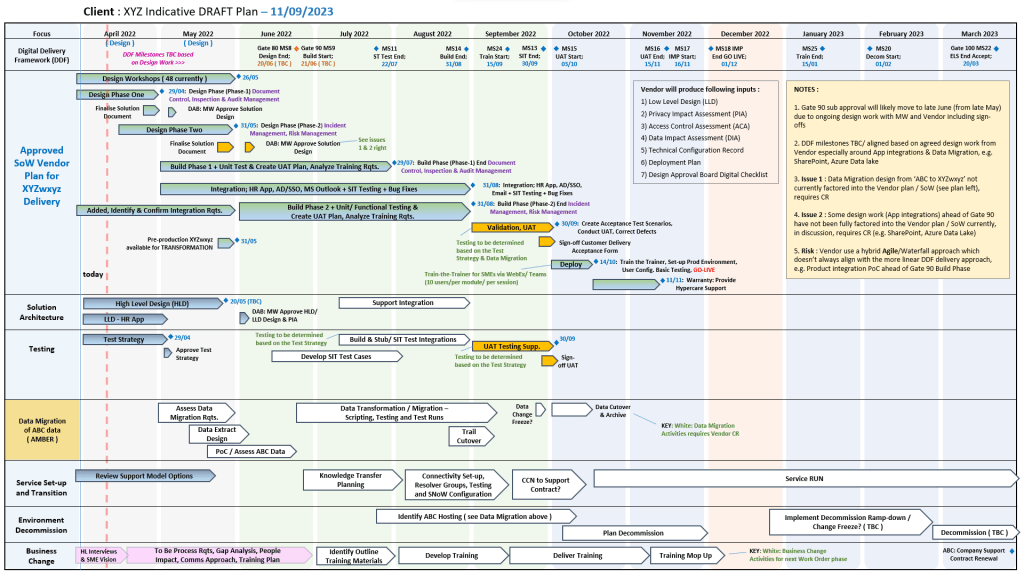
A Plan on a Page (POaP) is a concise, high-level visual summary of a project used to communicate timelines, milestones, and strategic objectives to stakeholders and executives. It condenses detailed data into an easy-to-digest, single-page format.

Core Components of a POaP

An effective POaP cuts out the noise of day-to-day task lists and focuses purely on headline information. It typically includes:

  • Project Overview: Title, project manager, and the overarching business objective.
  • Timeline & Milestones: A horizontal, time-phased bar chart mapping the project’s key phases.
  • Key Deliverables: 4 to 6 major outputs or goals required for success.
  • Risks & Dependencies: Critical blockers that require executive attention.

Why and When to Use It

  • Steering Committees: Ideal for Steering Committee meetings (Steerco) where executives need to see progress at a glance.
  • Stakeholder Alignment: Keeps teams focused on strategic vision rather than getting “lost in the weeds” of daily operations.
  • Client Updates: Acts as an excellent executive summary for clients without overwhelming them with micro-details

POAP Plan On a Page Example Templates for Download

Mark Whitfield Project Management Professional Training Certificates

Mark Whitfield, Project Management Professional Training Certificates
Project Management Professional Training

December 2022 – C&CA UK’s Communications & Engagement Award Winner – Cloud & Custom Applications – Capgemini UK

Capgemini C&CA UK's Communications & Engagement Award Winner 2022 - Cloud & Custom Applications - Capgemini UK
December 2022 – Capgemini C&CA UK’s Communications & Engagement Award Winner

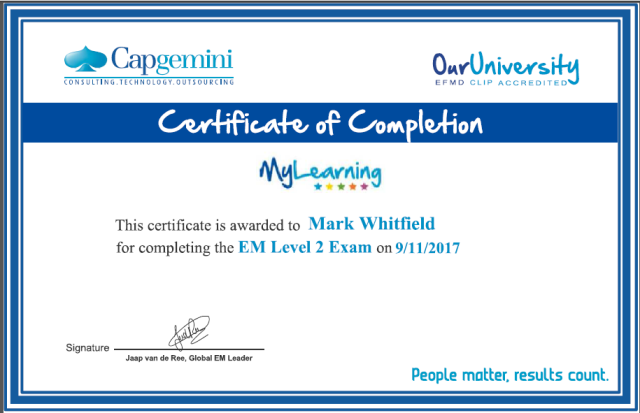
November 2017 – Advanced Engagement Management Course – Level 2 Exam

November 2017 – Capgemini Advanced Engagement Management Course – Level 2 Exam
November 2017 – Capgemini Advanced Engagement Management Course

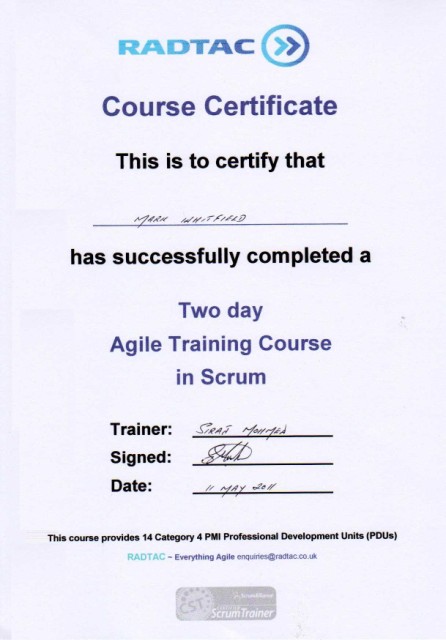
May 2011 – Agile SCRUM Training Course

May 2011 – Agile SCRUM Training Course mark whitfield
May 2011 – Agile SCRUM Training Course

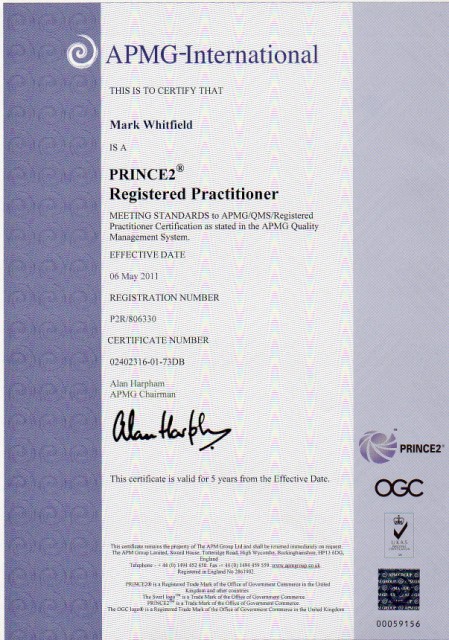
May 2011 – Registered PRINCE2 Practitioner with ILX

May 2011 – Registered PRINCE2 Practitioner with ILX

May 2000 – Microsoft Project: Orange Belt –
Managing a Single Project with Microsoft Office Project 98

May 2000 – Microsoft Project: Orange Belt –
Managing a Single Project with Microsoft Office Project 98
May 2000 – Microsoft Project: Orange Belt

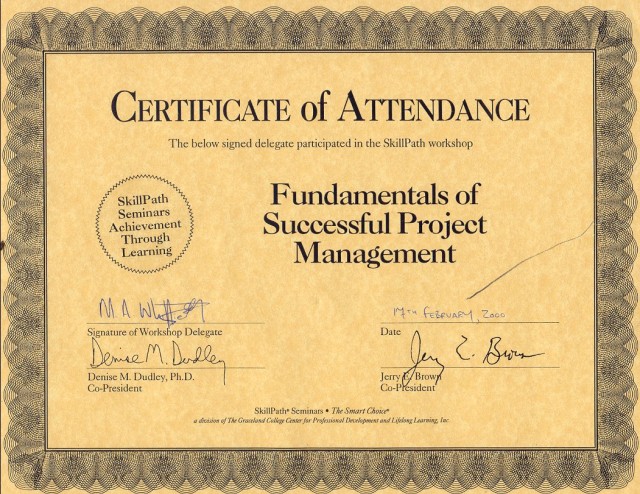
February 2000 – Fundamentals of Successful Project Management

February 2000 – Fundamentals of Successful Project Management

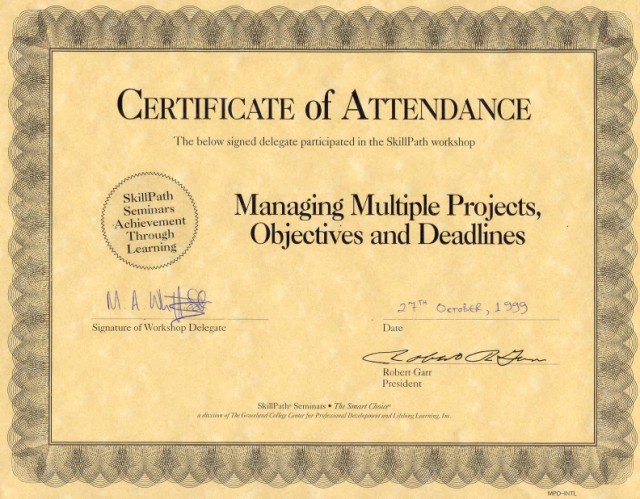
October 1999 – Managing Multiple Projects, Objectives and Deadlines

October 1999 – Managing Multiple Projects, Objectives and Deadlines

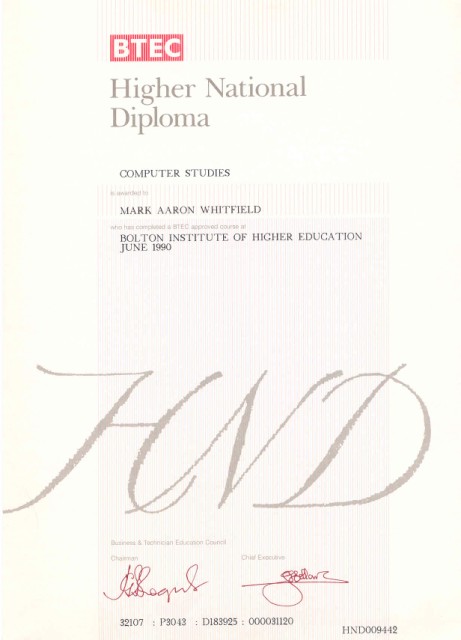
June 1990 – Higher National Diploma in Computer Studies
(DISTINCTION – overall top) – BIHE

June 1990 – Higher National Diploma in Computer Studies (DISTINCTION – overall top) – BIHE
June 1990 – Higher National Diploma in Computer Studies, Distinction

Mark Whitfield Project Management Professional Training Certificates

PRINCE2 project templates, Excel (.xls/.xlsm) & MS Project (.mpp) formats

You can find downloadable PRINCE2 project templates in Excel (.xls/.xlsm) and Microsoft Project (.mpp) formats across several specialized platforms. Because PRINCE2 is a highly structured methodology, standard templates usually map its specific processes (like Starting Up, Initiating, and Controlling a Stage) directly onto Gantt charts and tracking sheets.

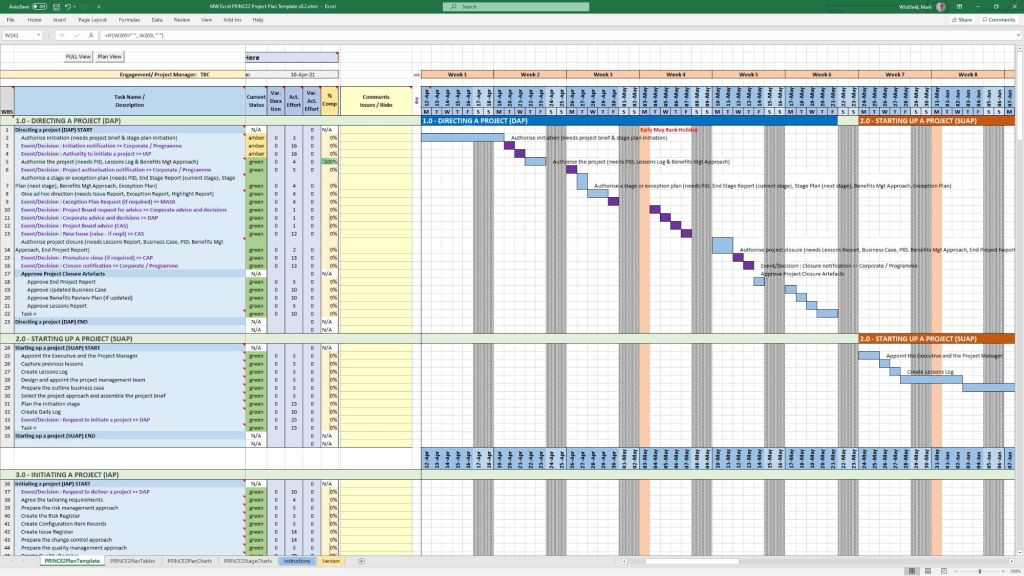
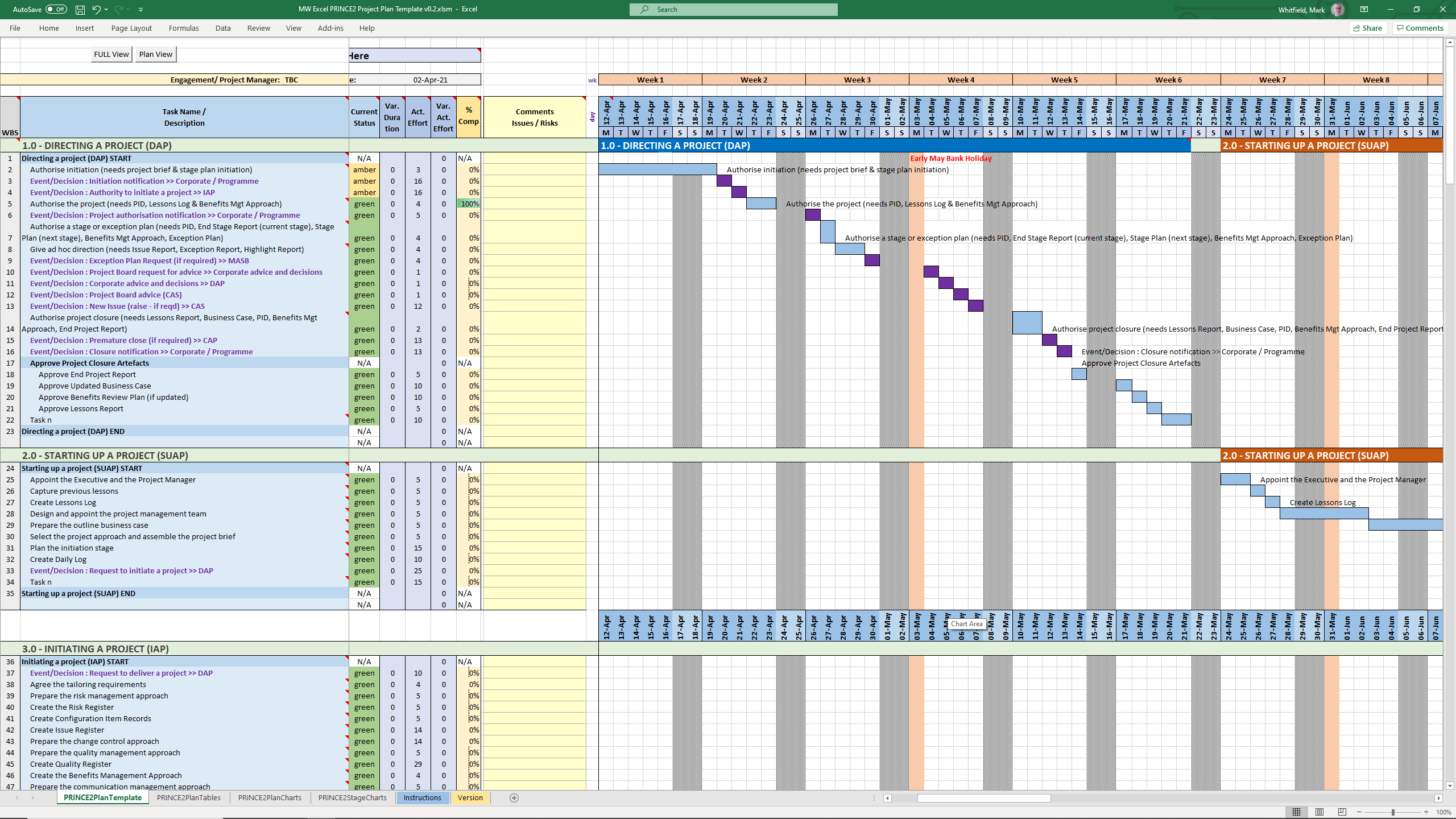
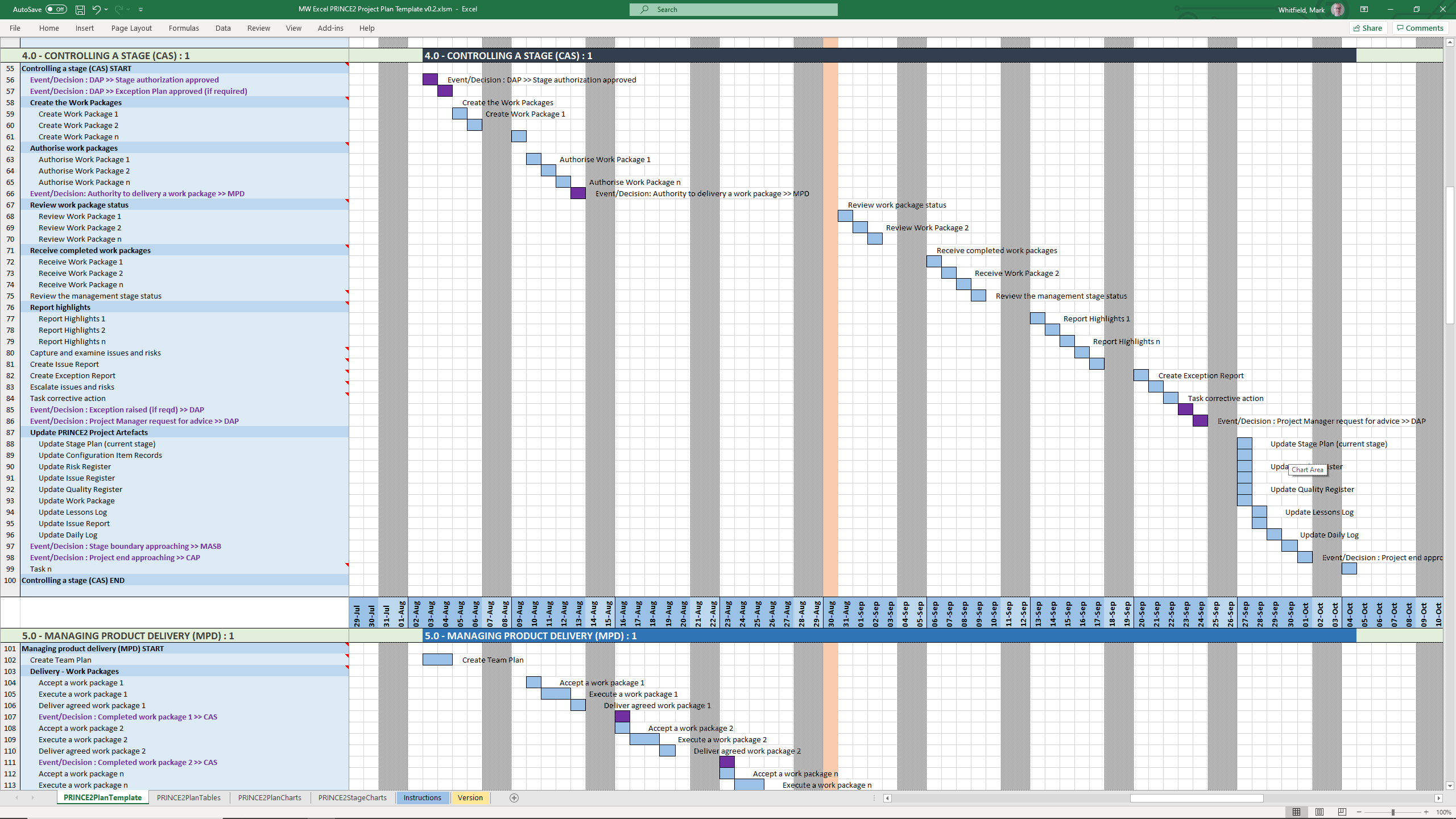
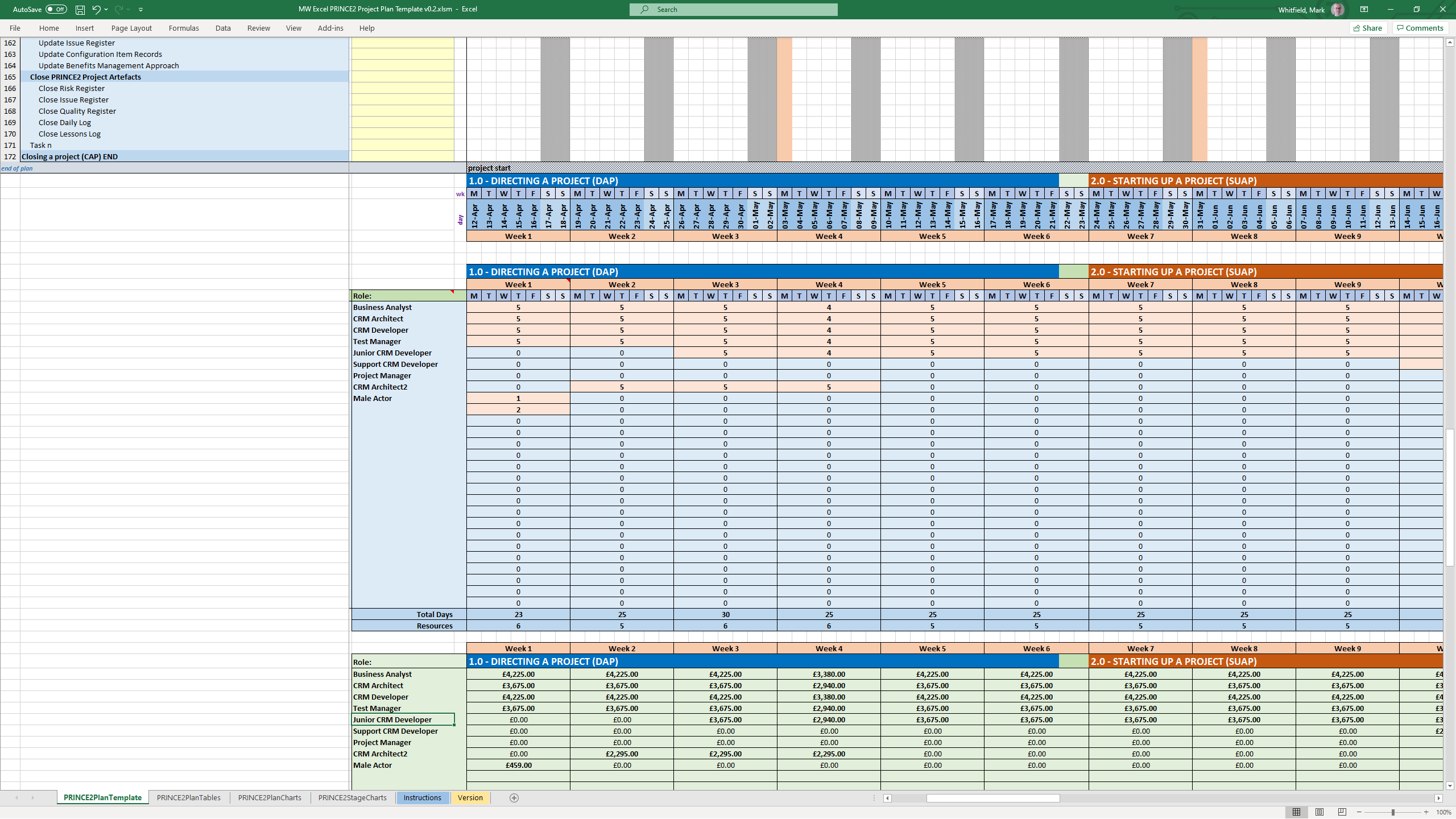
PRINCE2 MS Excel .xls plan in a spreadsheet
PRINCE2 MS Excel .xls plan
in a spreadsheet
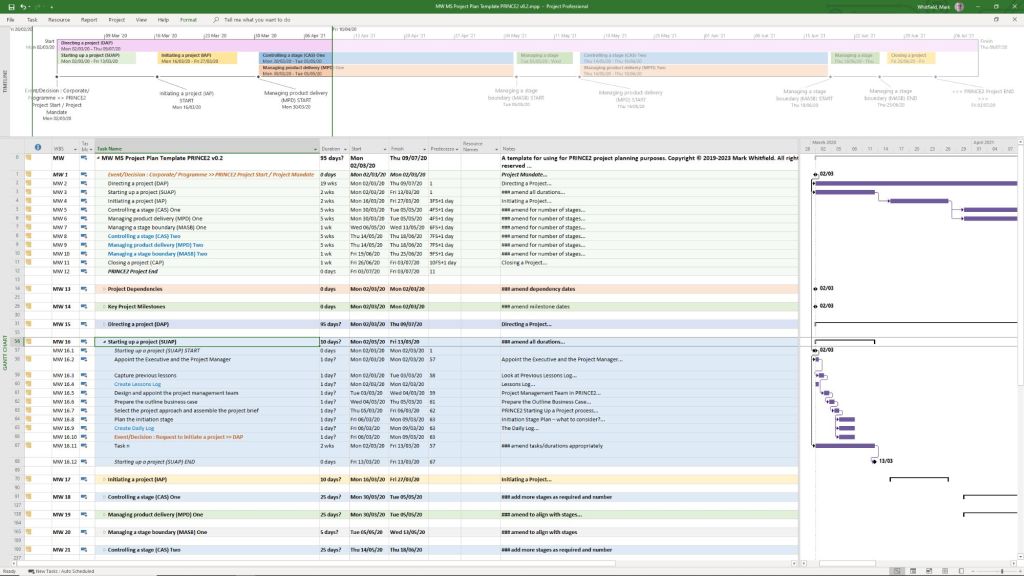
PRINCE2 MS Project .mpp plan in a project file
PRINCE2 MS Project .mpp plan
in a project file

The primary download options, ranging from premium practitioner bundles to free resource packages, are categorized below:

Comprehensive Premium Bundles (MPP & XLS)

If you require a fully integrated toolkit built specifically for the official PRINCE2 framework, individual project management practitioners offer comprehensive marketplace downloads:

  • Mark Whitfield PM Templates: Offers a dedicated seventh edition package including MW MS Project Plan Template PRINCE2 v0.2.mpp alongside its exact equivalent spreadsheet MW Excel PRINCE2 Project Plan Template v0.2.xlsm. You can download this Prince2 toolkit package plus others, on the Mark Whitfield Official Site or through the Mark Whitfield Etsy UK Shop.
  • Flevy Marketplace: Provides highly structured, professional enterprise files. You can purchase and download the PRINCE2 Templates + Microsoft Project MPP & MS Excel Document directly from their platform, which packs the MPP tracking timelines and XLSM / XLS sheets together.

PRINCE2 project templates, Excel (.xls/.xlsm) & MS Project (.mpp) formats

Microsoft Excel XLS PRINCE2 spreadsheet screenshots

Microsoft Excel XLS PRINCE Project Plan with Task Descriptions
Microsoft Excel XLS PRINCE Project Plan with Gantt View 1
Microsoft Excel XLS PRINCE Project Plan with Gantt View 2
Microsoft Excel XLS PRINCE Project Plan with Gantt View 3
Microsoft Excel XLS PRINCE Project Plan with Delivery Costings
Microsoft Excel XLS PRINCE Project Plan with Charts
Microsoft Excel XLS PRINCE Project Plan with PRINCE2 Stage Charts

Standard Artifacts Included in Download Packages

When downloading a comprehensive .zip toolkit, the package typically contains the core structural elements of the framework divided across your scheduling software:

  • MS Project (.mpp): A pre-constructed Prince2 waterfall delivery layout mapped with the 7 key PRINCE2 stages, built-in dependency workflows, milestone gates, and methodological prompts embedded in the task notes.
  • MS Excel (.xls/.xlsm): Mirrored project planning sheets (with costing) utilizing native formulas to auto-populate Gantt charts, alongside targeted operational spreadsheets like RAID logs (Risks, Assumptions, Issues, Dependencies), RACI matrix charts, resource trackers, and project budget tools.

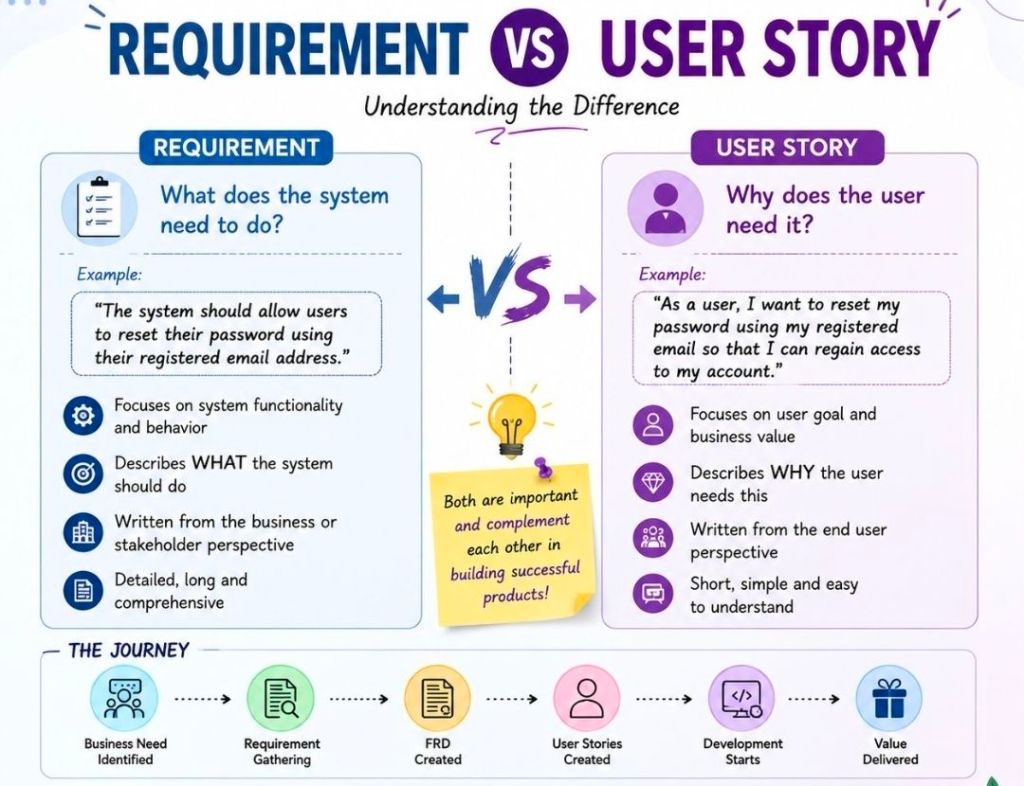
Requirement versus User Story

Project requirements are comprehensive, formal specifications describing what a system must do, usually written from the system’s perspective. User stories are short, lightweight descriptions of functionality written from the end-user’s perspective to drive team collaboration and conversation.

The distinction between these two approaches shapes how modern development teams capture scope and value.

Requirement versus User Story

Understanding Project Requirements

  • Focus: System functionality, technical constraints, and business rules.
  • Perspective: Written from the viewpoint of the system or product (e.g., “The system shall generate daily PDF reports.”).
  • Format: Heavy documentation, PRDs (Product Requirements Documents), spreadsheets, or flowcharts.
  • Methodology: Traditionally used in waterfall methodologies to define the scope comprehensively before any design or development begins.

Understanding User Stories

  • Focus: The user’s goal, business value, and the “why” behind a feature.
  • Perspective: Written from the viewpoint of the persona using the system (e.g., “As a Sales Manager, I want to review daily signups so that I can prioritize my sales calls.”).
  • Format: Short, often using the template: As a [User], I want to [Action], so that [Benefit]. Accompanied by Acceptance Criteria.
  • Methodology: An Agile-first tool. They are designed to act as an “invitation to a conversation” rather than a finalized contract.

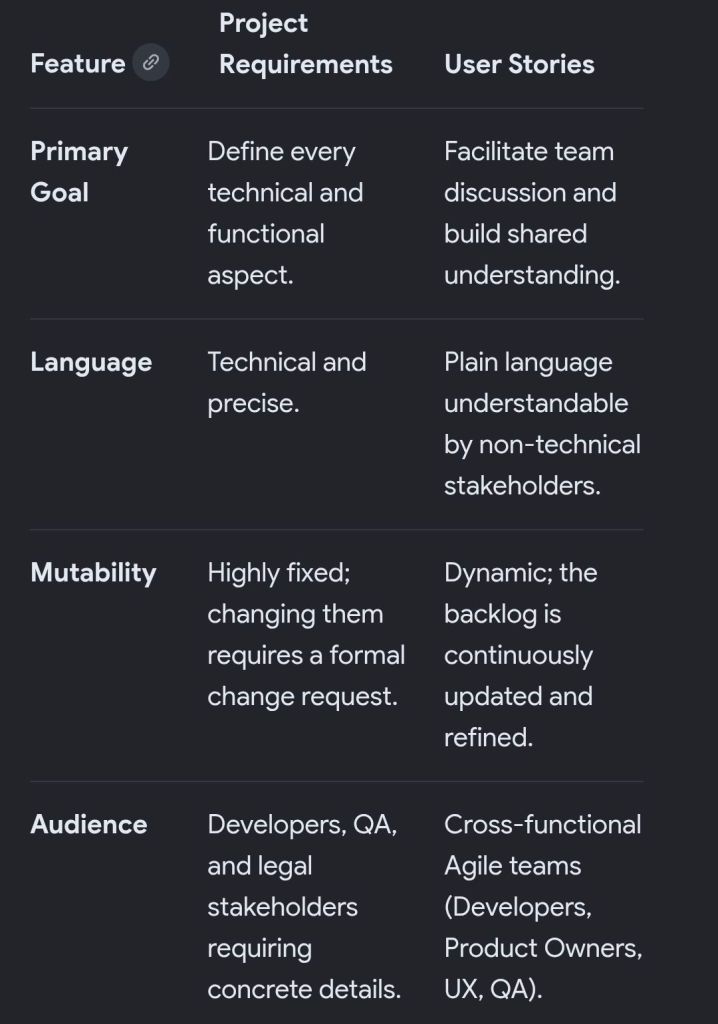
Key Differences at a Glance

How They Work Together (The Hybrid Approach)

Most modern software development teams don’t abandon requirements entirely, but they shift the format. They use lightweight User Stories to represent the core value, and then pair them with technical Acceptance Criteria or supplementary design specifications to clarify the exact requirements the system must satisfy.
Requirement versus User Story

Over 200 editable templates tailored for Agile Scrum, Waterfall, and PRINCE2 frameworks

Mark Whitfield’s premium project management toolkit consists of over 200 editable templates tailored for Agile Scrum, Waterfall, and PRINCE2 frameworks. Built across 30+ years of digital and IT delivery, these frameworks prioritize corporate governance, seamless stakeholder reporting, and visual lifecycle control.
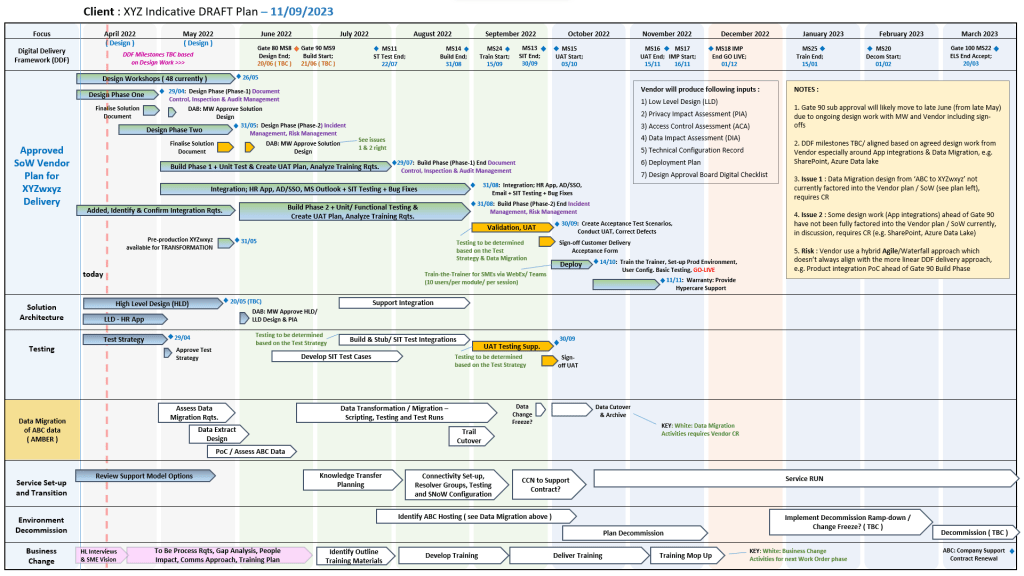
Example of many plan on a page poap ppt templates
Many POAP, Plan on a Page example templates

Below is the comprehensive, scannable breakdown of the core artifacts categorized by lifecycle focus, purpose, and application format. Purchase project templates here.


📅 1. Master Planning & Visual Roadmapping

These tools serve as the operational foundation for tracking dependencies, defining Work Breakdown Structures (WBS), and establishing executive visibility.

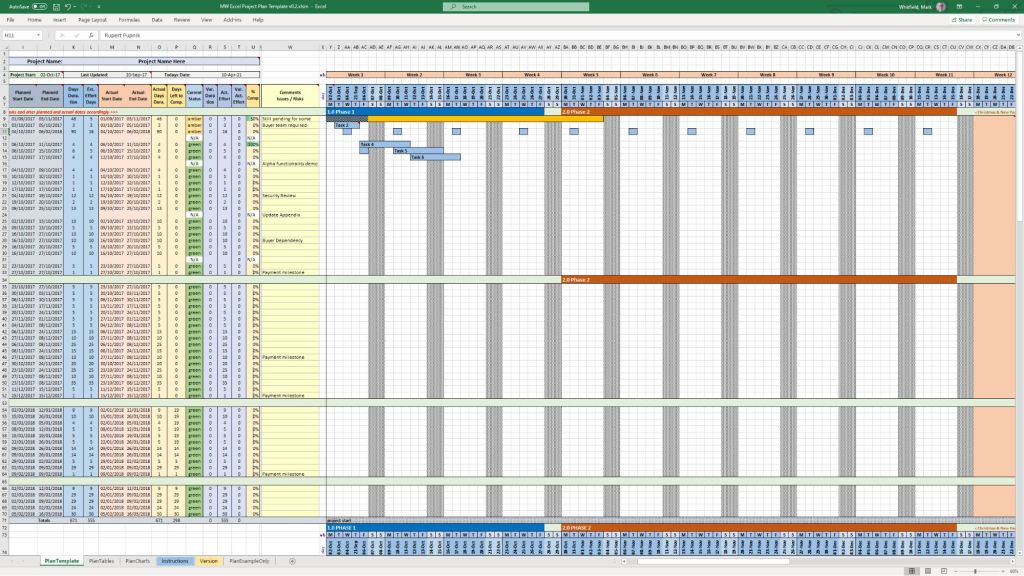
  • Detailed Software Development Life-Cycle (SDLC) Plan
    • Focus: End-to-end task tracking from inception and elaboration to construction, testing, and transition.
    • Format: Microsoft Project (.mpp) & Microsoft Excel (.xlsx).
    • Source Page: Mark Whitfield PMO Toolkit
  • PRINCE2 7th Edition Master Project Plan
    • Focus: Standardized governance processes structured according to the latest PRINCE2 methodology.
    • Format: Microsoft Project (.mpp) & Microsoft Excel Gantt Tracker.
    • Source Page: Mark Whitfield PRINCE2 Master Walkthrough
  • Plan on a Page (POaP) Blueprint
    • Focus: High-level, timeline-focused visual summaries mapping deliverables and milestones to client monthly views.
    • Format: Microsoft PowerPoint (.pptx, 30+ layout variations) & MS Excel.
    • Source Page: Mark Whitfield POaP Templates
Example MS Excel Project Plan template

🛡️ 2. Risk, Governance & Operational Control

These registers form the “engine room” of project health management, shifting risk mitigation from reactive to predictive.

  • Comprehensive RAID Log & Tracker
    • Focus: Integrated visibility over Risks, Actions, Issues, and Dependencies, alongside change requests and supplier impacts.
    • Format: Microsoft Excel (.xlsx featuring self-populating chart dashboards).
    • Source Page: Mark Whitfield Operational Tracking Tools
  • Agile Story Dependency Tracker
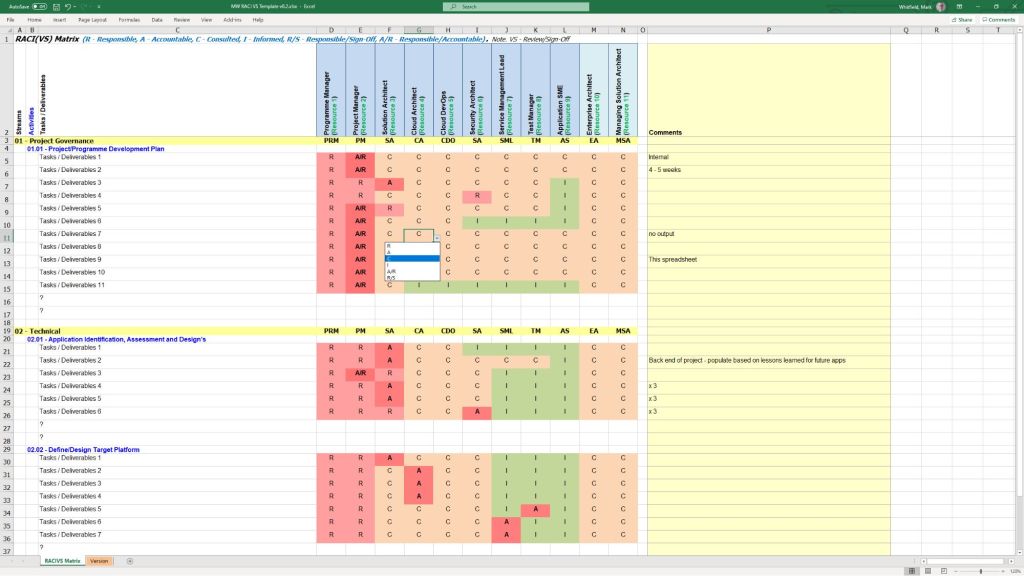
  • RACI Matrix
    • Focus: Mapping roles and responsibilities across project deliverables (Responsible, Accountable, Consulted, Informed).
    • Format: Microsoft Excel (.xlsx).
    • Source Page: Mark Whitfield Folder Structure & Guide
Example MS Excel RACI matrix template

📊 3. Performance reporting & Stakeholder Engagement

Designed to eliminate subjective performance analysis and maintain executive-level clarity.

  • Weekly / Monthly Project Status Report
    • Focus: Summarizing target completion, look-aheads, RAG indicators, and critical decisions for clients.
    • Format: Microsoft Word (.doc) & Microsoft PowerPoint (.pptx).
    • Source Page: Mark Whitfield Premium Delivery Page
  • Stakeholder Analysis & Influence Matrix
    • Focus: Mapping stakeholder influence versus organizational impact to tailor communication (Involve, Inform, Consult, Monitor).
    • Format: Microsoft Excel (.xlsx).
    • Source Page: Mark Whitfield Folder Structure & Guide
  • Project / Programme Kick-Off Deck
    • Focus: Initial team mobilization, workspace onboarding, and client approach alignment.
    • Format: Microsoft PowerPoint (.pptx).
    • Source Page: Mark Whitfield Main Purchase Index
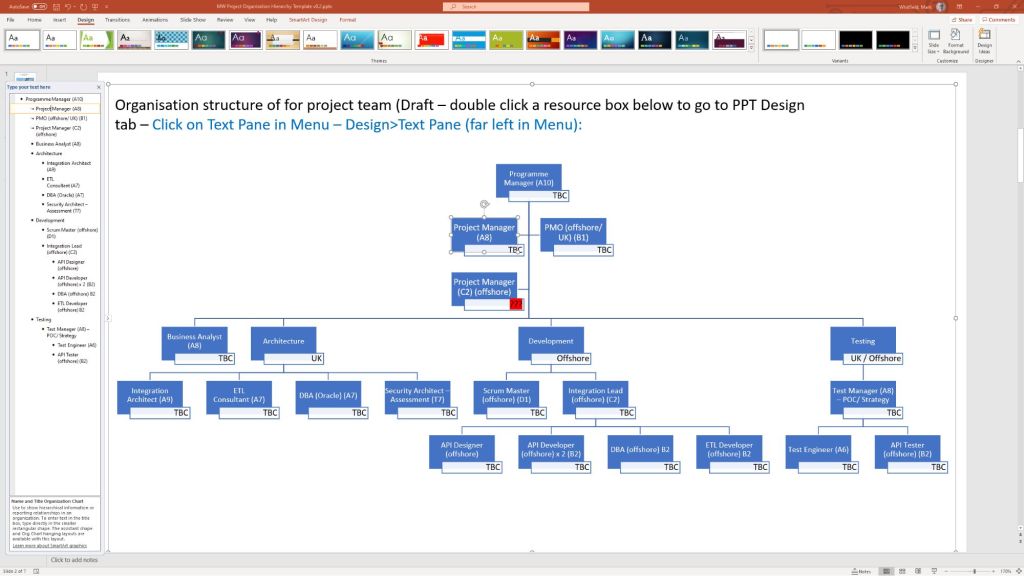
Example PPT slide for Org. Structure

💰 4. Financial Trackers & Value Realization

These artifacts manage fiscal discipline, pricing bids, and mapping long-term outputs to business outcomes.

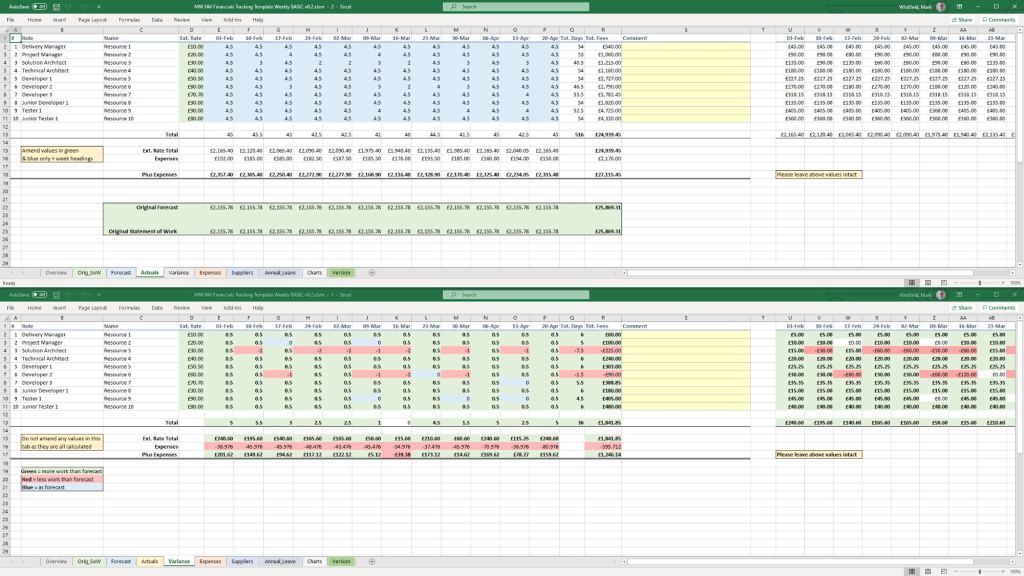
  • Full Project Financial Tracker
    • Focus: Internal/external cost variance, forecasting models, contractor day rates, margin tracking, and expense visibility.
    • Format: Microsoft Excel (.xlsx with embedded financial trend charts).
    • Source Page: Mark Whitfield Premium Delivery Page
  • Statement of Work (SOW) Templates
    • Focus: Work order structuring and delivery guardrails for both commercial Waterfall and Agile contracts.
    • Format: Microsoft Word (.doc).
    • Source Page: Mark Whitfield Operational Tracking Tools
  • Benefits Realization Analysis Tracker
    • Focus: Comparing projected baseline targets with actual organizational outcomes post-deployment.
    • Format: Microsoft Excel (.xlsx).
    • Source Page: Mark Whitfield Premium Delivery Page
Example Excel Project Financial Tracker

🏃 5. Agile Delivery Tools

Alternative visual logs created for environments where dedicated software like Jira or Azure DevOps is unavailable.

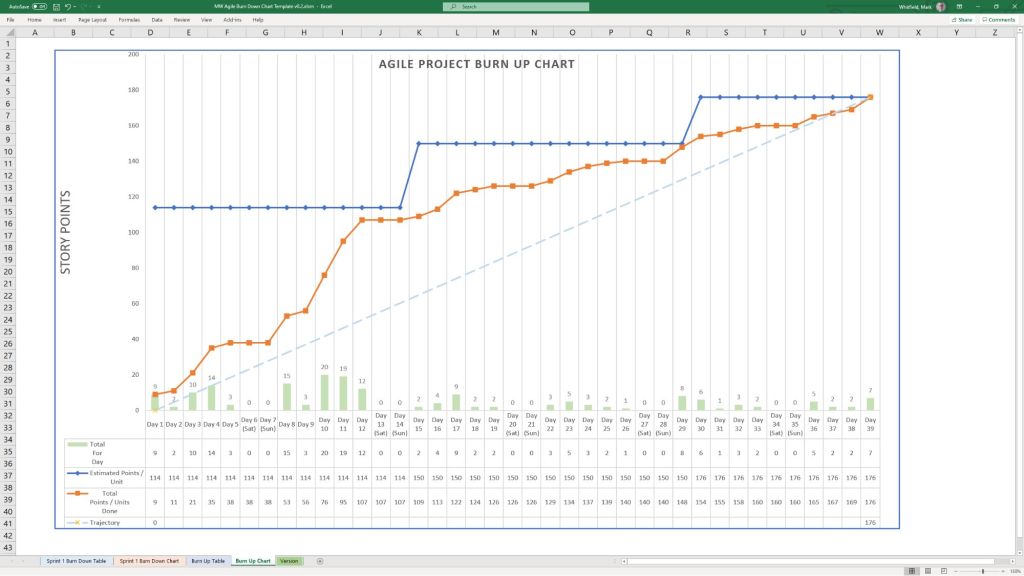
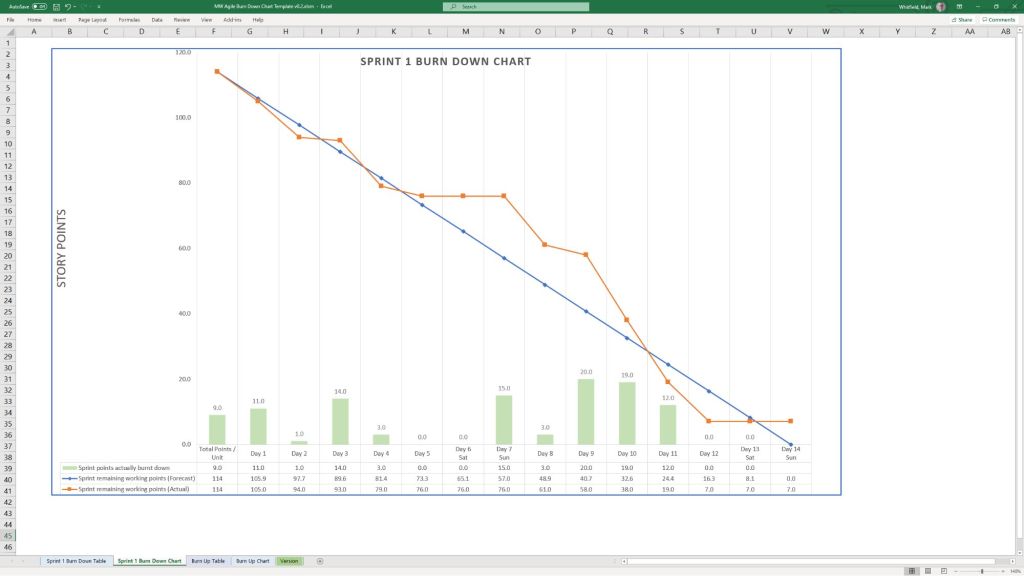
  • Agile Burn Down & Burn Up Charts
    • Focus: Visualizing sprint velocity, work remaining, and scope creep across iterative delivery cycles.
    • Format: Microsoft Excel (.xlsx with automatic mathematical plotting).
    • Source Page: Mark Whitfield Folder Structure & Guide
  • MS Teams Planner & To-Do Guide
    • Focus: Step-by-step framework configuration for running Kanban-style card streams in the cloud.
    • Format: Microsoft Word Walkthrough (.docx).
    • Source Page: Mark Whitfield Master Index
Example Agile Scrum Burn Up Chart
Example Agile Scrum Burn Down Chart