HPE NonStop architecture (Tandem Computers) by Era and Year

Mark Whitfield invested many years in the HPE NonStop field from 1990. The HPE NonStop architecture (originally Tandem Computers) is a legendary fault-tolerant system known for 100% continuous availability. The platform’s hardware and software execution evolved across six distinct eras and processor transitions:

1. The Tandem Founding Era (1976–1981)

  • Years: 1976–1981
  • Processors: Proprietary 16-bit stack processors (e.g., Tandem/16, NonStop II)
  • Architecture: The foundational “shared-nothing” parallel architecture. Featured redundant components (processors, disks, power supplies) connected by a proprietary dual-bus (Dynabus). The operating system provided instant automated failover.

2. The Cyclone & Early RISC Era (1981–1996)

  • Years: 1981–1996
  • Processors: Proprietary non-RISC (NonStop Cyclone) & MIPS R-series RISC
  • Architecture: Expanded into 32-bit computing. To keep pace with industry performance, Tandem transitioned from proprietary processors to off-the-shelf MIPS RISC processors while heavily emulating the original instruction set for compatibility.

3. The Himalaya/ServerNet Era (1997–2004)

  • Years: 1997–2004
  • Processors: MIPS R-series
  • Architecture: Replaced the legacy Dynabus with ServerNet, a high-speed system interconnect that served as an early precursor to modern networking fabrics. (Compaq acquired Tandem in 1997, which subsequently merged with HP in 2002).

4. The Integrity Itanium Era (2005–2013)

  • Years: 2005–2013
  • Processors: Intel Itanium (TNS/E)
  • Architecture: Branded as HP Integrity NonStop (NonStop i). The platform moved off proprietary silicon to standard Intel Itanium processors. This was driven by the “NonStop Advanced Architecture” (NSAA), lowering hardware costs while maintaining Availability Level 4 (AL4) standards.

5. The NonStop X (x86-64) Era (2014–Present)

  • Years: 2014–2026
  • Processors: Intel Xeon x86-64 (TNS/X)
  • Architecture: Fully decoupled the OS from proprietary hardware by shifting to standard Intel x86-64 processors and InfiniBand fabric. The latest compute nodes (such as the NS5 X5 and NS9 X5) utilize modern Intel Xeon Scalable processors to maintain maximum Availability Level 4 (AL4) workloads.

6. The Virtualized NonStop Era (Present)

  • Years: 2015–Present
  • Processors: Virtual Machines / Cloud / x86
  • Architecture: HPE extended the platform to support Virtualized NonStop Software, allowing fault-tolerant enterprise workloads to run entirely in private clouds via standard VMware or hybrid architectures, independent of specific physical servers.
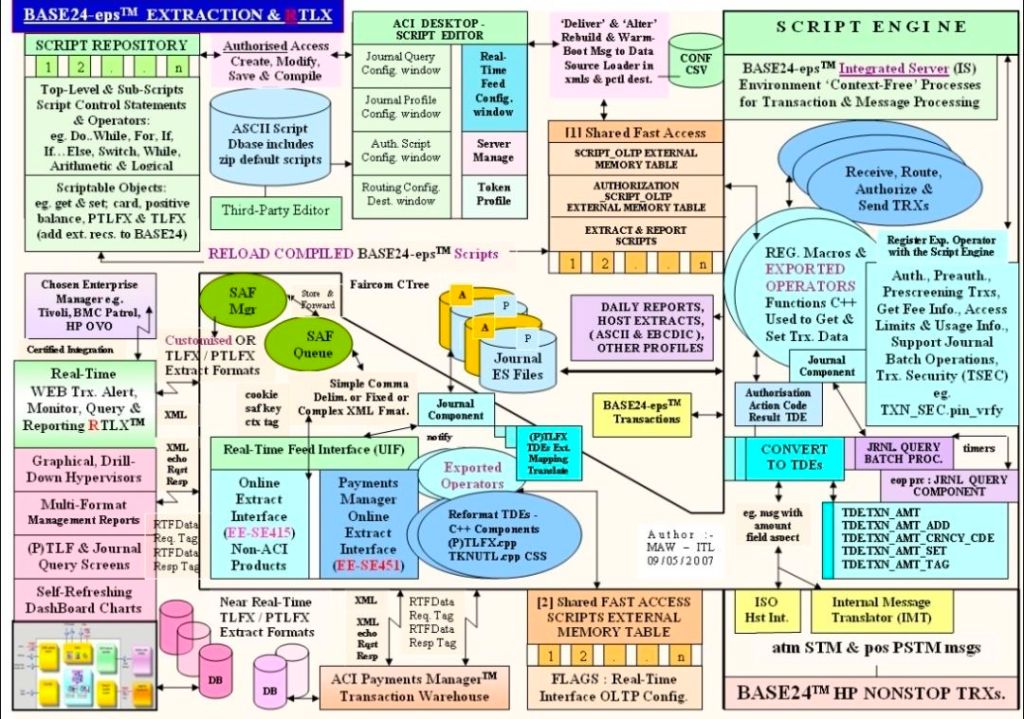
HPE NonStop article by Mark Whitfield in 2013, working for Insider Technologies Limited in Salford Quays

Barclays Business Master II (BBM II), Tandem Computers (HPE NonStop) & sp/ARCHITECT

These terms map directly to the foundational 1990s technology stack behind Barclays Business Master II (BBM II), one of the UK’s earliest enterprise electronic desktop banking platforms.

Before the mainstream internet, this corporate banking infrastructure relied on specialized high-availability mainframe software to process secure corporate transactions.

🧱 Architectural Component Breakdown

  • Barclays Business Master (BBM / BBM II): A landmark corporate desktop electronic banking solution developed by Barclays Bank. It allowed businesses to dial directly into the bank to perform inter-account transfers, check balances, and automate book-keeping long before web browser banking became standard.
  • sp/ARCHITECT (or sp/ARCHITECT-BANK): The core electronic banking software package that powered BBM. It was originally engineered in the late 1980s and early 1990s by The Software Partnership (a UK-based fintech software house based in Runcorn that was later acquired by Deluxe Data). It eventually evolved into the widely known CONNEX advantage payment solution.
  • NonStop (Tandem Computers): The underlying hardware and operating system environment. Because banking infrastructure requires absolute uptime, sp/ARCHITECT was built to run on Tandem NonStop fault-tolerant computers (now HPE NonStop). These systems utilize a unique “shared-nothing” architecture to ensure zero transactional data loss.

💻 Legacy Technical Environment

During the era when BBM was deployed across Barclays’ tech hubs (such as Knutsford), developers working on this specific stack utilized highly specialized mainframe tools:

  • Languages: Code for sp/ARCHITECT was primarily written in TAL (Transaction Application Language) or COBOL85, which were native to the Tandem platform.
  • Interfaces: Early implementations integrated desktop client interactions with the Tandem host via middleware components like Tandem Pathway and Remote Server Call (RSC) facilities.

Barclays Business Master II (BBM II), Tandem Computers (HPE NonStop) & sp/ARCHITECT

I was assigned by Deluxe Data (International Operations), to the BBM II project between 1992 – 93.

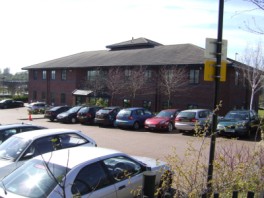
mark whitfield thesoftwarepartnershipwingatehousenorthwaysmall

Deluxe Data, Wingate House, Northway, Runcorn

Tandem Computers ( HPE NonStop ) Overview & Detailed Timeline

Tandem Computers, founded in 1974 by James (Jimmy) Treybig, revolutionized the computing industry by pioneering fault-tolerant computer systems. Designed specifically for online transaction processing (OLTP) in banking, stock exchanges, and telephone switching, Tandem’s “NonStop” systems provided near-zero downtime by utilizing redundant, modular processors and a “shared-nothing” architecture. 

Tandem remained an independent, rapidly growing company until it was acquired by Compaq in 1997, later becoming part of Hewlett Packard Enterprise (HPE). 

Overview of Key Technologies

  • NonStop Architecture: The core design featured multiple independent processors, each with its own memory and I/O bus, interconnected by a redundant inter-CPU bus called the Dynabus.
  • Guardian OS: A message-based operating system designed to detect faults immediately (“fail-fast”) and mirror process states to a backup processor, allowing seamless failover.
  • NonStop SQL (1986): The first fault-tolerant SQL database, known for linear scalability.
  • ServerNet (1995): A high-speed, scalable, point-to-point network system that replaced the Dynabus and influenced modern InfiniBand standards. 

Detailed Historic Timeline by Era and Year

The Founding Era (1974–1979) 

  • 1974: Tandem Computers is founded in Cupertino, California, by Jimmy Treybig, formerly of HP. Initial venture capital investment comes from Kleiner & Perkins.
  • 1975: Design of the Tandem/16 (T/16) is completed.
  • 1976: The first T/16 NonStop system is shipped to Citibank.
  • 1977: Tandem goes public; sales begin rapid, exponential growth.
  • 1978: Introduction of the ENCOMPASS database management system.

The Growth and Competition Era (1980–1989)

  • 1980: Inc. magazine ranks Tandem as the fastest-growing public company in America.
  • 1981: NonStop II is introduced, supporting 32-bit addressing to allow for larger applications.
  • 1982: Competition intensifies as Stratus Technologies enters the fault-tolerant market. Tandem faces its first quarter of declining growth.
  • 1983: Introduction of the NonStop TXP, the first entirely new implementation of the TNS architecture with cache memory.
  • 1985: Attempted entry into the PC market with the MS-DOS-based Dynamite PC, which fails commercially and is withdrawn.
  • 1986: Introduction of the NonStop VLX (32-bit datapath) and the revolutionary NonStop SQL database.
  • 1987: Introduction of the low-cost NonStop CLX for small office environments.
  • 1988: Tandem acquires Ungermann-Bass, Inc. to strengthen networking capabilities.
  • 1989: Introduction of the NonStop Cyclone, a high-end ECL-based processor aimed at mainframe markets. 

The Open Standards & MIPS Transition Era (1990–1996)

  • 1990: Tandem introduces the Integrity line of fault-tolerant Unix systems.
  • 1991: Cyclone/R (CLX/R) is released, marking the start of the migration from proprietary stack machines to MIPS R3000 RISC microprocessors.
  • 1993: Introduction of the NonStop Himalaya K-series using faster MIPS R4400 processors.
  • 1994: NonStop Kernel (NSK) is extended with Open System Services (OSS), a POSIX-compliant Unix environment.
  • 1995: Introduction of ServerNet, designed for extremely low-latency inter-processor communication.
  • 1995–1997: Partnered with Microsoft on the “Wolfpack” project, which becomes Microsoft Cluster Server. 

Acquisition and Integration Era (1997–Present)

  • 1997: Compaq acquires Tandem Computers for roughly $3 billion. The Himalaya S-Series is introduced.
  • 1998: Compaq acquires DEC, leading to a shift in engineering strategy towards Alpha/Itanium instead of MIPS.
  • 2001: Compaq terminates Alpha engineering, committing to Intel’s Itanium (Merced) processors.
  • 2002: Hewlett-Packard acquires Compaq. Tandem becomes the core of the HP Integrity NonStop Server division.
  • 2005: The first HP Integrity NonStop servers (TNS/E) based on Itanium processors are released.
  • 2014: Completion of the migration to Intel x86 architecture (NonStop X). 

Note: Following the split of HP into Hewlett Packard Enterprise (HPE) and HP Inc., the NonStop product line continues to be developed and supported by HPE.

Tandem Computers Overview and Detailed Timeline