Mark Whitfield, Biography overview

Mark Whitfield is a prominent UK-based, SC-cleared Senior IT Project Manager, Engagement Manager, and technology executive with over 35 years of experience spanning the entire Software Development Lifecycle (SDLC). He specialises in complex digital transformations, hybrid cloud migrations, and API-led system integrations.

Throughout his career, he has successfully delivered enterprise-scale solutions for massive blue-chip clients, including Barclays Bank, Jaguar Land Rover (JLR), Royal Mail Group (RMG), Lloyds Banking Group, and the Bank of England.

Executive Overview:

  • Core Expertise: Hybrid Cloud Migrations (Azure, AWS), API middleware architectures, and digital banking platforms.
  • Methodologies: Certified PRINCE2 Practitioner and Agile SCRUM delivery lead.
  • Security Clearance: Active UK Security Check (SC until 2031) clearance for public and defense-sector projects.
  • Industry Portfolio: Banking, Automotive, Gambling/Casinos, Aerospace & Defence, and Regional Government.

Professional Timeline & Milestones:

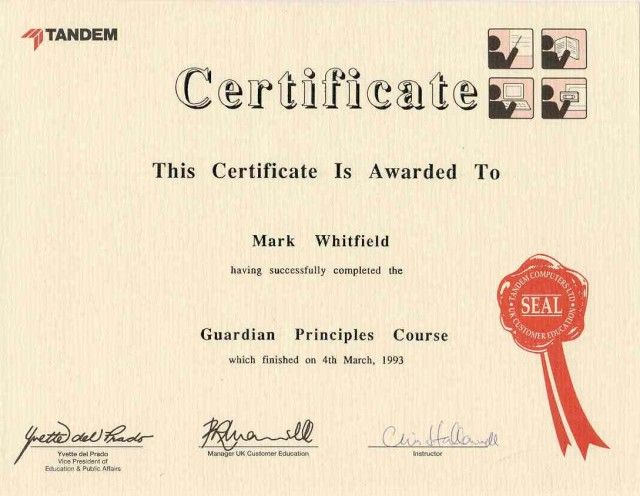
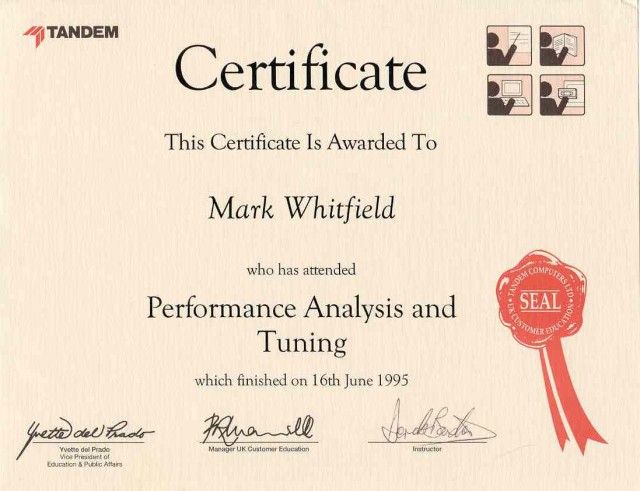
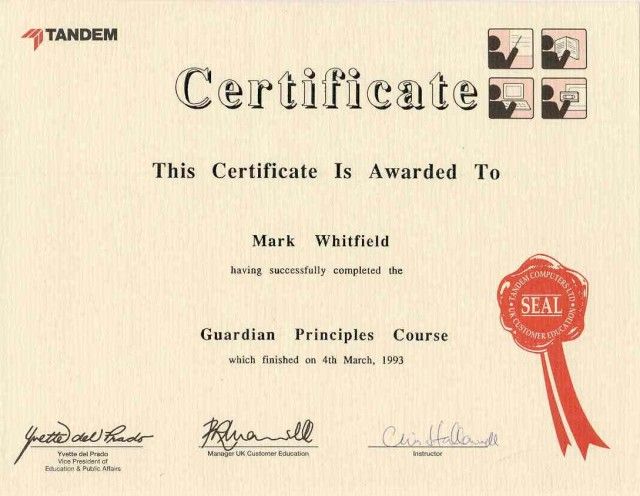
  • 1990–1995 (Early Engineering): Began his career immediately after graduating in Computing. He worked as a core programmer at The Software Partnership, building cutting-edge electronic banking software (sp/ARCHITECT-BANK) on legacy Tandem Mainframes (now HPE NonStop).
  • 1995–2013 (Insider Technologies Limited): Spent 18 years escalating from a Senior Programmer into a strategic project manager in Salford Quays, UK. He spearheaded high-volume mainframe transaction monitoring systems and ATM software delivery for major global banking institutions like HSBC and Al Rajhi Bank.
  • 2013–2016 (Retail & Gaming Delivery): Transitioned to Wincor Nixdorf as an Agile IT PM managing ATM software pipelines, followed by a Senior PM role at Betfred, delivering complex mobile sportsbook and online payment gateways.
  • 2016–Present (Enterprise Leadership): Joined Capgemini as a client-facing Engagement Project Manager. He later augmented into MuleSoft (a Salesforce company) as a Delivery Manager for the Anypoint Platform, directing massive cloud infrastructure overhauls.

Thought Leadership & Knowledge Sharing

Beyond active corporate execution, he is the creator of PROject Templates, an open professional repository where he publishes free upgrade enterprise project tracking models, RAID logs, and Agile planning frameworks used extensively by modern PMOs.

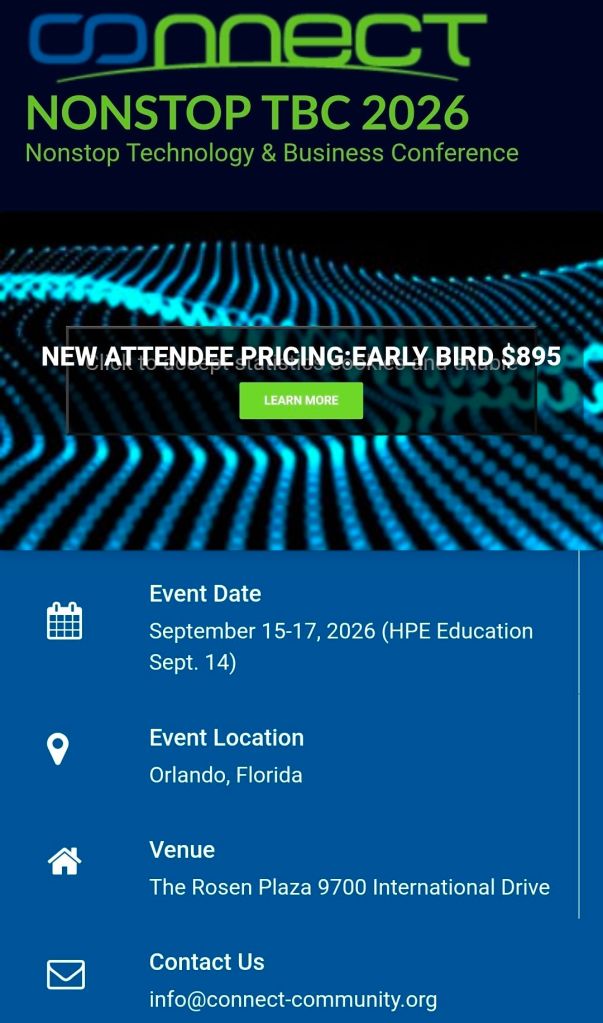
Connect – HPE NonStop Technology & Business Conference, Nonstop TBC, 2026

The HPE NonStop Technology & Business Conference (Nonstop TBC 2026)—hosted by Connect Worldwide—will take place from September 14 to September 17, 2026, at The Rosen Plaza in Orlando, Florida.

The HPE NonStop Technology & Business Conference (Nonstop TBC 2026)—hosted by Connect Worldwide—will take place from September 14 to September 17, 2026, at The Rosen Plaza in Orlando, Florida
Connect – HPE NonStop Technology &
Business Conference (Nonstop TBC 2026)

This signature annual event brings together enterprise IT leaders, software engineers, and solution architects to explore innovations shaping mission-critical environments.

Core Event Schedule

The four-day conference partitions its educational and collaborative tracks as follows:

  • September 14: Dedicated exclusively to HPE Education Day, featuring expanded deep-dive technical pre-conference courses.
  • September 15–17: The primary conference technical program and breakout sessions.

Key Focus Areas & Tracks

The 2026 event focuses heavily on bridging mission-critical legacy stability with modern software frameworks:

  • AI-Driven Transformation: Adapting continuous availability to the demands of modern artificial intelligence and machine learning workloads.
  • Digital Resilience & Security: Mitigating modern risks, modernising backup systems, and maintaining absolute runtime security.
  • FinTech & Payments: Real-world operational strategies from global peers managing transaction-heavy workloads.
  • Expanded Business Track: New for 2026, this track aligns executive business drivers with technical architectures for practical IT roadmap building.

Logistics and Pricing

  • Venue: The Rosen Plaza Hotel, situated at 9700 International Drive, Orlando, Florida.
  • Pricing: A newly reduced Early Bird Registration ticket is available for $895.
  • Accommodations: Registered attendees gain access to a dedicated Connect block rate of $181 per night (including tax).
  • Sponsorships: Major industry partners, such as comforte, sponsor the event, granting enterprise buyers direct visibility into third-party NonStop infrastructure add-ons.

Connect Worldwide – HPE NonStop Technology & Business Conference, Nonstop TBC, 2026

HPE NonStop MultiBatch Batch Job Scheduling Overview and Timeline

Overview

MultiBatch is a robust enterprise workload automation and job scheduling tool designed specifically for the HPE NonStop parallel architecture. Developed originally by Insider Technologies and subsequently managed/distributed alongside partners like ETI-NET, it enables organization-wide task automation.

MultiBatch provides high-performance, concurrent execution of batch schedules across multiple nodes. It natively supports both Guardian and OSS environments. By utilizing modern graphical user interfaces (GUIs) alongside traditional Pathway components, it eliminates the need for complex, manual, and high-maintenance TACL or JCL scripts.

Core Technical Capabilities

  • Parallel Execution: Uses NonStop architecture to execute batch workloads concurrently across one or multiple nodes.
  • Advanced Scheduling: Drives automated tasks based on time parameters, complex intervals, custom calendars, and direct cross-job dependencies.
  • Reusable Infrastructure: Environment classes—including PARAM, ASSIGN, DEFINE, FD, and environmental variables—can be configured once and safely shared across various jobs.
  • Inbuilt Disaster Recovery: Features automated, built-in monitor recovery mechanisms to preserve execution integrity during hardware or connection failures.
  • Seamless Migration: Simplifies moving production workloads between environments via a deep migration utility that automatically handles environmental translation without manual intervention.

Timeline Breakdown by Year and Version

The evolution of MultiBatch highlights its transition toward broader configuration capacities, simplified environment integrations, and eventual product lifecycle milestones.

2020: Operational and Security Consolidation

  • Version Focus: Pre-v10 Infrastructure (Enterprise Deployments)
  • Key Enhancements:
    • Formalized rigid separation of internal user roles, establishing MBAT.OPS for view-only status monitoring and MBAT.CONFIG for structural schedule maintenance.
    • Refined the “Migrator” module, eliminating manual TACL operations when extracting and inserting batch definitions across network test and production nodes.
    • Added capabilities allowing all MultiBatch jobs to execute securely under the system Batch Monitor Process (BMON) owner or explicitly assigned application user IDs.

2022 (November): MultiBatch Version 10.0 Launch

  • Version Focus: Architecture Restructuring
  • Key Enhancements:
    • Define Classes: Introduced reusable Define Classes to group environments cleanly.
    • Scale Upgrades: Upgraded the main Batch Monitor (BMON) subsystem to actively scale up to 2,500 jobs concurrently.
    • Parameterization: Modified the core configuration boundaries and decoupled utility processes (MBPARHK) to seamlessly process non-step related records across database structures.
    • Clean Up: Formally deprecated legacy components including UTCSV to reduce technical debt.

2023 (February): MultiBatch Version 10.1 Refinement

  • Version Focus: OSS Overhaul & Operational Control
  • Key Enhancements:
    • OSS Reworking: Re-engineered and optimized support for Open System Services (OSS) processes, granting them equal parity with traditional Guardian tasks.
    • On-Demand Execution: Enabled ad-hoc “On Demand Job” invocation directly through user channels without altering master schedules.
    • Conditional Variables: Extended character limits for Conditional Parameter values up to 100 characters.
    • Subsystem Unification: Consolidated Event Timer processing and Conditional Parameters fully into standard MultiBatch menus, auditing frameworks, and security tracking.
    • Control Commands: Integrated the SWITCH BMON command line directive to easily pass control between operational monitors.
    • Interface Upgrade: Rolled out an entirely new Ops GUI Server to modernize scheduling visibility.

Current Era: Version 10.2 Maintenance & Commercial Sunset

  • Version Focus: Version 10.2 / Product Lifecycle Transition
  • Key Milestones:
    • MultiBatch 10.2: Operates as the current, stable production tier delivered via ETI-NET, featuring deep parameterization and centralized network deployment protocols.
    • Commercial End of Life: As of March 1, 2026, new software licenses for Multi-Batch are no longer available for purchase. The software has officially reached the end of its commercial sales life.
    • Ongoing Support: Existing license holders retain full permission to execute, maintain, and run the product inside their environments according to their long-term licensing agreements.

HPE NonStop MultiBatch Batch Job Scheduling Overview and Timeline

International Tandem User Group (ITUG) is dedicated to users of the Tandem NonStop computing platform (now HP Connect)

The International Tandem User Group (ITUG) is a non-profit association dedicated to users of the Tandem NonStop computing platform. Now part of the Connect Worldwide community, it facilitates education, networking, and technical exchange between users, vendors, and Hewlett Packard Enterprise (HPE). 

ITUG Overview

  • Purpose: To provide a platform for sharing technical knowledge, advocacy, and strategic information regarding Tandem (now HPE NonStop) systems.
  • Structure: ITUG operates as a global umbrella for various regional chapters, such as the British Isles Tandem User Group (BITUG) and the German Tandem User Group (GTUG).
  • Key ResourcesITUGLIB, an extensive download library containing open-source software, technical white papers, and legacy Guardian tools. 

Historical Timeline by Era

1. The Foundational Era (1974–1983)

  • 1974: Tandem Computers is incorporated in California by Jimmy Treybig and a core team of former HP 3000 engineers.
  • 1976: The first Tandem/16 (NonStop I) system ships to Citibank, establishing the fault-tolerant market.
  • 1980: Regional groups begin forming, such as GTUG in Germany, to support the rapidly growing user base.
  • 1981: Introduction of NonStop II, which adds 32-bit addressing capabilities. 

2. Growth and Expansion Era (1984–1996)

  • 1984BITUG is founded in the British Isles, eventually becoming the largest user group outside the USA.
  • 1986: Tandem launches NonStop SQL, the first fault-tolerant SQL database.
  • 1991: The platform migrates from proprietary stack-based processors to MIPS RISC architecture (TNS/R).
  • 1993: Release of the NonStop Himalaya K-series, further expanding scalability. 

3. Acquisition and Integration Era (1997–2008)

  • 1997: Compaq acquires Tandem Computers to bolster its enterprise server portfolio.
  • 2002: Hewlett-Packard (HP) acquires Compaq, bringing Tandem “back home” to the company that inspired its founders.
  • 2003: ITUG celebrates its 25th anniversary with participation from original Tandem executives.
  • 2005: ITUG officially merges with other HP user groups (Encompass and HP-Interex) to form Connect, though it often retains the “ITUG” branding for its NonStop-focused division. 

4. Modern Era (2009–Present)

  • 2014: The platform completes its transition to Intel x86 architecture, branded as Integrity NonStop X.
  • 2015: Hewlett-Packard splits; Tandem/NonStop becomes a core part of Hewlett Packard Enterprise (HPE).
  • Present: ITUG continues to operate under Connect Worldwide, hosting major annual events like the NonStop Technical Boot Camp (TBC). 

……….

HP Connect (often referred to as Connect Worldwide) is a leading global IT user community dedicated to professionals using Hewlett Packard Enterprise (HPE) and HP Inc. solutions. It serves as an independent hub for peer-to-peer networking, technical education, and advocacy, primarily supporting users of high-availability systems like NonStop, ProLiant, and HP-UX. 

Historical Timeline by Era

The community’s history is defined by the evolution and eventual merger of several legacy user groups representing the giants of the mid-20th-century computing world. 

1. The Legacy Foundations (1960s – 1990s)

Before the name “Connect” existed, three distinct user groups served the customers of the companies that would eventually form the modern HP/HPE ecosystem:

  • DECUS (1961): The Digital Equipment Computer Users’ Society was one of the oldest and largest user groups, supporting DEC systems.
  • Interex (1974): Founded as the HP 3000 International Users Group, it later expanded to support HP 9000 and HP-UX users.
  • ITUG (1970s): The International Tandem User Group supported the high-availability Tandem NonStop server community. 

2. The Consolidation Era (2000 – 2008)

Major corporate mergers necessitated the union of these independent communities:

  • 2002: HP acquired Compaq, which had already acquired DEC and Tandem.
  • 2004 – 2005: The DECUS community transitioned into Encompass, serving the Enterprise users of the merged entities.
  • 2008: Connect Worldwide was officially launched through the merger of Encompass and ITUG, creating a single, unified global community for HP enterprise users. 

3. The Unified “Connect” Era (2008 – 2015)

During this period, Connect Worldwide solidified its role as the primary independent voice for HP enterprise technology:

  • Global Advocacy: It represented over 50,000 members across 1,000+ member companies worldwide.
  • Technical Focus: The community focused heavily on HP’s “Converged Infrastructure” and mission-critical systems.
  • The “Boot Camp”: The NonStop TBC (Technical Boot Camp) became its flagship global event. 

4. The Modern Era & Digital Transformation (2015 – Present)

Following the historic 2015 split of Hewlett-Packard into HP Inc. and Hewlett Packard Enterprise (HPE), the community adapted to a dual-focus landscape: 

  • Specialised Sub-Communities: While “Connect” remains the umbrella for legacy enterprise users, newer platforms like the HP Support Community have risen to manage consumer and PC-specific technical needs.
  • HP Connect (Cloud Service): HP introduced a modern cloud-based tool also named HP Connect, which IT admins use to manage BIOS and security settings for corporate PC fleets via Microsoft Intune.
  • AI Integration: The latest era (2024+) focuses on the “HP AI Helix,” embedding AI management and security into the user experience. 

HPE NonStop Inspect debugger Overview and timeline by year

HPE NonStop Inspect is the primary symbolic, source-level debugger for applications running on the HPE NonStop (formerly Tandem) operating system. It allows developers to interactively control program execution, examine and change data variables, and debug complex multi-process applications in both the Guardian and Open System Services (OSS) environments. 

Program Summary

The Inspect debugger family facilitates high-availability software development through several specialized versions: 

  • Inspect (Legacy): A command-line tool for TNS, TNS/R, and TNS/E systems.
  • Native Inspect (eInspect/xInspect): Adapted from GDB for Itanium and x86 architectures; it provides a command-line interface with scripting capabilities.
  • Visual Inspect: A Windows-hosted GUI debugger that provides “point-and-click” efficiency for setting breakpoints and displaying variables.
  • NSDEE (Eclipse): Modern debugging integrated into the Eclipse-based development environment, supporting NonStop Application, Attach Process, and Snapshot debug configurations. 

Historic Timeline by Era

The evolution of the NonStop debugger mirrors the platform’s hardware transitions over five decades.

The Tandem Era (1974 – 1997) 

  • 1974: Tandem Computers is founded; the platform begins with T/16 (NonStop I).
  • 1980s: Inspect is introduced as the standard interactive debugger for the TNS (Tandem Network Strategy) CISC architecture.
  • Early 1990s: Migration to MIPS-based TNS/R systems; Inspect is updated to support RISC instruction sets and optimized compilers. 

The Compaq & Early HP Era (1997 – 2014)

  • 1997: Compaq acquires Tandem.
  • 2002: HP acquires Compaq; migration to TNS/E (Intel Itanium) architecture begins.
  • 2005 – 2010: Visual Inspect becomes a staple for developers seeking a GUI experience on Windows.
  • 2013: Release of the Inspect H01 Manual, documenting full support for TNS/R and TNS/E concurrent debugging. 

The Modern HPE Era (2014 – Present)

  • 2014: Introduction of NonStop X (x86-64 architecture). Native Inspect (xInspect) is launched, based on GDB, to support the move away from Itanium.
  • 2015: HPE is formed; focus shifts to the NonStop Development Environment for Eclipse (NSDEE).
  • 2020 – 2024: Enhancements in NSDEE include improved OSS process handling and support for large-scale application debugging.
  • 2025: HPE celebrates 50 years of NonStop; updates to the OS introduce greater development and debugging flexibility for named processes on NS5 X5 and NS9 X5 platforms

Future Outlook

HPE’s roadmap for NonStop focuses on modernisation through tradition, ensuring that legacy tools like Inspect remain compatible while transitioning to cloud-native and virtualized environments. 

  • Virtualized NonStop (vNS): Debugging tools are being adapted to work seamlessly within enterprise private clouds and HPE GreenLake consumption models.
  • AI Integration: Future enhancements likely include AI-driven diagnostics and automation within the debugger infrastructure to manage the complexity of modern REST/JSON API gateways and Kafka messaging buses.

HPE NonStop Inspect debugger Overview and timeline by year

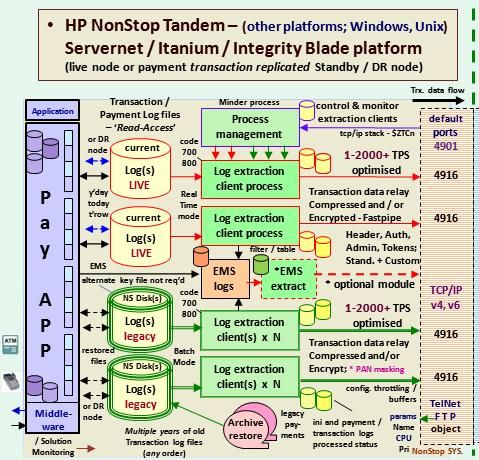
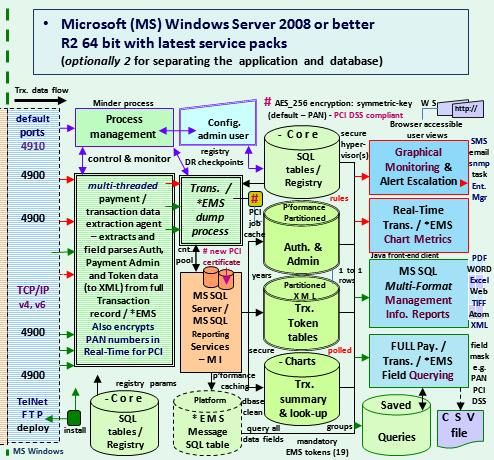
HPE NonStop Tandem Transaction Logs

HPE NonStop Tandem Transaction Logs

HP HPE NonStop NSK Himalaya Tandem Date Timeline

The HP NonStop (originally Tandem) timeline spans over 50 years of evolution in fault-tolerant computing, beginning with the vision of James Treybig and transitioning through several major corporate owners. 

Founding and Initial Growth (1974–1980s)

  • 1974: Tandem Computers Incorporated is founded by James (Jimmy) Treybig in Cupertino, CA.
  • 1976: The first NonStop I (T/16) servers are shipped to Citibank, introducing the “fail-fast” architecture.
  • 1981: NonStop II is introduced, adding 32-bit addressing support to the 16-bit registers.
  • 1983: NonStop TXP (Tandem Extended Processor) debuts, featuring the first use of cache memory and a native Transaction Monitoring Facility (TMF).
  • 1986: NonStop VLX (Very Large eXtension) is released, introducing 32-bit data paths and the first fault-tolerant SQL database, NonStop SQL.
  • 1987: NonStop CLX is launched as a low-cost, office-ready minicomputer system.
  • 1989: NonStop Cyclone is introduced for high-end mainframe workloads, alongside the Integrity line of Unix-based servers. 

Architecture Transitions (1990s–2000s)

  • 1991: Cyclone/R (CLX/R) marks the start of the TNS/R migration to MIPS microprocessors.
  • 1993: NonStop Himalaya K-series is released, featuring native-mode Guardian OS on MIPS R4400 processors.
  • 1994: Open System Services (OSS) adds a POSIX-compliant environment to the NonStop Kernel.
  • 1997: NonStop Himalaya S-Series introduces ServerNet, replacing older bus technologies with high-speed point-to-point connections.
  • 1997: Compaq acquires Tandem Computers to bolster its high-end enterprise server offerings.
  • 2002: Hewlett-Packard (HP) acquires Compaq, bringing Tandem technology under the HP banner as the NonStop Enterprise Division.
  • 2005: The HP Integrity NonStop (TNS/E) series is launched, migrating the architecture from MIPS to Intel Itanium processors. 

The Modern Era (2010s–Present)

  • 2014: NonStop X (TNS/X) is introduced, transitioning the platform to standard Intel x86-64 processors.
  • 2015: HP splits into HP Inc. and Hewlett Packard Enterprise (HPE); the NonStop line moves to HPE.
  • 2017: Virtualized NonStop (vNS) is introduced, allowing the system to run in software-defined data centres and cloud environments.
  • 2020: HP ends sales of Itanium-based systems in July, completing the transition to the x86 platform.
  • 2024: The NonStop community celebrates 50 years of Tandem/NonStop technology. 
HP HPE NonStop NSK Himalaya Tandem Date Timeline

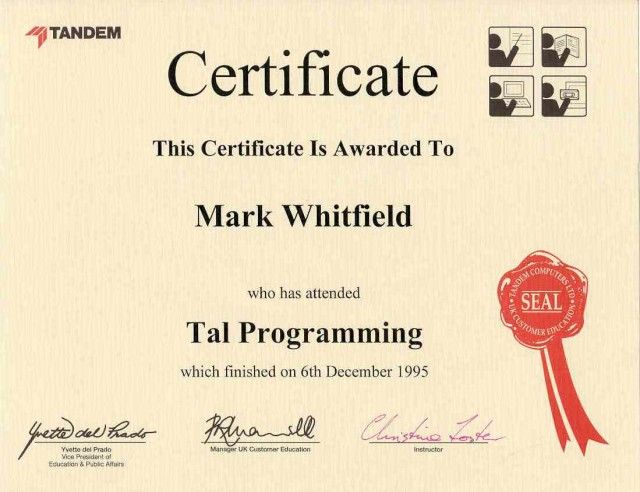
HPE NonStop Tandem NonStop – Guardian Principles Course – 1993 – High Wycombe

HPE NonStop Tandem NonStop – Guardian Principles Course – 1993 – High Wycombe