Building a Product on Paper and in Reality

Building a Product on Paper and in Reality

Project Management LinkedIn Group

Project Management LinkedIn Group

https://www.linkedin.com/groups/163300

Project Management Café, PRINCE2 Agile SCRUM Kanban MPP MSP Templates ITIL LEAN DevOps PMP Six Sigma

This is a Project Management Group Café for PM students, graduates and professionals looking to either locate, discuss or contribute ideas for PM templates for; Agile, Scrum, Kanban, PRINCE2 Waterfall projects, e.g. Plan on a Page (POaP), RACI, MPP, RAID logs, finance trackers, status reports, org charts etc. etc.

Project Management LinkedIn Group

PRINCE2 and Agile Project Management Templates Gallery

A gallery and inventory of screenshots for the Project Management Templates (both Agile and PRINCE2 waterfall projects) that are all available to be purchased as a bundle from this website link (note: upgrades to the latest template package after purchase, are totally FREE).

PRINCE2 & Agile PM Templates Gallery

PM templates include MS Project MPP and MS Excel detailed plans including PRINCE2 and Agile delivery, Gantt Plan on a Page examples (POaP), finance trackers, status reports, RAID logs (Risk, Issue, Assumption, Dependency log), RACI tracker (Responsible, Accountable, Consulted, Informed), agile burn down chart and burn up chart, resource tracker, benefits realization plan etc. etc.

(Download the Template Inventory PDF file – 15MB)

Join the FREE PM templates related Facebook Group (LIKE Facebook page) and LinkedIn Group.

PRINCE2 and Agile Project Management Templates Gallery examples

MPP Microsoft Project Plan Examples
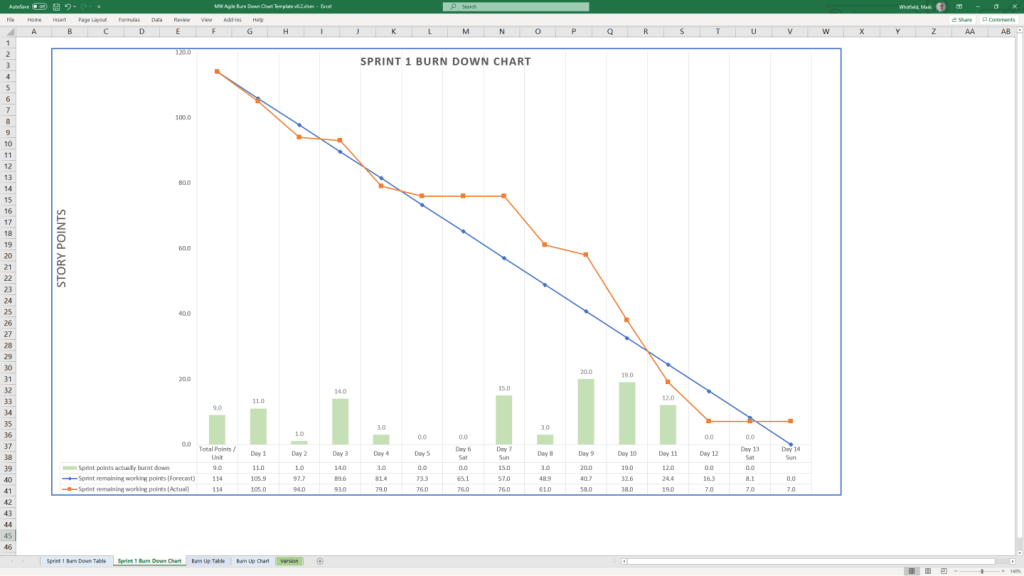
Agile Scrum Burn Down (and Up) Chart in Microsoft Excel
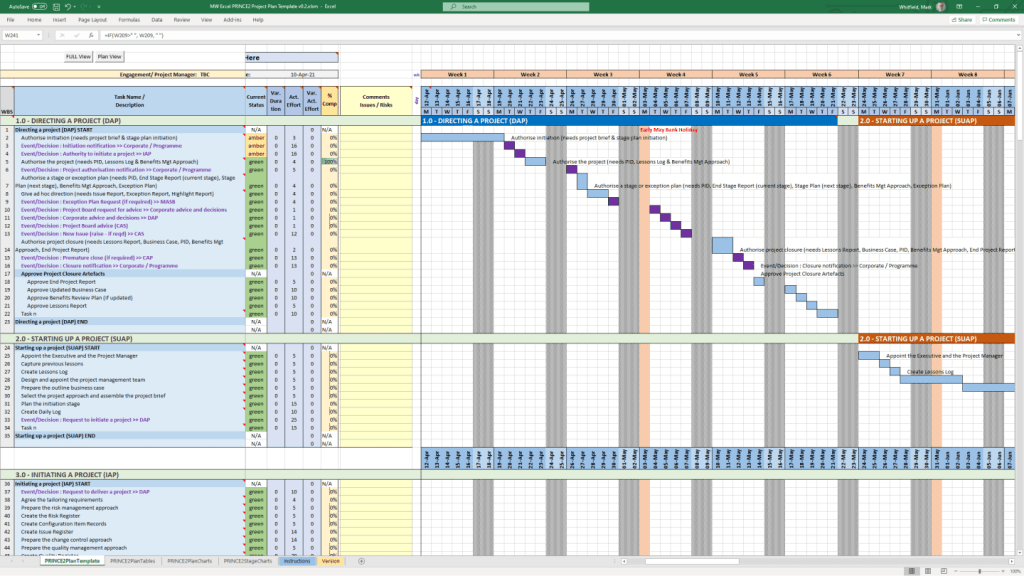
Example Microsoft Excel Spreadsheet Examples for Project Planning

PRINCE2 & Agile PM Templates Gallery

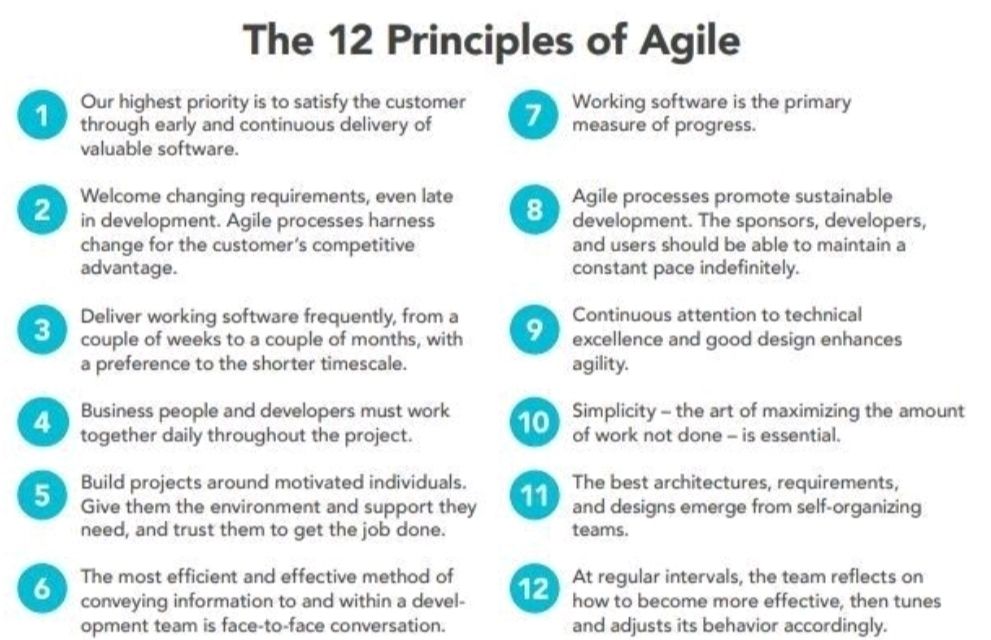
Principles of Agile

Principles of Agile

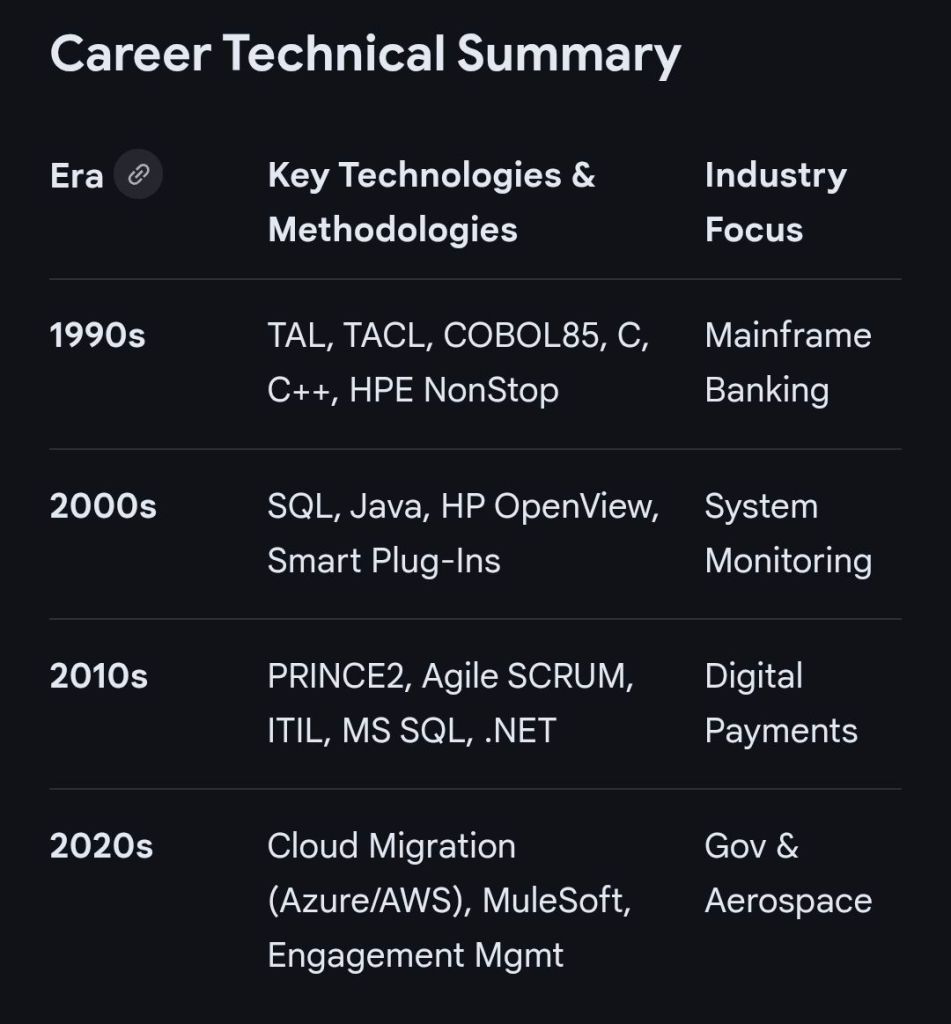
Website Author IT Career Timeline Breakdown

Mark Whitfield is a highly experienced IT professional with a career spanning over 30 years, transitioning from a technical programmer to a senior digital engagement and project manager. His expertise is rooted in HPE NonStop (Tandem) systems and has evolved to encompass complex Agile and Cloud delivery across diverse industries. 

Early Technical Era (1990–1995)

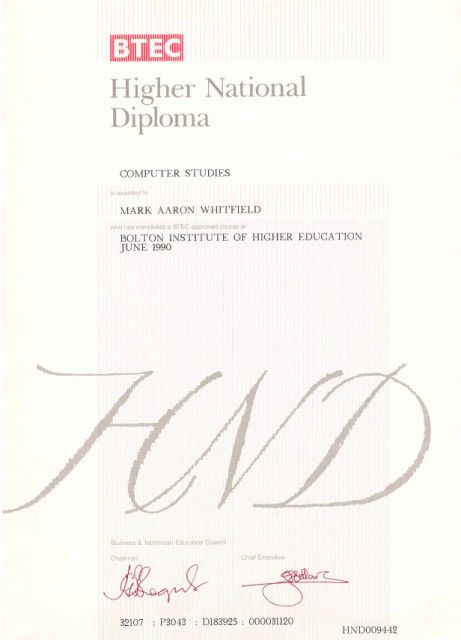
Following his graduation in Computing in 1990, Whitfield began his career as a Programmer at The Software Partnership (later Deluxe Data). 

  • Focus: Electronic banking software, specifically sp/ARCHITECT-BANK on Tandem Mainframe Computers.
  • Key Work: Developed code for major banks including TSB, Barclays, and Rabobank. This included early digital innovations like voice-driven phone banking and inter-account transfers before the internet was widespread. 

Growth and Product Management Era (1995–2004) 

Whitfield joined Insider Technologies Limited (ITL) in 1995 as a Senior Programmer

  • Focus: Platform health and diagnostic software for HPE NonStop systems.
  • Key Projects:
    • Co-developed diagnostic plug-ins for the Reflex monitoring suite.
    • Managed the first HP OpenView Operations (OVO) Smart Plug-In certification for the NonStop platform in 2002.
    • Consulted for CRESTCo (Euroclear) in 1997, conducting benchmark testing on new S7000 nodes. 

Strategic Leadership and Project Management Era (2005–2014) 

During this decade, he transitioned into IT Project Management, focusing on high-value financial transaction tracking. 

  • Focus: Waterfall and Agile project delivery for payment systems and banking infrastructure.
  • Key Milestones:
    • 2011: Led a massive transaction tracking project at Al Rajhi Bank (Saudi Arabia), parsing terabytes of tape-archived data into a normalised SQL database.
    • 2013–2014: At Wincor Nixdorf, managed a £5+ million project for Lloyds Banking Group to migrate ATM driving responsibilities from legacy systems to AIX-based Oracle technologies. 

Senior Digital Engagement Era (2014–Present)

Since 2014, Whitfield has focused on senior-level digital transformation and engagement management. 

  • Betfred (2014–2016): Served as Senior Digital Project Manager for online and mobile platforms (iOS/Android), managing fraud detection and payment gateway integrations.
  • Capgemini (2016–Present): Joined as an Engagement Manager (SC cleared).
    • Focus: Managing large-scale Agile and Waterfall digital projects across aerospace, defence, and government sectors.
    • Notable Projects: Leading a £13.5m programme to migrate 130 UK government applications to the cloud (AWS/Azure) and delivering real-time airspace monitoring apps for air traffic organisations. 
Mark Whitfield IT Career Timeline Breakdown

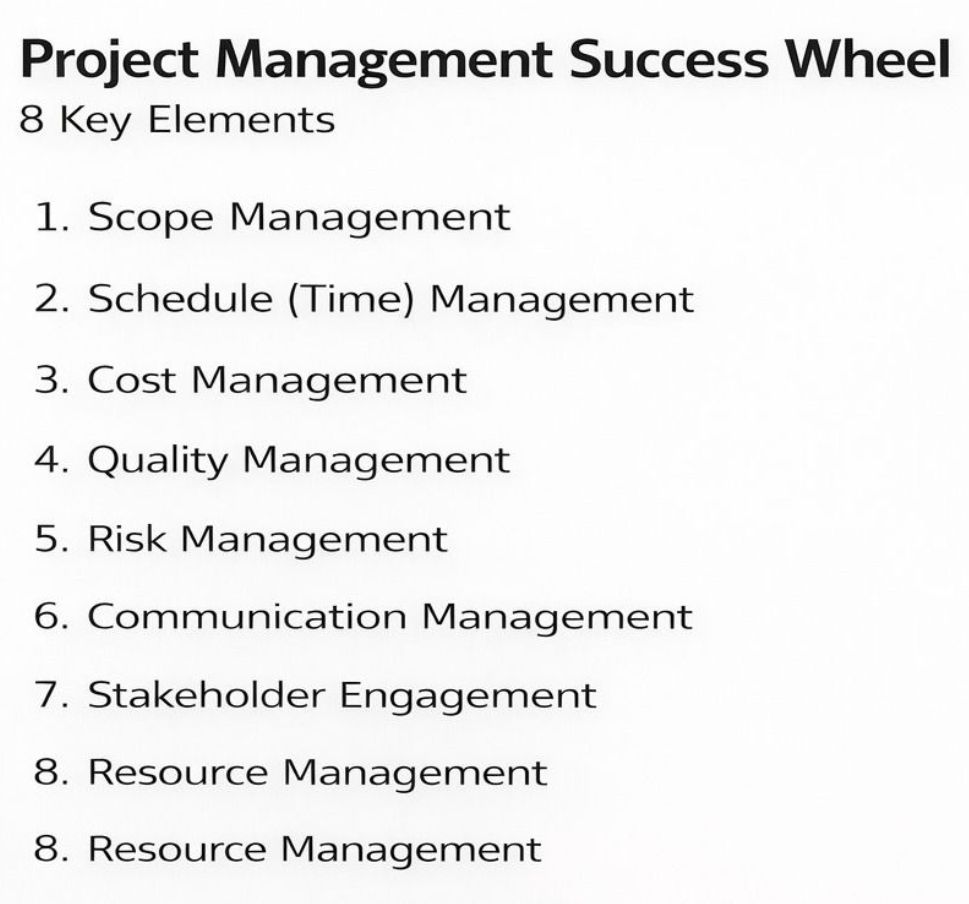
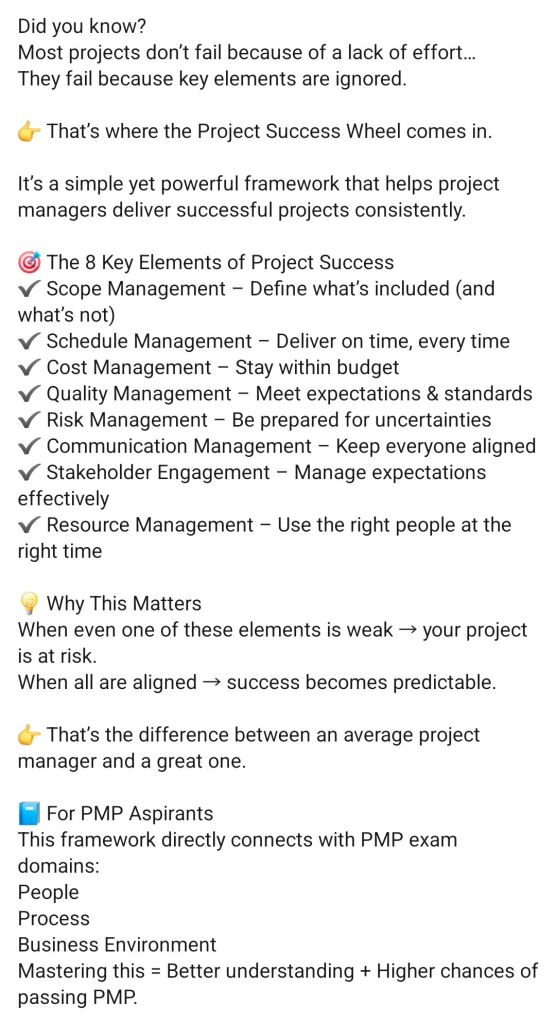
Project Management Success Wheel, 8 Key Elements

Project Management Success Wheel, 8 Key Elements

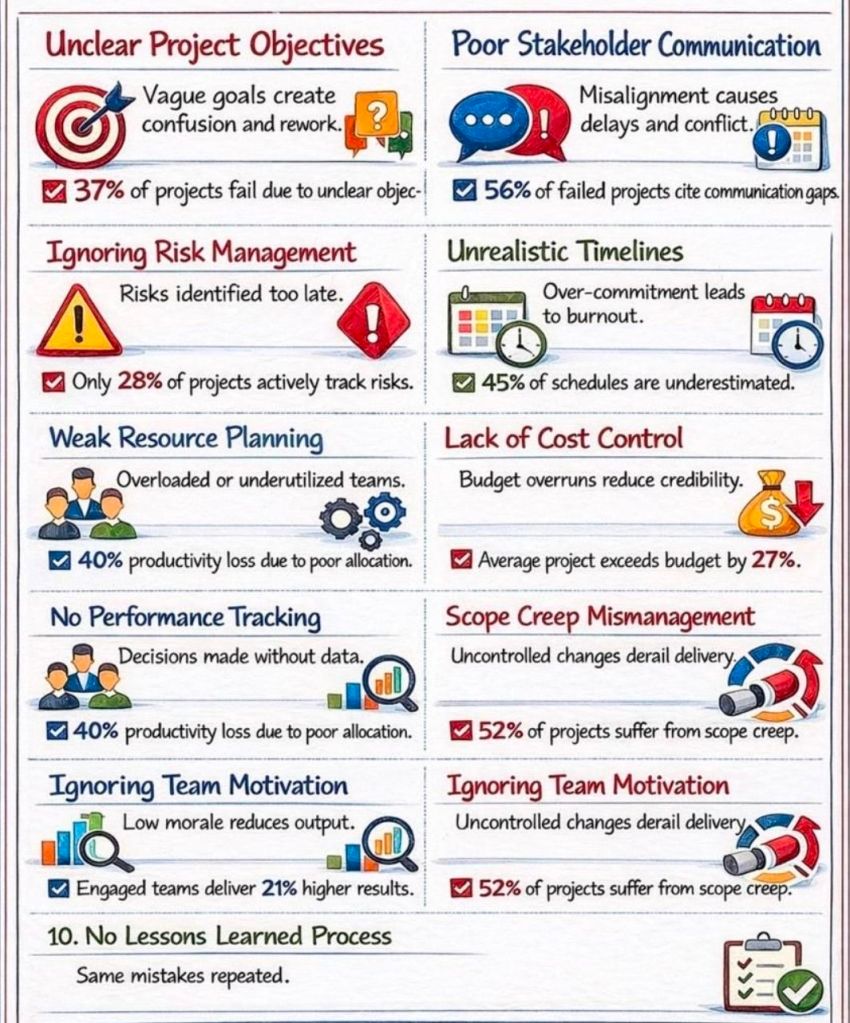
Project Management Mistakes Overview

Project Management Mistakes Overview

Mark Whitfield Online Resume Overview

Mark Whitfield is a highly experienced Senior IT Project Manager and former developer with over 30 years of expertise in HP NonStop (formerly Tandem) systems, primarily within the electronic banking and payments sectors. He is currently a Senior Project Manager at Capgemini (SC cleared until 2031) and maintains a professional portfolio at mark-whitfield.com

Historical Timeline & Customer Breakdown

  • 1990 – 1995: The Software Partnership / Deluxe Data (now FIS)
    • Customer/Projects: Developed electronic banking software, specifically sp/ARCHITECT-BANK, for major financial institutions including TSBBank of ScotlandRabobank, and Girofon (Denmark).
    • Technical Breakdown: Focused on low-level programming using COBOL85NonStop SQL, and TAL (Transaction Application Language).
    • Role: Programmer.
  • 1995 – 2013: Insider Technologies Ltd (ITL)
    • Customer/Projects: Focused on HP NonStop monitoring, diagnostic, and payment software for high-value banking clients. Key products included Enterprise ManagerXPNETBASE24, and EPS.
    • Technical Breakdown:
      • XPERT24: Produced technical designs for this performance monitoring tool to track XPNET layers and transaction interchange counters (ATM/POS approval rates).
      • RTLX Payments: Served as IT Project Manager for RTLX (Real-Time Long-term eXchange) payment software.
      • Infrastructure: Extensive use of Guardian utilities (PATHWAY, SCF, FUP, INSPECT), TACL, and SCOBOL.
    • Role: Software Design, Team Leading, and Product Management.
  • 2013 – 2016: Freelance / Contract Projects
    • Customer/Projects: Managed software development lifecycle (SDLC) projects for various blue-chip companies.
    • Role: IT Project Manager.
  • 2016 – Present: Capgemini
    • Customer/Projects: Managing large-scale digital and public sector transformations. Notable clients include UK Government (MS Azure Cloud migration), Jaguar Land Rover (JLR)HeathrowRoyal Mail GroupBank of EnglandHSBCBarclays, and Deutsche Bank.
    • Technical Breakdown: Transitioned from legacy Tandem environments to modern Agile Scrum delivery and Microsoft Azure Cloud hosting.
    • Role: Senior Project Manager / Technical Delivery Manager.

Technical Breakdown by Competency

  • Operating Systems: HP NonStop (Guardian/NSK), Windows, Linux, Unix.
  • Programming Languages: TALTACLCOBOL85SCOBOL, C, C++, Java, and ASP.NET framework.
  • Databases: NonStop SQL/MP, MS SQL.
  • NonStop Middleware: PATHWAYXPNETBASE24EPS, and EMS (Event Management System).
  • Methodologies: Registered PRINCE2 PractitionerAgile SCRUM, ITIL, and ISO9001:2008. 

Web Hyperlinks & Resources

iProPMTemplates on Etsy for Project Management Templates with FREE Upgrades

Mark Whitfield is a Senior Project Manager with over 30 years of experience in delivering PRINCE2 Waterfall and Agile Scrum projects. Operating the Etsy shop ProjectTemplatesSoft (also known as iProPMTemplates), he provides a comprehensive bundle of over 200 professional project management templates. 

Operating the Etsy shop ProjectTemplatesSoft (also known as iProPMTemplates)

Author Overview: Mark Whitfield

  • Professional Background: Graduated in Computing in 1990 and began his career as a programmer in electronic banking software.
  • Expertise: Senior Project Manager and PRINCE2 Practitioner with extensive experience in the Software Development Lifecycle (SDLC).
  • Value Proposition: His templates are designed to be “imitation-proof” professional toolsets used in real-world project delivery.
  • Support Policy: Offers FREE upgrades and additions for life to anyone who purchases his template bundles; users simply contact him via Etsy or his official website

Detailed Project Templates Inventory

The expanded inventory typically included in his master ZIP file covers the entire project lifecycle across various formats (Excel, Word, PowerPoint, and MS Project). 

1. Planning & Scheduling Templates

  • MS Project (MPP) Plans: Detailed SDLC Microsoft Project plans adaptable for Waterfall and Agile Scrum, including PRINCE2 7th Edition specific plans.
  • Excel Project Planners: Robust Waterfall and PRINCE2 planners with automated Gantt views, designed for users without MS Project licenses.
  • Plan on a Page (POaP): High-level PowerPoint and Excel templates for stakeholder presentations, showing project timelines and key milestones.
  • Agile Frameworks: Templates for Sprint planning, Daily Stand-ups, Sprint Reviews, and Retrospectives. 

2. Tracking & Control (RAID & RACI)

  • Comprehensive RAID Log: An Excel-based master tracker for Risks, Assumptions, Issues, Dependencies, and Decisions.
  • RACI Matrix: For defining roles and responsibilities (Responsible, Accountable, Consulted, Informed).
  • Agile Trackers: Includes Burn Down and Burn Up charts for teams not using Jira or similar tools. 

3. Financial & Resource Management

  • Project Financial Tracker: Detailed spreadsheets for tracking forecasts, actuals, margins, and variance.
  • Resource Costing Grid: Tools for estimating resource costs across project phases, useful for bidding and Statements of Work (SoW).
  • Capacity Planning: Templates for managing team availability and on-boarding mobilization kits

4. Documentation & Reporting

  • Status Reports: Weekly and monthly templates in Word and PowerPoint.
  • Standard PRINCE2 Artifacts: Complete set including Business Cases, Project Briefs, Highlight Reports, and End Stage Reports.
  • Governance Tools: Meeting minutes, stakeholder analysis plans, and Benefits Realisation Plans

iProPMTemplates on Etsy for Project Management Templates with FREE Upgrades

Project Management Templates Overview and Author Timeline

Mark Whitfield provides a comprehensive suite of over 200 editable project management templates designed for Agile, Waterfall, and PRINCE2 methodologies. These tools are based on his 30+ years of project delivery experience in high-stakes sectors like banking and aerospace. 

Overview of Project Management Templates

Whitfield’s collection, available on his official website and Etsy, includes specialized tools for various delivery phases: 

  • Planning & Scheduling: Includes Plan on a Page (POaP) (30+ PowerPoint examples for executive summaries), detailed MS Project (MPP) plans, and Excel-based Gantt charts for those without MS Project licenses.
  • Tracking & ControlRAID Logs (Risks, Actions, Issues, Dependencies/Decisions) with built-in charts, and RACI Trackers for defining roles and responsibilities.
  • Methodology-Specific Tools:
    • PRINCE2: Full 7th Edition MS Project plans and standard Word templates.
    • Agile/Scrum: Agile burn-down and burn-up charts, story dependency trackers, and sprint overview templates.
  • Financial Management: Detailed trackers for budgets, forecasts, actuals, margins, and resource costing per project phase.
  • Reporting & Governance: Weekly/monthly status report templates (Word and PowerPoint), project organization charts, stakeholder analysis plans, and meeting minutes.
  • Delivery & Mobilization: Onboarding kits, deployment runbooks, and Statement of Work (SOW) guidance for both Agile and Waterfall. 

Historical Career Timeline

Mark Whitfield’s template development is rooted in a career that evolved from technical programming to senior engagement management. 

  • 1990–1995: The Software Partnership / Deluxe Data: Started as a programmer specializing in electronic banking software for Tandem Computers (HPE NonStop).
  • 1995–2013: Insider Technologies (18 years):
    • 1997: Consultant at CRESTCo (now Euroclear) for volume testing and performance benchmarking.
    • 2002: Managed the first HP OpenView Operations 2-way Smart Plug-In certification for the NonStop platform.
    • Early 2000s: Transitioned to IT Project Manager, managing waterfall projects for real-time log extraction (RTLX) products for clients like HSBC.
    • Late 2000s–2013: Senior roles in product and project management, managing large-scale transaction monitoring for global banks.
  • 2013–2014: Wincor Nixdorf: Served as a Project Manager for the Banking Division, managing a £5m+ project for Lloyds Banking Group (LBG) to replace legacy software across their ATM estate.
  • 2014–2016: Betfred: Senior IT Digital Project Manager in the Online and Mobile Division, delivering projects using the Agile Scrum framework.
  • 2016–Present: Capgemini UK:
    • 2016: Lead Project Manager for a UK Air Traffic organization, delivering iOS apps for airspace visualization.
    • 2023–2024: Technical Delivery Manager for a £1m+ UK Government project involving fish export and health document portals.
    • Current: Serving as an Engagement Manager (Certified PRINCE2 Practitioner and Agile SCRUM) augmented into MuleSoft. 

Project Management Templates Overview and Author Timeline

Agile Development Overview and Detailed Timeline by Era

Agile development is an iterative and incremental approach to project management and software delivery that prioritises flexible planning, frequent delivery of working software, and rapid response to change. At its core, Agile seeks to shorten work cycles to deliver value to customers quickly while using frequent feedback to improve quality. 

Core Overview

The foundation of modern Agile is defined by the Agile Manifesto (2001), which establishes four central values: 

  • Individuals and interactions over processes and tools.
  • Working software over comprehensive documentation.
  • Customer collaboration over contract negotiation.
  • Responding to change over following a plan. 

The Agile life cycle typically moves through six phases: Concept, Inception, Iteration, Release, Maintenance, and Retirement


Comprehensive Timeline of Agile Development

Agile did not emerge in a vacuum; it evolved from early 20th-century industrial concepts and decades of experimentation in software engineering. 

Era 1: The Industrial & Theoretical Roots (1910s – 1960s)

This era established the foundational concepts of efficiency, waste reduction, and iterative cycles that would later inform Agile frameworks. 

  • 1911: Frederick Taylor publishes The Principles of Scientific Management, advocating for managers to analyse and adopt worker-led process improvements.
  • 1930s: Walter Shewhart at Bell Labs develops the Plan-Do-Check-Act (PDCA) cycle, a groundbreaking iterative methodology for quality control.
  • 1948: Toyota formalises the Toyota Production System (Lean), introducing concepts like Kaizen (continuous improvement) and Just-in-Time manufacturing.
  • 1957: Gerald Weinberg and others at IBM begin using incremental development on projects.
  • 1958: NASA’s Project Mercury uses half-day iterations and test-first development, marking one of the earliest high-stakes uses of iterative cycles.

Era 2: Evolutionary Alternatives to Waterfall (1970s – 1980s) 

As the rigid Waterfall model became dominant, practitioners began developing “lightweight” alternatives to handle complex, shifting requirements. 

  • 1970s: Barry Boehm proposes Wideband Delphi, an early forerunner to Planning Poker.
  • 1976: Tom Gilb publishes the Evolutionary Delivery Model (Evo), perhaps the first explicitly named incremental alternative to Waterfall.
  • 1980: Toyota introduces Visual Control, the predecessor to Agile “information radiators” like Kanban boards.
  • 1986: Hirotaka Takeuchi and Ikujiro Nonaka publish “The New New Product Development Game” in Harvard Business Review, introducing the “rugby” approach that inspired the Scrum framework.
  • 1988: Barry Boehm formalises the Spiral Model, an iterative model focused on identifying and reducing risks. 

Era 3: The Proliferation of Frameworks (1990 – 2000) 

This decade saw a “crisis” in software development where traditional methods failed to keep up with the personal computing boom, leading to the birth of modern frameworks. 

  • 1991: James Martin publishes Rapid Application Development (RAD), formalising the use of timeboxing and iterations.
  • 1993: Jeff Sutherland and team at Easel Corporation first implement Scrum as a formal process.
  • 1994: The Dynamic Systems Development Method (DSDM) is created as a non-profit consortium to provide a framework for RAD.
  • 1995: Ken Schwaber and Jeff Sutherland co-present the Scrum methodology at the OOPSLA conference.
  • 1996: Kent Beck creates Extreme Programming (XP) while working on the Chrysler Comprehensive Compensation (C3) project.
  • 1997: Jeff De Luca introduces Feature-Driven Development (FDD).
  • 1999: Kent Beck publishes Extreme Programming Explained, popularising many engineering practices like pair programming.

Era 4: The Manifesto & Mainstream Adoption (2001 – 2010)

Agile shifted from a niche experimental approach to a global industry standard. 

  • 2001 (Feb): 17 developers meet at Snowbird, Utah, and author the Manifesto for Agile Software Development.
  • 2001 (Post): The Agile Alliance is formed to promote the manifesto’s values.
  • 2003: Mary and Tom Poppendieck publish Lean Software Development, formally linking Lean manufacturing principles to Agile.
  • 2005: Mike Cohn introduces Planning Poker in Agile Estimating and Planning.
  • 2007: The Scaled Agile Framework (SAFe) is introduced by Dean Leffingwell to apply Agile to large enterprises.
  • 2009: The concept of DevOps emerges, seeking to bridge the gap between Agile development and IT operations. 

Era 5: Scale, Transformation, and Modern Evolution (2011 – Present)

Agile has expanded beyond software into marketing, HR, and education, becoming a “culture” rather than just a tool. 

  • 2011: The Project Management Institute (PMI) introduces the Agile Certified Practitioner (PMI-ACP).
  • 2012–2015: Agile adoption surpasses 50% in the development world as success metrics become undeniably clear.
  • 2017: AXELOS updates PRINCE2 to make agility a core focus of the project management standard.
  • 2020s: Continued evolution toward “Business Agility,” where entire organisations adopt Agile mindsets to survive rapidly changing market conditions. 

Agile Development Overview and Detailed Timeline by Era

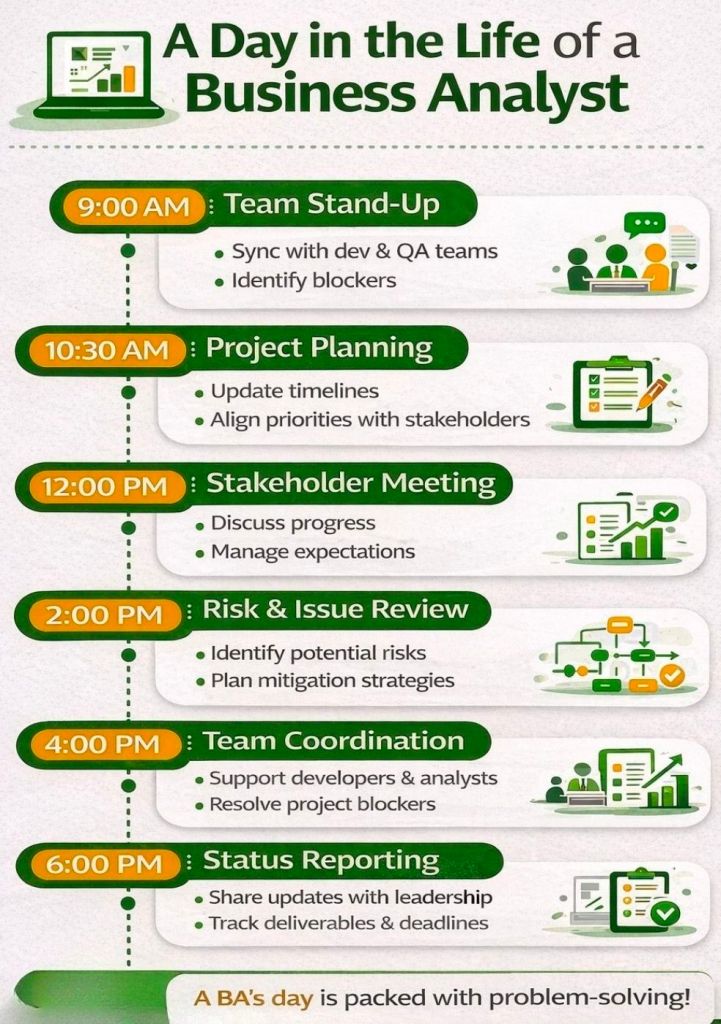
Business Analyst typical day example

Business Analyst typical day example

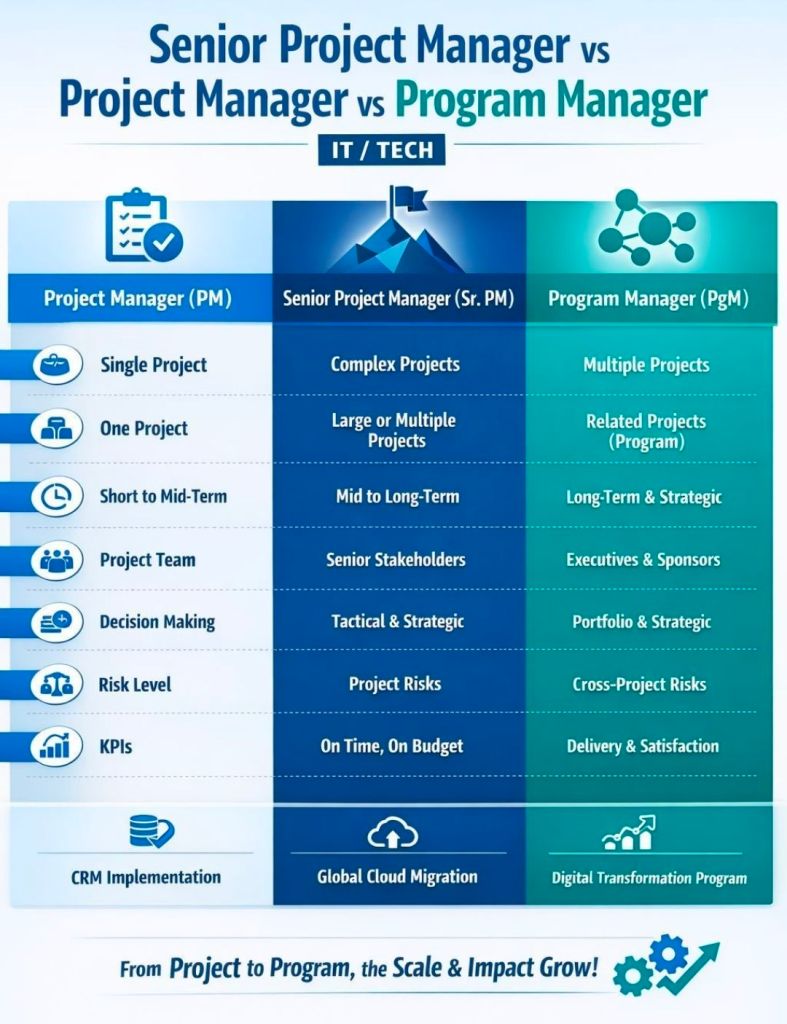
Senior Project Manager vs Project Manager vs Program Manager

Senior Project Manager vs Project Manager vs Program Manager

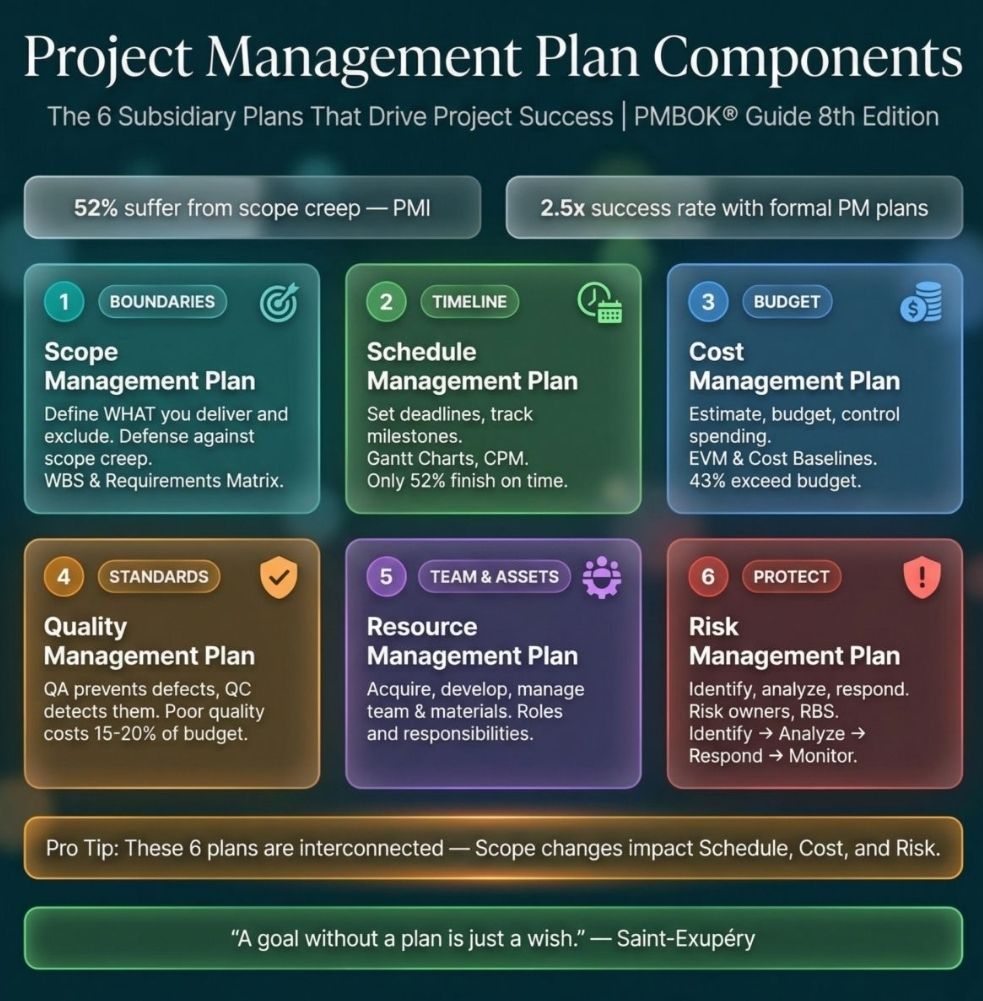
Project Management Plan Components, PMBOK

Project Management Plan Components, PMBOK

AI Projects and Methodologies for Managing AI Projects

Artificial intelligence (AI) is transforming project management through two distinct but related paths: the use of AI-powered tools to manage general projects and the specialized methodologies required to manage AI development itself

1. Methodologies for Managing AI Projects

Traditional software development methods (like Waterfall) often fail for AI because these projects are experimental and non-linear. Specialized frameworks have emerged to handle the “data-first” nature of AI: 

  • CPMAI (Cognitive Project Management for AI): A leading methodology that combines Agile principles with data-centric phases: Business Understanding, Data Understanding, Data Preparation, Model Development, Model Evaluation, and Model Operationalization.
  • Agile-AI Hybrid: Adapts standard Agile by using “short-boxed” iterations for model training and allowing for a “flexible scope” because model performance is unpredictable until tested.
  • Data Driven Scrum: A variation of Scrum that prioritizes work based on data availability and experimental results rather than just feature backlogs.
  • MLOps (Machine Learning Operations): An operational framework focused on the continuous integration, deployment, and monitoring of models to prevent “model drift” after a project officially “ends”. 

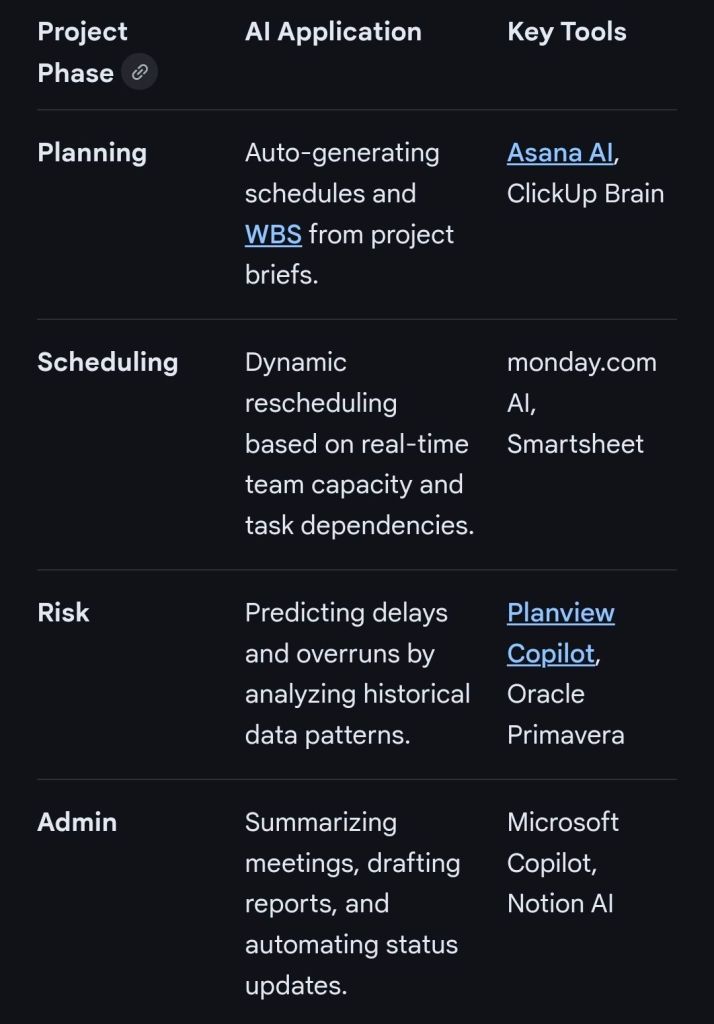
2. AI-Augmented Project Management (The “AI Copilot”)

For non-AI projects, AI acts as an intelligent assistant to automate administrative tasks and provide predictive insights. 

3. Implementation Strategy

Experts recommend a phased approach to integrating AI into management workflows: 

  1. Assess Inefficiencies: Identify repetitive tasks (e.g., status reporting) that can be automated first.
  2. Data Governance: Ensure project data is clean and centralized; AI is only as good as the data it consumes (“Garbage In, Garbage Out”).
  3. Human-in-the-Loop: Use AI for data-heavy lifting, but retain human judgment for high-stakes leadership, ethics, and stakeholder empathy.

AI Projects and Methodologies for Managing AI Projects

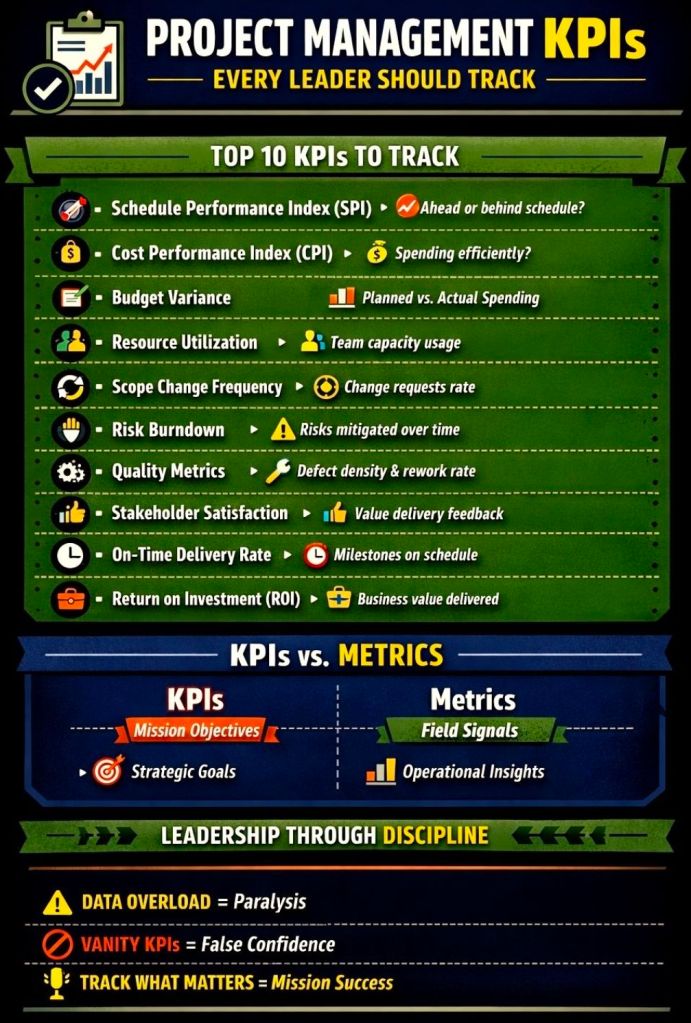
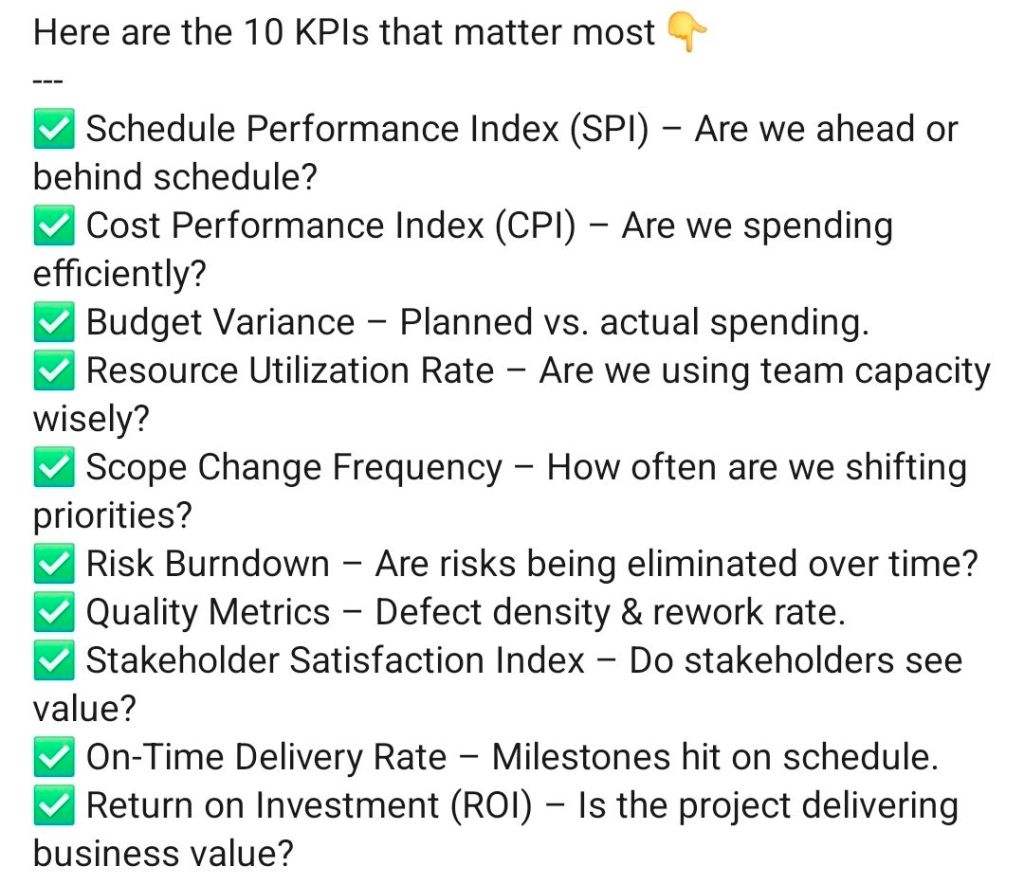
Project Management KPIs to track

Project Key Performance Indicators KPIs
Key Performance Indicators KPI overview

Project Management KPIs to track

Mark Whitfield HP NonStop Tandem experience & Project Management Templates

Mark Whitfield is an experienced IT Project Manager and software developer who has spent over 22 years specialising in HP NonStop (formerly Tandem) systems. He is currently an Engagement Project Manager at Capgemini

Career & Expertise

Whitfield’s career in HP NonStop began in 1990 and includes significant technical and leadership roles across the financial and technology sectors: 

  • Software Development: Early in his career, he worked as a programmer for The Software Partnership (later Deluxe Data/FIS), focusing on electronic banking software like sp/ARCHITECT on Tandem mainframes.
  • Insider Technologies (1995–2013): He spent 18 years at Insider Technologies as a Senior Development Engineer and Project Manager. His work involved:
    • Developing monitoring and diagnostic software such as Reflex 80:20Reflex ONE24, and RTLX (Real-Time Log Extraction) for payment systems.
    • Managing the first HP OpenView Operations Smart Plug-In certification for the NonStop platform.
    • Designing XPERT24, a performance tracking product for ACI’s XPNET layer.
  • Capgemini (2016–Present): As an Engagement Project Manager, he has led digital projects for major clients in the automotive, government, and aerospace sectors, including a cloud migration for UK Government applications. 

Technical Contributions

  • Publications: He has authored articles for globally published journals like The Connection (2013), discussing topics such as querying terabytes of legacy transaction log data from NonStop mainframes.
  • Project History: He has managed high-value projects, including a £5 million initiative to migrate legacy HP NonStop software to AIX-based technologies for a large UK retail bank.
  • Training: He is trained in various NonStop-specific technologies, including TAL (Transaction Application Language), COBOL85PATHWAY, and NonStop SQL

Whitfield also maintains a professional website, mark-whitfield.com, where he provides project management templates and resources related to HP NonStop and Tandem systems. 

Mark Whitfield provides a comprehensive bundle of over 200 editable project management templates designed for Agile, Waterfall, and PRINCE2 methodologies. These templates are based on over 30 years of project delivery experience and are available for purchase via his official website or Etsy shop. 

Key Template Categories

The bundle includes a wide variety of tools across different formats (Excel, PowerPoint, Word, and MS Project): 

  • Planning & Scheduling:
    • Plan on a Page (POaP): Over 30 PowerPoint slide examples for executive-level summaries.
    • Detailed Project Plans: MS Project (MPP) and Excel templates for SDLC, PRINCE2 7th Edition, and Agile Scrum projects.
    • Gantt Charts: Built-in tracking views for both MS Project and Excel.
  • Tracking & Control:
    • RAID Logs: Comprehensive logs for tracking Risks, Actions, Issues, and Dependencies, plus additional tabs for Change Requests and Lessons Learned.
    • RACI Matrix: Templates to define project roles and responsibilities (Responsible, Accountable, Consulted, Informed).
    • Finance Trackers: Tools for internal and external forecast vs. actual costs, including margin and variance tracking.
  • Agile Specific Tools:
    • Burn Down & Burn Up Charts: Excel-based alternatives when tools like Jira are unavailable.
    • Agile Story Dependency Tracking: Specifically for managing dependencies between agile stories and external suppliers.
  • Reporting & Governance:
    • Status Reports: Weekly and monthly templates in Word and PowerPoint formats.
    • Stakeholder Analysis: Power/interest mapping and engagement plan templates.
    • Benefits Realisation: Plans to track project outcomes against initial business goals. 

Purchase Benefits

  • Lifetime Upgrades: Once purchased, all future additions and updates to the template package are provided for free.
  • Compatibility: Templates are designed for Microsoft Office 365 but also include Excel versions compatible with earlier software.
  • Support: The package typically includes walkthrough Word documents to guide users on how to use each major template.

Mark Whitfield HP NonStop Tandem experience & Project Management Templates

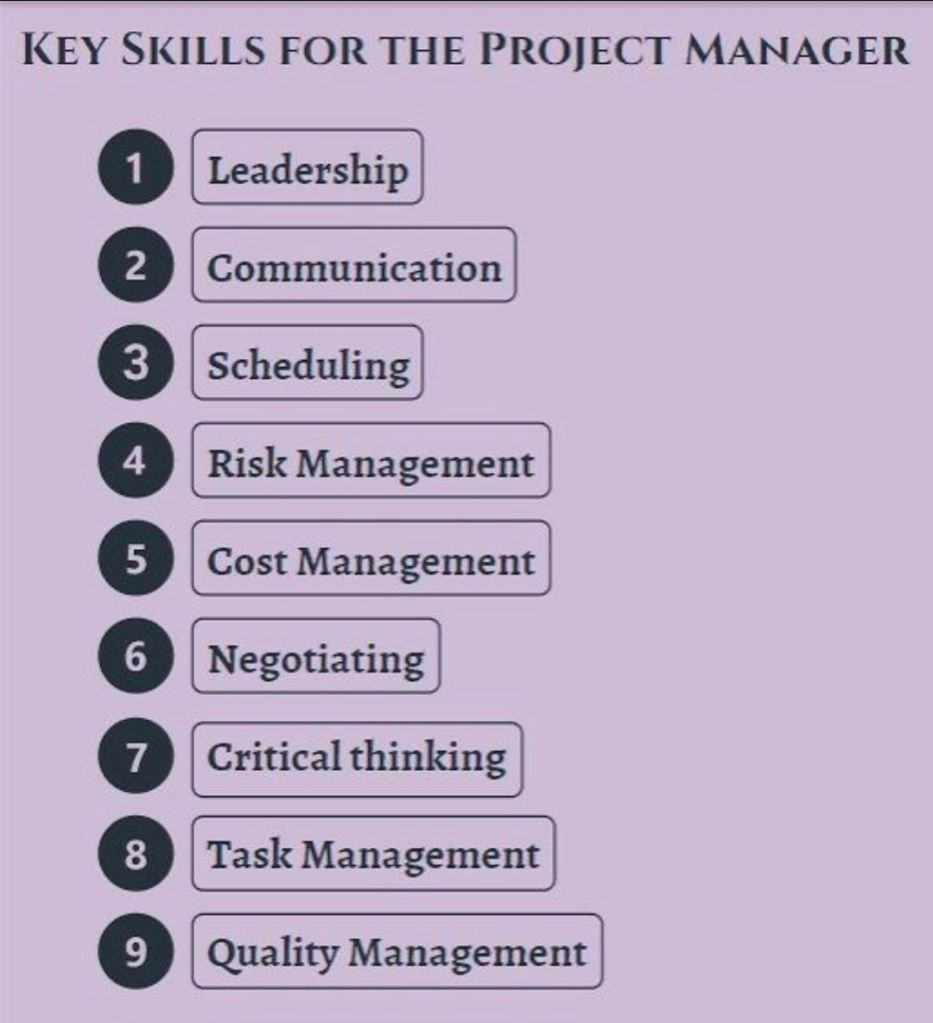
Key Skills for the Project Manager

Key Skills for the Project Manager

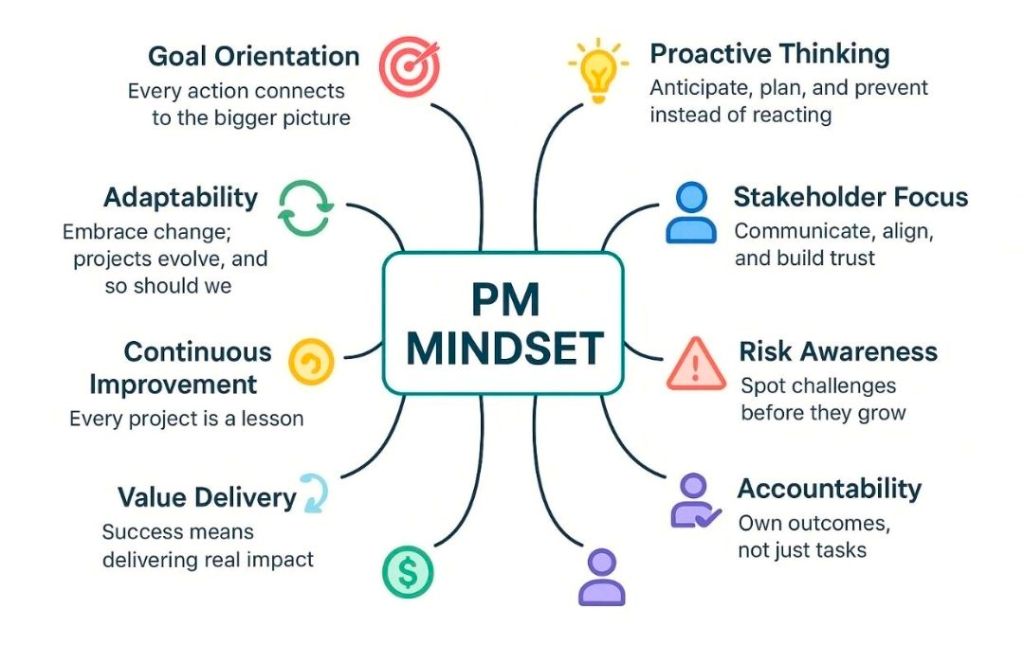
Project Management mindset, 8 thought processes

Project Management mindset, 8 thought processes

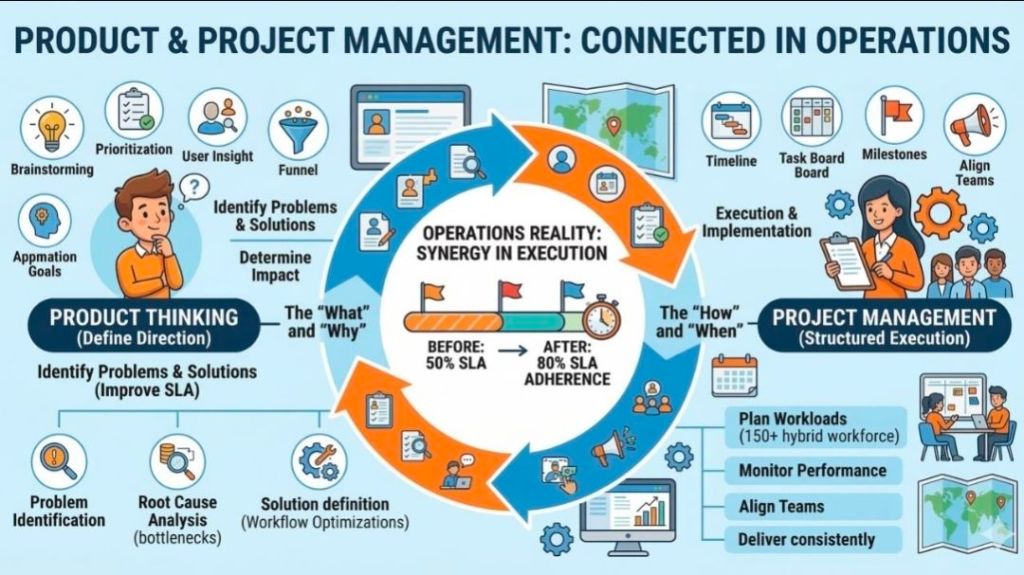
Product and Project Management

Product and Project Management