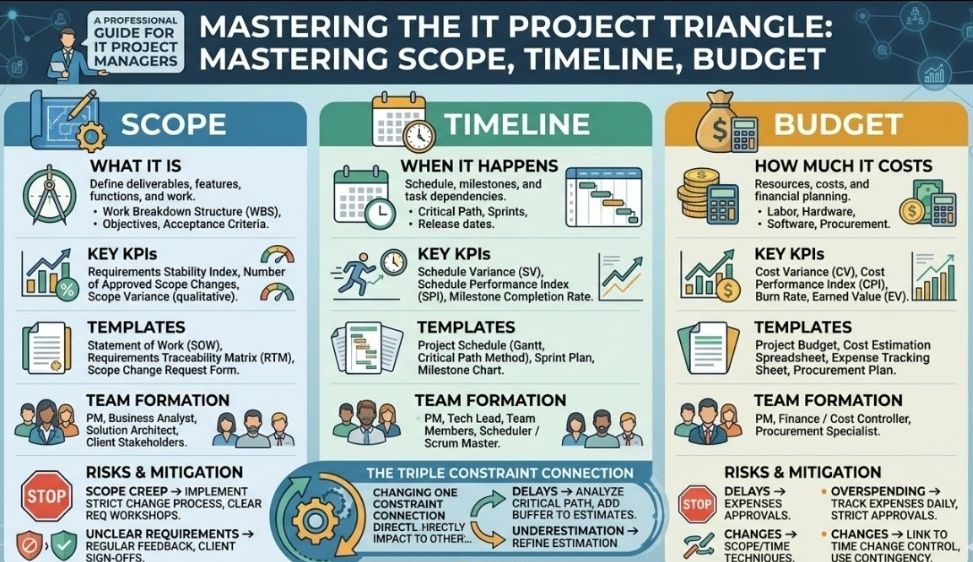
PRINCE2 Agile combines the structured governance of PRINCE2 with the flexibility of agile methods (like Scrum and Kanban) to manage projects effectively. It focuses on maintaining control, transparency, and high-quality delivery while empowering teams, making it ideal for fast-paced environments.
Key Aspects of PRINCE2 Agile:
Structure + Flexibility: It provides the framework to guide projects, while allowing the use of agile techniques to build the product.
Key Focus Areas:
The Agilometer: Assesses the level of risk and agility in a project.
Requirements: Prioritized to ensure the most valuable features are delivered first.
Rich Communication: Emphasizes face-to-face interaction and team rooms.
Frequent Releases: Ensures regular delivery and feedback loops.
Tailored Governance: Allows projects to remain aligned with organizational goals while keeping the flexibility needed for innovation.
Compatibility: Works well with various agile methods including Scrum, Kanban, and Lean Startup.
Main Benefits:
Increased Flexibility: Enables faster adaptation to changes and new information.
Improved Quality: Focuses on delivering high-quality products that meet client needs.
Enhanced Control: Provides necessary governance for project success.
When to Use:
Projects requiring both structure and high responsiveness.
Teams using Agile techniques who need to satisfy governing bodies.
Situations demanding regular, iterative delivery of results.
PRINCE2 (PRojects IN Controlled Environments) is a structured, process-driven project management method used internationally to deliver projects within time, cost, and quality constraints. Originally developed for IT projects, it has evolved into a generic, flexible, and scalable framework applicable to any type of project, now owned by PeopleCert.
Detailed Overview of PRINCE2 (2026 Framework)
As of 2026, the current framework is PRINCE2 7th Edition, launched in late 2023. It is characterized by its focus on people, digital tools, and sustainability, while retaining its core focus on governance.
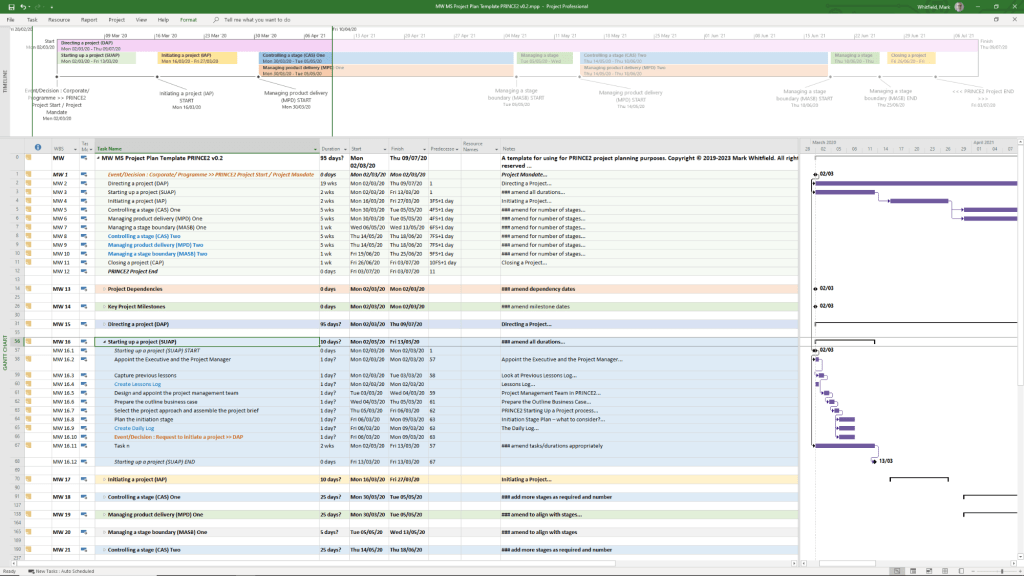
MS Project MPP template example
1. The Seven Principles (Why PRINCE2 is used)
Continued Business Justification: A project must have a valid business case.
Learn from Experience: Lessons are documented and used.
Defined Roles and Responsibilities: Clear organizational structure.
Manage by Stages: Projects are broken into manageable chunks.
Manage by Exception: Empowerment given to managers to act within tolerances.
Focus on Products: Focus on deliverables rather than activities.
Tailor to Suit the Project: Adapted to suit the project’s size, environment, and complexity.
2. The Seven Themes (What must be managed)
Business Case
Organization
Quality
Plans
Risk
Change
Progress
3. The Seven Processes (How to manage)
Starting up a Project
Directing a Project
Initiating a Project
Controlling a Stage
Managing Product Delivery
Managing a Stage Boundary
Closing a Project
4. Certification Levels
Foundation: Confirms basic knowledge of the methodology.
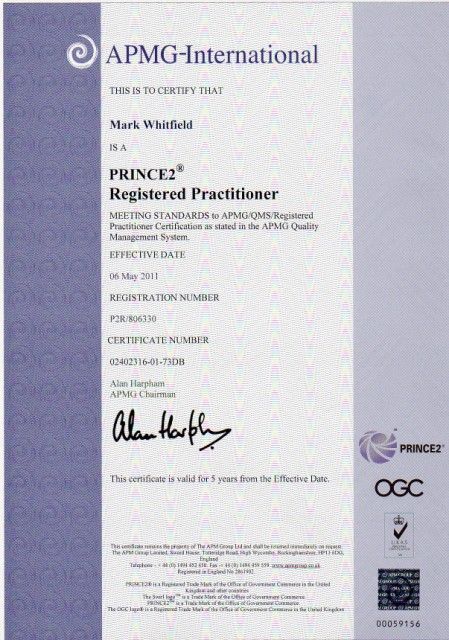
Practitioner: Tests the ability to apply and tailor the method to scenarios.
Detailed Timeline Evolution by Era and Year
PRINCE2 has evolved from a niche IT methodology to a global standard through three major revisions.
Era 1: The Foundations (1975–1989)
1975: Simpact Systems Ltd. creates the PROMPT (Project, Resource, Organization, Management, and Planning Technique) methodology.
Early 1980s: UK Central Computer and Telecommunications Agency (CCTA) licenses PROMPT.
1989: CCTA enhances PROMPT II, renaming it PRINCE (PROMPT in the CCTA Environment), mandated for UK IT projects.
Era 2: Launch and Public Adoption (1990–2005)
1990: PRINCE is released into the public domain.
1996:PRINCE2 is released by CCTA, designed for a broader range of projects (non-IT).
2000: Ownership transfers to the UK Office of Government Commerce (OGC).
2002/2005: Major revisions to the manual structure, strengthening the “product-based planning” approach.
Era 3: Modernization & Privatization (2009–2021)
2009: Major “Refresh” released, introducing the seven principles, themes, and processes. Focuses on simplicity and customizability.
2013: Ownership transfers to AXELOS Ltd, a joint venture between the UK Government and Capita.
2017:PRINCE2 2017 Update (6th Edition) is released, focusing on enhanced flexibility and tailoring guidance.
BRD vs FRD, Business Requirements vs Functional Requirements
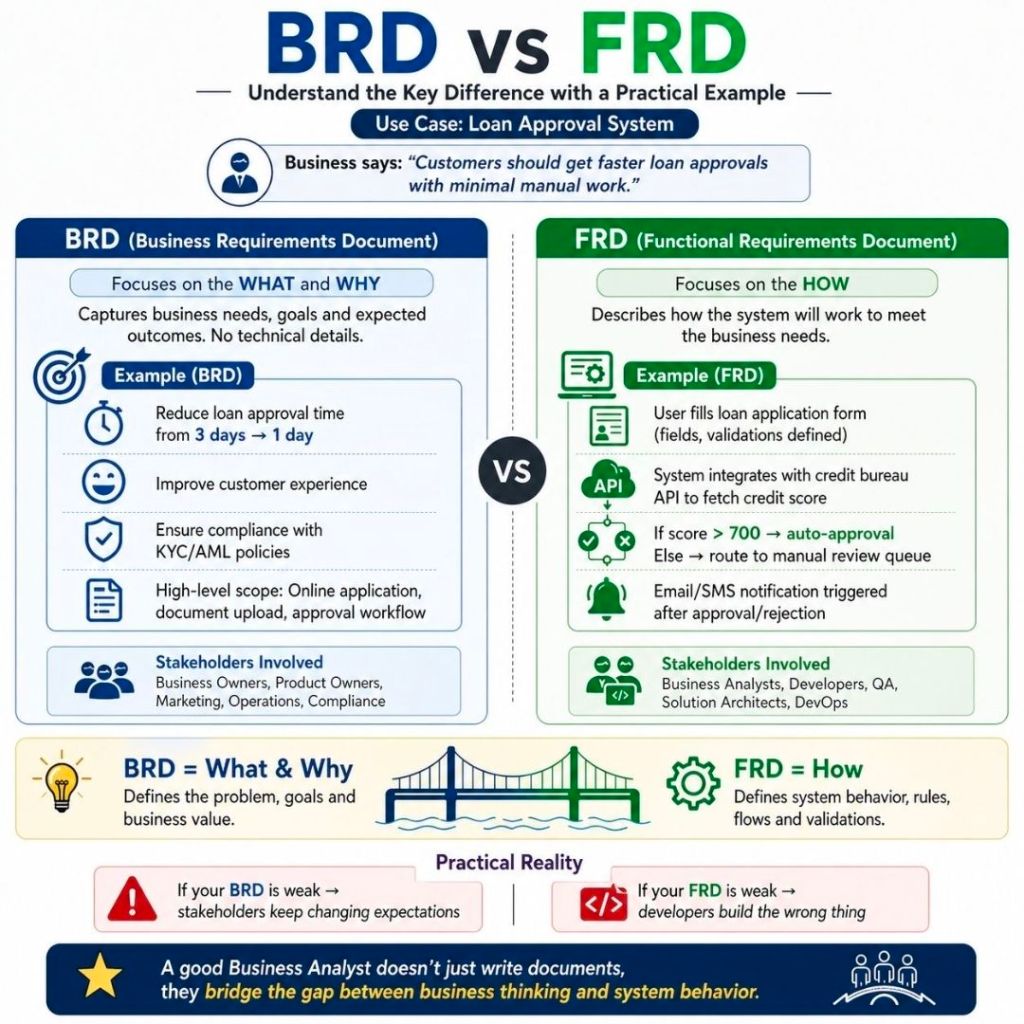
The primary difference between a Business Requirement Document (BRD) and a Functional Requirement Document (FRD) is that the BRD focuses on “why” a project is needed (business objectives), while the FRD details “how” the system will work to meet those needs. The BRD serves stakeholders and leadership, whereas the FRD guides developers and technical teams.
Key Differences at a Glance:
BRD (Business Requirements Document):
Goal: Defines business objectives, goals, and high-level needs.
Key Content: Business problem, scope, ROI, high-level project goals.
FRD (Functional Requirements Document):
Goal: Translates business needs into detailed technical functionalities.
Focus: “How” the system will perform to meet requirements.
Audience: Developers, Testers, Technical Team, Business Analysts.
Key Content: Feature descriptions, user interactions, system workflows, data requirements, UI mockups.
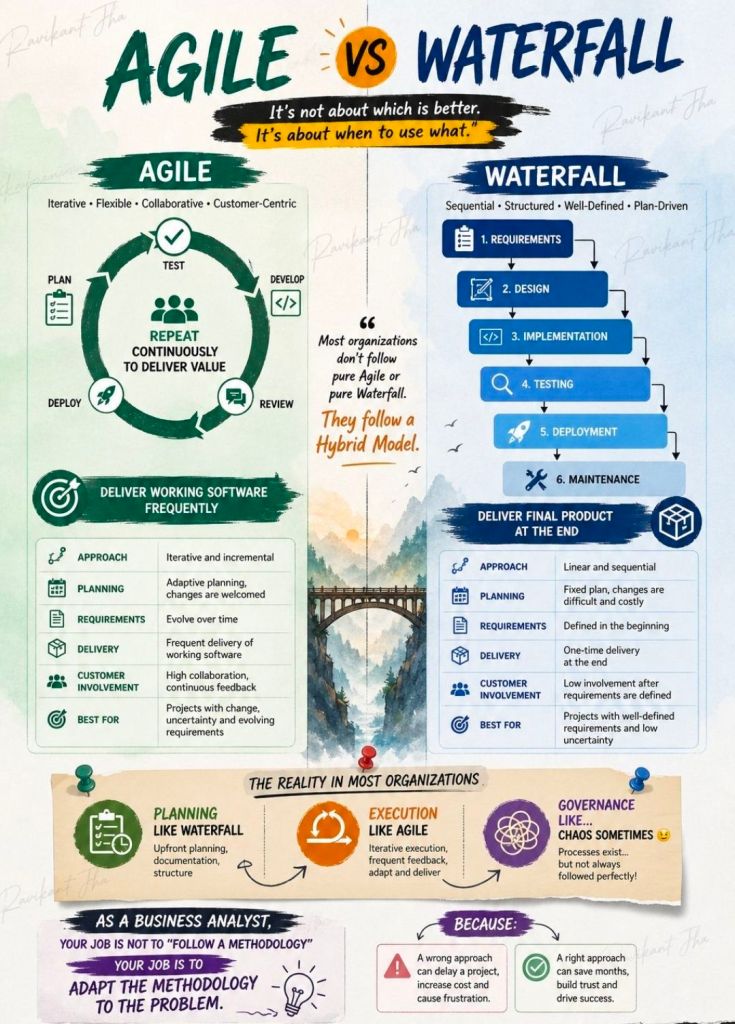
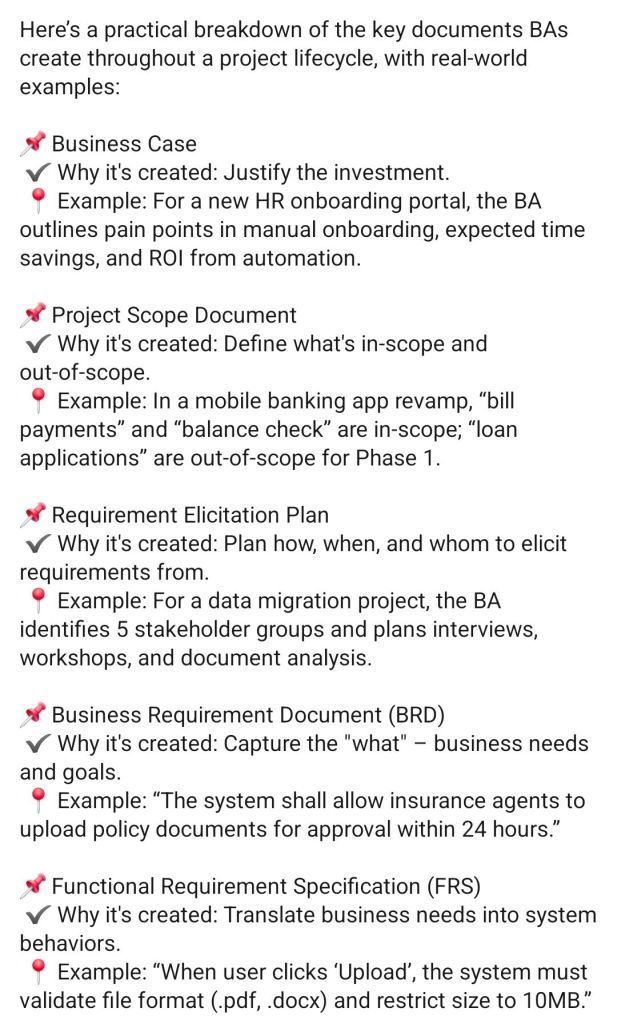
How They Work Together: The BRD is created first to get approval for the project, while the FRD is developed based on the approved BRD. The FRD ensures the project is actionable, testable, and feasible. In Agile, these are often combined into smaller artifacts like User Stories.
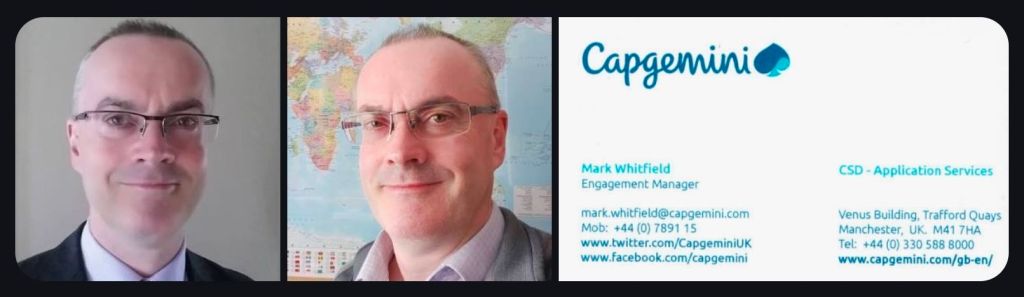
Mark Whitfield is a highly experienced, SC-cleared Senior Project Manager and IT professional with over 31 years of experience in both public and private sectors, specializing in software development, cloud migration, and IT systems delivery.
He is currently associated with Capgemini (since 2016) and runs a project management resource website, PROject Templates.
Joined Capgemini in 2016 having worked at ascending points in software development lifecycle projects for over 31 years
Key Qualifications & Experience:
Roles: Senior Project Manager, Engagement Project Manager, Delivery Manager, and former programmer.
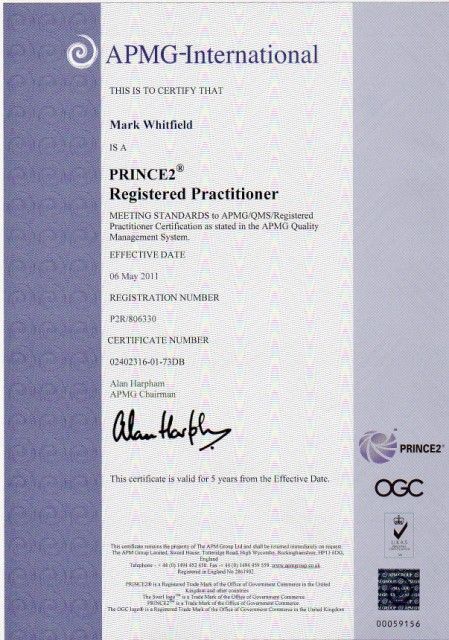
Methodologies: PRINCE2 Practitioner, skilled in both Waterfall and Agile (SCRUM) approaches.
Sector Experience: Extensive experience in finance and banking, including ATM software swap-outs, cloud migration (Azure, AWS, Power Platform), and POS monitoring systems.
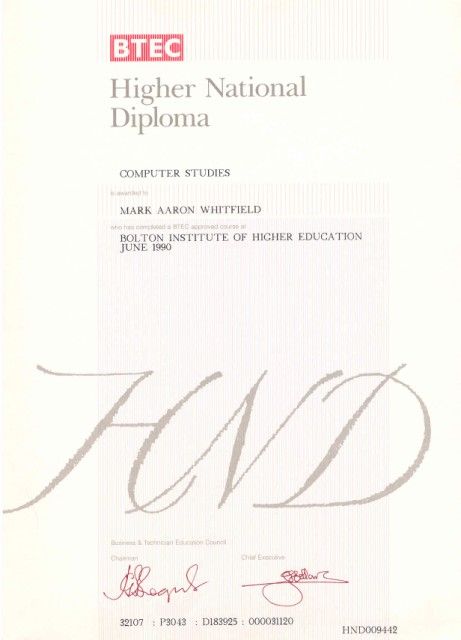
Background: Graduated in Computing in 1990; worked as a developer (COBOL, SQL, Tandem / HPE NonStop) before transitioning to project management.
PRINCE2 Practitioner, skilled in both Waterfall and Agile (SCRUM) approaches
Professional Highlights:
Delivered major projects for clients such as Barclays, Bank of England, HSBC, Royal Mail Group, UK & Welsh Government, Heathrow, and Jaguar Land Rover.
Led complex IT infrastructure projects and business transformations.
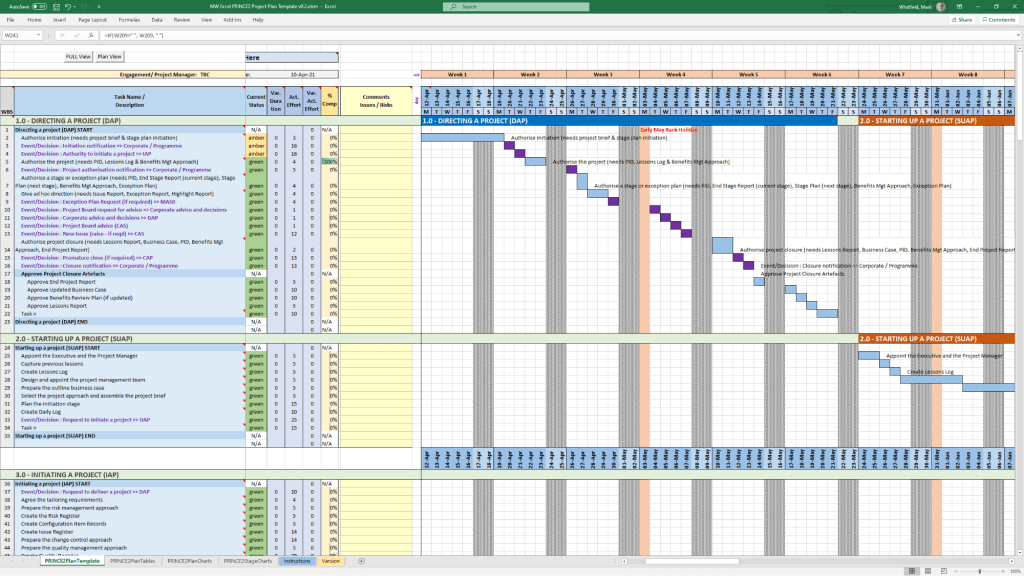
Maintains mark-whitfield.com, offering over 200 project management templates, trackers (RAID, budget, benefit, cost etc.), and many plans for Agile / Waterfall projects including 30+ Plan On a Page (POaP) and MS Project MPP examples (click on Blog above for a summary).
Provides specialized templates for PRINCE2 7th edition and MS Project (MPP).
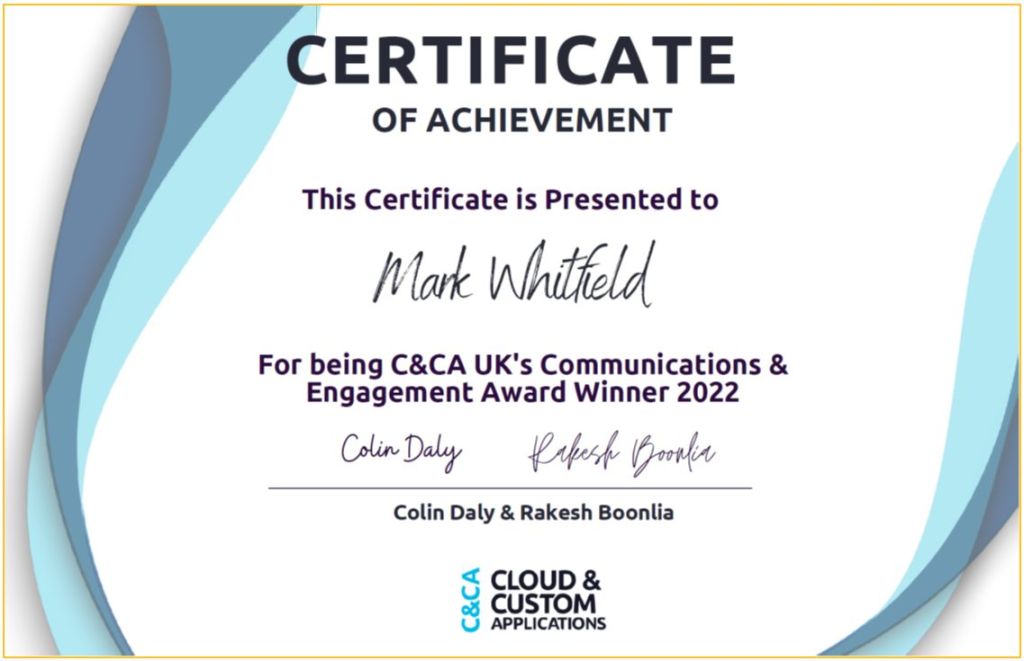
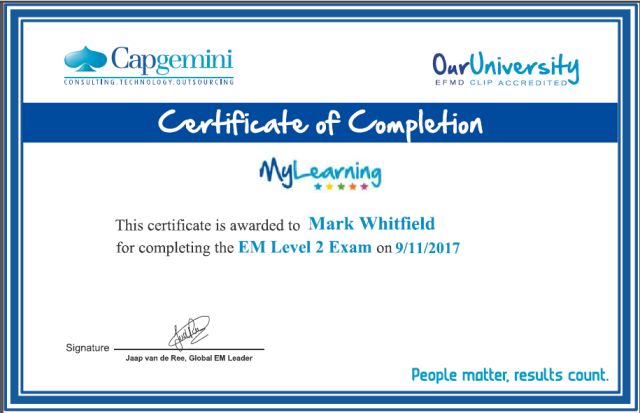
December 2022 – C&CA UK’s Communications & Engagement Award Winner – Cloud & Custom Applications – Capgemini UKNovember 2017 – Advanced Engagement Management Course – Level 2 ExamJune 1990 – Higher National Diploma in Computer Studies, Distinction