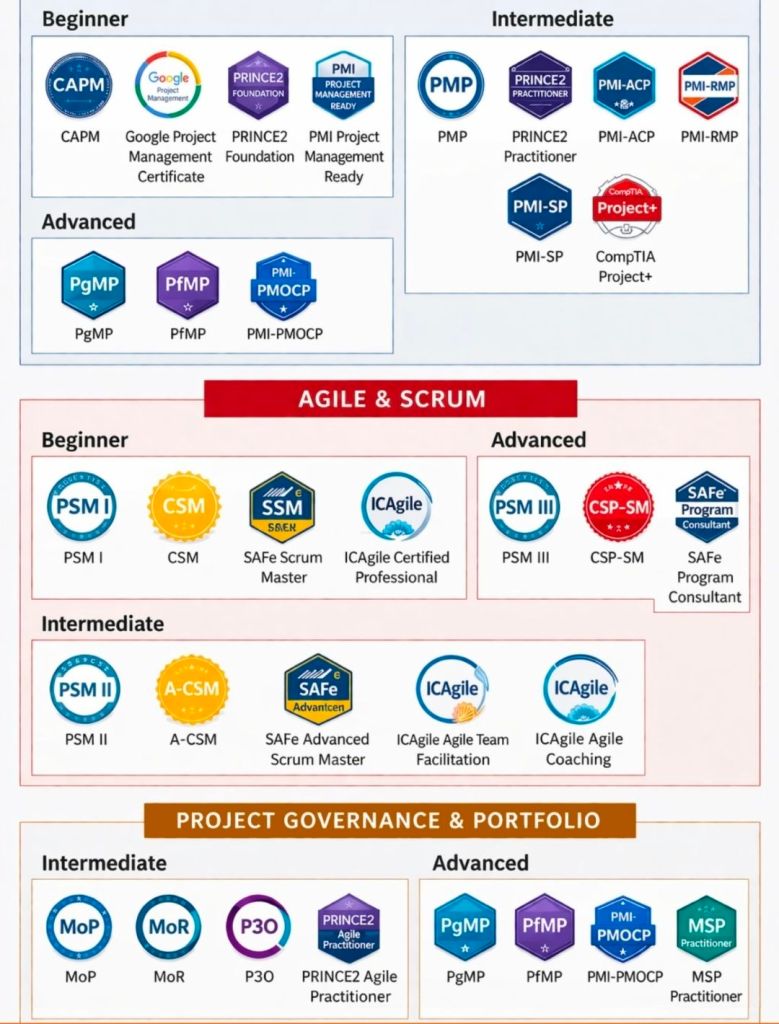
Project Management Certifications

Project Management Certifications

Agile Projects Overview and Timeline by year

Agile project management is an iterative, adaptive approach that breaks projects down into small, manageable cycles called sprints or iterations. Instead of planning the entire project upfront, teams continuously deliver functional increments, gather immediate feedback, and adapt to changing requirements. It prioritizes team collaboration, customer involvement, and rapid value delivery over rigid documentation and sequential phases.


Comprehensive Timeline Breakdown by Era and Year

Era 1: The Foundational Seeds (1950s – 1980s)

Before “Agile” existed as a formal term, engineers and researchers laid the groundwork through lean manufacturing and early iterative computing.

  • 1957: IBM begins utilizing incremental development concepts under Gerald M. Weinberg.
  • 1958: Software for Project Mercury (NASA’s first human spaceflight program) is developed using rapid half-day iterations.
  • 1970: Dr Winston Royce publishes a paper describing the Waterfall methodology. Paradoxically, he presents it as high-risk, yet it becomes the dominant, rigid corporate framework for decades.
  • 1980: Toyota refines “Just-In-Time” logistics and visual management system concepts, which later directly inspire Kanban and Lean software practices.
  • 1986: Authors Hirotaka Takeuchi and Ikujiro Nonaka publish “The New New Product Development Game” in the Harvard Business Review. They introduce a holistic, “rugby-style” team approach, coining the term “Scrum”.
  • 1988: Dr Barry Boehm introduces the Spiral Model, formalizing risk-driven, iterative lifecycle planning.

Era 2: The “Lightweight” Revolt (1990s)

Driven by frustration over the high failure rates and slow delivery of Waterfall, software pioneers independently build faster, more flexible frameworks.

  • 1991: James Martin formalizes Rapid Application Development (RAD), highlighting timeboxing, prototyping, and active customer involvement.
  • 1993: Jeff Sutherland, John Scumniotales, and Jeff McKenna deploy the very first operational Scrum process at Easel Corporation.
  • 1994: The Dynamic Systems Development Method (DSDM) is launched in the UK, providing one of the earliest structured frameworks for iterative project delivery.
  • 1995: Ken Schwaber and Jeff Sutherland co-present the formal Scrum Framework to the public at the OOPSLA conference.
  • 1996: Kent Beck introduces Extreme Programming (XP), introducing core engineering mechanics like pair programming and test-driven development (TDD).
  • 1997: Jeff De Luca and Peter Coad design Feature-Driven Development (FDD) to focus strictly on client-valued functional results.

Era 3: The Manifesto Moment (2000 – 2001)

The pivotal pivot point where separate iterative movements unite into a single, cohesive global movement.

  • 2000: Pre-meeting alignment occurs. Martin Fowler publishes his definitive article on Continuous Integration (CI), and Extreme Programming teams begin adopting Scrum’s three-question daily standup format.
  • February 2001: The Agile Manifesto is Born. Seventeen software development pioneers meet at a ski resort in Snowbird, Utah. They discover common ground, author the Manifesto for Agile Software Development, and establish the 4 Core Values and 12 Principles.
  • Late 2001: The Agile Alliance non-profit is established to safeguard, evolve, and distribute Agile education globally.

Era 4: Mainstream Adoption & Scaling (2002 – 2019)

Agile shifts from a rebellious IT trend into a standard corporate expectation, requiring frameworks that can scale across massive enterprises.

  • 2002: Ken Schwaber co-founds the Scrum Alliance to offer standardized certifications (like Certified ScrumMaster), dramatically accelerating global adoption.
  • 2003: Mary and Tom Poppendieck publish Lean Software Development, cleanly mapping Toyota’s manufacturing efficiencies directly onto digital projects.
  • 2009: The Software Craftsmanship Manifesto is created to ensure technical excellence and code quality are not forgotten during rapid business sprints.
  • 2011: Dean Leffingwell releases the Scaled Agile Framework (SAFe), allowing massive corporate enterprises to align hundreds of agile teams across entire portfolios.
  • 2015: Global project management authorities officially pivot; AXELOS releases PRINCE2 Agile, and the Project Management Institute (PMI) introduces Agile certifications into its core curriculum.

Era 5: Modern Continuous Agility (2020s – Present)

Agile transcends IT entirely, cementing its place as an overarching organizational strategy for business survival in an uncertain world.

  • 2020: The Scrum Guide receives its most significant structural update, streamlining language, eliminating prescriptive micro-management, and focusing intensely on a single, unified team working toward a singular “Product Goal”.
  • 2021–2023: Business Agility explodes. Non-technical departments—including HR, Marketing, Legal, and Finance—broadly restructure their workflows into iterative agile backlogs to manage volatile hybrid work environments.
  • 2024–Present: AI-Driven Agility becomes standard practice. Project management tools use generative AI to automatically draft user stories, estimate team velocity, and dynamically rewrite project sprint backlogs based on real-time market shifts.

Agile Projects Overview and Timeline by year

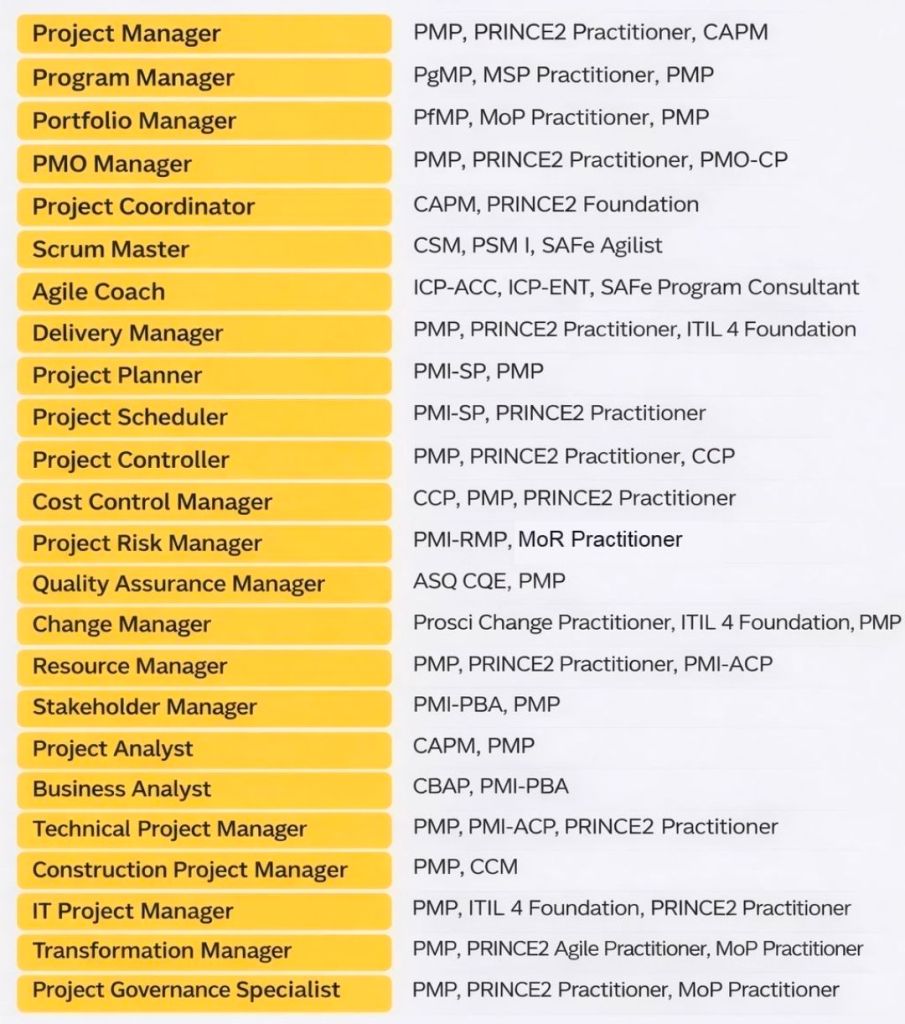
Project Management Roles and some Certifications

Project Management Roles and some Certifications

Capgemini Engagement Manager is a senior-level, client-facing role

A Capgemini Engagement Manager is a senior-level, client-facing role responsible for end-to-end delivery of complex business and technology transformation programs. They bridge strategy and execution, acting as a trusted advisor to clients while maintaining operational and financial control over projects.

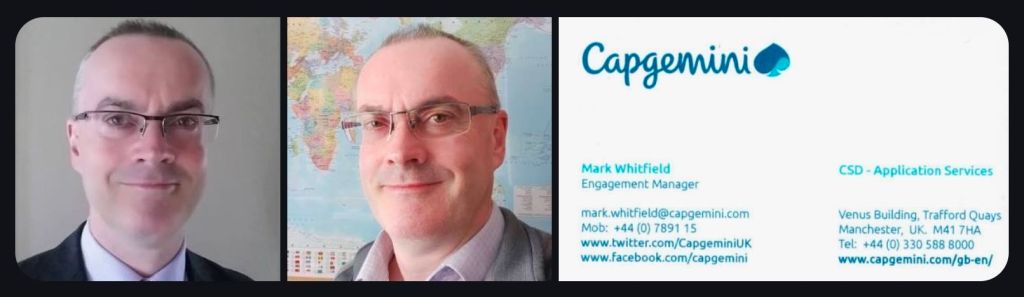
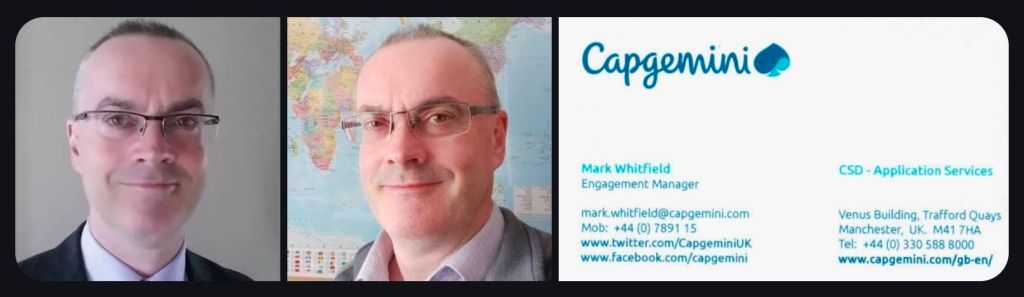
Mark Whitfield PM, Capgemini Engagement Manager from 2016
Engagement Manager, from 2016

Key Responsibilities

  • End-to-End Delivery: Overseeing projects from start to finish, ensuring milestones, SLAs, and contractual obligations are met on time and within budget.
  • Financial Accountability: Managing project budgets, revenue tracking, forecasting, invoicing, and contract compliance.
  • Stakeholder Management: Acting as the primary client point of contact while aligning cross-functional and globally distributed delivery teams.
  • Risk & Governance: Identifying potential roadblocks, proactively managing risks, and ensuring strict adherence to project governance standards.
  • Business Growth: Spotting opportunities for additional business and supporting bid activities for account expansion.
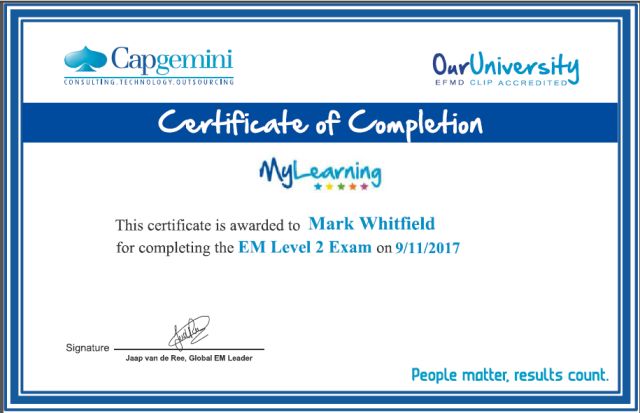
Mark Whitfield, Engagement Management EM Level 2 Exam Passed 2017

Ideal Candidate Profile

  • Experience: Typically requires a degree in Business, Engineering, or IT, combined with at least 5+ years of experience in project management or service delivery within a B2B environment.
  • Skills: Strong commercial acumen, proficiency in formal methodologies (e.g., Agile, ITIL), and the ability to lead diverse, multinational teams.
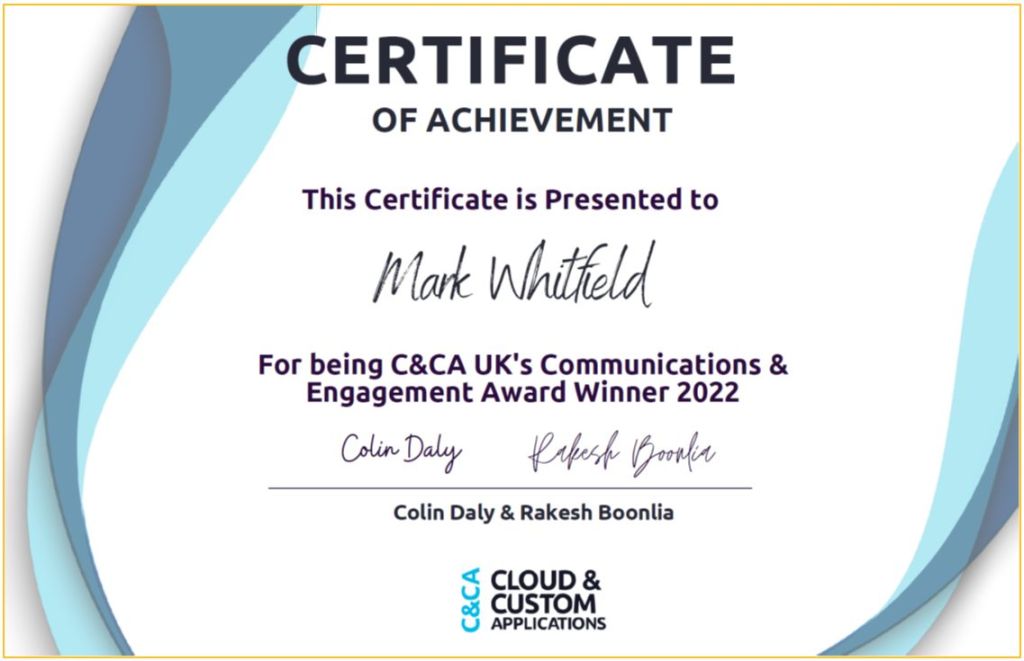
C&CA UK's Communications & Engagement Award Winner 2022, Cloud & Custom Applications, Mark Whitfield
C&CA UK’s Communications & Engagement Award Winner 2022, Cloud & Custom Applications, Mark Whitfield

Explore current vacancies and learn more about the EM community through the Capgemini Careers Portal or their specific Engagement Management Careers overview.

Capgemini Engagement Manager, from 2016.

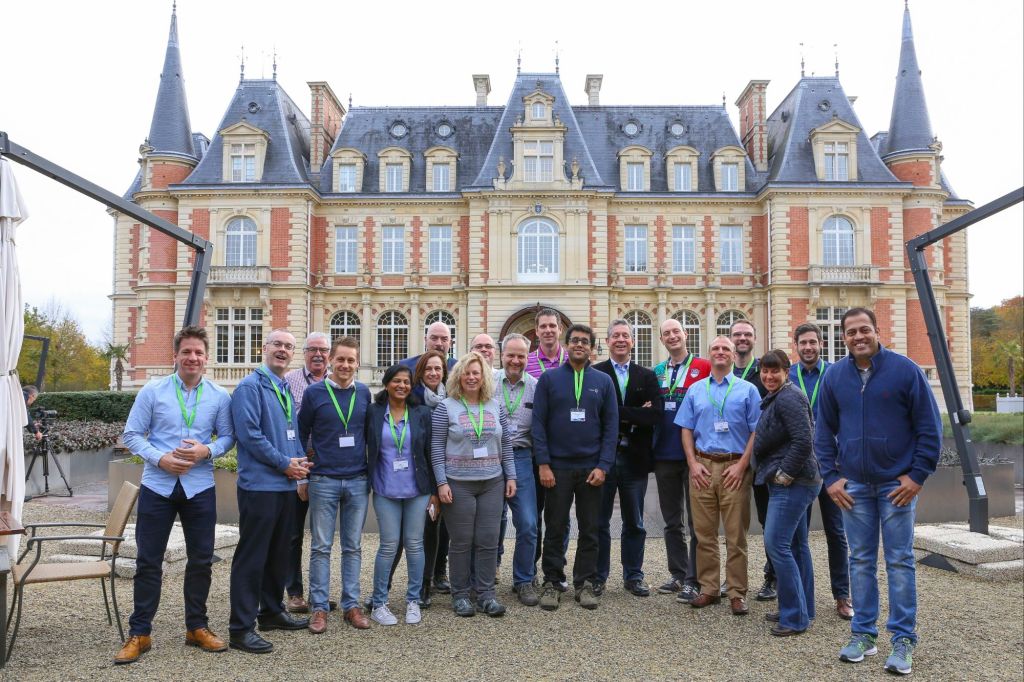
Capgemini Campus – Serge Kampf Les Fontaines, Chantilly, France – Advanced Engagement Management Course – November 2017 Class – 2nd from left, Mark Whitfield
Capgemini Campus – Serge Kampf Les Fontaines, Chantilly, France – Advanced Engagement Management Course – November 2017 Class – 2nd from left

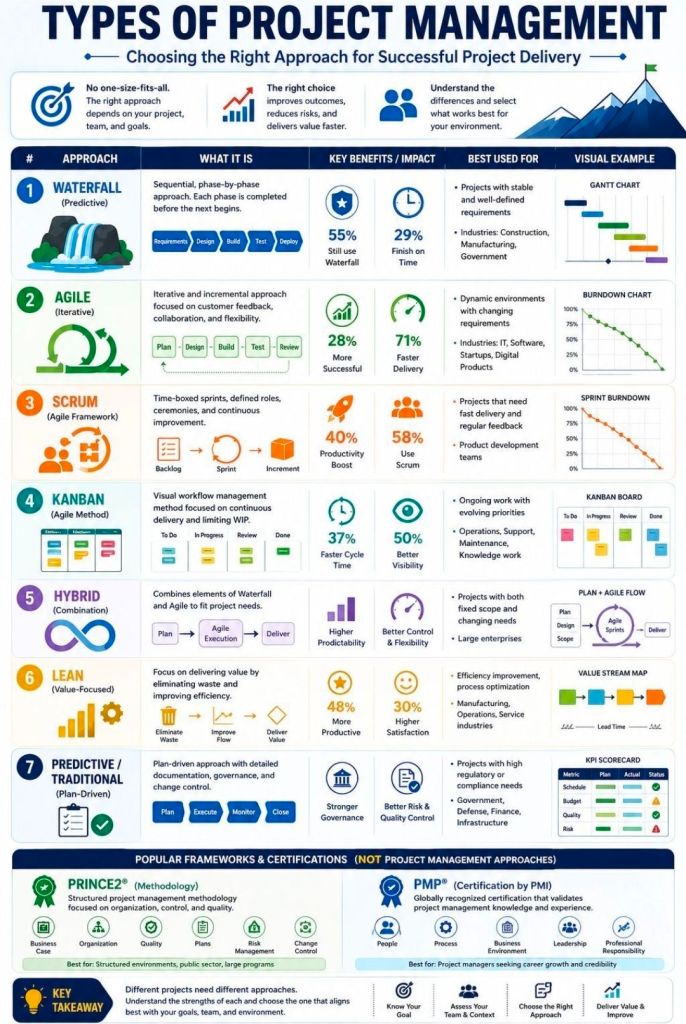
Types of Project Management for Successful Project Delivery

Types of Project Management for Successful Project Delivery

Mark Whitfield’s Project Management Templates offer a comprehensive, fully editable toolkit of over 200 documents

Mark Whitfield’s Project Management Templates offer a comprehensive, fully editable toolkit of over 200 documents spanning the entire project lifecycle. Designed for PRINCE2, Agile Scrum, and Waterfall methodologies, the suite helps project managers streamline planning and tracking. The toolkit is available on platforms like Mark Whitfield’s Project Templates and Etsy – ProjectTemplatesSoft.

Here is a detailed breakdown of the templates by type:

1. Planning & Scheduling Templates

These templates help structure timelines, resource allocation, and task dependencies.

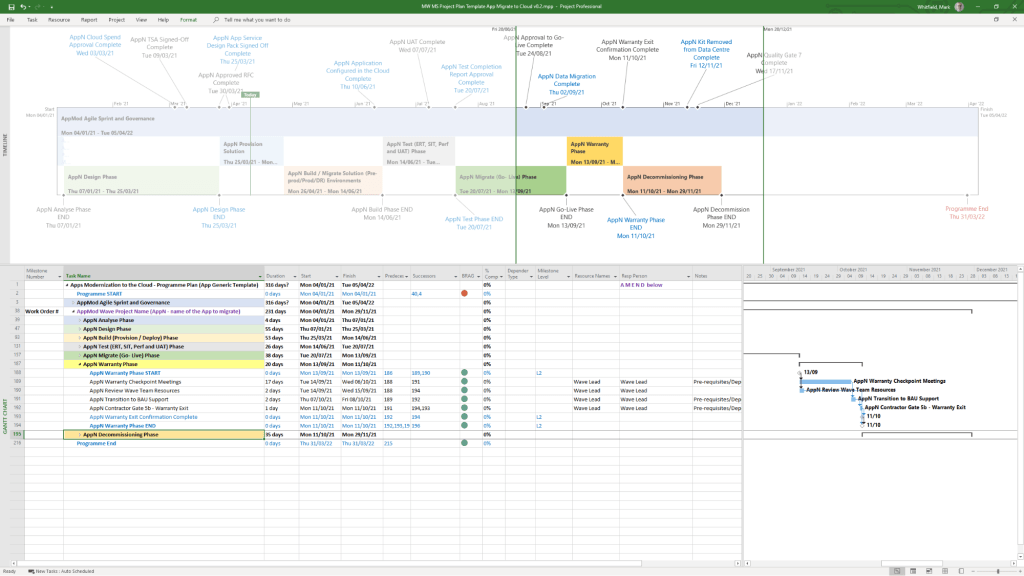
  • MS Project Plans (.mpp): Detailed, annotated files spanning full Software Development Life-Cycles (SDLC) and PRINCE2 7th Edition. Includes sprint overviews for Agile teams.
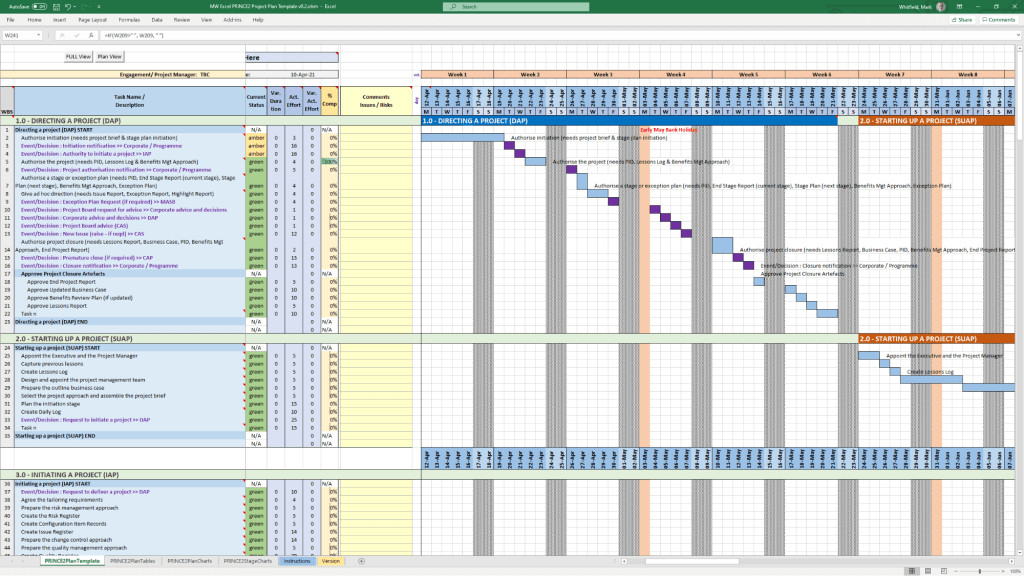
  • Excel Detailed Plans: Full Gantt chart and task tracking for users who do not have MS Project. Includes self-populating columns for baseline variance, actual effort, and RAG (Red/Amber/Green) status.
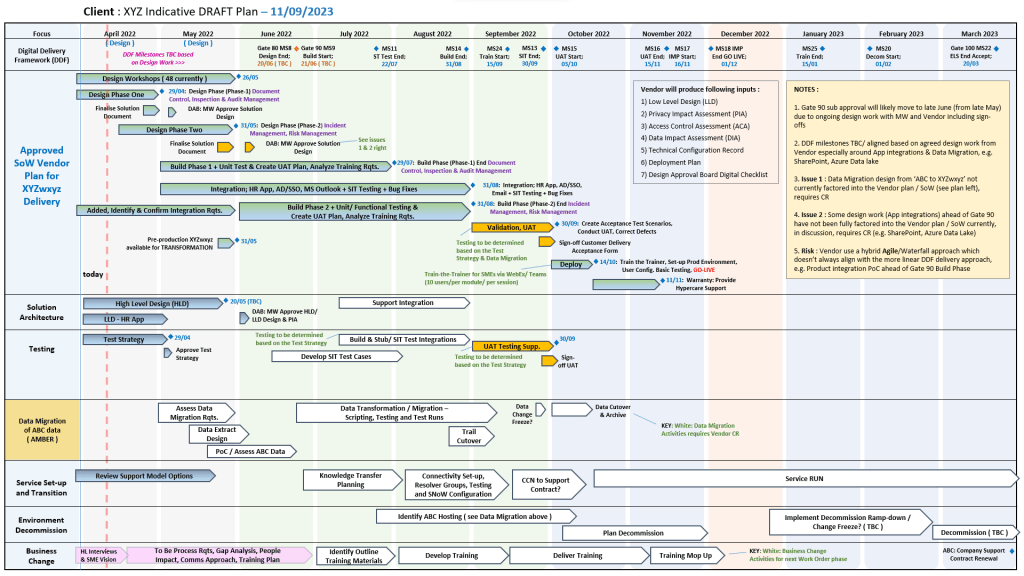
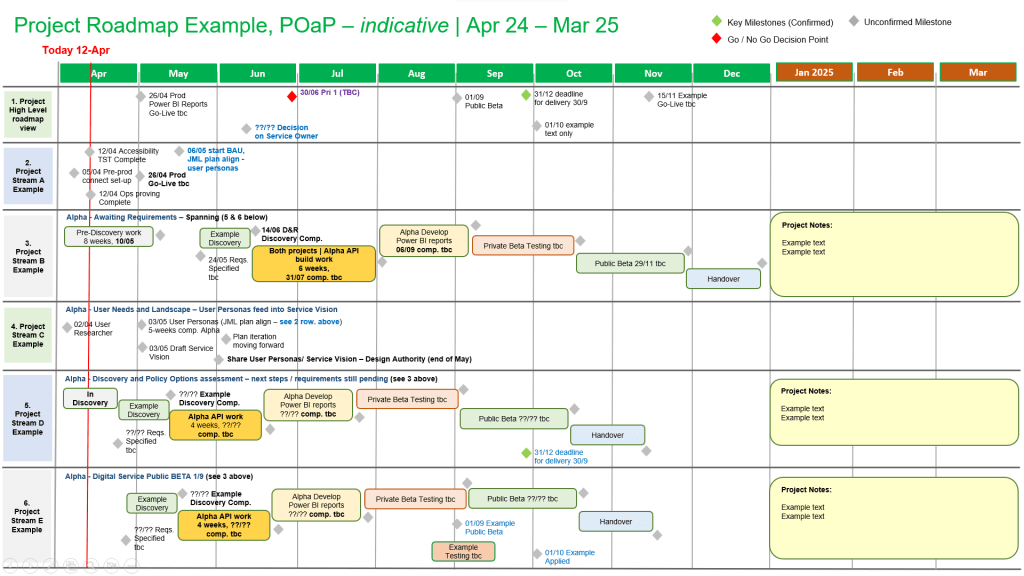
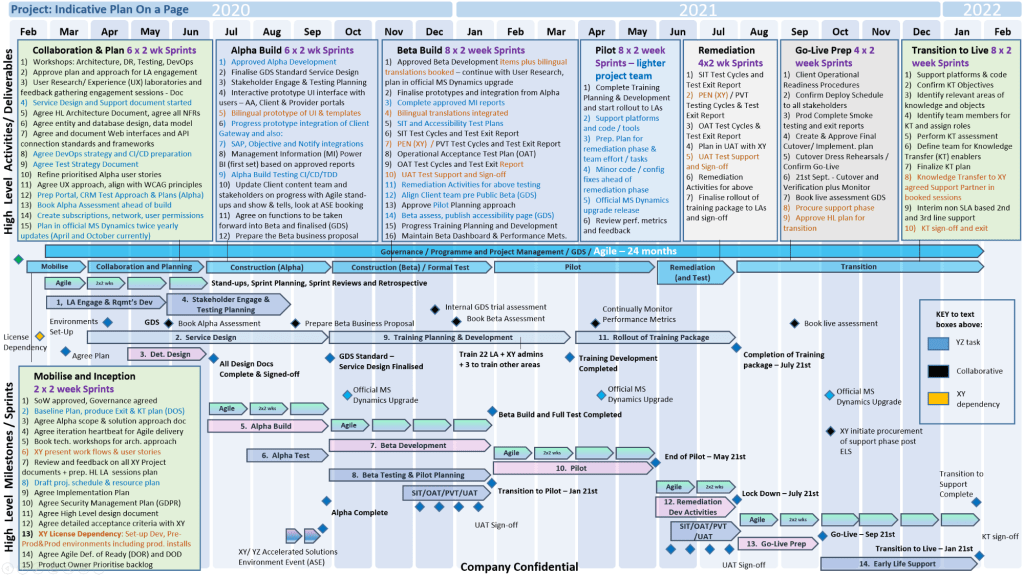
  • Plan on a Page (POaP): Over 30 PowerPoint slide designs that simplify complex project timelines, allowing you to present the overarching plan to clients and executives without overwhelming them with micro-details.
Mark Whitfield’s Project Management Templates offer a comprehensive, fully editable toolkit of over 200 documents

2. RAIDs Log Templates

These core tracking documents help manage the unknowns and variables of your project.

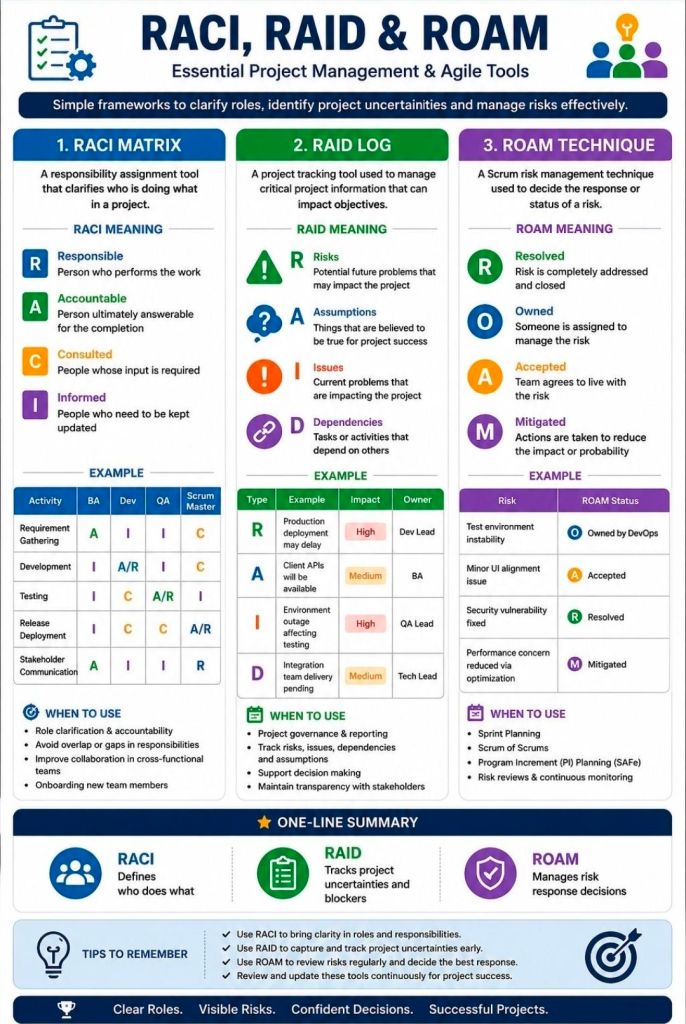
  • Basic RAIDs Log: Simple trackers for Risks, Assumptions, Issues, and Dependencies.
  • Comprehensive RAIDs Log: Highly detailed sheets with separate tabs to track supplier details, individual deliverables, Change Requests (CR), and out-of-scope (OOS) tasks.

3. Financial Management Templates

Designed to maintain tight control of your budget and forecast.

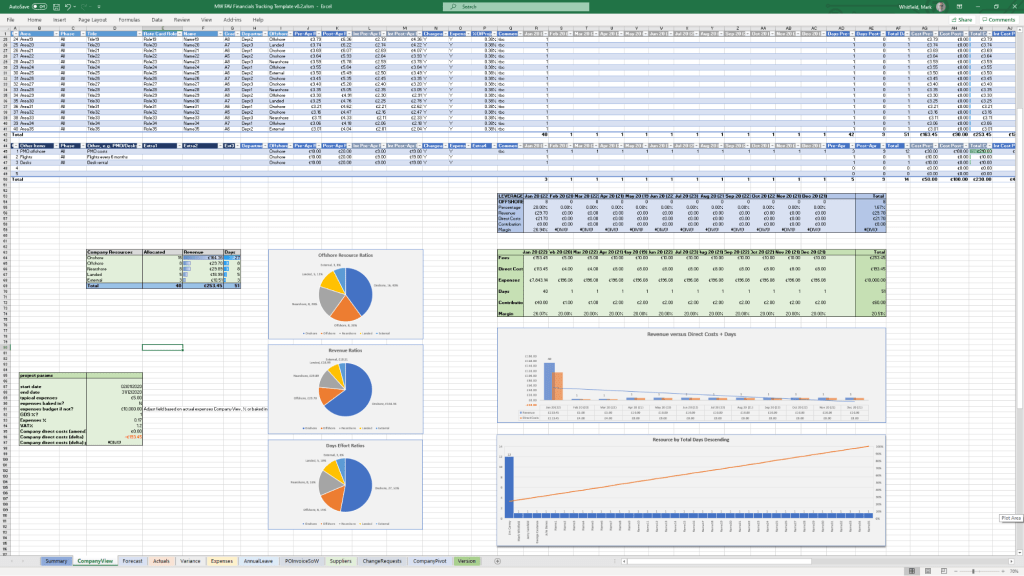
  • Monthly Finance Tracker: Simple sheets to monitor monthly forecasts, actuals, annual leave, and monthly variances.
  • Project Cost Tracker: Full-featured financial spreadsheets providing rate lookups, margin calculations, expense logs, and built-in charts for financial reporting.

4. Governance & Project Controls

These templates form the administrative and structural backbone, primarily based on the PRINCE2 methodology.

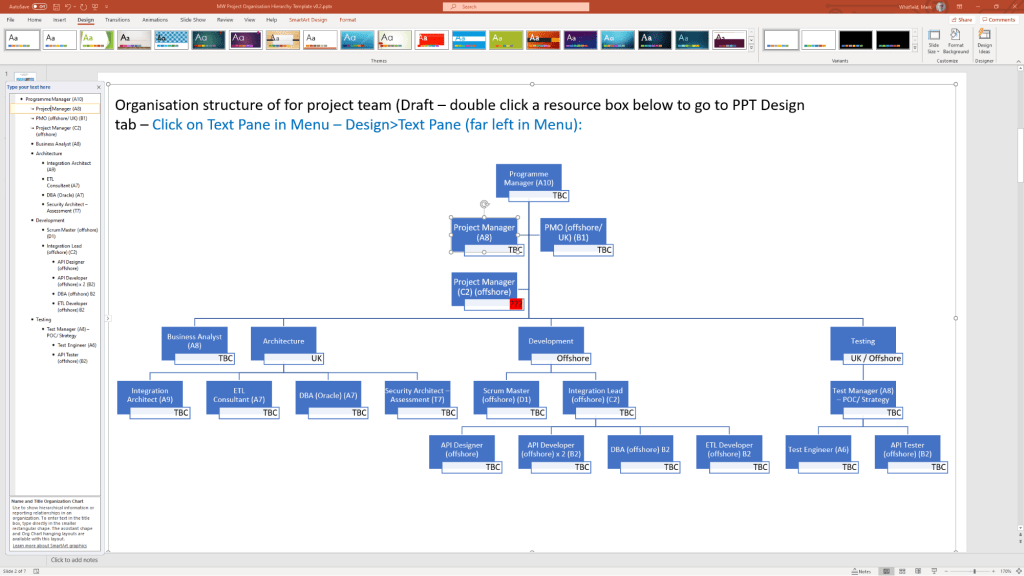
  • Project Initiation Documentation (PID): Includes templates for the Business Case, project approach, roles & responsibilities, and team structure.
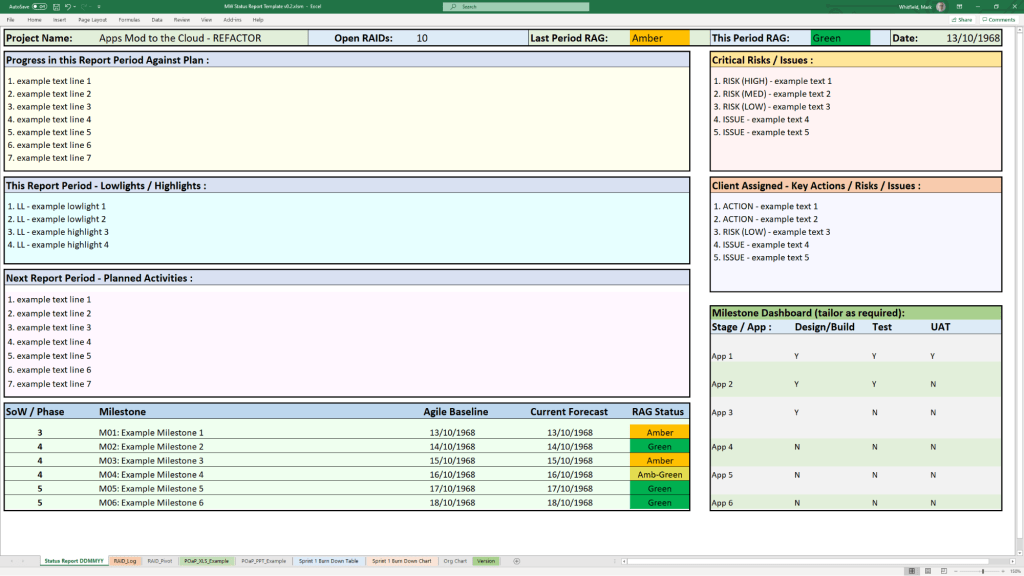
  • Reports: Standardized documents for Checkpoint Reports, Highlight Reports, End-Stage Reports, and Exception Reports.
  • Logs & Registers: Tailored templates for Lessons Learned, Quality Management, and Configuration Item Records.

5. Stakeholder & Team Management Templates

Focused on communication and team alignment.

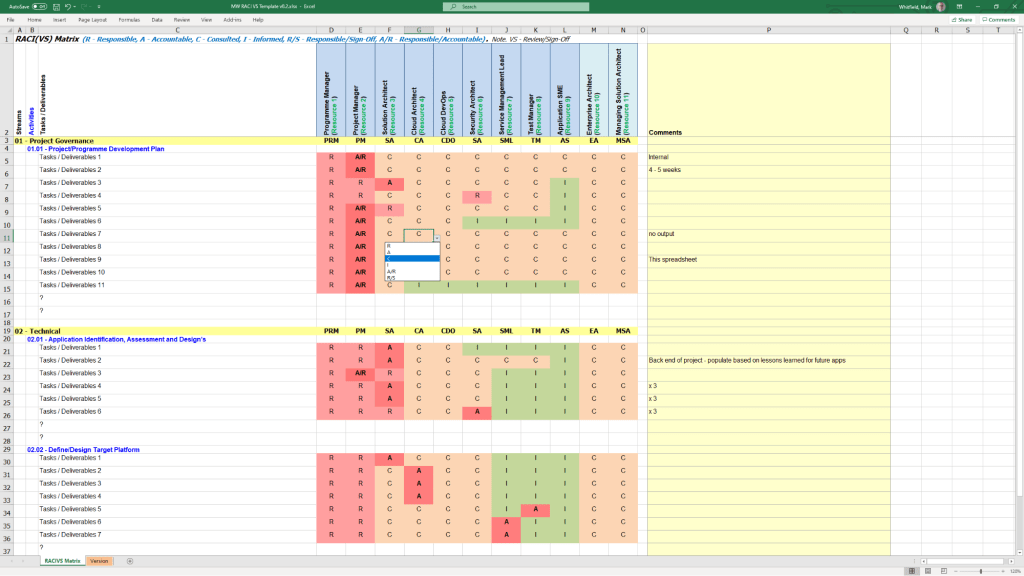
  • RACI Matrix: A tracker to define exactly who is Responsible, Accountable, Consulted, and Informed for each project task.
  • Stakeholder Analysis: Charts and planning tables designed to measure stakeholder “influence vs. impact” so you know exactly how to manage expectations.
  • Mobilisation Kit: Onboarding documents and team kickoff presentations to get new resources up to speed quickly.

6. Agile & Specialized Execution Templates

  • Agile Dependency Tracking: Tools designed specifically to monitor user stories that have hard dependencies on external suppliers or stakeholders.
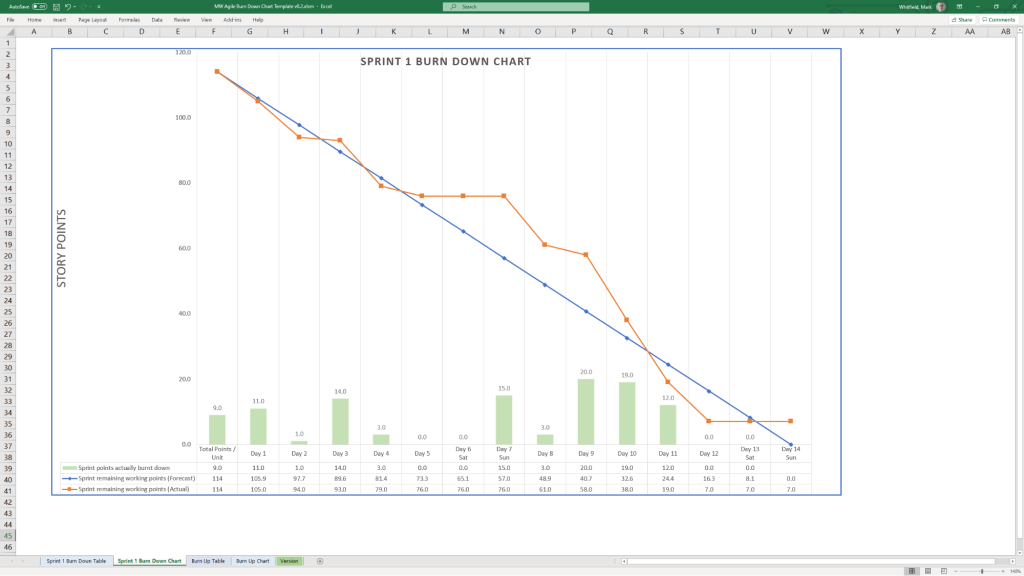
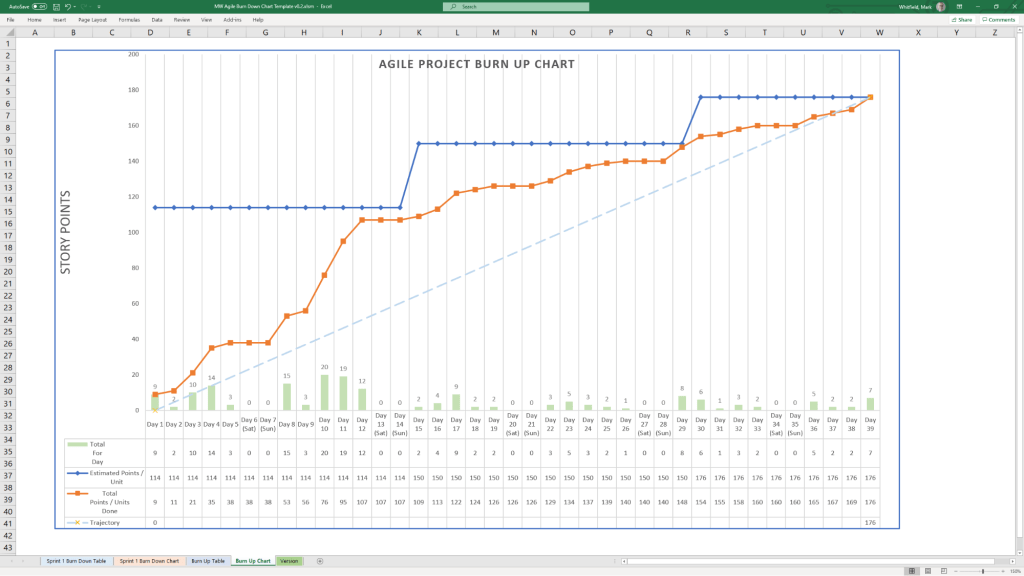
  • Burn Down / Burn Up Charts: Visual aids in Excel to track sprint velocity and project progression against deliverables.
  • Benefits Realization Plan: A spreadsheet that evaluates the project’s completed deliverables against the organization’s original business goals and financial targets.

All templates are designed for use across desktop, tablet, and cloud platforms. Purchases on his site come with lifetime free upgrades for any additions he makes to the package.

RACI, RAID and ROAM – Essential Project Management & Agile Tools

RACI, RAID and ROAM - Essential Project Management & Agile Tools
RACI, RAID and ROAM – Essential Project Management & Agile Tools

Mark Whitfield, High-Level Project Management Summary

You can review or download the targeted, one-page CV for Mark Whitfield (Senior Project Manager specializing in HPE NonStop systems) via the Mark Whitfield CV PDF link.

Mark Whitfield, High-Level Project Management Summary

The high-level, scannable overview of his professional profile is outlined below:

Executive Profile

  • Role: IT Senior Project Manager / Delivery Lead
  • Background: 30+ years of experience delivering highly complex technology, business transformation, and infrastructure projects.
  • Core Skills: Cloud migration (hybrid), legacy ATM software modernisation, Point of Sale (POS) implementations, and software development lifecycles (SDLC).
  • Methodologies: Agile, Waterfall, PRINCE2 Practitioner, and ITIL certified.

Core Expertise & Competencies

  • HP NonStop & Legacy Integration: Deep technical roots in Tandem Computers/ HPE NonStop development, TAL programming, and high-volume transaction environments.
  • Global Delivery: Managed large-scale IT and system monitoring rollouts across the UK and international markets (e.g., Saudi Arabia).
  • Stakeholder Management: Experienced in bridging the gap between highly technical development teams and high-level business stakeholders.

For direct access to his official templates, articles, and full professional journey, you can visit the PROject Templates Website.