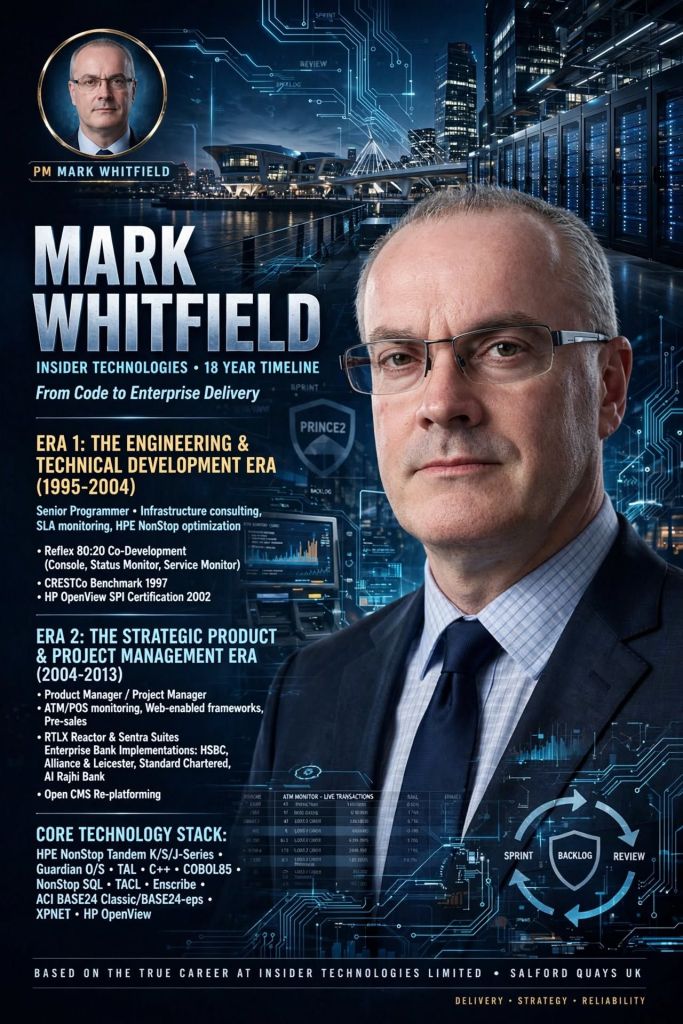
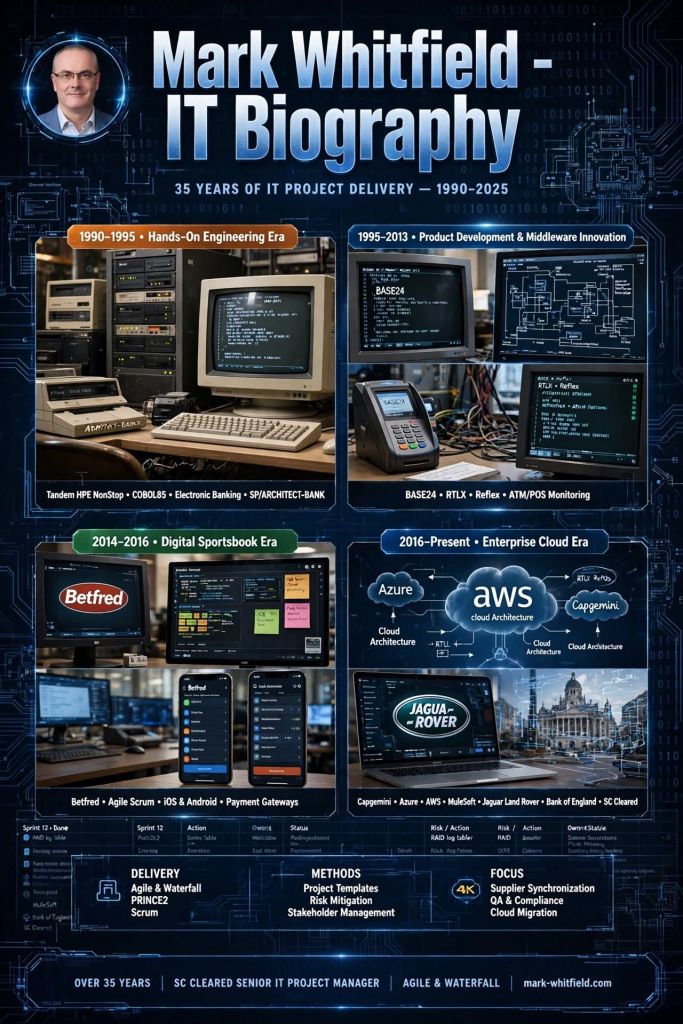
During his 18-year tenure (1995–2013) at Insider Technologies Limited (ITL) in Salford Quays, UK, Senior IT Project Manager Mark Whitfield advanced from a core technical engineer into strategic product and project management.
Mark Whitfield @ Insider Technologies Limited – Timeline of technical focus areas
His time at the company is defined by two distinct operational eras, marked by a clear shift from code development to enterprise delivery:
🛠️ 1. The Engineering & Technical Development Era (1995–2004)
During this period, Whitfield operated primarily as a Senior Programmer, focusing on platform health, system diagnostics, and transaction log extraction architectures for highly critical financial systems.
Main Focus Areas:
Infrastructure consulting, automated system management, and volume stress-testing.
Service Level Agreement (SLA) monitoring for critical path payment pipelines.
HPE NonStop (formerly Tandem Computers via Compaq) platform optimization and software engineering.
Technical & Project Outputs:
Reflex (Reflex 80:20) Co-Development: Designed and authored platform health and core diagnostic plug-in modules, including Console (for EMS event viewing and filtering), Status Monitor (for tracking HPE NonStop platform components including CPU, Disk, Process, Enscribe Files, MQ, XPNET, TCP/IP, MultiBatch jobs), and Service Monitor (multi-line, rule-based multi-component analysis).
CRESTCo Infrastructure Benchmark (1997): Contracted on-site to CRESTCo (now Euroclear) to write custom benchmarking software evaluating stock settlement software performance on newly introduced S7000 HPE NonStop systems.
HP OpenView Certification (2002): Successfully engineered and secured the industry’s first HP OpenView Operations Enterprise Manager 2-way Smart Plug-In (SPI) certification for HPE NonStop environments.
📈 2. The Strategic Product & Project Management Era (2004–2013)
In this phase, Whitfield transitioned into a Product Manager and Project Manager role (Strategic Technical Initiatives), taking charge of complete software development lifecycles (SDLC) using structured PRINCE2 and early Agile Scrum frameworks.
Main Focus Areas:
ATM/POS transaction monitoring and real-time electronic payments tracking.
Web-enabled client-server browser monitoring frameworks and middleware solutions.
Pre-sales technical bidding, executive demos, and client deployment validation across Europe and the Middle East.
Technical & Project Outputs:
RTLX Reactor & Sentra Suites: Managed the commercial rollout and high-volume deployment of the browser-enabled Real-Time Log Extraction (RTLX) suite and Sentra monitoring solutions to capture and parse ATM/POS logs.
Enterprise Bank Implementations: Directed mission-critical payments monitoring integrations (notably processing ACI BASE24 Classic and BASE24-eps transactions over XPNET middleware) for tier-1 financial heavyweights including HSBC, Alliance & Leicester, Standard Chartered, and Al Rajhi Bank (Saudi Arabia).
Open CMS Corporate Re-platforming: Researched, designed, and authored a complete overhaul of Insider Technologies’ public corporate website using an Open Content Management framework (DotNetNuke).
💻 Core Technology Stack (1995–2013)
Across both eras at Insider Technologies, Whitfield’s environment relied on high-availability, fault-tolerant ecosystems:
Platforms & Operating Systems: HPE NonStop (Tandem K-Series, S-Series, and Itanium J-Series), Guardian O/S, Windows 2000/XP, Linux, and Unix.
Languages & Toolsets: Pathway, INSPECT, SPOOLCOM, Peruse, TAL (Tandem Application Language), NonStop C, C++, COBOL85, SCOBOL, NonStop SQL, TACL, and Enscribe.
Enterprise Software Interfaced: ACI BASE24 Classic, BASE24-eps, XPNET, ICE (Insession), TIVOLI, COMMAND/POST, and HP OpenView Operations (HP OVO).
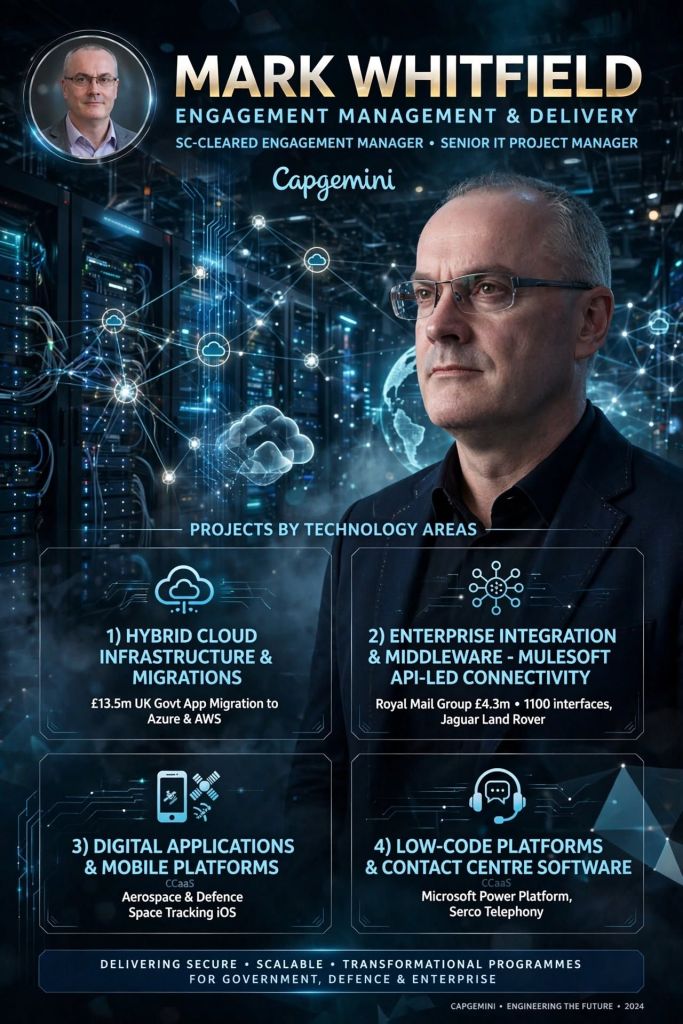
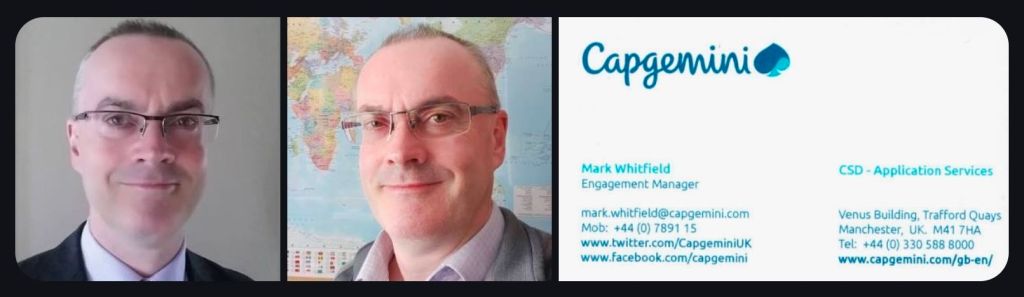
At Capgemini UK, SC-cleared Engagement Manager and Senior IT Project Manager Mark Whitfield focuses on delivering complex, enterprise-scale digital transformations.
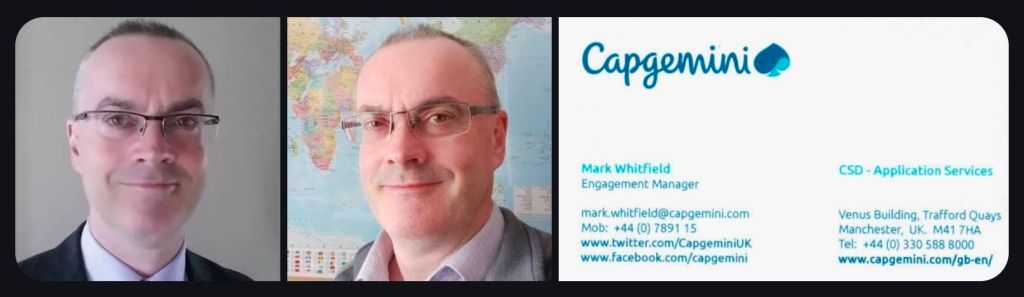
Mark Whitfield | Engagement Manager
His project portfolio spans both public and private sectors, categorized by several primary technology areas:
☁️ Hybrid Cloud Infrastructure & Migrations
UK Government App Migration: Directed a massive multi-million pound programme (£13.5m) transitioning over 130 legacy public sector applications to Microsoft Azure and AWS.
Application Refactoring: Led complex application migrations using refactor, re-host, and re-platform design patterns.
Green IT Initiatives: Focused on cloud optimization models to streamline operating costs and improve sustainability profiles.
MuleSoft Ecosystem Deployments: Directed large-scale system integration projects using the Salesforce MuleSoft Anypoint Platform.
MuleSoft Augmentation: Acted directly as an augmented Delivery Manager for MuleSoft supporting blue-chip integrations.
Royal Mail Group (RMG): Managed a £4.3 million migration project involving more than 1,100 interfaces to integrate internal applications and external trading customers.
Jaguar Land Rover (JLR): Orchestrated mid-tier integration, manufacturing supply chain data pipelines, and middleware applications (such as the iFAB project).
📱 Digital Applications & Mobile Platforms
Aerospace & Defence Space Tracking: Managed the Agile SCRUM delivery of secure, near real-time Apple iOS mobile applications.
Dual-Layer Interfaces: Coordinated software presenting both sensitive, internal military views and public-facing airspace tracking visuals.
⚙️ Low-Code Platforms & Contact Centre Software (CCaaS)
Microsoft Power Platform: Structured data flows and modernised pipelines using low-code tools.
Serco Telephony Campaign: Managed a £400k CCaaS (Contact Centre as a Service) project establishing an automated, programmatic dialler integrated with an Azure-deployed CRM tool.
Based on Senior Project Manager Mark Whitfield’s professional portal, his Capgemini Engagement Manager eLearning and Group Training history spans 100+ distinct training modules and courses.
When broken down and totalled by the specific business and delivery focus areas outlined on his Capgemini Professional Training Tracker, the modules are structured as follows:
📋 Corporate Policy & Compliance (Modules 1–4)
Total Duration: 135 Minutes (2 Hours 15 Minutes)
Key Modules: Intellectual Property Rights (IPR), Group Anti-Corruption, and Group Competition Laws.
🛡️ Cybersecurity Essentials (Modules 5–9)
Total Duration: 60 Minutes (1 Hour)
Key Modules: Five-part series spanning safe email/social media usage, identifying cyber-risks and engineering threats, workstation protection, data classification, and travel security.
🤝 Sales & Digital Engagement Innovation (Modules 10–13)
Total Duration: 65 Minutes (1 Hour 5 Minutes)
Key Modules: Innovative Selling for Digital EMs, Appraising Digital Opportunities, and navigating the Applied Innovation Exchange (AIE).
⚙️ Delivery Methods, Agile & Quality Systems (Modules 14–22)
Total Duration: 140 Minutes (2 Hours 20 Minutes) (Note: Module 20 “Bluebook” duration is unlisted/self-paced).
Key Modules: Agile Basics & Tools, Scaling Up Agile frameworks, UniQuE Quality Management System portal, Lean Foundation, and the Contract Clauses Negotiating Guide (CCNG).
🔄 Global Transition Methods & Enterprise Delivery (Modules 23–55)
Total Duration: 8.5 Days + 186 Minutes
Key Modules: End-to-end Transition Management methodologies (V4.1) covering finance, contracts, work-in-progress, and organizational change streams. It culminates in intensive classroom sessions for UK BU Project Financial Management and his formal Advanced Engagement Management (Level 2) qualification.
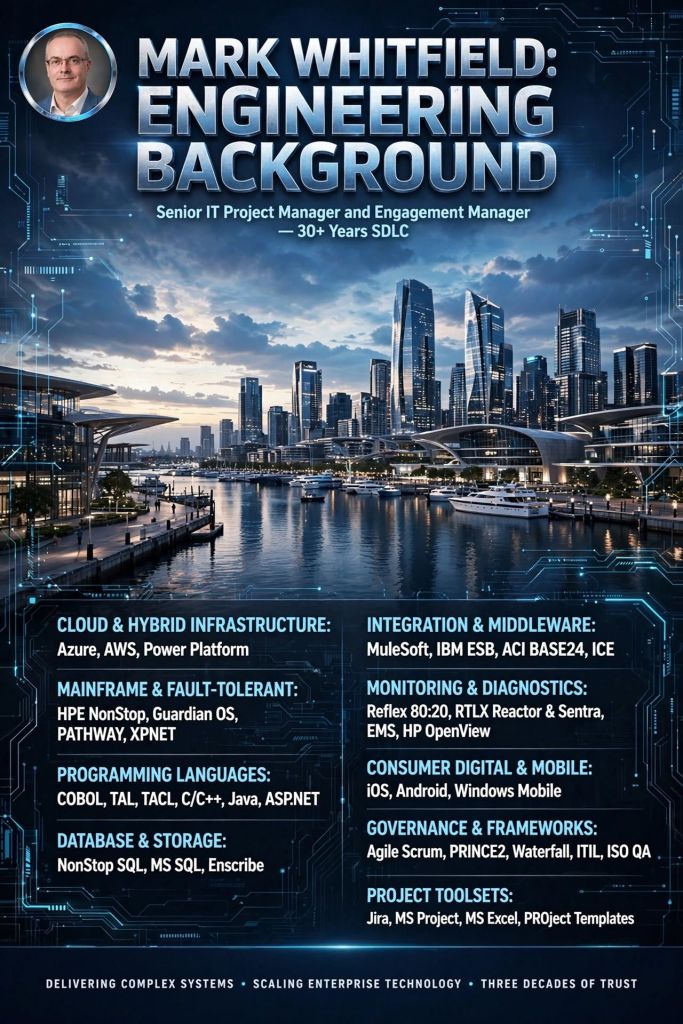
Mark Whitfield’s IT and Project Management training spans over three decades, tracking his progression from a senior technical developer into an enterprise-level, SC-cleared Senior IT Project Manager.
Mark Whitfield | Engineering Background
His official training records and professional certificates listed on PROject Templates are grouped below by specific skill areas.
Project Management Methodologies & Frameworks
PRINCE2 Practitioner: Registered Practitioner certification achieved via ILX (May 2011).
Agile SCRUM Framework: Dedicated training completed for Agile SCRUM delivery mechanics (May 2011).
Advanced Engagement Management: Level 2 Exam certification completed during his tenure at Capgemini (November 2017).
Project Management Fundamentals: Core foundational training in Successful Project Management (February 2000).
Multi-Project Administration: Training in Managing Multiple Projects, Objectives, and Deadlines (October 1999).
Capgemini, Engagement Manager – eLearning and Group Training, 100+ Training Modules, see link 1) at bottom of this post.
Cloud & Database Infrastructure
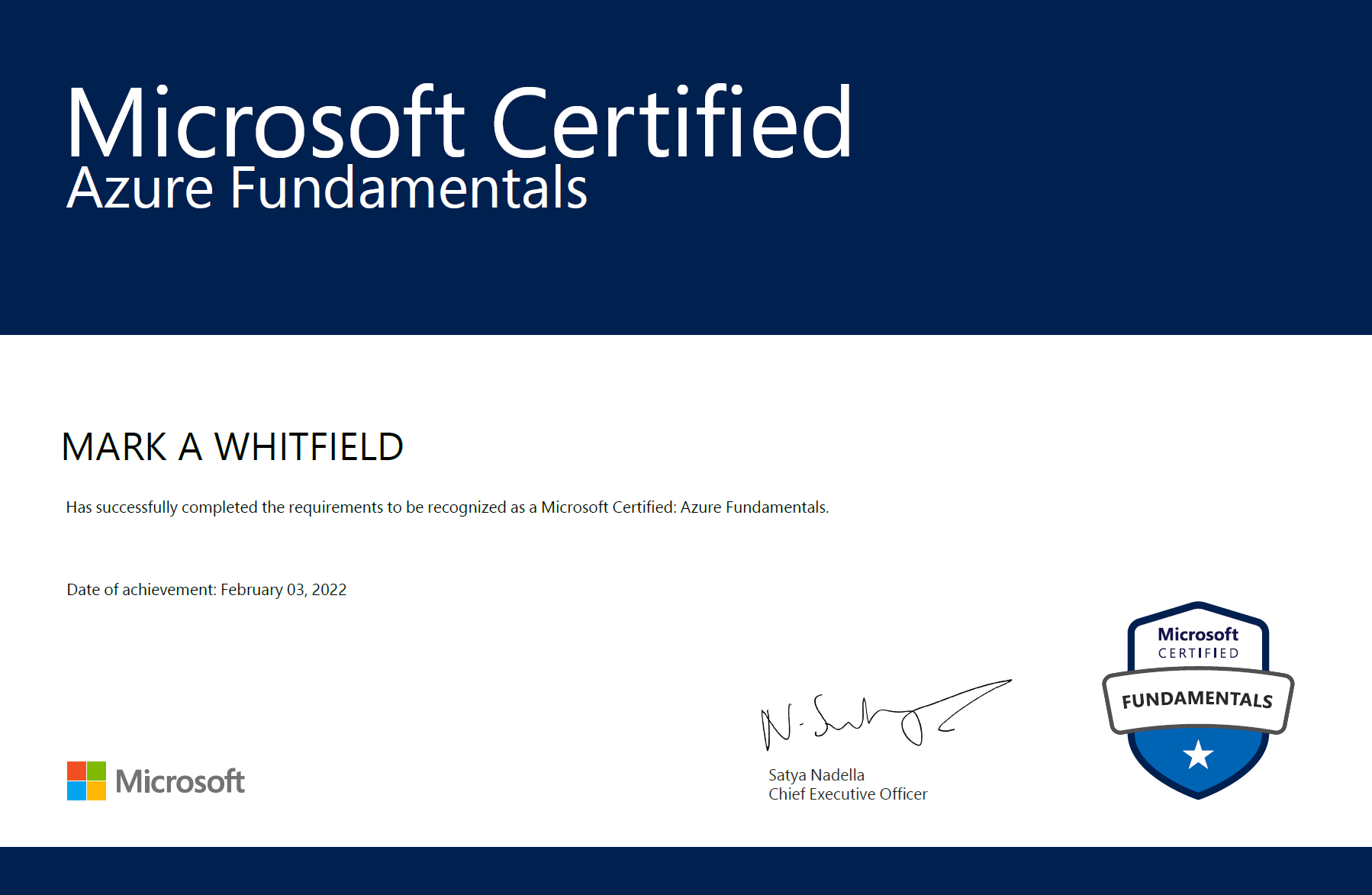
Microsoft Azure Fundamentals: Certified under the official AZ-900 cloud training track (February 2022).
Transact-SQL Database Administration: Course M2071 covering Querying Microsoft SQL Server 2000 (March 2009).
Software Engineering & Legacy Systems (HPE NonStop)
Web Application Engineering: Developing Microsoft ASP Web Applications utilizing the MS Visual Studio .NET ecosystem (January 2007).
C++ OOP Programming: Accelerated Object-Oriented development training via “C++ for Non-C Programmers” (March 1997).
Tandem/HPE NonStop Systems Architecture: High-level platform training covering the TANDEM Guardian Principles (May 1993).
Tandem Performance & TAL Programming: Advanced courses in TANDEM Performance Analysis & Tuning (June 1995) and TANDEM TAL Programming (December 1995).
VPS Architecture: Mainframe application architecture training under VPS 7000/9000 Series Application Development VOS 4.3 (September 1994).
Productivity & Project Control Tools
Microsoft Project Enterprise: Orange Belt certification in Managing a Single Project via Microsoft Office Project (May 2000).
Advanced Data Management: Microsoft Excel Expert Skills training (April 2017) followed by an Excel Refresher Certification via Udemy (July 2024).
Digital Content & Professional Design
Web Design Analytics: Training in Website Visibility and Promotion by Design (May 2009).
Digital Copywriting: Professional framework training in Writing for the Web (May 2009).
Desktop Publishing: Strategic training on designing attention-grabbing brochures, catalogues, ads, newsletters, and corporate reports (April 2006).
Mark Whitfield is a UK-based, SC-cleared Senior IT Project Manager, Engagement Manager (Capgemini), and technology executive with over 35 years of hands-on and leadership experience across the Software Development Lifecycle (SDLC).
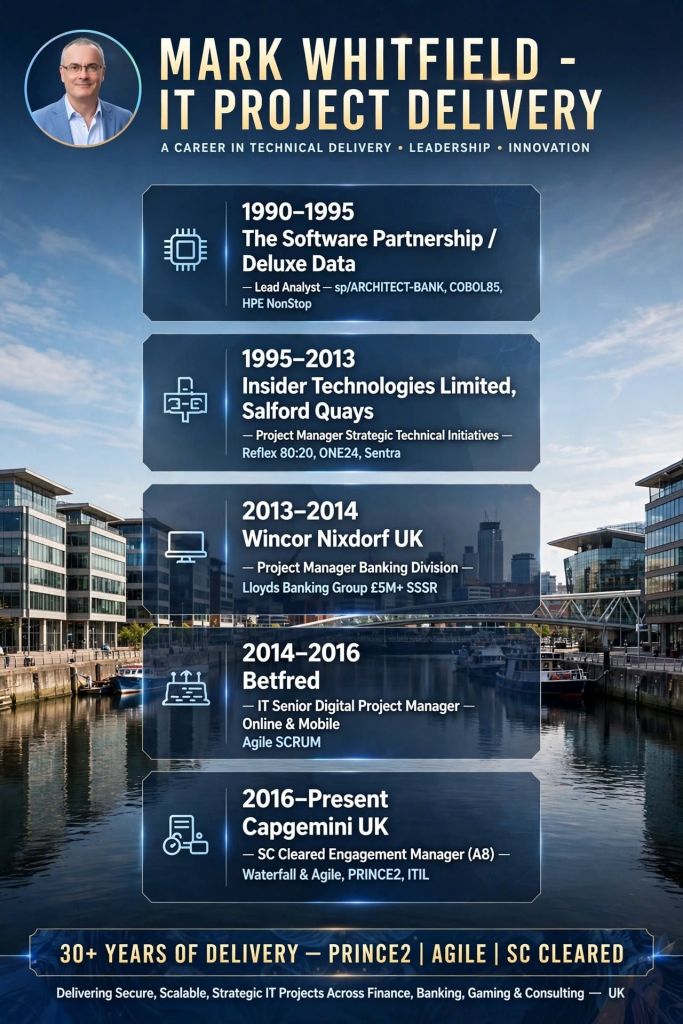
Mark Whitfield, High-Level Career Summary from 1990 thru 2026
Specialising in complex digital transformation, hybrid cloud migrations, and API-led system integrations, Mark graduated with an HND (Distinction) in Computing in 1990 and has delivered major enterprise solutions for clients such as Barclays Bank, Jaguar Land Rover (JLR), Royal Mail Group (RMG), Lloyds Banking Group, and the Bank of England. He is also the author of the PROject Templates resource platform, which provides project management toolkits.
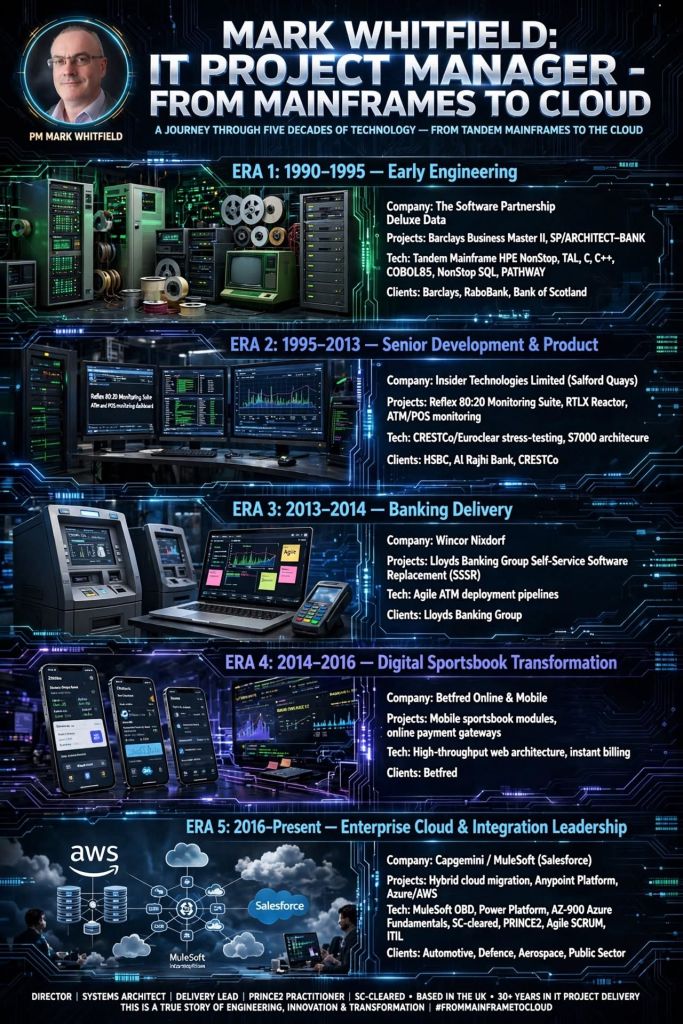
Mark Whitfield | Career Summary Timeline from Mainframes to Cloud
The following comprehensive biography and career timeline breakdown details his professional trajectory by era.
Phase 1: Early Programming & Lead Analysis Era
Era Focus: Electronic banking software development, establishing foundational desktop access to company accounts.
Deluxe Data International, Wingate House, Northway, Runcorn
Main Focus Items: Core software design, coding, and back-end integration for electronic desktop banking.
Project Outputs: Software design, coding, and back-end integration for electronic desktop banking. Developed batch billing suite modules (NonStop SQL embedded COBOL85) to attach to the BBM II application, in Poole, Dorset (1993).
Milestones: Transitioned banking from purely paper-based to electronic systems. Made early remote banking a reality.
Methodology: Early iterative development & structured Waterfall lifecycles.
Highlights: Helped in the design and development of the Barclays Business Master II application while on-site in Knutsford, and later successfully developed and deployed a batch-billing suite for the bank in Poole, Dorset (1993).
Political Landscape: Early post-deregulation European banking markets. The Single European Act drove a need for cross-border electronic financial transparency and transaction systems.
Technology Landscape: Desktop PCs were novel; banking was driven by mainframe computing, specifically Tandem NonStop systems (now HPE NonStop).
Phase 2: Technical Consultancy & Product Management Era
Era Focus: Transitioning to product management, system and transaction monitoring, and SLA monitoring for critical-path financial hardware/ software.
Insider Technologies Limited, Salford Quays, Greater Manchester (UK)
Locations: Salford Quays, UK (head office); London, UK; International client sites
Clients included: Global Payments, Standard Chartered, Girofon, Rabobank, CRESTCo (Euroclear), Alrajhi Bank, LloydsTSB, HSBC, Santander, Bank of Ireland, Bank of Valletta (Malta) and both Commercial and Piraeus Bank (Greece)
Budget: Internal operational budgets and R&D capital expenditure
Main Focus Items: Infrastructure consulting, volume testing, system management & monitoring, and Service Level Agreement (SLA) monitoring for critical path payment applications. Attending related conferences, EBUG, ITUG, BITUG, SATUG
Project Outputs: Developed platform health and diagnostic modules for the Reflex monitoring product. Successfully delivered BASE24 ATM/ POS/ transaction Cross-border monitoring.
Milestones: Achieved the first HP OpenView Operations Enterprise Manager 2-way Smart Plug-In (SPI) certification for HPE NonStop in 2002.
Highlights:Consultant for CRESTCo in 1997, producing volume testing/benchmark software to test Stock Settlement applications on the newly introduced S7000 HPE NonStop systems.
Political Landscape: The late 1990s and 2000s saw the creation of the Eurozone, demanding high-capacity regional clearing and settlement networks that required robust transaction monitoring.
Technology Landscape: Market expansion of ATM and Point-of-Sale (POS) devices; ACI BASE24 Classic payments; move toward centralized, multi-platform GUI monitoring.
Also: Designer and author of a new company website using an Open Content Management framework identified as part of a Research phase. Authored a major technical summary published globally in the recognized HPE NonStop industry journal, The Connection, defining payment software lifecycles.
Phase 3: Professional Services Banking Delivery
Era Focus: IT Project Management and delivery of legacy migrations to primary UK high-street banks.
Project Outputs: Managed the Wincor Nixdorf workstream for Lloyds Banking Group’s Self-Service Software Replacement (SSSR) programme. Modernising legacy ATM software and directing hardware/ software transitions. Implementing ProClassic/Enterprise and PC/E SmartClient (Win 7) to replace the existing ProCash/NDC (Win XP) Stacks on a variety of multivendor devices.
Milestones: Transferred ATM driving responsibility away from BASE24 Classic on HPE NonStop to Wincor’s PC/E product on the AIX platform. Managed international rollout and off-shore resources.
IT Training: Agile, ITIL methodologies.
Methodology: Wincor project management methodology, with regard to planning, control, status reporting, documentation, quality, change control, risk analysis and management.
Highlights: Successfully upgraded LBG ATM hardware estate from Windows XP to Windows 7.
Political Landscape: Post-2008 financial crisis regulations brought stricter compliance and operational risk rules, accelerating the modernisation of core legacy banking systems to prevent service outages.
Technology Landscape: Transition from proprietary mainframe terminal driving to AIX, Oracle, and Windows-based banking environments.
Technology Areas: Multi-vendor hardware & software integration for ATMs.
Supplier Management: for external software suppliers like Degree53, Playtech, Onionsack, Intelligent Payments (Myriad), Inspired, iovation, StreamUK, Finsoft, Ineda, OtherLevels, Appsflyer, Income Access, Activewin, Virgo, Virtue Fusion, In Game Media, Satellite Information Services (SIS) and IGT
Budget: Managed multiple project budgets for Betfred apps, tracking via weekly effort burn rates
Programming Methodologies: Agile SCRUM in conjunction with Degree53
IT Products: iOS, Android, and Windows native apps, Football/ Horse Racing Sportsbook platforms
Main Focus Items: Taking new sports and virtual gaming components live, integrating payment gateways, managing app release cycles, and handling regulatory compliance.
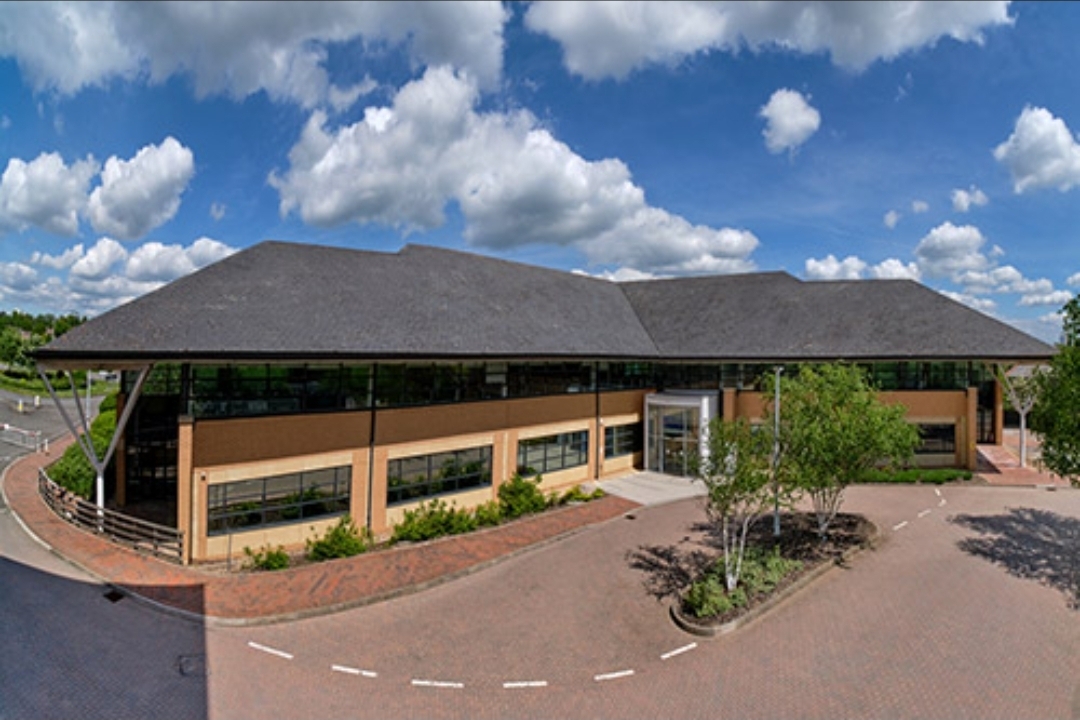
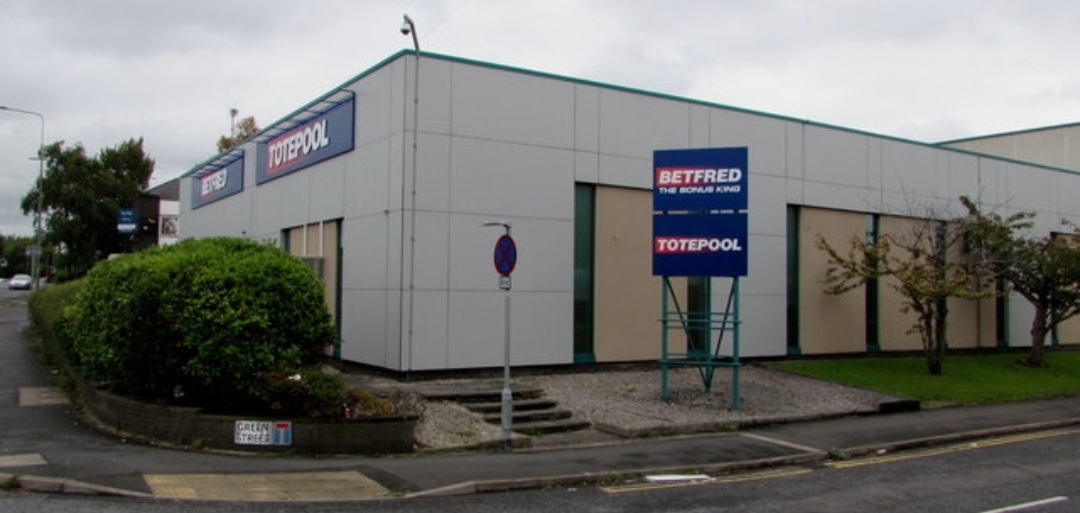
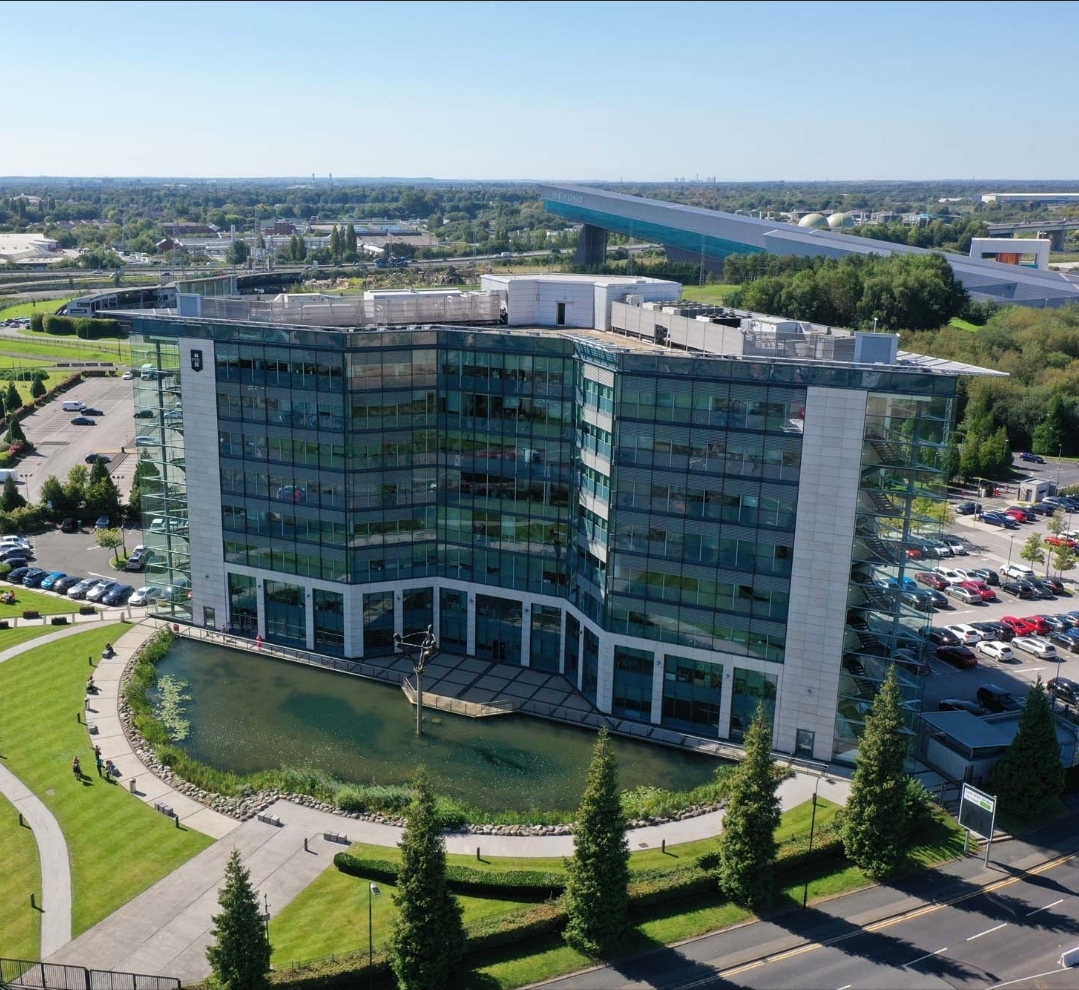
Locations: Manchester (local office above), London, Birmingham, UK
Clients included: Jaguar Land Rover (JLR), Heathrow Airport, Royal Mail Group (RMG), National Air Traffic Services (NATS), UK Export Finance (UKEF), Welsh Water
Budget: Managed multi-million pound digital transformation and cloud refactoring contracts
Highlights: Maintained full SC Clearance. Authored and managed comprehensive Project Governance Plans (PGPs) to realize project targets, streamline margins, and successfully navigate complex off-shore delivery models.
Political Landscape: The government focus on “Digital by Default” for public services, coupled with significant public and corporate drives for green IT and cloud adoption to optimize operating costs.
Mark Whitfield is a UK-based, SC-cleared Senior IT Project Manager and Engagement Manager whose career spans over three decades of evolution within the software development lifecycle (SDLC) and project delivery areas.
Mark Whitfield | SC-cleared Senior IT Project Manager and Engagement Manager
Graduating with a Distinction level Higher National Diploma (HND) in Computing from the University of Bolton (formerly the Bolton Institute of Higher Education, BIHE), his professional journey documents a foundational shift from hands-on mainframe engineering to managing enterprise-scale cloud migrations and API-led integration ecosystems.
His professional transformation reflects broader shifts across four technological eras and political-economic landscapes:
1. Mainframe & Early Electronic Banking (1990–1995)
Technology Era: Dominated by localized infrastructure, Tandem Mainframe Computers (now HPE NonStop), COBOL, C, C++, TAL, PATHWAY, and Jackson Structured Programming (JSP).
Political & Economic Landscape: The aftermath of Thatcherite deregulation (the 1986 “Big Bang”) triggered intense competition in retail banking. Financial institutions aggressively adopted bespoke desktop and telephone banking applications to acquire market share.
Role & Projects: Working as a Programmer and Lead Analyst for The Software Partnership (acquired by Deluxe Data International in 1994), Whitfield engineered core software architectures like sp/ARCHITECT-BANK. He spent significant time on-site at Knutsford and Poole (Dorset) delivering the Barclays Business Master II (BBM II) platform, pushing desktop corporate banking into reality before the commercial internet matured.
2. Infrastructure Middleware & System Monitoring (1995–2013)
Technology Era: Shift toward web-enabled browser monitoring, middleware solutions, client-server architectures, and automated system diagnostics.
Political & Economic Landscape: The rise of New Labour, globalisation, and cross-border European integration. Financial sectors faced stricter service levels and skyrocketing volumes due to the growing ubiquity of ATMs, Point-of-Sale (POS) systems, and cross-border settlement demands.
Role & Projects: Joining Insider Technologies Limited (ITL) at Salford Quays (Manchester), Whitfield ascended from a Senior Programmer to an IT Project Manager overseeing strategic technical initiatives.
He co-developed system diagnostic modules for the Reflex platform.
He famously secured the first HP OpenView Operations Enterprise Manager 2-way Smart Plug-In (SPI) certification for HPE NonStop platforms.
Managing structured Waterfall frameworks, he led high-volume automated transaction deployments (notably BASE24 Classic and EPS) via the browser-enabled RTLX (Real-Time Log eXtraction) Reactor for heavyweights like HSBC, Alliance & Leicester, and Standard Chartered.
Technology Era: The definitive mass pivot from rigid Waterfall, PRINCE2 models toward Agile Scrum frameworks, mobile applications (iOS, Android), and multi-vendor hybrid software integration.
Political & Economic Landscape: Post-2008 financial crash regulatory overhauls paired with UK coalition government-driven austerity. High-street legacy architectures required rapid rationalization, while private entertainment industries (like consumer gambling) exploded due to mobile deregulation.
Role & Projects:
Wincor Nixdorf (2013–2014): Served as an award winning Agile IT PM modernizing legacy ATM networks and deploying multi-vendor software integrations (PC/E Enterprise, Oracle, Windows 7) for Lloyds Banking Group.
Betfred (2014–2016): Pivoted to the gambling sector as a Senior IT Project Manager. He spearheaded multiple complex Agile release cycles to take mobile sportsbook components, virtual gaming, and secure fraud-detection payment gateways live.
4. Enterprise Cloud, Security, & API Integration (2016–Present)
Technology Era: Modern hybrid cloud platforms (Azure, AWS), SaaS, MuleSoft Anypoint Platform, API-led connectivity, and microservices.
Political & Economic Landscape: The post-Brexit geopolitical landscape coupled with heightened national security frameworks. Public and private sectors faced mounting mandates for secure, interoperable architectures, requiring professionals to carry strict government Security Clearance (SC) credentials to manage critical infrastructure.