The 139th edition of the Wimbledon Championships takes place from Monday 29 June to Sunday 12 July 2026 at the All England Lawn Tennis and Croquet Club in London.
Wimbledon Championships 2026 29 June to 12 July 2026
The main draw begins tomorrow morning, bringing significant tournament structural overhauls, massive financial updates, and major player storylines.
📅 Full Tournament Schedule
Wimbledon continues its 14-day schedule without the traditional Middle Sunday rest period.
🏆 Key Player Storylines & Field Status
🧔 Men’s Draw
The Favorites: Defending champion Jannik Sinner enters as the top target, opening play on Centre Court on Day 1. He is heavily pressured by seven-time champion Novak Djokovic—still chasing an elusive 25th Major—and Roland Garros champion Alexander Zverev.
The Major Absence: Two-time champion Carlos Alcaraz withdrew from the tournament due to an ongoing wrist injury (tenosynovitis).
The Coaching Box: British legend Andy Murray returns to SW19, transitioning into a coaching role for British No. 1 Jack Draper.
👩 Women’s Draw
Serena’s Shock Comeback: At 44 years old, 23-time Grand Slam champion Serena Williams returns to singles action on a wildcard. She faces teenager Maya Joint in the first round and is also playing doubles with her sister, Venus Williams.
The Title Contenders: Defending champion Iga Świątek and World No. 1 Aryna Sabalenka headline the field alongside 2022 champion Elena Rybakina and rising French Open champion Mirra Andreeva.
💰 Record-Breaking Prize Money
Total prize money rises 20% to a record £64.2 million, making it the largest year-on-year financial bump in tournament history.
Singles Champions: £3,600,000
Singles Runners-Up: £1,800,000
First-Round Losers: £80,000
⚙️ Historical and On-Site Innovations
Electronic Video Review: For the first time in Wimbledon history, electronic video reviews are active for chair-umpire line calls (such as ‘not-up’ or ‘foul shot’) on Centre Court, No. 1 Court, and courts 2, 3, 12, and 18.
Scoreboard Transparency: Following spectator feedback, electronic court scoreboards will now explicitly flag “Out” and “Fault” calls visually.
Climate Accommodations: Following forecasts of record-breaking high temperatures, organizers expanded shade and shelter infrastructure around the Tea Lawn and The Hill.
📺 Broadcast Information
United Kingdom: Extended coverage is hosted on the BBC, which secured free-to-air rights through 2033.
United States: Live matches stream on ESPN and the Tennis Channel.
Wimbledon Championships, 139th edition from Monday 29 June to Sunday 12 July 2026
Running natively on the fault-tolerant HPE NonStop platform (formerly Tandem Computers), it utilizes a modular architecture to acquire, authenticate, route, and authorize financial transactions.
BASE24 Electronic Funds Transfer (EFT) software application developed by ACI Worldwide, Overview
The application modules of ACI BASE24 (spanning Classic and modern BASE24-eps configurations) are categorized in complete detail below:
💳 Channel Acquisition Modules
These front-end modules connect directly to consumer-facing self-service devices and touchpoints to ingest financial messages.
BASE24-pos: Facilitates electronic data interchange with Point of Sale (POS) merchant terminals, accepting debit, credit, and smart card transactions.
Stored Value Module (SVM): A localized sub-component within channel management dedicated to the online issuance, balance check, and validation of stored-value gift cards.
🔄 Routing, Switching, & Interfacing Modules
These modules orchestrate the delivery of messages from endpoints to localized authorization hosts or global networks.
BIC ISO Interface: Implements standard ISO 8583 payment messaging protocols to communicate directly with major international networks (such as Mastercard or Visa).
ACI Commerce Gateway: Operates as a secure payment gateway firewall, linking internal HPE NonStop processing routines with public internet channels.
🔐 Security & Authentication Modules
Data integrity modules protect transactions and enforce industry-standard security.
Transaction Security Services (TSS): Manages PIN verification, encryption/decryption tasks, and hardware security module (HSM) messaging, including native Triple DES (3DES) support.
These back-end engines decide whether a transaction flight should be accepted, declined, or deferred.
Enhanced Authorization Module: Runs customized business logic scripting to evaluate cardholder limits, fraud signals, and stand-in authorization processing.
Positive Balance File (PBF) Interface: Interfaces with real-time local file structures to check account limits when backend core banking host systems are offline.
📊 Back-Office & Data Management Modules
These modules ensure post-transaction data is accounted for, settled, and audited.
Interchange Log File (ILF) / Transaction Log File (TLF for ATM, PTLF for POS): Core architectural data constructs that maintain comprehensive records of all ongoing financial messages for balancing and error recovery.
BASE24-infobase: Provides centralized tools for operational reporting, financial data clearing, settlement processing, and accounting audits.
🛠️ HPE NonStop System Integration Architecture
BASE24 is highly reliable because it integrates with native HPE NonStop mainframe utilities:
PATHWAY (PATHCOM): Acts as the transaction processing middleware to dynamically load-balance BASE24 server processes across multiple CPUs.
Enscribe & NonStop SQL/MX: Serves as the native flat-file or relational database layer optimized for low-latency, high-concurrency write operations.
HPE Shadowbase / AutoTMF: Interacts with the Transaction Monitoring Facility (TMF) to enable active/active dual-site replication, providing instant failover for near-zero transaction downtime.
ACI BASE24 core components on HPE NonStop mainframe platform
BASE24 Electronic Funds Transfer (EFT) software application developed by ACI Worldwide, Overview
Mark Whitfield’s project involvement with ACI Worldwide’s BASE24 / BASE24-eps and XPNET communication middleware is rooted deeply in his tenure at Insider Technologies Limited (ITL) and subsequent senior project management roles. His work primarily spans real-time performance monitoring, transactional tracking, and infrastructure management across HPE NonStop (Tandem) platforms.
His involvement across specific initiatives and client deployments is categorised below:
Product Development & R&D Projects
BASE24 XPNET Monitoring in Reflex ONE24
Role: R&D Lead and Software Developer.
Involvement: Researched and developed specialised software utilities to automatically detect and extract architectural information from XPNET components. He leveraged XPNET EMS (Event Management Service) events and user requests to facilitate real-time monitoring. These components were mapped into graphical drill-down object trees inside the Reflex Status Monitor application.
XPERT24 (Performance Monitoring & Tracking)
Role: R&D Lead, Technical Contributor, and Project Manager.
Involvement: Managed the lifecycle of this NSK-based monitoring tool, which tracks XPNET performance counters including states, traffic rates, and queues across lines, stations, nodes, and processes. The project also involved building mechanisms to track transaction approval and denial metrics over ATM and POS networks.
Client Deployment & Customisation Projects
HSBC Transaction Monitoring Project
Role: Technical Lead / Solution Designer.
Involvement: Designed and executed the implementation of ITL’s RTLX Reactor product on HP NonStop. The project required mapping monitoring solutions into HSBC’s heavily customised payment ecosystem to track ATM and POS transactions governed by BASE24.
Off-shore Retail Banking Transaction Tracking (Riyadh, Saudi Arabia)
Role: IT Project Manager (2013).
Involvement: Managed the delivery of a massive log-parsing project utilizing the BASE24 Classic payment framework. The project safely extracted, relayed, and optimized the parsing of multiple Terabytes of historical ATM and POS transaction logs archived on tapes, moving them into a modern reporting system.
Global Payments / Standard Chartered Integration Project
Involvement: Integrated real-time BASE24 transaction tracking and XPNET capabilities directly into external corporate enterprise frameworks, specifically IBM Tivoli and XPERT24.
Lloyds Banking Group (LBG) Estate Transformation
Role: Senior Project Manager.
Involvement: Led a massive migration strategy that decoupled ATM driving responsibilities away from BASE24 Classic running on HP NonStop platforms, transferring them to Wincor’s ProClassic Enterprise (PC/E) environment.
The best approach to building a plan in Microsoft Project involves a structured, sequential workflow that configures global project settings first, inputs and links tasks dynamically, and finally layered resources and costs. Jumping straight into entering dates manually is the most common pitfall; instead, you should rely on the software’s automated scheduling engine to manage the timeline.
Microsoft Project MPP plan examples can be downloaded at banner link
Follow these sequential steps to build a bulletproof, dynamically adjusting schedule in Microsoft Project:
Step 1: Initialize Global Project Options
Before typing a single task name, configure the framework of the file so the software automates the hard math for you.
Set the Start Date: Navigate to Project > Project Information, and input your official project start date so all calculations anchor correctly.
Enforce Auto-Scheduling: Change the default task mode from “Manually Scheduled” to “Auto Scheduled” in the bottom-left status bar (or via File > Options > Schedule). This enables the scheduling engine to automatically adjust timelines based on dependencies.
Display the Project Summary Task: Go to the Format (or Gantt Chart Format) tab and check the Project Summary Task box. This creates a “Row 0” that automatically calculates the total duration, cost, and overall work of your entire project.
Configure Project Calendars: Click Project > Change Working Time to define standard working hours, weekends, and specific company holidays so work isn’t planned on non-working days.
Step 2: Build the Work Breakdown Structure (WBS)
Brainstorm your deliverables and list your tasks out comprehensively before worrying about their exact dates.
Input Phases and Tasks: Type your high-level project phases and specific action items under the Task Name column.
Indent to Create Hierarchy: Highlight your sub-tasks and click Task > Indent to nest them under your major phase rows. The parent rows automatically transform into bold Summary Tasks that roll up the schedules of everything underneath them.
Insert Milestones: Mark critical success checks, approvals, or delivery deadlines by creating a task and giving it a 0-day duration. This displays a distinct diamond symbol on your Gantt chart.
Step 3: Add Durations and Establish Logic
Now that the tasks exist, define how long they take and how they interact with one another.
Assign Durations Only: Enter estimated timeframes (e.g., 5d for days, 2w for weeks) in the Duration column. Never manually type dates into the Start or Finish columns, as doing so applies rigid constraints that break your dynamic scheduling engine.
Link Predecessors and Successors: Establish logic by entering row numbers into the Predecessors column, or by highlighting sequential tasks and clicking the Link Tasks icon (the chain link).
Use Relationships and Lags: Double-click a relationship line to shift from the standard Finish-to-Start (FS) hookup to Start-to-Start (SS) or Finish-to-Finish (FF), and add lead or lag time where necessary.
Step 4: Layer Resources and Check the Critical Path
A timeline is only realistic if you have the people and tools available to actually execute the work.
Build the Resource Sheet: Switch your view to the Resource Sheet and add your team members, material items, or equipment along with their standard hourly rates.
Assign Resources to Tasks: Return to the Gantt Chart view and use the Resource Names column to assign specific entities to individual sub-tasks. Project will now automatically compute the total labor hours and financial costs.
Analyze the Critical Path: Go to the Format tab and check Critical Tasks. The tasks that turn bright red dictate your project’s final finish date; if any of these slip by a single day, your entire project deadline slips.
Step 5: Lock in the Baseline
Once your stakeholders formally approve this initial schedule, you must lock it down before tracking day-to-day progress.
Go to Project > Set Baseline > Set Baseline.
This saves a permanent snapshot of your original plan’s dates, durations, and costs. As the project gets underway and actual hours are recorded, you can use the Tracking Gantt view to instantly see where you are drifting from your original commitments.
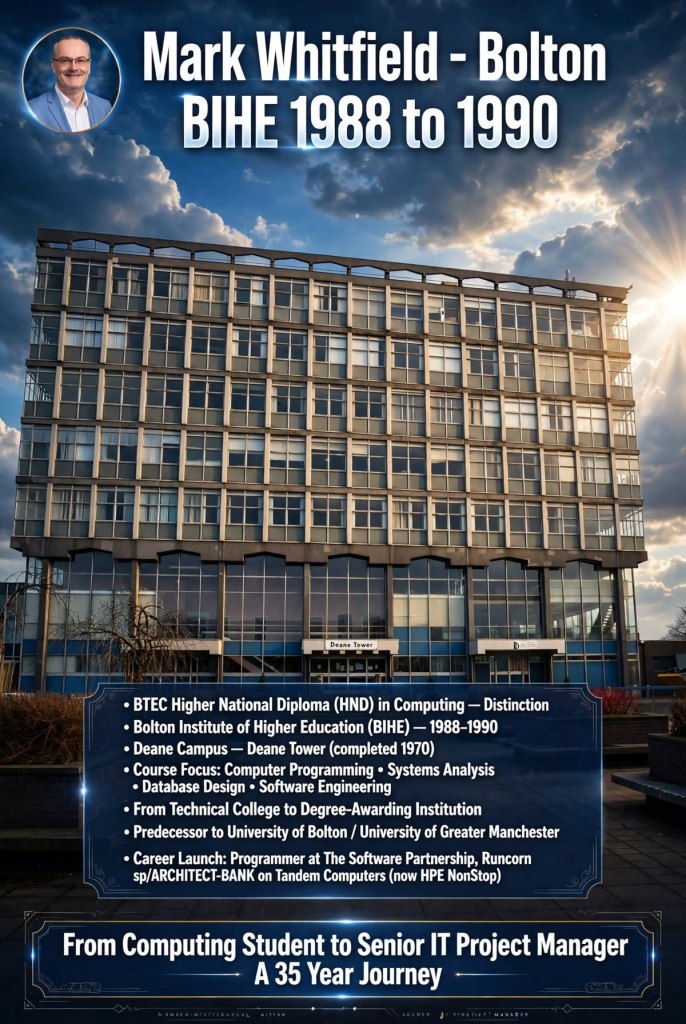
Mark Whitfield’s IT project management and software engineering career spans over three decades, progressing from early electronic banking programming on Tandem Mainframes (now known as HPE NonStop) to senior delivery of enterprise-scale middleware, cloud, and digital transformation initiatives.
The high-level chronological timeline (with links) of his professional eras and key project history is broken down below.
💻 1990–1995: Early Programming & Lead Analysis Era
During this foundational era, Whitfield operated as a Programmer and Lead Analyst specializing in core electronic banking software frameworks.
The Software Partnership / Deluxe Data (1990–1995): Developed and enhanced the sp/ARCHITECT-BANK platform. His technical responsibilities focused heavily on coding within Tandem Mainframe environments (now HPE NonStop) using C, C++, TAL, COBOL, and PATHWAY architectures.
Deluxe Data International Operations, Wingate House, Northway, Runcorn
Barclays On-Site Delivery (Early 1990s): Deployed on-site at the Barclays facility in Knutsford, Cheshire. He was responsible for core code development and system architecture design on the Barclays Business Master II (BBM II) electronic banking initiative and subsequent billing modules developed in Poole, Dorset.
Barclays, Wimborne Road, Poole, Dorset
🛠️ 1995–2013: Senior Development & Strategic Project Management Era
Transitioning to Insider Technologies Limited at Salford Quays, Manchester, Whitfield progressed into high-level technical project delivery and strategic product management.
Insider Technologies Limited (ITL) in 2001, Salford Quays, Chandlers Point
Reflex Monitoring Suite R&D (1995–1996): Appointed as a core developer to design platform health and diagnostic plug-in modules for the flagship Reflex 80:20 tracking console.
CRESTCo Infrastructure Integration (1997–1998): Acted as a technical infrastructure consultant for CRESTCo (now Euroclear). Managed hardware benchmark coding and testing for newly deployed Tandem S7000 processing nodes.
CRESTCo in 1997 on St. Katherine’s Dock near Tower Hill tube station
Real-Time Tracking Protocols (1999–2001): Oversaw multi-organizational telemetry deployments for the Bank of England and Deutsche Bank, leveraging specialized MultiBatch scheduling utilities and automated file monitors.
Hewlett-Packard (HP) Certification Initiative (2002–2003): Successfully drove the rigid compliance and verification process to secure official certification for the first HP OpenView Operations (OVO) Smart Plug-In built for NonStop mainframe environments.
First HP OpenView Operations Smart Plug-In for HPE NonStop environments
ATM Log Extraction Deployments (2004–2007): Led technical delivery teams implementing automated transaction log extraction layers (RTLX and Sentra) to audit ATM networks for major retail financial brands like Alliance & Leicester (now Santander) and HSBC.
Cross-Border Retail Banking Rollout (2008–2010): Served as Project Manager overseeing a high-volume, cross-border ATM and Point-of-Sale (POS) environment monitoring expansion for a prominent Saudi Arabian Retail Bank.
Cross-border ATM and Point-of-Sale (POS) environment monitoring expansion
Enterprise Transaction Monitoring (2011–2013): Functioned as Project Lead to bridge retail banking transaction networks with corporate governance architectures. Integrated critical pathways for Standard Chartered and Global Payments into TIVOLI and XPERT24 using ACI’s XPNET infrastructure.
Wincor Nixdorf Banking Division (2013–2014): Retained as Project Manager for Professional Services. He directed a massive hardware and software transition stream for Lloyds Banking Group’s Self-Service Software Replacement (SSSR) programme whilst also providing a qualified management link with Wincor Nixdorf, Paderborn (Germany) for subject matter expertise, as part of the transition.
🎮 2014–2016: Digital Infrastructure & Enterprise Betting Era
Whitfield shifted his delivery domain focus from banking mainframes into real-time high-transaction digital platforms.
Betfred Project Delivery (2014–2016): Managed IT infrastructure and digital systems alignment projects, supporting high-throughput retail and digital consumer gaming workflows.
☁️ 2016–Present: Cloud Integration, Middleware, & Public Sector Era
In this current era, Whitfield acts as a senior, SC-cleared Senior IT Project Manager specializing in hybrid cloud migrations and API-led integration.
Capgemini UK Consultancy (2016–Present): Leading massive corporate and public sector agile/waterfall delivery initiatives. His technical program management footprint expands across a vast roster of tier-one enterprise environments:
MuleSoft Ecosystem Deployments: Directing system integration projects utilising the Salesforce MuleSoft suite, spanning API lifecycle design, Anypoint Code Builder configurations, and hyper-automation flows.
Multi-Sector Enterprise Clients: Orchestrating cloud migrations, middleware application refactoring, and data pipelines for Jaguar Land Rover (JLR), Heathrow Airport, Royal Mail Group (RMG), NATS (National Air Traffic Services), Welsh Water, Rabobank, Barclays, and UK Export Finance (UKEF).
C&CA UK’s Communications & Engagement Award Winner 2022 – Cloud & Custom Applications – Capgemini UK
HP OpenView Operations (OVO) is a foundational enterprise systems management (ESM) platform designed to centrally monitor and manage infrastructure, multi-vendor operating systems, and enterprise applications across distributed IT environments.
The system operates on an Agent-Server Architecture. Core components include:
Management Server: Central hub that aggregates system logs, processes alerts, correlates events, and triggers automated remediation scripts.
Smart Plug-ins (SPIs): Specialized modular add-ons that inject domain-specific monitoring logic for applications like Oracle databases, Microsoft Active Directory, or SAP.
Intelligent Agents: Lightweight background processes deployed on managed nodes to collect log events, metrics, and state data, formatting them into structured OVO messages.
1. HP OVO screenshot in 2002
2. HP OVO screenshot in 2002
See bottom of this post for HPE NonStop (previously Tandem) monitoring in OpenText Operations Bridge Manager. I overlooked an integration with HP OpenView Operations for a HPE NonStop product in 2002, called Reflex 80:20.
Detailed Timeline Breakdown by Era and Year
🌅 Era 1: Origins and The Foundation (Late 1980s – 1994)
This era established HP’s footprints in IT infrastructure management, pivoting from pure SNMP network map discovery toward server telemetry.
Late 1980s: HP releases Operations Center (OpC) as an add-on application for its core Network Node Manager (NNM) platform. It replaces slow SNMP polling with Remote Procedure Calls (RPC) to gather host logs.
1990–1993: HP scales OpC into a robust engine capable of executing basic automation scripts on remote UNIX boxes when specific thresholds break.
🚀 Era 2: The “ITO” and OpenView Operations Boom (1995 – 2000)
The framework shifted from isolated utilities into an integrated, market-dominating enterprise suite.
1995: HP tightly merges NNM and Operations Center into a single product called IT Operations (ITO) Version 3.x.
1996:HP OpenView Service Navigator is embedded into the product line. It provides a graphical hierarchy of business services instead of just a raw list of broken servers.
1999: The suite formally adapts to include broad SNMP traps alongside its core agents and is renamed HP OpenView Operations ITO.
🔄 Era 3: Platform Split and VantagePoint Transition (2001 – 2006)
HP decoupled its codebases to natively handle Windows NT/2000 scaling alongside legacy Unix environments while heavily investing in product renaming.
2001: HP briefy rebrands the suite to HP VantagePoint Operations (VPO). However, customer brand loyalty forces them to quickly pivot back to the popular HP OpenView Operations (OVO) naming convention.
2002: Codebases officially bifurcate into OVOU (OpenView Operations for Unix) and OVOW (OpenView Operations for Windows, built natively on Microsoft WMI frameworks).
2005:OVO Version 8.0 drops. It features heavy integration capabilities for external service desks, advanced HTTP/HTTPS agent communication protocols, and a refreshed Java GUI console.
🏢 Era 4: The Business Technology Optimization (BTO) Era (2007 – 2016)
Massive corporate acquisitions changed the software landscape. OVO ceased to be a standalone system monitoring tool and transformed into an automated operations center.
2007: HP drops the legendary “OpenView” moniker. Following the acquisitions of Mercury Interactive, Peregrine, and Opsware, the suite is rebranded as HP Operations Manager (HPOM) under the HP Business Technology Optimization (BTO) banner.
2009: HP rolls out Operations Manager i (OMi), integrating topology-based event correlation (TBEC) to suppress duplicate alert storms across the data center.
2015: Hewlett-Packard splits into two companies; the portfolio lands under Hewlett Packard Enterprise (HPE). The engine is bundled into the HPE Operations Bridge (OpsBridge) suite.
☁️ Era 5: Divestiture and Modern Legacy (2017 – Present)
2017: HPE spins off its enterprise software division. The entire legacy OpenView/Operations Manager portfolio is sold to Micro Focus.
2023:OpenText completes its acquisition of Micro Focus. The underlying technical heritage of the old OVO agents survives today, evolved into cloud-ready containerized architectures inside the modern OpenText Operations Bridge cloud monitoring portfolio.
OpenText Operations Bridge Manager Screenshot example
HPE NonStop (previously Tandem) Monitoring
Micro Focus Operations Bridge (now part of OpenText AI Operations Management) provides end-to-end IT monitoring by consolidating data from over 200 sources. For HPE NonStop, it utilizes specialized Management Packs to ingest metrics, system events, and health data for comprehensive, real-time hybrid IT analysis.
To monitor HPE NonStop servers using the modern OpenText Operations Bridge/AIOps platform, the setup revolves around the Operations Bridge Manager (OBM) and targeted management packs:
Management Packs for HPE NonStop: OpenText provides specific management packs and solutions designed for NonStop systems. These capture system health, CPU/disk metrics, pathway status, and system messages.
Operations Agent: A lightweight agent is deployed directly on the NonStop nodes, which securely streams local performance data and events back to the central OBM console.
Centralized Event Consolidation: OBM acts as a “manager of managers”. It ingests the NonStop events and correlates them alongside data from your cloud (AWS/Azure), containers, and network endpoints.
AIOps and Remediation: The platform utilizes built-in machine learning to reduce alert noise and accelerate root cause analysis. You can also use automated Runbooks to automatically remediate known issues on the NonStop platform.
Because the platform has been fully integrated into the OpenText portfolio, these integrations are supported across containerized deployments, on-premise, or SaaS models.
You can find downloadable PRINCE2 project templates in Excel (.xls/.xlsm) and Microsoft Project (.mpp) formats across several specialized platforms. Because PRINCE2 is a highly structured methodology, standard templates usually map its specific processes (like Starting Up, Initiating, and Controlling a Stage) directly onto Gantt charts and tracking sheets.
PRINCE2 MS Excel .xls plan in a spreadsheet
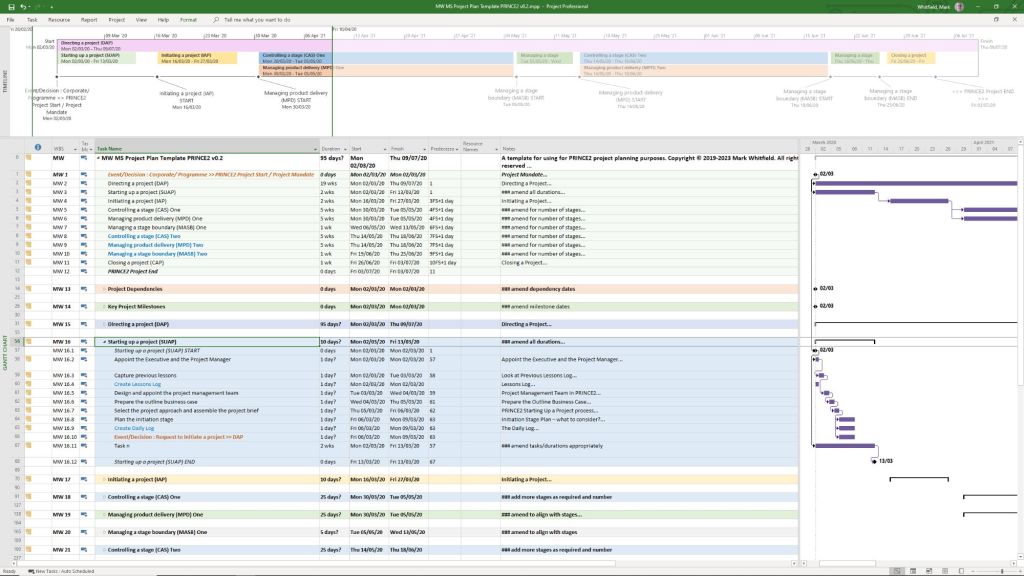
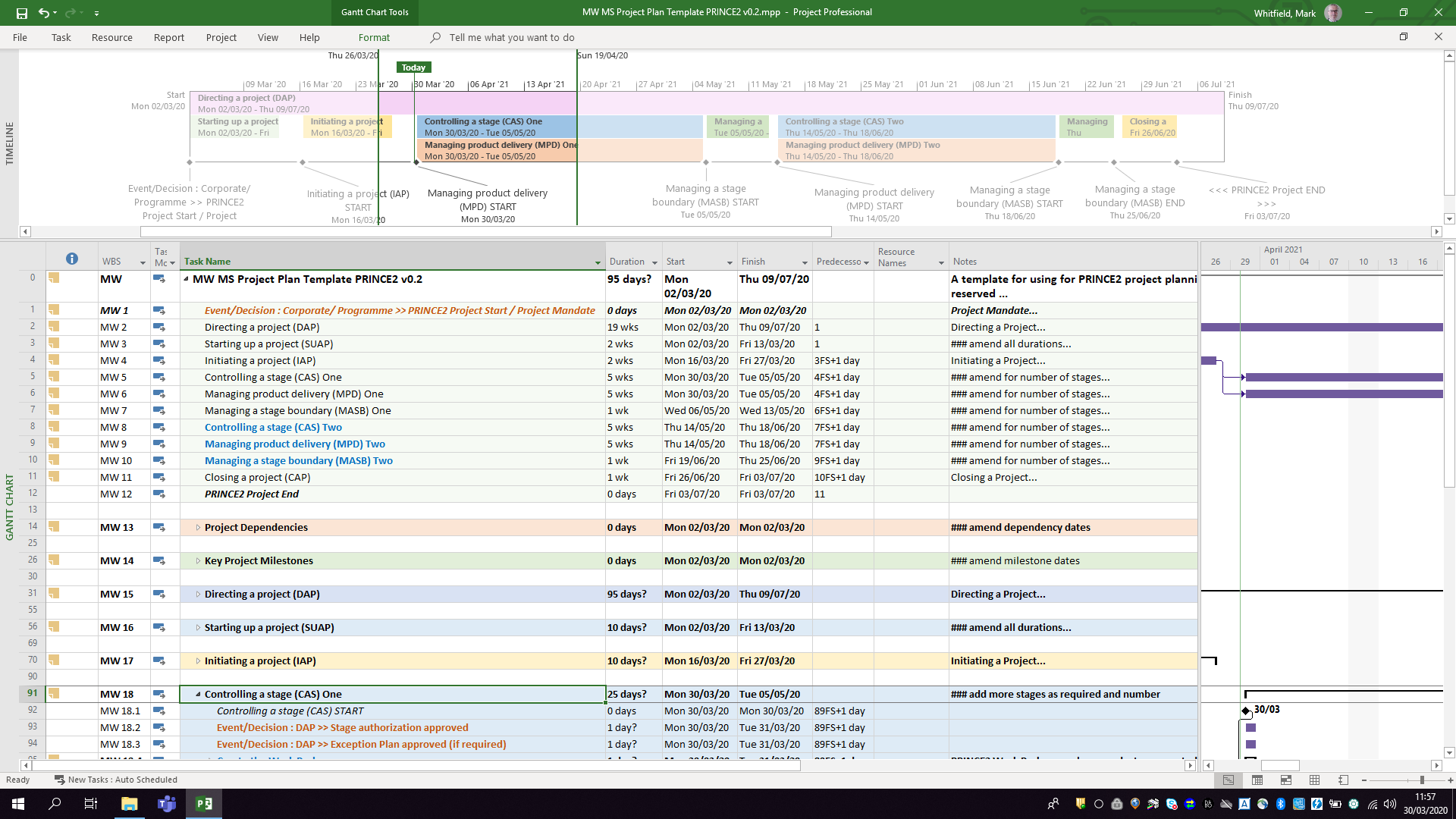
PRINCE2 MS Project .mpp plan in a project file
The primary download options, ranging from premium practitioner bundles to free resource packages, are categorized below:
Comprehensive Premium Bundles (MPP & XLS)
If you require a fully integrated toolkit built specifically for the official PRINCE2 framework, individual project management practitioners offer comprehensive marketplace downloads:
Mark Whitfield PM Templates: Offers a dedicated seventh edition package including MW MS Project Plan Template PRINCE2 v0.2.mpp alongside its exact equivalent spreadsheet MW Excel PRINCE2 Project Plan Template v0.2.xlsm. You can download this Prince2 toolkit package plus others, on the Mark Whitfield Official Site or through the Mark Whitfield Etsy UK Shop.
Flevy Marketplace: Provides highly structured, professional enterprise files. You can purchase and download the PRINCE2 Templates + Microsoft Project MPP & MS Excel Document directly from their platform, which packs the MPP tracking timelines and XLSM / XLS sheets together.
PRINCE2 project templates, Excel (.xls/.xlsm) & MS Project (.mpp) formats
Microsoft Excel XLS PRINCE2 spreadsheet screenshots
Microsoft Excel XLS PRINCE Project Plan with Task Descriptions
Microsoft Excel XLS PRINCE Project Plan with Gantt View 1
Microsoft Excel XLS PRINCE Project Plan with Gantt View 2
Microsoft Excel XLS PRINCE Project Plan with Gantt View 3
Microsoft Excel XLS PRINCE Project Plan with Delivery Costings
Microsoft Excel XLS PRINCE Project Plan with Charts
Microsoft Excel XLS PRINCE Project Plan with PRINCE2 Stage Charts
Standard Artifacts Included in Download Packages
When downloading a comprehensive .zip toolkit, the package typically contains the core structural elements of the framework divided across your scheduling software:
MS Project (.mpp): A pre-constructed Prince2 waterfall delivery layout mapped with the 7 key PRINCE2 stages, built-in dependency workflows, milestone gates, and methodological prompts embedded in the task notes.
MS Excel (.xls/.xlsm): Mirrored project planning sheets (with costing) utilizing native formulas to auto-populate Gantt charts, alongside targeted operational spreadsheets like RAID logs (Risks, Assumptions, Issues, Dependencies), RACI matrix charts, resource trackers, and project budget tools.
Legacy enterprise managers (often spanning IT Service Management, Network Node Management, and Event Correlation) defined enterprise IT in the 1980s, 1990s, and 2000s. The following are major, pioneering platforms, their primary functions, and their eventual modern replacements:
Legacy IT Operations Management (ITOM)
HP OpenView: A flagship suite that included Network Node Manager (NNM) for topology mapping and Operations Manager (formerly OVO) for centralized event and alert monitoring across Unix, Windows, and mainframes. I overlooked the integration of the HP NonStop product Reflex 80:20 with HP OpenView.
Modern equivalent: Evolved into Micro Focus Operations Bridge, later absorbed by OpenText.
IBM Tivoli: A massive suite born from the acquisition of Candle and Tivoli Systems. The core components included Tivoli Enterprise Console (TEC) for event correlation and Tivoli Netcool/OMNIbus for real-time network and service monitoring. I overlooked the integration of the HP NonStop product Reflex 80:20 with IBM Tivoli.
Modern equivalent: Evolved into IBM Cloud Pak for Watson AIOps.
BMC Patrol: One of the premier tools for deep system, application, and database monitoring (often known for its KM – Knowledge Module – architecture).
Modern equivalent:BMC TrueSight Operations Management and BMC Helix.
CA Unicenter: A comprehensive, all-in-one mainframe and distributed systems management tool for job scheduling, asset management, and event monitoring.
Modern equivalent: Rebranded under Broadcom, largely integrated into their enterprise software division.
Sun Microsystems SunNet Manager / Solstice Enterprise Manager: Early pioneers in Unix-based network management and remote system administration.
Modern equivalent: Discontinued; mostly absorbed by Oracle Enterprise Manager.
Enterprise Event Correlation & Command Centers
Command/Post (Boole & Babbage): One of the earliest automated event correlation engines designed for mainframes, which later expanded into distributed environments. Acquired by BMC.
Micromuse Netcool: Famous for its ultra-fast, rules-based Omnibus, capable of ingesting vast amounts of SNMP traps and Syslog messages across telecommunications and large enterprise networks. Acquired by IBM.
Network and Performance Managers
HP OpenView Performance/SysView: Tools specifically built for historical performance charting, OS native monitoring, and deep metric extraction.
Novell NMS (NetWare Management System): The standard for managing legacy Novell NetWare servers and IPX/SPX network topologies.
Most of these tools were displaced by modern APM (Application Performance Monitoring) and AIOps (Artificial Intelligence for IT Operations) platforms that feature cloud-native architectures, distributed tracing, and out-of-the-box integrations. Common replacements include:
Datadog
Dynatrace
Splunk / Splunk IT Service Intelligence
LogicMonitor
ScienceLogic
HP OpenView Operations
HP OpenView Operations Enterprise Managerintegrationwith Reflex 80:20
First HP NonStop 2-way Smart Plug-In (SPI) for HP OVO
Requested to research and produce a design for integrating the ITL NSK based Reflex 80:20 product with the hp OpenView Operations (hp OVO) enterprise manager. This initially involved a trip to Lisbon to attend the hp OpenView Universe event that represents the technical showcase for this enterprise level product. I then put together a number of design documents and managed a development team tasked with engineering an hp OpenView Smart Plug-in (SPI) to interact with Reflex 80:20 on the hp NonStop platform. This hp SPI approach represents the latest technology for integrating third-party products and provides an unparalleled approach for enabling remote platform control and management under hp OVO.
Once the Reflex SPI development was complete, I overlooked acceptance testing at the hp labs at Fort Collins, Colorado and was instrumental in attaining HP certification for the Reflex 80:20 product. As part of the certification process, I produced a comprehensive Reflex SPI user guide along with supporting marketing literature. More information.