Microsoft Power Platform Summary, Technical Evolution by Year & Career Involvement

Microsoft Power Platform is an enterprise-grade, low-code platform that allows organizations to build applications, automate workflows, analyze data, and create AI-powered virtual agents. It natively connects to Microsoft 365, Azure, and Dynamics 365, serving as a core pillar of modern digital transformation.

Microsoft Power Platform Summary and Technical Evolution by Year
Microsoft Power Platform Overview

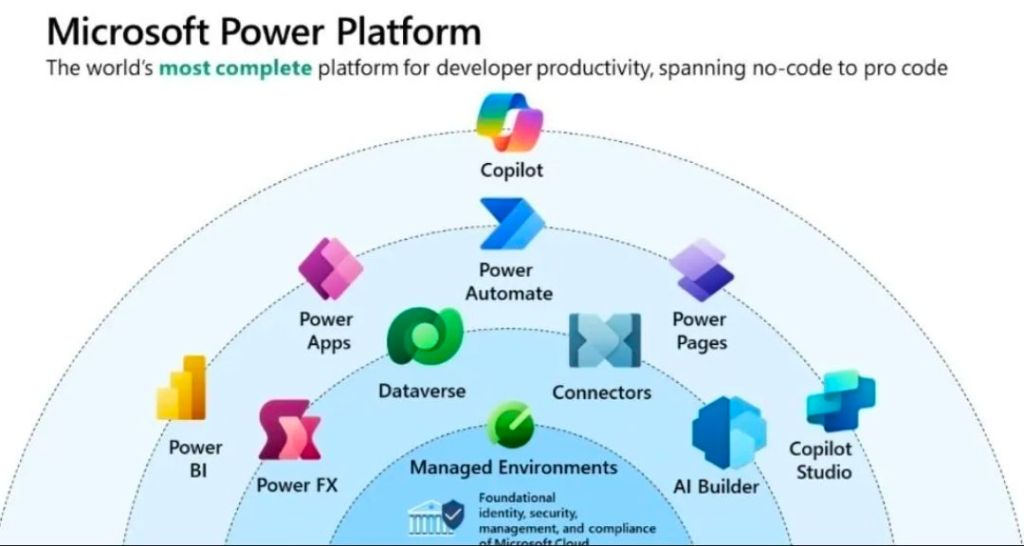
Core Pillars

  • Power Apps: A low-code development environment for building custom, cross-platform business applications (Canvas or Model-driven) without writing traditional code.
  • Power Automate: An automation service enabling the creation of workflows, API-based integrations, and Robotic Process Automation (RPA) for legacy systems.
  • Power BI: A business analytics service that provides interactive visualizations and business intelligence capabilities with an interface simple enough for end users to create their own reports and dashboards.
  • Power Pages: A secure, enterprise-grade low-code software-as-a-service (SaaS) platform for designing, configuring, and publishing external-facing websites.
  • Microsoft Copilot: AI-assisted generative capabilities natively built across the platform, allowing users to build apps, write flows, or generate reports using natural language.

Foundational Technologies

  • Dataverse: A secure, cloud-based data storage and management layer featuring a standardized common data model, allowing disparate Microsoft tools to seamlessly share information.
  • Connectors: Over 1,000 pre-built wrappers that facilitate communication between the Power Platform and external services (like Salesforce, SQL databases, or REST APIs).
  • Power Fx: A low-code, strongly-typed functional programming language based on Excel formulas that serves as the logic layer across the platform.

Technical Evolution by Year

The Power Platform did not launch overnight; it evolved through the gradual introduction of several standalone tools before Microsoft formally unified them under one umbrella.

2013–2015: The Origins of Data Analysis & Logic

  • 2013: Power BI is initially released as an add-in for Microsoft Excel, allowing users to build pivot tables and light analytics.
  • 2015: Power BI transitions into a standalone cloud service. Concurrently, Power Apps enters public preview, introducing the low-code app paradigm.

2016–2017: Workflow Automation

  • 2016: Microsoft Flow (the predecessor to Power Automate) is launched to handle cloud-based workflow automation.
  • 2017: Common Data Service (now Dataverse) is introduced to provide a standardized, secure data layer.

2018–2019: The “Power Platform” Unification

  • 2018: Microsoft officially unifies Power BI, Power Apps, and Microsoft Flow under the official name “Microsoft Power Platform”, introducing the formal concept of a connected, low-code business ecosystem.
  • 2019: The Common Data Service gets deeper integration across Dynamics 365 and Microsoft 365, accelerating citizen development across large enterprises.

2020: AI and Robotic Process Automation (RPA)

  • 2020: Microsoft launches AI Builder, allowing users to integrate pre-trained AI models (like form processing and object detection) directly into their apps and workflows.
  • 2020: Softomotive is acquired, bringing RPA (desktop flows) into Power Automate.

2021–2022: New Additions and Expanded Web Presence

  • 2021: The Common Data Service is officially rebranded as Microsoft Dataverse.
  • 2021: Power Fx is introduced as the standard, open-source low-code language.
  • 2022: Power Apps Portals is rebranded and expanded into Power Pages, creating a dedicated, robust tool for building external-facing websites.

2023–2024: The Generative AI Wave

  • 2023: Microsoft embeds generative AI across the suite through Copilot. Users begin building data tables, applications, and automation flows entirely through conversational prompts.
  • 2024: Power Platform deepens its integration with Microsoft Fabric and brings further enterprise-grade management, data governance, and AI agent orchestration features directly into Dataverse.

2025–2026: Agentic Computing and Modern Controls

  • 2025: Power Platform evolves beyond standard applications and automations into “agentic computing.” Makers can build autonomous, AI-driven data agents directly within Dataverse using the Python SDK.
  • 2026: Power Apps rolls out massive updates to its interface, deploying responsive layouts and modern controls as default settings. Advanced lifecycle management and process-mining features cement the platform’s role in modern fusion development.

My Recent MS Power Platform Involvement :

UK Gov : Cloud Migration (Hybrid) – In 2020, working as a Senior Project Manager on a client sponsored Agile proof-of-concept (POC) project to move 3 Client elected Apps (with MS Access, Oracle and SQL 2008 DBs), to the Cloud (Microsoft Azure and Dynamics365 Power Platform). The migration to the cloud was based on 3 primary app patterns namely; re-host, re-platform and re-factor. This project spanned approximately 3 months and started in early February 2020 with a budget of £375k.

The project was a pre-cursor and effort indicator for the larger piece of migration work to move 130 client estate apps to the cloud. This is a very complex app estate with many touch points and different technology stacks.

As the Capgemini Senior PM, responsible for the project planning, control, organisation, stakeholder communication, aligning with current GDPR directives and status reporting against delivery of Capgemini services to the client. As the PM, also the first escalation point for the project team and the client.

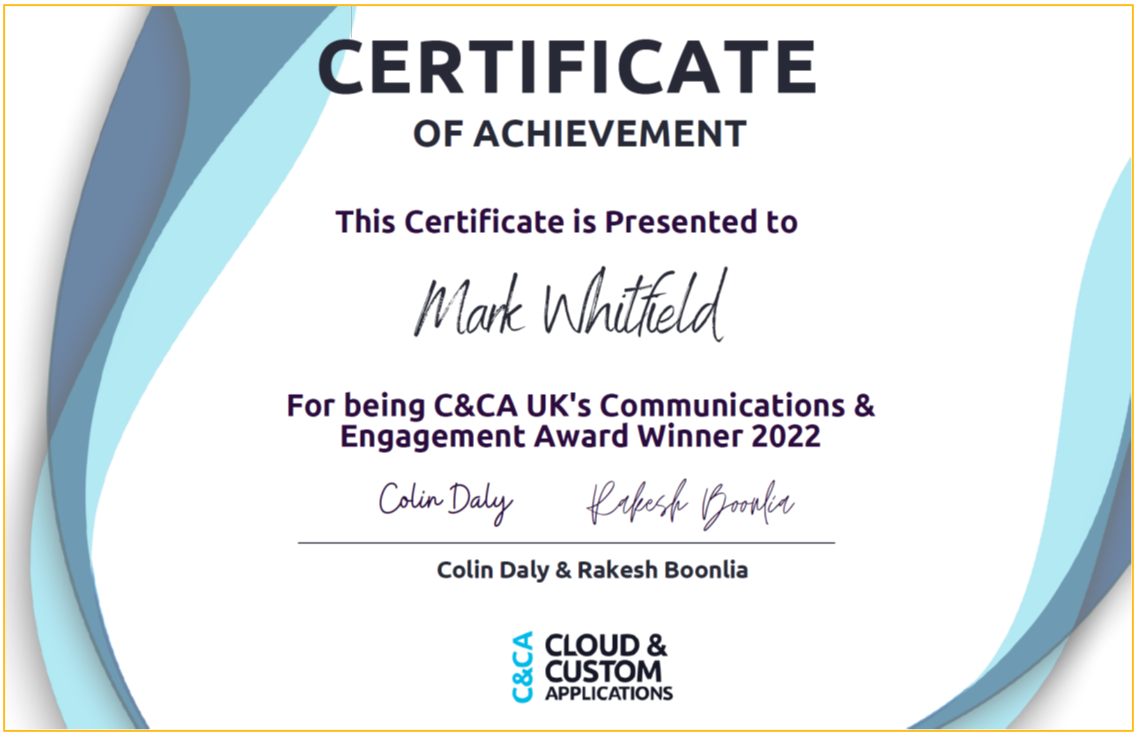
C&CA UK's Communications & Engagement Award Winner 2022 - Cloud & Custom Applications - Capgemini UK
December 2022 – C&CA UK’s Communications & Engagement Award Winner – Cloud & Custom Applications – Capgemini UK

Manchester Technical Timeline History

Manchester’s technical history is defined by its evolution from the world’s first industrial city to a global hub for computing and material science

18th Century: The Birth of Industry

  • 1733: John Kay invented the Fly Shuttle, a key advancement in weaving.
  • 1761: The Bridgewater Canal opened as Britain’s first man-made waterway independent of rivers, drastically reducing coal costs.
  • 1764–1779: James Hargreaves invented the Spinning Jenny (1764), and Samuel Crompton created the Spinning Mule (1779), allowing for mass textile production.
  • 1783: Richard Arkwright established Manchester’s first steam-powered mill.
  • 1790: Piccadilly Mill became the first in the city to be powered directly by a steam engine. 

19th Century: Engineering & Precision 

20th Century: The Computing Revolution 

  • 1904: Frederick Royce and Charles Rolls met at the Midland Hotel to form Rolls-Royce.
  • 1908: A.V. Roe designed and flew the first British plane; he later founded the Avro aircraft factory.
  • 1917: Ernest Rutherford became the first to split the atom at the University of Manchester.
  • 1948: Professors Tom Kilburn and Fred Williams ran the first program on the Manchester Baby, the world’s first stored-program electronic computer.
  • 1953: The University of Manchester built the world’s first transistorised computer prototype.
  • 1962: The Ferranti Atlas was commissioned; it was the world’s most powerful computer at the time and pioneered virtual memory.
  • 1992: Metrolink began operations, becoming the UK’s first modern street-running light rail system. 

21st Century: Advanced Materials & Media

  • 2004: Professors Andre Geim and Kostya Novoselov isolated graphene, the world’s first 2D material.
  • 2005: The University of Manchester developed a 3D printer for human tissue.
  • 2011: MediaCityUK opened as Europe’s largest purpose-built digital and media hub.
  • 2018: The SpiNNaker project was completed, creating a million-processor machine that mimics the human brain’s neural networks. 

Manchester’s technical history is defined by its rise as the world’s first industrial city, followed by a century of pioneering achievements in computingnuclear physics, and materials science

18th – 19th Century: The Industrial Revolution 

  • 1761: The Bridgewater Canal opens as Britain’s first man-made waterway, triggering “Canal Mania”.
  • 1783: Richard Arkwright establishes the first steam-powered mill, paving the way for mass production.
  • 1803: John Dalton publishes Atomic Theory in Manchester, providing the foundation for modern chemistry.
  • 1830: The Liverpool and Manchester Railway commences, the world’s first inter-city passenger railway using only steam locomotives.
  • 1841: Sir Joseph Whitworth standardises the screw thread, a critical milestone for precision engineering.
  • 1894: The Manchester Ship Canal opens, turning an inland city into one of the world’s largest seaports. 

20th Century: Computing and Nuclear Physics

  • 1917: At the University of Manchester, Ernest Rutherford performs the first artificially induced nuclear reaction, splitting the atom.
  • 1948: “The Baby” (SSEM) runs the world’s first electronically stored program, marking the birth of modern computing.
  • 1950: Alan Turing publishes “Computing Machinery and Intelligence,” introducing the Turing Test for AI.
  • 1953: The world’s first transistorised computer prototype becomes operational at the University.
  • 1957: The Lovell Telescope at Jodrell Bank is completed, then the world’s largest steerable radio telescope.
  • 1962: The Atlas computer, the world’s first supercomputer, is commissioned. 

21st Century: Advanced Materials and Digital Growth

  • 2004: Professors Andre Geim and Kostya Novoselov isolate graphene, the world’s first 2D material.
  • 2011: MediaCityUK opens in Salford, becoming a major international hub for digital and broadcast technology.
  • 2018: The SpiNNaker project activates a million-processor machine designed to model the human brain’s neural networks.
  • 2024: Manchester Metropolitan University celebrates its 200th anniversary with the opening of the Dalton Building for Science and Engineering.
  • 2026: Manchester Digital hosts the annual Digital Skills Festival in February to connect emerging tech talent with industry leaders.

Manchester Technical Timeline History