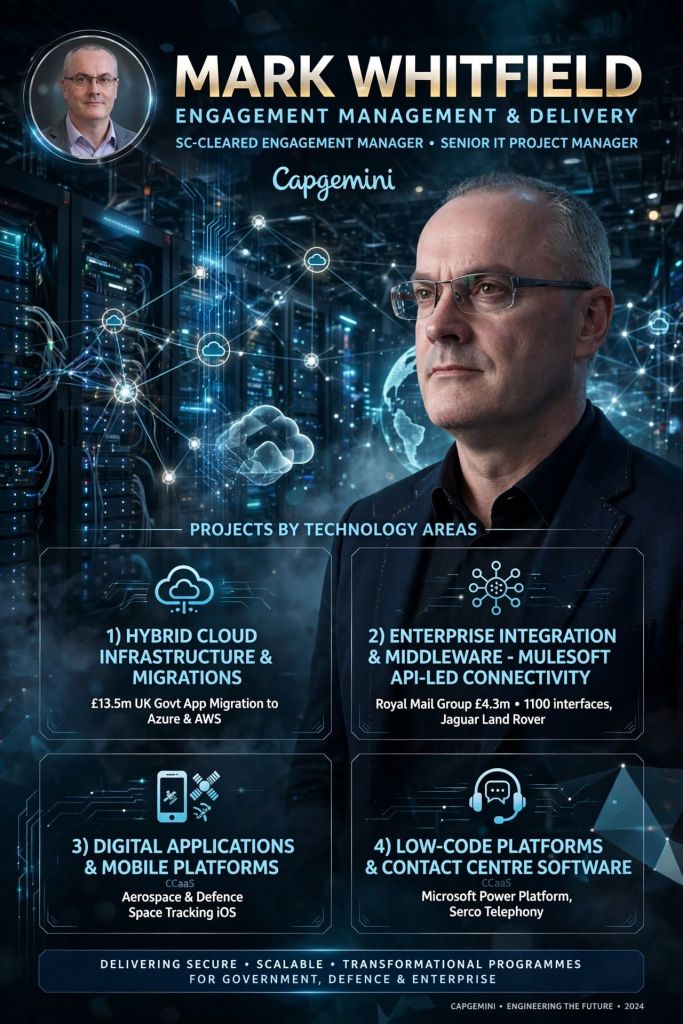
At Capgemini UK, SC-cleared Engagement Manager and Senior IT Project Manager Mark Whitfield focuses on delivering complex, enterprise-scale digital transformations.
Mark Whitfield | Engagement Manager
His project portfolio spans both public and private sectors, categorized by several primary technology areas:
☁️ Hybrid Cloud Infrastructure & Migrations
UK Government App Migration: Directed a massive multi-million pound programme (£13.5m) transitioning over 130 legacy public sector applications to Microsoft Azure and AWS.
Application Refactoring: Led complex application migrations using refactor, re-host, and re-platform design patterns.
Green IT Initiatives: Focused on cloud optimization models to streamline operating costs and improve sustainability profiles.
MuleSoft Ecosystem Deployments: Directed large-scale system integration projects using the Salesforce MuleSoft Anypoint Platform.
MuleSoft Augmentation: Acted directly as an augmented Delivery Manager for MuleSoft supporting blue-chip integrations.
Royal Mail Group (RMG): Managed a £4.3 million migration project involving more than 1,100 interfaces to integrate internal applications and external trading customers.
Jaguar Land Rover (JLR): Orchestrated mid-tier integration, manufacturing supply chain data pipelines, and middleware applications (such as the iFAB project).
📱 Digital Applications & Mobile Platforms
Aerospace & Defence Space Tracking: Managed the Agile SCRUM delivery of secure, near real-time Apple iOS mobile applications.
Dual-Layer Interfaces: Coordinated software presenting both sensitive, internal military views and public-facing airspace tracking visuals.
⚙️ Low-Code Platforms & Contact Centre Software (CCaaS)
Microsoft Power Platform: Structured data flows and modernised pipelines using low-code tools.
Serco Telephony Campaign: Managed a £400k CCaaS (Contact Centre as a Service) project establishing an automated, programmatic dialler integrated with an Azure-deployed CRM tool.
In Agile projects, gap analysis shifts from a heavy upfront documentation exercise to a dynamic, continuous evaluation of the difference between your product’s current capabilities and your user’s actual needs.
Instead of building massive compliance checklists, Agile teams break gaps down into functional, team-level increments embedded directly into product development loops.
🛠️ How Gap Analysis Maps to Agile Artifacts
Agile doesn’t use a standalone “Gap Analysis Report”. Instead, gaps are converted directly into standard Agile artifacts to keep the delivery team moving:
The Epic Level (Strategic Gaps): Large operational or technical gaps (e.g., “System lacks multi-factor authentication”) are captured as Epics.
The User Story Level (Functional Gaps): Epics are sliced down into smaller, testable User Stories that represent a single increment of closing that gap (e.g., “As a user, I want to receive an SMS verification code to secure my login”).
The Backlog (Prioritisation): Identified gaps are estimated, given a business value, and ranked directly alongside feature requests in the Product Backlog.
📋 The 4-Step Agile Gap Process Breakdown
Agile teams continuously execute gap analysis iteratively through four distinct stages:
1. Define the Current State (Where We Are Now)
Action: Evaluate the existing performance or architecture using live metrics, user research, and current automated test results.
Agile Tool: Review system metrics, customer churn data, or velocity charts during Retrospectives. Avoid vague complaints; stick strictly to measurable facts.
2. Envision the Desired Future State (Where We Want to Be)
Action: Define target benchmarks or expected system behavior.
Agile Tool: Leverage the Product Vision, user personas, acceptance criteria, or your team’s Definition of Done (DoD) to serve as the baseline future state.
3. Identify and Analyze the Gap (The “Why”)
Action: Highlight the specific differences between performance and goals, then uncover the underlying reasons.
Agile Tool: Run a Five Whys session or build a Fishbone Diagram during sprint planning to see if the gap is caused by legacy code (Technology), missing skillsets (People), or inefficient workflows (Process).
4. Build the Action Plan (The Bridge)
Action: Convert the necessary fixes into work items.
Agile Tool: Map the required changes directly into the Sprint Backlog as User Stories, technical spikes (research tasks), or non-functional requirements to be delivered in upcoming iterations.
⏱️ When Gap Analysis Happens in the Agile Lifecycle
Rather than an administrative phase at the very beginning of a project, gap analysis is integrated throughout standard Agile ceremonies:
Product Discovery: High-level gap analysis ensures the initial product backlog addresses actual target user needs instead of internal assumptions.
Sprint Planning: The team evaluates the gap between the sprint goal and the current codebase to pick the right stories.
Sprint Review / Demo: Stakeholders compare the working increment against their expectations. This immediately exposes any emerging functional or alignment gaps.
Retrospectives: The team conducts an internal process gap analysis to evaluate how they collaborate, uncovering process bottlenecks or technical debt.
Gap Analysis in Agile Projects, Detailed Breakdown
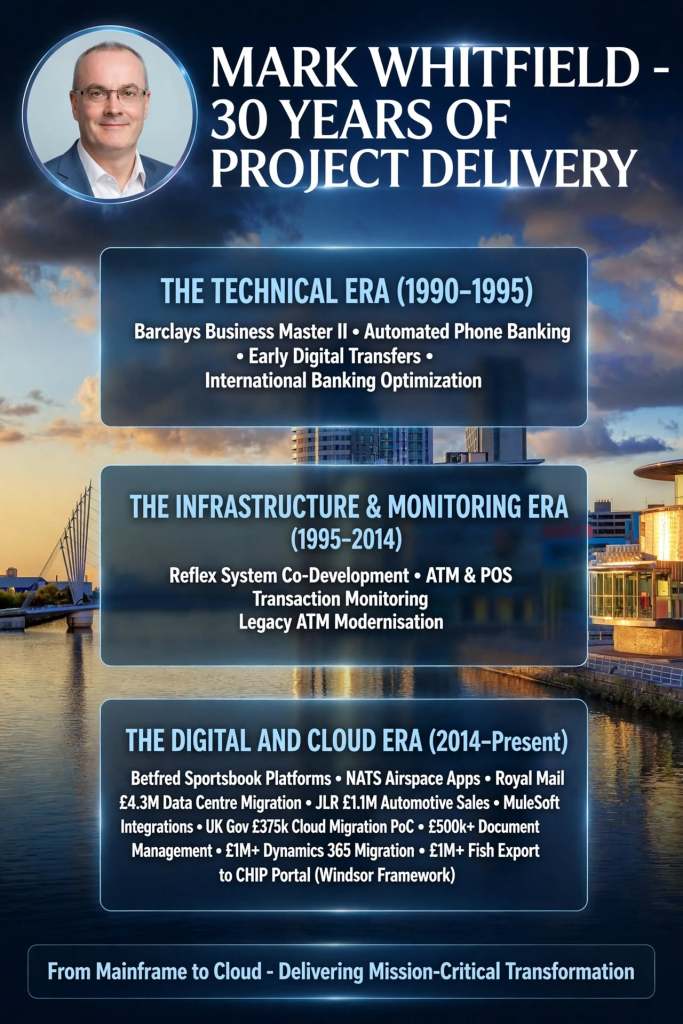
Mark Whitfield is an SC-cleared Senior IT Project and Engagement Manager with over 30 years of experience. His career spans from early mainframe programming to leading multi-million-pound cloud migrations and digital transformations for major financial, utility, and government clients.
Mark Whitfield | IT Projects Chronologically
The chronological breakdown of his professional project portfolio, structured by his definitive career eras, is detailed below:
1. The Technical Era (1990–1995)
During this foundational era, Mark worked as a Programmer and Lead Analyst for The Software Partnership (acquired by Deluxe Data in 1994). He focused strictly on the development, optimization, and deployment of the sp/ARCHITECT-BANK electronic banking solution on Tandem Mainframe Computers.
Details: Handled the custom design and backend coding for a high-profile desktop electronic business banking application.
Project: Automated Touch-Tone Phone Banking Suite
Year: 1992–1993
Client: Girofon (Denmark)
Budget: Client-retained vendor contract
Details: Coded automated, menu-driven voice solutions operating on a Periphonics VRAM device to fetch live customer balances directly from mainframes.
Project: Early Digital Inter-Account Transfers
Year: 1993–1994
Client: TSB & Bank of Scotland
Budget: Internal product development
Details: Directed logic design and mainframe coding to support pioneering inter-account electronic funds transfers.
Project: International Banking Optimization
Year: 1994–1995
Client: Rabobank
Budget: Vendor-driven custom development framework
Details: Managed localized software optimization, custom patches, and deployment testing for global banking operations.
2. The Infrastructure & Monitoring Era (1995–2014)
Mark transitioned into a Product and Project Manager role at Insider Technologies Limited (and later a brief stint at Wincor Nixdorf). His focus shifted heavily toward platform diagnostics, high-availability transaction monitoring, and financial hardware software integrations.
Project: Reflex (Reflex 80:20) System Co-Development
Year: 1995–2004
Client: Multiple Tier-1 Investment Banks (including Euroclear/Crestco, Bank of England, and Deutsche Bank)
Budget: Part of a broader £3M Management Buyout (MBO) product portfolio
Details: Acted as Senior Programmer and Technical Lead to co-develop diagnostic monitoring modules for high-availability mainframes.
Details: Managed the integration of transaction tracking across ATM networks using ACI’s XPNET and HP NonStop architecture.
Project: Legacy ATM Software Modernisation
Year: 2013–2014
Client: Major UK Retail Bank (via Wincor Nixdorf Professional Services)
Budget: Corporate financial service transformation
Details: Served as Project Manager executing the swap-out of outdated, legacy ATM client systems for modernized software stacks.
3. The Digital and Cloud Era (2014–Present)
This era highlights Mark’s leadership of large-scale Agile and Waterfall digital delivery frameworks, moving from corporate gambling technology to complex, high-budget UK public sector programs.
Project: Mobile & Online Gaming Sportsbook Platforms
Details: Led Agile Scrum development teams to upgrade payment gateways, implement fraud detection, and roll out football/horse racing mobile interfaces.
Project: National Air Space Real-Time Mobile Applications
Year: 2016
Client: NATS (UK-wide Air Traffic Organisation)
Budget: Corporate custom applications initiative
Details: Managed the secure Agile delivery of Apple iOS applications displaying live military and public airspace information.
Project: Core Systems Interface Data Centre Migration
Year: 2016 (May–October)
Client: Royal Mail Group (RMG) / Postal Services
Budget:£4.3 Million
Details: Led a massive cross-functional team of 90 Capgemini engineers to migrate over 1,100 platform data interfaces ahead of peak annual trading.
Project: Automated Call Centre CCaaS Telephony Implementation
Year: 2017 (May onwards)
Client: Local Regional Government
Budget:£400,000
Details: Deployed a programmatic dialler system linked with Microsoft Azure CRM to facilitate the “Support for Mortgage Interest” campaign.
Project: Automotive Online Car Sales and Digital Readiness
Year: 2017 (October)
Client: Jaguar Land Rover (JLR) / Aston Agile Delivery Centre
Budget:£1.1 Million (Split into a £670k Customer Sales Portal and a £430k Readiness project)
Details: Engagement Manager implementing a new-car ecommerce vehicle pipeline.
Budget:£1 Million+ (Part of a larger £13.5M cloud program moving 130 apps)
Details: Orchestrated the launch and configuration of Azure Cloud frameworks migrating 12 historical Dynamics 2016 platforms to Dynamics 365 Online.
Project: Fish Export Service (FES) to CHIP Inspection Portal
Year: 2023–2024 (Nov–Feb)
Client: UK Government / Northern Ireland Trading Framework
Budget:£1 Million+
Details: Served as Technical Delivery Manager directing Agile Scrum teams to build cloud-hosted APIs supporting catch verification under the Windsor Framework.
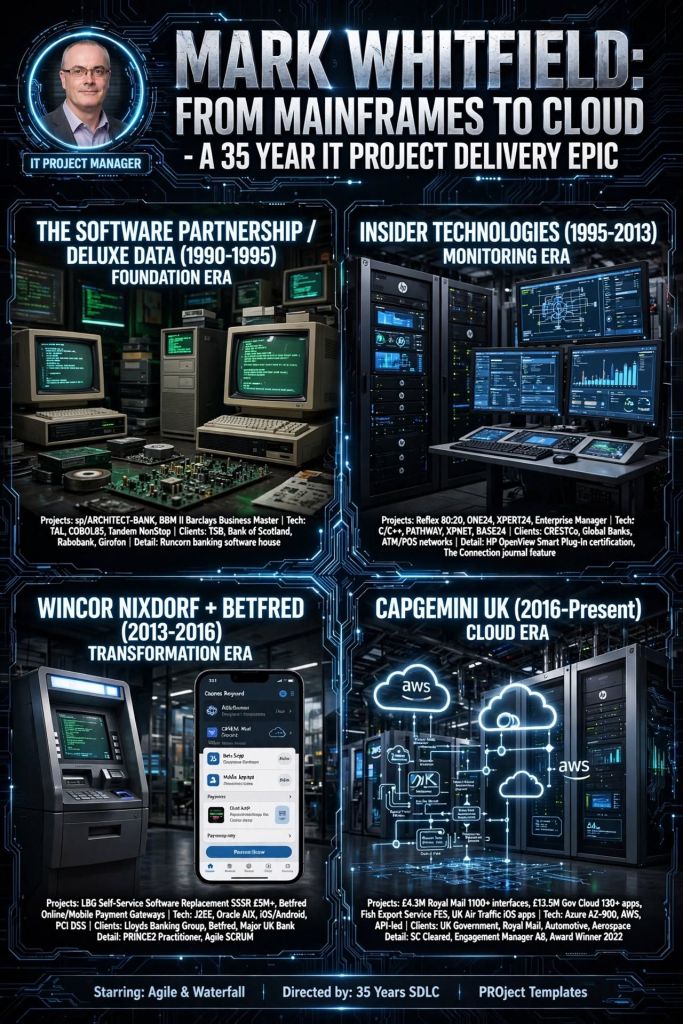
Mark Whitfield is an SC-cleared Senior IT Project Manager with over 30 years of experience delivering high-availability financial, cloud, and digital transformation projects. Over his career, he has transitioned from deep technical engineering on HPE NonStop (Tandem) mainframe systems to leading major corporate and public sector Agile and Waterfall software rollouts.
Mark Whitfield | Career Eras from Mainframes to Cloud Project Delivery
A comprehensive, year-by-year timeline breakdown of his project history and clients since 1990 is outlined below.
💻 The Technical Era (1990–1995)
During this period, Whitfield worked as a Programmer and Lead Analyst for The Software Partnership (acquired by Deluxe Data in 1994). He focused on electronic banking software (sp/ARCHITECT-BANK) on Tandem Mainframe Computers.
1990–1992: Barclays Bank – Placed on-site at Knutsford, Cheshire to design and code software for the high-profile Barclays Business Master II (BBM II) electronic desktop banking project.
1992–1993: Girofon (Denmark) – Developed a touch-tone phone banking suite. This allowed clients to use automated voice/menu-driven systems via a Periphonics VRAM device to fetch live balances from back-end mainframes.
1993–1994: TSB & Bank of Scotland – Conducted early-era digital investigations, logic design, and mainframe coding for inter-account desktop money transfers.
1994–1995: Rabobank – Headed software optimization, custom electronic coding patches, and on-site deployment validation for international operations.
🛡️ Monitoring & Infrastructure Era (1995–2013)
Whitfield joined Insider Technologies Limited (ITL) in Salford Quays, specializing in platform diagnostics, transaction monitoring, and financial logging systems for mission-critical infrastructure.
1995–1996: Internal ITL Product R&D – Core developer on the Reflex monitoring suite (Reflex 80:20), creating platform health and diagnostic plug-in modules.
1997–1998: CRESTCo (now Euroclear) – Brought in as a technical infrastructure consultant to run benchmark tests on newly released Tandem S7000 processing hardware nodes.
1999–2001: Bank of England / Deutsche Bank – Deployed real-time tracking protocols utilizing ITL’s MultiBatch scheduling architectures and file monitors.
2002–2003: Hewlett-Packard (HP) – Successfully managed the rigorous certification process for the first HP OpenView Operations (OVO) Smart Plug-In built for the NonStop mainframe environment.
2008–2010: Saudi Arabian Retail Bank – Acted as Project Manager overseeing the cross-border rollout of a high-volume ATM and Point-of-Sale (POS) monitoring system.
2011–2013: Global Payments / Standard Chartered – Integrated transaction monitoring capabilities with external corporate frameworks such as TIVOLI and XPERT24 using ACI’s XPNET architecture.
This timeframe marked a total transition into senior contract project management, dealing directly with multi-million-pound programs.
2013–2014: Lloyds Banking Group (LBG) – Augmented into Wincor Nixdorf as the IT Project Manager leading a £5+ million workstream. This was part of LBG’s comprehensive Self-Service Software Replacement (SSSR) initiative to modernise legacy ATM software.
2014–2016: Betfred – Senior IT Project Manager inside an Agile Scrum structure. Directed cross-functional software vendors to deliver updates for mobile apps (iOS/Android), fraud detection systems, and payment gateways for their digital sportsbook platforms.
In January 2016, Whitfield joined global consultancy firm Capgemini as a Senior client-facing Engagement/Delivery Manager.
2016–2017: Aerospace & Defence Client – Managed an enterprise-level integration project to deploy a Salesforce-driven Single Customer View (SCV) portal platform.
2017–2018: Jaguar Land Rover (JLR) – Served as Project Manager for the iFAB Middleware Project, a complex 12-month architecture development program linking global manufacturing supply components.
2018–2019: MuleSoft (A Salesforce Company) – Augmented directly into MuleSoft’s London headquarters as a Delivery Manager, spearheading API-led connectivity deployments via the Anypoint Platform.
2019–2021: UK Government Agency (UK Gov) – Commanded a major Hybrid Cloud Migration initiative to refactor, re-host, and re-platform 130 legacy agency software applications directly to cloud servers.
2022: UK Utility Sector (Welsh Water / Scottish Water) – Dual-management lead executing a £0.5 million contract to migrate an aging, on-premise document management program (EQS) onto the Microsoft Azure cloud via Enablon.
2023–2026: Public Sector & Core Tooling (Current) – Managing high-value middleware and API integrations for entities like the Royal Mail Group (RMG), NATS, and regional government bodies. Concurrently authors a widely used portfolio of commercial project management templates (RAID logs, RACI matrixes, and MS Project MPP layouts) published via PROject Templates.
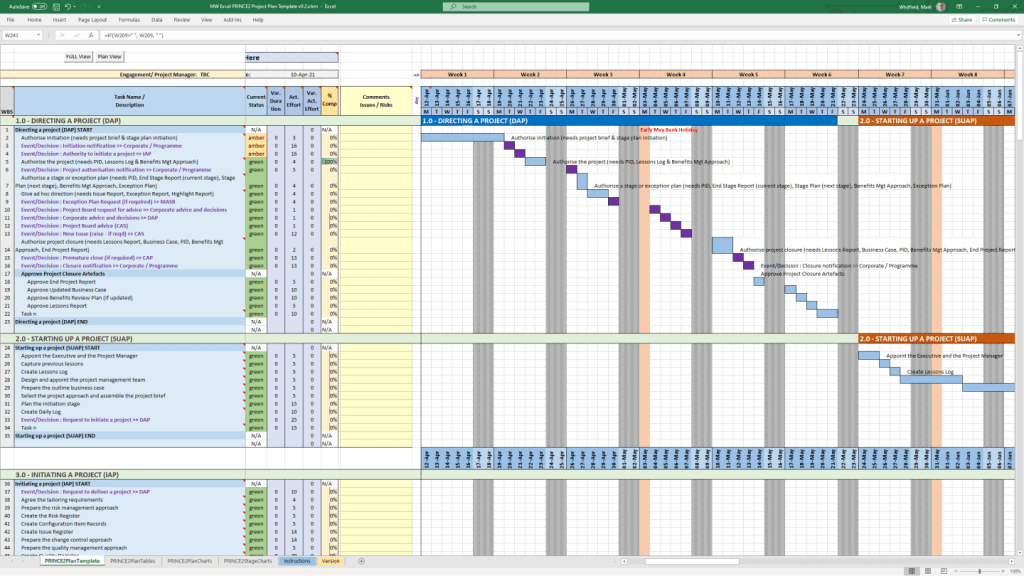
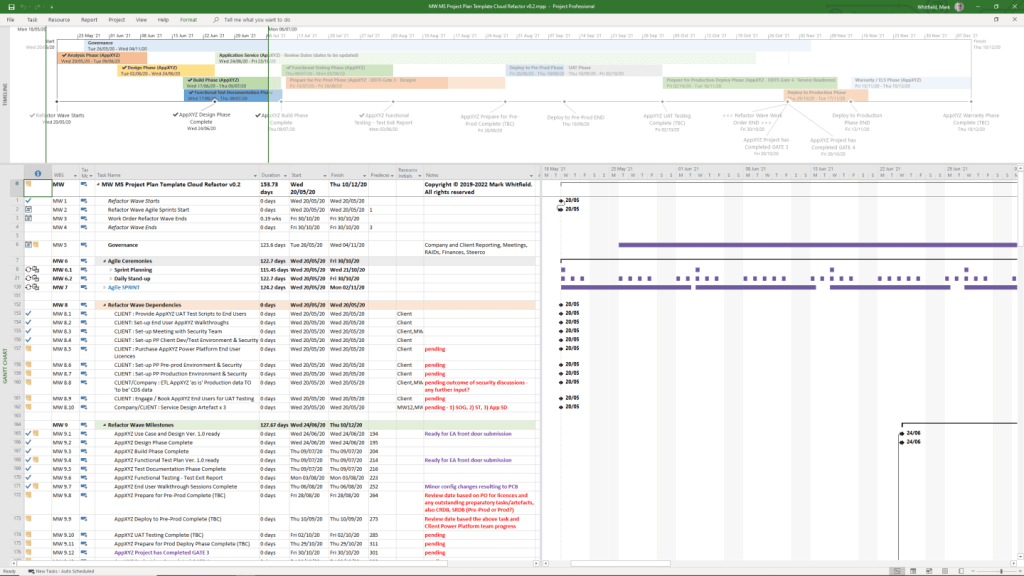
Mark Whitfield’s project management (PM) template collection is a comprehensive professional toolkit containing over 200 editable templates. Designed for both Agile Scrum and PRINCE2/Waterfall delivery, the set is built on over 24 years of real-world experience and is available for purchase on his official website and Etsy.
Core Planning & Tracking Templates
Detailed Project Plans: Comprehensive Microsoft Project (MPP) and Excel plans mapped to the Software Development Life Cycle (SDLC).
Plan on a Page (POaP): High-level visual summaries for client presentations, provided in both Excel and PowerPoint.
RAID Log: A robust Excel tracker managing Risks, Assumptions, Issues, and Dependencies, often including tabs for Change Requests and Lessons Learned.
Financial Trackers: Detailed spreadsheets for tracking project forecasts, actuals, variance, and resource costing.
RACI Matrix: Essential for defining roles (Responsible, Accountable, Consulted, Informed) within the project team.
Methodology-Specific Artifacts
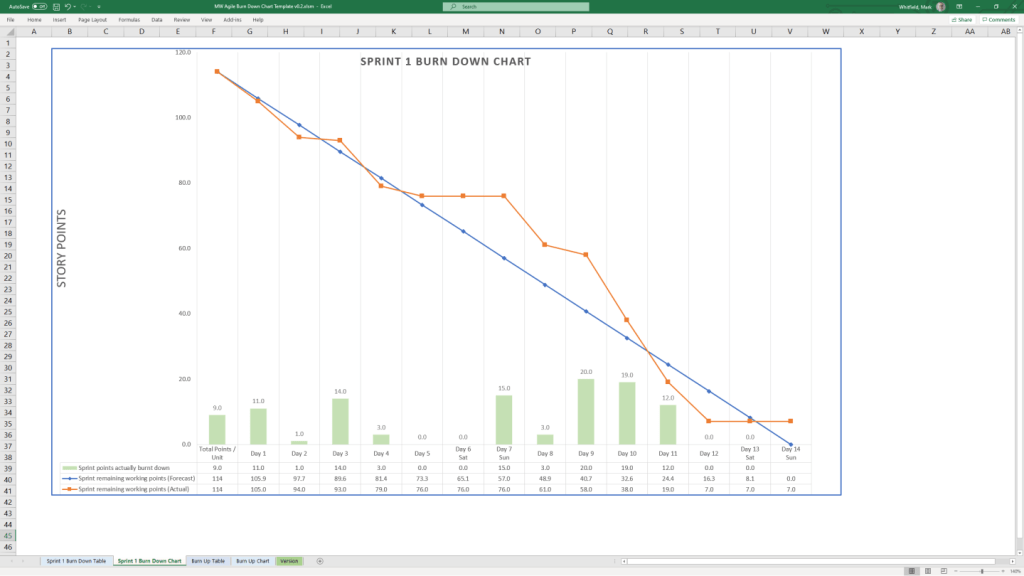
Agile Scrum: Includes burn-down and burn-up charts, sprint planning logs, and templates for daily stand-ups and retrospectives.
PRINCE2/Waterfall: Tailored plans for 7th Edition standards, including project mandates, transition plans, and close-out checklists.
Reporting & Documentation
Status Reports: Weekly and monthly templates in Word and PowerPoint to communicate project health to stakeholders.
Walkthrough Guides: The ZIP package includes Microsoft Word documents explaining how to use and customise each major template.