AI Projects and Methodologies for Managing AI Projects

Artificial intelligence (AI) is transforming project management through two distinct but related paths: the use of AI-powered tools to manage general projects and the specialized methodologies required to manage AI development itself

1. Methodologies for Managing AI Projects

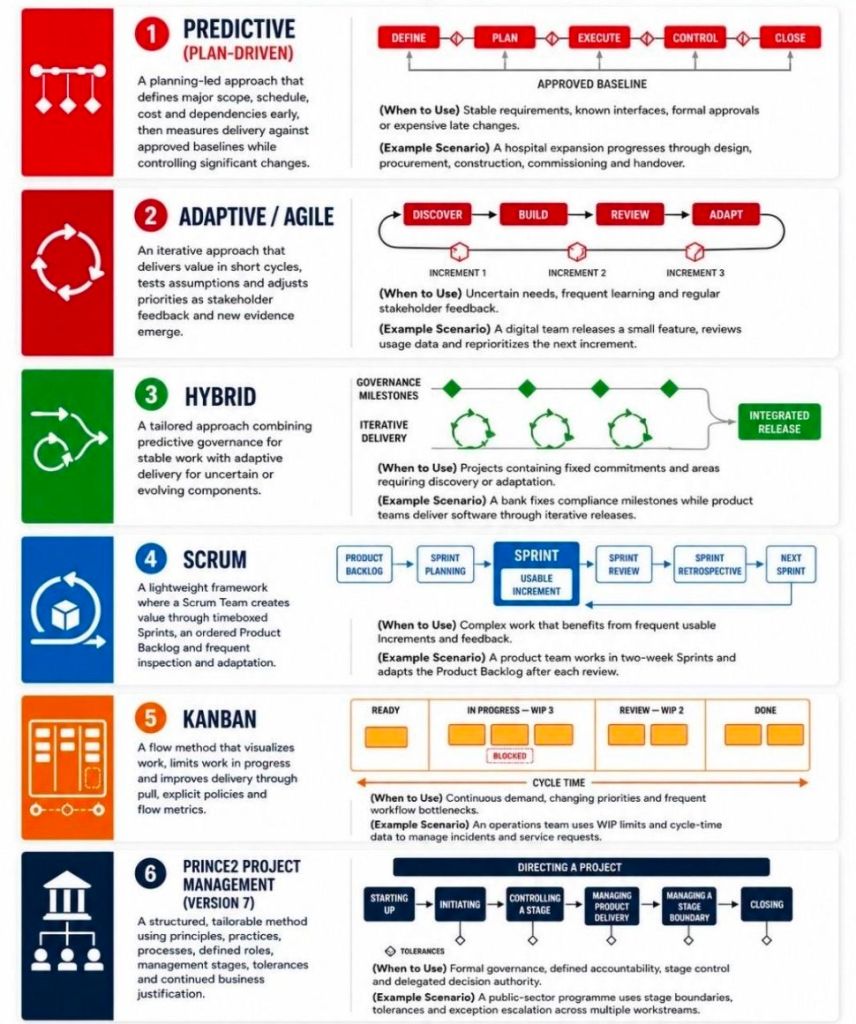
Traditional software development methods (like Waterfall) often fail for AI because these projects are experimental and non-linear. Specialized frameworks have emerged to handle the “data-first” nature of AI: 

  • CPMAI (Cognitive Project Management for AI): A leading methodology that combines Agile principles with data-centric phases: Business Understanding, Data Understanding, Data Preparation, Model Development, Model Evaluation, and Model Operationalization.
  • Agile-AI Hybrid: Adapts standard Agile by using “short-boxed” iterations for model training and allowing for a “flexible scope” because model performance is unpredictable until tested.
  • Data Driven Scrum: A variation of Scrum that prioritizes work based on data availability and experimental results rather than just feature backlogs.
  • MLOps (Machine Learning Operations): An operational framework focused on the continuous integration, deployment, and monitoring of models to prevent “model drift” after a project officially “ends”. 

2. AI-Augmented Project Management (The “AI Copilot”)

For non-AI projects, AI acts as an intelligent assistant to automate administrative tasks and provide predictive insights. 

3. Implementation Strategy

Experts recommend a phased approach to integrating AI into management workflows: 

  1. Assess Inefficiencies: Identify repetitive tasks (e.g., status reporting) that can be automated first.
  2. Data Governance: Ensure project data is clean and centralized; AI is only as good as the data it consumes (“Garbage In, Garbage Out”).
  3. Human-in-the-Loop: Use AI for data-heavy lifting, but retain human judgment for high-stakes leadership, ethics, and stakeholder empathy.

AI Projects and Methodologies for Managing AI Projects

AI history of artificial intelligence by era

The history of artificial intelligence is defined by cycles of extreme optimism followed by “winters” of reduced funding and interest. It has evolved from a theoretical branch of mathematics into a pervasive modern technology. 

The Foundations (Pre-1950)

Before AI was a formal field, it existed in science fiction and early mechanical concepts. 

  • 1921: The term “robot” is coined by Karel Čapek in the play Rossum’s Universal Robots.
  • 1943: Warren McCulloch and Walter Pitts publish the first mathematical model of a neural network.
  • 1949: Edmund Berkeley’s book Giant Brains proposes that machines can think. 

The Birth of AI (1950–1956)

This era shifted AI from mythology to a serious academic discipline. 

  • 1950Alan Turing publishes “Computing Machinery and Intelligence,” introducing the Turing Test to measure machine intelligence.
  • 1952Arthur Samuel creates the first self-learning checkers program.
  • 1955-1956John McCarthy coins the term “Artificial Intelligence” during the proposal for the Dartmouth Workshop, which officially launched the field. 

The Golden Years & First AI Winter (1957–1979) 

Initial successes led to over-promising and a subsequent crash. 

  • 1958Frank Rosenblatt develops the Perceptron, the foundation for modern neural networks.
  • 1966Joseph Weizenbaum creates ELIZA, the first “chatterbot”.
  • 1973-1974: The Lighthill Report in the UK and subsequent funding cuts by DARPA lead to the First AI Winter due to limited computing power and unmet expectations.

The Expert Systems Boom & Second Winter (1980–1993)

AI found commercial success through specialized knowledge bases before another decline. 

  • 1980XCON (expert configurer) becomes the first commercially successful expert system, saving Digital Equipment Corporation millions.
  • 1981: Japan launches the Fifth Generation Computer project with $850 million to create human-level reasoning.
  • 1987-1993: The Second AI Winter occurs as specialized AI hardware (Lisp machines) becomes obsolete compared to cheaper personal computers from Apple and IBM. 

The Age of Agents & Narrow AI (1993–2011) 

AI began achieving superhuman performance in specific, “narrow” tasks. 

  • 1997: IBM’s Deep Blue defeats world chess champion Garry Kasparov.
  • 2002: iRobot releases the Roomba, bringing autonomous AI into the home.
  • 2011: IBM’s Watson wins Jeopardy! against human champions, and Apple releases Siri

The Deep Learning Revolution (2012–2021)

A massive surge in data and GPU power transformed the field. 

  • 2012AlexNet wins the ImageNet competition, proving the power of deep convolutional neural networks.
  • 2016: Google DeepMind’s AlphaGo defeats world Go champion Lee Sedol.
  • 2017: Researchers at Google propose the Transformer architecture, which becomes the backbone of modern large language models. 

The Generative AI Boom (2022–Present)

AI has entered the mainstream, moving toward Agentic AI that can plan and act autonomously. 

  • 2022: OpenAI releases ChatGPT, sparking global interest in generative AI.
  • 2023-2024: Focus shifts toward Multimodal AI (images, video, and text) and Agentic AI capable of completing complex workflows across multiple tools. 

AI history of artificial intelligence by era

Artificial Intelligence AI Terms Explained, an Overview

AI Artificial Intelligence Terms Explained, an Overview

Project Management KPIs to track

Project Key Performance Indicators KPIs
Key Performance Indicators KPI overview

Project Management KPIs to track

Roger Federer Overview and Detailed Timeline History by Era

Roger Federer is a Swiss former professional tennis player who is widely regarded as one of the greatest of all time, having won 20 Grand Slam singles titles and held the world No. 1 ranking for 310 weeks. Known for his effortless playing style and versatile shot-making, he revolutionized the sport during a career that spanned over two decades from 1998 to 2022. 

Won by Roger Federer for the fifth consecutive time, a feat only before achieved in the Open Era by Björn Borg.

Career Overview Statistics

Won by Roger Federer for the 5th time

According to ATP Tour statistics, Federer concluded his career with the following major achievements:

Federer concluded his career with the following major achievements

Detailed Timeline by Era

1. Early Career & Breakthrough (1998–2002)

Federer transitioned from a dominant junior—finishing 1998 as the world No. 1 junior—to a rising star on the ATP Tour. 

  • 1998: Turned professional; won Wimbledon junior singles and doubles titles.
  • 1999: Youngest player to finish the year in the Top 100 (ranked 64th).
  • 2001: Won first ATP title in Milan; defeated 7-time champion Pete Sampras at Wimbledon to reach his first major quarter-final.
  • 2002: Won first Masters title in Hamburg and entered the world Top 10 for the first time. 

2. Peak Dominance Era (2003–2007) 

This period marked Federer’s absolute peak, where he reached all four Grand Slam finals in a single calendar year twice (2006, 2007). 

  • 2003: Won first Grand Slam title at Wimbledon and his first Year-End Championship.
  • 2004: Won three of four majors (Australian Open, Wimbledon, US Open) and became world No. 1 on 2 February.
  • 2006: Career-best season with a 92–5 record, reaching all four major finals and winning three.
  • 2007: Defended three major titles and beat Rafael Nadal to win his fifth consecutive Wimbledon

3. The Rivalry Era & Career Slam (2008–2012)

Federer faced intense competition from the emergence of the “Big Four” (Nadal, Djokovic, and Murray). 

  • 2008: Battled mononucleosis; won fifth consecutive US Open; won Olympic Gold in doubles with Stan Wawrinka.
  • 2009: Won first French Open to complete the Career Grand Slam; passed Sampras’ record with a 15th major at Wimbledon.
  • 2010: Won fourth Australian Open.
  • 2012: Won 7th Wimbledon title and Olympic Silver in singles; reclaimed world No. 1 to break the record for total weeks at the top. 

4. Injury Struggles & Renaissance (2013–2019)

After several years plagued by back and knee injuries, Federer staged a remarkable late-career comeback. 

  • 2014: Led Switzerland to its first Davis Cup title.
  • 2016: Underwent first knee surgery; missed the second half of the season for recovery.
  • 2017: Returned after a 6-month hiatus to win the Australian Open (defeating Nadal) and a record 8th Wimbledon title.
  • 2018: Won 20th Grand Slam at the Australian Open; became the oldest No. 1 in history at age 36.
  • 2019: Won 100th career title in Dubai; reached 12th Wimbledon final. 

5. Final Years & Retirement (2020–2022)

Persistent knee issues eventually forced the conclusion of his competitive career. 

  • 2020–21: Underwent multiple knee surgeries; reached Wimbledon quarter-finals in 2021 as the oldest man in the Open Era to do so.
  • 2022: Officially retired on 23 September at the Laver Cup in London, playing his final match in doubles alongside long-time rival and friend Rafael Nadal.

Roger Federer Overview and Detailed Timeline History by Era

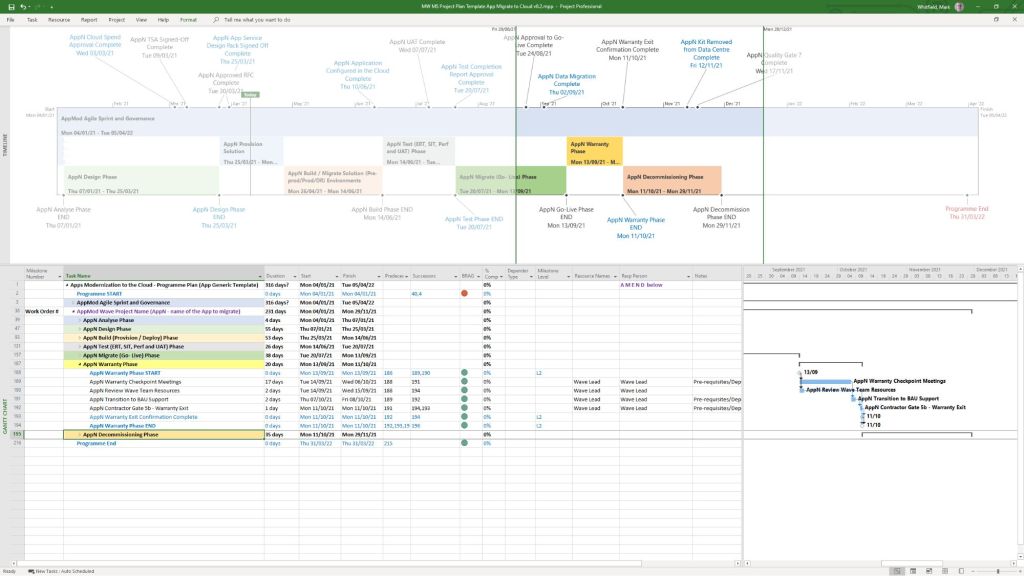
Mark Whitfield HP NonStop Tandem experience & Project Management Templates

Mark Whitfield is an experienced IT Project Manager and software developer who has spent over 22 years specialising in HP NonStop (formerly Tandem) systems. He is currently an Engagement Project Manager at Capgemini

Career & Expertise

Whitfield’s career in HP NonStop began in 1990 and includes significant technical and leadership roles across the financial and technology sectors: 

  • Software Development: Early in his career, he worked as a programmer for The Software Partnership (later Deluxe Data/FIS), focusing on electronic banking software like sp/ARCHITECT on Tandem mainframes.
  • Insider Technologies (1995–2013): He spent 18 years at Insider Technologies as a Senior Development Engineer and Project Manager. His work involved:
    • Developing monitoring and diagnostic software such as Reflex 80:20Reflex ONE24, and RTLX (Real-Time Log Extraction) for payment systems.
    • Managing the first HP OpenView Operations Smart Plug-In certification for the NonStop platform.
    • Designing XPERT24, a performance tracking product for ACI’s XPNET layer.
  • Capgemini (2016–Present): As an Engagement Project Manager, he has led digital projects for major clients in the automotive, government, and aerospace sectors, including a cloud migration for UK Government applications. 

Technical Contributions

  • Publications: He has authored articles for globally published journals like The Connection (2013), discussing topics such as querying terabytes of legacy transaction log data from NonStop mainframes.
  • Project History: He has managed high-value projects, including a £5 million initiative to migrate legacy HP NonStop software to AIX-based technologies for a large UK retail bank.
  • Training: He is trained in various NonStop-specific technologies, including TAL (Transaction Application Language), COBOL85PATHWAY, and NonStop SQL

Whitfield also maintains a professional website, mark-whitfield.com, where he provides project management templates and resources related to HP NonStop and Tandem systems. 

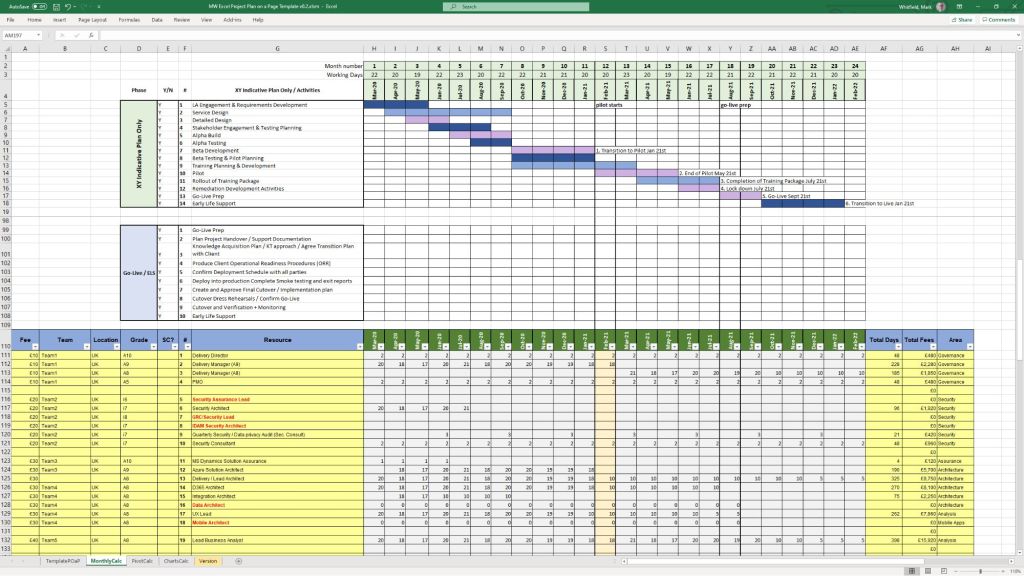
Mark Whitfield provides a comprehensive bundle of over 200 editable project management templates designed for Agile, Waterfall, and PRINCE2 methodologies. These templates are based on over 30 years of project delivery experience and are available for purchase via his official website or Etsy shop. 

Key Template Categories

The bundle includes a wide variety of tools across different formats (Excel, PowerPoint, Word, and MS Project): 

  • Planning & Scheduling:
    • Plan on a Page (POaP): Over 30 PowerPoint slide examples for executive-level summaries.
    • Detailed Project Plans: MS Project (MPP) and Excel templates for SDLC, PRINCE2 7th Edition, and Agile Scrum projects.
    • Gantt Charts: Built-in tracking views for both MS Project and Excel.
  • Tracking & Control:
    • RAID Logs: Comprehensive logs for tracking Risks, Actions, Issues, and Dependencies, plus additional tabs for Change Requests and Lessons Learned.
    • RACI Matrix: Templates to define project roles and responsibilities (Responsible, Accountable, Consulted, Informed).
    • Finance Trackers: Tools for internal and external forecast vs. actual costs, including margin and variance tracking.
  • Agile Specific Tools:
    • Burn Down & Burn Up Charts: Excel-based alternatives when tools like Jira are unavailable.
    • Agile Story Dependency Tracking: Specifically for managing dependencies between agile stories and external suppliers.
  • Reporting & Governance:
    • Status Reports: Weekly and monthly templates in Word and PowerPoint formats.
    • Stakeholder Analysis: Power/interest mapping and engagement plan templates.
    • Benefits Realisation: Plans to track project outcomes against initial business goals. 

Purchase Benefits

  • Lifetime Upgrades: Once purchased, all future additions and updates to the template package are provided for free.
  • Compatibility: Templates are designed for Microsoft Office 365 but also include Excel versions compatible with earlier software.
  • Support: The package typically includes walkthrough Word documents to guide users on how to use each major template.

Mark Whitfield HP NonStop Tandem experience & Project Management Templates

Key Skills for the Project Manager

Key Skills for the Project Manager

An amble around Manchester, 17th March 2026

Ghandi, Manchester City Centre
Abraham Lincoln 1, Manchester City centre
Abraham Lincoln 2, Manchester City centre
Midland Hotel, Manchester

An amble around Manchester, 17th March 2026

Middlebrook Retail Park, Horwich, Bolton Detailed Timeline by Era

Middlebrook Retail Park, located in Horwich, Bolton, is one of the largest integrated retail and leisure destinations in the UK. Covering approximately 200 acres at Junction 6 of the M61, it serves as a mixed-use complex combining over 60 high-street stores with major leisure facilities, two hotels, and the home of Bolton Wanderers F.C.. 

Middlebrook Retail Park, Horwich, Bolton Detailed Timeline by Era

Historical Timeline of Middlebrook

Pre-Development Era (16th Century – 1994) 

  • 16th Century: The site was originally home to Sefton Fold Farm, a three-bay timber-framed farmhouse.
  • Late Medieval: Archaeological digs later revealed a moated site and pottery from this era.
  • Pre-1994: Much of the land consisted of open fields and the former Red Moss tip. 

Inception & Construction Era (1994 – 1997)

  • 1994: Plans for the ambitious scheme were first announced, including a 25,000-seater stadium and 6,000-seater indoor arena.
  • 1995: Outline planning applications for the football stadium were approved in July.
  • 1996: Orbit Developments (part of The Emerson Group) began physical construction. By Christmas, many key buildings were already constructed.
  • 1997: The Reebok Stadium (now Toughsheet Community Stadium) was inaugurated on 1 September with a match between Bolton and Everton.
  • 1997 (Summer): Initial food outlets like McDonald’sPizza Hut, and KFC opened for business. 

Establishment & Expansion Era (1998 – 2005)

  • 1998: The first retail businesses officially began operating.
  • 2001: Bolton Arena (USN Bolton Arena) opened in the spring after winning a development grant.
  • 2001: Annual visitor numbers reached 12.5 million for the first time.
  • 2002: The site hosted events for the Manchester Commonwealth Games at the sports arena.
  • 2005: Marks & Spencer (M&S) secured planning permission to occupy a vacant store, marking a significant shift toward major non-food retail. 

Modern Maturity Era (2006 – Present)

  • 2006: A time capsule was buried by schoolchildren to celebrate a decade of development.
  • 2006 (October): Several high-profile stores opened, including HMV and Clarks.
  • 2020s: The park continues to house over 62 high-street brands including ASDA SupercentreVue Cinema, and Hollywood Bowl.
  • Present: It remains a top-ranked UK retail park, attracting over 910,000 shoppers per month

Middlebrook Retail Park, Horwich, Bolton Detailed Timeline by Era

Middlebrook Retail Park, Horwich, Bolton Detailed Timeline by Era

Project Management mindset, 8 thought processes

Project Management mindset, 8 thought processes

Llandudno Pier Overview and Historical Timeline by Era

Llandudno Pier, often called the “Queen of Welsh Piers”, is the longest pier in Wales at 2,295 feet (700 metres). It is a Grade II* listed structure renowned for its Victorian and Edwardian elegance, featuring ornate ironwork and classic kiosks. 

Llandudno Pier, often called the “Queen of Welsh Piers”, is the longest pier in Wales

Historical Timeline by Era

Early Origins (The Pre-Pier Era)

  • 1858: A short wooden pier (242 ft) was built by the St George’s Harbour and Railway Company to export limestone.
  • 1859: This original structure was severely damaged by the “Royal Charter Storm”.
  • 1860–1875: Though repaired, the wooden pier was too short for steamships except at high tide. 

Victorian Era: Construction and Growth

  • 1875: The Llandudno Pier Company was formed to build a new, modern structure.
  • 1876: Construction began in June/July. The first pile was driven on 16 September 1876.
  • 1877: The pier officially opened on 1 August, initially measuring 1,234 feet.
  • 1878: Construction was fully completed; the first steamboat (Prince Arthur) landed in May.
  • 1884: A landward extension was added, bringing the pier to its current length of 2,295 feet.
  • 1886: The Pier Pavilion opened on 16 September as a 2,000-seat theatre and concert hall.
  • 1887: Renowned conductor Jules Rivière took charge of the pier’s orchestra, which eventually grew to symphony proportions.
  • 1891: A new landing stage was added to accommodate increased steamship traffic. 

Edwardian and Mid-20th Century

  • 1905: A pier-head pavilion was constructed.
  • 1910: Extensive improvements were made, including widening most of the pier.
  • 1938: Major alterations were carried out on the landing stage.
  • 1968: The pier was purchased by the Trust House Forte Group.
  • 1969: The landing stage was totally rebuilt in concrete and steel to handle large Isle of Man steamers. 

Modern Era: Challenges and Restoration

  • 1983: The pier became part of the First Leisure Corporation.
  • 1984: The Pier Pavilion theatre closed.
  • 1994: A major fire destroyed the Pier Pavilion on 13 February, leaving only the iron supports.
  • 1998: Purchased by Leisure Parks Ltd (Trevor Hemmings) along with several other UK piers.
  • 2005: Voted “Pier of the Year” by the National Piers Society.
  • 2015: Purchased by local entrepreneur Adam Williams (Tir Prince Leisure Group) for £4.5 million.
  • 2021: Adam Williams purchased the derelict Pavilion site to protect the pier’s future.
  • 2025: Voted “Pier of the Year” for the second time following major restoration efforts. 

Llandudno Pier Overview and Historical Timeline by Era

Product and Project Management

Product and Project Management

Cost Estimating vs Cost Planning

Cost Estimating vs Cost Planning

In professional project management and construction, cost estimating and cost planning are complementary processes that occur at different stages to ensure a project remains financially viable

1. Cost Estimating: “What will it cost?”

Cost estimating is a technical assessment used to predict the expenditures for a project. 

  • Early Stages: Estimates might be “rough orders of magnitude” based on square footage or historical data (e.g., cost per hotel room).
  • Later Stages: Estimates become precise “tender figures” used by contractors to bid on work, factoring in current market rates for labour and materials.
  • Function: It answers the question: “Is this specific plan affordable?”. 

2. Cost Planning: “How do we stay on budget?”

Cost planning is a strategic framework that manages a project’s financial health from start to finish. 

  • Iterative Process: It is a “living document” that is updated as the project moves from concept to detailed design.
  • Allocation: It breaks down the total budget into “elemental” targets (e.g., spending £X on the foundation and £Y on finishes).
  • Control: If an estimate for one part of the project exceeds its target, the cost plan guides the team to adjust the design or find savings elsewhere to keep the overall project on track. 

Standard Professional Guidance

The Royal Institution of Chartered Surveyors (RICS) provides the New Rules of Measurement (NRM 1), which standardises how these processes work together: 

  1. Order of Cost Estimate: Establishing the initial viability of a project.
  2. Elemental Cost Plan: Breaking the estimate down into functional parts.
  3. Cost Checking: Continually comparing design changes against the cost plan to prevent overspending.
Cost Estimating vs Cost Planning

Benefits Realization Process is a structured framework

Benefits Realization Process

The benefits realization process is a structured framework used to ensure that projects and programmes deliver the tangible value and strategic outcomes intended by an organisation. Unlike traditional project management, which focuses on outputs (deliverables like a new software), benefits realization focuses on outcomes (the actual value derived, such as a 10% increase in efficiency). 

Core Stages of the Process

While various frameworks exist, most follow three or four primary stages:

  • 1. Identification: Defining the expected benefits at the start of a project. This involves aligning benefits with the organisation’s strategic goals and identifying “benefit owners” who will be accountable for their delivery.
  • 2. Planning: Developing a Benefits Realization Plan that establishes metrics, Key Performance Indicators (KPIs), and timelines for when benefits will be achieved.
  • 3. Execution & Delivery: Monitoring and managing the project to ensure it stays on track to deliver the planned benefits. This includes managing risks that could negatively impact benefit delivery.
  • 4. Sustainment & Review: Occurring post-project completion, this stage focuses on ensuring benefits are fully realized and sustained over the long term. A final review is conducted to compare actual results against the original business case

Key Components and Tools

  • Benefits Register: A central document used to track and manage all identified benefits, their owners, and their current status.
  • Benefit Profiles: Detailed records for individual benefits, describing what they are, how they will be measured, and who is responsible for them.
  • Benefit Dependency Map (BDM): A visual tool showing the links between project outputs, organizational changes, and final strategic objectives.
  • Benefit Owners: Individuals (usually from the business side) who are accountable for ensuring a specific benefit is achieved and sustained after the project team disbands. 

Why It Matters

Organizations that mature in benefits realization management are significantly more likely to meet their original goals and business intent. It bridges the gap between high-level strategy and tactical project execution, ensuring that investments translate into actual business value

Benefits Realization Process is a structured framework

Project Quality Plan PQP in QA/QC Overview

Project Quality Plan PQP in QA/QC Overview

The primary purpose of a Project Quality Plan (PQP) is to define the standards, tools, and processes required to ensure a project’s deliverables are “fit for purpose” and meet all stakeholder expectations. It serves as a strategic roadmap for the project team to maintain consistent quality throughout the project lifecycle rather than treating it as an afterthought. 

Core Objectives

A PQP is designed to achieve several critical goals: 

  • Define “Quality”: Translates vague stakeholder needs into measurable criteria and specific benchmarks.
  • Prevent Defects: Establishes Quality Assurance (QA) processes to proactively “build in” quality from the start, reducing the risk of errors.
  • Detect and Correct Issues: Outlines Quality Control (QC) activities, such as testing and inspections, to identify and fix defects before they reach the customer.
  • Clarify Accountability: Assigns specific roles and responsibilities so every team member knows who is responsible for performing, checking, and approving work.
  • Ensure Compliance: Guarantees the project adheres to relevant internal policies, legal regulations, and industry standards like ISO 9001. 

Strategic Benefits

Implementing a structured quality plan provides tangible advantages for project management: 

  • Reduced Costs and Rework: By catching errors early, the team avoids expensive last-minute fixes and wasted resources.
  • Improved Efficiency: Standardised workflows and clear metrics allow the team to focus on production rather than constant troubleshooting.
  • Increased Stakeholder Trust: Providing objective evidence through audits and reports gives sponsors and clients confidence in the final outcome.
  • Continuous Improvement: The plan often includes feedback loops and lessons-learned processes to refine and enhance quality for future project phases.

Project Quality Plan PQP in QA/QC Overview

Bangor Garth Pier into Menai Strait toward Anglesey, North Wales, UK

Bangor Garth Pier is a Grade II* listed Victorian landmark in North Wales, recognized as the second-longest pier in Wales and the ninth-longest in the British Isles. Stretching 1,500 feet (460m) into the Menai Strait, it is celebrated for its well-preserved architectural elegance and panoramic views of the Eryri (Snowdonia) mountains and Anglesey. 

Bangor Pier taken 15th March, 2026

Key Highlights

  • Award-Winning Heritage: It was named Pier of the Year 2022 by the National Piers Society for its successful community-led restoration and original Victorian charm.
  • Victorian Kiosks: The deck features a series of distinctive octagonal, onion-domed kiosks that house local independent businesses, including sweet shops, artisan crafts, and a gallery.
  • The Pavilion: At the pier-head stands a large domed pavilion housing a family-friendly café famous for its tea, coffee, and homemade scones.
  • Leisure & Wildlife: The pier is a popular spot for crabbing and fishing. Visitors can also spot local wildlife, including a colony of black guillemots often referred to as “Bangor Penguins”.

Bangor’s Garth Pier is a Grade II* listed structure stretching 1,500 feet (460m) into the Menai Strait toward Anglesey. It is the second-longest pier in Wales and is renowned for its well-preserved Victorian architecture, featuring original kiosks and ornamental ironwork. Unlike many other piers, it was never heavily modified with large theatres, retaining its elegant, traditional character. 

Bangor Pier, March 2026

Comprehensive Historical Timeline

The Early Origins (Pre-1896)

  • 1292: Records mention the Porthesgob ferry operated by the Bishop of Bangor, establishing the area as a key crossing point to Anglesey.
  • 1826: The principal crossing shifted to the new Menai Bridge, though the local Garth ferry continued operating for many years.
  • 1893: A Parliamentary Bill was passed to authorize the construction of a permanent pier. 

The Victorian Boom (1896–1914)

  • 1896 (May 14): Lord Penrhyn officially opened the pier. It was designed by JJ Webster and cost approximately £17,000.
  • 1896–1914: The pier thrived as a landing stage for pleasure steamers from Liverpool, Blackpool, and the Isle of Man. A 3-foot gauge tramway ran its length to transport passenger luggage.
  • 1914: The cargo ship SS Christiana broke free and crashed into the pier, severing a section of the structure. The baggage railway was subsequently removed. 

Transition & Decline (1915–1971)

  • 1921: Permanent repairs for the 1914 ship damage finally resumed following the conclusion of World War I.
  • 1927: Professor Phillip White established a small marine laboratory in one of the pier kiosks, eventually leading to Bangor University’s renowned marine science department.
  • 1939–1945: The pier remained a local landmark through WWII; historical photos show servicemen and locals using the structure.
  • 1960s: Lack of investment led to severe structural deterioration.
  • 1971: The pier was officially closed to the public on safety grounds. 

Threat of Demolition & Rescue (1974–1988) 

  • 1974: Ownership passed to Arfon Borough Council, which proposed demolishing the structure.
  • 1975–1978: Following public outcry, Bangor City Council purchased the pier for a symbolic fee of 1p.
  • 1982: A major six-year restoration project began, funded by the National Heritage Memorial Fund and the Manpower Services Commission.
  • 1983: The ongoing project won the Prince of Wales Award.
  • 1988 (May 7): The Marquess of Anglesey officially reopened the pier after a £3 million restoration. 

The Modern Era (2011–Present)

  • 2011: Surveys revealed new structural issues, specifically with the sub-structure.
  • 2017: A new £1 million restoration programme commenced to strengthen the structure and replace handrails.
  • 2021: The pier celebrated its 125th anniversary, and the Friends of Bangor Garth Pier volunteer group took over a kiosk to support further fundraising.
  • 2022: The National Piers Society named it Pier of the Year.
  • 2024: The pier head shelter, absent since 2018, began reconstruction in-situ.
  • 2026: The city plans to hold major celebrations for the pier’s 130th anniversary

Bangor Garth Pier into Menai Strait toward Anglesey, North Wales, UK

Llandudno Town Map, North Wales, UK, 15th March 2026

Llandudno Town Map, North Wales, UK

Technical Program Manager Roadmap

Technical Program Manager Roadmap

Agile Scrum Methodology Summary Breakdown Overview

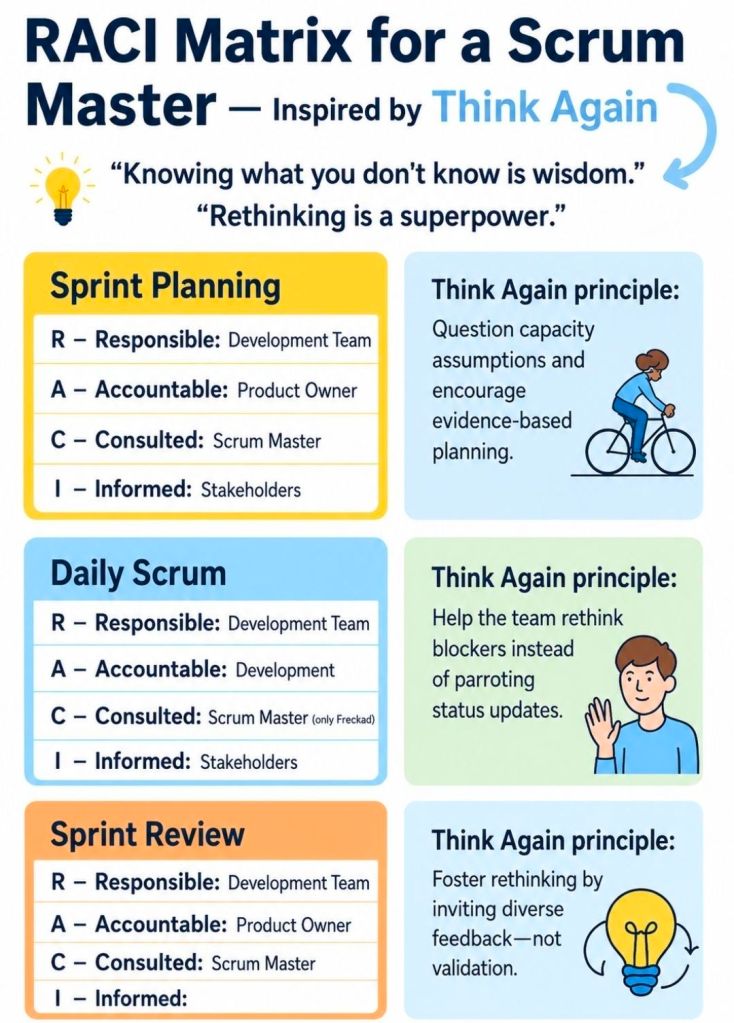
Scrum is lightweight framework within the broader Agile methodology used to manage complex work through iterative, incremental delivery. It organizes work into fixed-length cycles called sprints, typically lasting two to four weeks, to deliver a usable “increment” of value at the end of each cycle. 

Core Components (The 3-5-3 Structure)

The framework is built around three accountabilities, five events, and three artifacts. 

1. Three Accountabilities (Roles)

  • Product Owner: Represents the customer and stakeholders. They manage the Product Backlog and prioritize work to maximize the value delivered by the team.
  • Scrum Master: A servant leader who coaches the team on Scrum theory and removes impediments that block progress.
  • Developers: A cross-functional, self-managing team that does the actual work to create the product increment. 

2. Five Events (Ceremonies)

  • The Sprint: The container for all other events; a time-boxed period where work is performed.
  • Sprint Planning: The team defines what will be delivered in the sprint and how the work will be achieved.
  • Daily Scrum: A 15-minute daily check-in for developers to synchronize progress and plan the next 24 hours.
  • Sprint Review: Held at the end of the sprint to inspect the outcome with stakeholders and adapt the Product Backlog.
  • Sprint Retrospective: An internal team meeting to reflect on the process and identify improvements for the next sprint. 

3. Three Artifacts

  • Product Backlog: An ordered, evolving list of everything needed for the product.
  • Sprint Backlog: The subset of product backlog items selected for the current sprint, plus a plan for delivering them.
  • Increment: The concrete sum of all completed backlog items that meet the Definition of Done. 

The Three Pillars of Empiricism

Scrum is founded on empirical process control, which relies on: 

  1. Transparency: The process and work must be visible to everyone involved.
  2. Inspection: Frequent checks of artifacts and progress to detect variances.
  3. Adaptation: Adjusting the process or product if an inspection reveals unacceptable deviations. 

Key Values

Success with Scrum depends on the team’s commitment to five core values: Commitment, Courage, Focus, Openness, and Respect

Agile Scrum Methodology Summary Breakdown Overview

PRINCE2 Management Stages Overview

In PRINCE2, a project is managed through a series of management stages, which are discrete sections of a project that the Project Board authorises at specific decision points. Every PRINCE2 project must have at least two stages: an initiation stage and at least one further delivery stage

PRINCE2 Management Stages Overview

A detailed breakdown of these stages, aligned with the seven core PRINCE2 processes, is provided below. 

1. Starting Up a Project (SU)

This is a pre-project process designed to determine if the project is viable and worthwhile before committing significant resources. 

  • Key Activities:
    • Appointing the Executive and Project Manager.
    • Developing an Outline Business Case.
    • Creating a Project Brief which defines objectives and scope.
    • Planning the initiation stage itself. 

2. Initiating a Project (IP)

This represents the first management stage of the project. It establishes the firm foundation for the project’s execution. 

  • Key Activities:
    • Creating the Project Initiation Documentation (PID), which includes the full Business Case, Project Plan, and management strategies for risk, quality, and communication.
    • Setting up project controls and refining the project approach.
    • Securing formal approval from the Project Board to proceed. 

3. Directing a Project (DP)

This is an ongoing process that spans the entire project lifecycle, focusing on high-level decision-making by the Project Board. 

  • Key Activities:
    • Authorising the project to start and approving each subsequent stage.
    • Giving ad hoc direction and advice to the Project Manager.
    • Making the final “stop/proceed” decisions at stage boundaries.

4. Controlling a Stage (CS)

This covers the day-to-day management of each delivery stage by the Project Manager. 

  • Key Activities:
    • Assigning work to teams via Work Packages.
    • Monitoring progress and managing risks and issues.
    • Reporting status to the Project Board through Highlight Reports

5. Managing Product Delivery (MP)

This process manages the link between the Project Manager and the Team Managers who are actually building the products

  • Key Activities:
    • Teams accepting and executing Work Packages.
    • Ensuring work meets the specified quality standards.
    • Delivering completed and tested products back to the Project Manager. 

6. Managing a Stage Boundary (SB)

This occurs at the end of each stage (except the final one) to help the Project Board decide whether to continue. 

  • Key Activities:
    • Reporting on the performance of the current stage.
    • Creating a detailed Stage Plan for the next stage.
    • Updating the overall Project Plan and Business Case with the latest information. 

7. Closing a Project (CP)

This is the final part of the last management stage, ensuring the project is shut down in a controlled manner. 

  • Key Activities:
    • Confirming all products have been accepted by the customer.
    • Capturing Lessons Learned for future projects.
    • Preparing an End Project Report to evaluate performance against the original plan.

PRINCE2 Management Stages Overview