Mark Whitfield – projects timeline history from 1990

Mark Whitfield is an SC-cleared Senior IT Project Manager with over 30 years of experience delivering high-availability financial, cloud, and digital transformation projects. Over his career, he has transitioned from deep technical engineering on HPE NonStop (Tandem) mainframe systems to leading major corporate and public sector Agile and Waterfall software rollouts.
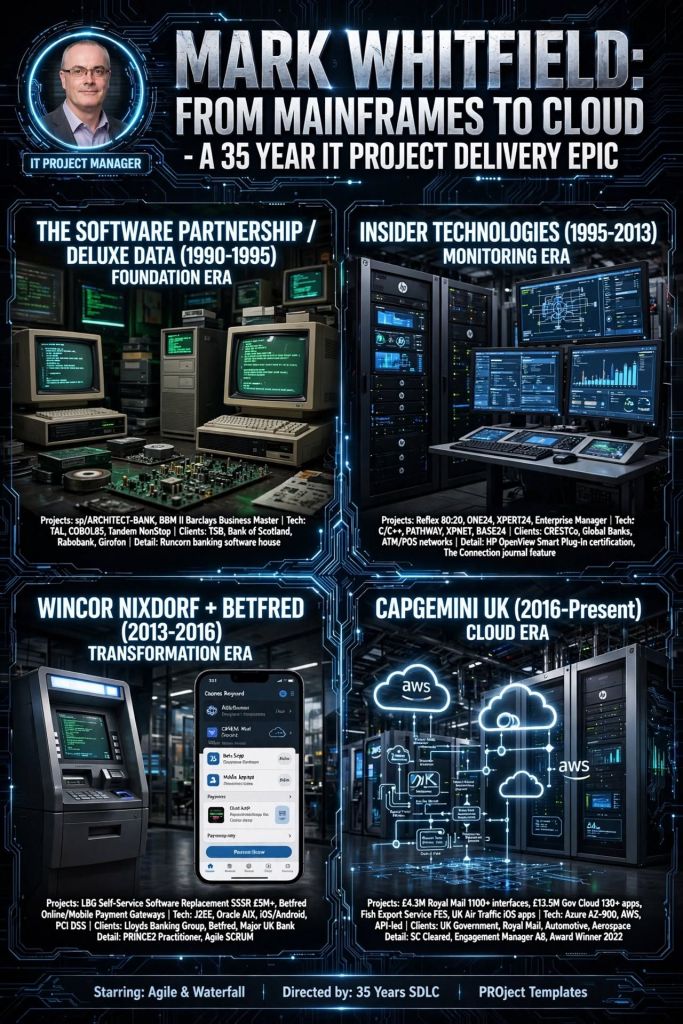
A comprehensive, year-by-year timeline breakdown of his project history and clients since 1990 is outlined below.

💻 The Technical Era (1990–1995)

During this period, Whitfield worked as a Programmer and Lead Analyst for The Software Partnership (acquired by Deluxe Data in 1994). He focused on electronic banking software (sp/ARCHITECT-BANK) on Tandem Mainframe Computers.

  • 1990–1992: Barclays Bank – Placed on-site at Knutsford, Cheshire to design and code software for the high-profile Barclays Business Master II (BBM II) electronic desktop banking project.
  • 1992–1993: Girofon (Denmark) – Developed a touch-tone phone banking suite. This allowed clients to use automated voice/menu-driven systems via a Periphonics VRAM device to fetch live balances from back-end mainframes.
  • 1993–1994: TSB & Bank of Scotland – Conducted early-era digital investigations, logic design, and mainframe coding for inter-account desktop money transfers.
  • 1994–1995: Rabobank – Headed software optimization, custom electronic coding patches, and on-site deployment validation for international operations.

🛡️ Monitoring & Infrastructure Era (1995–2013)

Whitfield joined Insider Technologies Limited (ITL) in Salford Quays, specializing in platform diagnostics, transaction monitoring, and financial logging systems for mission-critical infrastructure.

  • 1995–1996: Internal ITL Product R&D – Core developer on the Reflex monitoring suite (Reflex 80:20), creating platform health and diagnostic plug-in modules.
  • 1997–1998: CRESTCo (now Euroclear) – Brought in as a technical infrastructure consultant to run benchmark tests on newly released Tandem S7000 processing hardware nodes.
  • 1999–2001: Bank of England / Deutsche Bank – Deployed real-time tracking protocols utilizing ITL’s MultiBatch scheduling architectures and file monitors.
  • 2002–2003: Hewlett-Packard (HP) – Successfully managed the rigorous certification process for the first HP OpenView Operations (OVO) Smart Plug-In built for the NonStop mainframe environment.
  • 2004–2007: Alliance & Leicester (now Santander) / HSBC – Implemented transaction log extraction protocols (RTLX and Sentra) to audit automated teller machine (ATM) logs.
  • 2008–2010: Saudi Arabian Retail Bank – Acted as Project Manager overseeing the cross-border rollout of a high-volume ATM and Point-of-Sale (POS) monitoring system.
  • 2011–2013: Global Payments / Standard Chartered – Integrated transaction monitoring capabilities with external corporate frameworks such as TIVOLI and XPERT24 using ACI’s XPNET architecture.

🏦 Senior Project Management & Retail Banking (2013–2016)

This timeframe marked a total transition into senior contract project management, dealing directly with multi-million-pound programs.

  • 2013–2014: Lloyds Banking Group (LBG) – Augmented into Wincor Nixdorf as the IT Project Manager leading a £5+ million workstream. This was part of LBG’s comprehensive Self-Service Software Replacement (SSSR) initiative to modernise legacy ATM software.
  • 2014–2016: Betfred – Senior IT Project Manager inside an Agile Scrum structure. Directed cross-functional software vendors to deliver updates for mobile apps (iOS/Android), fraud detection systems, and payment gateways for their digital sportsbook platforms.

🌐 Enterprise Consulting & Cloud Transformations (2016–Present)

In January 2016, Whitfield joined global consultancy firm Capgemini as a Senior client-facing Engagement/Delivery Manager.

  • 2016–2017: Aerospace & Defence Client – Managed an enterprise-level integration project to deploy a Salesforce-driven Single Customer View (SCV) portal platform.
  • 2017–2018: Jaguar Land Rover (JLR) – Served as Project Manager for the iFAB Middleware Project, a complex 12-month architecture development program linking global manufacturing supply components.
  • 2018–2019: MuleSoft (A Salesforce Company) – Augmented directly into MuleSoft’s London headquarters as a Delivery Manager, spearheading API-led connectivity deployments via the Anypoint Platform.
  • 2019–2021: UK Government Agency (UK Gov) – Commanded a major Hybrid Cloud Migration initiative to refactor, re-host, and re-platform 130 legacy agency software applications directly to cloud servers.
  • 2022: UK Utility Sector (Welsh Water / Scottish Water) – Dual-management lead executing a £0.5 million contract to migrate an aging, on-premise document management program (EQS) onto the Microsoft Azure cloud via Enablon.
  • 2023–2026: Public Sector & Core Tooling (Current) – Managing high-value middleware and API integrations for entities like the Royal Mail Group (RMG), NATS, and regional government bodies. Concurrently authors a widely used portfolio of commercial project management templates (RAID logs, RACI matrixes, and MS Project MPP layouts) published via PROject Templates.
Wimbledon Championships Overview and Detailed Timeline History

The Championships, Wimbledon, is the world’s oldest tennis tournament and widely considered the most prestigious. Founded in 1877 by the All England Croquet and Lawn Tennis Club, it is the only Grand Slam still played on outdoor grass courts. 

Full Overview

  • Location: All England Lawn Tennis and Croquet Club, Church Road, Wimbledon, London.
  • Surface: Outdoor Grass (100% rye grass, cut to 8mm).
  • Timeframe: Typically held over two weeks in late June – early July.
  • Key Traditions: All-white dress code for players, serving strawberries and cream, and Royal patronage.
  • Main Events: Gentlemen’s Singles, Ladies’ Singles, Gentlemen’s Doubles, Ladies’ Doubles, and Mixed Doubles.
  • Key Facilities: Centre Court (featuring a retractable roof since 2009) and No. 1 Court. 

Detailed Historic Timeline by Era

The Beginnings & The Amateur Era (1877–1967)

  • 1877: Inaugural championship held. Only Gentlemen’s Singles with 22 participants. Spencer Gore wins.
  • 1884: Ladies’ Singles and Gentlemen’s Doubles introduced. Maud Watson becomes the first female champion.
  • 1905: May Sutton (USA) becomes the first overseas champion.
  • 1915–1918: No tournament held due to World War I.
  • 1922: Tournament moves from Worple Road to the current Church Road venue.
  • 1934–1936: Fred Perry wins three consecutive Gentlemen’s singles titles.
  • 1937: First television broadcast of the tournament.
  • 1940–1945: No tournament held during World War II; Centre Court is bombed in 1940.
  • 1951: First black player, Bertrand Clark, competes.
  • 1957: Althea Gibson becomes the first black American winner.
  • 1967: First live colour television broadcast. 

The Open Era (1968–Present) 

  • 1968: Wimbledon becomes an “Open” tournament, allowing professional players to compete alongside amateurs.
  • 1971: First Wimbledon singles final to end on a tie-break (Evonne Goolagong def. Chris Evert).
  • 1976–1980: Bjorn Borg wins five consecutive Gentlemen’s singles titles.
  • 1977: Centenary Championships. Virginia Wade is the last British woman to win the title.
  • 1985: Boris Becker becomes the youngest ever male champion at age 17.
  • 1990s: Steffi Graf and Pete Sampras dominate the decade.
  • 2001: Goran Ivanišević wins the Gentlemen’s singles as a wildcard.
  • 2003–2007: Roger Federer wins five consecutive titles.
  • 2008: Rafael Nadal defeats Roger Federer in a historic final considered one of the best matches in history.
  • 2009: Retractable roof installed on Centre Court.
  • 2010: Longest match in history: John Isner vs. Nicolas Mahut (11 hours 5 minutes).
  • 2013: Andy Murray becomes the first British male winner in 77 years.
  • 2020: Cancelled for the first time since WWII due to the COVID-19 pandemic.
  • 2022: All-white clothing rule modified to allow women to wear darker undershorts.
  • 2023/2024: Carlos Alcaraz wins back-to-back Gentlemen’s titles. 

Key Records & Facts

  • Most Titles (Gentlemen’s Singles): Roger Federer (8).
  • Most Titles (Ladies’ Singles): Martina Navratilova (9).
  • Fastest Serve: John Isner (157.2 mph).
  • Oldest Champion: Dorothea Lambert Chambers (1914).
  • Youngest Champion: Lottie Dod (1887). 

Links

Wimbledon Championships Overview and Detailed Timeline History

Bolton Market Place – About and Timeline History with Images

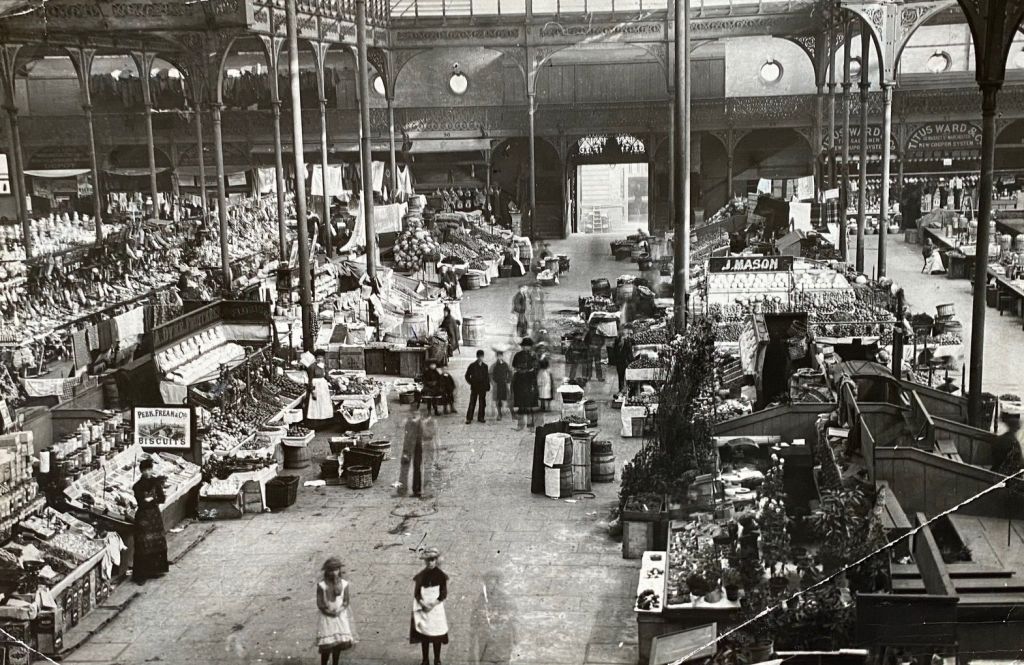
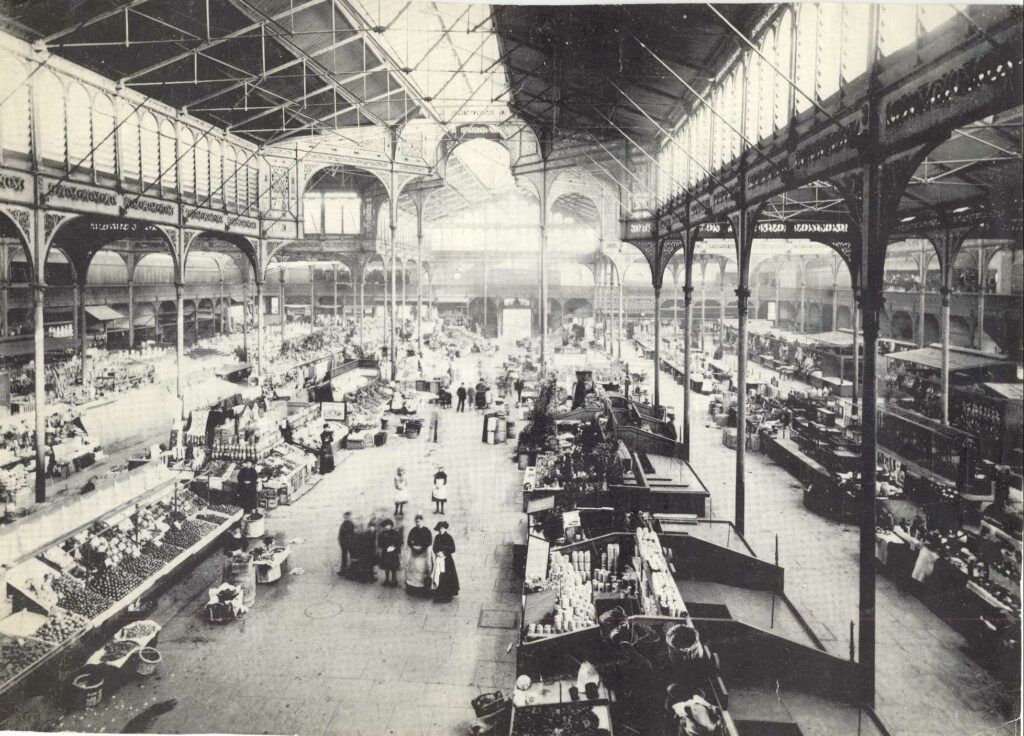
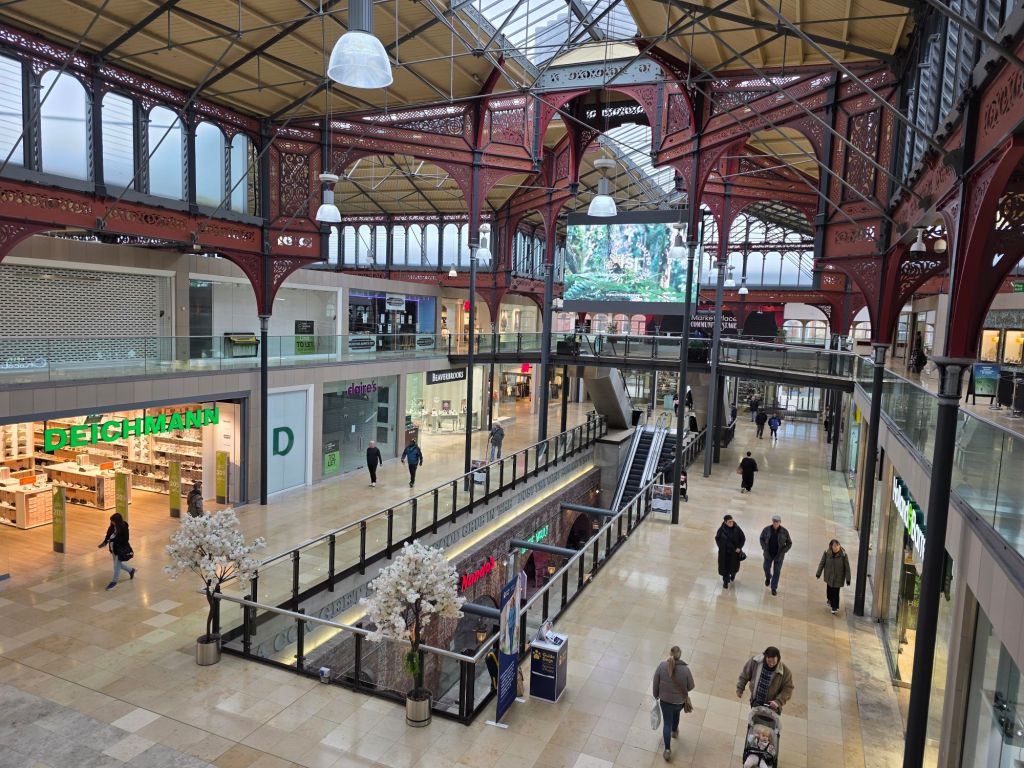
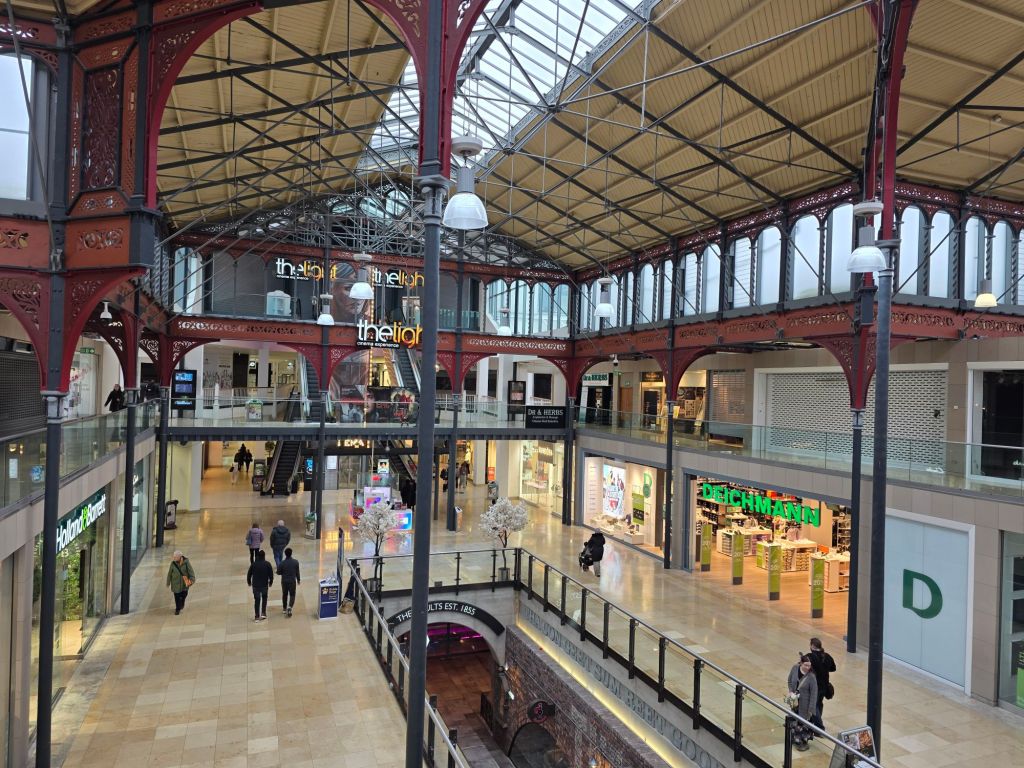
Bolton Market Place is a major retail and leisure destination in Bolton town centre, primarily housed within the Grade II listed Victorian Market Hall. Originally opened in 1855, it was once celebrated as the “largest covered market in the kingdom” and serves as a historical anchor for the town’s commercial heart. 

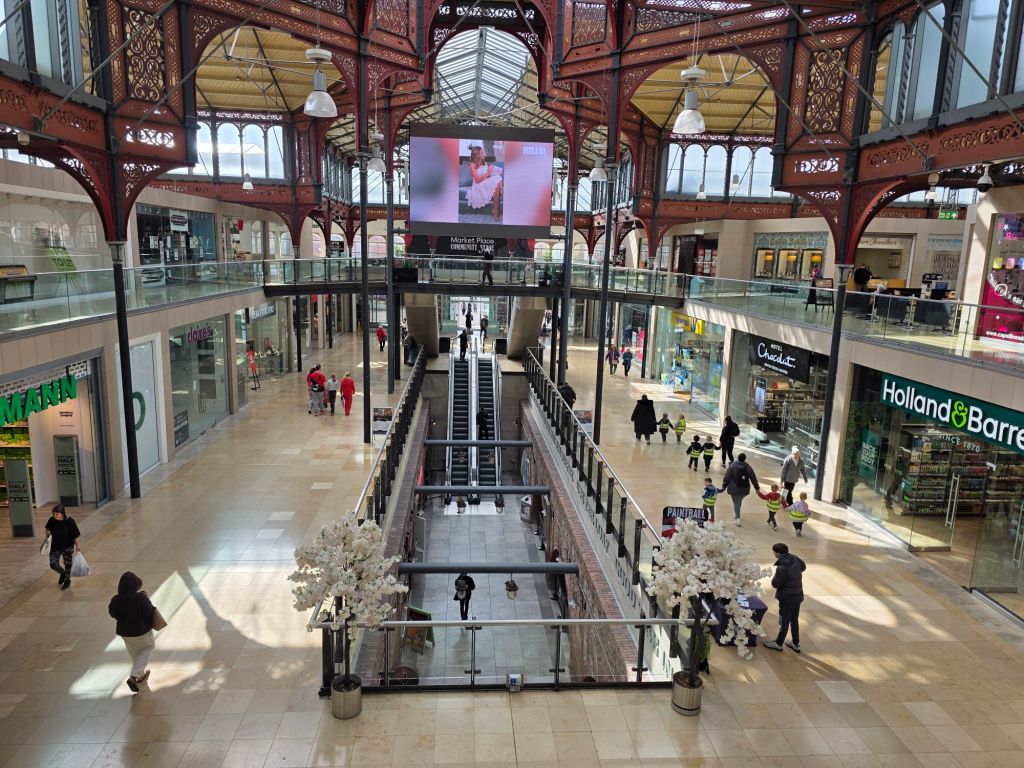
Market Place Bolton is a Grade II listed shopping and leisure destination located in the heart of Bolton town centre. Originally opened in 1855 as a covered market hall, it was once considered the largest in the kingdom. Today, it combines historic Victorian architecture—including its famous restored ironwork and glass roof—with modern retail and entertainment facilities. 

Shopping & Major Retailers

The centre spans two floors of retail space and features a mix of high-street giants and independent boutiques. 

  • Key Retailers: Primark (new 40,000 sq ft store opened Dec 2024), Next, H&M, New Look, JD Sports, River Island, and Footasylum.
  • Specialty Stores: Pandora, Hotel Chocolat, The Body Shop, and The Entertainer.
  • Recent Additions: The Works (opened 2024) and Carrs Pasties (opened 2026). 

Dining: The Vaults

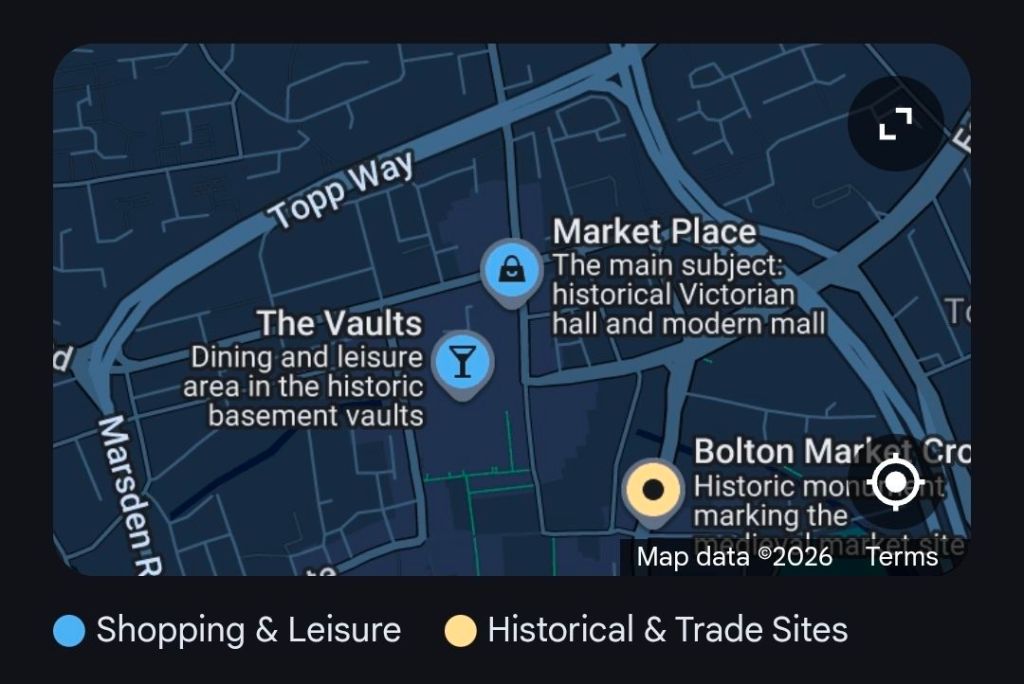
The lower ground floor houses The Vaults, a converted Victorian basement that retains original stonework and atmospheric archways. 

  • Restaurants: Popular chains such as Nando’s and Prezzo, alongside various bars and cafes.
  • Food Court: A vibrant hub for socialising with a range of global cuisines. 

Leisure & Entertainment

Market Place has pivoted toward being a “leisure-first” destination to combat declining retail trends. 

  • The Light Cinema: A luxury 9-screen multiplex cinema located on the top floor.
  • Family Activities: Includes Amazonia (kids’ play area with adventure golf and a train), an escape room, and an indoor crazy golf course.
  • Events: The centre regularly hosts free events, such as art exhibitions and “Little Rascals” kids’ club activities. 

Visitor Information

  • Parking: On-site multi-storey car park with over 500 spaces. Offers competitive rates, often including incentives like one hour free.
  • Accessibility: Fully accessible for disabled visitors, with dedicated parking and a free wheelchair service available from the Customer Service desk.
  • Location: Knowsley Street, Bolton, BL1 2AL. It is roughly a 10-minute walk from the main bus and train stations. 

Historical Timeline of Bolton Market Place

The Victorian Era: Foundation & Grandeur

  • 1251: Bolton is granted a Royal Charter to hold a market, originally held on Mondays in the Churchgate area.
  • 1482: The Market Cross is first established at the entrance to Churchgate as a landmark for trade.
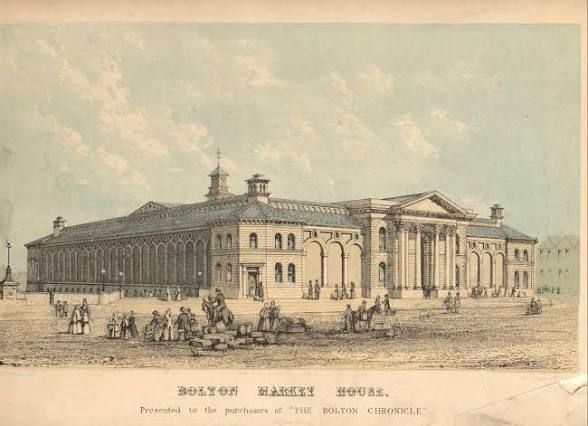
  • 1855: The Bolton Market Hall officially opens on 19 December. Designed by architect G. T. Robinson, it cost £50,000 and featured a massive cast-iron and glass roof.
  • 1865: A dedicated Fish Market is added next to the main hall at a cost of £30,000, further establishing Bolton as a major trading hub in the North.
  • 1894: The hall undergoes its first major modifications, including the addition of exterior shops on Knowsley Street and Corporation Street. 

Early to Mid-20th Century: Adaptation

  • 1909: The current version of the Market Cross is commissioned with bronze plaques detailing the town’s history.
  • 1932: The Victorian fish market is demolished as trade shifts toward the new Ashburner Street market.
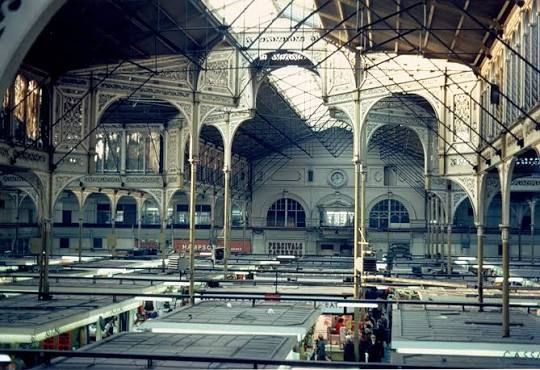
  • 1938: The interior layout is modernised, replacing long rows of stalls with roofed islands to better manage foot traffic. 

Late 20th Century: The Shopping Centre Era 

  • 1982: A competition to redevelop the site into a modern shopping mall is won by Chapman Taylor Partners.
  • 1988: The refurbished site is reopened by Queen Elizabeth II as the Market Place Shopping Centre on 1 December.
  • 1998: Sunday trading is briefly suspended in the Market Hall due to low trader turnout. 

21st Century: Modernisation & Leisure 

  • 2004: Controversial plans to move traditional market stallholders out of the hall spark a petition with over 80,000 names.
  • 2007: After 151 years of traditional trading, the last 50 stallholders move out to allow for a full retail conversion.
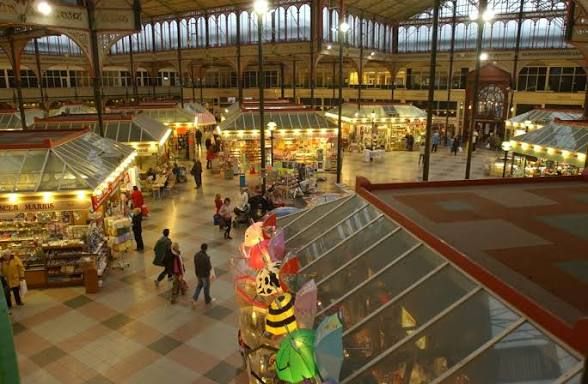
  • 2008: The modernised Market Place, featuring units “slotted” into the historic listed structure, officially opens in October.
  • 2013: The centre is acquired by Moorgarth, who announce a £15 million investment plan.
  • 2016–2017: The development of The Vaults (dining/leisure in the basement) and a new 9-screen cinema on the roof is completed.
  • 2025: The centre continues to evolve with ongoing development plans to further enhance its position as a leading regional destination. 

Images through the years :

Last 3 images taken by Mark Whitfield (website author) in early 2026

Bolton Market Place – About and Timeline History with Images

COBOL Programming Overview & Detailed Timeline History by Era and Year

COBOL, (COmmon Business-Oriented Language) is a high-level, compiled programming language designed specifically for business, finance, and administrative systems. Developed as a portable “stopgap” for the US Department of Defense, it has endured for over 65 years and remains the backbone of global financial infrastructure. 

Programming Overview

  • Design Philosophy: It features a “prose” syntax designed to be self-documenting and readable by non-technical business professionals.
  • Structure: Programs are strictly divided into four Divisions:
    1. Identification: Defines the program name and metadata.
    2. Environment: Specifies the physical computer and files used.
    3. Data: Defines variables, structures, and record layouts.
    4. Procedure: Contains the logic and executable statements.
  • Core Paradigms: Originally strictly procedural and imperative, COBOL was updated in 2002 to include object-oriented features.
  • Key Characteristics: It is known for its verbosity (using over 300 reserved words), weak/static typing, and exceptional reliability in large-scale batch and transaction processing. 

Detailed Historical Timeline

Era 1: The Foundation (1950s)

This era focused on consolidating disparate manufacturer-specific languages into a single, hardware-independent standard for business. 

  • 1955: Grace Hopper develops FLOW-MATIC, which introduced English-like commands and influenced COBOL’s design.
  • 1958: IBM releases COMTRAN, another major precursor focused on commercial translation.
  • 1959 (April): Mary Hawes organizes a meeting at the University of Pennsylvania to propose a common business language.
  • 1959 (May): The Pentagon hosts a meeting creating CODASYL (Committee on Data Systems Languages) to oversee the project.
  • 1959 (December): The first specifications, “COBOL – Specifications for a COmmon Business Oriented Language,” are released. 

Era 2: Early Versions & Rapid Adoption (1960–1967)

The language quickly transitioned from a theoretical specification to a functioning industry standard. 

  • 1960COBOL-60 is officially published.
  • 1960 (August): The first COBOL program runs on an RCA 501.
  • 1961COBOL-61 is released, providing a major cleanup of original logical flaws.
  • 1962: IBM announces COBOL as its primary development language, ending work on COMTRAN.
  • 1963COBOL-61 Extended is released, introducing “Sort” and “Report Writer” facilities.
  • 1965COBOL Edition 1965 adds mass storage file handling and table processing.

Era 3: Standardization & Dominance (1968–1984)

COBOL became the most widely used language in the world as ANSI and ISO codified its rules. 

  • 1968COBOL-68 (ANSI X3.23-1968) is published as the first official US standard.
  • 1970: COBOL becomes the world’s most widely used programming language.
  • 1974COBOL-74 is standardized, introducing the DELETE statement and file organization improvements.
  • 1978: ISO formally adopts the COBOL-74 standard. 

Era 4: Structured Programming & Modernization (1985–2001) 

The language evolved to support better logic flow while managing the massive global codebase. 

  • 1985COBOL-85 introduces structured programming features like END-IFEVALUATE, and nested subprograms.
  • 1989: First amendment to COBOL-85 adds Intrinsic Function Modules.
  • 1997: Gartner Group estimates 200 billion lines of COBOL code are in existence.
  • 1999: Massive effort peaks to patch legacy COBOL code for the Y2K (Year 2000) problem

Era 5: The Object-Oriented & Modern Era (2002–Present)

Recent updates focus on interoperability with modern web and cloud environments. 

  • 2002COBOL-2002 introduces Object-Oriented Programming (OOP), Unicode support, and recursion.
  • 2014COBOL-2014 standardizes IEEE 754 data types and method overloading.
  • 2020: The COVID-19 pandemic highlights a critical shortage of COBOL programmers to maintain aging state unemployment systems.
  • 2023COBOL-2023 adds asynchronous messaging (SEND/RECEIVE) and transaction processing (COMMIT/ROLLBACK).
  • 2024: COBOL celebrates its 65th anniversary of active service.

COBOL Programming Overview & Detailed Timeline History by Era and Year

History of the x86 IBM PC platform by Era and Year

The history of the x86 IBM PC platform is defined by a shift from a proprietary IBM product to an open industry standard (“Wintel”) and finally to the modern diverse ecosystem of high-performance computing. 

Era 1: The Foundation & The “Big Blue” Monopoly (1978–1981)

Before the first PC, the building blocks of the x86 architecture were established by Intel. 

  • 1978: Intel introduces the 8086 microprocessor, the 16-bit foundation of the x86 instruction set.
  • 1979: Intel releases the 8088, a lower-cost version with an 8-bit external bus, which IBM would later choose for its first PC.
  • 1980: Microsoft signs a contract with IBM to develop an operating system (MS-DOS/PC DOS) for their upcoming machine.
  • 1981 (August 12): IBM announces the IBM Personal Computer (Model 5150).
    • Spec highlights: 4.77 MHz 8088 CPU, 16KB–256KB RAM, and CGA graphics.
    • Impact: Its “open architecture” allowed third-party expansion, though the BIOS remained proprietary. 

Era 2: The Rise of the Clones (1982–1986) 

IBM’s dominance was quickly challenged as other companies “cloned” the hardware and reverse-engineered the BIOS. 

  • 1982Columbia Data Products introduces the MPC 1600, the first 100% IBM PC compatible.
  • 1982: Intel announces the 80286, supporting protected mode and up to 16MB of RAM.
  • 1983Compaq releases the Compaq Portable, the first highly successful 100% compatible clone with a clean-room engineered BIOS.
  • 1983: IBM launches the PC/XT (Model 5160), the first PC with a built-in hard drive.
  • 1984: IBM introduces the PC/AT (Model 5170) using the 80286 chip, which sets the standard for PC architecture for the next decade.
  • 1985: Intel introduces the 80386, the first 32-bit x86 processor.
  • 1986Compaq beats IBM to market with the first 386-based PC, the Deskpro 386, signalling IBM’s loss of control over the platform’s technical lead.

Era 3: The “Wintel” Standard & Multimedia (1987–1999)

As IBM tried and failed to regain control with proprietary standards, Microsoft and Intel became the new “de facto” leaders. 

  • 1987: IBM launches the PS/2 line with the proprietary MicroChannel Architecture (MCA), but the industry rejects it in favour of the open AT-bus (ISA).
  • 1989: Intel releases the 486DX, integrating the math co-processor and L1 cache onto the chip.
  • 1993: Intel debuts the Pentium processor, moving away from numbers to a trademarked brand to prevent competitors from using the name.
  • 1995Windows 95 is released, cementing the GUI as the standard interface for x86 PCs.
  • 1997: Intel launches MMX technology to improve multimedia performance on PCs. 

Era 4: 64-Bit & Multi-Core (2000–2019)

The platform evolved to handle massive data and professional workloads through architectural shifts. 

  • 2003AMD introduces x86-64, the 64-bit extension that Intel eventually adopts as the industry standard.
  • 2005: Intel ships its first dual-core processor, starting the “core war” to improve performance without increasing heat.
  • 2005: IBM exits the PC market entirely, selling its division to Lenovo.
  • 2006: Apple transitions its Macintosh line to Intel x86 processors (a move that lasted until 2020).
  • 2011: The 30th anniversary of the IBM PC; by this time, “PC” almost exclusively meant an x86 machine running Windows. 

Era 5: The Modern Era (2020–Present)

Current x86 systems focus on massive core counts, high-speed storage (NVMe), and integrated AI. 

  • 2020–2022: Development of high-performance multi-core architectures like Intel’s 12th Gen (Alder Lake), introducing hybrid performance and efficiency cores.
  • 2025–2026: Transition to “AI PCs” using processors like the Intel Core Ultra series (Series 2), which include NPUs (Neural Processing Units) for local AI workloads.
  • Today: Modern x86 PCs, such as those from Dell or Lenovo, feature 20+ cores, DDR5 memory, and PCIe 5.0 expansion.

History of the x86 IBM PC platform by Era and Year

HP NonStop Tandem Overview and Timeline History by year

HP NonStop is a series of fault-tolerant server computers designed for online transaction processing (OLTP) and mission-critical applications that require 100% uptime. Originally introduced by Tandem Computers Inc. in 1976, the platform uses a proprietary, integrated hardware and software stack known as NonStop OS (formerly Guardian) to eliminate single points of failure through massive redundancy and “fail-fast” logic

Historical Timeline by Era

1. The Tandem Founding Era (1974–1981) 

  • 1974: Tandem Computers Inc. is founded by James (Jimmy) Treybig and a team from Hewlett-Packard’s HP 3000 division.
  • 1976: The first system, the Tandem/16 (later NonStop I), is shipped to Citibank.
  • 1977: Tandem systems gain early traction as intelligent front-end processors for bank ATM networks. 

2. The Stack Machine Expansion (1981–1990) 

  • 1981: NonStop II is introduced, adding 32-bit addressing capabilities and replacing magnetic core memory with battery-backed DRAM.
  • 1983: NonStop TXP (Transaction Processing) launches as the first new implementation of the architecture, featuring cache memory and 2.0 MIPS performance.
  • 1986: Introduction of NonStop VLX (Very Large eXpansion) and NonStop SQL, the first fault-tolerant relational database designed for linear scalability.
  • 1987: NonStop CLX launches as a lower-cost, compact minicomputer for remote office environments.
  • 1989: NonStop Cyclone is released for high-end mainframe markets, featuring superscalar CPUs and fiber optic interconnects. 

3. The MIPS RISC Transition & Acquisitions (1991–2003)

  • 1991: Cyclone/R (or CLX/R) marks the move to MIPS R3000 RISC processors, using object code translation to maintain backward compatibility.
  • 1993: Himalaya K-series is released using MIPS R4400 processors.
  • 1995: Open System Services (OSS) is added to the NonStop Kernel to provide a POSIX/Unix-like environment.
  • 1997: Compaq acquires Tandem Computers. The Himalaya S-Series introduces ServerNet, which later becomes the InfiniBand industry standard.
  • 2002/2003: HP merges with Compaq, bringing the NonStop line under Hewlett-Packard. 

4. The HP Integrity & x86 Era (2005–Present)

  • 2005: HP Integrity NonStop (TNS/E) is introduced, migrating the platform to Intel Itanium microprocessors.
  • 2014: NonStop X (TNS/X) launches, shifting the architecture to Intel x86-64 processors for greater industry-standard alignment.
  • 2015: Following the HP corporate split, NonStop becomes part of Hewlett Packard Enterprise (HPE).
  • 2020: Sales of Itanium-based systems officially end in July 2020.
  • 2024–2025: HPE expands the platform with Virtualized NonStop Software for private clouds and consumption-based models via HPE GreenLake.

HP NonStop Tandem Overview and Timeline History by year

HPE NonStop (formerly Tandem and Compaq NonStop) is a family of fault-tolerant, integrated hardware and software systems designed for mission-critical enterprise workloads. Since its introduction in 1976, it has served as the backbone for high-volume transaction environments like banks, stock exchanges, and payment systems, offering 100% continuous uptime

Core Architecture and Features

The platform is defined by its “shared-nothing” architecture, where every component is redundant to eliminate single points of failure. 

  • Continuous Availability: If a hardware or software component fails, a backup takes over immediately without disrupting the application, a process often managed through process pairs (primary and hot backup processes).
  • Linear Scalability: You can add capacity (CPUs, memory) seamlessly without downtime. Systems can scale from a few processors to clusters of over 4,000 CPUs while maintaining a single-system image for management.
  • Integrated Stack: Unlike standard servers, NonStop includes a fully integrated stack of hardware, the NonStop OS (a proprietary kernel), a relational database (NonStop SQL), and middleware.
  • Fail-Fast Design: Modules are self-checking; they stop immediately upon detecting an error to prevent data corruption, allowing the redundant backup to resume processing from the last known good state. 

Current Hardware and Deployment

While historically based on proprietary or Itanium processors, modern NonStop systems (NonStop X) utilize industry-standard Intel Xeon processors and high-speed InfiniBand interconnects. 

  • High-End Systems: Models like the NS9 X5 are built for the most demanding high-volume transaction processing (OLTP).
  • Mid-Range/Entry Systems: Models like the NS5 X5 offer fault tolerance for smaller enterprises or development environments.
  • Virtualization & Cloud: HPE Virtualized NonStop Software allows the platform to run on standard private cloud infrastructure (e.g., VMware, OpenStack), and it is also available via HPE GreenLake as a consumption-based, pay-as-you-go service. 

Software and Security

  • Database: Supports NonStop SQL/MX and SQL/MP for multi-tenant, fault-tolerant data management.
  • Development: Supports modern languages like Java, C++, Python, COBOL, and the TACL scripting language. Developers can use the Eclipse-based IDE for building and debugging applications.
  • Security: Built with Zero Trust principles, including hardware-level vulnerability mitigations (e.g., against Spectre/Meltdown) and real-time threat detection. 

Detailed Architecture

HPE NonStop architecture is a fault-tolerant, shared-nothing, massively parallel computing platform designed for 100% operational continuity. Originally developed by Tandem Computers, it is engineered so that no single hardware or software failure can bring down the system. 

Core Architectural Pillars

  • Shared-Nothing Architecture: Each processor has its own dedicated memory, I/O bus, and copy of the HPE NonStop Operating System (NSK). This eliminates resource contention and single points of failure found in shared-memory systems.
  • Massive Scalability: Systems scale linearly by adding more processors. A single node can support up to 16 CPUs, and multiple nodes can be clustered to support over 4,000 CPUs.
  • Fault Tolerance (Process Pairs): Software availability is maintained through “process pairs”—a primary process and a passive backup process. If the primary fails, the backup immediately takes over without losing data or state.
  • Fail-Fast Design: Hardware and software modules are designed to stop immediately upon detecting an error (“fail-stop”) to prevent data corruption from propagating. 

Hardware Components

  • Compute Nodes: Modern HPE NonStop X systems use standard Intel Xeon x86-64 processors but implement fault tolerance through specialized system interconnects.
  • System Interconnect (Fabric):
    • InfiniBand: Used in NonStop X systems for high-speed, low-latency communication between CPUs and I/O devices (up to 56 Gbps).
    • ServerNet: The legacy high-speed, point-to-point switched fabric used in older S-series and Integrity i-series systems.
  • CLIMs (Cluster I/O Modules): Specialized offload engines for networking (IP CLIM), storage (Storage CLIM), and telco protocols. They handle I/O processing to free up the main host CPUs. 

Integrated Software Stack

The NonStop platform is a “tightly coupled” environment where hardware and software are integrated for availability. 

  • NonStop OS (NSK): A message-based operating system that manages the distributed resources as a single system image.
  • HPE NonStop SQL/MX: A distributed, fault-tolerant relational database that provides ANSI SQL compliance and automatic load balancing across the cluster.
  • HPE Pathway (TS/MP): An application server and middleware framework that manages workload distribution, load balancing, and automatic process restarts.
  • TMF (Transaction Monitoring Facility): Ensures database integrity by managing atomic transactions; if an update fails, TMF automatically rolls back the changes. 

Modern Deployment Options

  • HPE Virtualized NonStop (vNS): The complete software stack decoupled from proprietary hardware, allowing it to run as a set of virtual machines on industry-standard x86 servers within a private cloud (VMware).
  • HPE GreenLake: A consumption-based model providing NonStop capabilities as a cloud-like service. 

Roger Federer Overview and Detailed Timeline History by Era

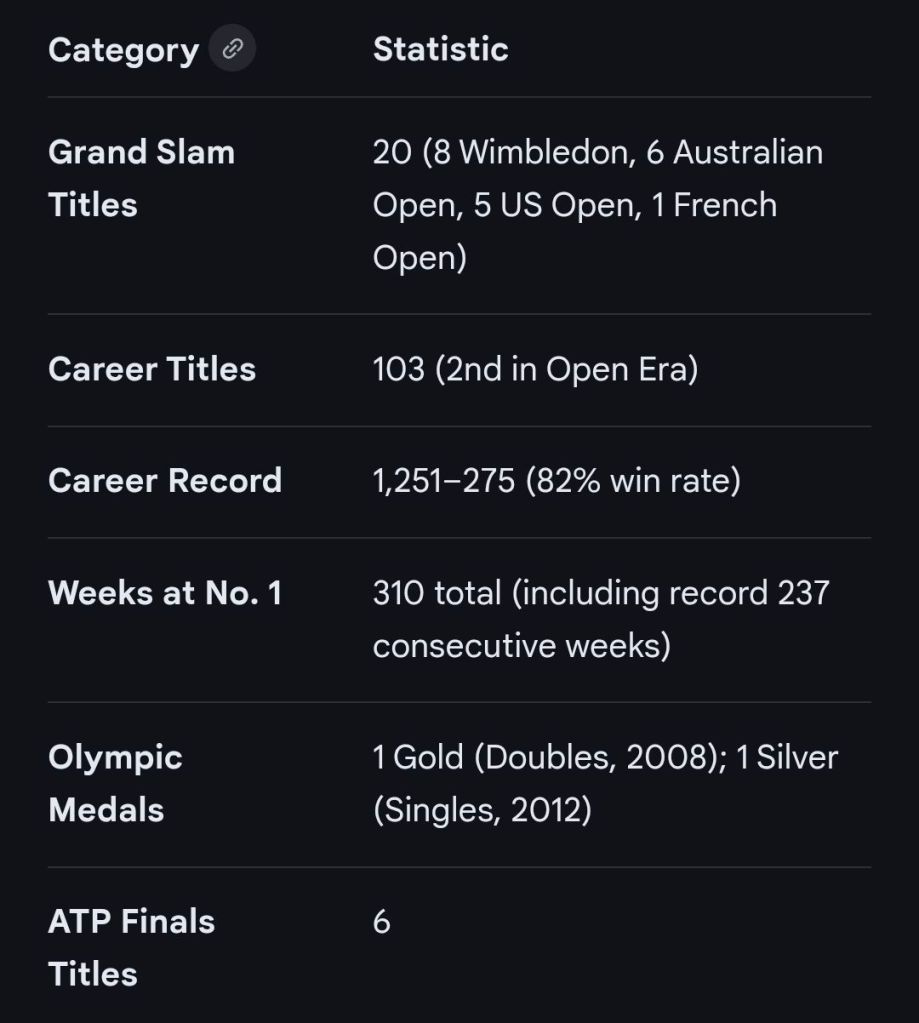
Roger Federer is a Swiss former professional tennis player who is widely regarded as one of the greatest of all time, having won 20 Grand Slam singles titles and held the world No. 1 ranking for 310 weeks. Known for his effortless playing style and versatile shot-making, he revolutionized the sport during a career that spanned over two decades from 1998 to 2022. 

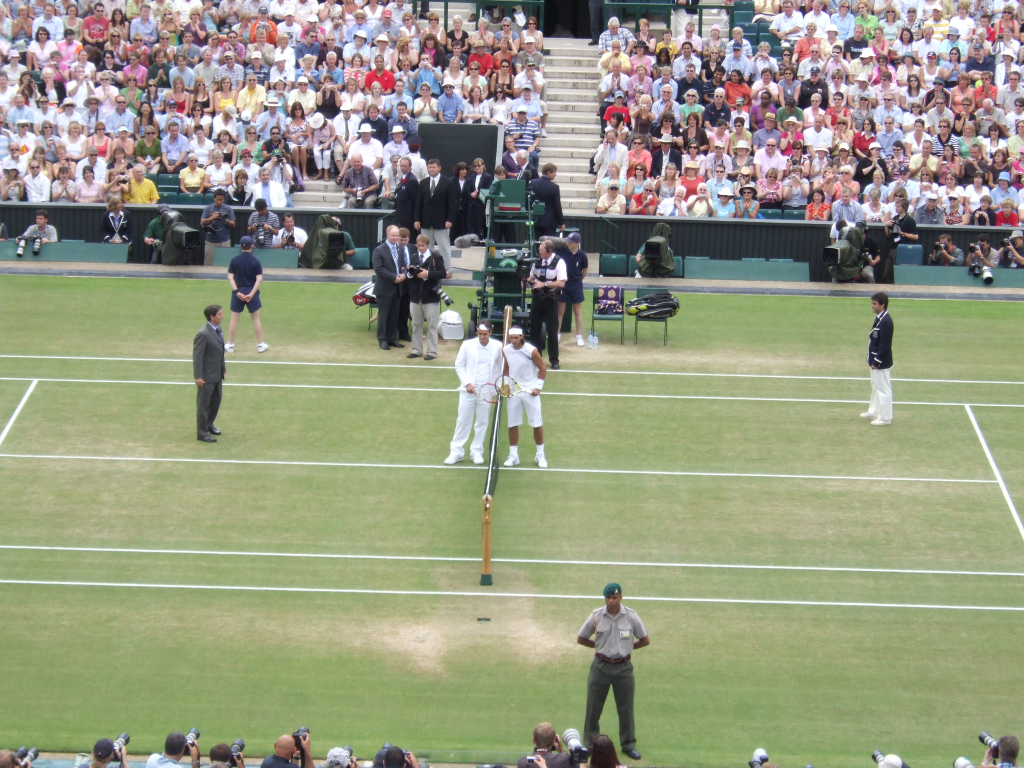
Won by Roger Federer for the fifth consecutive time, a feat only before achieved in the Open Era by Björn Borg.

Career Overview Statistics

Won by Roger Federer for the 5th time

According to ATP Tour statistics, Federer concluded his career with the following major achievements:

Federer concluded his career with the following major achievements

Detailed Timeline by Era

1. Early Career & Breakthrough (1998–2002)

Federer transitioned from a dominant junior—finishing 1998 as the world No. 1 junior—to a rising star on the ATP Tour. 

  • 1998: Turned professional; won Wimbledon junior singles and doubles titles.
  • 1999: Youngest player to finish the year in the Top 100 (ranked 64th).
  • 2001: Won first ATP title in Milan; defeated 7-time champion Pete Sampras at Wimbledon to reach his first major quarter-final.
  • 2002: Won first Masters title in Hamburg and entered the world Top 10 for the first time. 

2. Peak Dominance Era (2003–2007) 

This period marked Federer’s absolute peak, where he reached all four Grand Slam finals in a single calendar year twice (2006, 2007). 

  • 2003: Won first Grand Slam title at Wimbledon and his first Year-End Championship.
  • 2004: Won three of four majors (Australian Open, Wimbledon, US Open) and became world No. 1 on 2 February.
  • 2006: Career-best season with a 92–5 record, reaching all four major finals and winning three.
  • 2007: Defended three major titles and beat Rafael Nadal to win his fifth consecutive Wimbledon

3. The Rivalry Era & Career Slam (2008–2012)

Federer faced intense competition from the emergence of the “Big Four” (Nadal, Djokovic, and Murray). 

  • 2008: Battled mononucleosis; won fifth consecutive US Open; won Olympic Gold in doubles with Stan Wawrinka.
  • 2009: Won first French Open to complete the Career Grand Slam; passed Sampras’ record with a 15th major at Wimbledon.
  • 2010: Won fourth Australian Open.
  • 2012: Won 7th Wimbledon title and Olympic Silver in singles; reclaimed world No. 1 to break the record for total weeks at the top. 

4. Injury Struggles & Renaissance (2013–2019)

After several years plagued by back and knee injuries, Federer staged a remarkable late-career comeback. 

  • 2014: Led Switzerland to its first Davis Cup title.
  • 2016: Underwent first knee surgery; missed the second half of the season for recovery.
  • 2017: Returned after a 6-month hiatus to win the Australian Open (defeating Nadal) and a record 8th Wimbledon title.
  • 2018: Won 20th Grand Slam at the Australian Open; became the oldest No. 1 in history at age 36.
  • 2019: Won 100th career title in Dubai; reached 12th Wimbledon final. 

5. Final Years & Retirement (2020–2022)

Persistent knee issues eventually forced the conclusion of his competitive career. 

  • 2020–21: Underwent multiple knee surgeries; reached Wimbledon quarter-finals in 2021 as the oldest man in the Open Era to do so.
  • 2022: Officially retired on 23 September at the Laver Cup in London, playing his final match in doubles alongside long-time rival and friend Rafael Nadal.

Roger Federer Overview and Detailed Timeline History by Era

Towyn overview and detailed annotated timeline history by era and year to 2026

Towyn is a prominent seaside resort in Conwy, North Wales, traditionally known as a tourism hub with a high concentration of holiday parks and a history defined by its relationship with the Irish Sea. Historically, the town is most noted for the catastrophic 1990 floods, which reshaped local coastal defence policy across Britain. Today, it continues to evolve as a key destination for family holidays, with multi-million-pound investments in leisure facilities planned through 2026. 

Historical Timeline of Towyn

Early Origins & Parish Formation (1800s)

  • 1800s: Towyn begins developing as a tourism destination, largely due to its proximity to the established hub of Rhyl.
  • 17 June 1873: St Mary’s Church, designed by renowned architect George Edmund Street, is consecrated. It is famous for its distinctive roof tiling.
  • 22 September 1873: The Parish of Towyn is officially created, comprising the township of Towyn and parts of Cegidog Isaf, Bodoryn, and Bodtegwal. 

Tourism Growth & Mid-Century Development (1900–1980s)

  • Early 1900s: The town’s reputation as a “sunny coastline” (from the Welsh word Tywyn for sand dunes) solidifies it as a popular holiday spot.
  • 29 July 1960: Towyn Development Co. Limited is incorporated, marking a period of formalized commercial development in the area.
  • 1960s–1980s: Continued expansion of caravan and holiday parks, making tourism the town’s primary economic engine. 

The 1990 Flood Disaster & Recovery

  • 26 February 1990 (11:00 AM): A 400-metre breach of the sea wall occurs due to a 1.5m storm surge, gale-force winds, and high tides.
  • February – March 1990: Approximately 2,800 properties are flooded across 10 square km; up to 6,000 residents are evacuated.
  • 1 March 1990: Prince Charles and Princess Diana visit the disaster site.
  • Post-1990: Massive reconstruction of coastal defences begins, utilizing massive rock revetments to absorb wave impact. 

Modern Era & Future Outlook (2010–2026)

  • 2011 Census: Towyn’s population is recorded at 2,380.
  • November 2022: Tir Prince Raceway Ltd purchases the freehold of its 50-acre fairground and race track site, securing long-term investment for the town’s tourism.
  • August 2023: The Towyn and Kinmel Bay Place Plan is published, focusing on collaborative action for “placemaking” and sustainable transport.
  • April 2024: Multi-million-pound expansion plans are revealed for major holiday parks, including new leisure complexes.
  • February 2025: The town marks the 35th anniversary of the 1990 floods with reflections on coastal resilience.
  • March 2026: Target date for completion of several holiday park upgrades, including new high ropes courses and state-of-the-art leisure facilities.

Towyn overview and detailed annotated timeline history by era and year to 2026