Llandudno Pier Overview and Historical Timeline by Era

Llandudno Pier, often called the “Queen of Welsh Piers”, is the longest pier in Wales at 2,295 feet (700 metres). It is a Grade II* listed structure renowned for its Victorian and Edwardian elegance, featuring ornate ironwork and classic kiosks. 

Llandudno Pier, often called the “Queen of Welsh Piers”, is the longest pier in Wales

Historical Timeline by Era

Early Origins (The Pre-Pier Era)

  • 1858: A short wooden pier (242 ft) was built by the St George’s Harbour and Railway Company to export limestone.
  • 1859: This original structure was severely damaged by the “Royal Charter Storm”.
  • 1860–1875: Though repaired, the wooden pier was too short for steamships except at high tide. 

Victorian Era: Construction and Growth

  • 1875: The Llandudno Pier Company was formed to build a new, modern structure.
  • 1876: Construction began in June/July. The first pile was driven on 16 September 1876.
  • 1877: The pier officially opened on 1 August, initially measuring 1,234 feet.
  • 1878: Construction was fully completed; the first steamboat (Prince Arthur) landed in May.
  • 1884: A landward extension was added, bringing the pier to its current length of 2,295 feet.
  • 1886: The Pier Pavilion opened on 16 September as a 2,000-seat theatre and concert hall.
  • 1887: Renowned conductor Jules Rivière took charge of the pier’s orchestra, which eventually grew to symphony proportions.
  • 1891: A new landing stage was added to accommodate increased steamship traffic. 

Edwardian and Mid-20th Century

  • 1905: A pier-head pavilion was constructed.
  • 1910: Extensive improvements were made, including widening most of the pier.
  • 1938: Major alterations were carried out on the landing stage.
  • 1968: The pier was purchased by the Trust House Forte Group.
  • 1969: The landing stage was totally rebuilt in concrete and steel to handle large Isle of Man steamers. 

Modern Era: Challenges and Restoration

  • 1983: The pier became part of the First Leisure Corporation.
  • 1984: The Pier Pavilion theatre closed.
  • 1994: A major fire destroyed the Pier Pavilion on 13 February, leaving only the iron supports.
  • 1998: Purchased by Leisure Parks Ltd (Trevor Hemmings) along with several other UK piers.
  • 2005: Voted “Pier of the Year” by the National Piers Society.
  • 2015: Purchased by local entrepreneur Adam Williams (Tir Prince Leisure Group) for £4.5 million.
  • 2021: Adam Williams purchased the derelict Pavilion site to protect the pier’s future.
  • 2025: Voted “Pier of the Year” for the second time following major restoration efforts. 

Llandudno Pier Overview and Historical Timeline by Era

Project Quality Plan PQP in QA/QC Overview

Project Quality Plan PQP in QA/QC Overview

The primary purpose of a Project Quality Plan (PQP) is to define the standards, tools, and processes required to ensure a project’s deliverables are “fit for purpose” and meet all stakeholder expectations. It serves as a strategic roadmap for the project team to maintain consistent quality throughout the project lifecycle rather than treating it as an afterthought. 

Core Objectives

A PQP is designed to achieve several critical goals: 

  • Define “Quality”: Translates vague stakeholder needs into measurable criteria and specific benchmarks.
  • Prevent Defects: Establishes Quality Assurance (QA) processes to proactively “build in” quality from the start, reducing the risk of errors.
  • Detect and Correct Issues: Outlines Quality Control (QC) activities, such as testing and inspections, to identify and fix defects before they reach the customer.
  • Clarify Accountability: Assigns specific roles and responsibilities so every team member knows who is responsible for performing, checking, and approving work.
  • Ensure Compliance: Guarantees the project adheres to relevant internal policies, legal regulations, and industry standards like ISO 9001. 

Strategic Benefits

Implementing a structured quality plan provides tangible advantages for project management: 

  • Reduced Costs and Rework: By catching errors early, the team avoids expensive last-minute fixes and wasted resources.
  • Improved Efficiency: Standardised workflows and clear metrics allow the team to focus on production rather than constant troubleshooting.
  • Increased Stakeholder Trust: Providing objective evidence through audits and reports gives sponsors and clients confidence in the final outcome.
  • Continuous Improvement: The plan often includes feedback loops and lessons-learned processes to refine and enhance quality for future project phases.

Project Quality Plan PQP in QA/QC Overview

Agile Scrum Methodology Summary Breakdown Overview

Scrum is lightweight framework within the broader Agile methodology used to manage complex work through iterative, incremental delivery. It organizes work into fixed-length cycles called sprints, typically lasting two to four weeks, to deliver a usable “increment” of value at the end of each cycle. 

Core Components (The 3-5-3 Structure)

The framework is built around three accountabilities, five events, and three artifacts. 

1. Three Accountabilities (Roles)

  • Product Owner: Represents the customer and stakeholders. They manage the Product Backlog and prioritize work to maximize the value delivered by the team.
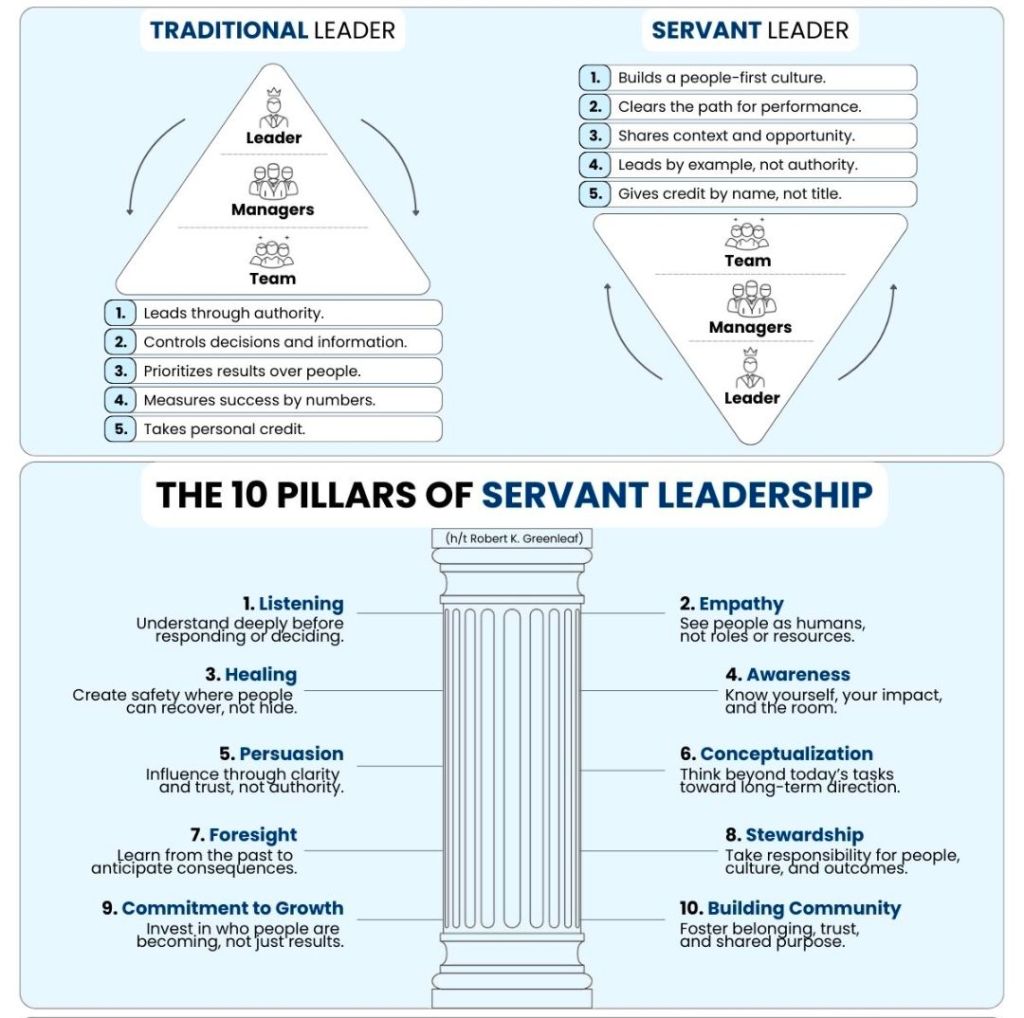
  • Scrum Master: A servant leader who coaches the team on Scrum theory and removes impediments that block progress.
  • Developers: A cross-functional, self-managing team that does the actual work to create the product increment. 

2. Five Events (Ceremonies)

  • The Sprint: The container for all other events; a time-boxed period where work is performed.
  • Sprint Planning: The team defines what will be delivered in the sprint and how the work will be achieved.
  • Daily Scrum: A 15-minute daily check-in for developers to synchronize progress and plan the next 24 hours.
  • Sprint Review: Held at the end of the sprint to inspect the outcome with stakeholders and adapt the Product Backlog.
  • Sprint Retrospective: An internal team meeting to reflect on the process and identify improvements for the next sprint. 

3. Three Artifacts

  • Product Backlog: An ordered, evolving list of everything needed for the product.
  • Sprint Backlog: The subset of product backlog items selected for the current sprint, plus a plan for delivering them.
  • Increment: The concrete sum of all completed backlog items that meet the Definition of Done. 

The Three Pillars of Empiricism

Scrum is founded on empirical process control, which relies on: 

  1. Transparency: The process and work must be visible to everyone involved.
  2. Inspection: Frequent checks of artifacts and progress to detect variances.
  3. Adaptation: Adjusting the process or product if an inspection reveals unacceptable deviations. 

Key Values

Success with Scrum depends on the team’s commitment to five core values: Commitment, Courage, Focus, Openness, and Respect

Agile Scrum Methodology Summary Breakdown Overview

PRINCE2 Management Stages Overview

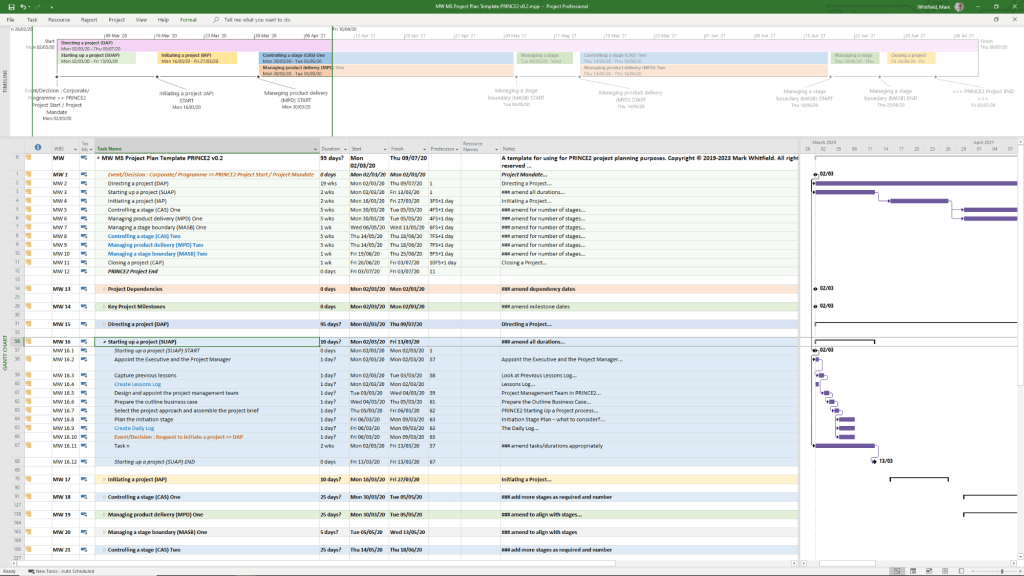
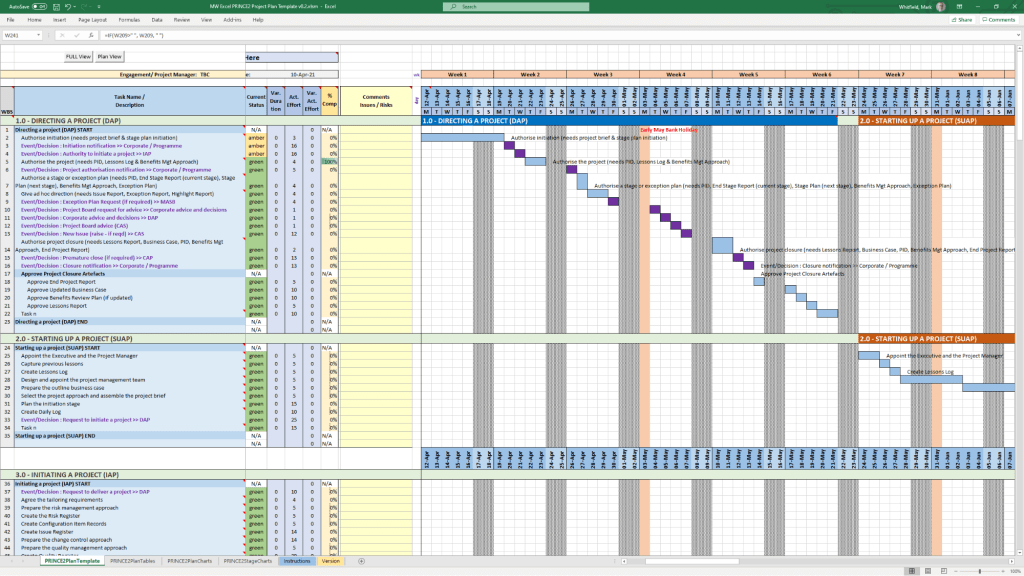
In PRINCE2, a project is managed through a series of management stages, which are discrete sections of a project that the Project Board authorises at specific decision points. Every PRINCE2 project must have at least two stages: an initiation stage and at least one further delivery stage

PRINCE2 Management Stages Overview

A detailed breakdown of these stages, aligned with the seven core PRINCE2 processes, is provided below. 

1. Starting Up a Project (SU)

This is a pre-project process designed to determine if the project is viable and worthwhile before committing significant resources. 

  • Key Activities:
    • Appointing the Executive and Project Manager.
    • Developing an Outline Business Case.
    • Creating a Project Brief which defines objectives and scope.
    • Planning the initiation stage itself. 

2. Initiating a Project (IP)

This represents the first management stage of the project. It establishes the firm foundation for the project’s execution. 

  • Key Activities:
    • Creating the Project Initiation Documentation (PID), which includes the full Business Case, Project Plan, and management strategies for risk, quality, and communication.
    • Setting up project controls and refining the project approach.
    • Securing formal approval from the Project Board to proceed. 

3. Directing a Project (DP)

This is an ongoing process that spans the entire project lifecycle, focusing on high-level decision-making by the Project Board. 

  • Key Activities:
    • Authorising the project to start and approving each subsequent stage.
    • Giving ad hoc direction and advice to the Project Manager.
    • Making the final “stop/proceed” decisions at stage boundaries.

4. Controlling a Stage (CS)

This covers the day-to-day management of each delivery stage by the Project Manager. 

  • Key Activities:
    • Assigning work to teams via Work Packages.
    • Monitoring progress and managing risks and issues.
    • Reporting status to the Project Board through Highlight Reports

5. Managing Product Delivery (MP)

This process manages the link between the Project Manager and the Team Managers who are actually building the products

  • Key Activities:
    • Teams accepting and executing Work Packages.
    • Ensuring work meets the specified quality standards.
    • Delivering completed and tested products back to the Project Manager. 

6. Managing a Stage Boundary (SB)

This occurs at the end of each stage (except the final one) to help the Project Board decide whether to continue. 

  • Key Activities:
    • Reporting on the performance of the current stage.
    • Creating a detailed Stage Plan for the next stage.
    • Updating the overall Project Plan and Business Case with the latest information. 

7. Closing a Project (CP)

This is the final part of the last management stage, ensuring the project is shut down in a controlled manner. 

  • Key Activities:
    • Confirming all products have been accepted by the customer.
    • Capturing Lessons Learned for future projects.
    • Preparing an End Project Report to evaluate performance against the original plan.

PRINCE2 Management Stages Overview

PRINCE2 Process Model Overview

PRINCE2 Process Model

The PRINCE2 process model provides a structured, process-driven roadmap for managing a project from its initial conception to formal closure. It consists of seven core processes that define specific activities, responsibilities, and decision points across the project lifecycle. 

The 7 PRINCE2 Processes

The processes are designed to ensure control and align with the project’s management levels: 

  • Starting Up a Project (SU): A pre-project process that filters out unviable ideas. It focuses on confirming if there is a “viable and worthwhile” business case and appoints the Project Manager and Executive.
  • Directing a Project (DP): Spans the entire project from start to finish. It is the responsibility of the Project Board, which provides strategic oversight, makes key decisions (e.g., authorising stages), and manages by exception.
  • Initiating a Project (IP): Occurs during the first management stage. It involves detailed planning to establish solid foundations, resulting in the Project Initiation Documentation (PID), which includes the project plan, risk management approach, and full business case.
  • Controlling a Stage (CS): Focuses on the Project Manager’s day-to-day management of a stage. This includes assigning work to teams, monitoring progress, and dealing with issues or risks within agreed tolerances.
  • Managing Product Delivery (MP): Governs the link between the Project Manager and Team Managers. It is where the “specialist products” (actual deliverables) are created, quality-checked, and delivered.
  • Managing a Stage Boundary (SB): Occurs at the end of each management stage (except the final one). The Project Manager reviews the current stage, updates the project plan and business case, and plans the next stage for Board approval.
  • Closing a Project (CP): Ensures an orderly end to the project. It confirms that objectives have been met, products have been accepted by the user, and lessons are captured before the project is formally disbanded. 

Hierarchy of Management Levels

The process model operates across four distinct levels of authority: 

  1. Corporate or Programme Management: Sets the initial project mandate.
  2. Directing (Project Board): Responsible for overall governance and major decisions (Directing a Project).
  3. Managing (Project Manager): Handles daily management and stage control (Controlling a Stage, Initiating a Project).
  4. Delivering (Team Members/Managers): Focuses on creating the physical products (Managing Product Delivery). 

Key Characteristics

  • Management Stages: Projects are broken into at least two stages (Initiation and at least one Delivery stage) to provide “stop/go” decision points.
  • Triggers: Each process is activated by a specific trigger, such as a “Project Mandate” from corporate management to start the SU process.
  • Management Products: These are documents like the Business CaseProject Brief, and Highlight Reports used to facilitate control and communication.

Agile Framework Executive Summary Overview Snapshot

Agile Framework Executive Summary Overview Snapshot

Theory of Constraints (TOC) Overview and Timeline History
The Theory of Constraints (TOC) is a management philosophy introduced by Dr. Eliyahu M. Goldratt in his 1984 bestselling business novel, The Goal

At its core, TOC operates on a simple premise: A chain is only as strong as its weakest link. In any complex system—be it a manufacturing plant, a hospital, or a software team—there is always one specific constraint (bottleneck) that limits the system from achieving more of its goal. If you improve anything other than that constraint, you are wasting your time. 

The Five Focusing Steps

TOC uses a rigorous five-step process for continuous improvement: 

  1. Identify the constraint.
  2. Exploit the constraint (ensure it doesn’t waste time).
  3. Subordinate everything else (align the whole system to support the constraint).
  4. Elevate the constraint (invest in more capacity if steps 2 and 3 weren’t enough).
  5. Repeat (prevent inertia; find the next bottleneck). 

Annotated Timeline of TOC Evolution

  • 1979 – Optimized Production Technology (OPT): Goldratt introduces OPT, a scheduling software that challenged traditional cost accounting by focusing on throughput.
  • 1984 – The Goal Published: Goldratt pivots from software to education. He uses a fictional story to introduce the Drum-Buffer-Rope (DBR) method and the concept of “Throughput Accounting.”
  • 1990 – The Haystack Syndrome: This marks the shift toward formalising TOC metrics: Throughput (money coming in), Inventory (money stuck inside), and Operating Expense (money going out).
  • 1994 – It’s Not Luck: Goldratt introduces the Thinking Processes (TP)—a set of logical tools (like the Current Reality Tree) used to solve complex problems and overcome resistance to change.
  • 1997 – Critical Chain: TOC is applied to Project Management. This introduced “buffers” at the end of project paths rather than individual tasks, drastically reducing project durations.
  • 2003 – Strategy & Tactic (S&T) Trees: A framework developed to synchronise large-scale organisational change, ensuring every action aligns with the ultimate goal.
  • 2000s–Present – Throughput Economics: Integration of TOC with Lean and Six Sigma (often called TLS) becomes the gold standard for high-performance manufacturing. 

Theory of Constraints (TOC) Overview and Timeline History
Critical Chain Project Management (CCPM) Overview and Timeline
Critical Chain Project Management (CCPM) represents a paradigm shift in how timelines are managed, moving away from traditional task-based safety to system-wide buffers. Its history is deeply rooted in the Theory of Constraints (TOC) and evolved through four primary eras of modern project management

The Foundations: Pre-1958 

Before the formal creation of CCPM, the industry relied on “craft-based” approaches and the early Gantt Chart (1910s) to visualize task durations. During this era, projects like the Hoover Dam (1931) and the Manhattan Project proved that large-scale coordination was possible, but they lacked a systematic way to handle resource constraints or project-wide uncertainty. 

The Traditional Era: 1958 – 1979 

This period saw the birth of the “Critical Path,” the ancestor of the “Critical Chain.” 

  • 1957: The Critical Path Method (CPM) was invented by the DuPont Corporation to manage chemical plant maintenance.
  • 1958: The Program Evaluation Review Technique (PERT) was developed for the U.S. Navy’s Polaris Project, introducing probabilistic task durations.
  • The Limitation: While these methods identified the longest sequence of tasks, they often ignored resource availability, leading to frequent delays and “multitasking” inefficiencies. 

The Conceptual Era: 1980 – 1994 

The theoretical seeds for CCPM were planted during the rise of the personal computer and the introduction of a new management philosophy.

  • 1984: Dr Eliyahu M. Goldratt published his seminal business novel, The Goal, introducing the Theory of Constraints (TOC).
  • Core Principle: Goldratt argued that every system has at least one constraint that limits its output. Managing this “bottleneck” is the key to overall performance.
  • Focus Shift: Organizations began looking at “flow” rather than just individual task completion. 

The CCPM Era: 1995 – Present 

CCPM was formally introduced as a distinct methodology to address the failures of traditional CPM. 

  • 1997: Goldratt published the book “Critical Chain”, officially launching the method.
  • Key Innovations: Unlike CPM, the Critical Chain accounts for both task dependencies and resource constraints. It replaced individual task “safety margins” with:
    • Project Buffers: A collective time safety net placed at the end of the project.
    • Feeding Buffers: Placed where non-critical tasks feed into the critical chain to prevent delays.
    • Fever Charts: A new visual tool for tracking buffer consumption rather than just task deadlines.
  • Modern Integration: In the 21st century, CCPM has been integrated with Agile and Lean practices to help organizations manage multi-project pipelines and global resource pools. 

Critical Chain Project Management (CCPM) timelines differ from traditional methods by shifting safety margins from individual tasks to strategic buffers at the end of the project or at integration points. This approach accounts for both task dependencies and resource constraints to determine the “Critical Chain”—the true longest path in a project. 

Core Components of a CCPM Timeline

  • The Critical Chain: The longest sequence of dependent tasks, adjusted for resource availability.
  • Aggressive Task Estimates: Tasks are estimated at a 50% confidence level (how long it takes if things go well) rather than the traditional 90% (safe) estimate.
  • Project Buffer: A single aggregate buffer placed at the very end of the project to protect the final delivery date.
  • Feeding Buffers: Placed at points where non-critical task sequences (feeding chains) merge into the critical chain, preventing delays in minor tasks from affecting the main timeline.
  • Resource Buffers: Virtual markers or alerts placed before critical tasks to ensure that key resources (people or equipment) are ready to start exactly when needed.
CCPM versus Traditional Timeline (CPM)

Implementing a CCPM Timeline

  1. Identify the Critical Path: Map the logical sequence of tasks.
  2. Level Resources: Adjust the schedule so no single resource is over-allocated, transforming the path into a Critical Chain.
  3. Strip Task Padding: Reduce task durations by roughly 50% to eliminate “Student Syndrome” (procrastinating until the last minute).
  4. Insert Buffers: Add a Project Buffer (typically 50% of the chain’s length) at the end and Feeding Buffers where non-critical paths merge.
  5. Monitor via Fever Chart: Use a Fever Chart to track if the buffer is being consumed faster than tasks are being completed.

Critical Chain Project Management (CCPM) Overview and Timeline
Critical Path Method CPM Overview and Timeline by year
The Critical Path Method (CPM) is a mathematical algorithm used for scheduling a set of project activities. It identifies the longest sequence of dependent tasks required to complete a project, which in turn determines the shortest possible duration to finish it. 

Timeline of the Critical Path Method

The evolution of CPM is categorised into four primary eras, moving from manual mathematical foundations to modern AI-driven automation. 

1. Pre-Formalisation Era (1940s – Early 1950s) 

  • 1940–1943: DuPont develops precursor techniques for scheduling that are applied to the Manhattan Project.
  • Early 1950s: Growing complexity in industrial plants leads to “scheduling crises,” where traditional Gantt charts are no longer sufficient for managing thousands of interdependent tasks. 

2. The Development & Mainframe Era (1956 – 1969)

  • 1956: Morgan R. Walker of DuPont and James E. Kelley Jr. of Remington Rand begin collaborative research to improve plant maintenance scheduling.
  • 1957–1958: The duo formalises the Critical Path Method (CPM).
  • 1958: The U.S. Navy and Booz Allen Hamilton develop the Program Evaluation and Review Technique (PERT) for the Polaris missile program; it is from this project that the term “critical path” is actually coined.
  • 1959: The first computer-based CPM is implemented on a UNIVAC mainframe, allowing DuPont to reduce plant maintenance downtime from 125 to 78 hours.
  • 1966: CPM is used for the first time in a massive skyscraper project for the construction of the World Trade Center Twin Towers in New York City. 

3. The PC Revolution & Methodology Expansion (1970s – 1999) 

  • 1970s: Dedicated project management software companies like Oracle (then Software Development Laboratories) begin to emerge.
  • 1984: Eliyahu M. Goldratt introduces the Theory of Constraints (TOC), which later influences the development of the Critical Chain.
  • 1980s: The advent of the Personal Computer (PC) makes CPM accessible to smaller companies, moving it away from expensive, bulky mainframes.
  • 1997: Eliyahu M. Goldratt introduces Critical Chain Project Management (CCPM), a more sophisticated evolution of CPM that accounts for resource constraints and buffers. 

4. Modern Era: Digital Integration & AI (2000 – Present) 

  • 2000s–2010s: CPM becomes a standard feature in cloud-based tools like AsanaWrike, and Microsoft Project, allowing for real-time schedule updates.
  • 2020: The COVID-19 pandemic accelerates the adoption of virtual project management tools, where CPM is used to manage remote, globally distributed teams.
  • 2025–Present: Artificial Intelligence is increasingly used to predict risks and automatically calculate “crashing” scenarios (reducing task duration to shorten the overall project) based on historical data.
Summary of Key CPM Concepts

Critical Path Method CPM Overview and Timeline by year
Budgeting vs Forecasting, Financial Concepts overview

Budgeting vs Forecasting, Financial Concepts overview

Rational Unified Process RUP Overview and Timeline History
The Rational Unified Process (RUP) timeline is a two-dimensional framework where the horizontal axis represents time (divided into phases and iterations) and the vertical axis represents work/activities (divided into disciplines)

Rational Unified Process, RUP

The process is structured into four sequential phases, each culminating in a major milestone where the project’s progress is assessed before moving forward. 

RUP Phases, Iterations and Workflows

RUP Project Phases and Milestones

Each phase of the RUP lifecycle has a specific objective and a corresponding milestone. 

  • Inception Phase
    • Goal: Define project scope, identify business risks, and establish the Business Case.
    • MilestoneLifecycle Objective Milestone – Stakeholders agree on scope and cost/schedule estimates.
  • Elaboration Phase
    • Goal: Analyze requirements in detail and design a stable Software Architecture.
    • MilestoneLifecycle Architecture Milestone – The architecture is validated and major risks are mitigated.
  • Construction Phase
    • Goal: Build the software system by developing and testing all components and features.
    • MilestoneInitial Operational Capability Milestone – A product is ready for beta testing by users.
  • Transition Phase
    • Goal: Deploy the software to the end users and perform final Beta Testing and training.
    • MilestoneProduct Release Milestone – The development cycle is finished and the product is formally accepted. 

Detailed Iteration Timeline

Within each phase, work is performed in iterations (typically lasting 2 to 6 weeks). Each iteration is a mini-lifecycle that includes: 

  1. Requirements Analysis: Refining what needs to be built.
  2. Design: Modeling the system architecture and components.
  3. Implementation: Writing the code for specific features.
  4. Testing: Verifying the quality of the iteration’s output.
  5. Assessment: Evaluating the iteration against its planned goals. 

Historical Development Timeline

  • 1988Objectory AB defines the core process.
  • 1995: Rational Software Corporation acquires Objectory.
  • 1998: RUP 5.0 is released, introducing UML integration.
  • 2003: IBM acquires Rational Software.
  • 2012: RUP is largely succeeded by Disciplined Agile Delivery (DAD) and SAFe.

Rational Unified Process RUP Overview and Timeline History
A Practical Guide to the Rational Unified Process RUP

Agile Methodology Iceberg Overview

Agile Methodology Iceberg Overview

DevOps Development Timeline History Overview

The history of DevOps is a transition from siloed development and operations teams toward a unified culture of automation and collaboration

Timeline History of DevOps

Pre-DevOps & Foundations (2001–2008)

  • 2001: The Agile Manifesto is published, laying the groundwork for iterative software development and cross-functional teamwork.
  • 2006Amazon Web Services (AWS) launches, providing the cloud infrastructure necessary for rapid, automated deployments.
  • 2007: Belgian consultant Patrick Debois begins investigating ways to bridge the gap between development and operations while working on a data centre migration project.
  • 2008: At the Agile conference in Toronto, Andrew Shafer and Patrick Debois meet and discuss “Agile Infrastructure,” marking the conceptual start of the movement. 

The Emergence of DevOps (2009–2014) 

  • 2009: John Allspaw and Paul Hammond give the legendary talk “10+ Deploys Per Day: Dev and Ops Cooperation at Flickr” at the Velocity Conference.
  • 2009: Patrick Debois organises the first DevOpsDays in Ghent, Belgium, and coins the term “DevOps“.
  • 2011: Analyst firm Gartner officially predicts DevOps will evolve from a niche concept to a mainstream strategy.
  • 2013: The book The Phoenix Project is published, popularising DevOps principles through a fictional narrative of a company’s digital transformation.
  • 2013Docker is released, revolutionising the industry by making containerization accessible and consistent across environments.
  • 2014: The first State of DevOps Report is published by Puppet, providing data-driven evidence of DevOps’ impact on performance. 

Mainstream Adoption & Cloud-Native (2015–2019)

  • 2015: Google releases Kubernetes as an open-source project, establishing the standard for container orchestration.
  • 2015: Major cloud providers launch managed container services, such as Google Kubernetes Engine (GKE).
  • 2017: Security begins “shifting left,” leading to the formalisation of DevSecOps within development pipelines.
  • 2018: The book Accelerate is published, detailing the science behind high-performing DevOps organisations.
  • 2019DevOpsDays celebrates its 10th anniversary with events in over 20 countries, signalling global maturity. 

The AI & Platform Era (2020–2026)

  • 2020: The COVID-19 pandemic accelerates remote work and digital transformation, making DevOps practices essential for enterprise survival.
  • 2023Generative AI begins to be integrated into CI/CD pipelines for automated code generation, testing, and anomaly detection.
  • 2024: The focus shifts to Platform Engineering, aiming to reduce developer cognitive load through Internal Developer Platforms (IDPs).
  • 2025AIOps (Artificial Intelligence for IT Operations) becomes standard for predictive analytics and self-healing infrastructure.
  • 2026: DevOps continues to evolve with a focus on zero-CVE container images and high-demand roles for engineers who can manage AI-driven workflows.
DevOps over time

DevOps Development Timeline History Overview

Microsoft Power Platform Development Timeline Overview

Microsoft Power Platform is a suite of low-code tools designed to help organizations analyze data, build custom solutions, automate processes, and create AI-powered agents. It enables both professional developers and “citizen developers” (business users) to rapidly build end-to-end business applications that integrate with the broader Microsoft Cloud ecosystem

Microsoft Power Platform

Core Product Areas

The platform consists of five primary applications: 

  • Power BI: A business analytics tool for data visualization and interactive reporting.
  • Power Apps: A low-code development environment for building custom web and mobile business applications.
  • Power Automate: A service for workflow automation and robotic process automation (RPA).
  • Power Pages: A platform for creating and hosting secure, external-facing business websites.
  • Copilot Studio: A graphical tool for building and customizing AI-powered agents and chatbots. 

Underlying Capabilities

The platform’s strength lies in its shared infrastructure: 

  • Microsoft Dataverse: A secure, cloud-scale data store that provides a common data model for all Power Platform apps.
  • Connectors: Over 1,000 prebuilt integrations that allow apps to communicate with external data sources like SAP, Salesforce, and Google Analytics.
  • AI Builder: A capability that allows users to add AI models (e.g., sentiment analysis or object detection) to their apps and flows without writing code.
  • Power Fx: A low-code, strongly-typed programming language used for expressing logic across the platform.

The Microsoft Power Platform has evolved from individual components like Power BI and Power Apps into a unified suite, now heavily integrated with Copilot and AI

Origins & Early Growth (2013–2018)

  • 2013Power BI is first released as an Excel add-in before becoming a standalone service in 2015.
  • 2015Power Apps enters public preview as a low-code tool for building business applications.
  • 2016Microsoft Flow (now Power Automate) is launched to provide workflow automation across apps and services.
  • 2018: The term “Microsoft Power Platform” is officially introduced to unify Power BI, Power Apps, and Flow. 

Expansion & Rebranding (2019–2022)

  • 2019Power Virtual Agents is added to the suite for creating no-code chatbots. Microsoft Flow is rebranded as Power Automate.
  • 2020: Launch of Power BI Premium per user and the Dataverse (formerly Common Data Service) rebranding.
  • 2021Power Fx, an open-source formula language based on Excel, is introduced as the standard language across the platform.
  • 2022Power Pages is launched as the fifth standalone product for building secure, low-code business websites. 

The AI & Copilot Era (2023–Present)

  • 2023: Integration of Copilot across all Power Platform products, allowing users to build apps, flows, and reports using natural language.
  • 2024: Introduction of Timeline Highlights in Power Apps to provide AI-generated summaries of record activities.
  • 2025: Microsoft announces the retirement of the Power Apps per app plan (January) and ends support for contact tracking in the Dynamics 365 App for Outlook (October).
  • 2026: The 2026 Release Wave 1 begins (April–September), focusing on deeper Role-based Copilot offerings and enhanced security agents.
Microsoft Power Platform Milestone Summary

The Microsoft Power Platform originated from Microsoft’s effort to democratise data and app development by evolving its existing business tools into a unified low-code ecosystem

Origins and Evolution (2003–2015)

The platform’s roots trace back to early business solutions that were eventually merged into the modern suite: 

  • Dynamics CRM 1.0 (2003): The foundation for what became the Microsoft Dataverse (formerly Common Data Service), providing a secure relational database.
  • Project Siena (2013): A “garage project” at Microsoft aimed at building web apps without professional coding tools. This project eventually became Power Apps.
  • Power BI Launch (2015): Originally “Project Crescent” for SQL Server, Power BI was the first of the modern “Power” services to be delivered, entering preview in January 2015. 

Expansion and Formalisation (2016–2019) 

Microsoft transitioned from individual tools to an integrated platform: 

  • Power Apps and Flow (2016): Power Apps and Microsoft Flow (later renamed Power Automate) became generally available in November 2016.
  • Common Data Service (2016): Introduced to provide a shared data platform across Dynamics 365 and the new “Power” tools.
  • Official Branding (2018–2019): The term “Microsoft Power Platform” was officially established as an umbrella brand for the suite of tools. In 2019, Microsoft Flow was rebranded to Power Automate to align with the platform’s naming convention. 

Modern Era and AI Integration (2020–Present) 

The platform has shifted toward “AI-first” development and expanded its core pillars: 

  • New Components: Power Virtual Agents (now Copilot Studio) and Power Pages (for external websites) were added to the core lineup.
  • Acquisitions: Microsoft acquired Softomotive (2020) and Minit (2022) to bolster Power Automate with Robotic Process Automation (RPA) and process mining capabilities.
  • Generative AI: Recent updates have focused on integrating Copilots across all products, allowing users to build apps and automations using natural language. 

Microsoft Power Platform Development Timeline Overview

Microsoft Dynamics 365 Timeline

Mark Whitfield IT Training Career Timeline Overview

Mark Whitfield, an experienced IT Project Manager, has a career and certification history spanning over 30 years. His professional development includes a range of technical, project management, and cloud-based qualifications. 

2020s: Cloud & Modern Platforms

  • 2024 (July): Microsoft Excel Refresher Course – Udemy.
  • 2022 (December/February): C&CA UK’s Communications & Engagement Award and AZ-900 Microsoft Certified Azure Fundamentals. 

2010s: Advanced Management & Development 

  • 2017 (November/April): Advanced Engagement Management (Level 2) and Microsoft Excel 2010 Expert Skills.
  • 2014 (July): Advanced Microsoft Excel 2013.
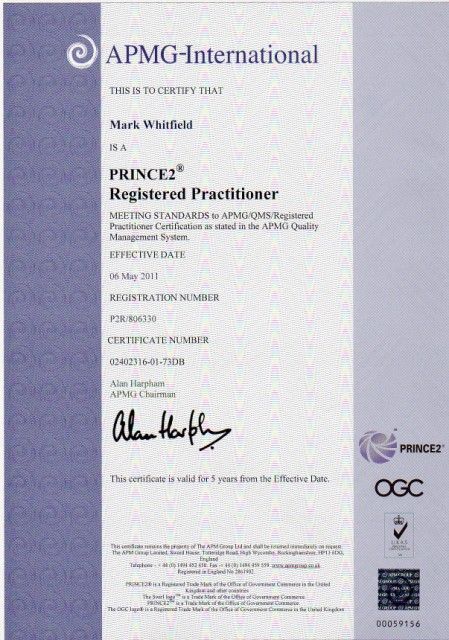
  • 2011 (May–July): PRINCE2 Practitioner, Agile SCRUM, Java, and Android programming. 

2000s: Web Applications & Database Systems 

  • 2009 (March–November): Thales e-Security, BIRT, Web Design, and SQL Server training.
  • 2006 (Feb–Dec): NetObjects Fusion, Cryptography, and Thales e-SECURITY SafeSign.
  • 2004 (March): MultiBatch NSK Job Scheduling.
  • 2000 (February): Fundamentals of Successful Project Management. 

1990s: Core Programming & System Fundamentals

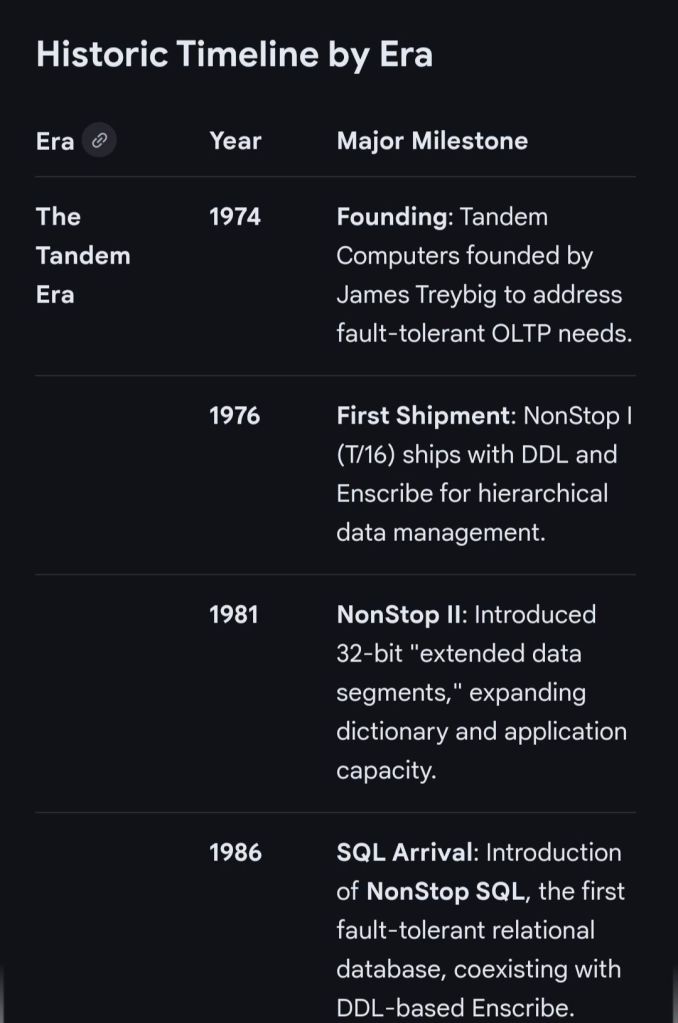
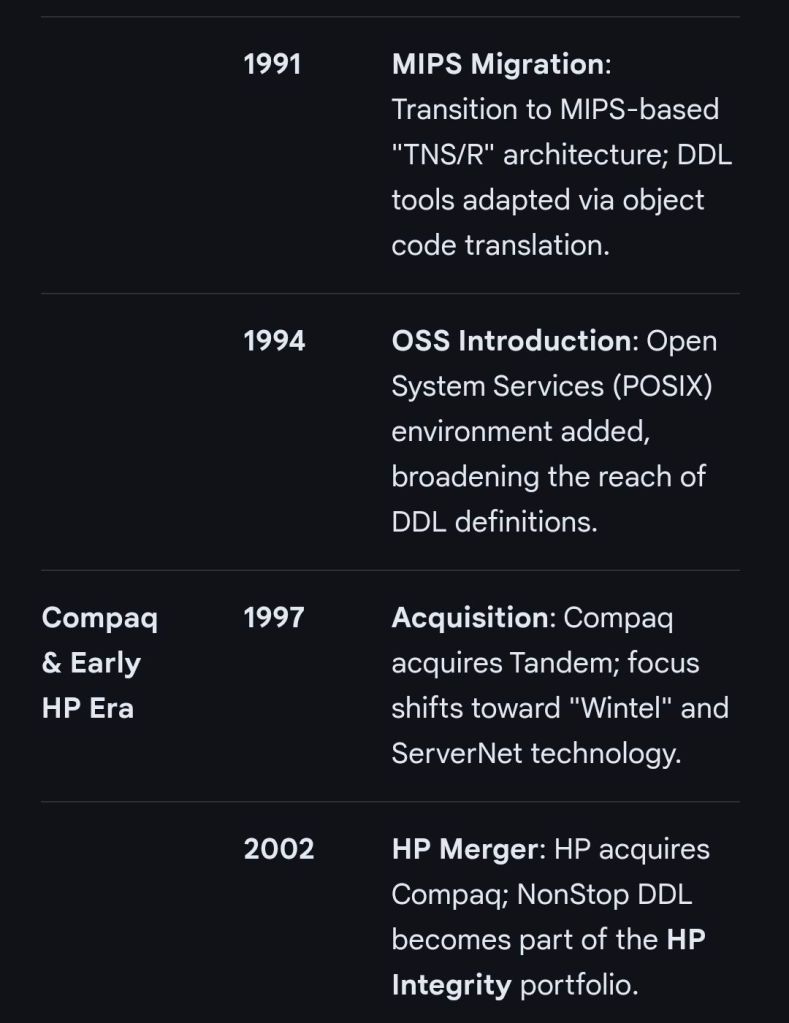
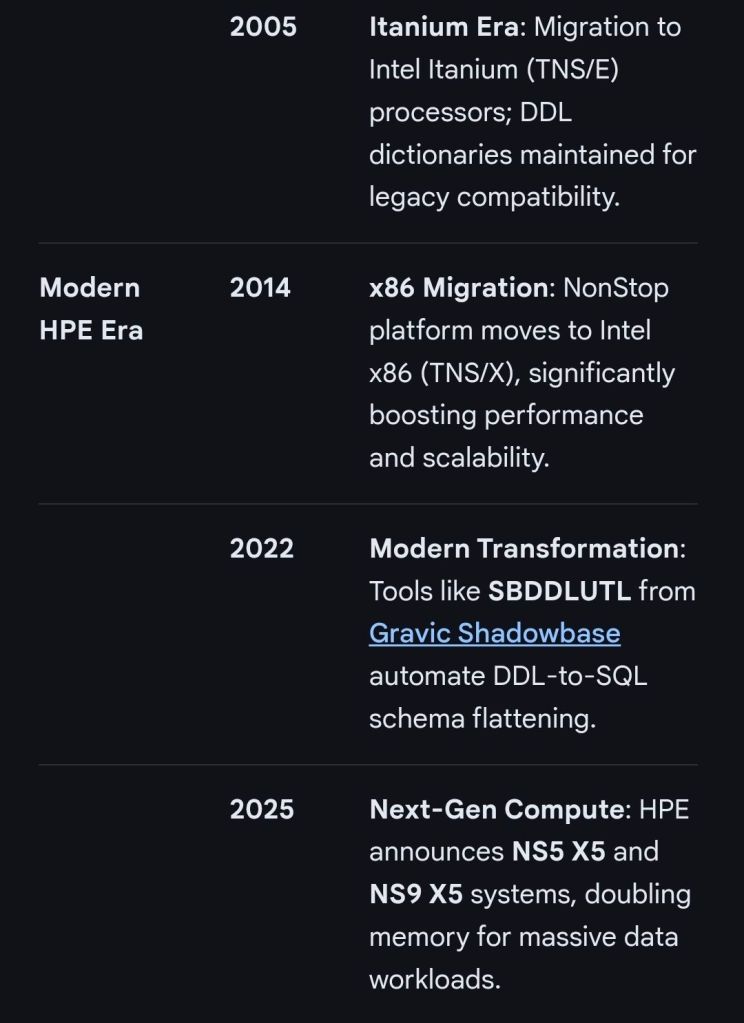
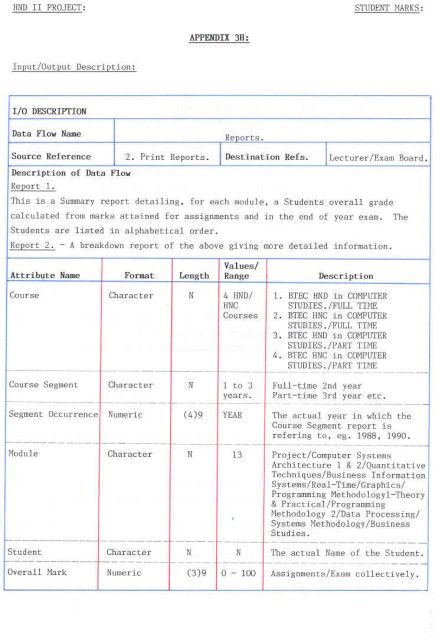
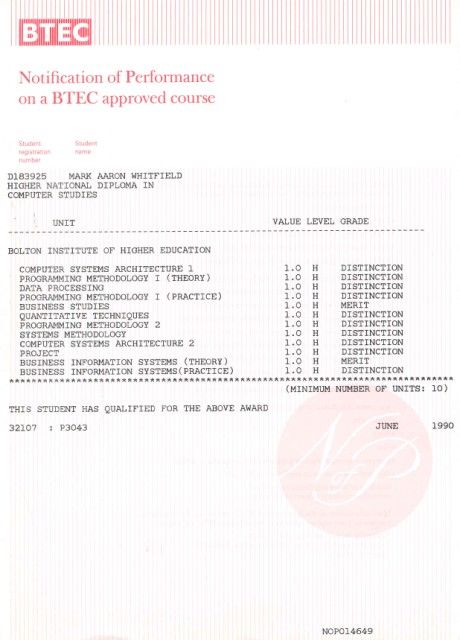
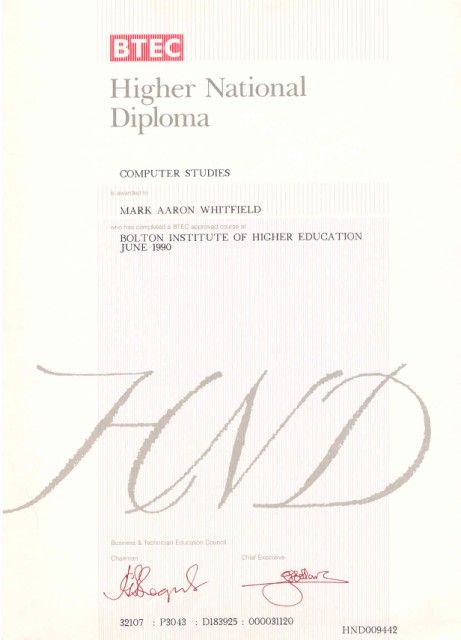
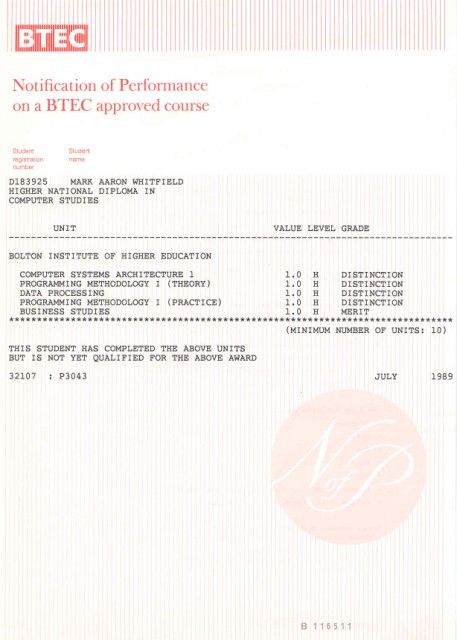
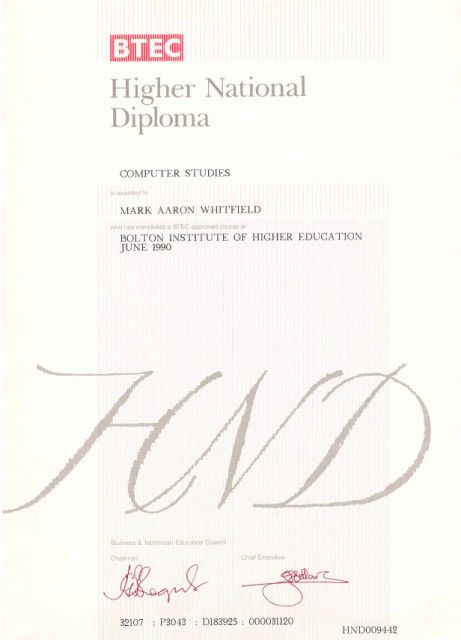
  • 1990s (1993–1999): TANDEM/HP NonStop systems, C/C++ programming, project management, and HND in Computer Studies (1990).

Mark Whitfield Training IT Career Timeline Overview

Mark Whitfield, a Senior IT Project Manager who has spent over 30 years specialising in HP NonStop (formerly Tandem) computing systems

Professional Background

  • Specialisation: Mark Whitfield is a highly experienced technician and project manager for the HP NonStop platform, which is a high-availability, fault-tolerant mainframe environment used primarily for mission-critical financial transactions.
  • Career Timeline:
    • The Software Partnership / Deluxe Data (1990–1995): Began as a programmer working on the sp/ARCHITECT-BANK solution for Tandem computers.
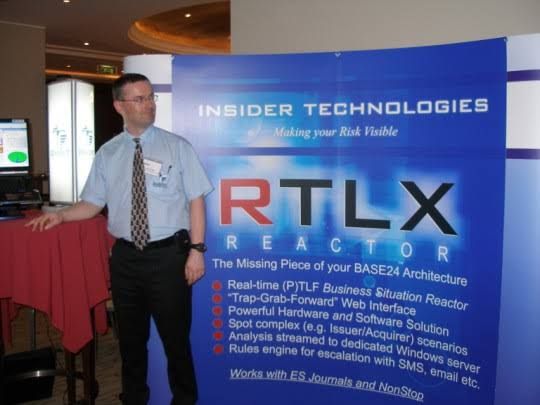
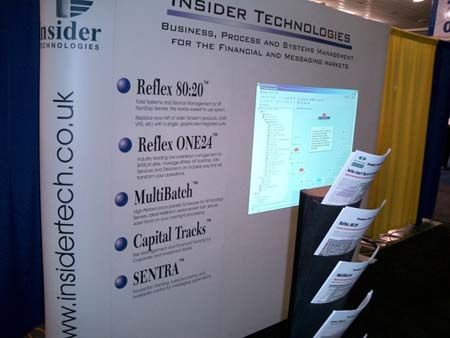
    • Insider Technologies (1995–2013): Spent 18 years focusing on monitoring and diagnostic software for HP NonStop, including products like Reflex 80:20XPERT24, and Enterprise Manager.
    • Capgemini (2016–Present): Currently serves as an SC-cleared Senior Project Manager, delivering complex IT projects for major banks and government agencies. 

Key Technical Contributions to NonStop

  • Product Development: He co-developed Reflex (a platform health/diagnostic tool) and designed XPERT24 to monitor performance in the XPNET layer of BASE24.
  • Financial Systems: He has managed major projects for global financial entities, including BarclaysHSBCBank of England, and Royal Mail Group, often involving ATM and POS monitoring systems.
  • Programming Expertise: His technical skill set includes NonStop-specific languages and tools such as TAL (Tandem Application Language)PATHWAYXPNETCOBOL85, and C++

About HP NonStop Systems

In the context of Mark Whitfield’s work, NonStop refers to a “shared-nothing” architecture designed by Tandem Computers. These systems are uniquely capable of: 

  • Fault Tolerance: Handling hardware or software failures without system downtime.
  • Scalability: Doubling throughput by adding processors (up to 4,000) without hitches in performance.
  • Core Banking: Processing massive commercial workloads for retail banks and stock exchanges globally.

Commodore 64 Home Computer Timeline Overview

The Commodore 64 (C64) is the best-selling single computer model of all time, with an estimated 12.5 to 30 million units sold during its 12-year production run

Commodore 64 Annual Timeline

  • 1981: Development Phase
    • January: Engineers at MOS Technology begin a project to design state-of-the-art video and sound chips (VIC-II and SID) for the next generation of games consoles.
    • November: The cutting-edge chips are completed, and Commodore decides to use them for a new home computer to succeed the VIC-20.
  • 1982: Launch and Early Expansion
    • January: The Commodore 64 is officially introduced at the Consumer Electronics Show (CES) with a starting price of $595.
    • August: The C64 begins shipping in the USA, featuring its iconic “breadbox” design.
    • Other Models: The Japan-only MAX Machine (a console version) and the Educator 64 (aimed at schools) are also released.
  • 1983: Price Wars and Portables
    • January: Commodore introduces the SX-64, the world’s first portable computer with a colour screen, retailing for approximately $1,600.
    • June: To dominate the market, Commodore slashes the C64 price to $300, triggering an intense price war that drives competitors like Texas Instruments out of the market.
  • 1984: Leadership Changes
    • January: Founder Jack Tramiel resigns from Commodore after a disagreement with chairman Irving Gould.
    • Expansion: The Commodore 16 and Plus/4 are introduced as low-cost alternatives, though they lack full C64 compatibility.
  • 1985: Peak Performance
    • C128 Release: Commodore launches the Commodore 128, which includes a dedicated C64 compatibility mode to leverage the existing library.
    • Gaming Dominance: The C64 becomes the primary platform for video games, with thousands of titles released by developers like System 3 and MicroProse.
  • 1986: The Redesign
    • May: The Commodore 64C is released, featuring a sleeker, flatter cream-coloured case similar to the Amiga 500.
    • Milestones: To celebrate selling one million units in Germany, a limited “Gold Edition” is presented at the BMW museum.
  • 1987–1989: Late-Era Variants
    • 1987: The C64 Aldi is sold through German supermarkets as a budget model.
    • 1988: The C64G is introduced, returning to the original breadbox shape but using the modern 64C internal hardware.
  • 1990: Consolidation and Consoles
    • C64 Games System (GS): Commodore attempts to enter the console market by releasing the C64 GS (a keyboardless C64), but it fails to compete with the rising 16-bit systems like the Sega Genesis.
  • 1994: The End of an Era
    • April: Despite reaching a final sales total of roughly 17–22 million units, Commodore International files for bankruptcy and the C64 is officially discontinued. 

Commodore 64 Home Computer Timeline Overview

Techniques for Time Management Overview

Techniques for Time Management Overview

World’s Tallest Buildings Timeline by Era Overview

The timeline of the world’s tallest buildings has evolved from ancient stone monuments to modern steel and concrete megastructures. Historically, the title has shifted from religious and funerary structures in Egypt and Europe to the corporate skyscrapers of North America, and most recently, to the massive mixed-use towers of Asia and the Middle East. 

Ancient & Medieval Era (Spiritual & Funerary)

For millennia, the tallest structures were largely pyramids and cathedrals, often holding records for centuries. 

  • c. 2570 BC – 1311 AD: Great Pyramid of Giza (Egypt) – 146.6m. Held the record for over 3,800 years.
  • 1311 – 1548: Lincoln Cathedral (England) – 160m. The first structure to surpass the Great Pyramid.
  • 1548 – 1884: European Cathedrals (Various) – Following the collapse of Lincoln’s spire, several cathedrals held the title, including St. Mary’s Church (151m) and Cologne Cathedral (157m). 

The Rise of Modern Structures (1884–1930) 

The Industrial Revolution introduced steel frames and safety elevators, moving the “race to the sky” to the United States. 

  • 1884 – 1889: Washington Monument (USA) – 169m. The world’s tallest all-stone structure.
  • 1889 – 1930: Eiffel Tower (France) – 312m. Nearly doubled the previous record; it was the first structure to exceed 300 metres.
  • 1894 – 1908: Philadelphia City Hall (USA) – 167m. Often cited as the first modern building to hold the title. 

The “Golden Age” of NYC Skyscrapers (1930–1974)

A fierce competition in New York City led to rapid record-breaking. 

  • 1930: Chrysler Building – 319m. The first building to surpass 1,000 feet.
  • 1931 – 1970: Empire State Building – 381m. Held the record for 40 years and was the first building with over 100 stories.
  • 1970 – 1973: World Trade Center (North Tower) – 417m. Briefly the world’s tallest before being surpassed by Chicago. 

The Contemporary Era (1974–Present)

The record moved from the US to Asia and the Middle East as construction technology advanced. 

  • 1974 – 1998: Sears Tower (Willis Tower) (USA) – 442m. Held the record for 25 years.
  • 1998 – 2004: Petronas Towers (Malaysia) – 452m. The first time the record left the US in a century.
  • 2004 – 2010: Taipei 101 (Taiwan) – 508m. The first building to reach the 500-metre mark.
  • 2010 – Present: Burj Khalifa (UAE) – 828m. Currently the world’s tallest building, shattered previous records by over 300 metres.
  • 2024: Merdeka 118 (Malaysia) – 678.9m. While not the tallest overall, it was completed in 2024 as the second-tallest building in the world.

World’s Tallest Buildings Timeline by Era Overview

Golf Historical Timeline Overview

The history of golf is broadly categorised into five distinct eras that track its evolution from a forbidden Scottish pastime to a multi-billion dollar global industry. 

1. The Foundation Years (Pre-1400s – 1899)

This era established the basic rules, the 18-hole standard, and the first major championships. 

  • 1457: King James II of Scotland bans golf and football because they distract young men from archery and military training.
  • 1502: King James IV lifts the ban and becomes a golfer himself, leading to the sport’s popularity among royalty.
  • 1744: The first official golf club, the Honourable Company of Edinburgh Golfers, is formed and establishes the first 13 rules of golf.
  • 1764: The Old Course at St Andrews reduces its round from 22 holes to 18 holes, setting the global standard for course length.
  • 1848: The “Guttie” ball (made of gutta-percha) is introduced, making the game more affordable and durable than the original feather-filled leather balls.
  • 1860: The first Open Championship (British Open) is held at Prestwick, won by Willie Park Snr.
  • 1894: The United States Golf Association (USGA) is founded to govern the sport in America.
  • 1895: The first U.S. Open and U.S. Women’s Amateur championships are held. 

2. The Golden Era (1900 – 1945)

This period saw the rise of legendary players, the formalisation of the professional tour, and the transition to steel equipment. 

  • 1916: The PGA of America is founded, and the PGA Championship is inaugurated.
  • 1920s: Steel shafts are patented and eventually legalised by the USGA (1924) and R&A (1929), replacing hickory.
  • 1927: The first Ryder Cup match is played between teams from the United States and Great Britain.
  • 1930Bobby Jones achieves the “Grand Slam” by winning the U.S. Open, U.S. Amateur, British Open, and British Amateur in a single year.
  • 1934: The first Masters Tournament is held at Augusta National, founded by Bobby Jones.
  • 1945Byron Nelson sets a record by winning 11 consecutive tournaments (18 total in the year).

3. The Television Boom (1946 – 1980s)

Broadcast sports turned golf into a global phenomenon, fueled by the rivalry between Jack Nicklaus and Arnold Palmer

  • 1950: The LPGA Tour is officially formed.
  • 1968: The PGA Tour is formally established as a separate entity from the PGA of America.
  • 1971: Astronaut Alan Shepard hits a golf ball on the moon during the Apollo 14 mission.
  • 1970s: Graphite shafts and metal-headed woods (drivers) begin to replace traditional wooden clubs. 

4. The Tiger Era (1990s – 2010) 

The arrival of Tiger Woods sparked a massive surge in popularity, prize money, and athletic training. 

  • 1991: Callaway introduces the Big Bertha driver, popularising oversized metalwood heads.
  • 1997Tiger Woods wins the Masters at age 21 by 12 strokes, becoming the youngest champion and sparking a global “Tiger Boom”.
  • 2009Tiger Woods becomes the first athlete to surpass $1 billion in career earnings. 

5. The Modern Game (2011 – Present)

This era is defined by extreme data analysis (Launch Monitors), advanced technology, and shifting tours. 

  • 2016: Golf returns to the Olympic Games after a 112-year absence.
  • 2022: The launch of LIV Golf introduces a significant competitive landscape shift in professional golf.
  • 2026: A planned “golf ball rollback” is scheduled to manage the increasing distances professional players are hitting the ball.

Golf Historical Timeline Overview

Agile Scrum Evolution Timeline Overview

Agile and Scrum have evolved from specific product development theories into a global standard for project management. While Scrum predates the Agile Manifesto by several years, it has become the most widely adopted framework within the Agile umbrella. 

Agile Scrum Burn down and Burn up charts – can be downloaded from website banner

Evolution Timeline

  • 1986: The Inspiration. Hirotaka Takeuchi and Ikujiro Nonaka publish “The New New Product Development Game” in Harvard Business Review, introducing the “rugby” approach to product development.
  • 1993: The First Scrum. Jeff Sutherland and his team at Easel Corporation implement the first official Scrum.
  • 1995: Public Presentation. Ken Schwaber and Jeff Sutherland formally present Scrum at the OOPSLA ’95 conference, introducing the concept of Sprints.
  • 2001: The Agile Manifesto. 17 software developers meet in Utah to sign the Manifesto for Agile Software Development, codifying the 4 values and 12 principles that define Agile.
  • 2002: Scrum Alliance Founded. The Scrum Alliance is established by Ken Schwaber, Mike Cohn, and Esther Derby to provide training and certifications like the Certified ScrumMaster (CSM).
  • 2009: Founding of Scrum.org. Ken Schwaber founds Scrum.org to provide a more consistent approach to Scrum training and assessments.
  • 2010: The First Scrum Guide. Sutherland and Schwaber publish the first Official Scrum Guide, providing a definitive, minimal definition of the framework.
  • 2011–2017: Iterative Refinements. Updates to the Scrum Guide clarify the Daily Scrum purpose (2013) and emphasize Scrum Values (2016).
  • 2020: The “Simplified” Guide. The latest 2020 Scrum Guide is released, focusing on making the framework less prescriptive and more applicable to non-software industries by removing technical jargon. 

Key Shifts in Scrum Maturity

  • Prescriptive to Descriptive: Early Scrum was highly prescriptive about meetings and roles; modern Scrum focuses on Empiricism (Transparency, Inspection, Adaptation).
  • Team Autonomy: The 2013 update pivoted from “selecting tasks” to focusing on the Sprint Goal, empowering teams to decide how to achieve the objective.
  • Scaling Frameworks: As organizations grew, frameworks like SAFe (2011) and LeSS (2013) emerged to apply Scrum across hundreds of teams.
Plan On a Page POaP for an Agile Scrum project, available for download above