Project Management evolution timeline by era

The history of project management has evolved from ancient manual coordination to highly sophisticated, digital-first methodologies

Pre-20th Century: The Era of Ancient Marvels

During this era, project management was characterized by massive labour forces and basic resource coordination without standardized scheduling tools. 

  • 2570 BC: Completion of the Great Pyramid of Giza. Documentation shows managers were assigned to each of the four faces to oversee progress.
  • 208 BC: Construction of the Great Wall of China. Labour was systematically organized into groups of soldiers, civilians, and criminals.
  • 1850s: Construction of the Pacific Railroad. This is often cited as one of the first large-scale industrial project management undertakings in the U.S.. 

1900–1950: The Birth of Modern Project Management 

This era introduced scientific management principles and the first visual scheduling tools. 

  • 1911Frederick Taylor publishes The Principles of Scientific Management, focusing on efficiency and unskilled labour training.
  • 1917Henry Gantt develops the Gantt Chart, a radical tool for visualising schedules that remains a global standard today.
  • 1931–1936: Construction of the Hoover Dam. This project was a major early adopter of Gantt’s scheduling techniques.
  • 1942–1945The Manhattan Project. This complex R&D effort pioneered the use of large-scale task coordination and resource management. 

1950–1980: The Era of Management Science 

Driven by the Cold War and space race, this period saw the creation of mathematical scheduling techniques. 

  • 1956: AACE International is formed, focusing on cost engineering.
  • 1957–1958: Development of Critical Path Method (CPM) by DuPont and Program Evaluation and Review Technique (PERT) by the U.S. Navy.
  • 1962–1975: Introduction of Work Breakdown Structure (WBS) by the DoD, founding of IPMA and PMI, and development of PROMPT (later PRINCE). 

1980–2000: The Computing Revolution 

Personal computers allowed project management software to proliferate into the private sector. Key milestones included the early Scrum framework and the initial PMBOK Guide release. 

  • 1989–1997: Widespread adoption of Earned Value Management (EVM), release of PRINCE2, and development of Critical Chain Project Management (CCPM)

2000–Present: The Agile and Digital Era 

Modern project management emphasizes flexibility, speed, and digital tools. 

  • 2001: The Agile Manifesto is published.
  • 2012–2021: Release of ISO 21500, major updates to PRINCE2 and PMBOK to integrate Agile, and the shift to performance-based standards in PMBOK 7th Ed.

Project Management evolution timeline by era

Project management has evolved from ancient engineering feats to a highly structured, data-driven discipline. Below is a comprehensive timeline of its historical development and the evolution of its core methodologies. 

Ancient & Early Eras

  • 2570 BC: The Great Pyramid of Giza – Completed with record-keeping and oversight for each of the four faces, demonstrating early forms of planning and control.
  • 208 BC: The Great Wall of China – Built with a massive labour force organised into specific groups: soldiers, ordinary people, and criminals.
  • 1917: Gantt Chart – Developed by Henry Gantt, this scheduling diagram became a radical innovation for tracking project tasks chronologically. 

The Mid-20th Century: Formalization

  • 1956: AACE International Formed – Early practitioners of cost engineering and scheduling founded what is now the leading society for project control specialists.
  • 1957: Critical Path Method (CPM) – Invented by DuPont to address chemical plant maintenance; it saved the company $1 million in its first year.
  • 1958: PERT (Program Evaluation Review Technique) – Developed for the U.S. Navy’s Polaris project to analyse the minimum time needed for task completion.
  • 1962: Work Breakdown Structure (WBS) – Mandated by the U.S. Department of Defense as a hierarchical tree structure for project deliverables.
  • 1965: IPMA Founded – The world’s first project management association was started in Vienna as a global forum for networking.
  • 1969: Project Management Institute (PMI) Launched – Founded to advance the profession, PMI has since become the primary publisher of global standards. 

Late 20th Century: Methodology Proliferation 

  • 1975: PROMPTII & “The Mythical Man-Month” – Guidelines were created for computer projects, while Fred Brooks’s Brooks’s law observed that adding manpower to late software projects makes them later.
  • 1984: Theory of Constraints (TOC) – Introduced by Dr. Eliyahu M. Goldratt, focusing on identifying system bottlenecks.
  • 1986: Scrum – First named as a project management style for software development in a Harvard Business Review paper.
  • 1987: PMBOK Guide First Published – PMI published the first “A Guide to the Project Management Body of Knowledge” as a white paper to standardise practices.
  • 1989: PRINCE & Earned Value Management – The PRINCE method was developed for UK government IT projects; meanwhile, Earned Value Management (EVM) became an essential part of procurement.
  • 1996: PRINCE2 – A more generic revision of PRINCE was published, applicable to any project type.
  • 1997: Critical Chain Project Management (CCPM) – Invented to keep resources levelly loaded and flexible. 

21st Century: Agile & Global Standards

  • 2001: The Agile Manifesto – Written by 17 developers in Utah, codifying the principles of lightweight, iterative software development.
  • 2006: Total Cost Management Framework – Released by AACE International as the first integrated process for portfolio and project management.
  • 2012: ISO 21500:2012 – The International Organisation for Standardisation released its global guidance on project management.
  • 2017: PMBOK 6th Edition & PRINCE2 Update – Updates reflected the integration of Agile practices into traditional project settings.
  • 2021: PMBOK 7th Edition – Shifted toward a principle-based approach to help practitioners be more proactive and innovative.

Home Computer historical development timeline by era

The transition from massive, industrial room-sized mainframes to the “home computer” was driven by the invention of the microprocessor in the early 1970s

The Pre-Home Era (1971–1976) 

Before “home computers” existed as off-the-shelf products, they were sold as DIY kits for electronics hobbyists. 

  • 1971Intel releases the 4004, the first commercial single-chip microprocessor.
  • 1974: The MITS Altair 8800 is featured in Popular Electronics; it is widely considered the spark of the personal computer revolution.
  • 1976Apple Computer is founded. The Apple I goes on sale as a hand-soldered board for $666.66.
  • 1976: MOS Technology releases the KIM-1, the first single-board computer kit. 

The “1977 Trinity” & Early Adoption

In 1977, three computers were released that targeted ordinary consumers rather than just hobbyists. 

  • Apple II: Features colour graphics and eight expansion slots, becoming a standard for schools and early home users.
  • Commodore PET 2001: The first “all-in-one” home computer with a built-in monitor and tape drive.
  • TRS-80 Model I: Sold through Radio Shack stores, making computers accessible on the high street for $399. 

The 1980s Boom

This decade saw fierce competition between manufacturers and the rise of gaming and office productivity. 

  • 1980Sinclair ZX80 launches in the UK as a very low-cost entry point into computing.
  • 1981: The IBM PC is released, creating the “PC-compatible” standard that still dominates today.
  • 1981: The Commodore VIC-20 becomes the first computer to sell over one million units.
  • 1982: The Commodore 64 launches and eventually becomes the best-selling single computer model of all time.
  • 1984Apple launches the Macintosh, the first successful mass-market computer with a Graphical User Interface (GUI) and a mouse.
  • 1985: The Amiga 1000 and Atari ST bring advanced multimedia and multitasking to the home. 

Standardisation & The Modern Age (1990s–Present) 

The market shifted away from proprietary “home computers” toward standardized “PCs” and portable devices. 

  • 1990Microsoft Windows 3.0 is released, making GUI computing standard on IBM-compatible PCs.
  • 1995Windows 95 launches, moving the PC away from its MS-DOS roots and integrating internet support.
  • 1998: The Apple iMac revitalizes Apple’s consumer line with an integrated, colourful design and USB ports.
  • 2010: The Apple iPad introduces the “tablet” as a primary home computing device for many users.
  • 2012: The Raspberry Pi launches, bringing home computing back to its DIY and educational roots.

The history of the home computer evolved from large, room-sized mainframes into the diverse, interconnected devices used today. This timeline categorises the evolution by era and key annual milestones

The Pre-Home Era: Mainframes & Minicomputers (1940s–1960s) 

Before computers could fit in a home, they were massive machines used by governments and corporations. 

  • 1945ENIAC (Electronic Numerical Integrator and Computer) is completed as the first general-purpose electronic digital computer.
  • 1951UNIVAC I is delivered to the US Census Bureau, becoming the first commercial computer produced in the US.
  • 1960DEC PDP-1 is introduced, representing the first “minicomputer” that was smaller than its predecessors.
  • 1965: The DEC PDP-8 launches, becoming the first commercially successful minicomputer. 

The Hobbyist Era: The First Personal Computers (1970–1976) 

The invention of the microprocessor allowed computers to become small enough for individuals to own, though they often required manual assembly. 

  • 1971Intel 4004, the first single-chip microprocessor, is released.
  • 1974: The MITS Altair 8800 appears on the cover of Popular Electronics, sparking the hobbyist revolution.
  • 1976: The Apple I, a single-board computer kit designed by Steve Wozniak, is released.

The “1977 Trinity” & The Home Boom (1977–1983) 

This era saw the transition from kits to fully assembled, consumer-ready “home computers”. 

  • 1977: The “1977 Trinity” launches: the Apple II (with colour graphics), the Commodore PET, and the Tandy TRS-80.
  • 1980Sinclair ZX80 is released as one of the first low-cost home computers in the UK.
  • 1981: The IBM PC is released, setting the industry standard for hardware and software compatibility.
  • 1981: The Osborne 1 is released as the first commercially successful portable computer.
  • 1982: The Commodore 64 launches; it eventually becomes the best-selling single computer model of all time.
  • 1982: The ZX Spectrum is released, becoming a cultural icon in Europe. 

The Graphical User Interface (GUI) Era (1984–1994)

Computers moved away from text-based commands toward visual icons and mice. 

  • 1984: The Apple Macintosh launches, popularising the mouse and Graphical User Interface (GUI).
  • 1985: The Commodore Amiga 1000 and Atari ST launch, bringing advanced multimedia and multitasking capabilities.
  • 1990: Tim Berners-Lee creates the World Wide Web, fundamentally changing how home computers would be used.
  • 1994: PowerPC processors are introduced by Apple, significantly increasing processing speed. 

The Internet & Mobility Era (1995–Present)

Home computing shifted focus toward connectivity, portability, and eventually, the cloud. 

  • 1995Windows 95 is released, integrating internet support and making PCs user-friendly for the masses.
  • 1998: The Apple iMac launches, ditching the floppy drive and embracing USB.
  • 2000s: Laptops begin to outsell desktops as portable computing gains momentum.
  • 2010: The Apple iPad pioneers the modern tablet market, creating a new “casual computing” category.
  • 2012: The Raspberry Pi is released, re-engaging a new generation in hobbyist computer building.
  • 2020s: The rise of Cloud Computing and AI Integration (like the Apple M1 chip) shifts the focus from local storage to remote applications and machine learning.

Golf Historical Timeline Overview

The history of golf is broadly categorised into five distinct eras that track its evolution from a forbidden Scottish pastime to a multi-billion dollar global industry. 

1. The Foundation Years (Pre-1400s – 1899)

This era established the basic rules, the 18-hole standard, and the first major championships. 

  • 1457: King James II of Scotland bans golf and football because they distract young men from archery and military training.
  • 1502: King James IV lifts the ban and becomes a golfer himself, leading to the sport’s popularity among royalty.
  • 1744: The first official golf club, the Honourable Company of Edinburgh Golfers, is formed and establishes the first 13 rules of golf.
  • 1764: The Old Course at St Andrews reduces its round from 22 holes to 18 holes, setting the global standard for course length.
  • 1848: The “Guttie” ball (made of gutta-percha) is introduced, making the game more affordable and durable than the original feather-filled leather balls.
  • 1860: The first Open Championship (British Open) is held at Prestwick, won by Willie Park Snr.
  • 1894: The United States Golf Association (USGA) is founded to govern the sport in America.
  • 1895: The first U.S. Open and U.S. Women’s Amateur championships are held. 

2. The Golden Era (1900 – 1945)

This period saw the rise of legendary players, the formalisation of the professional tour, and the transition to steel equipment. 

  • 1916: The PGA of America is founded, and the PGA Championship is inaugurated.
  • 1920s: Steel shafts are patented and eventually legalised by the USGA (1924) and R&A (1929), replacing hickory.
  • 1927: The first Ryder Cup match is played between teams from the United States and Great Britain.
  • 1930Bobby Jones achieves the “Grand Slam” by winning the U.S. Open, U.S. Amateur, British Open, and British Amateur in a single year.
  • 1934: The first Masters Tournament is held at Augusta National, founded by Bobby Jones.
  • 1945Byron Nelson sets a record by winning 11 consecutive tournaments (18 total in the year).

3. The Television Boom (1946 – 1980s)

Broadcast sports turned golf into a global phenomenon, fueled by the rivalry between Jack Nicklaus and Arnold Palmer

  • 1950: The LPGA Tour is officially formed.
  • 1968: The PGA Tour is formally established as a separate entity from the PGA of America.
  • 1971: Astronaut Alan Shepard hits a golf ball on the moon during the Apollo 14 mission.
  • 1970s: Graphite shafts and metal-headed woods (drivers) begin to replace traditional wooden clubs. 

4. The Tiger Era (1990s – 2010) 

The arrival of Tiger Woods sparked a massive surge in popularity, prize money, and athletic training. 

  • 1991: Callaway introduces the Big Bertha driver, popularising oversized metalwood heads.
  • 1997Tiger Woods wins the Masters at age 21 by 12 strokes, becoming the youngest champion and sparking a global “Tiger Boom”.
  • 2009Tiger Woods becomes the first athlete to surpass $1 billion in career earnings. 

5. The Modern Game (2011 – Present)

This era is defined by extreme data analysis (Launch Monitors), advanced technology, and shifting tours. 

  • 2016: Golf returns to the Olympic Games after a 112-year absence.
  • 2022: The launch of LIV Golf introduces a significant competitive landscape shift in professional golf.
  • 2026: A planned “golf ball rollback” is scheduled to manage the increasing distances professional players are hitting the ball.

Golf Historical Timeline Overview

Agile Scrum Evolution Timeline Overview

Agile and Scrum have evolved from specific product development theories into a global standard for project management. While Scrum predates the Agile Manifesto by several years, it has become the most widely adopted framework within the Agile umbrella. 

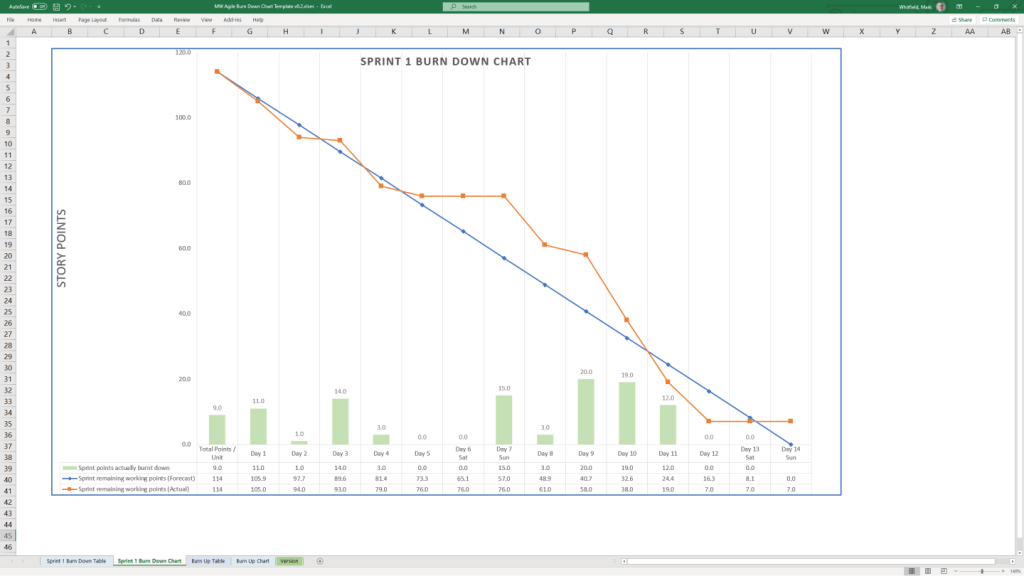
Agile Scrum Burn down and Burn up charts – can be downloaded from website banner

Evolution Timeline

  • 1986: The Inspiration. Hirotaka Takeuchi and Ikujiro Nonaka publish “The New New Product Development Game” in Harvard Business Review, introducing the “rugby” approach to product development.
  • 1993: The First Scrum. Jeff Sutherland and his team at Easel Corporation implement the first official Scrum.
  • 1995: Public Presentation. Ken Schwaber and Jeff Sutherland formally present Scrum at the OOPSLA ’95 conference, introducing the concept of Sprints.
  • 2001: The Agile Manifesto. 17 software developers meet in Utah to sign the Manifesto for Agile Software Development, codifying the 4 values and 12 principles that define Agile.
  • 2002: Scrum Alliance Founded. The Scrum Alliance is established by Ken Schwaber, Mike Cohn, and Esther Derby to provide training and certifications like the Certified ScrumMaster (CSM).
  • 2009: Founding of Scrum.org. Ken Schwaber founds Scrum.org to provide a more consistent approach to Scrum training and assessments.
  • 2010: The First Scrum Guide. Sutherland and Schwaber publish the first Official Scrum Guide, providing a definitive, minimal definition of the framework.
  • 2011–2017: Iterative Refinements. Updates to the Scrum Guide clarify the Daily Scrum purpose (2013) and emphasize Scrum Values (2016).
  • 2020: The “Simplified” Guide. The latest 2020 Scrum Guide is released, focusing on making the framework less prescriptive and more applicable to non-software industries by removing technical jargon. 

Key Shifts in Scrum Maturity

  • Prescriptive to Descriptive: Early Scrum was highly prescriptive about meetings and roles; modern Scrum focuses on Empiricism (Transparency, Inspection, Adaptation).
  • Team Autonomy: The 2013 update pivoted from “selecting tasks” to focusing on the Sprint Goal, empowering teams to decide how to achieve the objective.
  • Scaling Frameworks: As organizations grew, frameworks like SAFe (2011) and LeSS (2013) emerged to apply Scrum across hundreds of teams.
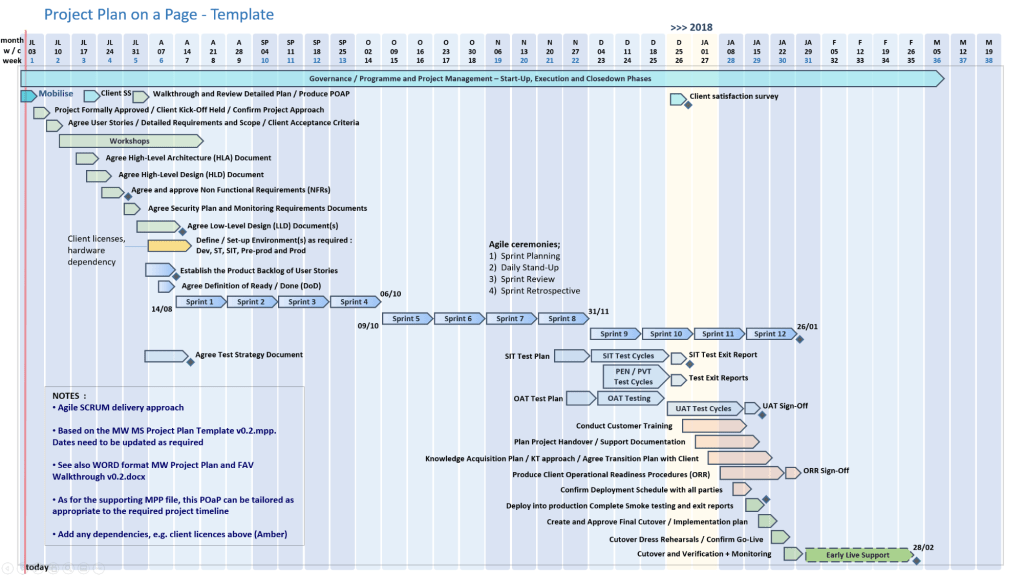
Plan On a Page POaP for an Agile Scrum project, available for download above

Agile Development History Timeline Overview

Agile’s history is a transition from rigid, manufacturing-based “Waterfall” models to flexible, people-centric frameworks. While the term was coined in 2001, its roots trace back to early 20th-century industrial practices and the “software crisis” of the 1960s. 

Early Foundations (Pre-1990s)

Before Agile became a formal software methodology, its core principles of efficiency and iteration emerged from manufacturing and early computing.

  • 1896: Sakichi Toyota introduced the “Stop and Notify” concept (Jidoka), a foundational Lean/Agile practice for immediate problem-solving.
  • 1948: The Toyota Production System (TPS) established Lean manufacturing and the Kanban system to manage workflow.
  • 1957: IBM began using incremental development on large software projects.
  • 1970: Winston Royce published “Managing the Development of Large Software Systems,” which formalized the Waterfall Model but actually cautioned against its rigidity.
  • 1986: Takeuchi and Nonaka published The New New Product Development Game, introducing the “rugby” metaphor for team-based development that inspired Scrum

The Rise of “Lightweight” Methods (1990–2000) 

Frustrated by Waterfall’s slow delivery, practitioners developed several “lightweight” frameworks. 

  • 1991: Rapid Application Development (RAD) popularized timeboxing and iterations.
  • 1993: Jeff Sutherland and his team first implemented Scrum at Easel Corporation.
  • 1994: The Dynamic Systems Development Method (DSDM) was created as a vendor-independent RAD framework.
  • 1995: Ken Schwaber and Jeff Sutherland formally co-presented Scrum at the OOPSLA conference.
  • 1996: Kent Beck introduced Extreme Programming (XP), emphasizing practices like pair programming and continuous testing.
  • 1997: Feature-Driven Development (FDD) and Crystal Clear emerged as alternative iterative models. 

Formalisation & Modern Evolution (2001–Present)

The movement unified under a single name and eventually scaled to entire enterprises. 

  • 2001: 17 software leaders met at Snowbird, Utah, to draft the Agile Manifesto, establishing four core values and 12 principles.
  • 2003: The book Lean Software Development by Mary and Tom Poppendieck officially bridged Lean manufacturing and software agility.
  • 2009: The concept of DevOps emerged, extending Agile principles into IT operations and deployment.
  • 2011: The Scaled Agile Framework (SAFe) was introduced to help large organizations manage multiple Agile teams.
  • 2012–2015: Agile surpassed the 50% mark in global adoption, becoming the industry standard for development.
  • 2020s: Agile principles are now widely applied outside of tech, in fields like marketing, education, and HR

Agile’s evolution is not just a 21st-century phenomenon but a response to decades of “software crises” and rigid industrial processes. Below is a comprehensive historical breakdown of Agile’s journey. 

1. Pre-Digital Foundations (1910s – 1940s)

Long before software, the concepts of efficiency and waste reduction were born in manufacturing. 

  • 1911: Scientific Management. Frederick Taylor encouraged managers to adopt worker suggestions for efficiency, opposing rigid habits.
  • 1940s: Lean Manufacturing (Toyota). Toyota pioneered the “Just-in-Time” method and Kaizen (continuous improvement) after observing American supermarkets.
  • 1948: Toyota Production System. Introduction of Kanban for visual workflow management. 

2. Early Iterative Development (1950s – 1970s)

The 1950s saw the first departures from strictly sequential “waterfall” planning. 

  • 1957: Incremental Development. IBM and Motorola teams, including Gerald Weinberg, used iterative methods indistinguishable from modern Extreme Programming (XP) for Project Mercury.
  • 1968: NATO Software Engineering Conference. Formally identified the “Software Crisis” (projects being late and over budget), sparking a search for better methodologies.
  • 1970: Waterfall Formalised (and Critiqued). Winston Royce described the Waterfall model but notably advocated for iterative releases to reduce risk. 

3. The Proliferation of “Lightweight” Methods (1980s – 1990s) 

Frustration with heavyweight, document-heavy processes led to several “Agile” precursors. 

  • 1986: “The New New Product Development Game.” Takeuchi and Nonaka published this HBR article, introducing the “Rugby” approach (teamwork over relay-race handoffs), which directly inspired Scrum.
  • 1991: Rapid Application Development (RAD). James Martin introduced RAD, emphasising fast prototyping and client feedback.
  • 1993–1995: The Birth of Scrum. Jeff Sutherland and Ken Schwaber formalised Scrum, presenting it at the OOPSLA ’95 conference.
  • 1996: Extreme Programming (XP). Kent Beck introduced XP at Chrysler, focusing on technical excellence through practices like Pair Programming and Test-Driven Development

4. The Agile Manifesto & Formalisation (2001 – 2010)

Agile moved from a collection of “lightweight” methods to a global standard. 

  • 2001: The Agile Manifesto. 17 developers met in Snowbird, Utah, to draft the Manifesto for Agile Software Development, establishing four core values and 12 principles.
  • 2003: Lean Software Development. Mary and Tom Poppendieck adapted Toyota’s Lean principles specifically for software engineering.
  • 2009: Software Craftsmanship. The Software Craftsmanship Manifesto emerged to refocus the community on the quality of the “craft” rather than just project management.
  • 2010: The First Scrum Guide. Published as the definitive resource on Scrum framework rules. 

5. Scaling and Modern Business Agility (2011 – Present) 

Agile expanded beyond coding into enterprise-wide strategy. 

  • 2011: Scaled Agile Framework (SAFe). Dean Leffingwell launched SAFe to help large corporations apply Agile at scale.
  • 2015–2017: Project Management Integration. Major bodies like AXELOS released PRINCE2 Agile, and the PMI introduced the Agile Certified Practitioner (ACP).
  • 2020s: Beyond Software. Agile principles are now standard in marketing, HR, and hardware development through concepts like Business Agility

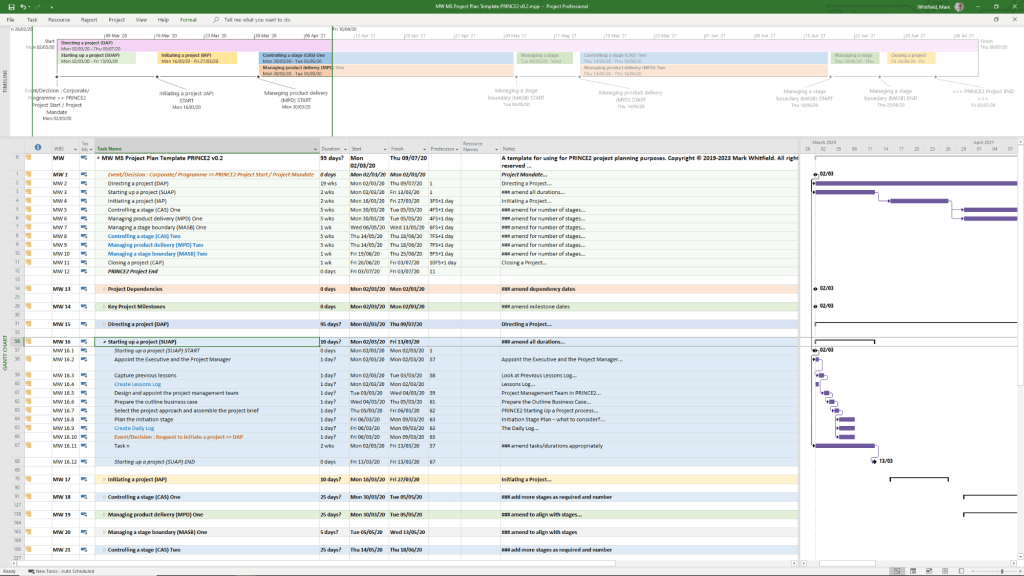
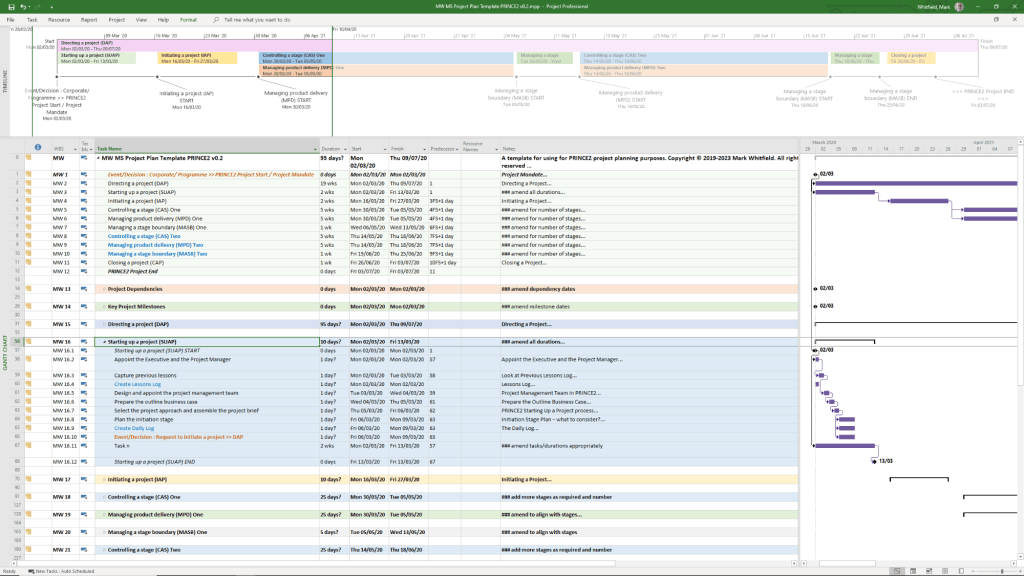
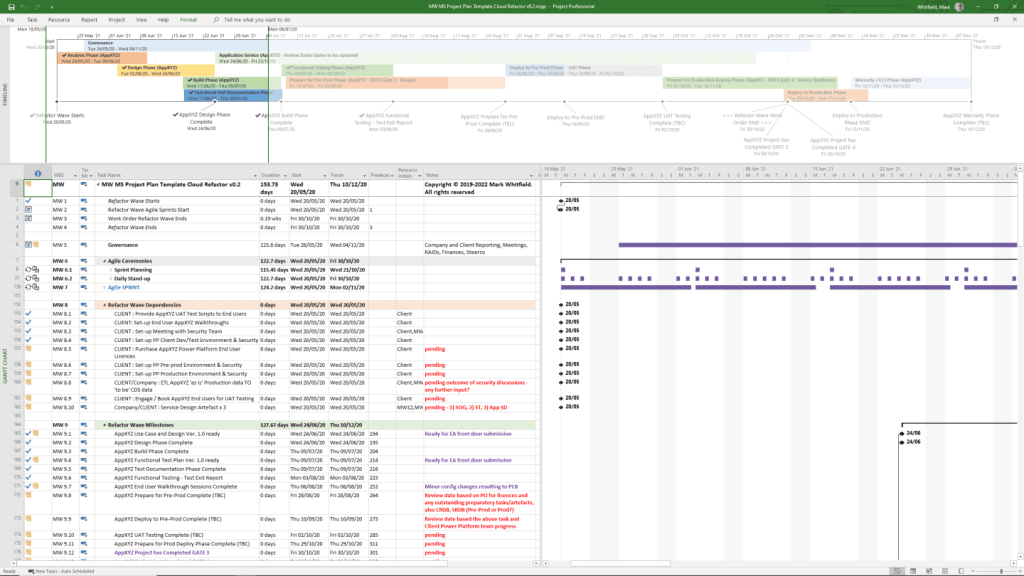
Microsoft Project Timeline, Development History Overview

Microsoft Project has evolved from a DOS-based tool in the 1980s into a cloud-integrated platform. Its “Timeline” feature specifically has transitioned from a simple static view to a multi-layered, interactive reporting tool. 

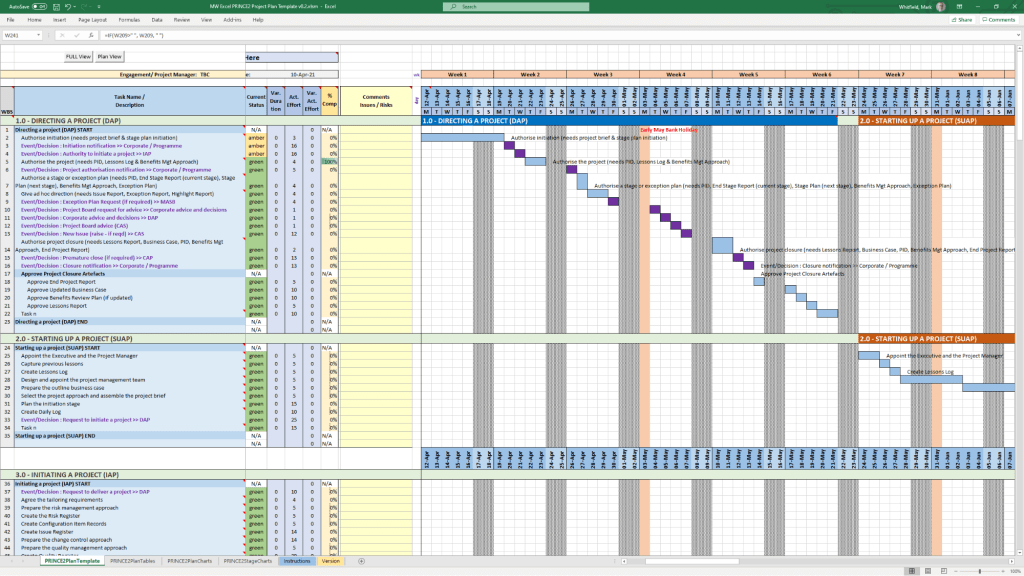
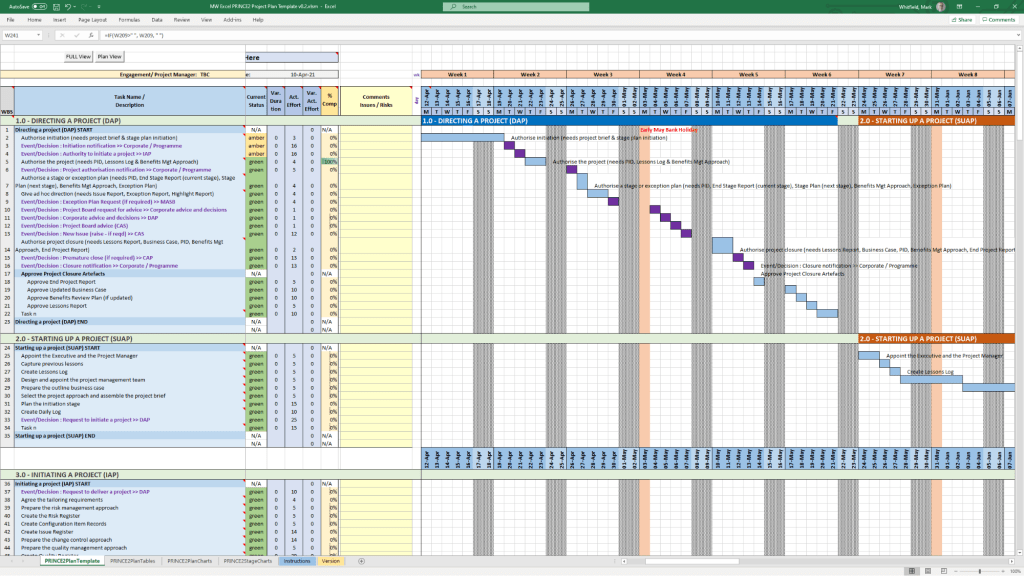
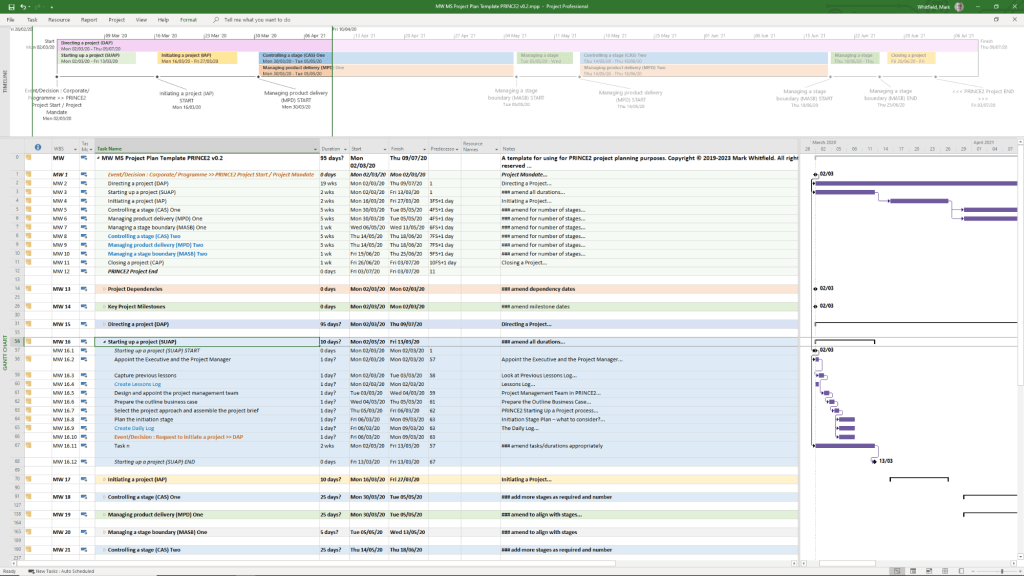
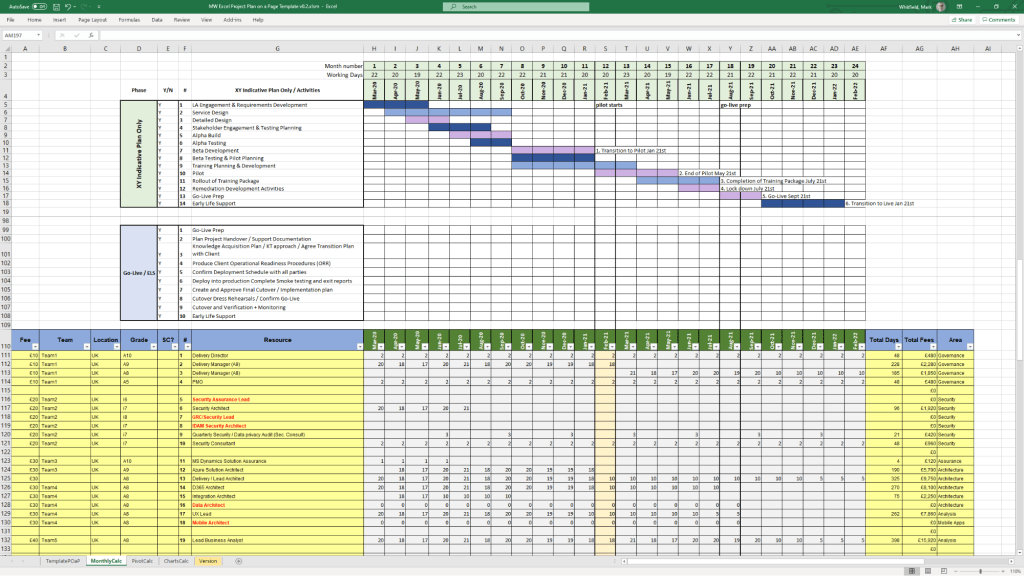
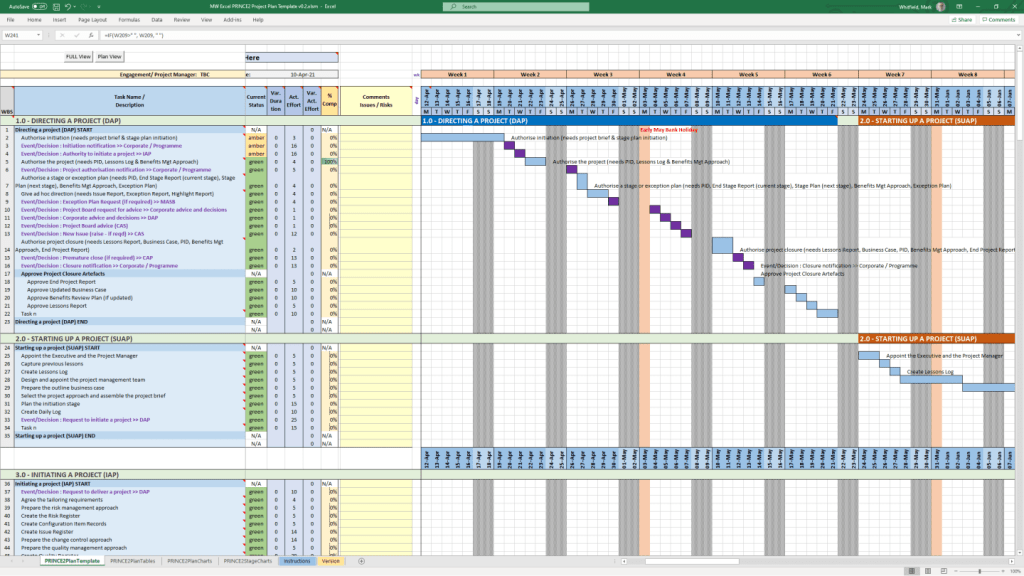
Template included in package – see website banner

Timeline Feature Development History

  • Early Era (1984–2007): For decades, the “timeline” was synonymous with the Gantt Chart. Users had to rely on complex print-outs or third-party tools to create high-level summaries for executives.
  • The dedicated Timeline View (2010): Microsoft introduced a native Timeline view in Project 2010, allowing users to cherry-pick specific tasks and milestones to display on a single horizontal bar.
  • Multi-Timeline Support (2016): Project 2016 expanded this by allowing multiple timeline bars in a single view. This enabled managers to represent different project phases or workstreams with independent start and end dates.
  • Cloud & Web Integration (2019–Present): With the launch of Project for the web, timelines became more interactive, supporting drag-and-drop adjustments and real-time co-authoring.
  • Task History Tracking (2023): Microsoft added a Task History pane to the web version, allowing users to see a chronological log of changes to specific timeline items. 

Key Components of a Modern MS Project Timeline

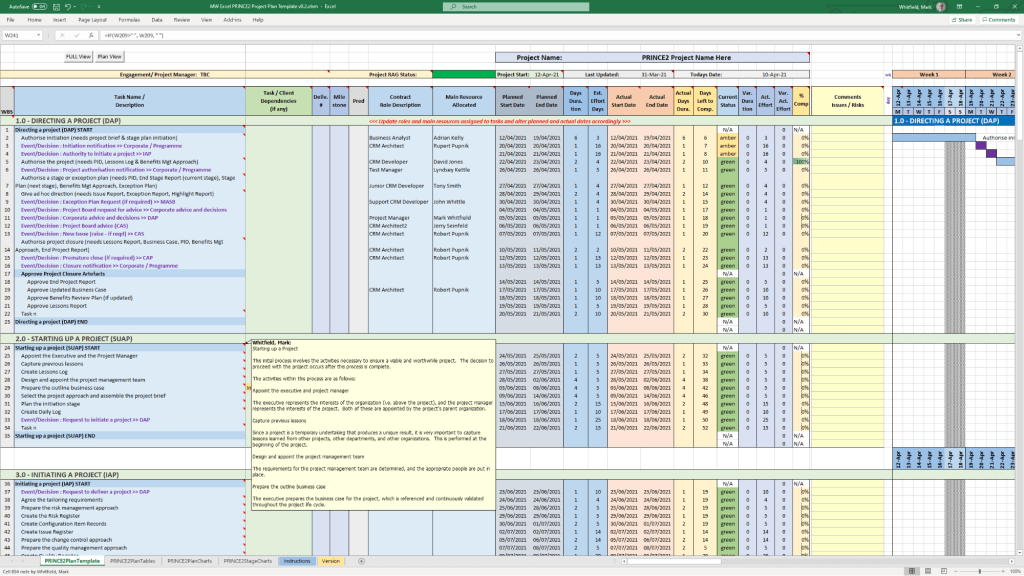
Templates included in download bundle – see website banner
  • Gantt-Style Visualization: Displays tasks as horizontal bars against a calendar timescale.
  • Milestones & Callouts: Important dates appear as diamonds or labels that can be dragged above or below the main bar to avoid clutter.
  • Dependencies: Visual links between tasks that illustrate the sequence of work and the Critical Path.
  • Copy for Presentation: A dedicated formatting tool that allows users to export the timeline directly to Microsoft PowerPoint or email at various sizes (Small, Medium, Full Size). 

Future Outlook

Template included in download bundle – see website banner

Microsoft has announced that Project Online will be officially retired on 30 September 2026, with development focus shifting entirely to the new Microsoft Planner and Project for the web ecosystem.

Microsoft Project Timeline, Development History Overview

Leigh Town, Lancashire – Timeline History

Leigh, a historic market town in South Lancashire, evolved from a collection of medieval agricultural townships into a powerhouse of the Industrial Revolution. Below is a timeline of its development. 

Early History & Foundations

  • Ancient Origins: Neolithic stone axes and Bronze Age spearheads suggest activity as early as 1500–1000 BC.
  • Medieval Growth: The name “Leigh” (Saxon for “meadow” or “pasture”) was recorded as Leech in 1264. The town was the centre of an ecclesiastical parish including the townships of Bedford, Pennington, and Westleigh.
  • 1642: During the English Civil War, local “Chowbenters” (men from nearby Atherton) defeated Royalist troops in a battle at Leigh on 2nd December.
  • 1651: The Earl of Derby spent his final night at the King’s Arms in Leigh before his execution in Bolton. 

Industrial Revolution & Expansion

  • 1795: The Bridgewater Canal was extended to Leigh, linking the town to Manchester’s industrial network.
  • 1820: The Leigh Branch Canal opened, connecting the town to the Leeds and Liverpool Canal.
  • 1828: The Bolton and Leigh Railway opened—the first public railway in Lancashire.
  • 1839: The “Leigh Feight” occurred on 14th August, a major Chartist protest and riot involving over 2,000 people.
  • 1850s: The Leigh Union Workhouse was established at Atherleigh.
  • Late 19th Century: Large multi-storey cotton mills like Leigh Spinners (Grade II*) and Mather Lane Mill (Grade II) transformed the skyline. 

Civic Development

  • 1875: The townships of Bedford, Pennington, and Westleigh merged to form the Leigh Local Board.
  • 1894: Leigh became an Urban District.
  • 1899: Leigh was granted a Royal Charter, becoming a Municipal Borough.
  • 1907: The current Leigh Town Hall was completed on Market Street.
  • 1920: Pennington Hall and its grounds were gifted to the people of Leigh, eventually becoming Pennington Park. 

Modern Era

  • 1974: Under the Local Government Act 1972, the Municipal Borough was abolished and Leigh became part of the Metropolitan Borough of Wigan in Greater Manchester.
  • 1992: The last coal mines in the area, Bickershaw and Parsonage Collieries, closed on 13th March.
  • 2008: Leigh Sports Village was officially opened by Queen Elizabeth II.
  • 2016: The Leigh-Salford-Manchester Guided Busway opened to provide rapid transit to Manchester city centre.
  • 2023: The Leigh Leopards rugby league team won the Challenge Cup for the first time in 52 years.

Leigh’s history is a classic Lancashire tale of transition from a rural collection of townships to an industrial powerhouse. Here is a timeline of its most significant milestones: 

Early Origins & Medieval Period

  • Stone Age & Roman Era: Archaeological finds in the area include a Stone Age axe in Pennington and a Roman coin in Bedford.
  • 12th Century: The name “Leigh” (from the Old English leah, meaning a woodland clearing) appears in records. The ancient parish originally consisted of six townships: AstleyAtherton, Bedford, Pennington, Tyldesley cum Shakerley, and Westleigh.
  • 1189–1199: Higher Hall, the manor house of Westleigh, dates back to the reign of Richard I. 

Conflict & Industrial Revolution

  • 1642: During the English Civil War, local Parliamentarians (the “Chowbenters”) defeated Royalist troops in the Battle of Leigh.
  • 1760s: Local legend attributes the invention of the spinning jenny and the water frame to Thomas Highs of Leigh, marking the start of its textile dominance.
  • 1795–1820: The Bridgewater Canal was extended to Leigh (1795), followed by the Leigh branch of the Leeds and Liverpool Canal (1820), making the town a critical hub for coal and textiles.
  • 1828: The Bolton and Leigh Railway opened for freight, becoming the first public railway in Lancashire.
  • 1839: The “Leigth Feight” occurred on 14 August, when a mob of 2,000 Chartist strikers clashed with troops over high unemployment and living costs.

Civic Development & Modern Era

  • 1875: The townships of Bedford, Pennington, and Westleigh merged to form the Leigh Local Board, officially adopting “Leigh” as the town’s name.
  • 1899: Leigh was granted a Royal Charter to become a Municipal Borough.
  • 1907: The current Leigh Town Hall, designed by J.C. Prestwich, was completed.
  • 1911: The textile industry peaked, with over 6,000 people employed in the town’s mills.
  • 1974: Under local government reorganisation, Leigh ceased to be an independent borough and became part of the Metropolitan Borough of Wigan in Greater Manchester.
  • 2008: The Leigh Sports Village opened, providing a modern home for the Leigh Leopards rugby league team.
  • 2016: The Leigh-Salford-Manchester guided busway opened, re-establishing a rapid transport link to Manchester. 

Leigh College, Marshall Street, Leigh, Lancs

Building below demolished 2007 and now rebuilt at the Leigh Sports Village – 1234 article by Julie McKiernan courtesy of PastForward, produced by Wigan Archives & Museums, Issue No. 97, August – November 2024, Marking 50 years of the borough, Wigan and Leigh’s local history magazine – Address: Past Forward, Archives, Wigan & Leigh, Leigh Town Hall, Mark Street, Leigh, WN7 1DY

mark whitfield DSCF0519
Leigh College, Marshall Street, Leigh, Lancs

Insider Technologies Limited, Spinnaker Court, Chandlers Point, 37 Broadway, Salford Quays, M50 2YR

Insider Technologies Limited, Spinnaker Court, Chandlers Point, 37 Broadway, Salford Quays, M50 2YR

Company Website – Open Content Management Framework, DotNetNuke

In the early part of the millenium, ITL requested that I design and author a new company website using the Open Content
Management framework, DotNetNuke. This is a Visual Basic .NET Microsoft SQL database driven technology that enables website updates from any location with internet browser access.

As part of this exercise, website prominence was a key driver along with a more professional, corporate look-and-feel. The website is an ongoing programme of work that takes up a few hours a week of my time in taking it forward. I have attended 2 gbdirect (iTrain) website courses in this regard; ‘Writing for the Web’ and ‘Website Prominence and Visibility’. More information.

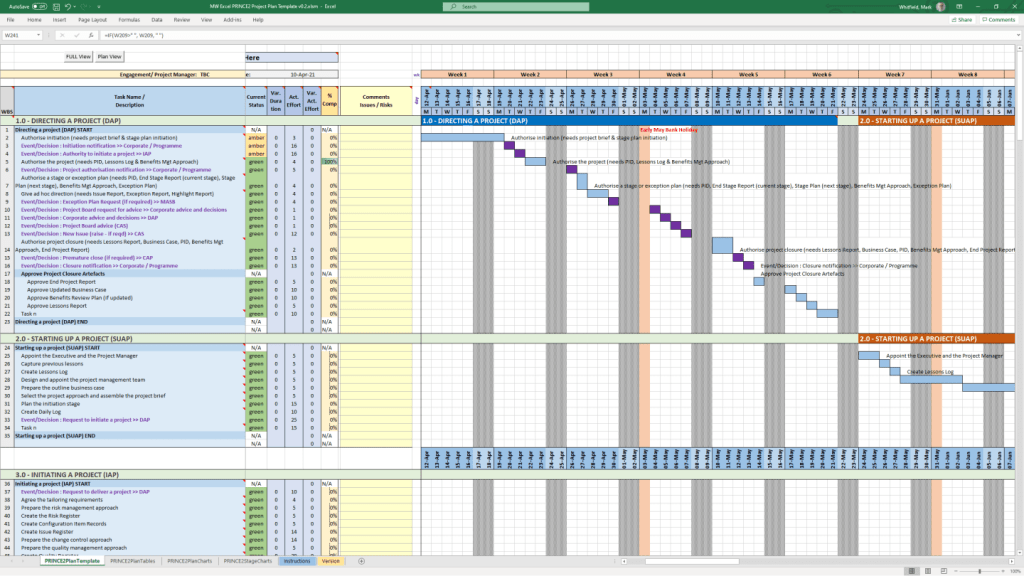
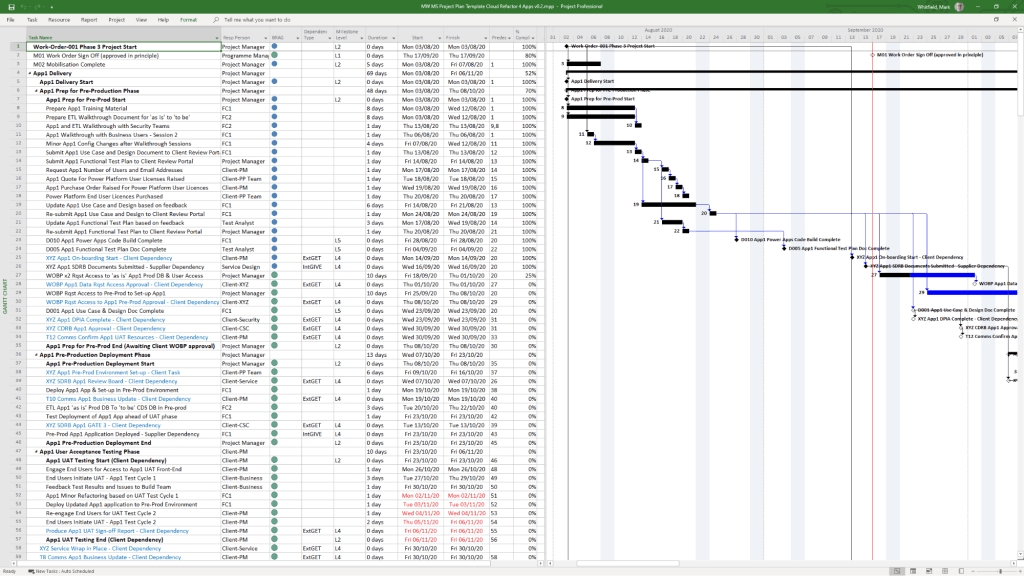
Project Management Templates Agile Scrum Waterfall PRINCE2 POAP RAID logs MPP MPT Excel Cost Budget Trackers etc. FREE Upgrades

https://ipropmtemplates.gumroad.com/l/project-templates

Project Management Templates Agile Scrum Waterfall PRINCE2 POAP RAID logs MPP MPT Excel Cost Budget Trackers etc. FREE Upgrades

etc.

Requirement Elicitation in Project Management, Business Analyst BA

Requirement Elicitation in Project Management, Business Analyst BA

Agile Burn down vs Burn up Charts – When to use each

Agile Burn down vs Burn up Charts – When to use each

Transaction Application Language – TAL on HP HPE Nonstop mainframes (previously Tandem)

Transaction Application Language

Programming language

Tandem TAL - Visual Studio Marketplace
TAL User Defined Language for Notepad++ | sybond/project
Transaction Application Language – TAL on HP HPE Nonstop mainframes (previously Tandem)

Transaction Application Language or TAL is a block-structured, procedural language optimized for use on Tandem hardware. TAL resembles a cross between C and Pascal. It was the original system programming language for the Tandem Computers CISC machines, which had no assembler.

Source: Wikipedia

Transaction Application Language or TAL (originally “Tandem Application Language”) is a block-structured,[1] procedural language optimized for use on Tandem (and later HP NonStop) hardware. TAL resembles a cross between C and Pascal. It was the original system programming language for the Tandem Computers CISC machines, which had no assembler.[2]

Transaction Programming Language (TAL)
ParadigmBlock-structured procedural language
DeveloperHewlett-Packard Enterprise (originally Tandem Computers)
First appearedmid 1970s
PlatformMIPS, Itanium, x86-64
OSNonStop OS
LicenseProprietary commercial software
File formatsunstructured, Enscribe, NonStop SQL/MP, NonStop SQL/MX
Dialects
TAL, pTAL, epTAL
Influenced by
ALGOL, Pascal, C

The design concept of TAL, an evolution of Hewlett-Packard‘s SPL, was intimately associated and optimized with a microprogrammed CISC instruction set. Each TAL statement could easily compile into a sequence of instructions that manipulated data on a transient floating register stack. The register stack itself floated at the crest of the program’s memory allocation and call stack.

The language itself has the appearance of ALGOL or Pascal, with BEGIN and END statements. However, its semantics are far more like C. It does not permit indefinite levels of procedure nesting, it does not pass complex structured arguments by value, and it does not strictly type most variable references. Programming techniques are much like C using pointers to structures, occasional overlays, deliberate string handling and casts when appropriate.

Available datatypes include 8-bit, 16-bit, 32-bit and (introduced later) 64-bit integers.[3] Microcode level support was available for null terminated character strings. However, this is not commonly used.

Originally the Tandem NonStop operating system was written in TAL. Much of it has since been rewritten in C and TAL has been deprecated for new development.

In the migration from CISC to RISC, TAL was updated/replaced with pTAL – compilers allowed TAL to be re-compiled into Native RISC Applications. Later, the epTAL compiler was introduced for Itanium processors.

ERP Implementation Cycle – Enterprise Resource Planning

ERP Implementation Cycle – Enterprise Resource Planning

ERP stands for Enterprise Resource Planning, a software system that integrates and manages a company’s core business processes, such as finance, HR, manufacturing, and supply chain, into a single, unified platform.

By using a central database, an ERP system provides real-time data visibility, standardizes processes, and enables seamless communication across different departments, helping organizations operate more efficiently.

What ERP systems do:
Integrate business functions: ERP systems break down information silos by connecting various departments like sales, accounting, and human resources.

Provide a single source of truth: A shared database ensures that everyone in the organization uses the same, accurate information for their work.

Streamline operations: By automating processes and offering synchronized reporting, ERP systems improve productivity and agility.

Offer real-time visibility: Stakeholders can access up-to-date information on business performance at any time, aiding in decision-making and planning.

Common ERP modules and functions include:
Finance: Managing accounting, budgeting, and financial reporting.

Human Resources (HR): Handling payroll, employee data, recruitment, and workforce management.

Manufacturing: Supporting materials planning and production processes.

Supply Chain Management: Integrating inventory, procurement, and order management.

Sales and Customer Relationship Management (CRM): Streamlining sales processes and managing customer interactions.