Improving SEO on WordPress, a mix of technical config, content strategy, & optimization plugins

Improving SEO on WordPress requires a mix of technical configuration, content strategy, and optimization plugins. WordPress is naturally SEO-friendly, but you must configure it correctly to maximize search engine visibility.

Overview of WordPress SEO

WordPress SEO focuses on three main pillars:

  • Technical SEO: Ensuring search engines can crawl and index your site quickly.
  • On-Page SEO: Creating high-quality content optimized for specific user search terms.
  • Performance: Delivering a fast, secure, and mobile-friendly user experience.

Structured Breakdown by Focus Area

1. Core Technical Configuration

  • Search Engine Visibility
    • Ensure the “Discourage search engines from indexing this site” box is unchecked in your Reading settings.
  • Permalinks
    • Change the URL structure to “Post Name” for clean, keyword-rich web addresses.
  • WWW vs. Non-WWW
    • Choose one format in General Settings and ensure the other redirects to it consistently.

2. Specialized Plugins & Indexing

  • SEO Plugin Deployment
    • Install Yoast SEO, Rank Math, or All in One SEO to manage meta data.
  • XML Sitemaps
    • Generate a dynamic XML sitemap via your SEO plugin and submit it to Google Search Console.
  • Robots.txt Optimization
    • Edit this file to block search bots from crawling sensitive core admin folders.

3. On-Page Content Optimization

  • Keyword Placement
    • Add your target keyword to the title, first paragraph, headings, and URL slug.
  • Meta Titles & Descriptions
    • Write catchy, character-limited titles and summaries for every post to boost click-through rates.
  • Heading Structure
    • Use exactly one H1 tag per page for the title, followed by logical H2 and H3 tags.
  • Image Optimization
    • Compress image files before uploading and write descriptive Alt Text containing relevant keywords.

4. Performance & Security

  • Site Speed
    • Use a caching plugin like LiteSpeed Cache or WP Rocket to decrease page load times.
  • Hosting Quality
    • Migrate to a managed WordPress host to ensure high server uptime and fast response rates.
  • SSL Certificate
    • Activate HTTPS encryption through your host to establish data security and gain search trust.

5. Link Management

  • Internal Linking
    • Link new articles to older, relevant posts to distribute page authority across your site.
  • Broken Link Prevention
    • Install a redirection plugin to fix 404 errors and guide users away from dead pages.
  • Permalinks Consistency
    • Never change an existing post URL without setting up a permanent 301 redirect.
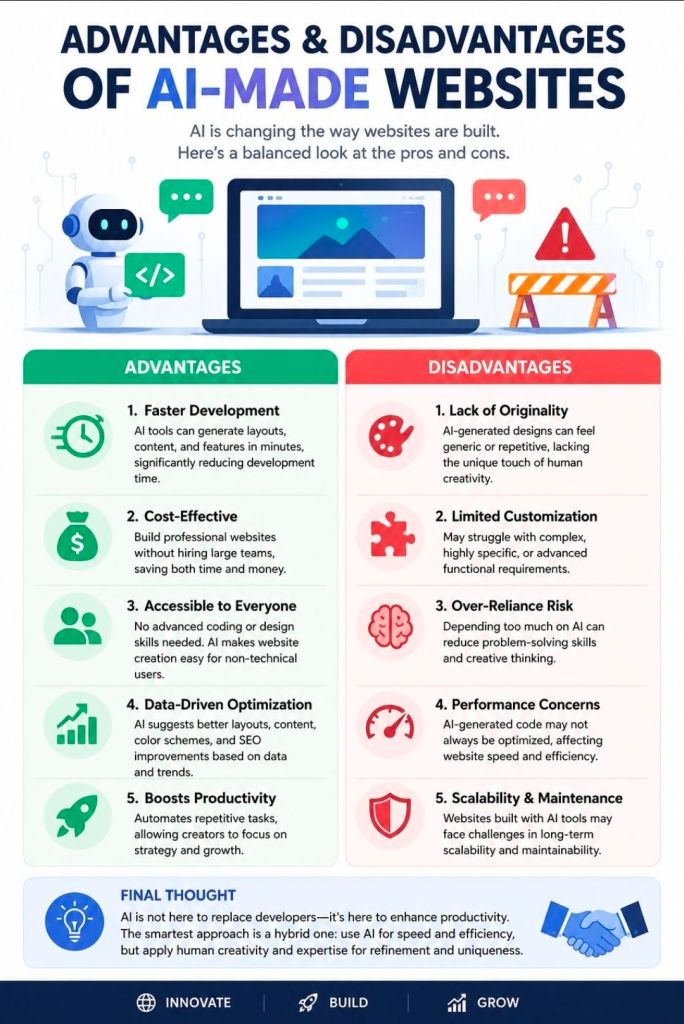
AI Made Websites, Advantages & Disadvantages

AI Made Websites, Advantages & Disadvantages

Best way to optimize SEO Search Engine Optimization for your website

To optimize SEO (Search Engine Optimization), you must align your website with search engine requirements across four foundational pillars: technical performanceon-page structurecontent value, and off-page authority

1. Technical SEO (The Foundation)

Technical optimization ensures search engines can find, crawl, and index your pages. 

  • Improve Page Speed: Use Google PageSpeed Insights to identify bottlenecks; compress images and use modern formats like WebP or AVIF.
  • Enable Mobile-First Design: Ensure your site is fully responsive, as Google prioritizes mobile versions for indexing.
  • Secure with HTTPS: Use an SSL certificate to protect user data and gain a minor ranking boost.
  • Use XML Sitemaps: Submit a sitemap via Google Search Console to help bots discover all your URLs. 

2. On-Page SEO (The Structure)

On-page factors help search engines understand what a specific page is about. 

  • Optimize Meta Tags: Include your primary keyword near the beginning of your Title Tag (under 60 characters) and Meta Description (105-160 characters).
  • Use Descriptive Headings: Structure content with a single H1 for the main title and logical H2/H3 tags for subtopics.
  • Clean URL Slugs: Create short, descriptive URLs that include the target keyword (e.g., /how-to-optimize-seo/).
  • Add Image Alt Text: Write descriptive text for all images to assist both accessibility and image search rankings. 

3. Content Strategy (The Value)

High-quality content is the most influential factor for long-term SEO success. 

  • Keyword Research: Use tools like Ahrefs, Semrush, or Google Keyword Planner to find terms with high volume and low difficulty.
  • Match Search Intent: Identify if users want information, a specific product, or a comparison, and tailor your content to fulfill that exact need.
  • Demonstrate E-E-A-T: Show Experience, Expertise, Authoritativeness, and Trustworthiness by citing original research, expert quotes, and unique insights.
  • Optimize for AI Overviews: Use clear “Key Takeaways” boxes and answer common questions directly to increase chances of being cited by AI search features. 

4. Off-Page SEO (The Authority)

Off-page signals prove your site’s credibility to the rest of the web. 

  • Build High-Quality Backlinks: Earn links from reputable websites through guest posting, digital PR, or creating “linkable assets” like infographics.
  • Internal Linking: Connect related pages within your own site to distribute “link equity” and help users navigate.
  • Manage Online Reputation: For local businesses, maintain an updated Google Business Profile and respond promptly to reviews.

Best way to optimize SEO Search Engine Optimization for your website