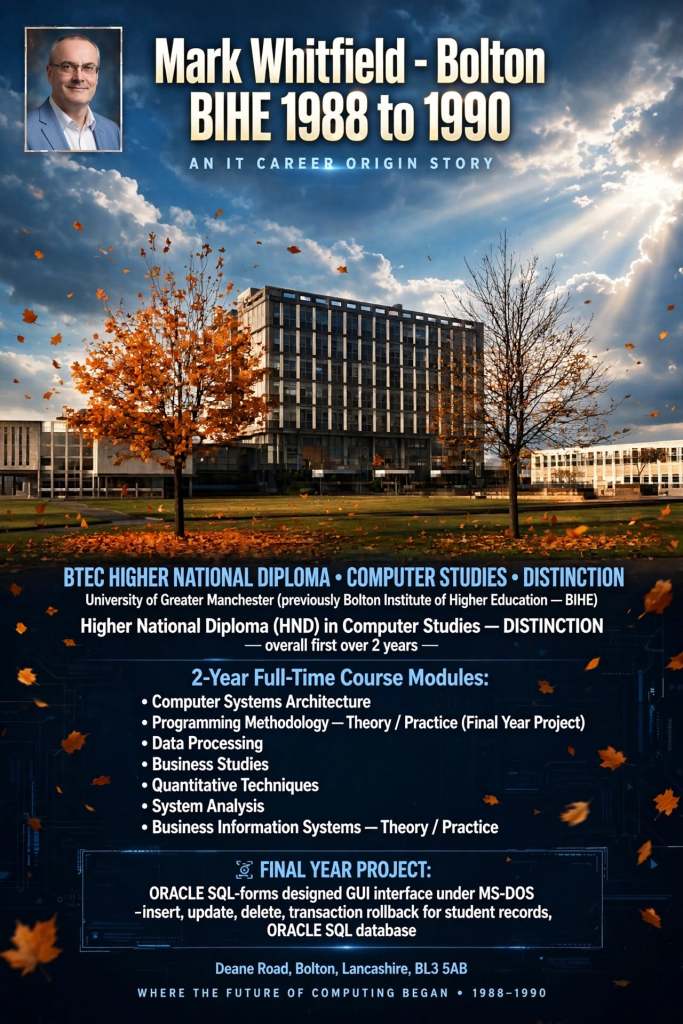
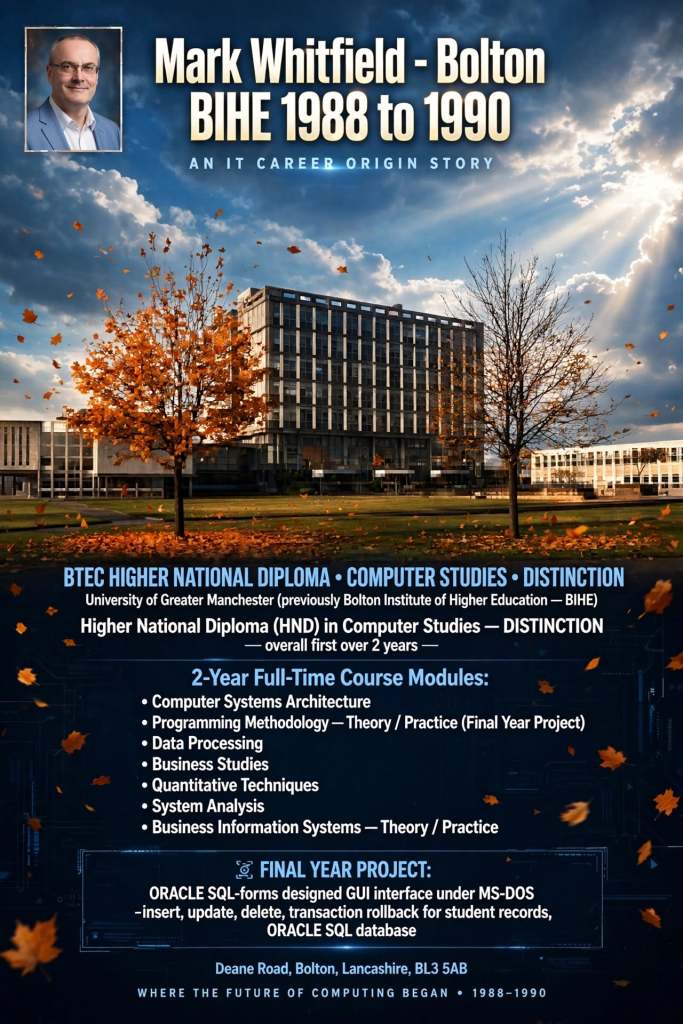
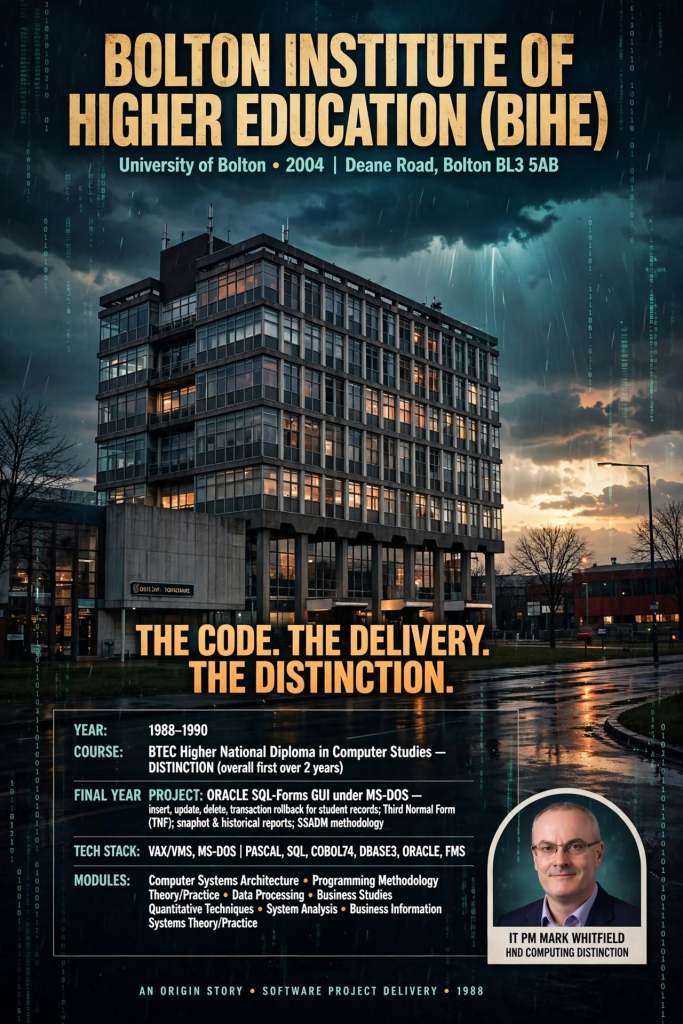
My final year project consisted of an ORACLE SQL-forms designed GUI interface running under an MS-DOS operating system. The GUI interface provided insert, update, delete and transaction rollback facilities for recording information about students attending courses at BIHE, along with their module assignment and exam result details. The student data was held in an ORACLE SQL database set-up on a PC local to the application.
now University of Greater Manchester (from 2025), Bolton
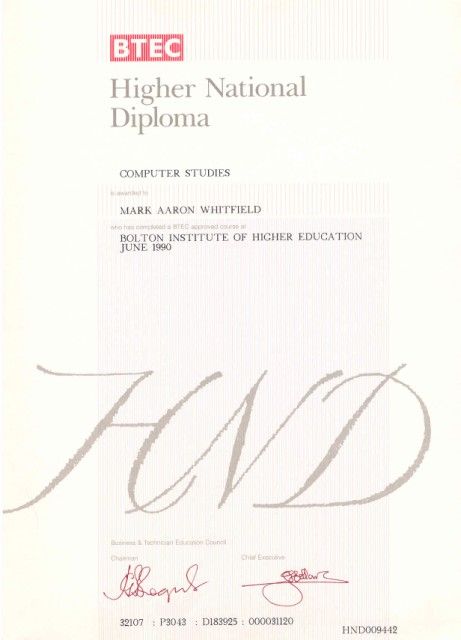
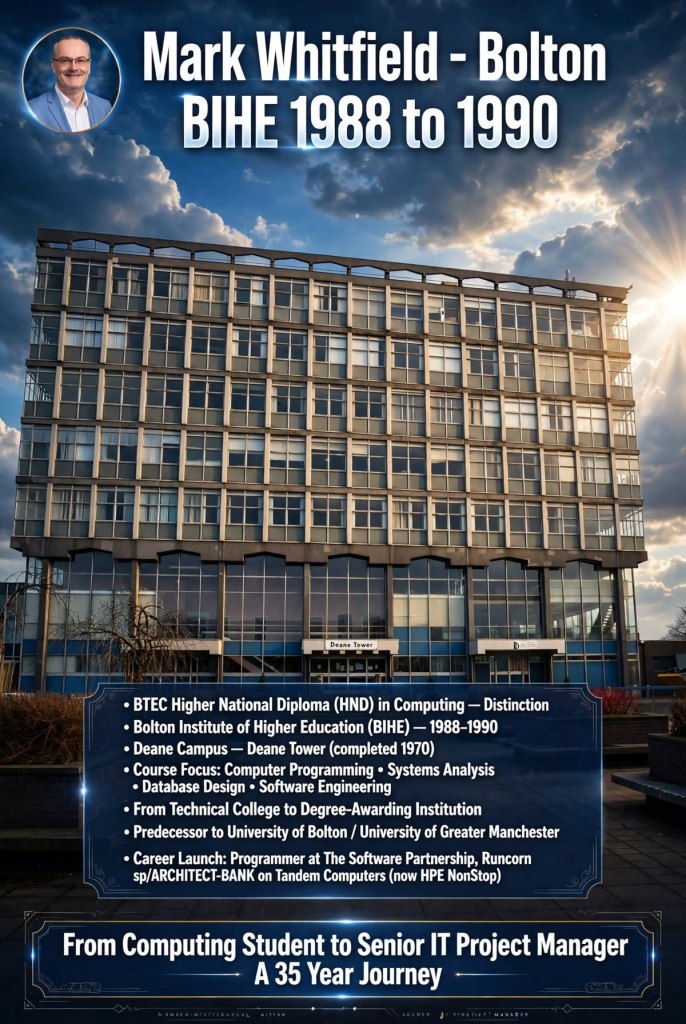
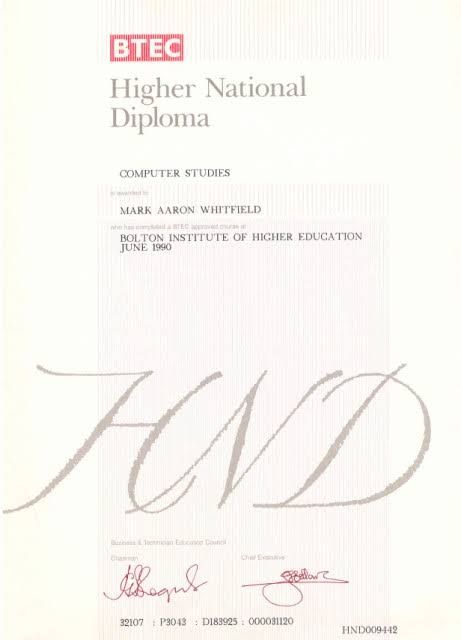
Between 1988 and 1990, IT Project Manager Mark Whitfield completed a BTEC Higher National Diploma (HND) in Computer Studies at the Bolton Institute of Higher Education (BIHE). He graduated with a Distinction and achieved the overall first place across the entire two years of the course.
Bolton Institute of Higher Education now University of Greater Manchester
The institution has since evolved, later becoming the University of Bolton and subsequently rebranding as the University of Greater Manchester.
The University of Greater Manchester (formerly known as the University of Bolton from 2005 to 2024) is a public university based in Bolton, Greater Manchester, England.
University of Greater Manchester, from 2024
It is a “post-92” institution that officially rebranded in late 2024 to reflect its regional focus and, according to its vice-chancellor, to overcome employer prejudice against the smaller town name of Bolton. I studied Computing at Bolton Institute of Higher Education (BIHE) between 1988 to 1990 before it was elevated to University status.
The university dates its roots back to 1824 and focuses on applied research, practical skills, and teaching, with a strong regional reputation for student satisfaction.
🏛️ Comprehensive Insight: University of Greater Manchester
Location: Main campus on Deane Road and Derby Street in Bolton town centre, with a new city-centre partner campus (“UoB Manchester”) opened in 2023.
Origins: Founded as Bolton Mechanics’ Institute in 1824–1825.
Status: Granted taught degree-awarding powers in 1990/1992 and full university status in 2004/2005.
Key Focus: Teaching-intensive with a focus on employability, particularly in Nursing, Engineering, Business, and Creative Arts.
Size: Approximately 11,000–12,500 students, including international partnerships (e.g., Ras Al Khaimah, Colombo).
Rebrand: The University of Bolton rebranded to the University of Greater Manchester on December 20, 2024.
📜 Detailed Historic Timeline (1824–2025)
Era 1: Foundations (1824–1900)
1824/1825: Establishment of the Bolton Mechanics’ Institute to provide technical education to the working population.
Late 19th Century: The Institute becomes a vital hub for adult education in industrial Bolton.
Era 2: The Technical Institution (1900–1980)
Early 20th Century: The institution becomes known as Bolton Technical College, expanding technical and scientific skills.
1950s–1960s: Expansion of teacher training and higher-level technical qualifications.
1964: A 50-ton steam hammer is used at Thomas Walmsley’s Atlas Forge, which later becomes a heritage exhibit on the university’s Deane Campus.
Era 3: Formation of Higher Education (1980–2003)
1982: Bolton Institute of Higher Education (BIHE) is formed by merging the technical and education colleges.
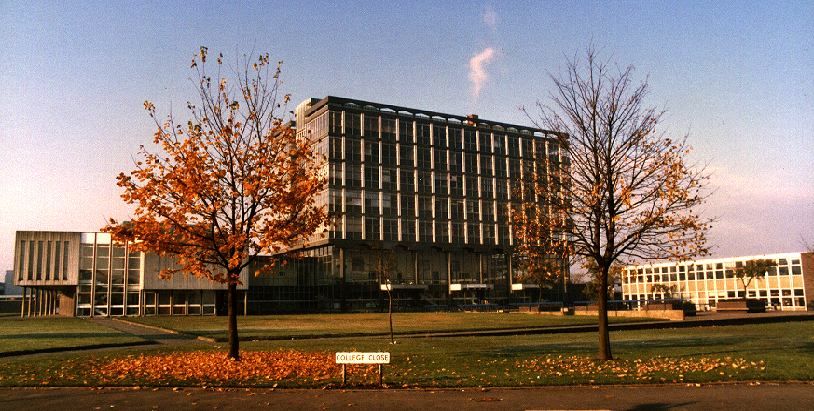
BIHE – Bolton Institute of Higher Education
1990s: Gained taught degree-awarding powers (1990/1992) and research degree powers (1996).
1998: Mollie Temple becomes principal, leading a successful drive for full university status.
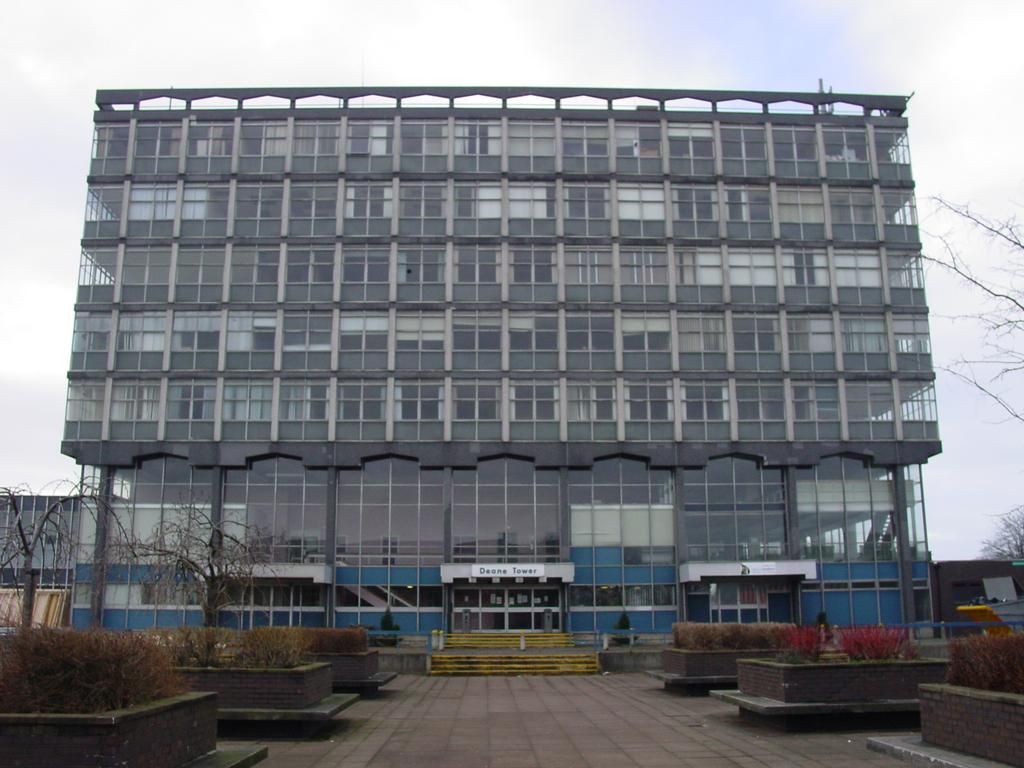
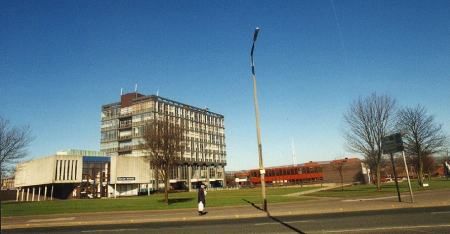
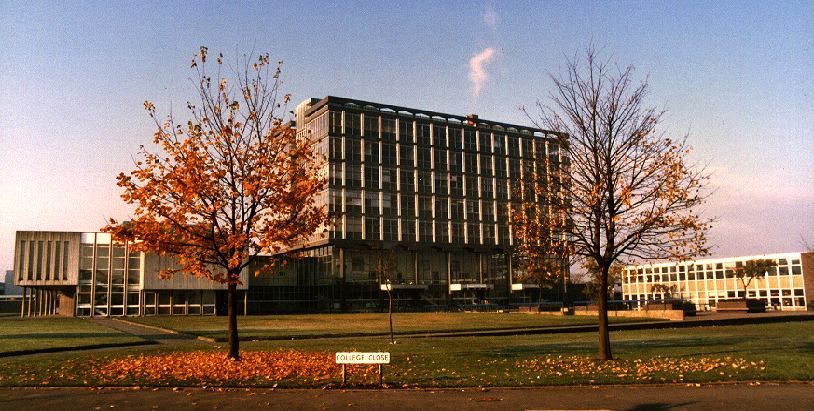
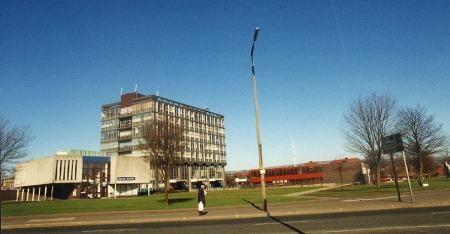
BIHE, view from front left side
Era 4: The University of Bolton (2004–2024)
2004–2005: Formally inaugurated as the University of Bolton following Privy Council approval.
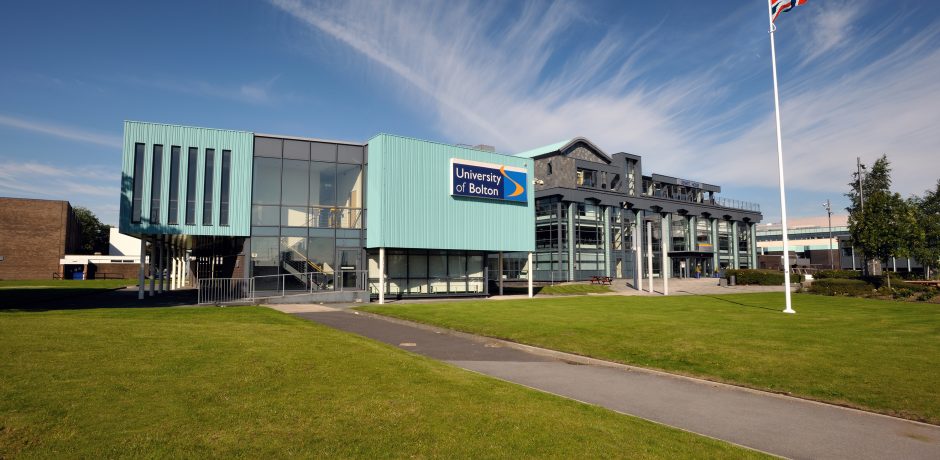
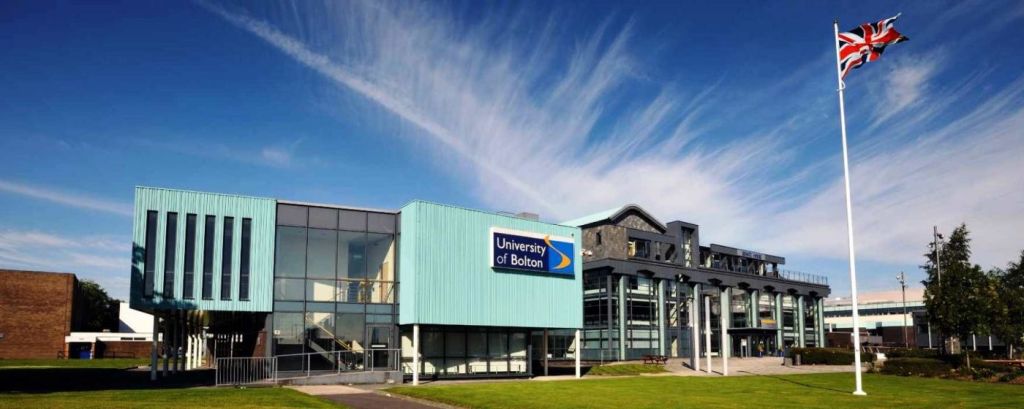
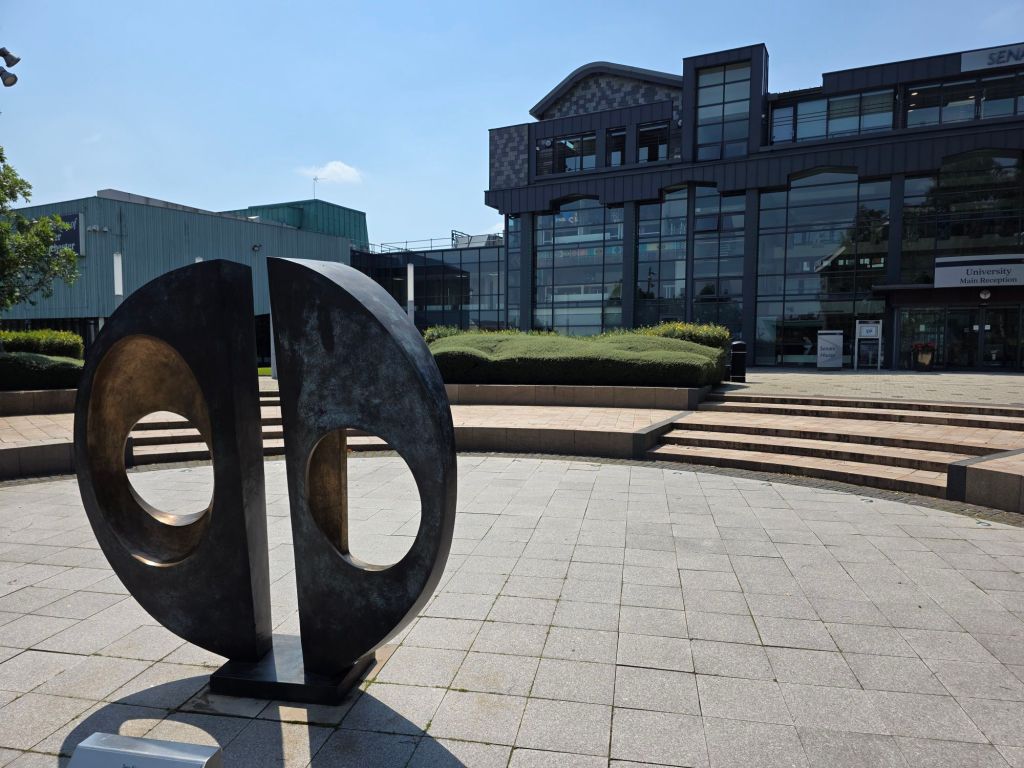
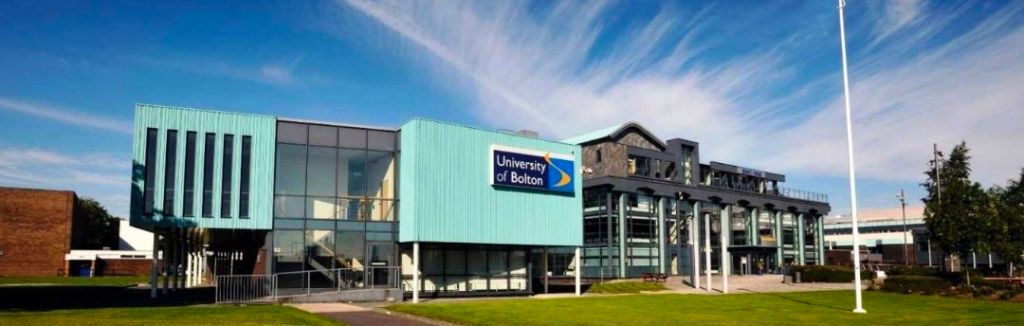
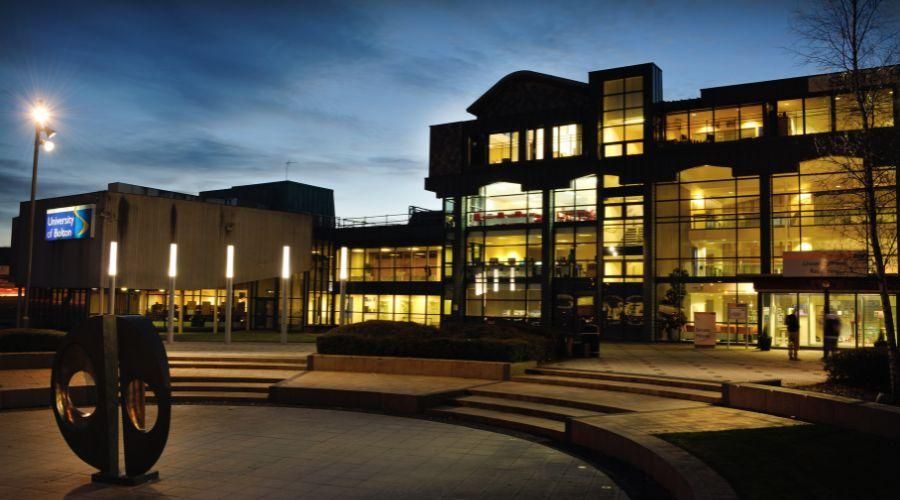
University of Bolton, 2004 – 2024 – UoB
2012: Opened the £31 million “Bolton One” health and research facility in partnership with local NHS and council.
2019/2020: Responded to “The Cube” fire incident and launched initiatives during the COVID-19 pandemic.
2023: Opened a new partner campus in Manchester city centre (“UoB Manchester”) and initiated the name change process.
Era 5: The University of Greater Manchester (2024–Present)
Dec 20, 2024: Officially rebranded to the University of Greater Manchester.
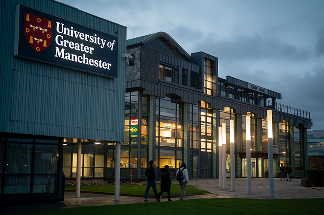
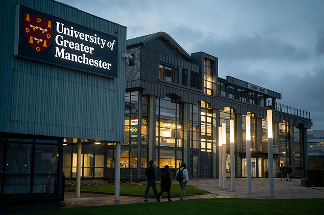
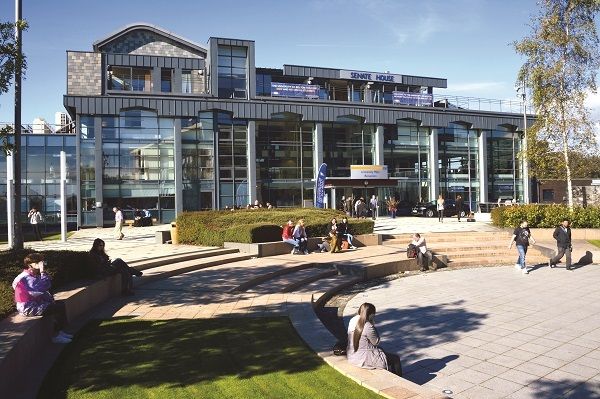
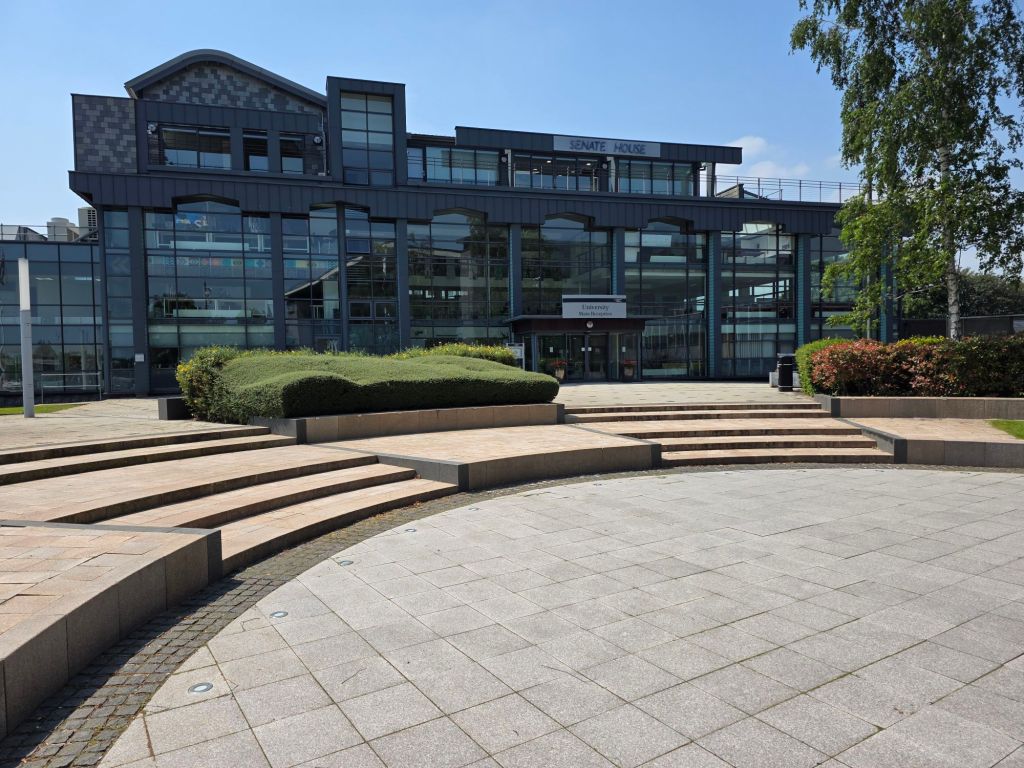
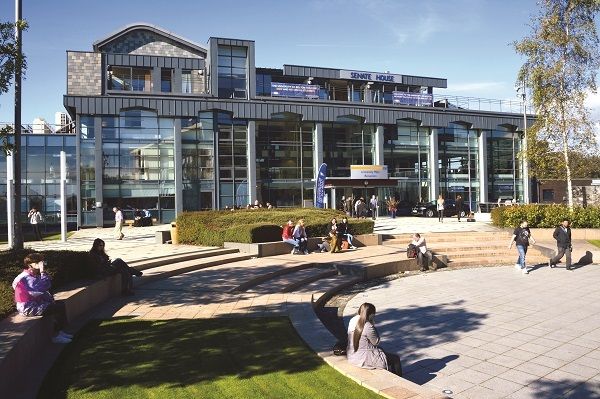
University of Greater Manchester (front) from Dec 20, 2024
2025: Facing internal investigations regarding governance and financial management, while focusing on expanding health and engineering sectors.
The University of Greater Manchester based in Bolton
The Bolton Institute of Higher Education (BIHE), which officially existed between 1982 and 2004, is the direct predecessor to the current University of Bolton (now rebranded as the University of Greater Manchester). Its roots extend back to the early 19th century, evolving from a Technical School into a major centre for higher education.
Bolton Institute of Higher Education (BIHE) before the rebuild to the university.
Formation: Established in 1982 through the merger of Bolton Institute of Technology and Bolton College of Education (Technical).
Status: A “post-92” institution that developed from a vocational technical college to a degree-awarding Higher Education body.
Key Powers: Gained taught-degree awarding powers in 1992 and research degree awarding powers in 1995/1996.
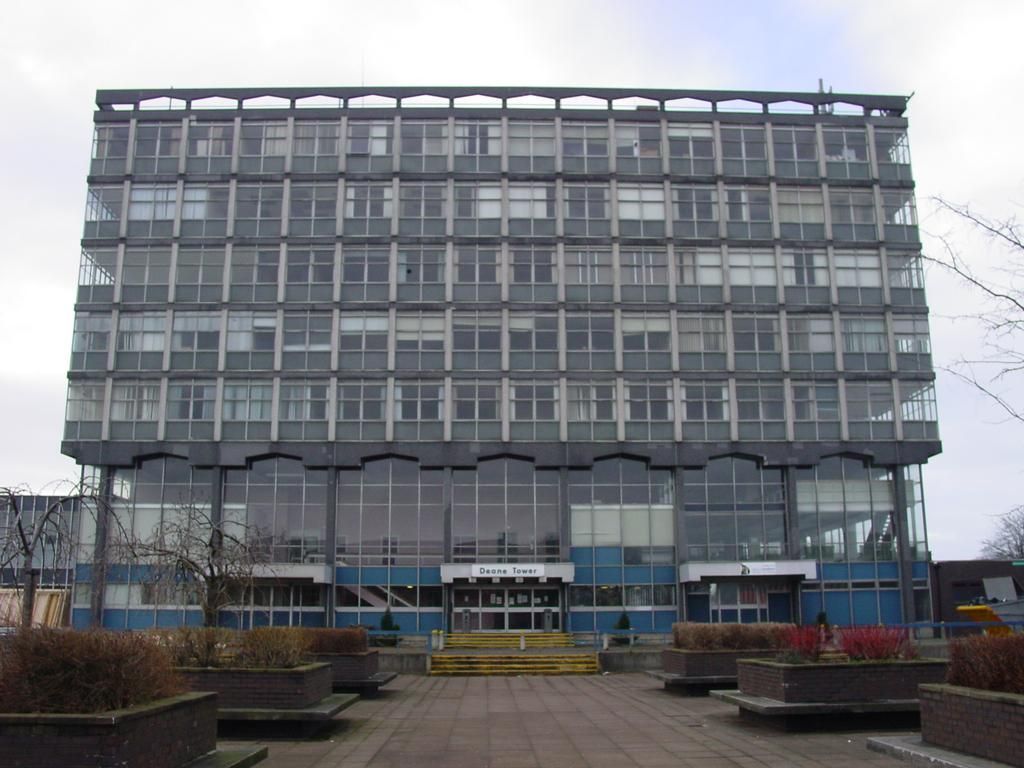
Key Locations: Based at the Deane Campus (Deane Tower completed 1970) and Chadwick Campus.
Final Evolution: Achieved university status in 2004/2005.
Detailed Historic Timeline (1824–2024)
Era 1: Foundations (Mechanics’ Institute to Technical College)
1824-1825: Bolton Mechanics’ Institute is established, marking the educational origins of the institution.
1887: A new Technical School is created with student numbers rising above 1,500.
1926: Bolton Technical School is renamed Bolton Technical College.
1941: A new building is opened for technical and engineering education.
1946: Bolton Training College is approved by the Ministry of Education.
1959: Bolton Training College settles at Chadwick Street.
Era 2: The Technical and Institute Era (1960s–1981)
1960s: Development of Bolton College of Education at Chadwick Street.
1964: Bolton Technical College and Bolton Institute of Technology (BIT) are divided into separate organisations. A.J. Jenkinson serves as principal for both in succession.
1970: Deane Tower (Deane Campus) is completed.
1971: A technology block and sports hall (later the Excel Centre) are added.
Era 3: Formation of BIHE (1982–2004)
1982:Bolton Institute of Technology and Bolton College of Education merge to form Bolton Institute of Higher Education (BIHE). John McKenzie is the first principal.
1990: The Institute gains its own taught-degree awarding powers.
1991: An £8.3 million extension project begins, including the purchase of the former Eagle Factory.
1992: Reorganisation following the Further and Higher Education Act 1992.
1995/1996: Awarded research degree awarding powers.
1998: Mollie Temple becomes the third principal, leading the drive for university status.
2004:BIHE is granted university status.
2005: The institution is officially named the University of Bolton.
Era 4: Modern Era (University of Bolton to University of Greater Manchester)
2009-2010: Rebranding and opening of the new Deane Road campus building.
2018: Bolton College merges with the University of Bolton.
2023: Application made to change the name to the University of Greater Manchester.
2024: The university begins operating as the University of Greater Manchester.
Mark Whitfield | Bolton Institute of Higher Education, BIHE | BTEC HND Computing, Distinction
The Higher National Diploma (HND) in Computer Studies at the Bolton Institute of Higher Education (BIHE)—now the University of Greater Manchester—is a two-year, Level 5 vocational qualification designed to provide practical, industry-specific skills.
The institution has undergone several name changes and status upgrades that affected the delivery of the HND:
1982: BIHE was formed through the merger of Bolton Institute of Technology and Bolton College of Education (Technical).
1992: The Institute was granted the power to award taught degrees.
2004/2005: BIHE achieved full university status, becoming the University of Bolton.
2024: The university rebranded as the University of Greater Manchester.
HND Computer Studies: Detailed Timeline
The course traditionally follows a two-year full-time or three-year part-time structure.
Year 1: Foundations (HE4 Level)
The first year focuses on establishing core technical and business knowledge. In many versions of the Bolton curriculum, Year 1 is common across several computing programmes to allow for flexible progression.
Core Modules:
Introduction to Programming: Developing fundamental coding logic.
Computer Platforms & Systems Architecture: Understanding the hardware and software environments.
Information Systems & Databases: The basics of data management.
Website Production & Networking Fundamentals: Introduction to web technologies and connectivity.
Quantitative Techniques & Business Studies: Integrating mathematical and commercial contexts.
Year 2: Specialisation (HE5 Level)
The second year shifts toward advanced application, systems analysis, and professional practice.
Advanced Modules:
Systems Analysis & Design: Producing system requirements and user interface specifications.
Programming Methodology: Moving into more complex application development.
Business Information Systems: Exploring how IT supports organizational requirements.
Final Year Project: A major 20-credit core project where students investigate a specific field and apply their cumulative skills to a real-world scenario.
Progression and Modern Standards
Academic Standing: Completion of the HND is equivalent to the first two years of a Bachelor’s degree (Level 5).
Modern HTQs: Current versions of the course, such as the HND Computing for England (HTQ), now integrate modern fields like Artificial Intelligence, Cloud Computing, and VR technologies.
1988 to 1990 : University of Greater Manchester (previously Bolton Institute of Higher Education – BIHE)Higher National Diploma (HND) in Computer Studies, Bolton Institute of Higher Education (BIHE)—now the University of Greater ManchesterMark Whitfield | Bolton Institute of Higher Education | BIHE 1988 thru 1990 | Distinction