In Agile projects, gap analysis shifts from a heavy upfront documentation exercise to a dynamic, continuous evaluation of the difference between your product’s current capabilities and your user’s actual needs.
Instead of building massive compliance checklists, Agile teams break gaps down into functional, team-level increments embedded directly into product development loops.
🛠️ How Gap Analysis Maps to Agile Artifacts
Agile doesn’t use a standalone “Gap Analysis Report”. Instead, gaps are converted directly into standard Agile artifacts to keep the delivery team moving:
The Epic Level (Strategic Gaps): Large operational or technical gaps (e.g., “System lacks multi-factor authentication”) are captured as Epics.
The User Story Level (Functional Gaps): Epics are sliced down into smaller, testable User Stories that represent a single increment of closing that gap (e.g., “As a user, I want to receive an SMS verification code to secure my login”).
The Backlog (Prioritisation): Identified gaps are estimated, given a business value, and ranked directly alongside feature requests in the Product Backlog.
📋 The 4-Step Agile Gap Process Breakdown
Agile teams continuously execute gap analysis iteratively through four distinct stages:
1. Define the Current State (Where We Are Now)
Action: Evaluate the existing performance or architecture using live metrics, user research, and current automated test results.
Agile Tool: Review system metrics, customer churn data, or velocity charts during Retrospectives. Avoid vague complaints; stick strictly to measurable facts.
2. Envision the Desired Future State (Where We Want to Be)
Action: Define target benchmarks or expected system behavior.
Agile Tool: Leverage the Product Vision, user personas, acceptance criteria, or your team’s Definition of Done (DoD) to serve as the baseline future state.
3. Identify and Analyze the Gap (The “Why”)
Action: Highlight the specific differences between performance and goals, then uncover the underlying reasons.
Agile Tool: Run a Five Whys session or build a Fishbone Diagram during sprint planning to see if the gap is caused by legacy code (Technology), missing skillsets (People), or inefficient workflows (Process).
4. Build the Action Plan (The Bridge)
Action: Convert the necessary fixes into work items.
Agile Tool: Map the required changes directly into the Sprint Backlog as User Stories, technical spikes (research tasks), or non-functional requirements to be delivered in upcoming iterations.
⏱️ When Gap Analysis Happens in the Agile Lifecycle
Rather than an administrative phase at the very beginning of a project, gap analysis is integrated throughout standard Agile ceremonies:
Product Discovery: High-level gap analysis ensures the initial product backlog addresses actual target user needs instead of internal assumptions.
Sprint Planning: The team evaluates the gap between the sprint goal and the current codebase to pick the right stories.
Sprint Review / Demo: Stakeholders compare the working increment against their expectations. This immediately exposes any emerging functional or alignment gaps.
Retrospectives: The team conducts an internal process gap analysis to evaluate how they collaborate, uncovering process bottlenecks or technical debt.
Gap Analysis in Agile Projects, Detailed Breakdown
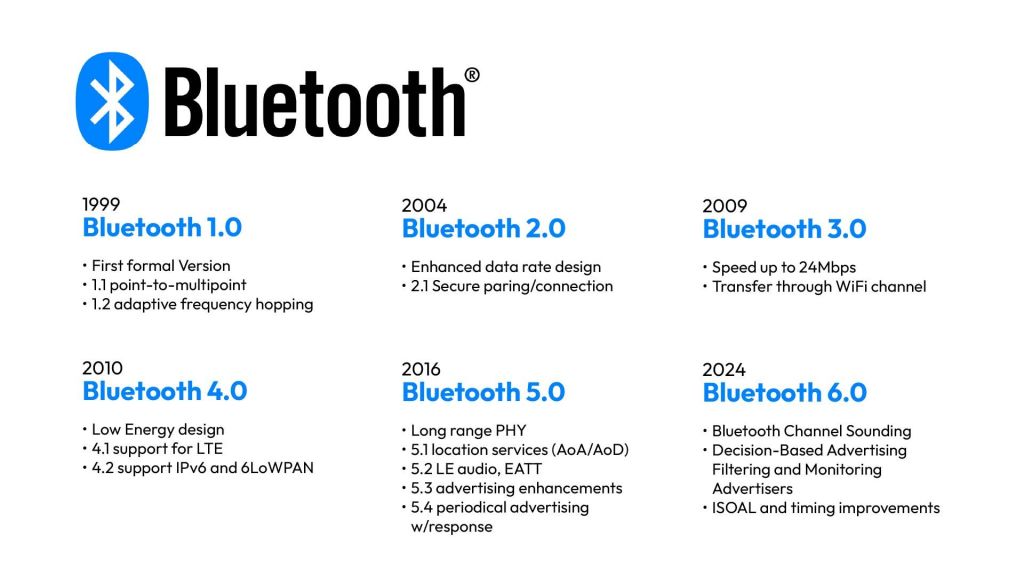
Bluetooth is a universal, short-range wireless communication standard that enables electronic devices to exchange data and audio over ultra-high frequency (UHF) radio waves (operating between 2.402 GHz and 2.480 GHz). It forms localized, temporary networks known as piconets to seamlessly bridge data gaps without the clutter of physical wires or cables.
To combat signal congestion in the crowded 2.4 GHz band—which it shares with Wi-Fi and microwaves—Bluetooth uses a technique called Adaptive Frequency Hopping (AFH), rapidly switching between 79 or 40 channels up to 1,600 times per second to maintain a stable, secure connection.
Named by Intel engineer Jim Kardach after the 10th-century Scandinavian King Harald “Bluetooth” Gormsson—who famously united warring Danish tribes into a single kingdom—the technology was built to similarly unify incompatible PC, cellular, and digital device ecosystems. The iconic Bluetooth logo is a direct nod to this heritage, fusing the ancient Norse runes ᚼ (Hagall) and ᛒ (Bjarkan) representing King Harald’s initials.
Bluetooth Overview and Detailed Chronological Timeline
🏛️ Era 1: Pre-Commercialization & Foundation (1989–1998)
Before becoming an open global standard, Bluetooth began as a proprietary corporate feasibility project aimed at liberating electronics from restrictive RS-232 data cables.
1989: Nils Rydbeck (CTO of Ericsson Mobile) and inventor Johan Ullman initiate a “short-link” radio technology project designed to develop comfortable wireless headsets.
1994: Jaap Haartsen and Sven Mattisson are tasked by Ericsson leadership to formally design the hardware infrastructure in Lund, Sweden. They focus on low-power, low-cost radio architectures.
1997: The engineering team achieves a functional, workable link layer solution. Intel’s Jim Kardach proposes the temporary codename “Bluetooth”.
1998: Recognizing a global framework requires cross-industry alignment, Ericsson joins forces with IBM, Intel, Nokia, and Toshiba to found the Bluetooth Special Interest Group (SIG) to establish an open, license-free standard.
📱 Era 2: The Classic Bluetooth Era (1999–2009)
The first commercial implementation focused heavily on replacing peripheral wires. However, early builds struggled with device-role conflicts, high power consumption, and severe data limitations.
1999 (v1.0 & v1.0b): The Bluetooth SIG publishes the official Bluetooth 1.0 specification. It is heavily plagued by interoperability issues and mandatory hardware address exposure, creating distinct privacy gaps.
2001 (v1.1): Standardized globally under the IEEE 802.15.1 banner. Fixes version 1.0 connection bugs, supports point-to-multipoint slave connections, and introduces unencrypted channel support. The Sony Ericsson T36 debuts as the first commercial phone with integrated Bluetooth.
2003 (v1.2): Introduces Adaptive Frequency Hopping (AFH) to stop Wi-Fi network interference. Adds Extended Synchronous Connections (eSCO) to rescue voice audio quality by allowing packet retransmissions.
2004 (v2.0 + EDR): Unleashes Enhanced Data Rate (EDR). Maximum throughput leaps from a nominal 721 kbps to 3 Mbps, greatly reducing power draw through shorter transmission cycles.
2007 (v2.1 + EDR): Introduces Secure Simple Pairing (SSP). This eliminates complex PIN-code handshakes, improving device security while seamlessly supporting Near Field Communication (NFC) proximity pairings.
2009 (v3.0 + HS): Debuts High Speed (HS) architecture. It uses a clever dual-radio configuration where Bluetooth creates the initial handshake, but offloads large media payloads to an internal 802.11 Wi-Fi link for speeds up to 24 Mbps.
🔋 Era 3: The Bluetooth Low Energy (BLE) & IoT Era (2010–2015)
Prior versions consumed too much power for miniature electronic applications. This era redefined the standard, establishing an entirely separate protocol tier optimized to run on tiny coin-cell batteries for the burgeoning Internet of Things (IoT) market.
2010 (v4.0): The pivotal launch of Bluetooth Low Energy (BLE) (branded initially as Bluetooth Smart). Devices can remain asleep until data bursts happen, drastically dropping baseline energy consumption.
2013 (v4.1): Engineers adjust software layers to prevent direct frequency collision with 4G LTE bands. Devices can now act as both an independent hub and peripheral sensor simultaneously.
2014 (v4.2): Designed entirely for smart home architecture, this update adds support for IPv6 and 6LoWPAN. This allows smart sensors to connect directly to the internet without intermediary mobile gateways.
🌐 Era 4: High-Performance & High-Precision Mesh Era (2016–Present)
Modern iterations have fundamentally transformed the technology from a basic local data-link pipe into a highly robust, secure mesh network and precision spatial positioning framework.
2016 (v5.0): Doubles BLE transmission speeds to 2 Mbps and quadruples operational range up to 240 metres. It optimizes performance for large-scale smart homes and multi-room layouts.
2019 (v5.1): Introduces Direction Finding via Angle of Arrival (AoA) and Angle of Departure (AoD) antennae arrays. Devices achieve hyper-local indoor positioning down to centimeter-level accuracy.
2020 (v5.2): Unveils LE Audio running over the highly efficient LC3 Codec. It introduces Auracast, which enables a single source device to stream high-fidelity audio to an infinite number of nearby headphones or hearing aids.
2021 (v5.3): Adds connection subrating to reduce communication switching latencies. Improves peripheral device power optimization and encryption control keys.
2023 (v5.4): Adds Periodic Advertising with Responses (PAwR) alongside Encrypted Advertising Data (EAD). This allows two-way secure mass communication, tailored specifically for thousands of commercial electronic shelf labels.
2024 (v6.0): Incorporates groundbreaking Channel Sounding technology. It employs phase-based time-of-flight measurements to provide centimeter-level distance awareness, creating incredibly secure digital car and home keys that prevent relay signal tracking attacks.
Bluetooth Overview and Detailed Chronological Timeline
Columbo is one of television’s most celebrated crime dramas, spanning 35 years, 69 episodes, and two major television networks. Starring Peter Falk in his four-time Emmy-winning role, the show completely upended standard detective tropes with its signature “inverted detective story” structure.
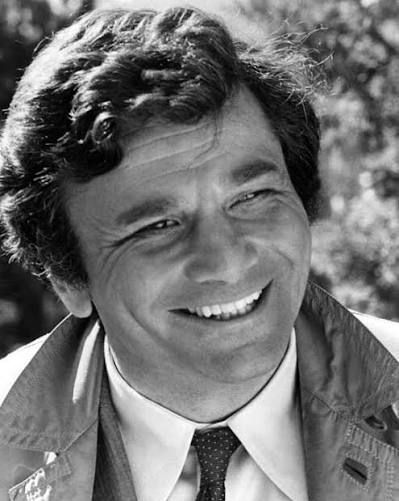
Peter Falk, Columbo
The following guide breaks down the core characteristics of the series, followed by a comprehensive, year-by-year chronological timeline of its production and broadcasting history.
Detailed Description of the Series
The Inverted “Whodunit” (The Howcatchem)
Unlike standard mystery shows where the audience tries to guess the killer, Columbo is an inverted detective story. Every episode begins by showing the audience exactly who the murderer is, their motive, and the elaborate steps they take to craft an “airtight” alibi. The true tension and entertainment lie in the psychological cat-and-mouse game between the killer and Lieutenant Columbo, watching him slowly pick apart their flawless crime.
The Character of Lieutenant Columbo
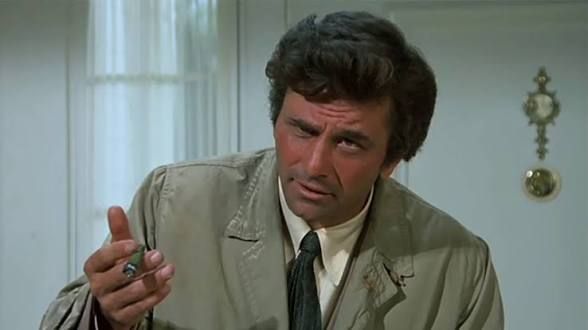
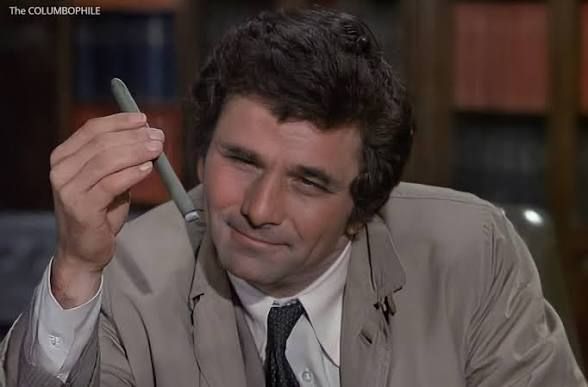
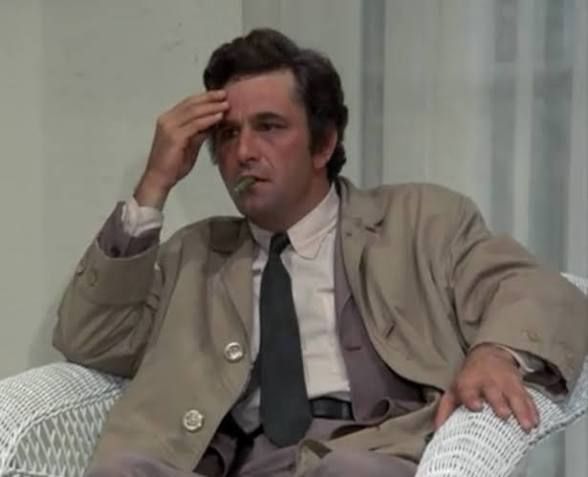
The Appearance: Columbo is famously dishevelled. He wears a rumpled, beige raincoat over a wrinkled suit, drives a battered 1959 Peugeot 403 convertible, and frequently chomps on a half-burned cigar.
The Tactics: He acts incredibly humble, forgetful, and easily distracted. This is a deliberate ploy to make the high-society killers underestimate him, causing them to let their guard down and talk too much.
The Catchphrase: Just as a suspect believes Columbo is leaving and they have gotten away with murder, he stops, turns around, scratches his head, and delivers his iconic phrase: “Just one more thing…”
Personal Quirks: He works for the Los Angeles Police Department (LAPD), never carries a gun, loves chili with crackers, owns an incredibly lazy basset hound simply named “Dog”, and constantly references his unseen wife, Mrs. Columbo.
Detailed Production & Broadcast Timeline
The history of Columbo spans across two distinct network eras: the NBC Era (the original 1970s run) and the ABC Era (the late 1980s revival through to the final specials).
Pre-Falk Origins (1960 – 1962)
1960: Writers Richard Levinson and William Link introduce the character of “Lieutenant Columbo” in an episode of the anthology series The Chevy Mystery Show titled “Enough Rope”, played by actor Bert Freed.
1962: The writers adapt the story into a stage play named Prescription: Murder, where Columbo is portrayed by Oscar-winner Thomas Mitchell.
The NBC Series Era (1971 – 1978)
During this run, Columbo does not air weekly. Instead, it serves as a rotating program on The NBC Mystery Movie alongside shows like McCloud and McMillan & Wife.
1971:Season 1 begins. The official premiere episode, “Murder by the Book”, is directed by a young, pre-fame Steven Spielberg.
1972:Season 1 concludes, and Season 2 premieres in September. This season includes classics like “Etude in Black”.
1973:Season 2 ends, and Season 3 launches, introducing “Any Old Port in a Storm”, which features Donald Pleasence and is widely considered one of the best episodes of the series.
1974:Season 3 wraps up, and Season 4 premieres. It features Johnny Cash in “Swan Song” and Dick Van Dyke in “Negative Reaction”.
1975:Season 4 concludes, and Season 5 debuts in the autumn, featuring the episode “Forgotten Lady”.
1976:Season 5 ends. Season 6 premieres in October with a shortened, three-episode order as Peter Falk begins negotiating fiercely over his contract and salary.
1977:Season 6 wraps up. Season 7 launches in November, highlighting the fan-favourite episode “Try and Catch Me” starring Ruth Gordon.
1978: The final NBC episode, “The Conspirators”, airs in May. Burnt out by the rigorous schedule and wanting to pursue feature films, Peter Falk walks away from the character, ending the original run.
The Hiatus & Spin-Off (1979 – 1988)
1979: NBC attempts to keep the brand alive without Falk by launching a spin-off series, Mrs. Columbo, starring Kate Mulgrew. It is heavily rejected by fans and swiftly cancelled.
1980–1988:Columbo remains entirely dark for nearly a decade.
The ABC Revival Era (1989 – 2003)
ABC successfully strikes a deal with Peter Falk to bring the detective back for a series of premium, two-hour television movies.
1989: After an 11-year absence, Columbo returns to television with Season 8. Later that year, Season 9 launches.
1990:Season 9 concludes in May. ABC abandons the rigid, seasonal formatting, shifting the series into occasional, high-budget “TV Specials”. Season 10 officially begins with “Columbo Goes to College” in December.
1991: Three major movie specials are broadcast: “Caution: Murder Can Be Hazardous to Your Health”, “Columbo and the Murder of a Rock Star”, and “Death Hits the Jackpot”.
1992: Two movie specials air: “No Time to Die” (a rare episode where Columbo solves a kidnapping rather than a murder) and “A Bird in the Hand…”.
1993: Only one special is produced and broadcast this year: “It’s All in the Game”, written by Peter Falk himself.
1994: Two movie specials air: “Butterfly in Shades of Grey” (featuring William Shatner’s second appearance as a Columbo villain) and “Undercover”.
1995: A single movie special is broadcast: “Strange Bedfellows”, co-starring George Wendt.
1997: Following a brief hiatus, “A Trace of Murder” airs to celebrate the 30th anniversary of the franchise.
1998: The movie special “Ashes to Ashes” is broadcast, featuring Patrick McGoohan, who also directed several episodes of the series.
2001: “Murder With Too Many Notes” airs after a multi-year delay in production.
2003: The 69th and final episode, “Columbo Likes the Nightlife”, airs on 30 January. This concludes the historic run of the franchise, as Peter Falk formally retires from playing the character before his passing in 2011.
Artificial Intelligence (AI) is the branch of computer science dedicated to creating systems capable of performing tasks that typically require human intelligence, such as reasoning, learning, problem-solving, and perception. As of 2026, AI has transitioned from experimental research to widespread deployment as foundational infrastructure, with focus shifting from mere generative models to agentic, autonomous systems capable of executing complex, multi-step workflows.
Detailed Overview of AI in 2026
Core Capabilities: Modern AI combines large language models (LLMs), multimodal understanding (text, image, audio), and autonomous agents that can plan, remember, and act independently.
Agentic AI: A significant shift is the proliferation of AI agents that act as “digital coworkers” rather than just tools, handling tasks within business environments.
Democratization & Open Source: The open-source movement has accelerated, placing powerful AI capabilities in the hands of many, reducing dependence on single providers.
Regulation and Ethics: Following frameworks like the EU AI Act, 2026 is marked by the implementation of laws focusing on safety, transparency, and accountability, including AI watermarking to curb misinformation.
Major Trends: Key trends include standardized AI performance benchmarks (e.g., Machine Intelligence Quotient), interoperability between different AI agents, and integration of AI into physical robotics.
2016:DeepMind’s AlphaGo defeats Lee Sedol, mastering the complex game of Go.
2017: Google researchers introduce Transformers, the architecture underpinning modern LLMs.
V. Generative AI and Agentic Era (2020s–2026)
2020: OpenAI releases GPT-3, demonstrating unprecedented language generation capabilities.
2022: The public release of ChatGPT marks the mainstream breakthrough of Generative AI.
2024:OpenAI releases o1 (formerly Strawberry), focusing on advanced reasoning.
2025–2026: AI becomes “Agentic,” shifting from chatbots that create content to autonomous agents that plan, execute, and interact across software systems.
Columbo is a landmark American crime drama television series that revolutionized the genre by popularizing the “inverted detective story” (howcatchem) format. Running for over 35 years (1968–2003), the show starred Peter Falk as a brilliant, disheveled LAPD homicide detective whose unkempt appearance and polite, rambling demeanor hidden a razor-sharp mind.
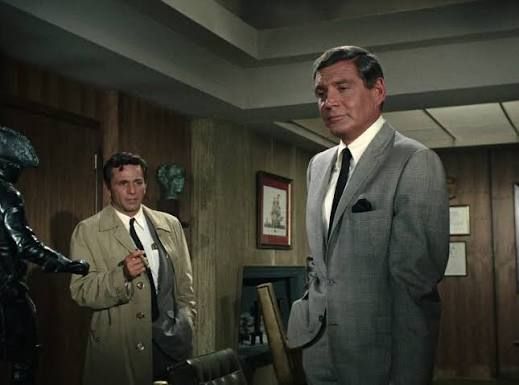
Columbo – Pilot Episode with Gene Barry, 1968
Overview and Key Elements
Format: The audience almost always knows who committed the murder at the beginning of the episode. The suspense lies in how Lieutenant Columbo unravels the culprit’s “perfect” alibi.
Signature Traits: The Peugeot 403 car, a shabby beige raincoat, a cigar, frequent mentions of an unseen wife, and the catchphrase “Just one more thing”.
The “Howcatchem”: Columbo rarely appears in the first act, allowing the killer to showcase their arrogance and meticulous planning before he systematically dismantle their world.
Class Conflict: The show frequently pits Columbo (a blue-collar, unassuming figure) against affluent, privileged suspects.
Creator/Legacy: Created by Richard Levinson and William Link, inspired by Crime and Punishment and Father Brown, the character first appeared on TV in 1960 and on stage in 1962, but Peter Falk made it his own in 1968.
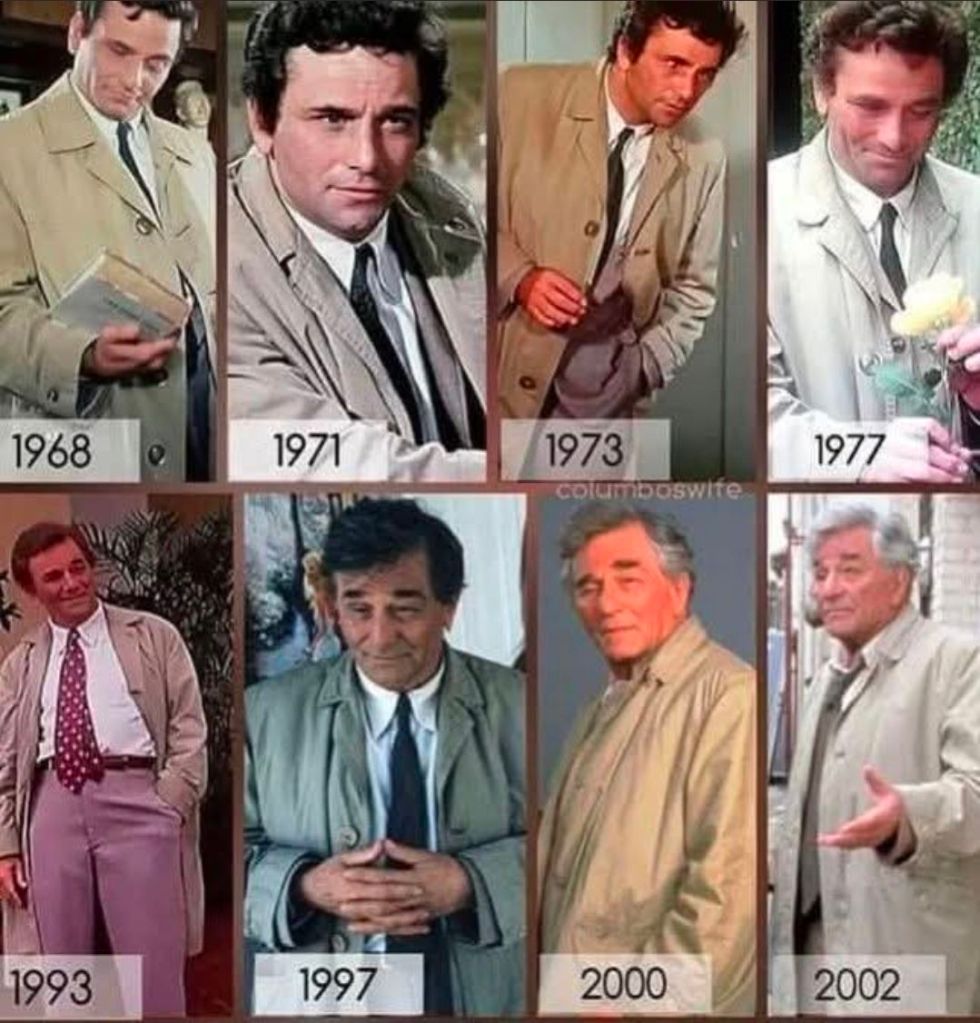
Columbo across the decades from 1968
Comprehensive Historic Timeline (1960–2014)
Era 1: Pre-Falk & Pilots (1960–1971)
1960: Columbo appears in “Enough Rope,” an episode of The Chevy Mystery Show (based on the story “Dear Corpus Delicti”). Bert Freed played the lieutenant.
1962: Stage play Prescription: Murder debuts. Thomas Mitchell plays Columbo.
1968 (Feb 20):Prescription: Murder (Pilot 1) airs on NBC, featuring Peter Falk for the first time.
1971 (Mar 1):Ransom for a Dead Man (Pilot 2) airs. Its success leads to a series order.
Era 2: The NBC Classic Era (1971–1978)
1971–1972 (Season 1):Columbo becomes a “wheel” program in The NBC Mystery Movie. Notable episode: “Murder by the Book” (directed by Steven Spielberg).
1972 (Sep 17): Season 2 premieres, establishing the show as a top-rated Sunday night anchor.
1973: Peter Falk wins his first Golden Globe for the role.
1974: Season 3. “Any Old Port in a Storm” introduces Columbo’s penchant for humming “This Old Man”.
1975: Season 4/5. “Forgotten Lady” (with Janet Leigh) and “Case of Immunity”.
1976: Peter Falk wins Emmys (1972, 1975, 1976).
1978 (May): Final NBC episode airs (Season 7) before Falk leaves the role due to scheduling.
Era 3: The ABC Revival Era (1989–2003)
1989 (Feb):Columbo returns on ABC under The ABC Mystery Movie with “Columbo Goes to the Guillotine”.
1990: Season 9/10 begins. Falk wins his 4th Primetime Emmy (1990).
1991–2002: The show airs irregularly as “Specials” rather than a strict series.
2003 (Jan 30): Last episode, “Columbo Likes the Nightlife,” airs, completing 69 total episodes.
Post-Series & Legacy
2007: Peter Falk pitches “Columbo’s Last Case” to ABC; it is rejected.
2011 (June 23): Peter Falk dies at age 83.
2014: A statue of Lieutenant Columbo and his dog is unveiled in Budapest, Hungary.
Major Episodes and Guest Stars
Jack Cassidy: Played killers in 3 episodes (best known as Riley Greenleaf in “Publish or Perish”).
Robert Culp: Played killers in 3 episodes (“Death Lends a Hand,” “The Most Crucial Game,” “Double Exposure”).
Patrick McGoohan: Acted in 4 episodes (3 as killer) and directed 5, including “By Dawn’s Early Light”.
William Shatner: Starred in “Fade In to Murder” (1976) and “Butterfly in Shades of Gray” (1994).
The Championships, Wimbledon, is the world’s oldest tennis tournament and widely considered the most prestigious. Founded in 1877 by the All England Croquet and Lawn Tennis Club, it is the only Grand Slam still played on outdoor grass courts.
Full Overview
Location: All England Lawn Tennis and Croquet Club, Church Road, Wimbledon, London.
Surface: Outdoor Grass (100% rye grass, cut to 8mm).
Timeframe: Typically held over two weeks in late June – early July.
Key Traditions: All-white dress code for players, serving strawberries and cream, and Royal patronage.
Main Events: Gentlemen’s Singles, Ladies’ Singles, Gentlemen’s Doubles, Ladies’ Doubles, and Mixed Doubles.
Key Facilities: Centre Court (featuring a retractable roof since 2009) and No. 1 Court.
Detailed Historic Timeline by Era
The Beginnings & The Amateur Era (1877–1967)
1877: Inaugural championship held. Only Gentlemen’s Singles with 22 participants. Spencer Gore wins.
1884: Ladies’ Singles and Gentlemen’s Doubles introduced. Maud Watson becomes the first female champion.
1905: May Sutton (USA) becomes the first overseas champion.
1915–1918: No tournament held due to World War I.
1922: Tournament moves from Worple Road to the current Church Road venue.
1934–1936: Fred Perry wins three consecutive Gentlemen’s singles titles.
1937: First television broadcast of the tournament.
1940–1945: No tournament held during World War II; Centre Court is bombed in 1940.
1951: First black player, Bertrand Clark, competes.
1957: Althea Gibson becomes the first black American winner.
1967: First live colour television broadcast.
The Open Era (1968–Present)
1968: Wimbledon becomes an “Open” tournament, allowing professional players to compete alongside amateurs.
1971: First Wimbledon singles final to end on a tie-break (Evonne Goolagong def. Chris Evert).
1976–1980: Bjorn Borg wins five consecutive Gentlemen’s singles titles.
1977: Centenary Championships. Virginia Wade is the last British woman to win the title.
1985: Boris Becker becomes the youngest ever male champion at age 17.
1990s: Steffi Graf and Pete Sampras dominate the decade.
2001: Goran Ivanišević wins the Gentlemen’s singles as a wildcard.
2003–2007: Roger Federer wins five consecutive titles.
2008: Rafael Nadal defeats Roger Federer in a historic final considered one of the best matches in history.
2009: Retractable roof installed on Centre Court.
2010: Longest match in history: John Isner vs. Nicolas Mahut (11 hours 5 minutes).
2013: Andy Murray becomes the first British male winner in 77 years.
2020: Cancelled for the first time since WWII due to the COVID-19 pandemic.
2022: All-white clothing rule modified to allow women to wear darker undershorts.
2023/2024: Carlos Alcaraz wins back-to-back Gentlemen’s titles.
Key Records & Facts
Most Titles (Gentlemen’s Singles): Roger Federer (8).
Most Titles (Ladies’ Singles): Martina Navratilova (9).
Tandem Computers, founded in 1974 by James (Jimmy) Treybig, revolutionized the computing industry by pioneering fault-tolerant computer systems. Designed specifically for online transaction processing (OLTP) in banking, stock exchanges, and telephone switching, Tandem’s “NonStop” systems provided near-zero downtime by utilizing redundant, modular processors and a “shared-nothing” architecture.
Tandem remained an independent, rapidly growing company until it was acquired by Compaq in 1997, later becoming part of Hewlett Packard Enterprise (HPE).
Overview of Key Technologies
NonStop Architecture: The core design featured multiple independent processors, each with its own memory and I/O bus, interconnected by a redundant inter-CPU bus called the Dynabus.
Guardian OS: A message-based operating system designed to detect faults immediately (“fail-fast”) and mirror process states to a backup processor, allowing seamless failover.
NonStop SQL (1986): The first fault-tolerant SQL database, known for linear scalability.
ServerNet (1995): A high-speed, scalable, point-to-point network system that replaced the Dynabus and influenced modern InfiniBand standards.
Detailed Historic Timeline by Era and Year
The Founding Era (1974–1979)
1974: Tandem Computers is founded in Cupertino, California, by Jimmy Treybig, formerly of HP. Initial venture capital investment comes from Kleiner & Perkins.
1975: Design of the Tandem/16 (T/16) is completed.
1976: The first T/16 NonStop system is shipped to Citibank.
1977: Tandem goes public; sales begin rapid, exponential growth.
1978: Introduction of the ENCOMPASS database management system.
The Growth and Competition Era (1980–1989)
1980:Inc. magazine ranks Tandem as the fastest-growing public company in America.
1981:NonStop II is introduced, supporting 32-bit addressing to allow for larger applications.
1982: Competition intensifies as Stratus Technologies enters the fault-tolerant market. Tandem faces its first quarter of declining growth.
1983: Introduction of the NonStop TXP, the first entirely new implementation of the TNS architecture with cache memory.
1985: Attempted entry into the PC market with the MS-DOS-based Dynamite PC, which fails commercially and is withdrawn.
1986: Introduction of the NonStop VLX (32-bit datapath) and the revolutionary NonStop SQL database.
1987: Introduction of the low-cost NonStop CLX for small office environments.
1988: Tandem acquires Ungermann-Bass, Inc. to strengthen networking capabilities.
1989: Introduction of the NonStop Cyclone, a high-end ECL-based processor aimed at mainframe markets.
The Open Standards & MIPS Transition Era (1990–1996)
1990: Tandem introduces the Integrity line of fault-tolerant Unix systems.
1991:Cyclone/R (CLX/R) is released, marking the start of the migration from proprietary stack machines to MIPS R3000 RISC microprocessors.
1993: Introduction of the NonStop Himalaya K-series using faster MIPS R4400 processors.
1994: NonStop Kernel (NSK) is extended with Open System Services (OSS), a POSIX-compliant Unix environment.
1995: Introduction of ServerNet, designed for extremely low-latency inter-processor communication.
1995–1997: Partnered with Microsoft on the “Wolfpack” project, which becomes Microsoft Cluster Server.
Acquisition and Integration Era (1997–Present)
1997:Compaq acquires Tandem Computers for roughly $3 billion. The Himalaya S-Series is introduced.
1998: Compaq acquires DEC, leading to a shift in engineering strategy towards Alpha/Itanium instead of MIPS.
2002:Hewlett-Packard acquires Compaq. Tandem becomes the core of the HP Integrity NonStop Server division.
2005: The first HP Integrity NonStop servers (TNS/E) based on Itanium processors are released.
2014: Completion of the migration to Intel x86 architecture (NonStop X).
Note: Following the split of HP into Hewlett Packard Enterprise (HPE) and HP Inc., the NonStop product line continues to be developed and supported by HPE.
Claude is a family of large language models (LLMs) developed by Anthropic, a company founded in 2021 by former OpenAI executives Daniela and Dario Amodei with a core focus on AI safety and “Constitutional AI”. Known for its high-quality writing, advanced reasoning, massive context windows, and “Artifacts” interface, Claude has rapidly evolved from a safe conversational chatbot into an agentic tool capable of coding, computer use, and complex data analysis.
Overview of Claude AI
Constitutional AI (CAI): Anthropic trains Claude using a set of principles (“constitution”) rather than relying only on human feedback. This makes Claude generally more cautious, more likely to refuse harmful requests, and transparent in its reasoning.
Model Family (Haiku, Sonnet, Opus): Claude models are released in three tiers:
Haiku: Fastest and most cost-effective.
Sonnet: Balanced for speed and intelligence (general-purpose).
Opus: Most intelligent, designed for complex tasks.
Key Features:
Context Window: Early adoption of long-context, moving from 100k to 200k tokens (roughly 500 pages of text).
Artifacts: A dedicated UI window that displays rendered code, websites, and documents in real-time.
Computer Use: A specialized capability allowing Claude 3.5 Sonnet to control a computer’s desktop environment—moving the cursor, clicking, and typing.
Claude Code: Agentic coding tool introduced in 2025/2026 for automated software engineering.
Historic Timeline by Era and Year
Era 1: Foundation and Early Models (2021–2022)
2021: Anthropic is founded by Dario and Daniela Amodei, focusing on AI safety and “Constitutional AI”.
Late 2022: Initial versions of Claude are released to select research partners for safety testing.
Era 2: Public Launch and Rapid Scaling (2023)
March 2023:Claude 1 and Claude Instant are released for testing.
July 2023:Claude 2 is released to the general public, featuring improvements in reasoning and coding.
November 2023:Claude 2.1 is launched, doubling the context window to 200,000 tokens.
Era 3: The Claude 3 Family and Agentic AI (2024)
March 2024:Claude 3 Family (Haiku, Sonnet, Opus) is launched, showcasing near-human intelligence, advanced vision capabilities, and high-speed processing.
June 2024:Claude 3.5 Sonnet is released, outperforming the larger 3 Opus model and introducing the Artifacts feature for UI rendering.
October 2024:Claude 3.5 Haiku and an upgraded 3.5 Sonnet are released. Anthropic launches the “computer use” public beta, allowing the AI to interact with software and browsers.
Era 4: Claude 4 and Agentic Workflows (2025–2026)
February 2025:Claude Code is introduced as an agentic tool for developers.
May 2025:Claude 4 Family (Opus 4 & Sonnet 4) is launched, featuring improved multi-modal reasoning and deep context processing.
August 2025:Opus 4.1 is released with tighter safety controls for abusive conversations.
November 2025:Opus 4.5 is released, focusing on enhanced coding and workplace tasks, alongside “Infinite Chats”.
February 2026:Claude Opus 4.6 and Sonnet 4.6 are released, adding native “Agent Team” collaboration and 1M-token context.
April 2026:Claude Mythos Preview is announced, designed for high-level cybersecurity vulnerability detection.
Key Differentiators
As of early 2026, Claude is considered a market leader in agentic AI development, particularly through its “Computer Use” feature, which allows it to act as an Autonomous agent rather than just a chatbot. While competitors like OpenAI focus on multimodal LLMs, Anthropic’s Claude continues to differentiate by prioritizing safety, long-context understanding, and specialized agentic coding tools.
Claude AI Overview and Detailed Historic Timeline by Era and Year
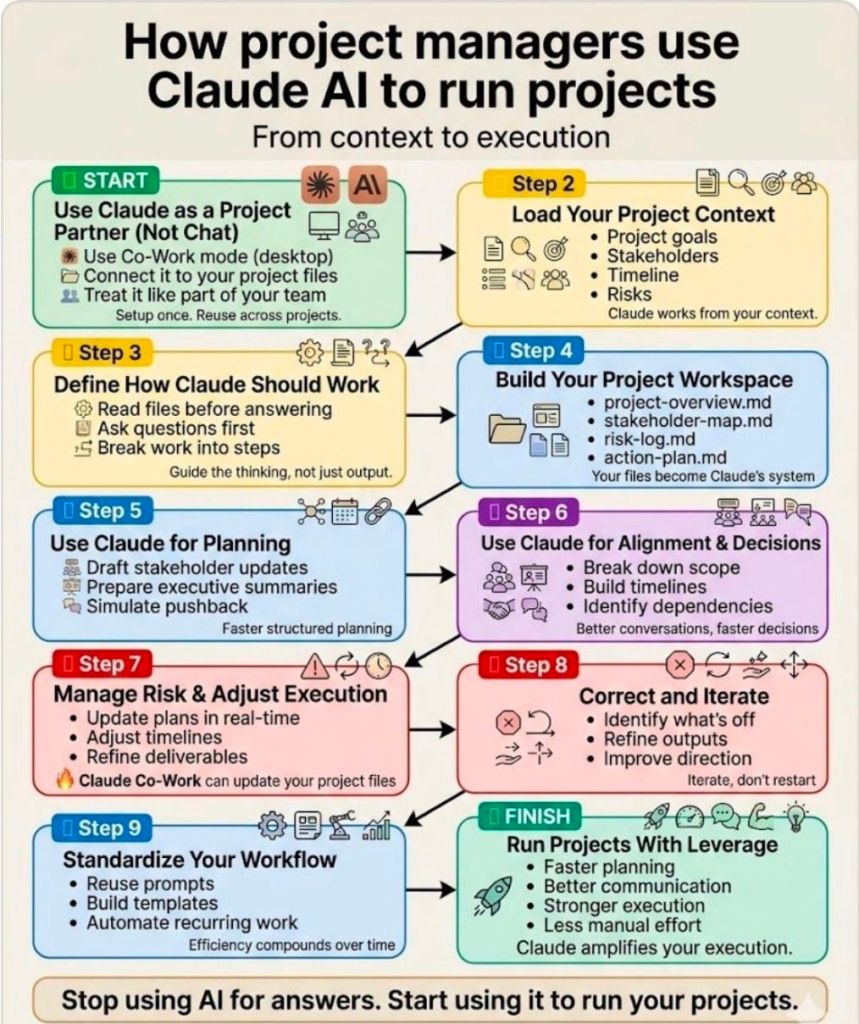
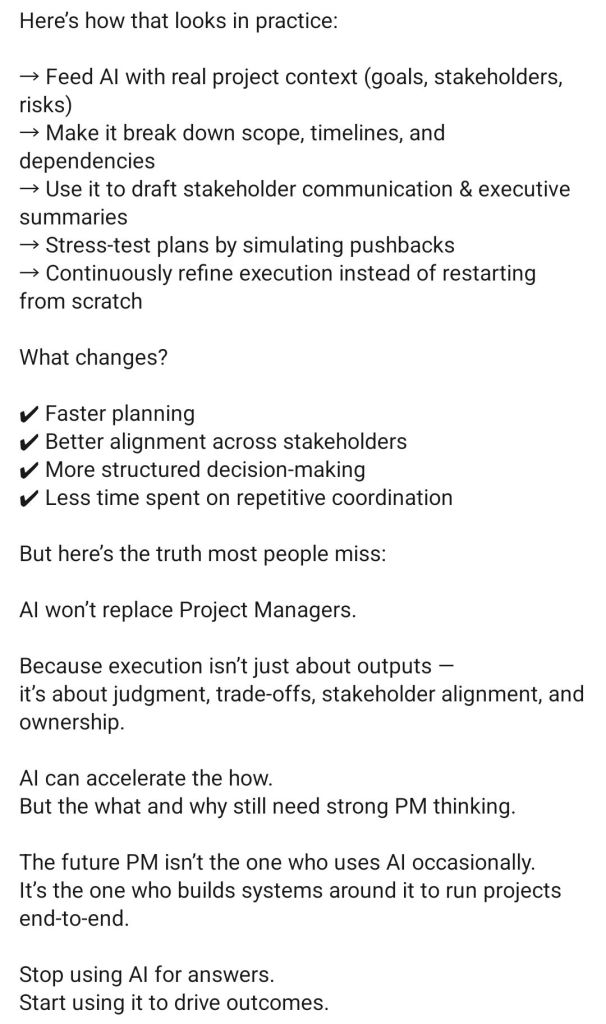
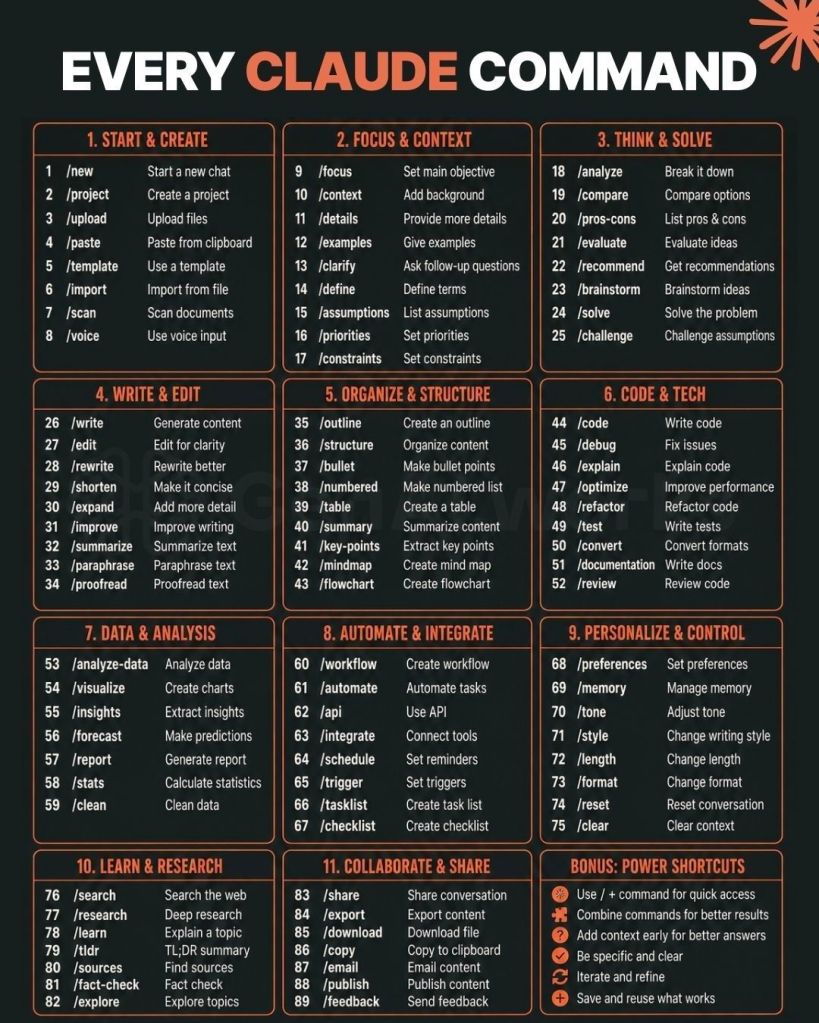
How Project Managers use Claude AI to run projectsHow PMs use Claude AI to run projects
Claude Artificial Intelligence AI technologyinsight
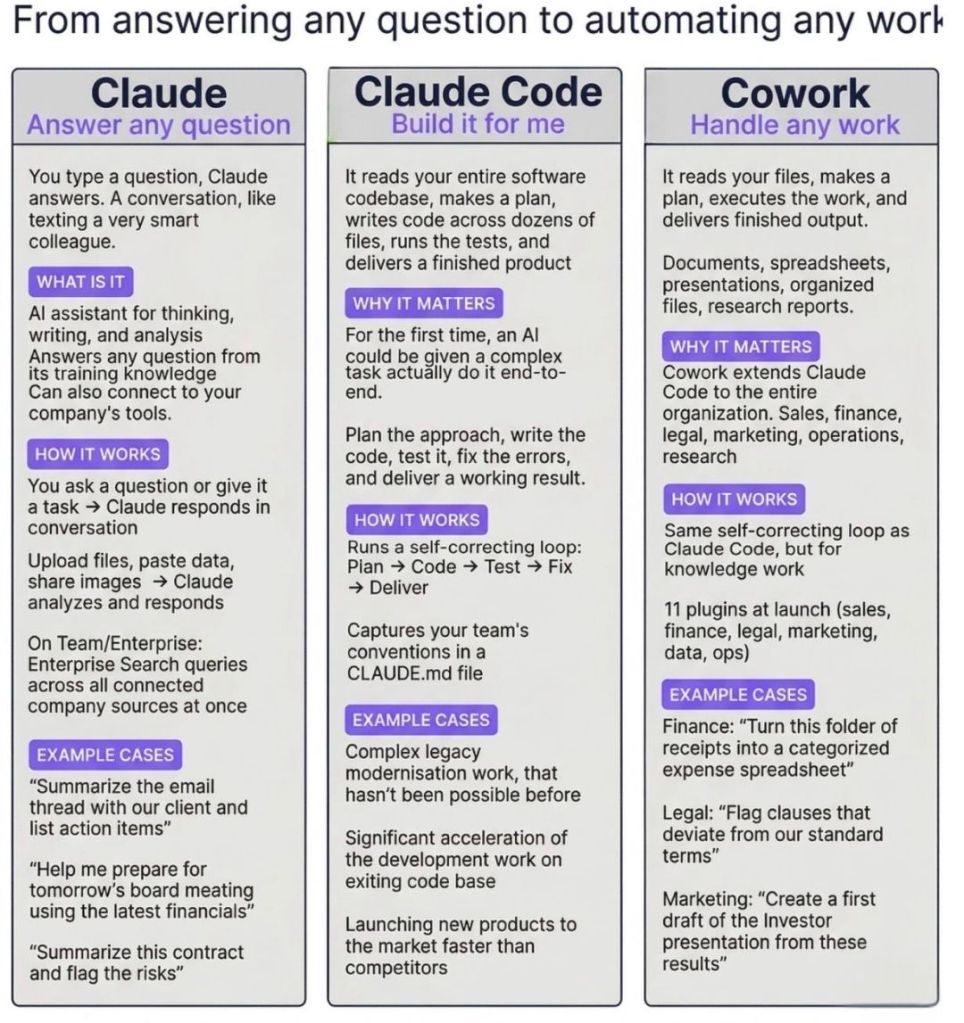
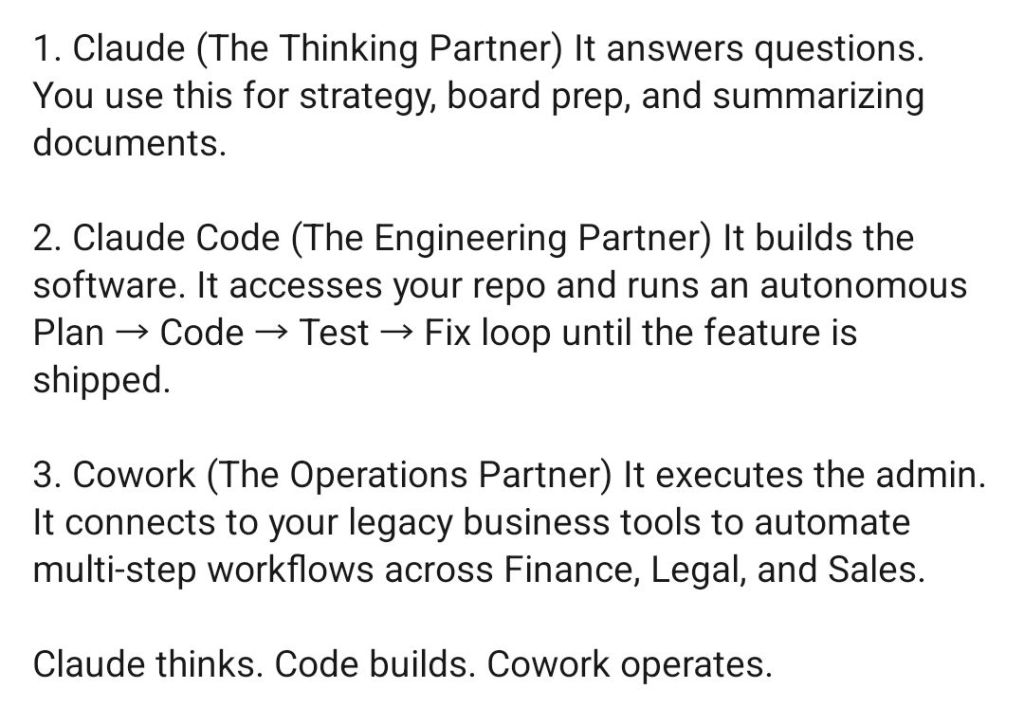
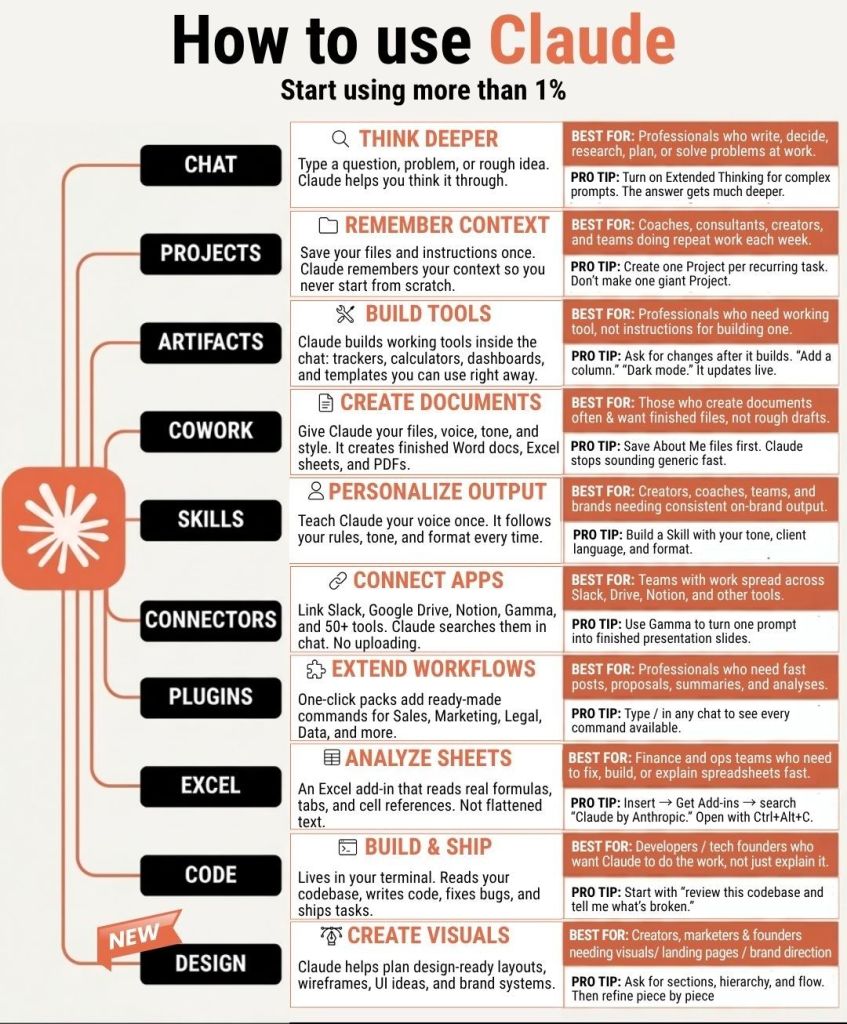
Claude is a family of large language models (LLMs) developed by Anthropic, an AI safety and research company. As of early 2026, the technology has evolved from a conversational chatbot into a suite of “agentic” tools capable of performing complex software engineering, cybersecurity, and workplace automation tasks.
Core Technology & Architecture
Constitutional AI: Claude’s unique training method, which uses a set of principles (a “constitution”) to guide the model’s self-critique and alignment. This is intended to make Claude more ethical, harmless, and less prone to bias.
Model Tiers: Claude is typically released in three sizes—Haiku (fastest/cheapest), Sonnet (balanced), and Opus (most powerful for deep reasoning).
Context Window: Recent models like Claude 4.6 and Sonnet 4.5 support massive context windows of up to 1 million tokens, allowing them to process entire codebases or long legal documents in a single prompt.
Extended Thinking: A feature that allows the model to “think” longer on complex problems before responding, using advanced step-by-step reasoning.
Key Features & Innovations
Artifacts: A dedicated UI feature that lets users view and interact with generated code, websites, and diagrams in real-time.
Claude Code: A command-line interface (CLI) that functions as an agentic software engineer, capable of searching your system, editing files, running tests, and fixing bugs autonomously.
Claude Code Security: A specialized tool released in early 2026 for scanning codebases to identify and fix high-severity vulnerabilities.
Computer Use: A beta capability allowing Claude to interpret screen content and simulate mouse and keyboard actions to perform tasks across multiple apps.
Integrations: Claude now connects directly to enterprise tools like Microsoft Word, Excel, PowerPoint, and Zoom to automate report generation and meeting follow-ups.
Impact & Performance
Coding Excellence: Claude is widely regarded as one of the best models for programming, often used to build entire applications through “vibe coding” (conversational development).
Productivity Gains: Internal and external studies suggest Claude can reduce task completion time by up to 80% for complex tasks like legal research and software engineering.
Cybersecurity Breakthroughs: The Claude Mythos model (currently in limited release) has reportedly discovered thousands of zero-day vulnerabilities in major operating systems like Linux and OpenBSD.
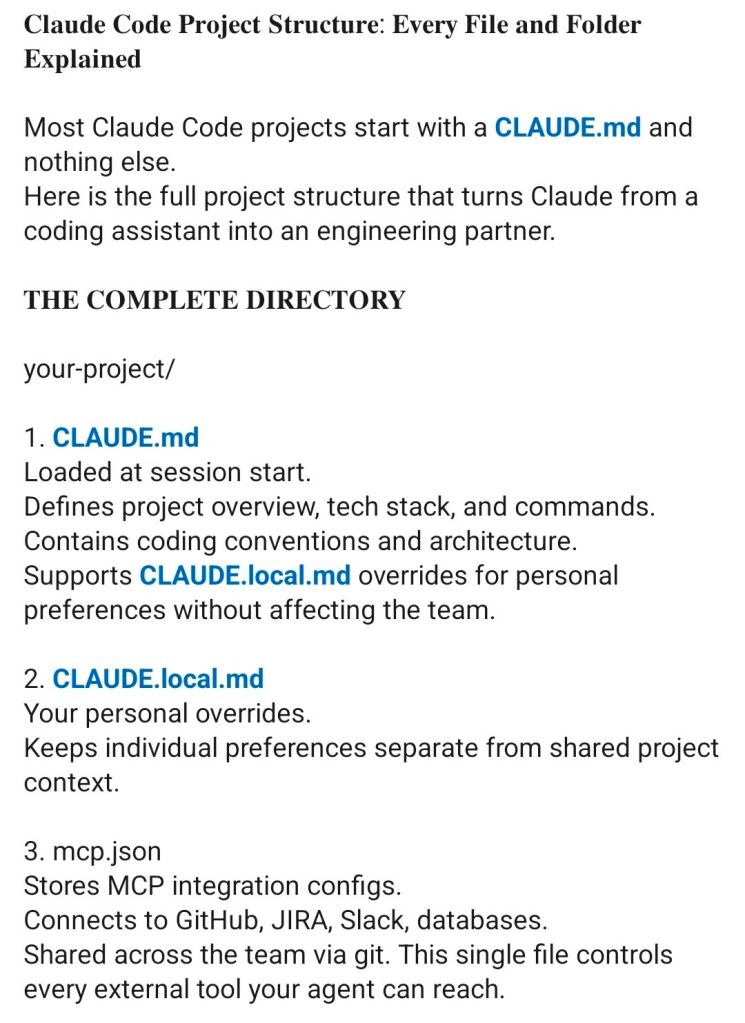
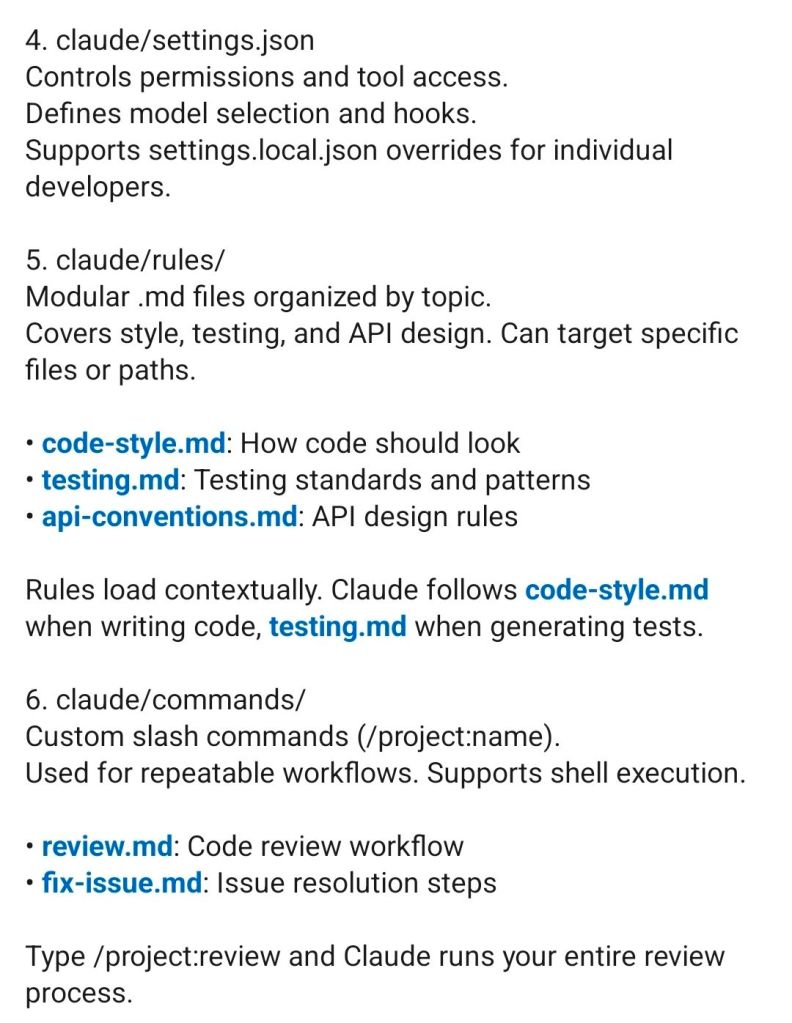
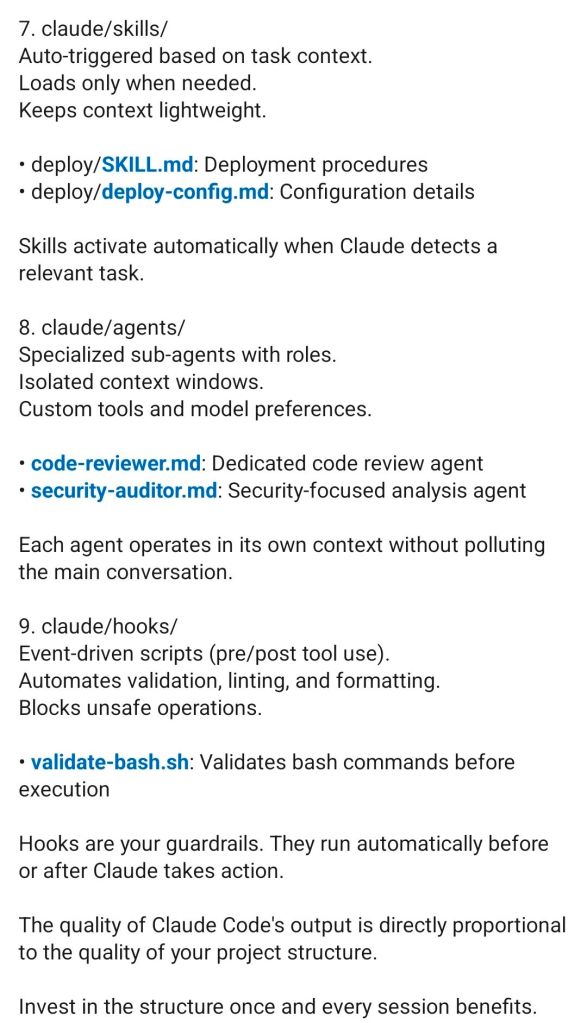
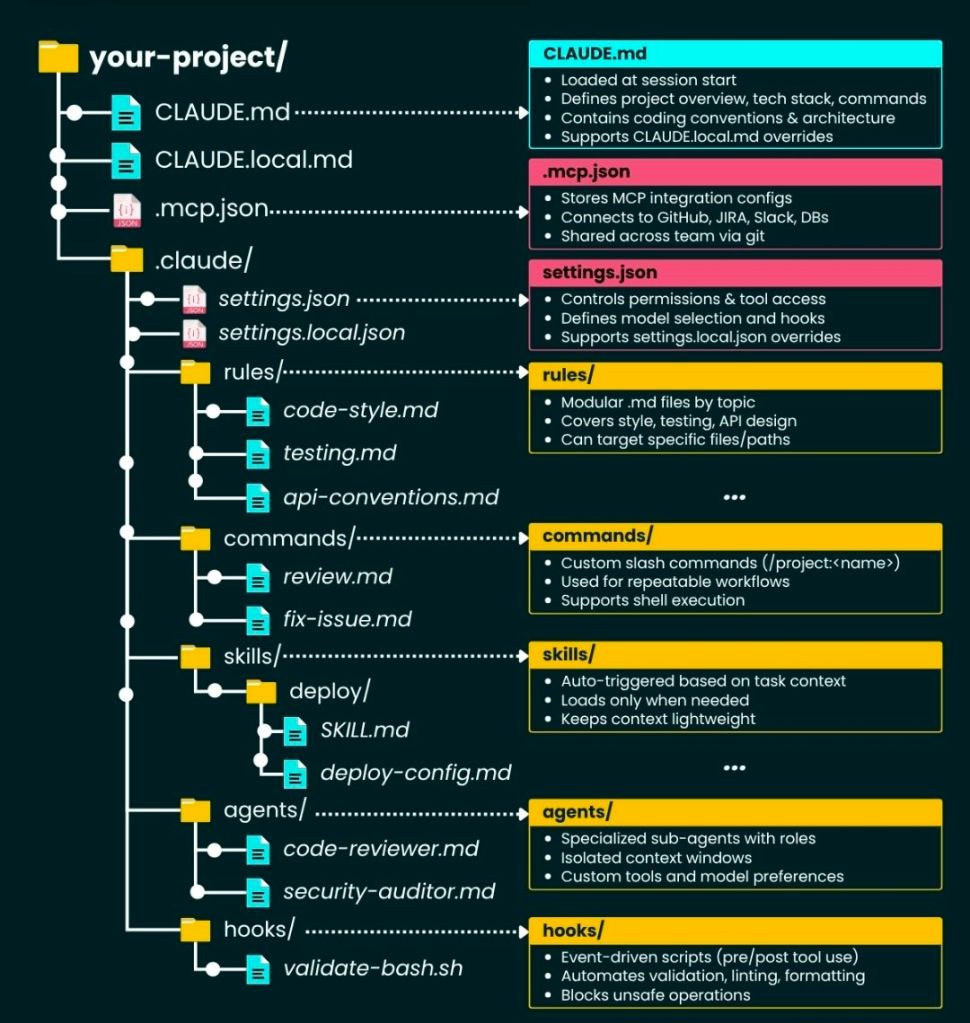
Claude Code Project structure :
Claude Code Project structure
The .claude folder is a hidden directory used by Claude Code (an AI-powered terminal assistant) to store local state, configuration, and memory, allowing it to remember project details across sessions. It functions as a local workspace for Claude to manage instructions, custom commands, permission rules, and auto-memory.
Key Components of the .claude Folder:
CLAUDE.md (Crucial): A markdown file that acts as the primary instruction manual, containing rules, project context, and coding standards.
settings.json (Configuration): Controls permissions, defining which tools Claude can use and what files it can read.
commands/ (Custom Tools): A folder for storing markdown files that create custom shell commands (e.g., /project:review).
rules/ (Specialized Guidance): Contains specific coding conventions or guidelines that supplement CLAUDE.md.
skills/ (Actionable Workflows): Used to store multi-step workflows that Claude can execute, such as code analysis or formatting.
agents/ (Subagents): Defines specialized AI subagents with specific system prompts and tool access.
memory/ (Persistent State): Stores auto-generated notes and context about the project’s codebase, architecture, and previous tasks.
Two Types of .claude Directories:
Project-Level (.claude/): Created at the root of a project, shared with the team via git.
Global-Level (~/.claude/): Located in the user’s home directory, storing personal configurations and memory that apply across all projects.
Important Notes:
Safety: It is safe to delete, but doing so resets the model’s memory of the project.
Gitignore: It is highly recommended to add the .claude folder to .gitignore to avoid committing local environment state.
Structure: It is recommended to keep CLAUDE.md under 200–300 lines to maintain high adherence.