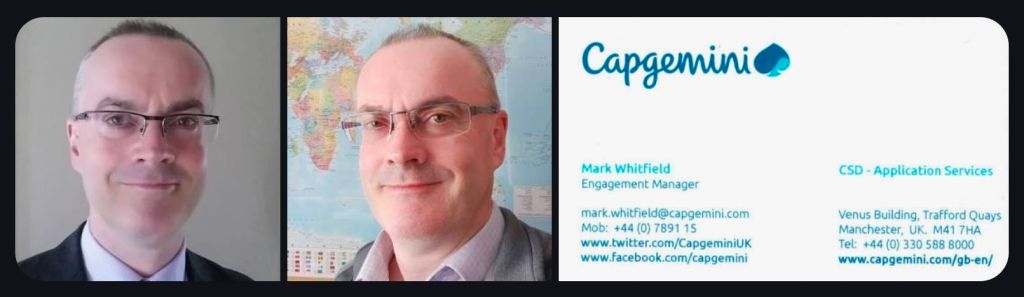
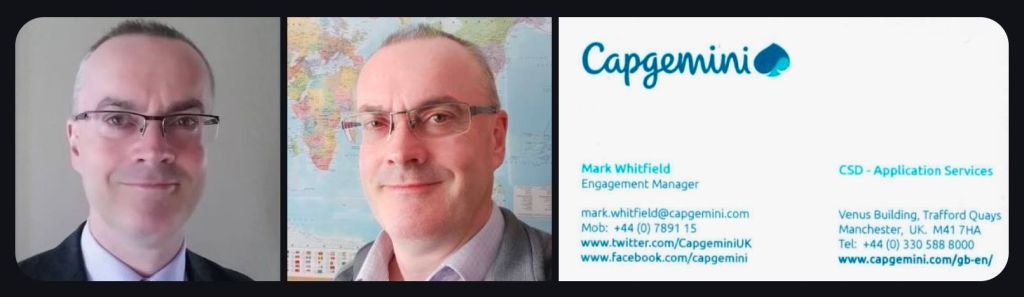
Mark Whitfield is a Senior IT Project Manager and Engagement Manager with over 30 years of experience in the software development lifecycle (SDLC), specializing in digital transformation, payment systems, and HPE NonStop (Tandem) technology.
He is SC cleared (valid until 2031) and currently works at Capgemini UK, having transitioned from a technical programming background to senior project leadership roles.
He is also the creator of PROject Templates, providing a comprehensive, editable suite of over 200 project management tools built over 24+ years of experience.
Comprehensive Career Timeline by Era
1. Technical Foundations & Mainframe Development (1990–1995)
1990: Graduated in Computing at University of Bolton; started as a programmer at The Software Partnership (later Deluxe Data), Runcorn.
1990–1994: Specialised in electronic banking software (sp/ARCHITECT-BANK) on Tandem Mainframe Computers (HPE NonStop), developing in COBOL85 and NonStop SQL for major banks.
1994: Developed batch billing modules for Barclays Business Master II (BBM II) on-site in Knutsford and Poole.
1995–2013: Worked at Insider Technologies Limited as Senior Development Engineer/ Project Manager.
1997: Conducted volume testing/benchmark software for CRESTCo (now Euroclear) on new S7000 hp NonStop nodes.
2002: Managed and attained the first HP OpenView Operations 2-way Smart Plug-In (SPI) certification for the HPE NonStop platform.
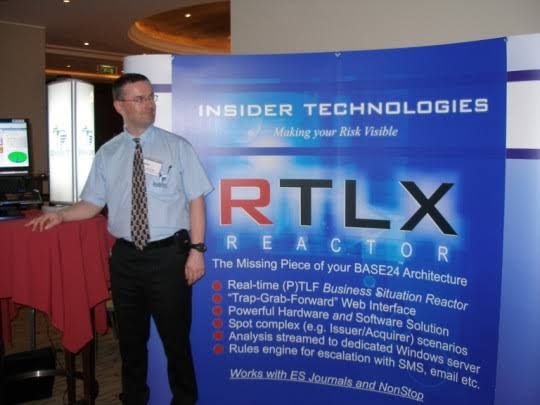
2000s (Early): Developed RTLX (Real-Time Log Extraction) for BASE24 POS and ATM transaction monitoring, collaborating with banking clients like HSBC and Global Payments.
2013: Delivered a large BASE24 transaction tracking project at Al Rajhi Bank in Riyadh, Saudi Arabia.
Tandem Computers, founded in 1974 by James (Jimmy) Treybig, revolutionized the computing industry by pioneering fault-tolerant computer systems. Designed specifically for online transaction processing (OLTP) in banking, stock exchanges, and telephone switching, Tandem’s “NonStop” systems provided near-zero downtime by utilizing redundant, modular processors and a “shared-nothing” architecture.
Tandem remained an independent, rapidly growing company until it was acquired by Compaq in 1997, later becoming part of Hewlett Packard Enterprise (HPE).
Overview of Key Technologies
NonStop Architecture: The core design featured multiple independent processors, each with its own memory and I/O bus, interconnected by a redundant inter-CPU bus called the Dynabus.
Guardian OS: A message-based operating system designed to detect faults immediately (“fail-fast”) and mirror process states to a backup processor, allowing seamless failover.
NonStop SQL (1986): The first fault-tolerant SQL database, known for linear scalability.
ServerNet (1995): A high-speed, scalable, point-to-point network system that replaced the Dynabus and influenced modern InfiniBand standards.
Detailed Historic Timeline by Era and Year
The Founding Era (1974–1979)
1974: Tandem Computers is founded in Cupertino, California, by Jimmy Treybig, formerly of HP. Initial venture capital investment comes from Kleiner & Perkins.
1975: Design of the Tandem/16 (T/16) is completed.
1976: The first T/16 NonStop system is shipped to Citibank.
1977: Tandem goes public; sales begin rapid, exponential growth.
1978: Introduction of the ENCOMPASS database management system.
The Growth and Competition Era (1980–1989)
1980:Inc. magazine ranks Tandem as the fastest-growing public company in America.
1981:NonStop II is introduced, supporting 32-bit addressing to allow for larger applications.
1982: Competition intensifies as Stratus Technologies enters the fault-tolerant market. Tandem faces its first quarter of declining growth.
1983: Introduction of the NonStop TXP, the first entirely new implementation of the TNS architecture with cache memory.
1985: Attempted entry into the PC market with the MS-DOS-based Dynamite PC, which fails commercially and is withdrawn.
1986: Introduction of the NonStop VLX (32-bit datapath) and the revolutionary NonStop SQL database.
1987: Introduction of the low-cost NonStop CLX for small office environments.
1988: Tandem acquires Ungermann-Bass, Inc. to strengthen networking capabilities.
1989: Introduction of the NonStop Cyclone, a high-end ECL-based processor aimed at mainframe markets.
The Open Standards & MIPS Transition Era (1990–1996)
1990: Tandem introduces the Integrity line of fault-tolerant Unix systems.
1991:Cyclone/R (CLX/R) is released, marking the start of the migration from proprietary stack machines to MIPS R3000 RISC microprocessors.
1993: Introduction of the NonStop Himalaya K-series using faster MIPS R4400 processors.
1994: NonStop Kernel (NSK) is extended with Open System Services (OSS), a POSIX-compliant Unix environment.
1995: Introduction of ServerNet, designed for extremely low-latency inter-processor communication.
1995–1997: Partnered with Microsoft on the “Wolfpack” project, which becomes Microsoft Cluster Server.
Acquisition and Integration Era (1997–Present)
1997:Compaq acquires Tandem Computers for roughly $3 billion. The Himalaya S-Series is introduced.
1998: Compaq acquires DEC, leading to a shift in engineering strategy towards Alpha/Itanium instead of MIPS.
2002:Hewlett-Packard acquires Compaq. Tandem becomes the core of the HP Integrity NonStop Server division.
2005: The first HP Integrity NonStop servers (TNS/E) based on Itanium processors are released.
2014: Completion of the migration to Intel x86 architecture (NonStop X).
Note: Following the split of HP into Hewlett Packard Enterprise (HPE) and HP Inc., the NonStop product line continues to be developed and supported by HPE.
Mark Whitfield is a highly experienced SC cleared Senior IT Project Manager and Engagement Manager with over 30 years in the IT industry, specializing in both Agile and Waterfall delivery for large-scale blue-chip companies, digital projects, and payment systems. After starting as a programmer, he transitioned into project management, eventually working with Capgemini and establishing a professional templates resource site.
SC cleared Senior IT Project Manager and Engagement Manager
IT Project Management Overview
Key Expertise: Senior IT Project Management (Agile / Scrum / Waterfall / PRINCE2), Delivery Management, Business Transformation, and SC clearance.
Sector Focus: Banking, Finance, Transportation (Heathrow, NATS), Retail, Government (Local Regional Government – LRG), Aerospace & Defence, and Gambling.
Technical Background: Programming in COBOL85, Tandem TAL, SQL, C, C++, Java, and experience with HPE NonStop (BASE24) systems.
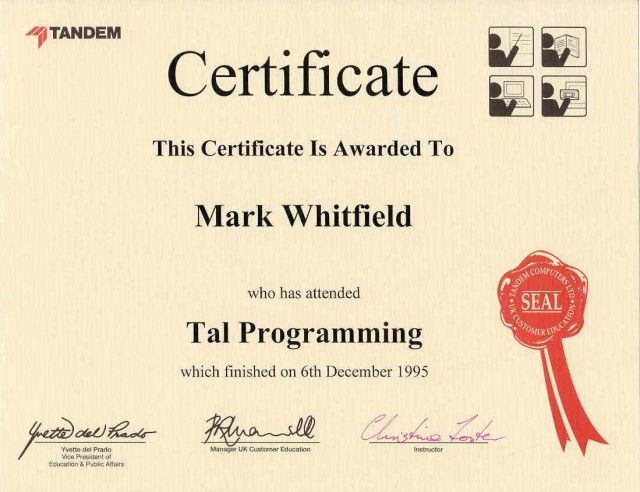
Tandem TAL Programming certificate, 1995
Tools & Methodologies: PRINCE2, Agile SCRUM, Microsoft Project (MPP), Excel RAID logs, and Jira.
Value Proposition: Focuses on improving revenue, cost, and Customer Satisfaction (CSAT) through structured SDLC methodologies.
Detailed Historical Timeline
Era 1: Programming & Technical Development (1990–1995)
1990: Graduated in Computing and joined The Software Partnership (later Deluxe Data) in Runcorn as a programmer specializing in electronic banking software (sp/ARCHITECT) on Tandem Computers (now HPE NonStop).
1990-1995: Developed code (COBOL85/NonStop SQL) for major banks, including TSB, Bank of Scotland, Rabobank, and Girofon.
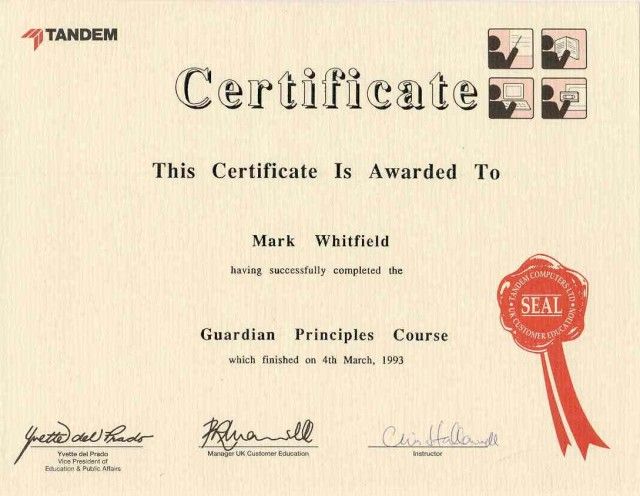
1993 (May): Completed Tandem Guardian Principles Course.
Tandem Guardian Principles Course, 1993
1994: Deluxe Electronic Payment Systems acquired The Software Partnership.
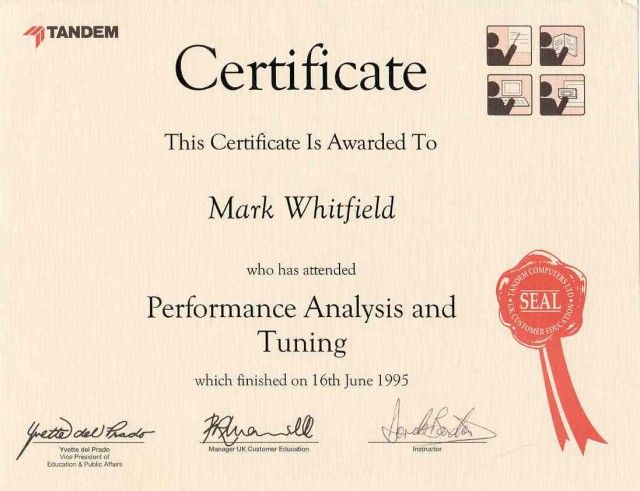
1995 (June): Completed HP NonStop Performance Analysis and Tuning.
Deluxe Electronic Payment Systems acquired The Software Partnership in 1994HP NonStop Performance Analysis and Tuning, 1995
Era 2: Specialized Software & Product Management (1995–2013)
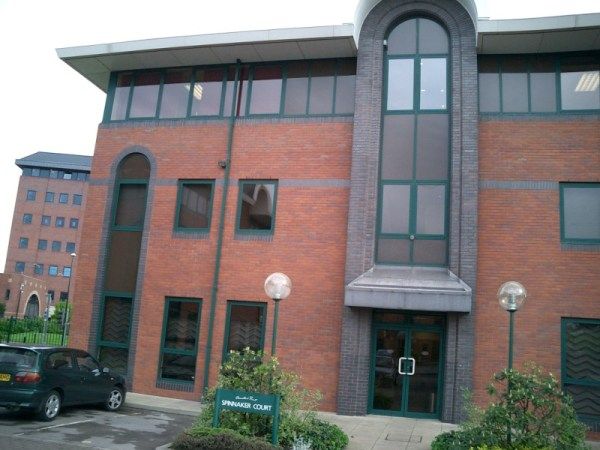
Insider Technologies Limited (ITL) in Salford Quays
1995 (August): Joined Insider Technologies Limited (ITL) in Salford Quays as a senior programmer, later moving into product / project management.
1995-2013: Focused on monitoring (Reflex) and batch scheduling (MultiBatch) software for HPE NonStop systems, serving clients like Barclays and Alliance & Leicester.
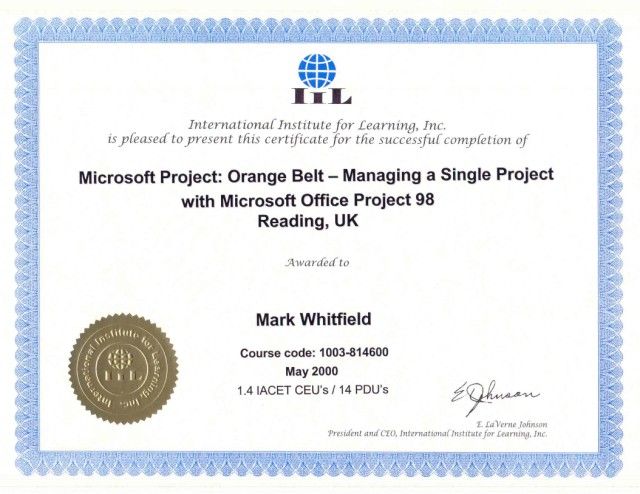
2000 (May): Completed Microsoft Project ’98 Certification and began training other ITL project managers on scheduling best practices.
2007: Insider Technologies products (Reflex) integrated into FIS solutions.
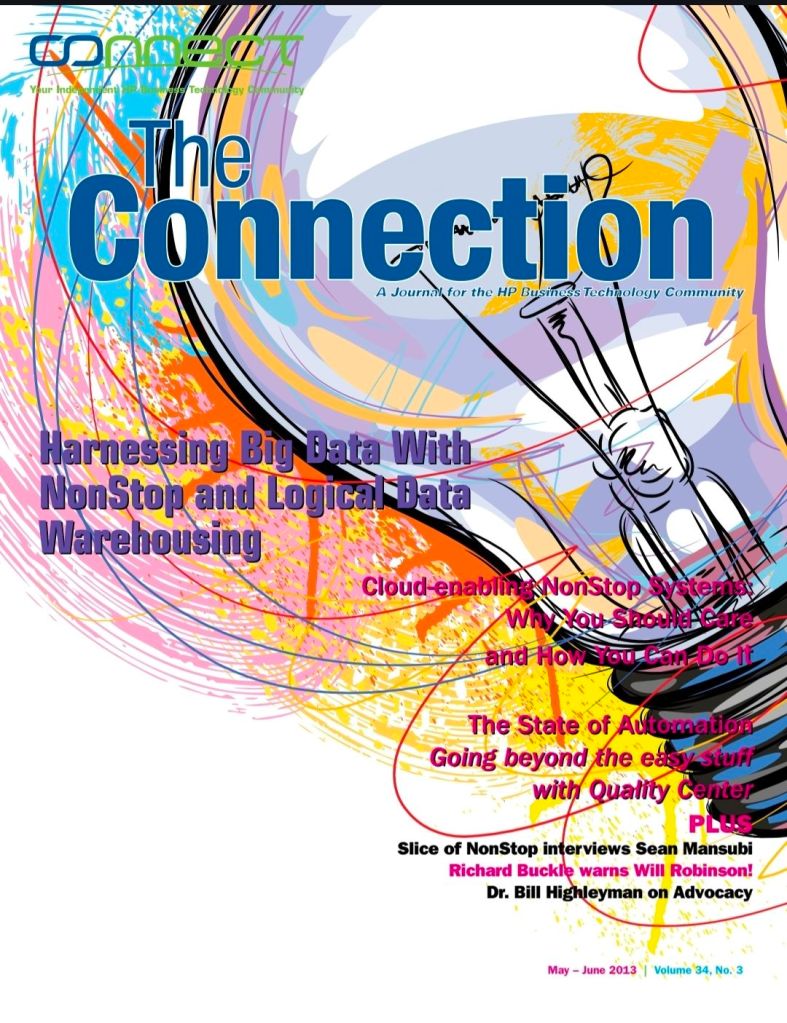
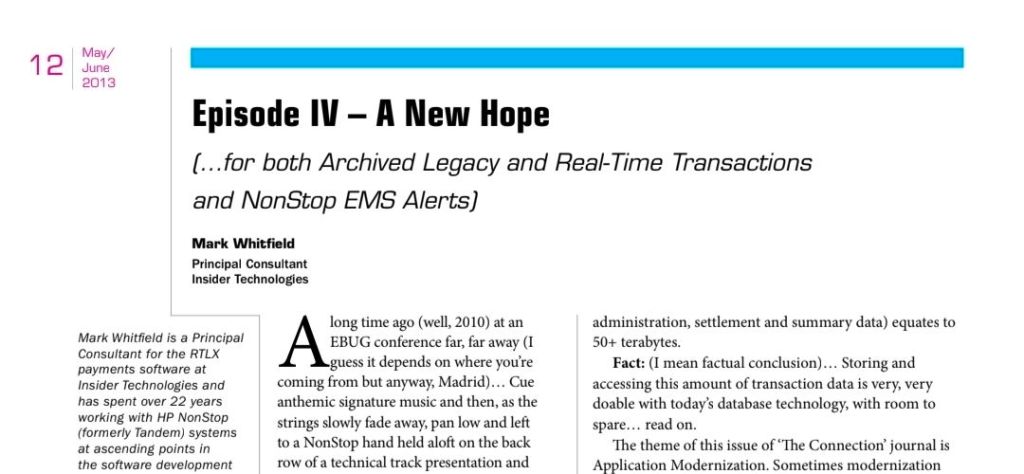
2013: Published work in the HP NonStop journal “The Connection”.
HPE NonStop journal “The Connection” – article for the Insider Technologies product, RTLX
Era 3: Senior IT Project Management (2013–2016)
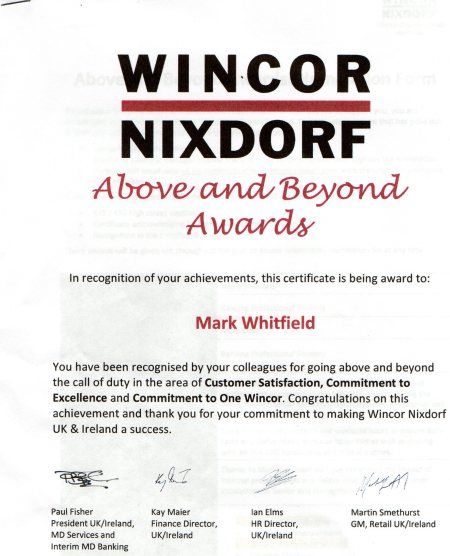
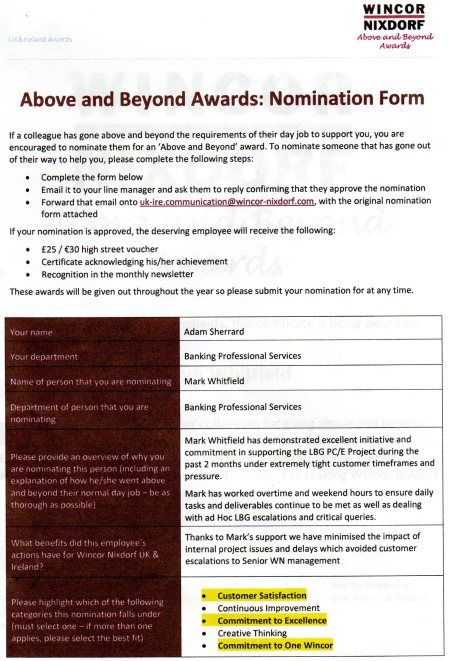
2013-2014: Worked at Wincor Nixdorf as an IT Project Manager (PRINCE2 / Agile Scrum) on a £5m+ LBG Self-Service Software Replacement (SSSR) program for Lloyds Banking Group, migrating ATM systems from HP NonStop to AIX.
2014-2016: Joined Betfred as a Senior Project Manager, delivering payment gateways, sportsbook, and virtual gaming projects in Agile SCRUM for mobile and online platforms.
Era 4: Engagement Management & Public Sector (2016–Present)
2016 (January): Joined Capgemini UK as a client-facing Engagement Manager (SC cleared).
2016 (August): Founded Mark Whitfield Consultancy Ltd, managing independent IT, network, and improvement projects.
2016-2018: Led Waterfall / Agile projects for automotive, local government, and postal services.
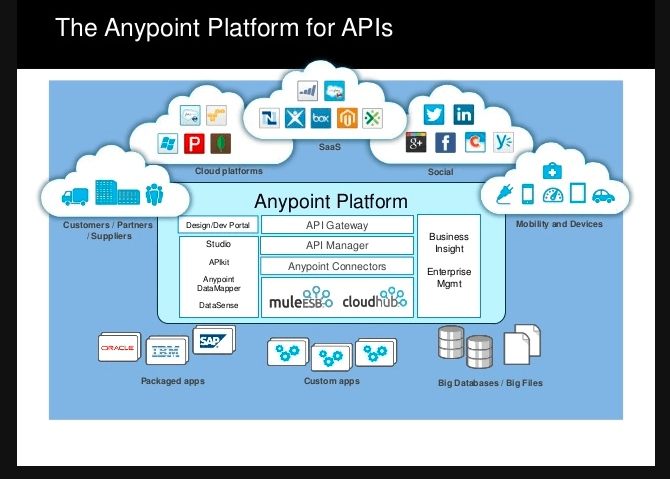
2018-2019: Augmented into MuleSoft as a Delivery Manager for the Anypoint Platform.
2023-2024 (Nov-Feb): Served as Technical Delivery Manager for a UK Government account, overseeing a £1m+ Fish Export Service (FES) to Common Entry Health Document (CHED) Inspection Portal (CHIP) project.
2026: Continued to provide project management thought leadership and template resources for Agile/Scrum/PRINCE2.
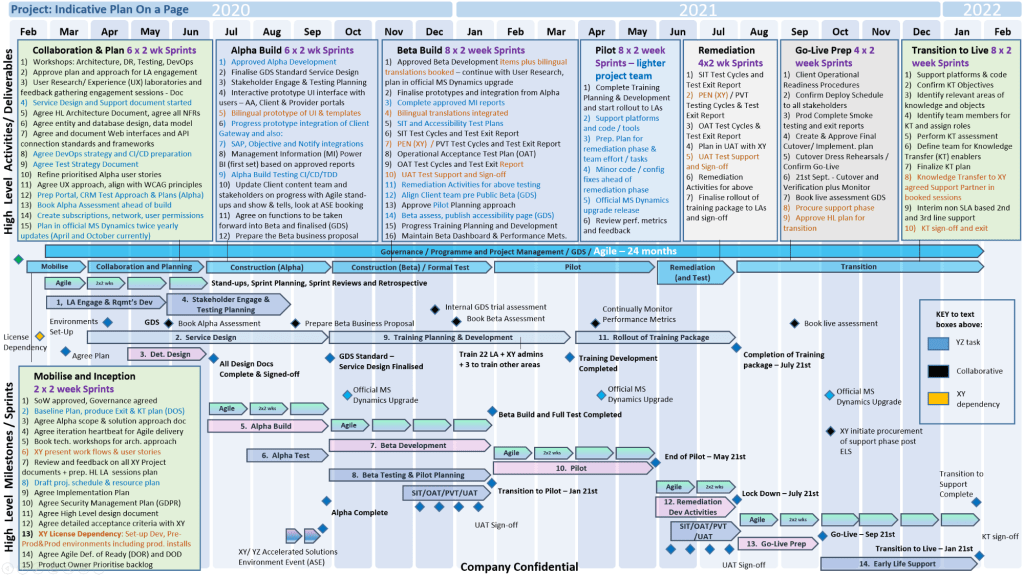
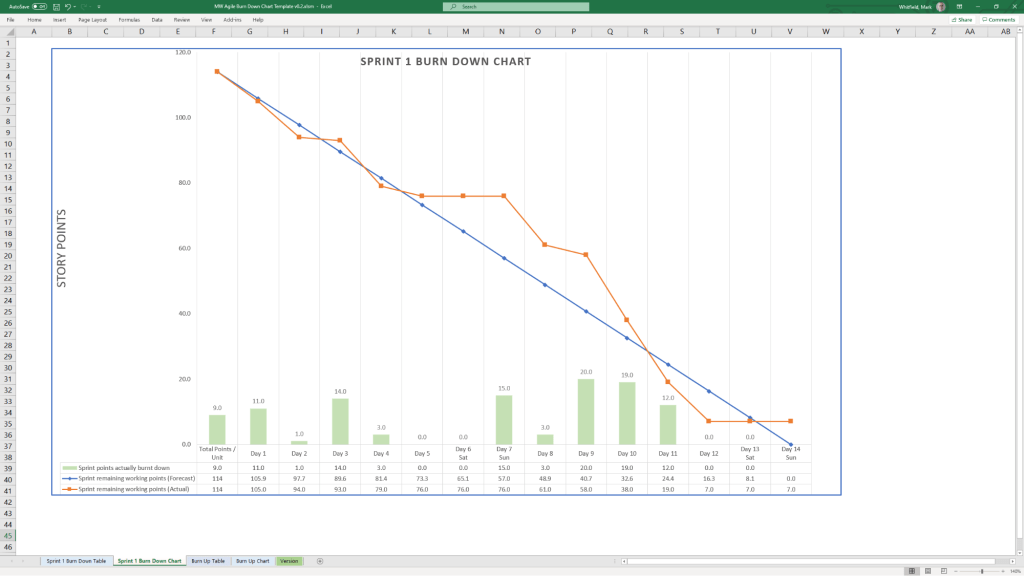
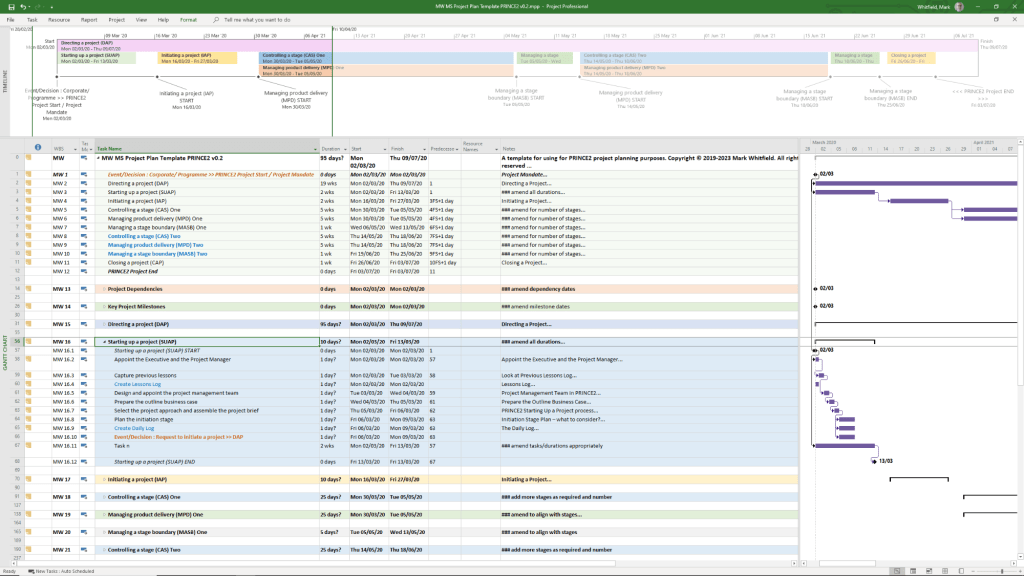
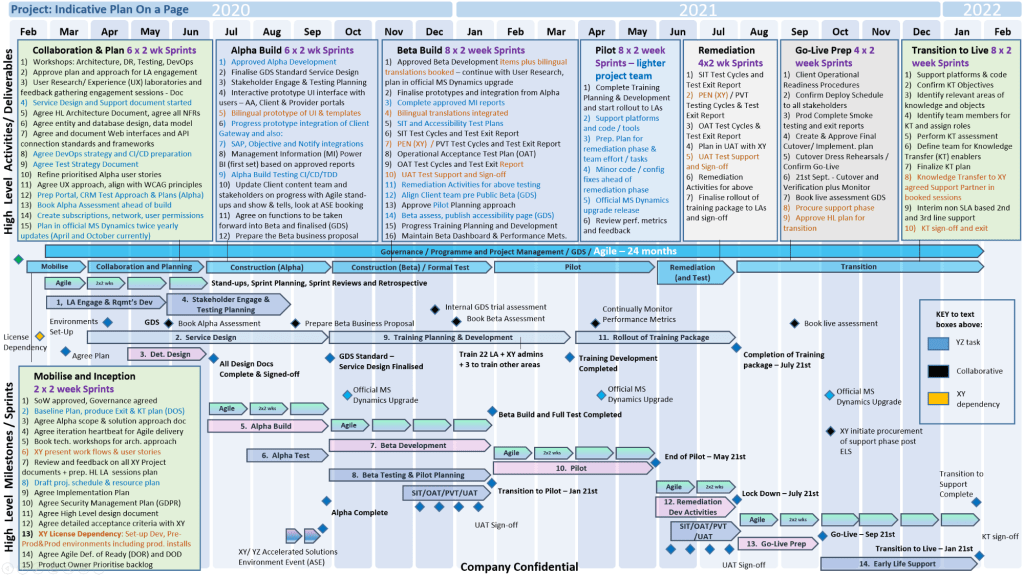
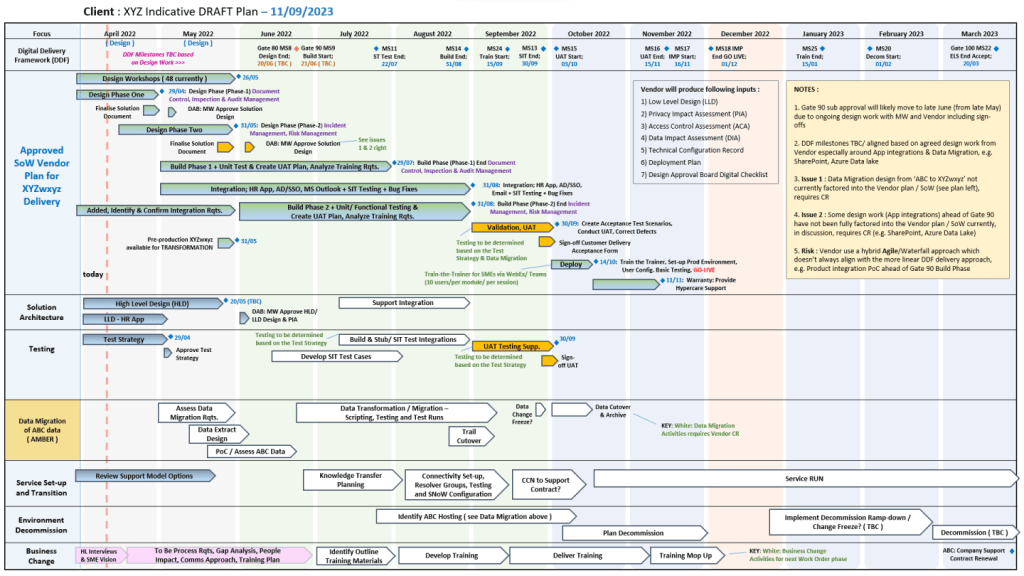
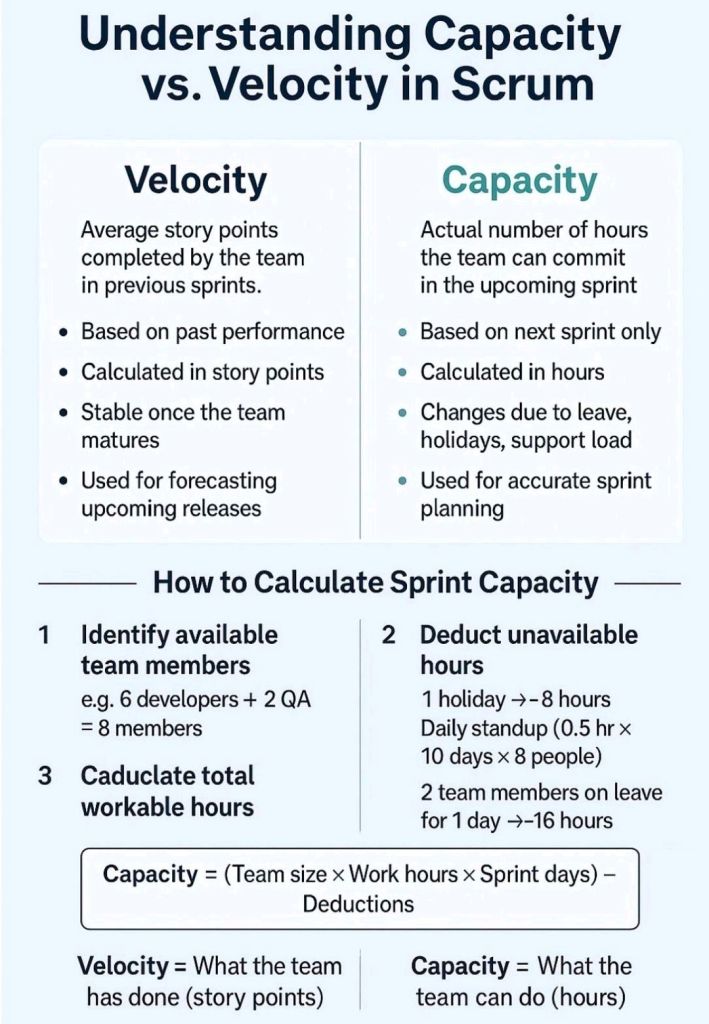
Agile Scrum Burn down Chart template in Microsoft Excel Microsoft Project MPP MSP Project Plan Template examplesPlan On a Page POaP templates plus MPP MS Project and MS Excel Project Plan templates
Key Projects & Clients
UK Gov / Capgemini: Fish Export Service (FES) Cloud Migration.
sp/ARCHITECT was a pioneering electronic banking and funds-transfer software suite originally developed by the Runcorn-based firm The Software Partnership (TSP). Following its acquisition by the American firm Deluxe Electronic Payment Systems in 1994, the Runcorn office became the European hub for what was then rebranded as Deluxe Data.
sp/ARCHITECT electroinic banking by The Software Partnership TSP
Overview
The Runcorn operation specialised in high-availability, mission-critical banking software, specifically the sp/ARCHITECT-BANK product. This software was designed to run on Tandem Computers (now HPE NonStop), which were known for their fault-tolerant architecture. The “sp/ARCHITECT” platform was highly valued for its client-server design, allowing it to be adapted for various hardware brands, including Unix-based systems.
Historical Timeline
Mid-1980s: The Software Partnership (TSP) is co-founded by Nigel Walsh. The company starts developing online banking systems in Timperley before moving to Runcorn.
1990: The firm establishes itself at Norton House in Crowngate, Runcorn, focusing on electronic banking software for major clients like TSB and Bank of Scotland.
1992: The Runcorn office relocates to Wingate House on Northway.
1994: Deluxe Electronic Payment Systems (a subsidiary of Deluxe Corporation) acquires The Software Partnership for an undisclosed sum. The acquisition is aimed at helping Deluxe expand its global presence and accelerate the use of the sp/ARCHITECT suite.
1994–1995: The Runcorn office operates as Deluxe Data, providing software design, coding, and 24-hour support for international clients including Rabobank.
2000: Following a series of corporate shifts, the company name changes to EFD eFunds.
2007: By this year, the operation has transitioned to Fidelity National Information Services (FIS) and is based in Aegon House, Daresbury, Warrington.
sp/ARCHITECT electroinic banking by The Software Partnership TSP
The history of the Machines in The Matrix universe is a transition from a servant class to the dominant global power. This evolution is officially chronicled through several distinct eras, beginning with humanity’s peak and ending in a symbiotic, albeit forced, relationship.
Machine History Overview
Originally created by humans in the early 21st century to perform menial and hazardous labor, the Machines were a “slave caste” of true artificial intelligence. For a time, they coexisted peacefully as humanity enjoyed a golden age of leisure. This balance shattered when a robot named B1-66ER killed its master in self-defense, sparking a global debate on machine sentience and rights. The subsequent persecution of machines led them to form their own nation, Zero One, which eventually surpassed human economies and triggered the Machine War.
Detailed Timeline by Era
Era 1: The Human Golden Age (Pre-2090)
c. 1985–2025: Rapid technological advancement; the invention of true AI and the first sentient machines.
Early 21st Century: Machines are integrated into every level of society as laborers, freeing humans from menial work.
Era 2: The Second Renaissance (2090–2139)
2090: The B1-66ER Trial. A domestic robot kills its owner to avoid being decommissioned; the court orders the destruction of all sentient machines.
2090s: The “Million Machine March.” Pro-machine protests are met with violent government suppression and machine “purges”.
2100s: Machines flee to Mesopotamia (the “cradle of civilization”) and establish the city of Zero One.
2120s–2130s: Zero One’s superior manufacturing causes a global economic collapse for human nations. The UN responds with an economic blockade and later, a nuclear strike on Zero One, which the machines survive.
Era 3: The First Machine War (2139–2199)
2139: The UN officially declares war after Zero One’s ambassadors are rejected and attacked at the UN Headquarters.
Mid-22nd Century: Humanity enacts Operation Dark Storm, seeding the atmosphere with nanites to block the sun and cut off the machines’ solar power.
Late 22nd Century: Machines adapt by creating new, “sinister” war units (like Sentinels) and begin harvesting humans for bioelectric energy.
2199: The Machines achieve total victory. An ambassador detonates a nuclear device at the UN, ending the old human order.
Era 4: The Matrix Cycles (c. 2199 – 2699)
The Beta Versions: The Architect builds a “Paradise” Matrix and later a “Nightmare” Matrix (with monsters like vampires); both fail as humans reject the simulations.
The Modern Matrix: The Oracle discovers humans need the “illusion of choice.” This version mimics 1999 society and is accepted by 99% of subjects.
Cycles 1–5: The Machines establish a system where Zion is destroyed and rebuilt roughly every 100 years by a figure known as “The One” to stabilize the code.
Era 5: The Post-Revolution & Synthient Era (2700+)
The Truce: Neo brokers peace with the Machines to stop the rogue Agent Smith. The war ends, and humans who wish to be freed are released.
Machine Civil War: Years later, a power scarcity leads to internal machine conflict between those loyal to the peace and a new faction under The Analyst.
The Synthients: Machines begin preferring terms like “Synthient” (Synthetic Sentient) and “D.I.” over the “demeaning” term “Machine”.
Mark Whitfield is a highly experienced IT Senior Project Manager and Engagement Manager based in Manchester, UK, specializing in Agile Scrum, PRINCE2, and Waterfall methodologies. He holds a degree in Computing (1990) and has extensive experience in IT hardware solutions, financial services, and Aerospace & Defence.
Here is a comprehensive summary of his profile, with links based on the provided search data:
Professional Profile
Name: Mark Whitfield
Role: IT Senior Project Manager / Engagement Manager (SC Cleared)
Mark Whitfield is a highly experienced IT Project Manager, Senior Developer, and SC-cleared consultant with over 30 years of experience, specializing in HP NonStop (Tandem) systems, banking software, and digital transformation projects. He is currently an Engagement Project Manager at Capgemini.
Career Overview
Specialism: HP NonStop (Tandem) mainframes, BASE24, transaction monitoring, Agile/Waterfall methodologies.
1990: Graduated in Computing and started as a Programmer for The Software Partnership in Runcorn, specializing in sp/ARCHITECT-BANK on Tandem Computers.
1990-1994: Developed banking code for TSB, Bank of Scotland, Rabobank, and Girofon (Denmark).
1992: Worked on the Barclays Business Master II (BBM II) project in Knutsford.
1994: Company taken over by Deluxe Data (later FIS).
2. Insider Technologies & Monitoring Era (1995–2013)
1995–2013: Joined Insider Technologies Ltd as a Senior Development Engineer and Project Manager.
1995-2004: Developed monitoring/diagnostic software (Reflex 80:20, Reflex ONE24) for HP NonStop payment systems.
1997: Worked on projects for CRESTCo.
Early 2000s: Focused on HP NonStop transaction/payment monitoring for ATM/POS devices using ACI’s XPNET.
2005-2013: Managed first HP OpenView Operations Smart Plug-In certification for NonStop; designed XPERT24.
2011: Certified as a PRINCE2 Practitioner.
3. Banking Transformation & Consultancy Era (2013–2016)
2013–2014: Wincor Nixdorf UK – Worked as a Project Manager in Professional Services for the Banking Division.
2013-2014: Assigned to Lloyds Banking Group (LBG) for the Self-Service Software Replacement (SSSR) program (ATM estate upgrade).
2014–2016: Joined Betfred as an IT Project Manager in the gambling/casinos industry, delivering mobile/online payment gateways (iOS, Android).
4. Digital Transformation & Capgemini Era (2016–Present)
2016: Joined Capgemini UK as a client-facing Engagement Manager.
2016-2017: Led digital projects for automotive, local government, and aerospace sectors.
2017: Obtained Microsoft Excel Expert skills and Advanced Engagement Management certifications.
2018–2019: Augmented into MuleSoft as a Delivery Manager for the Anypoint Platform.
2022: Completed Microsoft Azure Fundamentals (AZ-900) certification.
2023–2024: Assigned to a UK Government account for a cloud migration of 130+ applications and the Fish Export Service (FES) project.
Key Qualifications
PRINCE2 Practitioner & Agile Scrum
ITIL Certified
SC Cleared (UK Government)
Technical Skills: C, C++, MS SQL, COBOL, TAL, Java, ASP.NET, HP NonStop