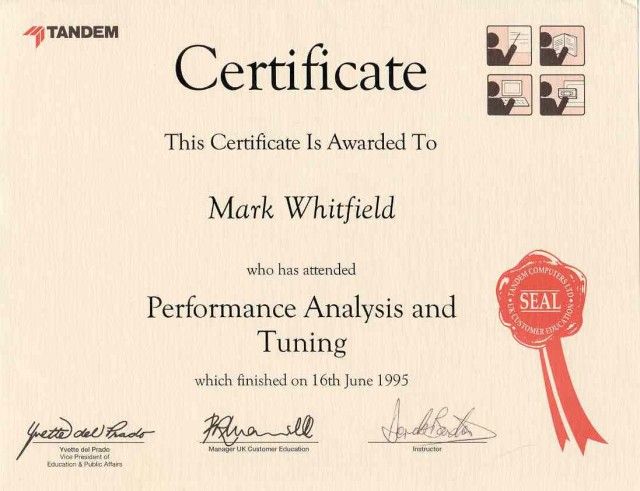
Focus: Electronic banking programming and development on Tandem Mainframe Computers.
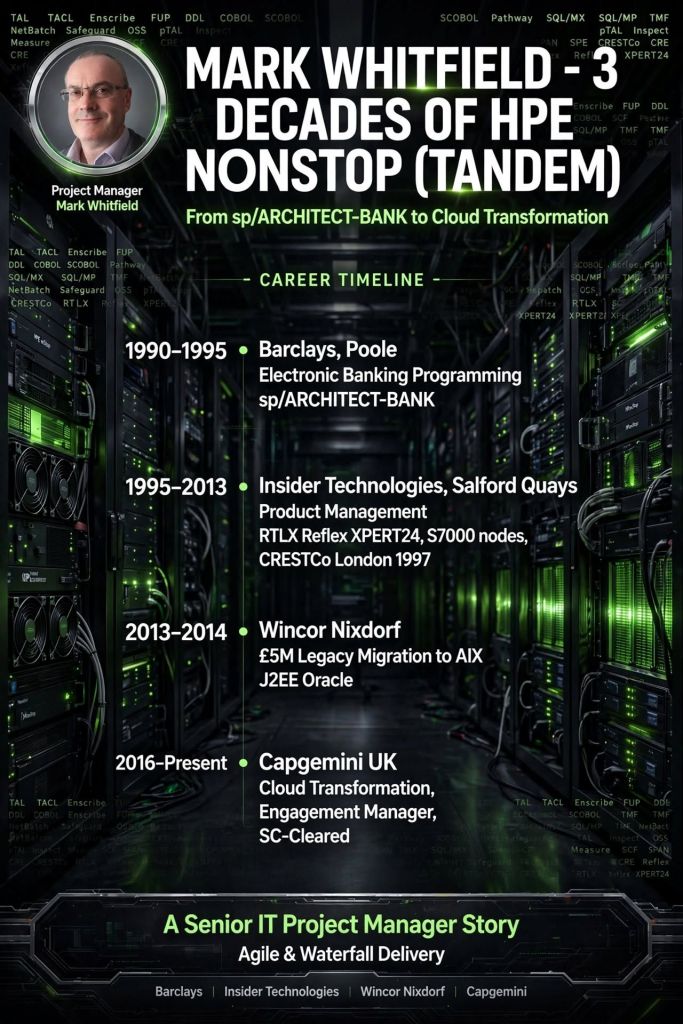
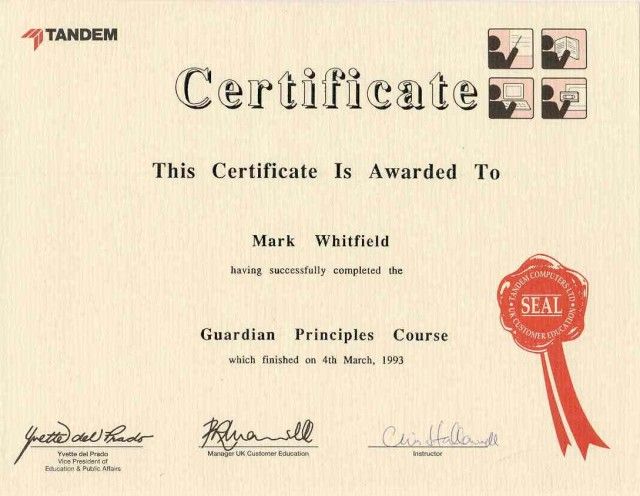
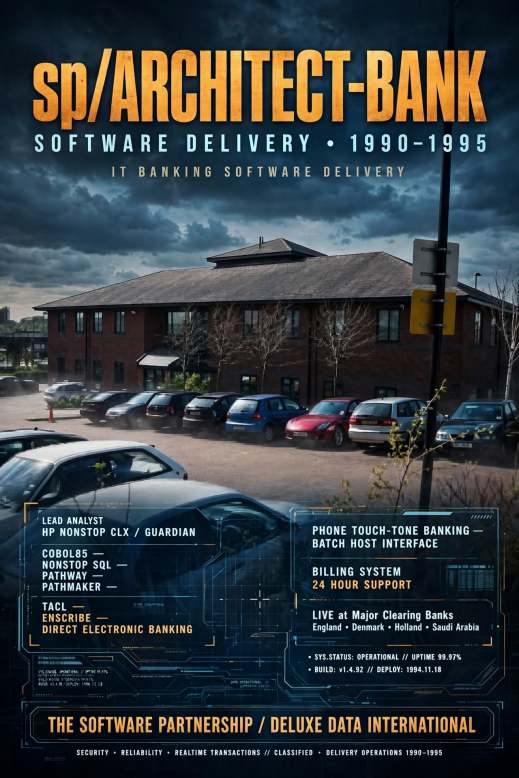
Projects: Wrote, developed, and maintained software like sp/ARCHITECT-BANK and associated billing software (in Poole, 1993). This involved building early electronic banking systems for desktops long before internet banking was prevalent.
Location: Insider Technologies, Salford Quays, Manchester, UK
Focus: NonStop product management, software design, and real-time event monitoring.
Projects: Product managed software lifecycles for four monitoring products (two NonStop based). This included creating health and diagnostic tools (RTLX, Reflex 80:20, Reflex ONE24,XPERT24) for mission-critical NonStop environments. He also deployed volume testing on early HP NonStop S7000 nodes for CRESTCo in London in 1997.
Insider Technologies, Salford Quays, Manchester, UK
Location: Wincor Nixdorf & ATM/POS Financial Services, UK
Focus: Modernization and migration of legacy systems.
Projects: Managed a £5M+ replacement of legacy HP NonStop software systems at a large UK retail bank, migrating functionalities to AIX-based J2EE and Oracle architectures.
Focus: Delivery of enterprise-scale middleware, digital transformation, and cloud.
Projects: Acts as an Engagement Manager and SC-Cleared Project Manager. Focus includes Agile software delivery for Air Traffic organisations (e.g., iOS applications for military and public-facing airspace tracking) and rolling out middleware solutions.
Insider Technologies Limited is a specialized UK-based software house and service provider that engineers high-availability monitoring, tracking, and cybersecurity solutions for business-critical, 24/7 mission-critical architectures.
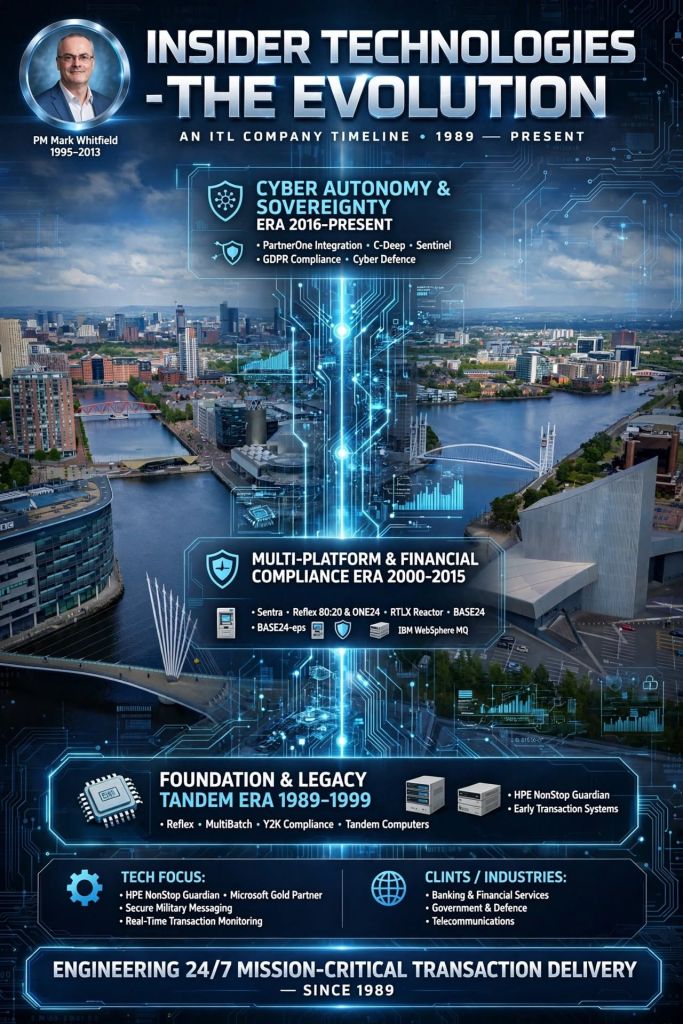
Mark Whitfield | Insider Technologies Evolution Timeline
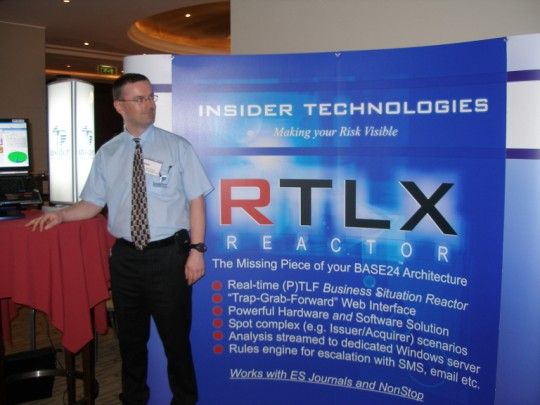
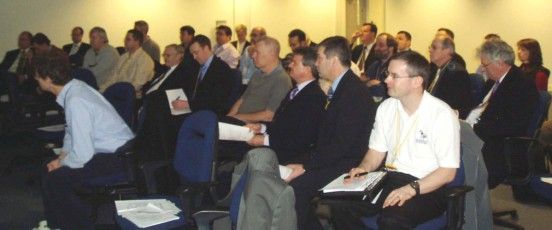
Attending an EBUG conference (European BASE24 User Group)
Foreground, attending a British Isles TANDEM User Group (BITUG)
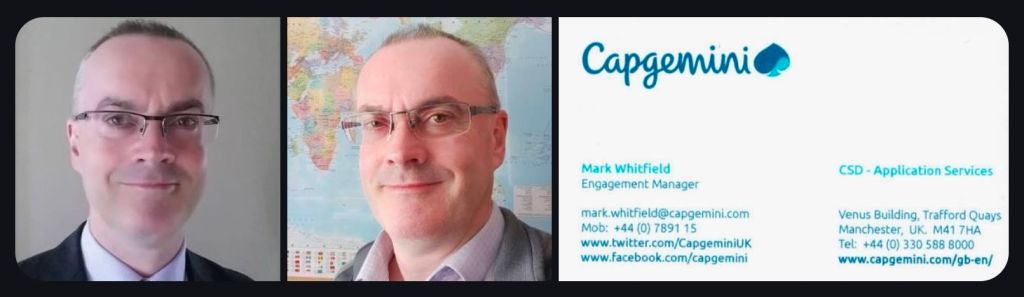
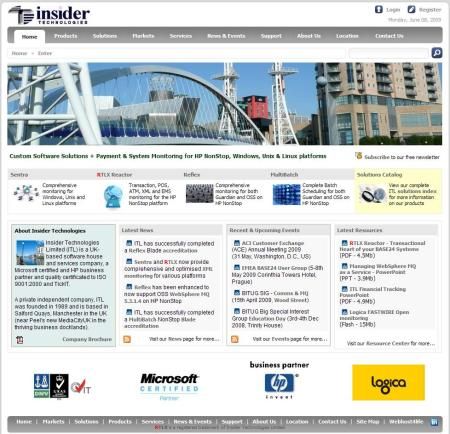
Insider Technologies Limited (website author in 2009)
CompanyOverview
🏢 Corporate Identity & Status
Legal Name: Insider Technologies Limited
Founded:27 February 1989
Headquarters: Manchester, UK (Albert Street, Eccles)
Ownership: Operating as a private independent software company, recently integrated as part of PartnerOne.
Strategic Partnerships: Certified Microsoft Gold Partner for Application Development and long-standing Hewlett Packard Enterprise (HPE) partner.
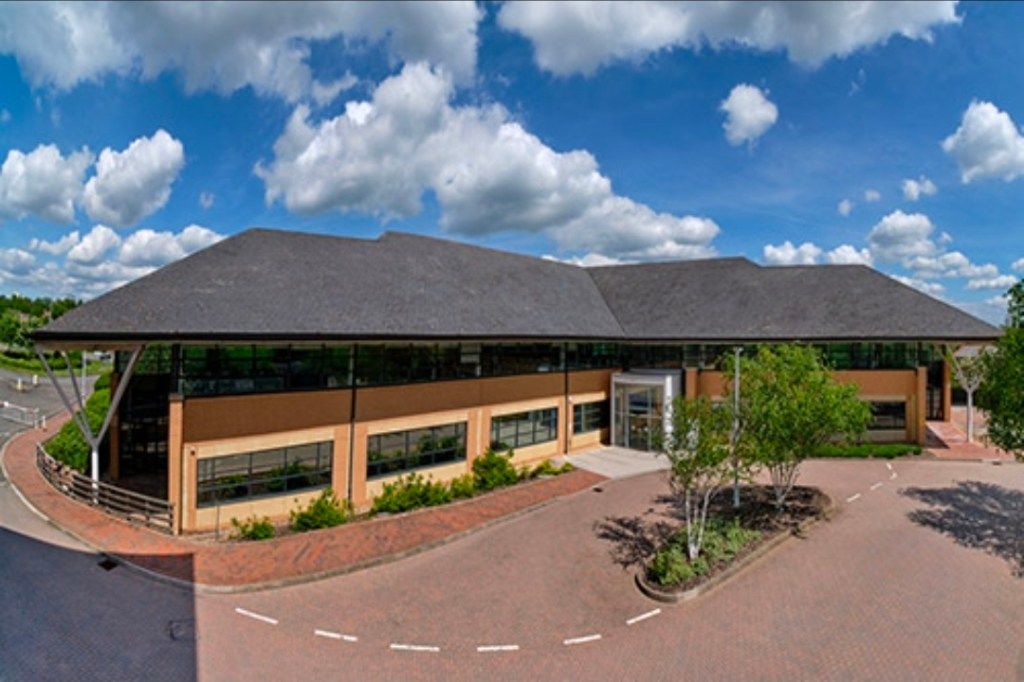
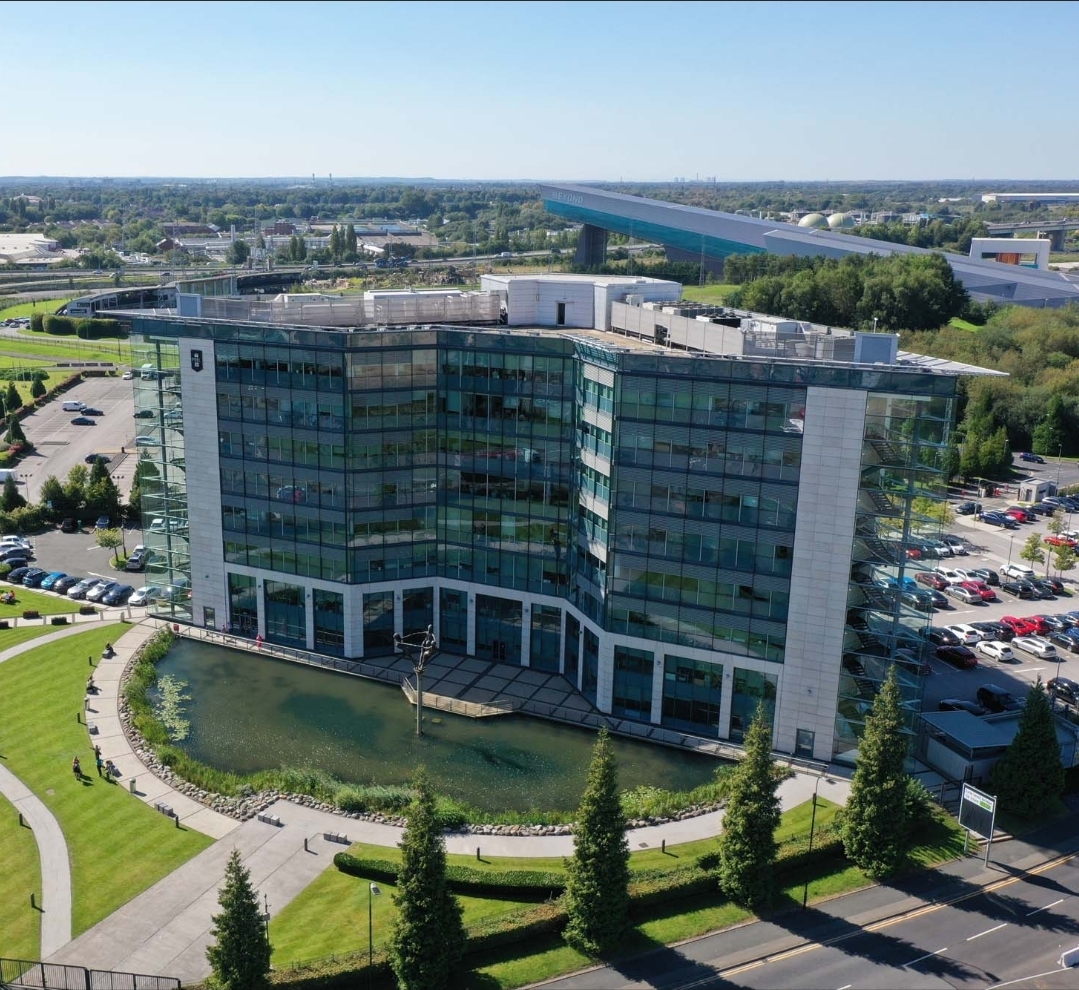
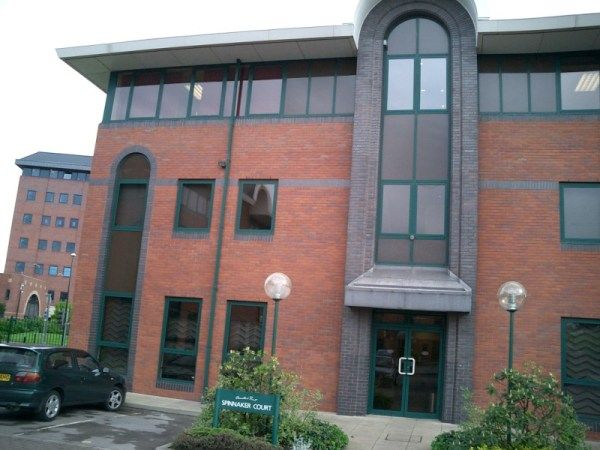
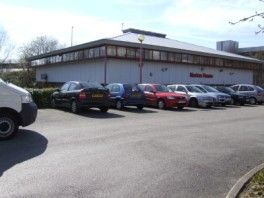
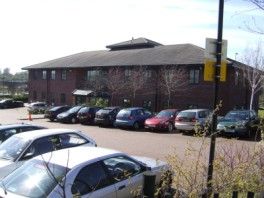
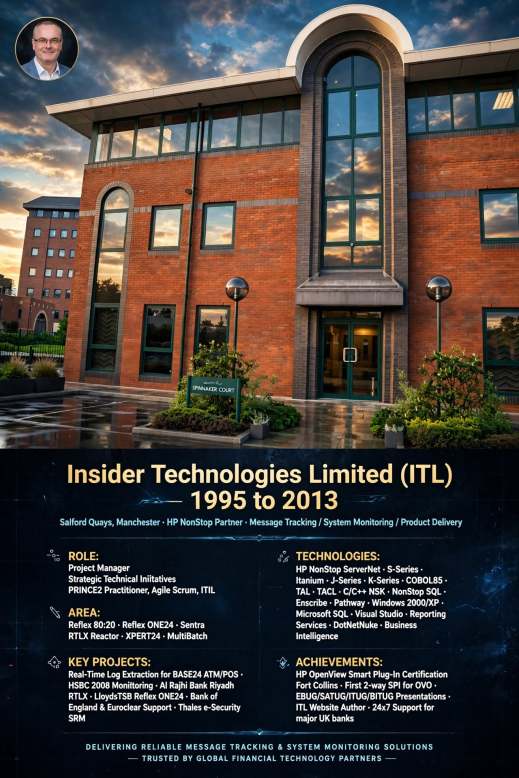
Insider Technologies Limited (ITL) in 2001, Salford Quays, Chandlers Point
🌐 Core Domain & Industries Served
The company delivers real-time, event-driven diagnostic, tracking, and compliance middleware solutions across three main highly-regulated global verticals:
Government & Defence: Secure enterprise military messaging tracking and digital evidence handling.
Telecommunications: Tracking data traffic and critical infrastructure middleware.
🛠️ Core Technology Stack & Competencies
Insider Technologies specializes in niche high-availability operating environments—specifically HPE NonStop (historically Tandem Computers and HP NonStop) running Guardian and Open System Services (OSS) environments—alongside enterprise Windows, Linux, and Unix systems. Their expertise spans database transaction management, BASE24 XPNET monitoring, IBM WebSphere MQ tracking, and low-level development (SQL, TAL, TACL, COBOL85, C++, Pathway).
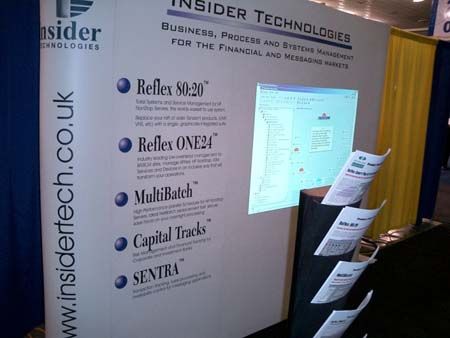
Insider Technologies – Core products in 2003
In-Depth Product & Political-Technical Timeline
This timeline breaks down how Insider Technologies evolved its software suite. It demonstrates how their technical development directly responded to shifting geopolitical landscapes—ranging from late-Cold War military messaging security to post-9/11 financial regulations and modern European cloud autonomy initiatives.
🔹 The Foundation & Legacy Tandem Era (1989–1999)
Political Context: The final years of the Cold War and the 1990s globalization boom demanded high-security, fault-tolerant mainframes for NATO-aligned military communications and early global banking clearing networks.
Technical Context: Tandem Computers dominated the un-interruptible 24/7 market. Software was required to monitor these platforms without causing processing overhead.
1989
Company Incorporation: Insider Technologies is incorporated in the UK to engineer bespoke software for highly robust technical ecosystems.
1990–1995
Reflex (Core Release): Release of Reflex, a foundational service management and real-time transaction diagnostic tool built specifically for the Tandem Guardian operating system.
1996–1999
MultiBatch Software: Further Develop and Extend MultiBatch to orchestrate and safely automate complex batch processing on Tandem machines alongside the evolution into HP NonStop computing frameworks.
Y2K Compliance Focus: Technical adjustments were deployed across Reflex and MultiBatch to assure financial institutions that automated transaction logging would not fail during the millennium rollover.
🔸 The Multi-Platform & Financial Compliance Era (2000–2015)
Political Context: Following the September 11 attacks, global anti-money laundering (AML) and counter-terrorism financing (CTF) frameworks heavily expanded. Financial regulators demanded exact, audible end-to-end payment tracking.
Technical Context: Enterprises began migrating away from single-architecture mainframes toward heterogeneous IT environments, requiring tools that could jump across Windows, Unix, and Linux simultaneously.
2002–2004
Sentra Development: Launch of Sentra, expanding the firm’s portfolio beyond HPE NonStop into cross-platform environment monitoring for Windows, Linux, and Unix systems.
Reflex 80:20 & Reflex ONE24: Advanced variations of the Reflex tracking system were built to cater to specialized real-time electronic payment flows like BASE24 with XPNET.
2005–2010
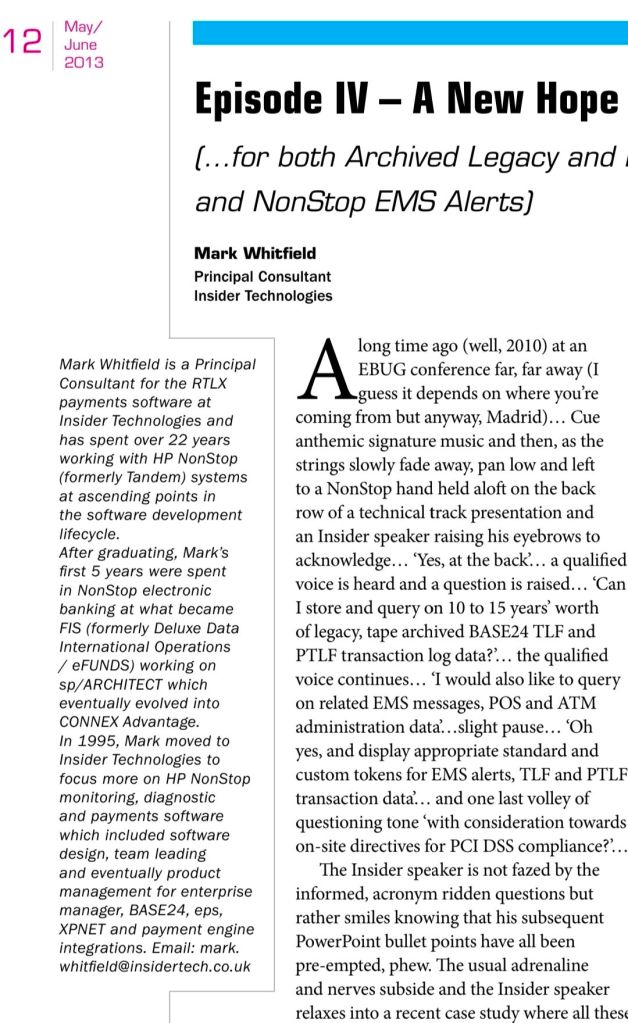
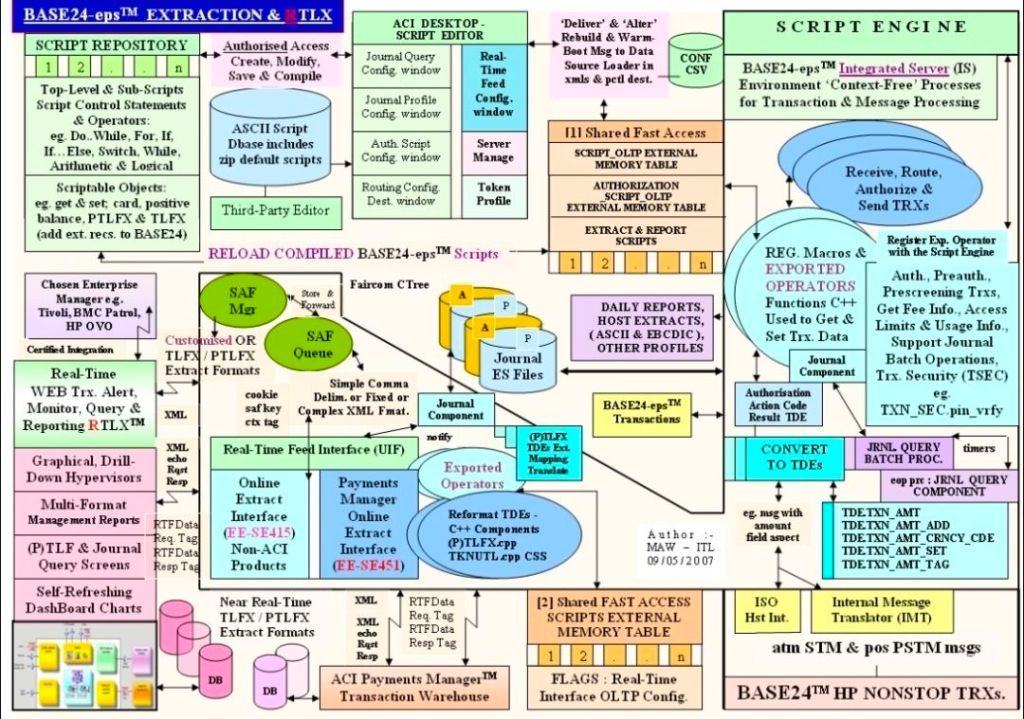
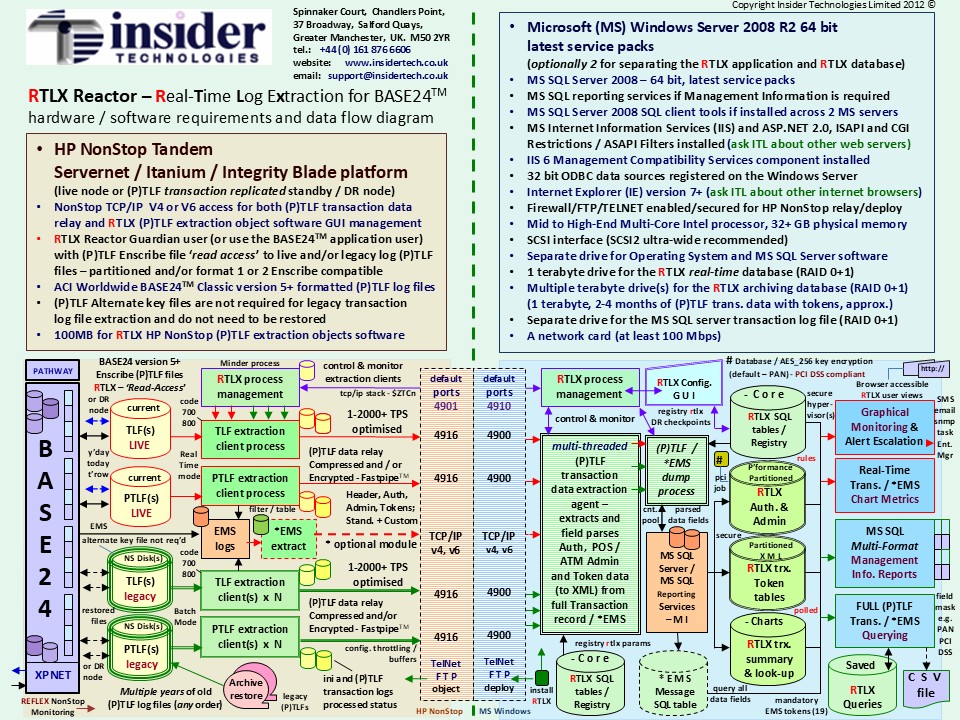
RTLX Reactor (page 12) and Middleware Monitoring: The release of RTLX Reactor provided message tracking capabilities tailored for IBM WebSphere MQ, allowing institutions to trace various payment and other data through complex middleware chains.
Corporate Structuring: The creation of Insider Technologies (Holdings) Limited reinforced corporate expansion as the company deepened its footprint in secure military messaging for government defense bodies.
🔹 The Cyber Autonomy & Sovereignty Era (2016–Present)
Political Context: Escalating nation-state cyber warfare, strict GDPR regulations, and the UK/EU push for technological sovereignty and domestic digital ecosystem resilience heightened the reliance on trusted, onshore technology suppliers.
Technical Context: High-threat environments demand zero-trust visualization, time-accurate logging across digital evidence files, and advanced protection against internal exfiltration vectors.
2019
30-Year Milestone & Modernization: The company celebrates its 30th year, accelerating development on modern mobile application extensions to permit real-time, remote secure alerts for operations teams.
2022–2025
PartnerOne Integration: Insider Technologies aligns its operations under the PartnerOne portfolio, preserving its UK identity while supercharging its enterprise-scale data infrastructure solutions.
Corporate Integration combines Insider’s expertise with PartnerOne’s portfolio to deliver advanced analytics and secure messaging systems to banking, defence, and telecommunications markets.
Defense and Public Safety Porting: Technical deployment of specialized capabilities covering digital evidence security, timekeeping tracking, and legacy virtualization modules aimed explicitly at helping the UK Government maintain its historical tech stacks safely.
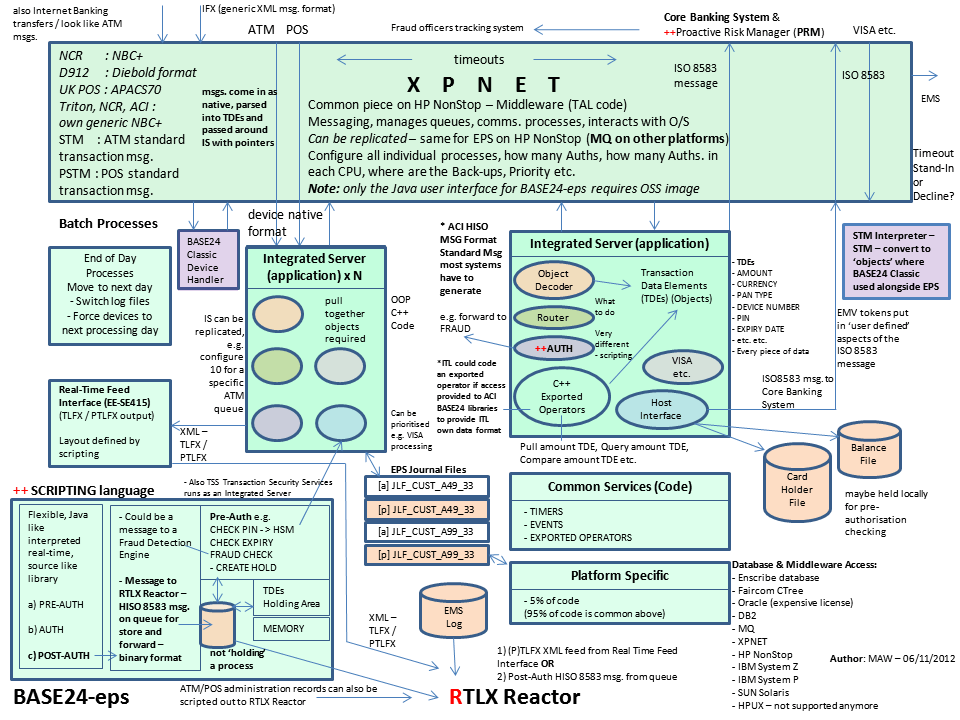
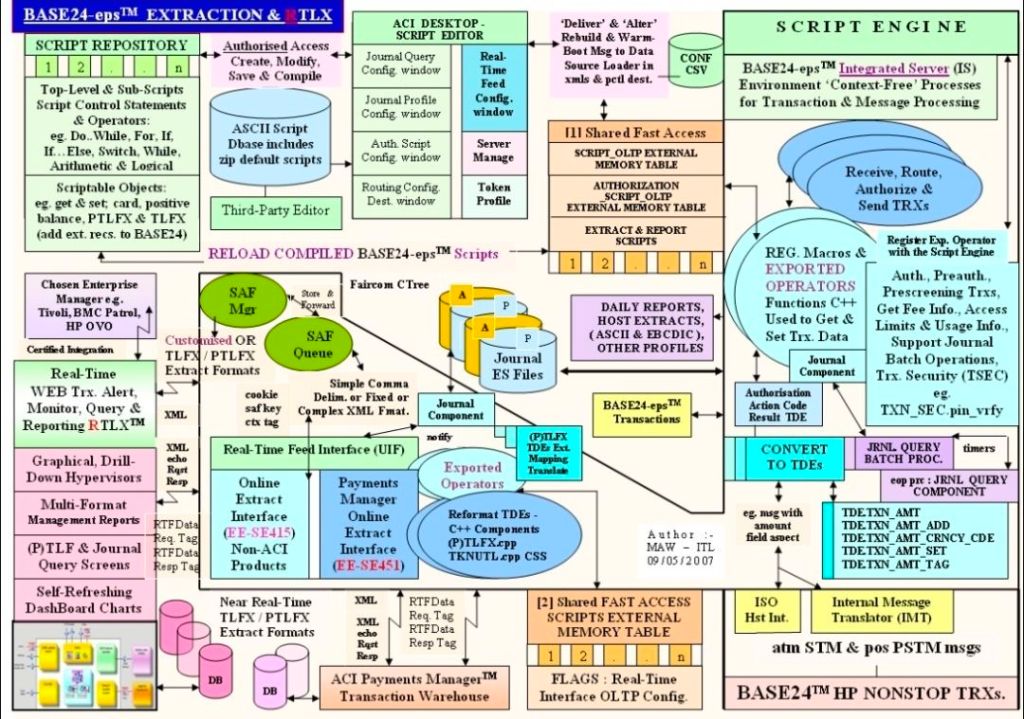
RTLX Reactor (in 2012) for tracking BASE24-eps & BASE24 XPNET transactions
Insider Technologies Limited (ITL), Company Overview and Timeline by Year
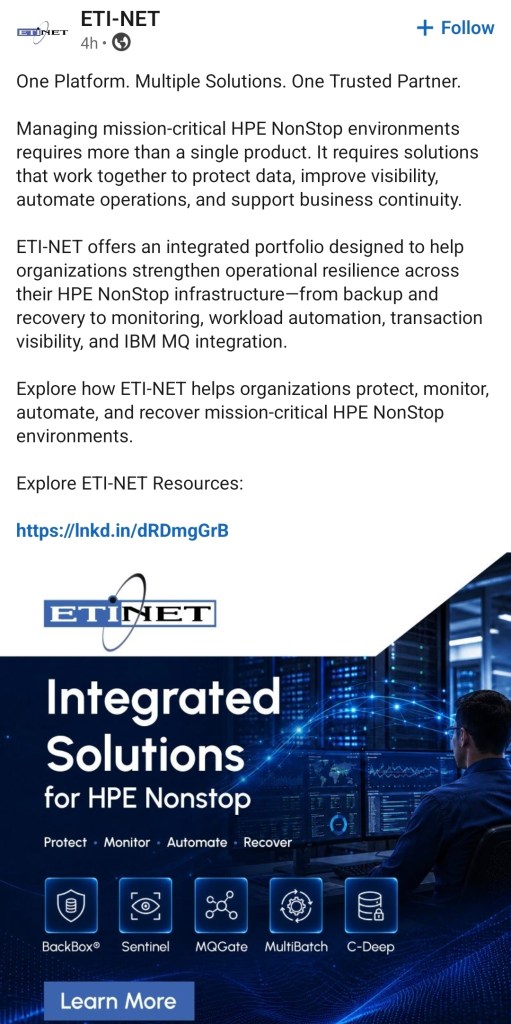
The Insider RTLX product at ETI-NET is now called C-Deep for Transaction Monitoring;
HPE NonStop Reflex (often referred to as Reflex 80:20) is a graphical, integrated IT management suite developed by Insider Technologies. It provides continuous health monitoring, automated workflow management, and diagnostic logging for mission-critical HPE NonStop environments, serving as a single, consolidated “pane of glass” for fault-tolerant network operations.
Detailed Timeline Breakdown by Era & Year
The history of the NonStop Reflex suite closely mirrors the architectural evolution of the underlying HPE NonStop (originally Tandem) fault-tolerant hardware platforms.
1. The Tandem / ITUG Era (1989 – 1996)
1989: Insider Technologies was founded in Salford Quays, Manchester, UK, establishing an early specialization in Tandem (NonStop) messaging software and message tracking utilities.
1990s: As massive online transaction processing (OLTP) workloads grew, native Tandem utilities proved increasingly cumbersome. This spurred the initial development of platform diagnostic and event-filtering tools that would soon become the Reflex suite.
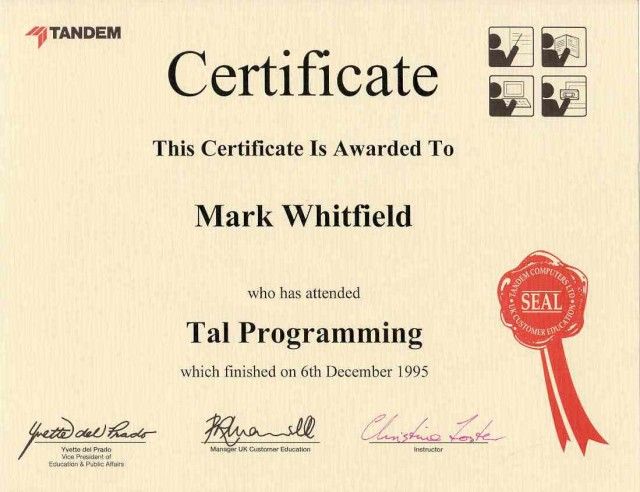
1995: Insider Technologies actively codes and launches the initial iterations of Reflex 80:20, providing operators with an aggregated view of Tandem platform events.
2. The Compaq & Early HP Transition Era (1997 – 2014)
1997: Compaq acquires Tandem Computers. Reflex 80:20 begins updating its backend architecture to handle ServerNet clustering and the newly combined enterprise platforms.
2002: Hewlett-Packard (HP) acquires Compaq. HP begins the hardware migration from proprietary processors to Intel Itanium (HP Integrity NonStop).
2004: Insider Technologies formalizes its ongoing product development, heavily pushing both Reflex 80:20 and releasing new variants like Reflex ONE24 to support extended tracking for ATM and POS networks.
2007: Reflex and other Insider monitoring software platforms are highly integrated into FIS solutions, serving tier-one global banks and stock exchanges.
2013: Insider Technologies solidifies the Reflex 80:20 status as the ultimate consolidated replacement for legacy HP components, publishing technical insights in dedicated NonStop journals.
3. The Modern HPE & x86 Era (2014 – 2019)
2014: Hewlett Packard Enterprise (HPE) is formed and officially launches NonStop X, moving the architecture onto standard Intel x86-64 processors. Reflex 80:20 interfaces are updated to support InfiniBand fabrics and the newer Open System Services (OSS) environments.
2017 – 2019: HPE launches Virtualized NonStop (vNS), bringing continuous application fault tolerance directly to private and hybrid clouds. Reflex adapts its system management capabilities to securely monitor both physical x86 non-stop servers and virtual hypervisor instances.
4. The AI & Hybrid Cloud Era (2020 – 2026)
2020: HPE ends the sale of older Itanium-based platforms. Reflex fully commits its diagnostic support to modern HPE NonStop X and vNS environments.
2023 – 2024: The NonStop platform embraces AI integrations, expanded SQL/cloud workloads, and integrations with modern DevOps tools. Reflex tools receive updates to accommodate enhanced cyber resilience tracking and modern API-driven services.
2025: HPE celebrates 50 years of the fault-tolerant NonStop computing ecosystem. The Reflex suite provides compatibility for the upgraded, high-capacity hardware iterations running the L25 series OS.
2026: Reflex remains a staple ecosystem management suite for complex enterprise networks, processing and escalating exception conditions, EMS events, and subsystem alerts within the highly available HPE GreenLake consumption models.
The Insider RTLX product at ETI-NET is now called C-Deep for Transaction Monitoring;
sp/ARCHITECT was a pioneering electronic banking and funds-transfer software suite. Originally built by the UK-based Software Partnership (TSP), it ran natively on fault-tolerant Tandem (now HPE NonStop) systems. It provided highly available transaction routing and real-time electronic book-keeping for major international financial institutions.
Detailed Timeline by Era and Year
1. The Genesis & Independent Era (Mid-1980s – 1989)
Mid-1980s: The Software Partnership (TSP) is co-founded in Timperley, UK. Development begins on sp/ARCHITECT, designed with a client-server architecture.
1986: Tandem launches NonStop SQL, providing the underlying high-availability relational database foundation that sp/ARCHITECT relied upon to ensure absolute data integrity for banks.
2. Mainstream Banking Adoption Era (1990 – 1994)
1990: TSP relocates to Norton House in Runcorn, UK. sp/ARCHITECT achieves production deployment and is widely utilized for inter-account transfers and book-keeping by major banks like TSB and Bank of Scotland.
1992: Due to rapid expansion, the Runcorn operations relocate to Wingate House.
1994: Deluxe Electronic Payment Systems (a subsidiary of Deluxe Corporation) acquires TSP to expand its global electronic funds transfer (EFT) footprint. The platform is globally marketed and supported, expanding to clients like Rabobank.
1990: TSP relocates to Norton House in Runcorn
1992: Due to rapid expansion, the Runcorn operations relocate to Wingate House.
3. Global Expansion & Compaq Transition Era (1995 – 2005)
1995 – 1997: The Runcorn-based team (operating as Deluxe Data) codes additional regional adaptations of sp/ARCHITECT for banks worldwide (e.g., Girofon in Denmark).
1997: Compaq acquires Tandem Computers, placing sp/ARCHITECT on Compaq’s enterprise roadmap.
2002: Hewlett-Packard (HP) acquires Compaq, absorbing the Tandem platform into the HP Integrity server line. The application undergoes adaptation to integrate modern Windows-based management systems (like DSM/NOW).
4. The HPE Modernization & Hybrid Era (2014 – 2026)
2014: HPE (Hewlett Packard Enterprise) is formed, spinning off from HP. NonStop shifts to Intel x86-64 architecture (NonStop X), requiring sp/ARCHITECT and related Tandem subsystems (like Pathway, COBOL, and TAL) to modernize for TNS/X processing.
2020: Legacy Itanium-based environments are phased out. sp/ARCHITECT systems, if still active, are migrated to virtualized NonStop (vNS) and operated within private cloud infrastructures.
2025/2026: HPE NonStop celebrates its 50th Anniversary. Applications originally designed on the sp/ARCHITECT schema are heavily evaluated for AI integration, continuous cyber resilience, and consumption-based models like HPE GreenLake.
The official HPE Nonstop Technology Architecture is a specialized, 100% fault-tolerant infrastructure built with a tightly integrated hardware and software stack designed to eliminate any single point of failure. Formal instruction and architectural frameworks have been modernized under the newly relaunched HPE Nonstop Compute Training Portfolio curriculum.
Originally developed by Tandem Computers in 1976, the platform eventually became part of Hewlett Packard Enterprise (HPE). Unlike standard servers that can crash due to a single component failure, NonStop uses a tightly integrated, “shared-nothing” architecture to ensure that if a hardware or software component fails, another instantly takes over with zero downtime or data loss.
Core Architectural Features
To understand how HPE NonStop works, you need to understand its unique design principles:
Shared-Nothing Architecture: Every processor has its own dedicated memory, I/O channels, and copy of the operating system. No single component is shared, eliminating any single point of failure.
Process Pairs: Applications run using a primary process and a backup process on a different processor. The primary process constantly copies its state to the backup. If the primary fails, the backup immediately takes over.
Massive Scalability: Systems can scale up seamlessly from small distributed environments to massive clusters containing up to 24,000 processor cores without interrupting running operations.
Hardware Platform: The modern software environment runs on industry-standard x86 architectures, available as physical server racks (like the HPE NonStop NS9 X5) or as virtualized instances in hybrid cloud environments.
Dual Operating Environments
HPE NonStop runs a specialized operating system called NonStop OS. Inside this OS, developers and administrators interact with two distinct environments:
Guardian Environment: The native, proprietary environment optimized for high-volume Online Transaction Processing (OLTP). It handles tasks sequentially through process-oriented manually-started jobs rather than traditional automated queues.
Open System Services (OSS): A UNIX-like, POSIX-compliant environment built on top of the NonStop kernel. This allows organizations to run standard open-source applications, tools, and scripts natively alongside Guardian.
Ecosystem and Use Cases
HPE NonStop is rarely used for standard office automation or basic web hosting. Instead, it serves as the backbone for global industries where an hour of downtime could cost millions of dollars:
Financial Transactions: Powers global stock exchanges, automated teller machines (ATMs), and retail point-of-sale credit card processing, eg. BASE24.
Travel and Logistics: Runs critical airline reservation systems and real-time cargo routing infrastructure.
Database Management: Features its own highly secure, distributed database engine called NonStop SQL, which guarantees absolute data integrity across all transactions.
Modern Development: Supports traditional languages like COBOL85 and ANSI C, alongside modern DevOps integrations like Git, Ansible, and Eclipse-based IDE environments.
An architectural blueprint of an HPE NonStop environment typically separates the layout into three core interdependent layers:
Hardware & Fabric Layer: Consists of independent, loosely-coupled Processor Nodes (handling up to 24,000 cores globally) connected via an ultra-fast InfiniBand or ServerNet system fabric backbone.
I/O & Subsystem Layer: Utilizes Cluster I/O Protocols (CLIMs), splitting tasks between Storage CLIMs (SCLIMs) and Network CLIMs (NCLIMs) to isolate external communication from main processing.
Operating System & DB Layer: Runs the NonStop OS, which simultaneously manages the traditional Guardian environment, Open System Services (OSS) for UNIX/Linux paradigms, and the NonStop SQL distributed database engine.
Recommended Architecture Training Curriculum
HPE organizes its technical blueprints into structured educational paths for engineers.
1. Foundational Blueprint Concepts
Course Code: U4147S (HPE Nonstop Compute System Fundamentals).
Focus: Delivers a top-down view of system goals, transaction processing, and fundamental architecture.
Key Modules: Explores Guardian vs OSS, Pathway application management, and basic database interaction.
2. System Operations & Administration
Course Code: H1SC3S (HPE Nonstop Compute System Administration I).
Focus: Maps physical and virtual components to real-world deployment.
COBOL, (COmmon Business-Oriented Language) is a high-level, compiled programming language designed specifically for business, finance, and administrative systems. Developed as a portable “stopgap” for the US Department of Defense, it has endured for over 65 years and remains the backbone of global financial infrastructure.
Programming Overview
Design Philosophy: It features a “prose” syntax designed to be self-documenting and readable by non-technical business professionals.
Structure: Programs are strictly divided into four Divisions:
Identification: Defines the program name and metadata.
Environment: Specifies the physical computer and files used.
Data: Defines variables, structures, and record layouts.
Procedure: Contains the logic and executable statements.
Core Paradigms: Originally strictly procedural and imperative, COBOL was updated in 2002 to include object-oriented features.
Key Characteristics: It is known for its verbosity (using over 300 reserved words), weak/static typing, and exceptional reliability in large-scale batch and transaction processing.
Detailed Historical Timeline
Era 1: The Foundation (1950s)
This era focused on consolidating disparate manufacturer-specific languages into a single, hardware-independent standard for business.
1955: Grace Hopper develops FLOW-MATIC, which introduced English-like commands and influenced COBOL’s design.
1958: IBM releases COMTRAN, another major precursor focused on commercial translation.
1959 (April): Mary Hawes organizes a meeting at the University of Pennsylvania to propose a common business language.
1959 (May): The Pentagon hosts a meeting creating CODASYL (Committee on Data Systems Languages) to oversee the project.
1959 (December): The first specifications, “COBOL – Specifications for a COmmon Business Oriented Language,” are released.
Era 2: Early Versions & Rapid Adoption (1960–1967)
The language quickly transitioned from a theoretical specification to a functioning industry standard.
1960: COBOL-60 is officially published.
1960 (August): The first COBOL program runs on an RCA 501.
1961: COBOL-61 is released, providing a major cleanup of original logical flaws.
1962: IBM announces COBOL as its primary development language, ending work on COMTRAN.
1963: COBOL-61 Extended is released, introducing “Sort” and “Report Writer” facilities.
1965: COBOL Edition 1965 adds mass storage file handling and table processing.
Era 3: Standardization & Dominance (1968–1984)
COBOL became the most widely used language in the world as ANSI and ISO codified its rules.
1968: COBOL-68 (ANSI X3.23-1968) is published as the first official US standard.
1970: COBOL becomes the world’s most widely used programming language.
1974: COBOL-74 is standardized, introducing the DELETE statement and file organization improvements.
1978: ISO formally adopts the COBOL-74 standard.
Era 4: Structured Programming & Modernization (1985–2001)
The language evolved to support better logic flow while managing the massive global codebase.
1985: COBOL-85 introduces structured programming features like END-IF, EVALUATE, and nested subprograms.
1989: First amendment to COBOL-85 adds Intrinsic Function Modules.
1997: Gartner Group estimates 200 billion lines of COBOL code are in existence.
1999: Massive effort peaks to patch legacy COBOL code for the Y2K (Year 2000) problem.
Era 5: The Object-Oriented & Modern Era (2002–Present)
Recent updates focus on interoperability with modern web and cloud environments.
2002: COBOL-2002 introduces Object-Oriented Programming (OOP), Unicode support, and recursion.
2014: COBOL-2014 standardizes IEEE 754 data types and method overloading.
2020: The COVID-19 pandemic highlights a critical shortage of COBOL programmers to maintain aging state unemployment systems.
2023: COBOL-2023 adds asynchronous messaging (SEND/RECEIVE) and transaction processing (COMMIT/ROLLBACK).
2024: COBOL celebrates its 65th anniversary of active service.
COBOL Programming Overview & Detailed Timeline History by Era and Year
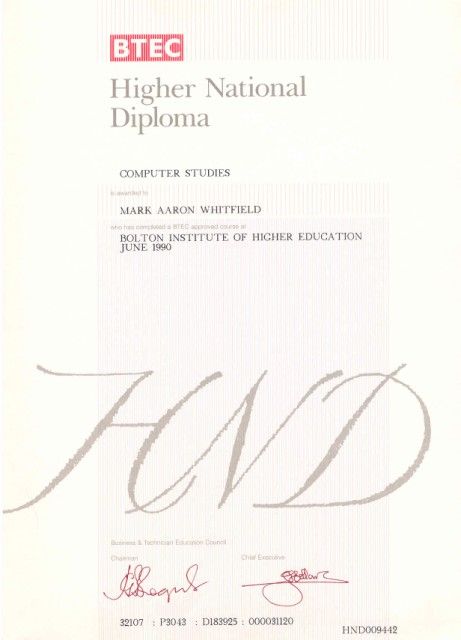
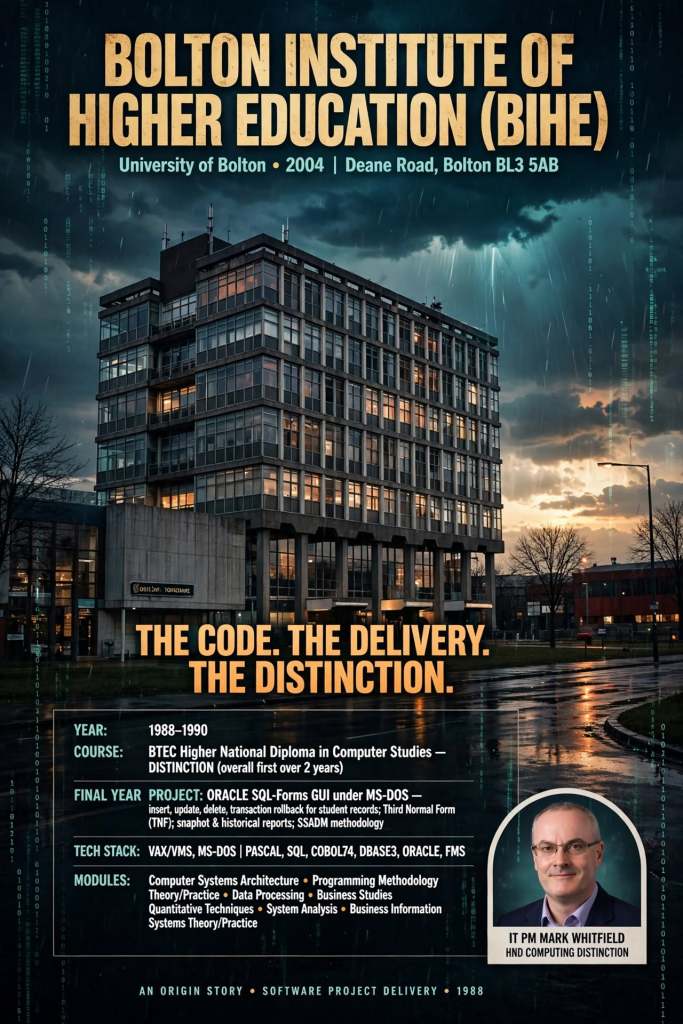
The Higher National Diploma (HND) in Computer Studies at the Bolton Institute of Higher Education (BIHE)—now the University of Greater Manchester—is a two-year, Level 5 vocational qualification designed to provide practical, industry-specific skills.
The institution has undergone several name changes and status upgrades that affected the delivery of the HND:
1982: BIHE was formed through the merger of Bolton Institute of Technology and Bolton College of Education (Technical).
1992: The Institute was granted the power to award taught degrees.
2004/2005: BIHE achieved full university status, becoming the University of Bolton.
2024: The university rebranded as the University of Greater Manchester.
HND Computer Studies: Detailed Timeline
The course traditionally follows a two-year full-time or three-year part-time structure.
Year 1: Foundations (HE4 Level)
The first year focuses on establishing core technical and business knowledge. In many versions of the Bolton curriculum, Year 1 is common across several computing programmes to allow for flexible progression.
Core Modules:
Introduction to Programming: Developing fundamental coding logic.
Computer Platforms & Systems Architecture: Understanding the hardware and software environments.
Information Systems & Databases: The basics of data management.
Website Production & Networking Fundamentals: Introduction to web technologies and connectivity.
Quantitative Techniques & Business Studies: Integrating mathematical and commercial contexts.
Year 2: Specialisation (HE5 Level)
The second year shifts toward advanced application, systems analysis, and professional practice.
Advanced Modules:
Systems Analysis & Design: Producing system requirements and user interface specifications.
Programming Methodology: Moving into more complex application development.
Business Information Systems: Exploring how IT supports organizational requirements.
Final Year Project: A major 20-credit core project where students investigate a specific field and apply their cumulative skills to a real-world scenario.
Progression and Modern Standards
Academic Standing: Completion of the HND is equivalent to the first two years of a Bachelor’s degree (Level 5).
Modern HTQs: Current versions of the course, such as the HND Computing for England (HTQ), now integrate modern fields like Artificial Intelligence, Cloud Computing, and VR technologies.
1988 to 1990 : University of Greater Manchester (previously Bolton Institute of Higher Education – BIHE)Higher National Diploma (HND) in Computer Studies, Bolton Institute of Higher Education (BIHE)—now the University of Greater ManchesterMark Whitfield | Bolton Institute of Higher Education | BIHE 1988 thru 1990 | Distinction
Radbroke Hall is a 64-acre “Innovation Campus” in Cheshire that serves as the global technology and operations hub for Barclays. Originally built as a French chateau-style private residence in 1917, it transitioned through use by a nuclear research group before Barclays acquired it in 1972. Today, it employs approximately 4,000–6,500 staff and has been the development site for pioneering banking technology, including the first ATMs, debit cards, and mobile banking platforms.
Radbroke Hall History Timeline
Era 1: Private Residence (1914–1956)
1914: Construction begins on the Hall for Manchester textile manufacturer Claude Hardy and his wife Olga.
1916: Claude Hardy dies; Olga oversees the completion of the Portland stone building alone.
1917: The Hall is completed as a private residence.
1920s–1930s: The Hall remains largely unoccupied during these decades.
Era 2: Industrial & Nuclear Research (1956–1972)
1956: The Hardy family sells the estate to The Nuclear Power Group.
1956–1972: The site is used for nuclear energy research, with offices and a testing tower constructed on the grounds.
Era 3: The Barclays Transformation (1972–1990s)
1972: Barclays purchases the site from The Nuclear Power Group to reduce high rental costs in London.
1972 (Relocation): Approximately 1,400 staff are relocated from London or hired locally; many find the move from London to the “rural North” a significant culture shock.
1970s–1980s: The site begins its role as an IT hub, instrumental in developing the first cash machines (ATMs) and debit cards.
1985: Barclays reorganises its UK and International banks into a single entity, further centralising tech and staff services at Radbroke.
Era 4: Global Tech & Modernisation (2000s–Present)
Early 2000s: The campus leads the development of Barclays’ online and mobile banking applications.
2012: Barclays celebrates the 40th anniversary of its presence at Radbroke Hall.
2017: The original Hall building marks its 100th anniversary.
2021: Barclays announces a major redevelopment plan to modernise the campus, including the demolition of older buildings (Kilburn, Lovelace, and Brooker Houses) to create a new central “town square” and “re-green” 80,000 sq. ft. of land.
2024: Investment continues to transform Radbroke into a “world-class campus” focused on the future of work and advanced banking APIs.
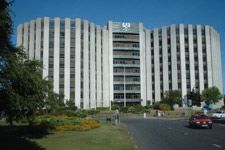
Barclays House, located at 1 Wimborne Road, was a dominant fixture of the Poole skyline for 46 years. Originally built to decentralise Barclays Bank International operations from London, the nine-storey brutalist structure served as a major regional headquarters from 1976 until its closure in 2022. Following its vacancy, the building was earmarked for conversion into a residential complex featuring 362 apartments.
Historical Overview
Purpose: The building was commissioned to move staff away from high London costs and boost local employment in Poole.
Architecture: Designed by Wilson, Mason and Partners, it features three interlinked octagonal/hexagonal towers in the brutalist style.
Landmark Features: A massive 14-foot aluminium eagle logo (the Barclays emblem) adorned the front of the building for decades.
Detailed Timeline Breakdown
The Development Era (1960s – 1975)
Late 1960s: Poole is selected as the primary location for Barclays Bank DCO (Dominion, Colonial and Overseas) decentralisation.
1971 (August): Planning permission is granted for the project after a public inquiry, with an estimated cost of £5 million.
1972 (September): Construction begins, led by the John Laing Group.
1975 (June): Construction is officially completed.
The Operational Era (1976 – 2021)
1976 (January): Barclays first occupies the building.
1976 – 1980s: Workforce grows rapidly; in its first year, it employed 800 people, eventually peaking at roughly 2,500 employees.
2007 (January): A planning bid to demolish the building for flats is refused due to its scale and lack of amenity space.
2008: Barclays announces plans to build a new HQ in Poole, though these did not result in immediate relocation from the Wimborne Road site.
2016: The building undergoes a major refurbishment to celebrate its 40th anniversary.
The Closure & Transition Era (2022 – Present)
2022 (January 26): Barclays officially closes its doors at Wimborne Road after 46 years.
2022 (October 27): The iconic Barclays eagle logo is removed from the building’s facade by cranes.
2022 (December): Remaining staff (approximately 700) are relocated to new offices in Bournemouth.
2023: VCRE Four Poole submits a planning bid to convert the structure into 362 homes.
2024 (March 8): The separate Poole High Street branch also closes.