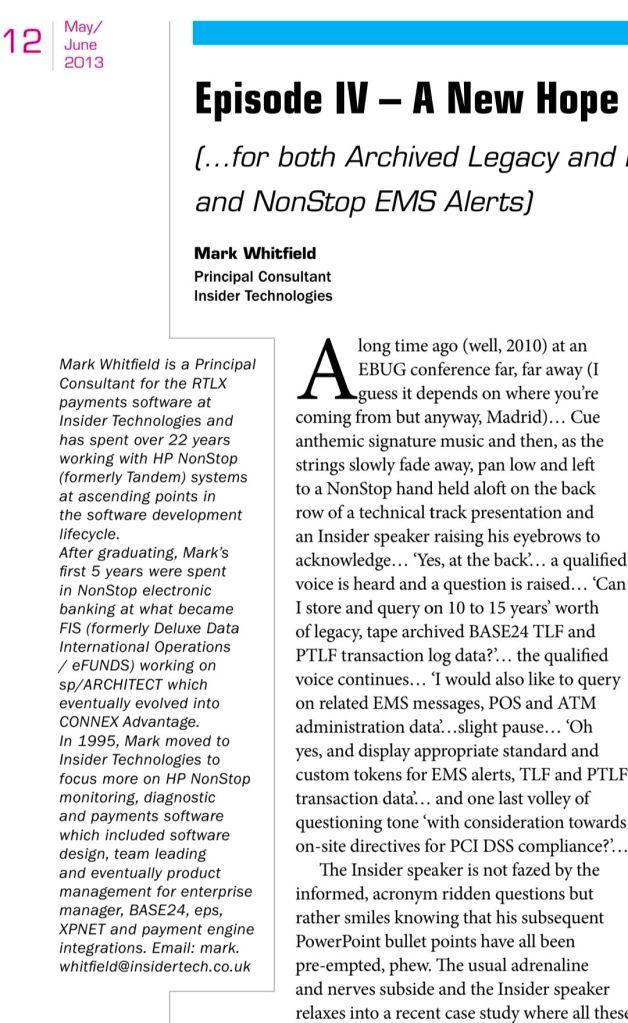
Mark Whitfield IT Career Timeline, AI generated from Google

The technical timeline for 

Mark Whitfield, an SC cleared, Senior IT Project Manager and Engagement Manager, spans over 30 years and transitions from specialized banking software development to high-level project leadership and cloud migrations. 

Professional Career Timeline

  • 1990 – 1994: Programmer at The Software Partnership (later Deluxe Data). Developed electronic banking software (sp/ARCHITECT-BANK) on Tandem Computers (now HPE NonStop) for major banks like TSB and Bank of Scotland.
  • 1994 – 1995: Lead Analyst at Deluxe Data International, continuing support and development for banking customer systems.
  • 1995 – 2013: Project Manager of Strategic Technical Initiatives at Insider Technologies Limited. Oversaw projects involving Reflex 80:20, Sentra development, and corporate website authoring.
  • 2013 – 2014: Project Manager (Banking Division) at Wincor Nixdorf Limited, focusing on professional services for the banking sector.
  • 2014 – 2016: Senior Digital Project Manager at Betfred Limited, managing the Online and Mobile Division.
  • 2016 – Present:Engagement Manager / Senior PM at Capgemini UK.
    • 2016: Led a £4.3M data centre migration for Royal Mail (RMG) involving 1,100+ interfaces.
    • 2018 – 2019: Augmented into MuleSoft as a Delivery Manager for the Anypoint Platform.
    • 2020 – Present: Leading a £13.5M cloud migration program moving 130 UK government apps to Azure and AWS. 

Technical Training & Education

Whitfield maintains an active Professional Training timeline to adapt to changing technologies:

  • 1990: Graduated in Computing.
  • 1995: HP NonStop TAL Programming and Performance Tuning.
  • 1997: C/C++ Programming at Comtec.
  • 2006 – 2009: Deep dive into security and databases, including Cryptography, Thales e-Security, and Microsoft SQL 2000.
  • 2011: Java and Google Android programming using Eclipse IDE.
  • 2014 – 2024: Advanced Microsoft Excel and AI-focused refreshers. 

He is also a Certified Engagement Manager and a registered PRINCE2 Practitioner proficient in both Agile Scrum and Waterfall methodologies.

The Software Partnership (TSP) was a Runcorn-based software house

The Software Partnership (TSP) was a Runcorn-based software house co-founded by Nigel Walsh in the mid-1980s. Specialising in on-line banking systems for Tandem and UNIX platforms, the company underwent several acquisitions that integrated its technology into global financial services. 

Corporate Timeline

  • Mid-1980s: Founded as The Software Partnership.
  • 1990: Initial operations were based at Wingate Drive in Timperley before moving to Norton House in Crowngate, Runcorn.
  • 1992: Relocated to Wingate House on Northway, Runcorn.
  • 1994: Acquired by the American firm Deluxe Electronic Payment Systems (a subsidiary of Deluxe Corporation).
  • 2000: The company transitioned to EFD eFunds.
  • 2007: Became part of Fidelity National Information Services (FIS), eventually moving operations to Daresbury Park in Warrington. 

Key Products

The company’s primary legacy is the development of sp/ARCHITECT-BANK, a software suite designed for secure card management and electronic transaction processing. This technology became a foundational component for the secure payment systems later managed by Deluxe Data and FIS

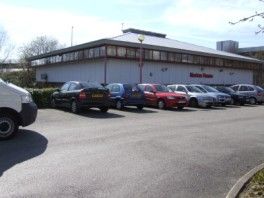
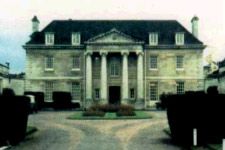
The Software Partnership, Norton House, Crowngate, Runcorn, Cheshire
The Software Partnership (TSP) was a Runcorn-based software house
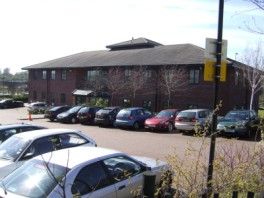
Deluxe Data International Operations, Wingate House, Northway

https://mark-whitfield.com/career/tsp-deluxe-data-1990-1995/

Insider Technologies Limited, Manchester – from Google AI

Insider Technologies Limited is a UK-based software and services company founded in 1989 that specialises in 24×7 mission-critical systems, primarily for the financial, government, and defence sectors. 

Key Historical Timeline

  • 1989: Foundation. The company was incorporated on 27 February 1989. It was established in Manchester, England, by IT industry veterans.
  • 1995–2013: Growth & Partnerships.
    • Became a significant HP Partner, developing solutions for the HP NonStop platform (formerly Tandem Computers).
    • Expanded its client base to include major institutions such as the Bank of EnglandRoyal Bank of Scotland, and Euroclear.
  • 2002: Training Platform Launch. Founded its interactive systems training platform, which eventually utilised its patented Cloning Technology.
  • 2015: Leadership Transition. In October 2015, there was a major change in the board with the termination of appointments for directors Paul Cashmore, Richard Launder, and Anthony Mowatt, and the appointment of Andrew Donald Hall as a director.
  • 2016–2017: Relocation. The company moved its registered office to 4th Floor, 2 City Approach in Eccles, Manchester, where it remains today.
  • 2019: 30th Anniversary. Celebrated 30 years of operations, highlighting its long-term stability in the NonStop business technology community.
  • 2020–2021: Recent Restructuring. Transitioned its ownership structure under Insider Technologies (Holdings) Limited.
  • 2025: Current Status.
    • Now operates as part of the PartnerOne group, a global family of mission-critical software companies.
    • Continues as a Microsoft Gold Partner for Application Development.
    • Recent board changes include the appointment of Andrew Donald Hall and Jonathan Dionne as directors in late 2025. 

Core Product Evolution

  • Reflex & MultiBatch: Software for business-critical 24×7 systems.
  • Sentra & RTLX Reactor: Monitoring and tracking products for Windows, Linux, and Unix platforms.
  • Mission-Critical Support: Provides 24×7 technical support for high-stakes payment and messaging systems.

HPE NonStop Tandem Transaction Logs

HPE NonStop Tandem Transaction Logs

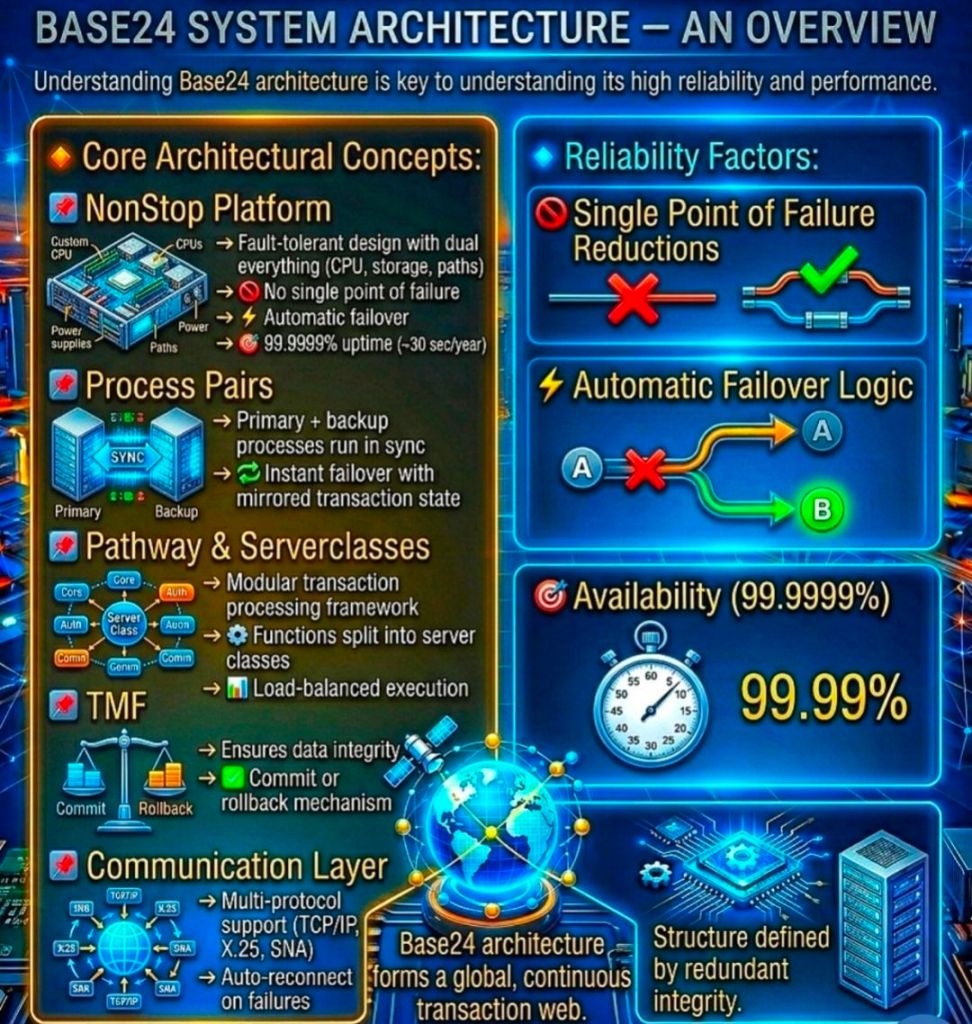
HPE NonStop Tandem represents a line of fault-tolerant, high-availability servers

HPE NonStop (formerly Tandem) represents a line of fault-tolerant, high-availability servers designed for 24/7, zero-downtime operations. Originally created by Tandem Computers in 1974, the architecture is now owned by Hewlett Packard Enterprise (HPE) and supports mission-critical workloads like banking and finance. 

Key Aspects of HPE NonStop (Tandem):

  • Continuous Availability: Designed to eliminate single points of failure with 100% fault tolerance.
  • Architecture: Initially used a proprietary Tandem T/16 design; modern systems are based on HPE Integrity/x86 architectures.
  • Operating System: Traditionally runs the Guardian OS, which handles the system’s specialized, continuous processing capabilities.
  • Evolution: Founded by James Treybig in 1974, Tandem was acquired by Compaq in 1997, which then merged with HP in 2002.
  • Applications: Ideal for transactional applications requiring strict data integrity and real-time processing.
  • Modern Platforms: Current systems include HPE NonStop Compute NS9 X5 and NS5 X5. 

The systems are still widely used today for mission-critical applications that cannot afford to be offline. 

HPE NonStop (formerly Tandem) represents a line of fault-tolerant, high-availability servers.

Payment Architecture, Simplified Architecture

Payment Architecture, Simplified Architecture

How PCI-DSS Works for Card Transactions Payments

How PCI-DSS Works for Card Transactions Payments

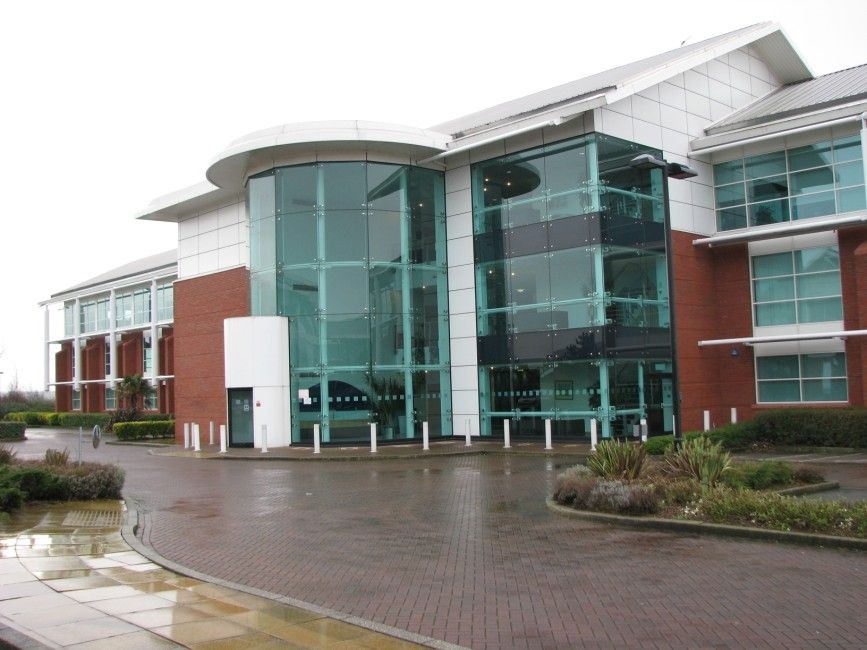
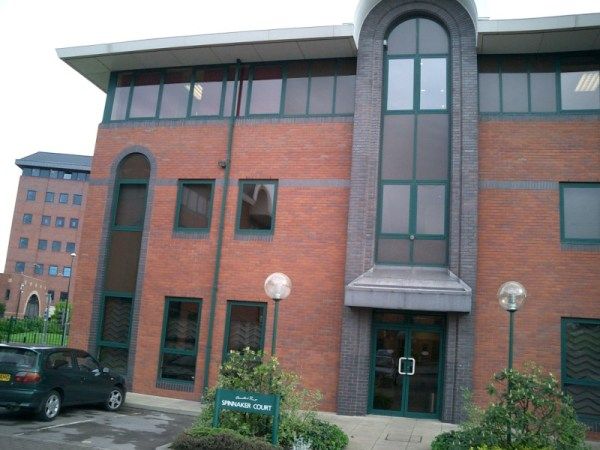
Insider Technologies Limited, Spinnaker Court, Chandlers Point, 37 Broadway, Salford Quays, M50 2YR

Insider Technologies Limited, Spinnaker Court, Chandlers Point, 37 Broadway, Salford Quays, M50 2YR

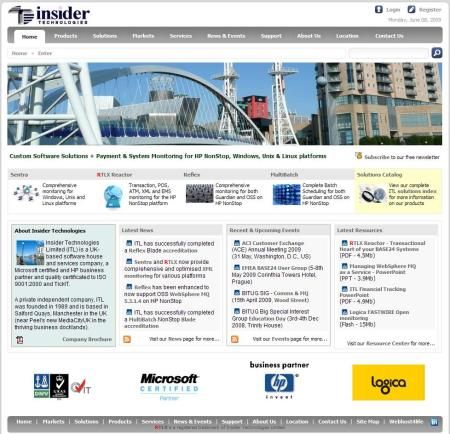
Company Website – Open Content Management Framework, DotNetNuke

In the early part of the millenium, ITL requested that I design and author a new company website using the Open Content
Management framework, DotNetNuke. This is a Visual Basic .NET Microsoft SQL database driven technology that enables website updates from any location with internet browser access.

As part of this exercise, website prominence was a key driver along with a more professional, corporate look-and-feel. The website is an ongoing programme of work that takes up a few hours a week of my time in taking it forward. I have attended 2 gbdirect (iTrain) website courses in this regard; ‘Writing for the Web’ and ‘Website Prominence and Visibility’. More information.

Connect : HPE Nonstop Ecosystem – formerly NSK, Tandem, Himalaya

Connect’s Influencer of the Year Program

Connect : HPE Nonstop Ecosystem – formerly NSK, Tandem, Himalaya

HP HPE NonStop NSK Himalaya Tandem Date Timeline

The HP NonStop (originally Tandem) timeline spans over 50 years of evolution in fault-tolerant computing, beginning with the vision of James Treybig and transitioning through several major corporate owners. 

Founding and Initial Growth (1974–1980s)

  • 1974: Tandem Computers Incorporated is founded by James (Jimmy) Treybig in Cupertino, CA.
  • 1976: The first NonStop I (T/16) servers are shipped to Citibank, introducing the “fail-fast” architecture.
  • 1981: NonStop II is introduced, adding 32-bit addressing support to the 16-bit registers.
  • 1983: NonStop TXP (Tandem Extended Processor) debuts, featuring the first use of cache memory and a native Transaction Monitoring Facility (TMF).
  • 1986: NonStop VLX (Very Large eXtension) is released, introducing 32-bit data paths and the first fault-tolerant SQL database, NonStop SQL.
  • 1987: NonStop CLX is launched as a low-cost, office-ready minicomputer system.
  • 1989: NonStop Cyclone is introduced for high-end mainframe workloads, alongside the Integrity line of Unix-based servers. 

Architecture Transitions (1990s–2000s)

  • 1991: Cyclone/R (CLX/R) marks the start of the TNS/R migration to MIPS microprocessors.
  • 1993: NonStop Himalaya K-series is released, featuring native-mode Guardian OS on MIPS R4400 processors.
  • 1994: Open System Services (OSS) adds a POSIX-compliant environment to the NonStop Kernel.
  • 1997: NonStop Himalaya S-Series introduces ServerNet, replacing older bus technologies with high-speed point-to-point connections.
  • 1997: Compaq acquires Tandem Computers to bolster its high-end enterprise server offerings.
  • 2002: Hewlett-Packard (HP) acquires Compaq, bringing Tandem technology under the HP banner as the NonStop Enterprise Division.
  • 2005: The HP Integrity NonStop (TNS/E) series is launched, migrating the architecture from MIPS to Intel Itanium processors. 

The Modern Era (2010s–Present)

  • 2014: NonStop X (TNS/X) is introduced, transitioning the platform to standard Intel x86-64 processors.
  • 2015: HP splits into HP Inc. and Hewlett Packard Enterprise (HPE); the NonStop line moves to HPE.
  • 2017: Virtualized NonStop (vNS) is introduced, allowing the system to run in software-defined data centres and cloud environments.
  • 2020: HP ends sales of Itanium-based systems in July, completing the transition to the x86 platform.
  • 2024: The NonStop community celebrates 50 years of Tandem/NonStop technology. 
HP HPE NonStop NSK Himalaya Tandem Date Timeline

HPE NonStop Tandem NonStop – Guardian Principles Course – 1993 – High Wycombe

HPE NonStop Tandem NonStop – Guardian Principles Course – 1993 – High Wycombe

ISO 8583 vs ISO 20022 messaging standards

ISO 8583 vs ISO 20022 messaging standards

Secure ATM Transaction Flow from Card Dip to Cash Dispense

Secure ATM Transaction Flow from Card Dip to Cash Dispense

Secure ATM Transaction Flow from Card Dip to Cash Dispense

Career, Insider Technologies Limited, ITL – 1995 to 2013 as HPE NonStop Tandem specialist and Product Manager

Career, Insider Technologies Limited, ITL – 1995 to 2013 as HPE NonStop Tandem specialist and Product Manager

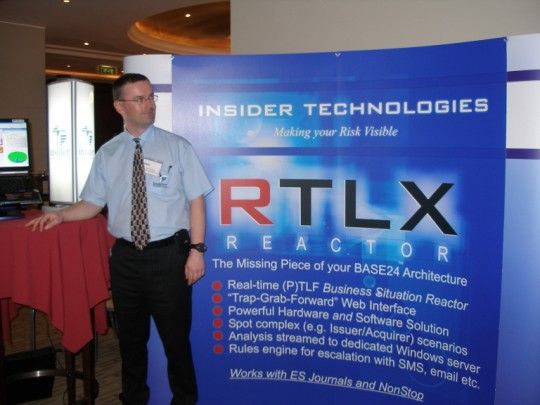
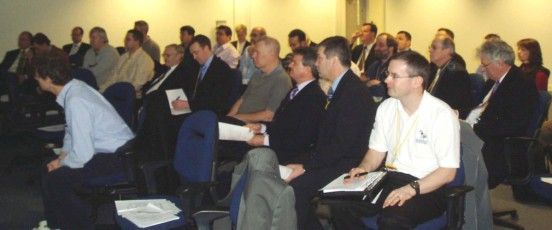
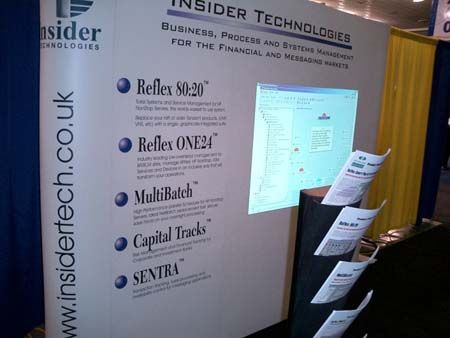
ITL, at the San Jose International TANDEM User Group (ITUG) in 2003…

ITL, at the San Jose International TANDEM User Group (ITUG) in 2003

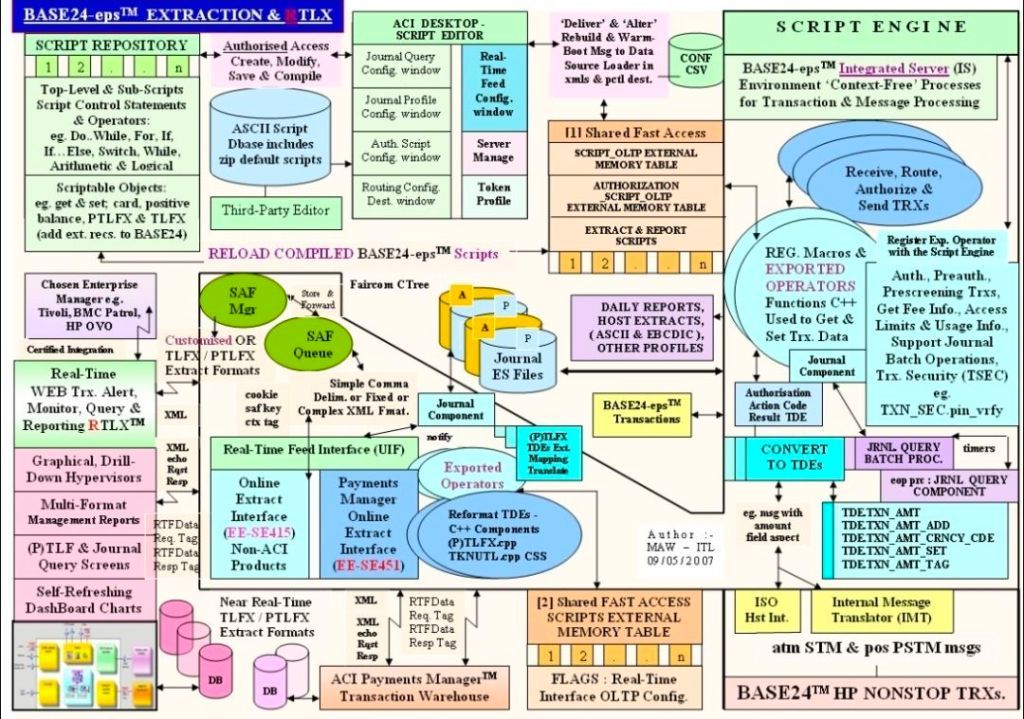
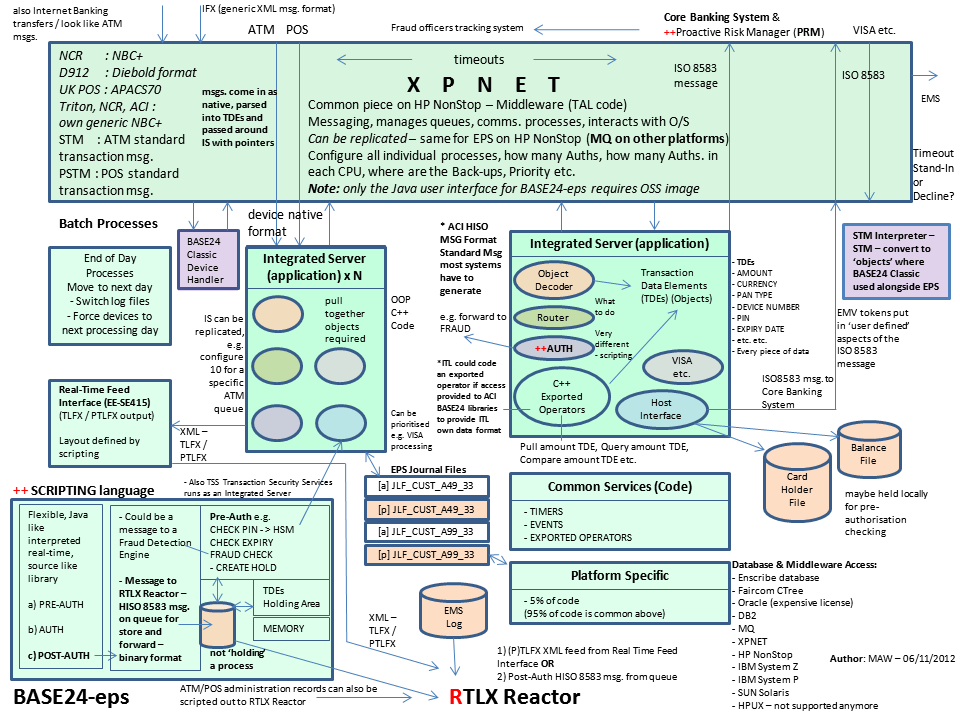
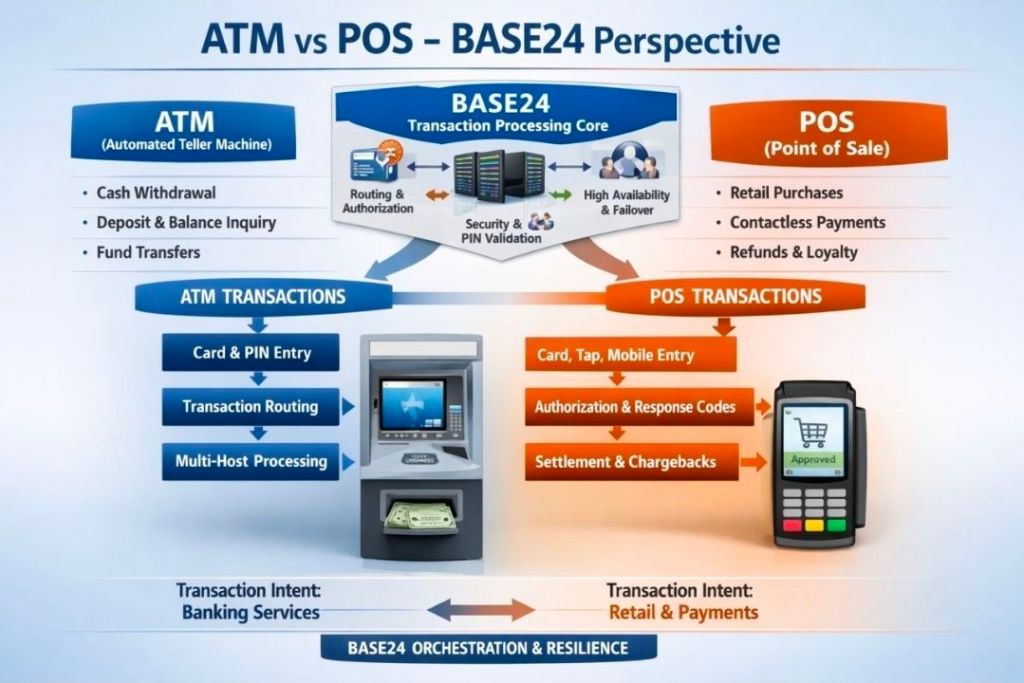
Base24-eps and UPF integration

Base24-eps and UPF integration

Integration between BASE24-eps and the Universal Payments Framework (UPF) is a core part of ACI Worldwide’s strategy to bridge legacy payment systems with modern, real-time payment capabilities. The UP Framework acts as a bridge, allowing financial institutions to orchestrate diverse payment types and channels while protecting their existing investment in BASE24-eps infrastructure. 

Key Aspects of the Integration

  • Investment Protection: The UP Framework allows existing BASE24 customers to continue using their current systems for some functions while incrementally adding new payment types and volumes through the UP Framework. This approach eliminates the need for a complete “rip and replace” of legacy systems.
  • Modernization and Flexibility: The integration with UPF allows banks to rapidly introduce new payment methods, adhere to new network schemes (like real-time payments), and integrate with new partners through configuration rather than custom coding.
  • Unified Retail Payments: UP Retail Payments is ACI’s comprehensive solution that combines the strengths of BASE24-eps (a market-leading retail payment platform) and the UP Framework (which orchestrates all aspects of payments processing) into a single, end-to-end platform.
  • Data Protection & Compliance: The UPF is used in conjunction with data security solutions (like Comforte’s SecurDPS) to tokenize sensitive cardholder data before it is passed to BASE24-eps applications or stored in logs, helping institutions meet PCI DSS compliance requirements.
  • Role-Based Expertise: The integration is an area of specialized technical expertise in the payment industry, with job roles focusing on the implementation, customization, configuration, and support of both BASE24-eps and UPF modules. 

In essence, the UPF provides a flexible, open architecture that extends the life and capabilities of BASE24-eps, enabling financial institutions to manage traditional and emerging payment demands within a unified ecosystem. 

What is BASE24-eps?

BASE24-eps is a comprehensive solution for acquiring, authenticating, routing, switching, and authorizing card- and non-card-based financial transactions through various channels.

BASE24-eps is designed to:

  • Increase the profitability of payment processing by enabling a set of common transaction services to support multiple channels and different types of transactions
  • Offer organizations greater flexibility with built-in support for all major card types, devices, national and regional switches, international payment schemes and host systems
  • Create a comprehensive view of customers and ensure consistent, high-quality customer service across different points of contact
  • Reduce organizations’ total cost of ownership through complete platform independence
  • Give organizations the options to deploy on premise, in their own private or public cloud, or in a secure, cloud-based environment managed by ACI

https://www.aciworldwide.com/solutions/base24-eps

HPE NonStop previously Tandem Computers

NonStop is a series of server computers introduced to market in 1976 by Tandem Computers Incorporated,[1] beginning with the NonStop product line.[2] It was followed by the Tandem Integrity NonStop line of lock-step fault-tolerant computers, now defunct (not to be confused with the later and much different Hewlett-Packard Integrity product line extension). The original NonStop product line is currently offered by Hewlett Packard Enterprise since Hewlett-Packard Company’s split in 2015. Because NonStop systems are based on an integrated hardware/software stack, Tandem and later HPE also developed the NonStop OS operating system for them.

NonStop systems are, to an extent, self-healing. To circumvent single points of failure, they are equipped with almost all redundant components. When a mainline component fails, the system automatically falls back to the backup.

These systems can be used by banksstock exchanges, payment applications, retail companies, energy and utility services, healthcare organizations, manufacturers, telecommunication providers, transportation, and other enterprises requiring extremely high uptime.

History

Originally introduced in 1976 by Tandem Computers Inc., the line was later owned by Compaq (from 1997), Hewlett-Packard Company (from 2003)[3] and Hewlett Packard Enterprise (since 2015). In 2005, the HP Integrity “NonStop i” (or TNS/E) servers, based on Intel Itanium microprocessors, was introduced. In 2014, the first “NonStop X” (or TNS/X) systems, based on Intel x86-64 processors, were introduced. Sales of the Itanium-based systems ended in July 2020.[4]

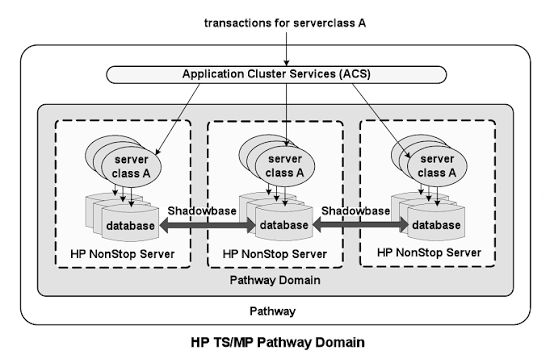
Early NonStop applications had to be specifically coded for fault tolerance. That requirement was removed in 1983 with the introduction of the Transaction Monitoring Facility (TMF), along with Pathway transaction management software and SCOBOL applications (or, later, NonStop Tuxedo transaction management software), which handles the various aspects of fault tolerance on the system level.

Software

NonStop OS is a message-based operating system designed for fault tolerance. It works with process pairs and ensures that backup processes on redundant CPUs take over in case of a process or CPU failure. Data integrity is maintained during those takeovers; no transactions or data are lost or corrupted.

The operating system as a whole is branded NonStop OS and includes the Guardian layer, which is a low-level component of the operating system and the Open System Services (OSS) personality which runs atop this layer, which implements a Unix-like interface for other components of the OS to use.

The operating system and application are both designed to support the fault tolerant hardware. The operating system continually monitors the status of all components, switching control as necessary to maintain operations. There are also features designed into the software that allow programs to be written as continuously available programs. That is accomplished using a pair of processes where one process performs all the primary processing and the other serves as a “hot backup”, receiving updates to data whenever the primary reaches a critical point in processing. Should the primary stop, the backup steps in to resume execution using the current transaction.[5]

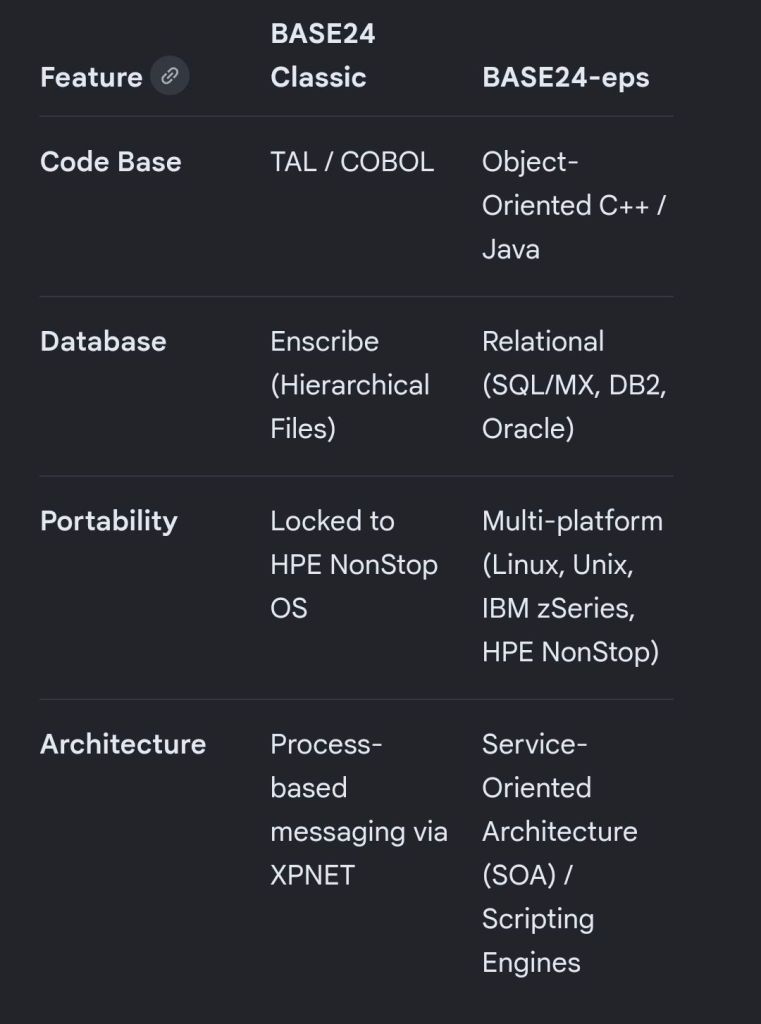
The systems support relational database management systems like NonStop SQL and hierarchical databases such as Enscribe.

Languages supported include Java,[6] CC++,[6] COBOL, SCOBOL (Screen COBOL), Transaction Application Language (TAL), etc. It uses the scripting and job control language TACL (Tandem Advanced Command Language), and is written in TAL and C.

Hardware

The HPE Integrity NonStop computers are a line of fault-tolerant, message-based server computers based on the Intel Xeon processor platform,[4] and optimized for transaction processing. Average availability levels of 99.999% have been observed.[7] NonStop systems feature a massively parallel processing (MPP) architecture and provide linear scalability. Each CPU runs its own copy of the OS, and systems can be expanded up to over 4000 CPUs. This is a shared-nothing architecture—a “share nothing” arrangement also known as loosely coupled multiprocessing.

Due to the integrated hardware/software stack and a single system image for even the largest configurations, system management requirements for NonStop systems are rather low. In most deployments there is just a single production server, not a complex server farm.

Most customers also have a backup server in a remote location for IT disaster recovery. There are standard products to keep the data of the production and the backup server in sync, for example, HPE’s Remote Database Facility (RDF),[8] hence there is fast takeover and little to no data loss also in a disaster situation with the production server being disabled or destroyed.

HP also developed a data warehouse and business intelligence server line, HP Neoview, based on the NonStop line. It acted as a database server, providing NonStop OS and NonStop SQL, but lacked the transaction processing functionality of the original NonStop systems. The line was retired, and no longer marketed, as of 24 January 2011.[9]

See also

HPE NonStop Tandem Enscribe Database

Enscribe is the native hierarchical database in the commercial HP NonStop (Tandem) servers. It is designed for fault tolerance and scalability and is currently offered by Hewlett Packard Enterprise.

The product was originally developed by Tandem Computers. Tandem was acquired by Compaq in 1997. Compaq was later acquired by Hewlett-Packard in 2002. When Hewlett-Packard split in 2015 into HP Inc. and Hewlett Packard Enterprise, Enscribe and the rest of the NonStop product line went to Hewlett Packard Enterprise.

The product primarily is used for online transaction processing and is tailored for organizations that need high availability and scalability for their database system. Typical users of the product are stock exchanges, telecommunications, POS, and bank ATM networks.

Somewhat similar to Record Management Services on OpenVMS platforms, some Enscribe features are:[1]

  • Five disk file structures: unstructured, key-sequenced, queue, entry-sequenced, and relative
  • Partitioned (multiple-volume) files
  • Multiple-key access to records
  • Relational access among files (where a field value from one file is used as a key to access a data record in another file)
  • Optional automatic maintenance of all keys
  • Optional key compression in key-sequenced data or index blocks
  • Support of transaction auditing through the Transaction Management Facility (TMF/MP). TMF is the main functional component of the NonStop Transaction Manager/MP product.
  • Optional compression of audit-checkpoint records
  • Record level locking and file level locking
  • Cache buffering
  • Optional sequential block buffering
  • Waited and Nowaited I/Os (multi-threading of I/O calls by the programmer)[2]

The NonStop OS Guardian APIs or the utility FUP (File Utility Program) can be used to work with Enscribe files.

A “convert” utility was provided by Tandem to aid in converting Enscribe files to NonStop SQL files, when desired.[3]

Many of the applications developed in HP NonStop servers (often critical ones) run on Enscribe databases.

History

Enscribe is designed to run effectively on parallel computers, adding functionality for distributed data, distributed execution, and distributed transactions.

First released in the early 1980s, and initially carrying an added charge until it was included with the operating system, the product became one of the few hierarchical data base systems that scales almost linearly with the number of processors in the machine: adding a second CPU to an existing server almost exactly doubled its performance.

See also

HPE NonStop Tandem SQL/MP

NonStop SQL is a commercial relational database management system that is designed for fault tolerance and scalability, currently offered by Hewlett Packard Enterprise. The latest version is SQL/MX 3.4.

NonStop SQL

Original author, Tandem Computers

Developer, HPE

Initial release, 1987

Stable release, 3.4

Operating system, NonStop OS

Platform, NonStop

Standard, ANSI standard (NonStop SQL/MX)

Available in :-

NonStop COBOL, NonStop SCOBOL, NonStop Java, NonStop C, NonStop C++, Transaction Application Language (TAL), pTAL, epTAL

Type, DBMS

License, Proprietary

The product was originally developed by Tandem Computers. Tandem was acquired by Compaq in 1997. Compaq was later acquired by Hewlett-Packard in 2002. When Hewlett-Packard split in 2015 into HP Inc. and Hewlett Packard Enterprise, NonStop SQL and the rest of the NonStop product line went to Hewlett Packard Enterprise.

The product primarily is used for online transaction processing and is tailored for organizations that need high availability and scalability for their database system. Typical users of the product are stock exchanges, telecommunications, POS, and bank ATM networks.[1]

History

NonStop SQL is designed to run effectively on parallel computers, adding functionality for distributed data, distributed execution, and distributed transactions.

First released in 1987, a second version in 1989[2] added the ability to run queries in parallel, and the product became fairly famous for being one of the few systems that scales almost linearly with the number of processors in the machine: adding a second CPU to an existing NonStop SQL server almost exactly doubled its performance.

The second version added /MP to its name, for Massively Parallel. A third version, NonStop SQL/MX, created a product that was more ANSI SQL compliant than its predecessor. NonStop SQL/MX has shipped on the NonStop platform since 2002, and can access tables created by NonStop SQL/MP, although only “Native SQL/MX tables” offer ANSI compliance and many “Oracle-like” enhancements. The HP Neoview business intelligence platform was built using NonStop SQL as its origins. NonStop SQL/MX is HP’s only OLTP database product.

Parts of the Neoview code base were open sourced in 2014 under the name Trafodion, which is now a top-level Apache project.

See also

My HPE Tandem NonStop SQL/MP experience.

COBOL85 programming language on HPE NonStop systems (formerly Tandem NonStop)

“COBOL85 nonstop” refers to the use of the COBOL85 programming language on HPE NonStop systems (formerly Tandem NonStop). The HPE NonStop platform is known for its fault-tolerant, continuous availability architecture, often used for critical, large-scale transaction processing. 

Key aspects of COBOL85 on NonStop include:

  • Platform-Specific Implementation: HPE provided a specific implementation of the 1985 COBOL standard tailored to its unique Guardian operating system and hardware architecture.
  • Mission-Critical Applications: COBOL programs on NonStop are commonly used in industries such as finance, retail, and government for applications requiring high reliability and constant uptime (the “nonstop” nature of the system).
  • Fault Tolerance: NonStop systems achieve fault tolerance through mechanisms like process pairs, and the COBOL runtime library can interact with these features. For example, a PARAM NONSTOP OFF setting in a PATHMON configuration can prevent a COBOL85 server from running as a process pair if that behavior is not desired.
  • System Integration: Programmers can call Guardian procedures and use embedded SQL/MP statements within their COBOL85 programs to interact with the system’s robust file system and database.
  • Development and Maintenance: The combination of COBOL85 and HPE NonStop utilities is a specific skill set for developers maintaining these critical legacy systems.
  • Tools and Manuals: Documentation and tools, such as the INSPECT symbolic debugger and the FUP (File Utility Program), are specific to the NonStop environment and assist with development and maintenance. 

For detailed information, users can consult the official documentation, such as the HP COBOL Manual for TNS and TNS/R Programs or other manuals available on the NonStopTools website and HPE Support portals. 

My NonStop COBOL85 programming experience.