ACI Worldwide XPNET Message-Oriented Middleware, MOM

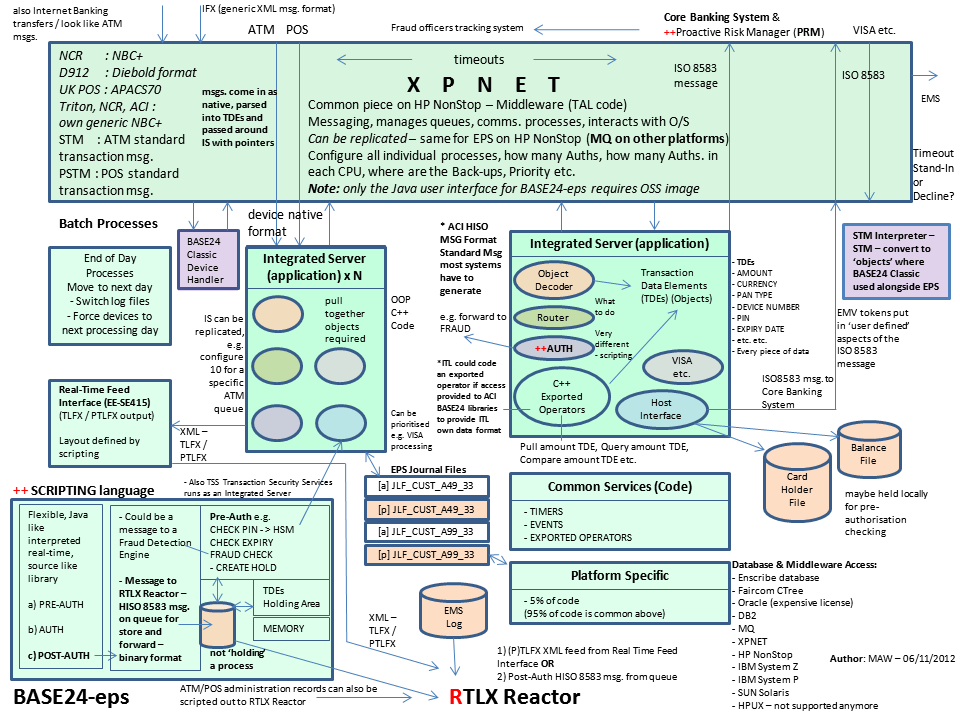
XPNET (often distributed as part of the NET24 suite) is a proprietary, mission-critical Message-Oriented Middleware (MOM) and network management infrastructure developed by ACI Worldwide.

It is designed to run primarily on fault-tolerant HPE NonStop (Tandem) systems. XPNET acts as the foundational layer for ACI’s globally dominant payment engines, BASE24 and BASE24-eps.

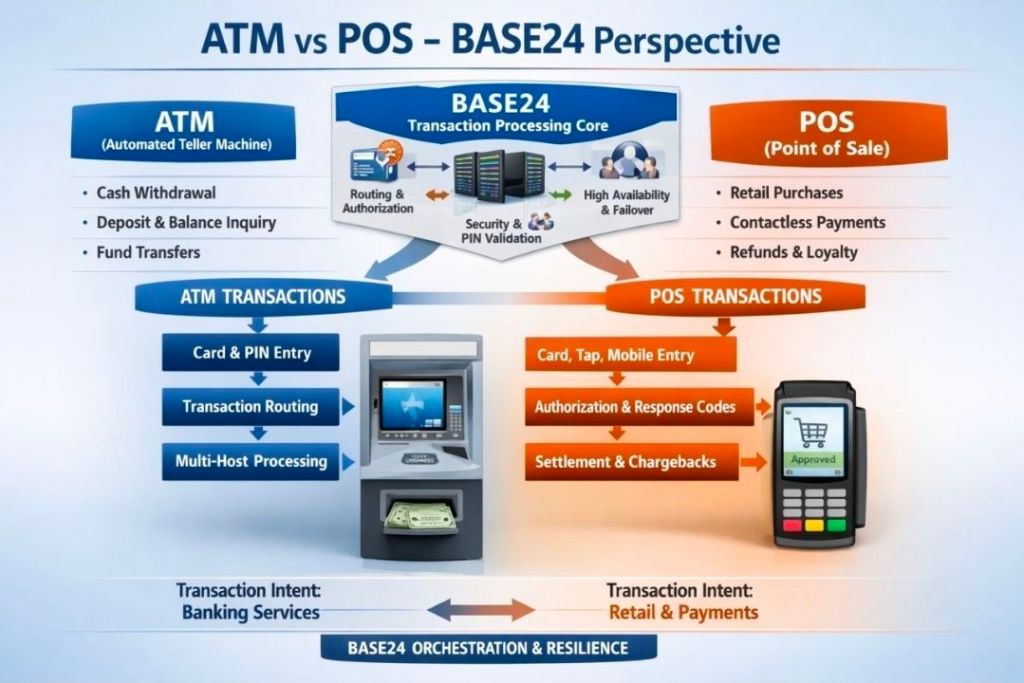
It provides the multi-node network architecture, data routing, inter-process communication, and transaction logging required to safely process hundreds of millions of ATM, Point of Sale (POS), and mobile payments daily.

Key Architectural Technical Description

  • Core Function: XPNET acts as the vital gateway between terminal devices (ATMs, POS terminals), regional interchanges (Visa, MasterCard), and a bank’s back-end host system.
  • Network Environment File (NEF): All physical and logical configurations of an XPNET deployment—including nodes, links, processes, stations, and communications lines—are centrally defined inside the NEF.
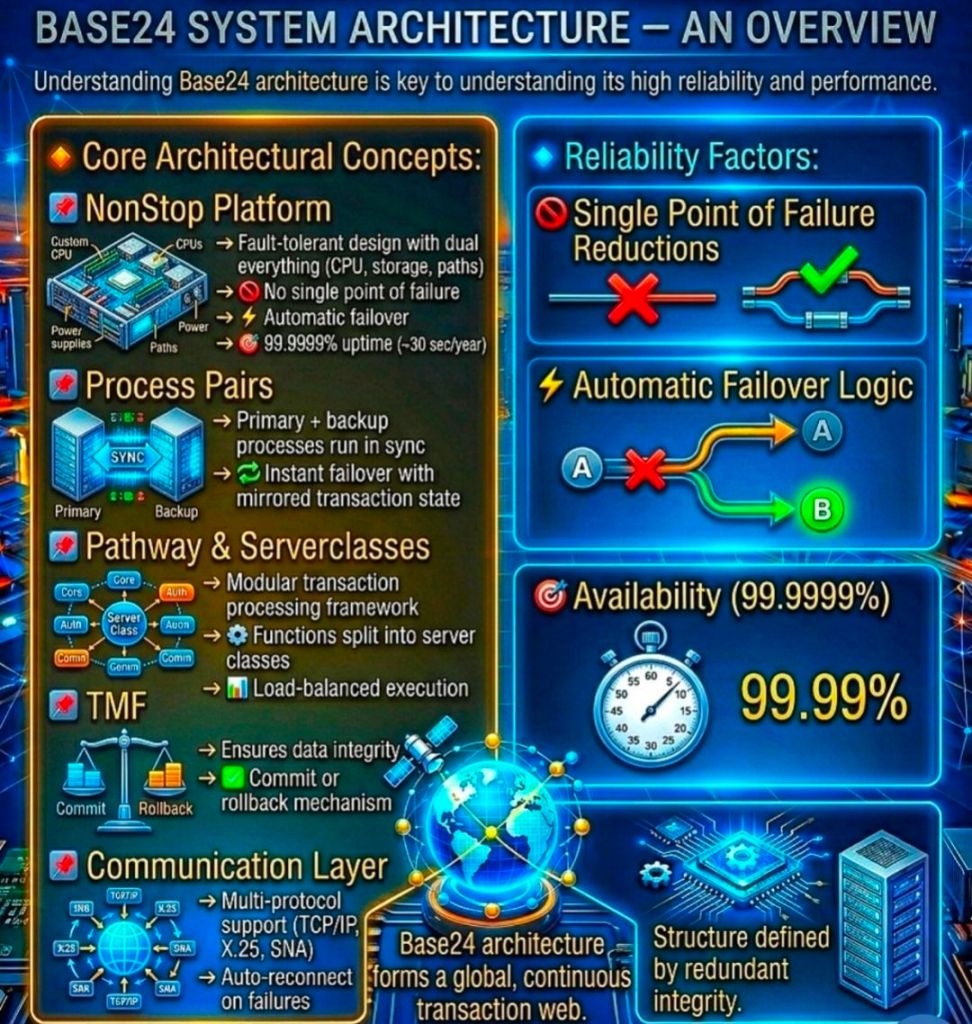
  • Fault Isolation: XPNET monitors processes using a distributed architecture. If an interface process or line drops, XPNET safely queues or reroutes transactions to achieve “five-nines” (99.999%) financial system uptime.
  • Audit and Tracing: XPNET intercepts all systemic message traffic, managing the core Transaction Log File (TLF) and generating event messaging for fraud monitoring and performance profiling.

Detailed XPNET Historical Timeline Breakdown

The evolution of XPNET is deeply intertwined with ACI’s flagship software, scaling alongside the transformation of global electronic funds transfers (EFT).

1982 – 1989: The Genesis Era

  • 1982: ACI launches BASE24 to manage early ATM networks. To handle low-level Tandem interprocess communication, ACI designs precursor communication layers.
  • 1986: ACI scales internationally to 131 major clients across 14 countries, increasing the demand for a standard, highly secure, policy-driven message-switching architecture to accommodate disparate global telecommunication protocols.

1990 – 1999: NET24 and XPNET Standardisation

  • 1993: ACI is reorganised under Transaction Systems Architects (TSA). The communications infrastructure is formalised as NET24-XPNET, decoupled cleanly from application logic.
  • 1995: ACI goes public on NASDAQ. XPNET becomes the mandatory structural platform for any financial institution deploying BASE24 “Classic”.
  • 1998: ACI acquires IntraNet. XPNET is updated to handle wholesale wire transfers and high-value Automated Clearing House (ACH) data alongside retail consumer swipes.

2000 – 2009: The Next-Gen Transition (BASE24-eps)

  • 2002: ACI launches BASE24-eps (Enterprise Payments System). XPNET is radically re-engineered to support both classic structural architecture and next-generation message formats, utilizing its Common Transport Subsystem (CTS) to act as a Tandem Pathway client/server.
  • 2008: ACI optimises BASE24-eps for IBM System z architectures, but updates the NonStop-native XPNET to Version 08.2 to handle expansive regional payment networks across Europe and Asia.

2010 – 2019: Litigation and Global Footprint Consolidation

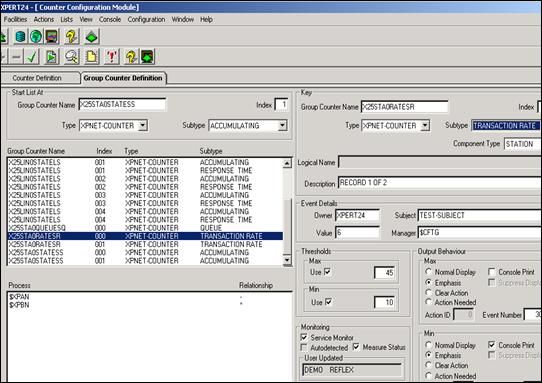
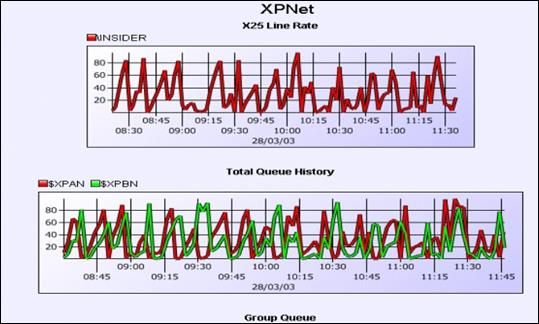
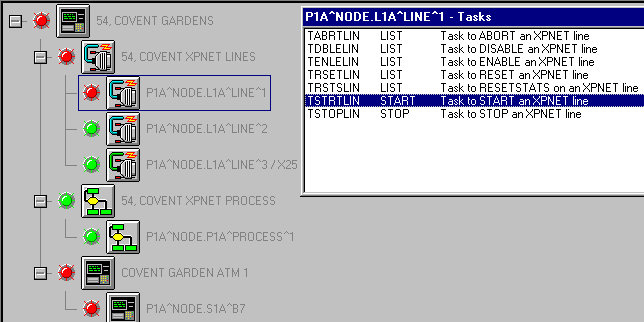
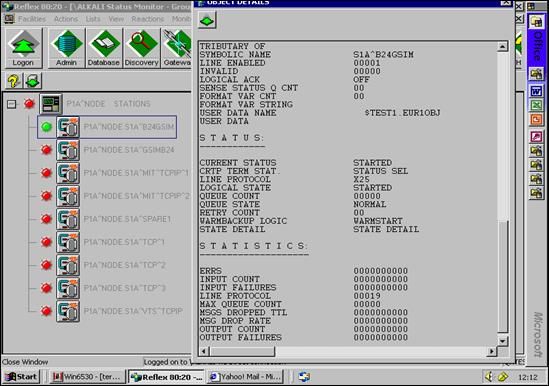
  • 2011 – 2014: Third-party performance suites, such as IR Prognosis XPNET Manager, Insider Technologies XPERT24 and Reflex ONE24 explode in popularity, allowing banks to map live visual diagnostics of their XPNET lines and queues.
  • 2017: ACI and MasterCard reach an agreement to resolve a massive legal dispute. As part of the settlement, MasterCard purchases a perpetual components license for NET24-XPNET middleware to legally fuel its core debit-switching network infrastructure.

2020 – 2026: Legacy Modernisation & The API Era

  • 2021: With financial institutions pivoting toward digital microservices, ACI introduces hybrid compatibility layers. Companies like NuWave introduce direct API bindings to XPNET, allowing legacy HP NonStop payment architectures to map to modern REST web services without rewriting base COBOL/C code.
  • 2025 – 2026: ACI celebrates 50 years of enterprise infrastructure engineering. While cloud-native solutions like ACI Connetic roll out for real-time rails, NET24-XPNET Version 4.x remains a heavily maintained, actively running baseline layer across tier-1 legacy banking systems worldwide.

ACI Worldwide XPNET Message-Oriented Middleware, MOM

XPERT24 Product Overview

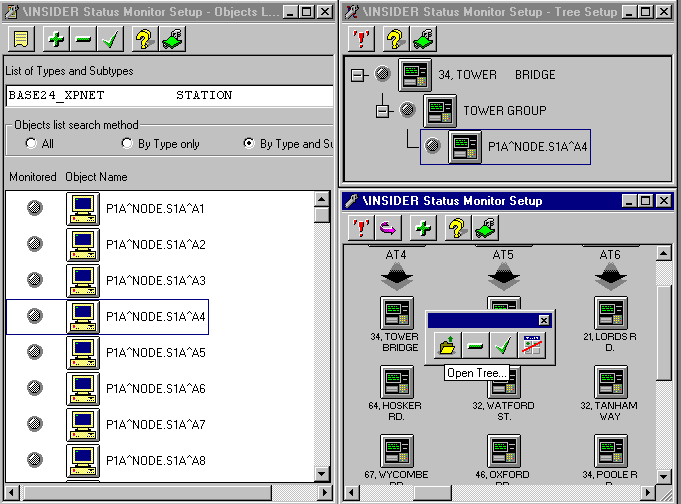
XPERT24 (XPNET Performance Monitoring and Tracking) is a specialised financial middleware software product developed by Insider Technologies Limited. It provides real-time transaction tracking and operational counter monitoring for the BASE24™ transaction processing infrastructure.

Product Description

XPERT24 functions as a critical diagnostics layer for companies running BASE24 bank card payment systems. Built to sit on HP NonStop systems, the software uses PATHWAY servers to automatically detect, capture, and analyse data points from the underlying network. Its core features include:

  • XPNET Counter Monitoring: Tracks infrastructure health via rate, state, and data queue counters.
  • Interchange Performance: Monitors live transaction metrics, including approval and denial rates for ATM and POS transactions.
  • Throughput Optimization: Provides clear system visibility to avoid high-volume traffic jams or transaction delays.

Detailed Timeline Breakdown

The lifecycle of the XPERT24 software package moved from initial technical specification into corporate ecosystem expansions:

2001 — Initial System Baseline & Prep

  • Training and Scoping: Insider Technologies Limited launched internal Sales & Marketing campaigns to map mid-market banking software demands.
  • System Language Adaptation: Engineering teams refined core HP NonStop transaction tracking metrics.

2006 — Structural Architecture Layout

  • Design Initiatives: Product groups commenced documentation guidelines to build customer-facing technical literature.
  • Database Modeling: Initial designs mapped how transaction records could safely pass without lagging the live bank engine.

2007 — Server Logic Creation

  • Server Infrastructure Setup: Developers initiated building structural frameworks inside development kits.
  • Pathway Server Logic: Logic was written to make sure the software query scripts safely gathered data without interrupting processing.

2008 — Production Release & Launch Era

  • Official Software Launch: Insider Technologies launched the operational XPERT24 system to production status.
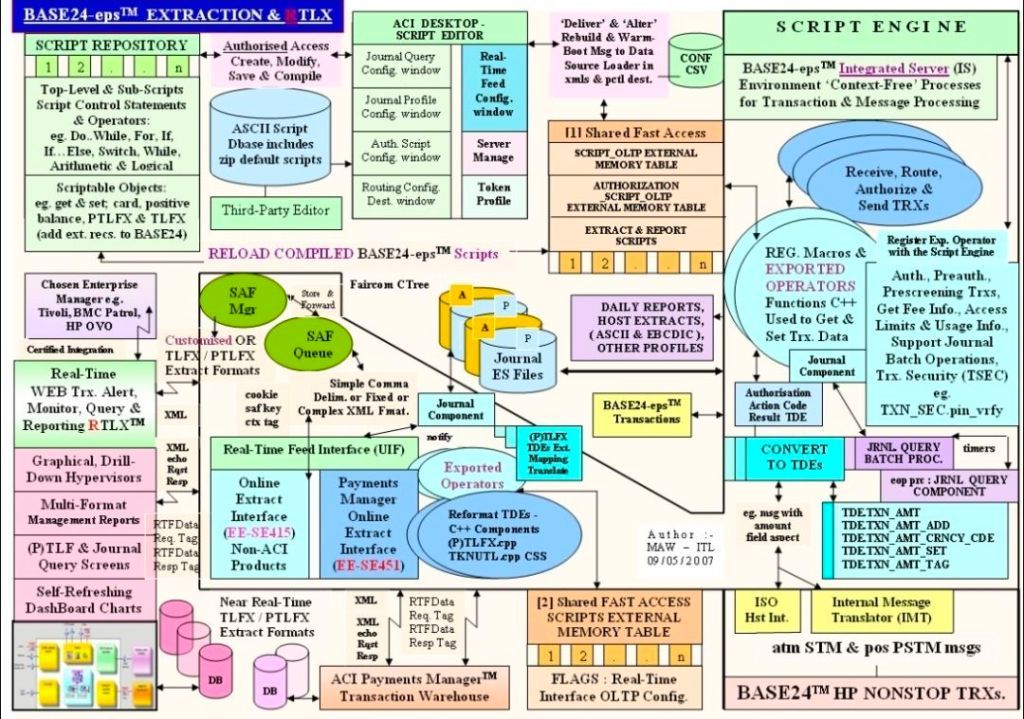
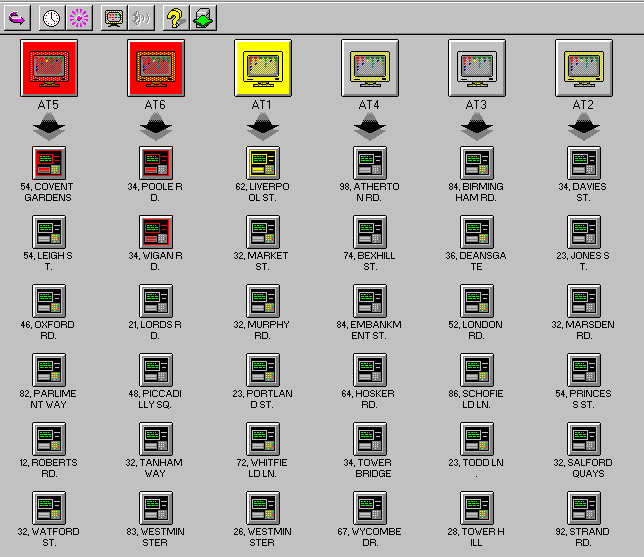
  • Hypervisor UI Integration: The company produced dedicated BASE24-eps™ and XPNET layer Hypervisor graphical displays.
  • Industry Showcase: Technical user interfaces were presented directly to the Electronic Banking User Group (EBUG) and the Satellite Transaction User Group (SATUG).

2009 — Data Query Expansion

  • SQL Interoperability: Product upgrades integrated better SQL handling to build structured transaction logs.
  • Web Monitoring Foundations: Teams rolled out technical requirements to present live transaction counters into standard web browsers.

2011 — Project Management & Standardization

  • Agile Shift: Development pipelines migrated entirely onto the Scrum framework.
  • Process Alignment: The product management structure was retrofitted to follow strict PRINCE2 guidelines to help service major government and banking institutions.

BASE24 by ACI Worldwide timeline by era and year

BASE24 is the world’s most widely used payment processing platform, developed by ACI Worldwide. Originally designed for ATM networks, it evolved into a comprehensive system for acquiring, authenticating, and routing card-based and digital transactions across various channels. It is known for its high-performance, fault-tolerant architecture, processing nearly 50% of the world’s electronic transactions at its peak. 

Comprehensive Timeline by Era

Era 1: Foundations & The Rise of BASE24 Classic (1975–1990s)

This era focused on high-availability software for the emerging automated banking industry, specifically for Tandem NonStop servers. 

  • 1975: ACI founded in Omaha, Nebraska, to develop software for the new “NonStop” server computers used by banks and stock exchanges.
  • 1981: Secured its first international client, an Australian bank, marking the start of global expansion.
  • 1982: Launch of BASE24, the first global product designed for 24-hour system operations, originally focused on ATM networks.
  • 1986: Rapid growth led to 131 customers across 14 different countries. 

Era 2: Expansion & Public Transition (1995–2000s) 

The platform expanded into Point of Sale (POS) and branch systems while the company underwent major structural changes. 

  • 1995: The company went public on NASDAQ as Transaction Systems Architects (TSA).
  • 1997: Officially adopted the name ACI Worldwide.
  • Early 2000s: Introduction of BASE24-es (later renamed BASE24-eps), a next-generation platform using C++ and object-based architecture to replace the legacy monolithic design. 

Era 3: Modernisation & The “eps” Shift (2005–2015)

ACI shifted focus toward BASE24-eps, a more flexible, open-architecture version designed for multi-channel transaction processing. 

  • 2005: ACI launches BASE24-eps, featuring a modular engine capable of processing approximately 2,000 transactions per second (TPS) with extremely low latency.
  • 2007: TSA officially rebranded all operations under the ACI Worldwide, Inc. (ACIW) name.
  • 2008: Announced that BASE24 Classic would begin maturing in 2011, urging customers to migrate to the eps platform for better integration with modern systems like IBM System z.
  • 2011–2012: Release of BASE24-eps 11.1, adding support for DB2 on IBM System p, enhanced EMV acquiring, and tools for easier migration from legacy BASE24. 

Era 4: Cloud & Universal Payments (2015–Present)

The platform moved toward cloud-native capabilities and broader ecosystem integration. 

  • 2015: ACI celebrated its 40th anniversary, continuing to power electronic payments for over 6,000 organisations worldwide.
  • 2018: Introduction of UP BASE24-eps on Linux in the Cloud, demonstrating significantly reduced Total Cost of Ownership (TCO) through public and private cloud deployment.
  • Present: BASE24 remains a core pillar of ACI’s portfolio, supporting traditional card, ATM, mobile commerce, and internet banking transactions.

BASE24-eps by ACI Worldwide timeline by era and year

BASE24-eps is a modular, high-availability payment processing engine developed by ACI Worldwide. It evolved from the original “BASE24 Classic” to provide a more flexible, open-system architecture for acquiring, authenticating, routing, and authorizing electronic transactions

Base24-eps Overview

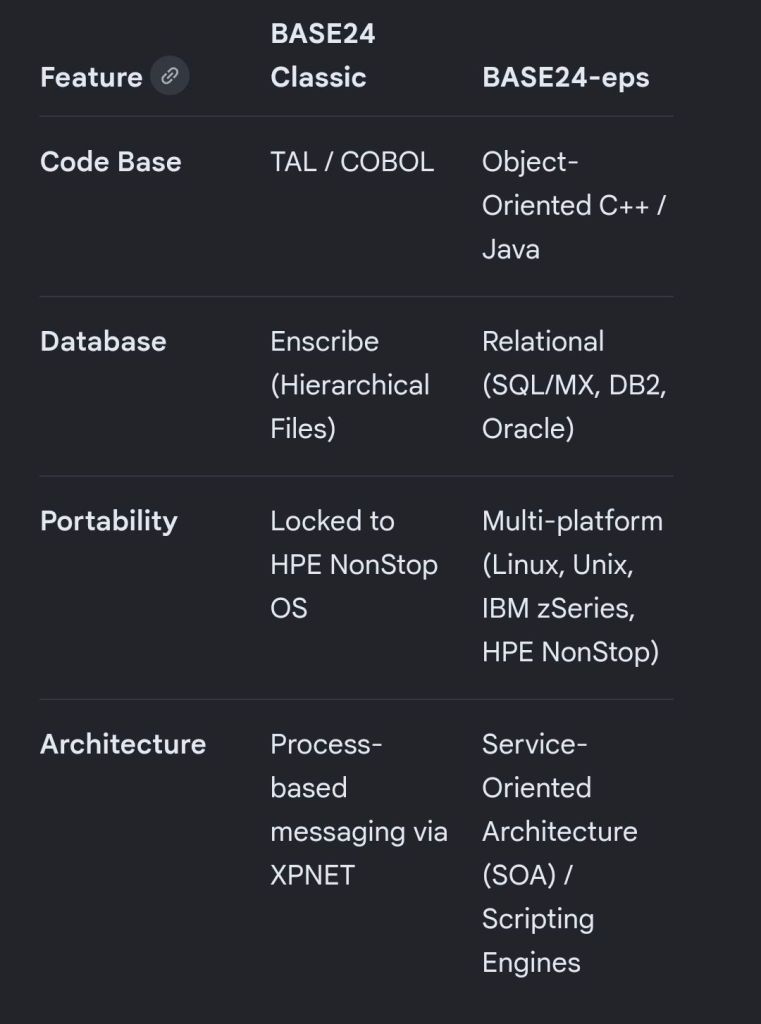
  • Architecture: Unlike the TAL-based Classic version, BASE24-eps uses an object-oriented design written primarily in C++ and Java.
  • Key Features:

Detailed Timeline

The Foundation Era (1970s – 1990s)

  • 1975: ACI is founded in Omaha, Nebraska, initially developing software for NonStop server computers.
  • Late 1970s: Development of the original BASE24 (now known as “Classic”), focused on high-uptime ATM processing.
  • 1981: First international customer (an Australian bank) signs on, starting the global expansion of BASE24. 

Transition & Development Era (2000 – 2005)

  • Early 2000s: ACI begins developing the “next generation” platform, initially called BASE24-es (extended systems), which later becomes BASE24-eps (enterprise payment system).
  • 2003 – 2004: The product begins migrating to open architectures, moving away from platform-specific languages. 

Mainstream Adoption Era (2006 – 2013)

  • 2007: ACI highlights BASE24-eps as its strategic future platform in investor overviews.
  • 2008: ACI announces the maturation of BASE24 Classic (ending standard maintenance in 2011), urging customers to migrate to BASE24-eps.
  • 2009: IBM Redbooks releases technical guides for BASE24-eps 08.2 on z/OS, solidifying its place in enterprise banking.
  • 2013: Release of BASE24-eps 2.0, introducing the “customer component” and enhanced service-enabling wrappers. 

Modernization & Cloud Era (2014 – Present)