European BASE24 User Group (EBUG) Timeline from Inception

The European BASE24 User Group (EBUG) was established in the 1980s as an independent, community-led organization for users of the BASE24 payment processing system developed by Applied Communications, Inc. (now ACI Worldwide).

Originally a regional forum for IT professionals in Europe to discuss HPE NonStop (Tandem) transaction monitoring and network security, the group expanded globally over time.

European BASE24 User Group (EBUG) was a prominent, community-led organization
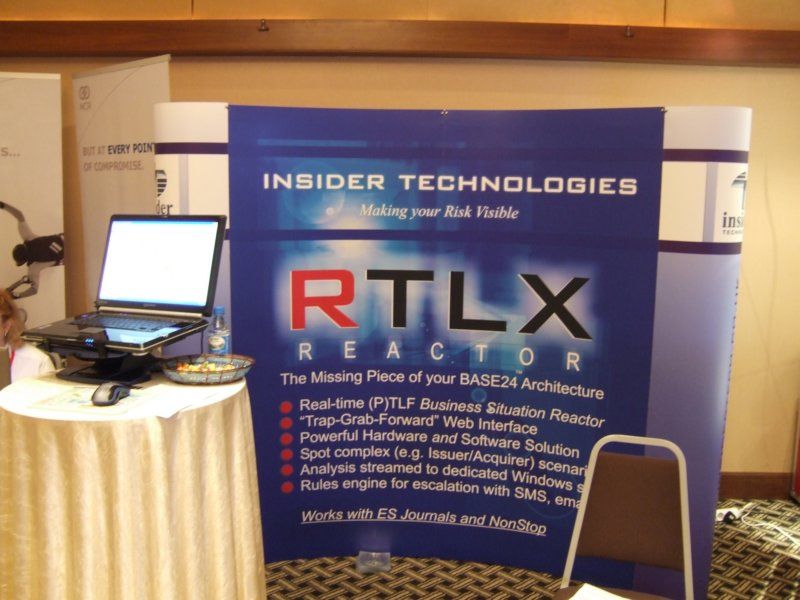
Insider Technologies regularly
attended EBUG, booth in 2007 –
RTLX now ETI-NET C-Deep

Following ACI’s withdrawal of direct corporate backing, EBUG evolved into “The Independent Group for All Payments System Users”—affectionately known as the Everybody Belongs User’s Group—welcoming users of multiple payment platforms like Postilion.

The detailed historical timeline of EBUG and the evolution of its core system, BASE24, outlines its development from a regional user collective to a global payments forum:

The Foundation Era (1975–1989)

  • 1975: ACI is founded in Omaha, Nebraska, initially developing software for fault-tolerant Tandem NonStop computers to connect ATMs to bank networks.
  • 1982: The BASE24 product family is officially launched globally, acting as “baseline” software for 24-hour financial operations.
  • 1980s: EBUG is established as a regional European community for BASE24 users to collaborate on ATM networking and transaction processing.
  • 1986: ACI expands BASE24’s reach, reporting 131 customers across 14 countries.

EBUG Prestige & BASE24 Transformation (1990–2009)

  • 1995: ACI goes public, trading on the Nasdaq stock exchange.
  • Early 2000s: EBUG annual conferences grow in prestige, featuring technical tracks on BASE24 transaction logging, Point-of-Sale (POS) networks, and network resilience.
  • 2007: EBUG hosts a high-profile international conference in Istanbul, Turkey.
  • 2008: EBUG hosts its annual meeting in Vienna, Austria, which is historically noted as a pivotal year where ACI began supporting immediate payments in Europe and discussed a strategic shift toward IBM platforms. ACI officially announces the future retirement of “BASE24 Classic”.
  • 2009: The conference is held in Prague, Czech Republic, maintaining strong community support for BASE24 on Tandem servers despite broader industry shifts.

Global Expansion, Rebranding & The Cloud Era (2010–Present)

  • 2012: ACI introduces BASE24-eps, their next-generation, platform-independent payments engine designed to replace the legacy BASE24 on HPE NonStop. EBUG’s technical focus shifts to real-time payments and log extraction.
  • 2013: With ACI ending direct involvement, the user group officially rebrands as the “Everybody Belongs User’s Group” at their conference in London, expanding attendance to professionals from Mexico, South Africa, and Australia.
  • 2015: ACI celebrates 40 years in payments. EBUG solidifies its status as a supplier-agnostic payments forum, opening sessions to non-BASE24 users.
  • 2020s: With BASE24 Classic retired, legacy users migrate to modern systems like BASE24-eps for cloud deployments and immediate payments.
  • Recent Years: ACI goes live as a pioneer in the Federal Reserve’s FedNow Service, building upon the decades-long transaction switching architecture first developed in the 1970s and 1980s.

European BASE24 User Group (EBUG) Timeline from Inception

eBUG (European BASE24 User Group) Conference Overview and Chronological  Timeline

The eBUG (European BASE24 User Group) Conference is the premier annual gathering for financial institutions, retail banking professionals, and technical architects utilizing ⁠ACI Worldwide’s foundational retail payment engine, BASE24 and BASE24-eps.

Operating alongside global HPE NonStop hardware environments, the conference traditionally functions as a collaborative technical focus group (TFG) and customer roundtable. It brings together industry experts to address mission-critical transaction switching, regulatory compliance mandates, payment security architectures, and core software migrations.


Detailed Era Breakdown & Timeline

Era 1: The Classic BASE24 & ITUG Tandem Era (1980s – Late 1990s)

Focus: Evolution of core ATM/POS switching on Tandem (HPE NonStop) platforms, localized compliance, and basic card processing networks.

  • 1982–1985: The birth of the early European user networks following the launch of BASE24 software by Applied Communications Inc. (now ACI Worldwide). Early meetings are heavily dependent on regional vendor user group support.
  • 1992: Initial formations of explicit regional sub-committees under the International Tandem User Group (ITUG). The European base of users establishes formal communication pipelines.
  • 1996: Increased focus on the early adoption of regional card mandates, standardising early transaction switching over X.25 networks, and prepping mainframe systems for high-availability roundups.
  • 1999: A definitive milestone focused on Y2K compliance readiness. Conferences during this era are heavily centered on stress-testing legacy BASE24 code blocks, ensuring clock dates rollover flawlessly across financial networks without disrupting global merchant processing.

Era 2: The EMV Mandate & “Classic-to-EPS” Transition Era (2000 – 2010)

Focus: Overhauling core code for Chip & PIN (EMV) regulations, migrating toward open system frameworks, and introducing the next-generation BASE24-eps payment platform.

  • 2003: The EMV Blueprint Era. The conference takes a primary steering role for European banks facing strict Eurocard, Mastercard, and Visa (EMV) liabilities. User sessions heavily focus on updating terminal messaging scripts.
  • 2005: Introduction of BASE24-eps to the wider user group community. Discussions shift away from the classic architecture toward modern open-systems deployments, leveraging UNIX, Linux, and IBM z/OS alongside traditional NonStop environments.
  • 2007 (Istanbul, Turkey): The group expands geographic footprints into the borders of Europe and Asia. Themes heavily stress global interoperability, cross-border transactional routing, and real-time fraud monitoring.
  • 2008 (Vienna, Austria): High-water mark for attendance during the mid-2000s. Presentations focus on deep-dive technical configurations of BASE24-eps Release 08.2, service-oriented architecture (SOA) wrappers, and high-availability testing matrices.
  • 2009 (Prague, Czech Republic): Real-time monitoring tools become a central talking point. Despite global financial pressures, the user community explicitly defends the strength of ⁠HPE NonStop infrastructure for running foundational retail networks.

Era 3: Security Hardening & The Independent Pivot Era (2011 – 2018)

Focus: Adapting payment loops to rigid PCI-DSS requirements, cloud capability tracking, and shifting the conference structure to independent consulting sponsorships.

  • 2011: Focus turns squarely onto PCI-DSS Compliance and tokenisation. Roundtables detail architectural techniques to secure transaction journals, encrypt key lines, and prevent man-in-the-middle exploits at the ATM level.
  • 2012 (London, UK): Held at the historic ⁠Trinity House near Tower Bridge, this event marks a structural pivot. Moving away from a pure ACI-hosted workspace, independent payment consultancies (such as PayX) drive user discussions. This Technical Focus Group explicitly evaluates the limits of legacy systems against “intelligent” multi-vendor ATM software.
  • 2015: Immediate focus addresses the challenges of Real-Time / Instant Payments mandates across the Eurozone. Systems engineers share optimization scripting paradigms to support sub-second processing SLA ceilings.
  • 2018: The rise of Open Banking / PSD2 Regulations. Technical breakout sessions outline how to safely open classic BASE24 architectures to third-party APIs through microservices wrappers and middleware adapters without breaking strict system uptime criteria.

Era 4: Modernisation & Cloud-Native Coexistence Era (2019 – Present)

Focus: ISO 20022 message standard migrations, cloud-native deployments, and containerization strategies.

  • 2020–2022: Transition to hybrid tracking methodologies due to travel constraints. The baseline focus targets data integration, remote system management, and virtualized system-hardening techniques.
  • 2023–2024: The ISO 20022 Mandate. Sessions are dominated by the industry-wide migration from legacy ISO 8583 message lines to the XML-based ISO 20022 financial standard. Systems architects present automated script parsers to translate real-time payment formats across legacy logic systems.
  • 2025–2026: Integration of ⁠Cloud-Native BASE24-eps architectures. Contemporary meetups explore containerized execution patterns, utilizing AI models within the authorization loop to spot edge-case fraud patterns in real-time, and evaluating long-term roadmaps for hardware-security modules (HSMs).

eBUG (European BASE24 User Group) Conference Overview and Chronological  Timeline

European BASE24 User Group (EBUG) was a prominent, community-led organization

The European BASE24 User Group (EBUG) was a prominent, community-led organization dedicated to the ACI BASE24 payment processing system. It provided a vendor-neutral forum for IT professionals, banks, and processors to collaborate, share knowledge, and discuss technical tracks like HPE NonStop monitoring and payment security.

Conference Timeline

  • 1980s — Establishment: EBUG is formed as a regional community for European financial institutions utilizing the growing BASE24 platform.
  • Early 2000s — Technical Growth: EBUG annual conferences become prominent technical forums featuring specialized tracks focused on Tandem/HP NonStop hardware and payment system security.
  • 2007 — Istanbul Conference: Features heavily attended technical sessions and workshops addressing growing transaction volumes and early EMV (chip card) migrations.
European BASE24 User Group (EBUG) was a prominent, community-led organization
Insider Technologies regularly attended EBUG, booth in 2007
  • 2008 — Vienna Conference: Notable for introducing ACI’s strategic shift to support IBM platforms alongside traditional HPE NonStop environments.
European BASE24 User Group (EBUG) was a prominent, community-led organization
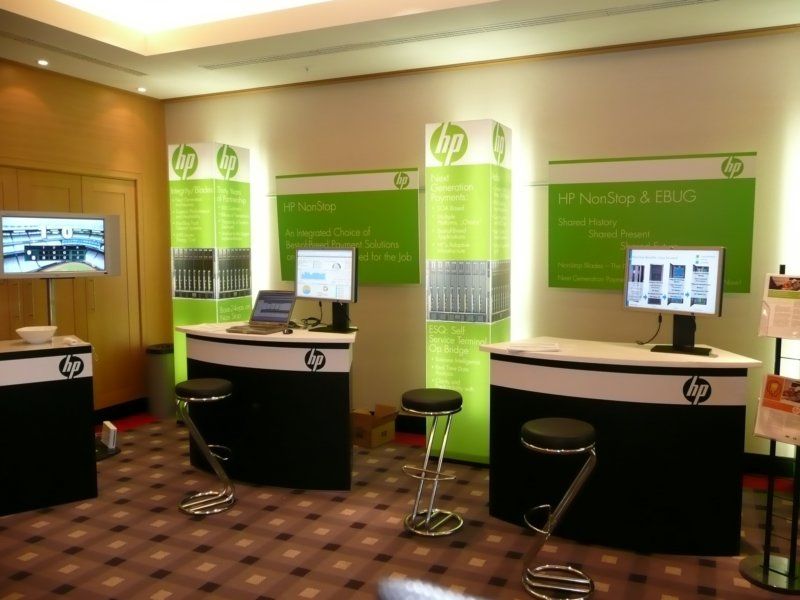
HP booth at Vienna EBUG, 2008
  • 2009 — Prague Conference: Continues strong advocacy and technical troubleshooting for BASE24 on NonStop despite broader industry platform shifts.
European BASE24 User Group (EBUG) was a prominent, community-led organization
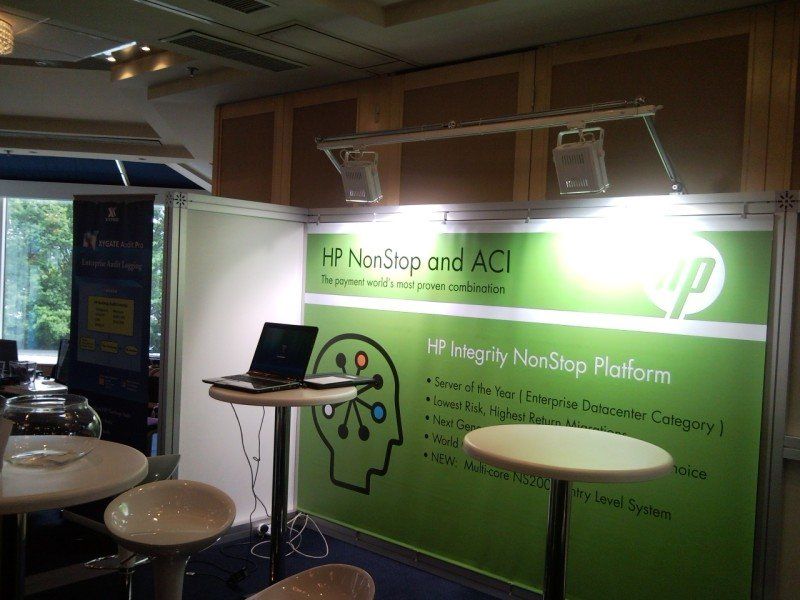
HP Booth at Prague conference, 2009
  • 2012 — London TFG: A technical focus group is held in London at Trinity House, bringing together engineers and ACI product managers to debug and refine system architecture.
  • Late 2010s to Present — The “Everybody Belongs” Era: As ACI broadened its product portfolio, the user group expands its scope to include other payment technologies like Postilion. The conference formally rebrands as an independent entity, later transitioning into The Payments Knowledge Forum, to serve all payment systems users inclusively.

European BASE24 User Group (EBUG) was a prominent, community-led organization

European BASE24 User Group (EBUG) dedicated to the BASE24 payment processing system

The European BASE24 User Group (EBUG) was a prominent, community-led organization dedicated to the BASE24 payment processing system. It served as a vital hub for financial institutions and vendors to exchange technical knowledge, discuss platform migrations, and influence the development of ACI Worldwide products. 

Group Overview

  • Primary Purpose: EBUG facilitated networking and technical collaboration among users of the BASE24 ecosystem, including the BASE24 Classic and BASE24-eps platforms.
  • Evolution of Scope: While it began with a strict focus on BASE24, it eventually expanded to include other ACI products like Postilion.
  • Independence: The group shifted from being an ACI-sponsored event to a supplier-agnostic forum known as “The Payments Knowledge Forum” after ACI ended its direct involvement.
  • Legacy Transformation: In its later years, it was affectionately referred to as the “Everybody Belongs User’s Group”, reflecting its inclusive stance as “The Independent Group for All Payments System Users”. 

Detailed Timeline

The history of EBUG is marked by its annual conferences held in major European cities and its eventual transition to an independent entity: 

  • 1980s: EBUG is established as a regional group for the growing BASE24 community in Europe.
  • Early 2000s: EBUG events gain prestige, featuring technical tracks on HPE NonStop transaction monitoring and payment security.
  • 2006–2008: High-profile meetings held in cities such as Istanbul (2007) and Vienna (2008). The 2008 Vienna event was notable for discussing ACI’s strategic shift toward IBM platforms.
  • 2009: The conference takes place in Prague, continuing strong support for BASE24 on NonStop despite broader industry shifts.
  • 2012: The Technical Focus Group (TFG) is held in London at Trinity House. This marks a turning point as the event moved off ACI’s premises, signaling a shift in sponsorship dynamics.
  • 2013: EBUG holds a major forum in Westminster, London, at the Institution of Civil Engineers. By this time, it is officially rebranding toward the broader “Payments Knowledge Forum”.
  • 2015: EBUG fully transitions into the Payments Knowledge Forum, an annual gathering in London that continues the 30-year legacy as an independent, supplier-agnostic body.

……….

The Payments Knowledge Forum (PKF) is an independent, user-led resource dedicated to the exchange of information regarding payment systems. It operates without vendor affiliation, bringing together financial institutions, retailers, processors, and consultants to share practical expertise and shape the future of payment activities. 

Overview of the Payments Knowledge Forum

  • Purpose: PKF serves as a collaborative hub for payment system users to discuss industry challenges, regulatory changes, and technical innovations.
  • Composition: The forum is open to a wide range of industry stakeholders, including:
    • Financial Institutions: Banks and building societies.
    • Retailers: Businesses focusing on consumer point-of-sale and e-commerce.
    • Payments Processors: Entities managing the technical execution of transactions.
    • Consultants: Experts providing strategic and technical guidance.
  • Governance: It is uniquely “run by users for the benefit of users,” ensuring that the information shared is neutral and prioritises the operational needs of the participants over commercial vendor interests.
  • Activities: PKF hosts regular events and an annual conference to address evolving topics such as ISO 20022 migration, central bank digital currencies (CBDC), and security frameworks like PSD2.

Detailed Timeline of Major Payment Milestones

The following timeline tracks critical industry milestones often discussed and addressed within the forum’s scope:

  • 2015: The Payments Strategy Forum was established by the UK Payment Systems Regulator (PSR) to create a long-term roadmap for UK payments.
  • November 2016: Publication of the “Payments Strategy for the 21st Century,” introducing concepts like Request to Pay and enhanced data standards.
  • March 2018: Regulatory Technical Standards (RTS) for PSD2 were published, initiating the transition to Strong Customer Authentication (SCA).
  • November 2018: Launch of TARGET Instant Payment Settlement (TIPS), enabling real-time fund transfers across Europe.
  • September 2019: Full implementation of PSD2 security measures, including the requirement for standardised API interfaces for third-party access.
  • 2020–2024: Acceleration of digital payment adoption following the COVID-19 pandemic, with a notable decline in cash usage at points of sale.
  • October 2021: The Financial Stability Board (FSB) published global targets for cost, speed, and transparency in cross-border payments.
  • February 2024: Swedish krona successfully onboarded to the TIPS platform.
  • April 2025: Danish kroner scheduled for onboarding to the TIPS system.
  • September 2025: Publication of the Digital Euro innovation platform outcome report, detailing findings for future development.
  • April 2026: Review of the Senior Managers and Certification Regime (SM&CR) to enhance accountability in financial services.
  • June 2026: Deadline for firms to demonstrate credible timetables for addressing climate-related financial risks.
  • 2026 (Targeted): Anticipated go-live dates for enhanced access to the CHAPS high-value payment system.

Annual Conference & Resources

The PKF holds an annual conference that serves as its primary knowledge-sharing event.

  • Recent/Upcoming: The 2026 Conference continues the forum’s tradition of deep-diving into operational resilience and the digital transformation of finance.
  • Direct Access: For the latest news and detailed membership information, visit the The Payments Knowledge Forum Official Site. 

……….

Some HPE NonStop BASE24 related User groups on LinkedIn :

BASE24 BASE24-eps User Group Forum | HP NonStop Tandem NSK IBM SUN Windows – News Events Discussion
https://www.linkedin.com/groups/51296/

PCI DSS Compliant Payments Transactions Compliance Monitoring Alerting Querying Archiving Reporting
https://www.linkedin.com/groups/146595/

HPE NonStop Tandem | Guardian OSS Performance Monitoring Management Integrity Blade Itanium ServerNet
https://www.linkedin.com/groups/165816/

BASE24 BASE24-eps – HP NonStop Tandem IBM SUN – Open System Services OSS RealTime – Experts Users
https://www.linkedin.com/groups/150095/

SATUG Southern African HP NonStop Tandem NSK Server User Group – SATUG
https://www.linkedin.com/groups/81881/

Payment Engine Applications Forum | Retail and Wholesale | HP NonStop NSK Tandem SUN IBM Windows
https://www.linkedin.com/groups/80773/

HPE NonStop Tandem NSK OSS Open System Services Monitoring – Users, Experts and Technical Authorities 
https://www.linkedin.com/groups/80740/

Job Batch Scheduling | HP NonStop Tandem Guardian Open System Services OSS Servernet Integrity Blade  
https://www.linkedin.com/groups/78111/