

The Program Evaluation and Review Technique (PERT) is a project management tool developed in the late 1950s to analyze and represent the tasks involved in completing a complex project. It is designed to handle uncertainty in project scheduling by using three time estimates (optimistic, pessimistic, and most likely) to calculate the expected duration of tasks.
Summary of PERT Project Management
- Origin: Developed in 1958 by the U.S. Navy Special Projects Office to manage the Polaris missile submarine program, which involved thousands of contractors.
- Purpose: To schedule, organize, and coordinate tasks within complex, non-repetitive projects, allowing for the identification of the critical path.
- Key Feature (Three-Time Estimate): Unlike traditional methods, PERT uses a probabilistic approach.
- Visual Structure: A PERT chart acts as a network diagram, using nodes (circles/rectangles) for events and arrows for tasks and dependencies.
- Impact: Credited with shortening the Polaris project timeline by two years.
Detailed Historical Timeline of PERT (1950s–Present)
The Era of Development (1950s)
- 1957: The groundwork for network scheduling began in the US, with DuPont developing the Critical Path Method (CPM) and preliminary research into PERT concepts beginning.
- 1958: Birth of PERT. The U.S. Navy Special Projects Office officially develops PERT for the Polaris missile project to manage high uncertainty in R&D.
- 1958: The first two publications, Program Evaluation Research Task, Summary Report, Phase 1 and 2, are written (primarily by Charles F. Clark) to document the technique.
- 1959: Willard Fazar of the Navy officially introduces PERT to the public in The American Statistician, detailing the use of three time estimates.
The Expansion and Mainframe Era (1960s–1970s)
- 1960s: PERT is widely adopted by NASA and the U.S. Department of Defense for large, schedule-driven projects.
- 1962: The US Department of Defense mandates the use of Work Breakdown Structures (WBS) for projects, reinforcing PERT application.
- 1965: PERT is applied to the planning and organization of the 1968 Winter Olympics in Grenoble.
- 1970s: PERT/CPM software packages begin to be used on mainframe and minicomputers.
The PC and Software Era (1980s–1990s)
- 1980s: With the advent of personal computers, PERT software becomes accessible, leading to adoption in software development and manufacturing.
- 1984: The Theory of Constraints (TOC) is introduced, which later influences critical chain methodologies, adding to network scheduling techniques.
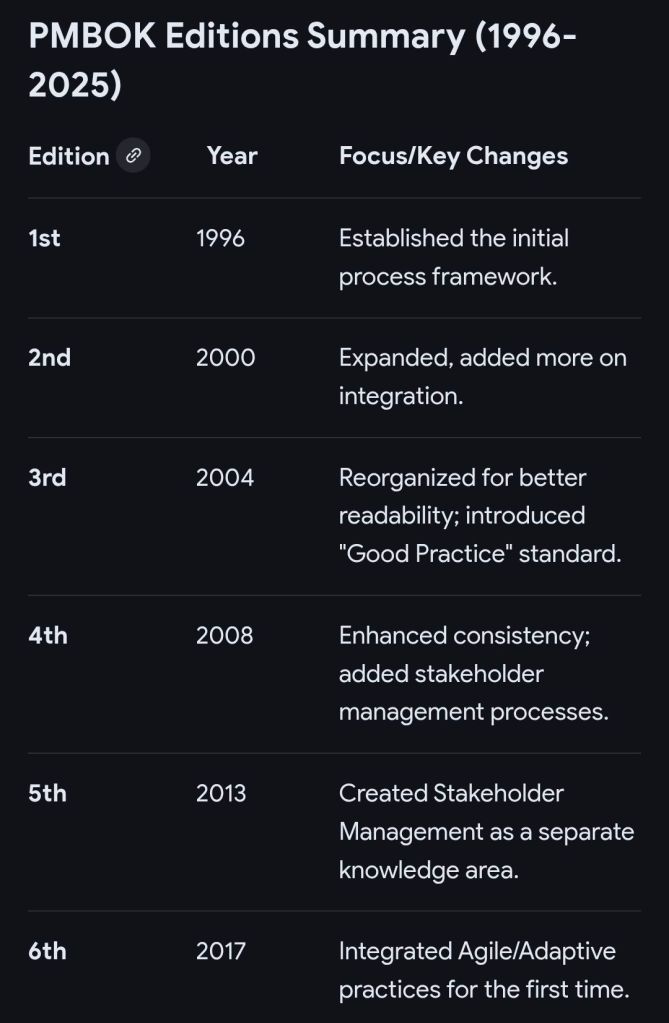
- 1987: The Project Management Institute (PMI) publishes the first white paper on the Project Management Body of Knowledge (PMBOK), including network techniques.
- 1997: Critical Chain Project Management (CCPM) is introduced as a new approach to managing resources and task uncertainty, building on PERT/CPM principles.
The Digital and Agile Era (2000s–Present)
- 2000s: PERT charts become a standard feature in project management software (MS Project, Primavera), automating the calculation of critical paths.
- 2012: ISO 21500:2012 provides guidance on project management, incorporating network analysis techniques.
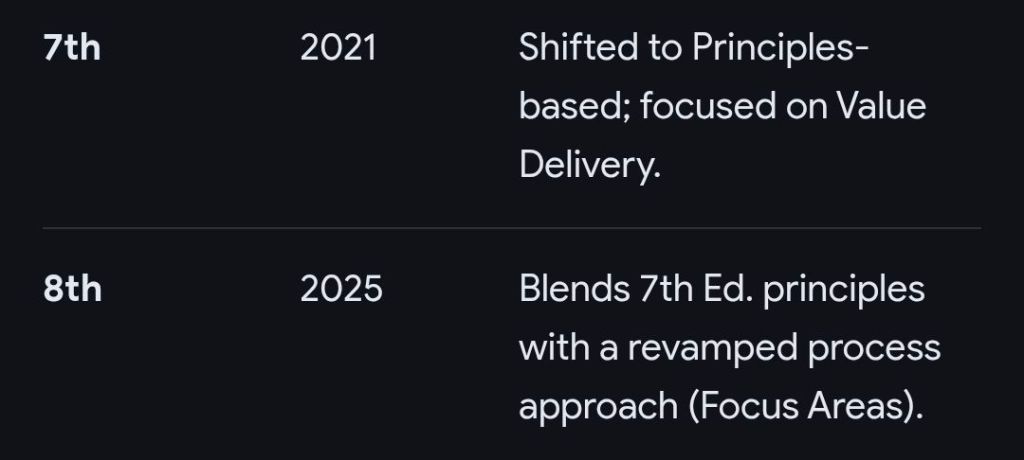
- 2017/2021: PMBOK releases 6th and 7th editions, integrating PERT and network scheduling with agile and adaptive environments.
- Present: While overshadowed by Agile (Scrum/Kanban) in software, PERT remains crucial for complex construction, R&D, and defense projects, often used in hybrid approaches.
Key Components of a PERT Chart
- Event (Node): A milestone representing the start or completion of a task.
- Activity (Arrow): The actual task required to move from one event to another.
- Critical Path: The longest sequence of dependent tasks, determining the minimum project duration.
- Float (Slack): The amount of time a task can be delayed without delaying the overall project.

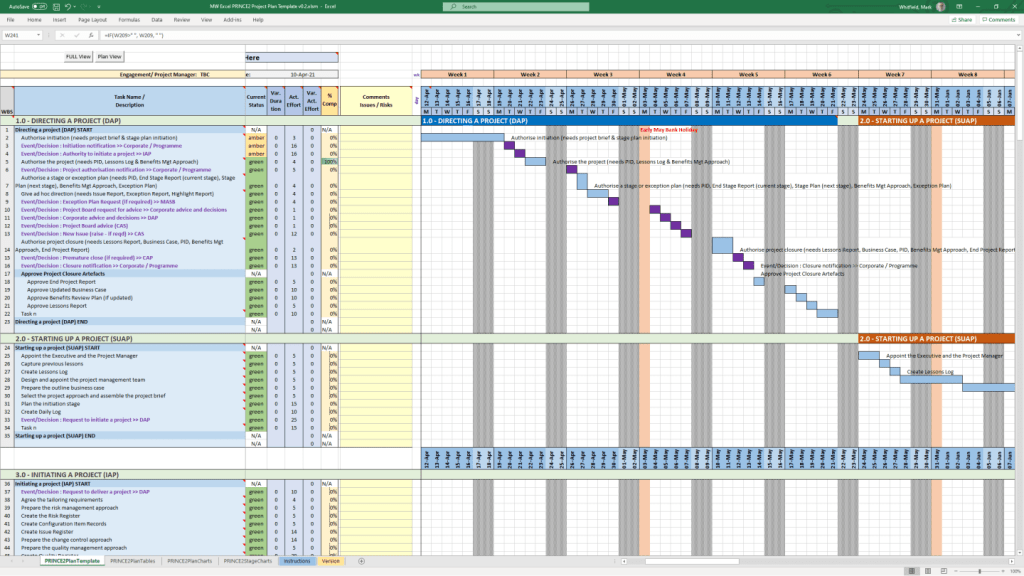
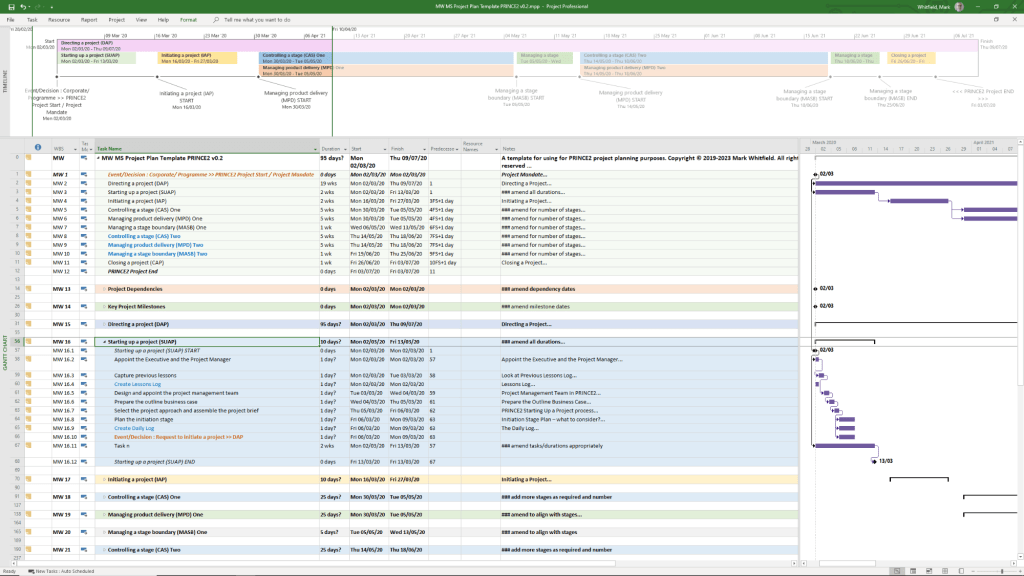
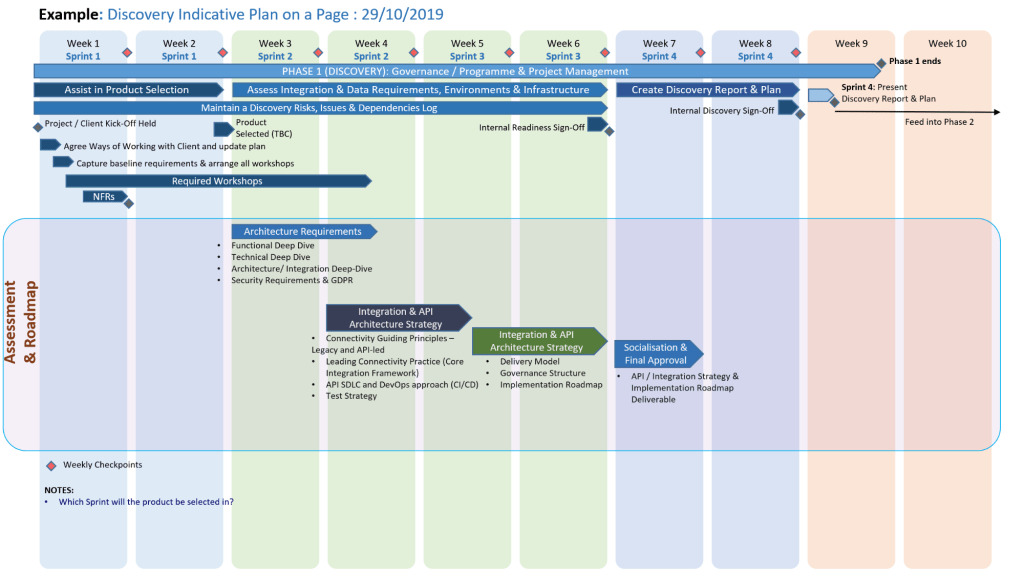



 PROject Templates