Benefits of Walking Summarised

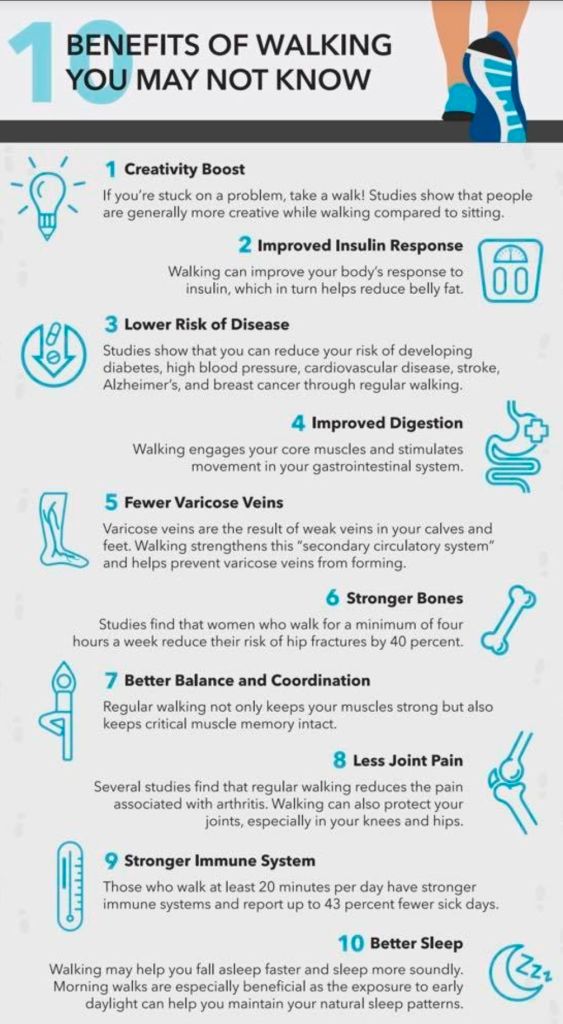
Walking is a highly accessible form of exercise that offers a range of physical, mental, and lifestyle advantages. Just 30 minutes a day can significantly improve overall health, though even a brisk 10-minute walk provides measurable benefits.

Physical Health Benefits

  • Heart Health: Regular walking strengthens the heart, lowers blood pressure, and reduces the risk of stroke and coronary heart disease.
  • Disease Prevention: It helps manage or prevent type 2 diabetes by improving insulin sensitivity and controlling blood sugar levels. It is also linked to a lower risk of certain cancers, including breast and colon cancer.
  • Weight Management: Walking burns calories and boosts metabolism, which aids in losing body fat and maintaining a healthy weight.
  • Muscles & Bones: As a weight-bearing exercise, it increases bone density (reducing osteoporosis risk) and strengthens leg and core muscles, which improves balance and coordination.
  • Joint Support: Walking helps lubricate joints and strengthen the muscles that support them, which can alleviate arthritis pain.
  • Immune System: Daily walks can bolster the immune system, leading to fewer sick days and milder symptoms when you do fall ill.

Mental & Cognitive Benefits

  • Mood Elevation: Physical activity triggers the release of endorphins, serotonin, and dopamine, which naturally reduce stress, anxiety, and symptoms of depression.
  • Brain Function: Walking is linked to improved memory, focus, and creative thinking. It may also help prevent the early onset of dementia and Alzheimer’s by protecting brain volume.
  • Sleep Quality: Regular morning walks in natural light help regulate your circadian rhythm, making it easier to fall asleep and improving the quality of your rest.

Practical & Social Benefits

  • Accessibility: It is completely free, requires no special equipment (other than supportive shoes), and can be done almost anywhere.
  • Social Connection: Walking with friends, family, or in community groups helps combat feelings of isolation and improves social well-being.
  • Energy Levels: A brisk walk increases blood flow and oxygen delivery throughout the body, providing a natural energy boost that is more effective than caffeine for long-term fatigue.
Benefits of Walking Summarised

Summary of “Rules” & Methods

Various structured methods can help you get the most out of walking:

  • 10-Minute Brisk Walk: The NHS recommends this as a baseline for significant health gains.
  • Japanese Walking Method (3-3-3): Alternating three minutes of fast walking with three minutes of slow walking for 30 minutes to improve cardiovascular fitness.
  • 6-6-6 Rule: A 6-minute warm-up, a 60-minute brisk walk, and a 6-minute cool-down, often performed six days a week for weight loss.

Evolution of Leadership – Culture, Team and Individual Focused

Evolution of Leadership – Culture, Team and Individual Focused

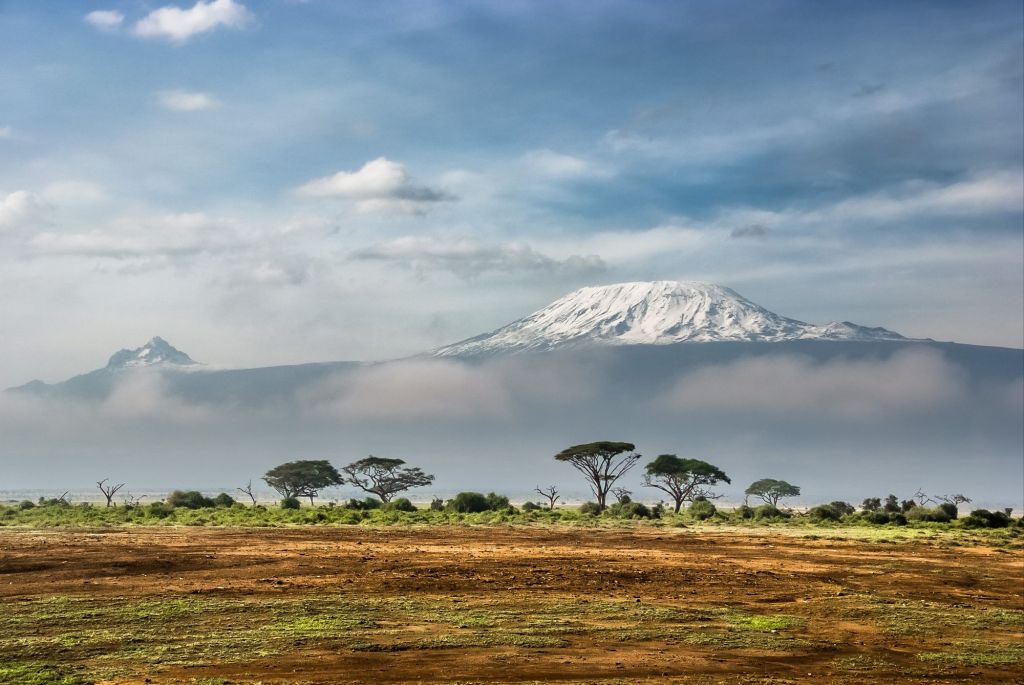
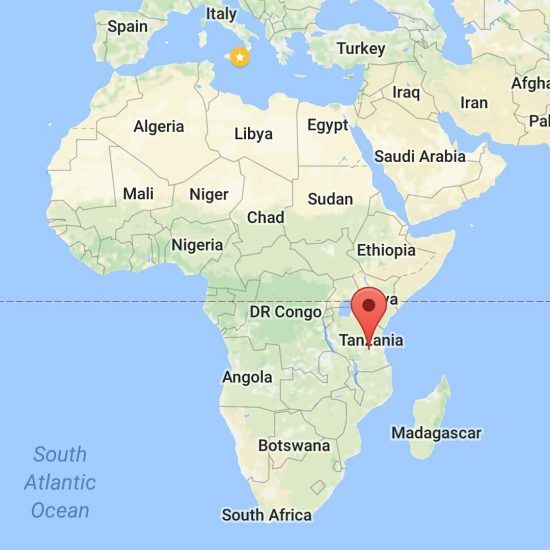
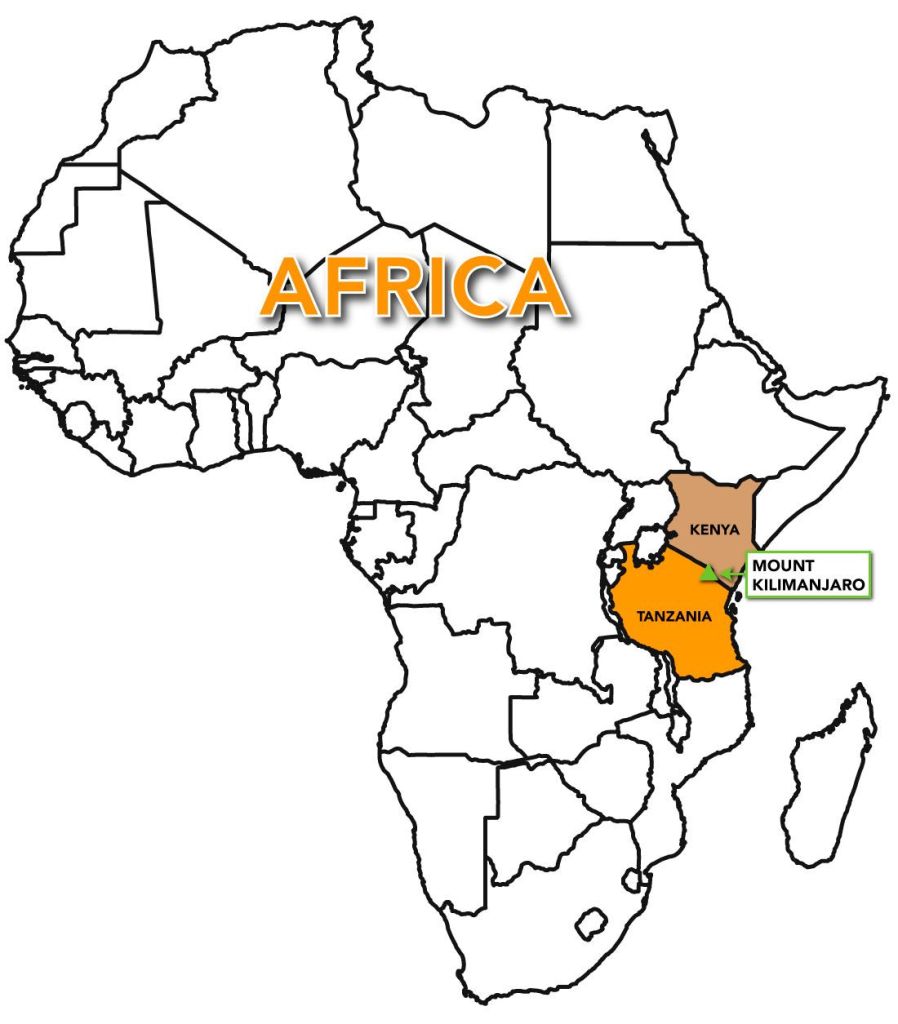
Detailed timeline of Mount Kilimanjaro and Map location

Key Geographic Details

Location of Mount Kilimanjaro

Climbing Mount Kilimanjaro is a journey through five distinct climate zones, and your experience depends heavily on matching your timeline with the mountain’s seasonal rhythms. About 50,000 visitors attempt the summit annually. 

Seasonal Visitor & Weather Timeline

The mountain follows a predictable cycle of dry and rainy seasons. 

  • Long Dry Season (June – October): This is the peak visitor period due to the most stable weather and clear skies. July and August are particularly busy, coinciding with Northern Hemisphere holidays.
  • Short Dry Season (January – March): A popular window with high footfall but slightly quieter than the June–October peak. January and February are often cited as the best months for clear views and warm daytime temperatures.
  • Shoulder Seasons (March, June, October, November): These transition months offer a balance of moderate crowds and manageable weather. November brings the “short rains,” but trails are significantly emptier.
  • Rainy Seasons (April – May): The lowest visitor numbers occur during the “long rains”. Trails can be muddy and treacherous, making this suitable only for experienced trekkers seeking absolute solitude.
Mount Kilimanjaro

Geological and Ancient History

Kilimanjaro was formed by volcanic activity along the East African Rift. 

  • 2.5 Million Years Ago: Volcanic activity begins at the Shira centre.
  • 1 Million Years Ago: Eruptions begin at the Mawenzi and Kibo cones.
  • 360,000 Years Ago: The last major eruption occurred.
  • 150,000–200,000 Years Ago: Final volcanic activity at Kibo created the current summit crater.
  • 1000 BC: Evidence of human cultures on the slopes found via stone tools.
  • 150 AD: Ptolemy of Alexandria makes early references to “lands” near the mountain. 

Exploration and Climbing Milestones

The late 19th century marked the beginning of recorded ascents and scientific study. 

  • 1889: Hans Meyer and Ludwig Purtscheller become the first recorded people to reach the summit (Uhuru Peak) on 6 October.
  • 1909: Gertrude Benham of London reaches the summit alone.
  • 1926: Pastor Richard Reusch discovers a dead leopard on the crater rim, a finding later immortalised in literature.
  • 1957: The volcano is officially declared dormant.
  • 1961: Tanganyika gains independence; a torch is placed on the summit, and the peak is renamed Uhuru (“Freedom”).
  • 2020s: Tourism reaches over 35,000–50,000 climbers per year, with various routes established for different skill levels. 
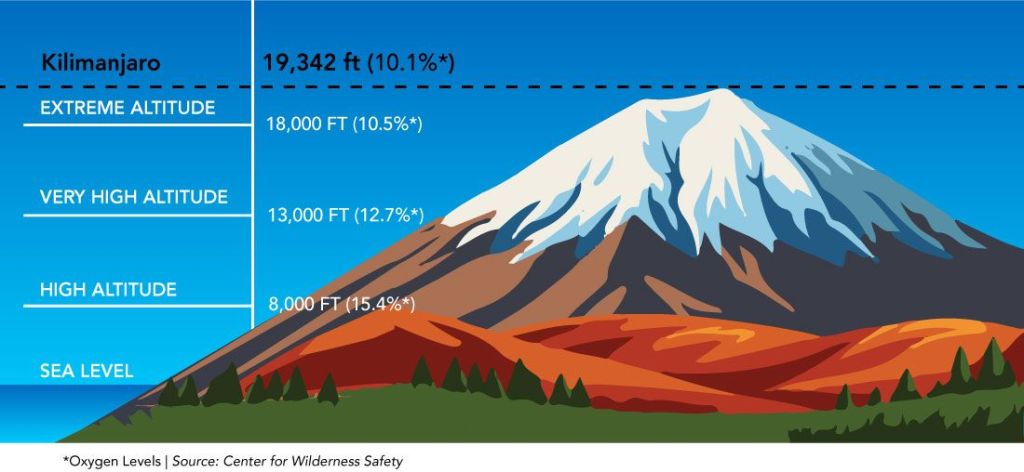
Kilimanjaro Height

Typical Modern Trekking Timelines

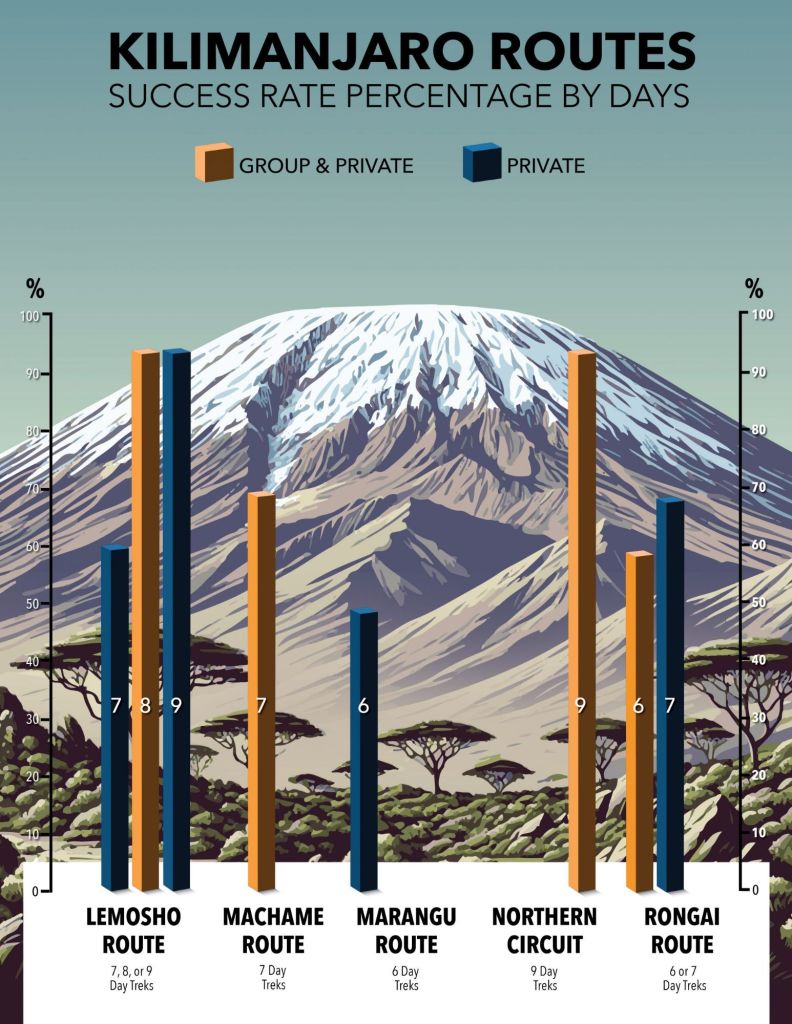
Climbs generally take 5 to 9 days depending on the route chosen to ensure proper acclimatisation.

Route Typical Duration Characteristics

Marangu 5–6 Days The “Coca-Cola” route; sleep in huts.

Machame 6–7 Days Most popular; scenic “Whiskey” route.

Lemosho 7–8 Days High success rate; beautiful scenery.

Northern Circuit 9 Days Longest route; highest summit success rate.

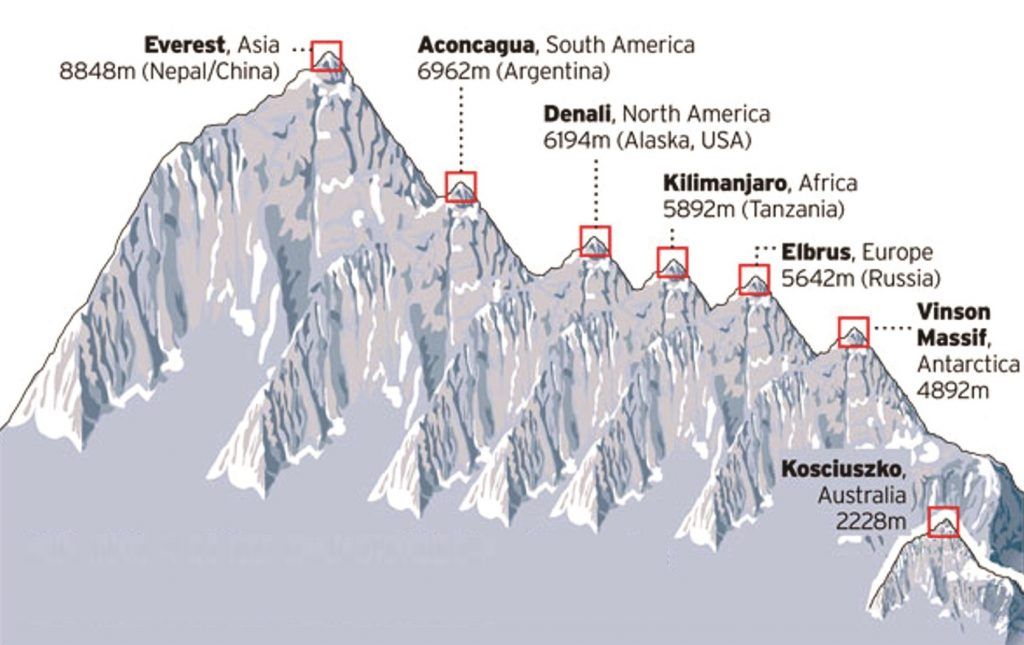
Respective heights for Big 7

Standard Daily Expedition Routine

A typical day on the mountain follows a strict rhythm to manage fatigue and altitude: 

  • 06:00 – 07:00: Wake up and breakfast at camp.
  • 08:00: Begin the day’s trek (typically 4–7 hours of walking).
  • 13:00: Hot lunch followed by further trekking or rest.
  • 17:00: Reach next camp; “hike high, sleep low” acclimatisation walks.
  • 23:00 – 00:00 (Summit Night): Final ascent begins in the dark to reach the peak by sunrise.
Kilimanjaro Routes
Mount Kilimanjaro location on World Map

Garmin Approach S50 Golf and Fitness Smartwatch

Garmin Approach S50 Golf and Fitness Smartwatch

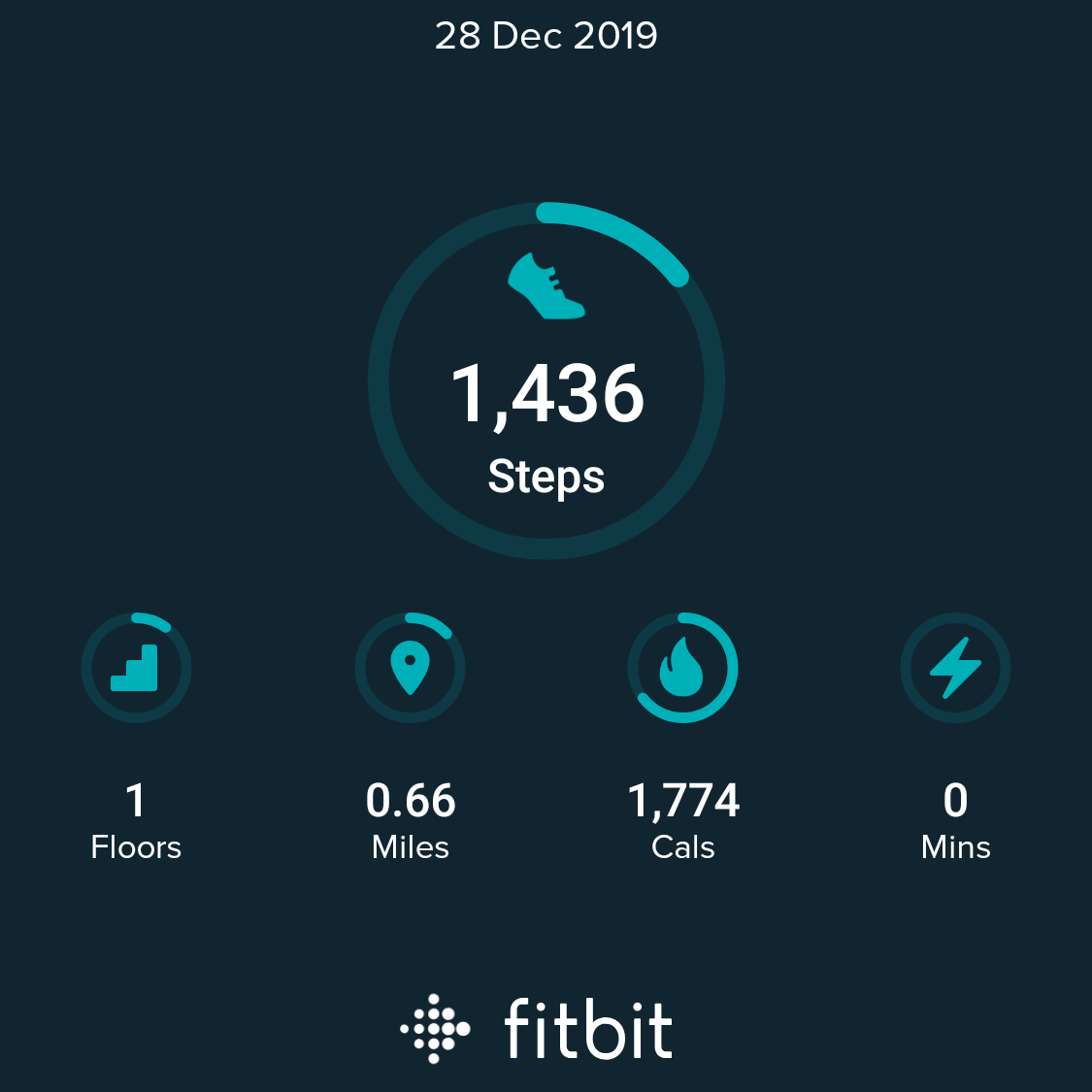
First weekly fitbit stats report for Xmas…

mark whitfield fitbit stats project manager manchester mark whitfield

15000 steps in a day… but I did play golf… 😀

15000 steps in a day… but I did play golf… 😀

Just started using a fitbit again…