Sinclair ZX81 Home Computer timeline history

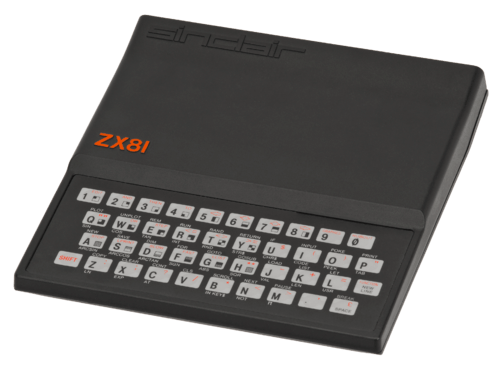
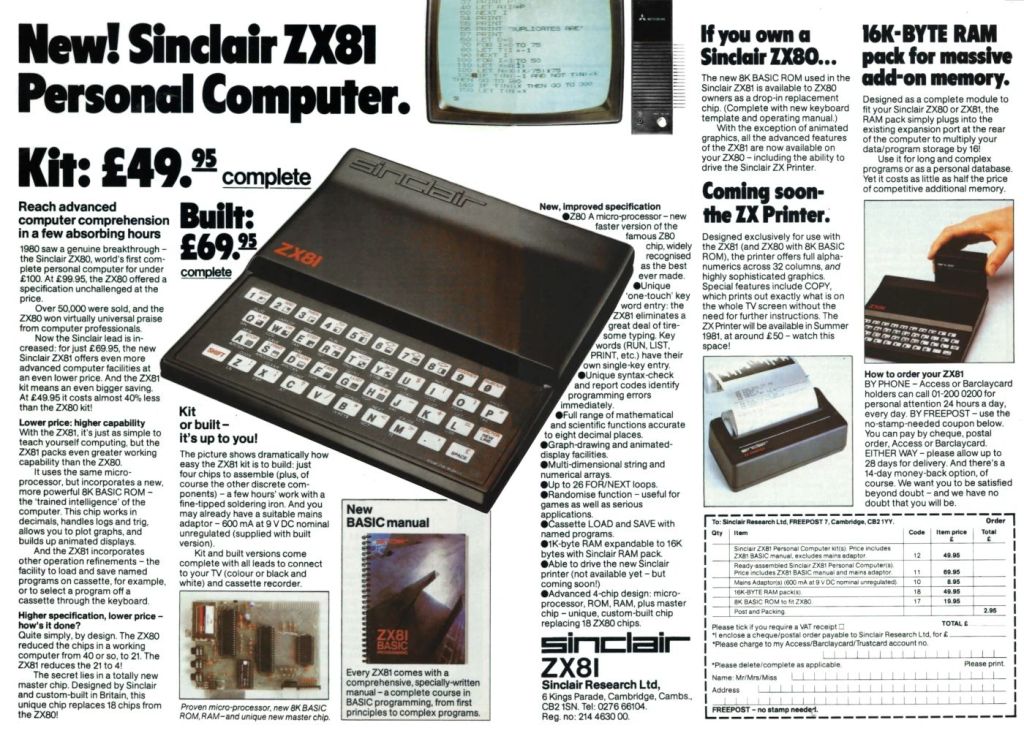
The Sinclair ZX81 was a seminal moment in home computing, launched in March 1981 as the successor to the ZX80. It was designed by Sinclair Research to be a low-cost entry point into computing, famously costing less than £70 (or £50 as a self-assembly kit). 

ZX81 Home Computer

Development & Launch (1980–1981) 

  • Autumn 1980: Most of the ZX81’s software was completed, with the remainder of the year spent writing the manual and finalizing hardware.
  • 5 March 1981: Official UK launch at an introductory price of £49.95 for the kit and £69.95 for the pre-assembled machine.
  • October 1981: Launched in the United States at $149.95 assembled and $99.95 in kit form.
  • November 1981: The ZX Printer was released for £49.95, expanding the system’s capabilities. 
ZX81 Home Computer article

Market Success & Expansion (1982)

  • January 1982: Over 300,000 units had been sold via mail order. American sales reached 15,000 units per month.
  • February 1982: Production reached 40,000 units per month to keep up with massive global demand.
  • July 1982Timex Sinclair 1000 launched in the US as a licensed version of the ZX81, featuring 2KB of RAM (double the original’s 1KB).
  • 1982 Peripheral Boom: Numerous third-party upgrades were released, including the Memopak 64K RAM expansion and various replacement “real” keyboards to solve the frustration of the original membrane design. 

The Shift to Spectrum & Decline (1982–1986) 

  • 23 April 1982: Sinclair launched the ZX Spectrum, the colour-capable successor that would eventually overshadow the ZX81.
  • 1983: Total production of the ZX81 surpassed 1.5 million units worldwide.
  • 1984: The ZX81 was officially discontinued as Sinclair focused on the Spectrum and the ill-fated Sinclair QL.
  • 7 April 1986: Following financial difficulties, Sinclair Research’s computer assets were sold to Amstrad for £5 million.

Sinclair ZX81 Home Computer timeline history

History of Cloud Computing timeline by year

The history of cloud computing evolved from 1950s time-sharing concepts to today’s AI-integrated hyperscale ecosystems. While John McCarthy and J.C.R. Licklider envisioned computing as a global utility in the 1960s, the modern era truly began with the 1999 launch of Salesforce and the 2006 debut of Amazon Web Services (AWS)

Foundational Era (1950s – 1980s)

  • 1955John McCarthy introduces the theory of sharing computing time among a group of users.
  • 1961: McCarthy proposes that computing will one day be sold as a public utility, similar to water or electricity.
  • 1967: IBM develops the first operating system that allows multiple users to timeshare a single resource.
  • 1969: ARPANET (Advanced Research Projects Agency Network) is launched, serving as the precursor to the modern internet.
  • 1972: IBM releases the first version of its Virtual Machine (VM) operating system.
  • 1977: The cloud symbol is first used in original ARPANET diagrams to represent networks of computing equipment.

The Rise of the Modern Cloud (1990s – 2009)

  • 1996: The term “cloud computing” appears in an internal Compaq business plan.
  • 1997: Professor Ramnath Chellappa defines cloud computing as a “computing paradigm where the boundaries of computing will be determined by economic rationale”.
  • 1999: Salesforce.com launches, becoming the first company to offer business applications over the internet, pioneering SaaS.
  • 2002: Amazon Web Services (AWS) launches as a suite of web-accessible tools for developers.
  • 2006: AWS releases Elastic Compute Cloud (EC2) and Simple Storage Service (S3), marking the birth of modern IaaS.
  • 2007Netflix begins its transition to a video-streaming service using cloud infrastructure.
  • 2008Google releases Google App Engine, a platform for developing and hosting web applications in its data centres.
  • 2009Google Apps (now G Suite) launches, bringing browser-based enterprise applications to the mainstream. 

Expansion & Specialisation (2010 – 2019)

  • 2010: Microsoft officially releases Azure.
  • 2010: NASA and Rackspace initiate OpenStack, an open-source project for cloud software.
  • 2011: Apple launches iCloud, popularising consumer cloud storage.
  • 2012: Oracle enters the market with Oracle Cloud.
  • 2013: Docker introduces open-source container software, revolutionising application portability.
  • 2014: Google launches Kubernetes for container orchestration, and AWS introduces Lambda, pioneering serverless computing.
  • 2019: Microsoft Azure introduces Azure Arc, enabling services to run across various on-premises and cloud environments. 

The AI & Edge Era (2020 – Present)

  • 2020: The COVID-19 pandemic accelerates cloud adoption for remote work and education.
  • 2022-2024: Cloud providers integrate GenAI and Machine Learning into core services, such as Microsoft’s alliance with OpenAI.
  • 2025Quantum-as-a-Service gains traction, with IBM providing cloud access to systems with over 1,000 qubits.
  • 2026: Global spending on cloud services (SaaS, PaaS, and IaaS) is forecast to reach approximately $738 billion.

History of Cloud Computing timeline by year

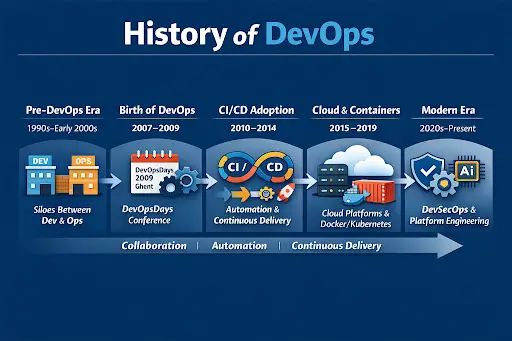
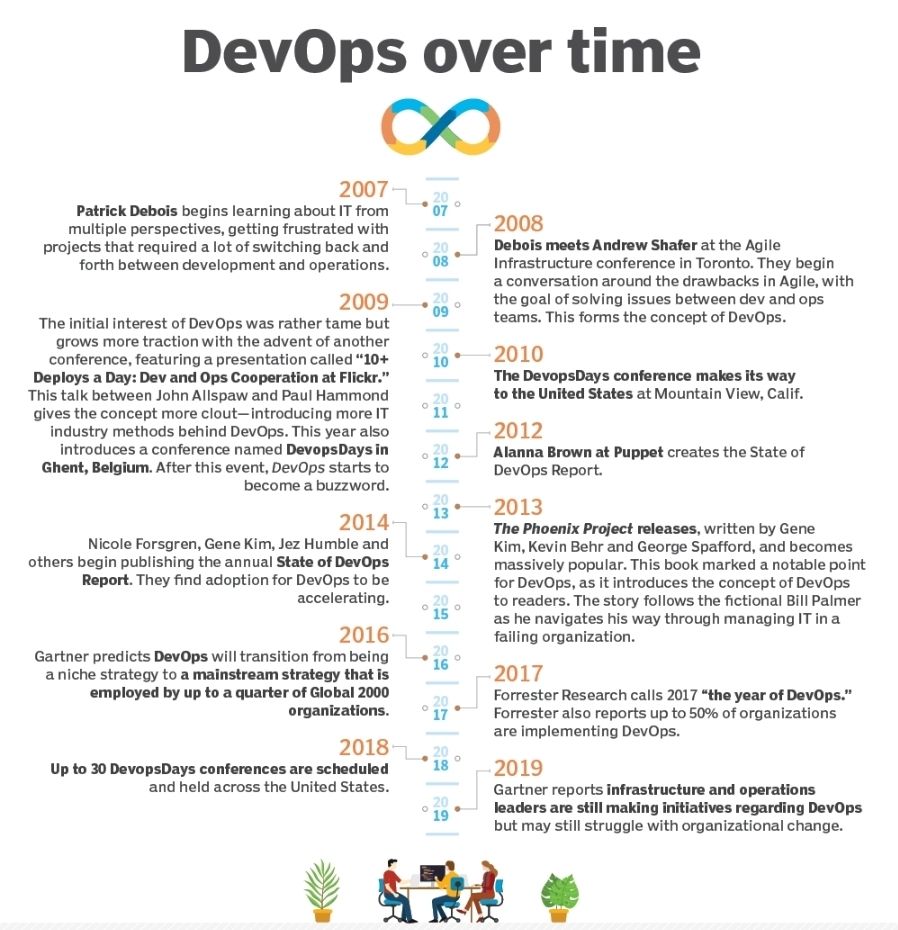
DevOps Development Timeline History Overview

The history of DevOps is a transition from siloed development and operations teams toward a unified culture of automation and collaboration

Timeline History of DevOps

Pre-DevOps & Foundations (2001–2008)

  • 2001: The Agile Manifesto is published, laying the groundwork for iterative software development and cross-functional teamwork.
  • 2006Amazon Web Services (AWS) launches, providing the cloud infrastructure necessary for rapid, automated deployments.
  • 2007: Belgian consultant Patrick Debois begins investigating ways to bridge the gap between development and operations while working on a data centre migration project.
  • 2008: At the Agile conference in Toronto, Andrew Shafer and Patrick Debois meet and discuss “Agile Infrastructure,” marking the conceptual start of the movement. 

The Emergence of DevOps (2009–2014) 

  • 2009: John Allspaw and Paul Hammond give the legendary talk “10+ Deploys Per Day: Dev and Ops Cooperation at Flickr” at the Velocity Conference.
  • 2009: Patrick Debois organises the first DevOpsDays in Ghent, Belgium, and coins the term “DevOps“.
  • 2011: Analyst firm Gartner officially predicts DevOps will evolve from a niche concept to a mainstream strategy.
  • 2013: The book The Phoenix Project is published, popularising DevOps principles through a fictional narrative of a company’s digital transformation.
  • 2013Docker is released, revolutionising the industry by making containerization accessible and consistent across environments.
  • 2014: The first State of DevOps Report is published by Puppet, providing data-driven evidence of DevOps’ impact on performance. 

Mainstream Adoption & Cloud-Native (2015–2019)

  • 2015: Google releases Kubernetes as an open-source project, establishing the standard for container orchestration.
  • 2015: Major cloud providers launch managed container services, such as Google Kubernetes Engine (GKE).
  • 2017: Security begins “shifting left,” leading to the formalisation of DevSecOps within development pipelines.
  • 2018: The book Accelerate is published, detailing the science behind high-performing DevOps organisations.
  • 2019DevOpsDays celebrates its 10th anniversary with events in over 20 countries, signalling global maturity. 

The AI & Platform Era (2020–2026)

  • 2020: The COVID-19 pandemic accelerates remote work and digital transformation, making DevOps practices essential for enterprise survival.
  • 2023Generative AI begins to be integrated into CI/CD pipelines for automated code generation, testing, and anomaly detection.
  • 2024: The focus shifts to Platform Engineering, aiming to reduce developer cognitive load through Internal Developer Platforms (IDPs).
  • 2025AIOps (Artificial Intelligence for IT Operations) becomes standard for predictive analytics and self-healing infrastructure.
  • 2026: DevOps continues to evolve with a focus on zero-CVE container images and high-demand roles for engineers who can manage AI-driven workflows.
DevOps over time

DevOps Development Timeline History Overview

Microsoft Dynamics 365 Timeline History by Year
Microsoft Dynamics 365 as it exists today is the result of decades of acquisitions and rebranding, primarily involving four Enterprise Resource Planning (ERP) systems and one Customer Relationship Management (CRM) platform. 

The Pre-Microsoft Era (1980s – 2001)

The foundations of Dynamics were built by independent companies before being acquired by Microsoft. 

  • 1980: Solomon Software is founded (later becomes Dynamics SL).
  • 1983: Great Plains Software is founded by Doug Burgum (later becomes Dynamics GP).
  • 1983: Damgaard Data is founded in Denmark (later becomes Dynamics AX).
  • 1984: PC&C A/S is founded (later becomes Dynamics NAV).
  • 1998: Damgaard and IBM release Axapta 1.0.
  • 2000: Damgaard merges with Navision Software to form NavisionDamgaard.
  • 2001: Microsoft acquires Great Plains Software (including Solomon) for $1.1 billion. 

The Early Microsoft Dynamics Era (2002 – 2011)

During this period, Microsoft unified its business applications under the “Dynamics” brand. 

  • 2002: Microsoft acquires Navision A/S, gaining the Axapta and Navision products.
  • 2003: Microsoft releases its first home-grown CRM, Microsoft CRM 1.0.
  • 2005: The Microsoft Dynamics brand is officially launched to harmonize the ERP and CRM offerings.
  • 2008Dynamics CRM Online is launched, marking Microsoft’s first major step into cloud-based business apps.
  • 2011Dynamics CRM 2011 and Dynamics AX 2012 are released, introducing a more modern “Ribbon” interface. 

The Transition to the Cloud (2012 – 2015)

Microsoft shifted toward a “cloud-first” strategy and rapid release cycles. 

  • 2013Dynamics CRM 2013 debuts with a new UI that removes pop-up windows and introduces a flatter design.
  • 2015Dynamics NAV 2016 introduces native integration with Azure SQL and a dedicated phone client. 

The Dynamics 365 Era (2016 – Present)

Microsoft unified CRM and ERP into a single cloud ecosystem. 

  • 2016Microsoft Dynamics 365 is officially released on November 1, 2016.
    • Dynamics AX 7 is rebranded as Dynamics 365 for Operations.
    • CRM is split into specialized apps like SalesCustomer Service, and Field Service.
  • 2018Dynamics 365 Business Central is released as the cloud successor to Dynamics NAV.
  • 2019: Power Platform (Power BI, Power Apps, Power Automate) becomes deeply integrated, allowing users to extend Dynamics 365 without code.
  • 2020: Dynamics 365 for Operations is split into Dynamics 365 Finance and Dynamics 365 Supply Chain Management.
  • 2023: Re-integration of Dynamics 365 Human Resources back into the Finance and Operations infrastructure.
  • 2024–2025: The introduction of Microsoft Copilot across all Dynamics 365 apps, adding generative AI for summaries and automated tasks.

Microsoft Dynamics 365 Timeline History by Year
Sinclair ZX Spectrum Timeline History

The ZX Spectrum timeline spans from its revolutionary launch in 1982 to its final official production in 1992, followed by a vibrant modern era of community-driven hardware. 

The Sinclair Era (1982–1986) 

  • 23 April 1982Sinclair Research launches the ZX Spectrum at the Earls Court Computer Show. It features 16 KB (£125) or 48 KB (£175) of RAM, a Z80A CPU, and the iconic rubber “chiclet” keyboard.
  • 1983: Timex Sinclair 2068 is released in the US as a modified version of the Spectrum.
  • October 1984: The ZX Spectrum+ is released for £179. It features a new injection-moulded keyboard similar to the Sinclair QL and a dedicated reset button, but remains electronically identical to the 48K model.
  • September 1985: The ZX Spectrum 128 (“The Toast Rack”) is unveiled at the SIMO trade show in Spain. It introduces 128 KB of RAM, an AY-3-8912 sound chip, and MIDI compatibility.
  • January 1986: The ZX Spectrum 128 officially goes on sale in the UK for £179.95. 

The Amstrad Era (1986–1992) 

  • 7 April 1986Amstrad plc acquires the “Sinclair” brand and all Spectrum assets from Sinclair Research for £5 million.
  • 1986: The ZX Spectrum +2 is released. It features a grey case with a spring-loaded keyboard and a built-in “Datacorder” cassette player.
  • 1987: The ZX Spectrum +3 launches with a built-in 3-inch floppy disk drive, replacing the tape deck. It is the only official Spectrum capable of running the CP/M operating system.
  • 1988–1989: Amstrad releases the +2A+2B, and +3B models, which use unified circuit boards and transition to black cases.
  • 1992: Official production of all ZX Spectrum models is discontinued. 

The Modern Revival (2017–Present)

  • 2017: The ZX Spectrum Next Kickstarter campaign successfully funds a new, officially licensed hardware evolution.
  • February 2020: The first batch of ZX Spectrum Next machines is delivered to backers.
  • November 2023: The ZX Touch, a handheld emulation console, is released.
  • 22 November 2024Retro Games releases “The Spectrum”, a modern HDMI-compatible recreation with 48 built-in games.

ZX Spectrum Timeline History

Tennis Development Timeline History by Era and Player

Tennis history is defined by three primary eras, characterized by significant shifts in professionalism and court surfaces. 

The Amateur Era (1877–1967)

During this period, only amateur players were permitted to compete in the Grand Slam tournaments. Professional players were banned from these events and played on their own separate tour. 

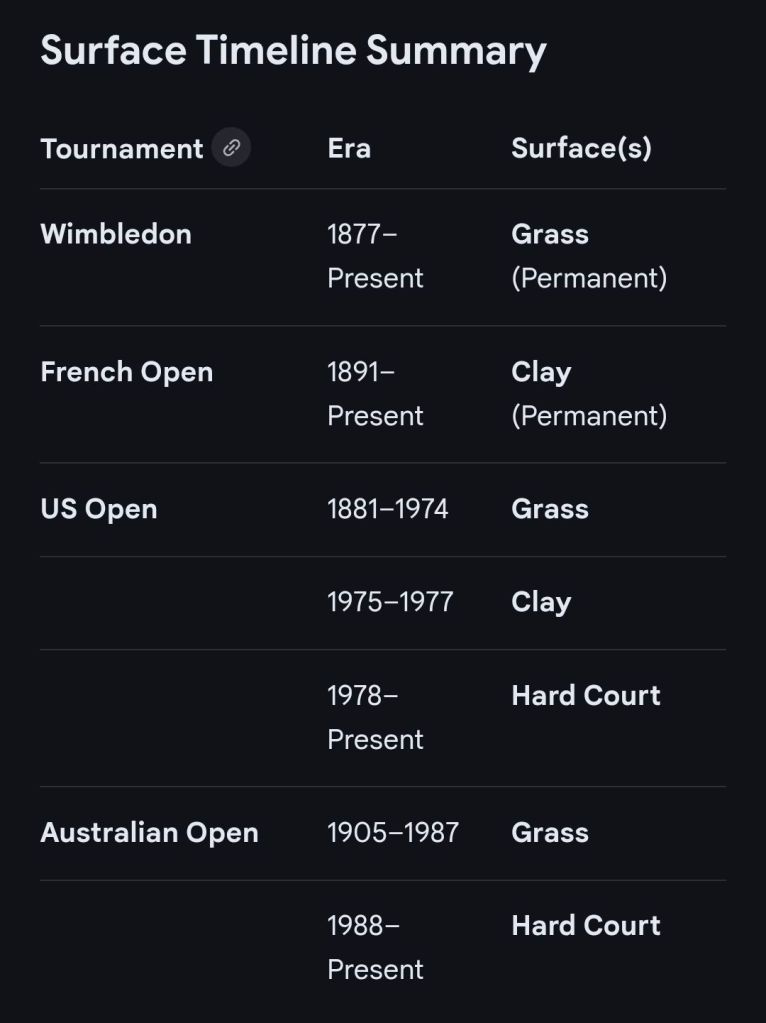
  • 1877: Wimbledon is founded in London. It has been played on Grass since its inception.
  • 1881: The U.S. National Championship (now the US Open) begins on Grass in Newport, Rhode Island.
  • 1891: The French Championships are established. It was initially played on Sand/Clay and restricted to French club members until 1925.
  • 1905: The Australasian Championships (now the Australian Open) starts on Grass.
  • 1913: The International Lawn Tennis Federation (ILTF) is formed to standardise rules globally.
  • 1925: The French Championships opens to international players, officially becoming a major played on Clay

The Early Open Era (1968–1987)

The “Open Era” began when Grand Slam tournaments agreed to allow professional players to compete alongside amateurs, unifying the sport. 

  • 1968: The French Open becomes the first Grand Slam of the Open Era.
  • 1970: The Tiebreaker is introduced to tennis rules to shorten match lengths.
  • 1972/1973: The ATP (men) and WTA (women) are formed, introducing the first computerised world rankings.
  • 1975: The US Open switches its surface from grass to Clay (Har-Tru).
  • 1978: The US Open moves to Flushing Meadows and switches to its current surface: Hard Court (DecoTurf).
  • 1987: The Australian Open moves its calendar slot from December to January, becoming the first Slam of the year. 

The Modern Open Era (1988–Present)

This era is marked by the dominance of “The Big Three” and the standardisation of surfaces across the tour. 

  • 1988: The Australian Open moves to Flinders Park (now Melbourne Park) and switches from grass to Hard Court (Rebound Ace).
  • 2006: Hawk-Eye technology is first introduced at the US Open to allow players to challenge line calls.
  • 2007: Wimbledon and the French Open join the other Slams in offering Equal Prize Money for men and women.
  • 2009: Wimbledon installs a Retractable Roof on Centre Court, ensuring play during rain.
  • 2020s: Standardisation of a 10-point tiebreak in the final set across all four Grand Slams to ensure consistency.
Surface Timeline Summary
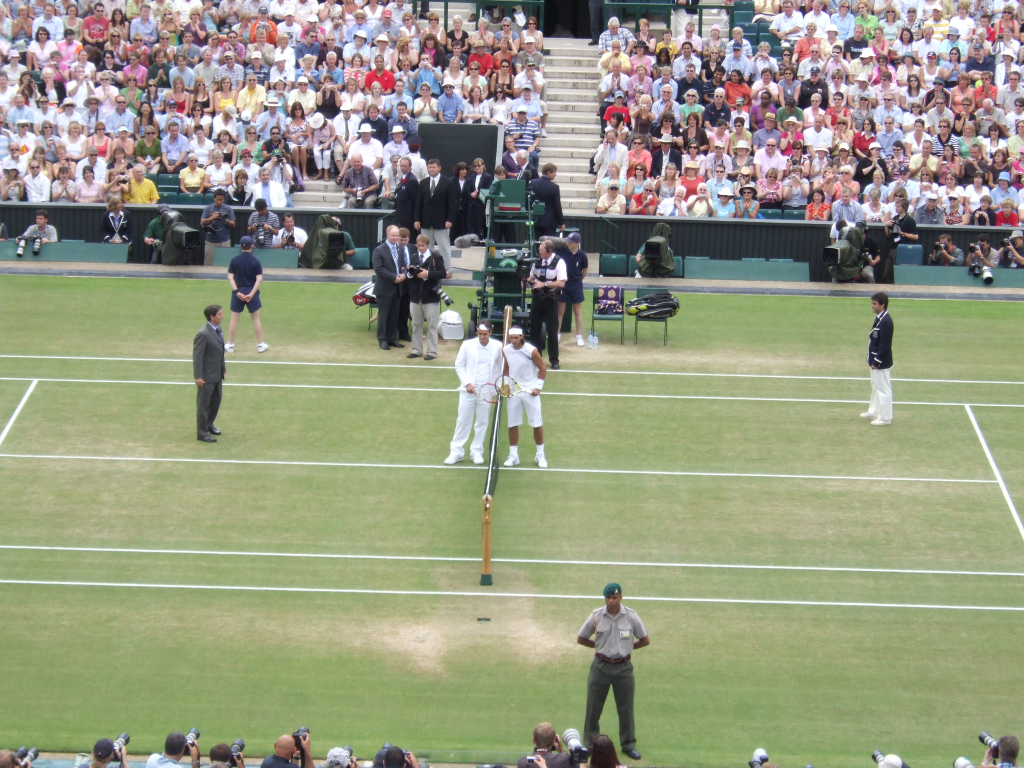
My trip to Wimbledon 2007 where Roger won his 5 in a row

Tennis Development Timeline History by Era

The history of professional tennis is broadly divided into the Amateur Era (pre-1968) and the Open Era (1968–present), which allowed professionals to compete in Grand Slam tournaments for the first time. 

Key Eras and Milestones

  • 1877–1905: The Birth of the Majors
    • 1877: The first Wimbledon Championships are held, won by Spencer Gore.
    • 1881: The US Open is established.
    • 1891: The French Open begins (initially for French club members; open to all in 1925).
    • 1905: The Australian Open is founded.
  • 1913–1967: The Amateur Era and Pro Tours
    • 1913: The International Tennis Federation (ITF) is formed.
    • 1938: Don Budge becomes the first player to achieve a calendar-year Grand Slam.
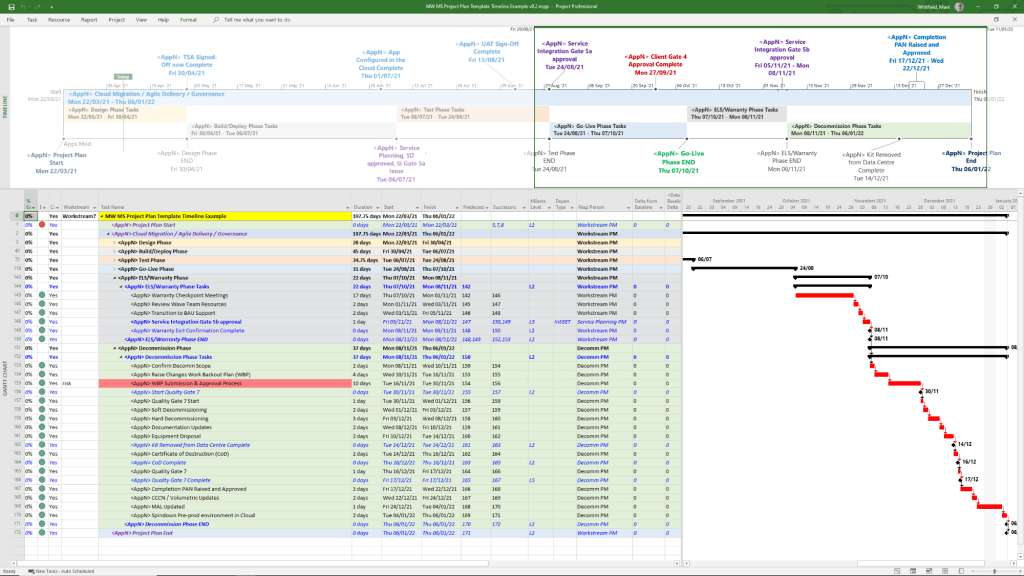
    • 1953: Maureen Connolly becomes the first woman to achieve a calendar-year Grand Slam.
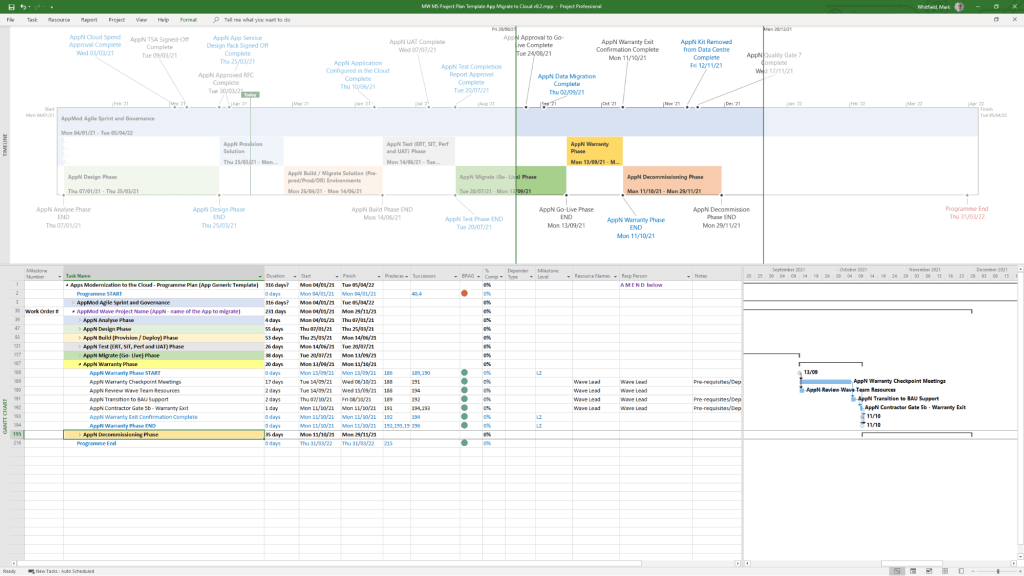
    • 1962: Rod Laver wins his first calendar-year Grand Slam as an amateur.
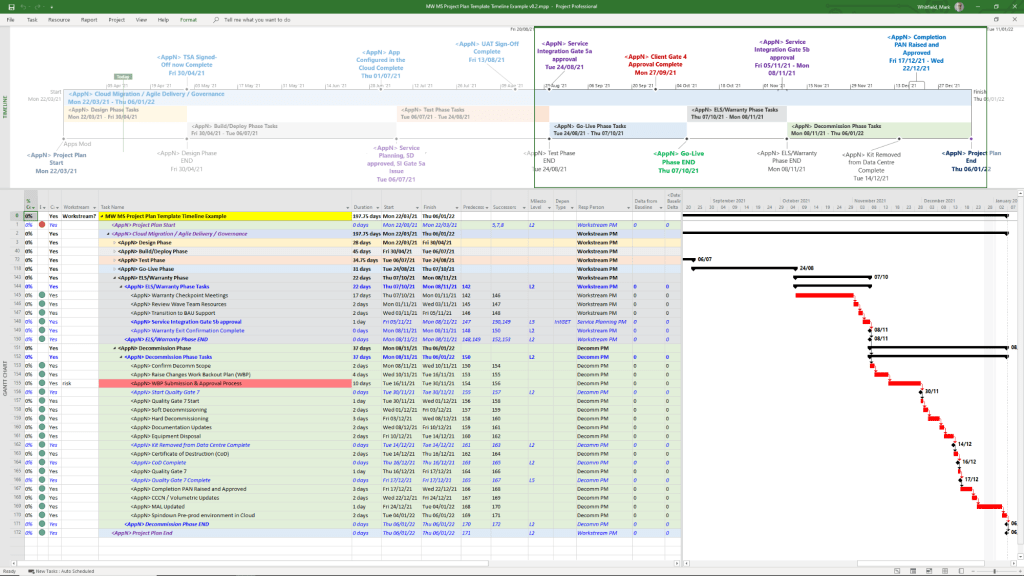
  • 1968–2000: The Start of the Open Era
    • 1968: The Open Era begins; professionals are finally allowed to play in Grand Slams.
    • 1969: Rod Laver achieves a second calendar-year Grand Slam, the only person to do so in the Open Era.
    • 1973: The ATP Rankings for men and the Women’s Tennis Association (WTA) are established.
    • 1988: Steffi Graf achieves the only “Golden Slam” in history, winning all four majors and Olympic Gold in one year.
  • 2003–Present: The “Big Three” and Modern Dominance
    • 2003–2007: Roger Federer ascends to dominance, followed by the rise of Rafael Nadal.
    • 2011–2021: Novak Djokovic joins Federer and Nadal to form the “Big Three,” collectively dominating almost every major title for over a decade.
    • 2022–2024: Roger Federer and Rafael Nadal officially retire, marking the end of an era.
    • 2025–2026: Novak Djokovic reaches milestone of 100 career titles and continues to pursue Grand Slam records.

Agile Development History Timeline Overview

Agile’s history is a transition from rigid, manufacturing-based “Waterfall” models to flexible, people-centric frameworks. While the term was coined in 2001, its roots trace back to early 20th-century industrial practices and the “software crisis” of the 1960s. 

Early Foundations (Pre-1990s)

Before Agile became a formal software methodology, its core principles of efficiency and iteration emerged from manufacturing and early computing.

  • 1896: Sakichi Toyota introduced the “Stop and Notify” concept (Jidoka), a foundational Lean/Agile practice for immediate problem-solving.
  • 1948: The Toyota Production System (TPS) established Lean manufacturing and the Kanban system to manage workflow.
  • 1957: IBM began using incremental development on large software projects.
  • 1970: Winston Royce published “Managing the Development of Large Software Systems,” which formalized the Waterfall Model but actually cautioned against its rigidity.
  • 1986: Takeuchi and Nonaka published The New New Product Development Game, introducing the “rugby” metaphor for team-based development that inspired Scrum

The Rise of “Lightweight” Methods (1990–2000) 

Frustrated by Waterfall’s slow delivery, practitioners developed several “lightweight” frameworks. 

  • 1991: Rapid Application Development (RAD) popularized timeboxing and iterations.
  • 1993: Jeff Sutherland and his team first implemented Scrum at Easel Corporation.
  • 1994: The Dynamic Systems Development Method (DSDM) was created as a vendor-independent RAD framework.
  • 1995: Ken Schwaber and Jeff Sutherland formally co-presented Scrum at the OOPSLA conference.
  • 1996: Kent Beck introduced Extreme Programming (XP), emphasizing practices like pair programming and continuous testing.
  • 1997: Feature-Driven Development (FDD) and Crystal Clear emerged as alternative iterative models. 

Formalisation & Modern Evolution (2001–Present)

The movement unified under a single name and eventually scaled to entire enterprises. 

  • 2001: 17 software leaders met at Snowbird, Utah, to draft the Agile Manifesto, establishing four core values and 12 principles.
  • 2003: The book Lean Software Development by Mary and Tom Poppendieck officially bridged Lean manufacturing and software agility.
  • 2009: The concept of DevOps emerged, extending Agile principles into IT operations and deployment.
  • 2011: The Scaled Agile Framework (SAFe) was introduced to help large organizations manage multiple Agile teams.
  • 2012–2015: Agile surpassed the 50% mark in global adoption, becoming the industry standard for development.
  • 2020s: Agile principles are now widely applied outside of tech, in fields like marketing, education, and HR

Agile’s evolution is not just a 21st-century phenomenon but a response to decades of “software crises” and rigid industrial processes. Below is a comprehensive historical breakdown of Agile’s journey. 

1. Pre-Digital Foundations (1910s – 1940s)

Long before software, the concepts of efficiency and waste reduction were born in manufacturing. 

  • 1911: Scientific Management. Frederick Taylor encouraged managers to adopt worker suggestions for efficiency, opposing rigid habits.
  • 1940s: Lean Manufacturing (Toyota). Toyota pioneered the “Just-in-Time” method and Kaizen (continuous improvement) after observing American supermarkets.
  • 1948: Toyota Production System. Introduction of Kanban for visual workflow management. 

2. Early Iterative Development (1950s – 1970s)

The 1950s saw the first departures from strictly sequential “waterfall” planning. 

  • 1957: Incremental Development. IBM and Motorola teams, including Gerald Weinberg, used iterative methods indistinguishable from modern Extreme Programming (XP) for Project Mercury.
  • 1968: NATO Software Engineering Conference. Formally identified the “Software Crisis” (projects being late and over budget), sparking a search for better methodologies.
  • 1970: Waterfall Formalised (and Critiqued). Winston Royce described the Waterfall model but notably advocated for iterative releases to reduce risk. 

3. The Proliferation of “Lightweight” Methods (1980s – 1990s) 

Frustration with heavyweight, document-heavy processes led to several “Agile” precursors. 

  • 1986: “The New New Product Development Game.” Takeuchi and Nonaka published this HBR article, introducing the “Rugby” approach (teamwork over relay-race handoffs), which directly inspired Scrum.
  • 1991: Rapid Application Development (RAD). James Martin introduced RAD, emphasising fast prototyping and client feedback.
  • 1993–1995: The Birth of Scrum. Jeff Sutherland and Ken Schwaber formalised Scrum, presenting it at the OOPSLA ’95 conference.
  • 1996: Extreme Programming (XP). Kent Beck introduced XP at Chrysler, focusing on technical excellence through practices like Pair Programming and Test-Driven Development

4. The Agile Manifesto & Formalisation (2001 – 2010)

Agile moved from a collection of “lightweight” methods to a global standard. 

  • 2001: The Agile Manifesto. 17 developers met in Snowbird, Utah, to draft the Manifesto for Agile Software Development, establishing four core values and 12 principles.
  • 2003: Lean Software Development. Mary and Tom Poppendieck adapted Toyota’s Lean principles specifically for software engineering.
  • 2009: Software Craftsmanship. The Software Craftsmanship Manifesto emerged to refocus the community on the quality of the “craft” rather than just project management.
  • 2010: The First Scrum Guide. Published as the definitive resource on Scrum framework rules. 

5. Scaling and Modern Business Agility (2011 – Present) 

Agile expanded beyond coding into enterprise-wide strategy. 

  • 2011: Scaled Agile Framework (SAFe). Dean Leffingwell launched SAFe to help large corporations apply Agile at scale.
  • 2015–2017: Project Management Integration. Major bodies like AXELOS released PRINCE2 Agile, and the PMI introduced the Agile Certified Practitioner (ACP).
  • 2020s: Beyond Software. Agile principles are now standard in marketing, HR, and hardware development through concepts like Business Agility

Microsoft Word Development Timeline History

Microsoft Word has evolved from a niche tool for Xerox programmers into the world’s most dominant word processor. Below is the comprehensive history of its development and key milestones

Templates available for download at website banner

The Early Years (1980s)

  • 1981: Microsoft hires Charles Simonyi and Richard Brodie, former Xerox PARC developers, to create a word processor.
  • 1983 (October): The first version, Multi-Tool Word, is released for Xenix and MS-DOS.
  • 1985: Word for Macintosh is released, introducing the GUI (Graphical User Interface) that would define its future.
  • 1989: The first version of Word for Windows debuts, setting the stage for its commercial dominance. 

The Rise to Dominance (1990s)

Templates available for download at website banner
  • 1990: With the release of Windows 3.0, Word becomes a massive commercial success.
  • 1993: Word 6.0 is released, skipping versions 3, 4, and 5 to synchronise version numbers across platforms.
  • 1995: Word 95 launches as part of the first Microsoft Office suite, moving to a year-based naming convention.
  • 1997: Word 97 introduces the infamous “Clippy” assistant and the standard .doc format that would last for a decade. 

Modernisation & The Ribbon (2000s) 

  • 2003: Word 2003 introduces XML-based formats and better collaboration tools.
  • 2007: A massive overhaul introduces the Fluent User Interface (the Ribbon) and the new .docx (Office Open XML) file format.
  • 2010: Word 2010 adds more customisation to the Ribbon and introduces the Backstage view for file management. 

Cloud & AI Era (2011–Present)

  • 2011: Office 365 is launched, shifting Word toward a subscription-based, cloud-first model.
  • 2013: Introduces better PDF editing and Read Mode.
  • 2014-2016: Real-time collaboration and Smart Lookup are added, allowing users to research directly within the document.
  • 2021: AI-powered writing suggestions and better dark mode are introduced.
  • 2024: Integration with Microsoft Copilot allows for AI-generated drafts, summaries, and advanced editing.

Microsoft Word Development Timeline History

Microsoft PowerPoint Development Timeline History

Microsoft PowerPoint was originally developed as “Presenter” by Forethought, Inc. in 1987 for the Apple Macintosh. Microsoft acquired it just three months later for $14 million, marking their first major acquisition. 

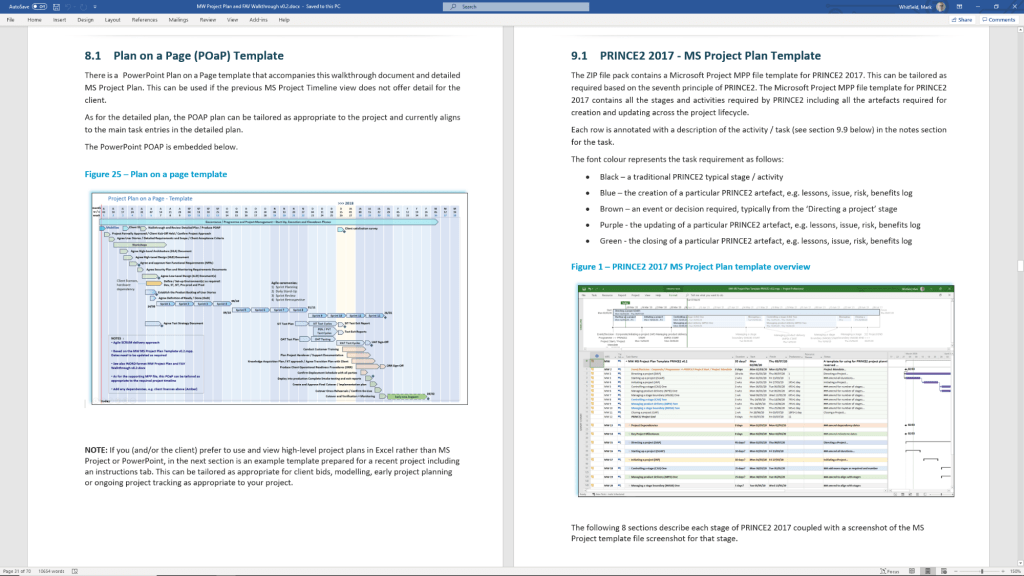
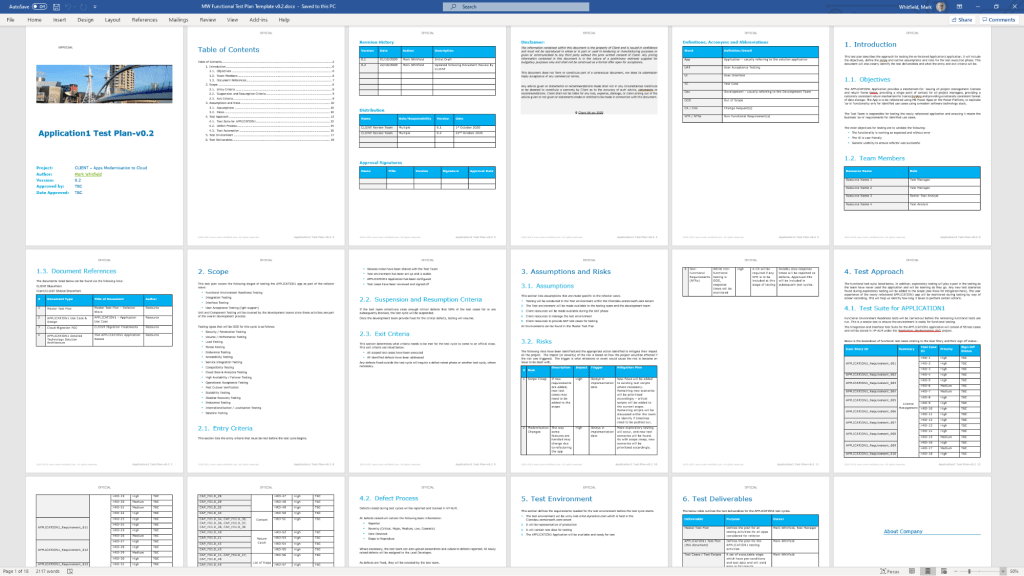
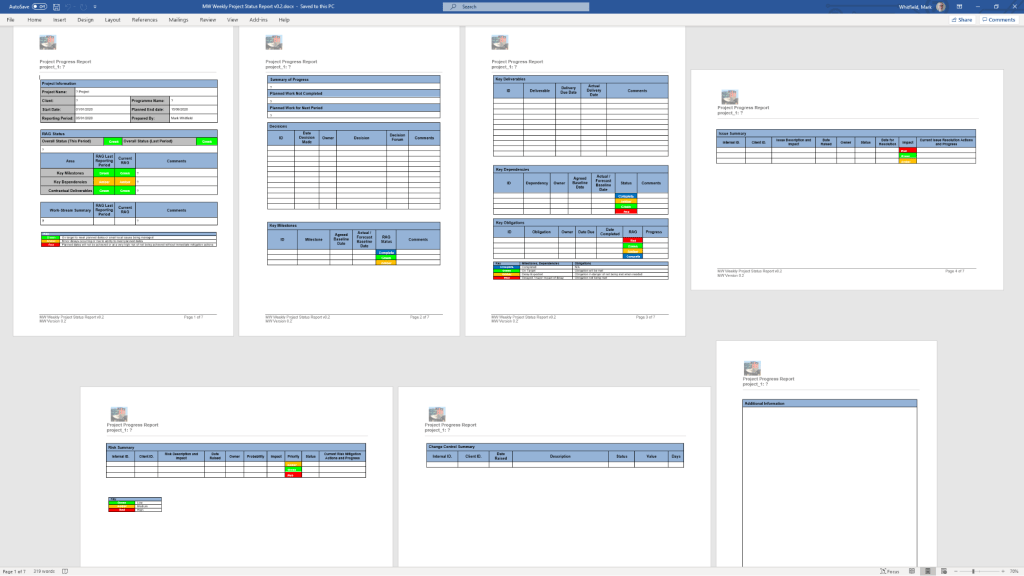
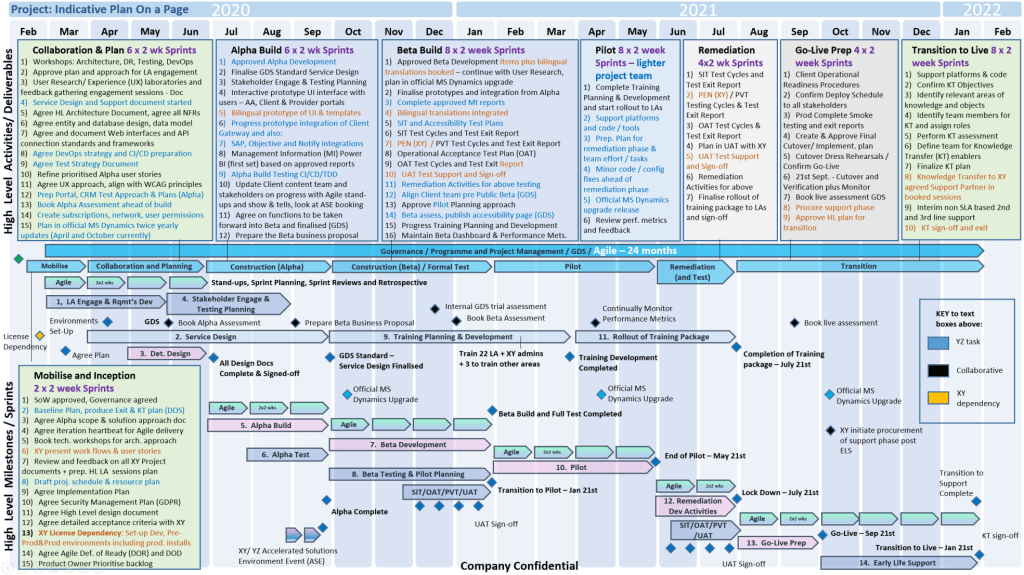
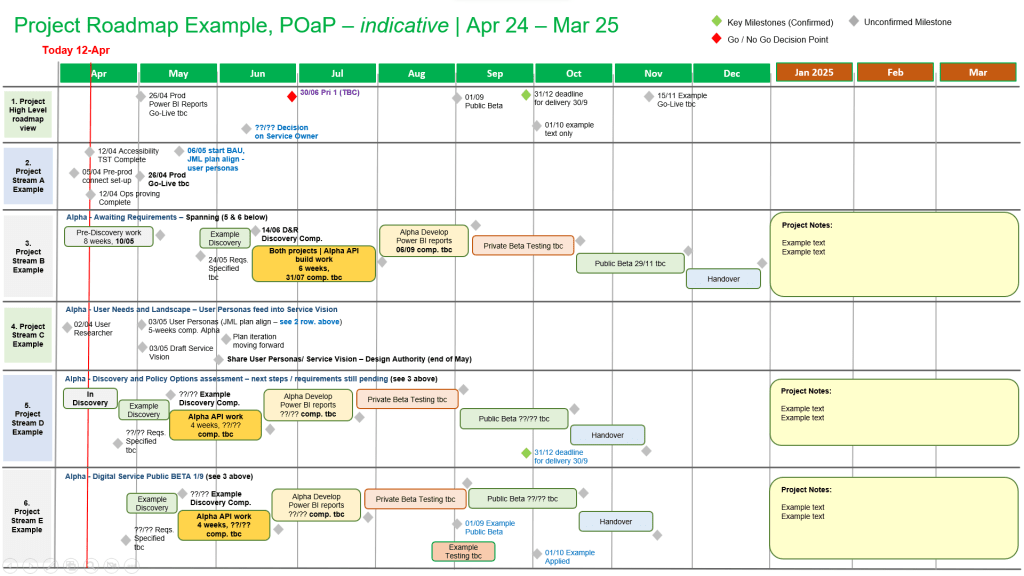
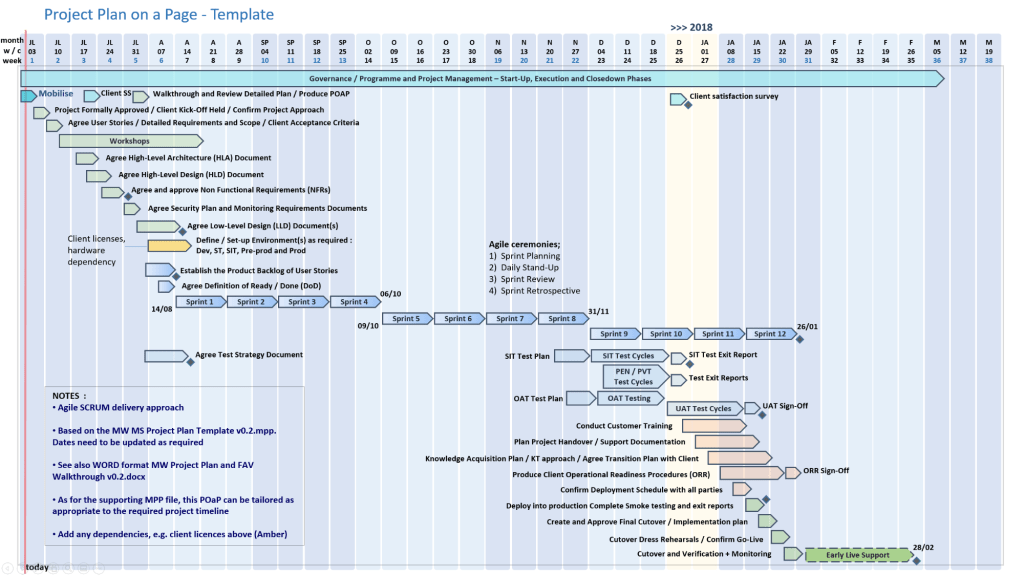
MS PowerPoint Plan On a Page POaP templates downloaded at website banner

Foundational Years (1984–1990) 

  • 1984: The idea for a presentation program is conceived by Robert Gaskins.
  • 1987 (April): PowerPoint 1.0 launches for Macintosh, supporting only black and white slides.
  • 1987 (July): Microsoft acquires Forethought.
  • 1990 (May): The first Windows version (PowerPoint 2.0) is released, coinciding with Windows 3.0. 

Office Integration (1992–2003) 

MS PowerPoint Plan On a Page POaP templates downloaded at website banner
  • 1992: PowerPoint 3.0 introduces video transitions and sound.
  • 1994: PowerPoint 4.0 begins deep integration with the Microsoft Office suite, sharing interface components with Word and Excel.
  • 1997: PowerPoint 97 brings significant upgrades like “Custom Animation” and the “Office Assistant” (Clippy).
  • 2003: PowerPoint 2003 focuses on collaboration and improved “Package for CD” features. 

Modernization & Cloud (2007–Present)

MS PowerPoint Plan On a Page POaP templates downloaded at website banner
  • 2007: Introduces the Ribbon interface and the XML-based .pptx file format.
  • 2010: Adds video export, section organization, and co-authoring capabilities.
  • 2013: PowerPoint for Web is released, alongside the first dedicated mobile apps for iOS and Android.
  • 2016–2021: Features focus on AI-driven design (PowerPoint Designer), Morph transitions, and real-time collaboration via Microsoft 365.
  • 2023+: Integration of AI tools like Copilot for automated slide generation and DALL-E 2 for image creation. 

Microsoft PowerPoint Development Timeline History

MS PowerPoint Plan On a Page POaP templates downloaded at website banner

Microsoft Excel Development Timeline History

Microsoft Excel has evolved from a niche Apple Macintosh tool into the world’s most dominant spreadsheet software. Its history is marked by strategic shifts, such as jumping from the MS-DOS era to graphical interfaces to outmanoeuvre then-leader Lotus 1-2-3

Timeline of Major Excel Milestones

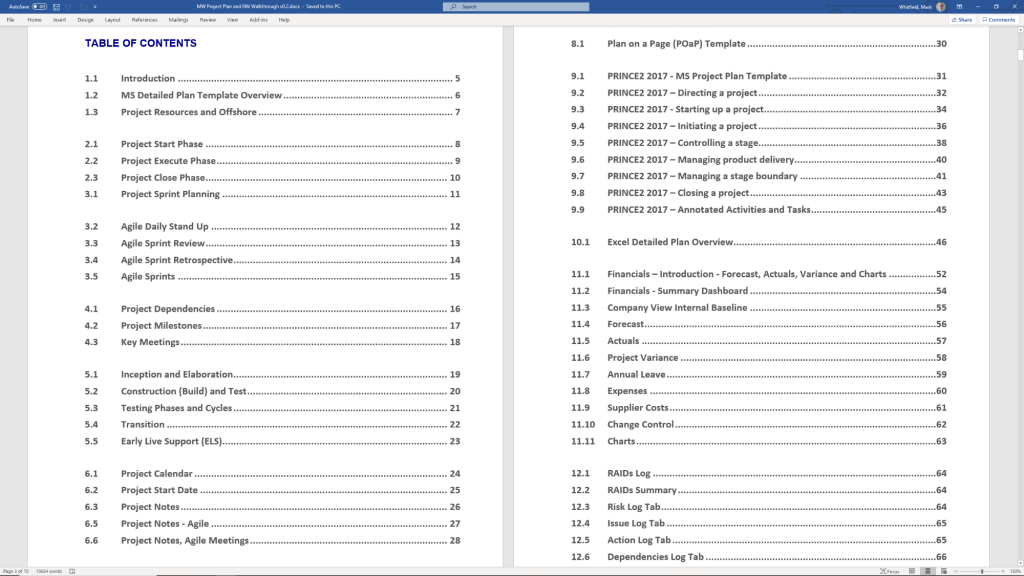
Agile Templates available at download link at website banner
  • 1982: Multiplan (The Predecessor) – Microsoft’s first spreadsheet program. While popular on CP/M systems, it struggled against Lotus 1-2-3 on MS-DOS.
  • 1985: Excel 1.0 (Macintosh Exclusive) – Realising they couldn’t beat Lotus on DOS, Microsoft built a graphical spreadsheet for the new Mac. It introduced the ability to adjust cell heights, widths, and fonts.
  • 1987: Excel 2.0 (First Windows Version) – Launched alongside the first Windows environments, it introduced color support (like red for negative numbers) and was significantly faster than competitors.
  • 1990: Excel 3.0 – Added 3D charts, toolbars, and drawing tools, helping Excel finally overtake Lotus 1-2-3 as the market leader.
  • 1993: Excel 5.0 – A major turning point that introduced Visual Basic for Applications (VBA), allowing users to automate tasks with macros.
  • 1997: Excel 8.0 (Office 97) – Introduced the Paperclip Assistant (“Clippy”) and the first version of the modern VBA environment.
  • 2007: Excel 12.0 (The Ribbon Era) – Replaced menus with the Ribbon interface and dramatically increased grid capacity to 1,048,576 rows by 16,384 columns.
  • 2010: Excel 14.0 – Introduced Slicers for PivotTables and Sparklines (mini charts inside cells).
  • 2013-2016: Data Intelligence – Added Power Query, Power Pivot, and new chart types like Waterfall, Pareto, and Treemap to support advanced data modeling.
  • 2019-Present: AI & Cloud Integration – Modern versions focus on seamless collaboration, dynamic arrays (like XLOOKUP), and AI-powered insights that can extract data directly from images. 

Technological Evolution Highlights

MS Excel templates available on bundle download at website banner
  • Architecture: Shifted from 16-bit to 32-bit with Excel 95, greatly improving stability.
  • Collaborative Features: Modern Version History and “Show Changes” now allow teams to track every edit in real-time.
  • Visualisation: Excel now supports complex timelines via SmartArt or custom Scatter charts with error bars for professional project tracking.

Microsoft Excel Development Timeline History

Microsoft Excel templates available at banner above, FREE upgrades

Microsoft Project Timeline, Development History Overview

Microsoft Project has evolved from a DOS-based tool in the 1980s into a cloud-integrated platform. Its “Timeline” feature specifically has transitioned from a simple static view to a multi-layered, interactive reporting tool. 

Template included in package – see website banner

Timeline Feature Development History

  • Early Era (1984–2007): For decades, the “timeline” was synonymous with the Gantt Chart. Users had to rely on complex print-outs or third-party tools to create high-level summaries for executives.
  • The dedicated Timeline View (2010): Microsoft introduced a native Timeline view in Project 2010, allowing users to cherry-pick specific tasks and milestones to display on a single horizontal bar.
  • Multi-Timeline Support (2016): Project 2016 expanded this by allowing multiple timeline bars in a single view. This enabled managers to represent different project phases or workstreams with independent start and end dates.
  • Cloud & Web Integration (2019–Present): With the launch of Project for the web, timelines became more interactive, supporting drag-and-drop adjustments and real-time co-authoring.
  • Task History Tracking (2023): Microsoft added a Task History pane to the web version, allowing users to see a chronological log of changes to specific timeline items. 

Key Components of a Modern MS Project Timeline

Templates included in download bundle – see website banner
  • Gantt-Style Visualization: Displays tasks as horizontal bars against a calendar timescale.
  • Milestones & Callouts: Important dates appear as diamonds or labels that can be dragged above or below the main bar to avoid clutter.
  • Dependencies: Visual links between tasks that illustrate the sequence of work and the Critical Path.
  • Copy for Presentation: A dedicated formatting tool that allows users to export the timeline directly to Microsoft PowerPoint or email at various sizes (Small, Medium, Full Size). 

Future Outlook

Template included in download bundle – see website banner

Microsoft has announced that Project Online will be officially retired on 30 September 2026, with development focus shifting entirely to the new Microsoft Planner and Project for the web ecosystem.

Microsoft Project Timeline, Development History Overview

Manchester Technical Timeline History

Manchester’s technical history is defined by its evolution from the world’s first industrial city to a global hub for computing and material science

18th Century: The Birth of Industry

  • 1733: John Kay invented the Fly Shuttle, a key advancement in weaving.
  • 1761: The Bridgewater Canal opened as Britain’s first man-made waterway independent of rivers, drastically reducing coal costs.
  • 1764–1779: James Hargreaves invented the Spinning Jenny (1764), and Samuel Crompton created the Spinning Mule (1779), allowing for mass textile production.
  • 1783: Richard Arkwright established Manchester’s first steam-powered mill.
  • 1790: Piccadilly Mill became the first in the city to be powered directly by a steam engine. 

19th Century: Engineering & Precision 

20th Century: The Computing Revolution 

  • 1904: Frederick Royce and Charles Rolls met at the Midland Hotel to form Rolls-Royce.
  • 1908: A.V. Roe designed and flew the first British plane; he later founded the Avro aircraft factory.
  • 1917: Ernest Rutherford became the first to split the atom at the University of Manchester.
  • 1948: Professors Tom Kilburn and Fred Williams ran the first program on the Manchester Baby, the world’s first stored-program electronic computer.
  • 1953: The University of Manchester built the world’s first transistorised computer prototype.
  • 1962: The Ferranti Atlas was commissioned; it was the world’s most powerful computer at the time and pioneered virtual memory.
  • 1992: Metrolink began operations, becoming the UK’s first modern street-running light rail system. 

21st Century: Advanced Materials & Media

  • 2004: Professors Andre Geim and Kostya Novoselov isolated graphene, the world’s first 2D material.
  • 2005: The University of Manchester developed a 3D printer for human tissue.
  • 2011: MediaCityUK opened as Europe’s largest purpose-built digital and media hub.
  • 2018: The SpiNNaker project was completed, creating a million-processor machine that mimics the human brain’s neural networks. 

Manchester’s technical history is defined by its rise as the world’s first industrial city, followed by a century of pioneering achievements in computingnuclear physics, and materials science

18th – 19th Century: The Industrial Revolution 

  • 1761: The Bridgewater Canal opens as Britain’s first man-made waterway, triggering “Canal Mania”.
  • 1783: Richard Arkwright establishes the first steam-powered mill, paving the way for mass production.
  • 1803: John Dalton publishes Atomic Theory in Manchester, providing the foundation for modern chemistry.
  • 1830: The Liverpool and Manchester Railway commences, the world’s first inter-city passenger railway using only steam locomotives.
  • 1841: Sir Joseph Whitworth standardises the screw thread, a critical milestone for precision engineering.
  • 1894: The Manchester Ship Canal opens, turning an inland city into one of the world’s largest seaports. 

20th Century: Computing and Nuclear Physics

  • 1917: At the University of Manchester, Ernest Rutherford performs the first artificially induced nuclear reaction, splitting the atom.
  • 1948: “The Baby” (SSEM) runs the world’s first electronically stored program, marking the birth of modern computing.
  • 1950: Alan Turing publishes “Computing Machinery and Intelligence,” introducing the Turing Test for AI.
  • 1953: The world’s first transistorised computer prototype becomes operational at the University.
  • 1957: The Lovell Telescope at Jodrell Bank is completed, then the world’s largest steerable radio telescope.
  • 1962: The Atlas computer, the world’s first supercomputer, is commissioned. 

21st Century: Advanced Materials and Digital Growth

  • 2004: Professors Andre Geim and Kostya Novoselov isolate graphene, the world’s first 2D material.
  • 2011: MediaCityUK opens in Salford, becoming a major international hub for digital and broadcast technology.
  • 2018: The SpiNNaker project activates a million-processor machine designed to model the human brain’s neural networks.
  • 2024: Manchester Metropolitan University celebrates its 200th anniversary with the opening of the Dalton Building for Science and Engineering.
  • 2026: Manchester Digital hosts the annual Digital Skills Festival in February to connect emerging tech talent with industry leaders.

Manchester Technical Timeline History

Bolton Town, Greater Manchester, UK – Timeline History

Bolton’s evolution from a small moorland settlement to a world-leading industrial powerhouse and modern metropolitan borough is marked by these key milestones:

Early History & Foundations

Civil War & Growth (17th–18th Century) 

Industrial Revolution (19th Century)

  • 1828: The Bolton and Leigh Railway opens, becoming the oldest in Lancashire.
  • 1838: Bolton is incorporated as a municipal borough.
  • 1839: Chartist riots lead to the reading of the Riot Act.
  • 1873: The current Bolton Town Hall is officially opened.
  • 1889: Bolton is granted County Borough status, making it self-governing and independent of Lancashire County Council. 

Modern Era (20th Century–Present)

Bolton Town, Technical Timeline History

Bolton’s technical and industrial evolution shifted it from a medieval market town to a global leader in cotton spinning and engineering, before transitioning into a modern educational and service hub. 

Industrial Revolution & Engineering (1700s – 1800s)

Bolton’s transformation was driven by local inventors whose technical breakthroughs redefined the textile industry. 

  • 1779: Samuel Crompton invented the Spinning Mule at Hall i’ th’ Wood, combining earlier technologies to produce high-quality yarn.
  • 1780: The town’s first spinning mill opened, marking the start of large-scale mechanised production.
  • 1820: Thomas Bonsor Crompton patented a method for continuously drying paper, a major technical breakthrough for the local paper industry.
  • 1828: One of the world’s first railways, the Bolton and Leigh Railway, opened using George Stephenson’s locomotive “The Witch”.
  • 1873: The Bolton Town Hall opened, a massive Victorian architectural project reflecting the town’s industrial wealth. 

Modern Infrastructure & Power (1880 – 1950)

Technical focus shifted toward municipal services, electricity, and the zenith of the cotton industry. 

  • 1880: Horse-drawn municipal transport began, followed by a telephone connection between Bolton and Manchester.
  • 1894: The first electric power station opened at Spa Road on October 31st.
  • 1899: The town launched its first electric tram service.
  • 1914: The Back o’ th’ Bank electricity generating station began supplying the town.
  • 1929: Bolton reached its industrial peak with 216 cotton mills in operation. 

Education & Re-development (1960s – Present)

As the cotton industry declined, Bolton pivoted toward technical education and retail-led regeneration. 

  • 1963: The Bolton Technical College split into Bolton Technical College and the Bolton Institute of Technology (the precursor to the University of Bolton).
  • 1971: The Crompton Place Shopping Centre opened as part of modern town-centre re-development.
  • 1980s: Cotton manufacturing virtually ceased, and the town’s industrial structure diversified into general engineering.
  • 2026: Planning is underway for the demolition of Crompton Place to create a new pedestrian link and modern mixed-use development, scheduled for 2027. 

Bolton Town, Greater Manchester, UK – Timeline History

Most Nominated Male Best Actors in Oscars History

Most Nominated Male Best Actors in Oscars History

Timeline History of Agile Scrum Evolution, Development

Timeline History of Agile Scrum Evolution, Development