Agile Development Overview and Detailed Timeline by Era

Agile development is an iterative and incremental approach to project management and software delivery that prioritises flexible planning, frequent delivery of working software, and rapid response to change. At its core, Agile seeks to shorten work cycles to deliver value to customers quickly while using frequent feedback to improve quality. 

Core Overview

The foundation of modern Agile is defined by the Agile Manifesto (2001), which establishes four central values: 

  • Individuals and interactions over processes and tools.
  • Working software over comprehensive documentation.
  • Customer collaboration over contract negotiation.
  • Responding to change over following a plan. 

The Agile life cycle typically moves through six phases: Concept, Inception, Iteration, Release, Maintenance, and Retirement. 


Comprehensive Timeline of Agile Development

Agile did not emerge in a vacuum; it evolved from early 20th-century industrial concepts and decades of experimentation in software engineering. 

Era 1: The Industrial & Theoretical Roots (1910s – 1960s)

This era established the foundational concepts of efficiency, waste reduction, and iterative cycles that would later inform Agile frameworks. 

  • 1911: Frederick Taylor publishes The Principles of Scientific Management, advocating for managers to analyse and adopt worker-led process improvements.
  • 1930s: Walter Shewhart at Bell Labs develops the Plan-Do-Check-Act (PDCA) cycle, a groundbreaking iterative methodology for quality control.
  • 1948: Toyota formalises the Toyota Production System (Lean), introducing concepts like Kaizen (continuous improvement) and Just-in-Time manufacturing.
  • 1957: Gerald Weinberg and others at IBM begin using incremental development on projects.
  • 1958: NASA’s Project Mercury uses half-day iterations and test-first development, marking one of the earliest high-stakes uses of iterative cycles.

Era 2: Evolutionary Alternatives to Waterfall (1970s – 1980s) 

As the rigid Waterfall model became dominant, practitioners began developing “lightweight” alternatives to handle complex, shifting requirements. 

  • 1970s: Barry Boehm proposes Wideband Delphi, an early forerunner to Planning Poker.
  • 1976: Tom Gilb publishes the Evolutionary Delivery Model (Evo), perhaps the first explicitly named incremental alternative to Waterfall.
  • 1980: Toyota introduces Visual Control, the predecessor to Agile “information radiators” like Kanban boards.
  • 1986: Hirotaka Takeuchi and Ikujiro Nonaka publish “The New New Product Development Game” in Harvard Business Review, introducing the “rugby” approach that inspired the Scrum framework.
  • 1988: Barry Boehm formalises the Spiral Model, an iterative model focused on identifying and reducing risks. 

Era 3: The Proliferation of Frameworks (1990 – 2000) 

This decade saw a “crisis” in software development where traditional methods failed to keep up with the personal computing boom, leading to the birth of modern frameworks. 

  • 1991: James Martin publishes Rapid Application Development (RAD), formalising the use of timeboxing and iterations.
  • 1993: Jeff Sutherland and team at Easel Corporation first implement Scrum as a formal process.
  • 1994: The Dynamic Systems Development Method (DSDM) is created as a non-profit consortium to provide a framework for RAD.
  • 1995: Ken Schwaber and Jeff Sutherland co-present the Scrum methodology at the OOPSLA conference.
  • 1996: Kent Beck creates Extreme Programming (XP) while working on the Chrysler Comprehensive Compensation (C3) project.
  • 1997: Jeff De Luca introduces Feature-Driven Development (FDD).
  • 1999: Kent Beck publishes Extreme Programming Explained, popularising many engineering practices like pair programming.

Era 4: The Manifesto & Mainstream Adoption (2001 – 2010)

Agile shifted from a niche experimental approach to a global industry standard. 

  • 2001 (Feb): 17 developers meet at Snowbird, Utah, and author the Manifesto for Agile Software Development.
  • 2001 (Post): The Agile Alliance is formed to promote the manifesto’s values.
  • 2003: Mary and Tom Poppendieck publish Lean Software Development, formally linking Lean manufacturing principles to Agile.
  • 2005: Mike Cohn introduces Planning Poker in Agile Estimating and Planning.
  • 2007: The Scaled Agile Framework (SAFe) is introduced by Dean Leffingwell to apply Agile to large enterprises.
  • 2009: The concept of DevOps emerges, seeking to bridge the gap between Agile development and IT operations. 

Era 5: Scale, Transformation, and Modern Evolution (2011 – Present)

Agile has expanded beyond software into marketing, HR, and education, becoming a “culture” rather than just a tool. 

  • 2011: The Project Management Institute (PMI) introduces the Agile Certified Practitioner (PMI-ACP).
  • 2012–2015: Agile adoption surpasses 50% in the development world as success metrics become undeniably clear.
  • 2017: AXELOS updates PRINCE2 to make agility a core focus of the project management standard.
  • 2020s: Continued evolution toward “Business Agility,” where entire organisations adopt Agile mindsets to survive rapidly changing market conditions. 

Agile Development Overview and Detailed Timeline by Era
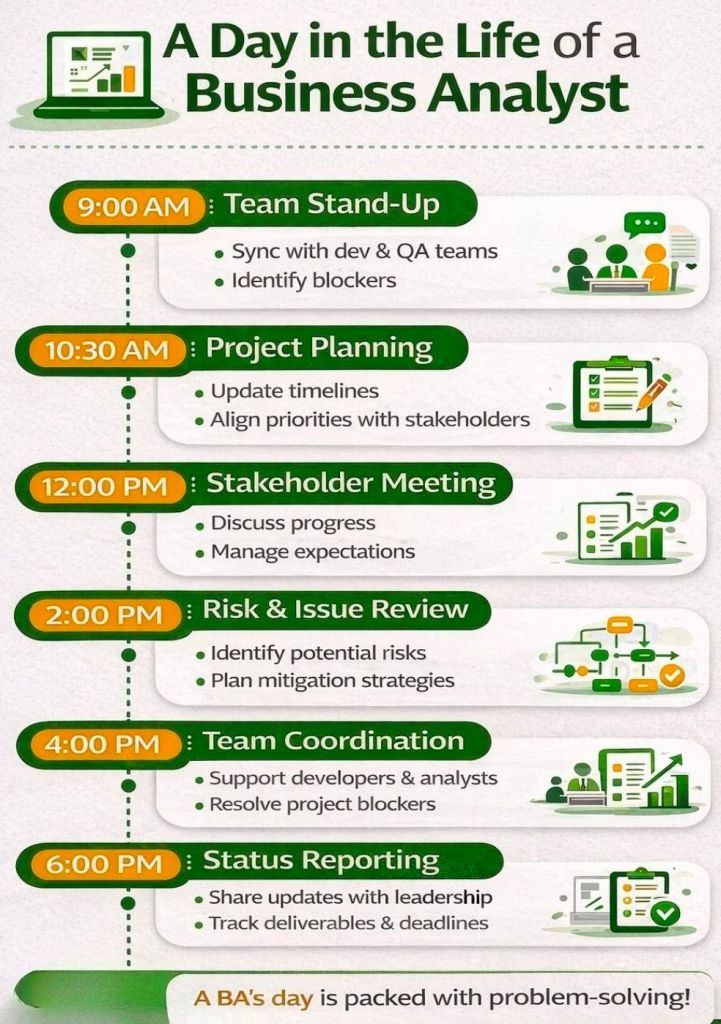
Business Analyst typical day example

Business Analyst typical day example

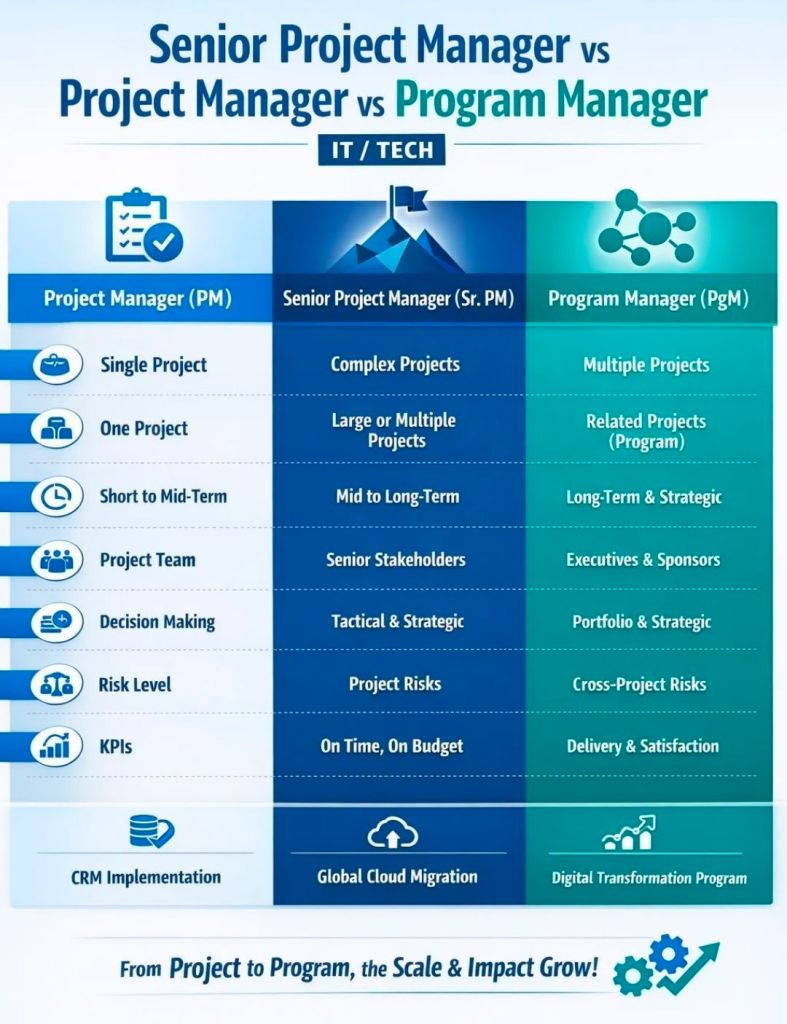
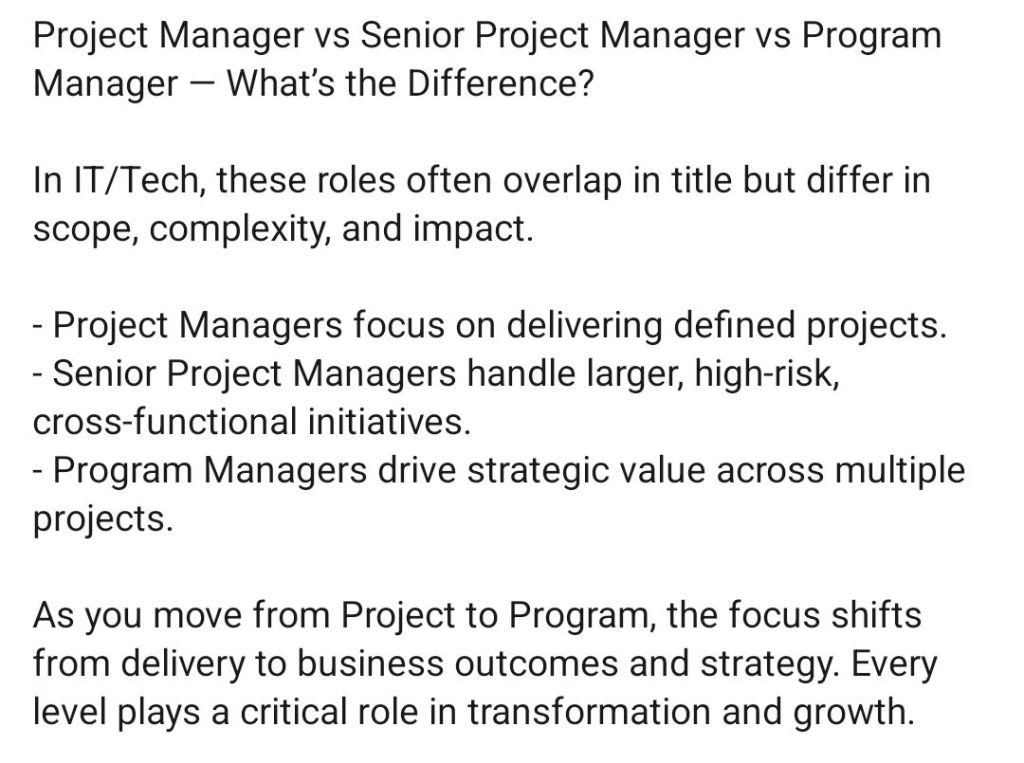
Senior Project Manager vs Project Manager vs Program Manager

Senior Project Manager vs Project Manager vs Program Manager

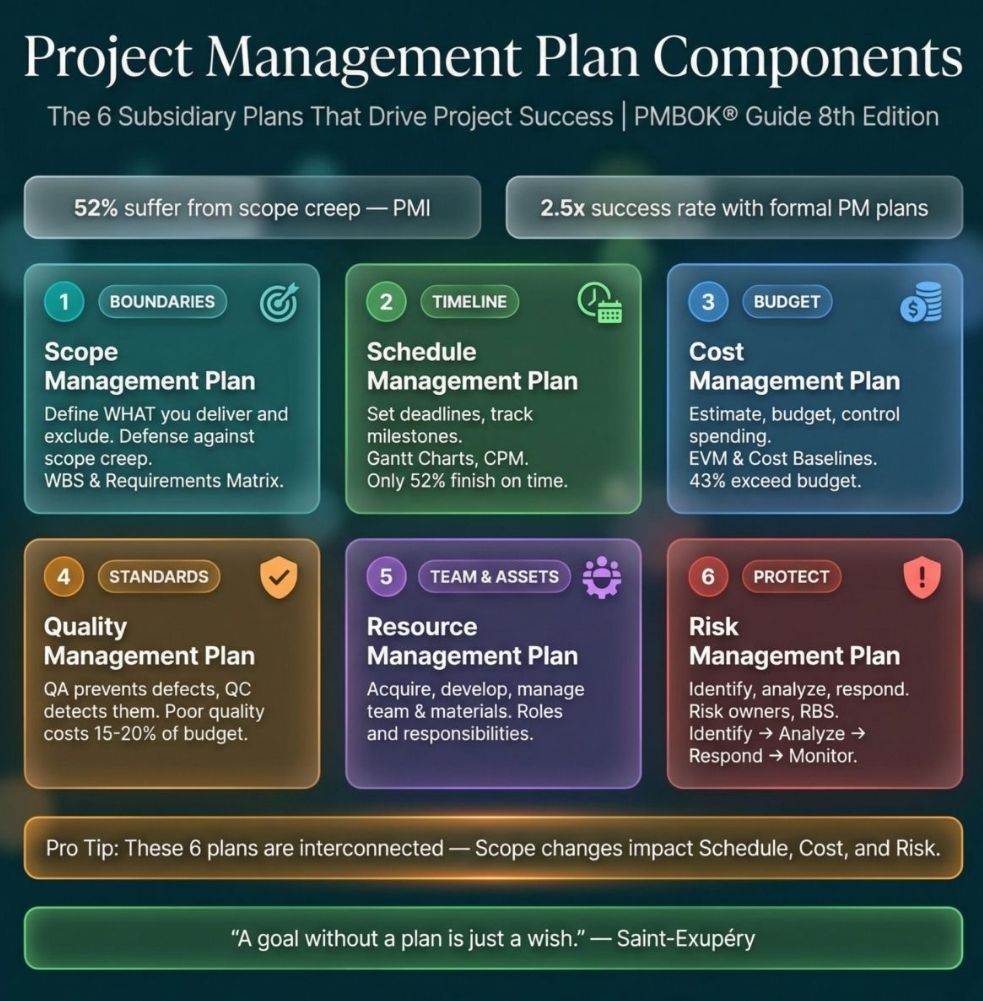
Project Management Plan Components, PMBOK

Project Management Plan Components, PMBOK

AI Projects and Methodologies for Managing AI Projects

Artificial intelligence (AI) is transforming project management through two distinct but related paths: the use of AI-powered tools to manage general projects and the specialized methodologies required to manage AI development itself. 

1. Methodologies for Managing AI Projects

Traditional software development methods (like Waterfall) often fail for AI because these projects are experimental and non-linear. Specialized frameworks have emerged to handle the “data-first” nature of AI: 

  • CPMAI (Cognitive Project Management for AI): A leading methodology that combines Agile principles with data-centric phases: Business Understanding, Data Understanding, Data Preparation, Model Development, Model Evaluation, and Model Operationalization.
  • Agile-AI Hybrid: Adapts standard Agile by using “short-boxed” iterations for model training and allowing for a “flexible scope” because model performance is unpredictable until tested.
  • Data Driven Scrum: A variation of Scrum that prioritizes work based on data availability and experimental results rather than just feature backlogs.
  • MLOps (Machine Learning Operations): An operational framework focused on the continuous integration, deployment, and monitoring of models to prevent “model drift” after a project officially “ends”. 

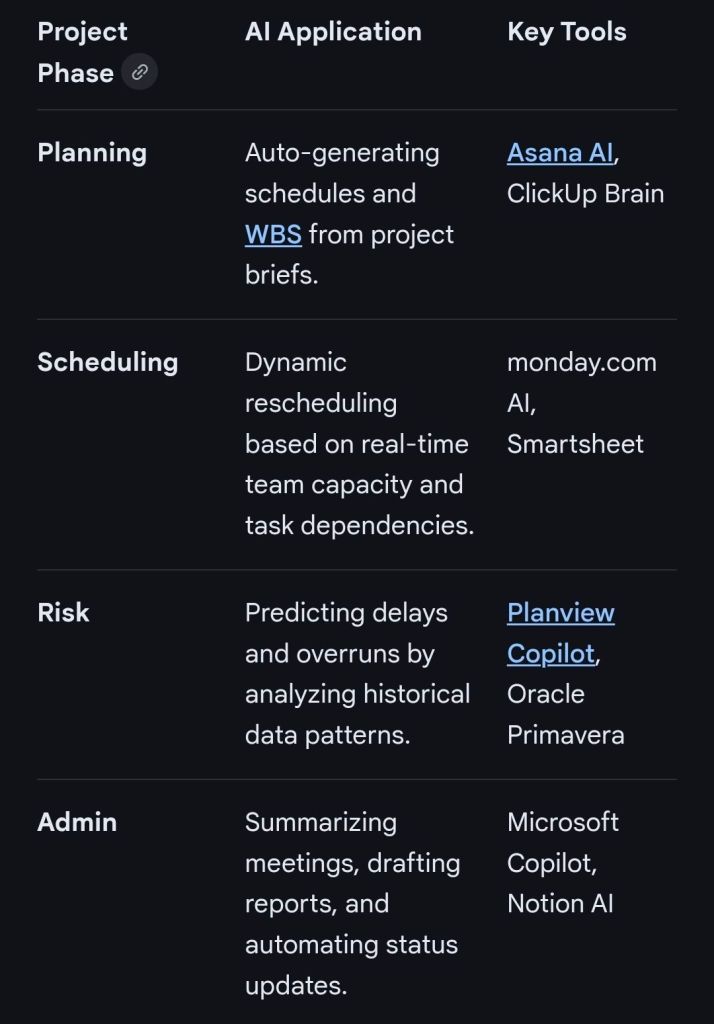
2. AI-Augmented Project Management (The “AI Copilot”)

For non-AI projects, AI acts as an intelligent assistant to automate administrative tasks and provide predictive insights. 

3. Implementation Strategy

Experts recommend a phased approach to integrating AI into management workflows: 

  1. Assess Inefficiencies: Identify repetitive tasks (e.g., status reporting) that can be automated first.
  2. Data Governance: Ensure project data is clean and centralized; AI is only as good as the data it consumes (“Garbage In, Garbage Out”).
  3. Human-in-the-Loop: Use AI for data-heavy lifting, but retain human judgment for high-stakes leadership, ethics, and stakeholder empathy.

AI Projects and Methodologies for Managing AI Projects

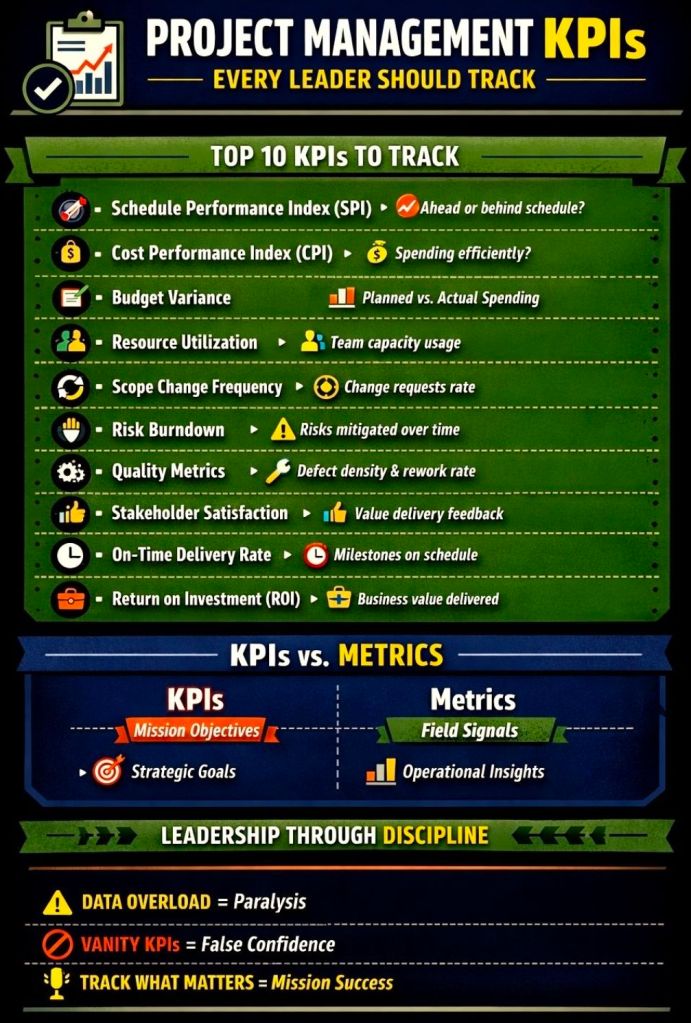
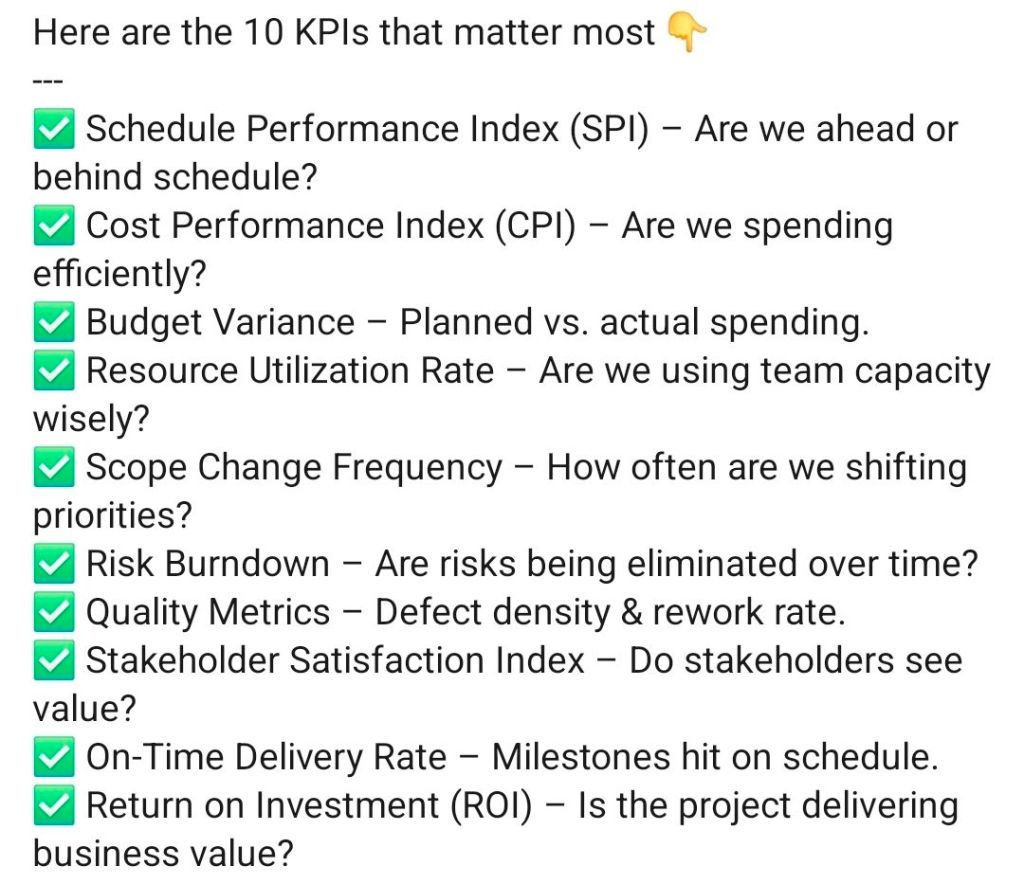
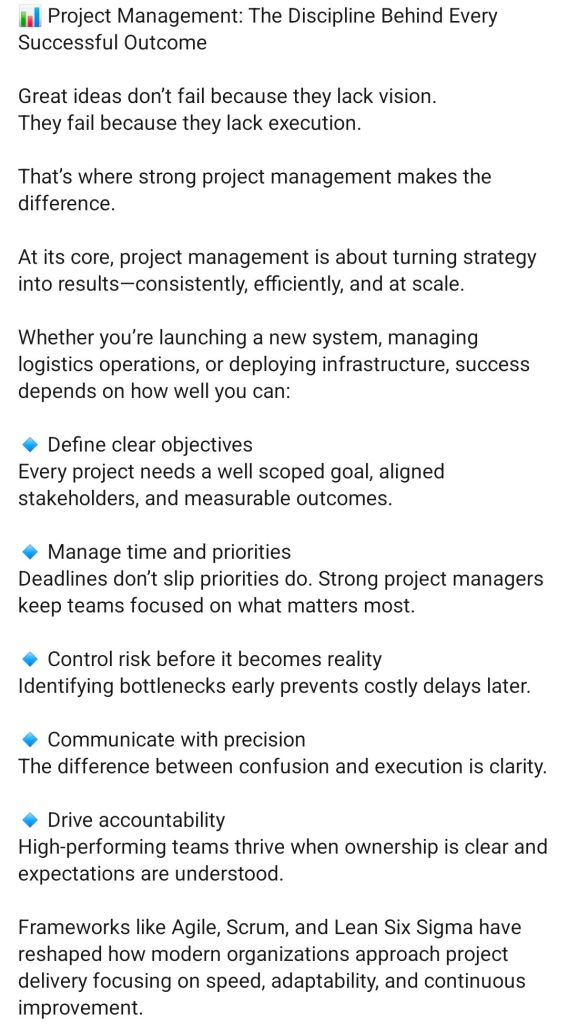
Project Management KPIs to track

Project Key Performance Indicators KPIs
Key Performance Indicators KPI overview

Project Management KPIs to track

Mark Whitfield HP NonStop Tandem experience & Project Management Templates

Mark Whitfield is an experienced IT Project Manager and software developer who has spent over 22 years specialising in HP NonStop (formerly Tandem) systems. He is currently an Engagement Project Manager at Capgemini. 

Career & Expertise

Whitfield’s career in HP NonStop began in 1990 and includes significant technical and leadership roles across the financial and technology sectors: 

  • Software Development: Early in his career, he worked as a programmer for The Software Partnership (later Deluxe Data/FIS), focusing on electronic banking software like sp/ARCHITECT on Tandem mainframes.
  • Insider Technologies (1995–2013): He spent 18 years at Insider Technologies as a Senior Development Engineer and Project Manager. His work involved:
    • Developing monitoring and diagnostic software such as Reflex 80:20, Reflex ONE24, and RTLX (Real-Time Log Extraction) for payment systems.
    • Managing the first HP OpenView Operations Smart Plug-In certification for the NonStop platform.
    • Designing XPERT24, a performance tracking product for ACI’s XPNET layer.
  • Capgemini (2016–Present): As an Engagement Project Manager, he has led digital projects for major clients in the automotive, government, and aerospace sectors, including a cloud migration for UK Government applications. 

Technical Contributions

  • Publications: He has authored articles for globally published journals like The Connection (2013), discussing topics such as querying terabytes of legacy transaction log data from NonStop mainframes.
  • Project History: He has managed high-value projects, including a £5 million initiative to migrate legacy HP NonStop software to AIX-based technologies for a large UK retail bank.
  • Training: He is trained in various NonStop-specific technologies, including TAL (Transaction Application Language), COBOL85, PATHWAY, and NonStop SQL. 

Whitfield also maintains a professional website, mark-whitfield.com, where he provides project management templates and resources related to HP NonStop and Tandem systems. 

Mark Whitfield provides a comprehensive bundle of over 200 editable project management templates designed for Agile, Waterfall, and PRINCE2 methodologies. These templates are based on over 30 years of project delivery experience and are available for purchase via his official website or Etsy shop. 

Key Template Categories

The bundle includes a wide variety of tools across different formats (Excel, PowerPoint, Word, and MS Project): 

  • Planning & Scheduling:
    • Plan on a Page (POaP): Over 30 PowerPoint slide examples for executive-level summaries.
    • Detailed Project Plans: MS Project (MPP) and Excel templates for SDLC, PRINCE2 7th Edition, and Agile Scrum projects.
    • Gantt Charts: Built-in tracking views for both MS Project and Excel.
  • Tracking & Control:
    • RAID Logs: Comprehensive logs for tracking Risks, Actions, Issues, and Dependencies, plus additional tabs for Change Requests and Lessons Learned.
    • RACI Matrix: Templates to define project roles and responsibilities (Responsible, Accountable, Consulted, Informed).
    • Finance Trackers: Tools for internal and external forecast vs. actual costs, including margin and variance tracking.
  • Agile Specific Tools:
    • Burn Down & Burn Up Charts: Excel-based alternatives when tools like Jira are unavailable.
    • Agile Story Dependency Tracking: Specifically for managing dependencies between agile stories and external suppliers.
  • Reporting & Governance:
    • Status Reports: Weekly and monthly templates in Word and PowerPoint formats.
    • Stakeholder Analysis: Power/interest mapping and engagement plan templates.
    • Benefits Realisation: Plans to track project outcomes against initial business goals. 

Purchase Benefits

  • Lifetime Upgrades: Once purchased, all future additions and updates to the template package are provided for free.
  • Compatibility: Templates are designed for Microsoft Office 365 but also include Excel versions compatible with earlier software.
  • Support: The package typically includes walkthrough Word documents to guide users on how to use each major template.

Mark Whitfield HP NonStop Tandem experience & Project Management Templates

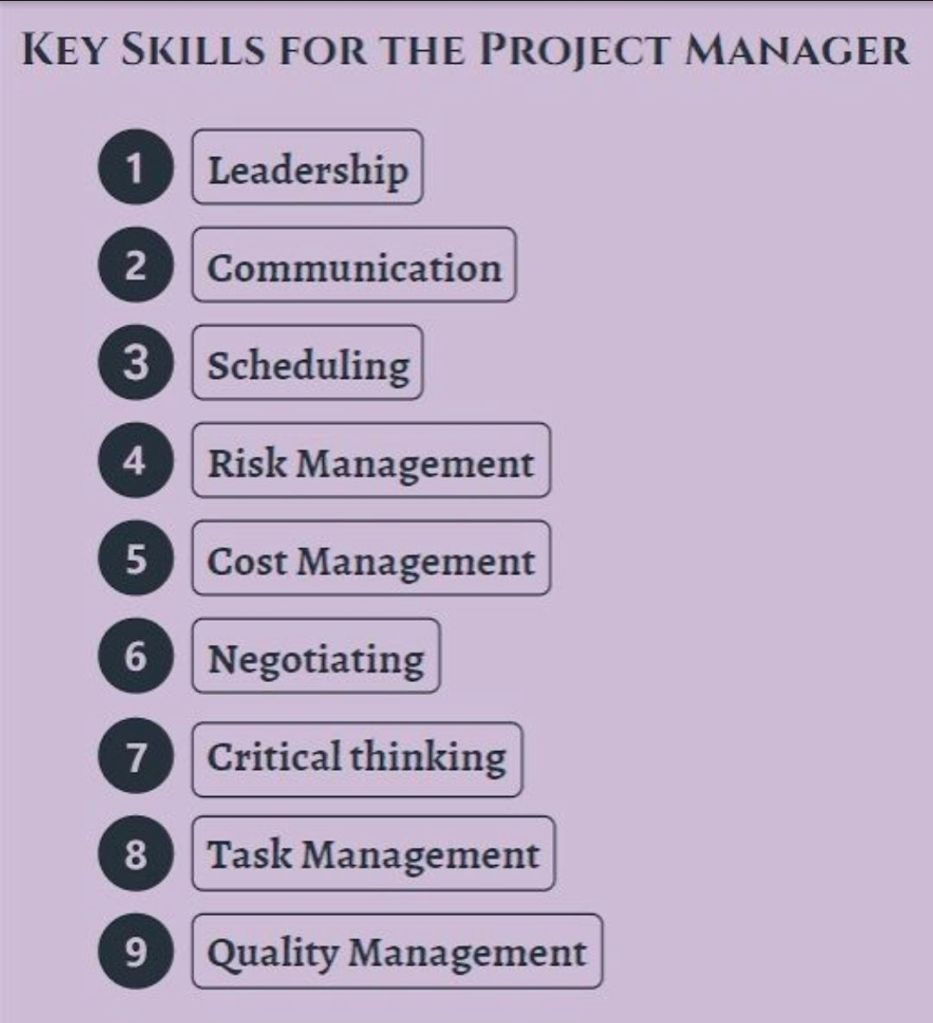
Key Skills for the Project Manager

Key Skills for the Project Manager