Betfred’s journey from a single shop in Salford to a global betting powerhouse is marked by bold innovations and high-profile acquisitions.
Historical Timeline
1967: Brothers Fred and Peter Done open their first betting shop in Salford, Greater Manchester, using winnings from a bet on England to win the 1966 World Cup.
1984: Launch of the Lucky 15 bet, a major industry innovation that remains popular today.
1997: The company expands to over 100 shops.
1998: Fred Done becomes the first bookmaker to pay out early, paying on Manchester United to win the Premier League (only for Arsenal to win the title instead).
1999: First major acquisition, purchasing 40 shops from the Demmy Racing Group.
2004: The business is officially rebranded to Betfred. The company also launches its online betting site this year.
2006: Betfred launches one of the industry’s first mobile betting platforms.
2011: Wins the auction to buy The Tote from the UK government for £265 million.
2016: Acquires 322 shops from Ladbrokes and Coral following their merger.
2021: Fred Done steps down as CEO to become Chairman, with Joanne Whittaker taking over the CEO role.
2024–2026: Significant global expansion, establishing a presence in South Africa and the United States, though later scaling back some US online operations in late 2025.
Operational Timelines (Payment & Payouts)
If you are looking for current service timelines for transactions, here are the standard processing windows as of February 2026:
Withdrawal Processing: Betfred aims to approve requests within 48 hours.
Fastest Methods: Visa Direct and certain E-wallets (PayPal, Skrill) often arrive within 4 to 6 hours.
Standard Methods: Bank transfers typically take 2 to 5 working days.
Free Bet Credit: Usually credited within 10 hours of a qualifying bet being settled.
Wincor Nixdorf’s journey spans from a mid-century German startup to its 2016 merger with Diebold, forming a global leader in banking and retail technology.
Capgemini’s evolution from a small French startup to a global IT leader is marked by strategic mergers and a shift toward high-growth technologies like AI.
Corporate History Timeline
1967: Serge Kampf founded Sogeti in Grenoble, France, focusing on enterprise management and data processing.
1973–1975: Through hostile takeovers and mergers with CAP and Gemini Computer Systems, the group became CAP Gemini Sogeti.
1985–1988: The company was listed on the Paris Stock Exchange (1985) and entered the CAC 40 index (1988).
1996: The name was simplified to Cap Gemini, and a new logo was launched.
2000: Acquired Ernst & Young Consulting for $11 billion, expanding its global reach, especially in North America.
2004: The brand officially became Capgemini to reflect a unified global identity.
2015: Acquired iGate for $4 billion, making North America its largest market.
2019–2021: Acquired Altran (2019), later rebranded as Capgemini Engineering (2021), to dominate the engineering and R&D services sector.
2024–2025: The strategic focus shifted to AI. In July 2025, Capgemini announced a €3.3 billion deal to acquire WNS Global Services to bolster its agentic AI and intelligent operations.
Recruitment & Career Timelines
The hiring process typically follows this path:
Hiring Process: Usually takes a few weeks, involving application screening, multiple interview rounds (technical and HR), and background verification.
Graduate/Mass Hiring: Often conducted via the Superset platform, where status updates like “offered” appear roughly a week after interviews.
Graduate Programme: The Accelerate Programme (UK) spans approximately 21 months, starting with a 3-month business overview followed by 18 months in a specific pathway academy.
The Software Partnership (TSP) was a Runcorn-based software house co-founded by Nigel Walsh in the mid-1980s. Specialising in on-line banking systems for Tandem and UNIX platforms, the company underwent several acquisitions that integrated its technology into global financial services.
Corporate Timeline
Mid-1980s: Founded as The Software Partnership.
1990: Initial operations were based at Wingate Drive in Timperley before moving to Norton House in Crowngate, Runcorn.
1992: Relocated to Wingate House on Northway, Runcorn.
1994: Acquired by the American firm Deluxe Electronic Payment Systems (a subsidiary of Deluxe Corporation).
2000: The company transitioned to EFD eFunds.
2007: Became part of Fidelity National Information Services (FIS), eventually moving operations to Daresbury Park in Warrington.
Key Products
The company’s primary legacy is the development of sp/ARCHITECT-BANK, a software suite designed for secure card management and electronic transaction processing. This technology became a foundational component for the secure payment systems later managed by Deluxe Data and FIS.
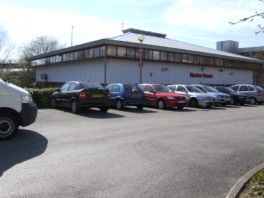
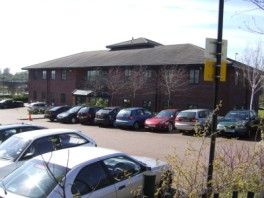
The Software Partnership, Norton House, Crowngate, Runcorn, CheshireThe Software Partnership (TSP) was a Runcorn-based software houseDeluxe Data International Operations, Wingate House, Northway


 PROject Templates