Centiun is a UK-based Microsoft AI Cloud Partner and IT consultancy specializing in digital transformation, cloud migration, and AI integration for public and private sector organizations.
Centiun is a UK-based Microsoft AI Cloud Partner and IT consultancy
They help businesses modernize operations, leverage low/no-code platforms, and transition legacy infrastructure to secure cloud environments.
Core Services
Cloud & App Modernization: Migrating on-premise, legacy applications to secure cloud environments to reduce costs and enhance agility.
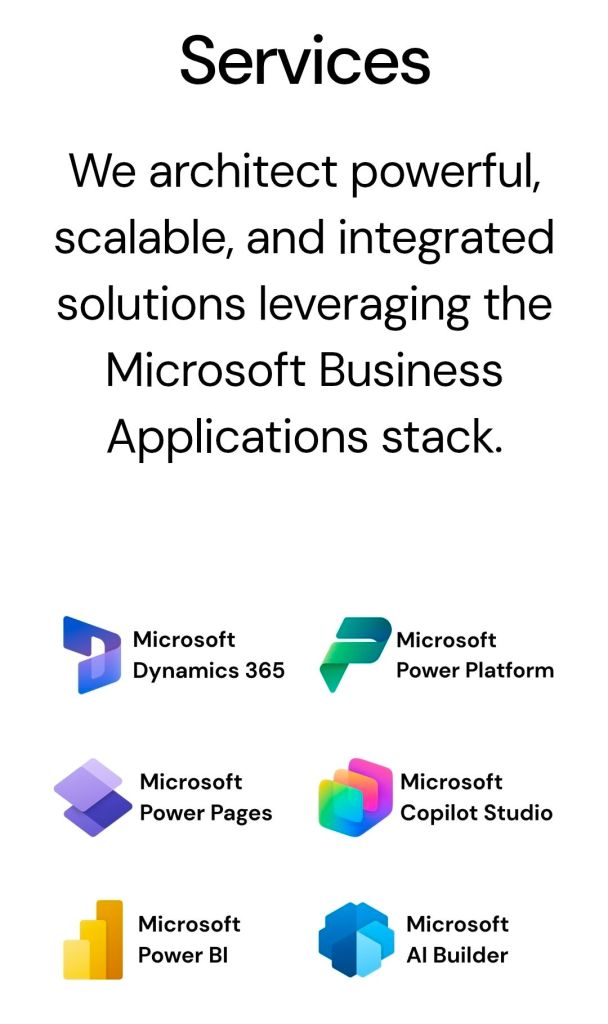
Microsoft AI & Business Applications: Implementing solutions across the Microsoft stack, including Copilot, Power Platform, and Dynamics 365, to improve process efficiency and data-driven decision-making.
Managed Services & Governance: Providing SLA-compliant technical governance, threat monitoring, and support to ensure business continuity.
Training & Enablement: Upskilling staff to confidently use Microsoft tools and low-code solutions.
Target Industries
Centiun tailors their technology solutions to several specialized sectors, offering domain expertise in:
Healthcare and Non-profits
Public Bodies and Central Government
Financial Services and Manufacturing
Energy and Utilities
Why They Stand Out
Microsoft Expertise: Their seasoned experts hold numerous Microsoft certifications and boast a combined 20+ years of experience in Microsoft Business Applications.
Tailored Approach: They focus on personal service rather than one-size-fits-all solutions, aiming to help clients scale and modernize while minimizing operational disruption.
Security & Trust: The firm operates with strict data security measures, holding accreditations like Cyber Essentials and registration with the Information Commissioner’s Office (ICO).
Explore their complete list of solutions and case studies directly on the Centiun Official Website.
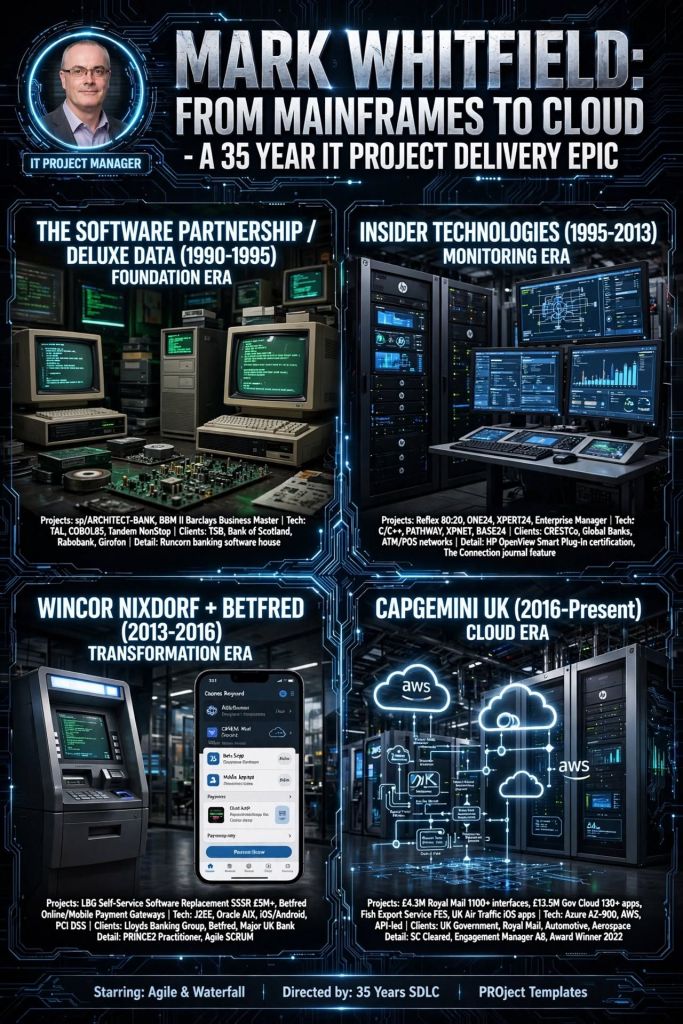
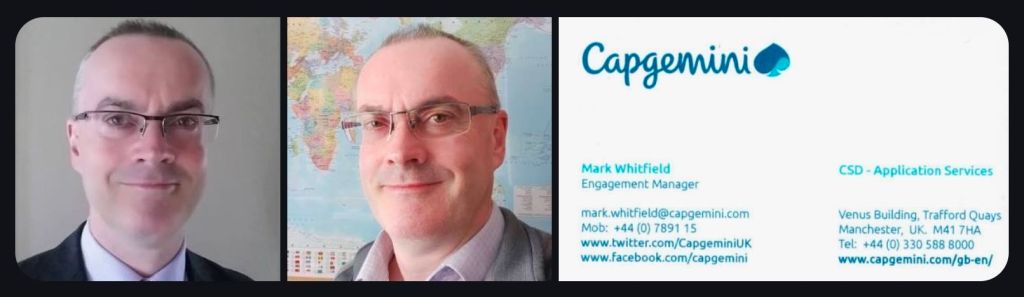
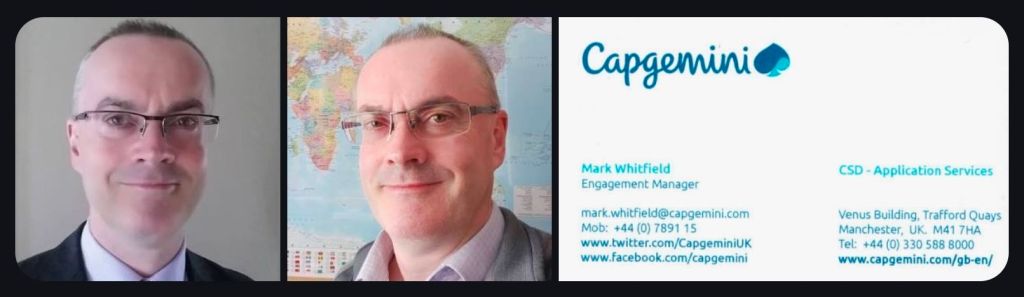
Mark Whitfield is an SC-cleared Senior IT Project Manager with over 30 years of experience delivering high-availability financial, cloud, and digital transformation projects. Over his career, he has transitioned from deep technical engineering on HPE NonStop (Tandem) mainframe systems to leading major corporate and public sector Agile and Waterfall software rollouts.
Mark Whitfield | Career Eras from Mainframes to Cloud Project Delivery
A comprehensive, year-by-year timeline breakdown of his project history and clients since 1990 is outlined below.
💻 The Technical Era (1990–1995)
During this period, Whitfield worked as a Programmer and Lead Analyst for The Software Partnership (acquired by Deluxe Data in 1994). He focused on electronic banking software (sp/ARCHITECT-BANK) on Tandem Mainframe Computers.
1990–1992: Barclays Bank – Placed on-site at Knutsford, Cheshire to design and code software for the high-profile Barclays Business Master II (BBM II) electronic desktop banking project.
1992–1993: Girofon (Denmark) – Developed a touch-tone phone banking suite. This allowed clients to use automated voice/menu-driven systems via a Periphonics VRAM device to fetch live balances from back-end mainframes.
1993–1994: TSB & Bank of Scotland – Conducted early-era digital investigations, logic design, and mainframe coding for inter-account desktop money transfers.
1994–1995: Rabobank – Headed software optimization, custom electronic coding patches, and on-site deployment validation for international operations.
🛡️ Monitoring & Infrastructure Era (1995–2013)
Whitfield joined Insider Technologies Limited (ITL) in Salford Quays, specializing in platform diagnostics, transaction monitoring, and financial logging systems for mission-critical infrastructure.
1995–1996: Internal ITL Product R&D – Core developer on the Reflex monitoring suite (Reflex 80:20), creating platform health and diagnostic plug-in modules.
1997–1998: CRESTCo (now Euroclear) – Brought in as a technical infrastructure consultant to run benchmark tests on newly released Tandem S7000 processing hardware nodes.
1999–2001: Bank of England / Deutsche Bank – Deployed real-time tracking protocols utilizing ITL’s MultiBatch scheduling architectures and file monitors.
2002–2003: Hewlett-Packard (HP) – Successfully managed the rigorous certification process for the first HP OpenView Operations (OVO) Smart Plug-In built for the NonStop mainframe environment.
2008–2010: Saudi Arabian Retail Bank – Acted as Project Manager overseeing the cross-border rollout of a high-volume ATM and Point-of-Sale (POS) monitoring system.
2011–2013: Global Payments / Standard Chartered – Integrated transaction monitoring capabilities with external corporate frameworks such as TIVOLI and XPERT24 using ACI’s XPNET architecture.
This timeframe marked a total transition into senior contract project management, dealing directly with multi-million-pound programs.
2013–2014: Lloyds Banking Group (LBG) – Augmented into Wincor Nixdorf as the IT Project Manager leading a £5+ million workstream. This was part of LBG’s comprehensive Self-Service Software Replacement (SSSR) initiative to modernise legacy ATM software.
2014–2016: Betfred – Senior IT Project Manager inside an Agile Scrum structure. Directed cross-functional software vendors to deliver updates for mobile apps (iOS/Android), fraud detection systems, and payment gateways for their digital sportsbook platforms.
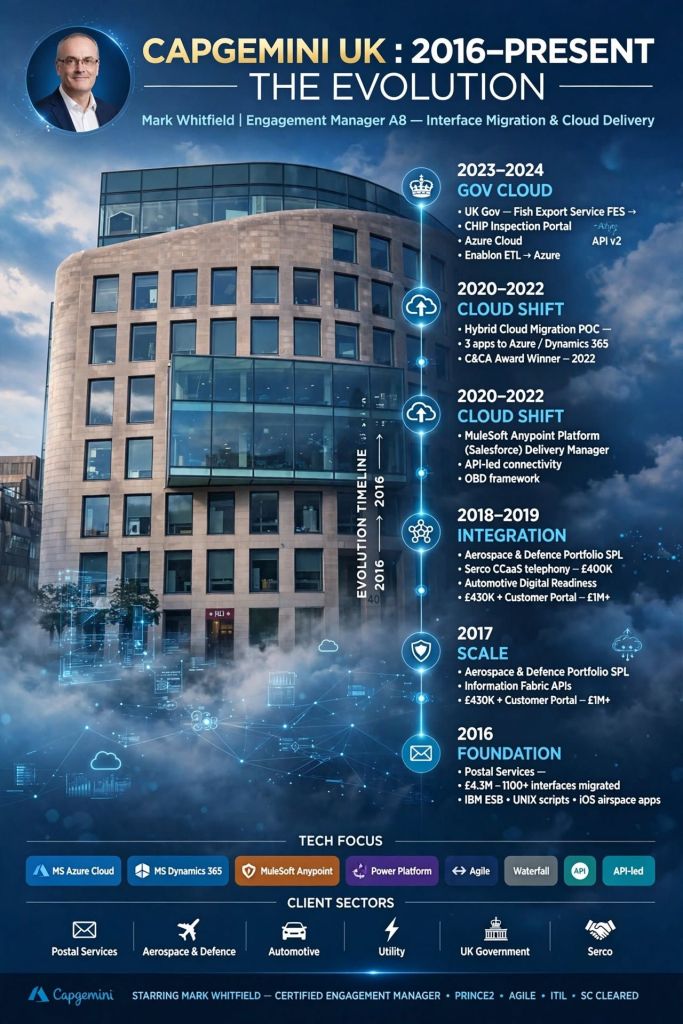
In January 2016, Whitfield joined global consultancy firm Capgemini as a Senior client-facing Engagement/Delivery Manager.
2016–2017: Aerospace & Defence Client – Managed an enterprise-level integration project to deploy a Salesforce-driven Single Customer View (SCV) portal platform.
2017–2018: Jaguar Land Rover (JLR) – Served as Project Manager for the iFAB Middleware Project, a complex 12-month architecture development program linking global manufacturing supply components.
2018–2019: MuleSoft (A Salesforce Company) – Augmented directly into MuleSoft’s London headquarters as a Delivery Manager, spearheading API-led connectivity deployments via the Anypoint Platform.
2019–2021: UK Government Agency (UK Gov) – Commanded a major Hybrid Cloud Migration initiative to refactor, re-host, and re-platform 130 legacy agency software applications directly to cloud servers.
2022: UK Utility Sector (Welsh Water / Scottish Water) – Dual-management lead executing a £0.5 million contract to migrate an aging, on-premise document management program (EQS) onto the Microsoft Azure cloud via Enablon.
2023–2026: Public Sector & Core Tooling (Current) – Managing high-value middleware and API integrations for entities like the Royal Mail Group (RMG), NATS, and regional government bodies. Concurrently authors a widely used portfolio of commercial project management templates (RAID logs, RACI matrixes, and MS Project MPP layouts) published via PROject Templates.
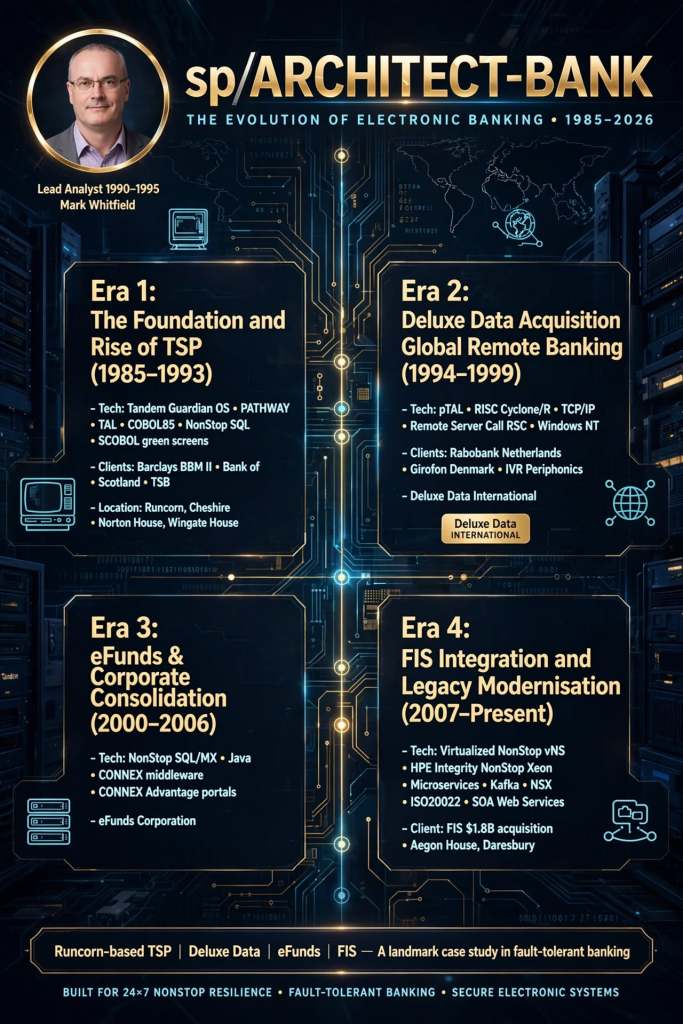
The Software Partnership (TSP) was a highly specialized British software house based in Runcorn, Cheshire, that played a key role in early cutting-edge electronic banking software.
Mark Whitfield | Lead Analyst from 1990 thru 1995
The firm famously developed sp/ARCHITECT-BANK, an innovative enterprise banking system built explicitly for Tandem Computers (now HPE NonStop) fault-tolerant server systems. I was based there between 1990 and 1995.
The Software Partnership Logo
Below is a detailed overview of the company’s operational history, alongside the corresponding hardware/software architectural eras of the HPE NonStop platform it relied upon.
Detailed Overview
Core Focus: The Software Partnership specialized in online transaction processing (OLTP) and electronic automated banking software. Long before the internet became mainstream, TSP engineered early desktop access environments for corporate bookkeeping and inter-account bank transfers.
Key Product: Its flagship software suite, sp/ARCHITECT, ran on Tandem’s highly unique, redundant architecture. The software handled complex high-volume retail transactions, ATM networking, and ledger balances.
Major Clients: High-profile financial institutions deployed TSP’s systems, including TSB (Trustee Savings Bank), Bank of Scotland, Rabobank, and Denmark’s Girofon.
Legacy: TSP initiated a massive lineage of financial tech operations in the Runcorn/Warrington area. After subsequent buyouts and transitions, its corporate DNA integrated into modern banking giants, eventually operating under Fidelity National Information Services (FIS).
Detailed Timeline by Era and Year
The history of TSP mirrors the evolution of the underlying fault-tolerant architecture originally built by Tandem, later managed by Compaq, HP, and currently Hewlett Packard Enterprise (HPE).
Era 1: The Tandem Founding & TSP Inception (Mid-1970s – 1989)
This era is marked by Tandem’s creation of the fault-tolerant server market, which birthed the niche that TSP filled.
1974–1976: Tandem Computers is founded and ships its first 16-bit NonStop I (T/16) system, utilizing complete component redundancy to guarantee close to zero downtime for the financial industry.
1981: Tandem introduces the NonStop II, transitioning to battery-backed DRAM memory and enabling early 32-bit addressing.
Mid-1980s: The Software Partnership (TSP) is co-founded by Nigel Walsh. It establishes offices first in Timperley (Wingate Drive), then moves to Crowngate (Norton House) in Runcorn. The team begins developing online banking architectures explicitly for Tandem OS (Guardian) and early UNIX nodes.
1989: Tandem launches the NonStop Cyclone, a high-end mainframe system featuring superscalar CPUs and fiber-optic interconnects.
Era 2: The MIPS RISC Transition & Corporate Buyouts (1990 – 1999)
TSP reaches peak software deployment exactly as Tandem shifts its internal processor technology.
1990: TSP establishes itself as a major regional employment hub for software engineers following a massive boom in terminal banking technology. Software programmers deploy sp/ARCHITECT-BANK code for massive retail banks internationally.
1991: Tandem shifts its structural hardware away from proprietary chips, introducing its first MIPS RISC-based NonStop systems.
1992: TSP expands its Runcorn footprint, moving to custom facilities at Wingate House on Northway, Runcorn.
1994: TSP is acquired by American firm Deluxe Electronic Payment Systems (a division of Deluxe Corporation, one of the largest check printers and transaction processors in the US). The corporate name transitions to Deluxe Data.
1997: Due to shifts in the enterprise hardware landscape, Compaq Computer Corporation acquires Tandem Computers for $3 billion, taking over the NonStop lineage.
Era 3: The Itanium Migration & eFunds Realignment (2000 – 2013)
The architecture sheds its proprietary processors for industry standards, and TSP’s corporate legacy transforms.
2000: Deluxe Data’s electronic payment wing splits off and rebrands as EFD eFunds.
2001–2002: HP (Hewlett-Packard) merges with Compaq, absorbing the NonStop portfolio. Simultaneously, HP begins shifting NonStop servers from MIPS architectures to Intel Itanium processors.
2007: Following industry consolidation, the corporate remnants of the original TSP Runcorn operations are absorbed into Fidelity National Information Services (FIS) and relocated to Aegon House in Daresbury, Warrington.
Era 4: The Modern HPE NonStop X & Virtualization Era (2014 – Present)
The legacy of the high-availability software pioneered in Runcorn culminates in cloud and x86 integration.
2014: HP introduces NonStop X, completely migrating the underlying architecture to Intel x86-64 processors and implementing InfiniBand connectivity fabrics.
2015: Hewlett-Packard officially splits into two entities; the core mission-critical banking platform continues its five-decade lineage under Hewlett Packard Enterprise (HPE).
2020s–Present: HPE modernizes the software architecture to support Virtualized NonStop Software (vNS). Modern variants allow banking systems to run mission-critical apps seamlessly inside enterprise private clouds and scalable HPE GreenLake consumption models with 100% fault tolerance.
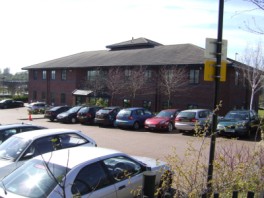
Deluxe Data International Operations, Wingate House, Northway, Runcorn, Cheshire
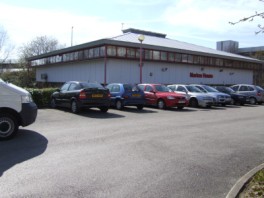
The Software Partnership, Norton House, Crowngate, Runcorn, Cheshire
⚙️ sp/ARCHITECT
sp/ARCHITECT (specifically sp/ARCHITECT-BANK) was a foundational electronic banking and transaction framework engineered in the 1990s by The Software Partnership (a UK-based fintech house later acquired by Deluxe Data). It primarily powered corporate banking portals and telephone-driven banking services.
The platform acted as highly reliable middleware, serving as a bridge between the customer and back-end banking mainframes. The breakdown of its architecture, infrastructure, and core functions includes:
⚙️ Architectural Breakdown
Hardware & OS: Built to run natively on fault-tolerant Tandem NonStop computers (now HPE NonStop). This “shared-nothing” architecture was designed for absolute transactional uptime and zero data loss.
Programming Languages: Built using legacy enterprise standards. Code was primarily written in COBOL85 and TAL (Transaction Application Language) native to the Tandem ecosystem.
Middleware Integration: Utilized Tandem-specific middleware like Pathway and Remote Server Call (RSC) to handle client-to-host communications.
💻 Core Capabilities & Modules
Electronic Delivery Framework: Served as a multi-channel framework, accommodating a wide variety of early access devices like desktop clients, UNIX workstations, and smart phones.
Transaction Handlers: Deployed custom scripts/handlers that enabled end-users to securely access real-time account data and perform early inter-account transfers without visiting a physical branch.
Testing Utilities: Included proprietary simulation tools like sp/TESTBED, acting as a PC-to-host test harness so developers could emulate user queries and transaction flows.
🏦 Industry Footprint
European Rollout: Heavily adopted by large European financial institutions, including TSB, Rabobank, Bank of Scotland, and Girofon.
BBM II Integration: Powered landmark corporate desktop banking solutions like Barclays Business Master II (BBM II), long before modern web browser banking existed.
Evolution: Following its acquisition, its design philosophies eventually evolved into Deluxe Data’s broader CONNEX suite of payment solutions.
A Capgemini Engagement Manager is a senior-level, client-facing role responsible for end-to-end delivery of complex business and technology transformation programs. They bridge strategy and execution, acting as a trusted advisor to clients while maintaining operational and financial control over projects.
Mark Whitfield | Capgemini projects timeline – 2016 thru to present
Engagement Manager, from 2016
Key Responsibilities
End-to-End Delivery: Overseeing projects from start to finish, ensuring milestones, SLAs, and contractual obligations are met on time and within budget.
Stakeholder Management: Acting as the primary client point of contact while aligning cross-functional and globally distributed delivery teams.
Risk & Governance: Identifying potential roadblocks, proactively managing risks, and ensuring strict adherence to project governance standards.
Business Growth: Spotting opportunities for additional business and supporting bid activities for account expansion.
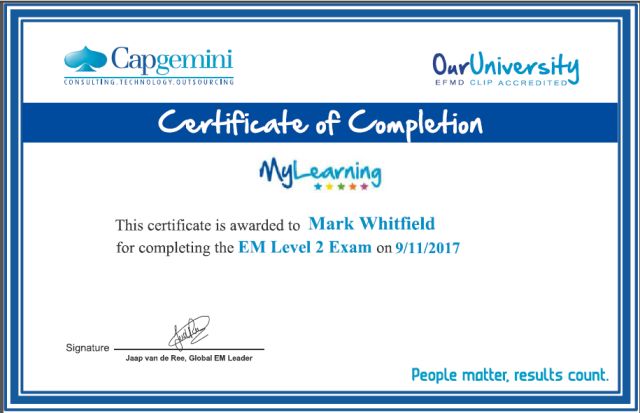
Mark Whitfield, Engagement Management EM Level 2 Exam Passed 2017
Ideal Candidate Profile
Experience: Typically requires a degree in Business, Engineering, or IT, combined with at least 5+ years of experience in project management or service delivery within a B2B environment.
Skills: Strong commercial acumen, proficiency in formal methodologies (e.g., Agile, ITIL), and the ability to lead diverse, multinational teams.
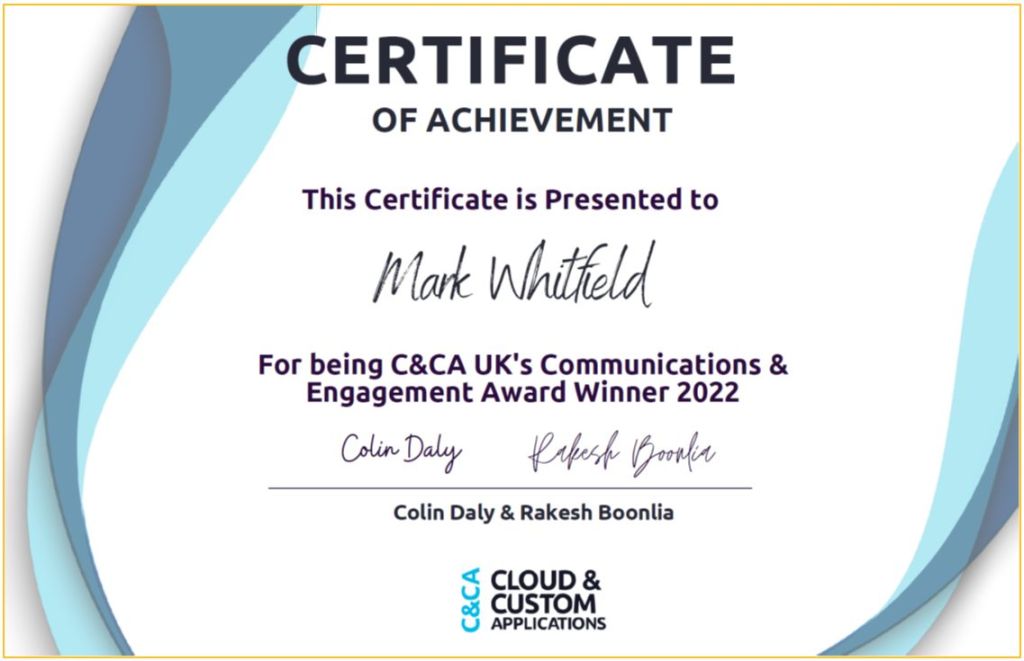
C&CA UK’s Communications & Engagement Award Winner 2022, Cloud & Custom Applications, Mark Whitfield
Mark Whitfield, an SC cleared Senior Project Manager based in the Manchester area, has over 30 years of experience transitioning from a software engineer to an IT program leader.
His extensive technical and project management training spans methodologies, cloud infrastructure, and software applications.
A detailed breakdown of his training, certifications, and academic background includes:
Project Management Methodologies
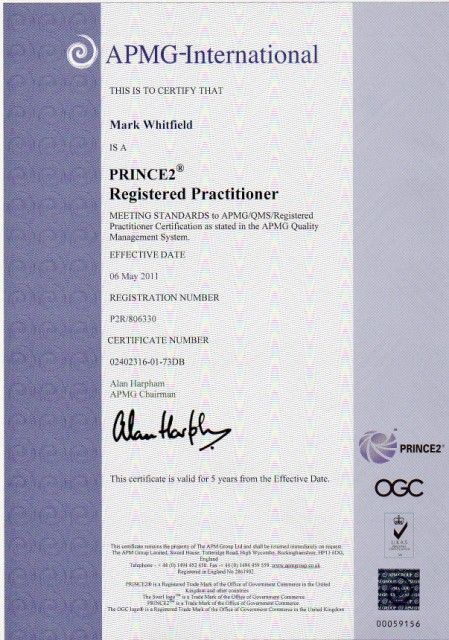
PRINCE2 Practitioner: Certified via the ILX Group.
Agile SCRUM: Trained in-house with RADTAC.
Advanced Engagement Management: Level 2 certification completed via Capgemini.
Project Fundamentals: Completed “Fundamentals of Successful Project Management” and “Managing Multiple Projects” via Skillpath.
Microsoft Project: Microsoft Project ’98 certified.
Technical & Cloud Training
Microsoft Azure: AZ-900 Microsoft Certified Azure Fundamentals.
MuleSoft: Completed outcome-based delivery training and is a specialized Delivery Manager.
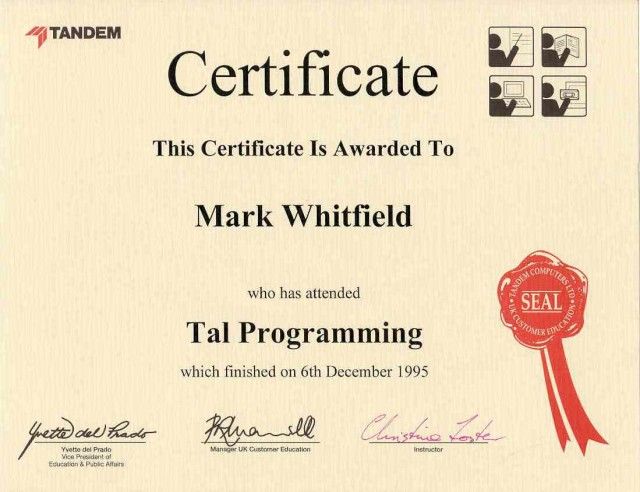
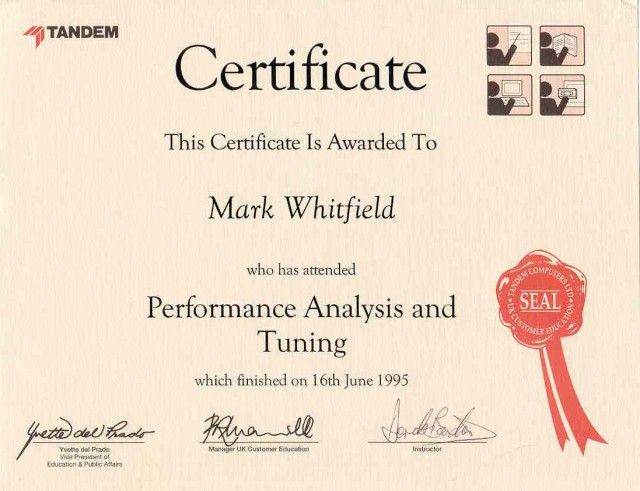
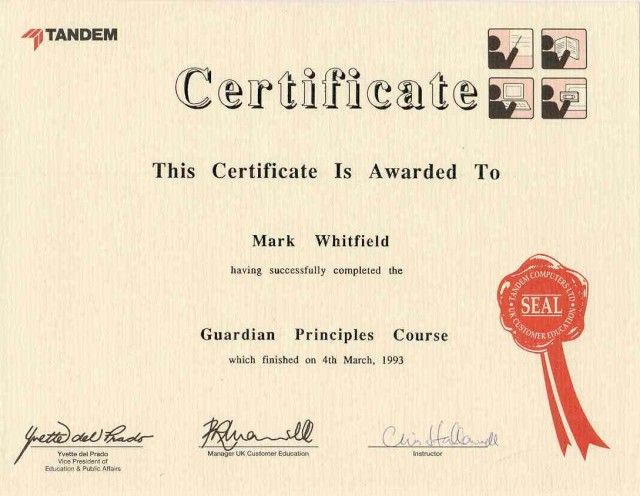
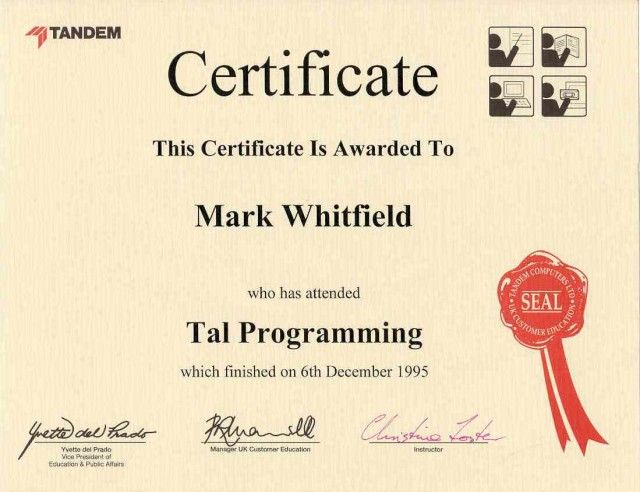
Technical Programming: Includes foundational database and software language training, such as C++ and MS SQL 2000 query training, as well as VPS and Tandem (HPE NonStop) technical/development courses.
Productivity: Completed Microsoft Excel Refresher and Expert skills training (Udemy and Microsoft).
Formal Education
Higher National Diploma (HND): Graduated with a Distinction (top) in Computing (1990).
Centiun is a UK-based IT consultancy and Microsoft AI Cloud Partner specializing in digital transformation, Microsoft Dynamics 365, and Power Platform solutions.
Centiun is a UK-based IT consultancy and Microsoft AI Cloud Partner
Headquartered in Cheadle, Cheshire, the company delivers expert solution architecture, implementation, and managed support to public and private sector organizations.
Executive Staff & Leadership
Kieran Gerard Holmes: Director and Principal Solution Architect. A senior Microsoft expert with certifications across Dynamics 365, Power Platform, and Microsoft AI.
Wider Consulting Team: The company is built around a close-knit, highly qualified team of Microsoft Certified Professionals (MCPs) and Solutions Architects who focus on mid-market and enterprise digital change.
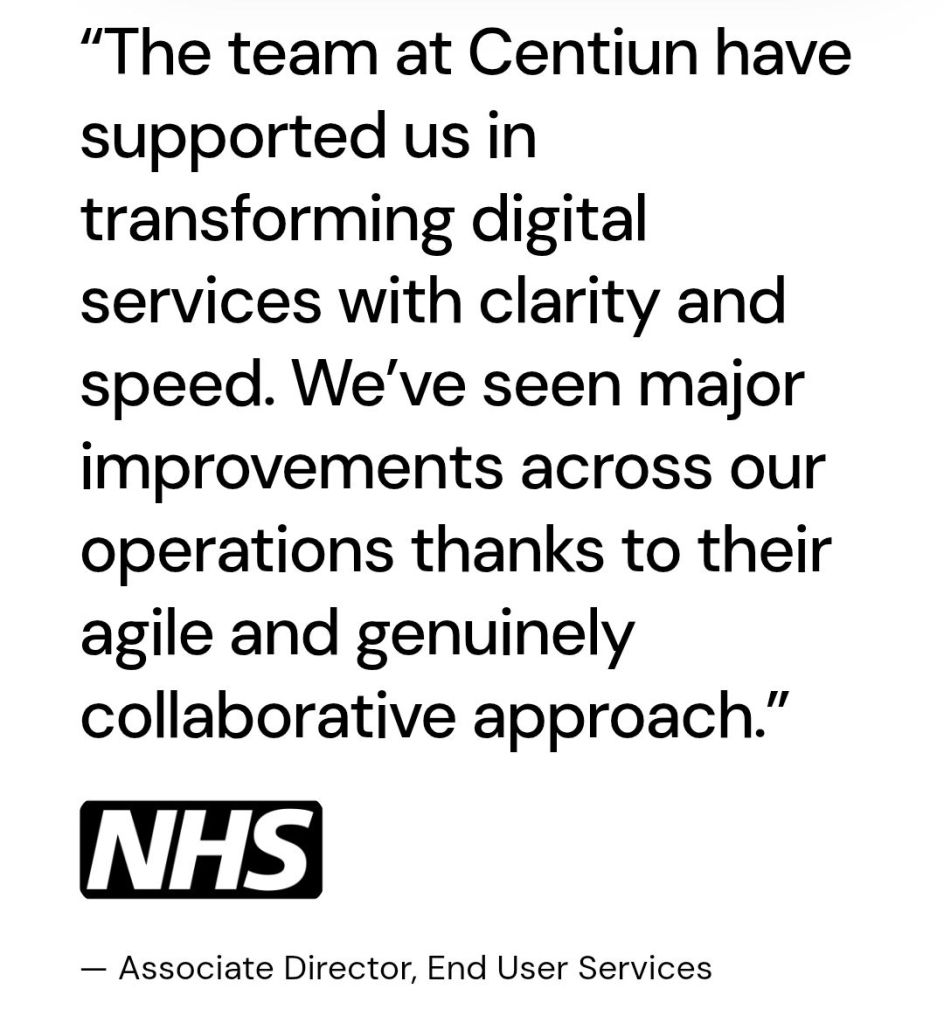
NHS, End User Services
Timeline Breakdown by Year
Centiun has grown rapidly in the cloud and AI solutions space. Key milestones include:
2025 (Company Foundation & Initial Certifications)
October 30, 2025: Centiun Limited was officially incorporated, establishing its registered headquarters at Cheadle Royal Business Park in Cheshire.
Late 2025: Secured nationally recognized Cyber Essentials certification and completed registration with the Information Commissioner’s Office (ICO) for secure data management compliance.
Late 2025: Began publishing specialized insight articles focused on legacy app modernization and driving intelligent, data-driven decisions via Microsoft Power BI.
2026 (Expansion & AI Solutions)
Early 2026: Positioned itself as a strategic Microsoft SME partner providing personalized digital transformations, cloud migrations, and technical governance.
Spring 2026: Expanded consulting efforts into “Agentic Customer Experience (CX)”—advising organizations on how to implement Microsoft Copilot, AI agents, and Dynamics 365 Contact Center workflows.
Spring/Summer 2026: Continued to build digital footprints across public bodies, healthcare, non-profit, and financial services sectors.
To explore how their architects can assist with your Microsoft transformations, request a consultation or view their technology resources on the Centiun website.
Centiun is a UK-based IT consultancy and Microsoft AI Cloud Partner
The official HPE Nonstop Technology Architecture is a specialized, 100% fault-tolerant infrastructure built with a tightly integrated hardware and software stack designed to eliminate any single point of failure. Formal instruction and architectural frameworks have been modernized under the newly relaunched HPE Nonstop Compute Training Portfolio curriculum.
Originally developed by Tandem Computers in 1976, the platform eventually became part of Hewlett Packard Enterprise (HPE). Unlike standard servers that can crash due to a single component failure, NonStop uses a tightly integrated, “shared-nothing” architecture to ensure that if a hardware or software component fails, another instantly takes over with zero downtime or data loss.
Core Architectural Features
To understand how HPE NonStop works, you need to understand its unique design principles:
Shared-Nothing Architecture: Every processor has its own dedicated memory, I/O channels, and copy of the operating system. No single component is shared, eliminating any single point of failure.
Process Pairs: Applications run using a primary process and a backup process on a different processor. The primary process constantly copies its state to the backup. If the primary fails, the backup immediately takes over.
Massive Scalability: Systems can scale up seamlessly from small distributed environments to massive clusters containing up to 24,000 processor cores without interrupting running operations.
Hardware Platform: The modern software environment runs on industry-standard x86 architectures, available as physical server racks (like the HPE NonStop NS9 X5) or as virtualized instances in hybrid cloud environments.
Dual Operating Environments
HPE NonStop runs a specialized operating system called NonStop OS. Inside this OS, developers and administrators interact with two distinct environments:
Guardian Environment: The native, proprietary environment optimized for high-volume Online Transaction Processing (OLTP). It handles tasks sequentially through process-oriented manually-started jobs rather than traditional automated queues.
Open System Services (OSS): A UNIX-like, POSIX-compliant environment built on top of the NonStop kernel. This allows organizations to run standard open-source applications, tools, and scripts natively alongside Guardian.
Ecosystem and Use Cases
HPE NonStop is rarely used for standard office automation or basic web hosting. Instead, it serves as the backbone for global industries where an hour of downtime could cost millions of dollars:
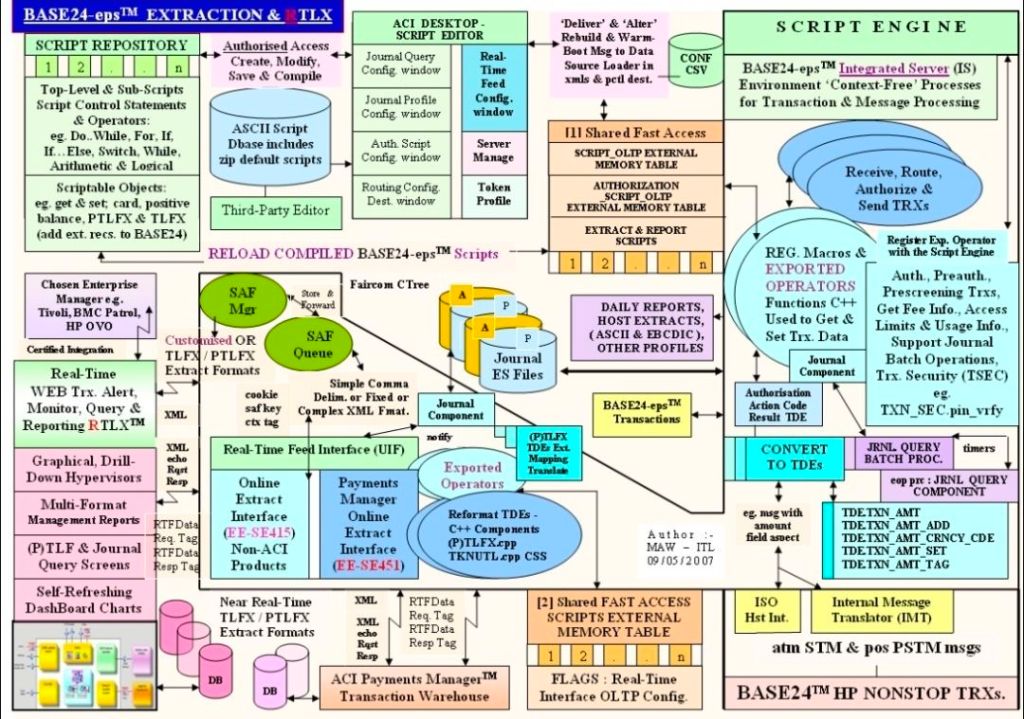
Financial Transactions: Powers global stock exchanges, automated teller machines (ATMs), and retail point-of-sale credit card processing, eg. BASE24.
Travel and Logistics: Runs critical airline reservation systems and real-time cargo routing infrastructure.
Database Management: Features its own highly secure, distributed database engine called NonStop SQL, which guarantees absolute data integrity across all transactions.
Modern Development: Supports traditional languages like COBOL85 and ANSI C, alongside modern DevOps integrations like Git, Ansible, and Eclipse-based IDE environments.
An architectural blueprint of an HPE NonStop environment typically separates the layout into three core interdependent layers:
Hardware & Fabric Layer: Consists of independent, loosely-coupled Processor Nodes (handling up to 24,000 cores globally) connected via an ultra-fast InfiniBand or ServerNet system fabric backbone.
I/O & Subsystem Layer: Utilizes Cluster I/O Protocols (CLIMs), splitting tasks between Storage CLIMs (SCLIMs) and Network CLIMs (NCLIMs) to isolate external communication from main processing.
Operating System & DB Layer: Runs the NonStop OS, which simultaneously manages the traditional Guardian environment, Open System Services (OSS) for UNIX/Linux paradigms, and the NonStop SQL distributed database engine.
Recommended Architecture Training Curriculum
HPE organizes its technical blueprints into structured educational paths for engineers.
1. Foundational Blueprint Concepts
Course Code: U4147S (HPE Nonstop Compute System Fundamentals).
Focus: Delivers a top-down view of system goals, transaction processing, and fundamental architecture.
Key Modules: Explores Guardian vs OSS, Pathway application management, and basic database interaction.
2. System Operations & Administration
Course Code: H1SC3S (HPE Nonstop Compute System Administration I).
Focus: Maps physical and virtual components to real-world deployment.