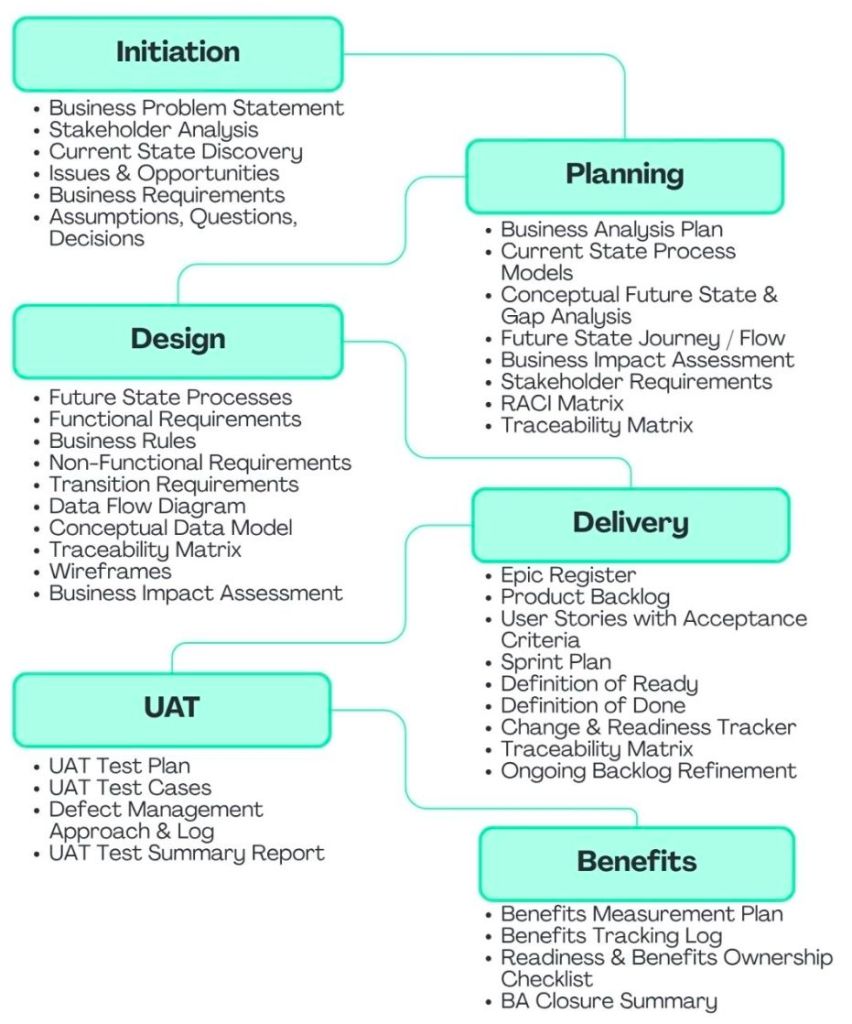
Planning Phase Business Analyst BA Deliverables

Planning Phase Business Analyst BA Deliverables

In the project planning phase, a Business Analyst (BA) focuses on establishing the project’s strategic alignment, defining the baseline scope, mapping stakeholders, and structuring the business analysis methodology.

The critical BA deliverables generated during this phase ensure clarity and alignment across technical and business teams before execution begins.

Strategic & Scope Foundations

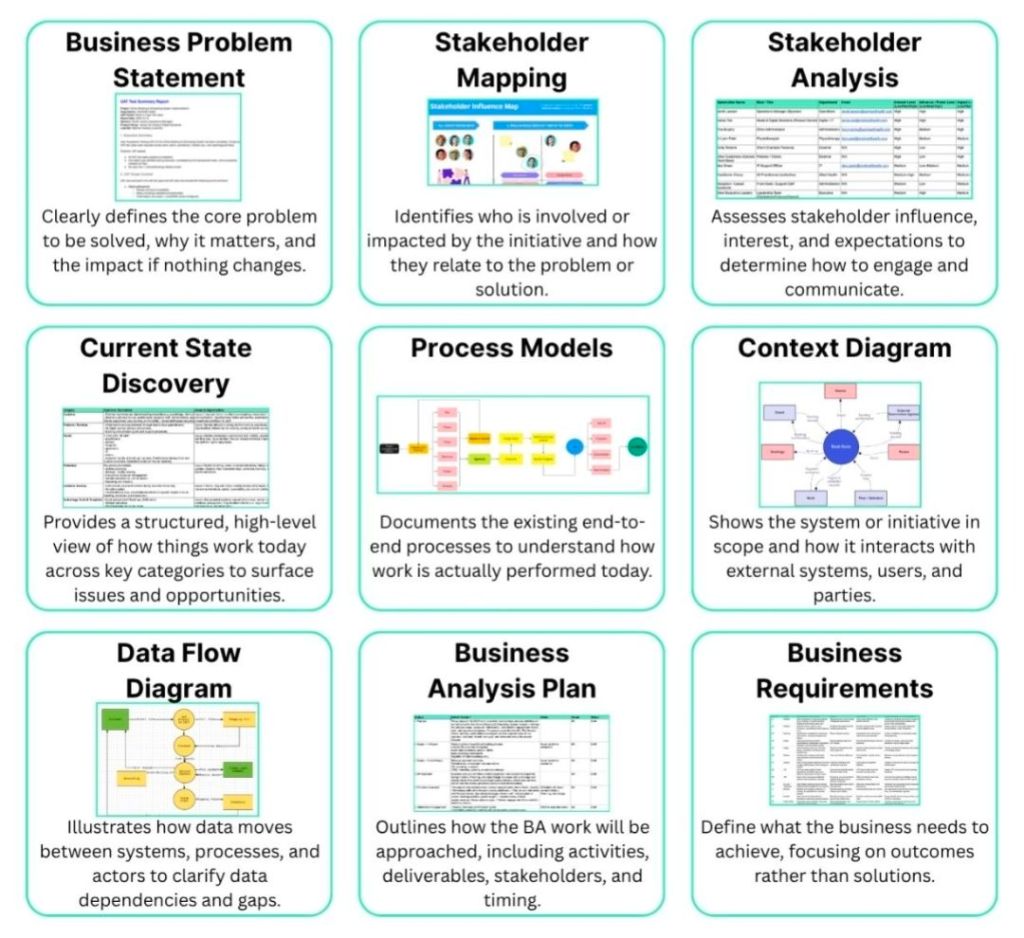
  • Business Problem Statement: Defines the core issue being addressed, why it matters to the organisation, and the downstream impact if no action is taken.
  • Business Case: Outlines the shortlisted, viable operational choices alongside a comprehensive cost-benefit analysis to justify financial investment.
  • Project Vision & Scope: A high-level description outlining system boundaries, project objectives, and structural constraints to prevent eventual scope creep.

Stakeholder & Communication Frameworks

  • Stakeholder Map: Visually identifies all internal and external parties who are involved in, impacted by, or influential to the initiative.
  • Stakeholder Analysis Matrix: Assesses stakeholder interest and decision-making power to customize communication and engagement strategies.
  • Business Glossary: A standardized registry defining critical business terminology to maintain consistent vocabulary across different teams.

Process & Data Models

  • Current State Discovery (“As-Is” Models): A structured overview detailing exactly how today’s workflows, processes, and operating models currently function.
  • High-Level Context Diagram: Maps the structural boundaries of the proposed project, showing how the internal system will interact with external users and data systems.
  • Data Flow Diagram (DFD): Illustrates how information travels visually across different processes, storage points, actors, and functional areas.

BA Execution Planning

  • Business Analysis Approach: Outlines the core delivery methodology (e.g., Predictive/Waterfall or Adaptive/Agile), specifying the timelines, techniques, and governance processes to be used.
  • Requirements Management Plan: Defines the tools for managing requirements, access protocols, configuration control, and how changes to the baseline will be systematically approved.

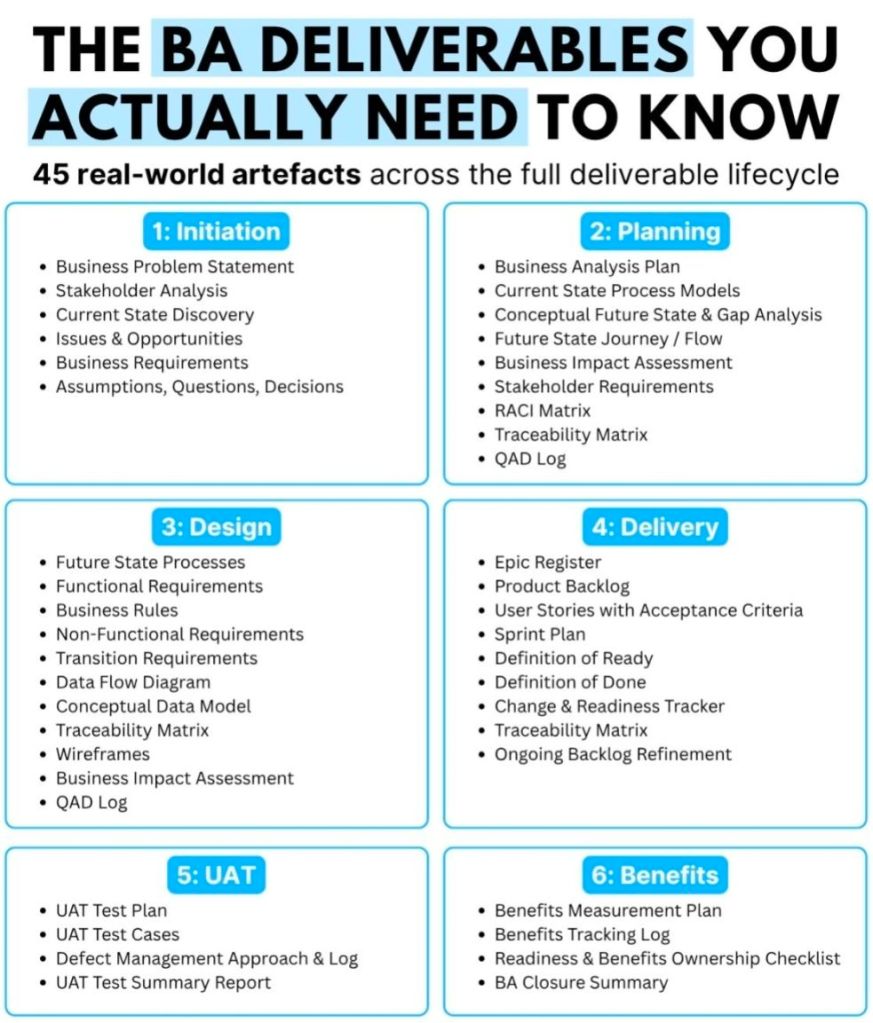
Business Analyst Deliverables across the Full Deliverable Lifecycle

Business Analyst Deliverables across the Full Deliverable Lifecycle

Business Analyst Project Deliverables

Business Analyst BA Project Deliverables
BA, Business Analyst Project Deliverables

Business analyst deliverables are essential documentation and artifacts produced throughout a project to define business needs, bridge gaps between stakeholders and technical teams, and ensure solutions deliver value. Key deliverables include the Business Case, Stakeholder List, Requirement Packages (BRD/User Stories), Process Models, and Transition Requirements.

Core Business Analyst Deliverables by Phase:

  • Initiation/Discovery:
    • Business Case: Outlines the justification for the project, including cost-benefit analysis and ROI.
    • Problem Statement/Project Scope: Defines the “why” and boundaries of the project.
    • Stakeholder Map/Matrix: Identifies key stakeholders and their influence.
  • Planning:
    • Business Analysis Plan: Outlines the approach, tasks, and techniques to be used.
    • Communication Plan: Defines how stakeholders will receive updates.
  • Elicitation & Analysis:
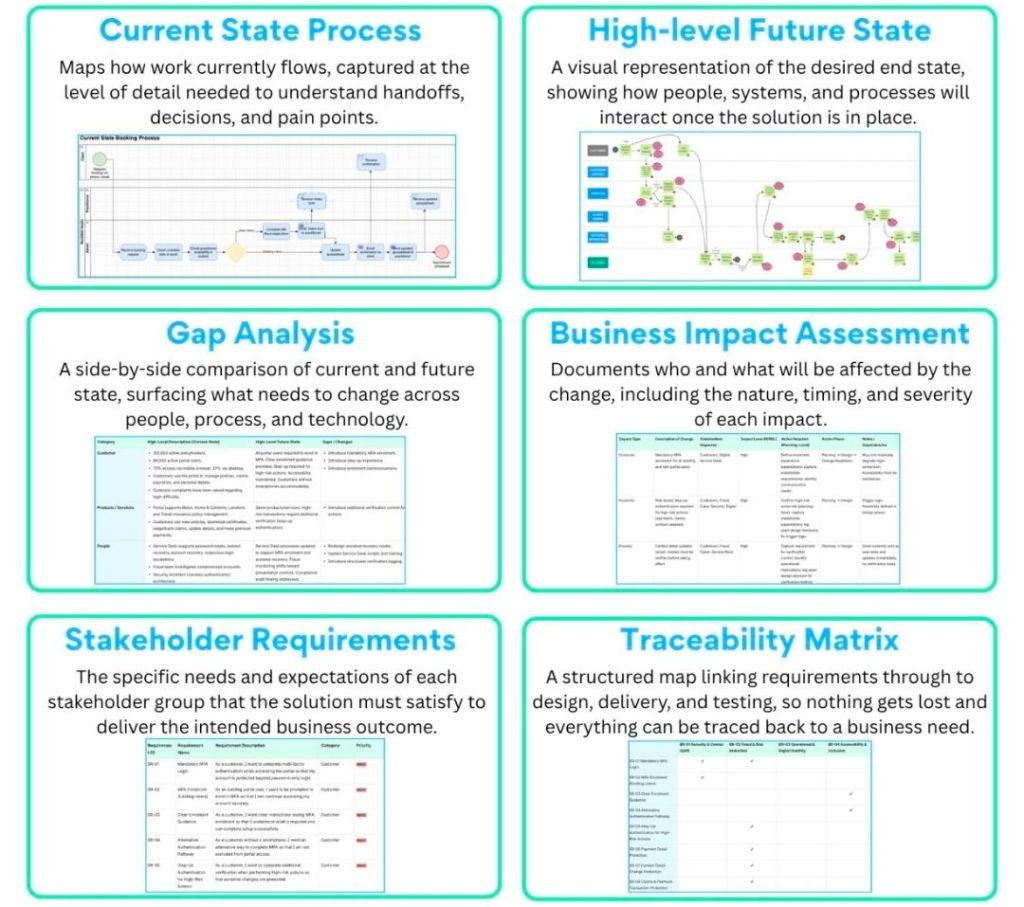
    • Current State Assessment (As-Is): Documents how processes work today.
    • Future State Modeling (To-Be): Visualizes the desired future processes.
    • Gap Analysis: Details what needs to change to get from current to future state.
    • Business Requirements Document (BRD): A formal document detailing what the business needs to achieve.
  • Solution Definition (Design & Implementation):
    • Functional/Non-Functional Requirements (SRS): Technical details on how the system should act.
    • Use Cases/User Stories: Detailed scenarios of user interactions with the system.
    • Prototypes/Wireframes: Visual representations of user interfaces.
    • Product Backlog (Agile): A prioritized list of user stories.
  • Evaluation & Closure:
    • Acceptance Criteria & Test Cases: Defines the criteria for a completed feature.
    • Solution Assessment/Validation Report: Evaluates if the delivered solution met the needs.
    • Lessons Learned/Closing Report: Documents successes and improvements for future projects.

Key Takeaways:

  • Formal vs. Informal: Plan-driven (Waterfall) projects use heavy formal documentation (BRD, SRS), while change-driven (Agile) projects focus on lighter tools like user stories, Jira tickets, and prototypes.
  • Value-Driven: Deliverables exist to facilitate communication, align stakeholders, and ensure project success.

Note: The specific deliverables required are usually determined in the initial project planning stage.

Project Management Deliverables relating to Project Lifecycle

Project management deliverables are the tangible or intangible outputs—products, services, or documents—produced as a result of project activities. They are specific, measurable, and agreed upon by stakeholders to demonstrate progress toward project goals.

Overview of Project Deliverables

Deliverables are essential for breaking down project goals into manageable components, tracking progress, and ensuring stakeholder alignment.

Types of Deliverables:

  • Internal Deliverables: Created for internal use, such as team charters, project plans, and risk logs.
  • External Deliverables: Client-facing, such as a finished software product, marketing campaign, or project report.
  • Process Deliverables: Interim outputs that mark progress, such as prototypes, wireframes, or testing reports.
  • Product Deliverables: The final, completed goods or services delivered.
  • Tangible vs. Intangible: Physical/digital items (e.g., machinery) vs. conceptual outcomes (e.g., a new training program).

Textual/Documentation Deliverables Project Lifecycle

The project lifecycle defines the stages a project goes through from start to finish. Textual and documentation deliverables are key to managing and controlling these stages.

1. Initiation Phase (Initiating)

  • Goal: Define the project at a high level and obtain authorization.
  • Key Deliverables:
    • Business Case: Why the project is needed.
    • Feasibility Study: Whether the project is achievable.
    • Project Charter: A formal document outlining objectives, scope, and key stakeholders.

2. Planning Phase (Planning)

  • Goal: Develop a roadmap for project execution and define constraints.
  • Key Deliverables:
    • Project Management Plan: A comprehensive document (roadmap) detailing tasks, timelines, and resources.
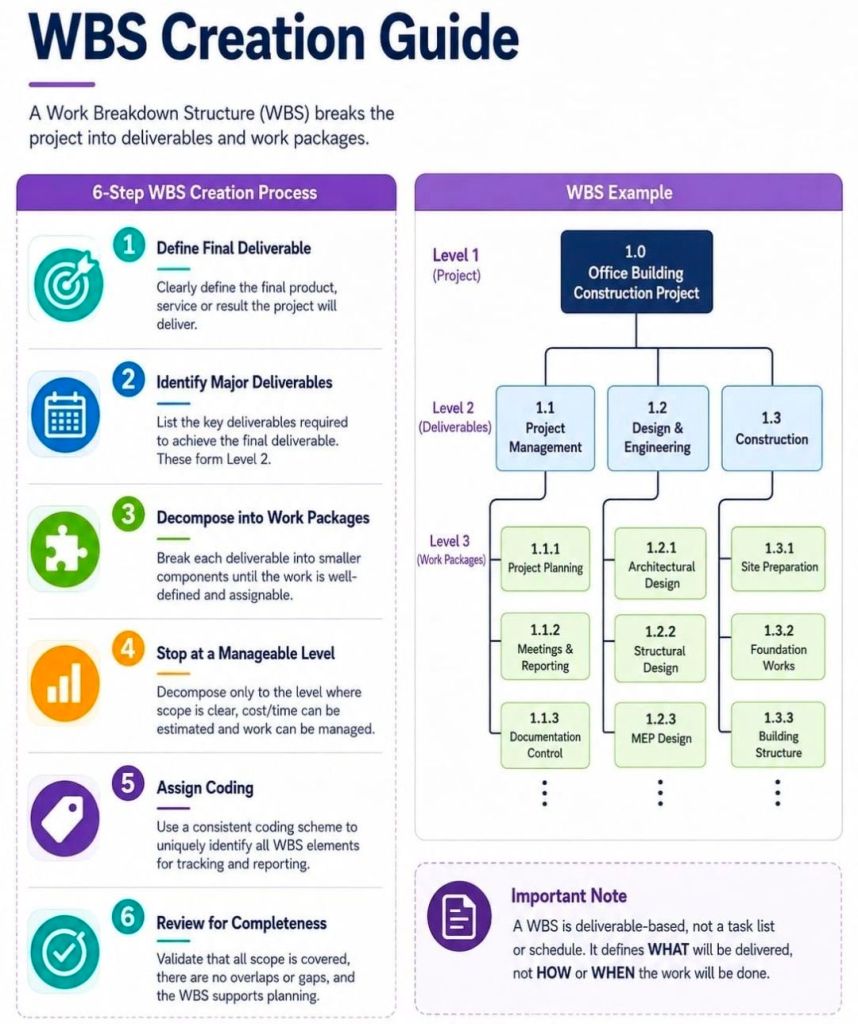
    • Scope Statement/WBS: Defines boundaries and breaks down work.
    • Communication Plan: Strategy for stakeholder communication.
    • Risk Register: Identifies potential threats and mitigation strategies.

3. Execution Phase (Executing)

  • Goal: Carry out the work defined in the plan to produce deliverables.
  • Key Deliverables:
    • Interim Products/Prototypes: Tangible outputs produced.
    • Meeting Minutes/Notes: Documentation of decisions and action items.
    • Change Requests: Documents updating scope or plan.

4. Monitoring and Controlling Phase

  • Goal: Measure performance against the plan and adjust as needed.
  • Key Deliverables:
    • Status Reports: Progress updates on key performance indicators (KPIs).
    • Quality Control Reports: Results of testing and validation.
    • Updated Project Schedule: Reflects current progress.

5. Closing Phase (Closure)

  • Goal: Formally accept deliverables and close out the project.
  • Key Deliverables:
    • Final Product/Report: The completed output.
    • Project Closure Report: Confirms final deliverables and contract closure.
    • Lessons Learned Document: Records successes and areas for improvement.

Best Practices for Managing Deliverables

  • Define Early: Ensure all stakeholders agree on what “done” means at the start.
  • Use Tools: Employ PM software (e.g., Asana, Jira, Monday.com) to track deliverables.
  • Assign Owners: Each deliverable should have a single, clear owner to ensure accountability.
  • Link to KPIs: Connect deliverables to key performance indicators to measure value.

Project Management Deliverables relating to Project Lifecycle

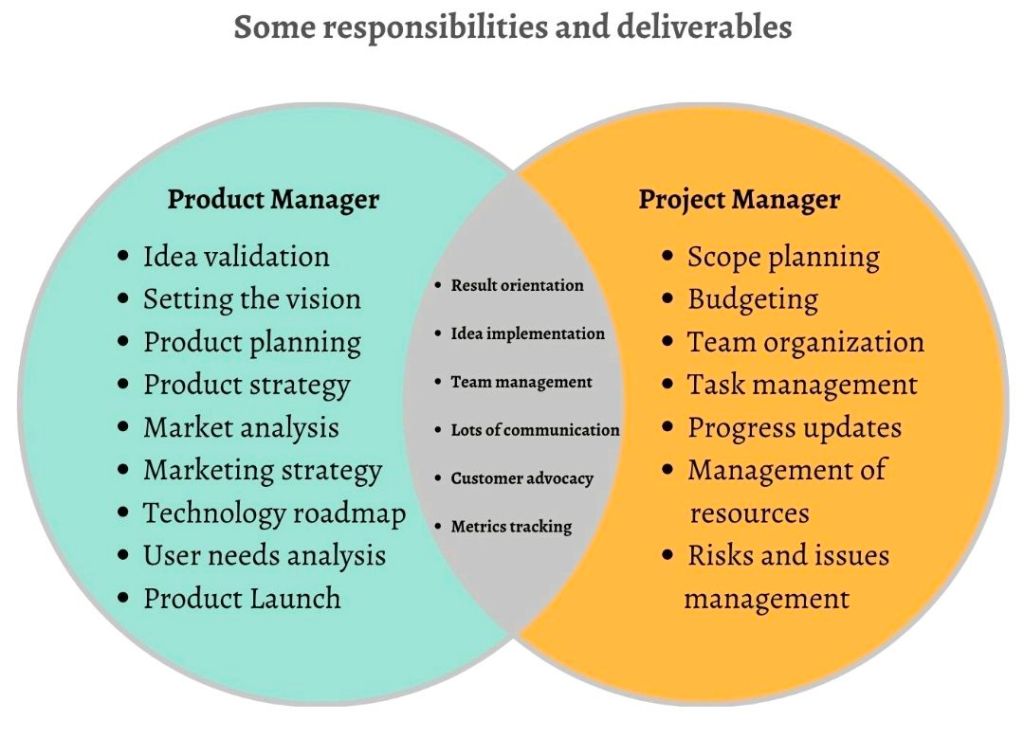
Product Manager and Project Manager responsibilities and deliverables

Product Manager and Project Manager responsibilities and deliverables

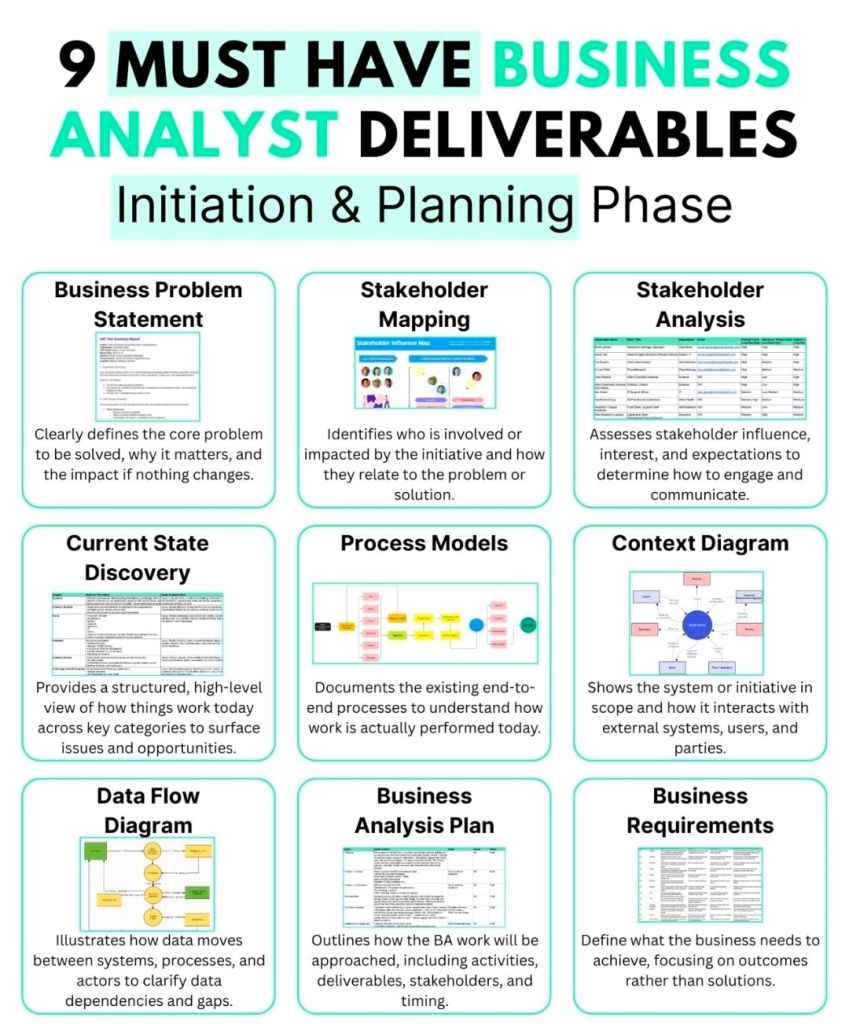
Business Analyst Deliverables for Initiation & Planning Phase

Business Analyst Deliverables for Initiation & Planning Phase

Key Business Analyst Deliverables

Key Business Analyst Deliverables