Microsoft Excel Development Timeline History

Microsoft Excel has evolved from a niche Apple Macintosh tool into the world’s most dominant spreadsheet software. Its history is marked by strategic shifts, such as jumping from the MS-DOS era to graphical interfaces to outmanoeuvre then-leader Lotus 1-2-3

Timeline of Major Excel Milestones

Agile Templates available at download link at website banner
  • 1982: Multiplan (The Predecessor) – Microsoft’s first spreadsheet program. While popular on CP/M systems, it struggled against Lotus 1-2-3 on MS-DOS.
  • 1985: Excel 1.0 (Macintosh Exclusive) – Realising they couldn’t beat Lotus on DOS, Microsoft built a graphical spreadsheet for the new Mac. It introduced the ability to adjust cell heights, widths, and fonts.
  • 1987: Excel 2.0 (First Windows Version) – Launched alongside the first Windows environments, it introduced color support (like red for negative numbers) and was significantly faster than competitors.
  • 1990: Excel 3.0 – Added 3D charts, toolbars, and drawing tools, helping Excel finally overtake Lotus 1-2-3 as the market leader.
  • 1993: Excel 5.0 – A major turning point that introduced Visual Basic for Applications (VBA), allowing users to automate tasks with macros.
  • 1997: Excel 8.0 (Office 97) – Introduced the Paperclip Assistant (“Clippy”) and the first version of the modern VBA environment.
  • 2007: Excel 12.0 (The Ribbon Era) – Replaced menus with the Ribbon interface and dramatically increased grid capacity to 1,048,576 rows by 16,384 columns.
  • 2010: Excel 14.0 – Introduced Slicers for PivotTables and Sparklines (mini charts inside cells).
  • 2013-2016: Data Intelligence – Added Power Query, Power Pivot, and new chart types like Waterfall, Pareto, and Treemap to support advanced data modeling.
  • 2019-Present: AI & Cloud Integration – Modern versions focus on seamless collaboration, dynamic arrays (like XLOOKUP), and AI-powered insights that can extract data directly from images. 

Technological Evolution Highlights

MS Excel templates available on bundle download at website banner
  • Architecture: Shifted from 16-bit to 32-bit with Excel 95, greatly improving stability.
  • Collaborative Features: Modern Version History and “Show Changes” now allow teams to track every edit in real-time.
  • Visualisation: Excel now supports complex timelines via SmartArt or custom Scatter charts with error bars for professional project tracking.

Microsoft Excel Development Timeline History

Microsoft Excel templates available at banner above, FREE upgrades

Microsoft Project Timeline, Development History Overview

Microsoft Project has evolved from a DOS-based tool in the 1980s into a cloud-integrated platform. Its “Timeline” feature specifically has transitioned from a simple static view to a multi-layered, interactive reporting tool. 

Template included in package – see website banner

Timeline Feature Development History

  • Early Era (1984–2007): For decades, the “timeline” was synonymous with the Gantt Chart. Users had to rely on complex print-outs or third-party tools to create high-level summaries for executives.
  • The dedicated Timeline View (2010): Microsoft introduced a native Timeline view in Project 2010, allowing users to cherry-pick specific tasks and milestones to display on a single horizontal bar.
  • Multi-Timeline Support (2016): Project 2016 expanded this by allowing multiple timeline bars in a single view. This enabled managers to represent different project phases or workstreams with independent start and end dates.
  • Cloud & Web Integration (2019–Present): With the launch of Project for the web, timelines became more interactive, supporting drag-and-drop adjustments and real-time co-authoring.
  • Task History Tracking (2023): Microsoft added a Task History pane to the web version, allowing users to see a chronological log of changes to specific timeline items. 

Key Components of a Modern MS Project Timeline

Templates included in download bundle – see website banner
  • Gantt-Style Visualization: Displays tasks as horizontal bars against a calendar timescale.
  • Milestones & Callouts: Important dates appear as diamonds or labels that can be dragged above or below the main bar to avoid clutter.
  • Dependencies: Visual links between tasks that illustrate the sequence of work and the Critical Path.
  • Copy for Presentation: A dedicated formatting tool that allows users to export the timeline directly to Microsoft PowerPoint or email at various sizes (Small, Medium, Full Size). 

Future Outlook

Template included in download bundle – see website banner

Microsoft has announced that Project Online will be officially retired on 30 September 2026, with development focus shifting entirely to the new Microsoft Planner and Project for the web ecosystem.

Microsoft Project Timeline, Development History Overview

ITSM IT Service Management Framework Overview

ITSM IT Service Management Framework Overview

Mark Whitfield, Senior IT Project Manager – Training Timeline

Mark Whitfield, a Senior Project Manager currently at Capgemini UK, has documented a detailed IT and Management training timeline spanning over three decades: 

Technical Training Timeline

  • July 2024: Microsoft Excel Refresher 2024 (Udemy)
  • July 2014: Advanced Microsoft Excel 2013
  • July 2011: Google Android programming (Eclipse IDE)
  • June 2011: Java programming (Eclipse IDE)
  • November 2009: HP NonStop Security (SRM) & PayShield 9000
  • July 2009: Business Intelligence Reporting Tools (BIRT)
  • March 2009: Querying MS SQL 2000 with Transact SQL
  • January 2007: Developing Web Apps using Visual Studio .NET
  • March 1997: C / C++ Programming (Comtec)
  • June – Nov 1995: HP NonStop Performance, Analysis, Tuning & TAL Programming

Management & Methodology Training

  • February 2022: AZ-900 Microsoft Certified Azure Fundamentals
  • November 2019: Resilience and Peak Performance (Capgemini)
  • November 2017: Advanced Engagement Management Certification Level 2
  • January 2012: ITIL Foundation Course
  • May 2011: PRINCE2 Practitioner, Foundation, and Agile Scrum Course (RADTAC)
  • January 2006: PRINCE2 Project Management Foundation
  • February 2000: Successful Project Management (SkillPath)
  • October 1999: Managing Multiple Projects, Objectives and Deadlines 

Foundational Education

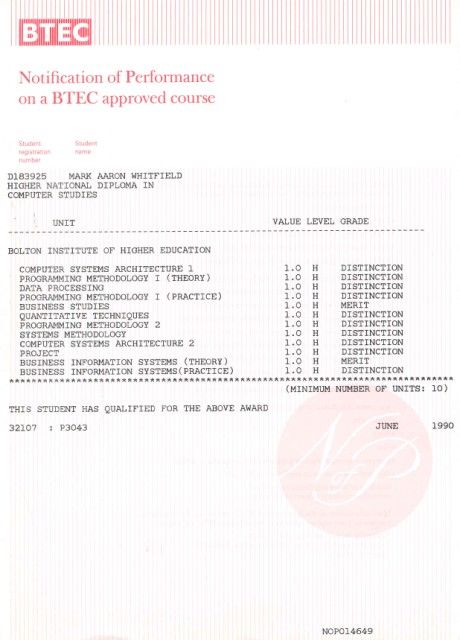
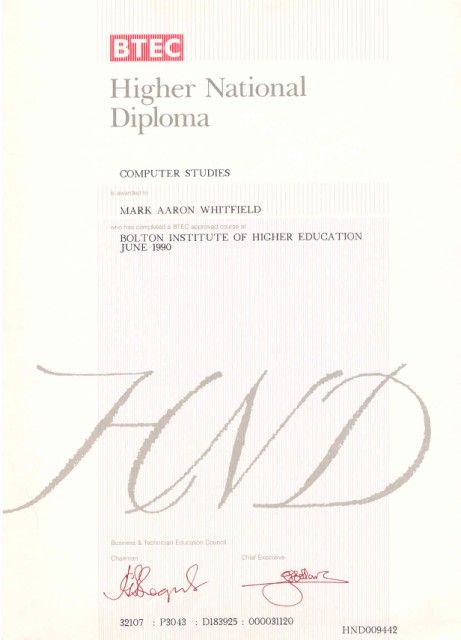
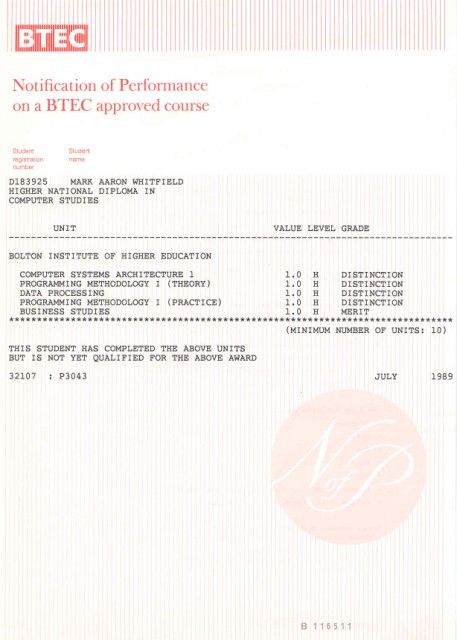
  • 1988 – 1990: BTEC HND Computing (Distinction) at Bolton Institute of Higher Education.
  • 1985 – 1988: A-Levels in English, Biology, and Computing at Leigh College. 

Mark Whitfield, Senior IT Project Manager – Training Timeline

sp/ARCHITECT-BANK module – development in Runcorn, Cheshire by The Software Partnership

The software known as sp/ARCHITECT (specifically the sp/ARCHITECT-BANK module) has a timeline tied to its development in Runcorn, Cheshire, by a firm originally called The Software Partnership

Company & Product Timeline

  • Mid-1980s: The Software Partnership is co-founded by Nigel Walsh.
  • 1989: The company begins significant operations in Runcorn, initially at Wingate Drive (Timperley) and later moving to Norton House in Crowngate.
  • 1990–1994: Development period for sp/ARCHITECT in Runcorn. The software was a banking system used by major institutions including TSBBank of Scotland, and Rabobank.
  • 1992: The firm relocates its Runcorn base to Wingate House on Northway.
  • 1994: The Software Partnership is acquired by the American company Deluxe Electronic Payment Systems (a division of Deluxe Corporation).
  • Post-1994: Following the acquisition, the entity operated as Deluxe Data International Operations.
  • Later Transitions: The lineage of the Runcorn operations eventually merged into larger fintech entities, including eFundsEFD, and ultimately FIS
Deluxe Data, Wingate House
The Software Partnership, Norton House

sp/ARCHITECT-BANK module – development in Runcorn, Cheshire by The Software Partnership

Project Management Templates Bundle FREE Upgrades

Mark Whitfield’s project management templates offer a range of timeline and planning views designed for Agile, Waterfall, and PRINCE2 delivery. These templates typically include a high-level Plan on a Page (POaP) and detailed Microsoft Project (MPP) or Excel schedules. 

Example Plan on a Page POaP

Timeline & Planning Views

  • Plan on a Page (POaP): A high-level summary view (often in PowerPoint or Excel) used to communicate key phases and milestones to stakeholders without the clutter of a full Gantt chart.
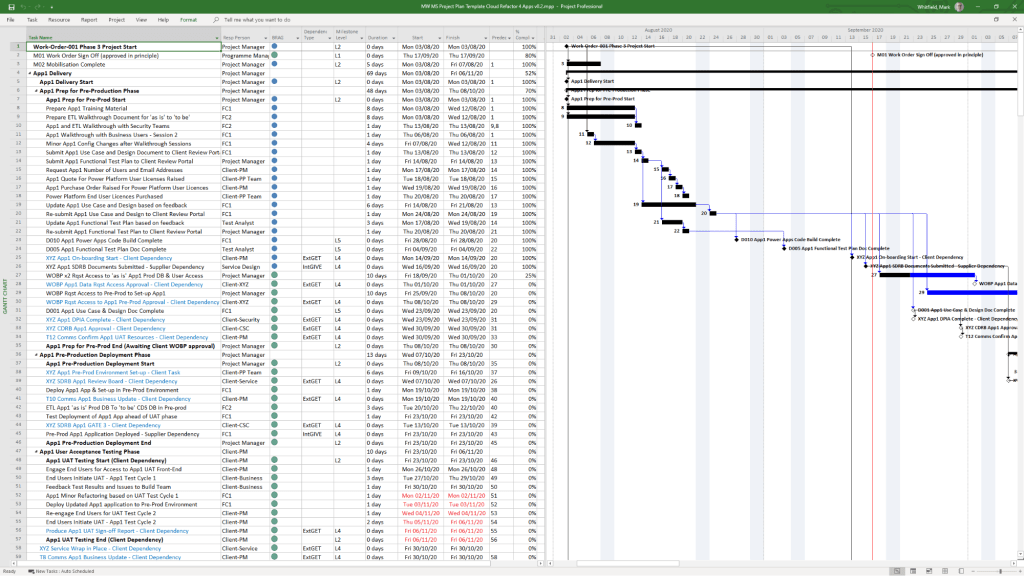
  • Detailed Gantt Charts: Provided in both Microsoft Project (MPP) and Excel, these timelines include task dependencies, resource allocations, and critical path tracking.
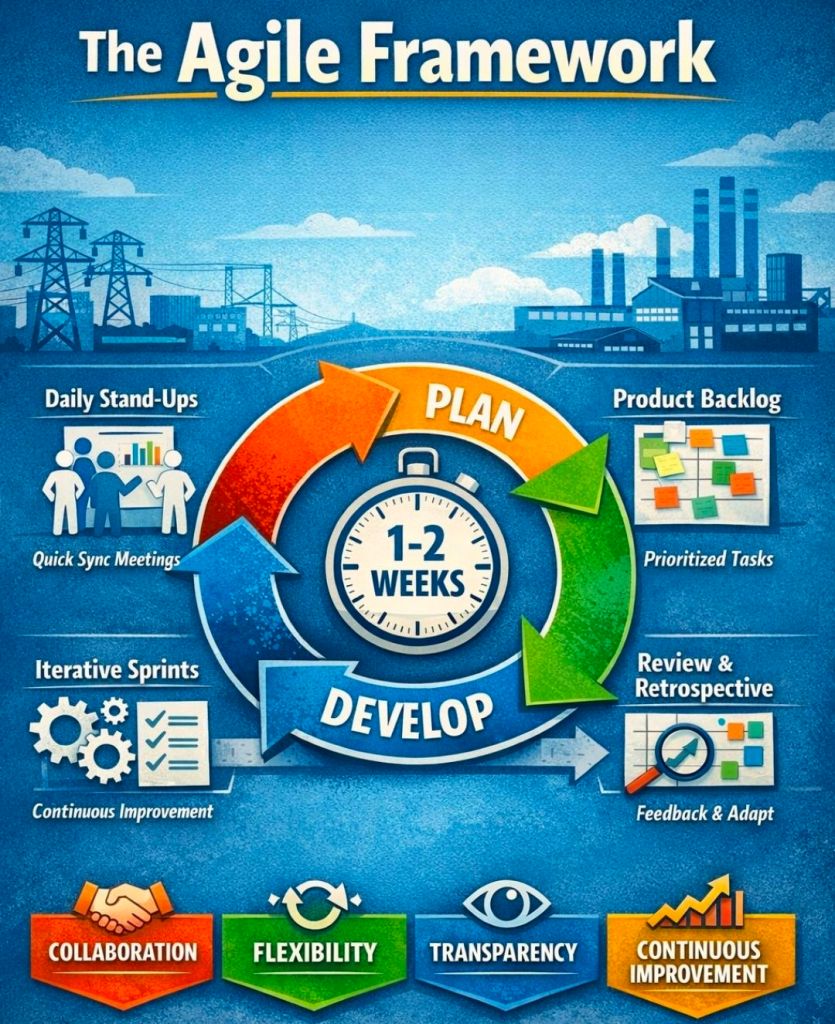
  • Agile Sprint Timelines: Specialized views for tracking 2–4 week sprints, daily stand-ups, and sprint retrospectives within a broader project framework.
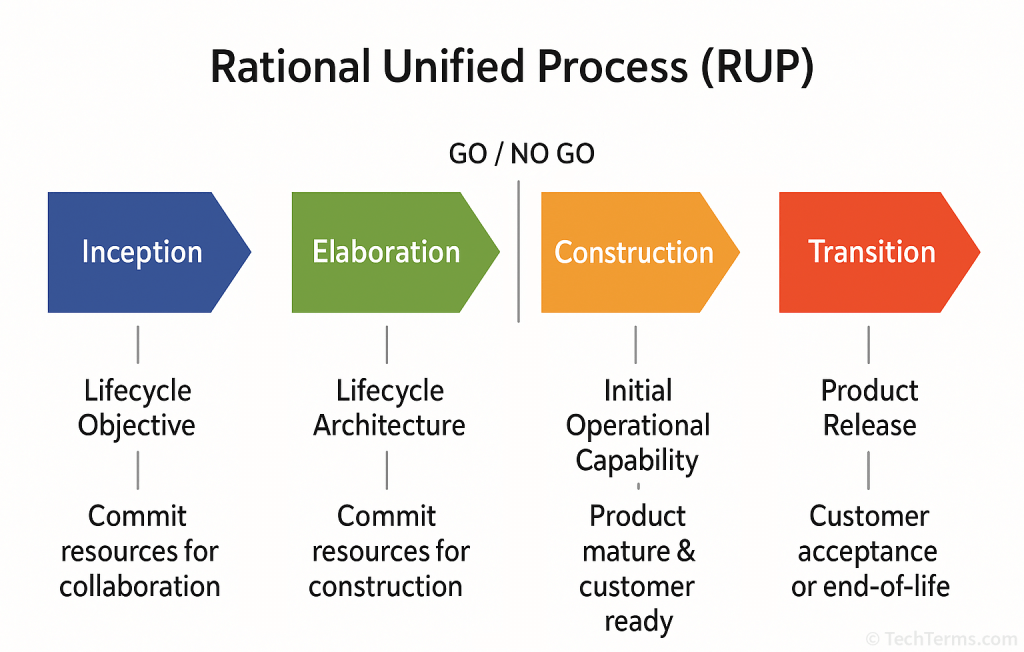
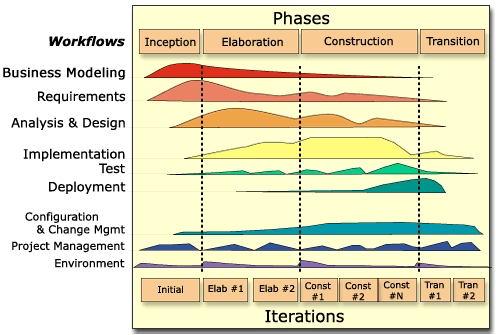
  • SDLC Progression: The templates are often structured around a typical Software Development Life-cycle (SDLC), moving from Inception to Transition and Early Live Support (ELS). 

Key Timeline Components

The templates are pre-configured with several essential timeline elements: 

  1. Project Start & End Dates: Easily adjustable fields that automatically update durations and downstream tasks.
  2. Milestones & Gateways: Visual markers for critical sign-off points and delivery stages.
  3. Task Dependencies: Pre-built links that show how delays in one area (e.g., hardware delivery) impact the overall project finish date.
  4. Resource View: Timelines integrated with resource calendars to account for holidays and leave. 

You can find the full package of over 200 editable templates, which include these timeline views and RAID logs, on Mark Whitfield’s official website or via his Etsy store

Project Management Templates Bundle FREE Upgrades

HPE NonStop Tandem Timeline History

HPE NonStop (originally Tandem) has a nearly 50-year history as the gold standard for fault-tolerant, “always-on” computing. Originally developed by Tandem Computers to eliminate single points of failure, the platform has survived through several major corporate acquisitions while evolving its underlying processor architecture. 

Founding and The Tandem Era (1974–1997)

The “NonStop” architecture was born from the idea that a single hardware failure should never crash a system.

  • 1974: Tandem Computers is founded by Jimmy Treybig and three former HP engineers.
  • 1976: The first Tandem/16 (later NonStop I) is shipped to Citibank. It featured a “shared-nothing” architecture where each CPU had its own memory and copy of the Guardian OS.
  • 1981: NonStop II is released, introducing 32-bit addressing to support larger applications.
  • 1983: The NonStop TXP and Pathway software are introduced. Pathway revolutionized the platform by allowing programmers to write fault-tolerant apps without manually coding “checkpoints”.
  • 1986: NonStop SQL is launched, the first fault-tolerant relational database.
  • 1989: NonStop Cyclone arrives, a high-end mainframe-class system.
  • 1991–1993: Transition to MIPS RISC processors begins with the Cyclone/R and the Himalaya K-series

Corporate Acquisitions and Transition (1997–2014)

The platform changed hands twice in five years, but the mission-critical nature of the technology kept it alive.

  • 1997: Compaq acquires Tandem for $3 billion to bolster its enterprise server offerings.
  • 1997: The Himalaya S-Series introduces ServerNet, a high-speed interconnect that later evolved into the industry-standard InfiniBand.
  • 2002: HP merges with Compaq, bringing the NonStop line under Hewlett-Packard.
  • 2005: NonStop i (Integrity) is launched, transitioning from MIPS to Intel Itanium processors. 

The Modern HPE Era (2015–Present)

Today, the platform focuses on integrating with modern data centre standards like x86 and cloud-native virtualisation. 

  • 2014–2015: NonStop X (TNS/X) is introduced, moving the architecture to industry-standard Intel x86-64 processors.
  • 2015: HP splits; the server line becomes part of Hewlett Packard Enterprise (HPE).
  • 2017: Virtualised NonStop (vNS) is released, allowing the software stack to run in virtual machines (KVM/OpenStack).
  • 2020: HPE officially ends sales of Itanium-based systems, completing the transition to x86.
  • 2024: The platform celebrates its 50th anniversary, continuing to power the majority of the world’s ATM and credit card transactions

HPE NonStop Tandem Timeline History

My Career in HPE NonStop Tandem, 1995 thru 2013
My Career in HPE NonStop Tandem, 1990 thru 1995

Agile Scrum Timeline and Overview

In Scrum, the “timeline” is typically structured as a repeatable, time-boxed cycle known as a Sprint, which usually lasts between one and four weeks. Each sprint follows a strict sequence of “ceremonies” designed to ensure constant delivery and feedback. 

The Standard Sprint Timeline (2-Week Example)

The following is a common chronological breakdown of a typical 10-day (two-week) sprint:

  1. Day 1: Sprint Planning
    • Goal: Define what will be delivered and how.
    • Activity: The Product Owner presents prioritized items from the Product Backlog. The team selects items to move into the Sprint Backlog.
  2. Days 2–9: Development & Daily Scrum
    • Development: The team works in parallel on design, coding, and testing.
    • Daily Scrum: A 15-minute “stand-up” held every morning. Team members sync on progress and identify blockers.
  3. Ongoing: Backlog Refinement
    • Goal: Prepare for future sprints.
    • Activity: The team reviews upcoming backlog items to ensure they are “ready” for the next planning session.
  4. Day 10: Sprint Review & Retrospective
    • Sprint Review: A demo for stakeholders to show the Product Increment (completed work) and gather feedback.
    • Sprint Retrospective: An internal meeting where the team reflects on their process to improve for the next cycle. 

Strategic Project Phases

While the sprint is the heart of execution, a broader Agile project often follows these foundational stages: 

  • Concept/Ideation: Defining project vision, high-level requirements, and initial scope.
  • Inception: Building the team, setting up architecture, and creating a mock-up.
  • Construction (Iterative Sprints): The primary execution phase consisting of multiple back-to-back sprints.
  • Release/Deployment: Final testing, security checks, and launching the product increment to production.
  • Maintenance & Operations: Ongoing support, bug fixes, and incorporating user feedback into new sprints. 

Time Allocation (The 15/10/5 Rule)

For a standard sprint, many teams use a percentage-based guide to manage ceremony time: 

  • 15% for Sprint Planning.
  • 10% for Sprint Review.
  • 5% for Sprint Retrospective. 

For more hands-on planning, tools like the Wrike Sprint Template or Jira Timelines can help visualize these cycles across a long-term roadmap.

Agile Scrum Timeline and Overview

PRINCE2 – PRojects IN Controlled Environments – Timeline

PRINCE2 (PRojects IN Controlled Environments) has evolved from a rigid, IT-specific framework into a globally recognised, flexible project management standard. 

Historical Evolution Timeline

  • 1975: PROMPT Origins – Simpact Systems Ltd developed PROMPT (Project Resource Organisation Management and Planning Techniques) to address IT project overruns.
  • 1989: The Birth of PRINCE – The UK’s Central Computer and Telecommunications Agency (CCTA) licensed PROMPT, renaming it PRINCE (originally “PROMPT II IN the CCTA Environment”).
  • 1996: PRINCE2 Launch – Developed with input from 150 European organisations, PRINCE2 was released as a generic, scalable framework suitable for any industry.
  • 2000–2013: Ownership Shifts – Ownership moved from the CCTA to the Office of Government Commerce (OGC) in 2000, then to AXELOS Ltd (a joint venture) in 2013.
  • 2009: Major “Refresh” – Introduced the seven core principles and made the method more customisable.
  • 2017: 6th Edition Update – Formerly known as the “2017 Update,” this version focused heavily on scalability and tailoring to specific project needs.
  • 2021–Present: PeopleCert Era – PeopleCert acquired AXELOS in 2021. In 2023, PRINCE2 7 was launched, introducing a greater emphasis on people management and sustainability. 

Comprehensive Project Timeline Breakdown

A standard PRINCE2 project follows a lifecycle defined by seven processes

  1. Pre-Project: Starting up a Project (SU)
    • Ensures the project is viable and worthwhile.
    • Key Output: Project Brief.
  2. Initiation: Initiating a Project (IP)
  3. High-Level Oversight: Directing a Project (DP)
    • An ongoing process where the Project Board provides guidance and makes key decisions without managing day-to-day tasks.
  4. Day-to-Day Management: Controlling a Stage (CS)
    • The Project Manager monitors work, manages risks, and reports progress for each individual stage.
  5. Technical Delivery: Managing Product Delivery (MP)
    • The Team Manager ensures products (deliverables) are created, tested, and handed over according to specifications.
  6. Transition: Managing a Stage Boundary (SB)
  7. Finalisation: Closing a Project (CP)
    • The formal decommissioning of the project, ensuring all products are accepted and lessons are documented. 

PRINCE2 – PRojects IN Controlled Environments

BASE24 and core Networking Component XPNET timeline

The technical timeline for BASE24 and its core networking component, XPNET, reflects the evolution of high-availability payment switching on HP NonStop (Tandem) systems.

Technical Evolution Timeline

  • 1980s: The Foundation
    • BASE24 Release: Originally developed by Applied Communications Inc. (now ACI Worldwide), BASE24 was built for the Tandem Guardian operating system.
    • XPNET Introduction: Developed as the Message-Oriented Middleware (MOM) to handle all transaction routing and communications. It introduced a multi-node architecture allowing different “satellite” processes (ATM, POS, Host) to communicate.
  • 1990s: Scale and Maturity
    • Classic Era: BASE24 “Classic” became the industry standard for ATM and POS switching.
    • XPNET 3.x: Enhanced to support larger networks and more complex auditing through NCPCOM.
    • Language & DB: The system relied on TAL (Tandem Application Language), COBOL, and the Enscribe database.
  • 2000s: The Shift to BASE24-eps
    • 2003–2005: ACI introduced BASE24-eps (Electronic Payment Systems). This was a re-architecture using C++ and Java to provide platform independence.
    • XPNET 4.1: Released to support the transition, adding features like Common Transport Subsystem (CTS) for better Pathway integration and support for external processes.
    • z/OS Support: By 2009, BASE24-eps was fully ported to IBM z/OS using CICS and VSAM.
  • 2010s – Present: Modernisation & Cloud
    • 2014–2017: Continued updates to BASE24 Classic R6.0, maintaining its relevance for legacy users.
    • Cloud Enablement: Recent versions of BASE24-eps focus on REST API integration via tools like LightWave, allowing legacy XPNET paths to be exposed as web services.
    • Active/Active Environments: Modern implementations focus on “continuous availability” using GoldenGate for data replication between sites. 

Key Technical Components

  • NMM (Network Management Module): The core process of XPNET that manages the configuration of lines, stations, and links.
  • LCONF: The Logical Network Configuration File used by XPNET to define how messages route between processes.
  • Auditing: XPNET provides the primary transaction auditing mechanism, which is still utilized by both Classic and eps versions.

BASE24 and core Networking Component XPNET

HPE NonStop Tandem ViewPoint EMS Event log viewer

The timeline of HPE NonStop ViewPoint (and its modern successor, Web ViewPoint) reflects the evolution of NonStop systems from Tandem’s fault-tolerant beginnings to Hewlett Packard Enterprise’s modern cloud-integrated management. 

Detailed History Timeline

  • Pre-2000: Legacy ViewPoint
    • Originally developed for the Tandem NonStop platform to provide a graphical operations interface for monitoring system status and events.
    • Featured early support for DSM/PM (Distributed Systems Management/Performance Monitor) and event management through primary and alternate event logs.
  • 2003–2005: Transition to Web ViewPoint
    • September 2003: Version 4 AAD released as an early iteration of the web-based management tool.
    • May–October 2004: Progressive upgrades (Versions 5.0 and 5 AAF) introduced refined management capabilities for S-Series servers.
    • March 2005: Version 5 AAG released, consolidating features for the S-Series.
    • November 2005: Web ViewPoint for Itanium (Version H01AAI) launched, marking the shift to the Intel Itanium-based Integrity NonStop architecture.
  • 2013–2015: The x86 Revolution & Virtualization
    • 2014: Support for Intel x86 architecture was officially announced, leading to the launch of NonStop X.
    • Evolution to Web ViewPoint Enterprise (WVP E): The platform evolved into an automated management product, eventually adding integration with cloud-based analytics like HPE Remote Analyst.
  • 2018–Present: Modern Hybrid Cloud Era
    • L-Series Support: Continued updates provided support for L-Series operating environments and enhanced security monitoring.
    • 2023–2024: Recent developments focus on Web ViewPoint Enterprise, featuring a global configuration platform and enhanced historical data capture through integrations like Sentinel for HPE NonStop

For more specific documentation, you can browse the HPE NonStop Manuals on the HPE Support Center

MultiBatch is a high-performance, mainframe-class workload automation and batch scheduling solution

MultiBatch is a high-performance, mainframe-class workload automation and batch scheduling solution specifically designed for the HPE NonStop parallel architecture (formerly Tandem). It is developed by ETI-NET (formerly by Insider Technologies) to manage complex batch schedules across both NonStop Guardian and OSS environments. 

Key Milestones and Timeline

  • 1976 – Tandem NonStop Origins: The foundation for these systems was established with the introduction of the first NonStop servers by Tandem Computers.
  • 2017 – MultiBatch Release: Insider Technologies announced an updated release of MultiBatch to enhance off-line processing flows for the HPE NonStop arena.
  • 2019 – GUI and Monitoring Enhancements: Real-time status monitoring through a GUI interface was highlighted as a major differentiator, allowing users to visually track complex batch schedules like RTGS and securities settlements.
  • 2020 – Business Benefits Proven: Case studies demonstrated that MultiBatch could reduce online-dealing batch times by up to 6 hours per day.
  • 2022 – MultiBatch 10 for TBC: MultiBatch 10 was presented at the NonStop Technical Boot Camp (TBC), positioning it as the only workload manager for NonStop built on continuous innovation principles.
  • 2024 – Modernization and Security: Recent updates focused on securing and modernizing the platform for high-performance multitasking

Core Functionality

  • Parallel Execution: Supports batch schedules that run concurrently across multiple nodes, leveraging the NonStop architecture for high availability.
  • Hybrid Support: Seamlessly integrates both Guardian and OSS jobs within a single schedule.
  • Batch Prediction: Uses historical metrics in a status database to predict schedule completion times based on average and maximum elapsed run times.
  • Simplified Migration: Unlike NetBatch, it allows for extracting and inserting schedules between environments (e.g., test to production) without TACL changes.

MultiBatch is a high-performance, mainframe-class workload automation and batch scheduling solution

Mark Whitfield IT Career Timeline, AI generated from Google

The technical timeline for 

Mark Whitfield, an SC cleared, Senior IT Project Manager and Engagement Manager, spans over 30 years and transitions from specialized banking software development to high-level project leadership and cloud migrations. 

Professional Career Timeline

  • 1990 – 1994: Programmer at The Software Partnership (later Deluxe Data). Developed electronic banking software (sp/ARCHITECT-BANK) on Tandem Computers (now HPE NonStop) for major banks like TSB and Bank of Scotland.
  • 1994 – 1995: Lead Analyst at Deluxe Data International, continuing support and development for banking customer systems.
  • 1995 – 2013: Project Manager of Strategic Technical Initiatives at Insider Technologies Limited. Oversaw projects involving Reflex 80:20, Sentra development, and corporate website authoring.
  • 2013 – 2014: Project Manager (Banking Division) at Wincor Nixdorf Limited, focusing on professional services for the banking sector.
  • 2014 – 2016: Senior Digital Project Manager at Betfred Limited, managing the Online and Mobile Division.
  • 2016 – Present:Engagement Manager / Senior PM at Capgemini UK.
    • 2016: Led a £4.3M data centre migration for Royal Mail (RMG) involving 1,100+ interfaces.
    • 2018 – 2019: Augmented into MuleSoft as a Delivery Manager for the Anypoint Platform.
    • 2020 – Present: Leading a £13.5M cloud migration program moving 130 UK government apps to Azure and AWS. 

Technical Training & Education

Whitfield maintains an active Professional Training timeline to adapt to changing technologies:

  • 1990: Graduated in Computing.
  • 1995: HP NonStop TAL Programming and Performance Tuning.
  • 1997: C/C++ Programming at Comtec.
  • 2006 – 2009: Deep dive into security and databases, including Cryptography, Thales e-Security, and Microsoft SQL 2000.
  • 2011: Java and Google Android programming using Eclipse IDE.
  • 2014 – 2024: Advanced Microsoft Excel and AI-focused refreshers. 

He is also a Certified Engagement Manager and a registered PRINCE2 Practitioner proficient in both Agile Scrum and Waterfall methodologies.

The Strategy Loop

The Strategy Loop

Betfred Historical timeline

Betfred’s journey from a single shop in Salford to a global betting powerhouse is marked by bold innovations and high-profile acquisitions. 

Historical Timeline

  • 1967: Brothers Fred and Peter Done open their first betting shop in Salford, Greater Manchester, using winnings from a bet on England to win the 1966 World Cup.
  • 1984: Launch of the Lucky 15 bet, a major industry innovation that remains popular today.
  • 1997: The company expands to over 100 shops.
  • 1998: Fred Done becomes the first bookmaker to pay out early, paying on Manchester United to win the Premier League (only for Arsenal to win the title instead).
  • 1999: First major acquisition, purchasing 40 shops from the Demmy Racing Group.
  • 2004: The business is officially rebranded to Betfred. The company also launches its online betting site this year.
  • 2006: Betfred launches one of the industry’s first mobile betting platforms.
  • 2011: Wins the auction to buy The Tote from the UK government for £265 million.
  • 2016: Acquires 322 shops from Ladbrokes and Coral following their merger.
  • 2021: Fred Done steps down as CEO to become Chairman, with Joanne Whittaker taking over the CEO role.
  • 2024–2026: Significant global expansion, establishing a presence in South Africa and the United States, though later scaling back some US online operations in late 2025.

Operational Timelines (Payment & Payouts)

If you are looking for current service timelines for transactions, here are the standard processing windows as of February 2026:

  • Withdrawal Processing: Betfred aims to approve requests within 48 hours.
  • Fastest Methods: Visa Direct and certain E-wallets (PayPal, Skrill) often arrive within 4 to 6 hours.
  • Standard Methods: Bank transfers typically take 2 to 5 working days.
  • Free Bet Credit: Usually credited within 10 hours of a qualifying bet being settled.
My time at Betfred, Wigan

Betfred Historical timeline

Wincor Nixdorf timeline

Wincor Nixdorf’s journey spans from a mid-century German startup to its 2016 merger with Diebold, forming a global leader in banking and retail technology. 

The Early Years (1952–1990)

  • 1952: Heinz Nixdorf founds Labor für Impulstechnik in Paderborn, Germany.
  • 1964: Launches the System 820, a pioneering programmable small computer.
  • 1968: Renamed Nixdorf Computer AG after acquiring Wanderer-Werke.
  • 1980s: Becomes a market leader in European mid-range computing and retail banking systems.
  • 1986: Heinz Nixdorf dies; the company faces financial challenges shortly after. 

Siemens Era & Rebirth (1990–1999) 

  • 1990: Siemens AG acquires the company, forming Siemens Nixdorf Informationssysteme (SNI).
  • 1998: Siemens refocuses the unit exclusively on banking and retail, spinning it off as Siemens Nixdorf Retail and Banking Systems GmbH.
  • 1999: Venture capital firms KKR and Goldman Sachs acquire the unit, rebranding it as Wincor Nixdorf

Expansion & Independence (2000–2015)

  • 2004: Wincor Nixdorf goes public with a successful IPO on the Frankfurt Stock Exchange.
  • 2000s: Expands into IT outsourcing and gains significant global market share in the ATM and EPOS markets.
  • 2015: Carves out its cashless payments unit into a new entity called AEVI

The Merger Era (2016–Present)

  • 2016: American rival Diebold Inc. completes a $1.8 billion acquisition of Wincor Nixdorf, forming Diebold Nixdorf.
  • 2023: After struggling with debt, Diebold Nixdorf files for and successfully emerges from Chapter 11 bankruptcy, restructuring its finances.

Capgemini’s evolution from a small French startup to a global IT leader

Capgemini’s evolution from a small French startup to a global IT leader is marked by strategic mergers and a shift toward high-growth technologies like AI. 

Corporate History Timeline

  • 1967: Serge Kampf founded Sogeti in Grenoble, France, focusing on enterprise management and data processing.
  • 1973–1975: Through hostile takeovers and mergers with CAP and Gemini Computer Systems, the group became CAP Gemini Sogeti.
  • 1985–1988: The company was listed on the Paris Stock Exchange (1985) and entered the CAC 40 index (1988).
  • 1996: The name was simplified to Cap Gemini, and a new logo was launched.
  • 2000: Acquired Ernst & Young Consulting for $11 billion, expanding its global reach, especially in North America.
  • 2004: The brand officially became Capgemini to reflect a unified global identity.
  • 2015: Acquired iGate for $4 billion, making North America its largest market.
  • 2019–2021: Acquired Altran (2019), later rebranded as Capgemini Engineering (2021), to dominate the engineering and R&D services sector.
  • 2024–2025: The strategic focus shifted to AI. In July 2025, Capgemini announced a €3.3 billion deal to acquire WNS Global Services to bolster its agentic AI and intelligent operations. 

Recruitment & Career Timelines

The hiring process typically follows this path:

  • Hiring Process: Usually takes a few weeks, involving application screening, multiple interview rounds (technical and HR), and background verification.
  • Graduate/Mass Hiring: Often conducted via the Superset platform, where status updates like “offered” appear roughly a week after interviews.
  • Graduate Programme: The Accelerate Programme (UK) spans approximately 21 months, starting with a 3-month business overview followed by 18 months in a specific pathway academy.
My own Capgemini career path 2016 – 2025
C&CA UK’s Communications & Engagement Award Winner 2022 – Cloud & Custom Applications – Capgemini UK
Campus – Serge Kampf Les Fontaines, Chantilly, France – Advanced EM Course – November 2017 Class – 2nd from left
November 2017 – Advanced Engagement Management Course – Level 2 Exam

Capgemini’s evolution from a small French startup to a global IT leader

The Software Partnership (TSP) was a Runcorn-based software house

The Software Partnership (TSP) was a Runcorn-based software house co-founded by Nigel Walsh in the mid-1980s. Specialising in on-line banking systems for Tandem and UNIX platforms, the company underwent several acquisitions that integrated its technology into global financial services. 

Corporate Timeline

  • Mid-1980s: Founded as The Software Partnership.
  • 1990: Initial operations were based at Wingate Drive in Timperley before moving to Norton House in Crowngate, Runcorn.
  • 1992: Relocated to Wingate House on Northway, Runcorn.
  • 1994: Acquired by the American firm Deluxe Electronic Payment Systems (a subsidiary of Deluxe Corporation).
  • 2000: The company transitioned to EFD eFunds.
  • 2007: Became part of Fidelity National Information Services (FIS), eventually moving operations to Daresbury Park in Warrington. 

Key Products

The company’s primary legacy is the development of sp/ARCHITECT-BANK, a software suite designed for secure card management and electronic transaction processing. This technology became a foundational component for the secure payment systems later managed by Deluxe Data and FIS

The Software Partnership, Norton House, Crowngate, Runcorn, Cheshire
The Software Partnership (TSP) was a Runcorn-based software house
Deluxe Data International Operations, Wingate House, Northway

https://mark-whitfield.com/career/tsp-deluxe-data-1990-1995/

HPE NonStop Tandem Transaction Logs

HPE NonStop Tandem Transaction Logs

Capgemini C&CA UKs Communications and Engagement Award Winner – Cloud and Custom Applications

Capgemini C&CA UKs Communications and Engagement Award Winner – Cloud and Custom Applications