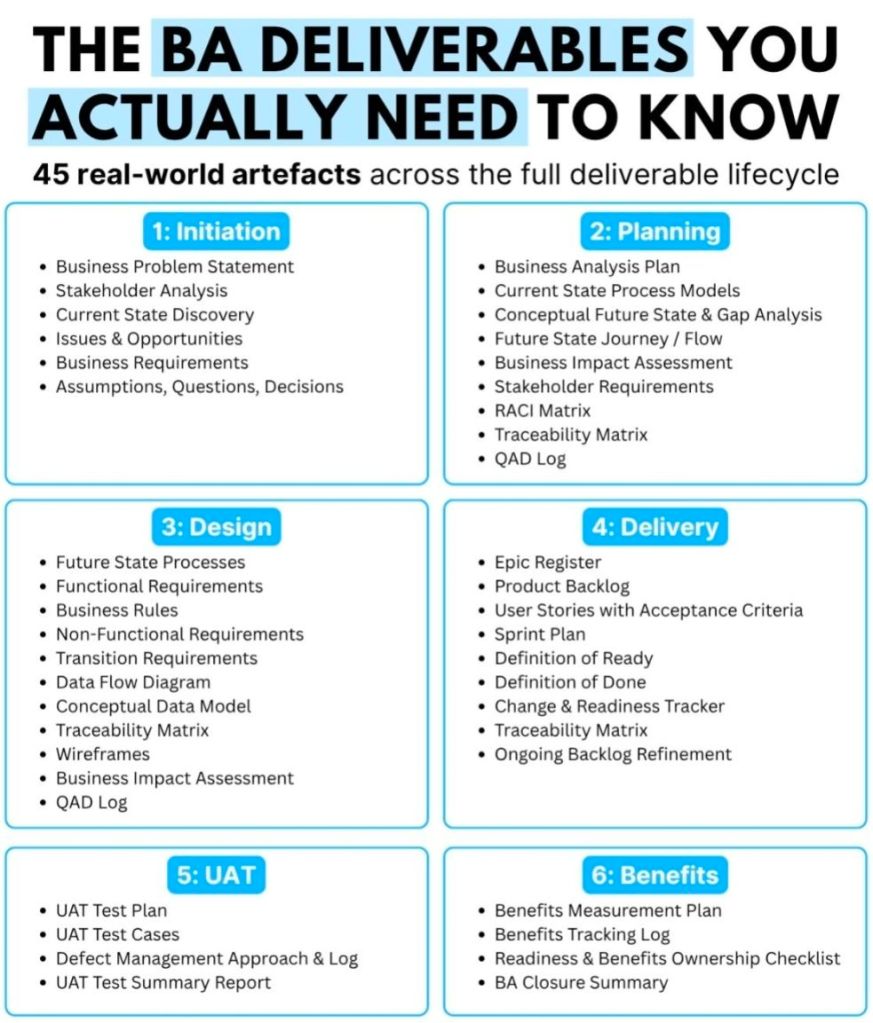
Download Templates for PROject Management | FREE Upgrades & Additions
Author: Mark Whitfield
Welcome to my site!
After graduating in Computing in 1990, I accepted a position as a programmer at a Runcorn based software house specialising in electronic banking software, namely sp/ARCHITECT-BANK on Tandem Computers (now HPE NonStop). This was before the internet became more prevalent and so the notion of enabling desktop access to company accounts for inter-account transfers and book keeping was still quite a cutting edge idea (and smartphones only ever hinted at in Space 1999). The company was called The Software Partnership (which was taken over by Deluxe Data in 1994).
I spent 5 years in Runcorn developing code for SP/ARCHITECT for various banks like TSB, Bank of Scotland, Rabobank and Girofon (Denmark) to name but a few. I then moved onto a software house in Salford Quays for further bank facing projects. After a further 23 years in the IT industry and now a Senior IT Project Manager (both Agile and Waterfall delivery), I thought I would echo out my Career Profile in this corner of the internet for quick and easy access.
These terms map directly to the foundational 1990s technology stack behind Barclays Business Master II (BBM II), one of the UK’s earliest enterprise electronic desktop banking platforms.
Before the mainstream internet, this corporate banking infrastructure relied on specialized high-availability mainframe software to process secure corporate transactions.
🧱 Architectural Component Breakdown
Barclays Business Master (BBM / BBM II): A landmark corporate desktop electronic banking solution developed by Barclays Bank. It allowed businesses to dial directly into the bank to perform inter-account transfers, check balances, and automate book-keeping long before web browser banking became standard.
sp/ARCHITECT (or sp/ARCHITECT-BANK): The core electronic banking software package that powered BBM. It was originally engineered in the late 1980s and early 1990s by The Software Partnership (a UK-based fintech software house based in Runcorn that was later acquired by Deluxe Data). It eventually evolved into the widely known CONNEX advantage payment solution.
NonStop (Tandem Computers): The underlying hardware and operating system environment. Because banking infrastructure requires absolute uptime, sp/ARCHITECT was built to run on Tandem NonStop fault-tolerant computers (now HPE NonStop). These systems utilize a unique “shared-nothing” architecture to ensure zero transactional data loss.
💻 Legacy Technical Environment
During the era when BBM was deployed across Barclays’ tech hubs (such as Knutsford), developers working on this specific stack utilized highly specialized mainframe tools:
Languages: Code for sp/ARCHITECT was primarily written in TAL (Transaction Application Language) or COBOL85, which were native to the Tandem platform.
Interfaces: Early implementations integrated desktop client interactions with the Tandem host via middleware components like Tandem Pathway and Remote Server Call (RSC) facilities.
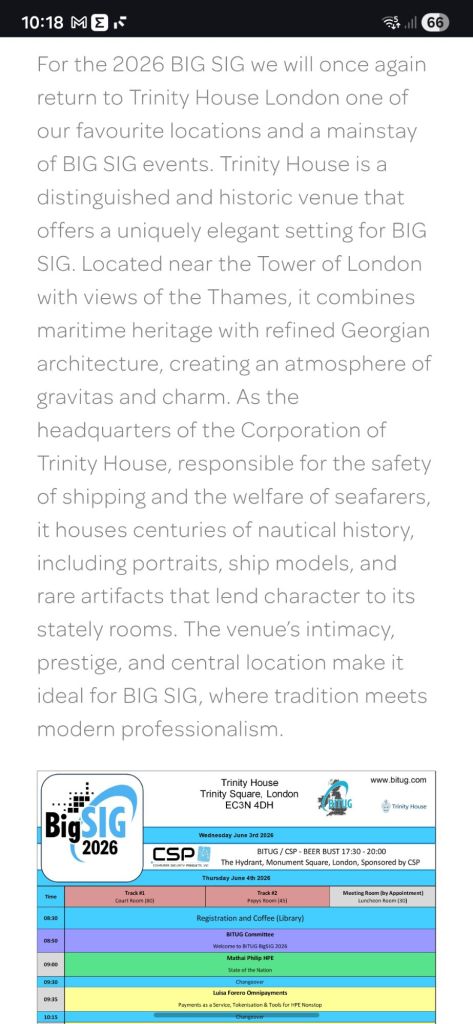
The BITUG BIG SIG 2026 event is scheduled for Thursday, 4 June 2026.
Organized by the British Isles NonStop User Group (BITUG), this annual conference gathers HPE NonStop professionals, partners, and vendors across the region.
Event Details
Date: Thursday, 4 June 2026.
Location: Trinity House, London.
Key Focus Areas: HPE NonStop architecture roadmaps, technical breakout tracks, data security, and specialized data resiliency updates.
Attendees: The conference hosts end-users, system administrators, and developers, alongside community sponsors such as comforte, XYPRO, and ETI-NET.
Networking: Collaborative environments allowing users to connect directly with senior HPE executives and product experts.
Admission: Complimentary registration is available for active end-user members. Official ticket registration and full session listings are hosted on the BITUG Big SIG Event Page.
The BITUG BIG SIG 2026 event is scheduled for Thursday, 4 June 2026
The BITUG BigSIG 2026 conference, hosted by the British Isles Tandem User Group at Trinity House, London, brings together the premier vendors within the HPE NonStop ecosystem. Key participating vendors and sponsors focus on data integration, compliance, zero-trust security, storage, and infrastructure management tailored for mission-critical enterprise systems.
The primary vendors participating in the 2026 HPE NonStop ecosystem event are organized by their specialization below.
🛡️ Data Security & Cyber Resilience
comforte AG: Serving as a key event sponsor, comforte AG hosts dedicated breakout sessions demonstrating tokenization strategies designed to secure sensitive data elements and enhance corporate data usability without breaking downstream application logic.
XYPRO Technology Corporation: A long-standing HPE NonStop security partner delivering compliance management, real-time threat detection, and risk mitigation tools. They focus heavily on enabling Zero-Trust architectures and automating compliance reporting for frameworks like PCI-DSS.
CSP (Compliance Systems Platforms): Specializes in vulnerability management, security hardening, and automated security compliance checking. They provide the administrative tools required to monitor audit logs and secure environments against internal and external threats.
🔄 Data Replication & Continuity
NTI (Network Technologies International): Presenting active strategies for multi-platform data distribution. NTI highlights methods for data movement away from legacy Oracle GoldenGate setups while integrating real-time HPE NonStop compute platforms with enterprise IT and agentic AI pipelines.
Gravic, Inc.: Promotes its HPE Shadowbase software line. Gravic focuses on high-availability business continuity, active-active data replication, data validation, and real-time streaming analytics for global telecommunications and financial exchanges.
💾 Backup, Storage & Infrastructure Management
ETI-NET: Showcases technical advancements inside its Sentinel and BackBox VTC software suites. ETI-NET’s 2026 showcase highlights immutable data tiering, object-locking architectures designed to resist ransomware, and AI/ML-driven anomaly detection within data backups.
TCM Solutions: Focuses on physical and virtual NonStop optimization. TCM specializes in hardware management, KVM hypervisor integrations for Virtualized NonStop environments, and transitioning infrastructure architecture over high-performance fabrics like InfiniBand.
💳 Application Modernization & Payments
OmniPayments: Showcases cloud-adjacent, high-volume payment processing switch architecture. They highlight transaction survivability, fraud prevention integrations, and end-to-end tokenization for multi-channel banking networks.
NuWave Technologies: Specializes in middleware solutions that connect HPE NonStop heritage code with modern RESTful web services. They focus heavily on API management as enterprise building blocks to quickly web-enable NonStop applications without rewriting backend logic.
4tech Software: Delivers tactical operational monitoring, system auditing, and database performance management tools designed to keep NonStop SQL applications running with minimal administrative overhead.
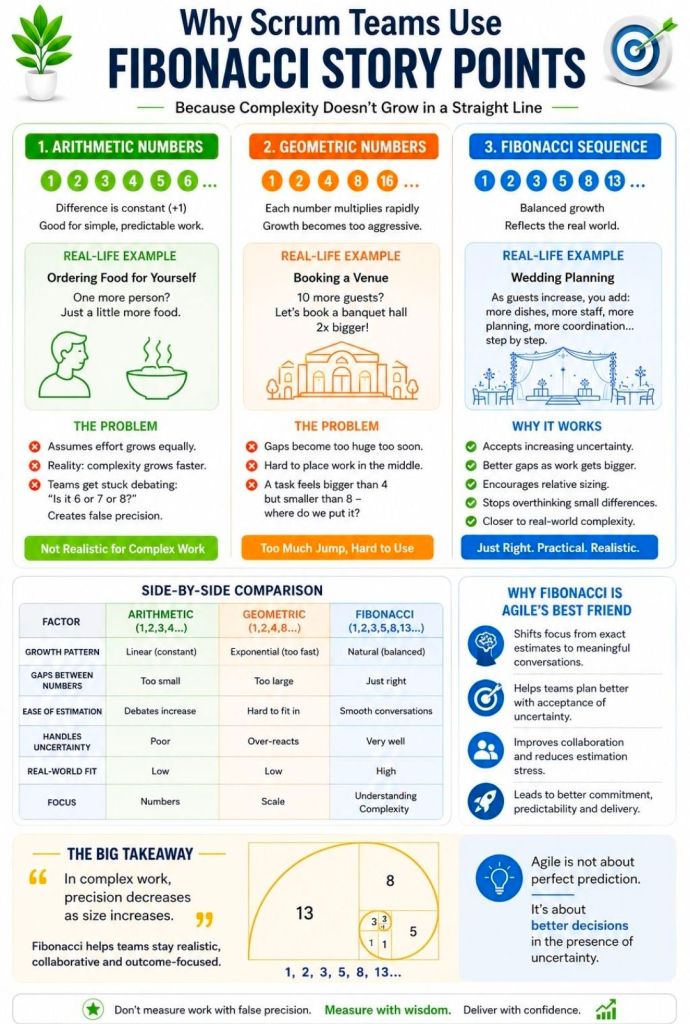
Agile Scrum teams use Fibonacci story points to account for exponential uncertainty, eliminate low-value debates over absolute hours, and establish relative sizing based on complexity.
Instead of using a standard linear scale (\(1, 2, 3, 4, 5…\)), Agile frameworks adopt the Fibonacci sequence (\(1, 2, 3, 5, 8, 13…\)) or a modified version (\(1, 2, 3, 5, 8, 13, 20, 40…\)) to fundamentally change how teams measure and discuss work.
🧠 The Psychology and Science of Sizing
Weber’s Law: Human brains struggle to detect minor differences in large magnitudes. While you can easily spot the difference between a 1kg and 2kg weight, you cannot easily tell the difference between 20kg and 21kg. The Fibonacci sequence mimics this by expanding the numbers proportionally (roughly a 60% jump each time), aligning with how humans naturally perceive effort.
Increasing Uncertainty: The larger a software development task is, the more unknowns it contains. The widening gaps between Fibonacci numbers (e.g., the jump from 8 to 13) visually represent this growing exponential risk and ambiguity.
Prevents False Precision: Estimating a complex feature at “39 hours” gives a false sense of security. Forcing the team to bucket a highly complex task as an 8 or 13 keeps the focus on high-level estimation rather than pixel-perfect precision.
🚀 Operational Benefits for Scrum Teams
Faster Planning Poker Sessions: Linear scales cause teams to waste valuable time arguing whether a task is a 5 or a 6. Because the Fibonacci sequence jumps straight from 5 to 8, it eliminates minor nitpicking and drives significantly quicker team alignment.
Shifts Focus to “CUE”: Story points measure Complexity, Uncertainty, and Effort altogether. Moving away from traditional hours breaks the mental link to individual time constraints, allowing a senior and a junior developer to agree on a task’s relative size even if they would complete it at different speeds.
Natural “Epic” Indicators: High Fibonacci scores serve as an immediate operational trigger. Most Scrum teams establish a rule that any user story rated an 8 or 13 is too large for a single sprint and must be broken down into smaller, bite-sized tasks.
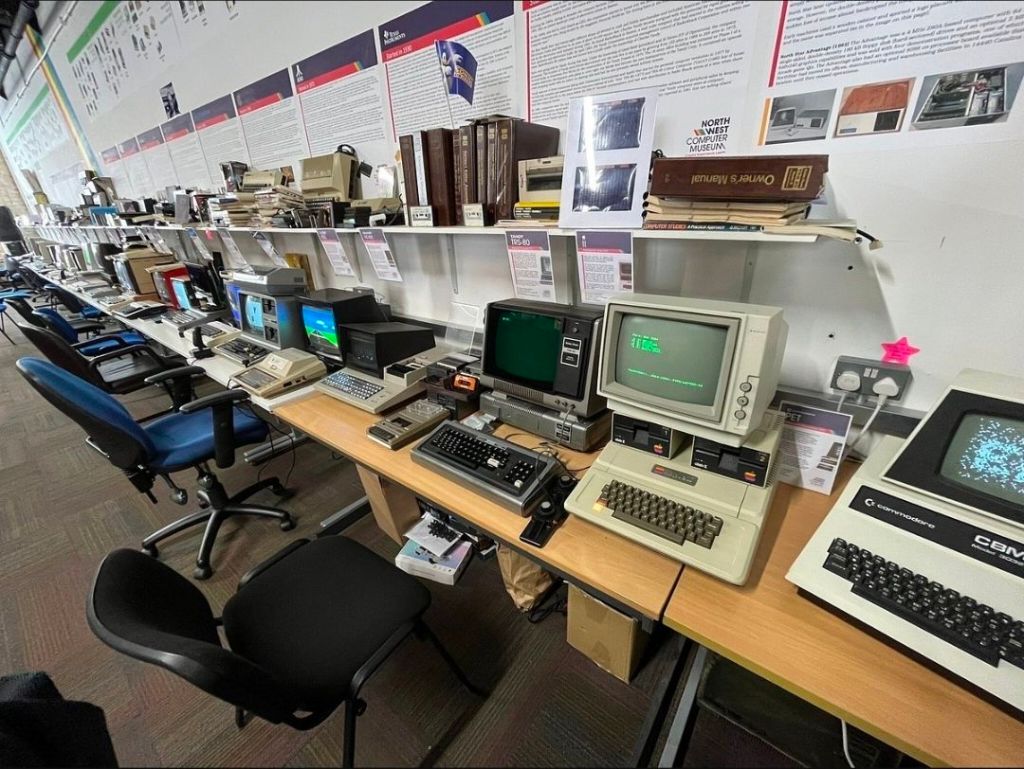
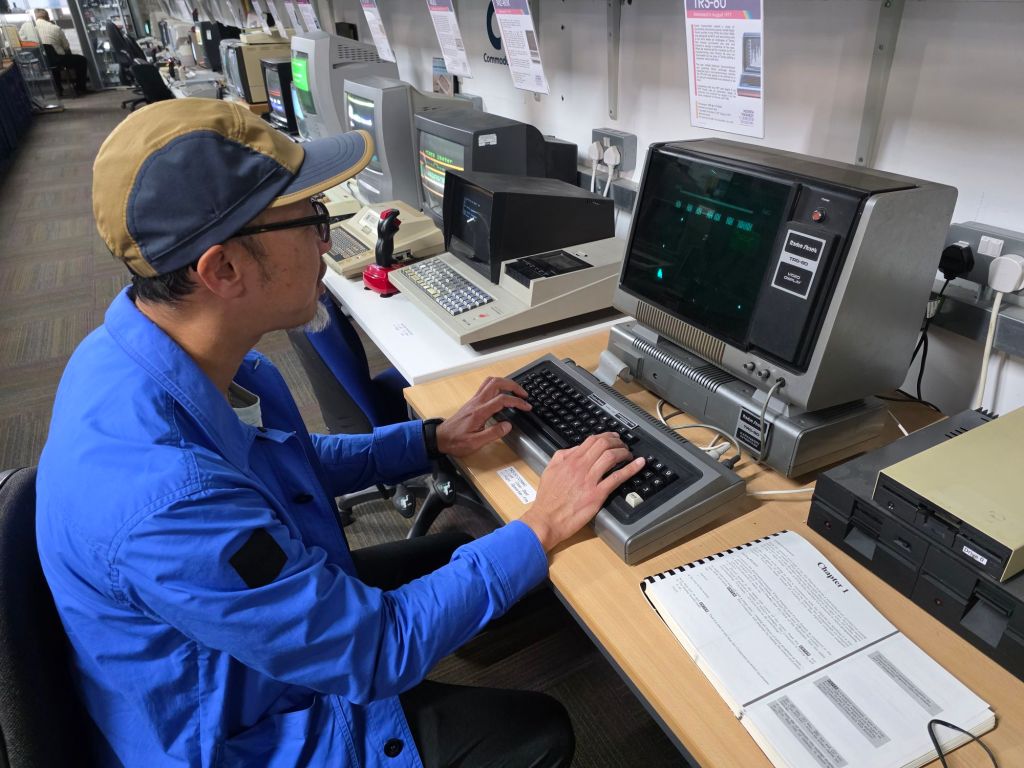
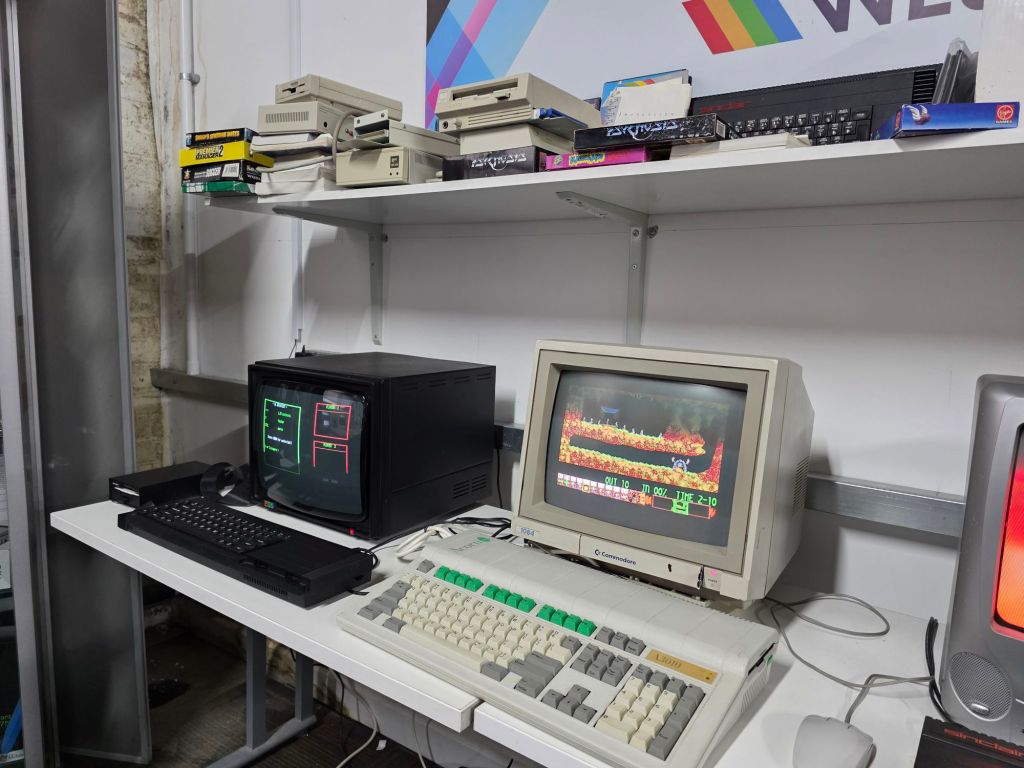
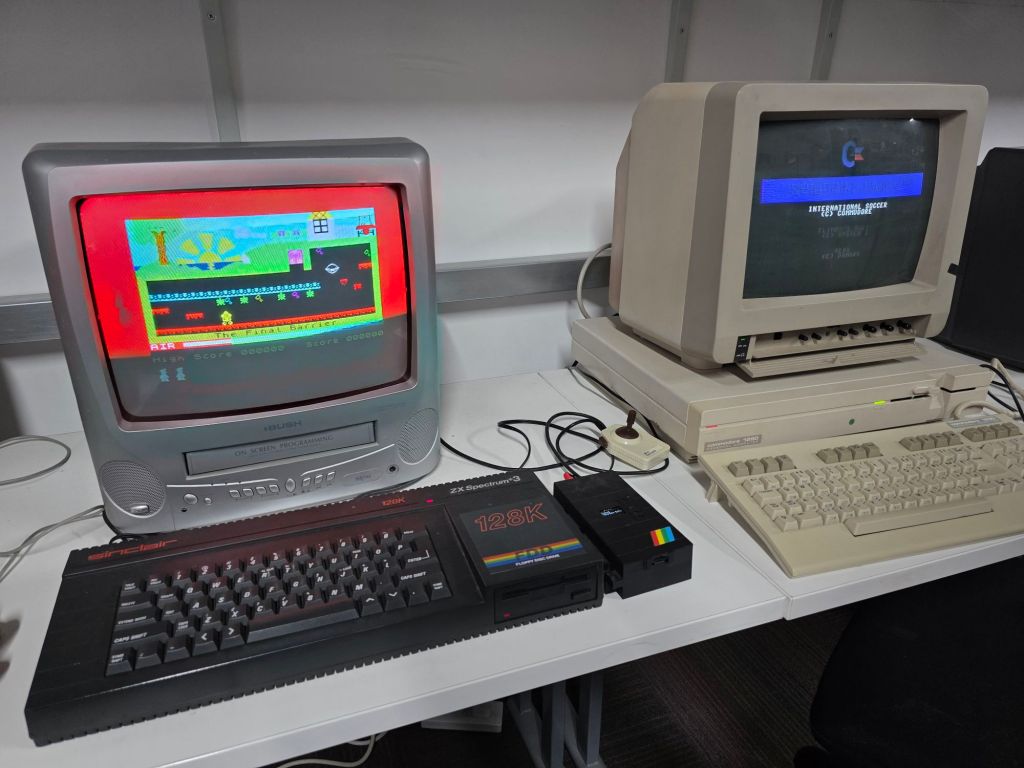
The Northwest Computer Museum is a hands-on, community-focused tech museum located on the 4th floor of the historic Leigh Spinners Mill in Greater Manchester.
Northwest Computer Museum is located on the 4th floor of the historic Leigh Spinners Mill
Founded by Joe Kay, the museum actively breaks the traditional “sterile, behind-glass” rule. Instead, it allows visitors to physically operate, play, and code on over 100 fully working retro machines.
The institution combines nostalgia, tech preservation, and modern digital education, sourcing its hardware through donations, personal sourcing, and an eco-friendly alliance with the Wigan Council Recycling Centre.
Key Features & Exhibits
Hands-on Computing: Over 140 operational items ranging from the 1970s up to 2010.
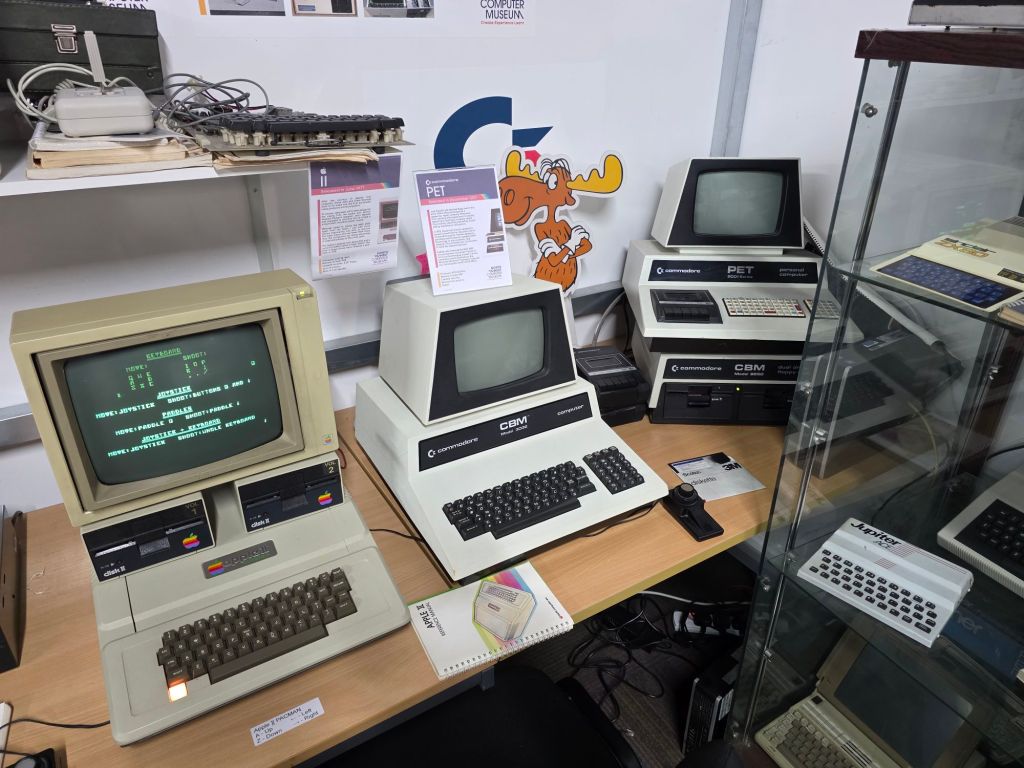
Immersive Period Rooms: Built-in 1970s and 1980s retro office environments equipped with era-accurate hardware.
Retro Gaming Zone: A nostalgic arcade room stocked with sponsored, functional arcade units and classics like the Commodore 64.
Education Suite & Repair Lab: A teaching hub where visitors learn coding basics (like BASIC) and physical electronic repair.
VR & Modern Tech Lab: An advanced space utilizing modern virtual reality tech, including specialized Omni VR treadmills.
Free Access Community Cyber Cafe: An on-site internet cafe that requires zero admission fee, offering locals free use of computers, printers, and web access.
Timeline by Year
2018
Founder Joe Kay runs a successful one-week pop-up exhibition in the local area.
The explosive reaction from children refusing to leave the vintage machines serves as the primary inspiration for a permanent site.
2021
The foundational idea for a permanent establishment begins taking clear shape.
Development talks commence with the chief executive of Wigan Council to acquire a lasting base.
2022
October: Full scale construction begins inside Leigh Spinners Mill, a Grade II listed 1913 cotton mill.
October: The team hosts its first public fundraising jumble sale to clear excess stock and fund critical electrical work.
December: The museum institutes its popular “Late Night Wednesdays,” dropping admission prices by half after 4 PM to support after-school and after-work visits.
2024
The museum significantly grows its outreach program, organizing specialized interactive workshops with visiting tech enthusiast clubs, like the Yorkshire Amiga Group.
2025
May: The museum completes a major floor redesign, organizing its history chronologically.
They receive a significant donation archiving a 1980s software developer’s life work and launch their interactive Virtual Reality treadmill lab.
2026 (Current Year)
April: To combat localized inflation and rent increases, standard main-museum ticket pricing shifts from £7 to £8 for adults.
The facility continues to run its free-entry community cyber cafe.
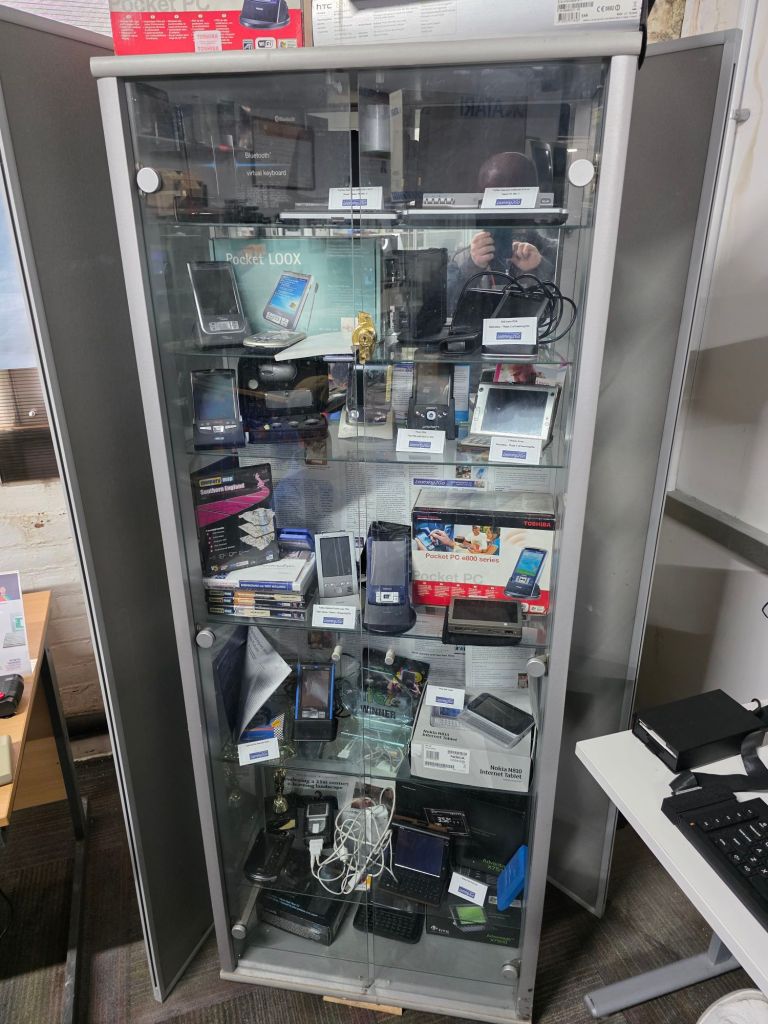
The Northwest Computer Museum in Leigh is a highly interactive, hands-on archive of computing and gaming history. Housed in the historic Leigh Spinners Mill, the museum features over 200 working exhibits spanning from the 1970s to modern-day Virtual Reality. It is a volunteer-run community space.
Key Highlights
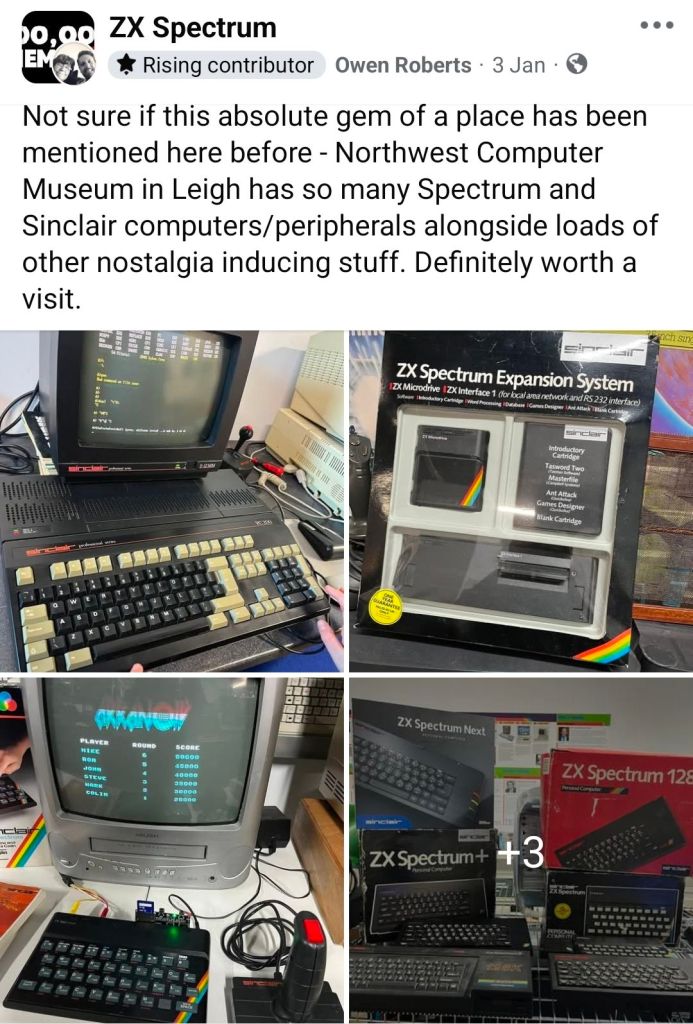
Hundreds of classic games, tapes, disks, and cartridges are preserved, alongside physical computing books and historical displays like the BBC Micro and the ZX Spectrum
Hands-On Exhibits: Unlike traditional museums, the focus is on interaction. Visitors can play classic retro video games, try out vintage consoles, and see legendary brands like Apple, Acorn, Atari, Amiga, Commodore, Sega, and Sinclair in action.
Retro Arcade & VR: The space includes dedicated retro arcade cabinets and a modern VR suite complete with immersive treadmill technology.
The Archive: Hundreds of classic games, tapes, disks, and cartridges are preserved, alongside physical computing books and historical displays like the BBC Micro and the ZX Spectrum.
Community Facilities: The museum features a library, internet café, training rooms, and a dedicated repair/workshop facility for local tech projects.
Global state awards are divided into military decorations (for combat gallantry) and civilian honors (for exceptional public service or achievements). While countries do not share a single ranking scale, the US Congressional Medal of Honor, the UK Victoria Cross, and France’s Legion of Honour represent the pinnacle of global prestige.
Top Military Awards (For Gallantry)
Military medals awarded for bravery “in the face of the enemy” are universally regarded as the hardest to earn, with many given posthumously.
The Victoria Cross (VC) [UK & Commonwealth]: Widely considered the most prestigious and difficult military medal to receive globally, primarily due to exceptionally stringent requirements. Since the end of World War II, only 15 have been awarded.
The Victoria Cross (VC) [UK & Commonwealth]: Widely considered the most prestigious and difficult military medal to receive globally
The Medal of Honor [USA]: Also known as the Congressional Medal of Honor, this is the highest military decoration awarded by the United States. It is presented by the U.S. President in the name of Congress for conspicuous gallantry and intrepidity at the risk of life above and beyond the call of duty.
The Medal of Honor [USA]: Also known as the Congressional Medal of Honor, this is the highest military decoration awarded by the United States
Param Vir Chakra (PVC) [India]: India’s highest wartime military decoration, equivalent to the Medal of Honor, awarded for the most conspicuous bravery or some daring or pre-eminent act of valour or self-sacrifice in the presence of the enemy.
Param Vir Chakra (PVC) [India]: India’s highest wartime military decoration, equivalent to the Medal of Honor
Nishan-e-Haider [Pakistan]: The highest military award in Pakistan, which takes precedence over all other civil and military awards, exclusively given for acts of extraordinary heroism in battle.
Nishan-e-Haider: The highest military award in Pakistan
Top Civilian Awards & Orders of Merit
Civilian honors typically recognise lifelong public service, lifetime achievement, or national contribution.
Legion of Honour (Légion d’honneur) [France]: Established by Napoleon Bonaparte in 1802, it is France’s highest order of merit, recognizing eminent civil or military conduct. It can be awarded to both French citizens and foreigners.
Legion of Honour (Légion d’honneur) [France]
Presidential Medal of Freedom [USA]: Along with the Congressional Gold Medal, this is the highest civilian award in the United States, recognizing exceptional contributions to the security, national interests, or culture of the U.S..
Presidential Medal of Freedom [USA]: Along with the Congressional Gold Medal
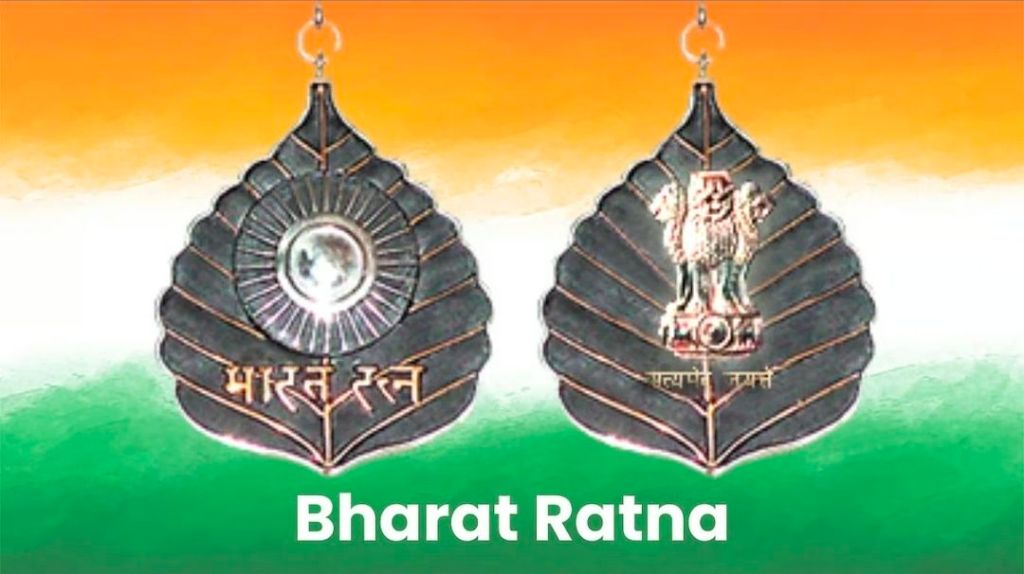
Bharat Ratna [India]: The highest civilian award of the Republic of India, conferred in recognition of exceptional service or performance of the highest order.
Bharat Ratna [India]
The Order of Merit [UK]: A highly exclusive, prestigious order restricted to just 24 living members, personally bestowed by the British Sovereign to individuals who have rendered exceptionally meritorious service in the arts, learning, science, and military.
The Order of Merit [UK]
Order of the Golden Eagle [Kazakhstan]: Noted as one of the most exclusive and dazzling awards globally, it is decorated with gold and diamonds and is typically reserved for heads of state.
Order of the Golden Eagle [Kazakhstan]
Academic and Global Scientific Honours
Outside of state honors, global academic and humanitarian achievement uses a different tier of prestige:
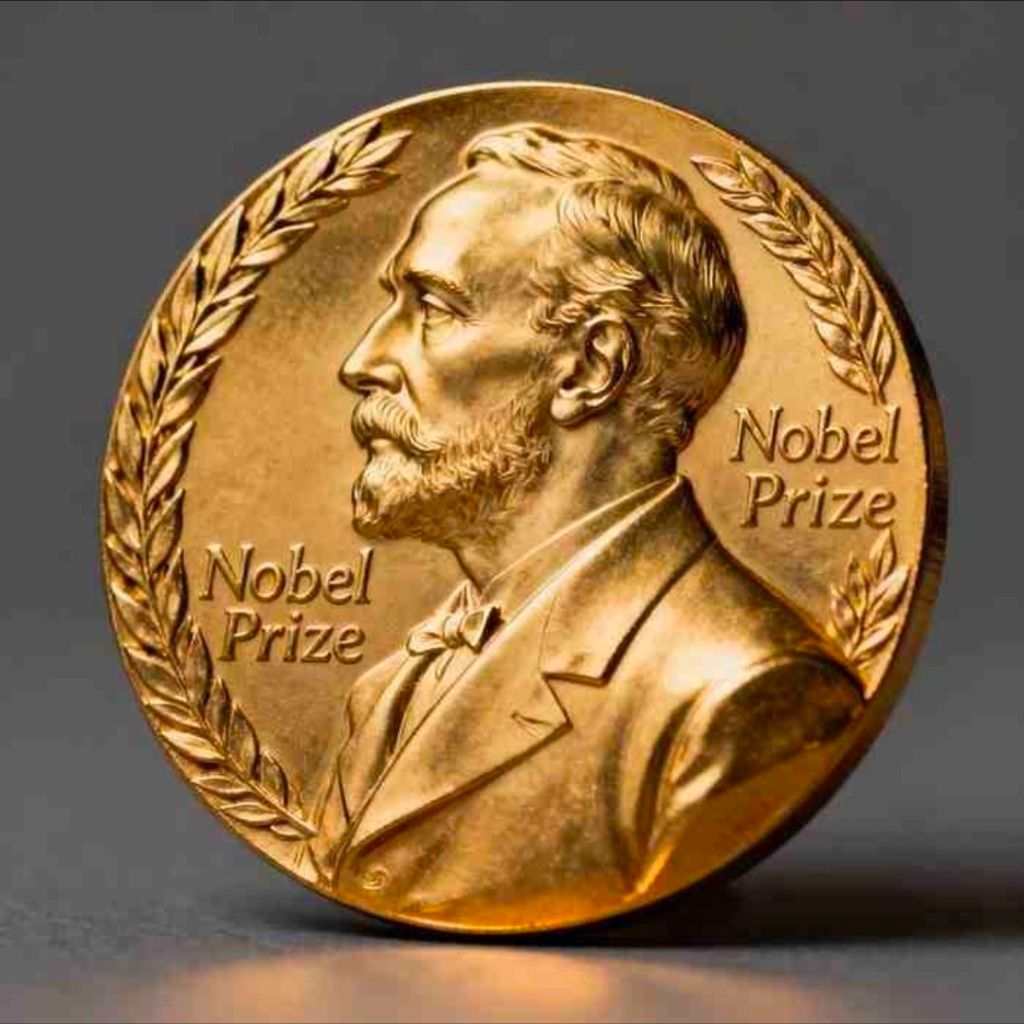
The Nobel Prize: Generally considered the pinnacle of global achievement in Physics, Chemistry, Physiology or Medicine, Literature, and Peace.
The Nobel Prize: Generally considered the pinnacle of global achievement
The Order of the Republic [China]: The highest state honorary title, recognizing individuals who have made outstanding contributions to the socialist modernization and peace of China.
The Order of the Republic [China]: The highest state honorary title
Global state awards are divided into military decorations and civilian honors
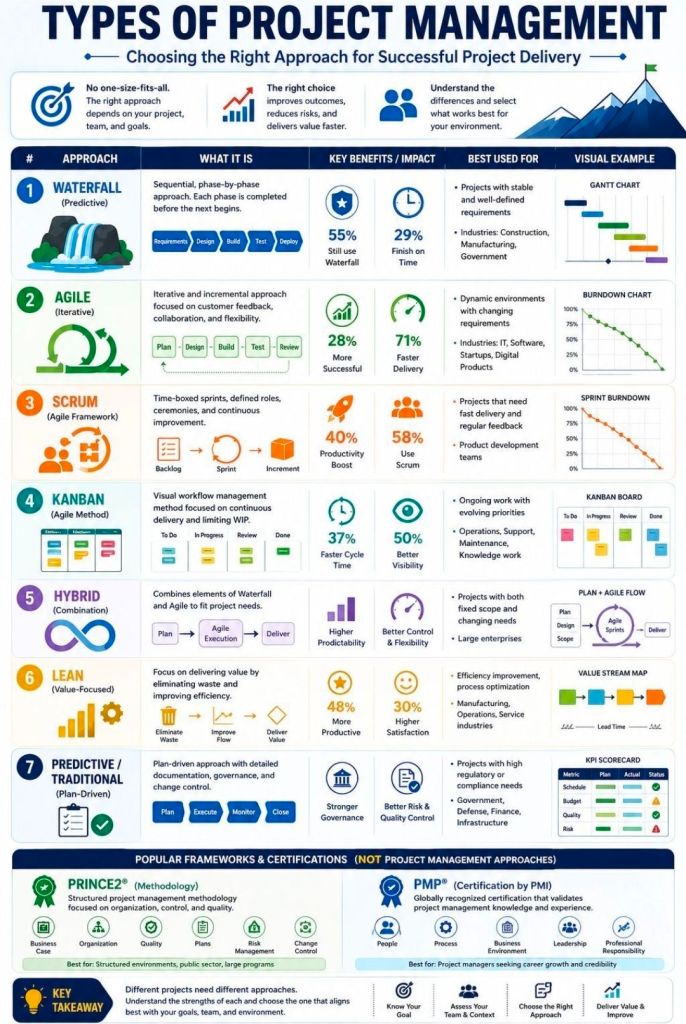
PRINCE2 (Projects IN Controlled Environments) is a globally recognized, process-driven project management methodology. It provides a structured, scalable approach to manage projects from start to finish. It is built on 7 core principles, 7 themes, and 7 step-by-step processes.
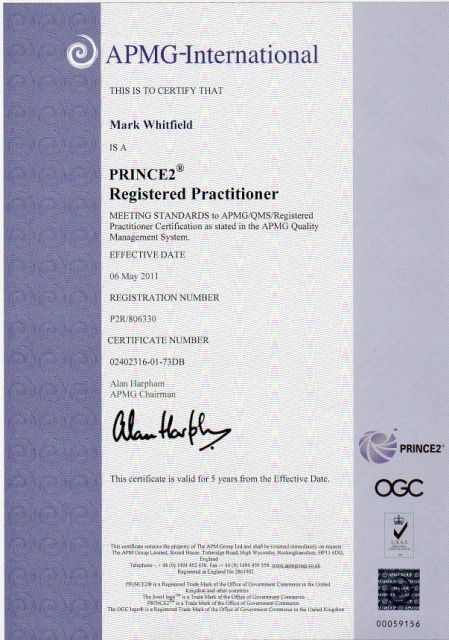
May 2011 – Registered PRINCE2 Practitioner with ILX
The 7 Pillars of PRINCE2
To truly grasp PRINCE2, you should be familiar with its three core elements:
7 Principles: Continued business justification, learn from experience, defined roles and responsibilities, manage by stages, manage by exception, focus on products, and tailor to suit the project environment.
7 Themes: Business Case, Organization, Quality, Plans, Risk, Change, and Progress.
7 Processes: Starting Up, Directing, Initiating, Controlling a Stage, Managing Product Delivery, Managing a Stage Boundary, and Closing a Project.
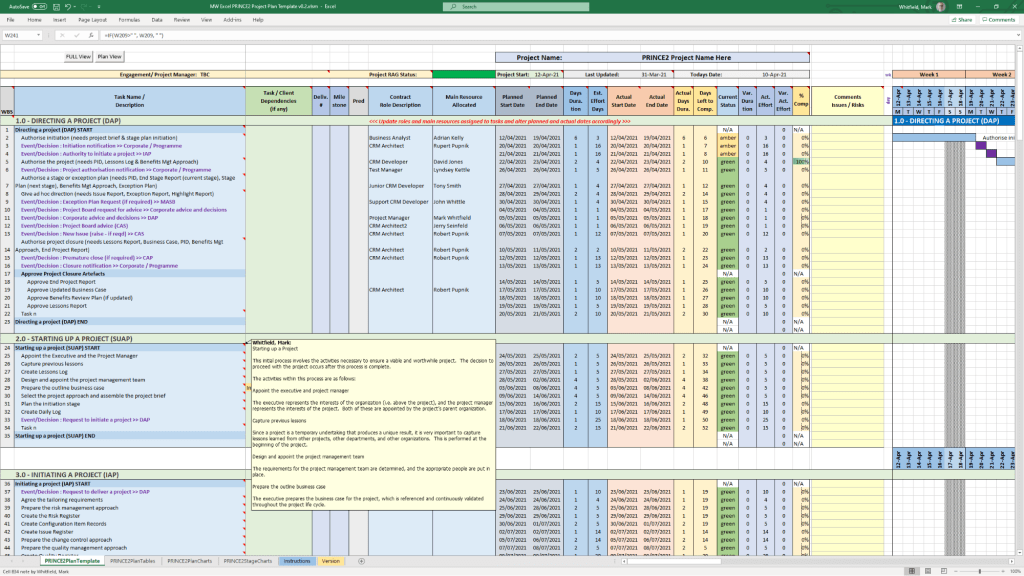
Example MS Excel PRINCE2 template (available on this website)
Detailed Timeline Breakdown by Year
The evolution of PRINCE2 spans over 50 years, transitioning from an internal UK IT standard into a global, flexible methodology.
Mid-1970s: Simpact Systems Limited creates the PROMPT methodology (Project, Resource, Organization, Management, and Planning Technique).
Early 1980s: The Central Computer and Telecommunications Agency (CCTA) in the UK licenses PROMPT to manage complex IT overruns.
1989: CCTA enhances the PROMPT method, renames it to PRINCE (PROMPT in the CCTA Environment), and mandates it for UK IT projects.
1990: PRINCE is released into the public domain and experiences widespread private and public sector adoption.
1996: The UK Cabinet Office officially publishes PRINCE2 and its global certifications. The acronym is updated to PRojects IN Controlled Environments and adapted to fit any industry or project type (not just IT).
2000: Ownership transfers to the newly formed Office of Government Commerce (OGC) in the UK.
2002/2005: Manual structure undergoes major revisions to strengthen the methodology’s “product-based planning” approach.
2009: A massive “Refresh” is released. This update simplifies the framework, introduces the foundational 7 principles, and significantly improves customization.
2013: Ownership transitions to AXELOS Ltd, a joint venture between the UK Government and Capita.
2017: AXELOS publishes the PRINCE2 2017 Update (later designated the 6th Edition). This update places heavy focus on tailoring the method to project scale, flexibility, and practical execution.
2018:PRINCE2 Agile is launched, combining the traditional, controlled PRINCE2 governance model with agile delivery methods.
2021:PeopleCert, a global examination provider, acquires AXELOS and takes full ownership of the PRINCE2 methodology.
2023–Present: PeopleCert releases the PRINCE2 7th Edition, which brings modernizations, digital improvements, and greater sustainability tracking, branding the framework simply as “PRINCE2 Project Management”.
To explore the latest resources, certification paths, or officially recognized guides, you can visit the PRINCE2 Official Website or the community-driven PRINCE2 Wiki.


![The Victoria Cross (VC) [UK & Commonwealth]: Widely considered the most prestigious and difficult military medal to receive globally](https://mark-whitfield.com/wp-content/uploads/2026/05/screenshot_20260526_173307_chrome5958173628008257759.jpg?w=1024)
![The Medal of Honor [USA]: Also known as the Congressional Medal of Honor, this is the highest military decoration awarded by the United States](https://mark-whitfield.com/wp-content/uploads/2026/05/screenshot_20260526_173459_chrome3005917796052286699.jpg?w=1024)
![Param Vir Chakra (PVC) [India]: India’s highest wartime military decoration, equivalent to the Medal of Honor](https://mark-whitfield.com/wp-content/uploads/2026/05/screenshot_20260526_173647_chrome8206284387352640952.jpg?w=580)
![Nishan-e-Haider [Pakistan]: The highest military award in Pakistan](https://mark-whitfield.com/wp-content/uploads/2026/05/screenshot_20260526_173822_chrome8125237497088420263.jpg?w=1024)
![Legion of Honour (Légion d'honneur) [France]](https://mark-whitfield.com/wp-content/uploads/2026/05/screenshot_20260526_174028_chrome5564695081795734737.jpg?w=1024)
![Presidential Medal of Freedom [USA]: Along with the Congressional Gold Medal](https://mark-whitfield.com/wp-content/uploads/2026/05/screenshot_20260526_174216_chrome3095117617643692712.jpg?w=571)
![The Order of Merit [UK]](https://mark-whitfield.com/wp-content/uploads/2026/05/screenshot_20260526_174518_chrome2203776924841309731.jpg?w=738)
![Order of the Golden Eagle [Kazakhstan]](https://mark-whitfield.com/wp-content/uploads/2026/05/screenshot_20260526_174720_chrome4957460480750909349.jpg?w=1024)
![The Order of the Republic [China]: The highest state honorary title](https://mark-whitfield.com/wp-content/uploads/2026/05/screenshot_20260526_175028_chrome475060781347042268.jpg?w=1024)