BASE24 and core Networking Component XPNET timeline

The technical timeline for BASE24 and its core networking component, XPNET, reflects the evolution of high-availability payment switching on HP NonStop (Tandem) systems.

Technical Evolution Timeline

  • 1980s: The Foundation
    • BASE24 Release: Originally developed by Applied Communications Inc. (now ACI Worldwide), BASE24 was built for the Tandem Guardian operating system.
    • XPNET Introduction: Developed as the Message-Oriented Middleware (MOM) to handle all transaction routing and communications. It introduced a multi-node architecture allowing different “satellite” processes (ATM, POS, Host) to communicate.
  • 1990s: Scale and Maturity
    • Classic Era: BASE24 “Classic” became the industry standard for ATM and POS switching.
    • XPNET 3.x: Enhanced to support larger networks and more complex auditing through NCPCOM.
    • Language & DB: The system relied on TAL (Tandem Application Language), COBOL, and the Enscribe database.
  • 2000s: The Shift to BASE24-eps
    • 2003–2005: ACI introduced BASE24-eps (Electronic Payment Systems). This was a re-architecture using C++ and Java to provide platform independence.
    • XPNET 4.1: Released to support the transition, adding features like Common Transport Subsystem (CTS) for better Pathway integration and support for external processes.
    • z/OS Support: By 2009, BASE24-eps was fully ported to IBM z/OS using CICS and VSAM.
  • 2010s – Present: Modernisation & Cloud
    • 2014–2017: Continued updates to BASE24 Classic R6.0, maintaining its relevance for legacy users.
    • Cloud Enablement: Recent versions of BASE24-eps focus on REST API integration via tools like LightWave, allowing legacy XPNET paths to be exposed as web services.
    • Active/Active Environments: Modern implementations focus on “continuous availability” using GoldenGate for data replication between sites. 

Key Technical Components

  • NMM (Network Management Module): The core process of XPNET that manages the configuration of lines, stations, and links.
  • LCONF: The Logical Network Configuration File used by XPNET to define how messages route between processes.
  • Auditing: XPNET provides the primary transaction auditing mechanism, which is still utilized by both Classic and eps versions.

BASE24 and core Networking Component XPNET
Mark Whitfield IT Career Timeline, AI generated from Google

The technical timeline for 

Mark Whitfield, an SC cleared, Senior IT Project Manager and Engagement Manager, spans over 30 years and transitions from specialized banking software development to high-level project leadership and cloud migrations. 

Professional Career Timeline

  • 1990 – 1994: Programmer at The Software Partnership (later Deluxe Data). Developed electronic banking software (sp/ARCHITECT-BANK) on Tandem Computers (now HPE NonStop) for major banks like TSB and Bank of Scotland.
  • 1994 – 1995: Lead Analyst at Deluxe Data International, continuing support and development for banking customer systems.
  • 1995 – 2013: Project Manager of Strategic Technical Initiatives at Insider Technologies Limited. Oversaw projects involving Reflex 80:20, Sentra development, and corporate website authoring.
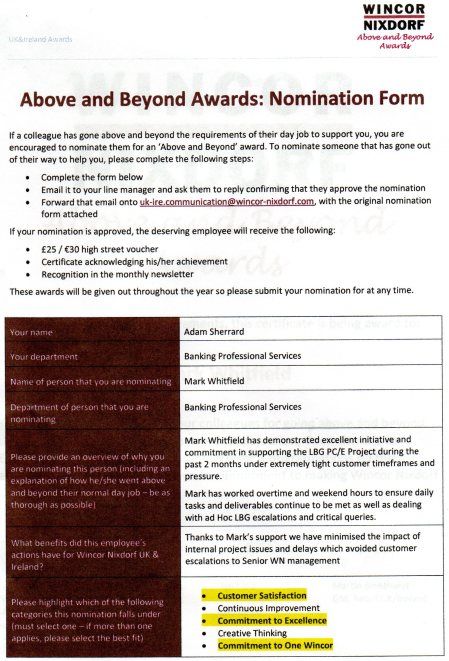
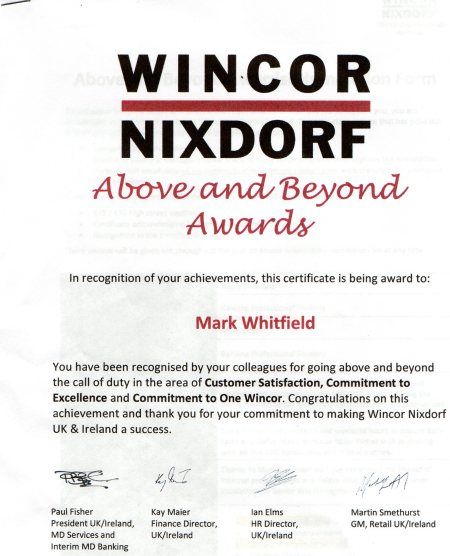
  • 2013 – 2014: Project Manager (Banking Division) at Wincor Nixdorf Limited, focusing on professional services for the banking sector.
  • 2014 – 2016: Senior Digital Project Manager at Betfred Limited, managing the Online and Mobile Division.
  • 2016 – Present:Engagement Manager / Senior PM at Capgemini UK.
    • 2016: Led a £4.3M data centre migration for Royal Mail (RMG) involving 1,100+ interfaces.
    • 2018 – 2019: Augmented into MuleSoft as a Delivery Manager for the Anypoint Platform.
    • 2020 – Present: Leading a £13.5M cloud migration program moving 130 UK government apps to Azure and AWS. 

Technical Training & Education

Whitfield maintains an active Professional Training timeline to adapt to changing technologies:

  • 1990: Graduated in Computing.
  • 1995: HP NonStop TAL Programming and Performance Tuning.
  • 1997: C/C++ Programming at Comtec.
  • 2006 – 2009: Deep dive into security and databases, including Cryptography, Thales e-Security, and Microsoft SQL 2000.
  • 2011: Java and Google Android programming using Eclipse IDE.
  • 2014 – 2024: Advanced Microsoft Excel and AI-focused refreshers. 

He is also a Certified Engagement Manager and a registered PRINCE2 Practitioner proficient in both Agile Scrum and Waterfall methodologies.

Betfred Historical timeline

Betfred’s journey from a single shop in Salford to a global betting powerhouse is marked by bold innovations and high-profile acquisitions. 

Historical Timeline

  • 1967: Brothers Fred and Peter Done open their first betting shop in Salford, Greater Manchester, using winnings from a bet on England to win the 1966 World Cup.
  • 1984: Launch of the Lucky 15 bet, a major industry innovation that remains popular today.
  • 1997: The company expands to over 100 shops.
  • 1998: Fred Done becomes the first bookmaker to pay out early, paying on Manchester United to win the Premier League (only for Arsenal to win the title instead).
  • 1999: First major acquisition, purchasing 40 shops from the Demmy Racing Group.
  • 2004: The business is officially rebranded to Betfred. The company also launches its online betting site this year.
  • 2006: Betfred launches one of the industry’s first mobile betting platforms.
  • 2011: Wins the auction to buy The Tote from the UK government for £265 million.
  • 2016: Acquires 322 shops from Ladbrokes and Coral following their merger.
  • 2021: Fred Done steps down as CEO to become Chairman, with Joanne Whittaker taking over the CEO role.
  • 2024–2026: Significant global expansion, establishing a presence in South Africa and the United States, though later scaling back some US online operations in late 2025.

Operational Timelines (Payment & Payouts)

If you are looking for current service timelines for transactions, here are the standard processing windows as of February 2026:

  • Withdrawal Processing: Betfred aims to approve requests within 48 hours.
  • Fastest Methods: Visa Direct and certain E-wallets (PayPal, Skrill) often arrive within 4 to 6 hours.
  • Standard Methods: Bank transfers typically take 2 to 5 working days.
  • Free Bet Credit: Usually credited within 10 hours of a qualifying bet being settled.
My time at Betfred, Wigan

Betfred Historical timeline

Wincor Nixdorf timeline

Wincor Nixdorf’s journey spans from a mid-century German startup to its 2016 merger with Diebold, forming a global leader in banking and retail technology. 

The Early Years (1952–1990)

  • 1952: Heinz Nixdorf founds Labor für Impulstechnik in Paderborn, Germany.
  • 1964: Launches the System 820, a pioneering programmable small computer.
  • 1968: Renamed Nixdorf Computer AG after acquiring Wanderer-Werke.
  • 1980s: Becomes a market leader in European mid-range computing and retail banking systems.
  • 1986: Heinz Nixdorf dies; the company faces financial challenges shortly after. 

Siemens Era & Rebirth (1990–1999) 

  • 1990: Siemens AG acquires the company, forming Siemens Nixdorf Informationssysteme (SNI).
  • 1998: Siemens refocuses the unit exclusively on banking and retail, spinning it off as Siemens Nixdorf Retail and Banking Systems GmbH.
  • 1999: Venture capital firms KKR and Goldman Sachs acquire the unit, rebranding it as Wincor Nixdorf

Expansion & Independence (2000–2015)

  • 2004: Wincor Nixdorf goes public with a successful IPO on the Frankfurt Stock Exchange.
  • 2000s: Expands into IT outsourcing and gains significant global market share in the ATM and EPOS markets.
  • 2015: Carves out its cashless payments unit into a new entity called AEVI

The Merger Era (2016–Present)

  • 2016: American rival Diebold Inc. completes a $1.8 billion acquisition of Wincor Nixdorf, forming Diebold Nixdorf.
  • 2023: After struggling with debt, Diebold Nixdorf files for and successfully emerges from Chapter 11 bankruptcy, restructuring its finances.

Capgemini’s evolution from a small French startup to a global IT leader

Capgemini’s evolution from a small French startup to a global IT leader is marked by strategic mergers and a shift toward high-growth technologies like AI. 

Corporate History Timeline

  • 1967: Serge Kampf founded Sogeti in Grenoble, France, focusing on enterprise management and data processing.
  • 1973–1975: Through hostile takeovers and mergers with CAP and Gemini Computer Systems, the group became CAP Gemini Sogeti.
  • 1985–1988: The company was listed on the Paris Stock Exchange (1985) and entered the CAC 40 index (1988).
  • 1996: The name was simplified to Cap Gemini, and a new logo was launched.
  • 2000: Acquired Ernst & Young Consulting for $11 billion, expanding its global reach, especially in North America.
  • 2004: The brand officially became Capgemini to reflect a unified global identity.
  • 2015: Acquired iGate for $4 billion, making North America its largest market.
  • 2019–2021: Acquired Altran (2019), later rebranded as Capgemini Engineering (2021), to dominate the engineering and R&D services sector.
  • 2024–2025: The strategic focus shifted to AI. In July 2025, Capgemini announced a €3.3 billion deal to acquire WNS Global Services to bolster its agentic AI and intelligent operations. 

Recruitment & Career Timelines

The hiring process typically follows this path:

  • Hiring Process: Usually takes a few weeks, involving application screening, multiple interview rounds (technical and HR), and background verification.
  • Graduate/Mass Hiring: Often conducted via the Superset platform, where status updates like “offered” appear roughly a week after interviews.
  • Graduate Programme: The Accelerate Programme (UK) spans approximately 21 months, starting with a 3-month business overview followed by 18 months in a specific pathway academy.
My own Capgemini career path 2016 – 2025
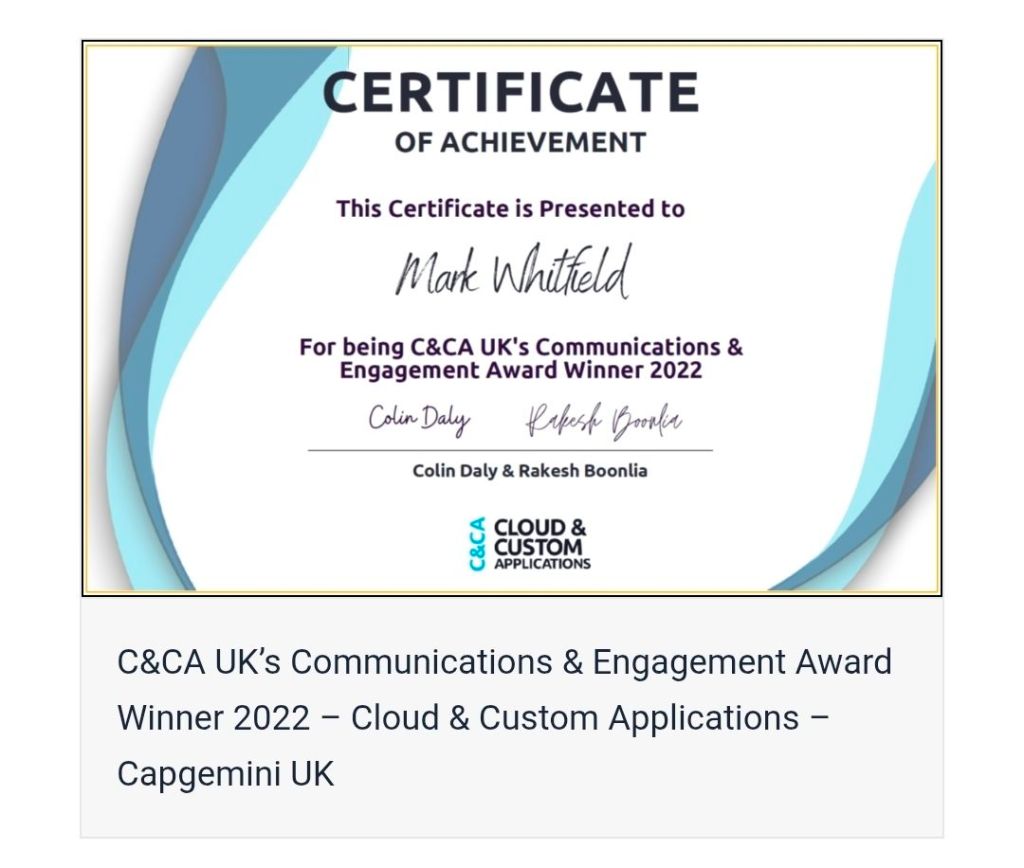
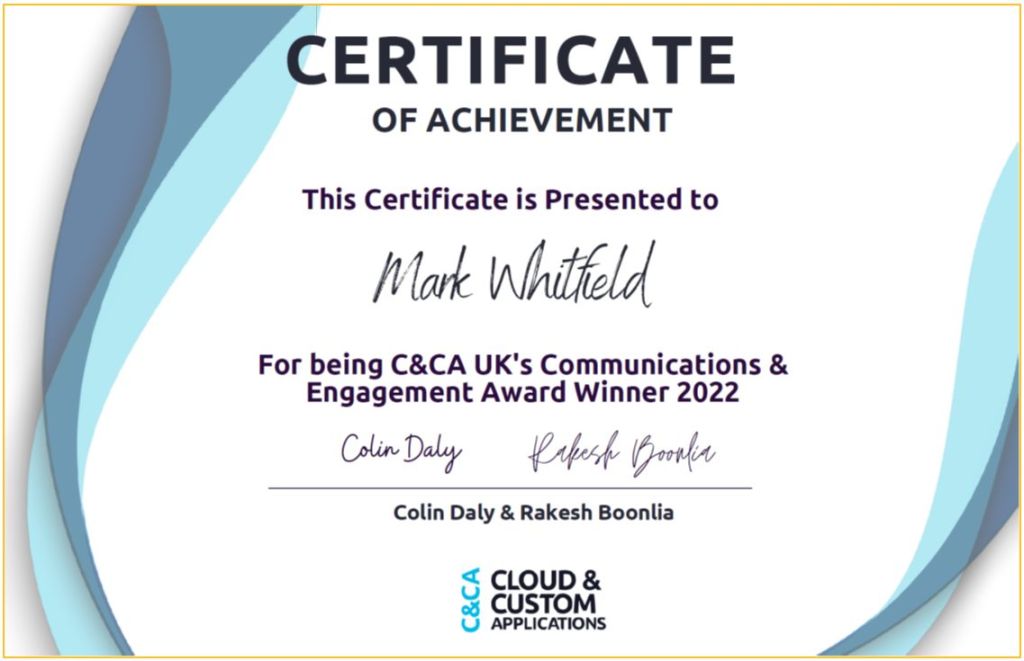
C&CA UK’s Communications & Engagement Award Winner 2022 – Cloud & Custom Applications – Capgemini UK
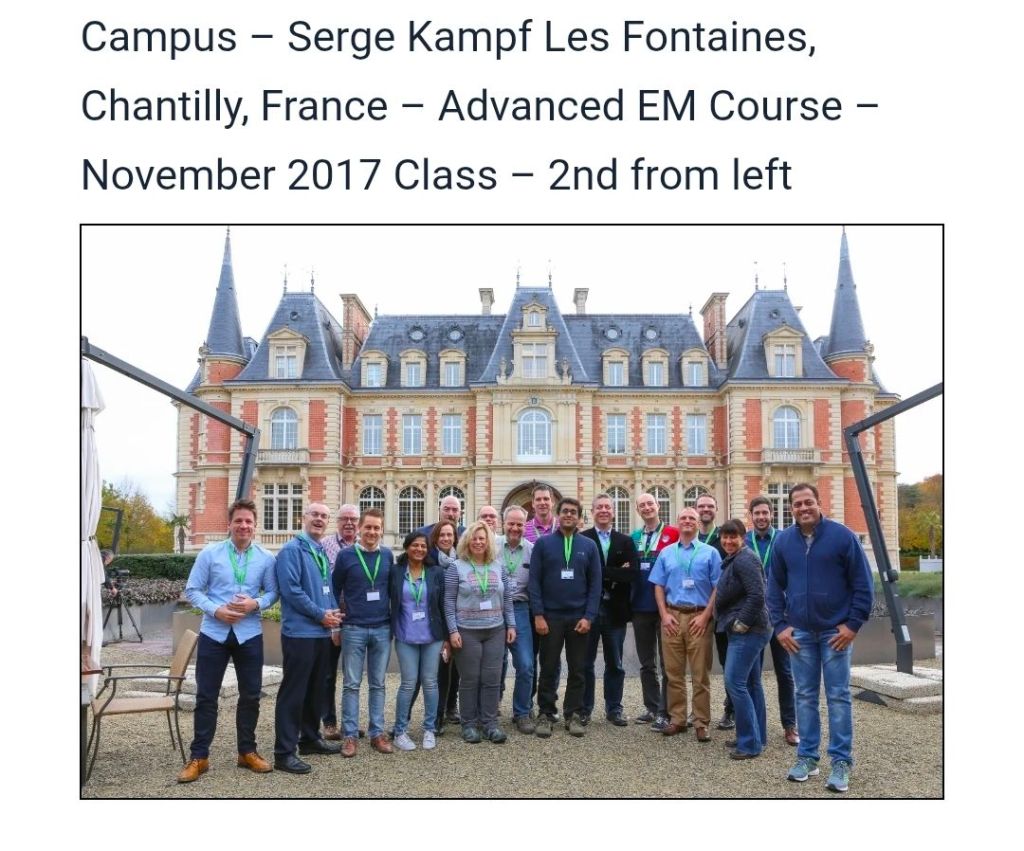
Campus – Serge Kampf Les Fontaines, Chantilly, France – Advanced EM Course – November 2017 Class – 2nd from left
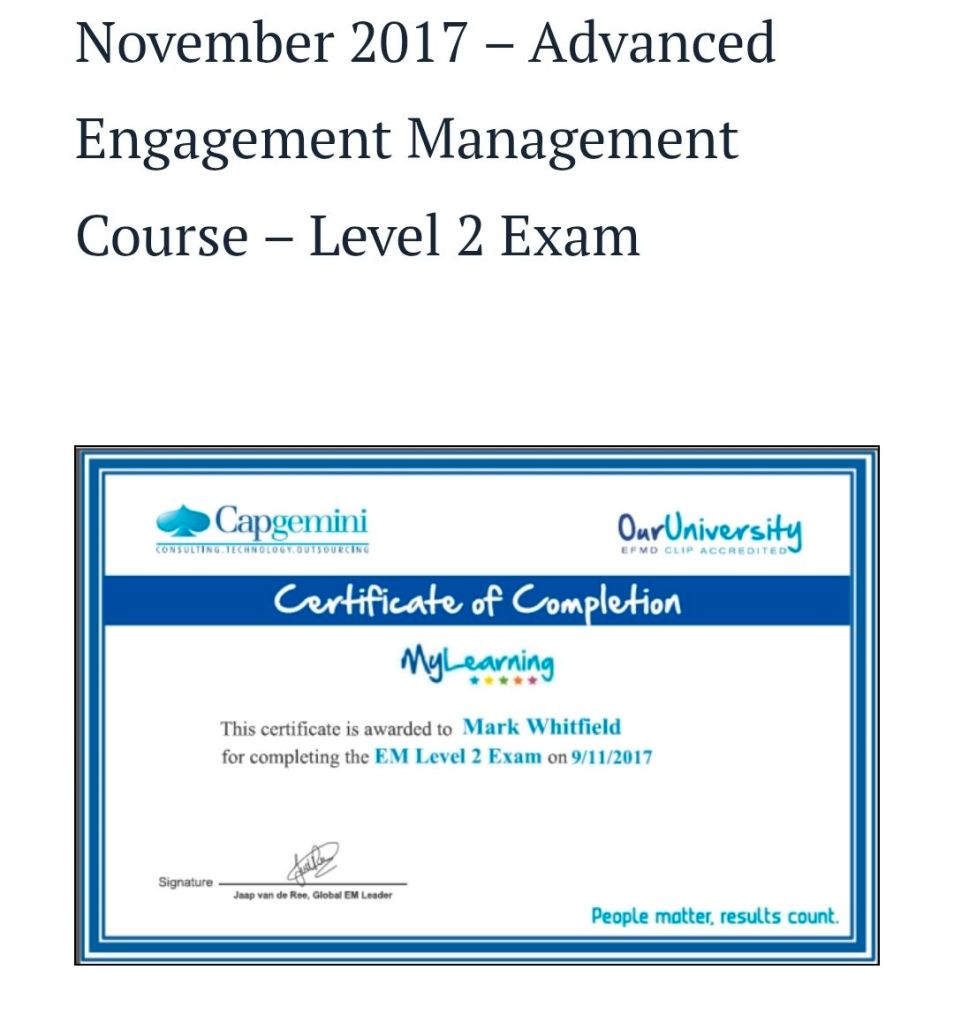
November 2017 – Advanced Engagement Management Course – Level 2 Exam

Capgemini’s evolution from a small French startup to a global IT leader

The Software Partnership (TSP) was a Runcorn-based software house

The Software Partnership (TSP) was a Runcorn-based software house co-founded by Nigel Walsh in the mid-1980s. Specialising in on-line banking systems for Tandem and UNIX platforms, the company underwent several acquisitions that integrated its technology into global financial services. 

Corporate Timeline

  • Mid-1980s: Founded as The Software Partnership.
  • 1990: Initial operations were based at Wingate Drive in Timperley before moving to Norton House in Crowngate, Runcorn.
  • 1992: Relocated to Wingate House on Northway, Runcorn.
  • 1994: Acquired by the American firm Deluxe Electronic Payment Systems (a subsidiary of Deluxe Corporation).
  • 2000: The company transitioned to EFD eFunds.
  • 2007: Became part of Fidelity National Information Services (FIS), eventually moving operations to Daresbury Park in Warrington. 

Key Products

The company’s primary legacy is the development of sp/ARCHITECT-BANK, a software suite designed for secure card management and electronic transaction processing. This technology became a foundational component for the secure payment systems later managed by Deluxe Data and FIS

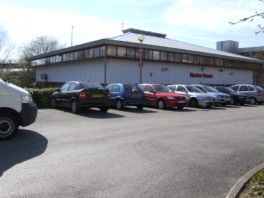
The Software Partnership, Norton House, Crowngate, Runcorn, Cheshire
The Software Partnership (TSP) was a Runcorn-based software house
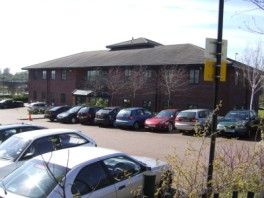
Deluxe Data International Operations, Wingate House, Northway

https://mark-whitfield.com/career/tsp-deluxe-data-1990-1995/

Insider Technologies Limited, Manchester – from Google AI

Insider Technologies Limited is a UK-based software and services company founded in 1989 that specialises in 24×7 mission-critical systems, primarily for the financial, government, and defence sectors. 

Key Historical Timeline

  • 1989: Foundation. The company was incorporated on 27 February 1989. It was established in Manchester, England, by IT industry veterans.
  • 1995–2013: Growth & Partnerships.
    • Became a significant HP Partner, developing solutions for the HP NonStop platform (formerly Tandem Computers).
    • Expanded its client base to include major institutions such as the Bank of EnglandRoyal Bank of Scotland, and Euroclear.
  • 2002: Training Platform Launch. Founded its interactive systems training platform, which eventually utilised its patented Cloning Technology.
  • 2015: Leadership Transition. In October 2015, there was a major change in the board with the termination of appointments for directors Paul Cashmore, Richard Launder, and Anthony Mowatt, and the appointment of Andrew Donald Hall as a director.
  • 2016–2017: Relocation. The company moved its registered office to 4th Floor, 2 City Approach in Eccles, Manchester, where it remains today.
  • 2019: 30th Anniversary. Celebrated 30 years of operations, highlighting its long-term stability in the NonStop business technology community.
  • 2020–2021: Recent Restructuring. Transitioned its ownership structure under Insider Technologies (Holdings) Limited.
  • 2025: Current Status.
    • Now operates as part of the PartnerOne group, a global family of mission-critical software companies.
    • Continues as a Microsoft Gold Partner for Application Development.
    • Recent board changes include the appointment of Andrew Donald Hall and Jonathan Dionne as directors in late 2025. 

Core Product Evolution

  • Reflex & MultiBatch: Software for business-critical 24×7 systems.
  • Sentra & RTLX Reactor: Monitoring and tracking products for Windows, Linux, and Unix platforms.
  • Mission-Critical Support: Provides 24×7 technical support for high-stakes payment and messaging systems.

University of Greater Manchester formerly the University of Bolton from BIHE – Timeline

The institution now known as the University of Greater Manchester (formerly the University of Bolton) has a history spanning over 200 years. Below is the timeline of its evolution from a local mechanics’ institute to a modern university. 

Origins and Early Development (1824–1963)

  • 1824–1825: The Bolton Mechanics’ Institute is founded to provide education for working people.
  • 1857: The School of Art is established.
  • 1892: The new Bolton Technical School opens to accommodate growing student numbers.
  • 1926: The Technical School is expanded and renamed Bolton Technical College.
  • 1952: A major new building for the Technical College opens on Manchester Road

The “Bolton Institute” Era (1964–2003)

  • 1964: The technical college separates to establish the Bolton Institute of Technology (BIT).
  • 1970: New facilities on Deane Road are inaugurated by Princess Margaret.
  • 1982: A merger with the Bolton College of Education (Technical) creates the Bolton Institute of Higher Education (BIHE).
  • 1991–1995: The institute expands its capabilities, gaining the authority to confer both taught and research degrees. 
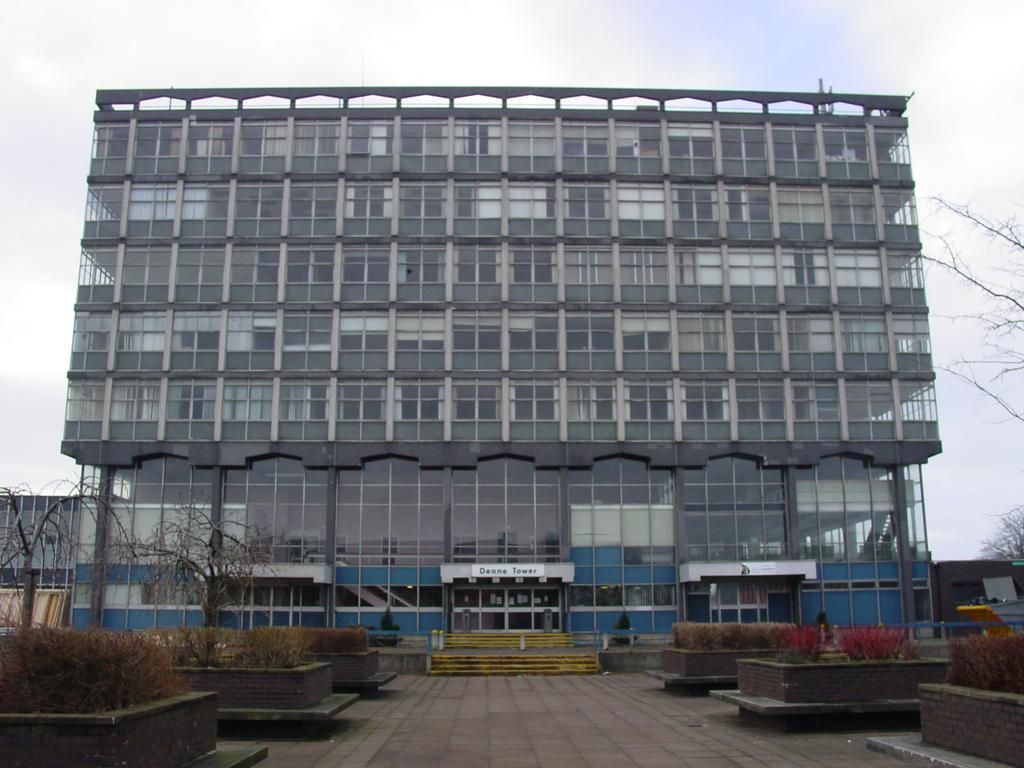
Bolton Institute of Higher Education (BIHE) before the rebuild to the university building below.

University Status and Recent History (2004–Present)

  • 2004: BIHE achieves university status, becoming the University of Bolton.
  • 2005–2010: Significant leadership changes occur, including the appointment of Professor George E. Holmes as Vice-Chancellor and Baroness Morris of Bolton as the first Chancellor.
  • 2018: The institution merges with Bolton College.
  • 2024: The institution undergoes a rebrand to the University of Greater Manchester.
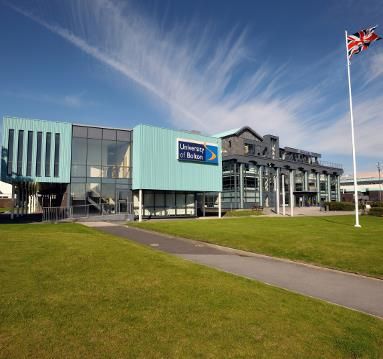
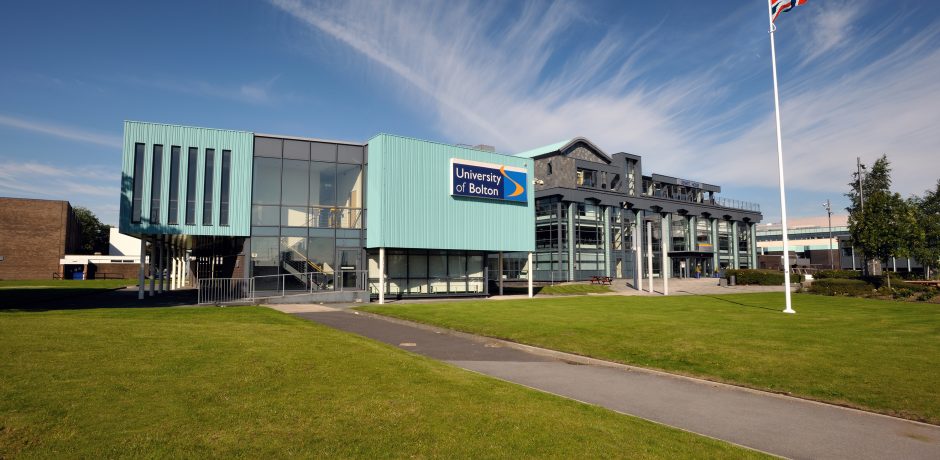
University of Bolton
University of Greater Manchester 2024 (formerly the University of Bolton, from BIHE)

I attended Bolton Institute of Higher Education (BIHE) in the late eighties.

1988 to 1990 : University of Bolton (previously Bolton Institute of Higher Education – BIHE) 
Deane Road, Bolton, Lancashire, UK. BL3 5AB

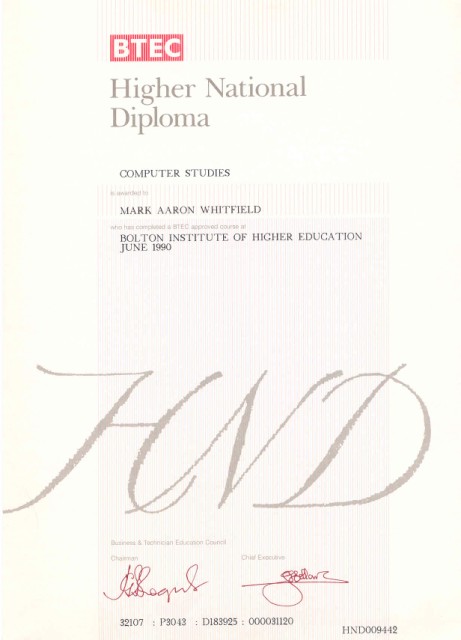
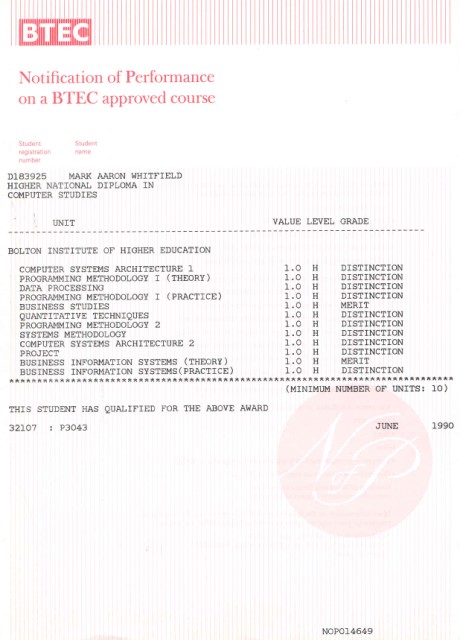
Higher National Diploma (HND) in Computer Studies –
DISTINCTION – overall first over the 2 years

mark whitfield mark_whitfield_bihe_university_of_bolton

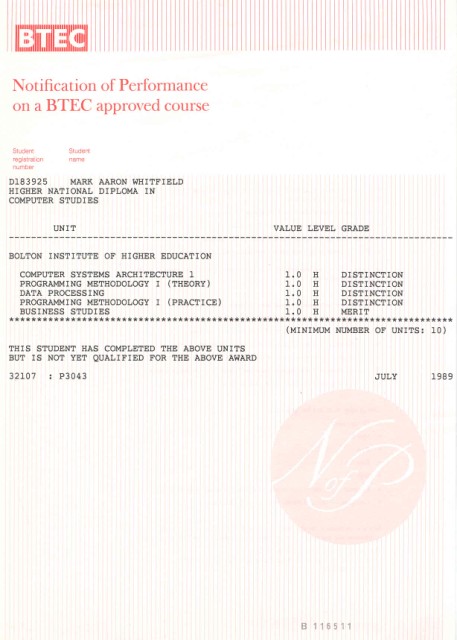
The HND course I attended at BIHE was a 2-year, full-time course made up of the following modules: 

  • Computer Systems Architecture
  • Programming Methodology Theory / Practice (final year project)
  • Data Processing
  • Business Studies
  • Quantitative Techniques
  • System Analysis
  • Business Information Systems Theory / Practice

My final year project consisted of an ORACLE SQL-forms designed GUI interface running under an MS-DOS operating system. The GUI interface provided insert, update, delete and transaction rollback facilities for recording information about students attending courses at BIHE, along with their module assignment and exam result details. The student data was held in an ORACLE SQL database set-up on a PC local to the application.

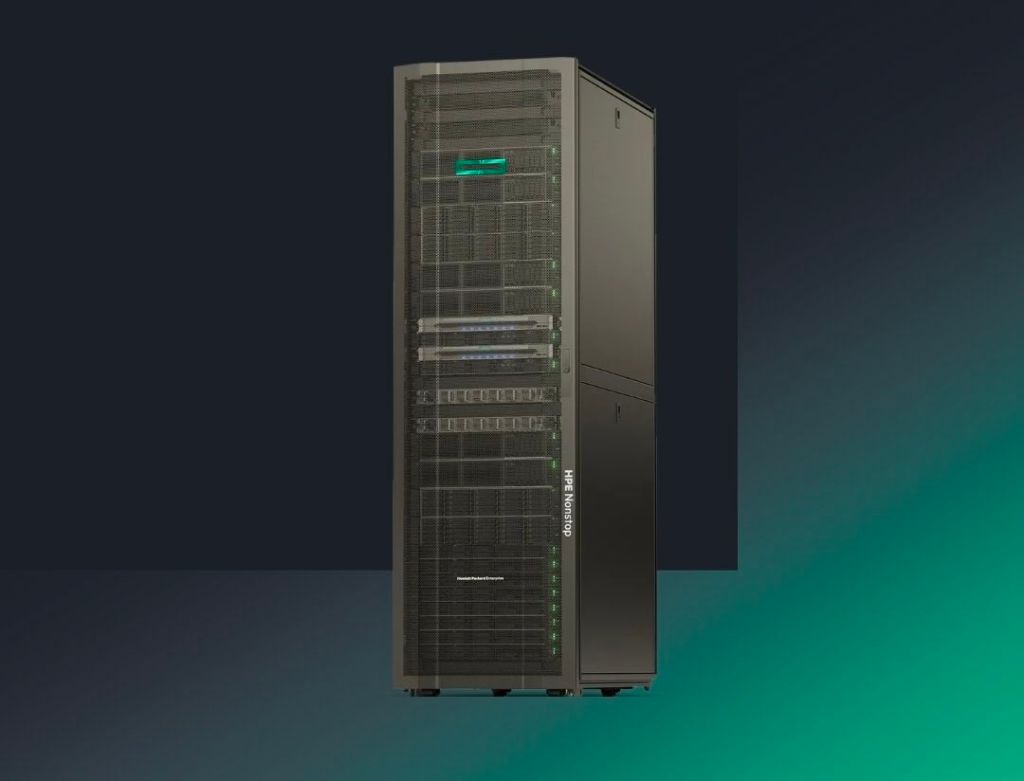
HPE NonStop Tandem represents a line of fault-tolerant, high-availability servers

HPE NonStop (formerly Tandem) represents a line of fault-tolerant, high-availability servers designed for 24/7, zero-downtime operations. Originally created by Tandem Computers in 1974, the architecture is now owned by Hewlett Packard Enterprise (HPE) and supports mission-critical workloads like banking and finance. 

Key Aspects of HPE NonStop (Tandem):

  • Continuous Availability: Designed to eliminate single points of failure with 100% fault tolerance.
  • Architecture: Initially used a proprietary Tandem T/16 design; modern systems are based on HPE Integrity/x86 architectures.
  • Operating System: Traditionally runs the Guardian OS, which handles the system’s specialized, continuous processing capabilities.
  • Evolution: Founded by James Treybig in 1974, Tandem was acquired by Compaq in 1997, which then merged with HP in 2002.
  • Applications: Ideal for transactional applications requiring strict data integrity and real-time processing.
  • Modern Platforms: Current systems include HPE NonStop Compute NS9 X5 and NS5 X5. 

The systems are still widely used today for mission-critical applications that cannot afford to be offline. 

HPE NonStop (formerly Tandem) represents a line of fault-tolerant, high-availability servers.

Capgemini C&CA UKs Communications and Engagement Award Winner – Cloud and Custom Applications

Capgemini C&CA UKs Communications and Engagement Award Winner – Cloud and Custom Applications

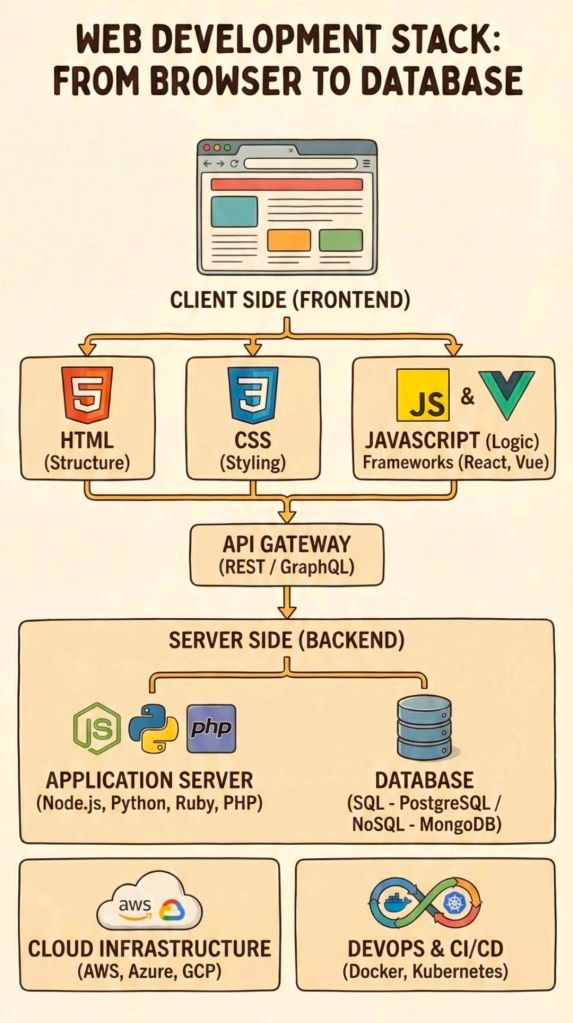
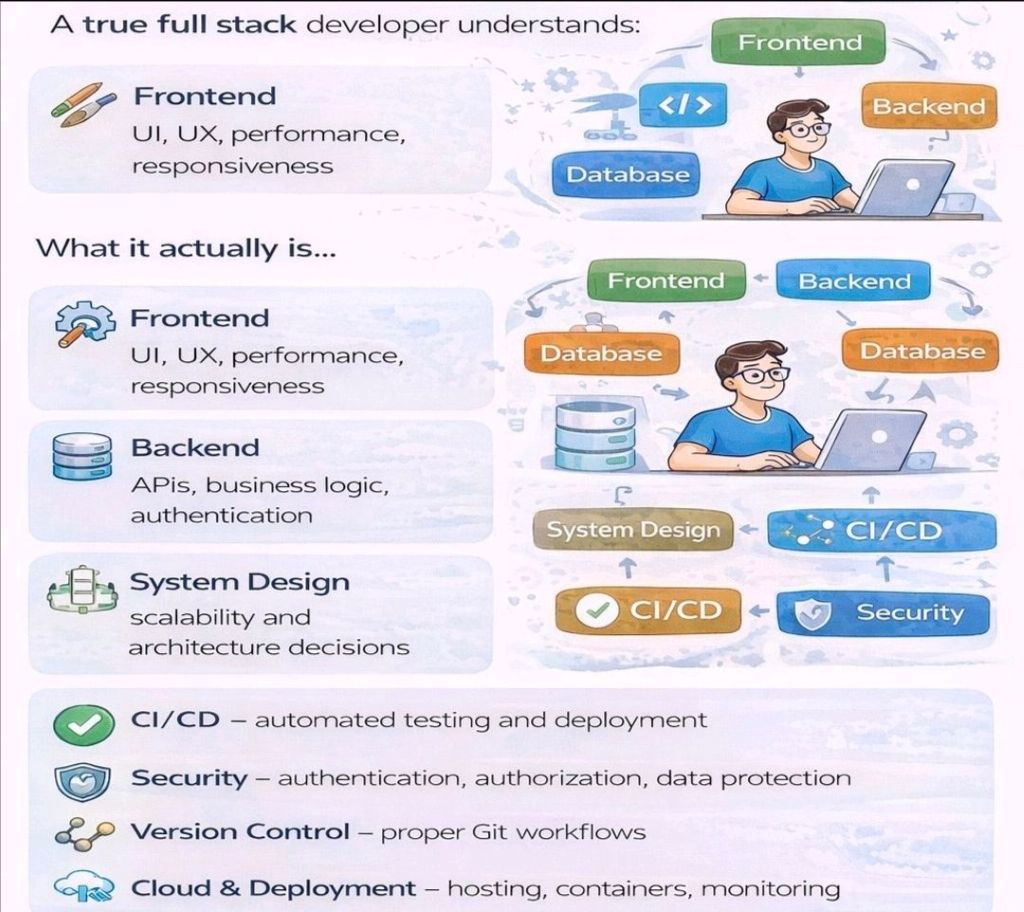
Web Development Stack from Browser to Database

Web Development Stack from Browser to Database

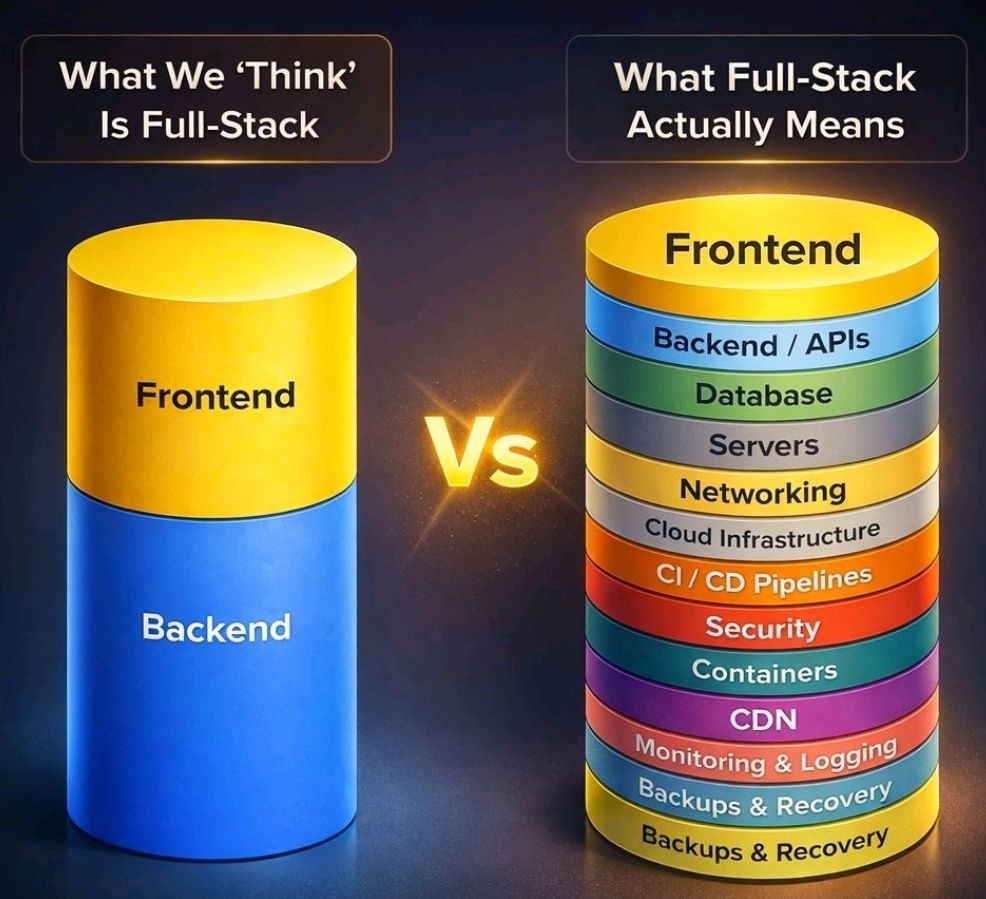
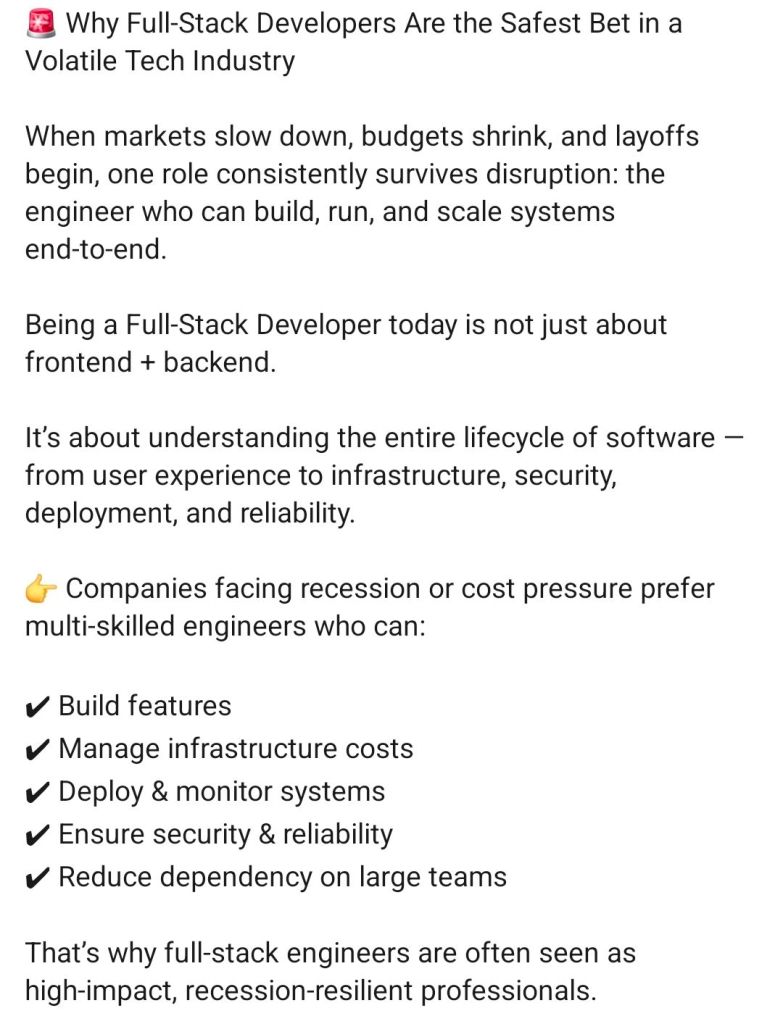
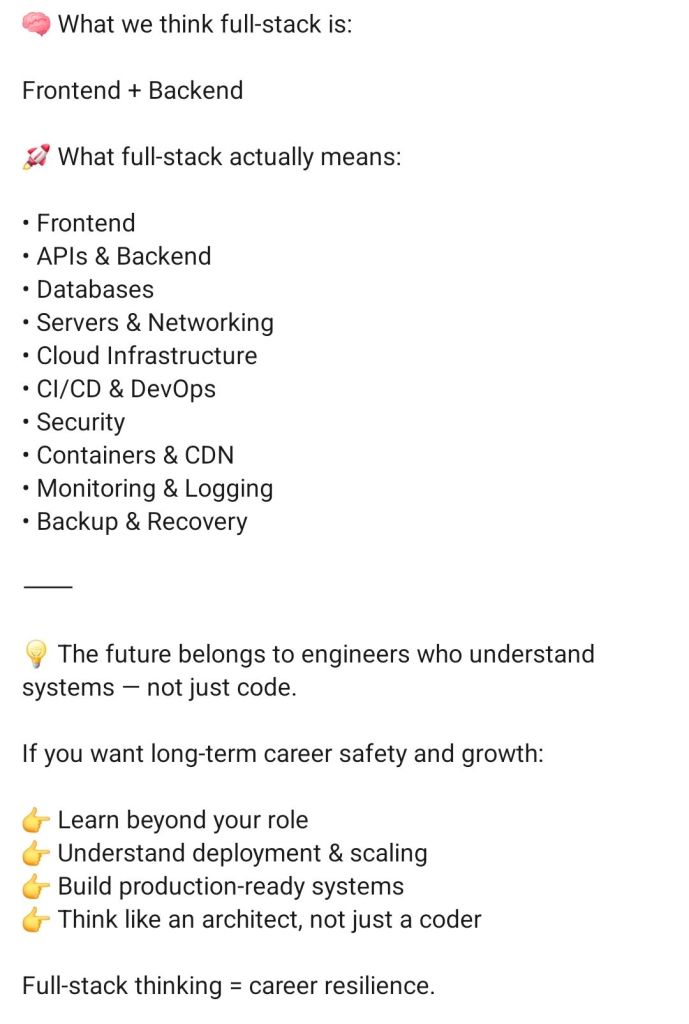
What Full-Stack Developer Actually Means

What Full-Stack Developer Actually Means

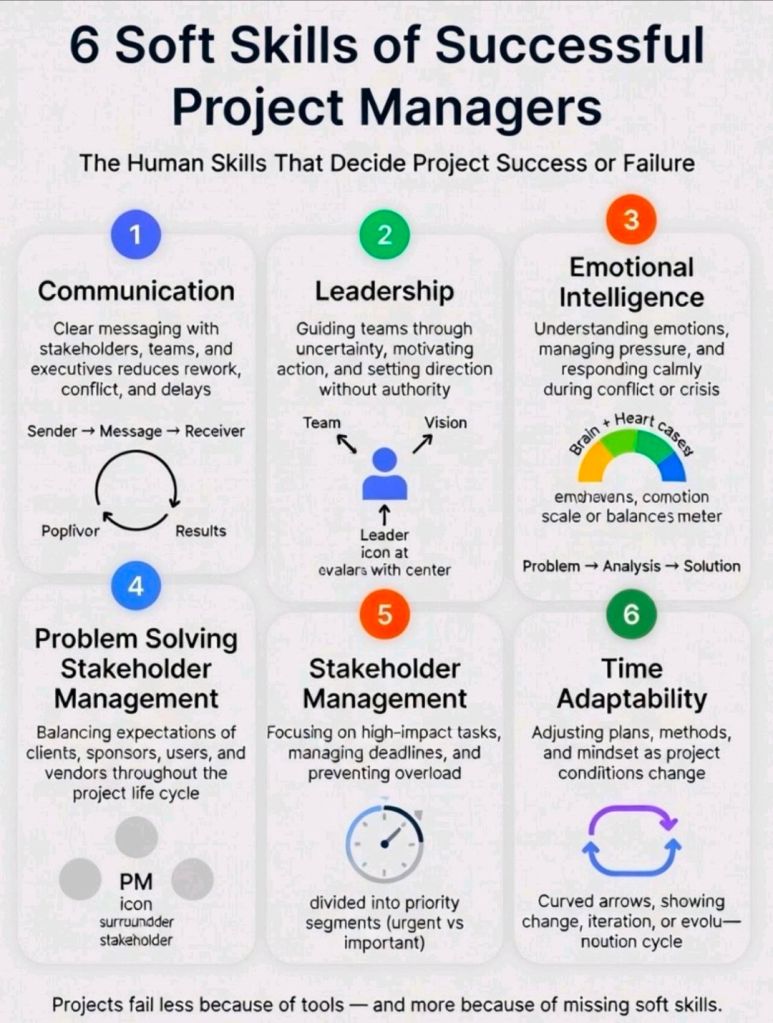
Project Management Soft Skills Overview

Project Management Soft Skills Overview

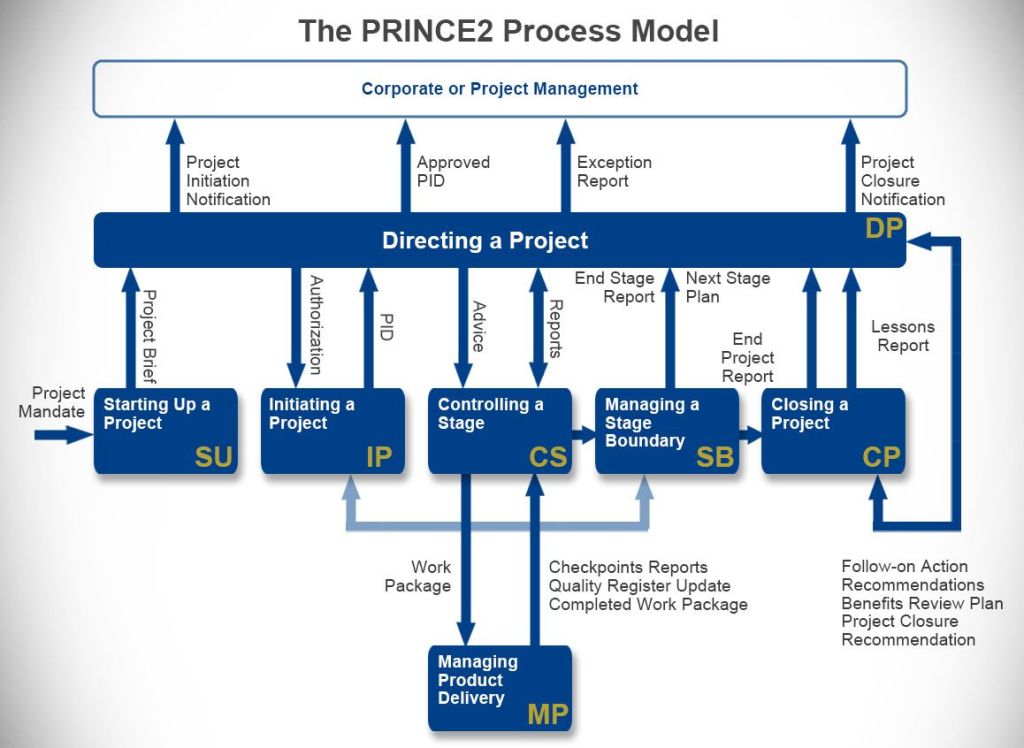
PRINCE2 7 Process Model, 2026 – 7th Edition

In 2026, the PRINCE2 7 (7th Edition) remains the current global standard for the methodology. The core diagram, known as the PRINCE2 Process Modelillustrates how the 7 processes interact across the four management levels: Corporate, Direction, Management, and Delivery

The PRINCE2 7 Process Model

The diagram typically visualises the project lifecycle from a “Project Mandate” to “Project Closure” through these processes: 

  • Starting Up a Project (SU): The pre-project process where a mandate is converted into a project brief.
  • Directing a Project (DP): The Project Board’s high-level oversight, running from project start to finish.
  • Initiating a Project (IP): Establishing firm foundations, including the Project Initiation Documentation (PID) and the Business Case.
  • Controlling a Stage (CS): The daily management of a stage by the Project Manager.
  • Managing Product Delivery (MP): The link between the Project Manager and Team Managers to ensure products are built.
  • Managing a Stage Boundary (SB): Occurs at the end of each management stage to plan the next one and review the current.
  • Closing a Project (CP): The final process for a formal decommissioning of the project. 
PRINCE2 7 Process Model, 2026 – 7th Edition

PRINCE2 (PRojects IN Controlled Environments) is a structured, process-based project management methodology

PRINCE2 (PRojects IN Controlled Environments) is a structured, process-based project management methodology used globally to manage projects of any size and complexity. It focuses on dividing projects into manageable stages, ensuring accountability, and maintaining a clear business justification from start to finish. 

Core Framework (PRINCE2 7)

The latest version, PRINCE2 7th Edition (2023), centers on five integrated elements: 

  • 7 Principles: The “guiding obligations” that must be followed for a project to be considered PRINCE2 (e.g., Continued Business JustificationLearn from Experience, and Manage by Exception).
  • 7 Practices: Essential aspects of management (formerly “Themes”) applied throughout the lifecycle: Business Case, Organizing, Plans, Quality, Risk, Issues, and Progress.
  • 7 Processes: A step-by-step guide from Starting up a Project to Closing a Project.
  • People: A major addition in Version 7, focusing on the human side of change and team dynamics.
  • Project Context: Emphasises the need to tailor the methodology to suit the specific project environment. 

Certification Levels:

Qualifications are typically sought through PeopleCert Accredited Training Organisations (ATOs)

  1. Foundation: Introduces basic concepts and terminology; no prerequisites required.
  2. Practitioner: Focuses on applying and tailoring the method to real-world scenarios. Requires a valid Foundation-level certificate or an equivalent (like PMP or CAPM).
  3. PRINCE2 Agile: A specialised version that blends the structure of PRINCE2 with agile delivery frameworks like Scrum and Kanban. 

Comparison and Value

  • Geographic Dominance: PRINCE2 is the de facto standard in the UK public sector and is widely used across Europe and Australia. In contrast, the PMP (from PMI) is more prevalent in the USA and Canada.
  • Cost: In the UK, Foundation courses typically range from £549 to £1,000, while Practitioner courses cost between £599 and £1,100.
  • Renewal: All current PRINCE2 certifications must be renewed every three years

PRINCE2 (PRojects IN Controlled Environments) is a structured, process-based project management methodology.

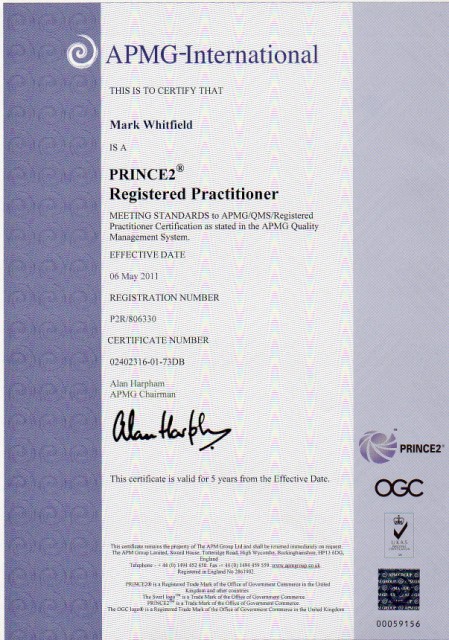
May 2011 – Registered PRINCE2 Practitioner with ILX

mark whitfield mark_whitfield_prince2_registered_practitioner
PRINCE2 (PRojects IN Controlled Environments) is a structured, process-based project management methodology

Education Summary – 1980 thru 1990 – Mark Whitfield

1988 to 1990 : University of Bolton (previously BIHE, Bolton Institute of Higher Education)
Deane Road, Bolton, Lancashire, UK. BL3 5AB

Higher National Diploma (HND) in Computer Studies –
DISTINCTION – overall first over the 2 years

1985 to 1988 : Leigh College (now Wigan and Leigh College)
Marshall Street, Leigh, Lancashire, UK. WN7 4HX

2 ‘A’ Levels – Computer Science and Biology

1980 to 1985 : Park High Secondary School
Park Road, Hindley, Wigan, Lancashire, UK. WN2 3RY

8 GCE ‘O’ Levels –
All grades ‘C’ and above including Computer Studies, Maths and English

Higher National Diploma (HND) in Computer Studies – Certificates:

mark_whitfield_hndcertificate1
mark_whitfield_firstyearhnd
mark_whitfield_bothyearshnd

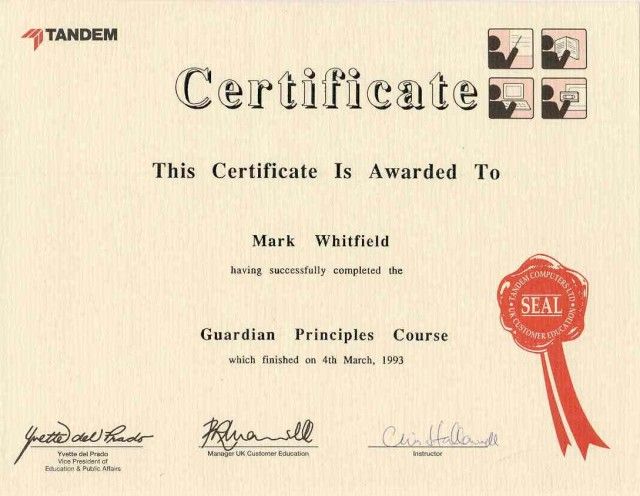
HPE NonStop Tandem NonStop – Guardian Principles Course – 1993 – High Wycombe

HPE NonStop Tandem NonStop – Guardian Principles Course – 1993 – High Wycombe

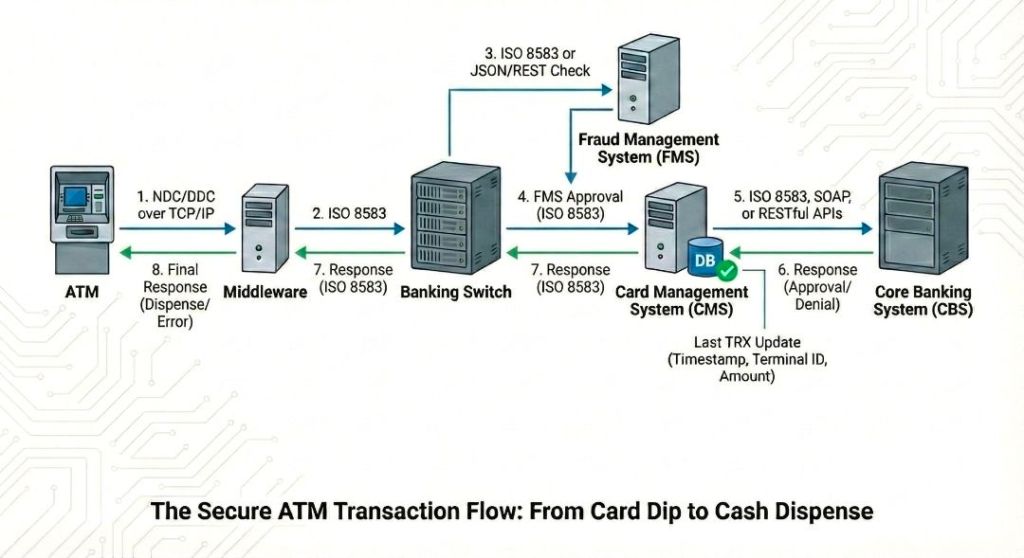
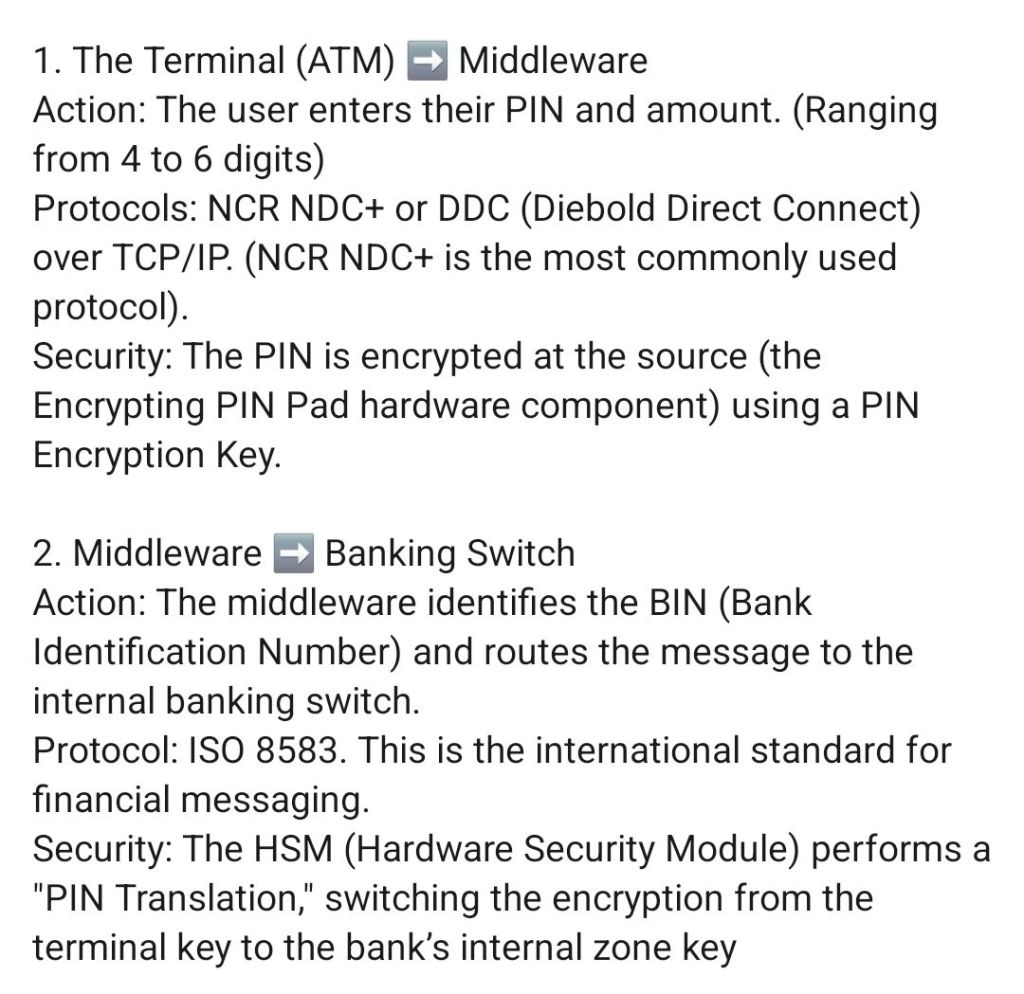
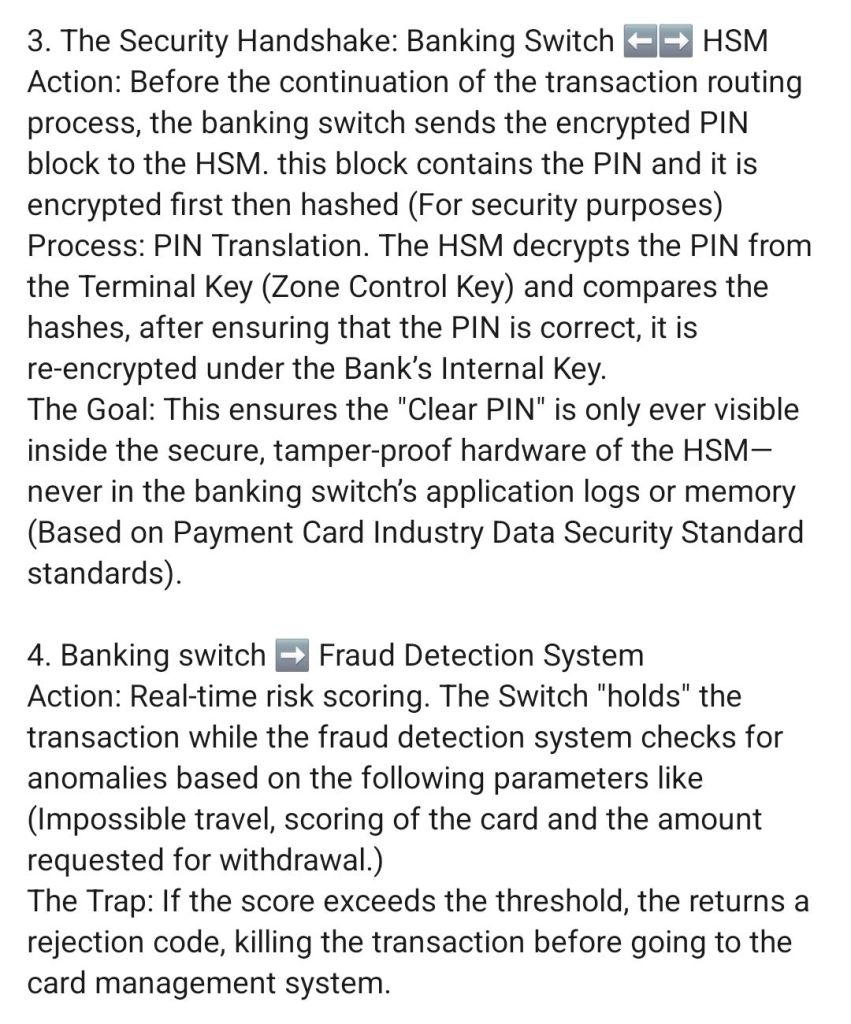
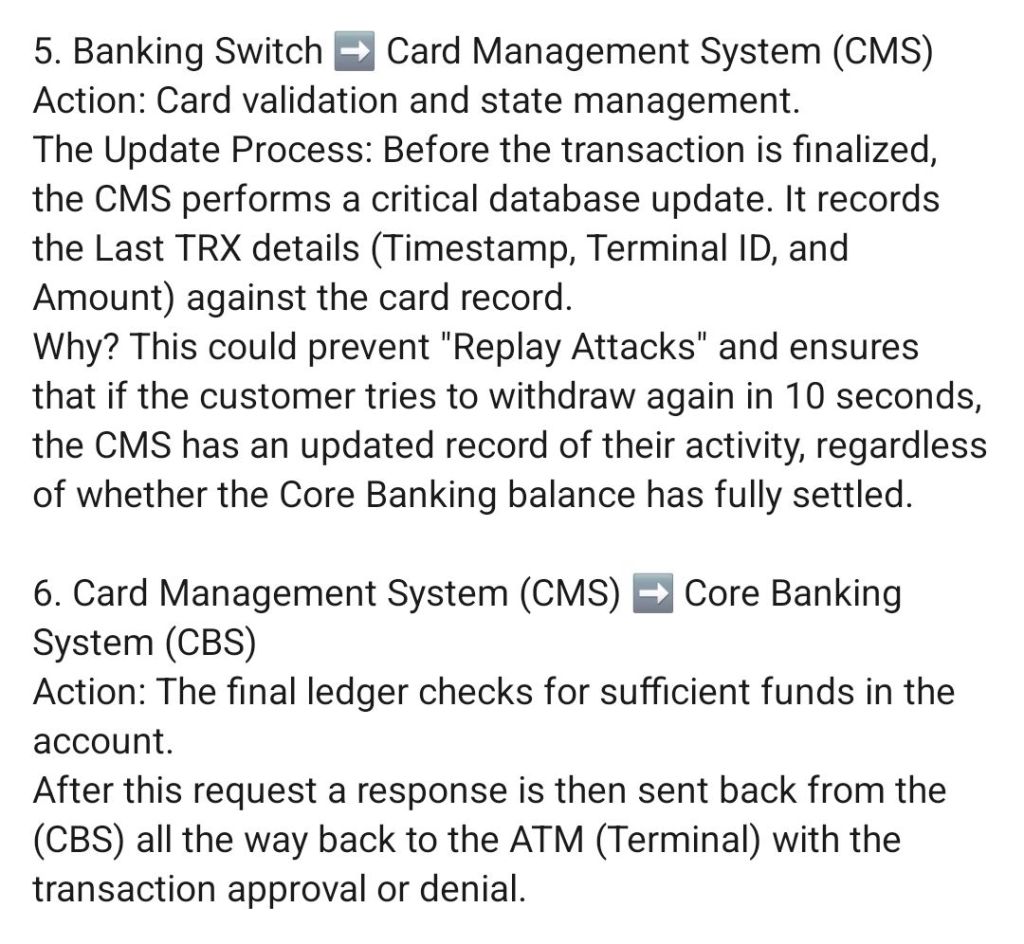
Secure ATM Transaction Flow from Card Dip to Cash Dispense

Secure ATM Transaction Flow from Card Dip to Cash Dispense

Secure ATM Transaction Flow from Card Dip to Cash Dispense

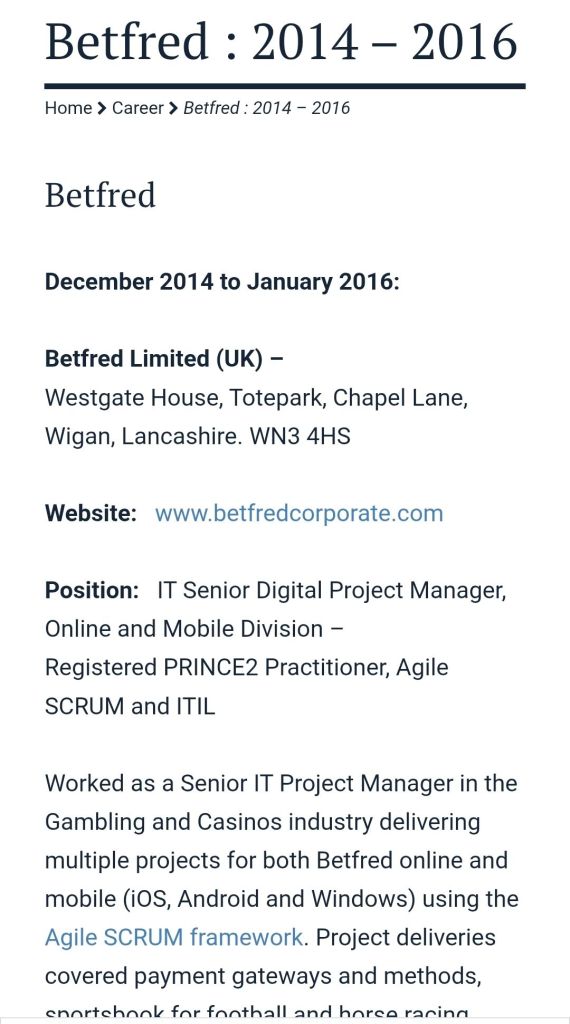
Betfred, Westgate House, Totepark, Chapel Lane, Wigan – 2014 – 2016

Betfred, Westgate House, Totepark, Chapel Lane, Wigan – 2014 – 2016

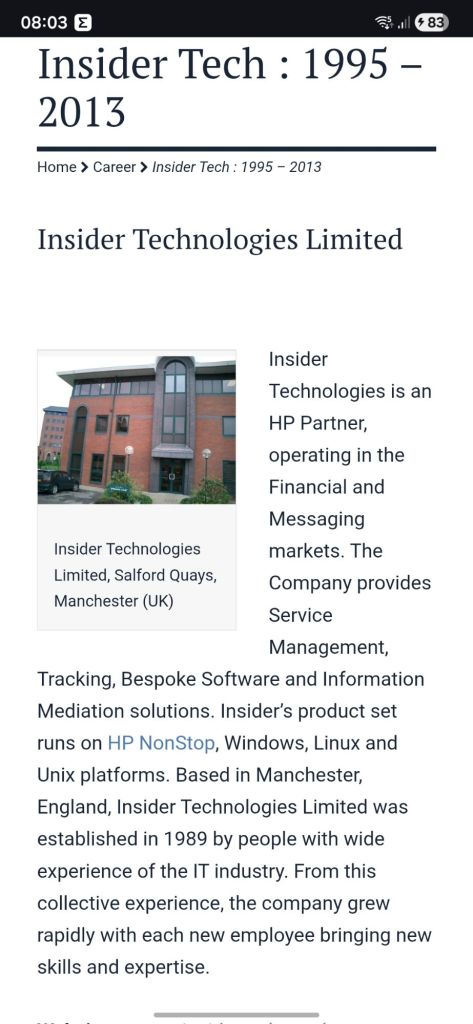
Career, Insider Technologies Limited, ITL – 1995 to 2013 as HPE NonStop Tandem specialist and Product Manager

Career, Insider Technologies Limited, ITL – 1995 to 2013 as HPE NonStop Tandem specialist and Product Manager