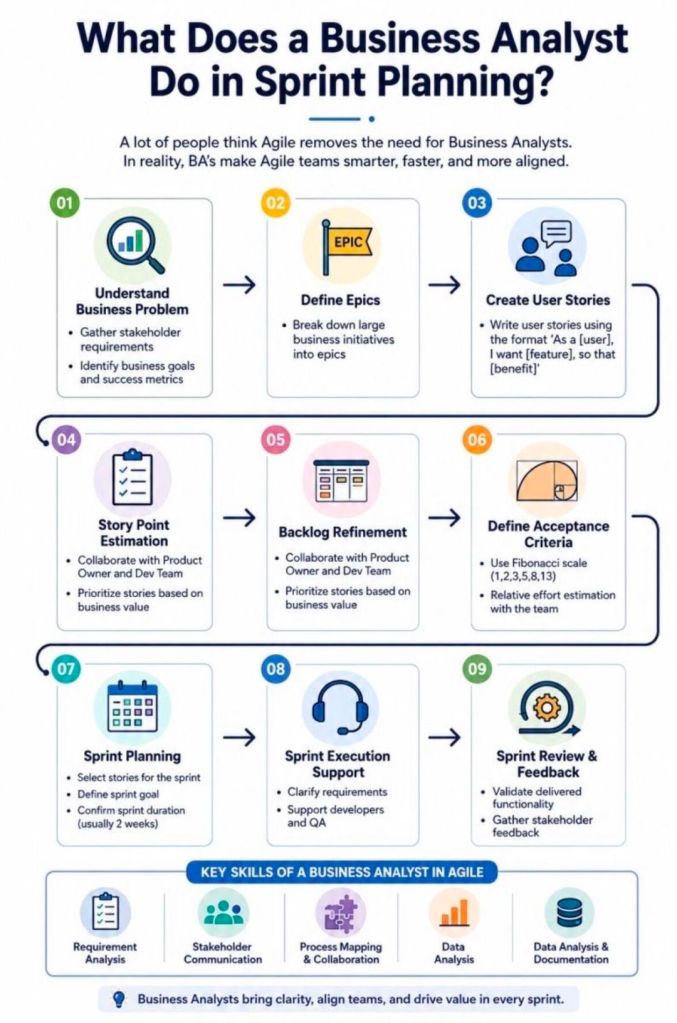
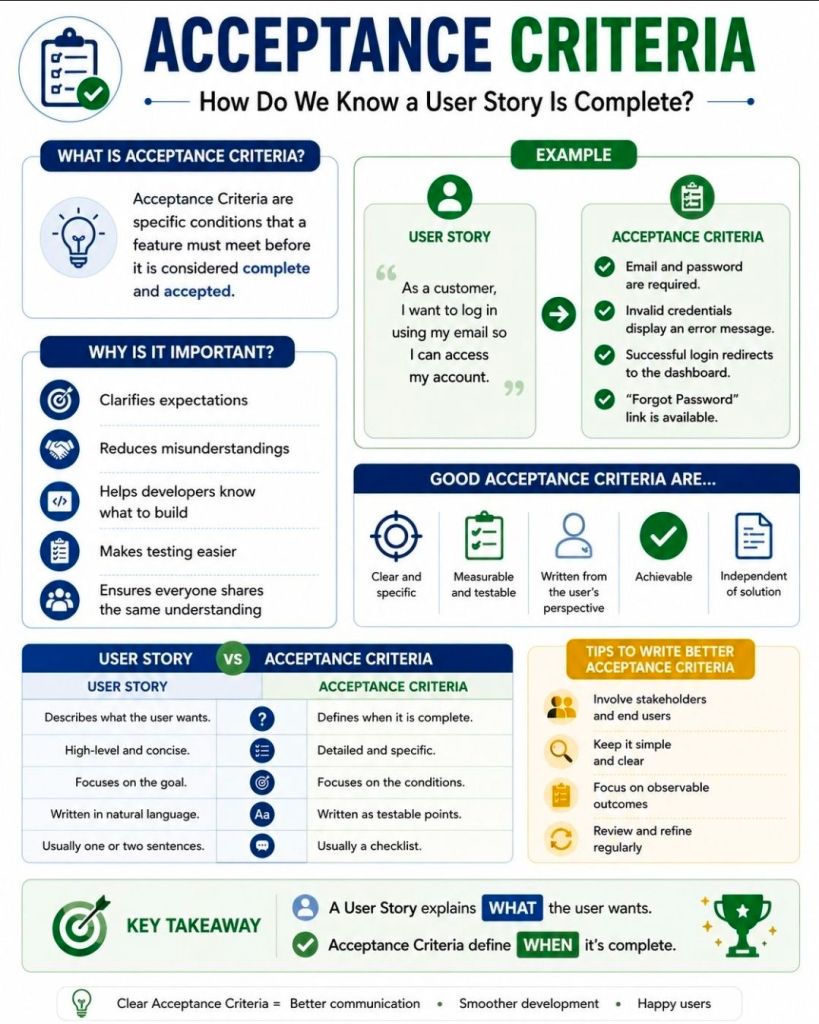
Requirements Gathering Process, Business Analyst BA

Requirements Gathering Process Business Analyst BA
Requirements Gathering Process
for Business Analyst

Mark Whitfield @ Betfred – Timeline of technical focus areas

Mark Whitfield served as an IT Senior Digital Project Manager (often operating in product and application delivery roles) within the Online and Mobile Division at Betfred from December 2014 to January 2016.

During this era, his responsibilities crossed the boundary between project management and digital product delivery. He was heavily focused on shifting legacy digital footprints toward modern mobile, web, and multi-vendor integrations.

Below are the focus areas and technical outputs from his tenure at Betfred, grouped by operational era and delivery cycle:


📱 1. Digital Platform & Mobile Era (Core Product Delivery)

This area focused on the rapid evolution of the sportsbook and the deployment of consumer-facing native and web applications.

  • Focus Areas: Mobile product lifecycle management, multi-platform deployment, and real estate feature upgrades for .COM and .mobi channels.
  • Technical Output:
    • Native Applications: Delivered and updated native mobile applications across iOS, Android, and Windows Phone.
    • Sportsbook Verticals: Built, optimized, and deployed major UI/UX updates for the football and horse racing sportsbooks.
    • Virtual Gaming: Integrated online, computer-generated virtual gaming modules and RNG (Random Number Generator) components into the digital ecosystem.

🔒 2. Payment Systems, Security, & Compliance Era

A major focus was placed on building high-throughput payment pipelines and establishing robust compliance mechanics to handle compromised trading environments.

  • Focus Areas: Fraud mitigation, multi-currency processing, payment gateway migrations, and strict adherence to gambling regulations.
  • Technical Output:
    • Payment Gateways: Delivered end-to-end payment gateway mechanisms supporting diverse credit/debit, e-wallet, and localized payment methods.
    • Fraud Detection Systems: Integrated advanced fraud detection and risk analysis modules into backend transactional pathways.
    • Emergency System Change Requests (SCRs): Architected and executed critical hotfixes for compliance directives, regulatory alignment, and security mitigations.

🔄 3. Software Development Lifecycle (SDLC) & Release Era

This era was characterized by a massive transition away from rigid legacy setups into continuous delivery models.

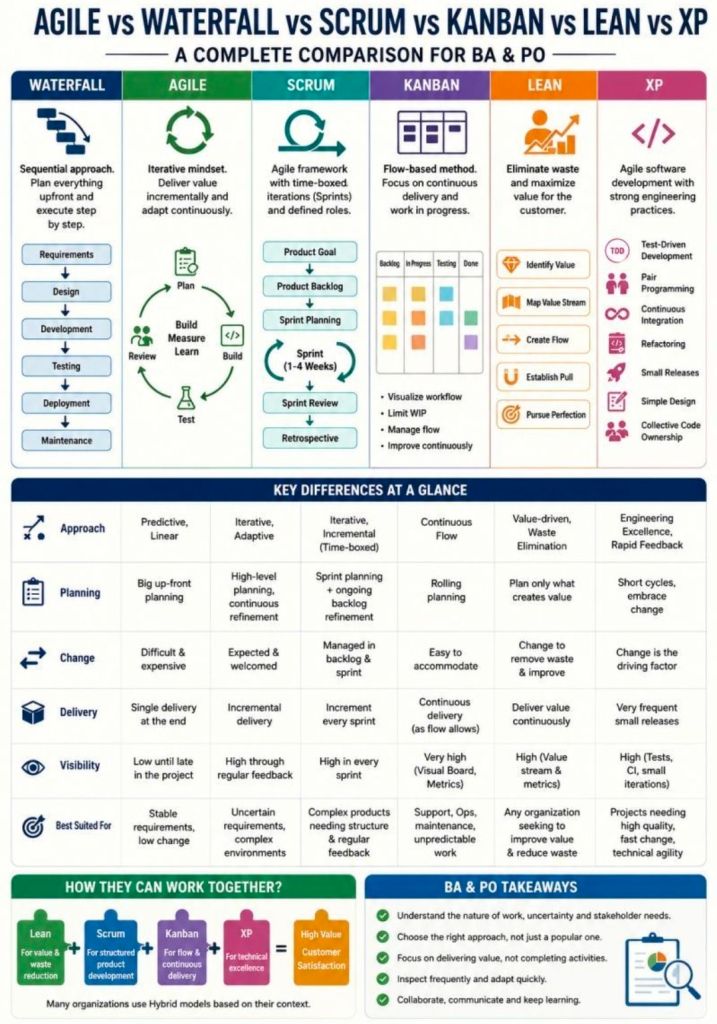
  • Focus Areas: Transitioning environments from Waterfall to the Agile Scrum framework, managing distributed cross-functional teams, and stabilizing deployment cadences.
  • Technical Output:
    • Monthly Release Cycles: Structured and executed the monthly internet software release train to stabilize production code across the web real estate.
    • Middleware & API Integrations: Managed complex integrations connecting frontend frameworks with heavy transactional middleware and core banking/wallet ledgers.

🤝 4. Multi-Vendor Sub-System Integration

Because Betfred’s tech stack relied heavily on third-party niche solutions, Whitfield acted as the technical delivery anchor across an extensive network of specialized vendors.

  • Focus Areas: Vendor middleware alignment, technical contract delivery, and cross-platform SLA monitoring.
  • Technical Output:
    • Frontend & UX: Coordinated front-end developments with agencies like Degree 53.
    • Core Gaming & Content Systems: Integrated third-party components from industry staples including Playtech, Inspired, IGT, and Virtue Fusion.
    • Data Feeds & Push Tech: Managed real-time data ingestion and notification engines built by Onionsack, OtherLevels, Satellite Information Services (SIS), and StreamUK.
    • Analytics & Performance: Integrated user attribution and marketing pipelines utilizing Appsflyer, Income Access, and Activewin.

Mark Whitfield @ The Software Partnership – Timeline of technical focus areas

During his time at The Software Partnership (acquired by Deluxe Data International in 1994), Senior IT Project Manager Mark Whitfield operated as a Programmer and Lead Analyst. This era lasted from 1990 to 1995 and focused on foundational electronic banking software frameworks, specifically the sp/ARCHITECT-BANK platform.

The key projects and focus areas within this era are structured below by client timeline, focus areas, and technical outputs:

🏦 1990–1992: Barclays Bank (Knutsford, Cheshire)

  • Focus Area: On-site architectural design and core mainframe development for high-profile business banking.
  • Technical Output: Designed and coded back-end software modules for the Barclays Business Master II (BBM II) desktop banking project.

📞 1992–1993: Girofon (Denmark)

  • Focus Area: Telephonic integration and automated remote banking solutions.
  • Technical Output: Developed an automated, menu-driven touch-tone phone banking suite. This allowed voice commands to dial into a Periphonics VRAM device to fetch live customer balances directly from back-end mainframes.

📊 1993: Barclays Bank (Poole, Dorset)

  • Focus Area: Financial transactional automation and corporate service invoicing.
  • Technical Output: Created and integrated a custom batch billing suite of modules that attached to the BBM II application to automate client usage invoicing.

💻 1993–1994: TSB & Bank of Scotland

  • Focus Area: Early digital forensics, fund movements, and logic architecture.
  • Technical Output: Conducted digital investigations and engineered logic design and mainframe code to support early inter-account desktop money transfers.

🌍 1994–1995: Rabobank

  • Focus Area: International systems deployment, optimization, and validation.
  • Technical Output: Led software optimization protocols, wrote custom electronic coding patches, and validated on-site deployments for global operations.

⚙️ Core Technical Stack & Environment Summary

Across all eras at The Software Partnership, the standardized environment utilized for these outputs included:

  • Hardware & Operating Systems: Tandem Mainframe Computers (now HPE NonStop) operating on the Tandem Guardian O/S.
  • Programming Languages: COBOL85, NonStop SQL, SCOBOL (Screen COBOL for “green screen” terminal emulations), C, C++, and TAL.
  • Subsystems & Tools: PATHWAY, PATHMAKER, ENSCRIBE, EMS, and INSPECT.
  • Methodologies: Early iterative development and structured Waterfall lifecycles.

Mark Whitfield @ Capgemini – Timeline of technical focus areas

As a client-facing, SC-cleared Engagement Manager and Senior Project Manager for Capgemini UK (2016–Present), Mark Whitfield’s focus areas and project outputs fall into Phase 5 (Enterprise Cloud, Integration & Public Sector Delivery) of his overall professional trajectory.

His tenure at Capgemini UK is marked by managing complex hybrid migrations, enterprise system integrations, and multi-million-pound public and private sector contracts using hybrid Agile and PRINCE2 methodologies.


🌐 Era 1: Public Sector & Cloud Migration (2019–Present)

This era aligns with the UK government’s “Digital by Default” mandate and a nationwide public sector transition toward highly secure, cost-optimized, and green cloud platforms.

  • Focus Areas:
    • Enterprise hybrid cloud infrastructure infrastructure design.
    • Re-hosting, re-platforming, and refactoring legacy software architectures.
    • Cross-functional alignment with rigid government data privacy guidelines (GDPR).
    • Coordinating large-scale onshore and offshore engineering delivery resources.
  • Project Outputs:
    • Directed a massive £13.5 million programme to migrate over 130 public sector legacy applications onto Microsoft Azure and AWS platforms.
    • Delivered a Proof of Concept (POC) indicator project worth £375k ahead of the wider national public infrastructure cloud framework rollout.

🔌 Era 2: MuleSoft Ecosystem & Enterprise API Integration (2018–2019)

During this phase, Whitfield was augmented as a Delivery Manager into MuleSoft (a Salesforce company) operating out of the London Salesforce Tower.

  • Focus Areas:
    • API-led connectivity frameworks and microservices architecture deployment.
    • Hyper-automation and multi-site enterprise system integrations.
    • API lifecycle design and Anypoint Code Builder configurations.
    • Guiding high-influence blue-chip clients through API connectivity governance.
  • Project Outputs:
    • Successful deployment of production-ready APIs to unlock siloed, legacy back-end system data.
    • Delivered complex data pipelines to support modernized, interconnected digital applications for tier-one global brands.

🛫 Era 3: Major Corporate Infrastructure & Sector Delivery (2016–2018)

Upon joining Capgemini in January 2016, Whitfield initially spearheaded highly secure, custom bespoke solutions across critical commercial and defensive sectors.

  • Focus Areas:
    • High-security, multi-site project tracking, financial forecasting, and stakeholder governance.
    • Automated manufacturing, aerospace, defense, and logistics supply chain data tracking.
    • Complex Agile SCRUM sprint ceremonies with heavy cross-team interdependencies.
  • Project Outputs:
    • Aerospace & Defence (NATS): Oversaw the secure delivery of custom Apple iOS apps providing real-time, public-facing, and military airspace data.
    • Postal Services (Royal Mail Group): Managed an award-winning £4.3 million project utilizing 90 Capgemini engineers to safely migrate over 1,100 system interfaces across dual data centers.
    • Automotive Integration (Jaguar Land Rover): Directed extensive enterprise architecture planning, pipeline resource mapping, and Scrum team management for a major supply chain initiative.

Mark Whitfield @ Insider Technologies Limited – Timeline of technical focus areas

During his 18-year tenure (1995–2013) at Insider Technologies Limited (ITL) in Salford Quays, UK, Senior IT Project Manager Mark Whitfield advanced from a core technical engineer into strategic product and project management.

His time at the company is defined by two distinct operational eras, marked by a clear shift from code development to enterprise delivery:


🛠️ 1. The Engineering & Technical Development Era (1995–2004)

During this period, Whitfield operated primarily as a Senior Programmer, focusing on platform health, system diagnostics, and transaction log extraction architectures for highly critical financial systems.

  • Main Focus Areas:
    • Infrastructure consulting, automated system management, and volume stress-testing.
    • Service Level Agreement (SLA) monitoring for critical path payment pipelines.
    • HPE NonStop (formerly Tandem Computers via Compaq) platform optimization and software engineering.
  • Technical & Project Outputs:
    • Reflex (Reflex 80:20) Co-Development: Designed and authored platform health and core diagnostic plug-in modules, including Console (for EMS event viewing and filtering), Status Monitor (for tracking HPE NonStop platform components including CPU, Disk, Process, Enscribe Files, MQ, XPNET, TCP/IP, MultiBatch jobs), and Service Monitor (multi-line, rule-based multi-component analysis).
    • CRESTCo Infrastructure Benchmark (1997): Contracted on-site to CRESTCo (now Euroclear) to write custom benchmarking software evaluating stock settlement software performance on newly introduced S7000 HPE NonStop systems.
    • HP OpenView Certification (2002): Successfully engineered and secured the industry’s first HP OpenView Operations Enterprise Manager 2-way Smart Plug-In (SPI) certification for HPE NonStop environments.

📈 2. The Strategic Product & Project Management Era (2004–2013)

In this phase, Whitfield transitioned into a Product Manager and Project Manager role (Strategic Technical Initiatives), taking charge of complete software development lifecycles (SDLC) using structured PRINCE2 and early Agile Scrum frameworks.

  • Main Focus Areas:
    • ATM/POS transaction monitoring and real-time electronic payments tracking.
    • Web-enabled client-server browser monitoring frameworks and middleware solutions.
    • Pre-sales technical bidding, executive demos, and client deployment validation across Europe and the Middle East.
  • Technical & Project Outputs:
    • RTLX Reactor & Sentra Suites: Managed the commercial rollout and high-volume deployment of the browser-enabled Real-Time Log Extraction (RTLX) suite and Sentra monitoring solutions to capture and parse ATM/POS logs.
    • Enterprise Bank Implementations: Directed mission-critical payments monitoring integrations (notably processing ACI BASE24 Classic and BASE24-eps transactions over XPNET middleware) for tier-1 financial heavyweights including HSBC, Alliance & Leicester, Standard Chartered, and Al Rajhi Bank (Saudi Arabia).
    • Open CMS Corporate Re-platforming: Researched, designed, and authored a complete overhaul of Insider Technologies’ public corporate website using an Open Content Management framework (DotNetNuke).

💻 Core Technology Stack (1995–2013)

Across both eras at Insider Technologies, Whitfield’s environment relied on high-availability, fault-tolerant ecosystems:

  • Platforms & Operating Systems: HPE NonStop (Tandem K-Series, S-Series, and Itanium J-Series), Guardian O/S, Windows 2000/XP, Linux, and Unix.
  • Languages & Toolsets: Pathway, INSPECT, SPOOLCOM, Peruse, TAL (Tandem Application Language), NonStop C, C++, COBOL85, SCOBOL, NonStop SQL, TACL, and Enscribe.
  • Enterprise Software Interfaced: ACI BASE24 Classic, BASE24-eps, XPNET, ICE (Insession), TIVOLI, COMMAND/POST, and HP OpenView Operations (HP OVO).

Business Analyst Mindmap BA

Business Analyst Mindmap BA
Business Analyst Mindmap

Capgemini Projects by Technology Areas

At Capgemini UK, SC-cleared Engagement Manager and Senior IT Project Manager Mark Whitfield focuses on delivering complex, enterprise-scale digital transformations. His project portfolio spans both public and private sectors, categorized by several primary technology areas:

☁️ Hybrid Cloud Infrastructure & Migrations

  • UK Government App Migration: Directed a massive multi-million pound programme (£13.5m) transitioning over 130 legacy public sector applications to Microsoft Azure and AWS.
  • Application Refactoring: Led complex application migrations using refactor, re-host, and re-platform design patterns.
  • Green IT Initiatives: Focused on cloud optimization models to streamline operating costs and improve sustainability profiles.

🔌 Enterprise Integration & Middleware (API-led Connectivity)

  • MuleSoft Ecosystem Deployments: Directed large-scale system integration projects using the Salesforce MuleSoft Anypoint Platform.
  • MuleSoft Augmentation: Acted directly as an augmented Delivery Manager for MuleSoft supporting blue-chip integrations.
  • Royal Mail Group (RMG): Managed a £4.3 million migration project involving more than 1,100 interfaces to integrate internal applications and external trading customers.
  • Jaguar Land Rover (JLR): Orchestrated mid-tier integration, manufacturing supply chain data pipelines, and middleware applications (such as the iFAB project).

📱 Digital Applications & Mobile Platforms

  • Aerospace & Defence Space Tracking: Managed the Agile SCRUM delivery of secure, near real-time Apple iOS mobile applications.
  • Dual-Layer Interfaces: Coordinated software presenting both sensitive, internal military views and public-facing airspace tracking visuals.

⚙️ Low-Code Platforms & Contact Centre Software (CCaaS)

  • Microsoft Power Platform: Structured data flows and modernised pipelines using low-code tools.
  • Serco Telephony Campaign: Managed a £400k CCaaS (Contact Centre as a Service) project establishing an automated, programmatic dialler integrated with an Azure-deployed CRM tool.

Capgemini eLearning and Group Training received

Based on Senior Project Manager Mark Whitfield’s professional portal, his Capgemini Engagement Manager eLearning and Group Training history spans 100+ distinct training modules and courses.

When broken down and totalled by the specific business and delivery focus areas outlined on his Capgemini Professional Training Tracker, the modules are structured as follows:

📋 Corporate Policy & Compliance (Modules 1–4)

  • Total Duration: 135 Minutes (2 Hours 15 Minutes)
  • Key Modules: Intellectual Property Rights (IPR), Group Anti-Corruption, and Group Competition Laws.

🛡️ Cybersecurity Essentials (Modules 5–9)

  • Total Duration: 60 Minutes (1 Hour)
  • Key Modules: Five-part series spanning safe email/social media usage, identifying cyber-risks and engineering threats, workstation protection, data classification, and travel security.

🤝 Sales & Digital Engagement Innovation (Modules 10–13)

  • Total Duration: 65 Minutes (1 Hour 5 Minutes)
  • Key Modules: Innovative Selling for Digital EMs, Appraising Digital Opportunities, and navigating the Applied Innovation Exchange (AIE).

⚙️ Delivery Methods, Agile & Quality Systems (Modules 14–22)

  • Total Duration: 140 Minutes (2 Hours 20 Minutes) (Note: Module 20 “Bluebook” duration is unlisted/self-paced).
  • Key Modules: Agile Basics & Tools, Scaling Up Agile frameworks, UniQuE Quality Management System portal, Lean Foundation, and the Contract Clauses Negotiating Guide (CCNG).

🔄 Global Transition Methods & Enterprise Delivery (Modules 23–55)

  • Total Duration: 8.5 Days + 186 Minutes
  • Key Modules: End-to-end Transition Management methodologies (V4.1) covering finance, contracts, work-in-progress, and organizational change streams. It culminates in intensive classroom sessions for UK BU Project Financial Management and his formal Advanced Engagement Management (Level 2) qualification.