Park High Secondary School, Hindley, Wigan – Overview and Timeline

Hindley Park High School (originally founded as Hindley and Abram Grammar School) was a historic secondary school located on Park Road in Hindley, Wigan, Greater Manchester. I attended the school from 1980 thru 1985.

Operating under its final name until its closure in August 1991, the institution served the local community for over three centuries. The iconic Victorian school building still stands today and serves the region as the Three Towers Academy.
Park High Secondary School, Hindley, Wigan - Overview and Timeline
Park High Secondary School, Hindley, Wigan – Overview and Timeline

Full Institutional Description

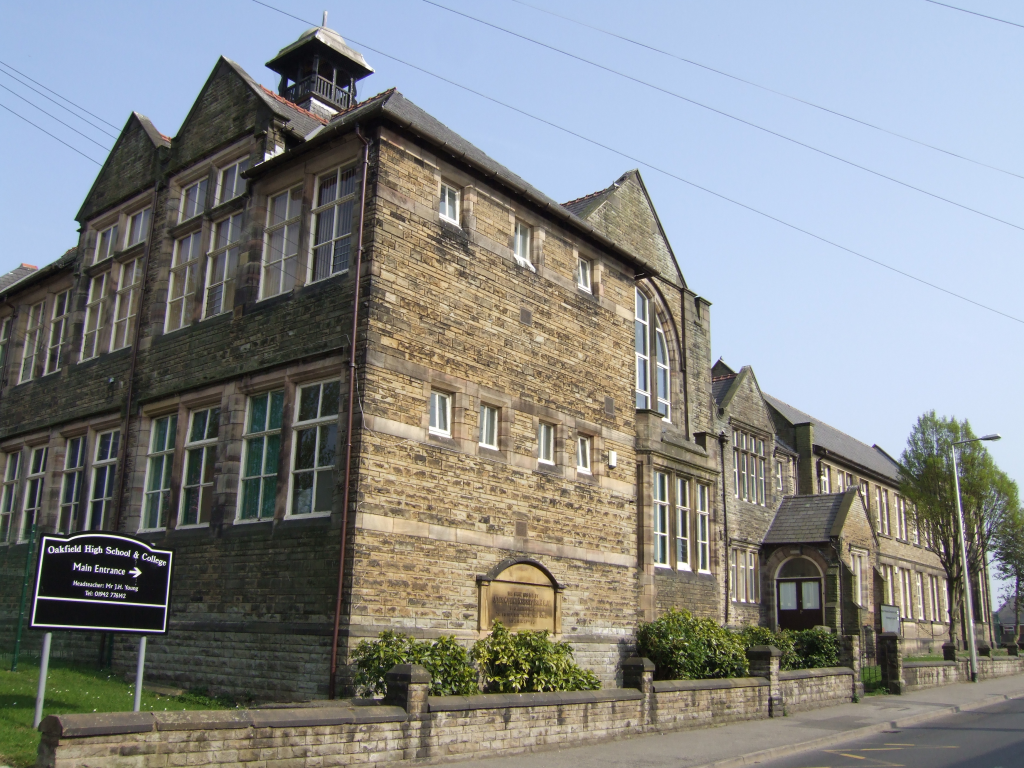
  • Location and Campus: Located on Park Road, Hindley, the school campus features a prominent mid-Victorian main building constructed of traditional red brick and stone dressings. The site evolved from a single large schoolroom to include a master’s house, separate classrooms, and the landmark Carlton Villas (acquired in 1937 as headmaster quarters).
  • Academic Identity: For most of its existence, it operated as a selective Grammar School focusing on classical education, mathematics, and sciences. In its later eras, it transitioned into a non-selective voluntary controlled secondary school managed by the Wigan Metropolitan Borough Council.
  • Heritage Values: The school holds deep historical significance for the Wigan borough. Its grounds feature two prominent war memorials dedicated to the alumni who perished during World War I and World War II.
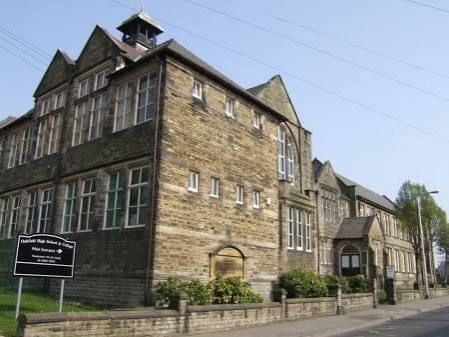
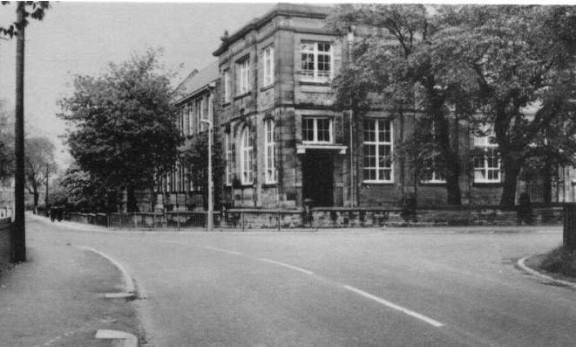
Park High Secondary School, Hindley, Wigan - side view of main building
Park High Secondary School, Hindley, Wigan – side view of main building

Chronological Timeline Breakdown

Era 1: The Foundations & Lowe Hall (1632 – 1855)

  • 1632: The Hindley and Abram Grammar School is officially established through a charitable foundation. It opens inside “Lowe Hall” off Stony Lane (modern-day Liverpool Road) and is locally dubbed The Lowe School.
  • 1829: The school updates its charter; while originally free, the Headmaster is granted the liberty to charge tuition fees for advanced instruction in Latin, arithmetic, and writing.
  • 1848: The campus layout at Lowe Hall is formally documented for the first time on the inaugural Ordnance Survey map.

Era 2: The Park Road Relocation & Growth (1856 – 1979)

  • 1856: The school outgrows its original home and relocates to a brand-new building on Park Road, anchoring its identity to the “Park” area of Hindley.
  • 1882: The infrastructure expands significantly to accommodate a growing pupil registry. The site now comprises a large central schoolroom, a secondary classroom, and a dedicated headmaster’s residence.
  • 1900s–1930s: The school undergoes rapid student growth. In 1937, the neighbouring Carlton Villas are formally purchased to serve as upgraded residential quarters for the headmaster.
  • 1944–1970s: Following the Education Act of 1944, the school solidifies its role as a key selective grammar school for the Hindley and Abram districts, operating alongside local secondary modern alternatives.

Era 3: The 1980s Transformation (1980 – 1989)

  • 1980–1985: Amidst a nationwide shift away from selective education, the school operates as Hindley Park High School, a voluntary controlled secondary school. It adapts its classical grammar curriculum to broader secondary education requirements.
  • 1986–1888: Financial strain and shifting local demographics within the Wigan Council area prompt institutional reviews regarding school surplus spaces across the borough.
  • 1989: Local education authorities begin formal consultations regarding the consolidation of secondary education in Hindley, outlining plans to phase out the historic Park Road site in favour of expanding Outwood Academy Hindley (then known as Mornington High School).

Era 4: Closure & Modern Reuse (1990 – Present)

  • 1991: On 31 August 1991, Hindley Park High School officially closes its doors to pupils, ending 359 years of direct educational lineage.
  • 1992–2010s: The building is preserved by the local authority and repurposed as a Teachers’ Development Centre.
  • 2020s: The historical complex finds a permanent modern educational use. The facility is occupied by the Three Towers Alternative Provision Academy, ensuring the 1856 building continues to serve local children needing specialised support.
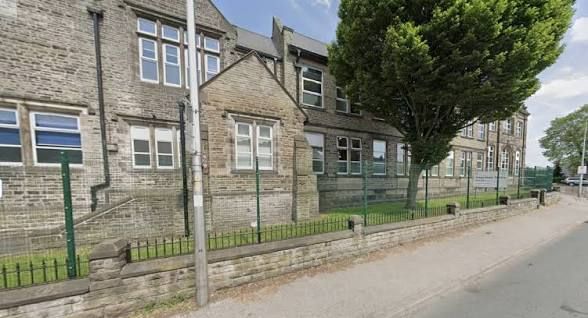
Three Towers Alternative Provision Academy

Park High Secondary School, Park Road, Hindley, Wigan, Lancashire, UK. WN2 3RY

1980 to 1985 : Park High Secondary School
Park Road, Hindley, Wigan, Lancashire, UK. WN2 3RY
(formerly Hindley and Abram Grammar School now PDC)

8 GCE ‘O’ Levels – mark whitfield
All grades ‘C’ and above including Computer Studies, Maths and English

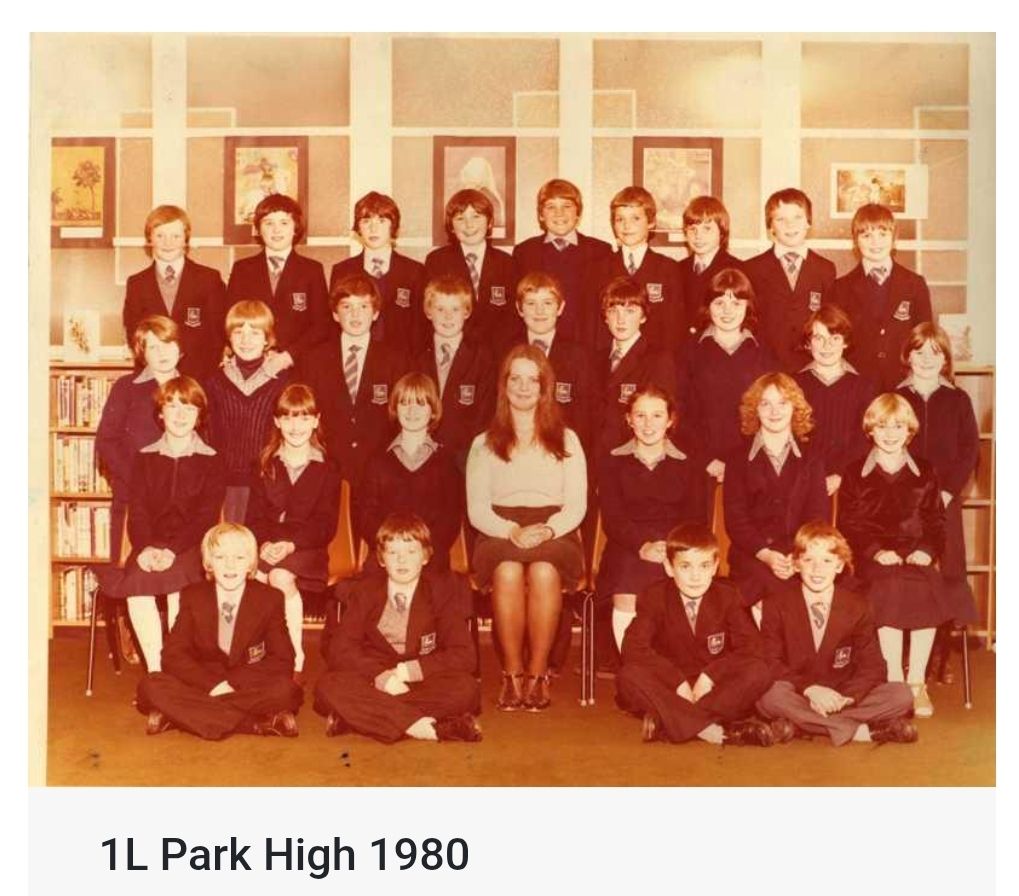
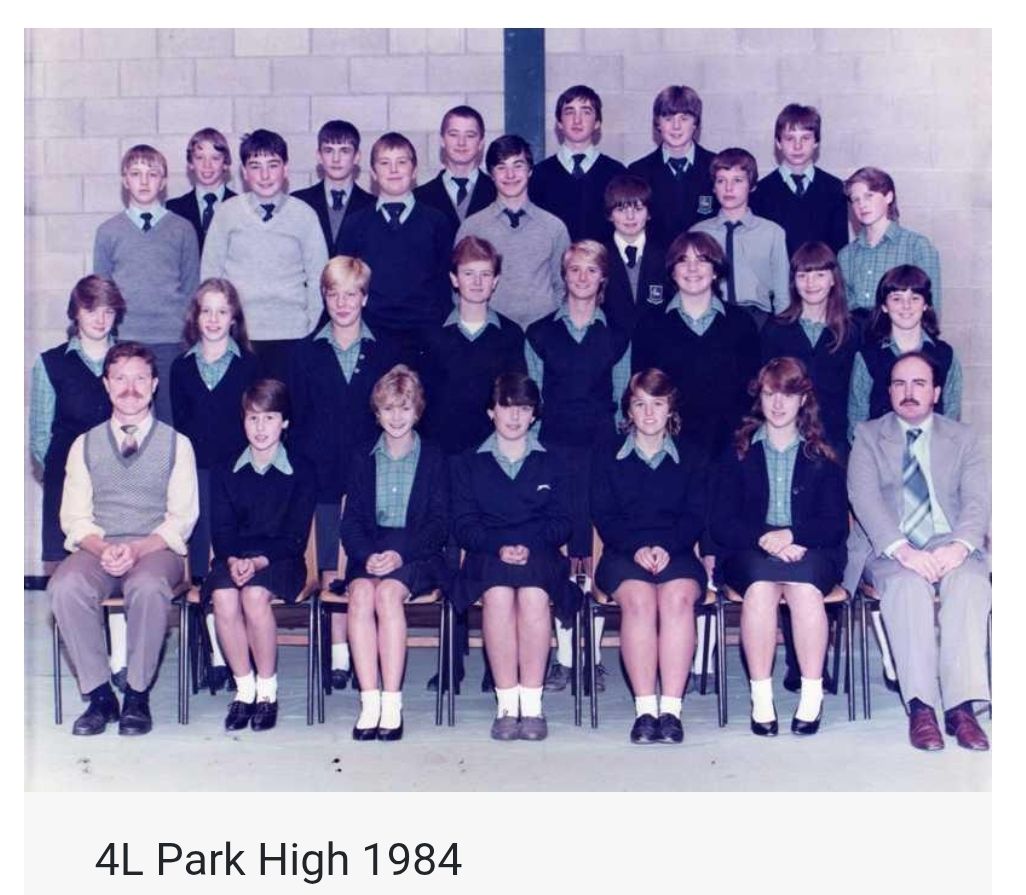
Class photos: first year (bottom, 2nd from right), fourth year (top, 4th from left)

mark whitfield DSCF0557
Park High Secondary School
Park Road, Hindley, Wigan, Lancashire, UK. WN2 3RY

Betfred, Westgate House, Totepark, Chapel Lane, Wigan – 2014 – 2016

Betfred, Westgate House, Totepark, Chapel Lane, Wigan – 2014 – 2016

1985 to 1988 : Computing at Leigh College (now Wigan and Leigh College) Marshall Street, Leigh, Lancashire, UK. WN7 4HX

1985 to 1988 : Computing at Leigh College (now Wigan and Leigh College) Marshall Street, Leigh, Lancashire, UK. WN7 4HX
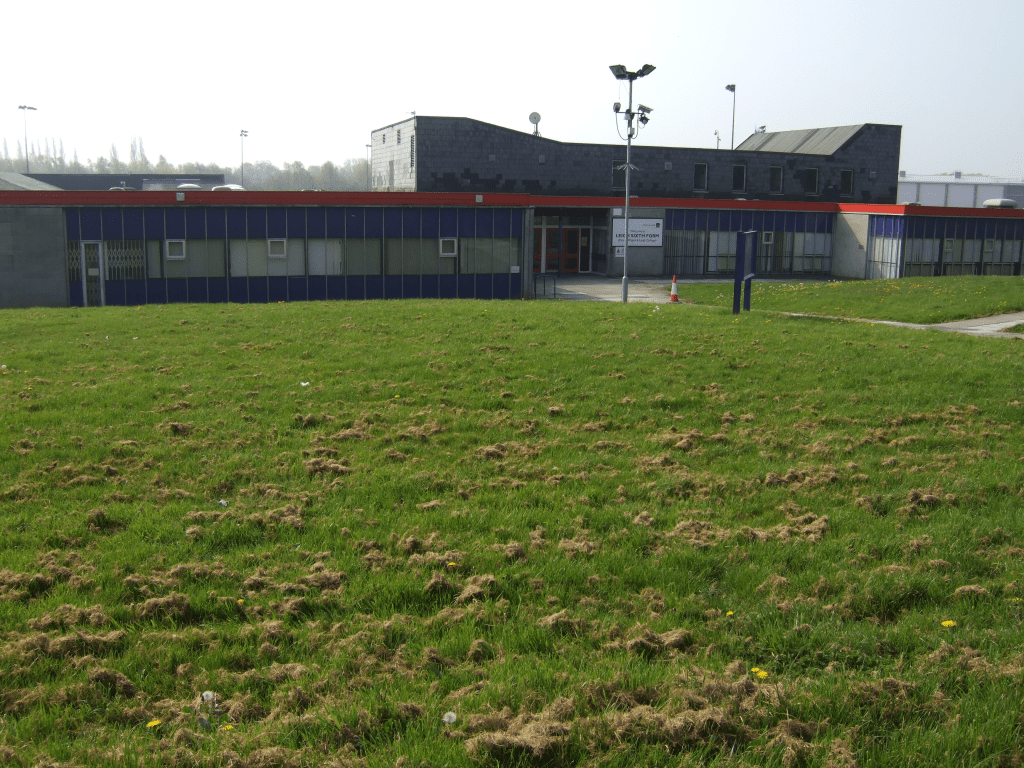
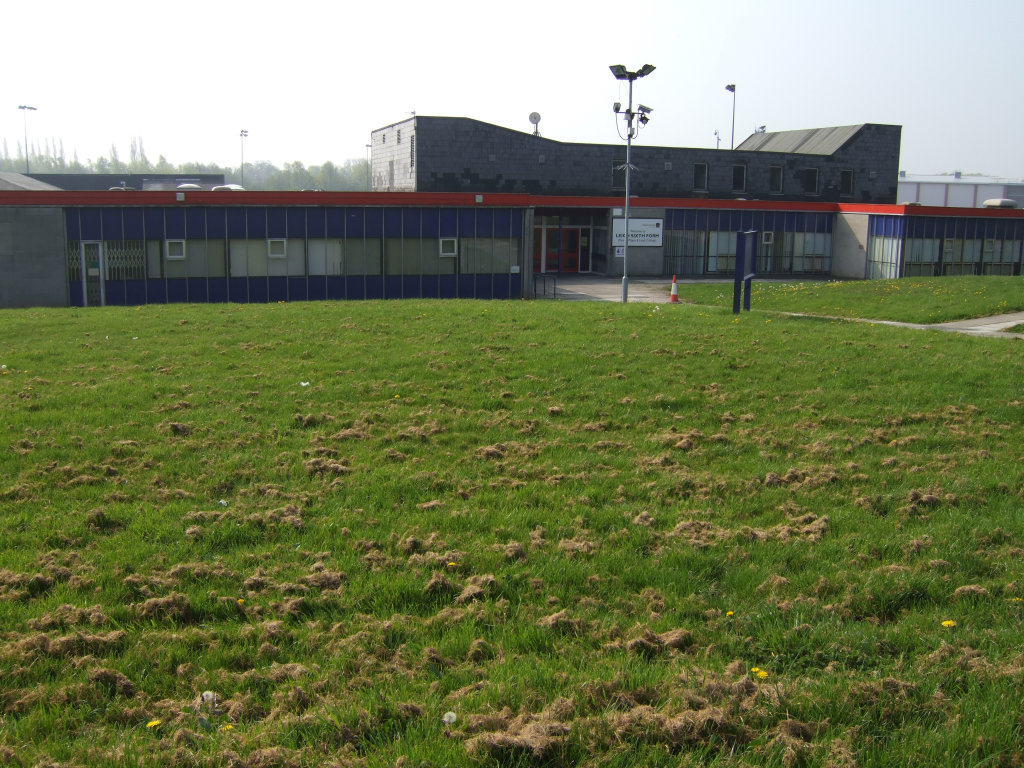
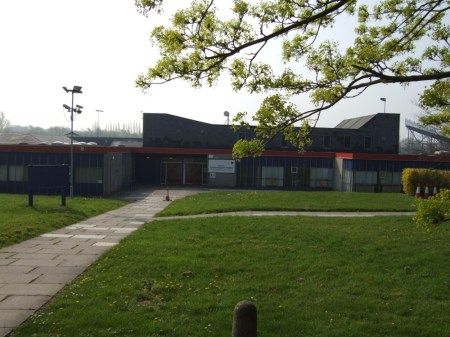
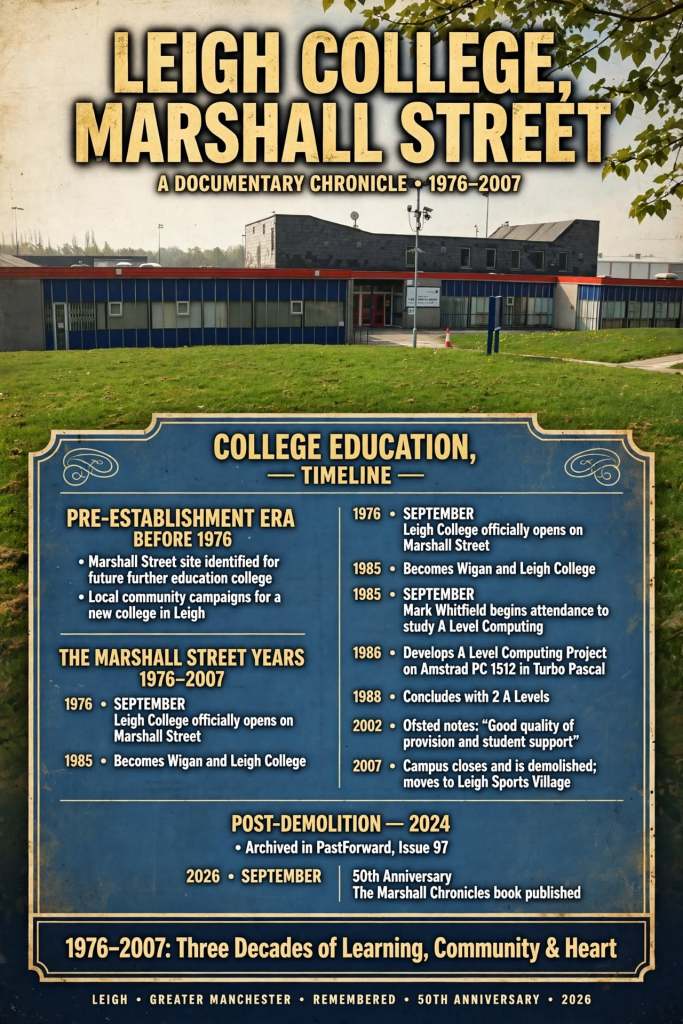
Leigh College (now Wigan and Leigh College) pre-2007

1985 to 1988 : Leigh College (now Wigan and Leigh College)
Marshall Street, Leigh, Lancashire, UK. WN7 4HX

2 ‘A’ Levels – Computer Science and Biology

(building below demolished 2007 and now rebuilt at the Leigh Sports Village – 1234 article by Julie McKiernan courtesy of PastForward, produced by Wigan Archives & Museums, Issue No. 97, August – November 2024, Marking 50 years of the borough, Wigan and Leigh’s local history magazine – Address: Past Forward, Archives, Wigan & Leigh, Leigh Town Hall, Mark Street, Leigh, WN7 1DY) 

Mark Whitfield Computing at Leigh College (now Wigan and Leigh College) Marshall Street, Leigh, Lancashire, UK. WN7 4HX

My ‘A’ Level Computing Project was developed on a Amstrad PC 1512 and was written in Turbo Pascal. The software provided a means for a local town newspaper to store, track and calculate the money payable to delivery staff based on paper round metrics. These metrics related to size of round, papers delivered and any leaflets attached to a delivery for that week. 

My ‘O’ Level Computing Project was developed on a LINK 480Z Research Machine and was written in Extended BASIC. Three submissions were required with appropriate design and testing. The excerpts here show details of a BASIC program for storing and displaying student exam results.

Leigh College, Marshall Street, Leigh. WN7 4HX – Timeline History from 1966

The Leigh College old building on Marshall Street was an iconic piece of the town’s educational landscape that stood for 41 years before being replaced by modern facilities.

Chronological Timeline

  • 1966: The Marshall Street campus building is officially constructed and opened, initially serving the local education system as the area transitioned away from traditional grammar schools.
  • 1976: Leigh College officially begins its primary era at the Marshall Street building following major local secondary and further education restructuring.
  • 1985–1988: The building serves a generation of A-Level and vocational students with highly regarded local facilities, though the physical structure begins to show its age.
  • 1992: Leigh College amalgamates with the Wigan College of Technology to form Wigan and Leigh College. The Marshall Street building remains open as a primary Leigh-based campus alongside the Railway Road site.
  • 2002: The Learning and Skills Council (LSC) approves a series of radical redevelopment plans due to the increasingly poor, outdated condition of the Marshall Street accommodation.
  • 2003–2004: Major plans for the £75 million Leigh Sports Village are finalized and approved. The project officially designates a new, modern location for the Leigh campus, sealing the fate of the Marshall Street building.
  • 2007: The gates close for the final time on August 1, 2007. The 600 remaining sixth-form and adult students are relocated to the brand-new, three-story facility at the Leigh Sports Village. Later that year, the 41-year-old old building is completely demolished.
Leigh College (now Wigan and Leigh College) Marshall Street, Leigh, Lancashire, UK. WN7 4HX
1966 to 2007 – Leigh College (now Wigan and Leigh College) Marshall Street, Leigh, Lancashire, UK. WN7 4HX
  • 2026: A 50th-anniversary reunion and a dedicated local history project are organized by local historians to commemorate the 1976 launch of the Marshall Street college era.