Project Templates Soft Storefront on Etsy

ProjectTemplatesSoft on Etsy is a highly rated, UK-based digital storefront specializing in professional-grade project management spreadsheets and presentation documents. Founded by Mark Whitfield, a veteran Senior Project Manager with over 30 years of delivery experience in IT and the Software Development Lifecycle (SDLC), the shop bridge the gap between heavy enterprise software and simple, flexible spreadsheets.
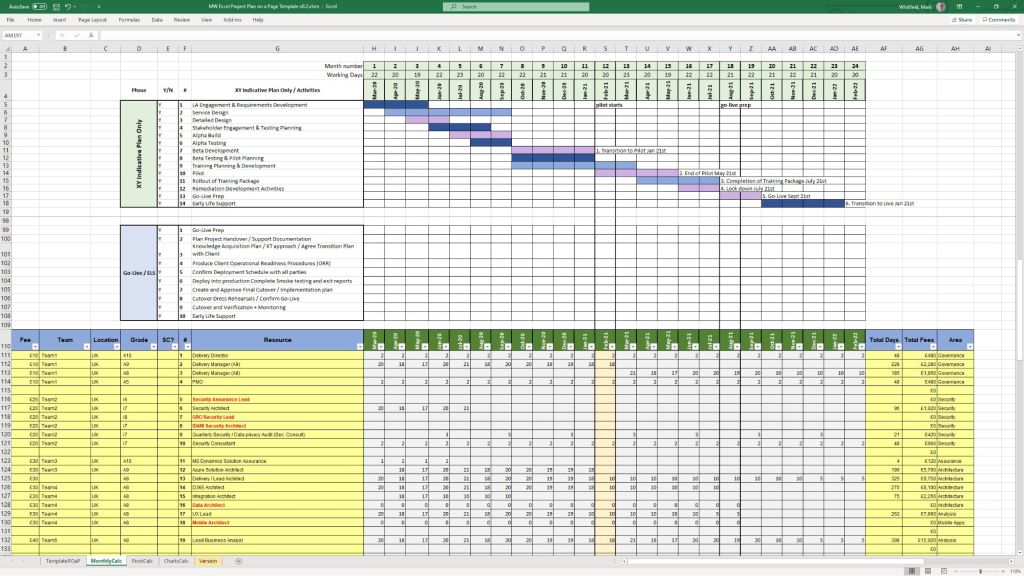
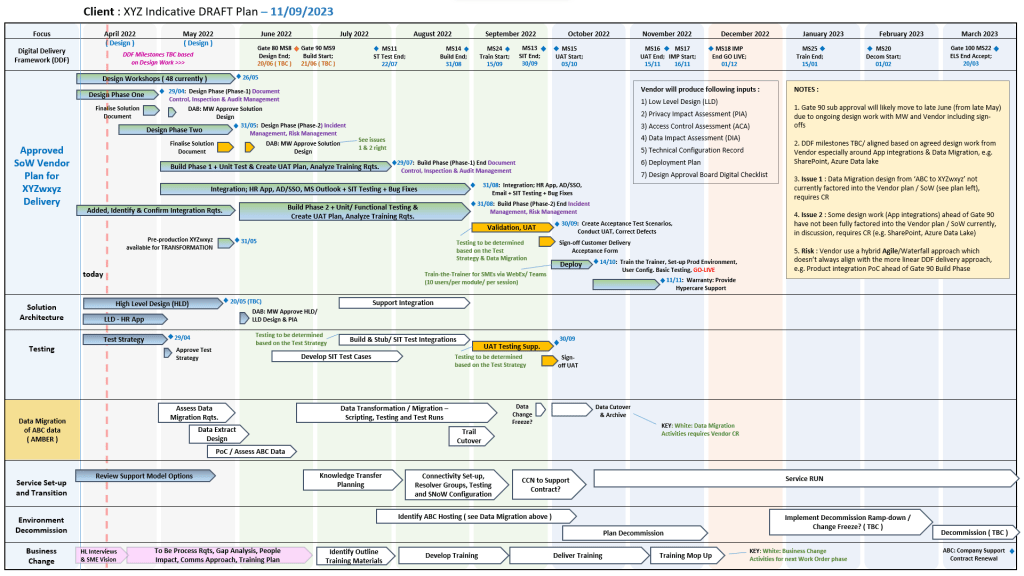
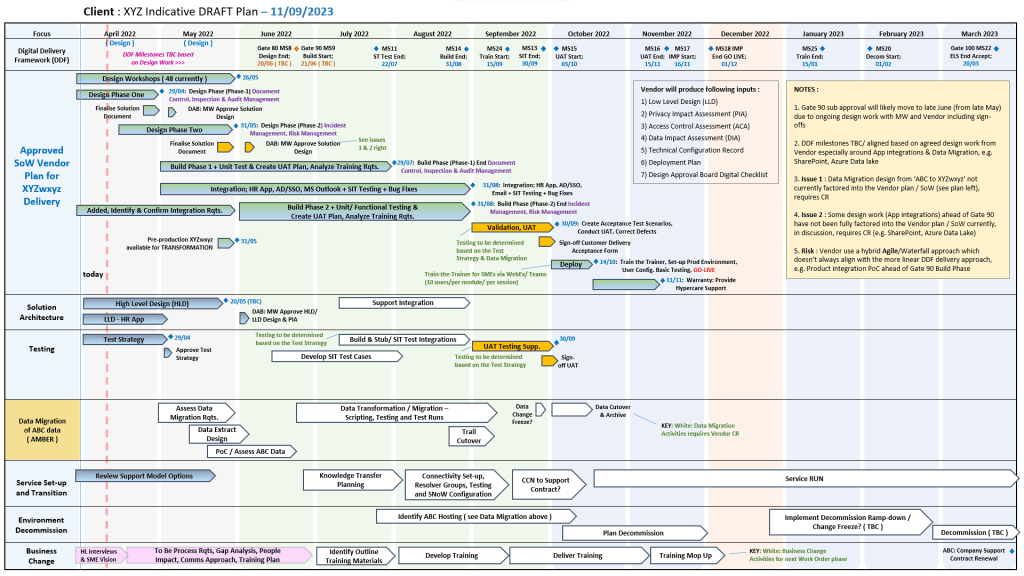
Example POaP PPT and XLS plan 
project templates
Example POaP PPT and XLS plan
project templates (200+ in all)

The products are distinctively built around core professional methodologies including PRINCE2 Waterfall and Agile Scrum frameworks. A key differentiator for this storefront is its customer lifetime model: all template upgrades and functional versions are 100% free after a single purchase by contacting the seller directly. The tools are fully unlocked, editable, and act as a portable alternative for teams or clients without expensive Microsoft Project licensing.


Product Breakdown by Category Focus

📊 1. Schedule Planning & Waterfall Templates

These tools target timeline generation, resource distribution, and critical path management for traditional structured delivery.

  • Waterfall Project Planner & Cost Tracker: An advanced interactive timeline engine that acts as a localized alternative to MS Project. It allows teams to map out milestones while calculating live run-rate expenditures.
  • Plan on a Page (POaP) Blueprint: A high-level stakeholder alignment presentation tool crafted in Microsoft Excel and PowerPoint designed to condense multi-layered delivery milestones into one scannable executive slide.
  • Work Breakdown Structure (WBS) Matrix: Structural templates built to parse complex client scopes into manageable, sequential project tasks.

🔄 2. Agile & Scrum Framework Toolkits

Tailored for modern software development environments executing iterative design, rapid deployments, and sprint-based task management.

  • Agile Scrum Master Pack: Complete tracking logs optimizing sprint velocities, backlog grooming sessions, and team capacity limits.
  • Sprint Burndown & Velocity Trackers: Automated graphical spreadsheets showing real-time target completions against literal daily sprint efforts.

📈 3. PMO Governance, RAID, & Operational Logs

Built for Programme Management Offices requiring cross-project transparency, strict risk mitigation, and central staff scheduling.

  • Central RAID Log: A classic, comprehensive spreadsheet designed to track project Risks, Assumptions, Issues, and Dependencies under strict corporate governance standards.
  • Resource Absence & Sickness Tracker: A centralized planner for operations managers to log annual leave, sickness intervals, and alternative project allocations.
  • Project Team Kick-Off Decks: Professionally designed slide blueprints that outline scope definitions, stakeholder communication channels, and milestone objectives during initiation phases.

Essential Shop & Resource Hyperlinks

Over 200 editable templates for both Agile & Waterfall / PRINCE2 frameworks

Mark Whitfield’s Project Management (PM) methodology relies on over 200 editable templates tailored for both Agile Scrum and Waterfall / PRINCE2 frameworks. Developed over 24 years of IT and digital delivery, the toolkit focuses on high-level reporting, rigorous risk control, and visual tracking to align teams with corporate governance.

Over 200 editable templates for both Agile & Waterfall / PRINCE2 frameworks
An example of many Plan On a Page
(POAP) templates

Templates by Category and Methodology

1. Detailed Planning & Scheduling

  • Methodology: Mapped to the Software Development Life Cycle (SDLC) for both sequential Waterfall phases and iterative Agile sprints.
  • Templates:
    • Microsoft Project (MPP): Fully loaded schedules detailing project inception, elaboration, construction, and transition.
    • Excel Detailed Plans: Work Breakdown Structure (WBS) mapped to sequential and date-driven task management with built-in RAG (Red/Amber/Green) status indicators.

2. Visual Reporting & Execution (Plan on a Page)

  • Methodology: Focuses on structural, executive communication to prevent scope creep and keep stakeholders aligned.
  • Templates:
    • POaP (Plan on a Page): High-level visual summaries designed for client presentations and quick-glance milestone tracking in Excel and PowerPoint.
    • Burn-up / Burn-down Charts: Visual tracking metrics used in Agile Sprints to show progress towards delivery goals.

3. Risk & Governance Control

  • Methodology: Built on strict risk/action tracking and regular lessons learned to manage uncertainty throughout the project lifecycle.
  • Templates:
    • RAID Log: Centralized Excel trackers recording Risks, Actions, Issues, and Dependencies.
    • Change Requests/Decisions Log: Supplementary tabs within the RAID register to strictly manage scope changes and project governance.

4. Financial Trackers

  • Methodology: Ensures project adherence to contracted margins, tracking both internal/external costs and resource efforts.
  • Templates:
    • Budget & Resource Trackers: Spreadsheets for forecasting versus actual expenses, variance calculations, expense reporting, and margin tracking with pivot-table readiness.

5. Team RACI & Status Reporting

  • Methodology: Clearly defines stakeholder roles and communication frequencies (weekly/monthly) to ensure continuous monitoring and control.
  • Templates:
    • RACI Matrix: A mapping tool defining who is Responsible, Accountable, Consulted, and Informed.
    • Weekly Status Reports: Word/Excel templates detailing internal and external project health, current milestones, and upcoming sprints.

To explore the entire toolkit, you can visit the Mark Whitfield PROject Templates portal.

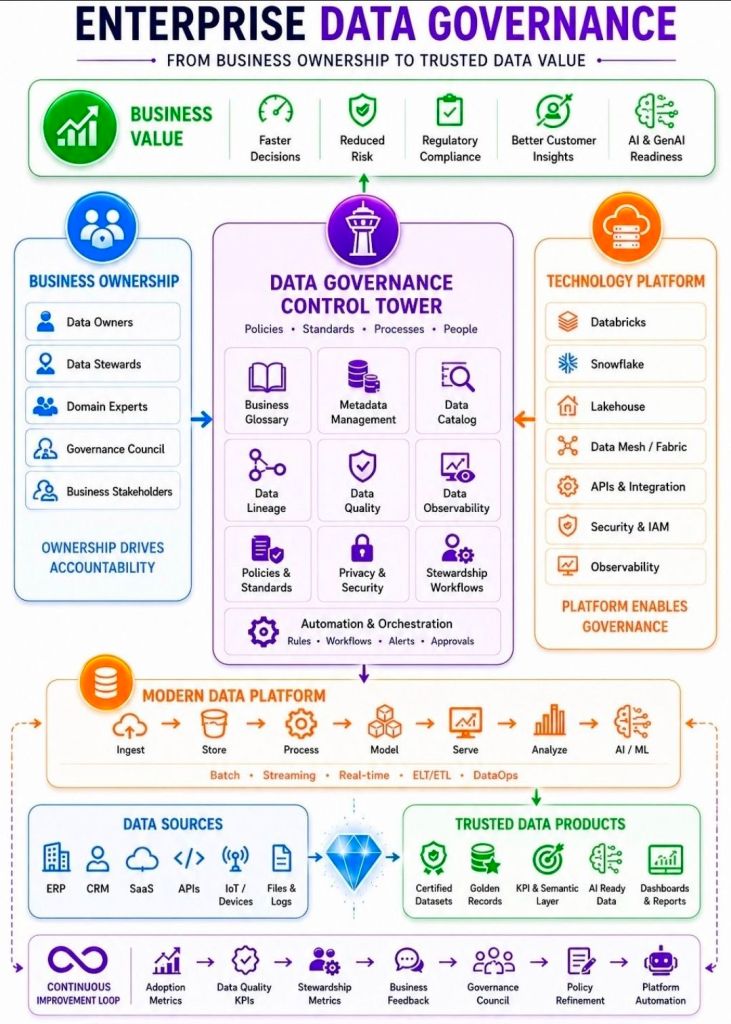
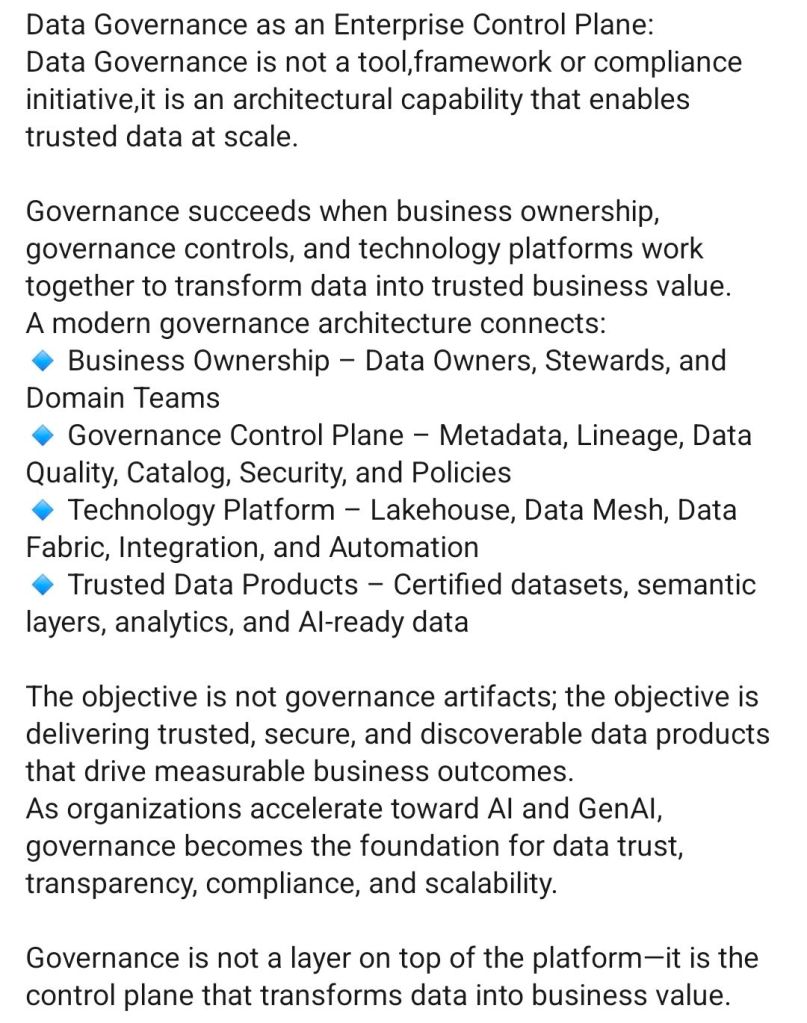
Enterprise Data Governance, Business Ownership to Trusted Data Value

Enterprise Data Governance, Business Ownership, Trusted Data Value
Text : Enterprise Data Governance > Business Ownership > Trusted Data Value
Enterprise Data Governance > Business Ownership > Trusted Data Value

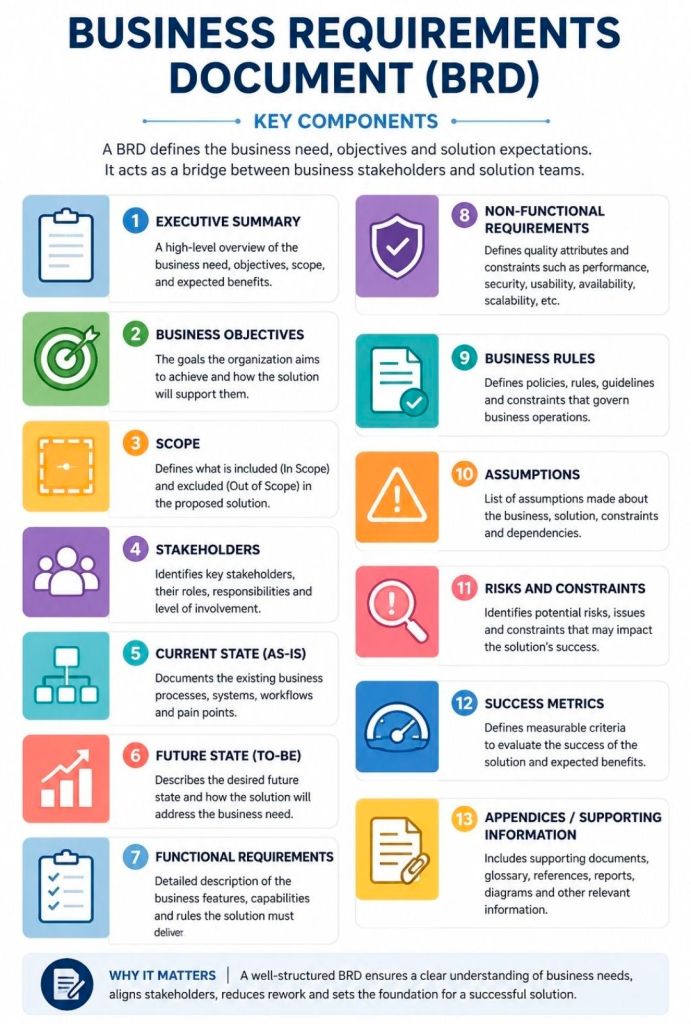
Business Requirements Document, BRD Key Sections

Business Requirements Document, BRD Key Components
BRD Key Sections

A Business Requirements Document (BRD) details what a project must accomplish and why it matters to the organization, acting as a bridge between business stakeholders and technical execution teams.

Here is a summary of the core sections required to construct a comprehensive BRD:

1. Document Control

  • Version History: Tracks changes, authors, and dates to ensure everyone uses the current iteration.
  • Approvals: Formal sign-off section where stakeholders authorize moving the project forward.

2. Executive Summary

  • Project Overview: A brief one-page overview stating the essence and main purpose of the project.
  • Needs Statement: Outlines the core business challenges or opportunities the project solves.

3. Project Scope & Objectives

  • Project Objectives: High-level, measurable targets aligned with company goals, often using SMART criteria.
  • In-Scope: Clear boundaries stating exactly what deliverables or processes are included.
  • Out-of-Scope: Explicit list of features or tasks intentionally left out to prevent scope creep.

4. Stakeholder Analysis

  • Key Stakeholders: Identifies project sponsors, department heads, and end-users.
  • Roles & Responsibilities: Maps out who provides requirements, who reviews them, and who receives deliverables.

5. Process Specifications

  • Current State (AS-IS): Maps current operational workflows to illustrate existing bottlenecks.
  • Future State (TO-BE): Details the desired future process after implementing the solution.

6. Core Requirements

  • Business Requirements: The high-level operational goals and capabilities the system must offer.
  • Functional Requirements: Descriptions of specific system tasks or behaviours from a business user perspective.
  • Non-Functional Requirements: Standards for performance, system security, and scalability.

7. Financial & Strategic Analysis

  • Cost-Benefit Analysis: Compares estimated financial expenses against anticipated business gains.
  • Success Metrics: Defines Key Performance Indicators (KPIs) and expected Return on Investment (ROI).

8. Project Dynamics & Risk Management

  • Assumptions: Unverified elements assumed to be true for the project to progress.
  • Constraints: Fixed limitations such as budget, time, technology, or legal compliance.
  • Risks & Mitigation: Potential threats to project delivery paired with backup action plans.
  • Dependencies: External factors or other projects that this initiative relies on to succeed.

9. Supporting Documentation

  • Acceptance Criteria: The standards and conditions required for stakeholders to accept the final delivery.
  • Glossary: Clear definitions of industry terms and acronyms used throughout the document.

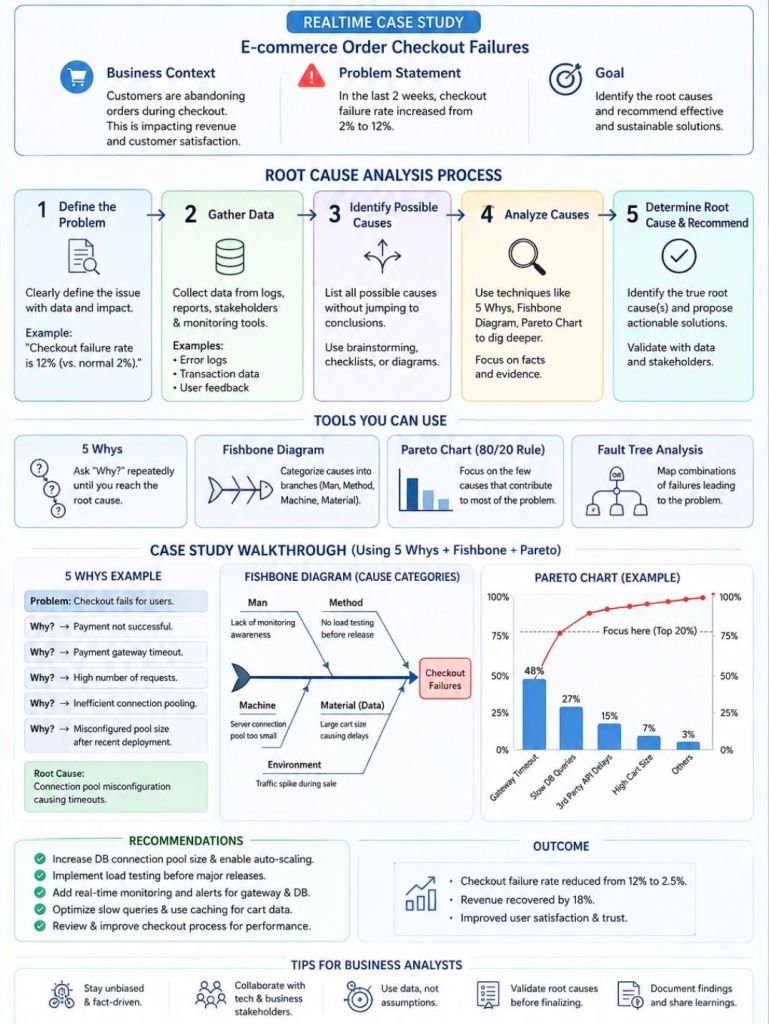
Performing a Root Cause Analysis (RCA) in IT

To perform a Root Cause Analysis (RCA) in IT, you must systematically isolate the underlying technical or process failure that caused an incident, rather than just treating the visible symptoms.

Following a structured IT service management framework ensures you fix the issue permanently and prevent it from happening again.

To perform a Root Cause Analysis (RCA) in IT

1. Define the Incident and Its Impact

Clearly articulate what went wrong using specific, technical terms. Avoid vague descriptions.

  • Draft a precise problem statement: Specify the exact error message, system component, and affected user base.
  • Quantify the impact: Note the financial cost, operational downtime, or number of disrupted transactions.
  • Establish containment: Ensure short-term workarounds are active to protect users while you investigate.

2. Gather Evidence and Timeline

Collect empirical data from your IT environment to reconstruct the exact order of events.

  • Pull system logs: Review application logs, server telemetry, database queries, and network traffic captures.
  • Check the change management registry: Cross-reference the exact time of failure against recent code deployments, infrastructure modifications, or patch updates.
  • Map out the sequence: Build a chronological timeline from the last known stable state to the moment of failure.

3. Identify Potential Causal Factors

Brainstorm all possible technical and human vectors that could have triggered the event.

  • Brainstorm with a cross-functional team: Involve developers, system administrators, and network engineers to get different perspectives.
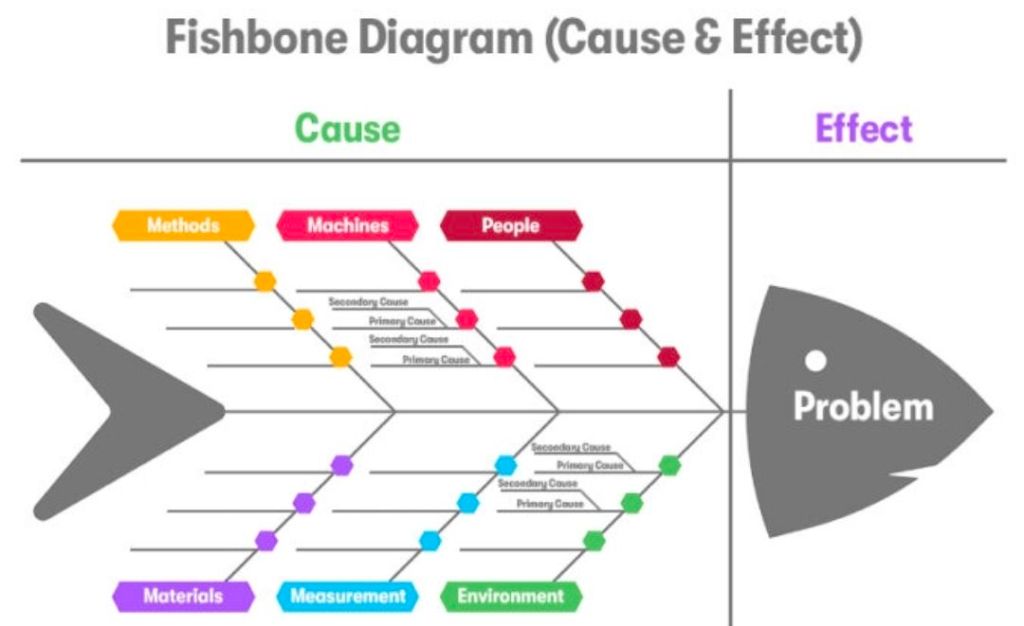
  • Categorize via Fishbone (Ishikawa) Diagrams: Separate potential culprits into categories like Code, Hardware, Processes, People, and Third-Party Vendors.
Categorize via Fishbone (Ishikawa) Diagram
Categorize via Fishbone (Ishikawa) Diagrams

4. Isolate the Root Cause

Use deep analytical methods to narrow your broad list of potential causes down to the single source failure.

  • Apply the 5 Whys technique: Ask “Why?” repeatedly to drill past surface symptoms. For example:
    1. Why did the application crash? The database ran out of memory.
    2. Why did it run out of memory? A specific query caused a memory leak.
    3. Why did the query leak memory? A recent code change did not close database connections.
    4. Why were connections left open? The developer missed the disposal pattern in the new framework.
    5. Why was it missed? There was no automated code linting or peer review rule for this framework (Root Cause).
  • Utilize Fault Tree Analysis (FTA): Use boolean logic to visually map how combinations of lower-level system faults lead to a high-level systemic failure.

5. Develop and Implement Preventive Solutions

Design a permanent fix targeting the root cause so the issue cannot happen again.

  • Deploy technical remediation: Patch code, reconfigure infrastructure, or scale resources.
  • Fix the process gap: Update documentation, add automated testing pipelines, or adjust alert thresholds.
  • Assign clear ownership: Appoint explicit owners and deadlines for each action item.

6. Document and Practice Blameless Reviews

Foster transparency to improve future infrastructure resilience.

  • Conduct a blameless post-mortem: Focus entirely on how the system allowed the failure to occur, not who made the mistake.
  • Publish an internal RCA report: Document the timeline, data points, root cause, and remediation steps in a searchable knowledge base.

For a visual breakdown of how to execute these problem-solving techniques in practice, watch this tutorial on conducting a root cause analysis:

How to Do Root Cause Analysis (RCA) the Right Way | Lean Six Sigma ToolsYouTube · InfiniLean

Performing a Root Cause Analysis (RCA) in IT

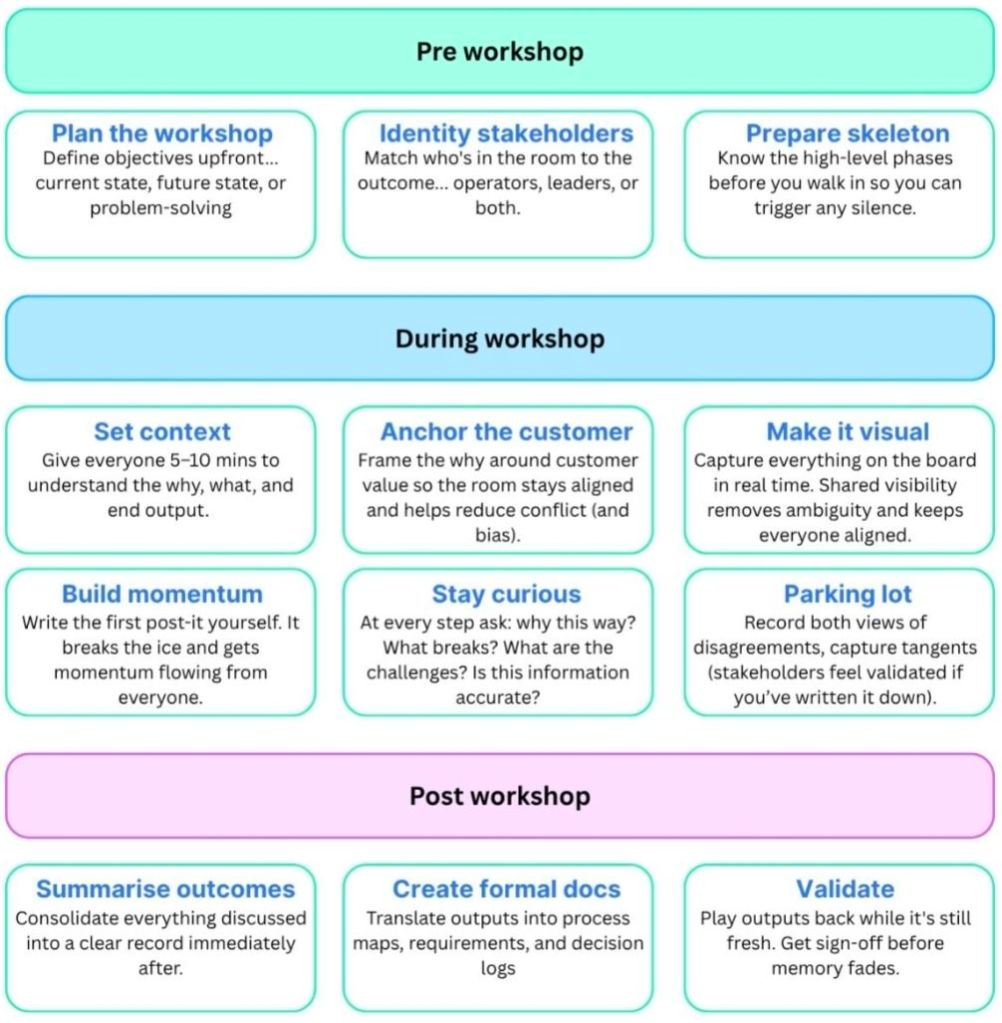
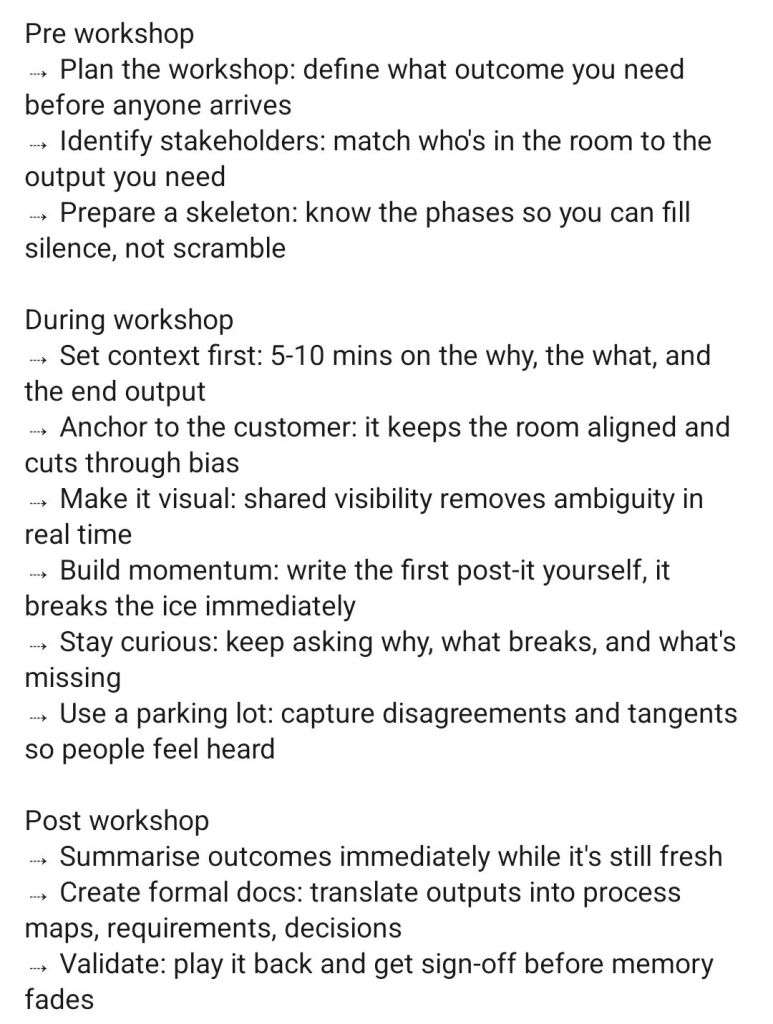
Facilitating Workshops as a Business Analyst BA

Facilitating Workshops as a Business Analyst BA
Facilitating Workshops as a Business Analyst
Facilitating Workshops as a Business Analyst BA

As a Business Analyst (BA), facilitating workshops is a core competency used to elicit requirements, align cross-functional teams, and achieve stakeholder consensus. Success hinges on meticulous pre-session planning, active moderation of group dynamics during the session, and timely post-workshop documentation.

A proven framework for facilitating impactful BA workshops involves three critical phases:

1. Preparation

Planning is the most important step for a successful workshop. Poorly planned sessions waste valuable stakeholder time.

  • Define the Objective: Identify exactly what needs to be achieved (e.g., process mapping, feature prioritization, or user story mapping).
  • Select Participants: Invite subject matter experts (SMEs), decision-makers, and end-users. Keep the group size manageable, usually between 5 to 10 people to ensure productivity.
  • Create a Clear Agenda: Break the time down into specific activities. Allocate time for introductions, the core activity, breaks (if >1 hour), and a summary.
  • Prepare Materials: Set up whiteboards (physical or digital like Miro/Mural) and prepare your facilitation techniques (e.g., brainstorming, MoSCoW prioritization).

2. Execution (In the Session)

Your role is to act as a neutral guide, keeping the team focused on the objective rather than getting bogged down in implementation details.

  • Set Ground Rules: Establish parameters early, such as one conversation at a time, keeping devices put away, and respecting everyone’s input.
  • Manage Group Dynamics: Encourage quieter participants to speak up while politely reigning in dominant voices.
  • Use a ‘Parking Lot’: Create a designated section on a whiteboard for off-topic ideas, out-of-scope concerns, or unresolved questions to prevent the meeting from derailing.
  • Visual Collaboration: Use process flows, mockups, or sticky notes to give the conversation a focal point. This triggers ideas and helps maintain stakeholder attention.

3. Post-Workshop

The work doesn’t end when the meeting concludes. You must synthesize the information gathered to ensure it translates into actionable project deliverables.

  • Consolidate Documentation: Clean up notes, digitize whiteboard sessions, and format the elicited requirements.
  • Distribute and Align: Send a clear, written summary to participants outlining decisions made, parking lot items that need resolution, and agreed-upon next steps (who is doing what and by when).

Resources and Best Practices

  • For structured, globally recognized techniques and study material, explore the International Institute of Business Analysis (IIBA).
  • To learn practical workshop formats like user story mapping and discovery, watch this BA Requirements Workshop Guide on YouTube.

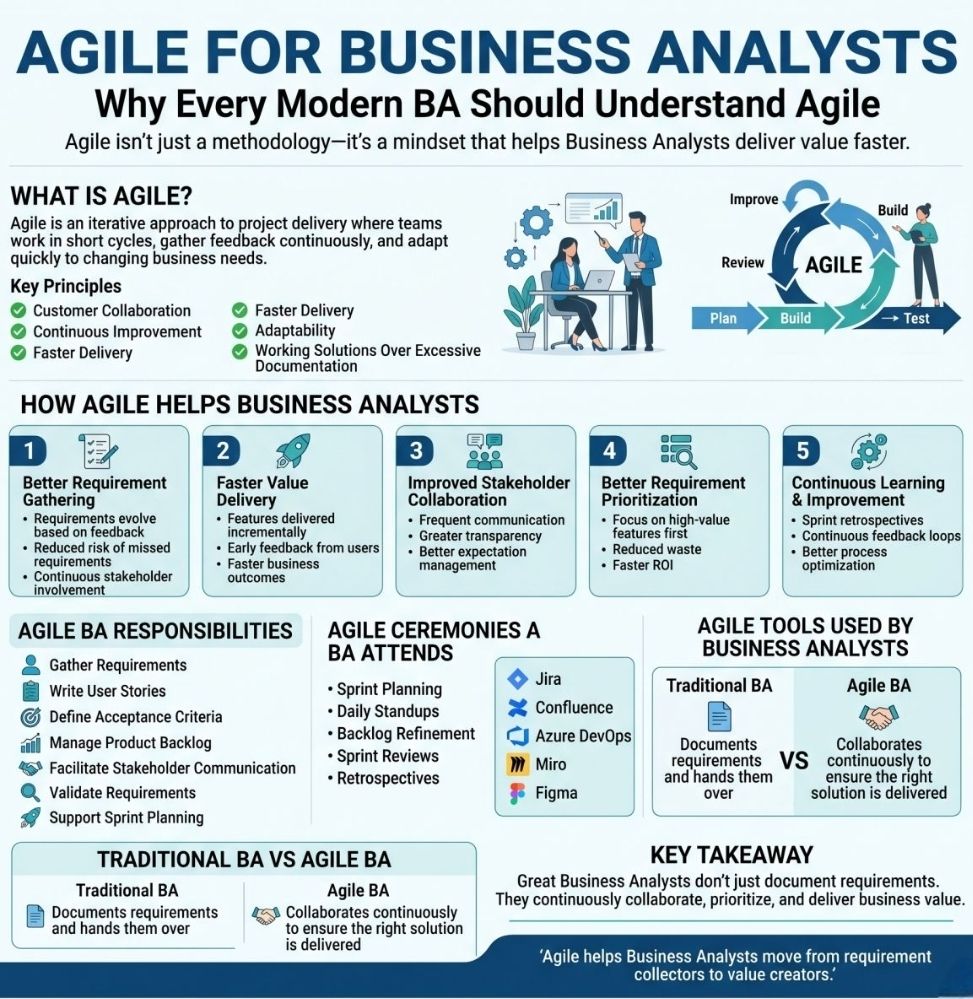
Agile for Business Analysts BA

Agile for Business Analysts BA

In an Agile environment, a Business Analyst (BA)acts as the crucial bridge between business stakeholders and the technical team. Rather than gathering all requirements upfront, Agile BAs focus on continuous analysis, delivering value in small increments, and writing lightweight user stories that adapt as the product evolves.

Transitioning from traditional (Waterfall) analysis to an Agile framework requires a fundamental shift in how requirements are handled, documented, and delivered.

The Core Shifts in an Agile BA Role

  • Continuous Discovery: Instead of producing a massive Requirements Document at the start, BAs analyze and refine requirements just-in-time and just-enough to keep the development team moving.
  • User Stories over BRDs: Traditional Business Requirements Documents (BRDs) are replaced with collaborative user stories and acceptance criteria.
  • Value-Driven Prioritization: The BA continuously helps the Product Owner (or acts as the Product Owner proxy) rank the Product Backlog so that the highest-value features are built first.
  • Shared Understanding: The focus is on face-to-face communication, workshops, and visual modeling (like wireframes) to ensure developers fully grasp what needs to be built.

Key Responsibilities

Agile BAs operate across several domains throughout the sprint lifecycle:

  1. Backlog Refinement: Collaborating with stakeholders to break down large, complex requirements into smaller, manageable chunks (Epics to User Stories).
  2. Definition of Ready (DoR): Ensuring that user stories are clear, testable, and have defined acceptance criteria before they are pulled into an active sprint.
  3. Sprint Support: Answering questions from the development team in real-time, clarifying business rules, and helping to remove blockers.
  4. Acceptance Testing: Assisting Quality Assurance (QA) teams or business users to validate that the delivered software works as intended and solves the underlying business problem.
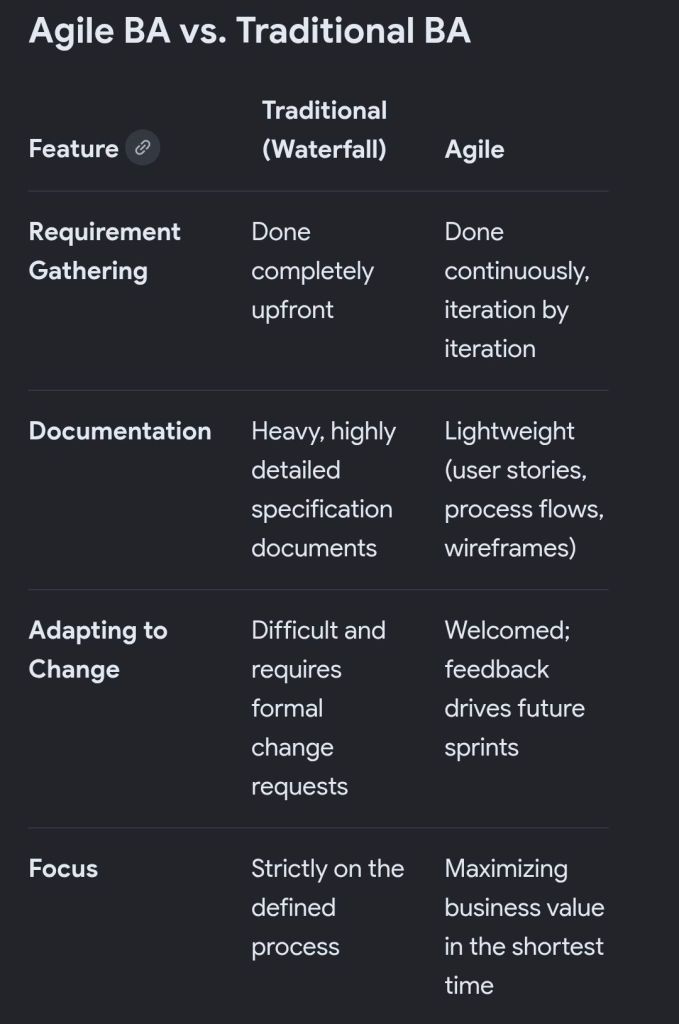
Agile BA versus Traditional BA

Common Frameworks for Agile BAs

  • Scrum: Working alongside the Scrum Master, Product Owner, and Developers in short iterations (sprints), typically lasting 2 to 4 weeks.
  • Kanban: Managing a continuous flow of analysis work, prioritizing items on a visual board as development capacity allows.
  • AgileBA: A specific certification and framework designed by the Agile Business Consortium that provides BAs with practical tools for working in Agile settings.

Recommended Resources for Skill Building

To deepen your expertise in Agile business analysis, explore these highly regarded methodologies and guides:

  • Use the AgileBA Certification guide to understand official best practices.
  • Read the IIBA Agile Extension to the BABOK Guide for authoritative frameworks.
  • Review Bridging the Gap for practical, real-world implementation strategies.

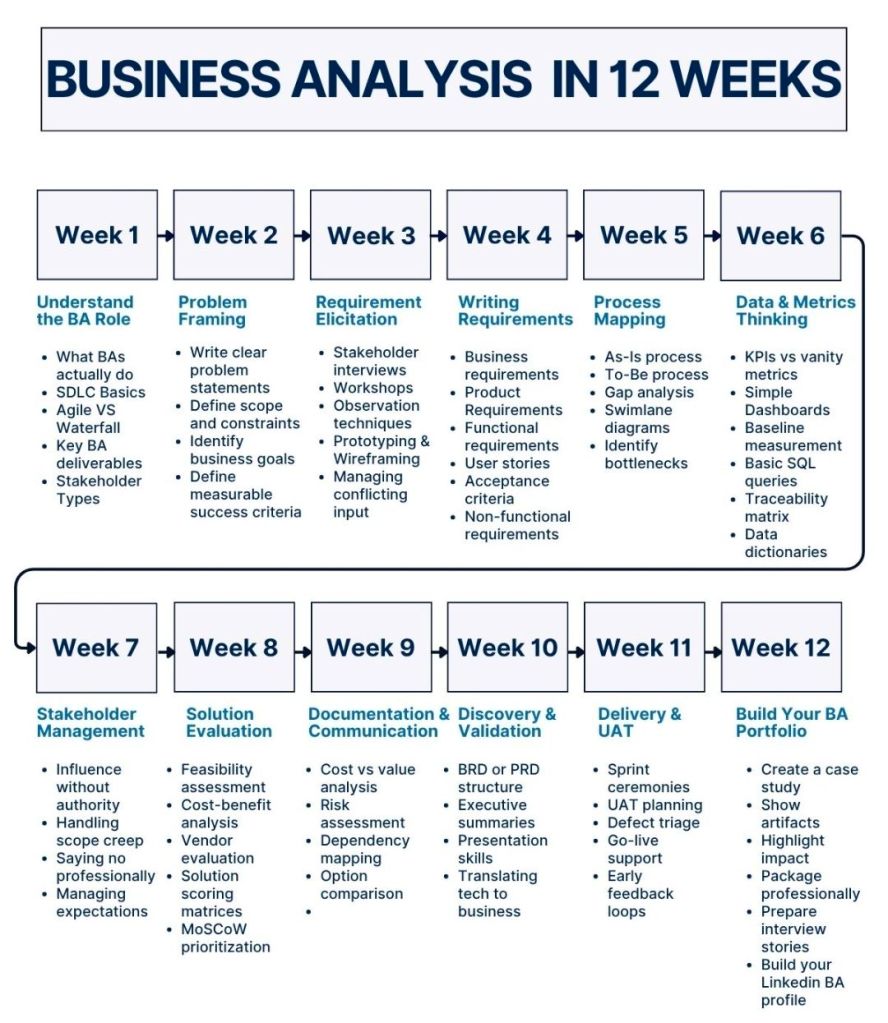
Business Analysis in 12 weeks

Business Analysis in 12 weeks